Why Your Paint Doesn't Match the Sample
Your paint doesn't match the sample because of light, sheen, and a too-small chip. Diagnose the real cause, fix the wall you have, and sample the right way next time.

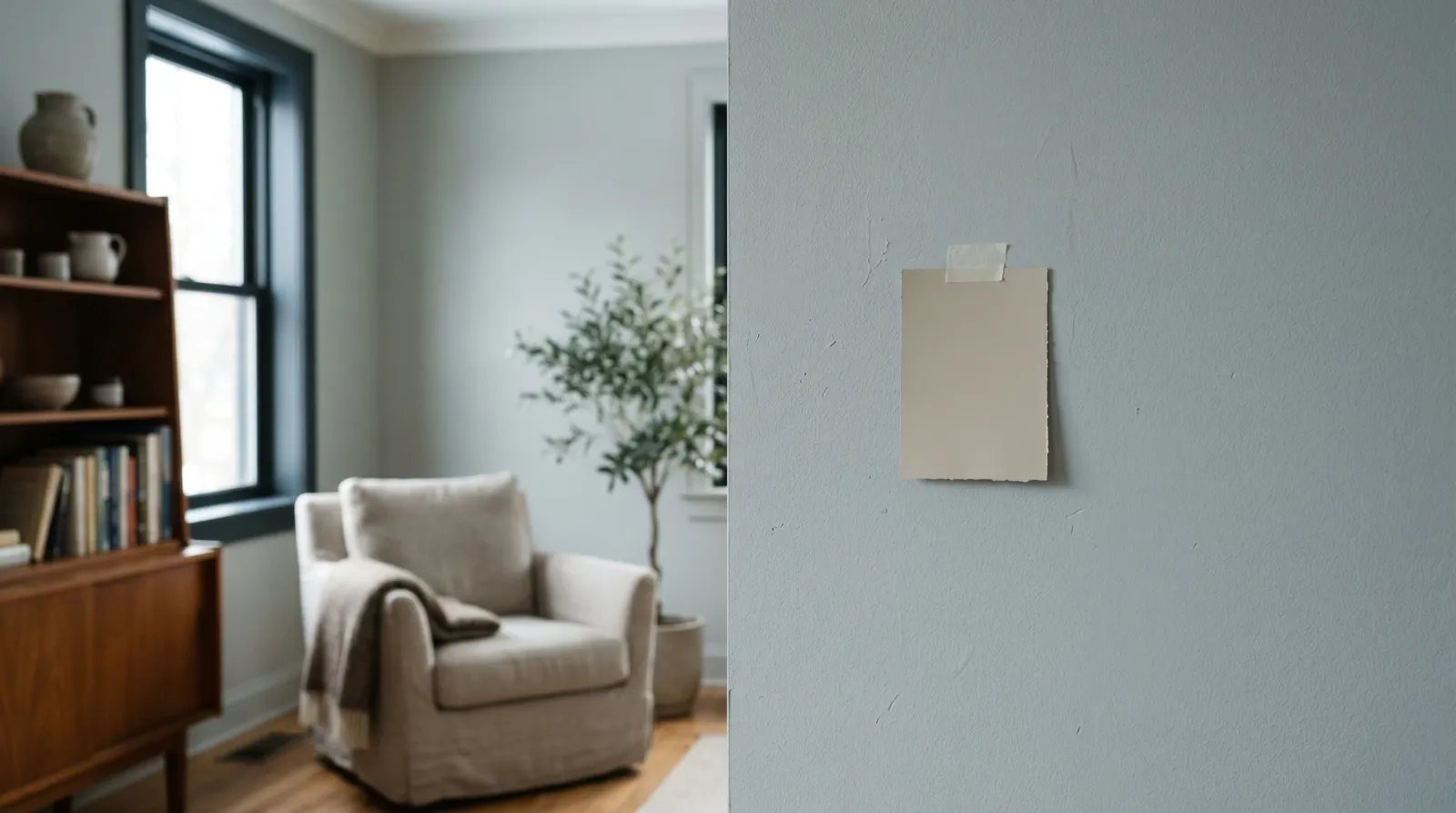
You picked the color in the store, loved it on the chip, brought it home, and now the wall is wrong. Cooler, greener, more grey, somehow not the color you chose. The paint isn’t the problem, and the store probably didn’t mix it wrong. The chip lied, and the light told the truth.
TL;DR
- A chip is two square inches under store fluorescents. Your wall is a hundred square feet under your light. They almost never read the same.
- North-facing light cools a color and pulls out blue and grey undertones. West light warms it and pulls out yellow.
- Sheen shifts color too. Glossier reads brighter and lighter; matte reads deeper and muted.
- Judge the color only at full coverage and fully dry, in the morning and at night, not after one wet coat.
- Before you repaint, sample big and on the actual wall. A two-foot square beats a chip every time.
Does This Match What You’re Seeing?
Look at the wall at the hour you actually use the room. The way it goes wrong tells you why.
- The whole wall reads cooler, bluer, or greyer than the chip: north-facing or limited daylight. The room is pulling the cool undertone forward.
- The wall reads warmer, more yellow or peachy than the chip: west-facing afternoon light, or warm-LED bulbs. Both push a color toward cream.
- A white that looks pink, green, or dirty: the undertone you couldn’t see on the chip, now spread across a hundred square feet where it has room to show.
- Brighter and shinier than the chip: sheen. You matched a flat printed card and bought satin or semi-gloss.
- Patchy, lighter in spots, or ghosting: not a color problem. One thin coat over uneven primer or an old color. The true shade hasn’t built yet.
- Right by the window, wrong across the room: normal. Color shifts as it moves away from the light source. This one isn’t a mistake.
If the wall changes character from morning to evening, that’s the room doing its job, not a bad batch.
How Serious Is This?
Cosmetic, almost always. The paint is bonded and protecting the wall. Nothing fails, nothing spreads. What you can’t do is unsee a color that fights the room every time the afternoon sun lands on it.
So the only real question is whether you can live with it. Give it three days before you decide. A shade that reads cold and clinical at breakfast often warms into something you like by the time the lamps come on. Sit with it through a full daily cycle of your own light. If it still reads wrong on day three, repaint, and sample properly this time so the second color is the last one.
The exception is exterior siding. A color that looked right on a south wall can go washed-out and pale on the sun-blasted side, because direct sun lifts and bleaches almost any shade. That’s worth getting right before you commit to forty gallons.
Why This Is Happening (root Cause)
A paint chip is a tiny printed swatch viewed flat, under bright neutral store lighting, surrounded by dozens of other chips. None of that is your room. Three things separate the chip from the wall, and they stack.
Light is the big one. Color has no fixed look. It’s light bouncing off pigment, and the light in your room decides what comes back to your eye. North-facing rooms get cool, indirect, bluish daylight all day, so a greige reads grey and a white reads cold. West-facing rooms get warm gold light in the afternoon that pushes the same greige toward beige. Warm-LED and incandescent bulbs do the same after dark. The chip was chosen under one light. You live under another.
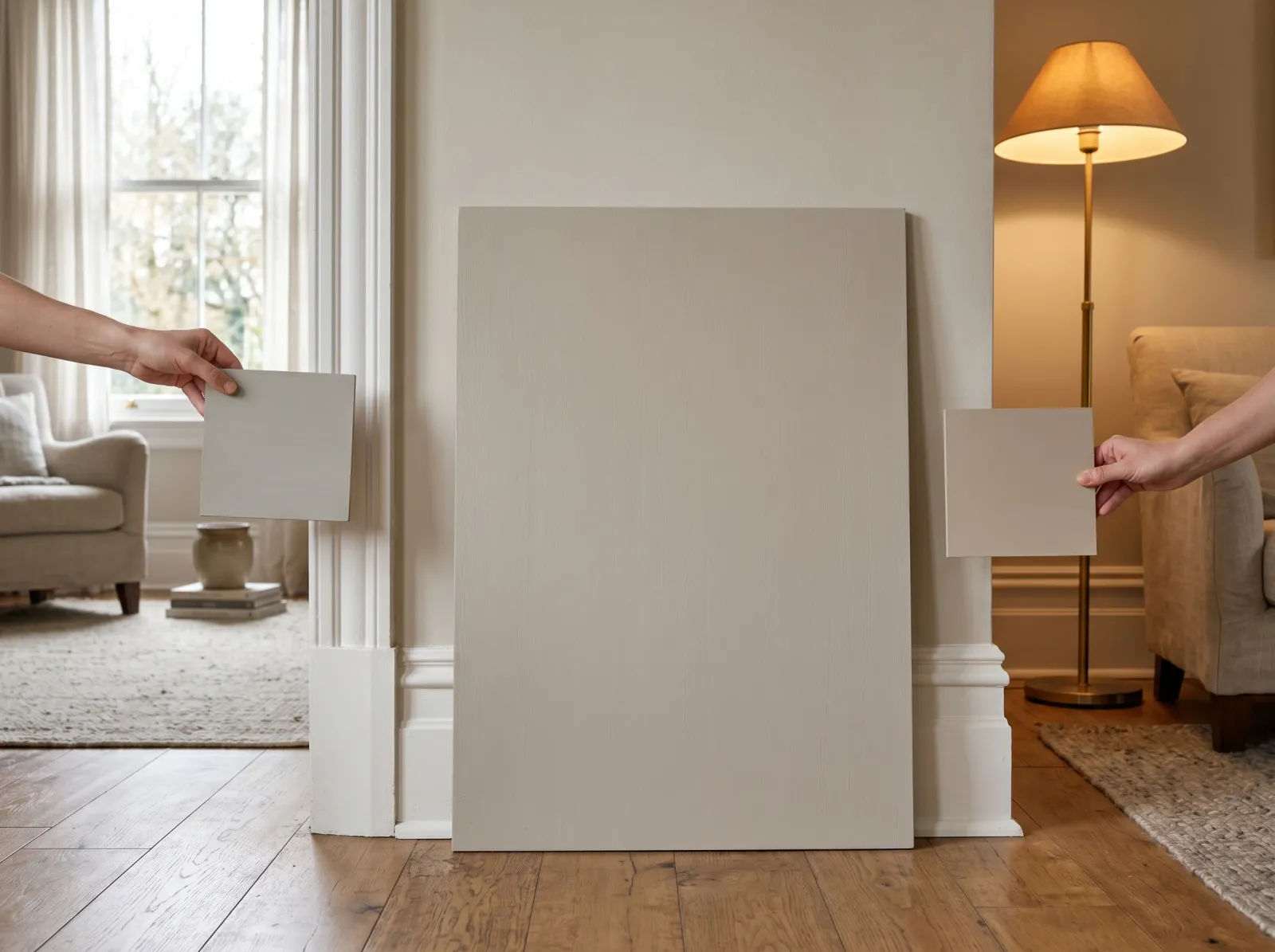 The same color, two spots in one room. Light decides which undertone you see.
Undertone is the quiet one. Almost every color leans somewhere. A “warm white” has a drop of yellow; a “soft grey” has a whisper of green or violet. On a two-inch chip that lean is invisible. Spread it across a full wall and the undertone has room to assert itself, especially when the light in the room agrees with it. A green-leaning grey in a leafy north room with light filtering through trees will read distinctly green. That’s LRV and undertone doing exactly what they do.
Sheen is the one nobody expects. A flat chip and a satin wall are different surfaces. Gloss reflects light back at you and reads brighter and a touch lighter; matte drinks light and reads deeper and more muted. Same formula, two different-looking colors. If you fell for the chip and then chose a higher sheen for a kitchen or bath, the wall will read brighter than the card. The sheen guide walks through how much each finish shifts a color.
One more, and it’s the most common false alarm: wet paint is not finished paint. Most colors dry darker and truer than they look going on, and a single coat lets the surface underneath ghost through. Judge nothing until the wall is dry and fully built.
The Fix
You have two choices: make peace with the wall you have, or repaint it right. Either way, start by reading the wall honestly.
Step 1. Let It Fully Dry and Cure
Wet paint reads lighter and patchier than the cured film. Give it the full dry time on the can, usually 2 to 4 hours to the touch, and look again the next morning. Many colors that “don’t match” on a wet first coat settle perfectly once they’re dry and built to two coats. If the wall is patchy or ghosting, that’s coverage, not color. Roll the second coat and reassess.
Step 2. Read the Wall in Your Real Light
Look at the wall at the three times you live in the room: morning daylight, mid-afternoon, and under your evening bulbs. Note what the color does at each. A color you judge once, at one hour, under one light, you’ve barely seen. If it only reads wrong by the window and settles across the rest of the room, you don’t have a problem. You have a normal wall.
Step 3. Confirm the Mix Before You Blame It
Pull the receipt and compare the formula printed on the can lid to the color name you asked for. Mis-mixes are rare but they happen, and they’re the store’s to fix free. If the formula matches the name you chose, the can is right and the chip was the weak link.
Step 4. Sample Big, on the Wall, Before You Recommit
This is the step that ends the cycle. Don’t choose the next color from a chip. Buy sample pots of two or three candidates, or order peel-and-stick painted swatches, and put a square at least two feet across directly on the wall. Paint it in two coats so the sheen and depth are real.
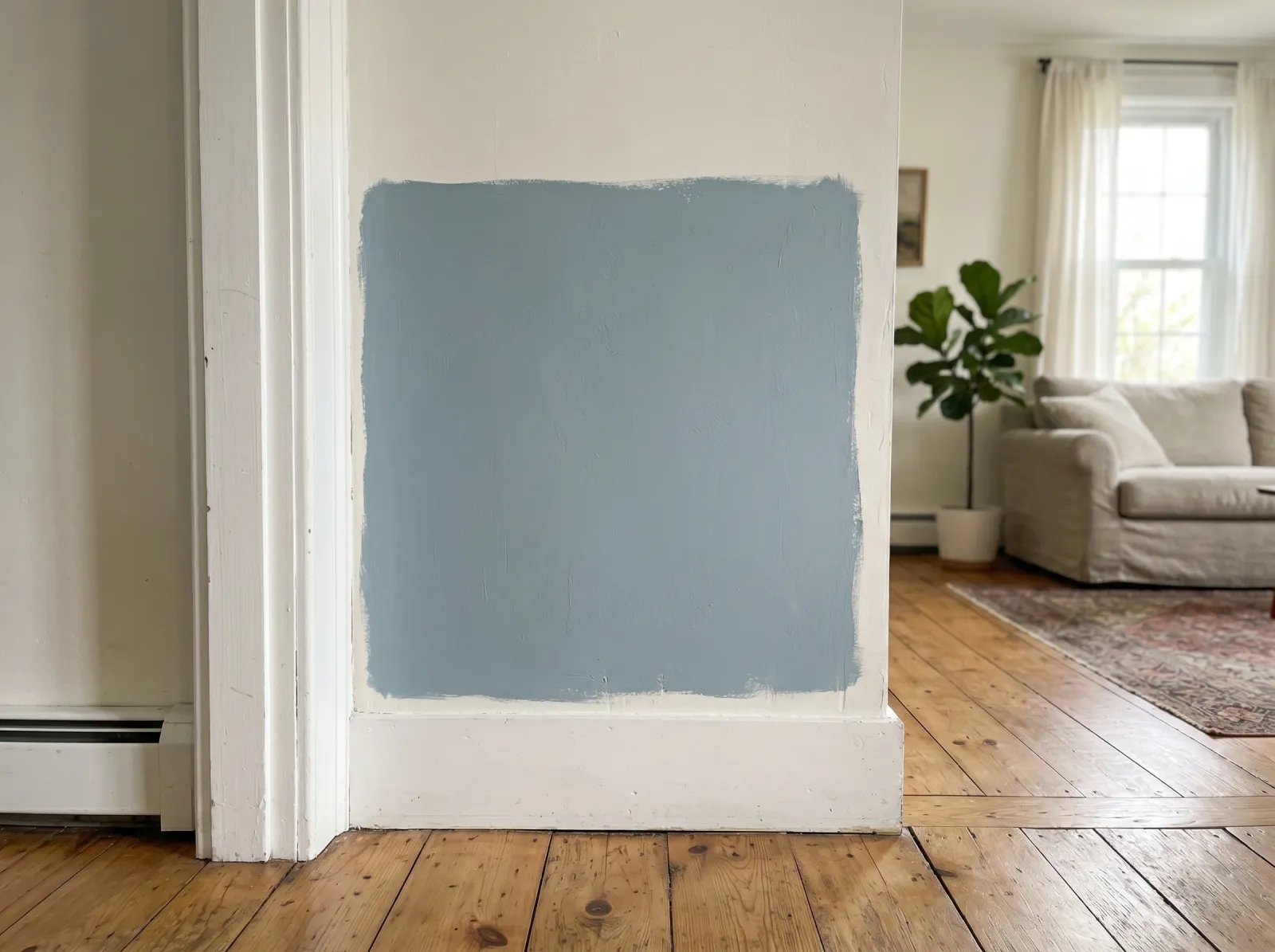 Big and on the wall, next to the trim and floor it has to live with. This is the only test that tells the truth.
Put the square next to the trim, the floor, and any large furniture, because color never sits alone. A greige that’s lovely against white trim can go muddy against honey oak. Look at all your samples morning and night. Live with them for two or three days. The one that still looks right at every hour is your color.
Step 5. Repaint, and Trust the Sample This Time
When the sample has earned it, prime if you’re going dramatically lighter or covering a bold color, then roll two full coats. Don’t judge the new color against the old chip. Judge it against the sample square you lived with on the wall. That’s the honest reference now.
Common Mistakes
- Choosing color from a chip, never from the wall. A chip is a starting point for a shortlist. It’s not a decision.
- Looking once, at one time of day. Morning north light and evening lamp light are two different rooms. See the color in both.
- Sampling too small. A 4-inch dab surrounded by your old color reads nothing like a full wall. Go two feet minimum.
- Judging wet, single-coat paint. It dries darker and truer, and one coat lets the wall underneath show. Wait for two coats, dry.
- Forgetting the trim and floor. Color reads against what it sits next to. A swatch floating on bare wall hides how it’ll really drape across the room.
- Ignoring the bulbs. Cheap warm-LED can yellow a careful cool grey into something muddy after dark. Match your bulb temperature to the mood you want.
Prevention
The fix for next time isn’t a product. It’s how you sample.
- Sample on the wall, big, in two coats. A two-foot painted square or a large peel-and-stick swatch in the exact sheen you’ll buy. This single habit prevents almost every mismatch.
- Watch it through a full day. Morning, afternoon, evening, under your own bulbs. Pick for the hour you live in the room most.
- Know your room’s direction. North rooms cool a color and want a touch more warmth in the pick. West rooms warm it in the afternoon. South stays bright and steady. East goes warm early, cool later.
- Match the sheen to the chip. If you loved a flat chip, expect a satin or semi-gloss wall to read brighter, and account for it.
- Standardize your bulbs. Same color temperature throughout a room, around 2700K to 3000K for warm living spaces, so the color reads consistently after dark.
When you’re choosing for a feature wall, sample on the actual wall that gets the light, since accent walls often catch a different exposure than the rest of the room. The accent wall guide covers placing the color where the light flatters it.
When to Call a Pro
- You’ve repainted the same room more than twice and it still reads wrong. A color consultant, often free through a paint store or about $50 to $150 independently, will catch the undertone and light interaction you’re fighting.
- The mismatch is on exterior siding across many gallons. Getting an exterior color wrong is expensive to redo. A pro reads how sun and large surfaces will shift it.
- The color matters for resale or a whole-home palette. Coordinating colors across rooms with different light exposures is genuinely hard, and a consultant earns the fee.
- You suspect a real mis-mix the store won’t honor. A paint pro can read the formula and tell you whether the batch is off or the chip simply misled you.
FAQ
Can I just live with it, or do I have to repaint? Look at it for three full days first, in morning, afternoon, and evening light. A color you dislike at breakfast sometimes settles into the room by dinner. If it still reads wrong after three days in the light you actually use, repaint. You see this wall every hour you’re home.
Will a second coat change the color? Usually a little. One thin coat lets the primer or old color ghost through. The true color shows at full coverage, almost always two coats. Judge the match only once the wall is built and dry.
Did the store mix it wrong? Rarely. Check the formula on the can lid against the color you asked for. Far more often the chip never matched the wall, because a chip is two square inches under store light and your wall is a hundred square feet under yours.
Why does my white look pink, yellow, or grey? Every white carries an undertone. On the chip it reads neutral; on a full wall the light pulls the lean forward. North light shows the cool side, warm light shows the yellow. The white didn’t change. The light found what was always there.