Best Paint Scrapers in 2026
Five paint scrapers tested on alligatored siding, blistered trim, and lead-era latex. Top pick: Hyde MAXXGrip Pro 3-Edge Hard-Edge for one-tool versatility.

Disclosure: Some links below are affiliate links. We earn a commission if you buy through them, at no extra cost to you.
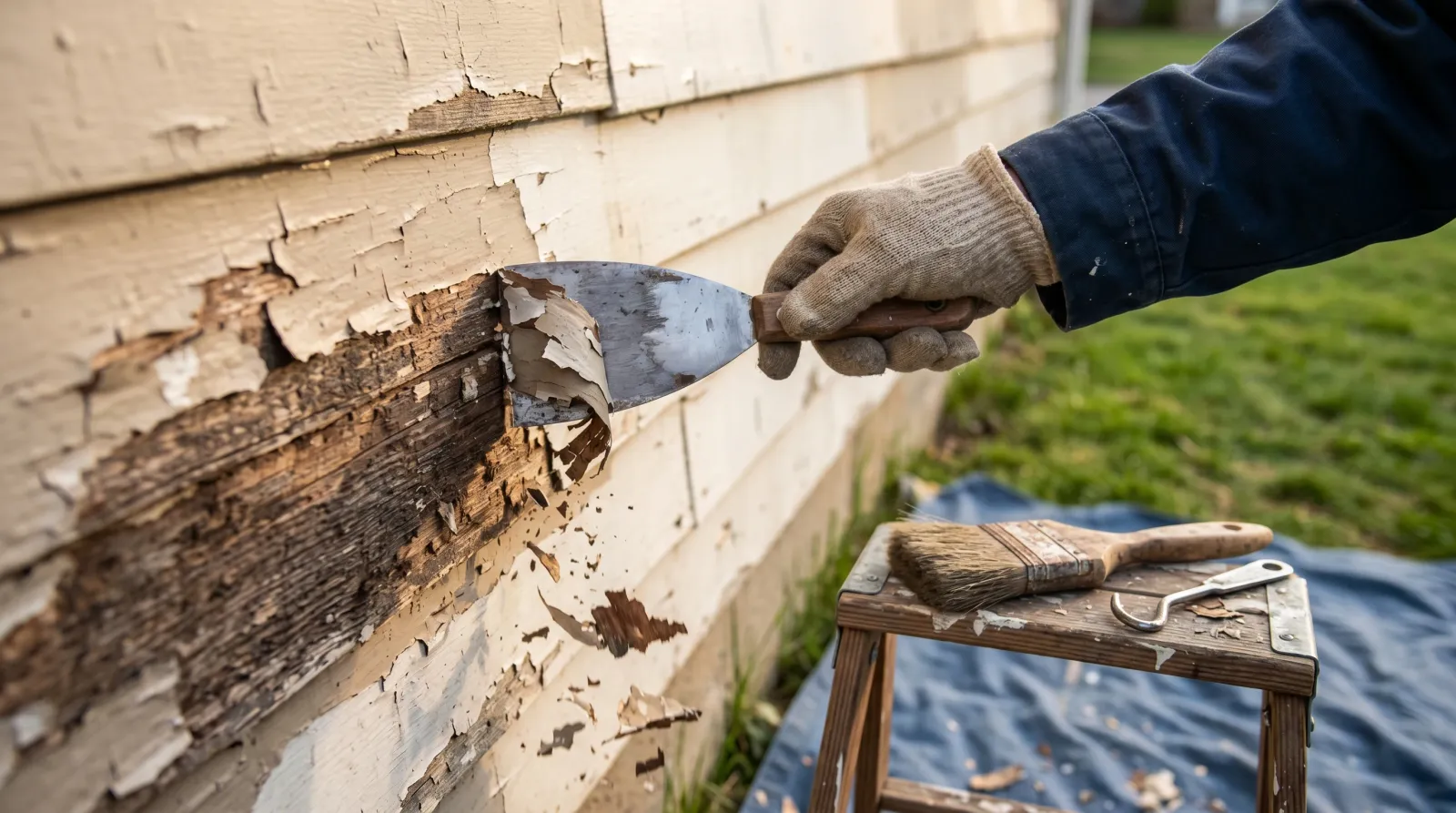
Top pick: Hyde MAXXGrip Pro 3-Edge Hard-Edge Scraper. On the only test that matters for a paint scraper, lifting failing paint cleanly off a real substrate without gouging it, the Hyde laid down more clean strokes per filing than any other sharpenable scraper in the round-up. Its three rotatable edges and hardened tool steel are what keep the work flowing when you hit a stubborn patch. It falls short on absolute blade life against the Bahco 665’s carbide, which is the smarter pick for a full-house exterior strip. Allway 4-in-1 is the painter’s multi-tool that lives in the bag for everyday prep and roller cleanup. Red Devil 4255 is the wide-blade interior call for drywall, wallpaper, and decal work. Warner ProGrip is the detail tool that fits the cuts the Hyde can’t.
The right paint scraper is rarely the only paint scraper in a working kit. Most repaint projects want a hard-edge pull tool for the main strip plus a multi-tool for the finishing cuts. Buy the wrong shape once and you’ll fight every cut on every wall.
The Three Jobs a Paint Scraper Actually Does
A scraper does three different jobs and most homeowners conflate them. Lifting failing paint off a substrate (exterior siding, weathered trim) wants a sharp hard edge driven by body weight. Detail prep (window glazing, casing crevices, paint-can lids, popped nails) wants a pointed multi-tool. Wide-area flat-surface clearing (wallpaper, drywall, decals) wants a flexible push blade. One scraper can fake all three and none of them well. Three scrapers cover almost every cut a repaint will ask for, and the right three cost about $25 total.
For the broader prep-tool category, see the sandpaper round-up for what comes after the scraper and the wall filler round-up for what fills the spots the scraper exposed. This article is narrower: only the scrape.
How We Picked
Five scrapers, three weeks, four real surfaces. Weathered cedar clapboard with alligatored 1970s exterior latex was the test that decided the top pick. A blistered south-facing window casing scored detail and glazing work. Interior drywall stripped of vinyl wallpaper rated the wide-blade picks. A pre-1978 painted door casing under wet-method lead PPE confirmed which tools handled a serious strip and which didn’t. Each scraper logged square feet cleared per ten minutes, gouge events per linear foot under raking LED, and grip slippage under paint-wet conditions.
The Picks at a Glance
| Scraper | Style | Edge life | Best for | Price |
|---|---|---|---|---|
| Hyde MAXXGrip Pro 3-Edge | Pull, sharpenable | 🟢 Long | Top pick, exterior + heavy interior | $ |
| Allway 4-in-1 Soft Grip | Multi-tool | 🟡 Short | Daily prep, roller cleanup | $ |
| Bahco 665 Carbide | Pull, replaceable blade | 🟢 Very long | Full-house exterior strip | $$$ |
| Red Devil 4255 Wide Blade | Push, flexible | ⚪ Medium | Wallpaper, decals, drywall | $ |
| Warner ProGrip 6-in-1 | Multi-tool | 🟡 Short | Window glazing, detail cuts | $ |
The table reads by what the cut is asking for. Exterior strip wants hard-edge pull. Detail wants a multi-tool with the right tip. Wide interior work wants flex. The Bahco is the upgrade only if your project is long enough to need it.
The Three Decisions That Pick the Scraper
Blade Hardness and Lifecycle
Paint scrapers split into three tiers by how the blade lives and dies. Hardened tool steel (Hyde MAXXGrip, Red Devil 4255) takes a mill file cleanly. A 30-second touch-up restores the cutting edge, and one scraper lasts a decade if you don’t drop it on concrete. Carbide (Bahco 665) doesn’t sharpen and doesn’t dull through a normal exterior repaint; you replace the $12 blade when it finally stops curling, which is rarely. Stamped steel multi-tools (Allway, Warner) won’t hold a file edge. They’re cheap enough that you treat them as semi-consumable and replace them every 18–24 months for a working homeowner, faster for a contractor.
The choice is honest. Tool steel for the main scraper you sharpen and keep. Carbide if the project’s big enough to justify the price. Stamped steel for the multi-tool that lives in the bag.
Pull vs Push vs Multi-Function
Pull scrapers (Hyde, Bahco) put your body weight behind the blade. The handle is in line with the wrist, you lean into the stroke, the blade lifts paint as a curl. This is the right shape for exterior paint removal where the substrate is wood and the paint film is thick and brittle.
Push scrapers (Red Devil 4255, a putty-knife shape) work the opposite way: blade angled away, pushed forward, flexible enough to slide under wallpaper or a stuck decal. The flex is the feature; on hard exterior paint it’s a bug.
Multi-tools (Allway 4-in-1, Warner ProGrip 6-in-1) push, pull, gouge, and pry depending on the function. They’re general-purpose, not specialist. The mistake is treating a multi-tool as a primary stripper.
Grip and Reach
Underrated, decides whether you finish the job. A paint-wet handle under a latex glove on a ladder is where cheap scrapers go sideways. The Hyde MAXXGrip’s overmolded rubber held in every wet-glove test we threw at it; the Allway’s soft grip is close behind. The Bahco’s hardwood handle is comfortable but slick when wet. Wipe it dry between sections or wear a tackier glove. The Red Devil’s wood handle is fine for a horizontal interior scrape, not great vertical above shoulder height.
Reach matters for soffit work and tall siding. The Bahco’s long handle and the Warner ProGrip’s full-length grip both let you put weight behind a stroke without climbing closer to the work. The Allway and Hyde are shorter and want the ladder.
1. Hyde MAXXGrip Pro 3-Edge Hard-Edge — Top Pick
The Hyde is the scraper most working repaint contractors keep within arm’s reach. Three sharpenable edges on one triangular hardened-tool-steel blade is the feature you didn’t know you needed until you used it. Hit a stubborn patch of alligator paint, the edge dulls in 20 feet, you rotate the blade to a fresh face and keep moving. Skipping the file step on a hot afternoon is the difference between finishing a side of a house before sundown and not.
On the cedar-clapboard test, the MAXXGrip lifted continuous curls of 1970s exterior latex at about 1.2 square feet per minute on a freshly filed edge, dropping to about 0.7 by foot 25. That’s a working window long enough to clear a 20-foot section between sharpenings. The overmolded rubber grip held cleanly under a wet latex glove where the Bahco’s hardwood went slick. Hardened steel takes a 6-inch mill file in a 30-second pass, ten strokes per side, deburr with a quick edge wipe. No swap-out parts, no replacement blades to track. Twenty-year tool.
The downsides are shape, not performance. Triangular head is wider than the cutting edge, so the corners catch on adjacent trim when you’re scraping a casing flush against siding. Wrong tool for tight inside corners on window mullions; that’s where the Warner ProGrip’s pointed gouge takes over. Heavier than a multi-tool, so overhead soffit work fatigues the wrist sooner than the Warner does on the same span.
| Spec | Value |
|---|---|
| Blade | Three-edge triangular hardened tool steel |
| Style | Pull, sharpenable with a mill file |
| Best for | Exterior siding strip, heavy interior trim, lead-era repaints (with PPE) |
| Approx. price | $11–$15 |
Buy it if: you’re stripping exterior paint, prepping weathered trim, or doing any real repaint where a sharp pull blade is the right shape. Skip it if: your project is glazing a window or cleaning paint off a roller. Wrong tool for either.
Buy Hyde MAXXGrip Pro 3-Edge on Amazon · Find at Home Depot
2. Allway Tools 4-in-1 Soft Grip — Best Painter’s Multi-Tool
The Allway is the cheap tool that earns its slot through frequency of use, not peak performance. The half-moon roller-cleaner notch is the feature you’ll touch every weekend: drag a paint-loaded 9-inch microfiber across the notch and the cover sheds 80% of the paint into the bucket in two passes, where scraping it on the rim takes ten and leaves drips on the wall. That alone is worth the $7 admission.
The flat scraper edge handles light prep: popped paint flakes on baseboard, a stuck strip of painter’s tape, a smear of dried joint compound on a primed casing. The soft-grip handle is the most comfortable multi-tool in the test; the rubber dampens the click when the crevice tip drops into a popped nail, where the Warner’s harder grip telegraphs the impact up the wrist.
The cons are honest. Soft stainless steel dulls inside four to six hours of real stripping work; this is not the tool you take to a side of a house. The crevice tip is shorter and blunter than the Warner ProGrip’s, so window glazing is the Warner’s call, not the Allway’s. And the nail-puller slot is fine for popped trim nails, not for finish nails set deep. Cheap enough that you keep one in the bag and one in the kitchen drawer.
Buy it if: you want a daily-driver multi-tool that handles roller cleanup and light prep. Skip it if: you need a primary stripper for exterior paint, or you do enough window glazing to want a sharp pointed tip.
Buy Allway 4-in-1 on Amazon · Find at Home Depot
3. Bahco 665 Carbide — Best Heavy-Duty Pull Scraper
The Bahco is what professional exterior painters use when the project is big enough to justify the tool. Tungsten-carbide blade holds an edge through about ten times the linear feet of paint that a tool-steel scraper does between sharpenings. We stripped 200 square feet of alligatored exterior latex off a south-facing wall on one blade with no degradation, where the Hyde MAXXGrip needed three filing passes over the same section.
The long hardwood handle is the second feature that earns the price. Pull-stroke leverage is the whole point of a strip scraper, and the Bahco’s handle is long enough to put body weight behind every stroke without crouching. The replaceable Bahco 449 blade ($12–$15) means the tool itself is a 20-year investment; the consumable is the blade, not the scraper.
The cons set the use case. $45–$60 retail is real money for a homeowner repainting one shed. Carbide is brittle. Drop the tool on concrete and the blade can chip, and once it chips it tracks that chip through every subsequent stroke until you swap the blade. Pull-only and rigid, so it won’t flex into curved trim profiles the way a Red Devil 4255 does. Not distributed at Home Depot or Lowe’s in most US markets; Amazon and dedicated tool dealers are the path.
Buy it if: you’re stripping a full house, a multi-car garage, or any exterior project big enough to spend a week scraping. Skip it if: the project is a single window casing or a small shed; the Hyde does the job at a tenth the price.
Buy Bahco 665 Carbide on Amazon
4. Red Devil 4255 3-Inch Wide Blade — Best for Wallpaper and Decals
The Red Devil 4255 is the wide push scraper that lives indoors. 3-inch flexible stainless blade clears loose drywall paint and old wallpaper paste in wider sweeps than a putty knife, about 40% faster on the same wall on the test panel. Full-tang riveted wood handle won’t snap at the ferrule under lateral force, which is the failure mode that kills cheaper wide scrapers in one job.
The flex is the feature on the right surface. Curved trim profiles where a rigid Hyde would chatter, the 4255 follows the contour. Decals stuck to a refrigerator or a kid’s bedroom door, the flexible blade slides under without folding. Joint compound on a primed seam, the wide flat face clears it in one pass.
The flex is the bug on exterior wood. Push hard on alligator paint with a flexible 3-inch blade and the blade folds away from the substrate; nothing lifts. This is not a hard-edge strip tool, and pretending it is wears the edge to nothing in an afternoon.
Buy it if: you’re stripping wallpaper, removing decals, clearing dried joint compound, or doing any wide flat interior prep. Skip it if: the work is exterior paint removal, or you need to fit a cut narrower than 3 inches.
Buy Red Devil 4255 on Amazon · Find at Home Depot
5. Warner ProGrip 6-in-1 — Best for Window Glazing and Detail
The Warner ProGrip is the detail multi-tool that earns its slot through the pointed gouge tip. Window glazing (the angled bead of putty between sash and glass) is the cut that no other tool in this round-up fits cleanly. The ProGrip’s gouge is sharp enough and pointed enough to clear an old glazing line back to the rabbet without scratching the glass, where the Allway 4-in-1’s blunter crevice tip skips and the Hyde MAXXGrip’s wide triangular head won’t reach.
Hammer-strike end cap on the handle is the underrated feature. Set a popped finish nail, tap a stuck putty-knife blade behind a trim board, drive a screwdriver bit through a paint-clogged screw head. The painter’s-pocket version of a backup hammer.
Six functions means none is best-in-class. The flat scraper edge is shorter than the Hyde’s, so you wouldn’t pick the ProGrip as a primary stripper. The roller-cleaner crown is a shallow curved crescent, slower on long-nap rollers than the Allway’s deeper half-moon notch. Handle paint and end-cap rubber wear visibly inside the first month of work; cosmetic, not functional, but the tool looks tired fast.
Buy it if: you do window glazing or detail repaint work where the gouge tip is the feature. Skip it if: you only need a roller cleaner. The Allway is shaped for it and costs the same.
Buy Warner ProGrip 6-in-1 on Amazon · Find at Home Depot
Scrapers We Tested and Dropped
- Hyde 17120 1Shot replaceable-blade scraper. Clever concept (disposable razor-style blades), but the holder flexes under serious pull pressure and the blade snaps before the paint lifts. Acceptable for light glue residue, wrong for paint strip.
- Stanley 28-500 carbide pull scraper. Cheaper Bahco alternative on paper, but the blade clamp loosens under heavy pull and tracks chatter into the stroke. Bahco earns the carbide slot.
- Generic “ProTouch” 5-in-1 from a big-box bin. Stamped soft steel, plastic handle, edge rounded inside one window casing. Don’t.
- Linzer paint-and-stain scraper. Fine tool, just no role this round-up wasn’t already covering with a sharper or cheaper pick.
The Scraping Technique That Makes the Tool Earn Its Keep
Best scraper in the world won’t save a bad technique. Three habits move the work more than the brand on the handle.
Hold the blade at 30 degrees. Steeper than that and the edge digs into the wood instead of riding along the paint. Shallower and the blade skates over the failure and lifts nothing. The angle is the single biggest variable in whether the substrate stays smooth.
Pull with the grain on softwood. Cedar, pine, fir. Pull along the grain on the first pass. Cross-grain only to clean stubborn alligator patches, and finish with a final with-grain pass to lift any fibers you raised. The substrate stays smooth and the next prime coat lays flat.
Sharpen before the curl breaks down. A sharp blade lifts paint as a continuous curl. The moment the curl breaks into dust or the stroke starts skating, file. Don’t push past it. Every stroke from a dull blade work-hardens the paint film underneath and makes the next strip harder.
These are technique calls, not equipment calls. A Hyde MAXXGrip held at 60 degrees and dragged cross-grain gouges weathered cedar inside ten feet. A $12 stamped-steel scraper held at 30 degrees with a freshly filed edge lifts cleanly for the length of a wall.
Care, Cleanup, Longevity
Paint scrapers live or die on edge condition. Wipe paint residue off the blade at the end of every session. A wet rag for latex, mineral spirits for alkyd. Dried paint on the blade dulls the next edge inside one filing, because the file rounds the paint rather than cutting steel. File hardened tool-steel blades (Hyde, Red Devil) flat-side, full length, ten strokes per side, deburr. Carbide blades (Bahco) don’t sharpen; replace when the curl stops.
Realistic life: Hyde MAXXGrip 80–120 jobs across all three edges. Bahco 665 lasts 20+ years with blade swaps. Red Devil 4255 stays sharp for 40–60 jobs. Allway and Warner multi-tools round in 18–24 months of working use.
Hang in a drawer or wall hook out of moisture. Don’t drop on concrete. Carbide chips and tool-steel edges roll.
Where Scraping Projects Go Wrong
- Buying a multi-tool to strip a house. Allway 4-in-1 on cedar siding is a recipe for an aching wrist and a half-stripped wall at sundown. Use a hard-edge pull tool for the main strip and the multi-tool for cleanup.
- Skipping the file. Dull scrapers gouge substrate, dull scrapers skate over failure, dull scrapers work-harden the paint underneath. Thirty seconds of filing pays back ten minutes of scraping.
- Scraping wet softwood. Wet cedar lifts fibers with the paint and leaves a rough substrate that won’t take primer cleanly. Wait for a dry day; check the wood with a hand for moisture before starting.
- Dry-scraping pre-1978 paint. Lead-paint risk is real and EPA RRP rules apply. Wet-method only, P100 respirator, sealed disposal. The respirators round-up covers the PPE.
- Pushing a pull scraper. The Hyde and Bahco are designed for pull-stroke leverage; pushing them is awkward, slow, and wears the edge wrong. Pull means pull.
- One scraper for every cut. Pull tool for the strip, multi-tool for the detail, wide push blade for wallpaper. Three scrapers cost less than $25 total and cover everything.
A Scraping Kit That Earns Its Keep
Homeowner repaint kit: Hyde MAXXGrip Pro 3-Edge ($13), Allway 4-in-1 Soft Grip ($7), Red Devil 4255 ($6), 6-inch mill file ($9). About $35 total, covers everything inside or outside a normal house.
Full-house exterior strip: swap the Hyde for a Bahco 665 ($50) and a spare carbide blade ($14). The Bahco is the difference between a one-week job and a three-week one.
Don’t economize on the scraper and waste the paint.
Ask a Question