Shellac Primer Explained (BIN-Class)
What is shellac primer, why it blocks stains and knots nothing else can, and when to reach for a BIN-class can over a water-based or oil primer.

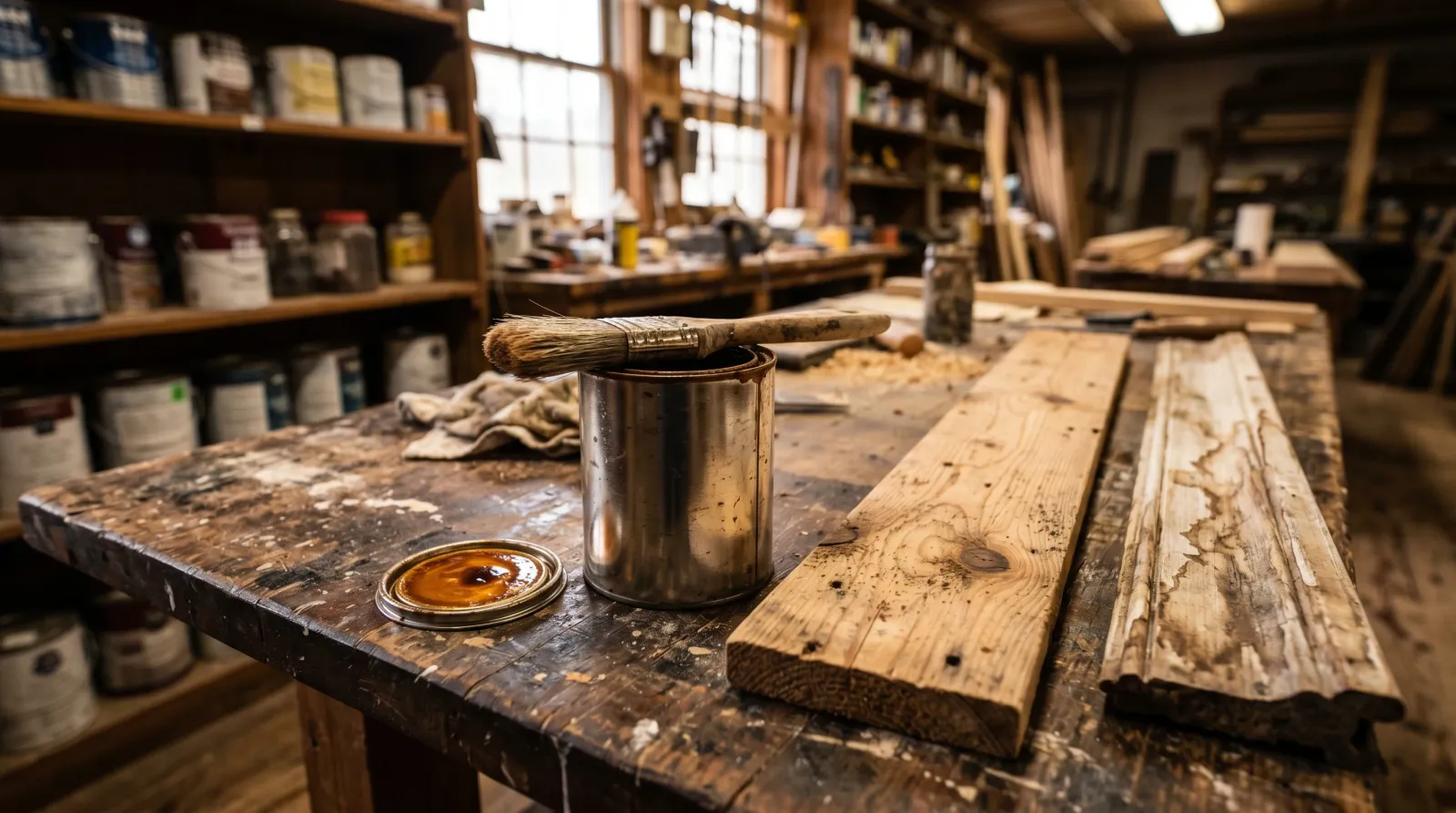
You prime a patched ceiling, paint it white, and a week later a faint brown ring has crept back through. You paint over a knotty pine board and the knots ghost through in amber circles. That bleed-through is the problem shellac primer was built to stop. Shellac primer is a fast-drying primer-sealer made from shellac resin dissolved in alcohol, and it blocks water stains, smoke, tannin, and knot bleed that water-based and most oil primers let through. It dries to the touch in 15 to 45 minutes and seals where nothing else will.
The reason it works comes down to the resin and the solvent. Shellac is a natural resin secreted by the lac insect, dissolved in denatured alcohol instead of water or mineral spirits. When you brush it on, the alcohol flashes off fast and leaves a hard, nearly impermeable film. That film does two things a latex primer can’t. It dries before the stain underneath has time to redissolve and migrate up into the wet primer, and once dry it forms a barrier the stain molecules physically can’t pass through.
TL;DR
- What it is: a primer-sealer made from shellac resin in alcohol. The category leader is Zinsser BIN, so people call it “BIN-class.”
- What it does best: blocks water stains, smoke and soot, nicotine, pet odor, knot bleed, and cedar/redwood tannin. The strongest stain-blocker you can buy at a paint store.
- Dries fast: touch-dry in 15–45 minutes, topcoat in under an hour.
- Bonds to glossy surfaces: grips tile, melamine, and old oil paint without much sanding.
- The catches: interior only, smells strong, cleans up with denatured alcohol, and costs more per gallon than latex primer.
- Not for: big open walls, exterior wood, or floors that flex.
When to Use Shellac Primer
Use it for:
- Water stains on ceilings and drywall. A roof leak or an overflowed tub leaves a brown ring that bleeds through latex paint every time. Shellac seals it in one coat. See the deeper walkthrough on removing water stains from a ceiling.
- Knots and tannin in bare wood. Pine knots, cedar, and redwood push resin and tannin up through the topcoat for years. Shellac caps them. This is the core fix for knots bleeding through paint.
- Smoke, soot, and nicotine. After a fire or in a long-term smoker’s home, the yellow-brown film carries odor and will leech through latex. Shellac blocks both the stain and most of the smell.
- Glossy or slick substrates. Old oil-based trim, melamine shelving, and ceramic tile take shellac with only a light scuff, because the alcohol bites into surfaces water-based primer beads off of.
Don’t use it for:
- Large wall areas. It’s expensive, smells strong, and dries too fast to keep a wet edge across a big plane. Use a water-based stain-blocker or standard primer for general wall work.
- Anything exterior. Shellac is not waterproof and breaks down under UV and rain.
- Floors and high-flex surfaces. The hard film is brittle. It cracks where the substrate moves underfoot.
When NOT to Use Shellac Primer
This is its own intent because people reach for shellac as a do-everything primer and get burned.
- Big open walls and ceilings with no stain problem. You’re paying a premium and fighting fast flash-off for no benefit. A paint-and-primer-in-one or a separate primer does the job cheaper.
- Exterior siding, fences, decks. Shellac fails outdoors within a season.
- Damp or unsealed masonry. Shellac doesn’t breathe well and traps moisture against the substrate. Use a masonry-rated primer instead.
- When the room can’t be ventilated. The alcohol vapor is sharp and the flash point is low. No closed bathrooms with the door shut.
How Shellac Primer Compares
| Shellac (BIN-class) | Oil-based primer | Water-based primer | |
|---|---|---|---|
| Stain-blocking | Strongest | Strong | Fair to good |
| Dry to topcoat | Under 1 hr | 8–24 hr | 1–4 hr |
| Blocks knots & tannin | Yes | Yes | Often not |
| Adhesion to glossy surfaces | Excellent | Good | Poor without sanding |
| Cleanup | Denatured alcohol | Mineral spirits | Water |
| Odor / VOC | High | High | Low |
| Exterior use | No | Yes | Some |
For the broader chemistry difference behind the cleanup column, see oil-based vs water-based paint. And for the oil-versus-shellac decision specifically, the oil primer vs shellac primer breakdown goes head to head.
What It Looks Like When It Works
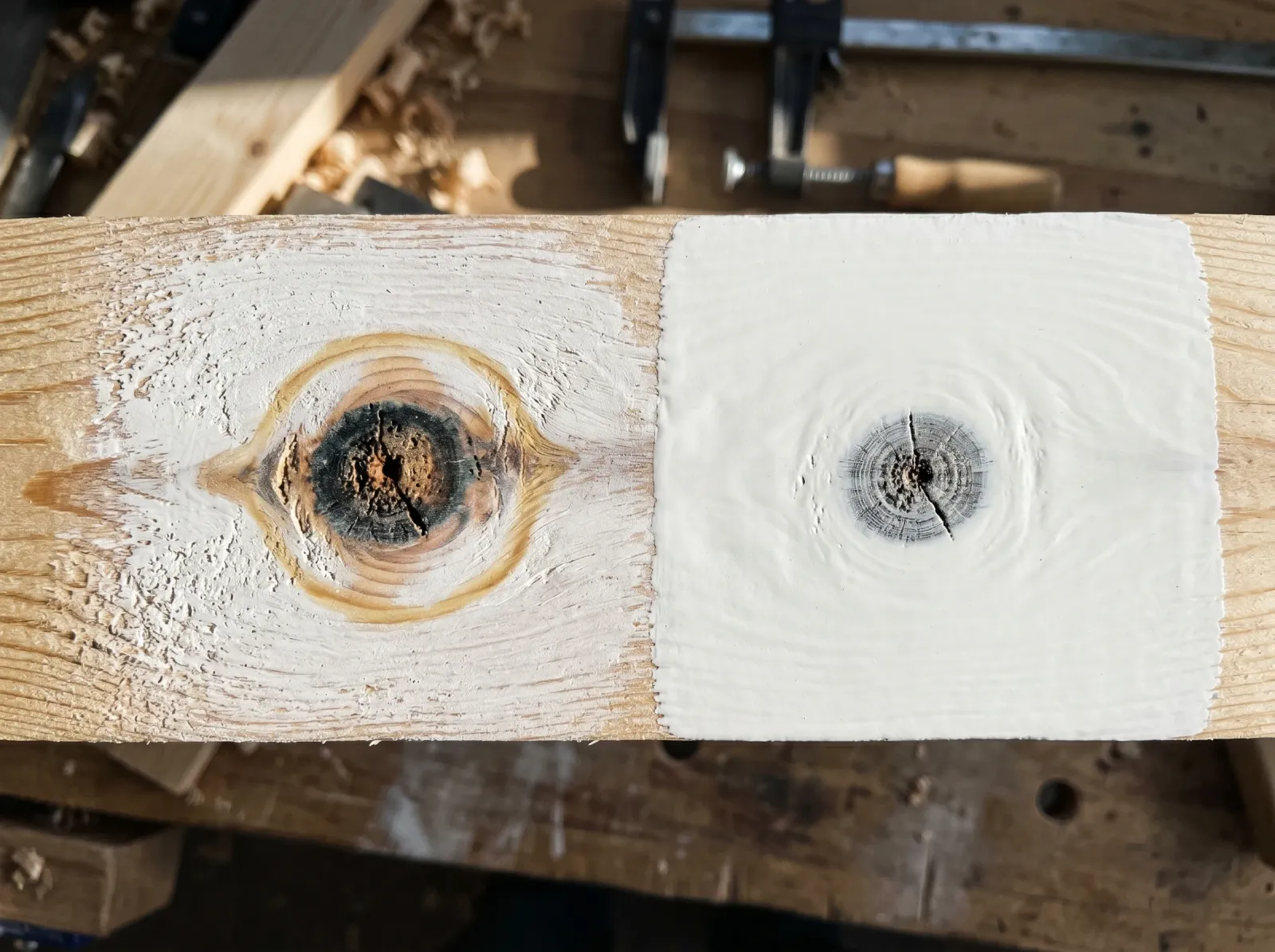
Left knot: a water-based primer let the resin ghost back through within days. Right knot: one coat of shellac sealed it flat and clean.
The tell is the knot. Prime a knotty board with a water-based primer and check it under raking light two days later, and you’ll usually see faint amber halos where resin has wicked up into the film. The same board under shellac stays dead flat and white.
Common Mistakes
- Using water to thin or clean it. Shellac doesn’t dissolve in water. It thins and cleans with denatured alcohol. Pour water in the can and you’ll seize the resin into clumps.
- Letting the can sit for years. Old shellac stops drying hard. Aged cans cure soft and gummy and never fully harden. Check the date and don’t buy bulk you won’t use within a year.
- Brushing it like latex. It flashes off in seconds. Load the brush, lay it down in a single confident pass, and leave it. Going back over a tacky area drags the film and leaves ridges.
- Skipping ventilation. The alcohol vapor builds fast in a small room. Open a window, run a fan, and keep it away from pilot lights.
- Reaching for it on bare drywall with no stain. Shellac isn’t a general-purpose primer. On clean new drywall a standard primer seals the paper face better and costs less.
Where to Buy and What to Look For
Look for “shellac-based primer-sealer” on the label, not just “stain blocker,” since many water-based products use that phrase. Zinsser BIN is the reference can and the one most stores stock. It comes in white pigmented (for stain-blocking under paint) and clear (for sealing without hiding). Aerosol BIN exists for small jobs like spot-priming knots, where a half-pint can would dry out before you finish.
For full SKU comparisons across primer types, see the best primers round-up.
FAQ
Does shellac primer need to be sanded before topcoat?
A light scuff with 220-grit helps, but shellac dries so hard and fast that it often needs only a quick knock-down of raised grain or brush ridges. Wait until it’s dry to the touch, then dust it off and topcoat with latex, oil, or more shellac.
Can you use shellac primer outside?
No. Shellac isn’t waterproof and it degrades under UV and repeated moisture. It’s an interior product. For exterior stain-blocking, use an exterior alkyd primer or a water-based exterior stain-blocker rated for the surface.
What do you thin shellac primer with?
Denatured alcohol, never water or mineral spirits. Alcohol is the original solvent and also your brush cleaner. A capful loosens a thickened can; don’t thin past about 10% or you lose film thickness.
Is shellac primer the same as BIN?
BIN is Zinsser’s shellac-based primer-sealer and it dominates the category the way Kleenex dominates tissues. It’s the reference product, but other shellac primers exist. “BIN-class” here means a true shellac primer, not a water-based one with a similar name.
How long does shellac primer take to dry?
Touch-dry in 15–45 minutes, recoat in about 45 minutes, topcoat-ready in under an hour in most rooms. It’s the fastest-drying primer on the shelf, which is the whole reason to grab it when you want to finish in one afternoon.