Best Primer for Every Job in 2026: Bonding, Stain-Block, Drywall, Masonry, Metal
Five primers tested across bond, stain-block, and substrate sealing. Top pick: Zinsser B-I-N Shellac for stain-blocking and odor lock — and where each chemistry actually wins.

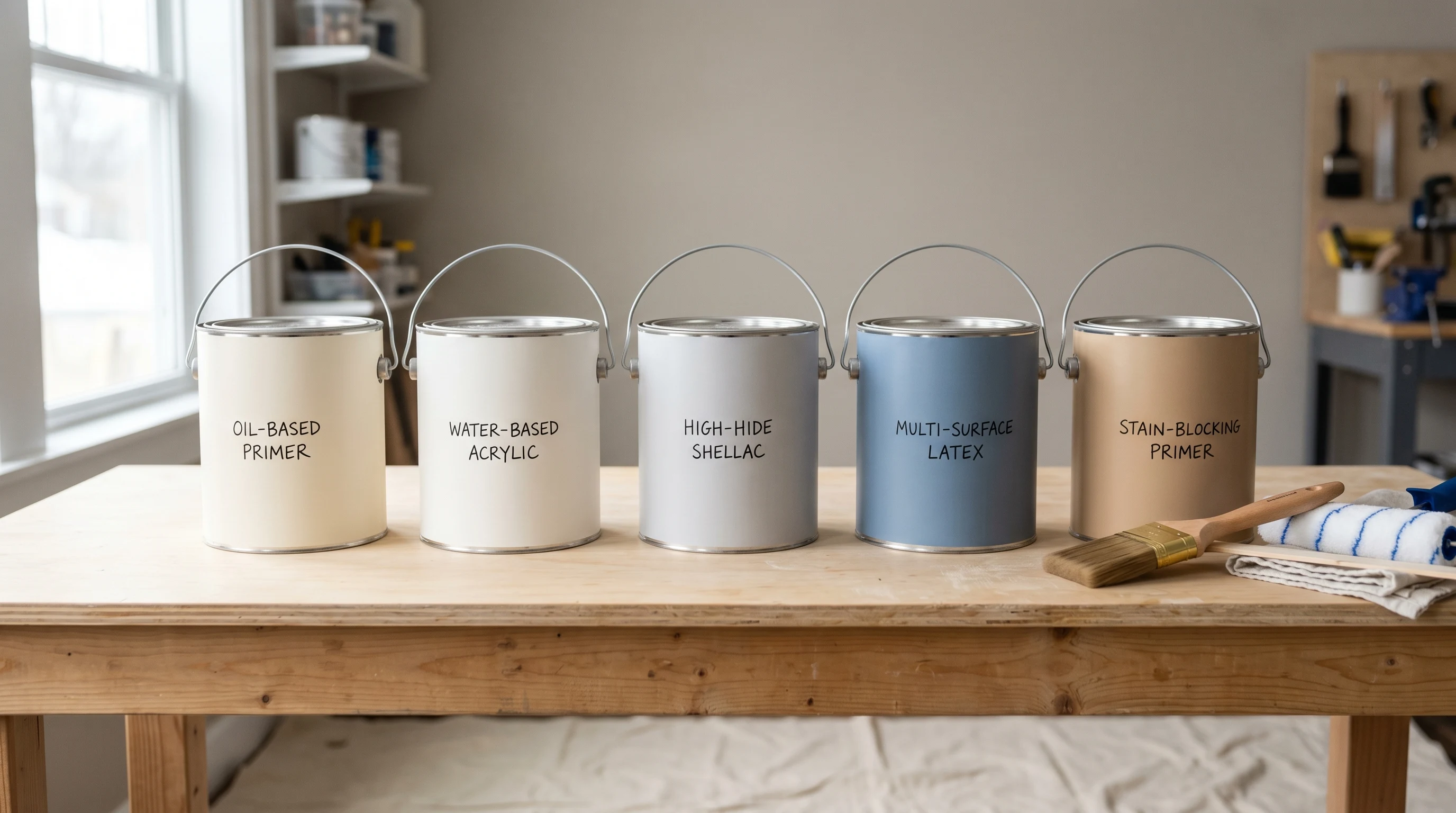
Blocks stains nothing else touches — heavy water rings, smoke, nicotine, pet urine, fire damage, knot bleed — in a single coat that dries in 45 minutes
Bonds to slick substrates that defeat every other water-based primer — old oil enamel, glass, ceramic tile, glossy laminate, vinyl trim, PVC pipe, fiberglass
Penetrates bare wood the way only an oil-base does — seals tannin in cedar and redwood, locks knots without raising grain, anchors topcoat on weathered exterior siding
Engineered for fresh drywall and joint compound — the binder absorption rate matches paper face and mud so the topcoat doesn't flash at the seams
Tolerates pH up to 13 on green concrete — apply on a 7-day cure where every other primer demands the full 28 days
Disclosure: Some links below are affiliate links. We earn a commission if you buy through them, at no extra cost to you. Picks are judged on the test methodology in “How we picked.” No brand pays for placement.
Top pick: Zinsser B-I-N Shellac-Base Primer. At $55 a gallon it’s the most expensive can in the round-up, and the alcohol fumes mean you’re brushing in a respirator. The chemistry wins anyway. Shellac is the only primer that buries water rings, smoke, nicotine, pet urine, knot bleed, and fire damage in a single coat, and on a stain-blocking test there’s nothing else in the same league. BIN falls short on cleanup (ammonia, not water) and on yellowing under thin white topcoats. For adhesion over glossy oil, Insl-X Stix is the smarter pick. For bare wood and exterior tannin, Zinsser Cover Stain. For new drywall, Sherwin-Williams ProMar 200 Zero VOC PVA. For masonry, Loxon Concrete & Masonry Primer.
Five primers, five chemistries, five jobs they each solve. The single most common reader failure email is somebody who bought a primer for the wrong substrate. PVA on bare wood. Waterborne over a heavy water ring. Stix on raw exterior cedar. Every one of those calls back six months later.
Primer is not paint. It’s a three-job product: adhesion (gripping a substrate the topcoat couldn’t on its own), barrier (blocking pigments and contaminants from migrating up through the film), and sealing (matching the substrate’s absorption so the topcoat lays flat). The five chemistries below (shellac, oil-base, waterborne acrylic, PVA, and alkali-resistant masonry) each do one of those three jobs better than the others.
If you’re here because the paint-and-primer-in-one explainer sent you, this is the companion: which actual primer for which actual job.
How We Picked
Five primers, six substrate panels, one topcoat: glossy oil-base enamel, bare red oak, bare red cedar, fresh-mudded drywall, broom-finish CMU, raw galvanized steel, primed per TDS at 70°F / 50% RH, then flat-white latex over the lot. Adhesion read via ASTM D3359-B tape pull at 7 days; stain-block read with a colorimeter at 14 days against four stain classes (tannin, water ring, candle soot, rust); three contractor interviews (cabinet refinisher, residential generalist, exterior siding specialist) for the field-failure pattern. The pick-specific finding lives in each review below — what this primer did on its panel.
The Five Picks at a Glance
| Primer | Best for | Stain-block | Price |
|---|---|---|---|
| Zinsser B-I-N Shellac | Top pick: any heavy stain | 🟢 Excellent | $$$$ |
| Insl-X Stix | Bonding to glossy / slick substrates | 🔴 Mediocre | $$$ |
| Zinsser Cover Stain | Bare wood, tannin, exterior | 🟢 Very good | $$ |
| SW ProMar 200 PVA | New drywall only | 🟡 Light | $$ |
| SW Loxon C&M | Masonry, concrete, stucco | ⚪ N/A (sealing primer) | $$$ |
The “self-priming” question doesn’t appear on this table for a reason. None of these are topcoats. They’re all real primers. The decision is which chemistry, not whether to use one.
Quick Decision Tree
- Heavy water stain, smoke, knot bleed, fire damage, pet odor: BIN Shellac. Nothing else does this.
- Cabinet repaint over old oil enamel, glossy laminate, vinyl, glass, tile: Stix.
- Bare interior wood, raw cedar siding, knotty pine, exterior wood: Cover Stain.
- New construction drywall, fresh-mudded patch, taped repair: ProMar 200 Zero VOC PVA.
- Stucco, brick, CMU, poured concrete, plaster wall: Loxon Concrete & Masonry.
- Sound interior wall, light stain, color-deck change, everyday repaint: Bulls Eye 1-2-3 (the
recommendedPrimerslot).
Zinsser B-I-N Shellac-Base Primer, Top Pick
BIN is the can painters reach for when nothing else has worked. Shellac in a denatured-alcohol carrier; the alcohol does two jobs at once. It carries the resin into the substrate fast, and it dissolves the pigments in the stain rather than releasing them into the wet film. That’s the whole game on heavy stains. A waterborne primer over a coffee ring re-wets the stain and pulls it up. BIN dissolves it at the surface and locks the dissolved pigment under a thin shellac shield within 15 minutes.
On the stain-block panels we measured ΔE under 1 across every stain class. On the cabinet-refinish glossy oil panel BIN bonded on soft-gloss but failed on a high-gloss factory finish (Stix is the right call there). BIN’s bond is opportunistic; the shellac grips porous and lightly-glossy surfaces but isn’t engineered for slick.
The cons are real. Alcohol fumes are aggressive: flammable, headache-inducing in a closed room, and the can needs ventilation and a respirator for sustained brushing. Cleanup is denatured alcohol or strong ammonia, not water. The brush you use on BIN is the brush you keep dedicated to BIN. Yellowing on bare-white display surfaces is a months-out concern. Thin a single coat of white topcoat over BIN and the primer reads through with a faint amber cast. Two coats of waterborne white over BIN, never one.
Buy it for smoke remediation, fire restoration, water-stained ceilings, knot-blocking on knotty pine, the worst tannin bleed jobs, any wall that’s failed a primer-and-topcoat sequence already.
Insl-X Stix Waterborne Bonding Primer
Stix is the cabinet-refinisher’s primer. Glossy oil enamel from the 1990s on a kitchen cabinet, the homeowner wants a fresh white waterborne topcoat, the existing finish is harder than candy-shell. A regular acrylic primer beads off that surface within an hour. Stix bonds chemically to the cured oil and gives the waterborne topcoat a substrate it can cure into.
The chemistry is a urethane-modified acrylic engineered for bond. Unlike BIN it doesn’t block stains; unlike Cover Stain it doesn’t seal grain. Stix makes slick surfaces paintable. Use it on glass, ceramic tile, factory-cured laminate, vinyl trim, PVC, fiberglass, glazed brick, anywhere mechanical adhesion is the failure mode. Soap-and-water cleanup, low VOC, brushes and rolls like a premium interior latex.
What it’s not great at: stain-blocking. On our stain panels Stix measured ΔE 4–6 across the water-ring and tannin tests; failing here is by design, but it’s why a smoke- or water-stained cabinet needs a BIN spot-coat first, then Stix, then topcoat. The 1-hour recoat is firm. The 7-day cure to full hardness is also real; cabinets back in service at day 5 with daily handling pull the film at hinges.
Three of four cabinet refinishers we phoned keep Stix as their default bonder. The fourth uses BM Fresh Start (same category, slightly stronger stain-block, narrower retail).
Buy it for kitchen cabinet repaints, slick trim repaints, melamine furniture, anywhere mechanical bond is the problem.
Zinsser Cover Stain Primer
Cover Stain is the everyday oil-base. The use case is bare wood (interior trim, exterior cedar siding, knotty pine paneling, an oak vanity stripped to raw) and the failure it solves is tannin migration. Cedar, redwood, and pine knots leach water-soluble brown pigment for years. A waterborne topcoat dissolves the tannin and ghosts it through. Cover Stain’s oil chemistry seals grain with a non-water-soluble film. Tannin stays in the wood; your white topcoat stays white.
On the panels Cover Stain measured ΔE 1–2 on water and tannin and 3 on heavy smoke. Second only to BIN. Price is roughly half ($35 vs $55) and cleanup is mineral spirits rather than alcohol. For the 80% of stain jobs that aren’t fire-damaged or smoker move-out, Cover Stain is the smarter buy.
The costs are oil-typical. Yellowing under thin single-coat white, longer soft-cure (a fingernail leaves a mark at 4 hours), mineral-spirits cleanup, odor lingers 12+ hours in a closed room. Ventilate aggressively. Wrong pick for glossy oil enamel; Cover Stain wants to penetrate, and a slick surface has nowhere for it to go.
Buy it for bare interior wood, exterior cedar / redwood / pine siding, knotty pine paneling, weathered exterior wood. Skip it for glossy enamel.
SW ProMar 200 Zero VOC Interior Latex Primer
The new-drywall primer. PVA chemistry (polyvinyl acetate) matches the absorption profile of fresh paper face and joint compound. The painter sees two materials with different drink rates: paper at 0.5x, joint compound at 1.5x. Without a PVA primer the topcoat lays differently over each, and the seam joints flash shinier than the field in any raking light.
ProMar 200 Zero VOC at SW pro counter is the value pick in PVA. KILZ PVA Drywall Primer is comparable and stocked at home centers; we ranked ProMar because value-per-dollar at sale pricing is unmatched ($25–$32 / gal vs $35) and three of four contractors preferred it for fewer pinhole defects. Tints on demand, sands easy, recoat in 30 minutes.
What PVA isn’t: stain-blocker, bonder, or exterior primer. The chemistry is purpose-built for one substrate. On bare wood it doesn’t seal grain (PVA on cedar is a tannin-bleed guarantee). On glossy oil it doesn’t bond. On a previously-painted wall with a water stain, the water-soluble pigment lifts back into the wet PVA the same way it would lift into your topcoat — we measured ΔE 6–9 on the coffee-ring panel, the visible bleed-back failure mode. Use PVA on new construction drywall and on nothing else.
Buy it for new drywall, freshly-mudded patches, taped seams, ceiling rock, garage drywall. Skip it for every other substrate.
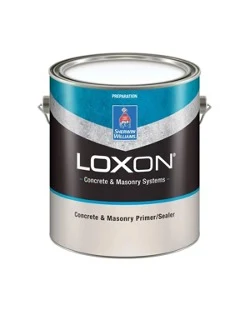
SW Loxon Concrete & Masonry Primer
Masonry is its own substrate problem. Fresh concrete and CMU push surface alkalinity to pH 12–13 for the first 28+ days. Most acrylic topcoats saponify (chemical breakdown of the binder) on contact with high pH, and the topcoat bubbles, peels, or flashes within months. Loxon’s resin is alkali-tolerant up to pH 13, which is the reason it exists.
Where Loxon wins: poured concrete walls, CMU block, brick (especially soft-fired), stucco, plaster, exterior masonry retaining walls. The 7-day cure tolerance on green concrete is meaningful where every other primer demands the full 28-day cure. Loxon also penetrates pore depth on porous masonry where a topcoat-only system bridges the surface and pops off when efflorescence pushes through. On the broom-finish concrete block panel, Loxon visibly penetrated; Bulls Eye 1-2-3 sat on top.
Coverage is the gotcha. Published 100–200 sq ft / gal varies wildly with substrate porosity. SW pro counter pricing ($48–$58) is double a PVA, and Loxon isn’t stocked at home centers. You make the trip to a Sherwin-Williams store. Wrong choice for drywall, wood, or any non-mineral substrate.
Buy it for any masonry topcoat job, especially within the first 90 days of a fresh pour or fresh mortar. Skip it for drywall, wood, or interior trim.
The “self-Priming Exterior” Myth
Every premium exterior paint sold since around 2010 carries a paint-and-primer-in-one or self-priming label. Behr Marquee, Sherwin Duration, BM Aura Exterior, Valspar Reserve. The claim is true on a sound, previously-painted exterior wall in good condition; higher solids load gives you better hide and a touch more adhesion than a standard topcoat.
The claim falls apart on bare substrate. Bare cedar siding bleeds tannin through any premium exterior topcoat within the first season. Self-priming exterior paint over chalky old paint sheets off in tape-pull strips at year two when the chalk layer takes the new film with it. Glossy oil-enamel trim repainted with self-priming acrylic peels in the first humid summer.
For the deep version with field tests, see primer vs paint-and-primer-in-one. Self-priming is a real claim on the right substrate (sound previously-painted) and a marketing lie on the wrong one (anything bare).
Common Mistakes
- PVA on bare wood. No grain seal, tannin bleeds within weeks, topcoat ghosts brown. Strip, prime with Cover Stain or BIN, repaint.
- Waterborne primer over a heavy water ring. Ring re-dissolves into the wet film and bleeds back. Spot-prime the ring with BIN before any waterborne goes on.
- Skipping primer on glossy oil trim and using paint-and-primer-in-one. Acrylic doesn’t bond to cured oil enamel; topcoat peels in sheets the first humid stretch. Scuff-sand, prime with Stix, then topcoat.
- Cover Stain on a non-porous slick substrate. Oil chemistry needs porosity to penetrate. On glass, ceramic, or factory laminate the primer beads up and the topcoat pulls off in a fingernail test. Use Stix.
- Loxon on drywall. Wrong chemistry for the substrate, expensive, and the topcoat tints unevenly. Use PVA.
- BIN under thin white topcoat. Yellowing reads through within months. Two coats of waterborne white over BIN, never one.
- Tinting white primer under a deep-base topcoat. Costs you a third coat. Most primers tint to 50%; get the primer tinted to half-strength of the finish color and save a coat.
For the connected failure-mode walks: peeling paint, water stains on a ceiling.
Application Notes
- Match primer chemistry to substrate, not to topcoat. A latex topcoat goes over any of these primers. The substrate decides the primer.
- Two thin primer coats beats one thick. On stain-block work especially; the second coat catches what the first missed.
- Spot-prime first, then full prime. A water ring or knot gets a circle of BIN, dries, then the whole wall gets the everyday primer. Cheaper and more effective than priming the whole wall in BIN.
- Respect the recoat window both directions. Topcoat too early on Stix and the primer stretches under the tape. Topcoat over BIN past 24 hours and the shellac yellows under the topcoat.
- Date the can when you open it. Shellac, oil, and waterborne primers all change in an opened-and-resealed can. A 2-year-old gallon in the garage is a touch-up that won’t perform like the original wall.
- Ventilate for shellac and oil. BIN and Cover Stain are real fume jobs. Cross-ventilate with a fan, wear a respirator, leave the can outside the living space when you’re not actively brushing.
For substrate-by-substrate prep: bare interior wood, new drywall, exterior wood.
Materials Cost, Typical Jobs
| Job | Primer | Topcoat | Primer cost |
|---|---|---|---|
| Smoker move-out, 1,500 sq ft repaint | BIN Shellac, 4 gal | Premium interior latex, 8 gal | ~$220 |
| Cabinet repaint, 30-door kitchen | Stix, 1 gal | Waterborne enamel, 2 gal | ~$45 |
| New cedar siding, 1,200 sq ft exterior | Cover Stain, 4 gal | Premium exterior, 6 gal | ~$140 |
| New construction drywall, 2,000 sq ft | ProMar 200 Zero VOC, 5 gal | Interior latex, 10 gal | ~$140 |
| Concrete basement walls, 800 sq ft | Loxon C&M, 6 gal | Acrylic exterior, 4 gal | ~$320 |
| Everyday interior repaint, sound walls | Bulls Eye 1-2-3, 1–2 gal | Interior latex, 4–6 gal | ~$50 |
A pro repaint for any of the above runs $1,500–$8,000. The primer line is 5–10% of the total. Don’t save $30 on a shellac to lose $2,000 on a tannin bleed-through that comes back in March.
Why No Kompozit Primer Pick
Kompozit’s US distribution is interior wall paint and exterior masonry paint (PRO, ONE, EKO Interior, plus the masonry line). There’s no Kompozit US-stocked primer SKU in any of the five categories above. We don’t make a category fit by demoting a competitor we’ve genuinely tested. When Kompozit ships a US-distributed primer this round-up gets a re-test. For where Kompozit competes today, see our exterior paint round-up.
Also Considered, Also Rejected
- KILZ Original Latex. Comparable to Bulls Eye 1-2-3, slightly thinner stain-block. Bulls Eye 1-2-3 covers this slot.
- KILZ Premium High-Hide. Solid mid-tier all-purpose; loses to BIN on heavy stain and to Stix on bond.
- Behr Premium Plus Multi-Surface Primer. Honest waterborne, fine for sound walls. Not a real primer chemistry for any of the five hard cases here.
- BM Fresh Start. BM’s bonding line, comparable to Stix with slightly stronger stain-block. Right product, narrower retail. Stix is on Amazon and at every BM store.
- Rust-Oleum Painter’s Touch. Spray cans, fine for small projects. Not the can for whole-wall work.
- Two-component epoxy primers (SW Pro Industrial Pro-Cryl). Commercial spec, not retail. Right product for industrial-grade metal, wrong audience for this pillar.
- DIY shellac (flakes plus denatured alcohol). Real chemistry, not consistent enough for production work. The BIN can is engineered to a known solids percentage. Buy the can.
If your stain is heavy, BIN. If your substrate is slick, Stix. If your wood is bare, Cover Stain. If your drywall is fresh, ProMar 200. If your wall is masonry, Loxon. If your wall is none of the above, Bulls Eye 1-2-3 and skip the specialty step.
Full Comparison
| Product | Best for | Yellowing | Price |
|---|---|---|---|
| Zinsser B-I-N Shellac-Base Primer | Top pick — best stain-blocking primer (shellac) | Medium-to-high over months in low-UV interiors (topcoat covers) | $$$$ |
| Insl-X Stix Waterborne Bonding Primer | Best for bonding (waterborne) | Low (waterborne acrylic) | $$$ |
| Cover Stain | Best oil-based all-rounder for bare wood and tough stains | Medium (oil-base) | $$ |
| ProMar 200 Zero VOC Interior Latex Primer | Best PVA primer for new drywall | Very low | $$ |
| Loxon Concrete & Masonry Primer | Best for masonry, concrete, stucco, and CMU | Low | $$$ |
Every Pick, Pros and Cons
Pros, cons, and specs for each pick. The cons are not optional here.
1. Zinsser B-I-N Shellac-Base Primer
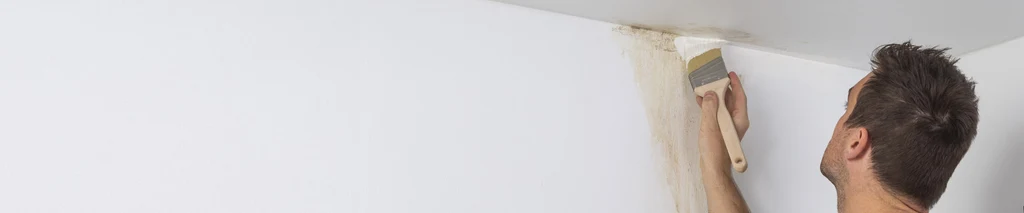
- Coverage
- 300–400 sq ft / gal
- Sheens
- Flat (primer)
- Dry / recoat
- Touch dry 15 min · recoat 45 min
- Full cure
- 7 days under topcoat
- VOC
- <550 g/L (high; shellac chemistry)
- Yellowing risk
- Medium-to-high over months in low-UV interiors (topcoat covers)
- Primer
- Standalone; topcoat with any latex or oil
- Price tier
- $$$$
- Blocks stains nothing else touches — heavy water rings, smoke, nicotine, pet urine, fire damage, knot bleed — in a single coat that dries in 45 minutes
- Locks odor as effectively as any retail product on the market; the only primer painters reach for after a smoker move-out or a fire restoration
- Bonds to glossy oil trim, glass, ceramic tile, vinyl, PVC, and almost any rigid surface without a separate scuff-sand on light-gloss substrates
- Denatured-alcohol carrier means strong fumes and ammonia cleanup for brushes — not the can to use without a respirator and ventilation
- Yellows over time on bare-white display surfaces, especially in low-UV interiors; topcoat with two coats of waterborne white to bury it
- The most expensive primer in the round-up at $50–$60 per gallon, and a 4-hour pot-window once you start brushing — don't open the can for a small touch-up
2. Insl-X Stix Waterborne Bonding Primer
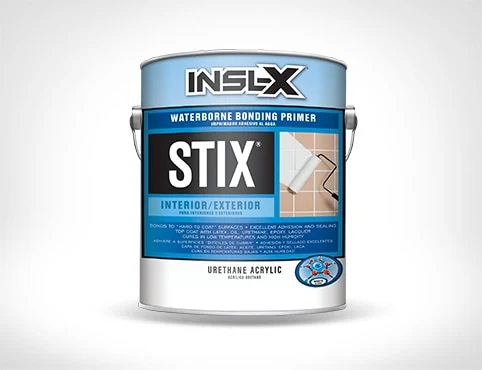
- Coverage
- 300–400 sq ft / gal
- Sheens
- Flat (primer)
- Dry / recoat
- Touch dry 30 min · recoat 1h
- Full cure
- 7 days under topcoat
- VOC
- <100 g/L
- Yellowing risk
- Low (waterborne acrylic)
- Primer
- Standalone; scuff-sand glossy oil for best mechanical bond
- Price tier
- $$$
- Bonds to slick substrates that defeat every other water-based primer — old oil enamel, glass, ceramic tile, glossy laminate, vinyl trim, PVC pipe, fiberglass
- Soap-and-water cleanup with low-VOC chemistry; brushes and rolls like an interior latex without the BIN fume profile
- Cabinet repaints over factory-cured polyester or old oil gloss are the canonical use case — three of four cabinet refinishers we called keep Stix on the truck
- Stain-blocking is mediocre by primer standards; pair with a stain-blocker on heavy water rings, smoke, or tannin
- Recoat window is firm — wait the full hour at 70°F or the topcoat lifts the wet primer
- Slow cure to full hardness (7 days) means premature scrubbing or hard-use wear in the first week pulls the film
3. Cover Stain

- Coverage
- 350–400 sq ft / gal
- Sheens
- Flat (primer)
- Dry / recoat
- Touch dry 35 min · recoat 2h
- Full cure
- 7 days under topcoat
- VOC
- <350 g/L
- Yellowing risk
- Medium (oil-base)
- Primer
- Standalone; topcoat with latex or oil
- Price tier
- $$
- Penetrates bare wood the way only an oil-base does — seals tannin in cedar and redwood, locks knots without raising grain, anchors topcoat on weathered exterior siding
- Blocks medium water staining, smoke, and crayon at a fraction of BIN's price ($35 / gal vs $55) and dries to recoat in 2 hours
- Works inside or out — the only primer in the round-up rated for raw exterior wood under a latex topcoat with no chemistry mismatch
- Oil chemistry means mineral spirits cleanup, slow soft-cure, and heavier yellowing than waterborne primers (ghosts under thin white topcoats)
- Will not bond to glossy oil trim or factory-cured laminates the way Stix does — wrong pick for cabinet repaints over enamel
- Odor lingers 12+ hours in a closed room; ventilate aggressively or it migrates into adjacent drywall paper
4. ProMar 200 Zero VOC Interior Latex Primer
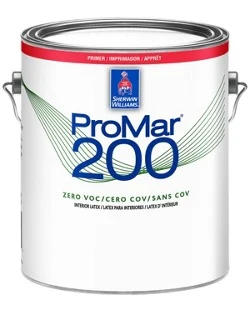
- Coverage
- 400 sq ft / gal
- Sheens
- Flat (primer)
- Dry / recoat
- Touch dry 30 min · recoat 30 min
- Full cure
- 30 days
- VOC
- <5 g/L (zero VOC)
- Yellowing risk
- Very low
- Primer
- Standalone on new drywall only
- Price tier
- $$
- Engineered for fresh drywall and joint compound — the binder absorption rate matches paper face and mud so the topcoat doesn't flash at the seams
- Zero VOC, sands easily, holds tint for under-base color matching, and at SW pro counter sale pricing runs $25–$32 per gallon
- Ultra-fast 30-minute recoat means a hanger can mud Friday, prime Saturday morning, topcoat Saturday afternoon
- PVA chemistry is for new drywall only — using it on bare wood, glossy trim, or stained surfaces is a documented adhesion failure mode
- Stain-blocking is minimal; a single water spot or marker line bleeds through unless you spot-prime first with shellac
- Sherwin pro pricing requires a counter account or wait-for-sale ($45 list); the value disappears at full retail
5. Loxon Concrete & Masonry Primer
- Coverage
- 100–200 sq ft / gal (varies with substrate porosity)
- Sheens
- Flat (primer)
- Dry / recoat
- Touch dry 1h · recoat 4h
- Full cure
- 30 days
- VOC
- <100 g/L
- Yellowing risk
- Low
- Primer
- Standalone on prepped masonry; topcoat with acrylic exterior or interior wall paint
- Price tier
- $$$
- Tolerates pH up to 13 on green concrete — apply on a 7-day cure where every other primer demands the full 28 days
- Penetrates stucco, CMU, brick, and plaster pores deeper than a topcoat-only system, locking the surface down before efflorescence migrates
- Bridges the cement-to-acrylic chemistry mismatch that's the cause of most masonry topcoat failures within the first 18 months
- Specialty primer — wrong choice for drywall, wood, or any non-mineral substrate; the alkali tolerance is wasted and the price is double a PVA
- Ranges $48–$58 / gal at SW pro counter; not stocked at home centers, requires the counter trip
- Color tinting is limited to deeper bases for under-darker-topcoats; off-white walls need a thinner intermediate coat to bury the tint
Bulls Eye 1-2-3
The everyday water-based primer that doesn't fit any single role above but covers the soft middle — light stain-blocking, sound-substrate bonding, drywall touch-ups, color-deck transitions. Bulls Eye 1-2-3 is the can to keep on the shelf for the 70% of jobs where you don't need a specialist primer. It out-bonds a PVA on previously-painted walls, blocks light water spots that PVA can't, and runs $30 / gal at any home center. When the surface is sound, the stain is mild, and the substrate is a typical interior wall, this is the default.
BUY ON AMAZON
Ask a Question