Why Paint Dried Darker Than the Swatch
Paint dried darker than the swatch? Wet paint lightens as it cures, sheen and light shift the read, and big walls amplify color. Here is why, and how to land the shade you wanted.

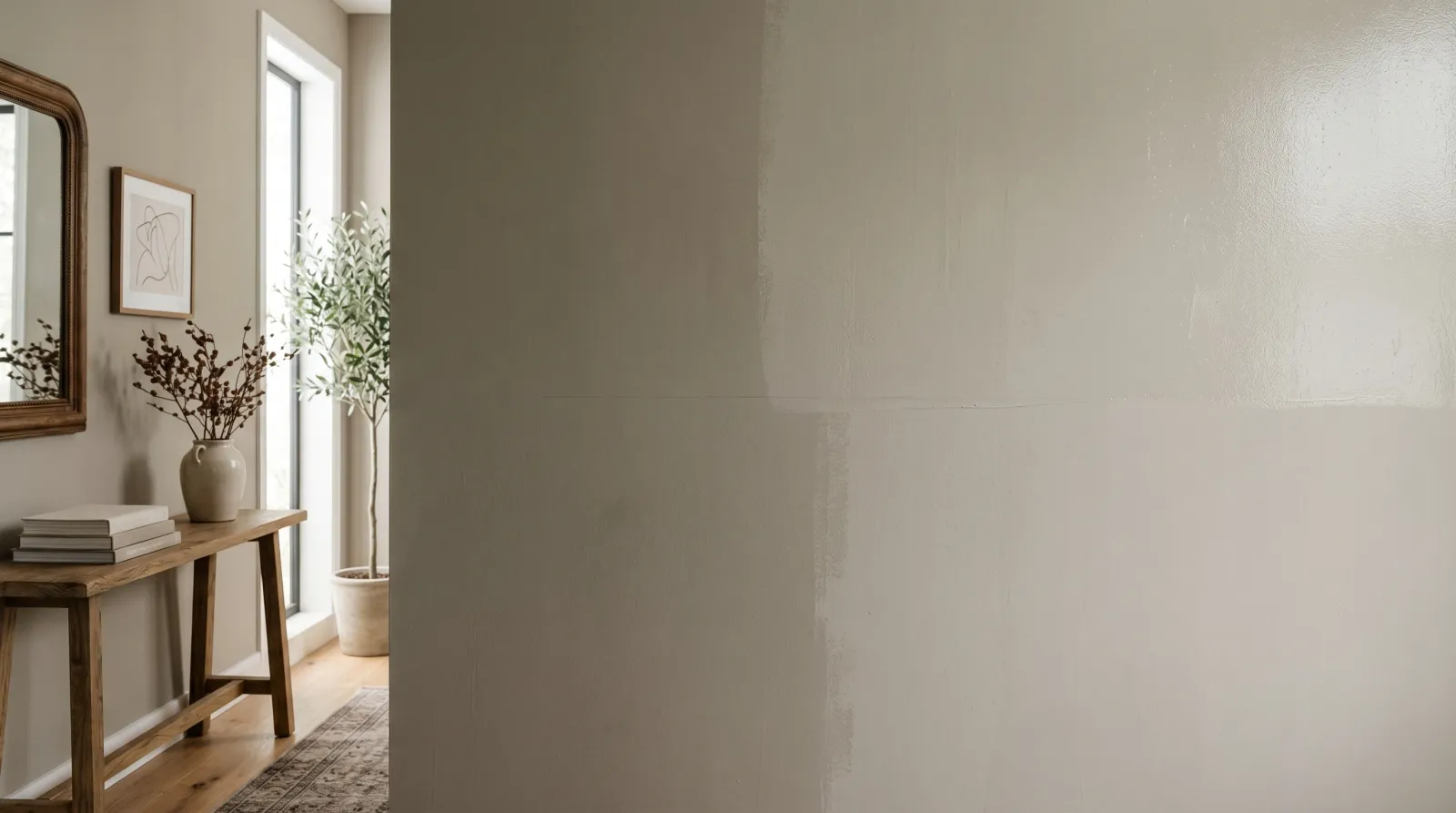
The chip in your hand said soft greige. The wall, dried overnight, reads like wet slate. Nothing went wrong with the paint. Color almost never looks the way the swatch promised, and the gap between the chip and the wall is one of the most predictable things in a room.
Wet paint lies a little. Light lies more. And a two-inch chip held up to a window will never tell you what a whole wall does at 8am.
Does This Match What You’re Seeing?
Look at the wall in daylight, then again after dark. You’ll usually land on one of these.
- The whole wall reads one to two shades deeper than the chip, evenly. Normal cure. Wet latex dries darker as the binder clears. Nothing to fix.
- It looked fine wet, then deepened over a few hours. Same cure shift, watched in real time. The pigment settling in.
- Darker in one room, fine in another, same paint. Light. North-facing and low-light rooms pull color down and cool.
- Darker and almost glossy-looking under side light. Sheen. A satin or semi-gloss reads deeper and more saturated than a matte of the identical color.
- Patchy, lighter in spots, darker in others. One thin coat. The wall underneath is still showing through. Not done yet.
- Dramatically darker than expected on a big wall. Scale. A color amplifies across a full wall in a way a chip never warns you about.
If the wall is even and just a touch deeper than you pictured, that’s the paint behaving exactly as it should.
How Serious Is This?
Cosmetic. The film is sound, the wall is sealed, and nothing about a too-dark color shortens its life. This is a how-it-looks problem, not a how-it-holds problem.
The honest part: if two full coats have cured and the color is still wrong, no technique fixes it. You picked a shade too deep for the light in that room. The fix is a lighter color, and the cost is a recoat. Catch it at the sample stage and it costs you a few dollars and a weekend of looking. Catch it after the whole room is rolled and it costs you the room again.
Why This Is Happening (root Cause)
Four things deepen a dried wall past what the chip led you to expect. Most rooms are some mix of them.
The cure. Water-based paint goes on milky. That white binder scatters light and lifts the apparent tone while it’s wet, so the color looks lighter and chalkier than it will end up. As the binder cures clear, the pigment comes forward and the color settles into its true depth. The shift is usually one to two shades. Oil-based and alkyd paints do the opposite over time, ambering and warming, but that’s a slow yellowing across months, not the overnight deepening you’re seeing now.
The light. This is the big one, and it’s the one nobody warns you about. A north-facing room gets cool, soft, indirect light that mutes a color and quietly drops it down. A south or west room gets warm, strong light that opens the same color up. A chip under store fluorescents reads different again. The lower the light reflectance value, the more dramatically a room’s light swings how dark it lands. Two identical gallons in two rooms become two colors.
The sheen. A satin or semi-gloss reflects light directionally and reads deeper and more saturated than a flat or matte of the exact same color. Side light raking across a satin wall makes it look richer and darker still. If you sampled in matte and rolled the room in eggshell, the wall got darker without the color ever changing. The sheen guide walks through how much each step moves the read.
The scale. A color does something on a full wall that it never does on a chip. All that saturation, repeated across forty square feet and wrapping a corner, intensifies. Deep colors gain the most. A navy that looked elegant on the strip can sit almost black across a real wall. The chip was never lying about the hue. It was lying about the amount.
The Fix
Step 1. Wait Before You Decide
Don’t judge a color the night you paint it. Wet edges, one thin coat, and warm evening bulbs will all push the read off true. Let both coats dry overnight, then look at the wall in daylight the next morning. Color keeps settling for the first 48 hours and the worst time to panic is hour two under a single lamp.
If after a full day in real light it still reads too dark, then it’s a color problem, and the next steps are yours.
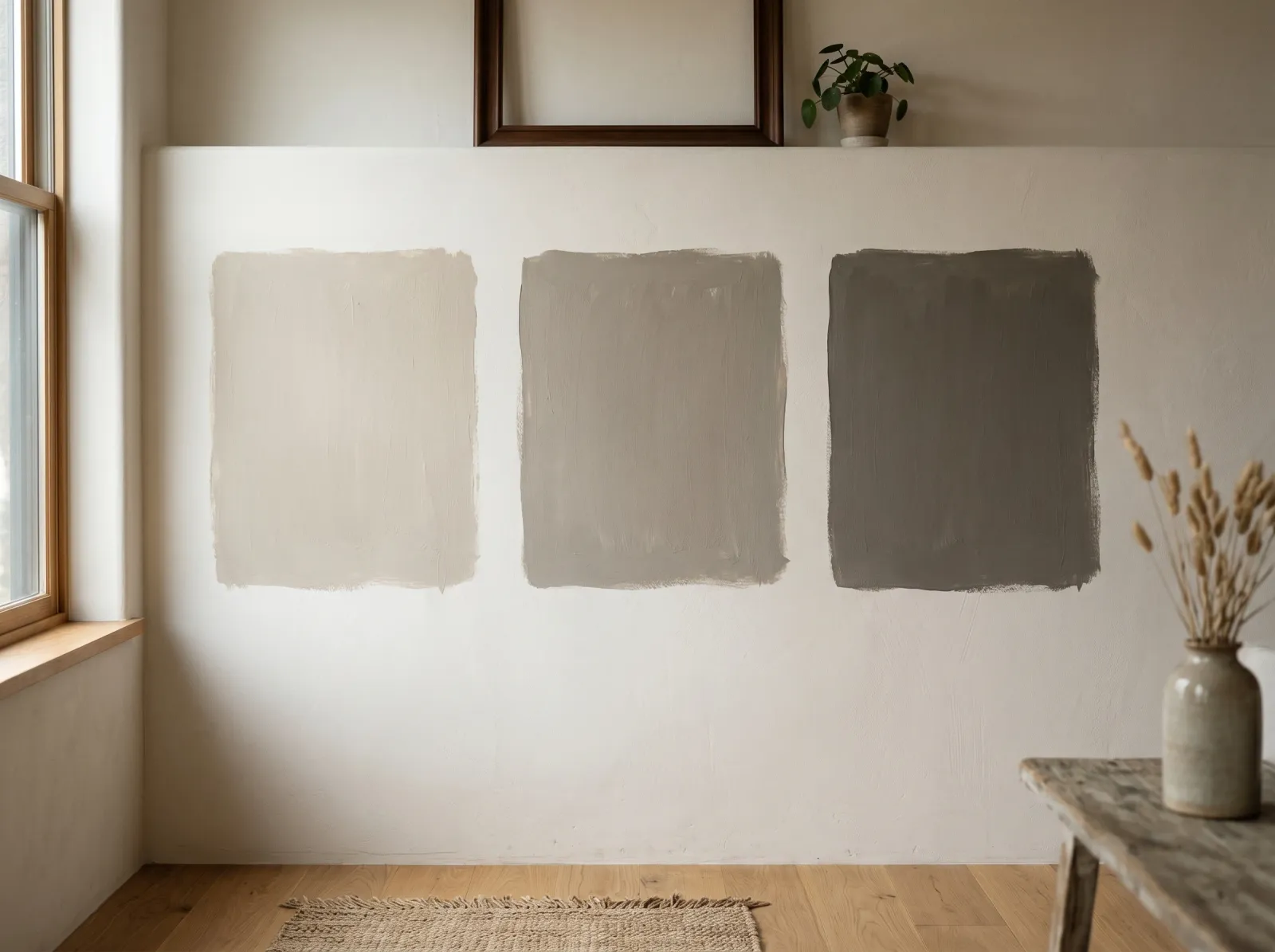 Three steps down one paint strip, painted big and viewed on the actual wall before committing a whole room.
Step 2. Sample the Right Way, on the Right Wall
Forget the chip. Buy sample pots, or peel-and-stick sample sheets, and put the color where it will actually live.
- Paint a two-foot square, or larger. Small samples read lighter than they will at full scale.
- Put it on more than one wall. The wall facing the window and the wall beside it read differently.
- Paint two coats. One coat samples lighter and patchier than the finished room.
- Look at it morning, afternoon, and night. A color you love at 4pm can go grey and heavy at breakfast.
Peel-and-stick sheets beat painted squares because you can move them, hold them against the floor and trim, and see how the color sits next to wood and fabric rather than guessing.
Step 3. Step Down the Same Strip
If the cured color is genuinely too deep, you don’t need a whole new palette. Stay on the same paint chip strip and move up one step lighter. The undertone stays consistent, so the room keeps the character you wanted at a depth the light can carry.
A lighter step has a higher LRV, which means it bounces more light back at you and holds its read better in a dim or north-facing room. For how that number predicts depth before you ever open a can, see what LRV means.
Step 4. Match the Sheen You Sampled
If the wall is darker than your sample and the color is identical, check the sheen. Sample and final coat have to be the same finish, or the comparison is rigged. A satin will always read deeper than the matte chip you fell for. When you re-sample, sample in the exact sheen you plan to roll.
Step 5. Recoat Only if You Must
Lighter over darker takes coverage. Going from a deep wall to a lighter shade usually needs a coat of primer first, tinted gray or toward the new color, then two finish coats. Skip the primer and the old depth bleeds up through the new color and you’re back where you started.
Roll the whole wall corner to corner in one session so the new color lands even. If you see banding while you work, that’s a separate issue covered in how to fix roller marks.
A Quick Read on What’s Moving the Color
| What you’re seeing | Most likely cause | What to do |
|---|---|---|
| Evenly 1–2 shades deeper | Normal cure | Nothing. This is the true color. |
| Darker in a north room | Cool, indirect light | Step one shade lighter, higher LRV |
| Deeper under side light | Sheen reflecting | Re-sample in the same sheen |
| Patchy light and dark | One thin coat | Finish the second coat, then judge |
| Almost black on a full wall | Scale amplifying a deep color | Step lighter on the same strip |
| Warming/yellowing over months | Oil or alkyd ambering | Switch to a non-yellowing acrylic |
How Do I Keep This From Happening Again?
The whole problem lives at the sample stage, so that’s where you solve it for good.
- Never choose a wall color from a chip alone. The chip is a starting point, not a decision.
- Sample on the actual wall, in the actual room, painted big and given two coats.
- Judge the color at the hours you live in the room, not just whenever you happened to be holding the brush.
- Match the sheen between your sample and your final order.
- Trust the deepening. If you want the chip’s exact lightness on the wall, start one step up the strip, because the wall will pull it down.
- Mind the undertone. A greige that reads warm on the chip can go cool and heavy on a north wall. The undertone guide shows how to spot which way a color will tip before you buy.
Common Mistakes
- Judging the color wet, or at night under one lamp. Wet and warm-lit both lie. Wait for daylight and a full dry.
- Sampling on a tiny patch. A small square reads lighter than the finished wall. Paint it big.
- Sampling one coat when you’ll roll two. One coat is always lighter and patchier. Sample what you’ll actually do.
- Comparing a matte sample to a satin order. The sheen alone deepens the read. Keep them the same.
- Picking the chip color you want on the wall. The wall deepens it. Pick one step lighter if you want the chip’s lightness.
- Ignoring the room’s direction. A south sample tells you nothing about a north wall.
When to Call a Pro
A color that dried darker than the chip is a homeowner fix in almost every case. Bring in help when the surrounding work is the hard part, not the color choice.
- A two-story stairwell or vaulted wall where re-sampling and recoating means working at height.
- A deep, saturated color you want to bring lighter, where the primer-and-two-coats coverage job is bigger than a weekend.
- A color consultation when you’ve recoated twice and still can’t land the read. A stylist or paint store color expert reading the room’s light in person will save you a third gallon.
If the wall is also peeling, flashing, or staining as it dries, that’s a film problem, not a color one, and it belongs with a different fix.
Ask a Question