How to Fix Blistering Paint
Blistering paint is the film failing under pressure — sun heat from the front or water from behind. Diagnose dry vs wet, scrape to sound paint, BIN-prime, recoat. Don't skip the source.

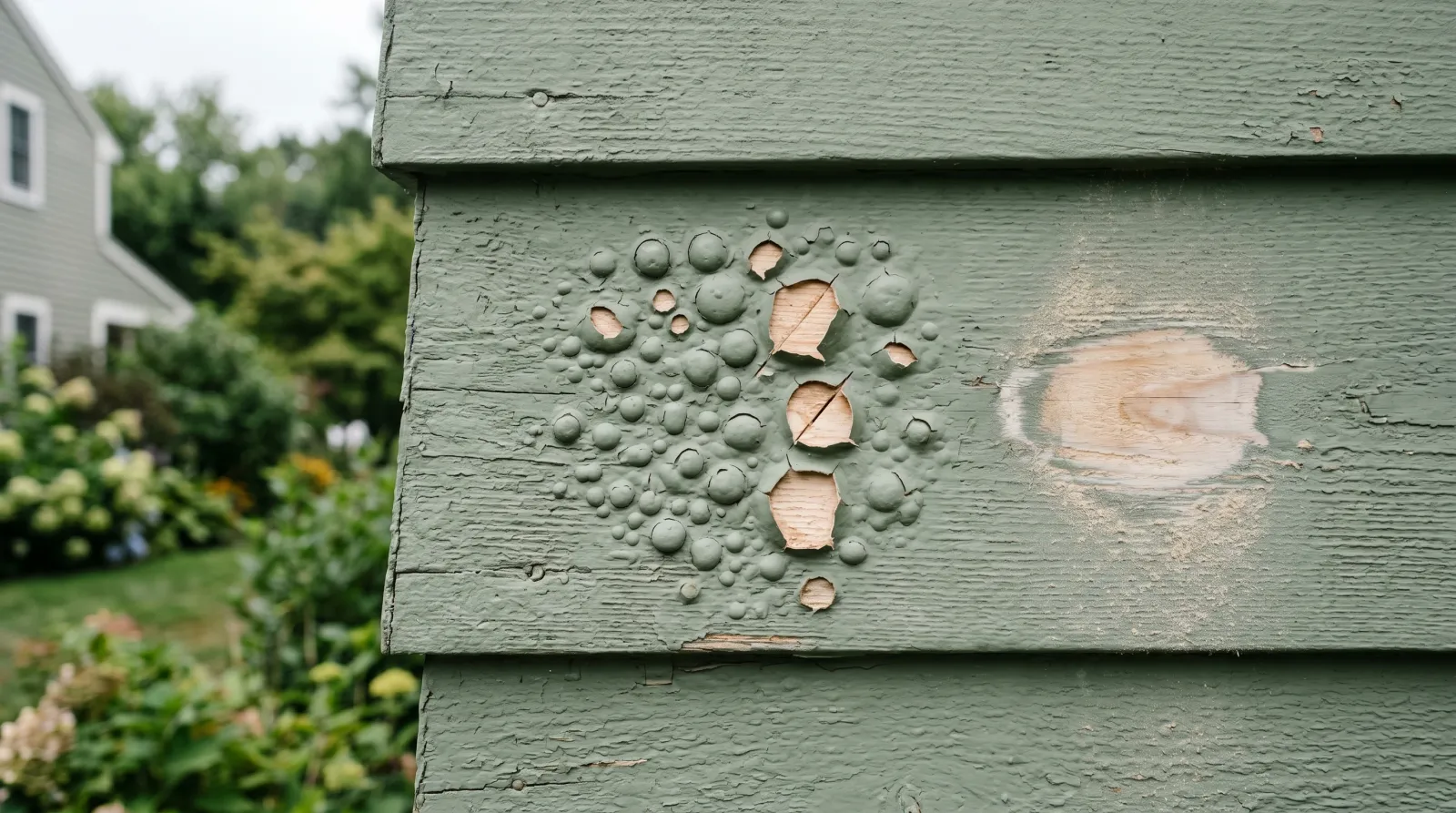
A blister is pressure made visible. Something underneath the film — heat, water, or solvent — pushed up against the dried surface until the bond gave. The dome on the wall is the symptom. The cause is somewhere else, and if you don’t name it before you scrape, you’re scraping the same spot again next August.
Does This Match What You’re Seeing?
Look at the blister before you do anything to it. Don’t pop it yet. The shape and the pattern are half the diagnosis.
- Round domes on a sun-facing wall, appeared within hours or a few days of painting: dry process. Heat blisters. Solvent trapped beneath a skinned-over topcoat.
- Round domes appearing weeks or months after painting, often after rain or a humid run: wet process. Vapor or liquid water from behind the wall.
- Single isolated bubbles around a window, a vent, or under a gutter: localized moisture intrusion. Trace the leak.
- Field of small uniform blisters across a whole wall, no sun pattern, no leak pattern: prep contamination. Soap residue, mildew, silicone overspray.
- Domes only on dark-colored siding or a dark front door: solar heat blistering on a substrate that ran 130 to 150°F in the afternoon sun.
Now lance one with a utility knife. Wet underneath means moisture. Dry underneath means heat or solvent. That single observation drives every step after this.
How Serious Is This?
- Dry blisters on a south wall, isolated to the sun side, no recurrence pattern. Same-weekend fix. Lance, scrape, feather, prime, recoat in cooler conditions.
- Wet blisters appearing seasonally, traceable to a gutter or a flashing or a vent. Two-weekend job. Fix the source first. Let the wall dry for 48 hours minimum. Then strip and recoat.
- Whole-side blistering, soft wood under the popped domes, paint failing inside 12 months of a fresh repaint. Stop. Building-envelope problem, not a paint problem. Get a moisture inspection before you open another can.
Why This Is Happening (root Cause)
Two processes. They look almost identical from the street and they need opposite primers.
Dry-process blisters. You painted in heat, or used a dark color on a sun-baked wall, or topcoated before the previous coat had cured. The film skinned over fast on top. Solvent in the layer beneath kept working and had nowhere to go. Pressure built. The bond gave. South-facing siding, dark front doors, metal storm doors painted in afternoon sun, and second coats applied at the four-hour label window in 55°F weather are the classic setups. Pop a dry blister and the substrate is pale, clean, intact. You’re looking at a surface problem.
Wet-process blisters. Water vapor is migrating outward through the wall and the paint film is the cap. Bathroom or kitchen humidity pushing through siding without a vapor barrier. A bath fan dumping into a soffit. Rainwater behind cladding from a failed flashing. Gutter overflow soaking the rim joist. Indoor RH running above 60% all winter. Pop a wet blister and the substrate is dark, damp, sometimes soft. You’re looking at a wall-system problem the paint just made visible.
A third cause to know about but rarer: substrate contamination. Soap residue from a poorly-rinsed TSP wash. Mildew growing under fresh film. Silicone overspray from a caulk job. The blisters look uniform, follow no sun or moisture line, and pop dry over a slick or soapy substrate. Treated like a dry-process blister with one extra step — a bonding primer instead of shellac.
For the cure-window side of dry blisters, the dry time vs cure time explainer covers why a label number is a floor in warm weather and a lie in cool weather.
The Fix
Step 1 — Diagnose, Then Lance
Choose three blisters on different parts of the affected area. Slit each one with a utility knife at a shallow angle. Look at the substrate. Wet on all three is moisture. Dry on all three is heat or solvent. Mixed means you have both problems on the same wall and you’ll treat the worst case.
Step 2 — Stop the Source (wet Only)
This is the step that gets skipped. If you scrape and recoat without stopping the water, the blisters return in six months.
- Clean the gutter directly above. Check the slope. Extend the downspout 6 to 10 feet from the foundation.
- Cut out failing caulk on every trim joint within 6 feet. Replace with a 50-year urethane.
- Trace every bath fan. If a duct ends in the soffit, reroute it through the roof.
- Walk the foundation. Soil should fall 6 inches over the first 10 feet.
- Indoor RH above 60% needs a dehumidifier through the heating season.
Then dry the wall. Substrate visibly dry for 48 hours before the primer goes on. Not negotiable.
Step 3 — Scrape and Feather
Two-inch carbide scraper, 30-degree angle, two-handed, light pressure. Take off every blistered dome and every loose edge around it. The film around a blister is already debonded farther than it looks; pull tape along the perimeter and anything that lifts comes off. Feather the edges with 80 grit, then 120, until the transition between intact paint and bare substrate is flush under your fingertip. A holiday around the perimeter is where the next blister starts.
Wash with TSP. Rinse twice with clean water and a fresh sponge. One rinse is the most common cause of round soap blisters two months later. Let dry 24 hours minimum.
Step 4 — Prime to Match the Cause
This is where dry and wet diverge.
Dry-process fix — shellac. Spot-prime bare substrate with Zinsser B-I-N. Shellac bites where acrylics slide, locks down heat-cracked old film, and gives the topcoat a clean platform. Brush, don’t roll, on small repair zones. 45 minutes to recoat. Use it indoors with cross-ventilation; it out-gasses hard.
Wet-process fix — vapor-permeable acrylic. Spot-prime with Benjamin Moore Fresh Start All Purpose Primer or Sherwin-Williams PrepRite ProBlock. Both are acrylic, both breathe, both hold adhesion without trapping the vapor drive that’s still working through the wall. Skip the shellac here. A shellac primer on a moisture-prone wall turns small blisters into sheet failure next season.
Contamination fix — bonding primer. Insl-X Stix is my default on slick, soapy, or chalky old film. Zinsser Bulls Eye 1-2-3 Plus is the comparable big-box pick. Two thin coats beat one thick coat.
Step 5 — Topcoat in Spec
Match the system. If the original was a quality acrylic exterior, stay in that family. Paint exterior in early morning, ambient under 80°F, surface temp under 90°F. A surface thermometer in the back pocket pays for itself the first job. Dark colors on south walls catch heat the can label doesn’t warn you about.
Safety
N95 minimum during scraping and sanding. P100 in any pre-1978 home until you’ve ruled out lead. Eye protection on overhead work. Cross-ventilate when brushing shellac primer indoors. Never mix bleach with vinegar, ammonia, or hydrogen peroxide if you’re treating mildew under the bubbles before priming — produces toxic chlorine gas.
Recommended Product
Zinsser B-I-N Shellac-Based Primer is what I reach for on dry-process blisters and contamination cases. Bites almost anything, locks tannin and stain, dries fast enough that you can prime and topcoat the same day in cool weather. Wrong choice on a wall with active moisture migration. For wet blisters, Benjamin Moore Fresh Start is the breathable primer to use.
Prevention
- Surface thermometer in the back pocket on exterior jobs. Don’t paint over 90°F surface temp.
- Don’t recoat before the label window in cool weather. The number on the can assumes 70 and dry.
- Two clean-water rinses after every TSP wash. Three on textured walls and ceilings.
- Reroute any bath fan ducted into a soffit. That single mistake destroys north-facing exteriors from the inside.
- Caulk every trim joint within 6 feet of a known leak path. 50-year urethane, not 20-year painter’s caulk.
- Walk the gutters and the foundation grade once a year. Most exterior blisters trace to one of those two things.
When to Call a Pro
- Whole-side blistering returning within 12 months of a proper repaint.
- Damp substrate under blisters plus water-staining on the interior drywall above or below — building envelope.
- Soft, dark, or sagging wood under a popped dome. Water has been there long enough to rot.
- Pre-1978 home with widespread blistering. RRP rules apply.
- Mold colony visible under multiple blisters. EPA flags professional remediation above 10 square feet.
- Blistering above 12 feet on a two-story exterior, especially near fascia and soffits.
What’ll Bite You in Two Years
A blister is a measurement. The wall is telling you the heat, water, or contamination it’s been holding. Repaint without naming which one and the same domes come up next summer, with a little more rot under each one. I’ve watched a homeowner scrape the same south wall three years running before he admitted the dryer was vented into the soffit. Forty bucks of duct and one afternoon. The wall hasn’t blistered since.
Ask a Question