Yellowing Trim — Why White Goes Amber and How to Stop It
White trim turns amber over time because of resin chemistry, low-UV rooms, and surface contamination. Diagnose with a wipe test and a closet test, then repaint in a non-yellowing waterborne alkyd that holds its white.

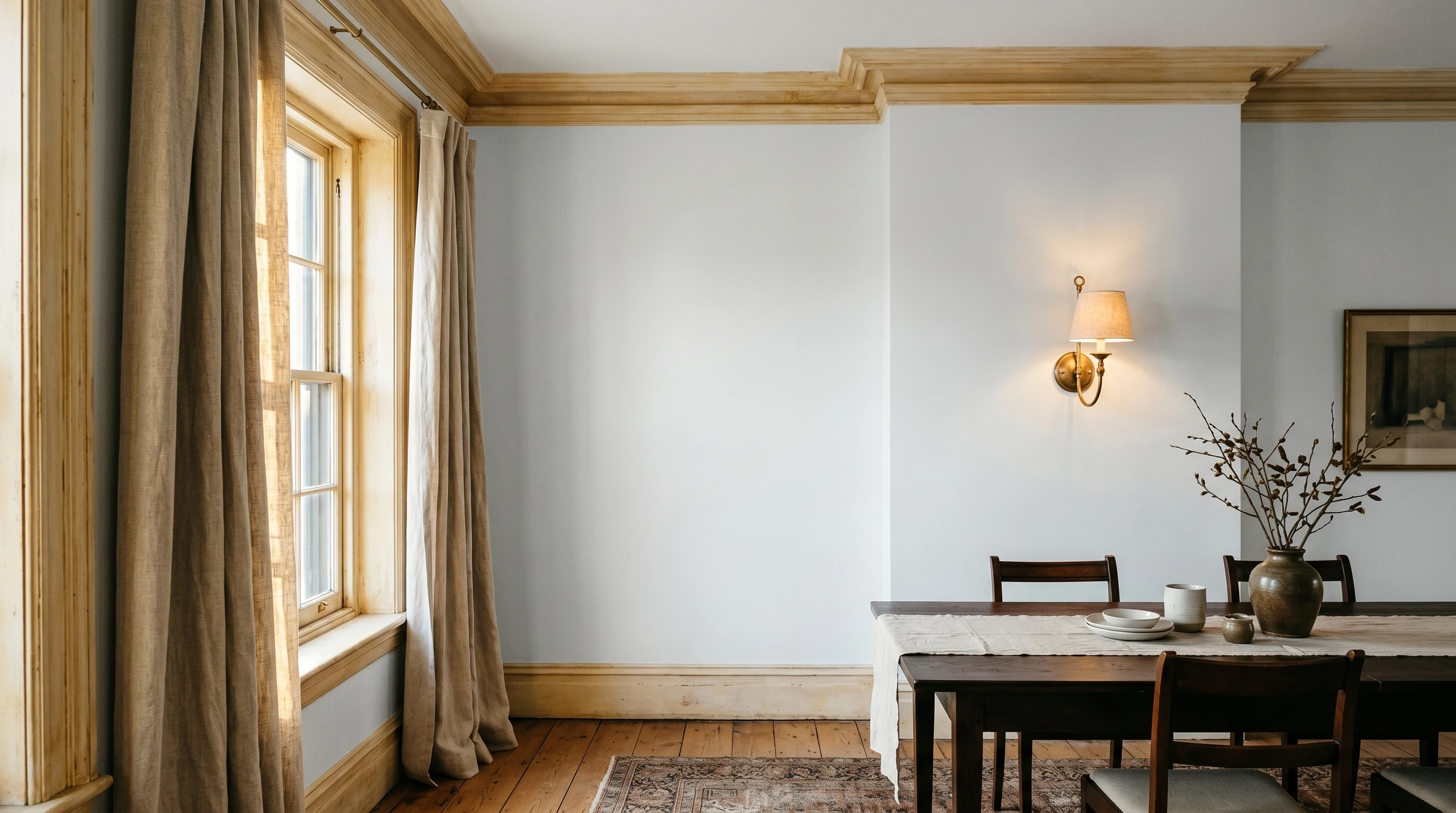
The trim was white when she painted it, eighteen months ago. Now, sitting against the freshly rolled wall, it reads honey. Not dramatic. Quiet. The kind of yellow you don’t see until something cool and white lands next to it. Then suddenly the whole room looks like it’s lit by tungsten, even at noon.
That’s what most yellowing trim looks like in real houses. Not a stain. Not a failure. A slow, even drift toward amber that you stop noticing until the day you repaint the wall and the trim refuses to keep up.
Does This Match What You’re Seeing?
Yellowing has three common faces. They look alike from across the room, but they want different fixes.
- Even amber across a whole run of trim, especially in low-light rooms. The doors that face away from windows, the baseboards behind the sofa, the crown molding in a dining room with the curtains usually drawn. Worst on oil semi-gloss from any kitchen painted in the early 2010s.
- Patchy yellowing concentrated near gas appliances, candles, or a kitchen. The fridge-side wall reads warmer than the hallway. The crown above the stove is honey while the crown over the doorway is still cream. That’s surface contamination on top of the paint, not the paint itself going off.
- Trim that reads fine alone but goes yellow the moment fresh white walls show up. No actual color shift recently, only a contrast shift. The trim has been quietly drifting for years and the new wall just exposed it.
If you’re not sure which one you have, the closet is the cleanest reference panel in the house.
How Serious Is This
Cosmetic, almost always. Yellowing trim isn’t peeling, isn’t releasing, isn’t pulling moisture. The film is doing its job; it just lost its color over time. You can live with it for years. Whether you want to is a different question, and the answer usually arrives the day a fresh wall shows you how far the trim has drifted.
If the yellowing is recent, severe, and located near a heat source you’ve recently changed, look at the heat source first. A new gas range that vents indoors, a kerosene heater in a basement, a fireplace with a poor draw. Those throw soot and combustion byproducts onto every painted surface in line of sight. The fix there is the appliance, not the trim.
Why White Trim Turns Amber
Three causes, in order of how often they show up.
Oil-based and modified-alkyd resin yellowing. Linseed-oil and alkyd resins amber as they oxidize, and UV light is what keeps that drift in check. In a sunny south-facing room, the wall stays roughly the color you painted it. In a north-facing dining room with the drapes half-drawn most of the day, the same can goes honey within a couple of years. Almost any oil semi-gloss trim from a five-year-old kitchen has yellowed visibly. The chemistry is doing exactly what the chemistry does.
Hybrid alkyd cans that weren’t actually rated for low UV. The waterborne alkyd category has a wide spread. Benjamin Moore Advance is the gold standard for non-yellowing waterborne alkyd, and SW Emerald Urethane Trim Enamel sits next to it on the shelf. A lot of cheaper “hybrid alkyd” cans are using older resin chemistry under a newer label and amber nearly as fast as oil. Read the data sheet for “non-yellowing” or “low-yellowing” before you buy.
Smoke, cooking residue, and candle soot. This isn’t the paint yellowing at all. It’s a thin film of contamination sitting on top of an otherwise sound coat. Common in kitchens, in homes where someone smokes indoors, in dining rooms with regular candle use. The paint film underneath is fine.
The wipe test sorts cause three from causes one and two in about ten seconds. The closet test sorts cause one from a recent change in the room.
The Fix
Step 1. Wipe Test, Then Closet Test
Take a damp microfiber cloth, a drop of dish soap, and run it firmly along an inch of yellowed trim. If the cloth comes away yellow and the trim under it now reads visibly whiter, the trim has surface contamination. Go to step 2. If the cloth comes away clean and the trim still reads amber, the paint film itself has aged. Skip to step 3.
Then check a closet. The painted wood inside a closet that hasn’t seen daylight or kitchen air for years is your control sample. If it’s gone the same shade of honey as the rest of the trim, you’ve got resin yellowing across the board. If it’s still bright white, the rest of the trim is responding to something the closet was sheltered from.
Step 2. TSP Wash If It’s Contamination
For surface yellowing, a trisodium phosphate solution at half label strength lifts cooking film, smoke, and candle soot off most painted trim without dulling the sheen. Sponge it on, work top to bottom, rinse with clean water, dry with a soft cloth. Wear gloves. Open a window. Never mix TSP or any household cleaner with bleach, ammonia, vinegar, or hydrogen peroxide. Combinations of those produce toxic gas.
If the trim looks white again, you’re done. If it looks better but still warm, you’re looking at contamination plus resin yellowing, and the only fix for the resin layer is repaint.
Step 3. Repaint, but Switch Chemistries
A second coat of the same oil semi-gloss will read white for about a year and then quietly drift back to where you started. The fix is changing what you’re painting with, not just refreshing the color.
Lightly sand the existing trim with 220 grit until the gloss is dulled, wipe with a tack cloth or a microfiber dampened in deglosser, then prime any bare or worn spots with a bonding primer. Two thin coats of the new finish, brushed with a quality angled sash. Cut your edges, lay off in long strokes, don’t overwork it.
Step 4. Choose the Right Paint for the Room You Have
The paints that hold their white in low-UV rooms:
- Benjamin Moore Advance. Waterborne alkyd, the category benchmark for non-yellowing. Levels like oil. The first choice for trim, doors, and cabinets in dining rooms, north-facing offices, and any room that lives in shadow.
- Sherwin-Williams Emerald Urethane Trim Enamel. The SW counterpart. Slightly harder cured film, a touch more amber drift than Advance over five years but well within “still reads white” territory.
- Behr Urethane Alkyd Trim, Door & Cabinet Enamel. The home-center option. Holds white longer than oil; not quite Advance.
- Insl-X Cabinet Coat. True acrylic enamel. The best non-yellowing performance of the four, slightly less self-leveling than Advance, fine on trim and excellent on cabinets.
What to skip in low-UV rooms: traditional oil semi-gloss for trim. Any can labeled “hybrid alkyd” without a published yellowing-resistance spec on the data sheet. Older cans of generic kitchen-and-bath enamel from before 2015 that have been sitting in the shop. The chemistry has moved on; meet it where it is.
Sheen and Tint, Briefly
High-gloss yellows visibly faster than satin in the same room because there’s more resin per square inch. Pure white shows the drift more than a soft off-white because the contrast against fresh white walls is starker. A Decorator White trim next to a Chantilly Lace wall amplifies any warming of the trim, while a Simply White trim pulled half a step warm reads quieter for longer. If you have a room that historically yellows trim and you want to forgive the chemistry a little, choose satin and a hair of warmth in the white. The room will age more gracefully.
Prevention
The room teaches you what to use. If a trim run lives in low UV (north-facing, draped, behind furniture, in a kitchen), paint it in a non-yellowing waterborne alkyd or a true acrylic enamel from the start. If it lives in direct sun most of the day, almost any modern formulation holds.
Keep a small jar of your trim paint, labeled with the date and the room. Two years in, paint a stripe on a card, set the card against the trim, and read the difference. If you can see it, you’ll see it more in another year. Plan the repaint for a season you’ll enjoy doing it, not the week before guests arrive.
And test the closet as your reference panel. The piece of trim that never sees daylight tells you the truth about what the chemistry is doing everywhere else.
When to Call a Pro
- Trim in a pre-1978 home with peeling or chipping alongside the yellowing. Assume lead until tested, follow EPA RRP rules. See how to fix peeling paint →.
- Yellowing concentrated around an HVAC register or a fireplace insert. Get the appliance and ductwork inspected before repainting; the trim is the symptom, not the source.
- Whole-house repaints on tall millwork, coffered ceilings, or hand-routed casing where brush marks will read at eye level. Pros spray these and the finish reads cleaner than any brush job.
Ask a Question