Why White Cabinets Yellow Over Time
White cabinets yellowing? The cause is usually the binder ambering, cooking grease, or UV, not dirt. Here is how to tell which, fix it, and keep them white.

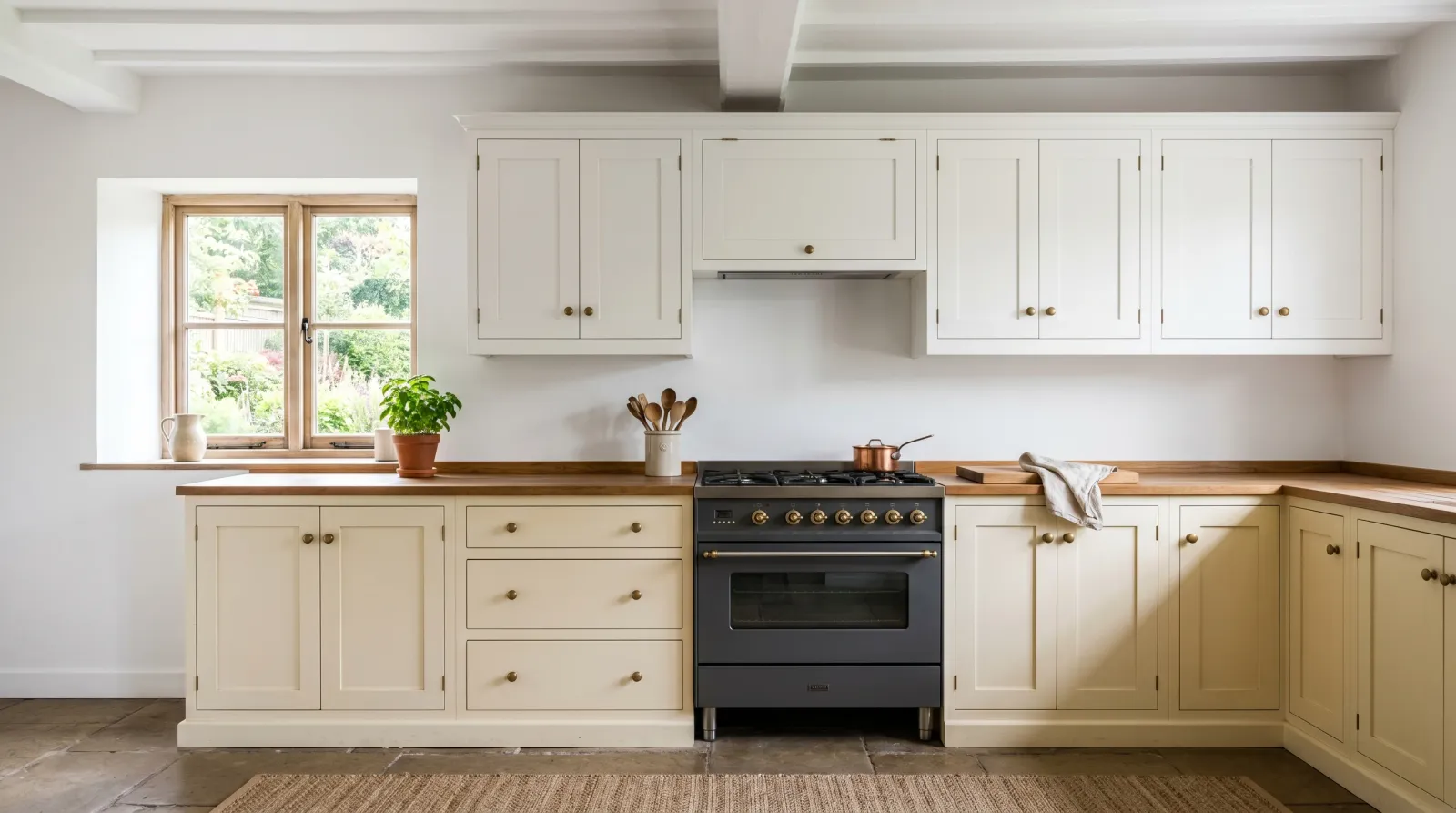
White cabinets almost never stay white. You painted them a clean, hopeful white, and a year or two later the doors near the stove read cream, the ones in the shadowy corner read almost butter, and the wall behind them suddenly looks cold by comparison. The common assumption is that they are dirty. Sometimes they are. More often the white itself has shifted, and no amount of scrubbing brings it back.
TL;DR
- White cabinets yellow from three things: the paint binder ambering, cooking grease and smoke film, or UV exposure. Each has a different fix.
- Wipe test first. If a degreaser pulls yellow off, it is film and you can clean it. If the cloth stays clean, the color is in the paint and you have to repaint.
- Oil-based and alkyd enamels amber from the inside as they oxidize. This is worst in low-light spots, not sunny ones.
- Waterborne acrylic and acrylic-alkyd hybrid enamels hold a white for years. The paint type matters more than the cleaning routine.
- To repaint: degrease, sand dull, prime with a stain blocker like Zinsser BIN, then topcoat in a non-yellowing white.
Does This Match What You’re Seeing?
Look at the cabinets in daylight, not under the warm kitchen bulbs that flatter every yellow on the surface. Then find your pattern.
- Even cream tint across all the doors. The binder is ambering. Usually oil-based or alkyd paint, slowly oxidizing everywhere at once.
- Worst near the stove and range hood, fading as you move away. Cooking grease and steam film. It sits on the surface, so it lifts with cleaning.
- Worst in dark corners and inside cabinet boxes, lighter on sun-facing doors. Counterintuitive, but classic oil ambering. Oil yellows faster away from light, not toward it.
- Uniform brown-yellow across a whole kitchen, sticky to the touch. Nicotine or heavy smoke. It coats everything and feels tacky under a clean finger.
- Yellow only where water sits, around the sink or in a bathroom vanity. Moisture pulling tannins or surfactant up through the film.
If the doors near a window stayed whiter than the ones in the shade, you are looking at binder ambering, and cleaning will not touch it.
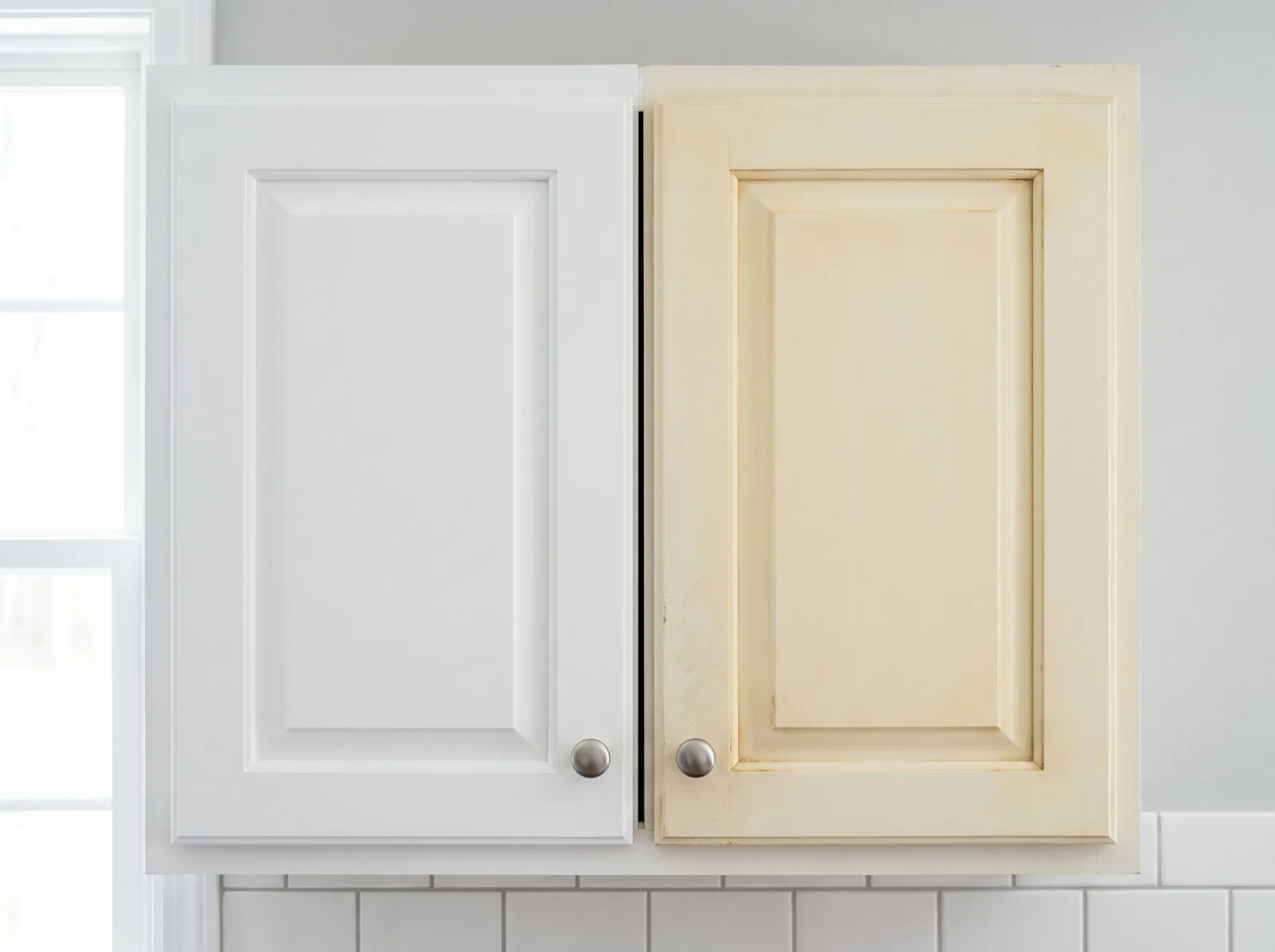 One door near the window, one from a shaded corner. Same paint, same kitchen, a year apart in how the white reads.
How Serious Is This?
This is cosmetic. The finish is still protecting the wood, the cabinets are sound, nothing is failing structurally. You can live with cream cabinets indefinitely and nothing bad happens to them.
What you cannot do is un-see it once you have noticed. A white that has gone uneven sits badly against a true-white wall or ceiling, and the eye reads the contrast as dirty even when the surface is clean.
The only situation that pushes past cosmetic is a kitchen with sticky brown film everywhere, which usually means smoke or nicotine and a genuine cleaning problem before any repaint.
Why This Is Happening (root Cause)
Three things turn a white cabinet yellow, and they look similar from across the room but call for completely different fixes.
The binder ambers. Oil-based and traditional alkyd enamels cure by oxidizing, and the same oils that make them level beautifully keep reacting with air for years. That ongoing reaction is what carries the white toward cream. The strange part is that light slows it down. Oil paint kept in the dark ambers faster, which is why the inside of a cabinet box or a door behind a tall fridge yellows while the sun-facing doors stay cleaner. If your white shifted evenly and worst in the shadows, this is your cause, and it lives inside the cured film where no cleaner can reach.
Cooking film settles on top. A working kitchen throws grease and steam into the air every time something fries or simmers. That vaporized oil lands on the cabinet faces, heaviest around the range, and builds a thin amber glaze over months. This one sits on the surface, so it wipes off, though it can soak into a porous or worn finish if it has been there long enough.
Smoke and nicotine stain. Cigarette smoke and woodsmoke coat every surface in a room with a tacky tan film that yellows white paint uniformly and clings hard. It is a cleaning job first, and it almost always needs a shellac-based primer to lock it down before repainting, or it bleeds straight back through.
UV plays a smaller role on cabinets than people expect. It fades some pigments and yellows certain clear topcoats, but for painted white doors the binder and the grease are the real story.
The Fix
Step 1. Run the Wipe Test
Before anything else, find out which problem you have. Pick a hidden door, a cabinet end panel or an inside edge, and wipe it with a degreaser. A TSP substitute mixed per the label, or a spray like Krud Kutter, both work. Give it a minute, then wipe with a clean damp cloth.
Read the cloth. Yellow-brown on the rag and a visibly lighter spot means the color is film, grease or smoke, and cleaning will carry most of it. A clean cloth and a spot that stayed yellow means the color is locked in the cured paint, and you are repainting.
Step 2. Degrease the Whole Run
If the wipe test pulled color, clean every door, drawer front, and the boxes. TSP substitute in warm water, scrub with a non-scratch pad, working top to bottom so drips do not streak dried areas. Rinse with clean water and let everything dry for a few hours.
For nicotine or heavy smoke, expect two passes. The first lifts the worst of it, the second gets what the first loosened. If the surface still feels tacky after rinsing, it is not clean yet.
If cleaning brought the white back, you are done. Stop here.
Step 3. Sand Dull and Prime
If the yellow is in the paint, cleaning will not save it, and you move to refinishing. Degrease first anyway, because primer will not bond over grease. Then scuff-sand every surface with 220 grit until the sheen goes flat and even. You are not stripping, just giving the primer a tooth to grip. Wipe the dust off with a tack cloth or a damp microfiber.
Now seal it. This step is the one people skip, and it is the reason repainted cabinets yellow again. Old oil paint and any remaining stain will bleed through a fresh waterborne white unless you block it. Use Zinsser BIN, a shellac-based primer, for the strongest stain block, especially over smoke or nicotine. Zinsser Bulls Eye 1-2-3 or INSL-X STIX work well over sound, cleaned oil enamel where bleed-through risk is lower. One thin, even coat, dry per the can, lightly scuff again before the topcoat.
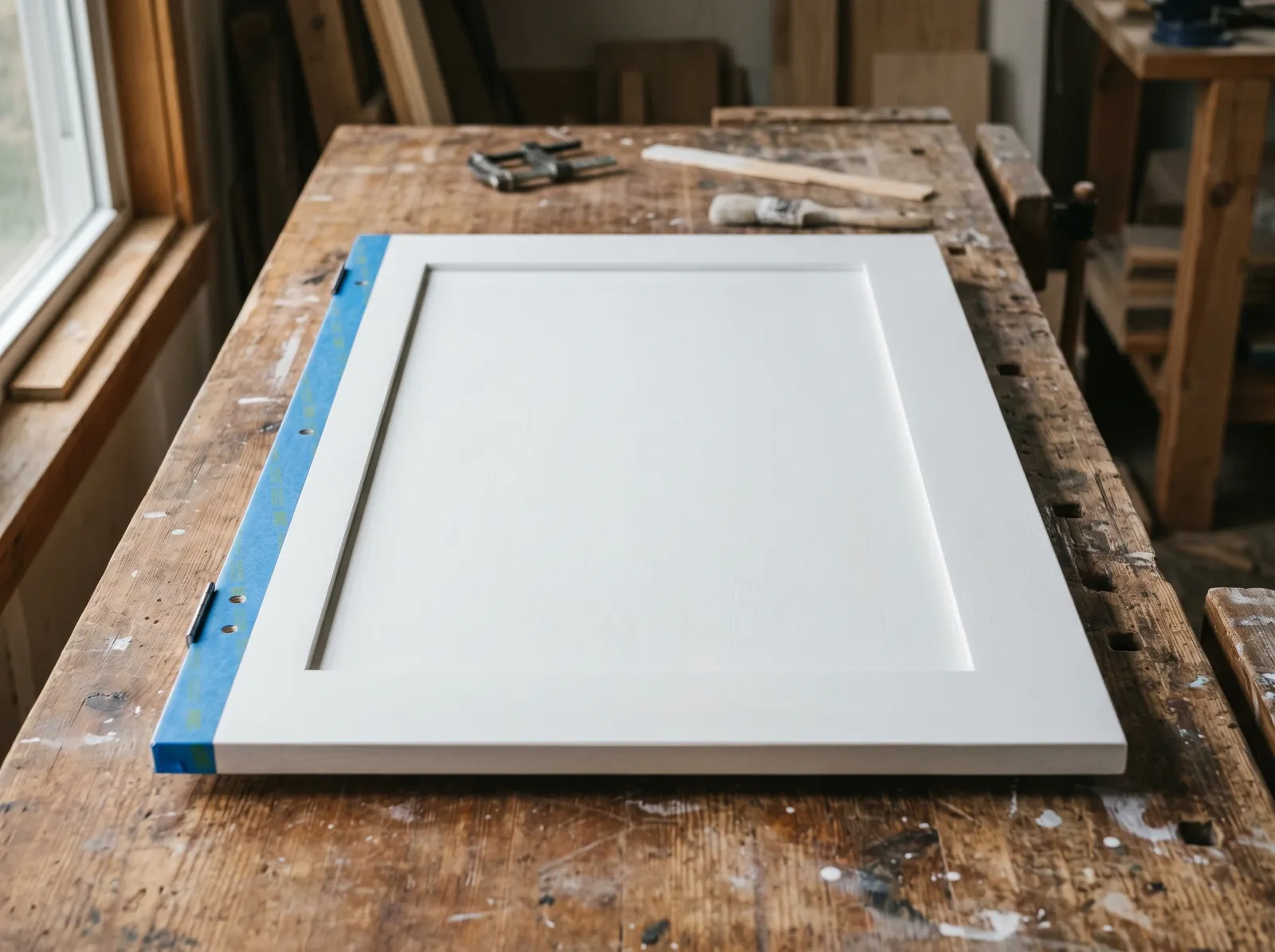 Doors off, hinges taped, one even coat of stain-blocking primer. This layer is what keeps the old yellow from migrating into the new white.
Step 4. Topcoat in a Non-Yellowing White
Use a waterborne enamel built for cabinets, not the old oil-based trim paint that started this. Benjamin Moore Advance, Sherwin-Williams Emerald Urethane Enamel, and PPG Breakthrough all hold a white for years and level close to oil. Two thin coats, light sand between, in satin or semi-gloss so the surface wipes clean.
Let it cure properly before you load the cabinets back up. These enamels dry to the touch in hours but keep hardening for one to three weeks. Rush it and the doors stick or mark.
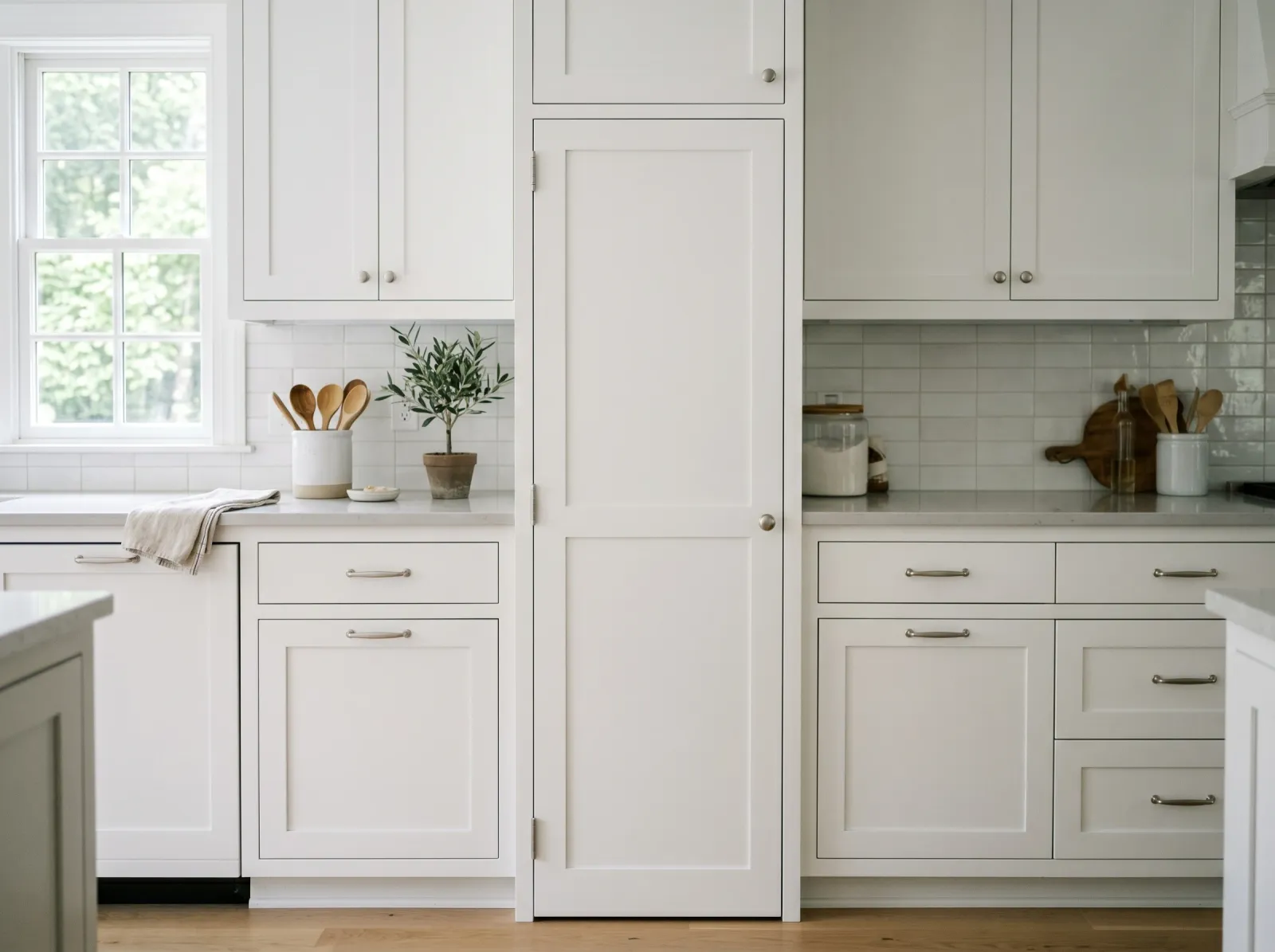 Rehung and cured. A waterborne white reads the same on every door, in the corner and by the window alike.
Safety
Open windows and run a fan while you clean and prime. Shellac primer and its cleanup solvent put off strong fumes, so wear a respirator rated for organic vapor, not just a dust mask, when you spray or brush it. Gloves and eye protection for the degreasing. Never mix bleach with ammonia, vinegar, or any other cleaner, since the combination produces toxic gas. If a smoke-stained kitchen needs a bleach pass for odor, rinse fully and dry before any other product touches the surface.
Cleaning vs Refinishing at a Glance
| What you see | Likely cause | Does cleaning fix it? | The real fix |
|---|---|---|---|
| Even cream across all doors | Binder ambering | No | Prime + repaint in waterborne white |
| Yellow worst near the stove | Cooking grease film | Yes | Degrease, then maintain |
| Worse in dark corners, lighter in sun | Oil paint ambering | No | Prime + repaint |
| Sticky tan film everywhere | Smoke / nicotine | Partly | Degrease, BIN primer, repaint |
| Yellow around sink or vanity | Moisture + tannin bleed | No | Stain-block primer + repaint |
Prevention
The honest fix for cabinets that stay white is choosing the right paint before any of this starts. If you are repainting now, you are already there. If you are only thinking about it, plan for it.
- Skip oil-based enamel on anything you want to stay white. It levels like a dream and ambers like clockwork. Use a waterborne acrylic or acrylic-alkyd hybrid instead. The full comparison lives in our oil-based vs water-based paint breakdown.
- Run the range hood. Most cabinet yellowing near a stove is cooking film you can keep from settling in the first place. Vent it outside, not into a recirculating filter, where possible.
- Wipe the doors near the stove monthly. A quick degreaser pass stops grease from soaking into the finish, which is when it goes from wipeable to permanent.
- Pick a white that ages well. A white carrying a faint warm undertone hides the first hint of ambering, while a stark blue-white announces it. Choose for the room’s light, the way our white undertones explained guide walks through, not off a chip under store fluorescents.
When to Call a Pro
- Heavy smoke or nicotine across a whole kitchen, where the cleaning alone is a large, fume-heavy job before any painting starts.
- Cabinets you want sprayed for a factory-smooth finish. Spraying enamel evenly on doors is a setup-and-skill job, and a pro shop or a good cabinet refinisher will out-finish a brush every time.
- Pre-1978 homes where the original cabinet paint may be lead-based. Test before you sand. Disturbing lead paint without containment is a real health hazard, especially with kids in the house.
- Yellowing that comes back fast after a proper repaint, which points to a moisture source behind the cabinets that needs finding first.
Common Mistakes
- Painting white over yellow with no primer. The old ambered film and any stain bleed straight up into the new coat. Within a year you are back to cream, repainting the same problem.
- Cleaning, then assuming you are done, when the yellow is in the film. The wipe test tells you which it is in two minutes. Do it before you commit to a plan.
- Reaching for oil-based enamel because it brushes so smoothly. It does, and that smoothness is the same chemistry that yellows. For a white cabinet it is the wrong tool.
- Loading the cabinets before the enamel cures. Dry to the touch is not cured. Give a waterborne enamel one to three weeks before heavy use, or the doors block and mark.
Ask a Question