What Is Bonding Primer?
Bonding primer, explained by a chemist. What it grips that regular primer can't, when you need it on glossy or slick surfaces, and how to use it right.

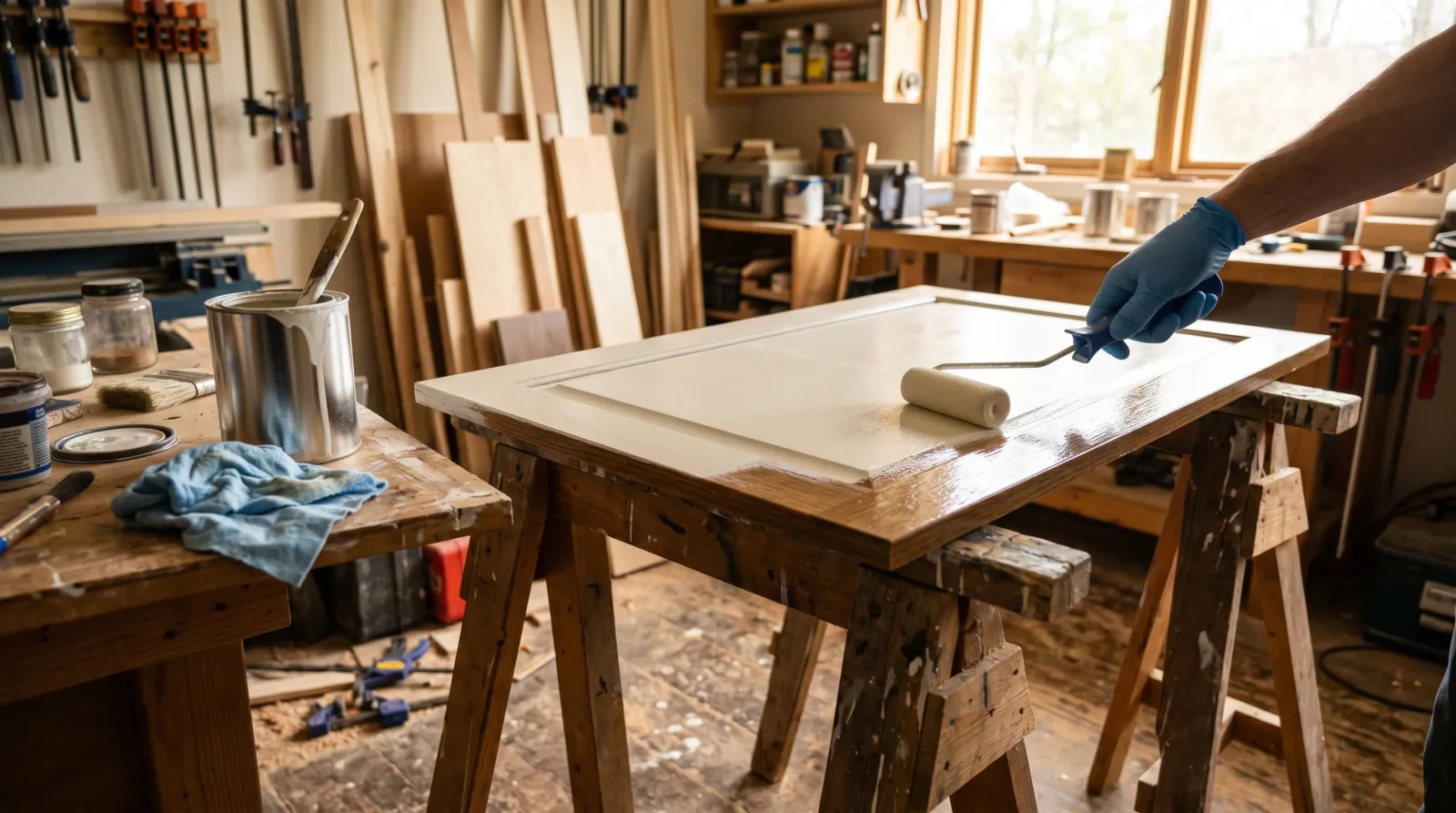
You roll a coat of ordinary primer onto a glossy laminate cabinet door, and a day later you can peel it off in one rubbery sheet with your thumbnail. The primer dried. It just never grabbed. That gap between “dried” and “grabbed” is the entire reason bonding primer exists, and it comes down to one property: adhesion to surfaces that have no tooth for paint to grip.
A bonding primer is a primer formulated with a specialized resin that mechanically and chemically keys to slick, non-porous substrates that reject standard coatings. The technical claim on a good can is dry adhesion above 4B on the ASTM D3359 cross-hatch test over glass and glossy enamel, where a normal latex primer rates 0B and lifts cleanly. It dries to recoat in 1 to 3 hours and reaches full bond strength over about 7 days.
TL;DR
- Bonding primer grips surfaces normal primer slides off — laminate, melamine, glazed tile, glass, glossy oil-based trim, PVC, and some plastics.
- The job is adhesion, not sealing. It gives a slick surface a paintable face your topcoat can hold onto.
- It works because the resin (often a modified acrylic or a urethane/epoxy hybrid) wets out and keys to non-porous substrates that water-based coatings bead off of.
- Cleaning matters more than sanding. Grease or silicone film under the primer breaks the bond no matter what.
- You don’t need it on bare drywall, raw wood, or fresh plaster. Those are porous, and a regular sealing primer does that job better and cheaper.
When to Use Bonding Primer
Reach for it whenever the surface is slick enough that paint would otherwise sit on top instead of locking in.
Use it for:
- Glossy or semi-gloss surfaces you can’t fully sand to a dull tooth (old oil-based trim and baseboards, enamel doors).
- Laminate and melamine cabinets, shelving, and furniture.
- Glazed ceramic tile backsplashes and surrounds.
- Glass, vinyl, PVC trim, and rigid plastics that take paint.
- Slick previously painted surfaces where you don’t know what the old coating was.
Don’t use it for:
- Bare drywall, new plaster, or raw wood. These are porous and need a sealing primer, not a bonding one.
- Surfaces with peeling or flaking paint. Bonding primer grips the surface you put it on; if that surface is already lifting, the primer lifts with it. Scrape to sound material first.
- Bare or rusted metal that needs corrosion protection. Use a dedicated metal primer instead.
When Not to Use Bonding Primer
A bonding primer can’t fix a substrate problem. It’s an adhesion layer, and it only adheres as well as the thing underneath holds together.
- Over peeling paint. The primer bonds to the loose flake, not the wall. The new film fails with the old one.
- As a stain blocker. Most bonding primers are not formulated to seal water stains, tannin, or knot bleed. For knots bleeding through, use a shellac- or oil-based stain-blocking primer.
- On bare wood you’re staining. Primer of any kind kills the stain. Bonding primer is for paint topcoats only.
- On a floor or surface taking standing water without confirming the product is rated for it. A backsplash holds; a shower pan or a garage floor needs an epoxy or floor-specific system.
How Bonding Primer Compares
The reason a standard primer fails on laminate is film formation. A water-based primer forms its film as the water evaporates and the binder particles coalesce. On a porous surface the wet primer soaks into the pores and the dried film is anchored in thousands of tiny mechanical hooks. On glass or glossy enamel there are no pores. The film coalesces into a continuous sheet sitting on top of the substrate, held by nothing but weak surface attraction, and it peels.
Bonding primer changes the resin so it wets out across the slick surface and forms an actual interfacial bond instead of resting on top.
| Bonding primer | Sealing primer | Paint-and-primer-in-one | |
|---|---|---|---|
| Built for | Slick, non-porous surfaces | Porous bare surfaces | Repaints over sound paint |
| Main job | Adhesion | Sealing absorption | Convenience topcoat |
| Works on glass/laminate | Yes | No | No |
| Blocks stains | Usually no | Some do | No |
| Best use | Tile, melamine, glossy trim | Drywall, raw wood | Color change on painted walls |
For the deeper split, see primer vs paint-and-primer-in-one and the primer basics explainer.
Well-known products in this category: INSL-X Stix (a urethane-acrylic that’s the painter’s default for cabinets), Zinsser B-I-N (shellac-based, also a strong stain blocker), Sherwin-Williams Extreme Bond, and KILZ Adhesion. The urethane-acrylic types grip the widest range of slick surfaces; the shellac types pull double duty as stain blockers but smell strong and need denatured alcohol to clean up.
Common Mistakes
- Skipping the degrease. Kitchen cabinets carry an invisible film of cooking grease, and bathroom trim carries silicone from caulk and cleaners. Bonding primer keys to the surface, not to the film on top of it. Wipe down with TSP substitute or denatured alcohol and let it flash off before priming. This is the single most common cause of a failed bond.
- Topcoating too soon. The primer is dry to the touch in under an hour, but the resin keeps building bond strength for days. Slap a topcoat on at hour 1 and handle the door at hour 4, and you can shear the whole stack loose. Give cabinet doors overnight before they take any abuse.
- Laying it on thick to “get better coverage.” Bonding primer is a thin tie-coat, not a build coat. One controlled coat keys the surface; a heavy coat traps solvent and dries gummy underneath. Two thin passes beat one thick one.
- Using it where a sealing primer belongs. On bare drywall it costs more and seals worse than a basic PVA primer. Match the primer to the surface, not to the price.
Where to Buy
Bonding primer sits next to the standard primers in any paint aisle, usually labeled “bonding,” “adhesion,” or “multi-surface.” For the full picks across sealing, stain-blocking, and bonding types, see the best primer round-up. When the topcoat sheen matters on cabinets or trim, the paint sheen guide covers what to put over the primer.
FAQ
Does bonding primer need sanding first?
Sanding is recommended but not always required. Bonding primer is formulated to grip slick surfaces without it, which is the whole point. On glossy laminate or tile you can often skip sanding if you degrease thoroughly with TSP or denatured alcohol first. On surfaces you can scuff, a quick pass with 220-grit gives the resin even more to hold, and it never hurts. The non-negotiable step is cleaning, not sanding. Any grease or silicone film under the primer breaks the bond no matter how aggressively you sanded.
How long does bonding primer take to dry?
Most water-based bonding primers are dry to the touch in 30 to 60 minutes and ready to topcoat in 1 to 3 hours at 70°F. The film keeps building strength for several days as the acrylic finishes cross-linking, so full bond strength on tile or glass arrives around day 7, not hour 3. If you can wait, give the primer overnight before a topcoat that will see heavy handling, like cabinet doors.
Can I use bonding primer on tile?
Yes, that’s one of its core uses. Glazed ceramic tile is one of the slickest surfaces in a house, and a bonding primer with the right resin grips it where a standard latex primer beads and peels. Clean the grout and glaze with TSP first, let it dry fully, then prime. The bond is mechanical and chemical, not magic, so a backsplash will hold better than a shower floor that takes standing water and foot traffic.
What’s the difference between bonding primer and regular primer?
Regular primer is built to seal a porous surface like bare drywall or raw wood and even out absorption so the topcoat lays down uniformly. It assumes the surface has tooth for the primer to soak into. Bonding primer is built for the opposite problem: a slick, non-porous surface like laminate, glass, or glossy enamel that has no tooth at all. Its resin is engineered to adhere to surfaces that reject water-based coatings, then present a paintable face for your topcoat.