How to Paint Glass — Frost, Frame, and Surface
Painting glass is a primer and cure problem, not a paint problem. Frost aerosols, etched looks, and acrylic on the face — what holds and what slides off.

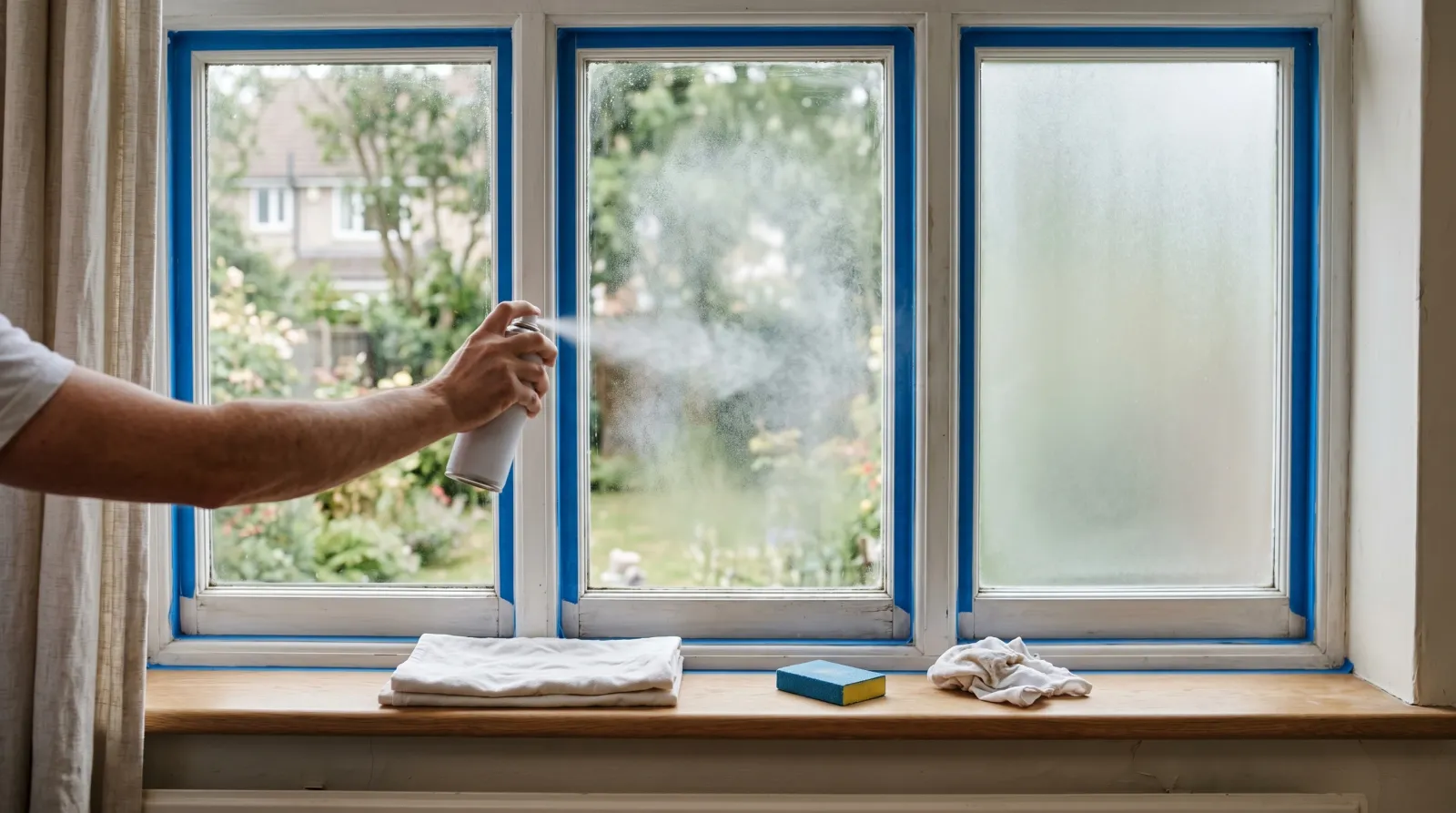
Painting glass is a primer and cure problem, not a paint problem. The glass itself is inert. Nothing bonds to it on chemistry alone. Either you spray a coating engineered to grip glass, or you wipe the pane clean and put a bonding primer down first. Skip both and the paint comes off the day someone leans on the window.
TL;DR
- Clean: acetone or denatured alcohol on a lint-free cloth
- Tape: Frog Tape Multi-Surface on the frame and edges
- Frosted look: Krylon Frosted Glass Aerosol, 2–3 light passes from 10 inches
- Color on glass: Krylon Fusion or INSL-X Stix primer, then acrylic enamel
- Cure: 7 days before any wipe-down or wash
- Skill: medium — the spray technique decides the finish
What Is Glass, for Paint Purposes?
Glass is a non-porous silicate. The surface is dense, smooth, and chemically inert. Nothing soaks in. That’s the whole problem. Paint adheres to most substrates by sinking into pores or by chemical reaction with the surface — wood drinks primer, masonry bites primer, even glossy metal has microscopic oxide for the primer to lock into. Glass has none of that. Adhesion has to come from a coating designed to wet the surface and grip mechanically as it dries. The annealed window glass in a typical American home behaves the same way as decorative glass for this purpose. Tempered glass is slightly more contaminant-resistant from the factory but reads the same to paint.
Tools and Materials
Materials:
- Krylon Frosted Glass Aerosol or Rust-Oleum Specialty Frosted (for the etched look)
- Krylon Fusion All-In-One or INSL-X Stix bonding primer (for color work)
- Quality acrylic enamel — Liquitex Soft Body, Folk Art Multi-Surface, or DecoArt Glass Paint
- Acetone or denatured alcohol
- Frog Tape Multi-Surface (the yellow can — sticks to glass without lifting paint behind it)
- Lint-free microfiber cloths
- Vinyl shelf liner or contact paper if you’re masking a pattern
Tools:
- 4-inch foam roller for face areas on larger panes
- 1/2-inch flat synthetic brush for trim work and pattern fills
- Fine-grit (400) sanding sponge for the edge scuff on bonded-color jobs
- Drop cloth, mask, eye pro for aerosol work
Why Glass Is Tricky
Glass rejects coatings the same way tile does. The factory surface is smoother than most of what paint was developed for. There’s nothing porous to anchor into, no oxide for the primer to react with, and any skin oil or window cleaner residue left on the pane reads to paint as a release agent. Wipe a pane with Windex and try to paint it — the ammonia surfactant breaks the wet film into beads. The paint won’t even lay flat, let alone cure into a film that holds.
Three failure modes show up over and over.
The pane wasn’t degreased and the cured film peels in sheets the first time someone leans on the window. The aerosol coat was laid on too heavy in one pass, the film pooled in runs at the bottom of the pane, and the dried finish looks streaky from every angle. The paint went down fine but the homeowner washed the window at day three, before the cure window closed, and the topcoat clouded permanently.
The common cause across all three is the same — treating glass like drywall. It isn’t. The prep is shorter than tile but the cure window is longer than most painters expect.
Where You Can Paint Glass and Where You Can’t
Paintable: interior window panes, side lights next to doors, cabinet glass, decorative vases, jars, candle holders, hurricane shades, stained-glass repair panels, picture-frame glass for craft projects, the dry side of a glass-front display case. Outside of direct contact and direct water, painted glass holds for years.
Not paintable in any honest way: the wet side of a shower door, the splash side of a bathroom mirror, a glass cooktop, a windshield, the inside of an aquarium, any pane that gets daily abrasive cleaning. Same rule as tile in a shower — standing water and soap film attack the cured film at the edges and the job fails inside a season.
Edge cases: a kitchen window above the sink is fine if nobody scrubs it weekly with abrasive cleaner. A bathroom window that gets occasional splash is fine — splash dries in minutes and the film doesn’t stay wet. A glass shelf in a bathroom that holds a soap dish is borderline; expect a 2–3 year refresh cycle.
Step 1 — Clean With Solvent, Not Window Cleaner
Acetone on a clean lint-free cloth. Wipe the whole pane. Flip the cloth. Wipe again. Let the surface flash off for 60 seconds — acetone evaporates faster than you’d think.
If acetone isn’t on hand, denatured alcohol works. Isopropyl 99% works in a pinch. Do not use Windex, glass cleaner, dish soap, or anything with a surfactant. Surfactants leave a residue that paint refuses to bond to, and the residue is invisible until you spray and watch the coating crawl. I’ve stripped two cabinet glass inserts because the homeowner cleaned them with Windex first.
Don’t touch the pane with bare fingers after cleaning. Skin oil is a release agent. Wear nitrile gloves through prep and paint.
Step 2 — Tape the Frame and Mask the Pattern
Frog Tape Multi-Surface (the yellow can) is the right tape for glass. The standard green Frog Tape is for painted walls; the yellow is engineered for delicate surfaces and slick substrates, and it lifts off glass clean even after a 7-day cure window. 3M Blue 2090 works as a second choice.
Burnish the tape edge down hard with a plastic putty knife or a fingernail. Any tape lift along the edge lets the aerosol mist underneath and fuzz the line. For a frosted pattern — say, a clear circle inside a frosted square — cut the shape from vinyl shelf liner and stick it to the pane before spraying. Pull the vinyl off while the last coat is still tacky, not after cure.
Step 3 — Frost: Krylon or Rust-Oleum, Light Coats
The frosted glass aerosols are the only paints in this guide that don’t need a separate primer. Both Krylon Frosted Glass Aerosol and Rust-Oleum Specialty Frosted are formulated to wet and grip glass directly. Pick one and use it the way the can says.
Shake the can for 2 full minutes. The pigment settles fast and a half-shaken can sprays a watery first coat that runs. Hold the can 10–12 inches from the pane. Spray a single light pass in one direction — top to bottom or side to side, your choice, just commit. Don’t try to cover in one coat. The frosted look builds from three light passes, not one heavy one.
Wait 10 minutes between passes. Spray pass two perpendicular to pass one. Wait another 10. Spray pass three at a diagonal if you want a denser haze, or stop at two coats for a lighter frost. The finish reads as real sandblasted glass at any distance over three feet. Closer than that and a careful eye sees the spray pattern, which is the trade-off you accept for not paying a glass shop $400 to actually etch the pane.
Krylon Frosted Glass Aerosol is the better pick for indoor panes — slightly finer particle, smoother build. Rust-Oleum Specialty Frosted is the pick for bigger areas where you’ll go through more than one can.
Step 4 — Color on Glass: Primer First, Then Acrylic
For color work — a tinted vase, a stained-glass repair, a kitchen-cabinet glass insert in a custom hue — the system is bonding primer first, acrylic enamel on top.
Krylon Fusion All-In-One sprays directly on glass without a separate primer step. One light coat acts as a primer; two more coats build the color. Fusion is the simplest answer for a small-area color job.
For a bigger pane or a custom color outside the Fusion deck, prime with INSL-X Stix. Brush a thin coat across the pane, let it cure 4 hours, scuff lightly with 400-grit if you see any glossy spots, then topcoat with a quality acrylic enamel. Liquitex Soft Body, Folk Art Multi-Surface, and DecoArt Glass Paint all hold over Stix. Two thin coats beat one thick coat — same rule as on every other substrate. See the multi-surface paint round-up for the specific picks tested across glass, tile, and plastic.
Don’t use latex wall paint on glass even with a primer. The film stays soft for too long and prints fingerprints into the cured finish.
Step 5 — Cure: Seven Days Before You Touch It
Numbers, not vibes.
Krylon Frosted Glass Aerosol: touch-dry in 15 minutes, recoat at 10 minutes within the same session, handleable at 24 hours, full cure at 7 days. Rust-Oleum Specialty Frosted: touch-dry in 30 minutes, recoat at 1 hour, handleable at 24 hours, full cure at 7 days. Krylon Fusion: touch-dry in 30 minutes, handleable in 1 hour, full cure in 7 days. Stix plus acrylic enamel: longer — Stix wants 4 hours to recoat, the acrylic wants 24 hours between coats, and the full system cure is 14 days before any wipe-down.
Don’t wash the pane for two weeks no matter which system you used. Glass has no porosity to hold a partially cured film in place, so a wipe-down at day three drags the topcoat off the surface in long streaks. Wait the full window or you’ll be repainting.
Pull the tape inside an hour of the last coat. If the tape pulls a paint edge with it, slice along the tape line with a fresh razor blade first and then pull.
Common Mistakes
- Skipping the acetone wipe. Skin oil and window cleaner residue are invisible release agents. Result: paint crawls during application or peels in sheets in week two. Fix: strip the whole pane, re-clean with acetone, start over.
- Heavy first aerosol coat. Trying to cover in one pass gives you runs, sags, and a milky cured finish. Light passes build the right look. Fix: scrape down to clean glass with a razor scraper, re-clean, restart with light coats.
- Painting both sides of a window pane. Doubled film thickness traps moisture and the inside coat clouds. Paint one side only — the dry, indoor side of an exterior window, the frame-side of a cabinet glass insert.
- Using Windex or glass cleaner to prep. The surfactant in glass cleaner is a release agent for paint. Acetone or denatured alcohol only.
- Washing the pane before day seven. The cured film clouds permanently or peels. Set a calendar reminder; tell every household member.
- Latex wall paint on glass. Soft film, prints fingerprints, fails inside a year. Use an acrylic enamel engineered for non-porous surfaces.
Maintenance and Longevity
A properly primed and cured glass paint job holds 5–8 years on an indoor pane that doesn’t get scrubbed. Decorative glass — a tinted vase, a frosted side light, a cabinet insert — lasts the life of the piece if nobody wipes it with abrasive cleaner. Clean with a soft microfiber, dry, light pressure. No Magic Eraser, no scouring pad, no ammonia-based glass cleaner. A streak of plain water on the microfiber lifts everyday dust without breaking the film.
Spot-touch chips with a small artist brush from the same product line. Frosted aerosols spray over old frosted areas with no visible blend line if the new coat is light. Bonded-color acrylic touch-ups want a fingertip-sized dab and 24 hours to set before any handling.
The failure point on painted glass is almost always an early wash inside the cure window. The second is a tape lift that didn’t get burnished down and let aerosol mist crawl under the frame line. Catch tape edges before you spray. Wait the full week before you wipe. That’s the whole job in two sentences.
Ask a Question