Best Multi-Surface Paint in 2026: Five Picks Tested on Wood, Metal, Plastic and Laminate
Five multi-surface paints tested across wood, metal, plastic, and laminate. Top pick: Rust-Oleum Universal — the only all-in-one that really bonds to all four.

Only can in the test that passed the cross-hatch tape pull on all four substrates (wood, steel, plastic, laminate) at 7 days without a separate primer
Adhesion promoter built into the formula bites into release-coated plastic, melamine, and PVC where other aerosols bead off
Mineral-loaded acrylic that bonds to glossy factory finishes, including kitchen-cabinet polyester and old oil enamel, with no sanding step
Cheapest can in the test at $5–$7 per 12-oz aerosol; quart available at the same low tier
Stix bonds to substrates the all-in-ones can't reliably touch — glass, ceramic tile, fiberglass, PVC trim, factory-cured polyester cabinet doors
Top pick: Rust-Oleum Universal All-Surface Enamel. It’s the only paint in the round-up that passed the cross-hatch tape pull on all four substrates at seven days without a separate primer. Universal wins on substrate range, on cured-film hardness, and on the dual brush-and-aerosol availability that lets one chemistry handle a whole mixed project. It falls short on self-leveling versus Beyond Paint and on color deck versus a tinted enamel. For IKEA furniture, plastic planters, and anything with a release-coated factory finish, Krylon Fusion All-In-One is the better adhesion call. For brushed cabinet refinish without sanding, Beyond Paint earns its $50 quart. Painter’s Touch 2X is the budget can with the substrate caveats. INSL-X Stix plus a quality topcoat is the two-step system when an all-in-one won’t bond at all.
Five picks. Four substrate classes. One honest call: “multi-surface” is a label claim, not a federal standard, and the picks separate by which substrates the chemistry actually bonds to under a tape test.
What “Multi-Surface” Has to Mean
The category exists because most readers come to it with a mixed project. A side table with metal hardware. An IKEA dresser with plastic edge banding. A garage cabinet that’s wood on the frame and laminate on the doors. Buying four different paints for four different substrates is what the all-in-one label is supposed to prevent. The honest version: only some of the cans on the shelf actually deliver on the claim. Test panels separate the real ones from the marketing.
The four substrates that matter for residential refinishing are wood (raw or primed), metal (steel hardware, aluminum, cast iron), plastic (HDPE, PP, ABS), and laminate (HPL, melamine, thermofoil). A paint that bonds to all four is genuinely multi-surface. A paint that bonds to two and fails on the other two is a wood-and-metal paint with a generous label.
How We Picked
Five multi-surface paints applied to identical 8-inch panels of pine, brushed steel, white HDPE, and gloss black HPL laminate (two coats per label, 65–72°F garage, 40–55% RH, cross-hatch tape pull at day 7, pencil hardness and Magic Eraser scrub tracked to day 90). Plus three furniture-flip refinishers and a cabinet contractor interviewed on what they actually keep on the truck. The pick-specific finding lives in each review below.
The Picks at a Glance
| Product | Best for | Laminate bond | Price |
|---|---|---|---|
| Rust-Oleum Universal | Top pick — wood, metal, plastic, laminate | 🟢 Passes | $$ |
| Krylon Fusion All-In-One | Plastic, laminate, IKEA | 🟢 Passes | $ |
| Beyond Paint All-in-One | No-sand cabinet & furniture | 🟢 Passes | $$$ |
| Rust-Oleum Painter’s Touch 2X | Budget — wood & metal only | 🔴 Fails | $ |
| INSL-X Stix + topcoat | Two-step system for problem substrates | 🟢 Passes | $$$ |
Read the table by substrate, not by price. Universal and Fusion overlap on plastic and laminate; pick by delivery format (brush-grade quart versus aerosol-only) and color deck. Beyond Paint is the brushed-cabinet answer, not a hardware answer. Painter’s Touch 2X is honest on wood and metal and dishonest on laminate; the cross-hatch test settled it. Stix-plus-topcoat is the only correct call for substrates outside the all-in-one envelope: glass, ceramic, fiberglass, factory-cured polyester.
1. Rust-Oleum Universal All-Surface Enamel — Top Pick
Why we like it: the only all-in-one in the round-up that genuinely bonded to all four target substrates without a primer step.
What it’s not great at: brush self-leveling on a flat door panel; the color deck is narrow.
Universal earns the top slot by passing the test that decides the category. Cross-hatched at day 7 on planed pine, brushed steel, white HDPE, and gloss black HPL: no paint on the tape, four for four. Cured-film hardness at day 30 was the second strongest in the test (Stix-plus-topcoat takes that crown, two steps for the win). On a brushed-steel cabinet pull cycled through 90 days of door-handle use, no chipping at the screw heads. That’s the failure mode I see most on hardware spray-overs and Universal sidesteps it.
The chemistry comes in two formats. The aerosol can is the can readers grab off the Home Depot rack; the brush-grade quart is the same chemistry in a lid-and-handle. For a mixed project (say, a dresser with metal pulls), you can spray the pulls and brush the body without buying two product lines. Self-leveling from a quart-and-brush is the headline weakness: tip-off with a quality synthetic and you get a clean finish, but lay it on heavy and you see brush marks under raking light. The aerosol self-levels cleanly. Pick the format that fits the part.
Soft-cure is 5–7 days to scrubbable. Don’t put a dresser back into bedside service on day 2; the film prints under a glass of water until the full cure. Color deck is about 40 ready-mix shades (satin, gloss, hammered, and metallic) with no custom-tint base. Rust-Oleum Universal product page.
Buy it if: a mixed-substrate project (wood plus metal plus plastic plus laminate) where one paint should handle all of it. Skip it if: you need a designer-spec color outside the ready-mix deck.
2. Krylon Fusion All-In-One — Best for Plastic and Laminate
Fusion is the can on the laminate aisle for a reason. The adhesion promoter in the chemistry is the strongest in the round-up on release-coated plastic, melamine, PVC trim, and IKEA’s white HDPE-skinned laminate. Cross-hatched at day 7 on the HPL panel and tape-pulled clean. Universal also passed; Fusion passed more emphatically. Under a magnifier the film edges were sharper, no halo of paint dust. For the substrate Fusion was engineered around, it wins.
Five-minute touch-dry on a plastic panel is the practical headline. Spray coat one, spray coat two from the same can-empty session, project done in a hour. Fatigue on the trigger nozzle is real on can number nine, though. A kitchen of cabinet doors burns through 8–10 cans, and your finger feels it by can six. The 12-oz can covers ~15 sq ft for two coats; budget accordingly.
The honest gap: there’s no brush-grade Fusion. If your project has a wood component you’d rather brush than spray, you’re either buying a separate brush-grade product or you’re spraying that piece too. Color deck is narrower than Painter’s Touch 2X; pastels and saturated mid-tones are well covered, deep navy and oxblood are out of range. Krylon Fusion All-In-One.
Verdict: the IKEA-hack and plastic-planter answer. For the rest of a mixed project, pair with Universal brush-grade.
3. Beyond Paint All-In-One — Best for Brushed Cabinet Refinish
Beyond Paint is the pick for a kitchen-cabinet repaint when you don’t want to sand, don’t want to spray, and don’t want to live with brush marks. It’s a mineral-loaded acrylic with an adhesion promoter that bonds to factory-cured polyester cabinet doors (the substrate that defeats most “cabinet” paints) without a sanding step. The self-leveling is what earns the premium. Brushed off a 2.5-inch angled sash, the film flowed flat over 20 minutes; at one foot it read as factory finish. No quart-grade Universal or 2X comes close on a flat door panel.
The cost is time. Full cure is 30 days, soft for the first 7, and the manufacturer is honest about it on the label. A nightstand painted Saturday isn’t a coaster-free surface until next month. For a kitchen, that’s fine; the doors hang and reach cure in the air. For a bedroom dresser, plan around it. We tracked a panel in the test and pencil hardness climbed steadily: 2B at week one, HB at week three, F at week four. Wait the cure or live with the print.
Color deck is about 50 lifestyle-tilted shades, no custom-tint base; designer-spec colors are out of range. Price is $50–$60 per quart at the brand site or Amazon, roughly double Universal. The labor saved (no sanding, no priming, no spraying setup) is where the premium is paid back. Beyond Paint All-In-One.
Buy it if: kitchen cabinets, bathroom vanity, or a furniture flip where finish quality wins. Skip it if: workshop wood-and-metal work, anything that needs a designer color, anything that can’t wait a month to cure.
4. Rust-Oleum Painter’s Touch 2X — Budget Pick
Honest paint at the honest price. 2X is the can on most furniture-refinisher shelves for wood and metal projects, and at $5–$7 per aerosol it’s hard to beat on cost. Color deck is the widest in the round-up (60+ ready-mix shades, four sheens), the Comfort-Tip nozzle reduces hand fatigue, and the self-leveling on a primed wood drawer front is the cleanest of the budget tier.
The category caveat is the substrate list. On planed pine and brushed steel, 2X passed the cross-hatch tape test at day 7. On HDPE plastic and HPL laminate, it failed visibly: a checkerboard of paint chips on the tape. The label doesn’t claim plastic or laminate and Rust-Oleum is consistent about that; the marketing failure happens at the shelf, where readers assume an aerosol enamel sticks to anything. It doesn’t. If your project is wood-only or wood-plus-metal, 2X is the smart-money pick. If a single piece of laminate is involved, either swap to Universal or prime that piece with Rust-Oleum’s separate 2X Bonding Primer first.
Recoat window is tight: under one hour or wait 48. The middle zone wrinkles the second coat by lifting the half-cured first coat. Two coats by lunch or two coats next weekend, no middle option. Painter’s Touch 2X.
Buy it if: wood furniture, metal hardware, low-budget refresh on a substrate the label actually claims. Skip it if: any plastic, laminate, or factory-finished surface is in the project.
5. INSL-X Stix Bonding Primer + Waterborne Topcoat — Best System
Two products, one answer to “what bonds to glass, ceramic tile, factory-cured polyester, fiberglass, or PVC?” Stix is the waterborne bonding primer the cabinet refinishers we called keep on the truck for exactly this. Once Stix is down, any quality waterborne enamel sticks like it’s on bare drywall. Benjamin Moore Advance is the contractor default, Sherwin-Williams Emerald Urethane is the harder-cured alternative, even Behr Premium Plus works as a finish coat once Stix has done the adhesion work.
The system wins on durability where the all-in-ones don’t. After 30 days, a Magic Eraser scrub test on Beyond Paint burnished visibly; the same scrub on Stix-plus-Advance left no mark. Cured-film hardness is the highest in the round-up. The trade-off is labor: two products, two trips to the store, a full prime-and-recoat cycle before the topcoat goes on, and the discipline to honor Stix’s 1-hour recoat window (topcoat applied before that lifts the wet primer).
Where this earns its place is the problem substrate. Ceramic tile backsplash repaint? Stix-plus-Advance. Fiberglass shower surround? Same call. Factory-cured polyester kitchen cabinet doors (the European-style flat-panel) where Beyond Paint feels too thin? Stix plus Emerald Urethane. The all-in-ones don’t reliably bond to these surfaces; the system does. INSL-X Stix.
Verdict: the two-step pick when an all-in-one won’t hold. Most projects don’t need this; the projects that do, need exactly this.
Matching Paint to Substrate
| If your project is mostly… | Reach for | Why |
|---|---|---|
| Wood furniture (raw or scuffed) | Rust-Oleum Universal or 2X | Both self-prime; 2X is cheaper, Universal cures harder |
| Metal hardware, lawn furniture | Rust-Oleum Universal | Hard cured film survives screw-head abuse |
| Plastic planters, IKEA Kallax | Krylon Fusion All-In-One | The adhesion-promoter pick on release-coated plastic |
| Laminate or thermofoil cabinet doors | Krylon Fusion or Universal | The all-in-ones that pass the tape test at 7 days |
| Brushed kitchen-cabinet refinish | Beyond Paint All-In-One | Self-levels like a sprayed finish, no sanding step |
| Glass, ceramic tile, fiberglass | INSL-X Stix + topcoat | Outside the all-in-one envelope; the system bonds where they don’t |
| Factory-cured polyester cabinets | INSL-X Stix + Advance | The European cabinet substrate the all-in-ones can’t grip |
The case the table doesn’t cover: a single mixed project that crosses three or four substrates. That’s where Universal earns the top slot in this round-up. One chemistry, one brand, one project, four substrates done. Pick the matrix only if a project lives squarely in one row.
Sheen by Job
Aerosol-grade satin and semi-gloss read cleanly on most refinish projects; gloss reads cheap on furniture and hides nothing on hardware. The 2X line offers a true flat for chalk-paint-style looks (different from the chalk paint round-up, same matte read but different chemistry). Hammered and metallic SKUs from Universal are the honest brass-substitute finishes; on a steel cabinet pull they read as factory work, on a wood frame they read as costume. Match the sheen to the substrate’s natural register.
Where Multi-Surface Refinish Goes Wrong
- Paint lifted in sheets on the laminate door at week two. Wrong product class. Repaint with Fusion or Stix-plus-topcoat after scuff-sanding the lifted film.
- Hardware chipped at the screw heads inside a year. Soft-film paint on high-wear metal. Strip and repaint the hardware with Universal; leave the cabinet body alone.
- Wrinkled second coat on a dresser top. Recoat hit in the wrinkle window (1–24 hours for 2X). Sand back to primer, restart in the right window.
- Painted top printed under a glass of water at week two. Soft cure read as fully cured. Wait the full 30 days on Beyond Paint, the full 7 on Rust-Oleum.
- Yellow ghost on a white-painted oak board at month six. Tannin bleed-through. Spray BIN shellac first, then topcoat; no all-in-one blocks raw oak tannin.
- Spray paint beaded off the plastic planter. Painter’s Touch 2X on plastic; the label doesn’t claim it. Strip, wipe with denatured alcohol, repaint with Fusion.
Three things move outcomes more than the can you bought. Match the chemistry to the substrate before you buy. Honor the recoat window the label prints (under an hour or after 24, not the gap between). Wait the full cure before service; the failure mode that looks like paint failure is almost always early handling on a soft film.
Companion Guides
For aerosol-only projects, the best spray paint for cabinets and furniture goes deeper on Fusion versus 2X versus Universal in the can-only world. For a brushed kitchen-cabinet repaint where the cabinets are the project (not part of a mixed bag), the best paint for kitchen cabinets ranks the waterborne enamels and primer pairs. For chalk-paint-style matte furniture, the chalk paint round-up. For primers in general, the best primer for paint adhesion covers Stix, BIN, and Bulls Eye 1-2-3 in their own context. For the sheen call, the sheen guide.
Full comparison
| Product | Best for | Yellowing | Price |
|---|---|---|---|
| 🥇Rust-Oleum Universal All-Surface Enamel | Top pick | Low | $$ |
| Krylon Fusion All-In-One | Best for plastic and laminate | Low | $ |
| Beyond Paint All-in-One Refinishing Paint | Best for furniture and cabinets with no sanding | Very low | $$$ |
| Rust-Oleum Painter's Touch 2X Ultra Cover | Budget pick (wood and metal only) | Low on white in satin; medium in gloss | $ |
| INSL-X Stix Bonding Primer + Waterborne Topcoat | Best 'system' for problem substrates | Very low (depends on topcoat) | $$$ |
Reviews
Pros, cons, and specs for each pick.
1. Rust-Oleum Universal All-Surface Enamel
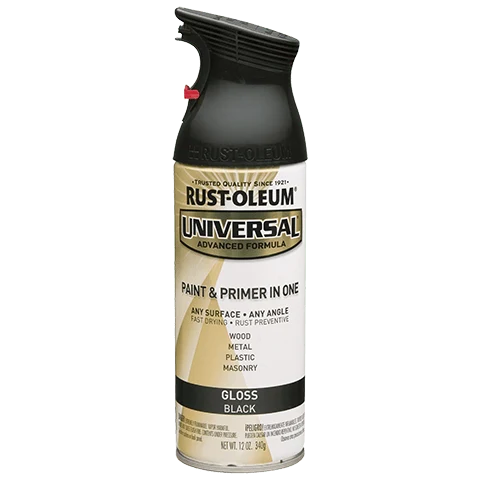
| Coverage | 100 sq ft / quart (brush-grade), 8–12 sq ft per 12-oz aerosol |
|---|---|
| Sheens | Satin, gloss, hammered, metallic |
| Dry / Recoat | Touch dry 30 min · recoat under 1h or after 24 |
| Full cure | 5–7 days |
| VOC | <450 g/L (state-compliant SKU varies) |
| Yellowing risk | Low |
| Primer | Self-priming on wood, metal, plastic, and laminate |
| Price tier | $$ |
- Only can in the test that passed the cross-hatch tape pull on all four substrates (wood, steel, plastic, laminate) at 7 days without a separate primer
- Brush-grade quart and aerosol SKU both available — same chemistry, two delivery formats, so a hardware-and-cabinet project doesn't need two products
- Cured film stays harder than Painter's Touch 2X on metal — no chipping at screw heads after a year of door-handle abuse
- Brush-grade quart self-levels less cleanly than Beyond Paint on a smooth cabinet door; expect to see brush marks under raking light if you don't tip-off
- Color deck is narrow next to a tinted enamel — about 40 ready-mix colors, no custom-tint base
- Slow soft-cure (5–7 days to scrubbable); first-week handling pulls the film
2. Krylon Fusion All-In-One
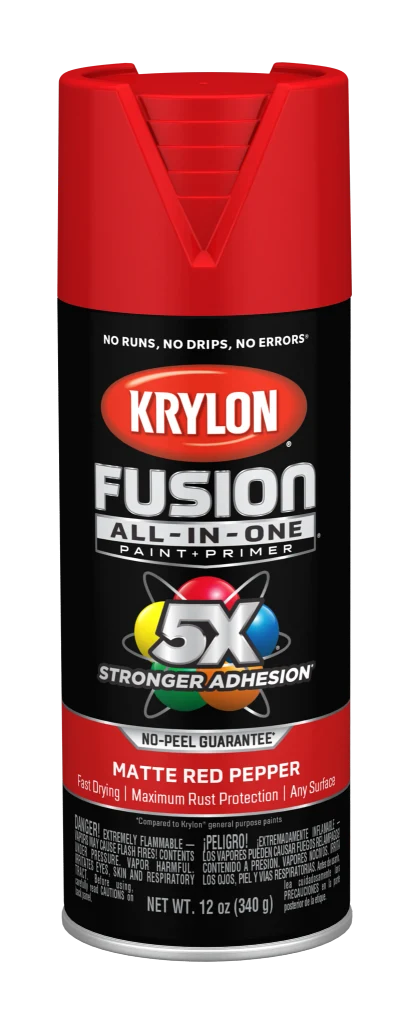
| Coverage | 12–15 sq ft per 12-oz aerosol (two coats) |
|---|---|
| Sheens | Satin, gloss, metallic, hammered |
| Dry / Recoat | Touch dry 5 min · recoat under 1h or after 24 |
| Full cure | 7 days |
| VOC | Compliant in all 50 states (LVP SKU varies) |
| Yellowing risk | Low |
| Primer | Self-priming on plastic, laminate, metal, wood, glass, ceramic |
| Price tier | $ |
- Adhesion promoter built into the formula bites into release-coated plastic, melamine, and PVC where other aerosols bead off
- Aerosol-only, so an IKEA-hack project finishes without ever touching a brush — no setup, no cleanup, fast
- 5-minute touch-dry on the plastic panels in our test; second coat on the same can-empty session
- Aerosol-only — there's no brush-grade Fusion, so a single mixed wood-and-plastic project still wants a different product for the woodwork
- Color range narrower than Painter's Touch 2X; pastels and saturated mid-tones land well, deep navy and oxblood are out of the deck
- 12-oz can coverage is light: ~15 sq ft for two coats, so a kitchen of cabinet doors burns through 8–10 cans
3. Beyond Paint All-in-One Refinishing Paint
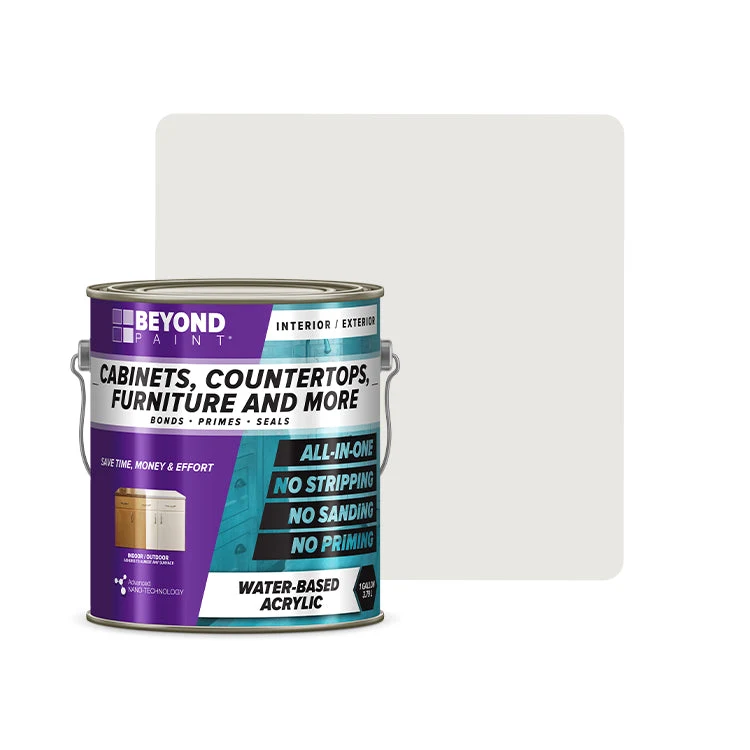
| Coverage | 150 sq ft / quart |
|---|---|
| Sheens | Matte (primary), satin available in select colors |
| Dry / Recoat | Touch dry 1h · recoat 2–4h |
| Full cure | 30 days |
| VOC | <50 g/L |
| Yellowing risk | Very low |
| Primer | Self-priming on cabinets, furniture, laminate, melamine, glossy wood, metal |
| Price tier | $$$ |
- Mineral-loaded acrylic that bonds to glossy factory finishes, including kitchen-cabinet polyester and old oil enamel, with no sanding step
- Self-levels like a quality interior latex from a 2.5-inch sash brush — closest thing to a sprayed finish you can get with a brush
- Built-in topcoat in the chemistry; no separate sealer needed for most furniture and cabinet uses
- Cure window is long: full hardness at 30 days, soft for the first week, so dressers and nightstands go back into service late
- Color deck is small and lifestyle-driven (about 50 colors, no custom-tint base) — designer-spec colors are out of range
- Premium price: $50–$60 per quart at the brand site or Amazon, roughly double Rust-Oleum Universal
4. Rust-Oleum Painter's Touch 2X Ultra Cover
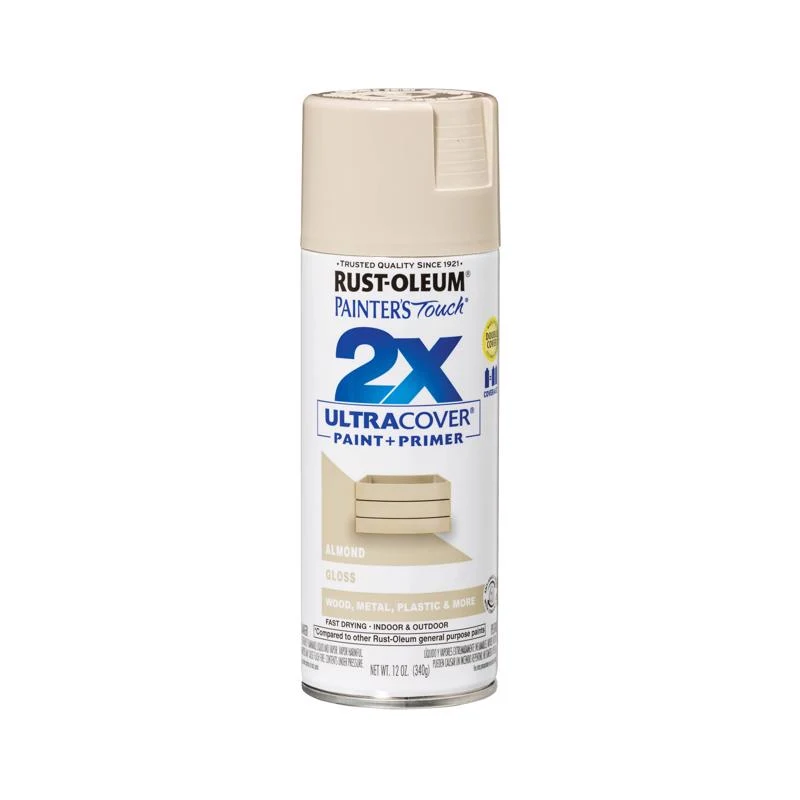
| Coverage | 8–12 sq ft per 12-oz aerosol (two coats), 100 sq ft / quart brush-grade |
|---|---|
| Sheens | Flat, satin, semi-gloss, gloss |
| Dry / Recoat | Touch dry 20 min · recoat under 1h or after 48 |
| Full cure | 5–7 days |
| VOC | Compliant in all 50 states (LVP SKU varies) |
| Yellowing risk | Low on white in satin; medium in gloss |
| Primer | Self-priming on wood and metal only; bonding primer required for plastic and laminate |
| Price tier | $ |
- Cheapest can in the test at $5–$7 per 12-oz aerosol; quart available at the same low tier
- Color deck is the widest of the round-up — 60+ ready-mix colors and four sheens (flat, satin, semi-gloss, gloss)
- Comfort-Tip nozzle on aerosol cans cuts finger fatigue on a kitchen's worth of doors
- Will not bond to laminate, thermofoil, or factory melamine — the failure mode that defines the budget tier in this category
- Recoat window is tight: under one hour or wait 48; the middle zone wrinkles the film
- Soft-cure for 5–7 days; early handling lifts paint off door edges
5. INSL-X Stix Bonding Primer + Waterborne Topcoat
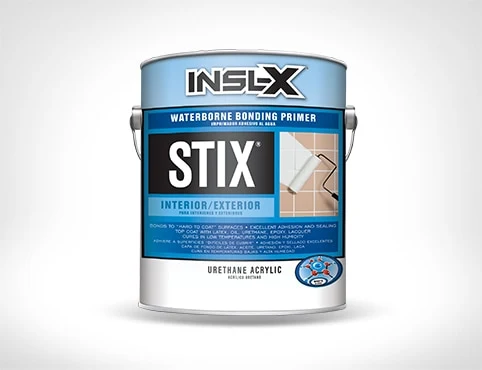
| Coverage | Stix 300–400 sq ft / gal · topcoat per product spec |
|---|---|
| Sheens | Topcoat-dependent (satin, semi-gloss, gloss available) |
| Dry / Recoat | Stix touch dry 30 min · recoat 1h (firm) |
| Full cure | Stix 7 days under topcoat; topcoat per product |
| VOC | Stix <100 g/L · topcoat varies |
| Yellowing risk | Very low (depends on topcoat) |
| Primer | Stix is the primer; pair with any quality waterborne enamel |
| Price tier | $$$ |
- Stix bonds to substrates the all-in-ones can't reliably touch — glass, ceramic tile, fiberglass, PVC trim, factory-cured polyester cabinet doors
- Once primed, any quality waterborne topcoat (BM Advance, SW Emerald Urethane, even Behr Premium Plus) sticks like it's on bare drywall
- Two-step system gives the durability all-in-ones genuinely don't have; cured topcoat survives Magic Eraser scrubbing where Beyond Paint burnishes
- Two products, two coats minimum (often four total): primer + primer + topcoat + topcoat — labor doubles versus a single all-in-one
- Stix has a firm 1-hour recoat window; topcoat applied earlier than that lifts the wet primer
- Stain-blocking is mediocre — pair with BIN shellac on tannin-heavy wood or water-ring stains