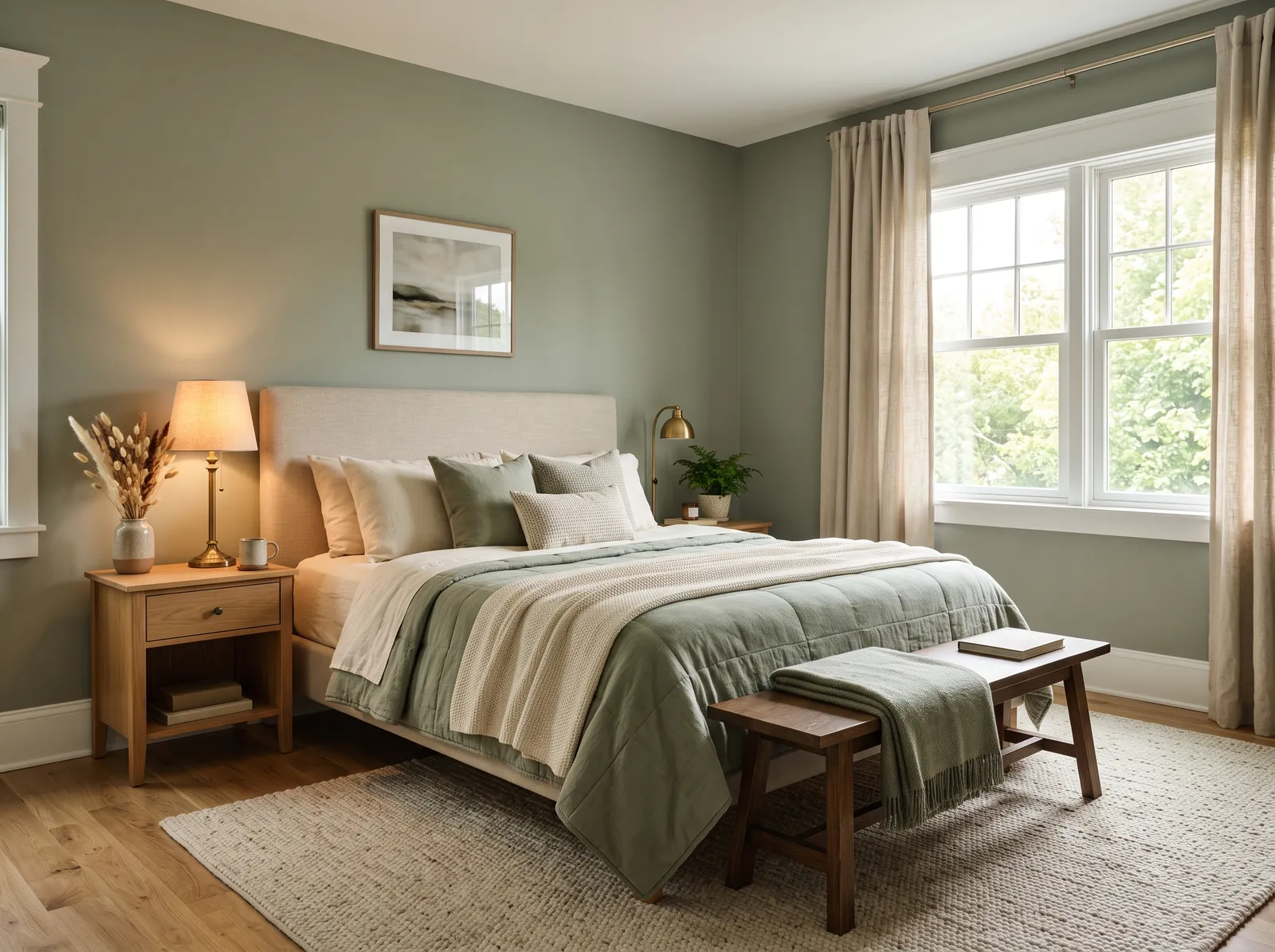
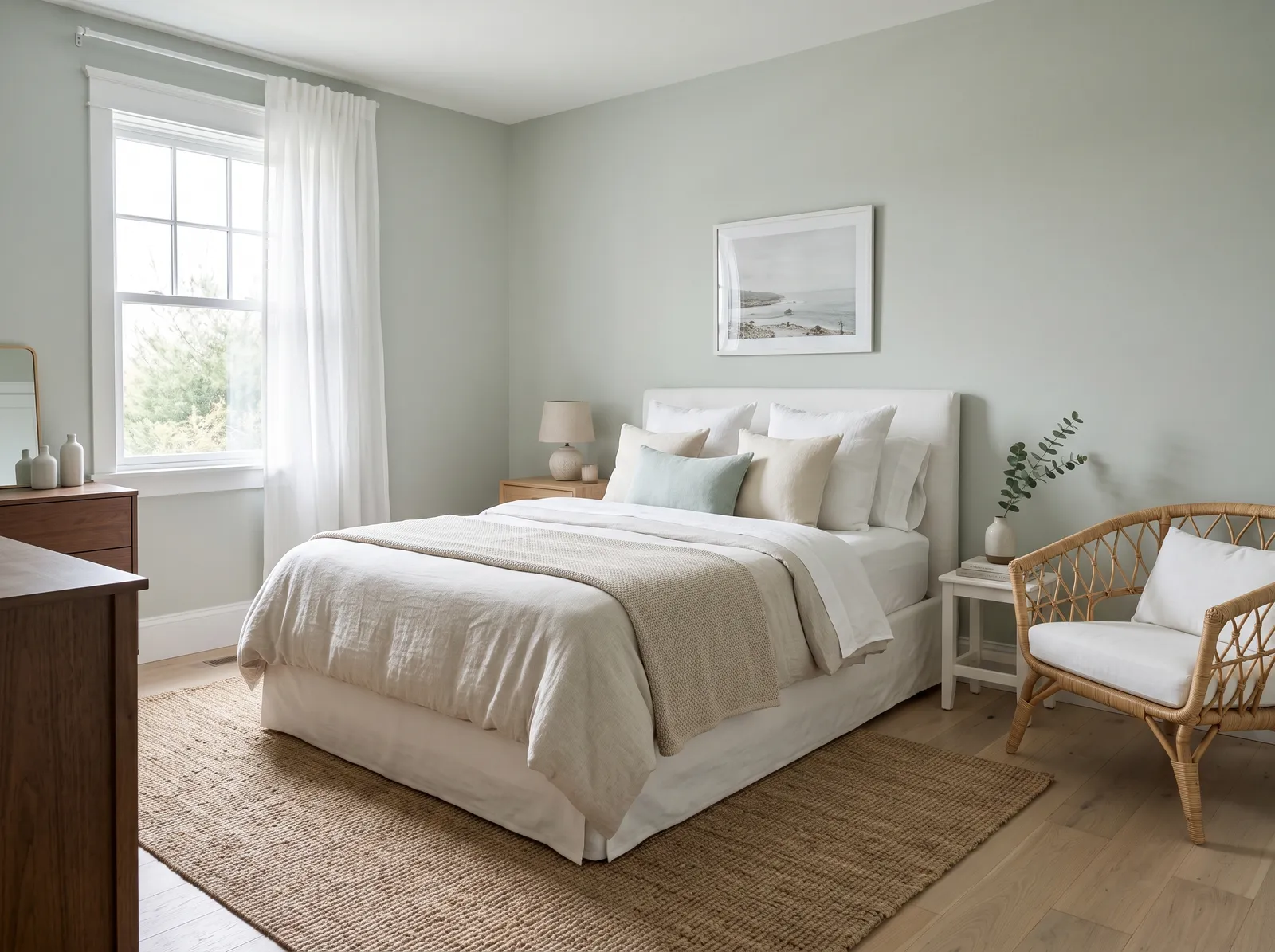
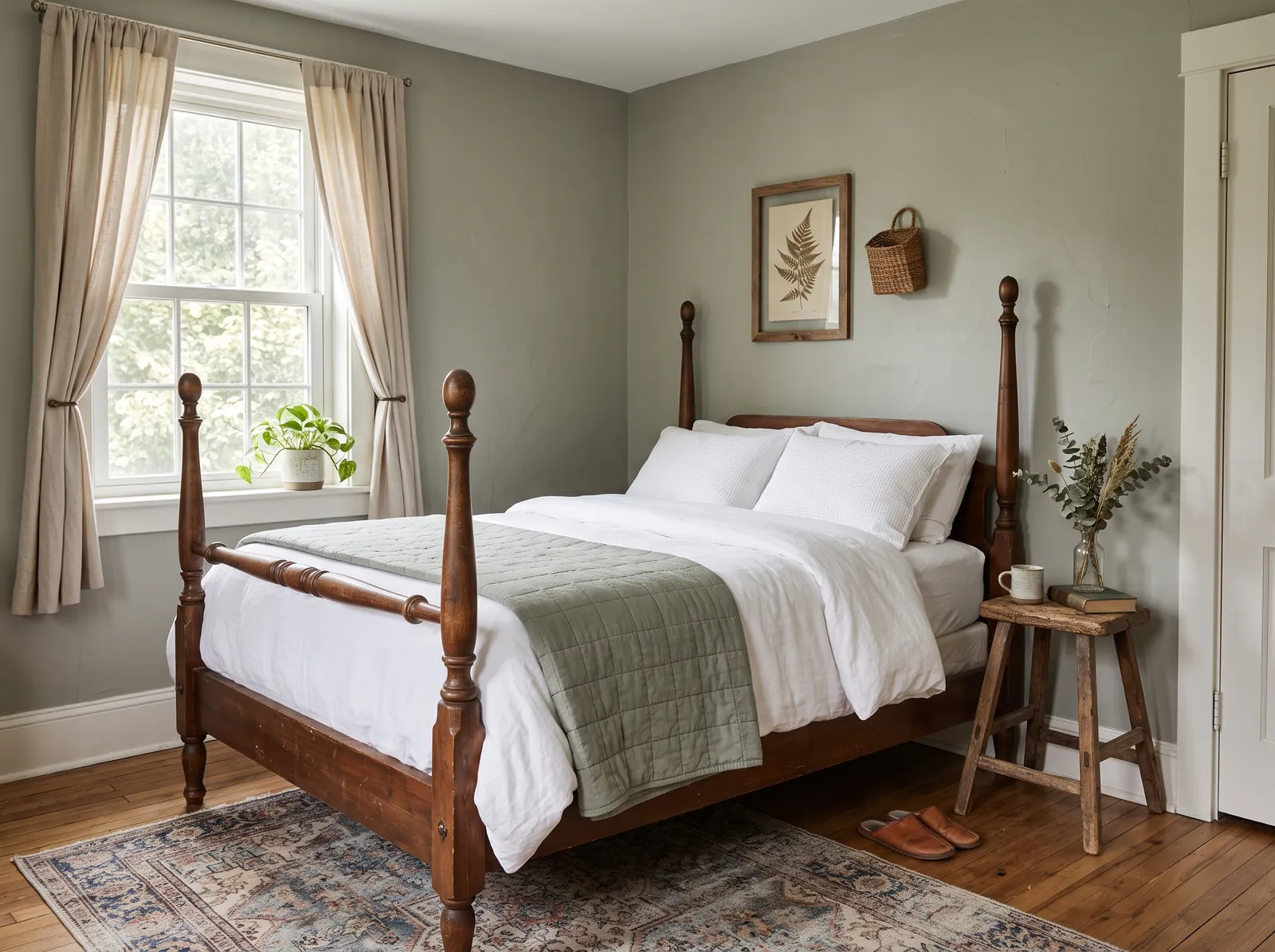
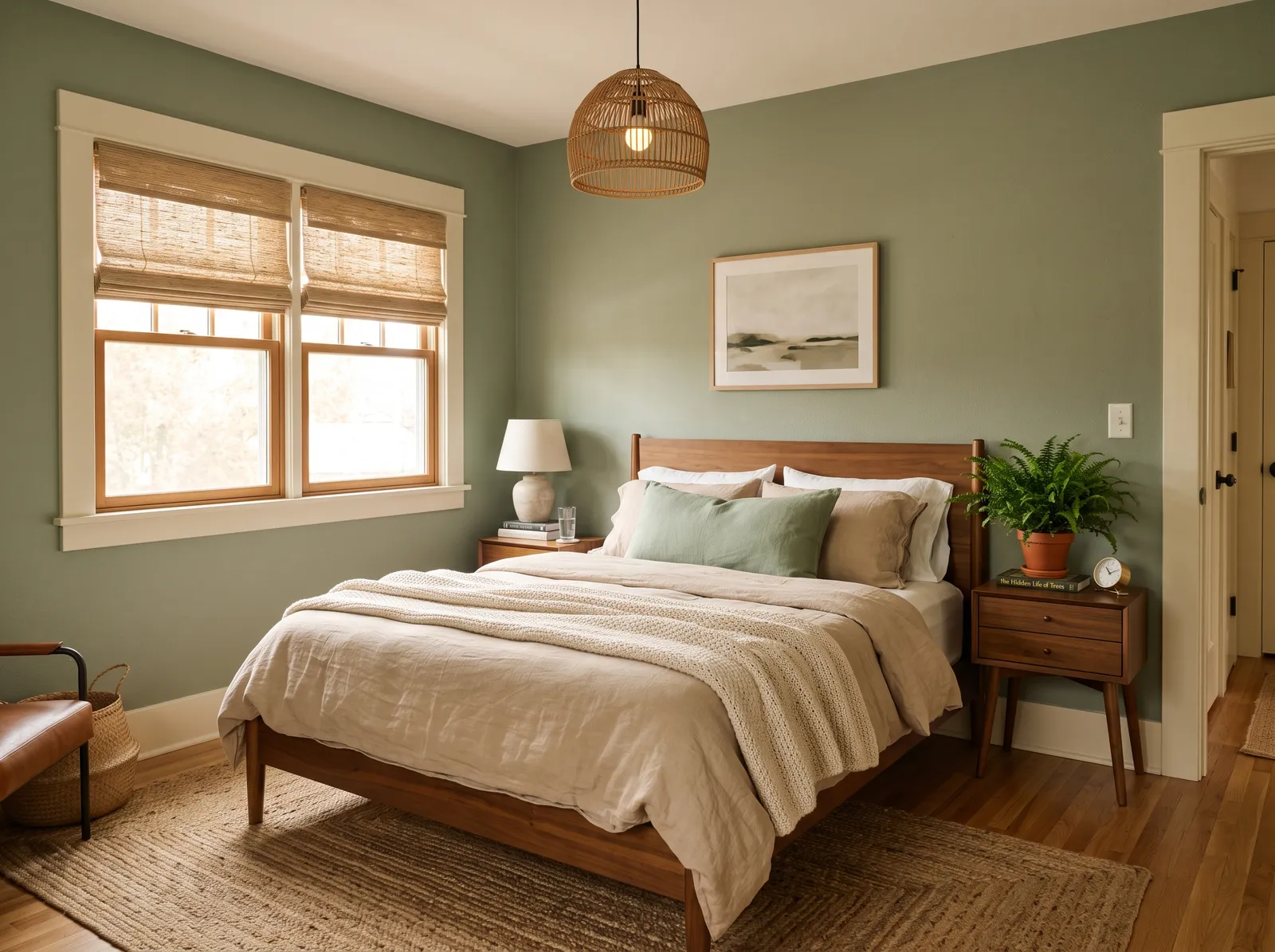
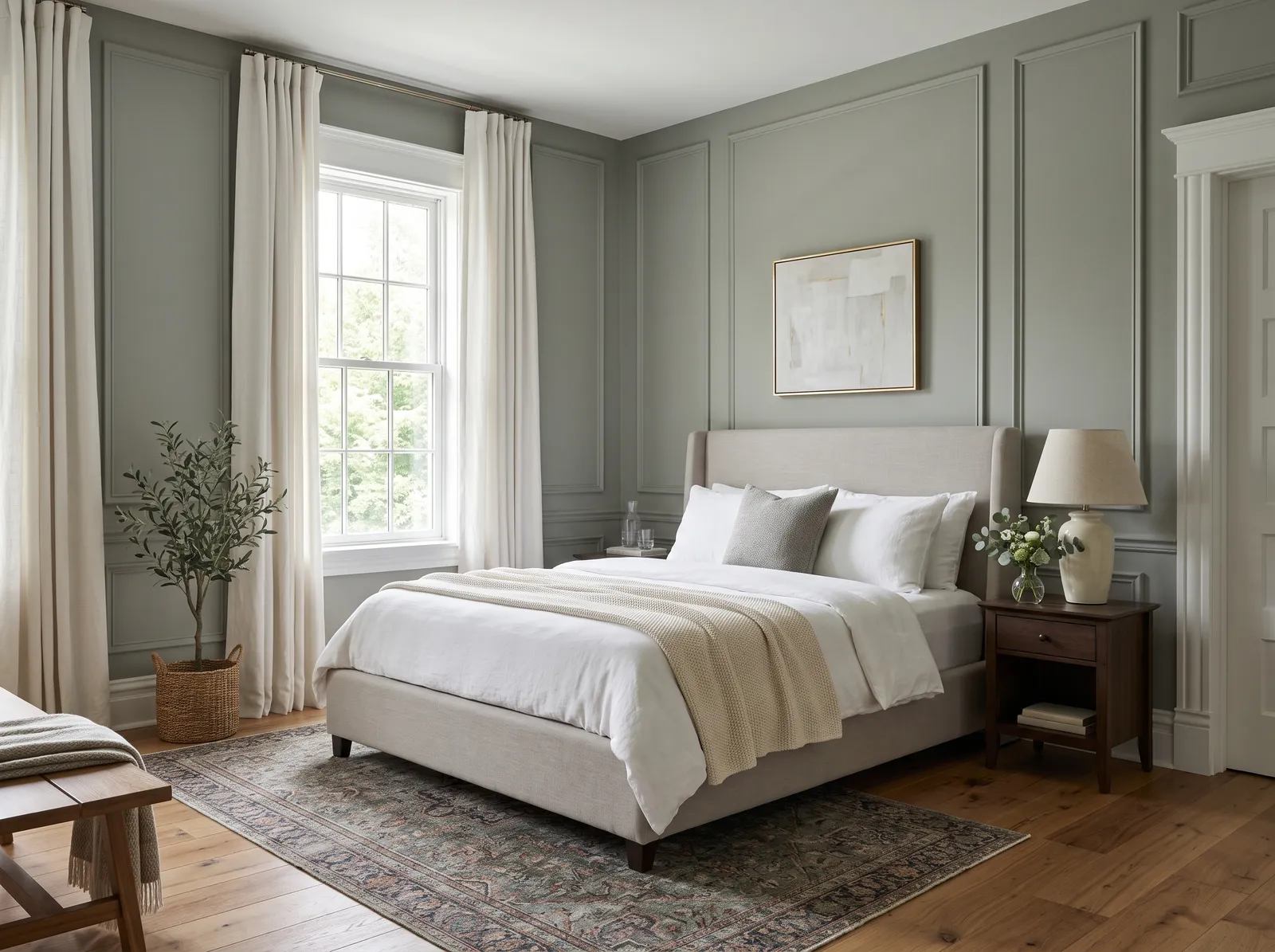
1. Palest Sage Calm
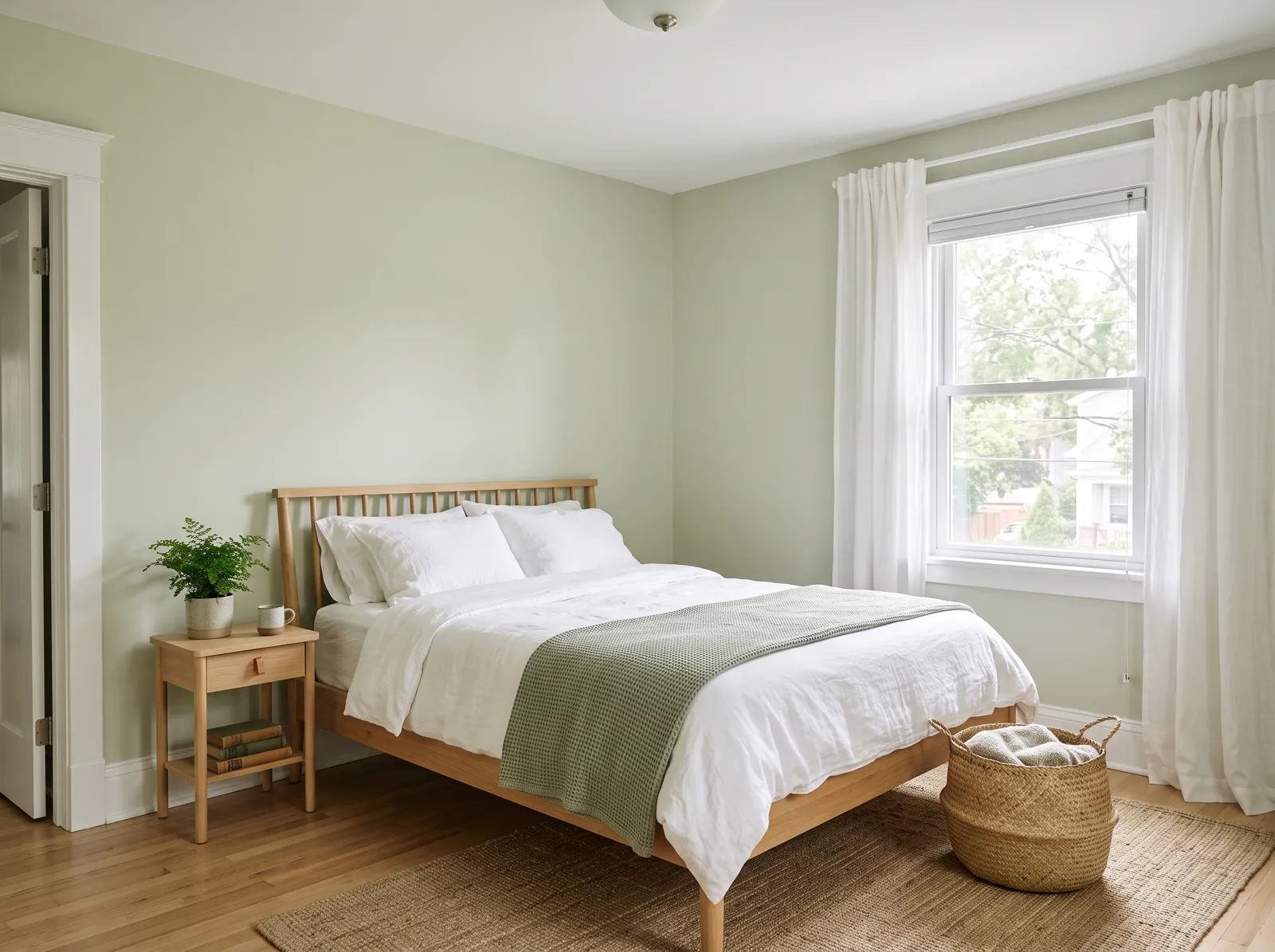
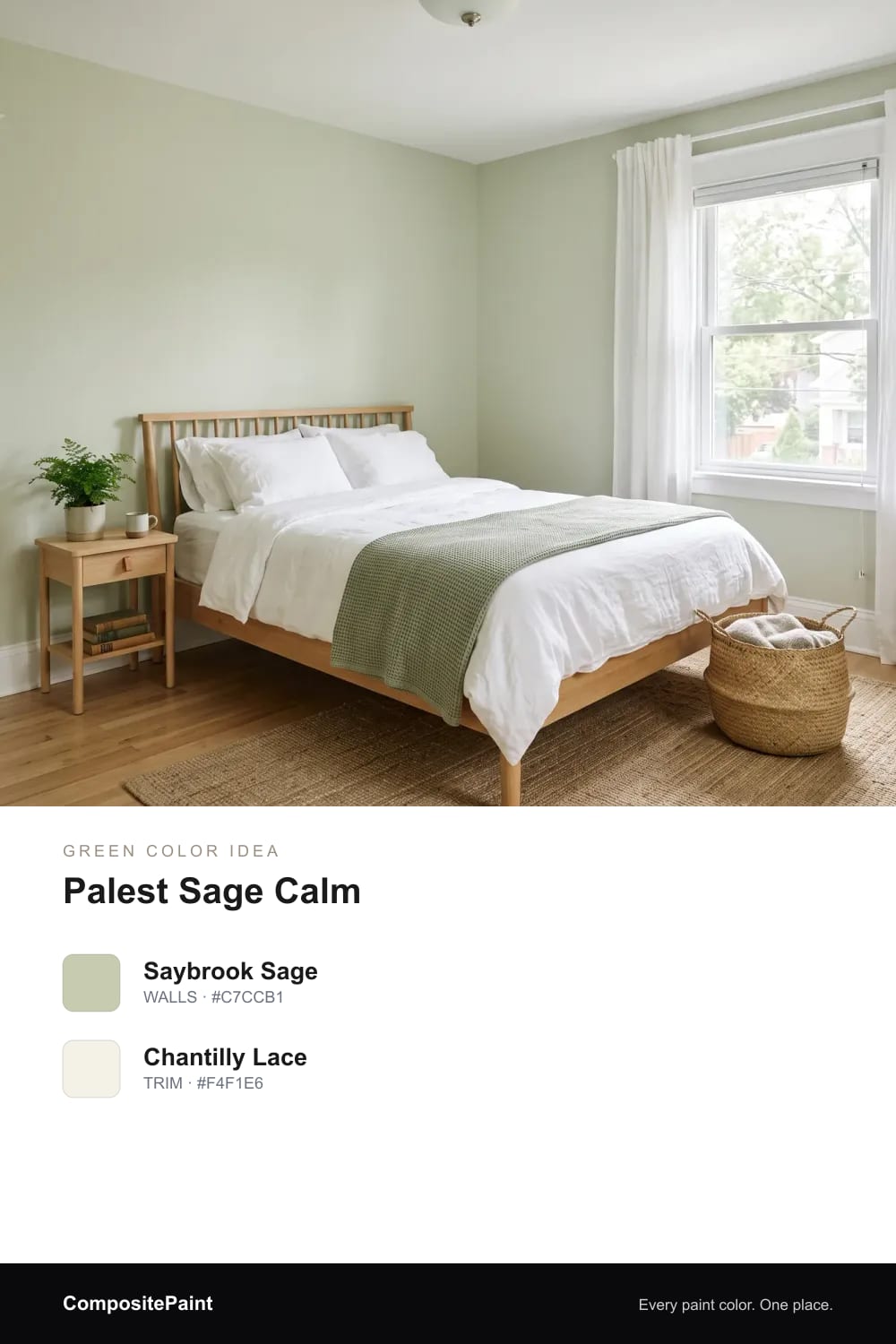
A whisper of green that reads almost like a soft white, so the room feels airy, fresh, and easy to wake up in.
Green is the color that makes a bedroom feel like a deep breath. From the palest sage to a near-black forest, here are twelve ways to wrap the room you sleep in with something calm, easy, and quietly alive.
By Jessica Williams · Color Stylist
A whisper of green that reads almost like a soft white, so the room feels airy, fresh, and easy to wake up in.
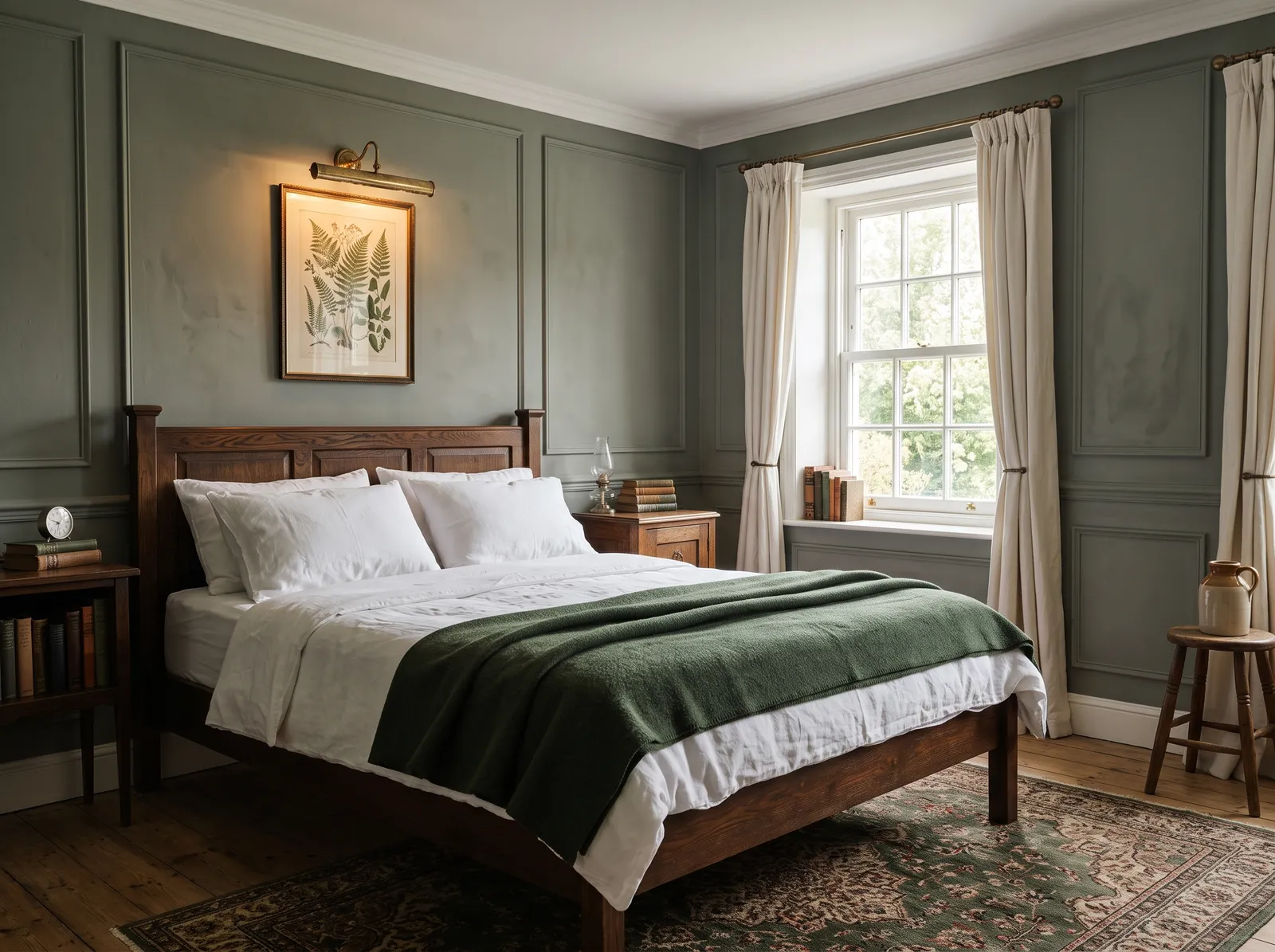
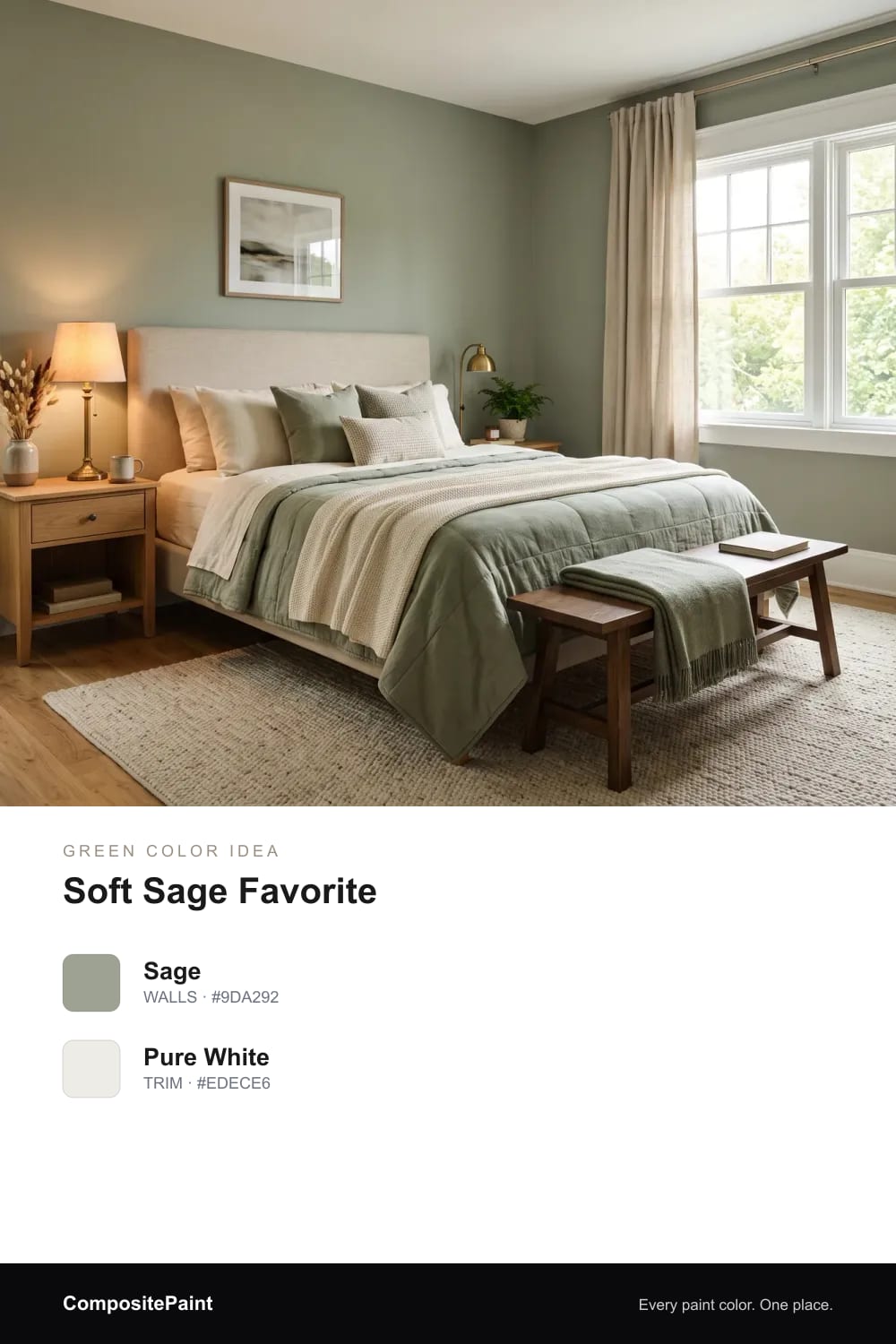
The easygoing sage everyone falls for, warm and grounded, like a calm garden gray-green you never get tired of.
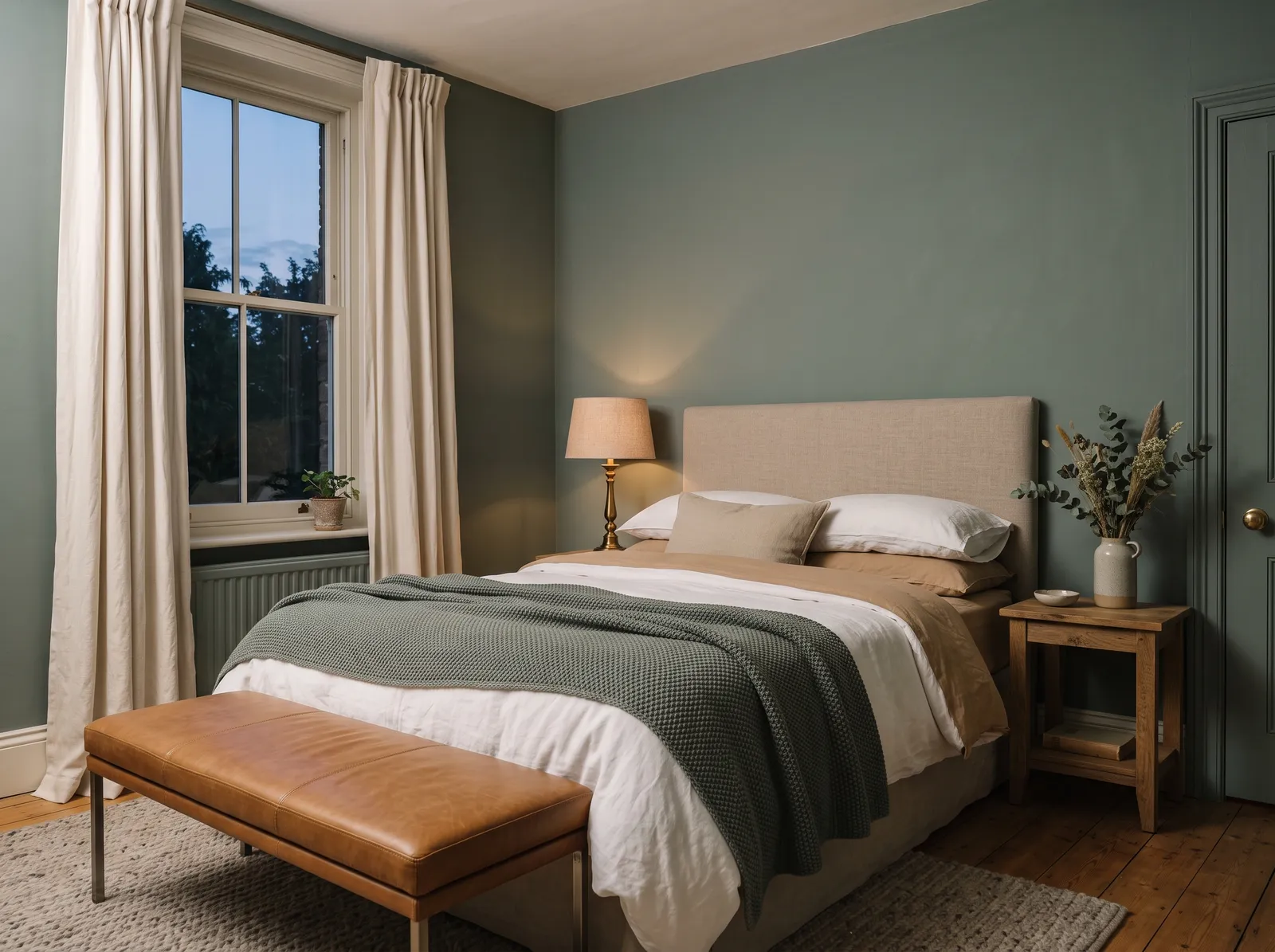
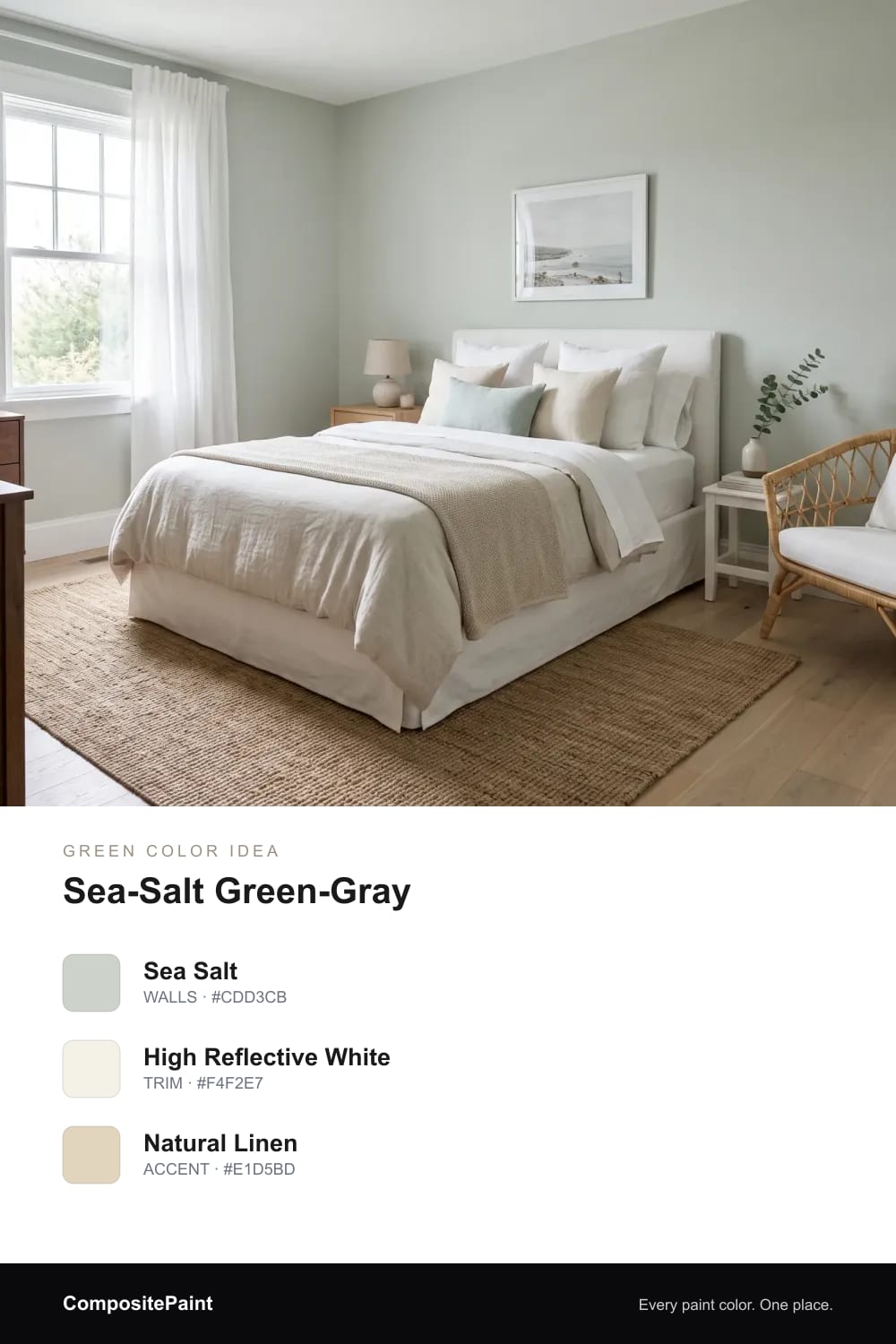
A coastal green-gray that shifts with the day, soft and spa-like, leaving the room feeling cool, clean, and restful.
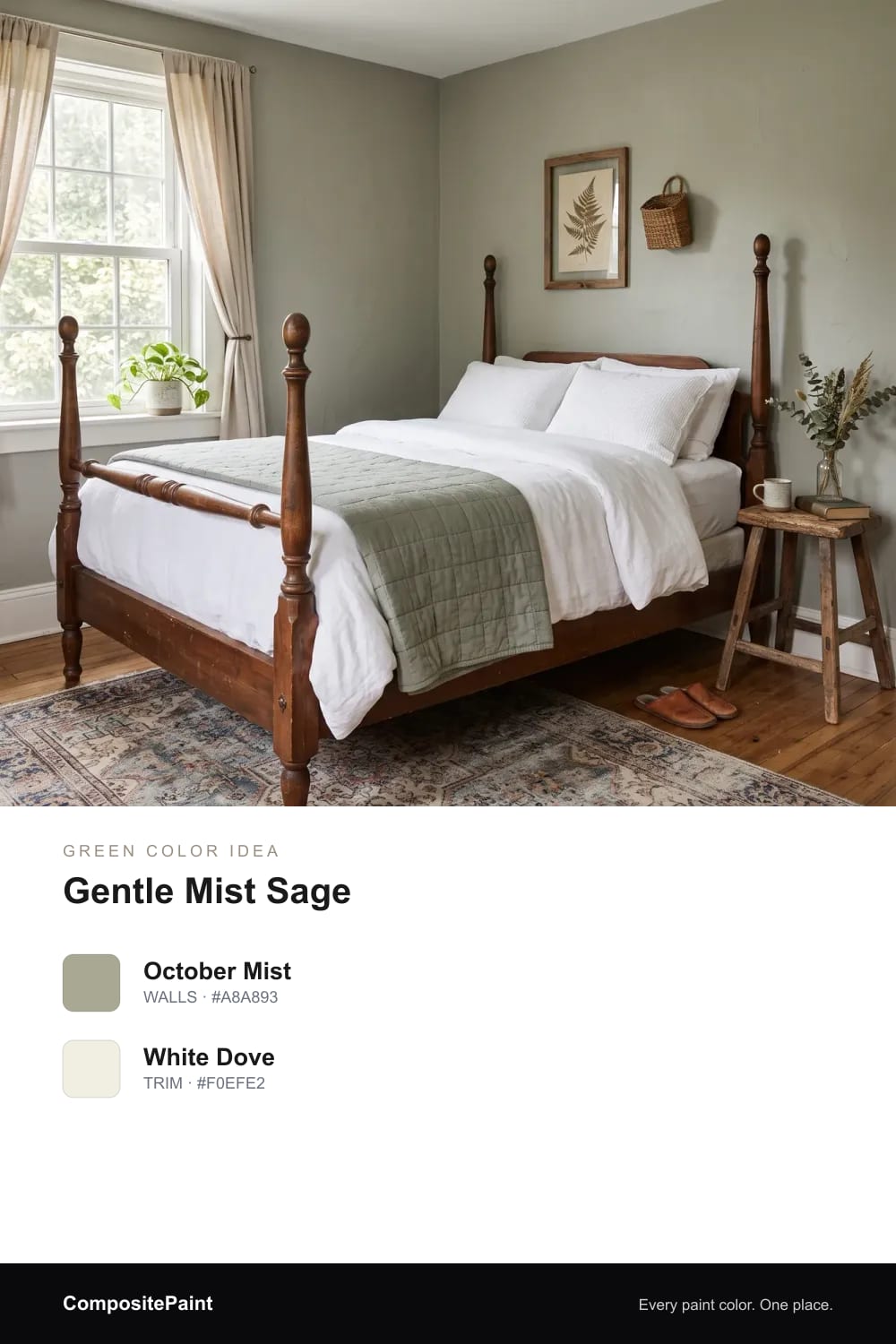
A hazy, grayed sage that feels like soft light through trees, quiet and grown-up without ever turning cold.
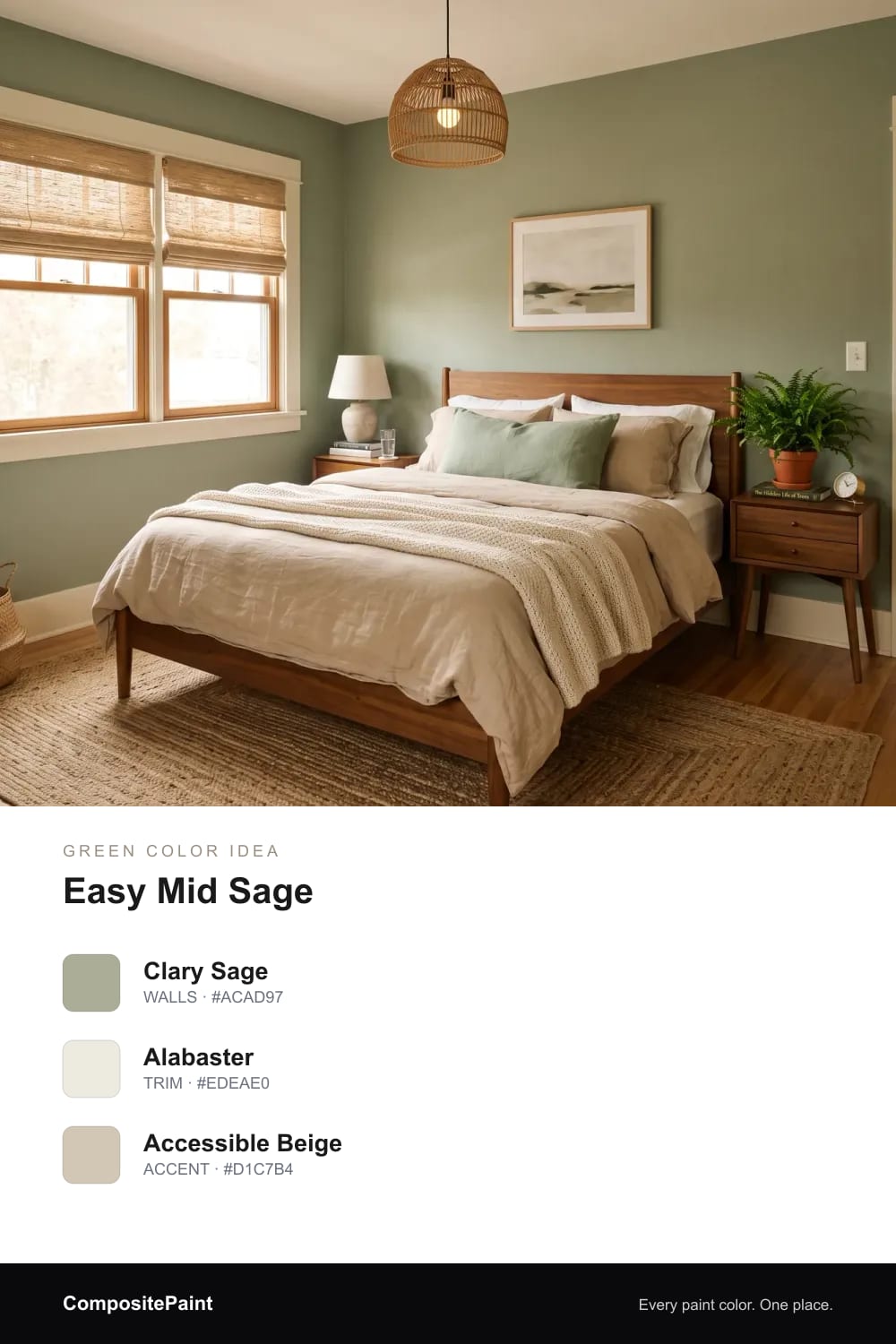
A true, leafy sage with a soft khaki warmth, deep enough to feel cozy yet still light and restful.
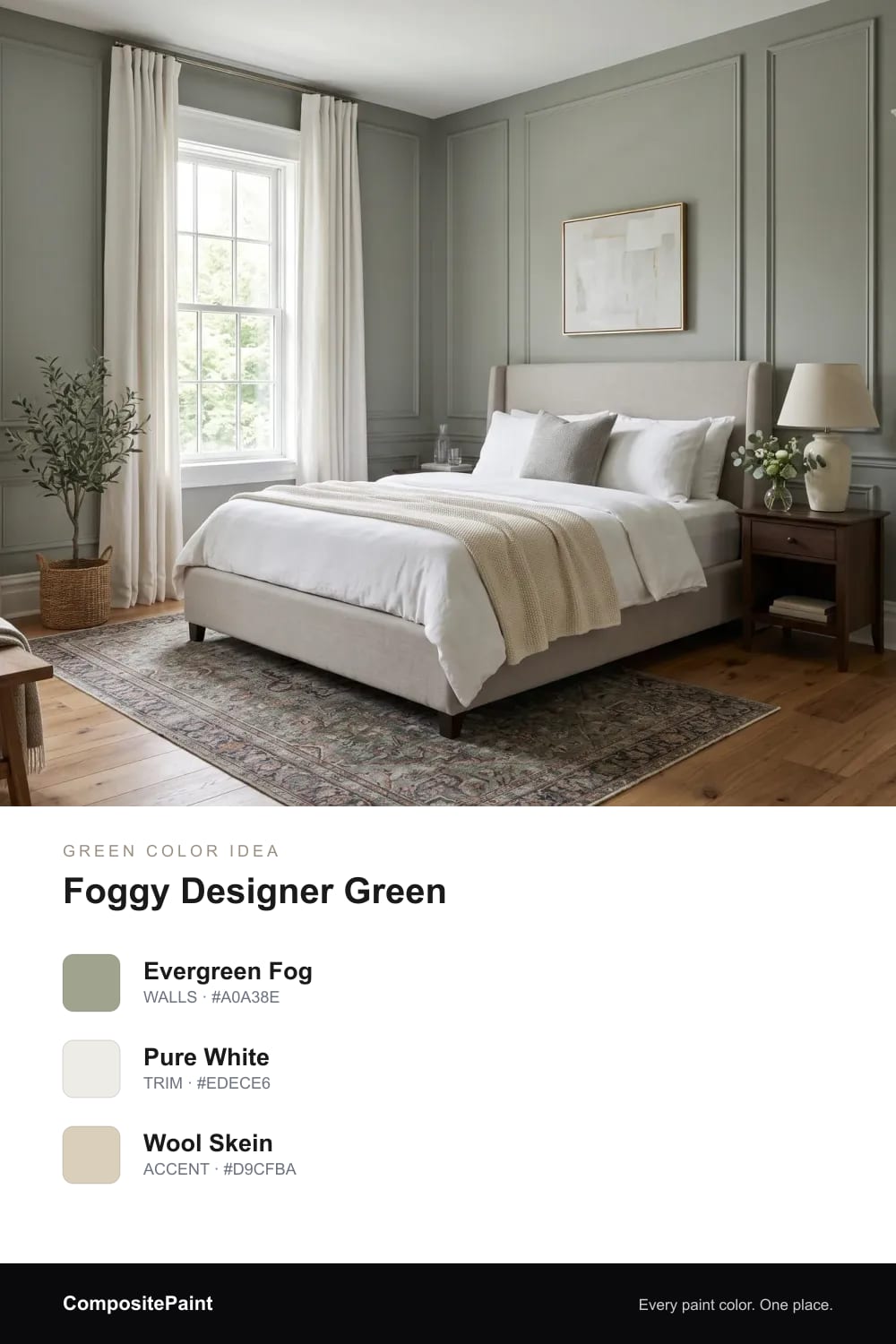
A misty gray-green with a designer reputation, soothing and sophisticated, wrapping the room in soft, foggy quiet.
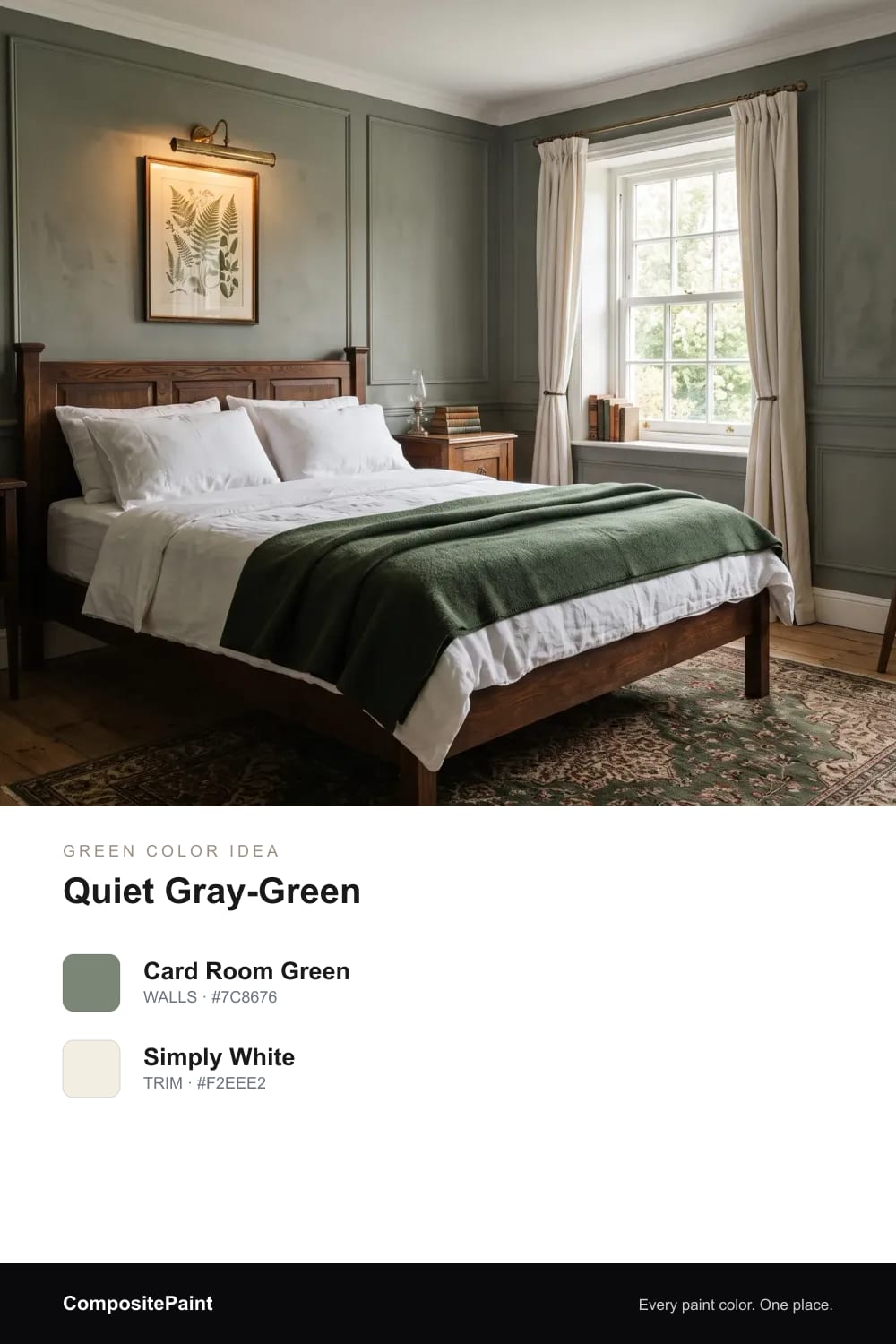
A muted, smoky sage with old-world charm that feels settled and serious, the kind of green that calms a busy mind.
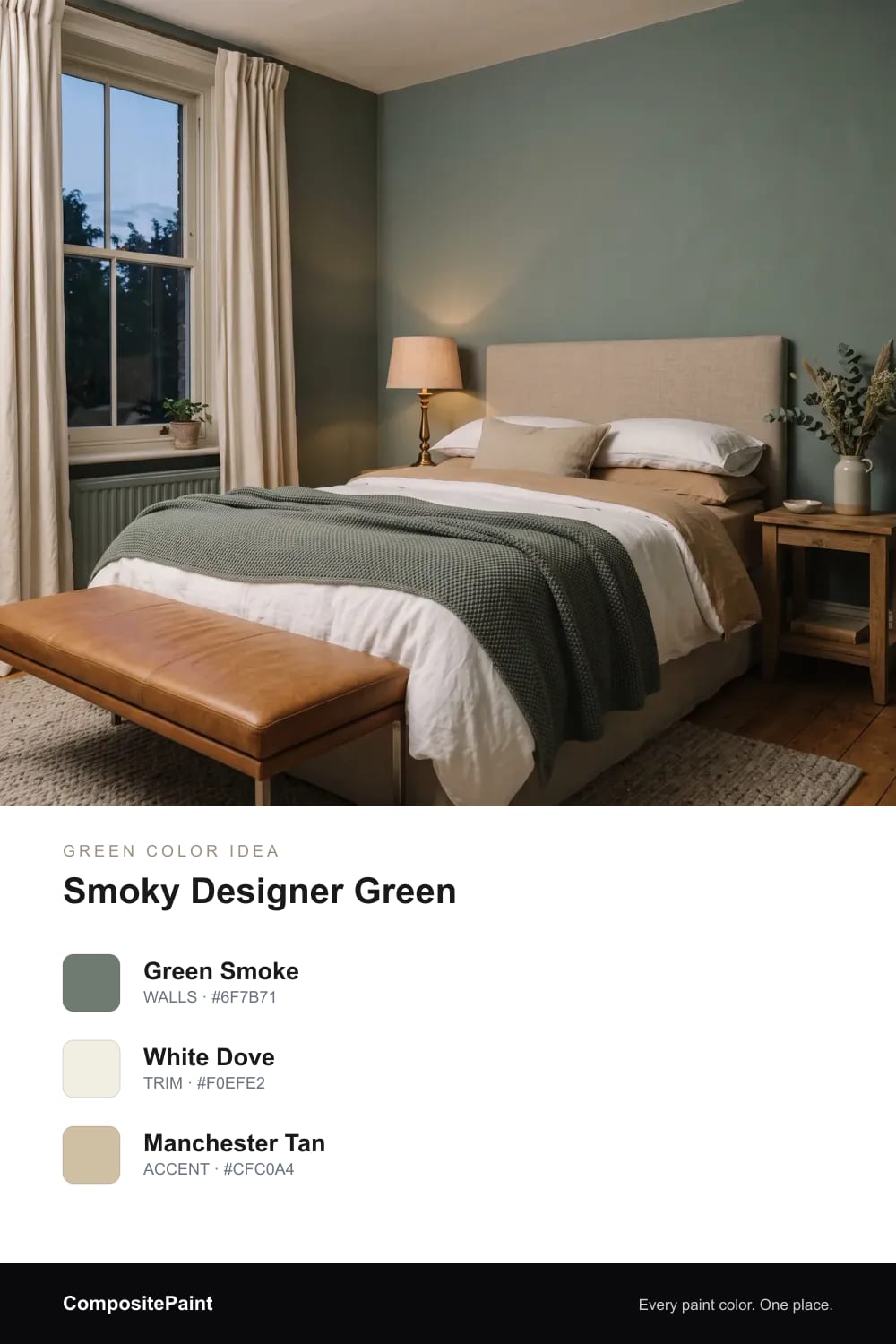
A soft slate-green with a hint of blue, moody but gentle, like dusk settling slowly over the room.
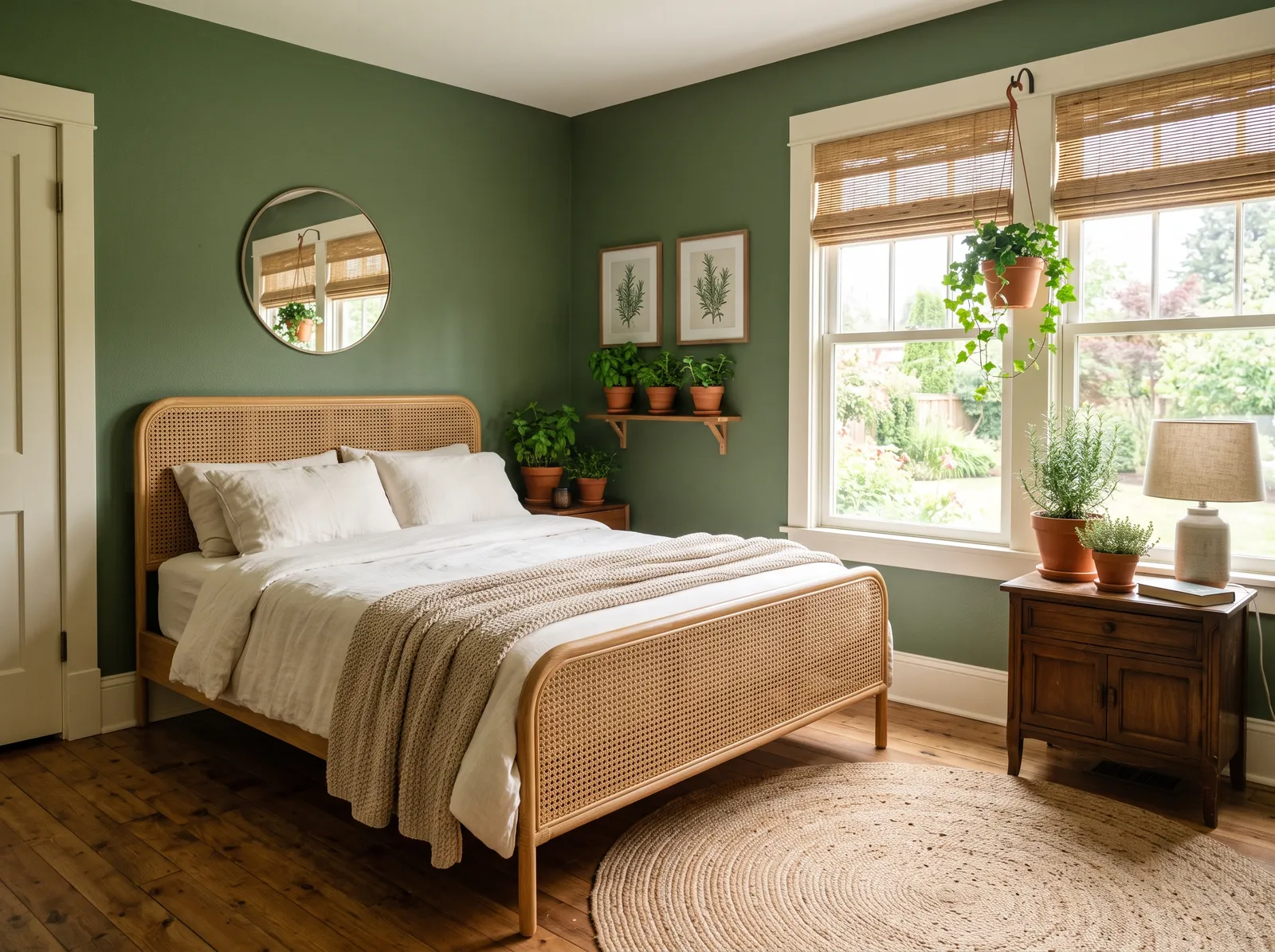
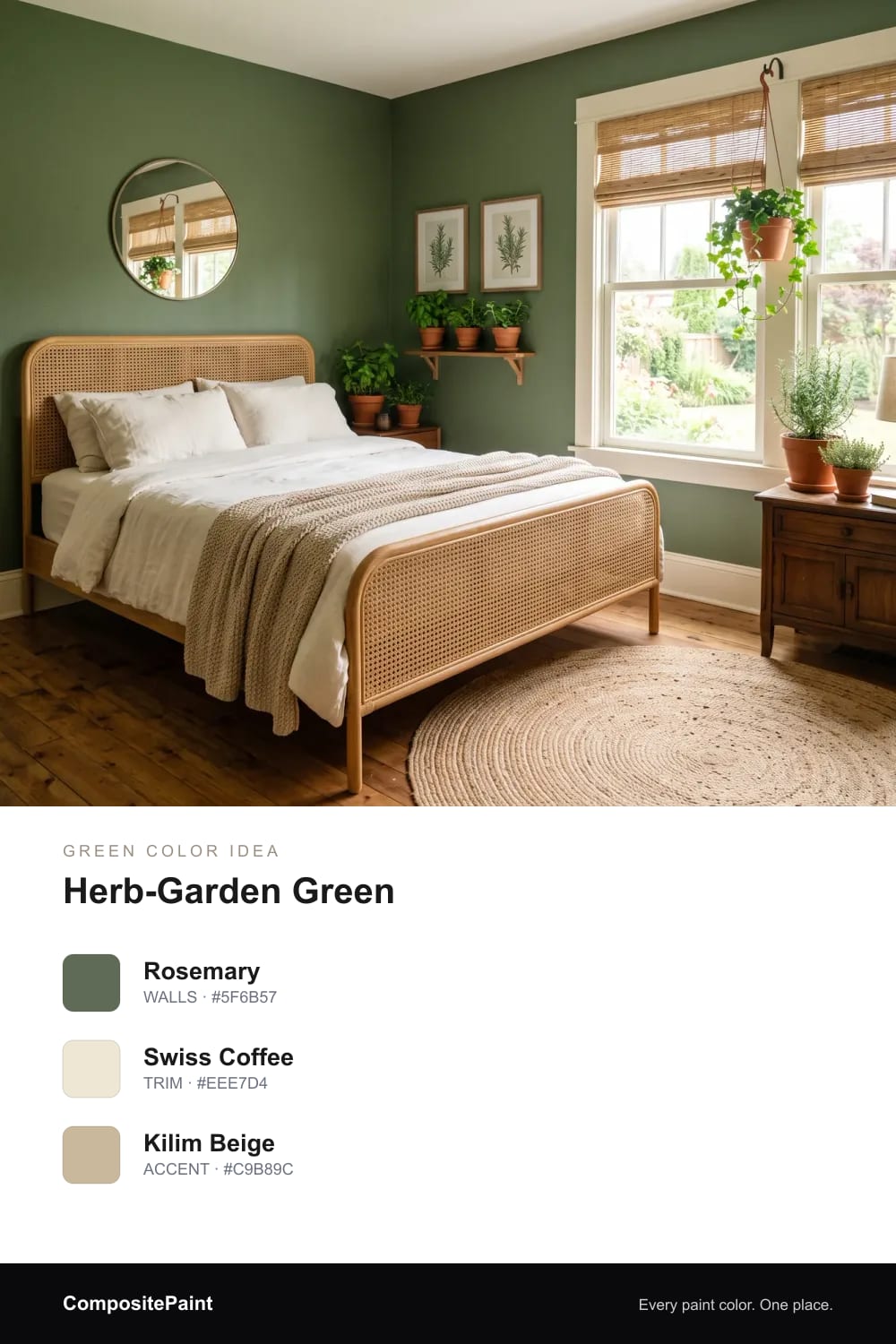
A rich, leafy herb green that feels fresh and natural, bringing the calm of a garden right to the bedside.
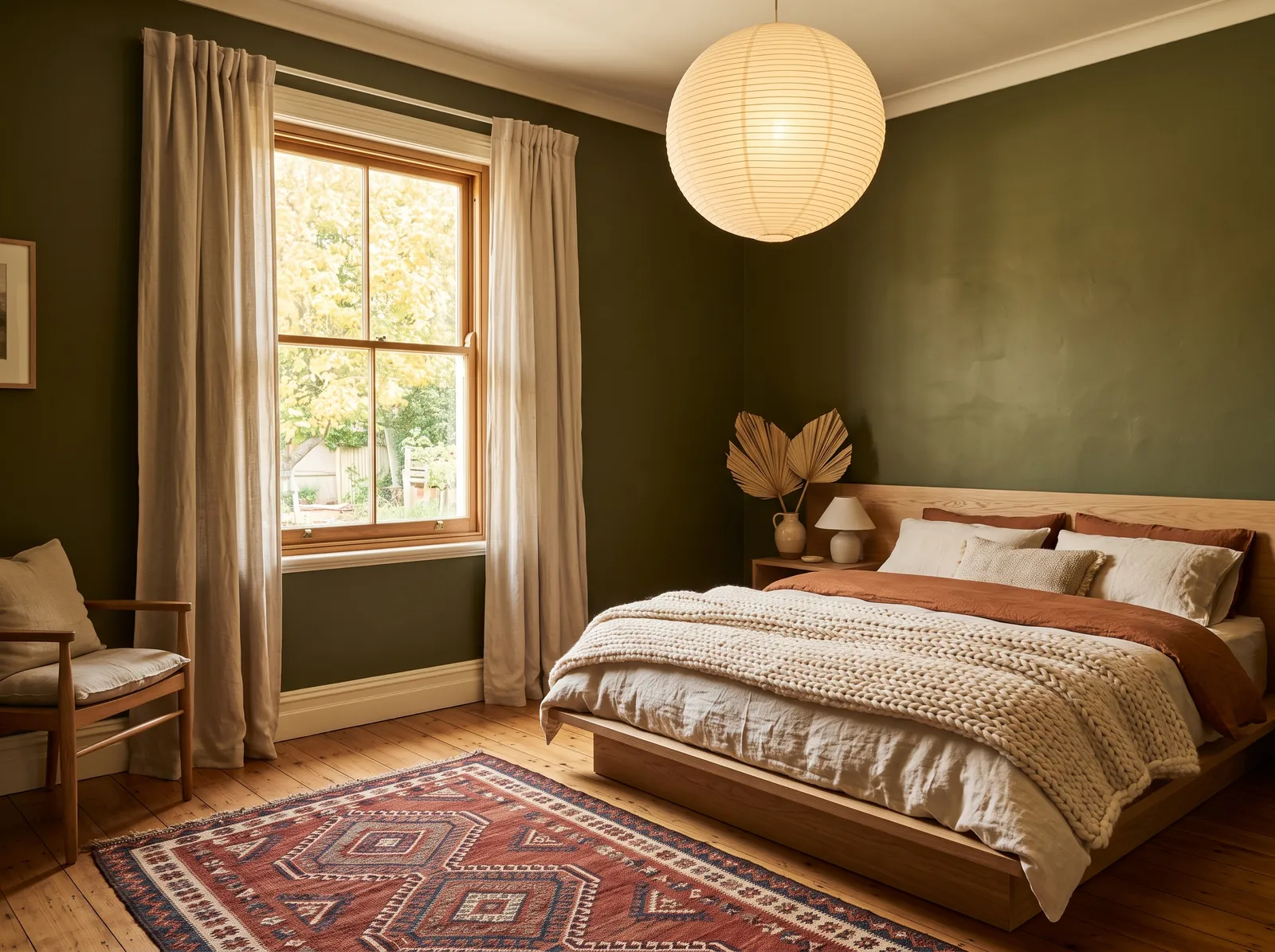
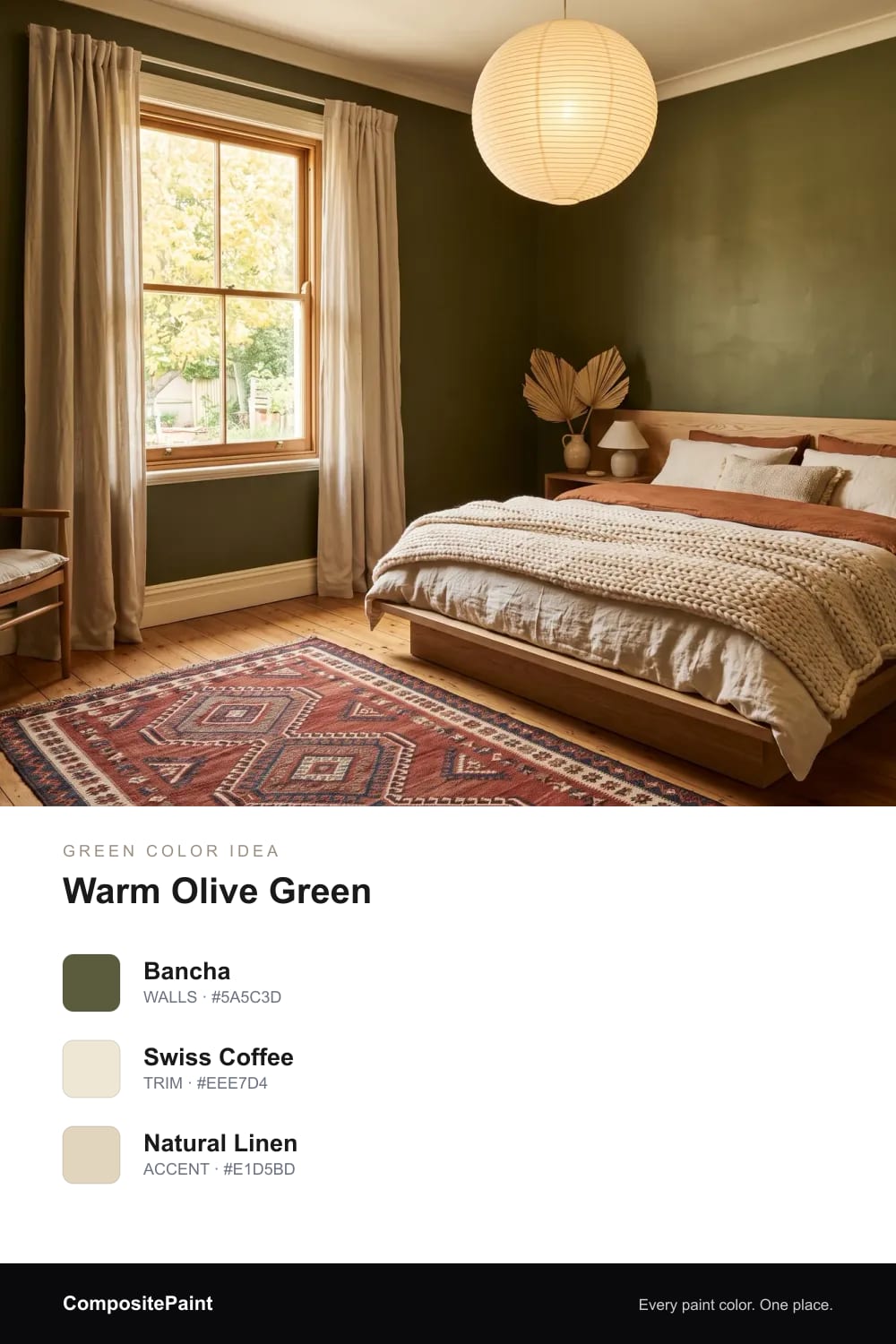
A deep, golden-tinged olive that feels warm and enveloping, turning the bedroom into a cocoon at the end of the day.
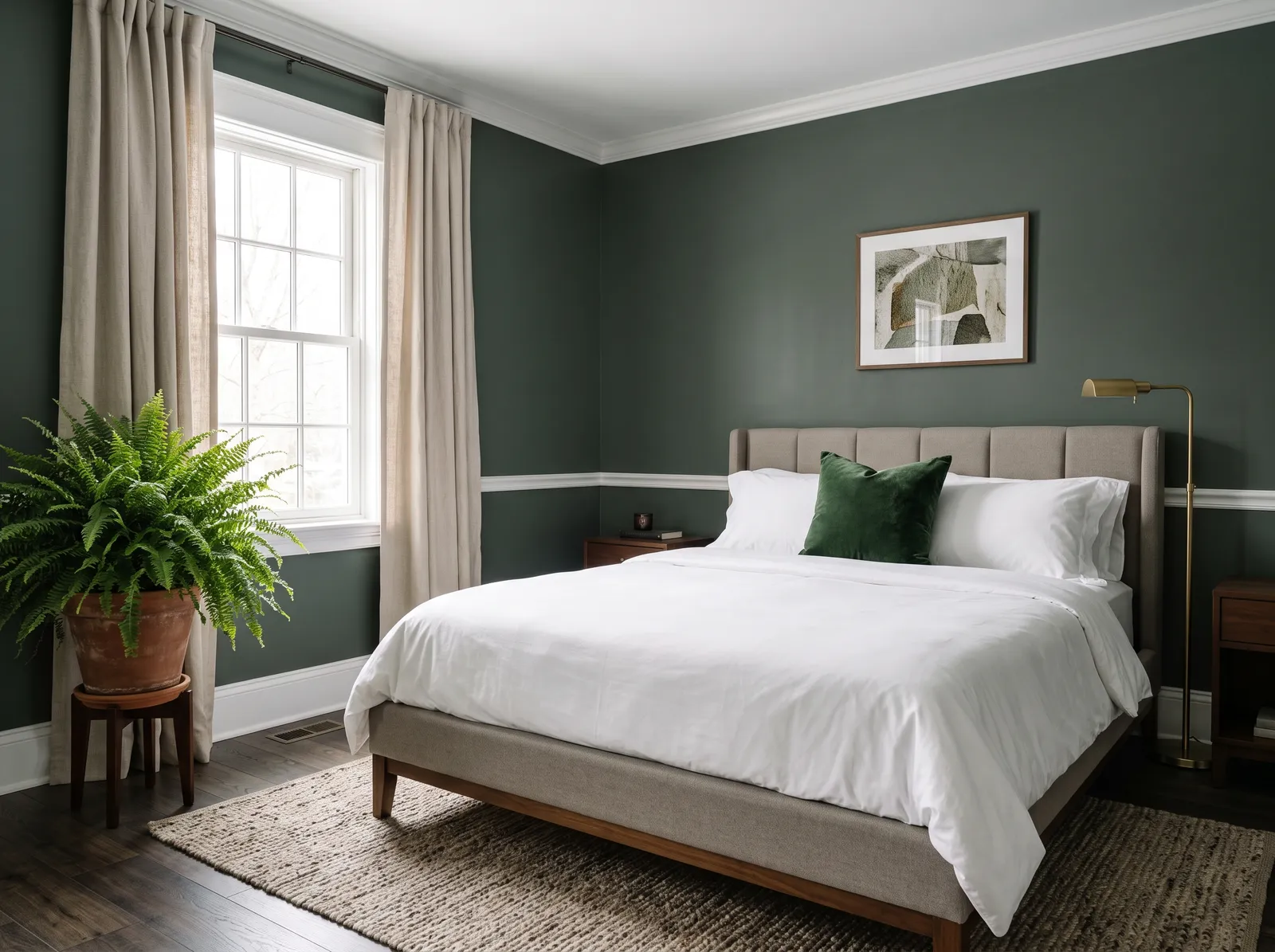
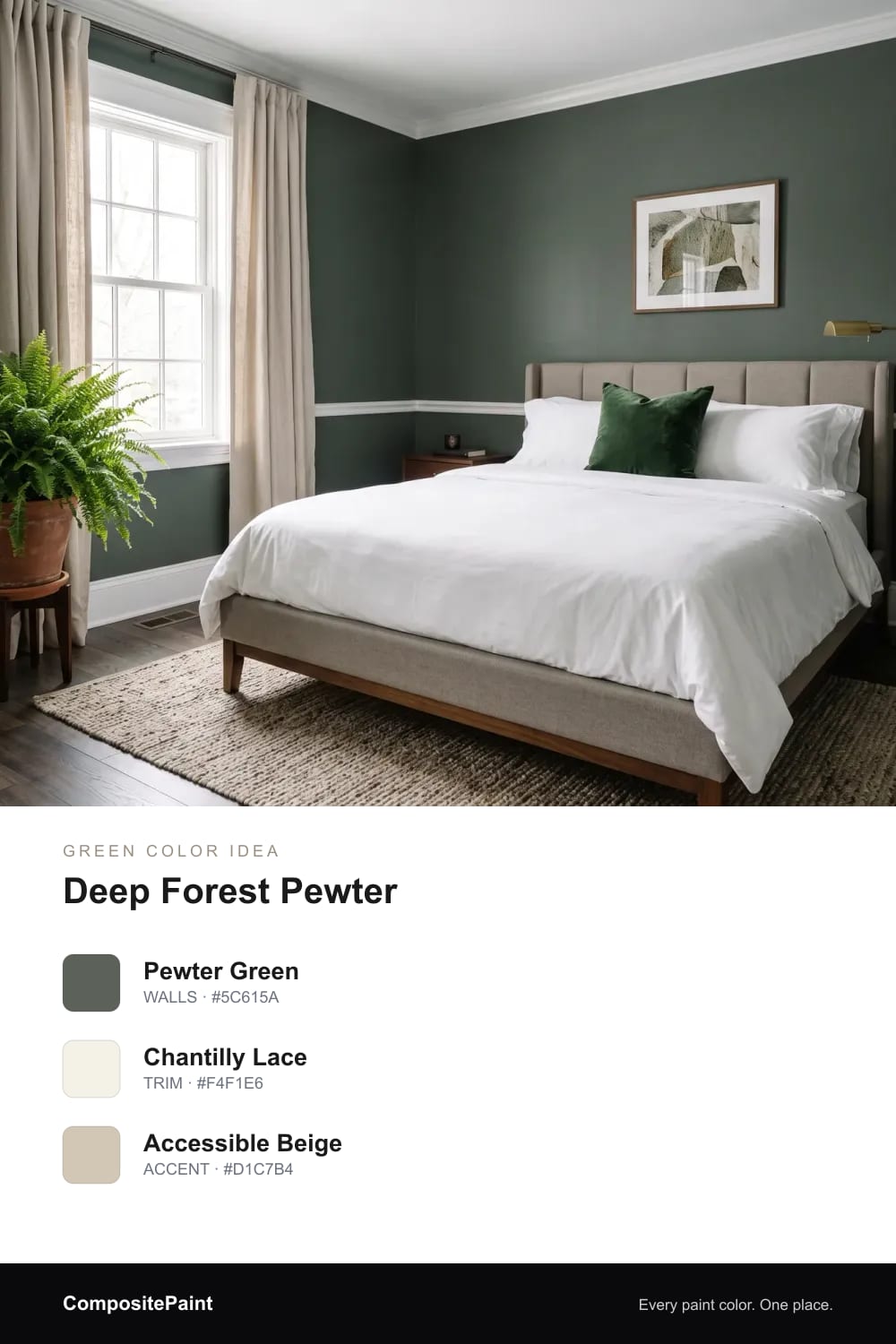
A deep, dusky forest green that feels luxurious and still, perfect for a bedroom you want to feel like a retreat.
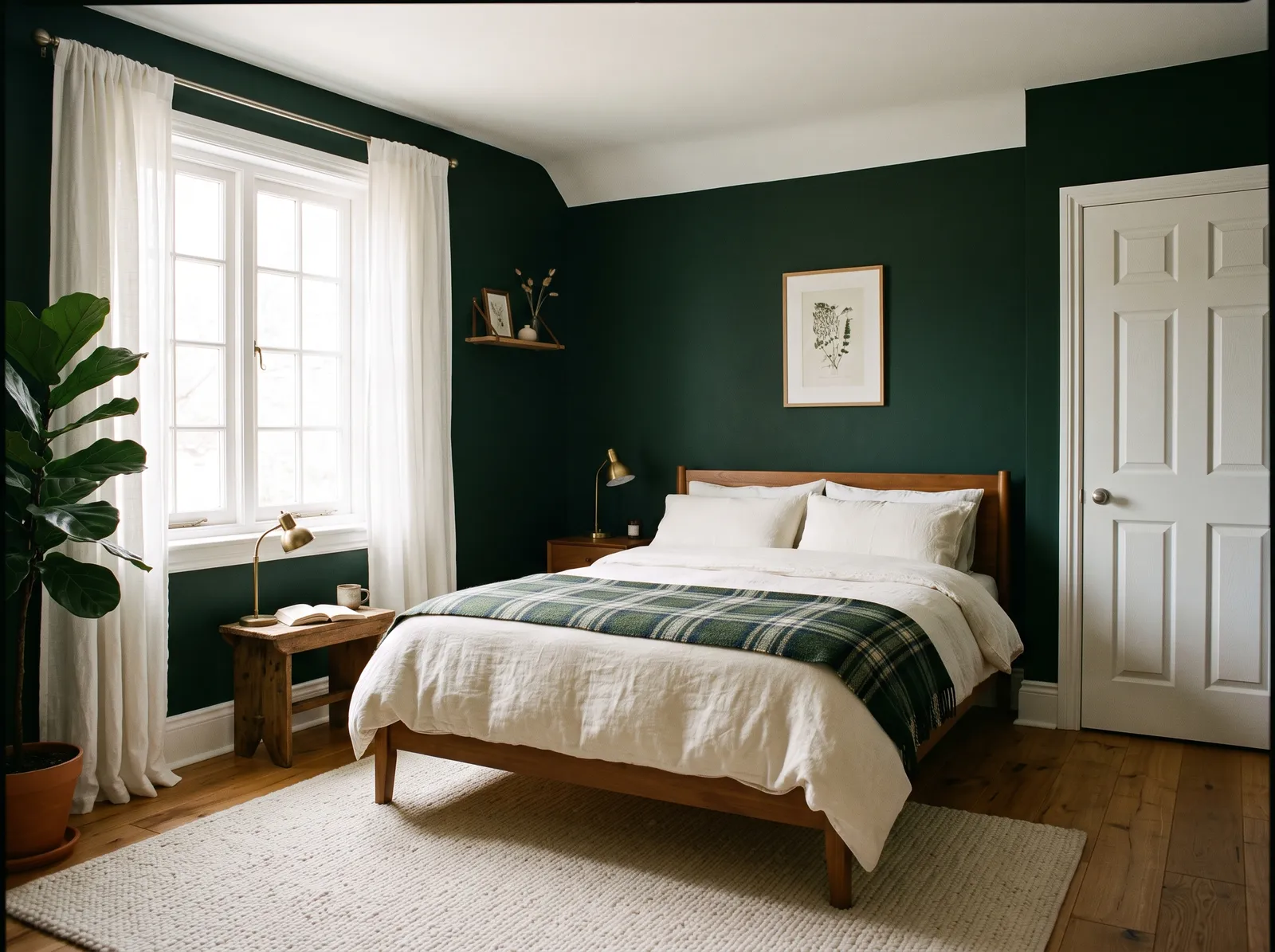
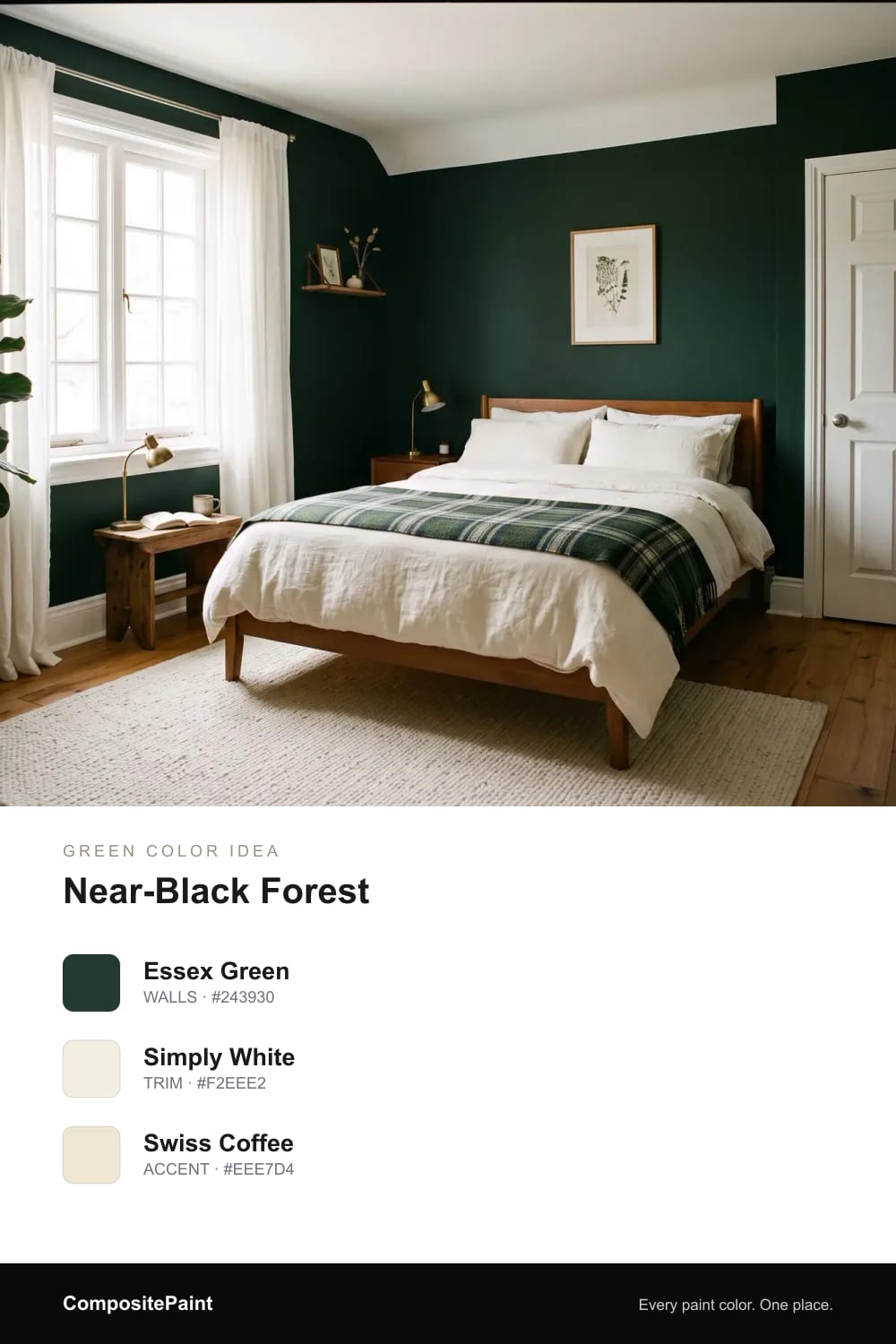
A green so deep it reads almost black, wrapping the walls in soft shadow for the coziest, most cocooning sleep.
Upload a photo of your green and the visualizer paints your walls in any of these colors — in seconds.
UPLOAD YOUR PHOTO →Green is the color we see most in nature, so our eyes find it easy and restful. In a bedroom that matters, because the room's whole job is to help you slow down and sleep. A green wall asks nothing of you. It just sits quietly in the background and lets your shoulders drop.
Green is also the great in-between color. It carries a little of the calm of blue and a little of the warmth of yellow, so it can feel cool and crisp or soft and cozy depending on the shade you choose. That flexibility is why a green bedroom rarely feels wrong, and why it works in a sunny city flat or a quiet country cottage just the same.
Green covers a huge range, and the bedroom looks above walk you from one end to the other. At the light end you have pale, dusty sages like Saybrook Sage and Sea Salt that barely whisper their color and keep a room feeling open and airy. These are the safe, gentle greens, the easiest to live with day to day.
From there it deepens. Mid greens like Clary Sage and Evergreen Fog add a bit more presence and warmth. Then come the rich, grown-up greens, olive Bancha, dusky Pewter Green, and near-black Essex Green, which turn the bedroom into a snug, enveloping retreat. There is no single right pick. The lighter ones brighten and lift, the darker ones hug and cocoon, so let the feeling you want guide you.
If you only try one green, make it a sage. It is the most loved bedroom green for good reason, soft, warm, and a little gray, so it feels calm without looking cold or minty. Shades like Sherwin-Williams Sage, October Mist, and Clary Sage all sit in this happy middle, and they suit almost any bed, any wood, and any bedding.
Sage is also forgiving. It plays nicely with the creams and tans most of us already own, it never fights with wood furniture, and it looks just as good in a bright modern room as in a cozy older one. If you want green but feel nervous about going too bold, sage is where to start. It is the gentlest way in.
Green changes more than most colors with the light in your room, so it is worth thinking about which way your windows face. A north-facing or shady bedroom gets cool, soft light, which can pull greens grayer and a little flat. In those rooms, lean toward warmer sages with a touch of yellow, like Clary Sage or October Mist, to keep things feeling cozy.
A south-facing or sunny bedroom gets lots of warm light, which lifts green and brings out its freshness. There you can be braver and try the deeper, cooler greens like Pewter Green or Green Smoke without the room ever feeling gloomy. Whatever you pick, paint a big sample square on the wall and watch it for a day. Green in the morning and green at night can look like two different colors.
A small green bedroom can go two ways, and both are lovely. The first is to keep it light and airy. A pale, soft sage like Saybrook Sage or Sea Salt with a crisp white trim and white bedding will quietly stretch the walls and keep a tight room feeling fresh and open.
The second is to do the opposite and lean all the way in. Painting a small bedroom a deep green like Pewter Green or Essex Green, walls, trim, and all, blurs the corners and makes the size of the room hard to read. Instead of feeling cramped, it feels deliberate and cozy, like a snug little jewel box. Small rooms are actually the best place to be brave with a dark green.
Green is one of the friendliest colors to decorate around. Warm woods are its best partner, oak, walnut, cane, and rattan all look richer against a green wall, so don't be afraid to mix in natural furniture. For a soft, layered bed, reach for creamy whites, oatmeal, and warm beige linens, which keep the room feeling calm and pulled together.
When you want a little contrast, green loves earthy partners. Touches of terracotta, rust, blush, and soft brown warm things up, while black accents and brass or gold metals add a quiet bit of polish. If you'd rather keep it serene, just pair your green with white and natural textures and let the color do the talking.
For bedroom walls, a flat or matte finish is usually the nicest choice. It soaks up light instead of bouncing it back, which makes green look soft and rich and hides little bumps in the wall. This is especially true for the deeper greens, where a low sheen helps them feel velvety and calm rather than shiny.
Save the tougher, slightly glossier finishes for the parts that get touched and knocked. A satin or semi-gloss on the trim, doors, and window frames wipes clean easily and gives a gentle crisp edge against the matte walls. If you're painting an older room with rough plaster, a true matte will always be the most forgiving.
Soft sage greens are the clear favorites, with shades like Sherwin-Williams Evergreen Fog, October Mist, and a simple sage leading the pack. They are loved because they feel calm and warm rather than bright or minty, and they suit almost any furniture. If you want a safe, well-liked place to start, pick a gentle sage.
Yes, sage is one of the best bedroom colors you can choose. It is soft, warm, and restful, so it helps the room feel calm and easy to relax in. Sage also pairs beautifully with wood furniture, white trim, and natural linens, which makes it simple to decorate around.
Green is very easy to pair. Warm woods like oak and walnut, creamy whites, and beige or oatmeal bedding all look lovely with it. For a little contrast, add earthy touches of terracotta, rust, or blush, plus brass or gold metals and the odd black accent for polish.
North-facing rooms get cool, soft light that can make green look grayer and flatter. To keep it cozy, choose a warmer sage with a hint of yellow, such as Clary Sage or October Mist. Avoid very cool or gray-blue greens in these rooms, as they can feel a bit chilly.
Green is one of the most calming colors for a bedroom. Because it is the color we see most in nature, our eyes find it restful and easy, which helps the room feel peaceful. Softer sages and deeper forest greens are especially soothing and great for winding down at night.
Creamy white, oatmeal, and warm beige bedding keeps a green room soft and calm, while a green or rust throw adds a cozy layer. For furniture, natural woods like oak, walnut, cane, and rattan look richest against green walls. Add brass lamps or hardware for a quiet, polished finish.