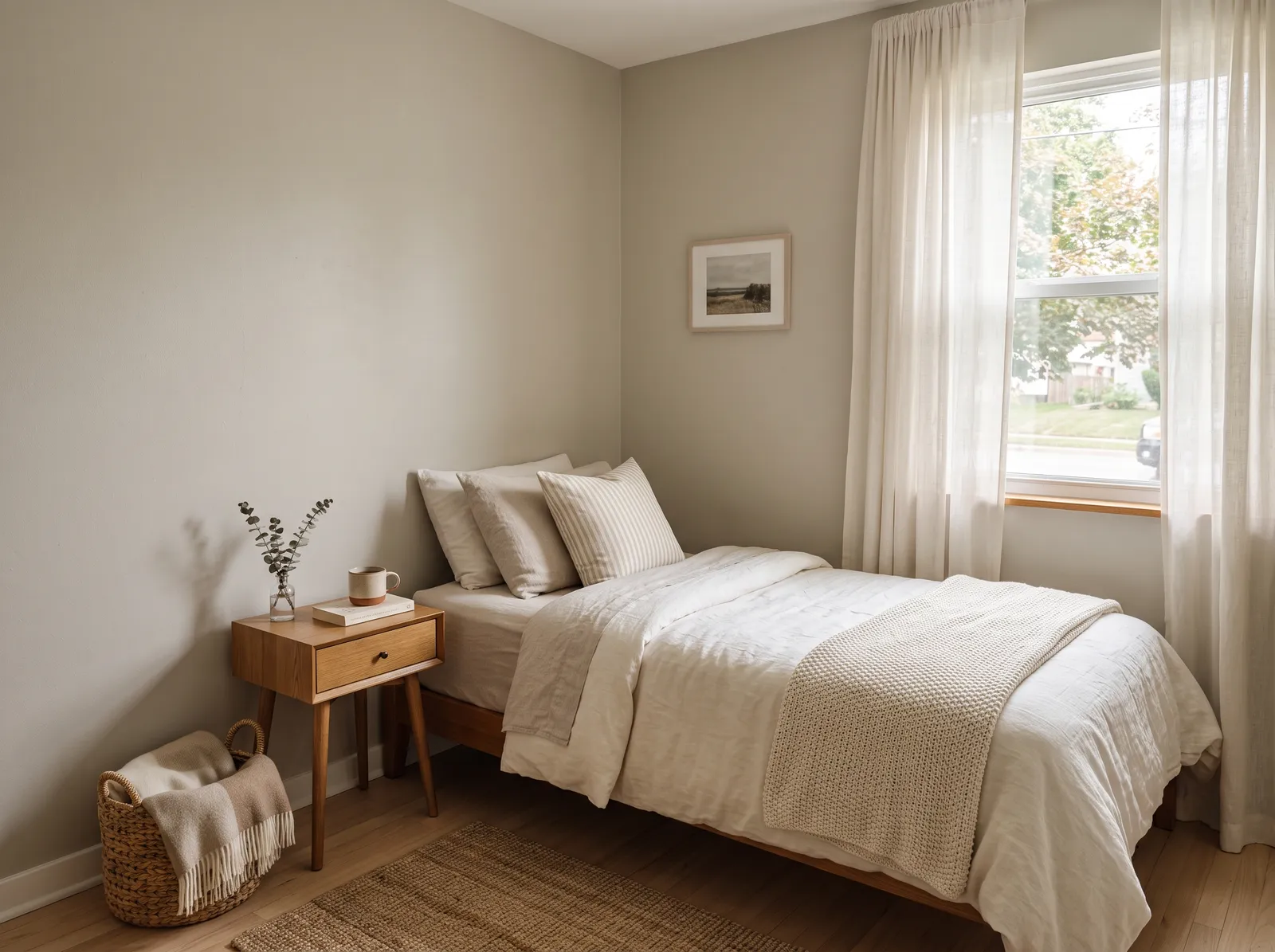
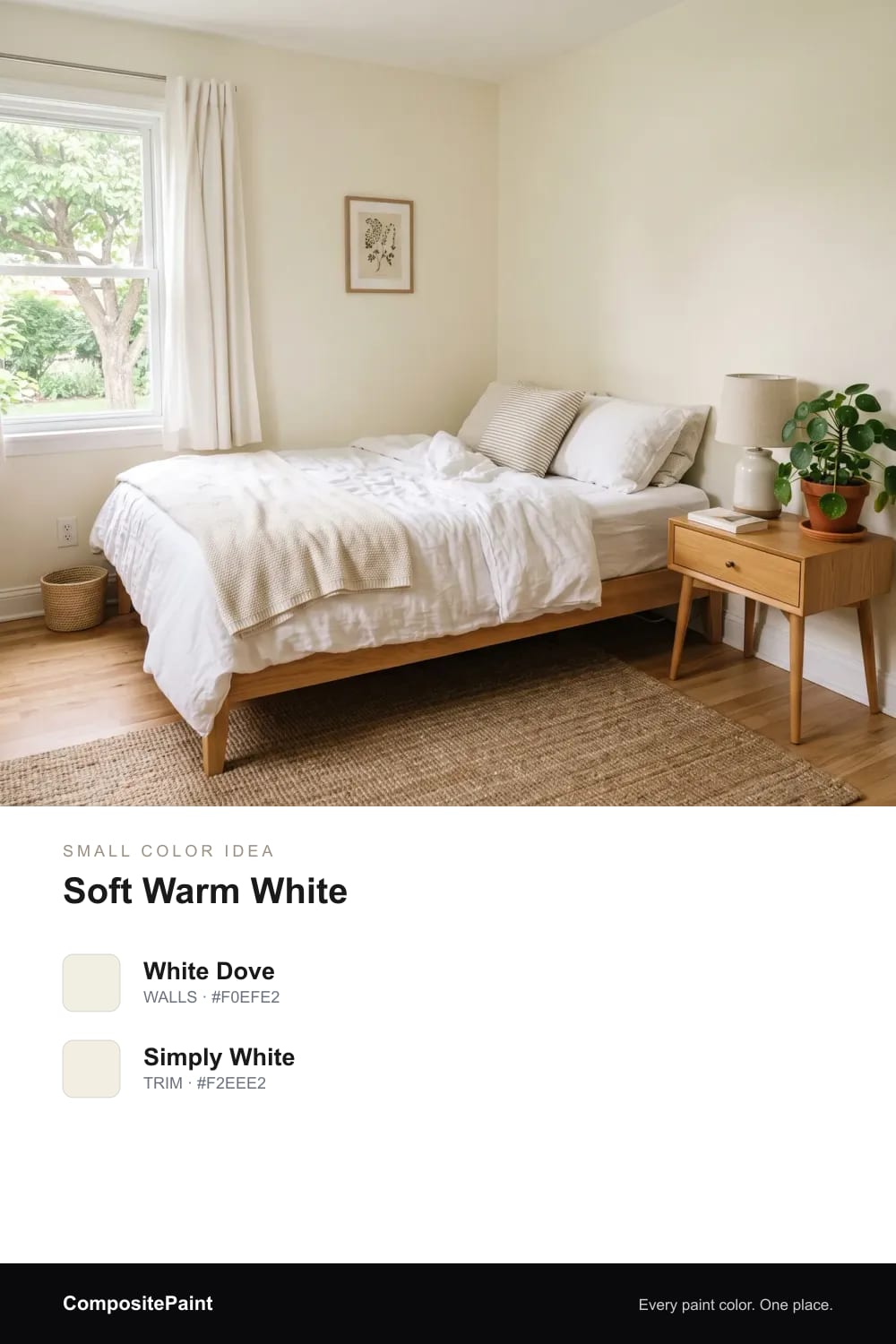
1. Soft Warm White
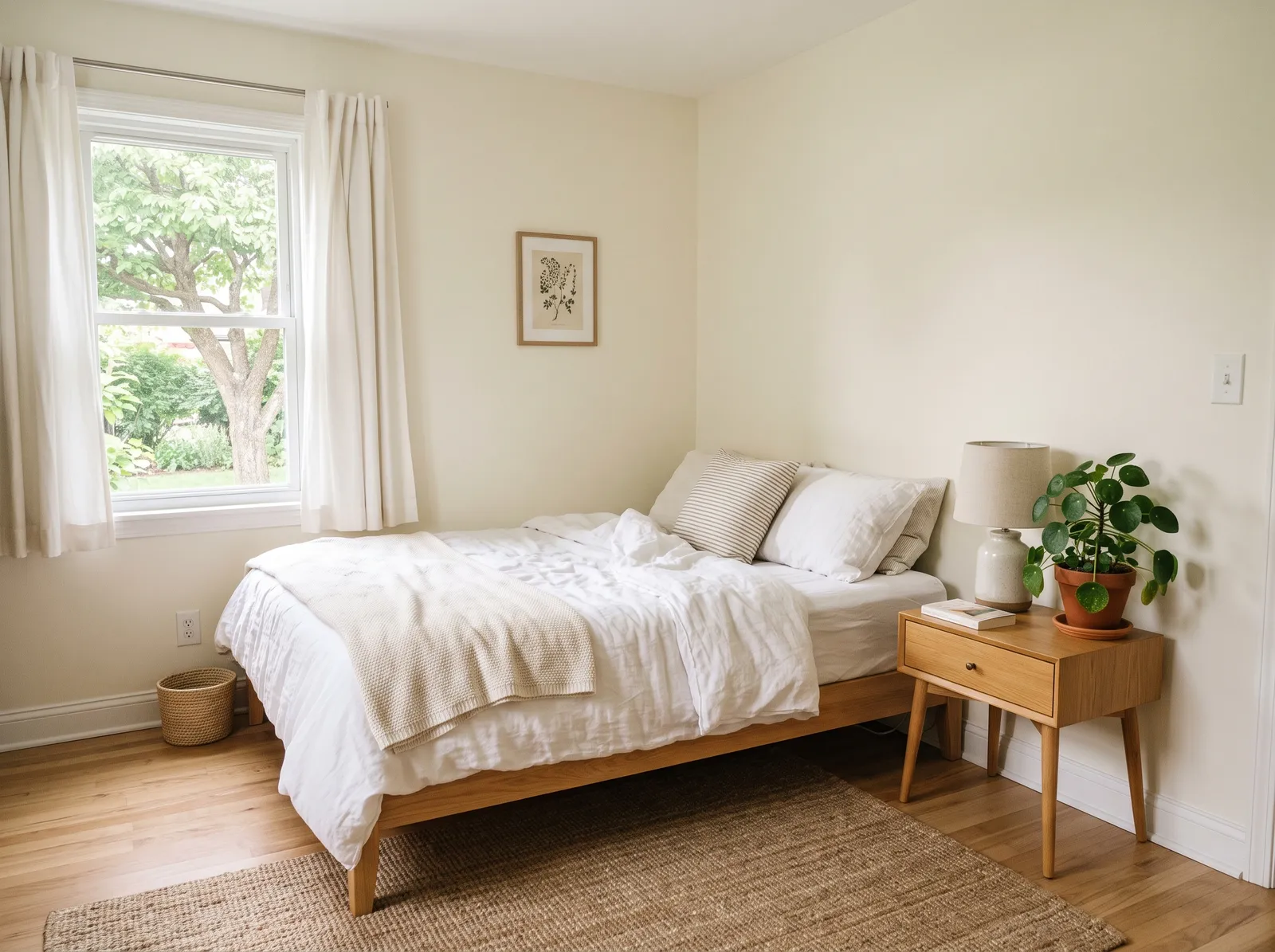
A gentle, creamy white wraps the small room in soft light and makes the walls seem to step back.
A small bedroom can still feel calm, restful, and bigger than it is. The right wall color pulls the walls back and lets light bounce around the room. Take your time and find the soft, airy shade that feels like home to you.
By Jessica Williams · Color Stylist
A gentle, creamy white wraps the small room in soft light and makes the walls seem to step back.
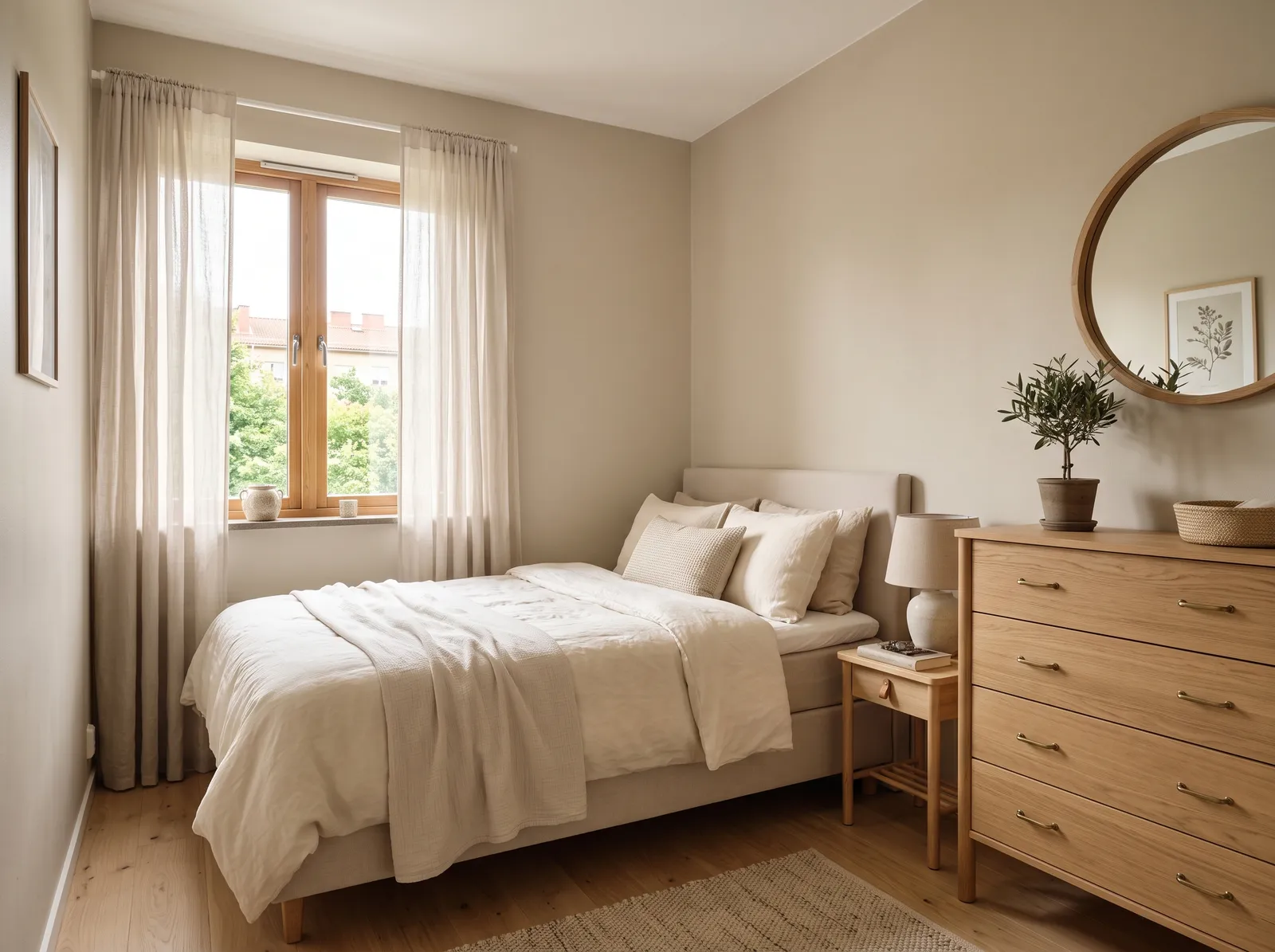
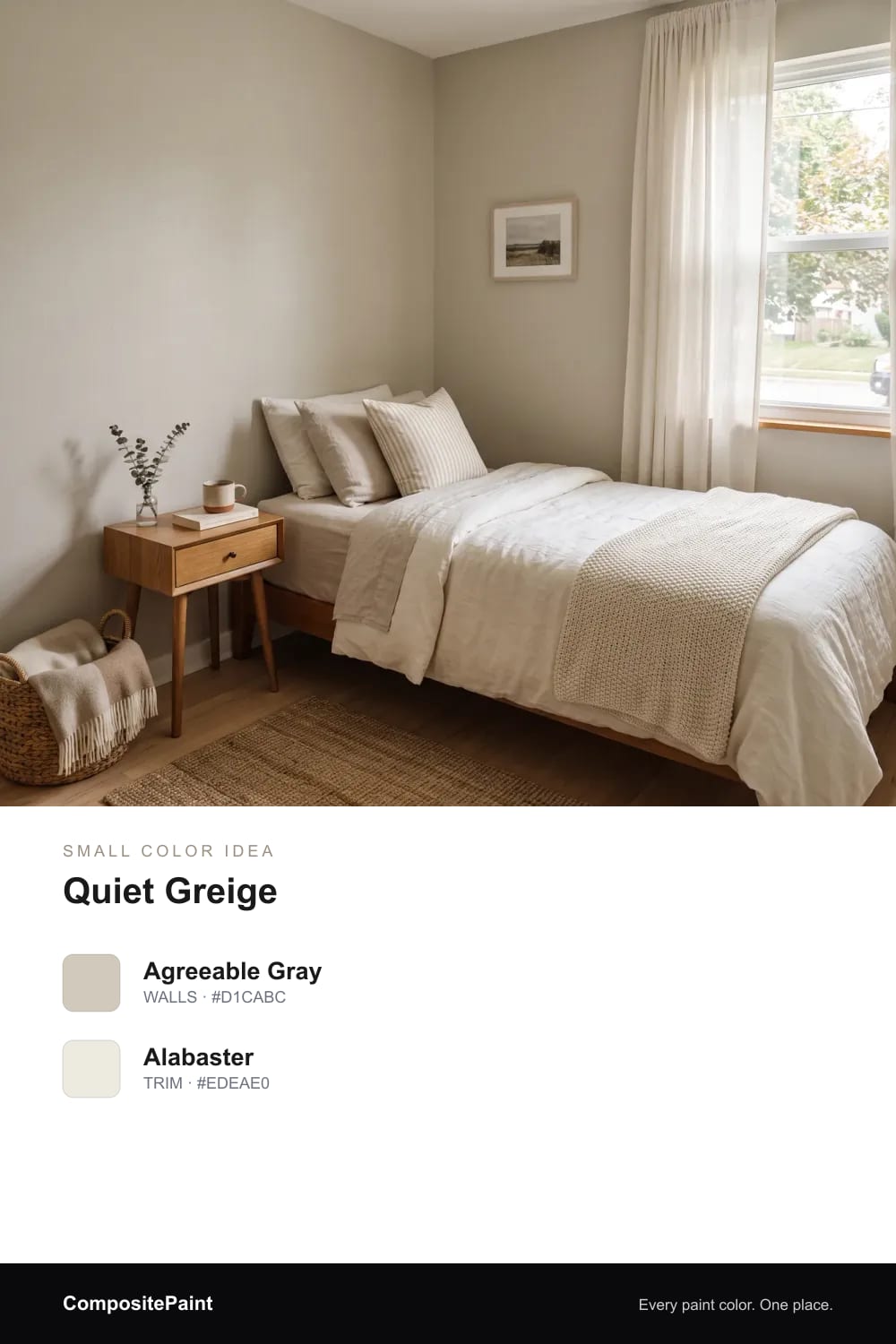
A warm gray-beige feels grounded and easy, a soft backdrop that never crowds a tight room.
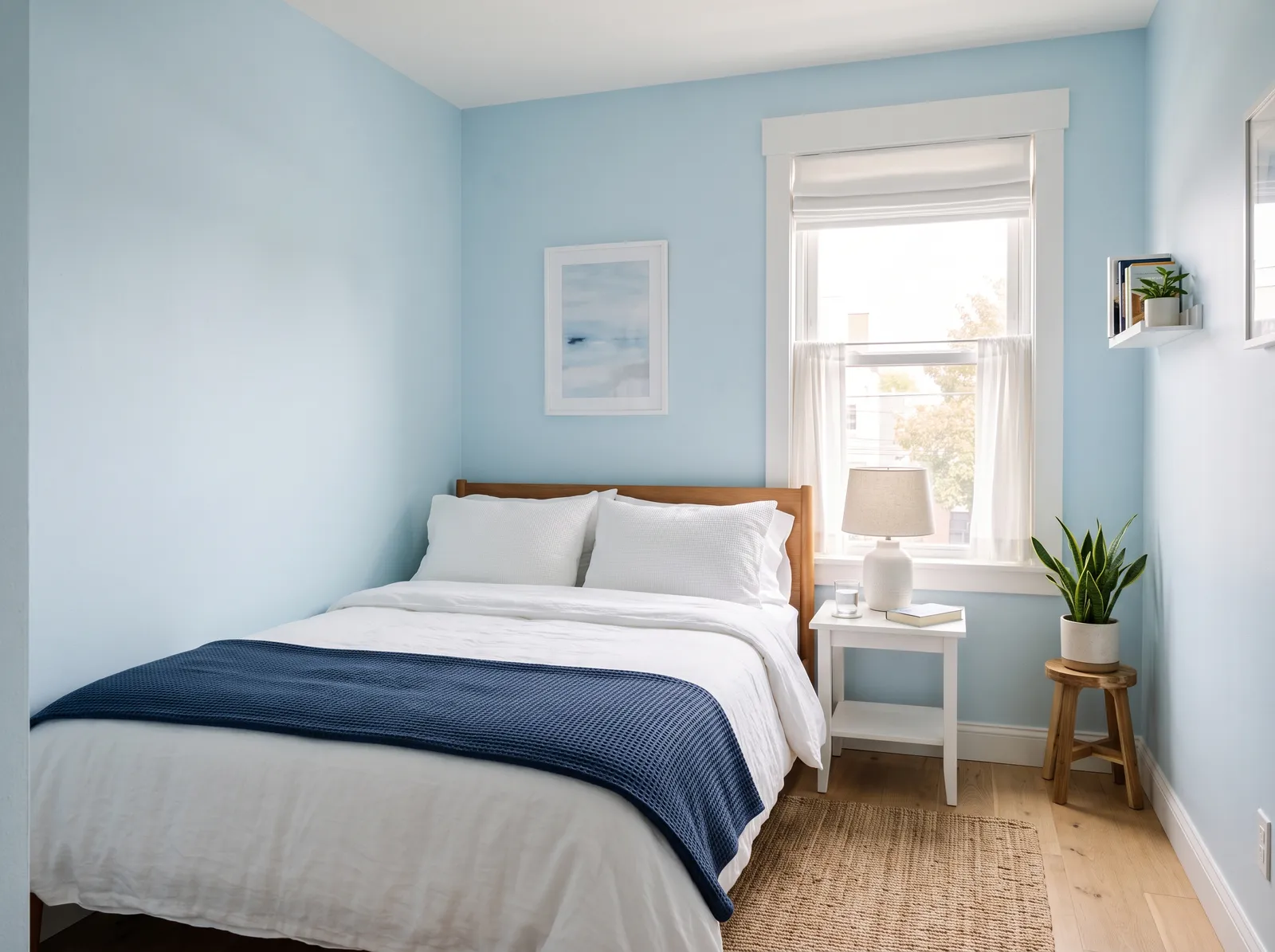
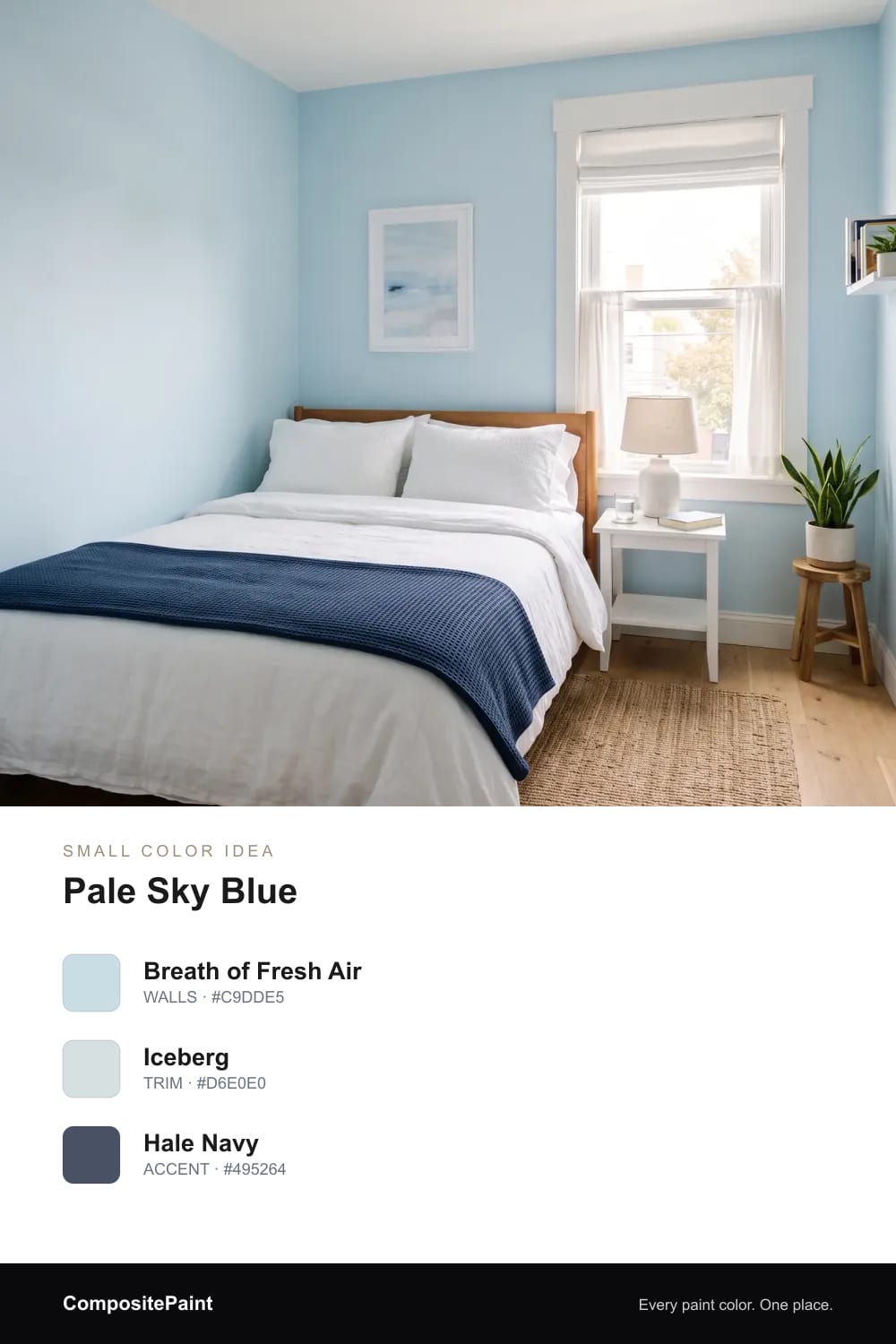
A soft, airy blue feels like a clear morning and quietly opens up the smallest room.
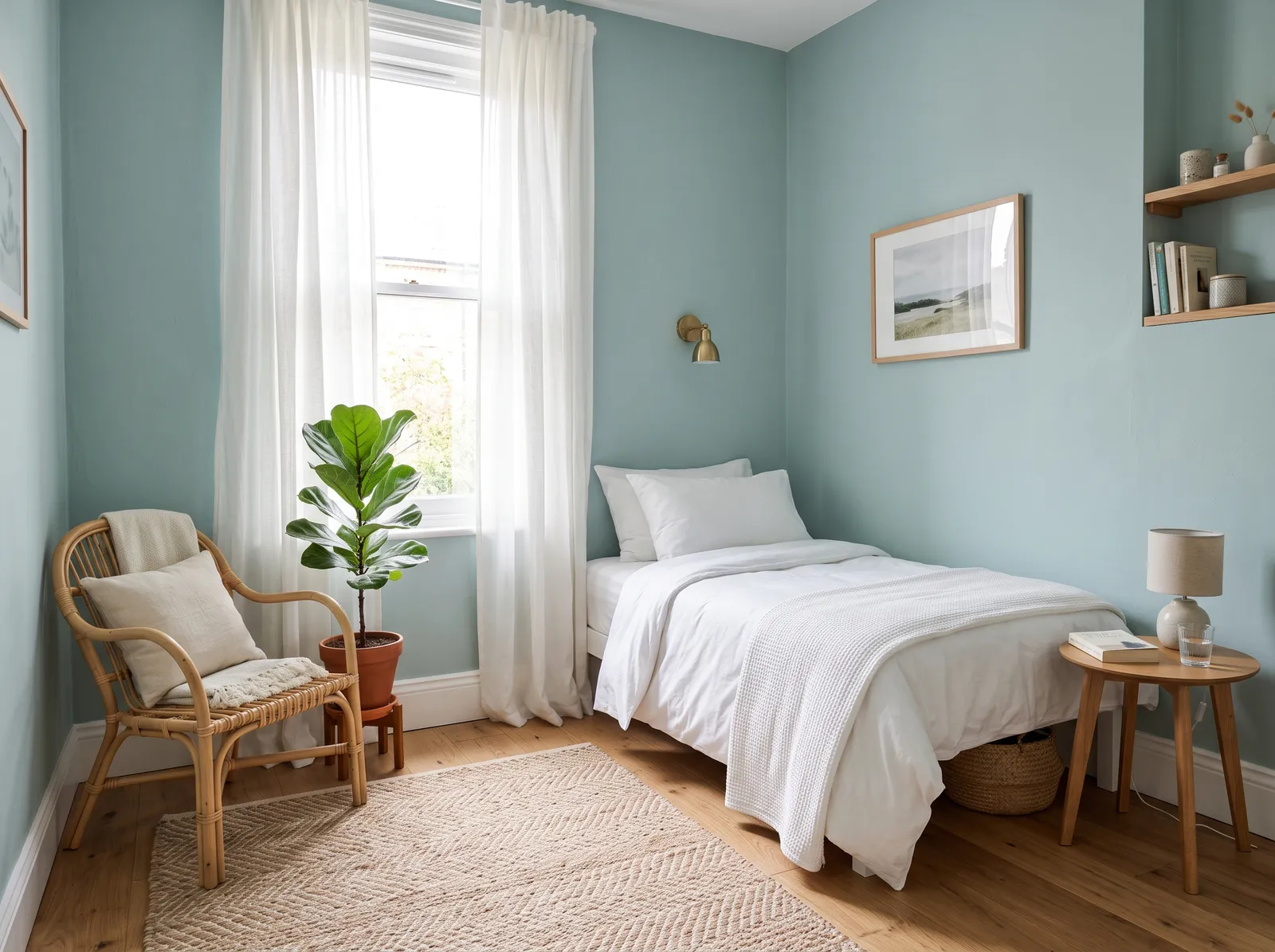
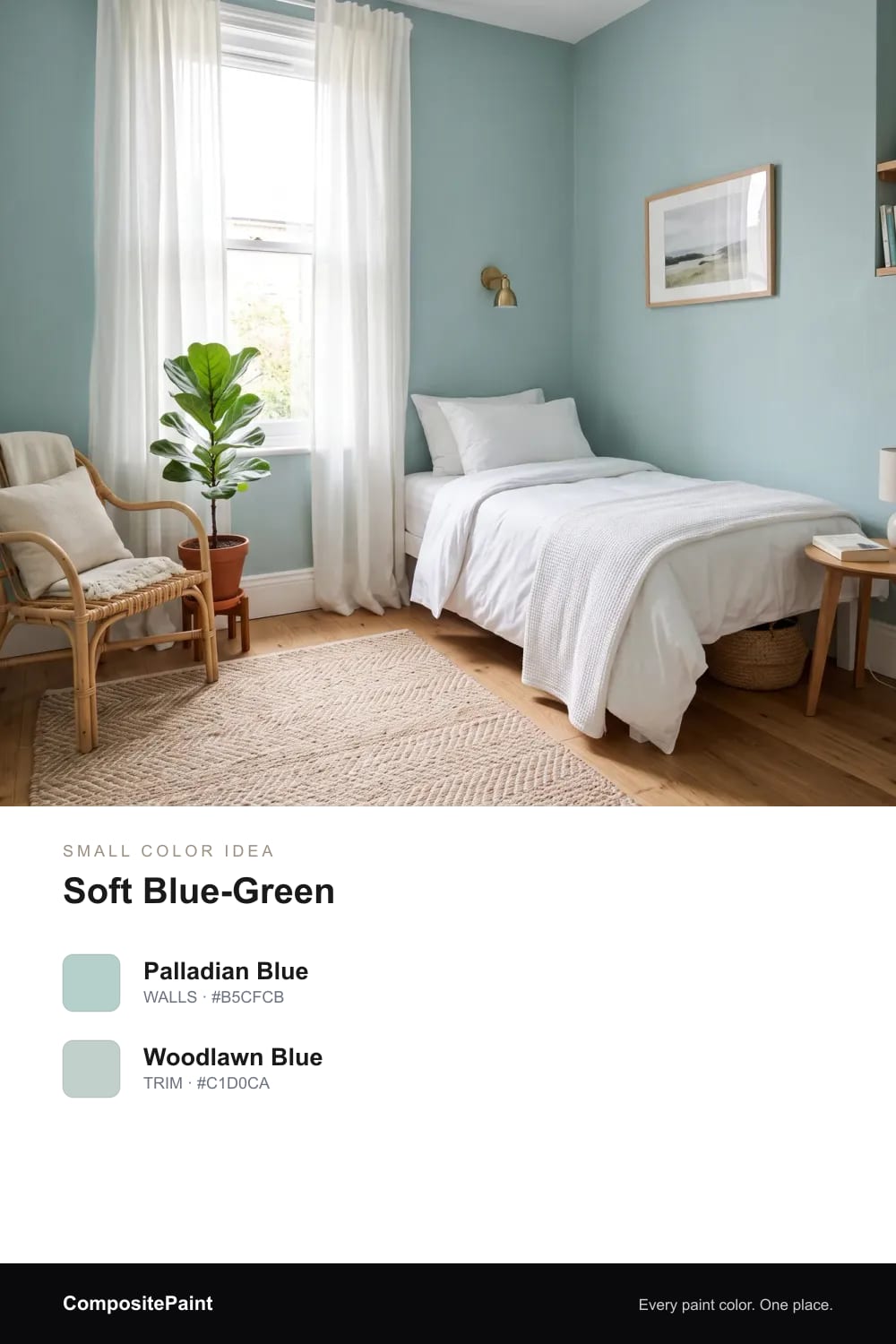
A spa-like blend of blue and green brings a fresh, watery calm without darkening the walls.
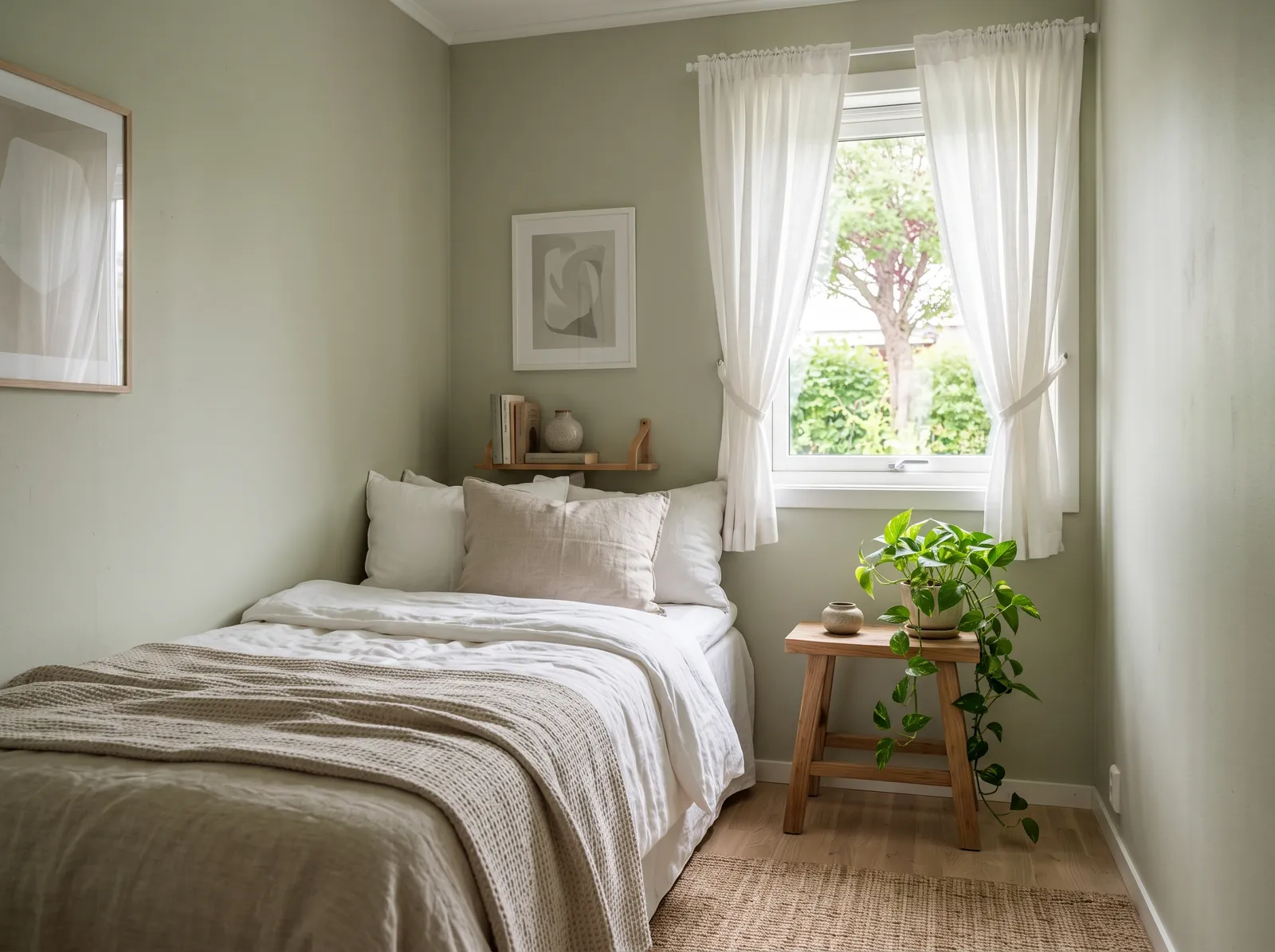
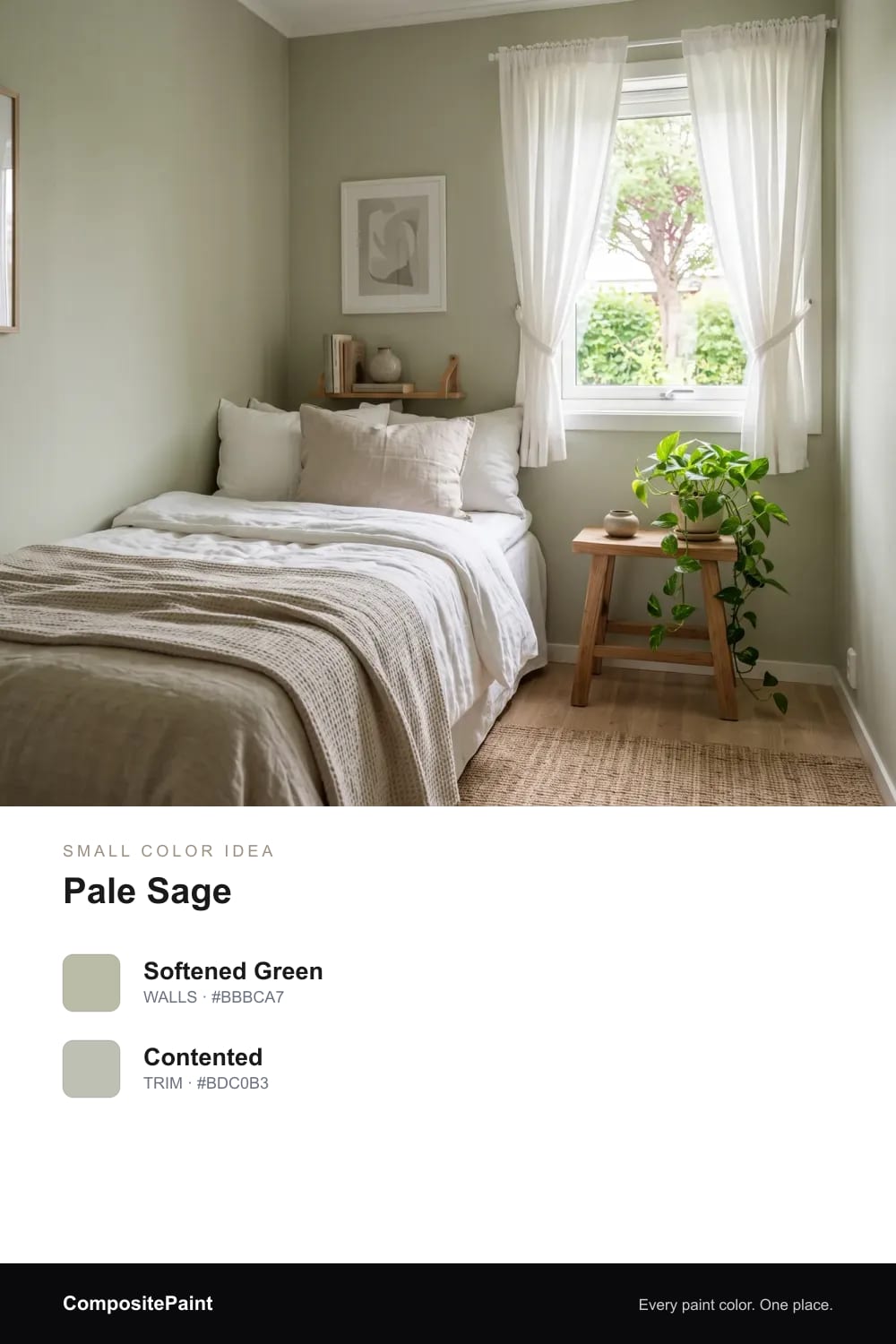
A soft, dusty green feels like fresh air and gives a small room a calm, garden-quiet mood.
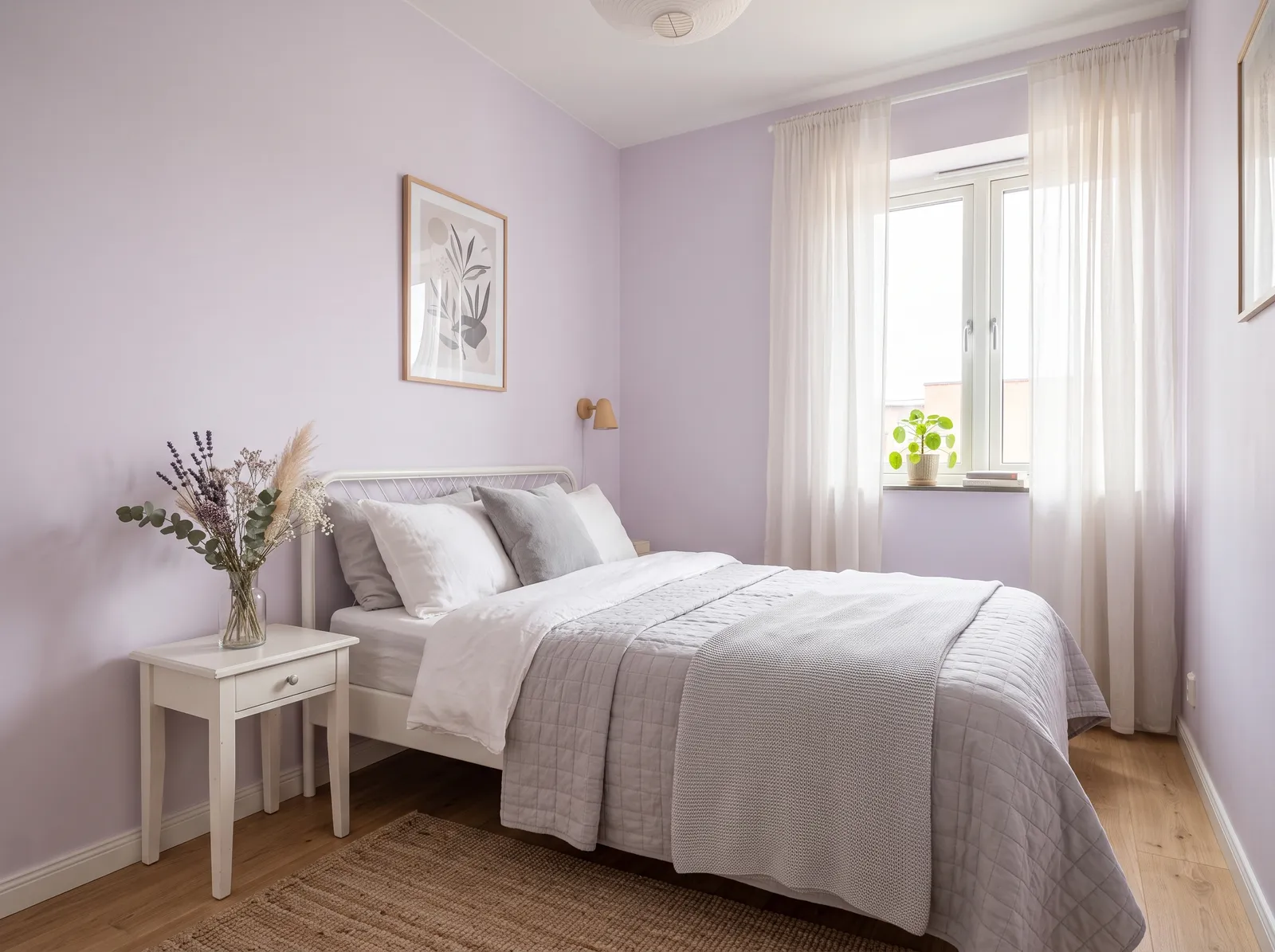
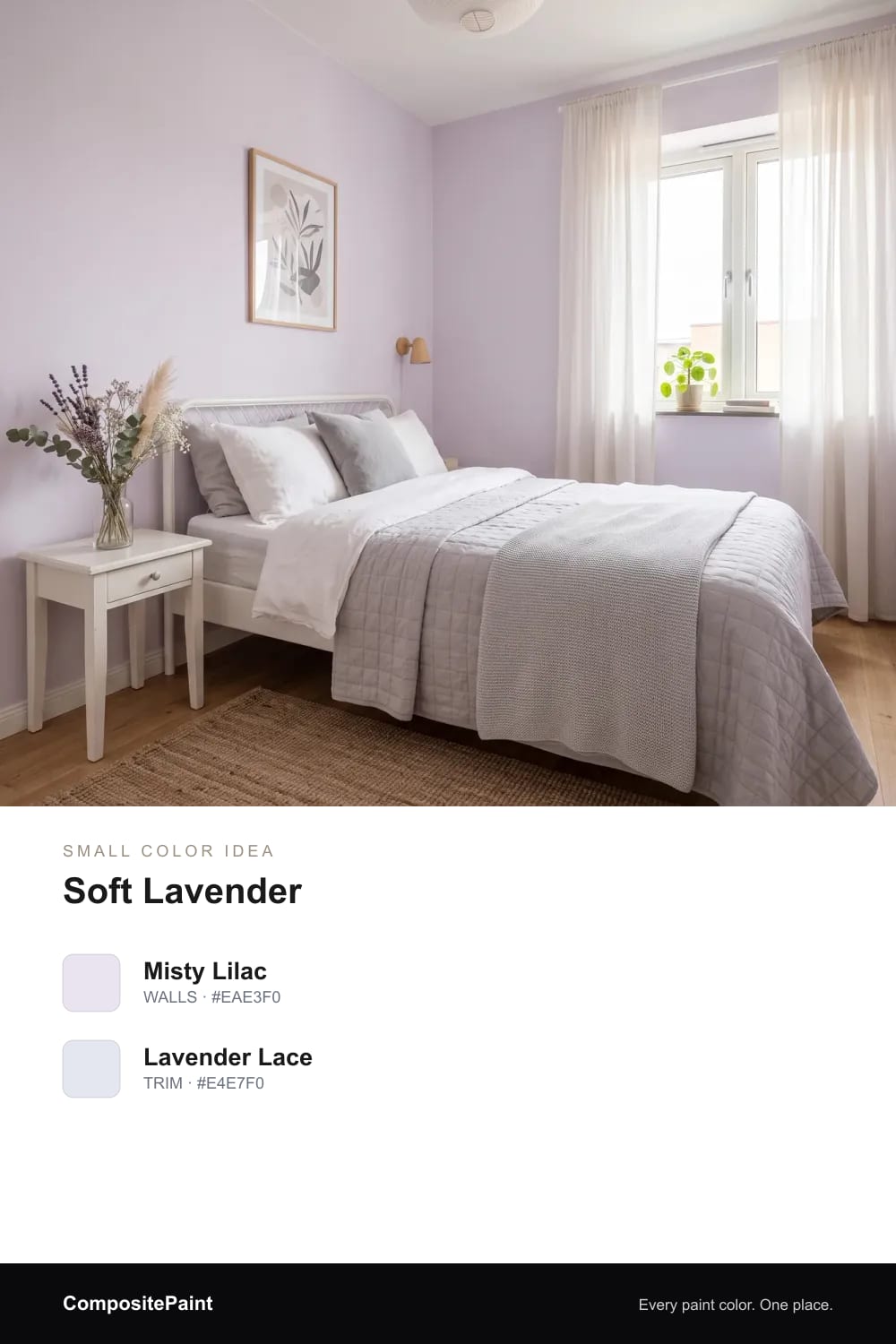
A barely-there lilac feels tender and quiet, a soothing wall color that helps the room drift to sleep.
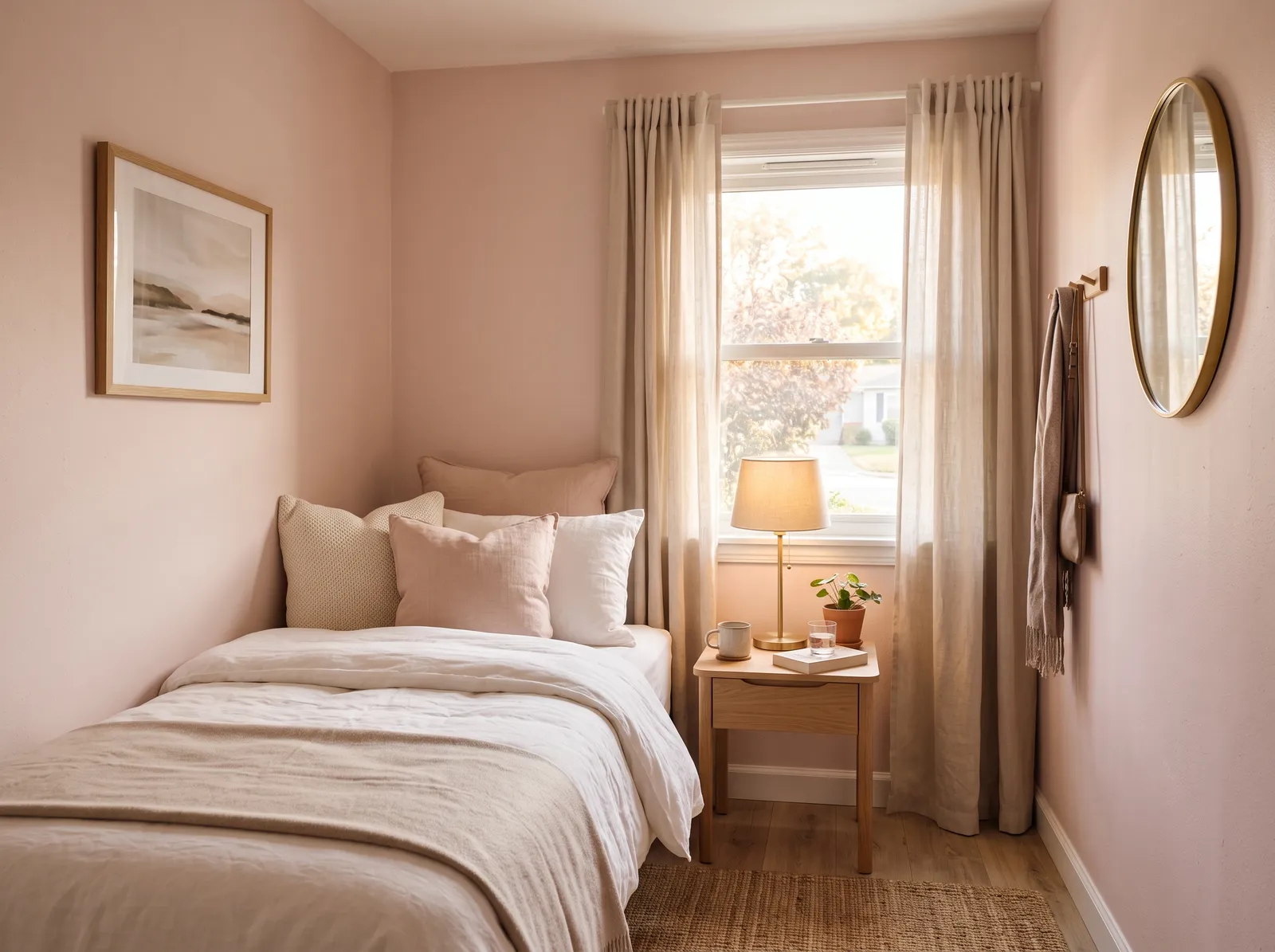
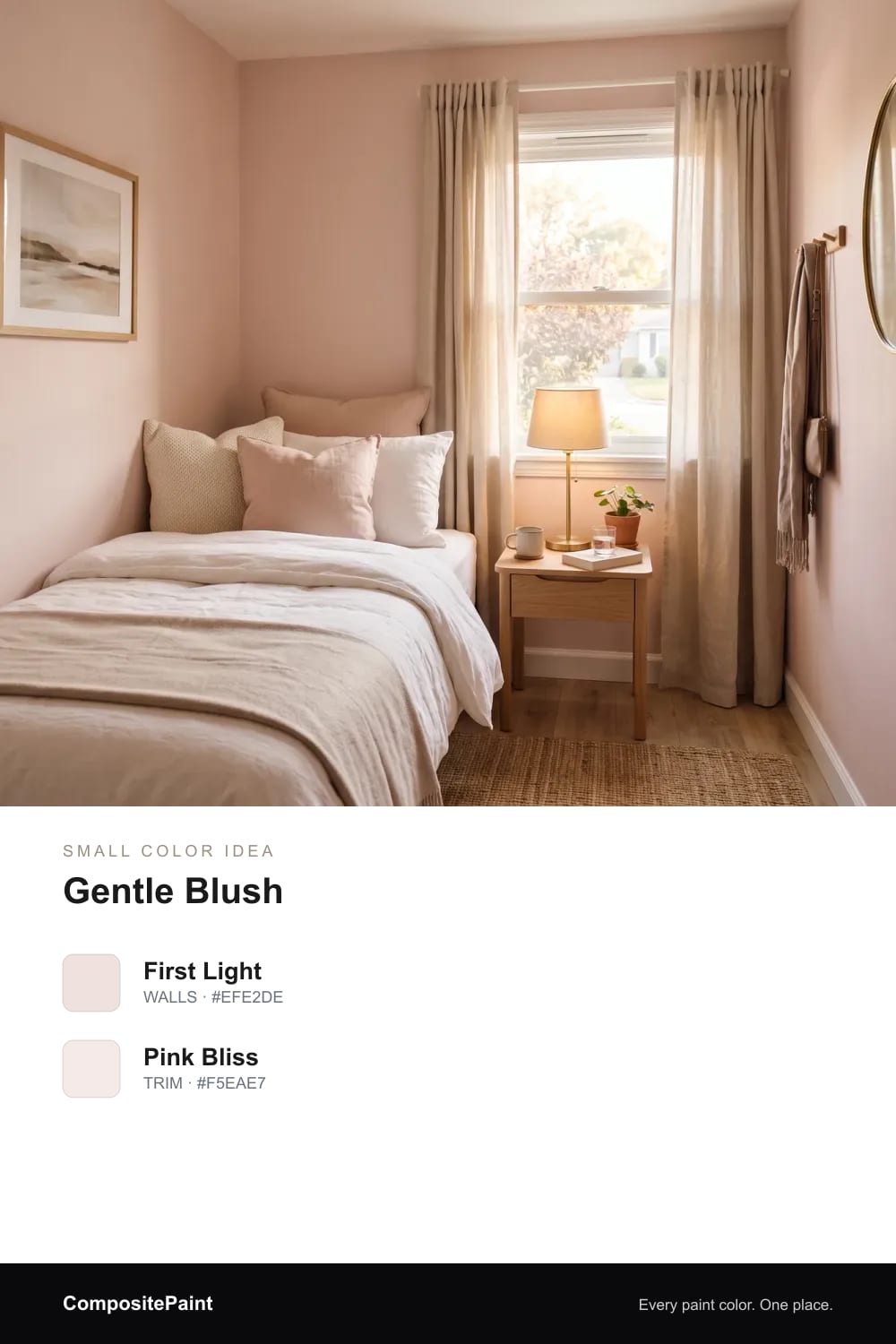
A soft, warm pink glows in daylight and gives a small bedroom a cozy, happy lift.
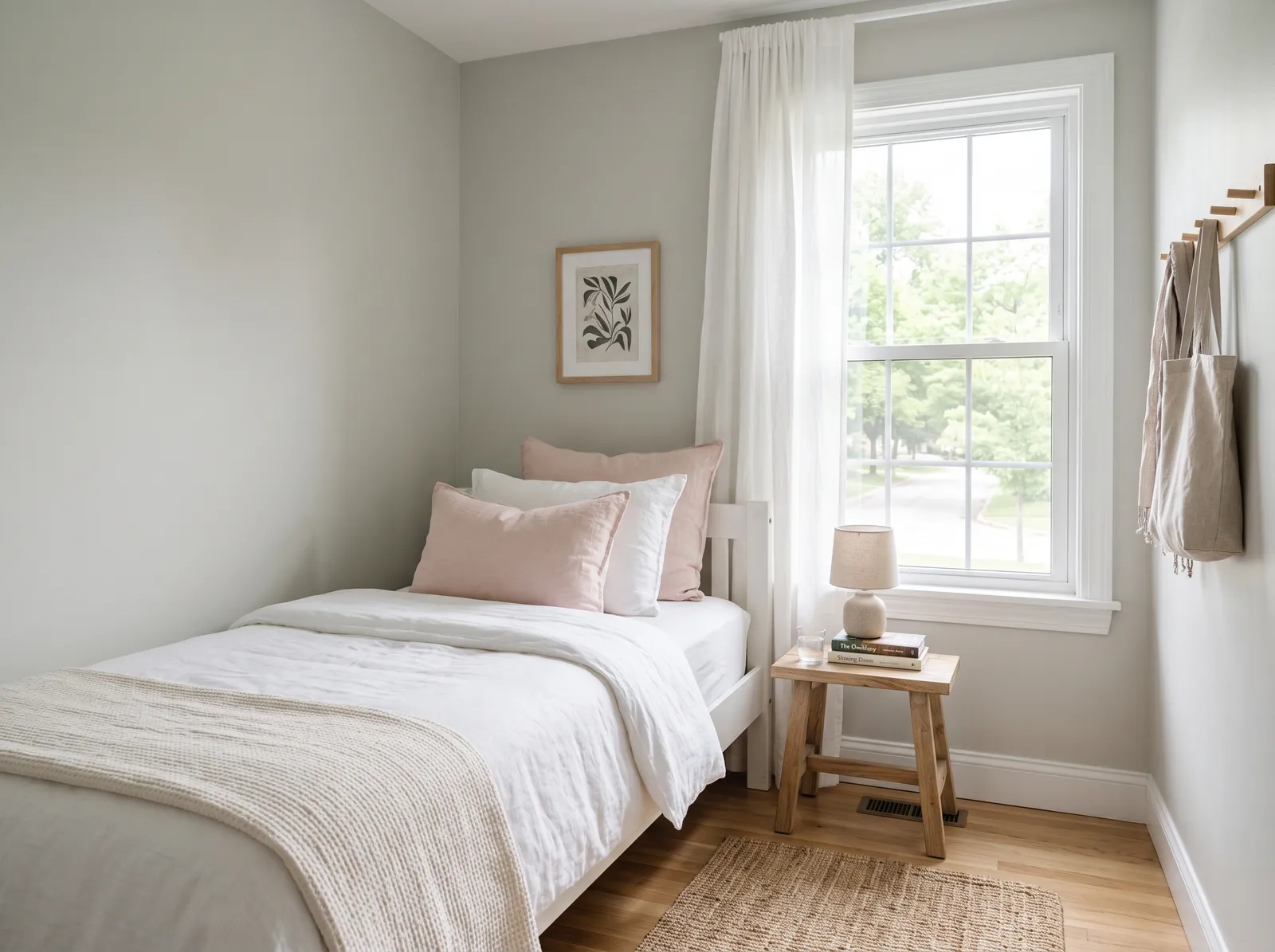
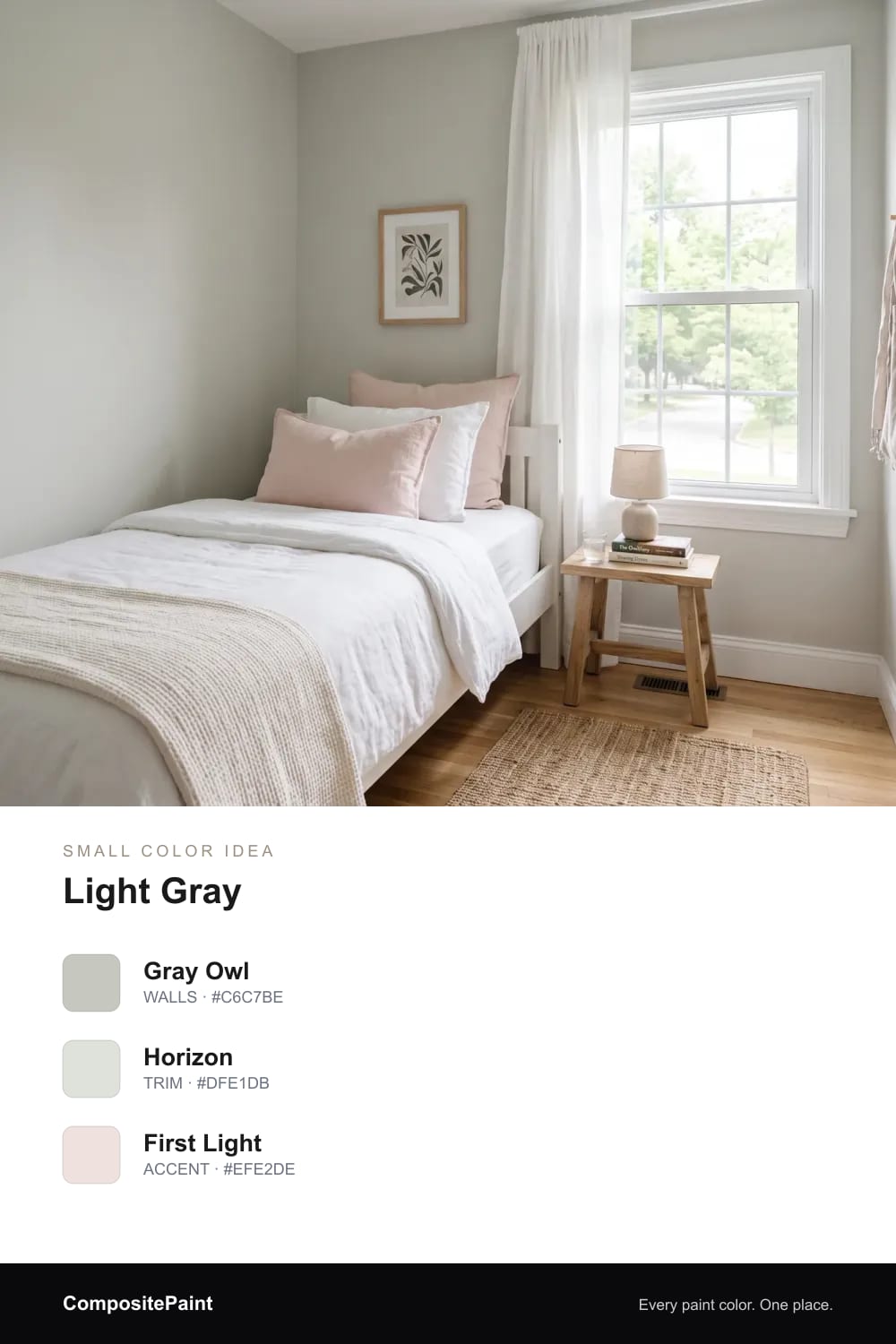
A soft, even gray feels clean and modern and keeps a small room looking calm and tidy.
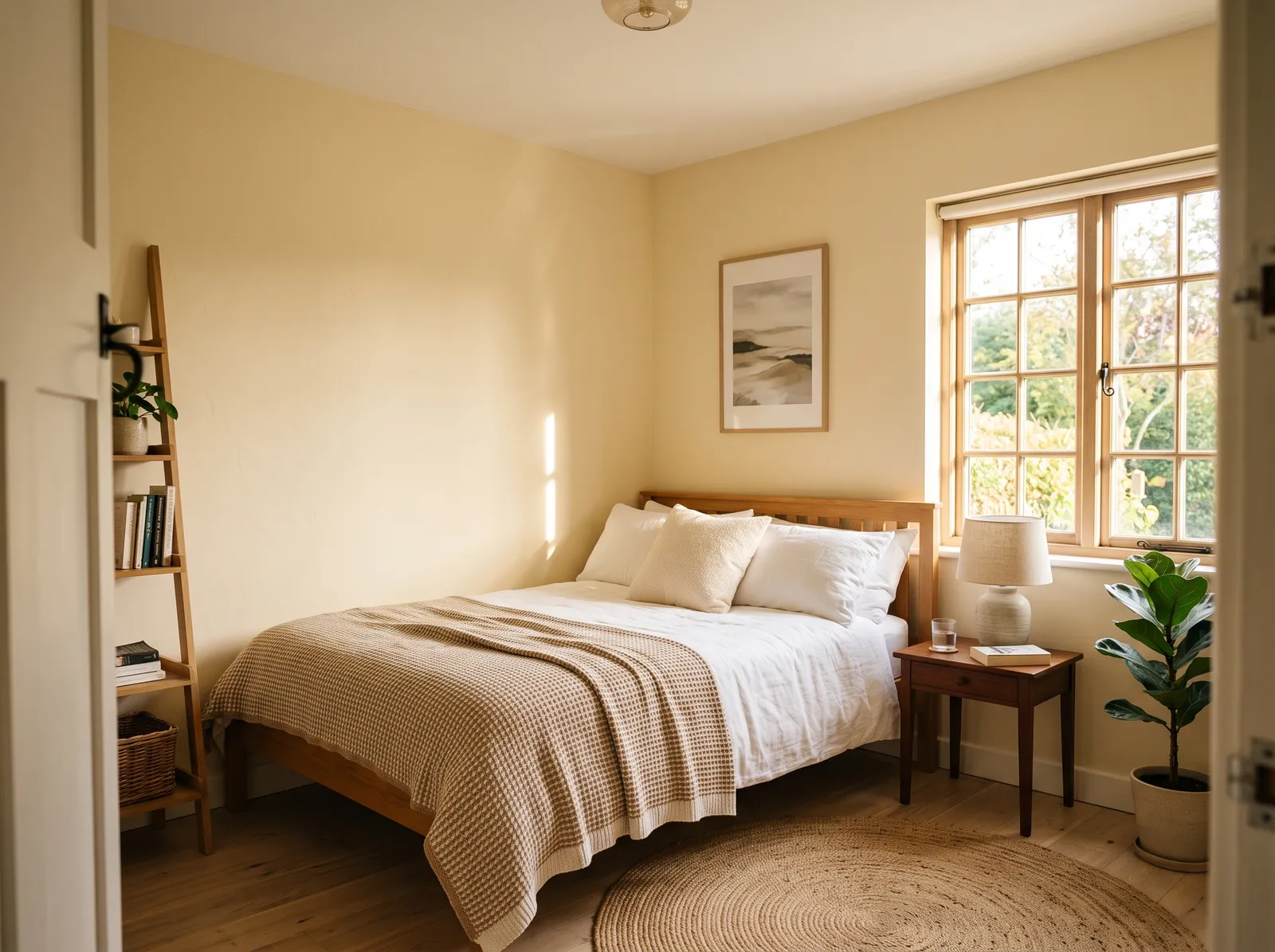
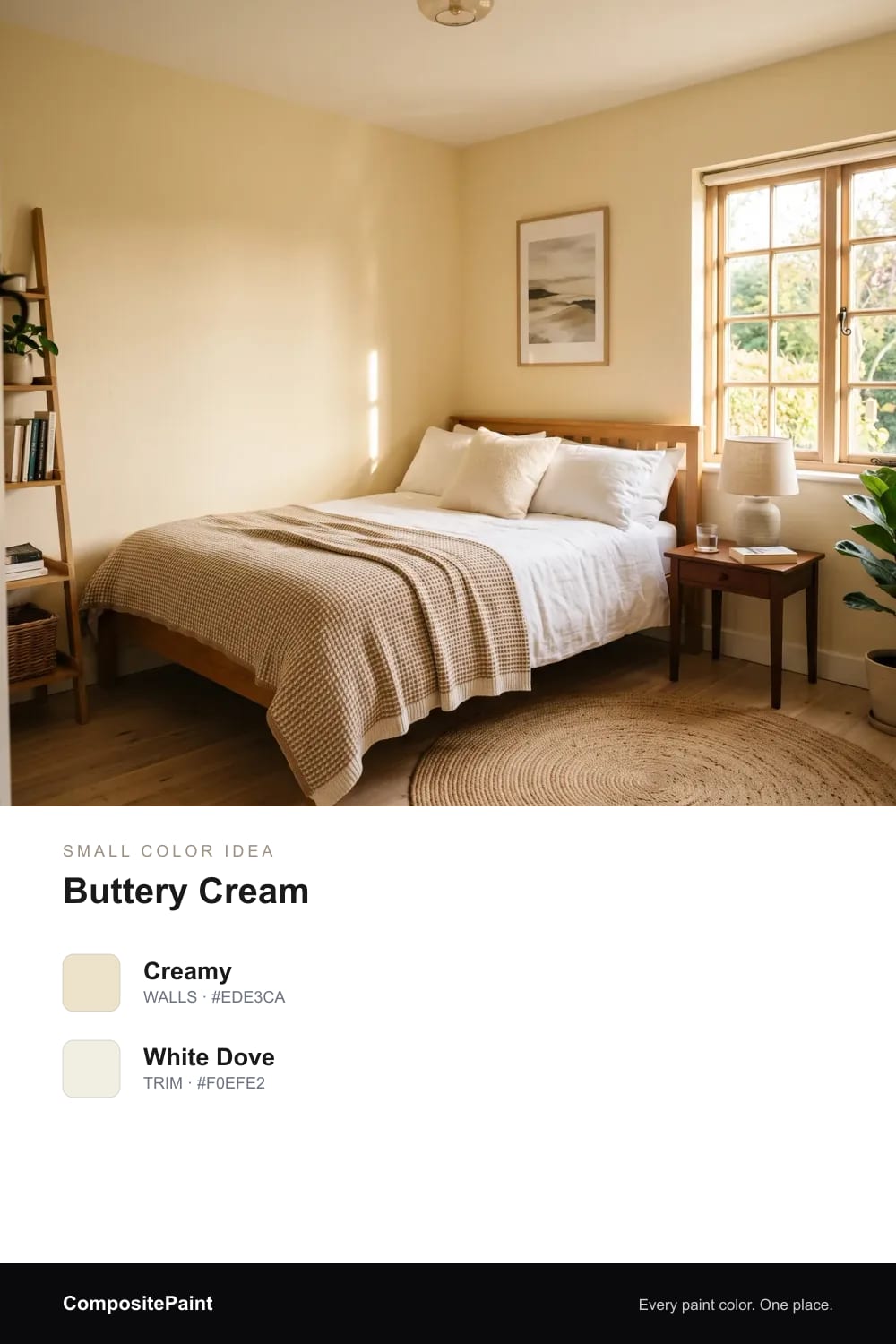
A soft, buttery cream holds the light and makes a small room feel sunny even on gray days.
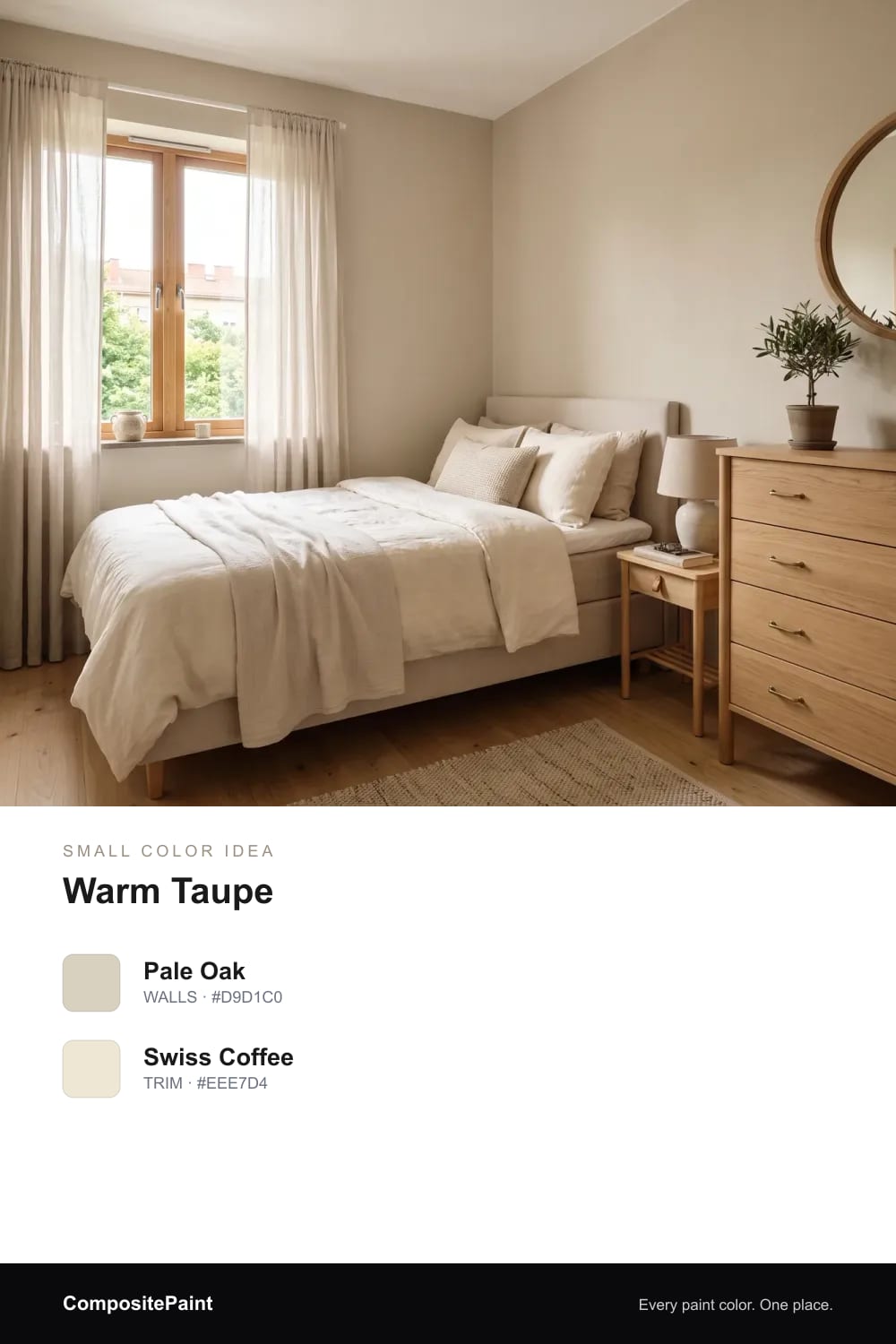
A soft, light taupe feels warm and grown-up, a cozy neutral that still keeps the room bright.
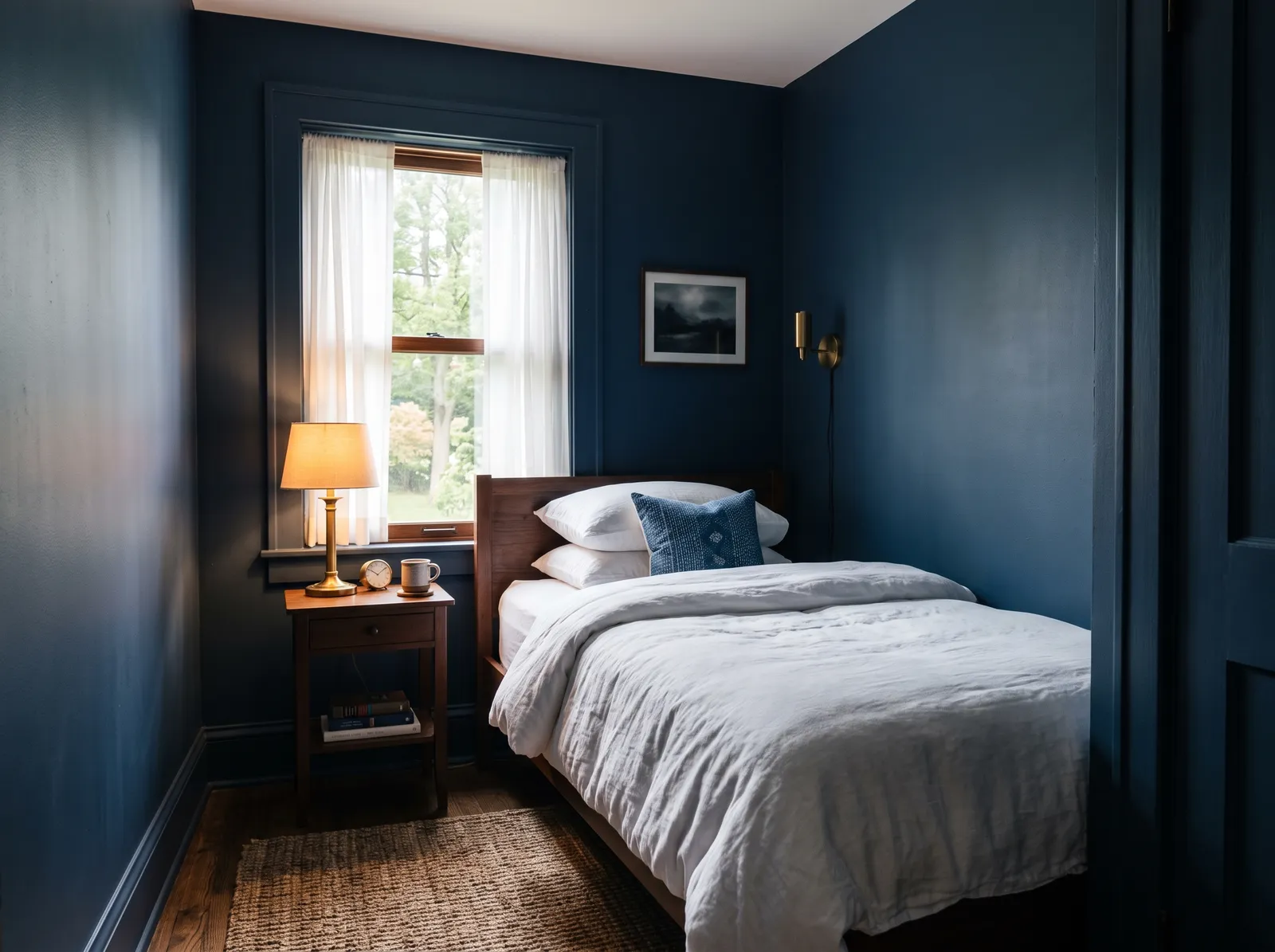
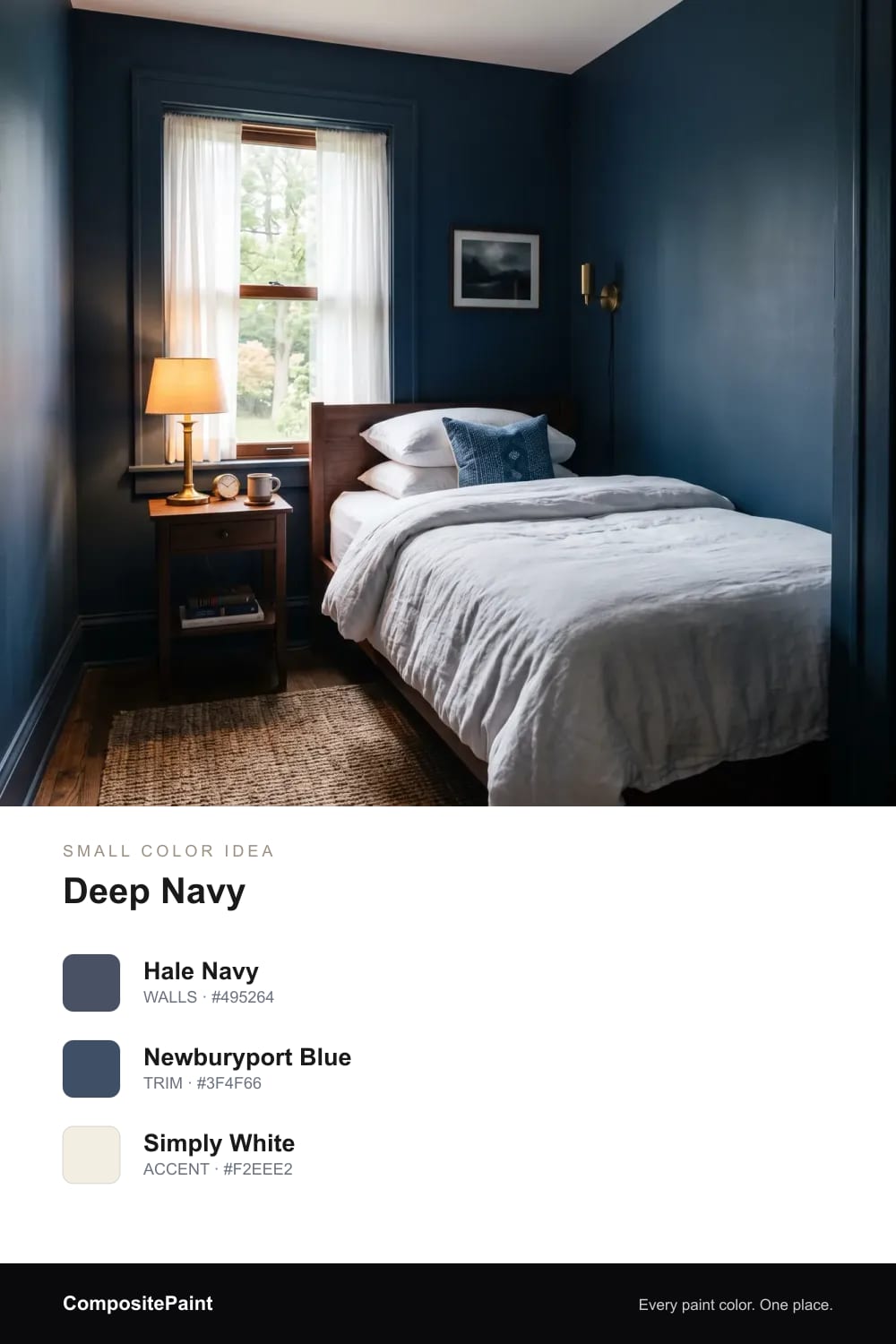
A rich, deep navy turns a tight room into a snug retreat where the walls feel like a warm hug.
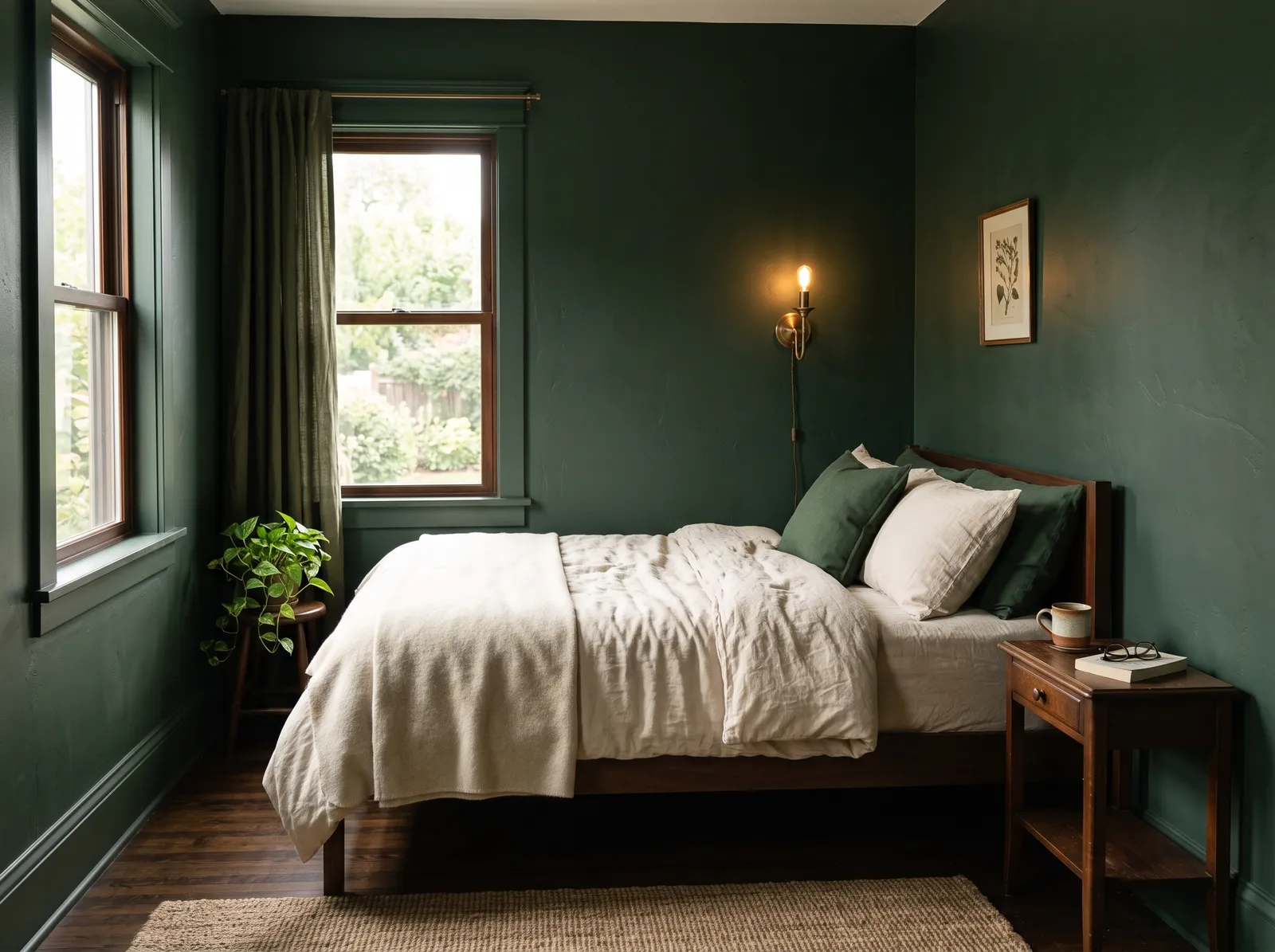
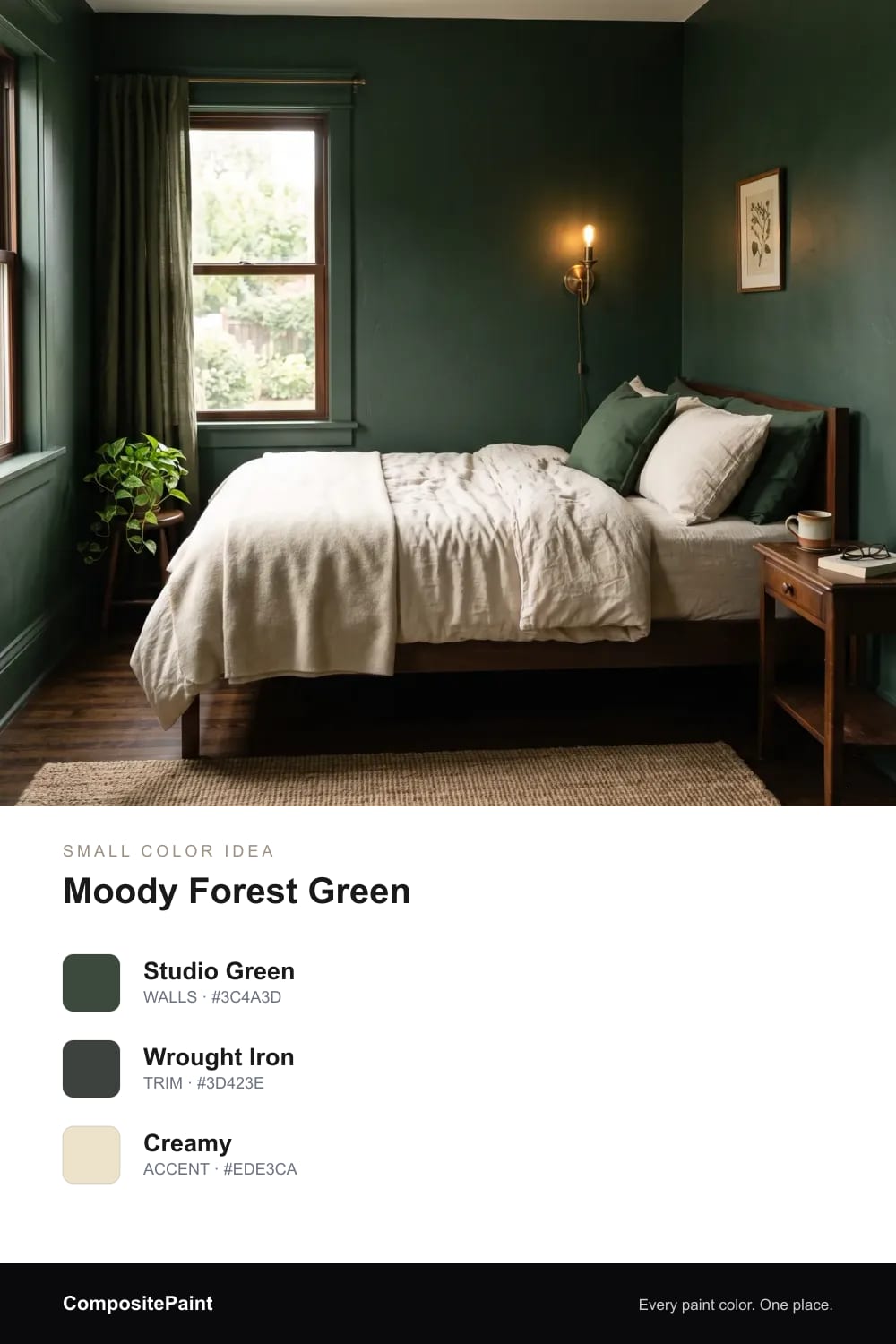
A deep, shadowy green wraps a windowless room in calm and makes it feel rich and tucked away.
Upload a photo of your small and the visualizer paints your walls in any of these colors — in seconds.
UPLOAD YOUR PHOTO →Color changes how your eye reads a room. Soft, light shades bounce daylight around and let the walls seem to step back, so the room feels open and easy. That is why most small bedrooms feel best in pale, airy colors.
The trick is keeping things soft and low in contrast. When the walls, trim, and ceiling all stay in the same gentle family, your eye does not stop at hard lines. The room reads as one calm space, and that quiet flow is what makes it feel larger than it is.
For a small bedroom, lean into soft warm whites, gentle greige, pale blue, soft blue-green, dusty sage, soft lavender, and gentle blush. These shades all hold the light and stay quiet, so the walls never close in on you. A warm white or buttery cream feels sunny, while a pale blue or sage feels fresh and calm.
Pick the one that matches the mood you want to wake up to. Cooler shades like pale blue and soft green feel crisp and restful. Warmer shades like cream, blush, and taupe feel cozy and welcoming. Both keep a tight room feeling open and bright.
A room with little or no natural light can look flat and a bit cold if you reach for a cool, stark white. Without sunlight to warm it up, that kind of white can turn gray and gloomy on the wall.
Instead, choose a soft warm white, a buttery cream, or a gentle blush. These shades carry their own warmth, so the room still feels cozy when the lamps are on at night. Warm bulbs and a couple of soft lights will help the color glow.
Not every small bedroom has to be pale. If the room is already short on light, or you want it to feel like a snug hideaway, a deep color can be a beautiful choice. Rich shades like deep navy and moody forest green hide the edges of the room, so instead of feeling boxed in, it feels wrapped up and restful.
This works best when you lean all the way in. Keep the bedding soft and warm, add a glowing lamp or two, and let the dark walls do the work. A cozy-dark small bedroom can feel like the calmest room in the house.
In a small room, bright white trim against a colored wall draws a hard line around every door and window. Those lines chop the space up and can make it feel smaller and busier.
A softer move is to paint the trim close to the wall color, just a touch lighter or in the same family. The edges melt away, the walls feel taller, and the whole room reads as one calm space. For a deep, cozy look, you can even paint the trim the same dark shade as the walls.
In a small bedroom, simple usually wins. One soft color on all four walls, with the trim close behind it, makes the room feel calm and open. Your eye keeps moving instead of stopping at every change.
If you want a little more, add color through soft things rather than more paint. A blush pillow, a navy throw, or a wooden nightstand brings warmth and interest without breaking up the walls. Save a second wall color for when the room can handle it.
For bedroom walls, a matte or eggshell finish is the gentle choice. It softens the light instead of bouncing it back in a shine, so the walls look smooth and the room feels calm and restful. Matte also hides little bumps and marks well.
Save the shinier finishes for the spots that get touched, like doors, trim, and the windowsill. A satin or semi-gloss there wipes clean easily and adds a quiet bit of definition without making the whole room glare.
Most small bedrooms feel best in a soft, light color that holds the daylight, like a warm white, gentle greige, pale blue, or soft sage. These shades let the walls step back so the room feels open. Pick the one that matches the calm mood you want.
Not always. A deep navy or forest green can actually hide the edges of the room and make it feel cozy and wrapped up rather than cramped. The key is to lean in fully with warm lamps and soft bedding so it feels snug, not gloomy.
Soft, light shades make a small bedroom feel bigger because they bounce light around and let the walls fade back. Pale blue, soft greige, warm white, and dusty sage all work well. Keeping the trim close to the wall color helps even more.
One soft color on all the walls is the easiest way to make a tight room feel calm and open. If you want more interest, add it with pillows, a throw, or wood tones instead of a second wall color. Keep the paint simple and the room feels bigger.
Choose a color that carries its own warmth, like a soft warm white, buttery cream, or gentle blush, since there is no sunlight to warm a cool, stark white. If you want it cozy, a deep navy or forest green also looks great by lamplight. Use warm bulbs to help it glow.
A matte or eggshell finish is the gentle choice for bedroom walls because it softens the light and keeps the room feeling calm. Use a satin or semi-gloss on the trim, doors, and windowsill, where a wipe-clean surface is handy.