Woodlawn Blue
A Historical Colors blue-green built for porch ceilings and spa bathrooms, reviewed honestly: the light where it turns gray, the light where it sings, and what to pick instead.

Jessica has spec'd whites and neutrals for more than 300 rooms and keeps a sample wall of painted drawdowns in her studio. Every color review is checked against real reader rooms in the comments and re-tested when a formula changes. About the testing process →
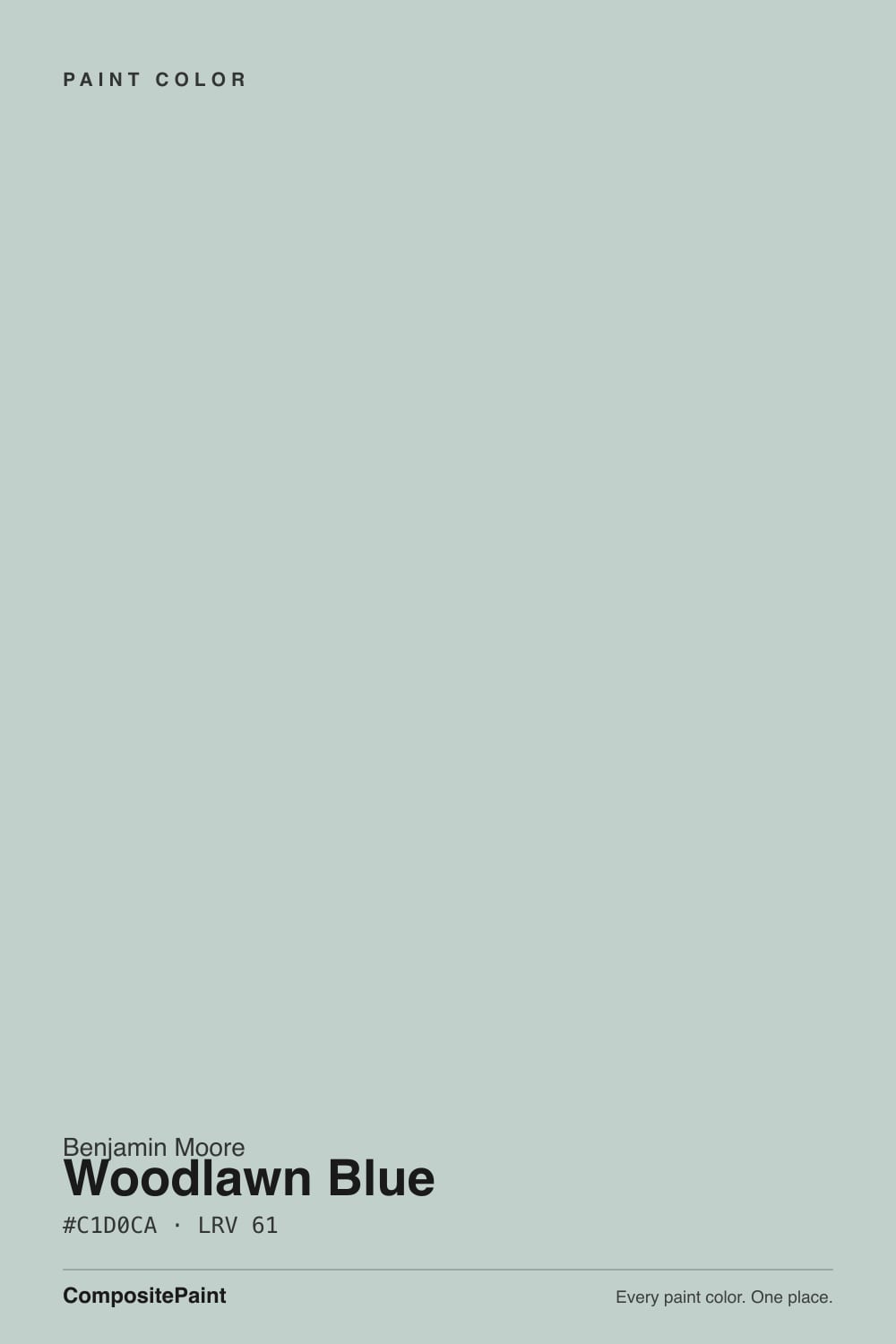
- 1Stardew43
- 2Smoke56
- 3Woodlawn Blue61
- 4Wickham Gray68
- 5Spring Thaw83
The Fast Verdict
Woodlawn Blue is Benjamin Moore's quiet, grayed-down take on blue-green — soft enough to read as a neutral in the wrong light, distinct enough to carry a whole porch ceiling in the right one. It never commits fully to blue or to green; it borrows from both and lets your light and your bulbs decide which one wins that day. That chameleon behavior is the whole personality — love it or plan around it.
Spa bathrooms and powder-room vanities · porch ceilings, the haint-blue way · bedrooms with real east or south light · kitchen islands with warm wood and brass
Your room faces north and stays dim · you want a crisp, unambiguous blue · your floor is cool gray tile or blue-gray stone · you're chasing a statement color, not a quiet chameleon
- A genuine chameleon — blue, green, and gray depending on the light, never garish
- One of the go-to picks for a real haint-blue porch ceiling
- Spa bathrooms and powder-room vanities look custom with a single color
- LRV 61 holds real color without darkening a room
- Coordinates easily with warm whites, brass hardware, and oak or walnut
- Goes flat, muddy gray-green in dim north-facing rooms
- Never reads as a crisp, unambiguous blue — the green is always part of it
- Clashes with cool gray flooring or blue-gray tile
- Warm vs. cool bulbs genuinely change which color you get — test both before deciding
What Color Is Woodlawn Blue, Really?
A blue-green-gray blend from Benjamin Moore's Historical Colors collection, which the brand itself describes as "a delicate wash of blue that brings to mind a fine crystal." On the wall, the green is doing at least half the work — reviewers consistently describe it as a soft, muted blue-green rather than a clear blue, closer to "still water on a cloudy morning" than to sky. The gray running underneath both is what keeps it from ever looking bright or saturated; it is a restrained, old-house color, not a statement one.
At an LRV of 61 it sits in the light-medium range: bright enough not to darken a room, with enough body that it never washes out to a pastel. That medium depth is also why it moves so much with light — a paler, higher-LRV color would just look faded in poor light, while a deeper one would hold its color regardless. Woodlawn Blue is squarely in the zone where the light gets a real vote in what color you end up with.
Undertone in one line: blue, green, and gray in roughly equal parts, and whichever one your light or bulbs favor is the one you'll see. Warm light and warm bulbs pull the green forward; cool daylight and cool LEDs hold it closer to blue-gray. Both versions are the same paint being honest about the room, not a flaw in the can.
Where It Shines
This color earns its keep in three specific places: as a real haint-blue porch ceiling, on a spa bathroom vanity or full bath, and on a kitchen island against warm wood and brass. Give it south or east daylight and it turns genuinely lovely — quiet, sky-like, a little unexpected. It is also one of the few historical colors that photographs differently depending on the hour, which readers either love as "a color that keeps you company" or find frustrating if they wanted one fixed answer.
Where It Fails
Almost every disappointed review of Woodlawn Blue traces back to one of three predictable mismatches, and none of them are the paint's fault — but if your situation matches one, sample big before you commit to four walls.
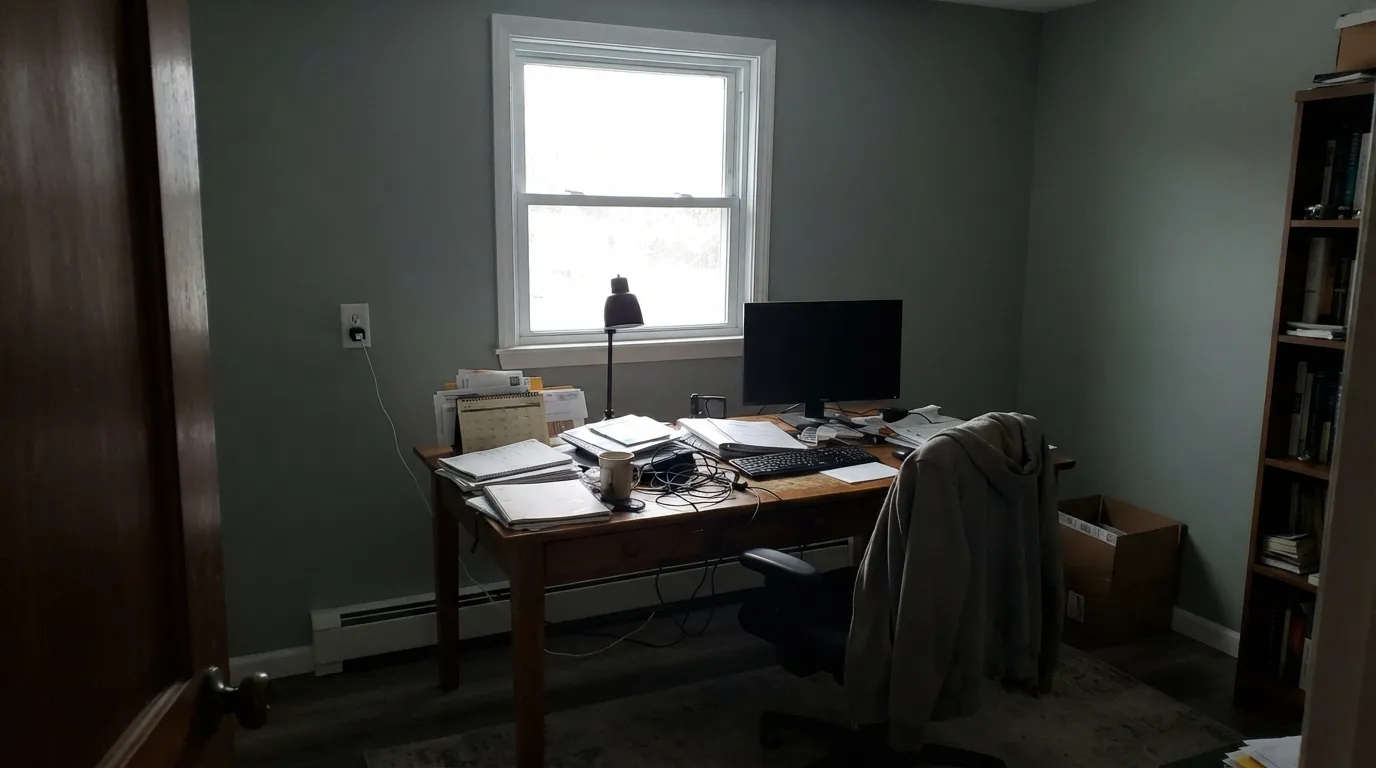
Cool, indirect north light drains both the blue and the green and leaves something close to flat, muddy gray. Readers who painted a north bedroom or office on the strength of a sunny showroom sample are the most common complaint. Test a large board on the actual wall, at the actual darkest hour, before deciding.
This color's own undertone is partly gray, and putting it against a same-temperature gray floor or tile removes the contrast that makes it read as color at all — both surfaces start to look muddy instead of complementary. Warm wood, white tile, or a warm-toned stone all solve this without touching the paint.
The green is always part of the mix, especially under warm 2700K bulbs, which pull it toward sage more than most buyers expect. If you want an unambiguous blue with far less green movement, look at Sherwin-Williams Upward instead — a deeper, more confidently blue pick.
Room by Room
In east or south light it settles into a restful, faintly blue-green calm that never feels cold. Eggshell finish; keep bulbs at 2700K if you want the green to stay quiet, or go cooler if you want more blue. A north-facing bedroom needs the lamp-and-daylight test before you commit.
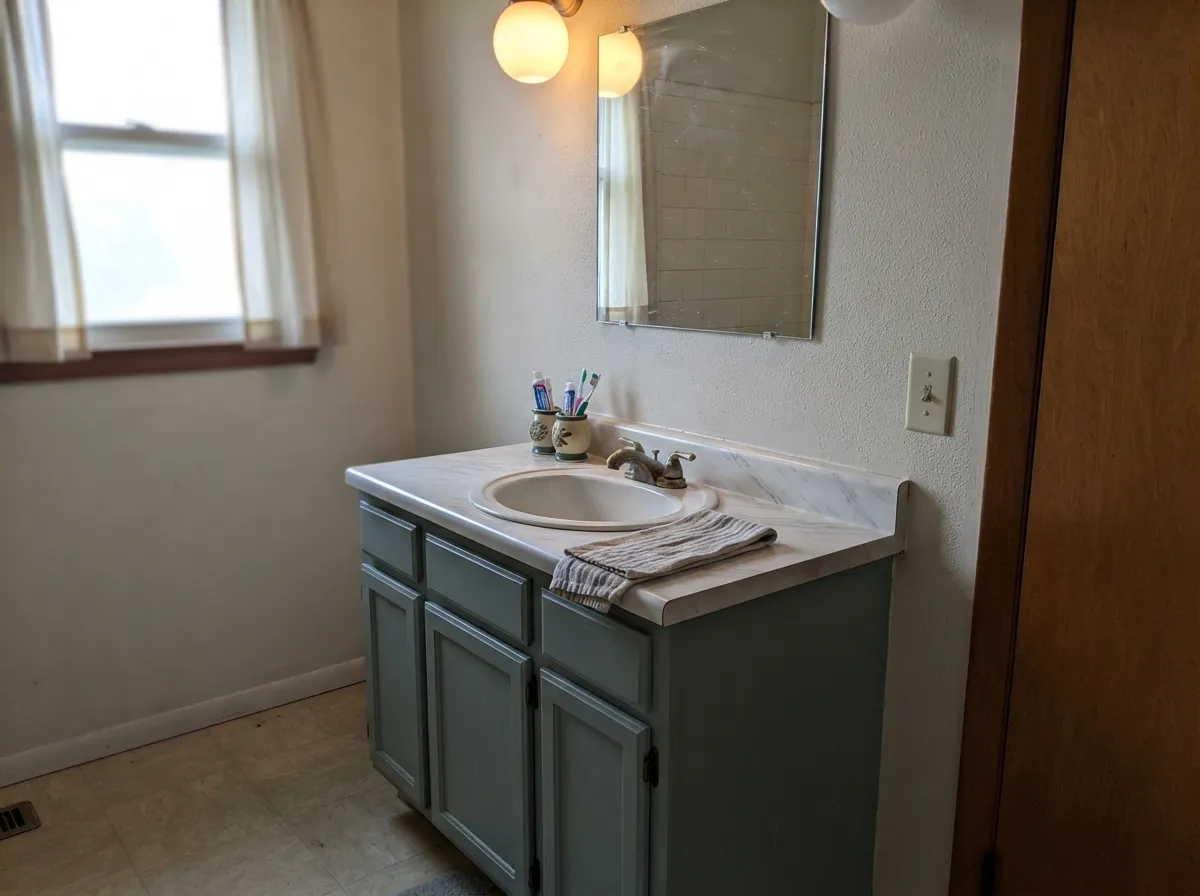
This is the room the color was built for. Against white tile and a marble-look counter it reads clean and spa-like, and a single Woodlawn Blue vanity under white walls looks custom without repainting the whole room. Satin on vanities, semi-gloss on trim.
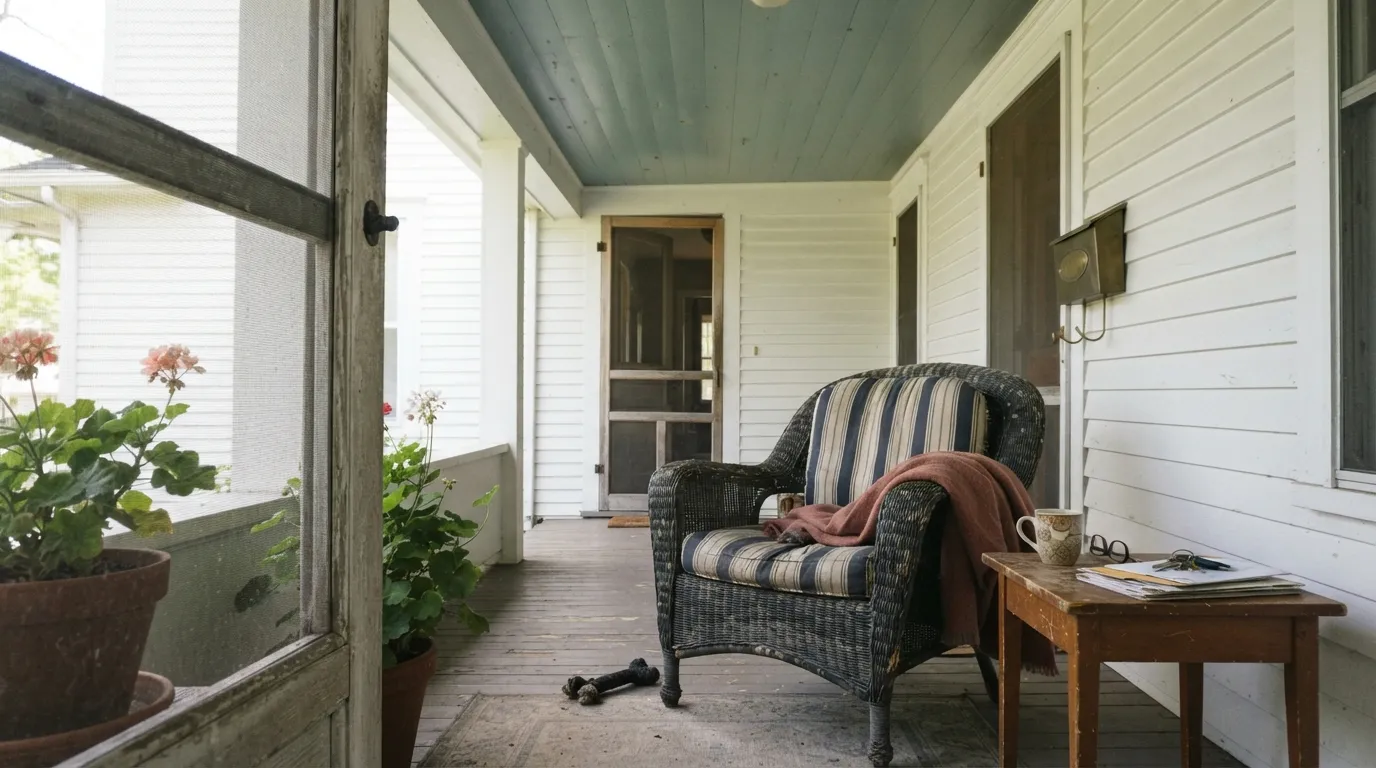
Southern haint blue is a real building tradition: a pale blue-green meant to read like open sky overhead. Woodlawn Blue is a quieter, more historical-feeling version of that same idea, and it's a go-to pick when homeowners search for a refined take on it. Flat or matte finish overhead, always.
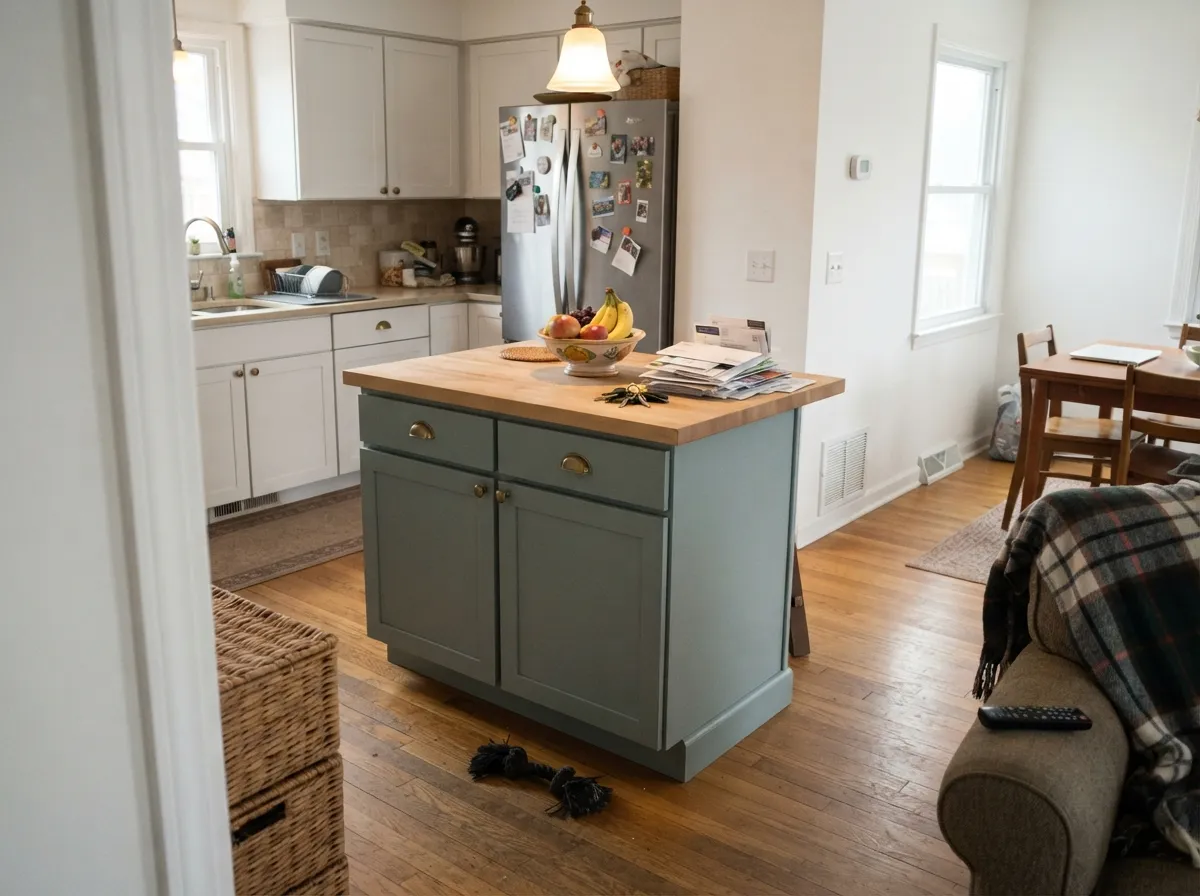
On an island or a single run of cabinets it plays beautifully with oak, walnut, and brass — the green comes forward against warm wood in a way that reads intentional. Satin urethane-fortified cabinet enamel; keep the perimeter walls a clean white so the color has room to be the star.
With real south or east daylight it is a quiet, unusual neutral that flatters wood furniture. In a north-facing room with limited natural light it can go flat and gray-green fast — sample big, and sample at the darkest hour before deciding.
It holds up outside with a quality exterior finish and the standard primer step, and its Historical Colors pedigree makes it a natural fit for older houses. South- and west-facing walls will fade first, like any exterior color — plan the refresh cycle accordingly.
Your Light Is the Risk
The blue-green sings — bright, fresh, and balanced without washing out. The best case for this color.
Cool, indirect daylight drains the blue and leaves a flat gray-green. Sample a big board here before committing.
Morning east light is fresh and clean; afternoon softens it. West light does the opposite — it warms and greens noticeably by evening.
Warm 2700K bulbs pull the green forward toward sage; cool LEDs hold the blue-gray. Pick your bulb on purpose, not by accident.
Most complaints about Woodlawn Blue are a light mismatch. Upload a photo of your actual room and see it on your walls — then ask for the same wall in north light or evening lamps before you buy a single sample.
Need It From Another Brand?
Any paint counter can custom-tint Benjamin Moore HC-147 directly. If you would rather stay in one brand's own deck, these are the closest stock matches, measured as ΔE2000. Under 2 is a difference you will not see on the wall.
| Brand | Closest color | ΔE | LRV | |
|---|---|---|---|---|
| Sherwin-Williams | WaterscapeSW 6470 · Sherwin-Williams | 2.1 | 62 | Color page → |
| Behr | Frosted JadePPU11-13 · Behr | 2.2 | 61 | Color page → |
| Valspar | Take a HikeV100-2 · Valspar | 0.5 | 62 | Color page → |
| PPG / Glidden | Babbling BrookPPG1144-3 · PPG / Glidden | 1.9 | 59 | Color page → |
| Glidden | Babbling BrookPPG1144-3 · Glidden | 2.0 | 60 | Color page → |
| Dutch Boy | Rochester Gray429-2DB · Dutch Boy | 3.2 | 61 | Color page → |
Similar Benjamin Moore Colors
The nearest shades to Woodlawn Blue within Benjamin Moore's own range, ranked by perceptual color distance — useful when you want the same look a touch lighter, darker, or warmer.
WCAG 2.1: AA is 4.5 : 1 for normal text, 3 : 1 for large text, AAA is 7 : 1.
Woodlawn Blue vs the Colors You're Also Considering
Every Woodlawn Blue sample board has the same rivals on it. The numbers show the real lightness gap — then it comes down to which risk you would rather live with.
Pick this for the quieter, grayer, more neutral cousin that reads sophisticated rather than spa.
Benjamin Moore HC-144 · LRV 53Palladian BluePick this if you want the more confidently green, more assertively spa version of this same family.
Pick this for the lighter, airier version that won't shadow a small room.
Benjamin Moore 1564 · LRV 41Beach GlassPick this for a deeper, more saturated blue-green-gray with the same chameleon behavior.
Palladian Blue HC-144 is the comparison people ask about most. At #C1D1C9 and LRV 60 it is almost the same paint, one point of lightness apart and a hair greener. In practice you choose between them by chip availability, not by looks. Annapolis Green 687 at #C1D2CE and LRV 61 is the same story with slightly cleaner blue-green.
Turquoise Mist 695 and Blue Grass CC-640 share hex #C2D1C6 and LRV 60. Both are a touch greener, so they read more sage in a warm room.
Across brands, Valspar Take a Hike V100-2 at #C3D2CC and LRV 62 is the closest on record with a difference of 0.48, below what most eyes can separate. Farrow and Ball Middle Ground No. 209 at LRV 58 and PPG Babbling Brook PPG1144-3 at LRV 59 both land under 2, so they look visually identical in normal room light. Sherwin-Williams Waterscape SW 6470 at LRV 62 and Behr Frosted Jade PPU11-13 at LRV 61 are very close, but sample first.
Woodlawn Blue Coordinating Colors
The rule for coordinating with Woodlawn Blue is simple: keep the whites warm-to-neutral rather than stark, and let the green or blue lean come forward with brass and wood instead of fighting it with a cool gray. These are the partners that keep showing up in rooms that work:
The Haint Blue Porch Ceiling Tradition
Painting a porch ceiling sky-blue is a real Southern building tradition, most associated with Charleston and Savannah, where the color is called "haint blue" — a pale blue-green meant to read like open sky and, according to the old belief, confuse or repel haints (restless spirits), who supposedly cannot cross water. Whatever you make of the folklore, the practical effect is real: a blue-green ceiling makes a covered porch feel airier and less like a shadowed extension of the house.
Woodlawn Blue is one of the more popular choices for the look today because it is quieter than a true sky blue — the gray in it keeps a whole porch ceiling from feeling like a costume. Historical Colors is also simply the right collection to be shopping in for an older house: it was built for exactly this kind of restrained, period-appropriate palette, not for a bold accent wall.
Woodlawn Blue With Wood Tones and Floors
Warm wood is this color's best friend. Oak, walnut, and butcher block all pull the green side of Woodlawn Blue forward in a way that reads deliberate — on a kitchen island or a bathroom vanity, that combination is most of the reason people search for this color by name. Unlacquered brass and other warm metals sit comfortably next to it too.
The floor to watch is cool gray: gray LVP, gray-washed wood, or blue-gray tile all sit at the same temperature as this color's own gray undertone, and the pairing can go muddy fast — walls and floor start competing instead of complementing. If a cool gray floor is staying put, test a large sample against it before committing to full walls; a warmer wood tone almost always solves the problem without touching the paint.
Three Ready Palettes Built on Woodlawn Blue
A color is never alone on the wall. These are complete combinations in the 60-30-10 pattern, with the reason each one holds together. Every one opens in the visualizer.
This is Benjamin Moore's own coordinating trio for the color, and it happens to be the classic haint-blue formula: sky overhead, a warm trim white for the columns, and one charcoal-greige note on the shutters and door so the porch reads finished, not undecided.
Try this palette in your roomA warm white vanity keeps the room from feeling clinical while the walls carry the color; one near-black note on the mirror frame and fixtures gives the eye somewhere to land so the palette reads deliberate, not accidental.
Try this palette in your roomA crisp white perimeter keeps the kitchen bright while the island does the color work; Pashmina's warm greige on stools or a backsplash grout keeps the cool blue-green from feeling sterile next to oak floors and brass pulls.
Try this palette in your roomWoodlawn Blue FAQ
Is Woodlawn Blue more blue or green?
Both, depending on the light and your bulbs. It's built from a blue-green-gray blend, and warm 2700K light pulls the green forward while cool daylight and LEDs hold it closer to blue-gray. Your sample chip and your actual wall will rarely look quite the same — that's normal for this color, not a defect.
Does Woodlawn Blue work as a porch ceiling (haint blue)?
Yes — it's one of the more popular picks for a refined take on the traditional Southern haint-blue porch ceiling: soft blue, green, and gray instead of a louder, more saturated sky blue. Use flat or matte overhead.
Will it look gray in a north-facing room?
Often, yes. Cool, indirect north light drains the blue and green and leaves something close to flat gray. If your room is north-facing and dim, sample a large board there specifically before you commit, and lean on warm 2700K bulbs to bring some color back after dark.
What white goes with Woodlawn Blue?
Benjamin Moore's own coordinating picks are White (OC-151) and Cloud White (OC-130) for trim, with Chelsea Gray for a deeper accent. White Dove also works well if you want the trim slightly warmer and softer than a true white.
Is it good for kitchen cabinets or an island?
Yes, especially as an island or a single run of cabinets rather than the whole kitchen. It plays well with oak, walnut, and brass hardware — use a satin urethane-fortified cabinet enamel and keep the perimeter walls a clean white so the color doesn't compete with itself.
How is Woodlawn Blue different from Palladian Blue?
They're close cousins in the same historical blue-green family, but Woodlawn Blue sits a step quieter and grayer, while Palladian Blue leans more confidently into its green side and reads more like a dedicated spa color. If you want the calmer, more neutral version of the pair, Woodlawn Blue is it.
Have you painted with Woodlawn Blue?
Rate it — one tap helps the next reader decide.
Ask a Question