Misty Lilac
The palest lilac Benjamin Moore sells, reviewed honestly: the nurseries where it glows, the light that turns it flat gray, and what to pick instead.

Jessica has spec'd whites and neutrals for more than 300 rooms and keeps a sample wall of painted drawdowns in her studio. Every color review is checked against real reader rooms in the comments and re-tested when a formula changes. About the testing process →
- 1French Lilac56
- 2Lavender Mist63
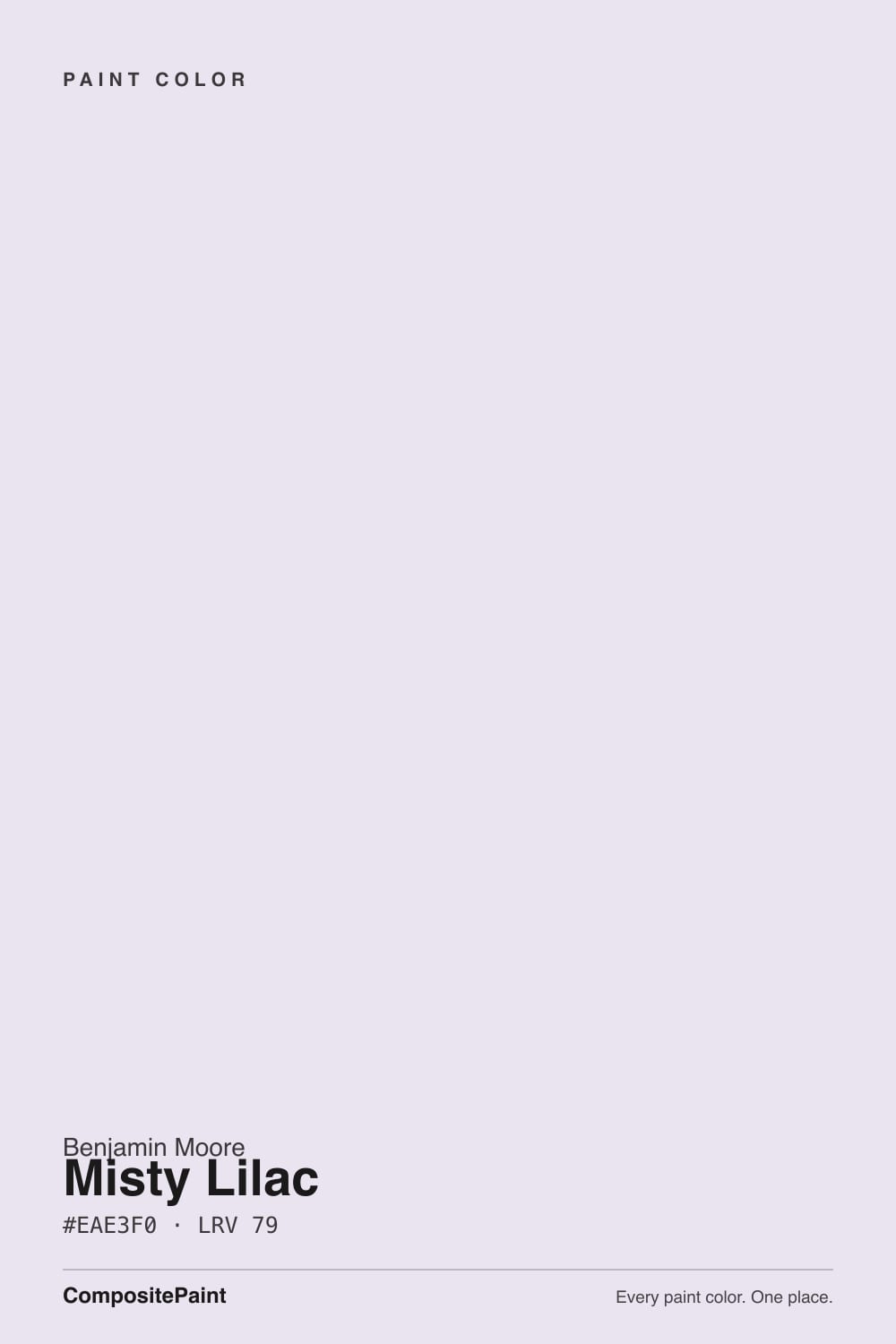
- 3Misty Lilac79
- 4Barely Pink87
The Fast Verdict
Misty Lilac is purple with the volume turned almost all the way down: a gray-blue lavender so pale it can pass for a tinted white until the light catches it right. At LRV 79 it is one of the softest colors in Benjamin Moore's Classics collection — the kind of color you paint when you want a nursery or bedroom to feel considered, not committed. Give it real daylight and a warm trim white and it glows quietly. Put it in a dim room and it goes flat and forgettable.
Nurseries and bedrooms that want a whisper of color · rooms with real south or east daylight · anyone who loves the muted-purple family but finds Sleepy Hollow too dark · a soft alternative to an all-white scheme
Your room is dim or north-facing · you want a color that reads unmistakably purple · your fixtures run cool white LEDs · you want a true, tint-free white
- A genuinely soft, romantic lilac without reading as "the purple room"
- Gender-neutral enough for a nursery that needs to work twice
- High LRV (79) keeps rooms feeling bright, not shadowed
- Layers beautifully with its own deeper family member, Lily Lavender
- Part of BM's long-running Classics collection — not a trend color that will date fast
- Needs real daylight or it goes flat, dingy gray-white
- So pale it can nearly disappear in strong direct sun
- Reads differently by room exposure — north goes gray-purple, south goes pink
- Honey oak and warm gold trim mute it toward muddy instead of pale
What Color Is Misty Lilac, Really?
A cool-leaning pale lilac built on a gray-blue base with a whisper of pink — Misty Lilac is Benjamin Moore's quietest purple, part of the long-running Classics collection rather than a color invented for a trend cycle. It carries just enough violet to be unmistakably not-white, and not enough to compete with anything else in the room. That restraint is the entire appeal: it reads as a considered, slightly romantic near-neutral rather than "the purple room."
At LRV 79 it sits in the same reflectance neighborhood as White Dove (85) and Chantilly Lace (92) — genuinely pale, genuinely light-bouncing. The difference from those two whites is temperature and tint: where White Dove leans warm and Chantilly Lace stays neutral, Misty Lilac carries a real cool violet cast that shows up as a shadow-colored lavender in corners and at dusk. It is a color you feel more than you see in bright light, and see clearly the moment the light drops.
Undertone in one line: cool gray-violet with a whisper of pink — the exact mix shifts with room exposure. In a north-facing room it reads more gray and more purple; in a south or east room with real daylight it warms and reads faintly pink. Both readings are honest; neither is a defect. If your sample looks simply gray with no lilac at all, the room's light is too dim or too cool for this color to do its job.
Where It Shines
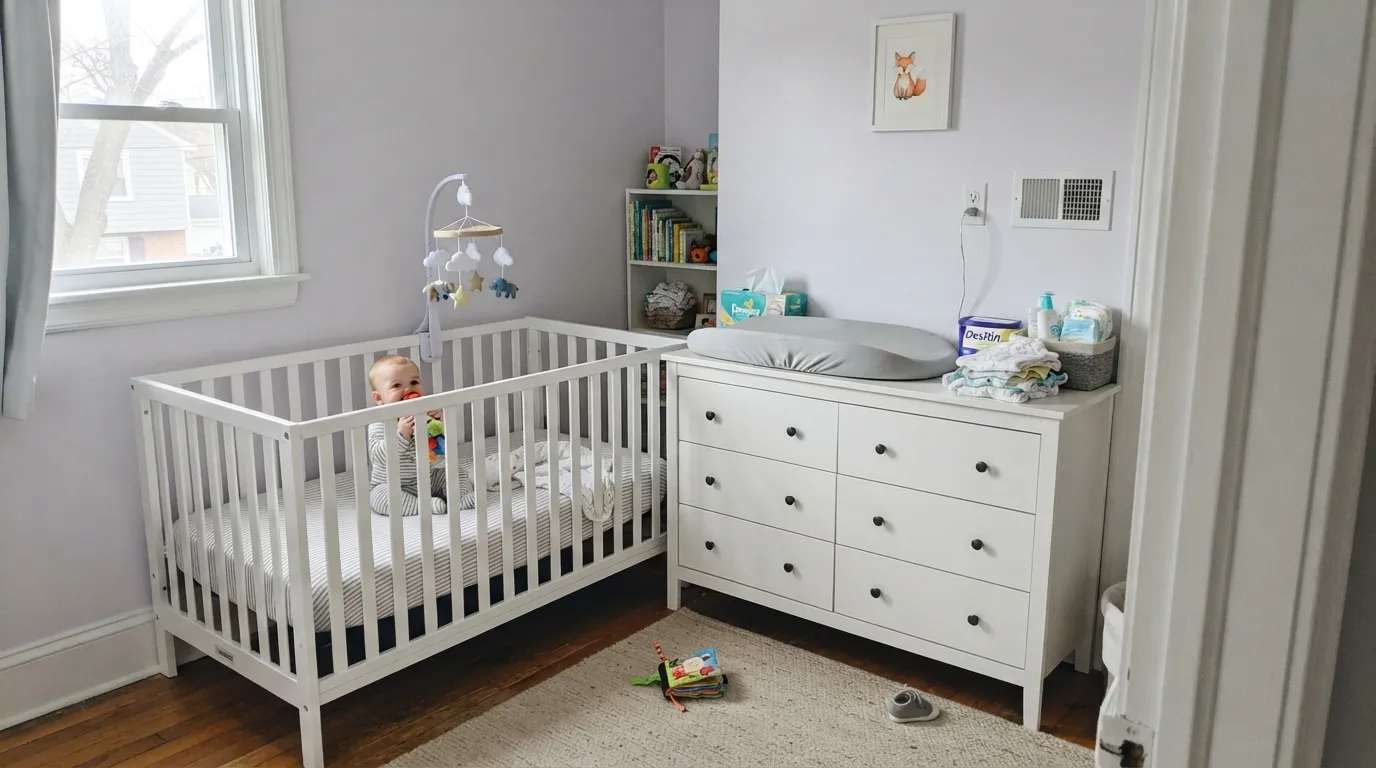
Give it a room with real daylight and it does exactly what its name promises: a soft, romantic near-white that feels finished rather than decorated. Nurseries are its natural home — gender-neutral, calm, and gentle enough that it never reads as "the purple room" to a first-time visitor. It also works as the quiet half of a two-pastel scheme, since it has so little pigment that it never fights a stronger partner color.
Where It Fails
Almost every letdown with Misty Lilac comes down to one of three situations, and all three are predictable before the first coat. None of them are the paint's fault — but if your room matches one, this is not your color, and a bigger sample will only confirm it.
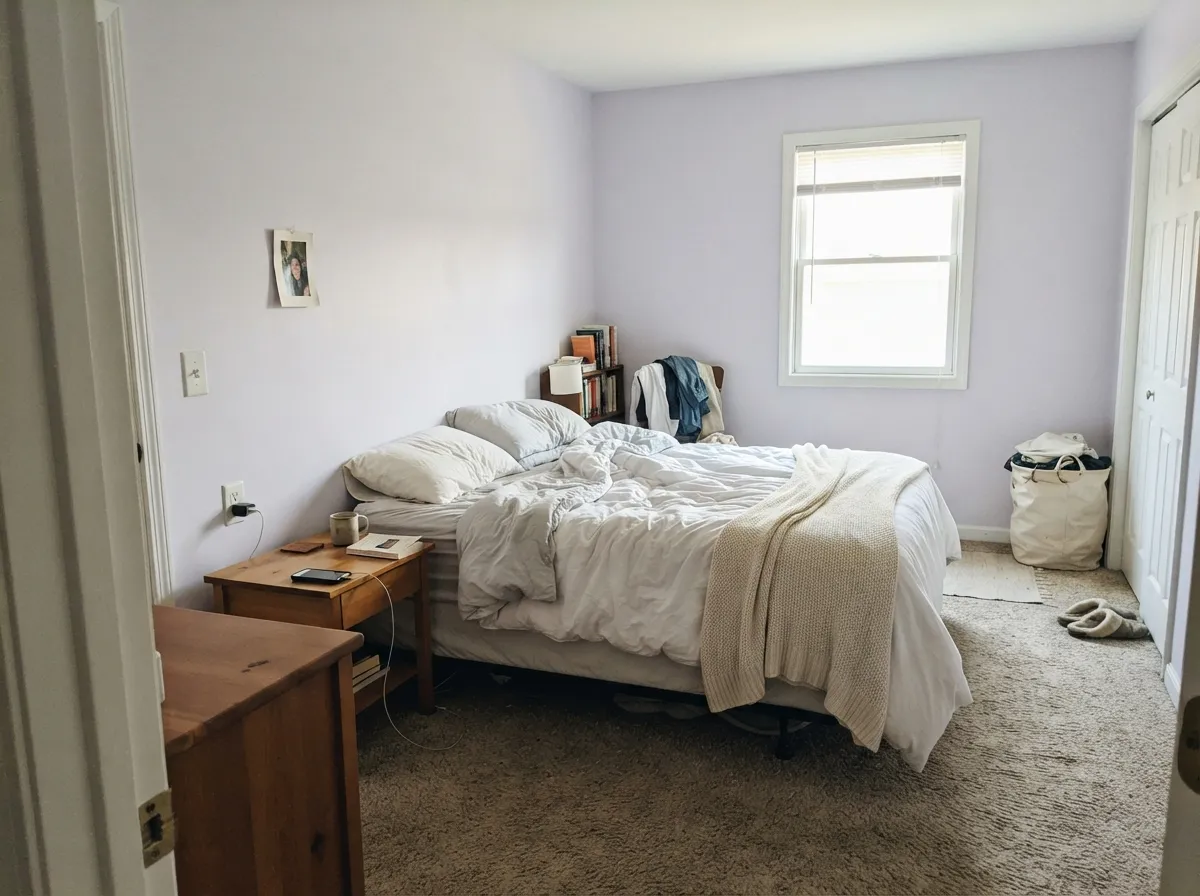
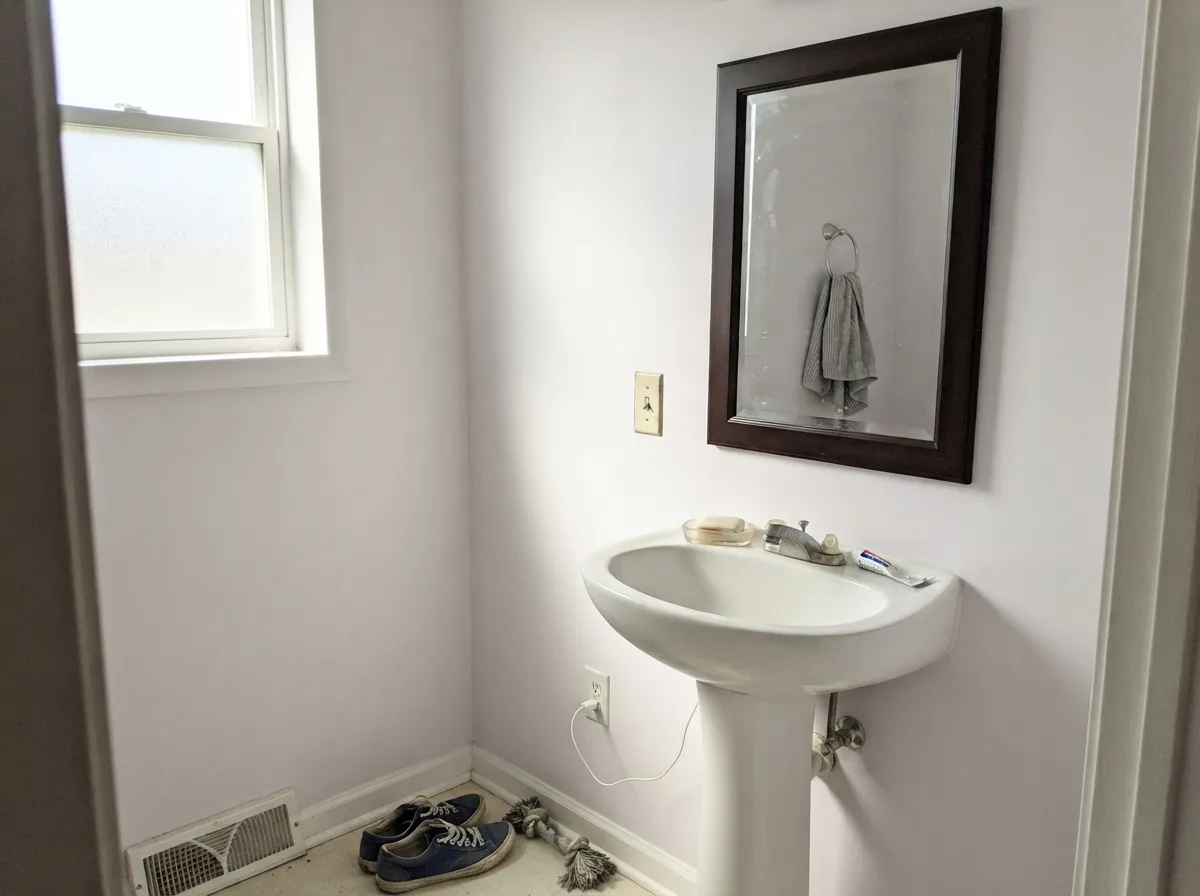
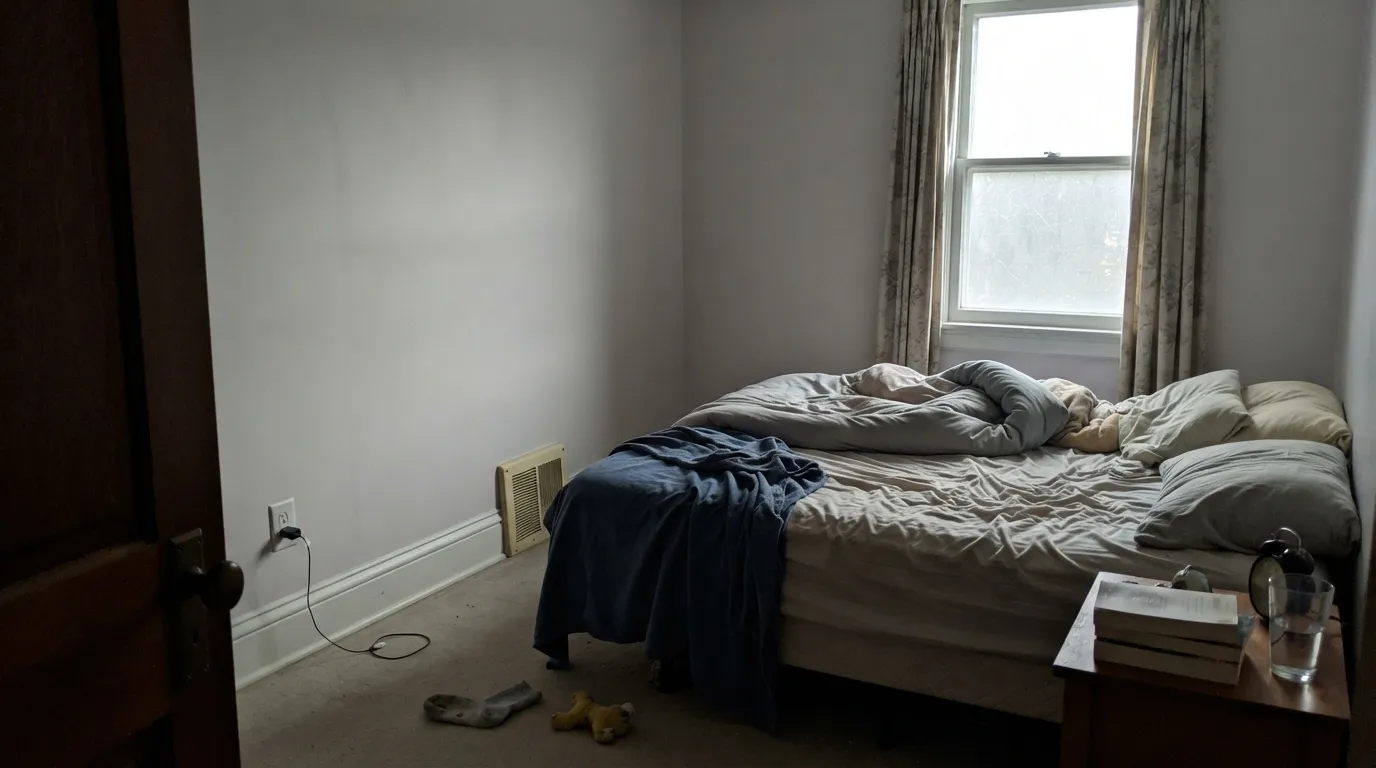
Misty Lilac holds so little pigment that cool, low daylight reads it as a flat, slightly dingy off-white with barely a trace of lilac left. Readers expecting "soft romantic purple" report something closer to builder white with a shadow. Test a large sample in the actual room before committing — this color needs light to do its job.
At LRV 79, this is closer to a tinted white than a color — in strong sun it can nearly disappear into the trim. If you want a wall that unmistakably reads lilac from across the room, Misty Lilac is too pale; step down to Lily Lavender instead and keep the same undertone.
Yellow-orange sits opposite violet on the color wheel, so warm honey wood pulls the lilac toward a muddy gray instead of letting it read clean and pale. It is a subtler clash than it would be with a deeper purple, but it is real — pale oak, white oak, or painted trim keep the color honest.
Room by Room
With real daylight it is the calm, grown-up nursery-adjacent color for a primary bedroom that doesn't want to commit to gray or beige. Eggshell hides texture without going flat; White Dove trim keeps the edges soft.
This is the color Benjamin Moore built the Classics purple family for: gentle enough for a newborn's room, gender-neutral enough to survive a second child. Confirm the room's actual light before painting — a north nursery reads closer to gray than lilac.
A small room takes the full lilac without it overwhelming anything, and with a crisp white vanity or marble top it reads as a deliberate color choice rather than an accident. Satin for the walls if the room runs damp.
Beautiful as a quiet backdrop in a bright, south- or east-facing living room; in anything dimmer it reads as a slightly off gray-white that people can't quite place, which is a worse outcome than committing to a real neutral.
A hallway with good borrowed daylight carries it well; a windowless interior hallway will flatten it to near-gray. Pair with White Dove or Chantilly Lace doors so the color has a consistent white to play against room to room.
Outdoor light and weathering are unkind to a color this pale and this cool — expect it to read as a dingy, indeterminate gray-white rather than the soft lilac you painted. Save Misty Lilac for interiors.
Your Light Is the Risk
Real daylight is what makes the lilac visible at all — it warms slightly and reads as a soft, romantic near-white rather than plain gray. This is the light the color needs to work.
Cool, dim daylight drains almost all the pigment out. The wall reads flat, slightly dingy off-white — the single biggest source of disappointed reviews.
Room orientation changes the undertone more than time of day does: north-facing rooms pull it toward gray-violet, south- and east-facing rooms let the whisper of pink come forward. Sample in the actual room, not just near a window.
2700K lamps flush the pink forward and the color turns gently rosy at night. Cool white LEDs flatten it back toward gray — swap the bulbs before you swap the paint.
Most complaints about Misty Lilac are a light mismatch. Upload a photo of your actual room and see it on your walls — then ask for the same wall in north light or evening lamps before you buy a single sample.
Need It From Another Brand?
Any paint counter can custom-tint Benjamin Moore 2071-70 directly. If you would rather stay in one brand's own deck, these are the closest stock matches, measured as ΔE2000. Under 2 is a difference you will not see on the wall.
| Brand | Closest color | ΔE | LRV | |
|---|---|---|---|---|
| Sherwin-Williams | Feathery LilacSW 7141 · Sherwin-Williams | 3.4 | 81 | Color page → |
| Behr | Coquette100E-1 · Behr | 1.7 | 78 | Color page → |
| Valspar | Spun Moonbeams8002-1A · Valspar | 1.8 | 76 | Color page → |
| PPG / Glidden | Heaven SentPPG1252-2 · PPG / Glidden | 2.5 | 78 | Color page → |
| Glidden | Heaven SentPPG1252-2 · Glidden | 2.6 | 78 | Color page → |
| Dutch Boy | Twinkly Lights144-1DB · Dutch Boy | 1.8 | 76 | Color page → |
Similar Benjamin Moore Colors
The nearest shades to Misty Lilac within Benjamin Moore's own range, ranked by perceptual color distance — useful when you want the same look a touch lighter, darker, or warmer.
WCAG 2.1: AA is 4.5 : 1 for normal text, 3 : 1 for large text, AAA is 7 : 1.
Misty Lilac vs the Colors You're Also Considering
Every Misty Lilac sample board has the same rivals on it. The numbers show the real lightness gap — then it comes down to which risk you would rather live with.
Pick this for the palest, most restrained version — a whisper of color instead of a definite one.
Benjamin Moore 2071-60 · LRV 65Lily LavenderPick this if you want the purple to actually show up — the same family two steps darker, unmistakably lilac even in bright light.
Pick this when you want that same quiet, finished feeling with the one degree of personality White Dove doesn't have.
Benjamin Moore OC-17 · LRV 85White DovePick this if you want zero purple risk and a warm, dependable white that never needs explaining.
Misty Lilac Coordinating Colors
The rule for coordinating with Misty Lilac is to keep everything else quiet — it is a whisper color, and a loud partner will bully it off the wall. Warm whites soften the handoff, its own deeper family member adds the purple it can't hold alone, and one dark neutral is enough contrast for a whole room. These are the partners that keep showing up in rooms that work:
A Classics-Collection Lilac, Not a Trend Color
Misty Lilac has sat in Benjamin Moore's Classics collection for years, which separates it from the saturated "moody mauve" colors — Sleepy Hollow, Cinnamon Slate — that rode the recent purple revival into the spotlight. It was never built to be the statement wall; it was built to be the quiet option for a nursery or bedroom that wants one degree of personality beyond plain white, and that is still exactly what it does best.
Because it carries so little pigment, it does not carry the same repaint-risk conversation that deeper trend purples do. A color this pale ages more like a soft white than like an accent — which is also why it shows up on Benjamin Moore's own list of popular purples year after year instead of appearing and fading with a single color-of-the-year cycle.
Misty Lilac With Wood Tones and Floors
Pale and white oak, gray-washed floors, and painted white trim are the easy, safe partners — they let the cool lilac read clean and undiluted. Walnut and darker espresso tones work too, adding enough contrast that the pale wall reads intentional rather than accidental.
The floor that needs a sample first is honey or golden oak. The clash is subtler than it would be with a deeper purple — Misty Lilac won't fight the floor the way a color like Sleepy Hollow does — but warm gold wood can still pull the pale lilac toward a slightly muddy gray instead of letting it stay clean and pale. If the golden floor isn't going anywhere, a large sample above it, in the room's actual light, is worth five minutes before painting the whole room.
Three Ready Palettes Built on Misty Lilac
A color is never alone on the wall. These are complete combinations in the 60-30-10 pattern, with the reason each one holds together. Every one opens in the visualizer.
Two whisper-soft pastels and one warm trim white keep a nursery calm instead of themed — First Light adds warmth without introducing a second real color decision, and White Dove trim never fights the lilac the way a stark white would.
Try this palette in your roomSame family at two depths reads as intentional layering, not a mismatch — Lily Lavender on one wall or the closet doors gives the room the visible purple Misty Lilac is too pale to deliver alone, while the trim ties both back to a single warm white.
Try this palette in your roomA small room can carry the full lilac without it fighting anything — crisp Chantilly Lace trim keeps the edges clean, and one dark charcoal vanity gives the palette the depth a whole room of pastel needs to avoid feeling washed out.
Try this palette in your roomMisty Lilac FAQ
Is Misty Lilac purple or white?
It is a genuine pale lilac, not a white with a flattering name — but at LRV 79 it reads close to a tinted white in most everyday light, and the purple shows more in shadow and corners than out in the open. If you want a true white, this isn't it; if you want obviously visible purple, size up to Lily Lavender.
Does Misty Lilac work in a nursery?
Yes — it is one of Benjamin Moore's classic nursery and bedroom picks, gender-neutral enough to avoid feeling twee. Just confirm it in the room's real light first: a north-facing nursery reads noticeably closer to gray than lilac.
Is Misty Lilac warm or cool?
Cool-leaning — a gray-blue base with a whisper of pink. Room exposure changes which side you see: north light pulls it toward gray-violet, south or east daylight lets the pink warm it. Both readings are honest, not a defect.
What trim white goes with Misty Lilac?
White Dove for a soft handoff that keeps everything gentle, Chantilly Lace if you want a crisper, more defined edge. Avoid a very cool, stark white next to it — the contrast can make the lilac look dingy instead of pale.
Does it look different room to room?
More than most pastels, yes. Because it carries so little pigment, small changes in daylight exposure and bulb temperature show up as a real shift, from near-gray in a dim north room to a soft rosy lilac under warm evening lamps.
How does Misty Lilac compare to Lily Lavender?
Same family, same undertone, different intensity. Lily Lavender (LRV 65) holds its purple in bright light where Misty Lilac (LRV 79) can wash out toward white. Pick Misty Lilac for a whisper of color, Lily Lavender if you want the wall to unmistakably read purple.
Have you painted with Misty Lilac?
Rate it — one tap helps the next reader decide.
Ask a Question