Room Colors · Farmhouse Exterior
5 Best Farmhouse Exterior Paint Colors for 2026
ideas, combinations, and real rooms
5 curated picks from real farmhouse exteriors — with the exact colors, honest reasons why, and the combinations that hold the room together.

Former interior stylist who can spot a green undertone from across a room. Jessica writes the color and mood pieces — what to choose, what pairs, and why your "white" looks pink.
The Fast Answer
Don't want to read 5 picks? These four are the safe answers.

Top Picks for the Farmhouse Exterior
Pick a color family, tap a shade to see the farmhouse exterior in it, then try it on your own room.
The 5 Best Farmhouse Exterior Paint Colors
Every pick below is a real rendered farmhouse exterior, not a chip. The lead color first; the swatches are the full scheme in the photo — walls, furniture, textiles, accent.

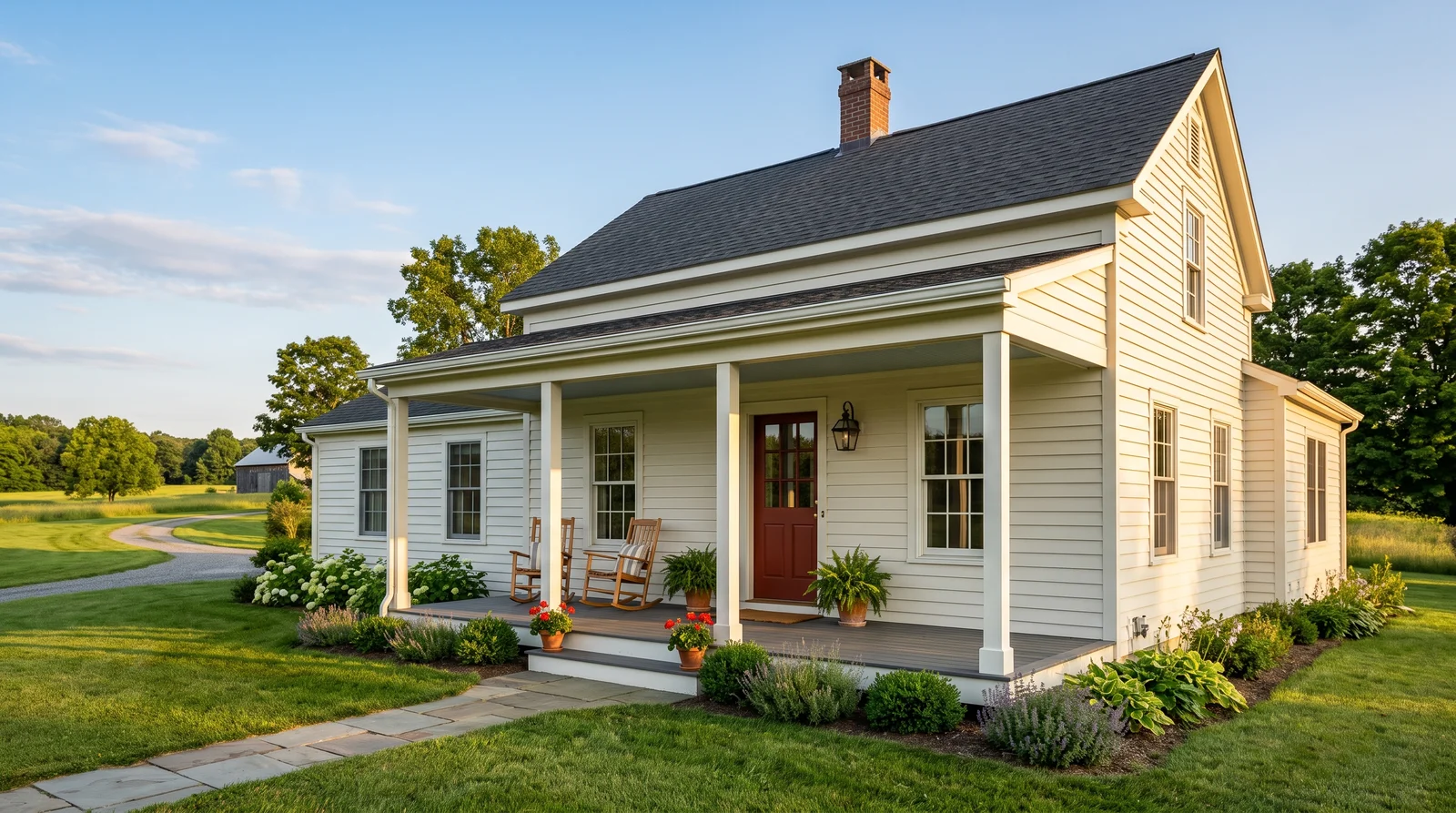
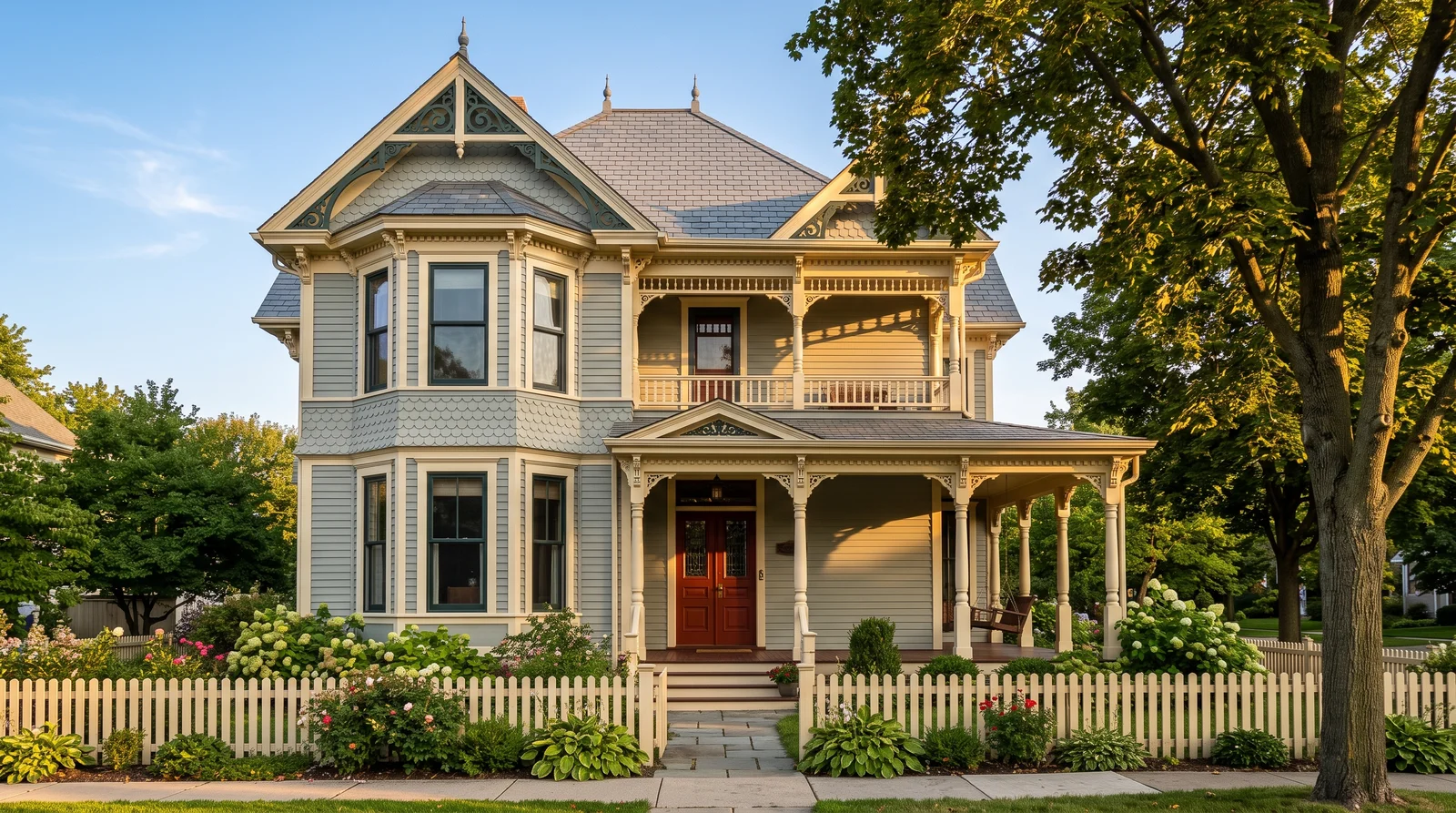
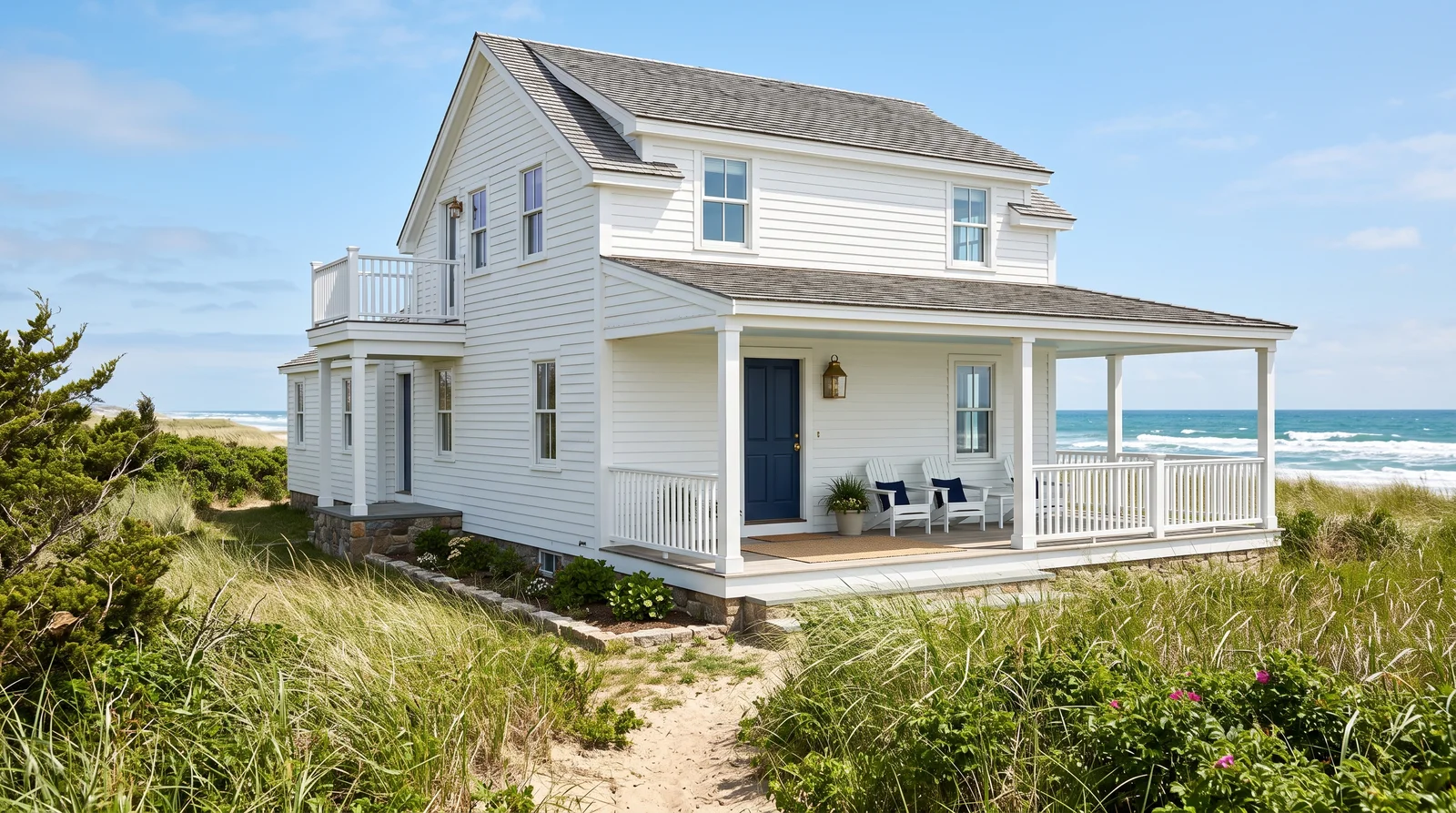
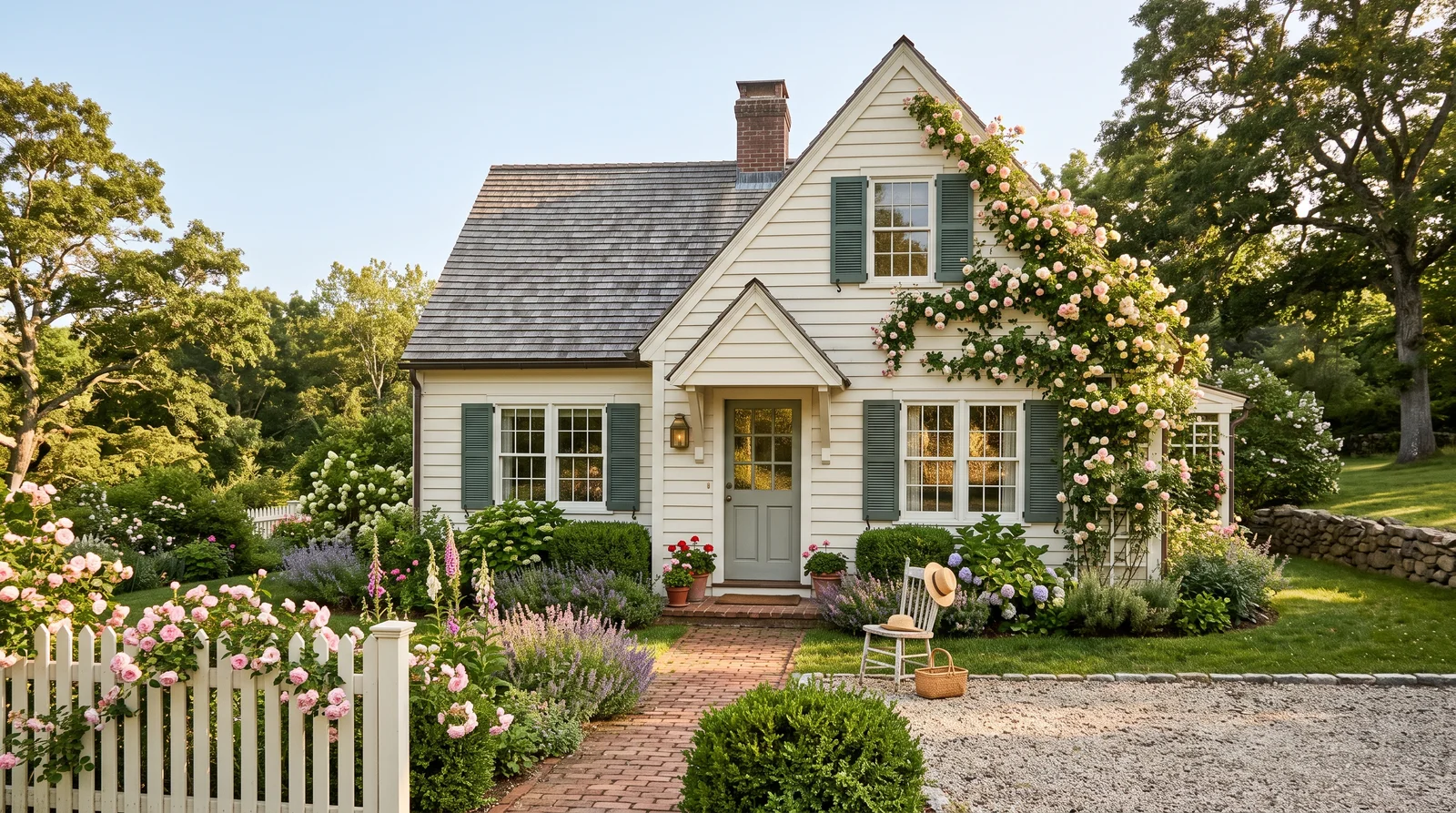
The old-fashioned version: warm white siding, white trim, a red door, and a haint-blue porch ceiling.
Benjamin Moore White Dove OC-17 is the warm, slightly creamy white that keeps an older farmhouse from looking like a new build. Chantilly Lace on the trim is a half-step crisper, so the windows and porch posts separate without hard contrast. A Rookwood Dark Red door is the traditional move, and the pale blue porch ceiling is a real Southern habit, not a gimmick. Choose this if your house has age, wood windows, or a real wraparound porch. The risk: White Dove can go dingy-tan on a wall that sits in tree shade all day.
SEE WHITE DOVE ON YOUR WALLS →
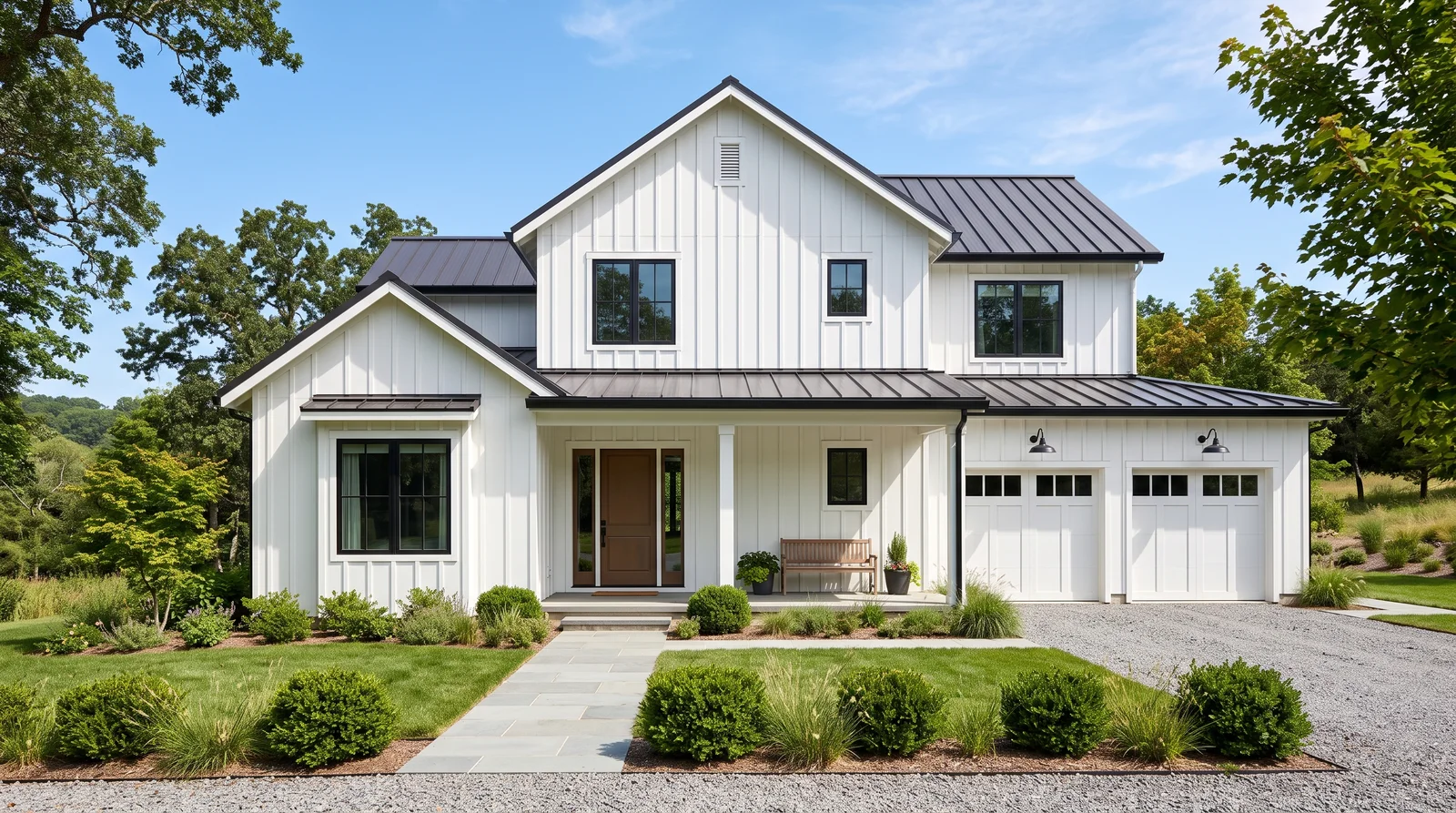
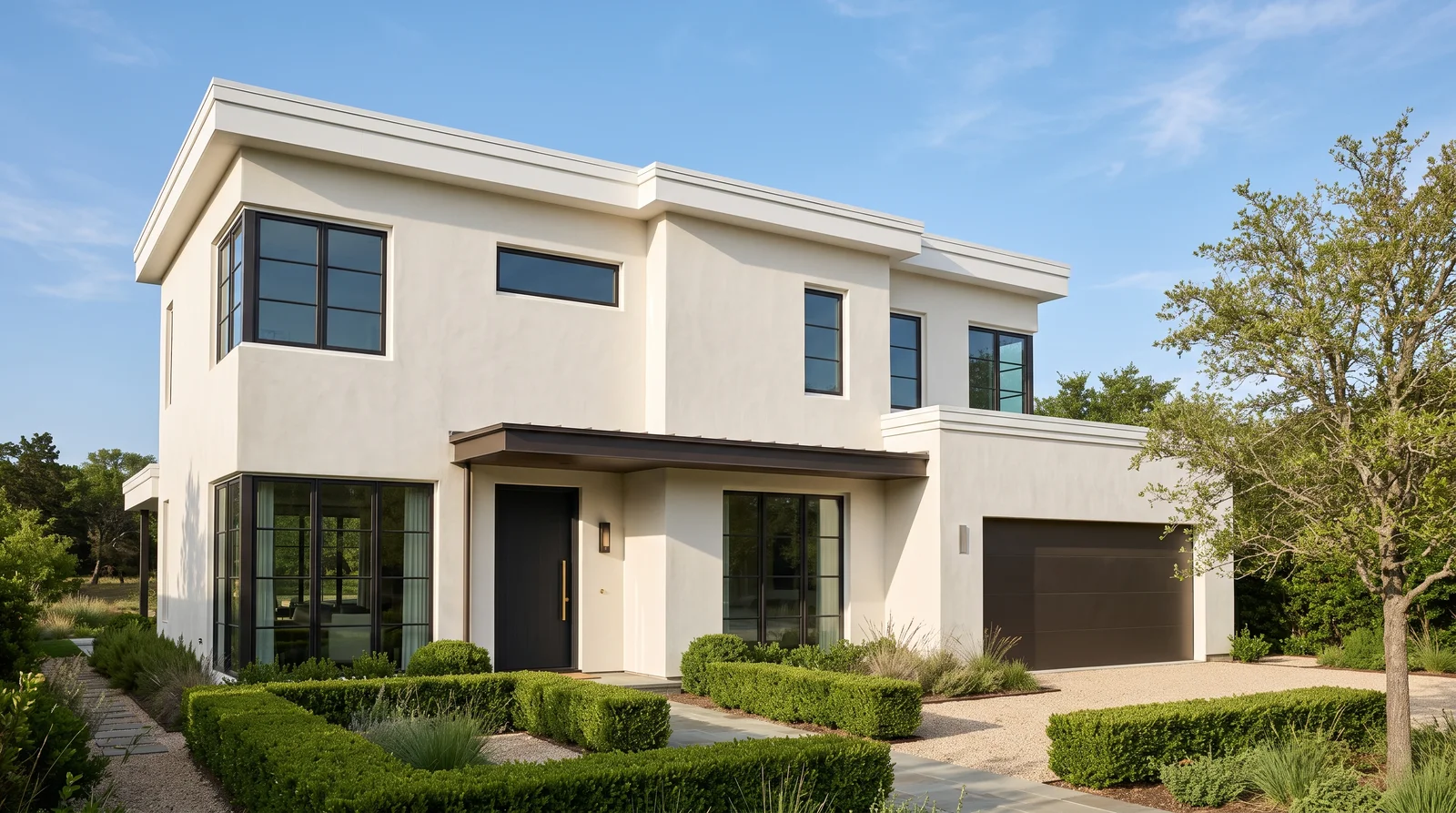
The white-and-black scheme everyone is building right now, warmed up with a bronze door so it does not read cold.
Behr Ultra Pure White on board-and-batten is the cleanest, brightest version of this look, and Wrought Iron on the window frames and fascia gives the black outline that makes it modern instead of colonial. Urbane Bronze on the door is the part most people skip; it keeps the entry from turning into a third black rectangle. Choose this for a newer house with big square windows and simple gables. The risk: pure white plus black shows every dirty splash, so plan on rinsing the lower siding each spring.
SEE IT ON YOUR WALLS →
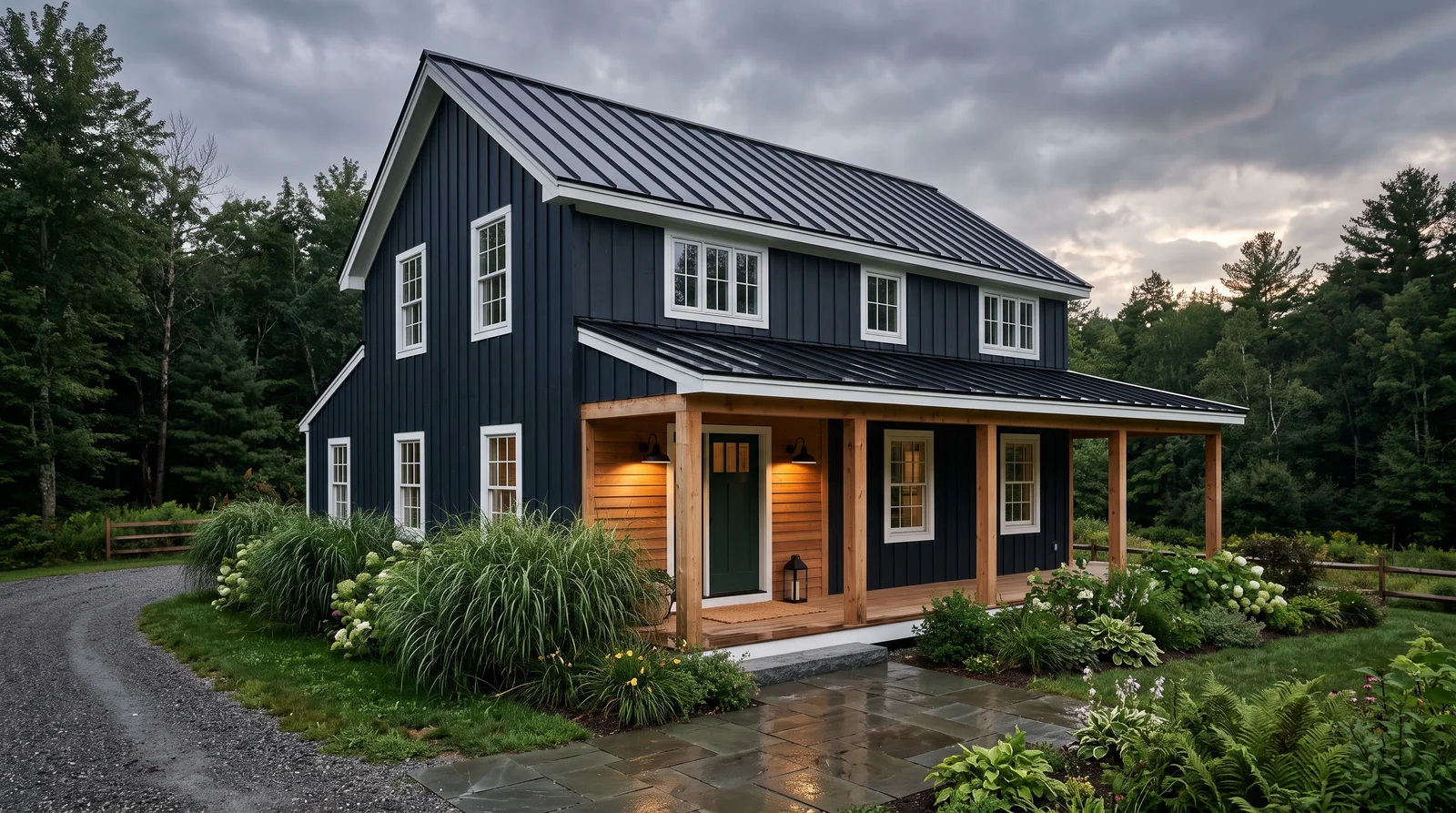
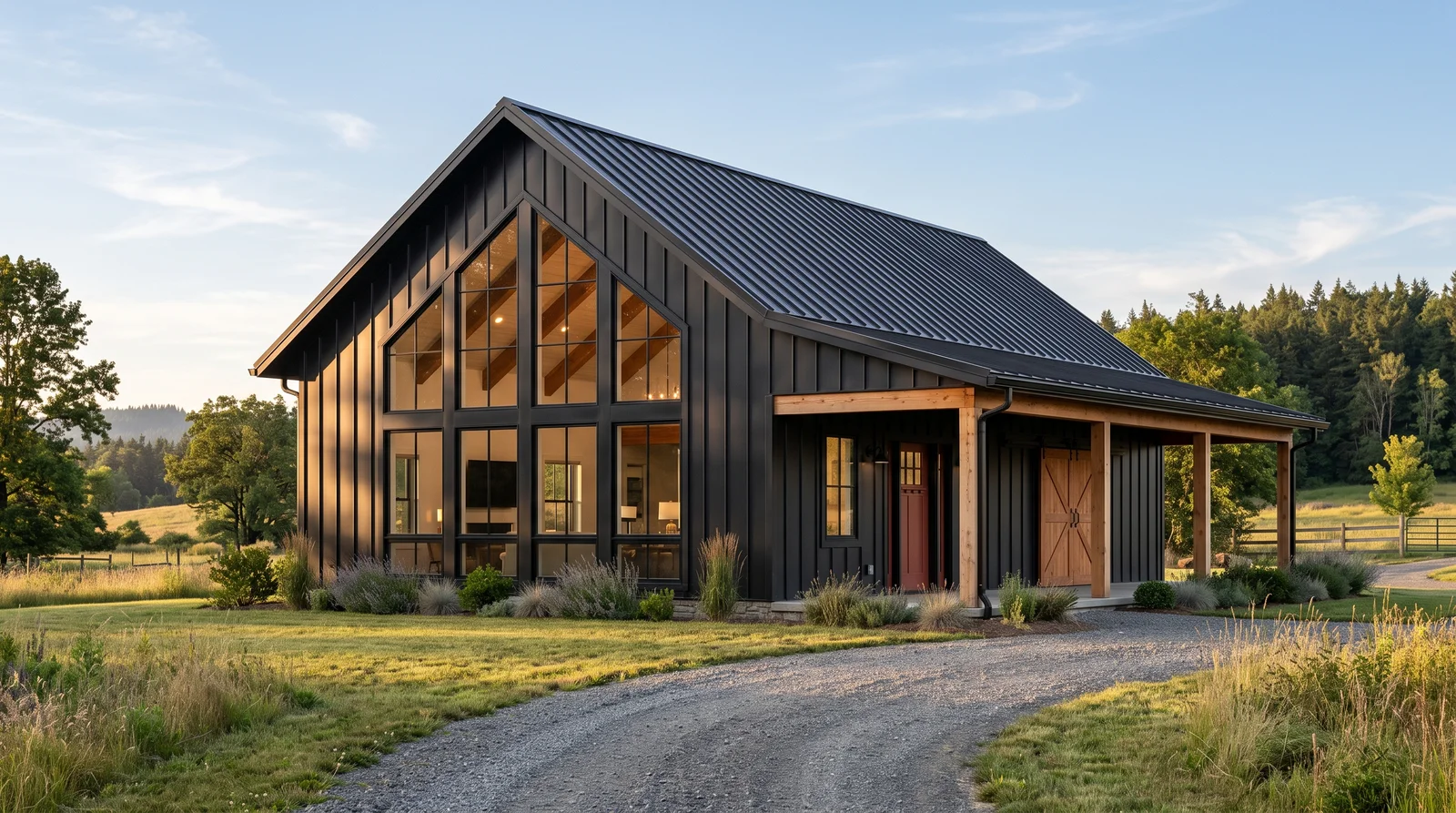
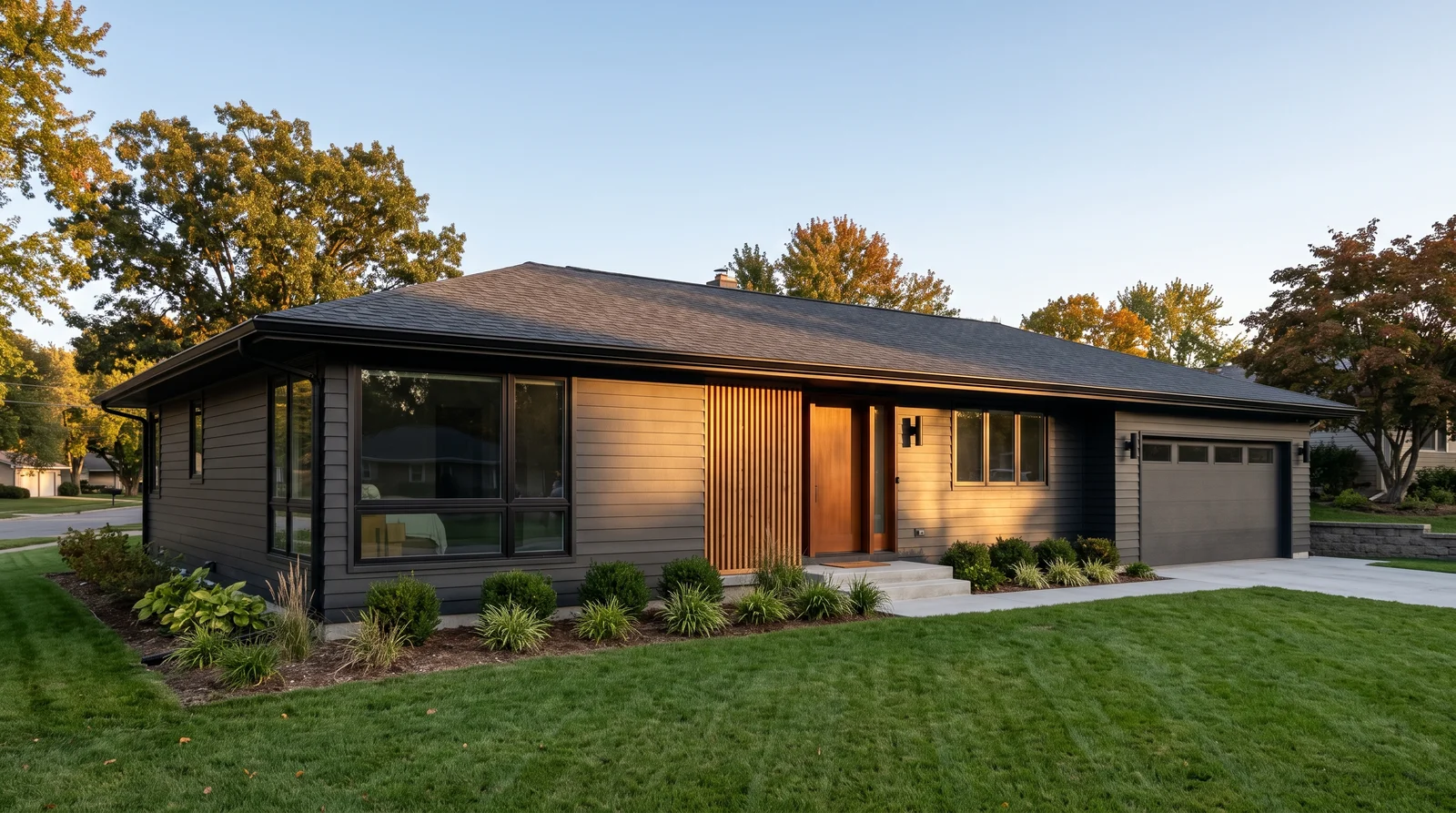
Near-black siding with white trim and a deep green door - dramatic from the road, and it hides a lot of siding sins.
Farrow & Ball Railings is a blue-black that stays soft instead of flat, so a big plain wall still has depth in raking light. White trim is what keeps it farmhouse rather than modern box, and Essex Green on the door adds one warm-dark note. Cedar posts and a cedar entry keep the whole thing from feeling severe. Choose this on a shaded lot, a barn-style shape, or a house with mismatched siding you want to quiet down. The risk: dark walls run hotter and fade faster on full south exposure.
SEE RAILINGS ON YOUR WALLS →
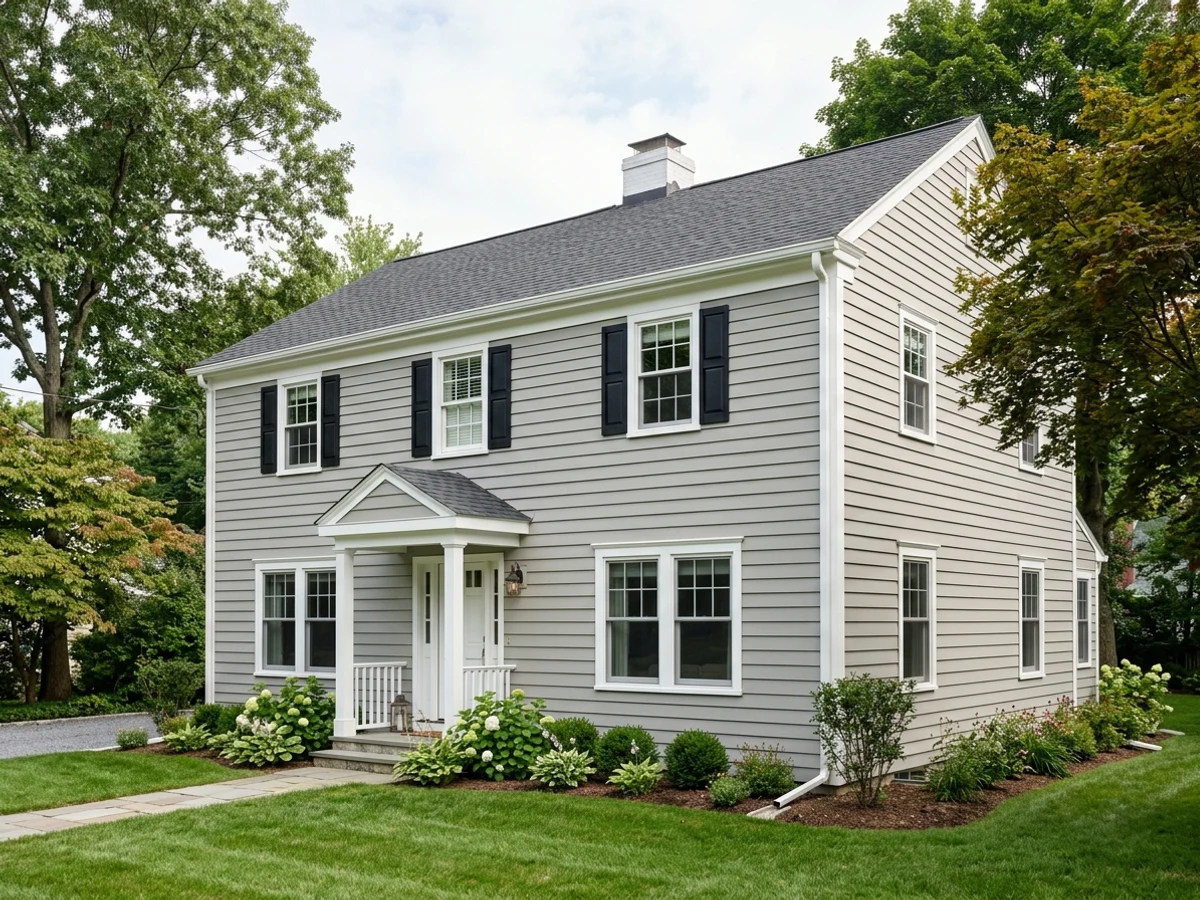
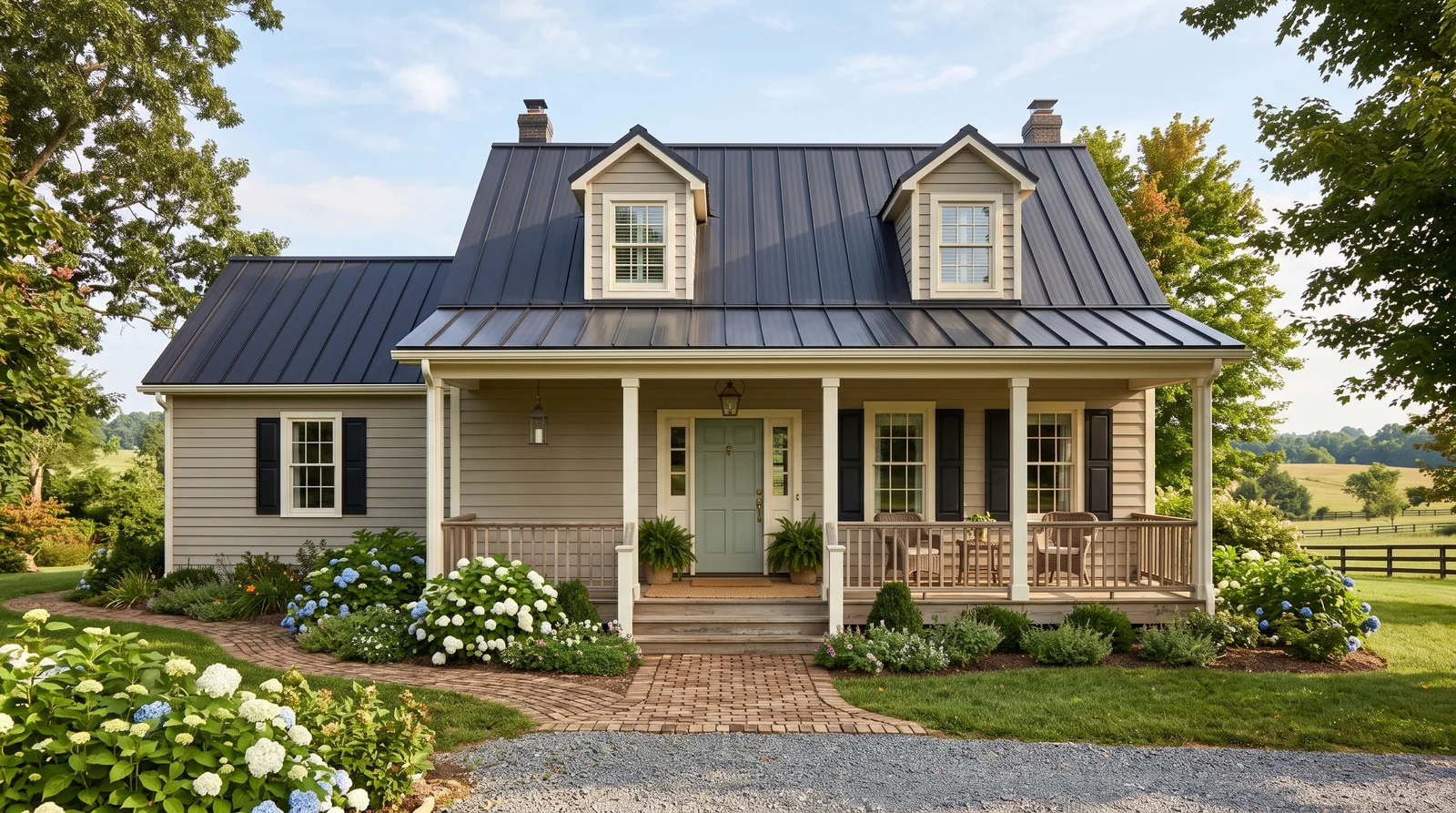
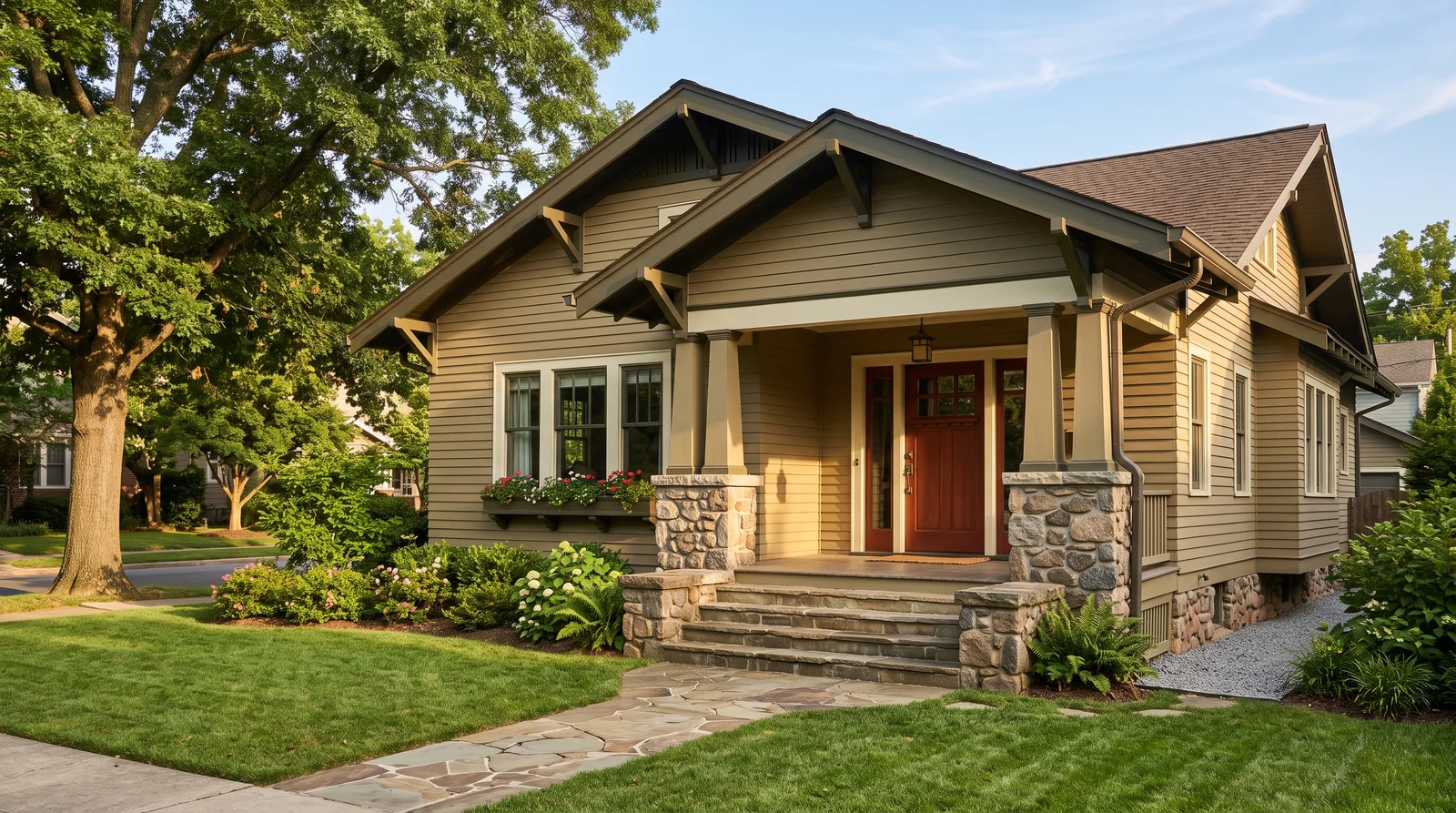
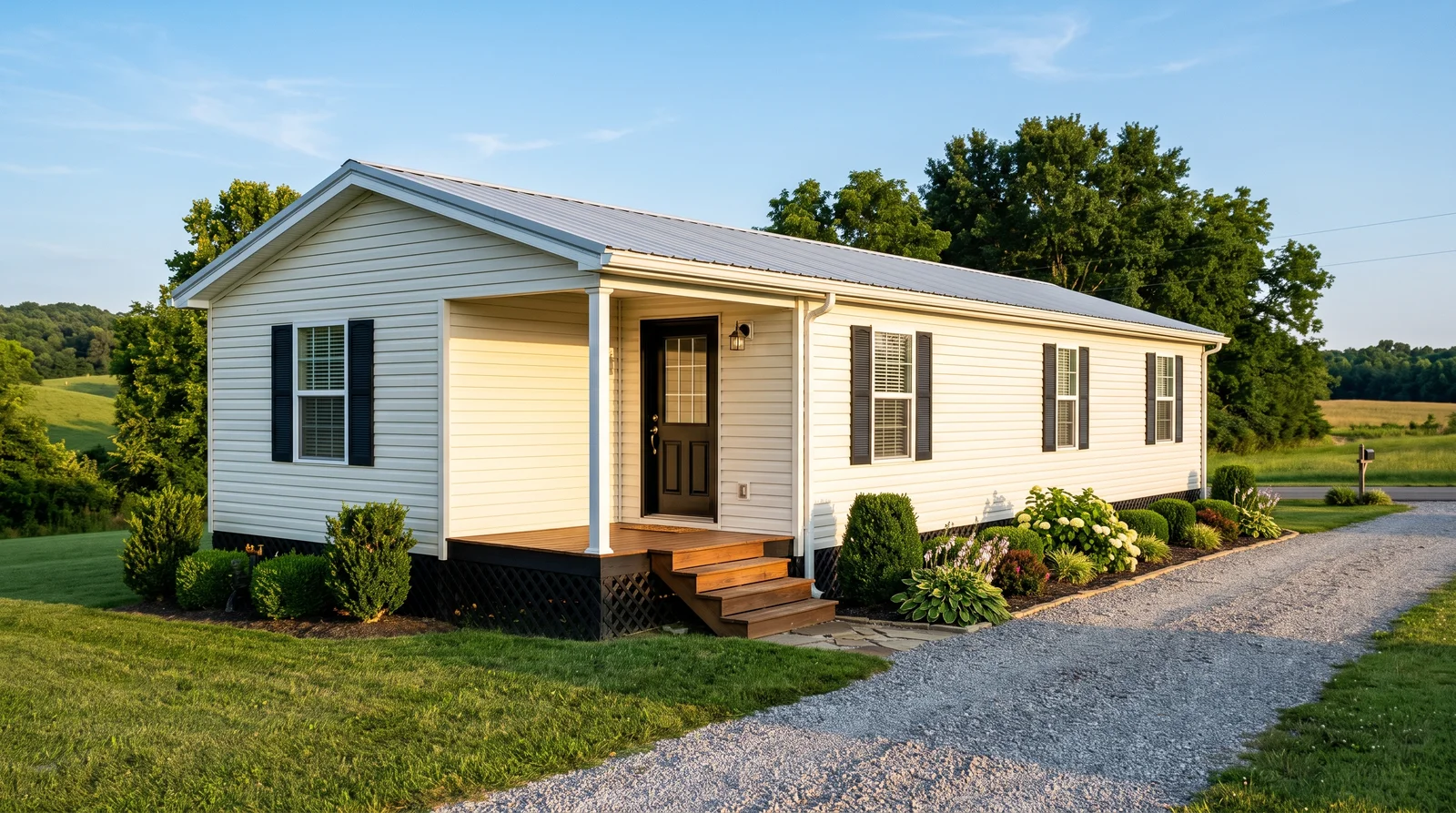
For people who want a farmhouse that is not white: a warm greige body with creamy trim and a soft green door.
Sherwin-Williams Accessible Beige is the safest warm greige on a big exterior because it holds its beige in sun and its gray in shade instead of flipping pink. Swiss Coffee trim is creamy rather than icy, which is what makes the pair look intentional. A Card Room Green door and near-black roof and shutters finish it. Choose this if white looks too stark next to your brick, stone, or a lot of trees. The risk: greige plus a bright white trim reads muddy, so keep the trim warm.
SEE IT ON YOUR WALLS →
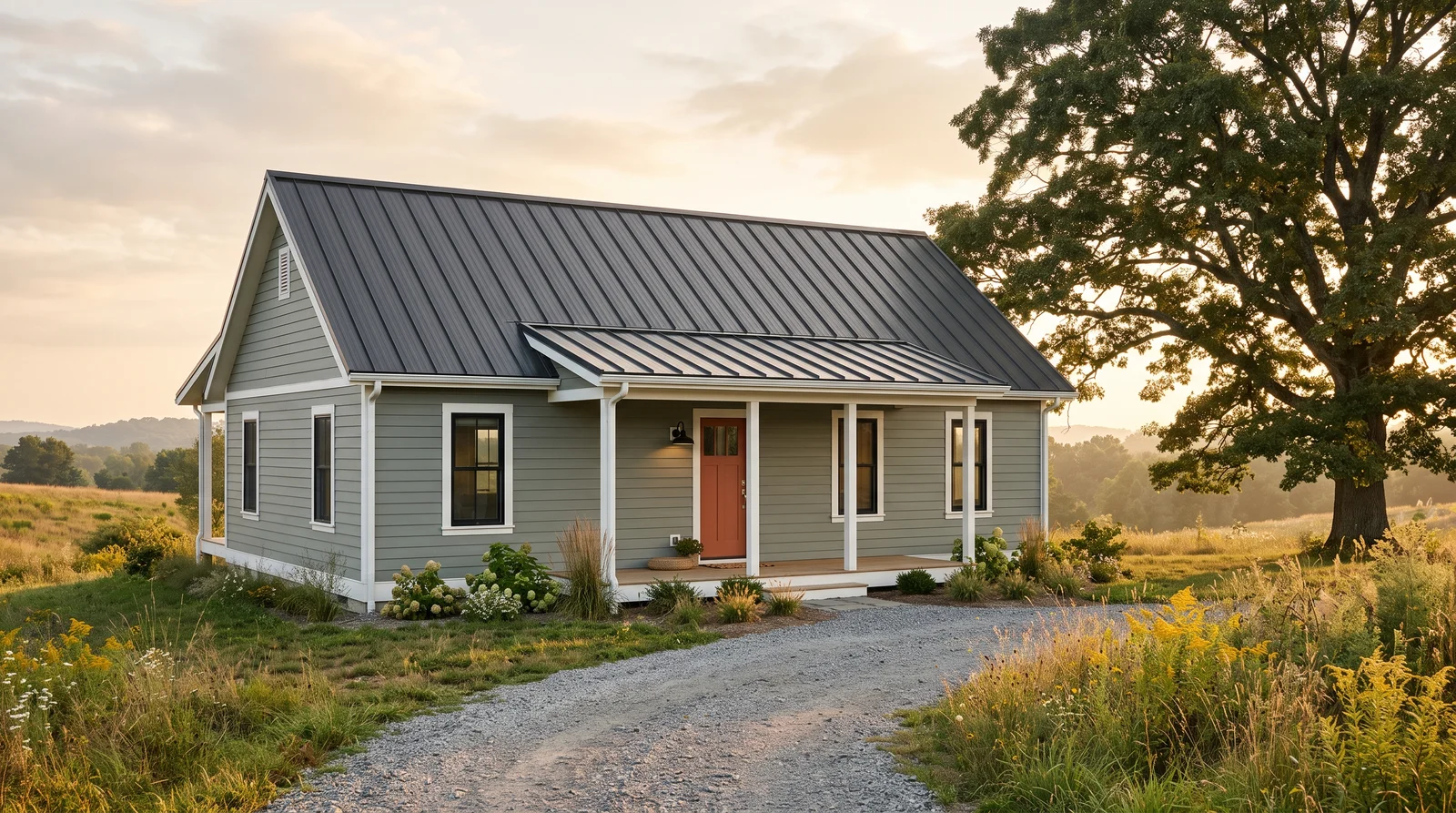
Muted green siding that looks like it grew out of the yard, with a terracotta door for one warm surprise.
Sherwin-Williams Evergreen Fog is a gray-green that behaves outdoors: green enough to be a color, gray enough not to shout. Polar Bear trim is a clean cool white that keeps the green from turning olive. Cavern Clay on the door is the payoff - terracotta and sage are opposites that flatter each other. Black window sash and roof tie it to the farmhouse family. Choose this for a wooded lot or a small house you want to feel settled. The risk: sage can read gray-only on a north wall, so sample there first.
SEE EVERGREEN FOG ON YOUR WALLS →Farmhouse Exterior Wall Color Combinations
A wall color never works alone. These are the full schemes from the rooms above — the lead color first, then the supporting colors that make the photo work.
The old-fashioned version: warm white siding, white trim, a red door, and a haint-blue porch ceiling.
TRY THIS PALETTE →The white-and-black scheme everyone is building right now, warmed up with a bronze door so it does not read cold.
TRY THIS PALETTE →Near-black siding with white trim and a deep green door - dramatic from the road, and it hides a lot of siding sins.
TRY THIS PALETTE →For people who want a farmhouse that is not white: a warm greige body with creamy trim and a soft green door.
TRY THIS PALETTE →More Exterior Color Ideas
Set on a color family already? Each page has its own real rooms and picks.


Light or Dark Farmhouse Exterior Colors?
Go Light (LRV 60+) If…
The room is small, faces north, or has to work at every hour. Light warm colors make it feel bigger and stay calm in evening light — the light you actually live in.
Go Dark (LRV Under 20) If…
You want the cocoon effect and the room has real daylight. Dark works best on one feature wall — or fully color-drenched in a large room with good windows.
See It. Love It.
Paint It.
Upload one photo of your farmhouse exterior and try every color on this page on your own walls — in your own light, before you buy a drop of paint.

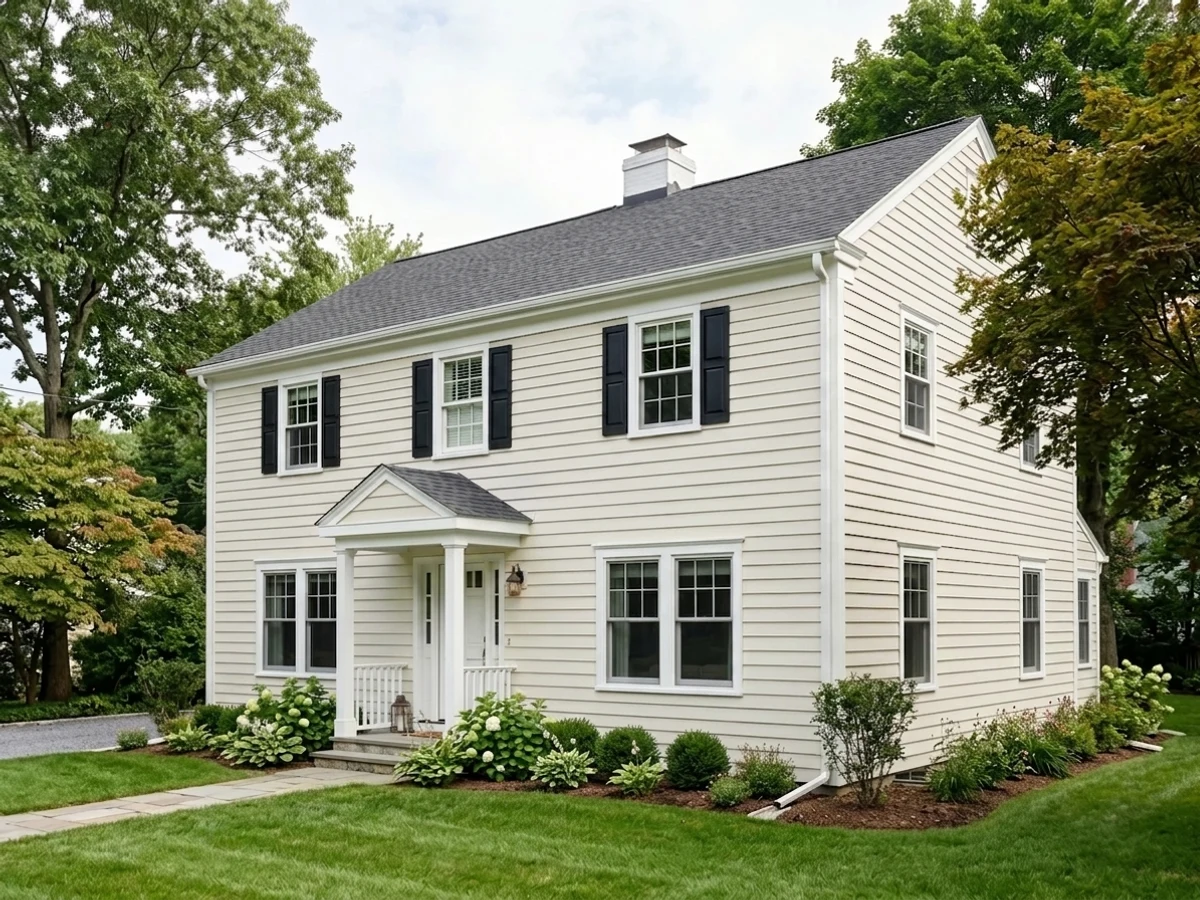
AlabasterBeforeAbout Farmhouse Exterior Paint Colors
A house reads "farmhouse" because of a few plain things working together: a simple shape, one calm color over most of the walls, and honest details like board-and-batten siding, a deep porch, a standing-seam metal or shingle roof, and black gooseneck lights over the garage. The color part is usually the easy part. Farmhouse schemes almost never use more than three or four colors, and the siding color is doing the heavy lifting. Get the siding right and the rest is trim, one door color, and a little wood or black metal to hold it all down.
The split people run into is classic versus modern. Classic farmhouse means a soft warm white with white trim, shutters or a colored door, and a porch ceiling in pale blue. Modern farmhouse means a cooler, cleaner white with black windows, black trim, and a bronze or stained-wood door. Both are below. One honest tip before you buy five gallons of anything: paint two large sample boards, not the wall, and carry them around the house at 9am, 1pm and sunset. Exterior colors go two to three shades lighter in full sun than they look in the store, and north-facing walls will always look grayer and colder than the sample chip.
The Questions Everyone Asks
What color should I paint my farmhouse exterior?
If you want one answer, start with the safe picks above — White Dove, Evergreen Fog, Accessible Beige, Ultra Pure White. They read well in any light and survive furniture changes. Then check the light: strong afternoon sun wants a step cooler, a north-facing room wants a step warmer.
What is the most popular white for a farmhouse exterior?
Sherwin-Williams Alabaster SW 7008 and Benjamin Moore White Dove OC-17 are the two whites painted on more American farmhouses than anything else, and both are soft warm whites rather than stark ones. Alabaster is a touch brighter and holds up better in full sun; White Dove is slightly creamier and looks right on older houses. If you want a cleaner, cooler white for a modern build, Behr Ultra Pure White or Sherwin-Williams Pure White SW 7005 are the usual picks. Whites shift the most of any color outdoors, so sample all of them on the actual wall.
Do farmhouse exteriors need black windows?
No - black windows are a modern farmhouse signature, not a rule. If you want the look without replacing windows, paint the existing frames and sash a true black like Benjamin Moore Wrought Iron 2124-10 or Sherwin-Williams Tricorn Black SW 6258, and leave the wide casing white. Black trim reads best on simple square windows and a plain gable; on a fussy Victorian-era house it can look pasted on. Skip it entirely if your roof and gutters are brown.
What is the difference between classic and modern farmhouse colors?
Classic farmhouse uses a warm white body with white trim, colored shutters or a colored door, and a pale blue porch ceiling - think Benjamin Moore White Dove OC-17 with a red or navy door. Modern farmhouse strips the color out: a cooler white body like Behr Ultra Pure White, black windows and fascia, and a bronze or stained wood door such as Sherwin-Williams Urbane Bronze SW 7048. Classic is three or four colors, modern is usually two plus wood. Your roof and window shape usually decide which one your house can carry.
What paint colors go with a metal roof on a farmhouse?
Match the temperature of the roof, not the exact color. A charcoal or black standing-seam roof goes with almost anything - white siding, Sherwin-Williams Accessible Beige SW 7036, or a dark body like Farrow & Ball Railings. A galvanized silver roof is cool-toned, so it wants a cool white or a gray-green like Sherwin-Williams Evergreen Fog SW 9130, not a creamy yellow-white. Brown or bronze roofs pair with warm greige and creams such as Behr Swiss Coffee, and fight with stark white.
What color should I paint a farmhouse front door?
The door is the one place to spend a color. On white siding, the reliable four are black, deep navy like Benjamin Moore Hale Navy HC-154, barn red like Sherwin-Williams Rookwood Dark Red SW 2801, and forest green like Benjamin Moore Essex Green HC-188. On greige or sage siding, go softer and more unexpected - Farrow & Ball Card Room Green No.79 or a terracotta like Sherwin-Williams Cavern Clay SW 7701. Use exterior door and trim enamel, and buy a quart, since a door takes almost no paint.
What two-color combination works best in a farmhouse exterior?
The reliable pattern is a quiet main color plus one deep accent on a single wall. Keep trim and ceiling in one warm white so the two colors are the only event in the room — the combination cards above show complete schemes from real rooms.
What colors make a farmhouse exterior look bigger?
High-LRV, slightly warm colors — LRV 60–75 is the sweet spot. Paint the walls and trim close to the same light color so the corners blur, and keep the ceiling white. Stark cool white actually works against you; it creates hard shadows that show the room's edges.

Ask a Question