Black Magic
The black Home Depot sells in more can shapes than almost any other color, reviewed honestly: the corrected LRV that makes it a soft charcoal-black instead of an ink black, the coats it actually takes, and the near-black it keeps getting confused with.

Jessica has spec'd whites and neutrals for more than 300 rooms and keeps a sample wall of painted drawdowns in her studio. Every color review is checked against real reader rooms in the comments and re-tested when a formula changes. About the testing process →
- 1Cordovan Brown0
- 2Black Magic5
The Fast Verdict
Black Magic is Glidden's default black — the same PPG1001-7 code sold under a dozen different can labels in the Home Depot paint aisle, from cheap one-coat wall paint to a dedicated cabinet-and-trim enamel to a floor-and-porch coating. The hex just got corrected: at LRV 5 it is a genuine warm charcoal-black with a whisper of brown, not the flat ink-black the old listing implied — next to Sherwin-Williams's own Tricorn Black it visibly lifts instead of staying dead flat. That softness is the whole appeal on cabinets, doors and trim; it's also why buyers expecting jet black sometimes come away disappointed.
Kitchen islands and lower cabinets · front doors and exterior trim · home office or den built-ins near a window · one accent wall in a room with real daylight · anyone who wants a black they can buy in nearly any sheen at the same store
You want a true flat black with zero warmth · you're painting four walls in a room with no real light · you're grabbing the cheapest one-coat can and skipping the second coat · you searched "Black Magic" for the Sherwin-Williams color and grabbed this one by mistake
- Sold under more product lines and sheens than almost any other black at Home Depot — wall paint, cabinet enamel, exterior, even floor-and-porch, all one code
- Warm brown-black undertone reads sophisticated, never cold or industrial
- Corrected LRV 5 gives it real lift compared to true inky blacks — more forgiving on cabinets and doors
- Strong track record: 4.4 out of 5 across 200-plus Home Depot reviews
- Easy to buy a sample in the exact formula for your surface before committing to a gallon
- Budget One Coat and Essentials lines often need a genuine second coat over a lighter existing color, despite the name
- Lighter and warmer than shoppers expect if they wanted a true flat black like Tricorn Black or Onyx
- Shares its exact name with an unrelated, darker Sherwin-Williams color — an easy ordering mistake
- Four walls with no real daylight read flat and cave-like at this depth
What Color Is Black Magic, Really?
Black Magic carries the code PPG1001-7, and that single code is doing a lot of work: it's the same number whether you buy Glidden Premium wall paint, Glidden Essentials exterior, Glidden One Coat, Glidden Diamond paint-and-primer, the Break-Through! door-and-cabinet enamel, PERMANIZER exterior, or even a floor-and-porch coating, in flat through semi-gloss. Not many colors in any deck get sold across that many specialized product lines under one name — it's the black Home Depot treats as its house black, the default can when a customer just says "black paint."
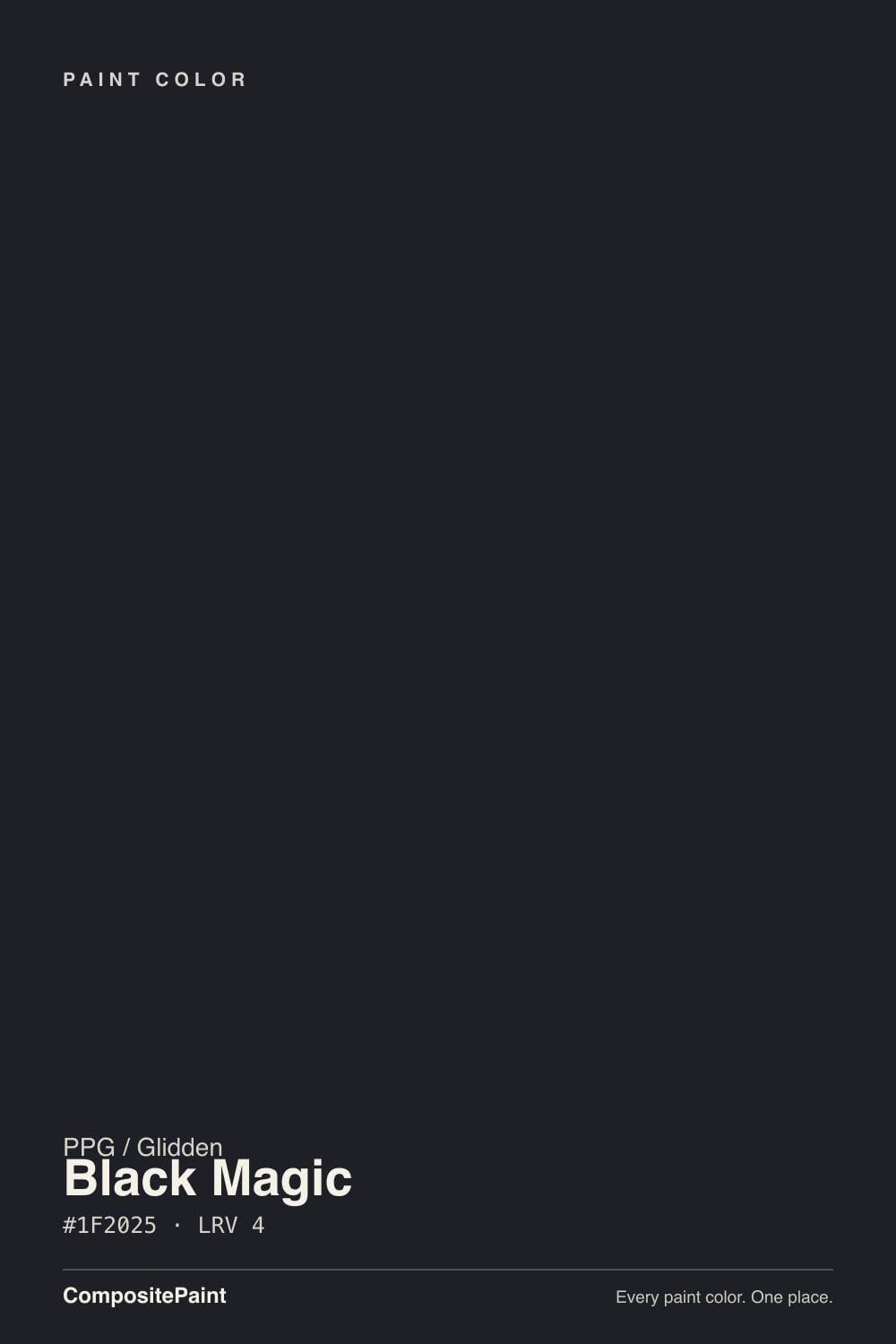
At the corrected LRV 5, Black Magic is a genuine warm near-black, not an ink black. PPG and Glidden's own description calls it a warm black with a whisper of brown, and that's the honest read: it never goes cold or blue, it just sits a shade lighter and softer than the deck's true blacks. The earlier listing behind this review used a far darker hex that made the color look flatter and inkier than it actually is on a wall — the correction matters, because it's the difference between a soft charcoal-black and a void.
Put it next to Sherwin-Williams Tricorn Black (LRV 3) and the gap is visible: independent color comparisons describe Tricorn staying flat and dead in good light, while Black Magic lifts a step into charcoal. That's the tradeoff in one sentence — less drama than the deck's darkest true blacks, more forgiveness on a cabinet door where flat-inky can read like a smudge instead of a finish.
Where It Shines
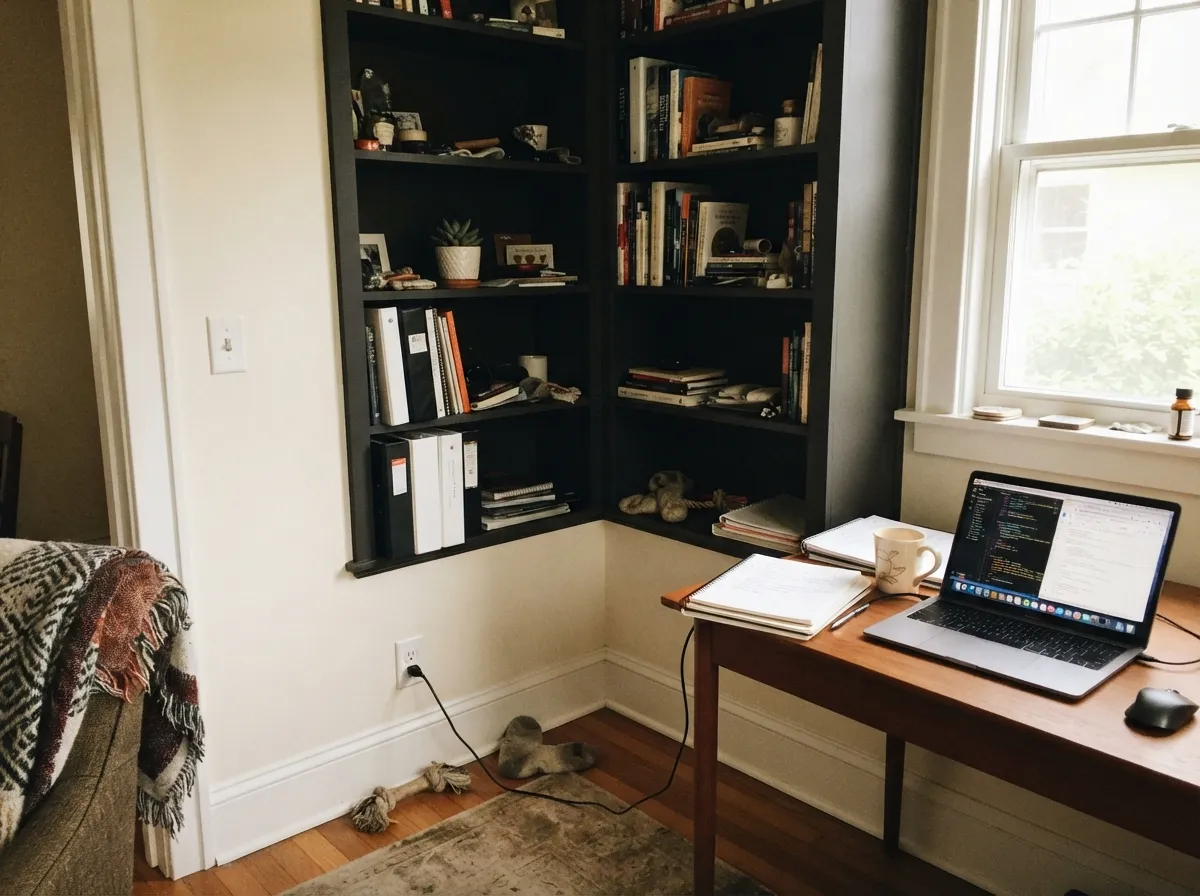
Give it a defined surface — cabinets, a door, trim, one wall near a window — and Black Magic does exactly what a mass-market black should: it goes on in whatever sheen the job calls for, doesn't fight the light, and reads sophisticated instead of stark because of that whisper of brown. Its real strength is retail convenience: whatever the surface, there's already a Glidden or PPG product line built for it, all keyed to the same chip.
Where It Fails
Most of the disappointment with Black Magic comes from one of three predictable mismatches, and none of them are really about the paint's quality.
Black Magic reads warm and lifts to a soft charcoal in real light — that's the corrected LRV 5 doing its job. If you pictured Sherwin-Williams Tricorn Black or Benjamin Moore Onyx levels of flat, dead-black drama, sample it first; on a cabinet or door the gap between LRV 3 and LRV 5 is genuinely visible.
Reviewers on the budget Essentials and One Coat lines report needing a real second coat to get even hide going dark over an existing light color, despite the "one coat" name on the can. Buy the Premium line for stronger coverage confidence, or plan on two coats and a grey-tinted primer no matter what the label promises.
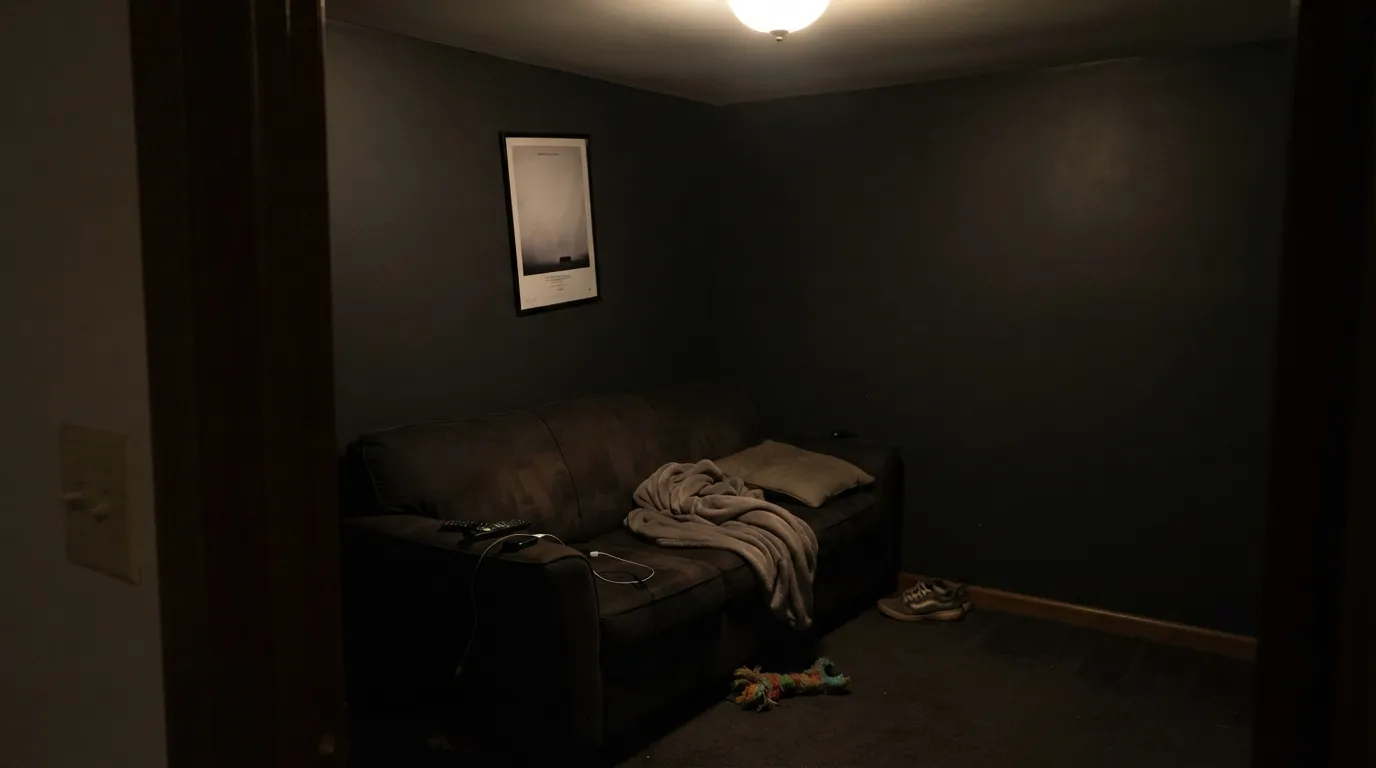
This is a doses color. A whole room in Black Magic with no window nearby reads flat and cave-like — the warmth that saves it on a lit cabinet or door needs light to show up. Use it on cabinets, a door, trim, or one wall that catches daylight; skip it for a windowless room's four walls.
Room by Room
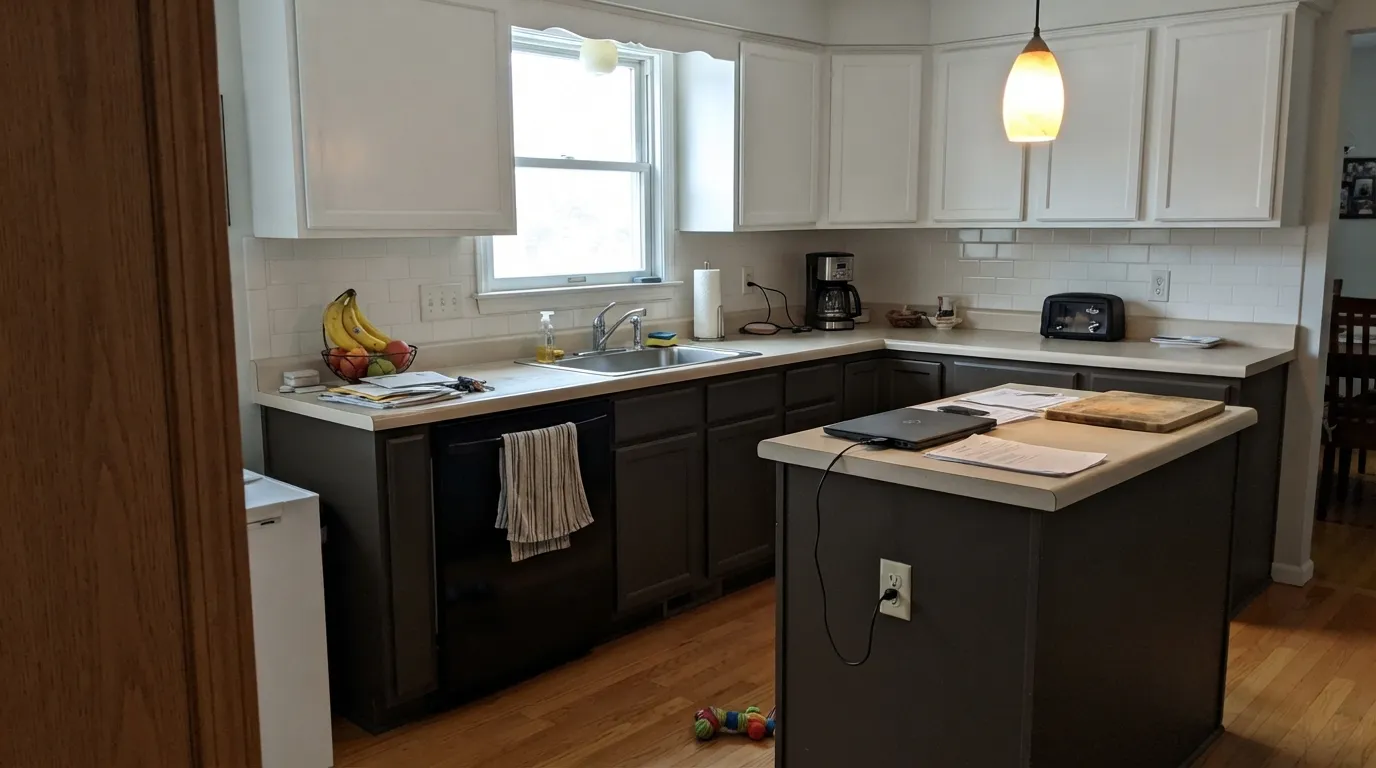
Paired with a lighter upper cabinet or wall — PPG's own Delicate White is the closest match, one chip over in the same 1001 strip — Black Magic on an island reads custom, not stark. Use the Break-Through! cabinet-and-trim formula in satin; it handles knuckle marks and daily wear better than a flat wall paint pressed into cabinet duty.
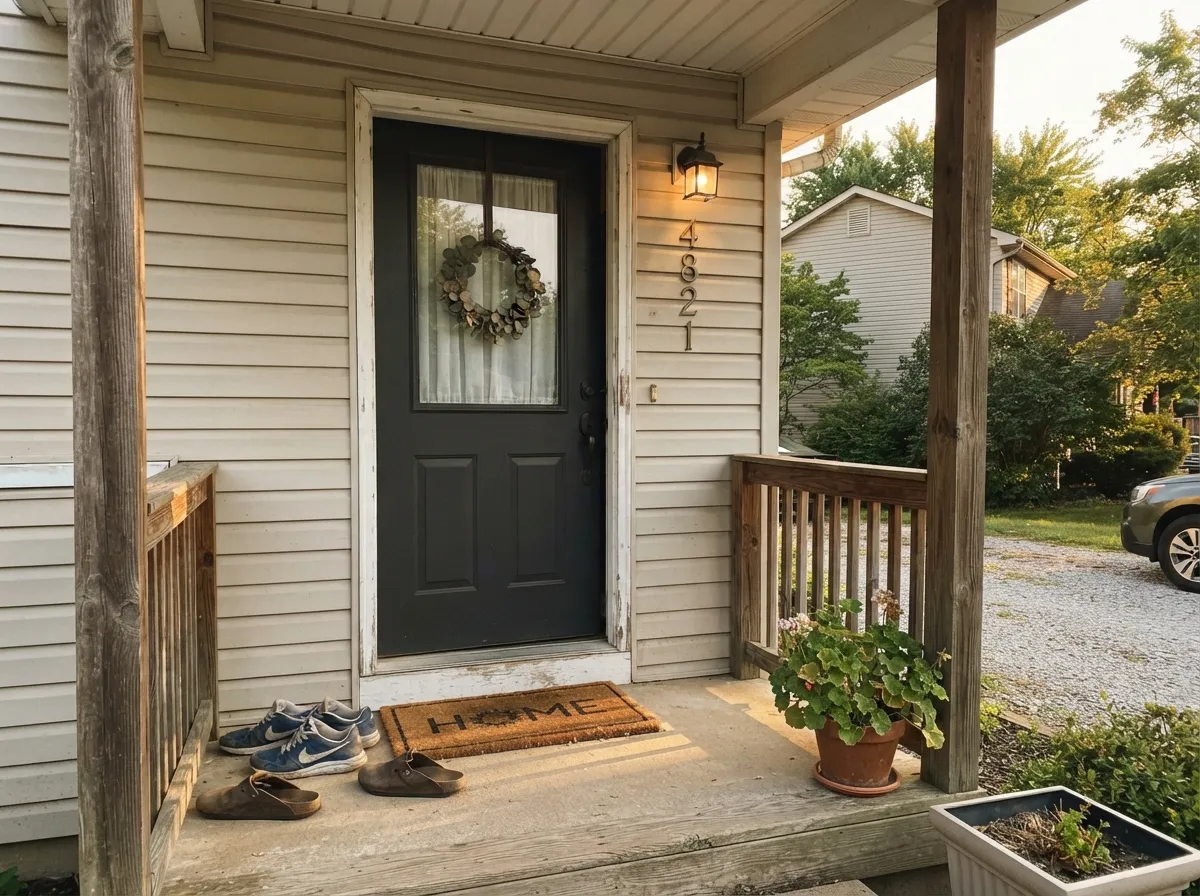
The warm undertone keeps it from looking like a black hole against light or medium siding, and semi-gloss holds up outdoors. Pair it with a light body color for contrast; it's one of the few blacks sold in a real exterior paint-and-primer formula, not repurposed interior paint.
Bookshelves, a desk nook, or a wall of cabinetry take the color well because they're broken up by objects rather than being one flat plane. Give the room a real window; a windowless interior office is the one place this color goes flat and heavy.
Satin on a vanity under a mirror and warm lighting is a weekend project that looks expensive. A full four-wall bathroom needs a genuine window or strong artificial light, or the small room reads like a closet.
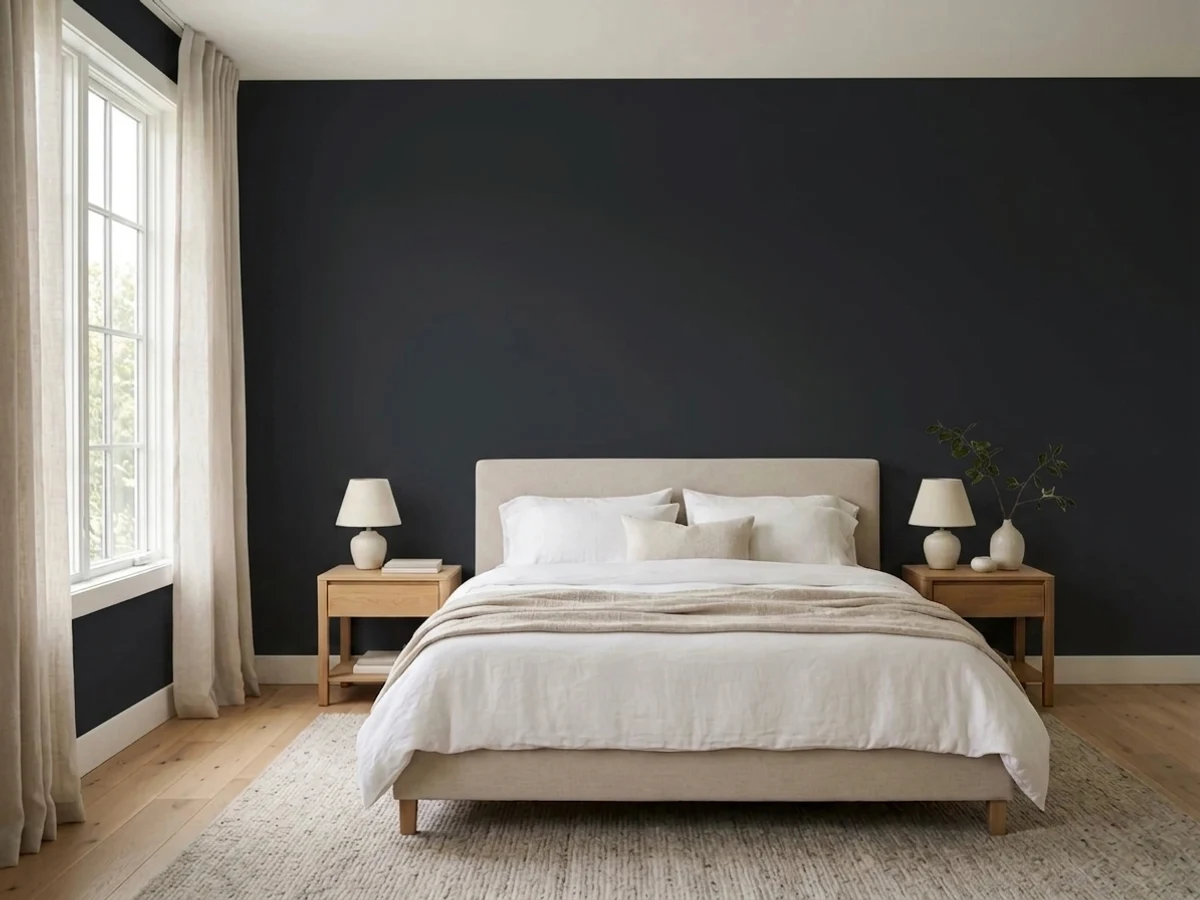
One wall behind a bed or a sofa, with the other three walls in a light neutral, is the safest way to use this color at scale. It needs a window nearby to keep the charcoal-black character instead of sinking into a flat block.
This is the scenario behind most of the disappointed reviews: four walls, minimal daylight, expecting drama and getting a flat void instead. If the room doesn't get real light, pick a much higher-LRV color and save Black Magic for the cabinets or trim in that same room.
Your Light Is the Risk
Real daylight, even indirect, is what lifts Black Magic from a flat block into a soft charcoal-black — the LRV 5 warmth needs something to reflect.
With no daylight and only overhead cans, the color sinks flat and heavy — closer to the dead-black drama buyers expecting Tricorn Black wanted anyway, minus the appeal.
Morning and overcast light keep it cooler and more neutral; afternoon sun brings the brown undertone forward and it visibly warms.
Warm 2700K lamps deepen the brown and make cabinets or a door glow instead of looking flat; cool white LEDs flatten it toward a plain gray-black.
Most complaints about Black Magic are a light mismatch. Upload a photo of your actual room and see it on your walls — then ask for the same wall in north light or evening lamps before you buy a single sample.
Need It From Another Brand?
Any paint counter can custom-tint PPG / Glidden PPG1001-7 directly. If you would rather stay in one brand's own deck, these are the closest stock matches, measured as ΔE2000. Under 2 is a difference you will not see on the wall.
| Brand | Closest color | ΔE | LRV | |
|---|---|---|---|---|
| Sherwin-Williams | DarkroomSW 7083 · Sherwin-Williams | 4.1 | 5 | Color page → |
| Behr | Jet BlackECC-10-2 · Behr | 0.8 | 5 | Color page → |
| Benjamin Moore | Black Panther2125-10 · Benjamin Moore | 1.3 | 5 | Color page → |
| Valspar | Arrowhead8006-11F · Valspar | 1.3 | 5 | Color page → |
| Glidden | Black MagicPPG1001-7 · Glidden | 0.7 | 5 | Color page → |
| Dutch Boy | Cauldron437-7DB · Dutch Boy | 1.3 | 5 | Color page → |
Similar PPG / Glidden Colors
The nearest shades to Black Magic within PPG / Glidden's own range, ranked by perceptual color distance — useful when you want the same look a touch lighter, darker, or warmer.
WCAG 2.1: AA is 4.5 : 1 for normal text, 3 : 1 for large text, AAA is 7 : 1.
Black Magic vs the Colors You're Also Considering
Every Black Magic sample board has the same rivals on it. The numbers show the real lightness gap — then it comes down to which risk you would rather live with.
Pick this for a black that lifts into soft charcoal instead of staying flat and inky, especially on cabinets.
Sherwin-Williams SW 6258 · LRV 3Tricorn BlackPick this if you want a true flat black with zero warmth — the reference dead-black in the SW deck.
Pick this for the lighter, warmer PPG original; check the SKU before you buy, because the names collide constantly.
Sherwin-Williams SW 6991 · LRV 3Black MagicPick this if you actually meant the Sherwin-Williams color — same name, two shades darker, an unrelated formula.
Compared with Starless Sky (PPG0995-7, LRV 5), Black Magic is the truer black. Starless Sky reads as a soft charcoal gray, so if you want a color that clearly looks black rather than dark gray, Black Magic wins; if you want something a shade lighter and grayer for a big wall, Starless Sky is safer.
Napoleon (PPG1013-7, LRV 5) carries a more visible blue tint. Choose Napoleon when you actually want a blue-black; choose Black Magic when you want the blue to stay a faint suggestion.
Onyx (PPG1011-7, LRV 6) is lighter still and reads as a deep neutral gray-black. On cabinets or trim where you want maximum depth, Black Magic looks blacker; Onyx gives a slightly softer, more forgiving result in low light.
Black Magic Coordinating Colors
The rule for coordinating with Black Magic is simple: keep the partner light enough to hand it real light, and lean warm rather than icy so the two undertones agree. It comes from the same PPG chip family as a genuinely easy white, and it also plays well with Benjamin Moore's own warm-white standard when you're mixing brands. These are the partners that keep showing up in kitchens and entries that work:
One Code, a Dozen Cans: Why Black Magic Is Everywhere at Home Depot
Most paint colors live in one or two product lines. Black Magic (PPG1001-7) lives in nearly all of them: Glidden Premium and Essentials wall paint in flat through semi-gloss, Glidden One Coat and Diamond paint-and-primer, the Break-Through! door-trim-and-cabinet enamel, PERMANIZER exterior, and even a floor-and-porch formula — all keyed to the same code. That's not typical marketing; it's what happens when a color becomes a store's default answer to "I just need black paint," and it's the real reason this review keeps saying "check the can" — the same color name covers products built for very different jobs, with different coverage and durability.
It's also why the color gets misjudged sometimes. Cheap promotional lines built for one-coat convenience don't always deliver on dark colors over light walls, and a shopper who grabs the wrong can and gets patchy coverage tends to blame the color instead of the product line underneath it.
Black Magic on Cabinets and Trim
This is the color's strongest job, and the pairing decisions are mostly about metal, not wood. Unlacquered or warm brass hardware picks up the whisper of brown in the undertone and looks intentional; matte black hardware disappears into the door and reads as one surface, which some owners like and others find too flat. Polished chrome and nickel are the coolest option and create the most contrast, but they're also the pairing most likely to make the black look slightly colder than it actually is.
On countertops, the same warm-vs-cool rule applies: warm quartz, butcher block, and most granites sit comfortably against it, while stark white or blue-gray marble pushes the black toward looking colder and starker than it does in a warmer kitchen.
Three Ready Palettes Built on Black Magic
A color is never alone on the wall. These are complete combinations in the 60-30-10 pattern, with the reason each one holds together. Every one opens in the visualizer.
All three colors share the same PPG1001 chip strip, so the handoff between white walls, charcoal uppers, and black lowers reads deliberate rather than mismatched — one brand's own tonal ladder, not three separate guesses.
Try this palette in your roomWhite Dove's warmth keeps the body from feeling stark, Black Magic anchors the door with its own brown-black warmth instead of a cold true-black, and Wrought Iron's softer near-black ties the shutters in without repeating the door color exactly.
Try this palette in your roomAgreeable Gray keeps the room's walls light enough to feed the built-ins real daylight, which is exactly what Black Magic needs to read as charcoal instead of flat; White Dove trim softens the transition between the two.
Try this palette in your roomBlack Magic FAQ
Is PPG Black Magic a true black?
Not quite — at its corrected LRV of 5, it's a warm near-black with a whisper of brown, not a flat ink black. It reads noticeably softer than the deck's true blacks like Sherwin-Williams Tricorn Black (LRV 3) or Benjamin Moore Onyx. If you want dead-flat black, sample one of those instead.
Is this the same color as Sherwin-Williams Black Magic?
No — it's a genuine naming coincidence. Sherwin-Williams sells its own "Black Magic" (SW 6991), a darker, cooler near-black at LRV 3. PPG's Black Magic (PPG1001-7) is a different, lighter, warmer color. Double-check the SKU before you buy, because the names are identical and search results blend the two together.
What sheen should I use?
Cabinets and doors: satin, or the dedicated Break-Through! cabinet-and-trim enamel. Front doors and exterior trim: semi-gloss. Accent walls: matte or eggshell, so the surface doesn't broadcast every roller mark the way a glossier finish would on a dark color.
Does it work as a front door color?
Yes — it's sold in a real exterior paint-and-primer formula, and the warm undertone keeps it from looking like a hole in the facade against light or medium-toned siding. Pair it with a light body color for the classic contrast.
How many coats does it actually need?
Plan on two, regardless of which product line the can promises. Reviewers on the budget "One Coat" and Essentials lines report needing a genuine second coat for even hide over a lighter existing wall color; the Premium line performs closer to its promise, but two coats over anything lighter is still the safe assumption.
What white pairs best with it?
PPG's own Delicate White (PPG1001-1) is the closest match — same chip strip, same undertone family — and reads clean without fighting the black. Benjamin Moore White Dove is the warmer alternative if you're mixing brands.
Have you painted with Black Magic?
Rate it — one tap helps the next reader decide.
Ask a Question