Room Colors · Beach House Exterior
5 Best Beach House Exterior Paint Colors for 2026
ideas, combinations, and real rooms
5 curated picks from real beach house exteriors — with the exact colors, honest reasons why, and the combinations that hold the room together.

Former interior stylist who can spot a green undertone from across a room. Jessica writes the color and mood pieces — what to choose, what pairs, and why your "white" looks pink.
The Fast Answer
Don't want to read 5 picks? These four are the safe answers.

Top Picks for the Beach House Exterior
Pick a color family, tap a shade to see the beach house exterior in it, then try it on your own room.
The 5 Best Beach House Exterior Paint Colors
Every pick below is a real rendered beach house exterior, not a chip. The lead color first; the swatches are the full scheme in the photo — walls, furniture, textiles, accent.

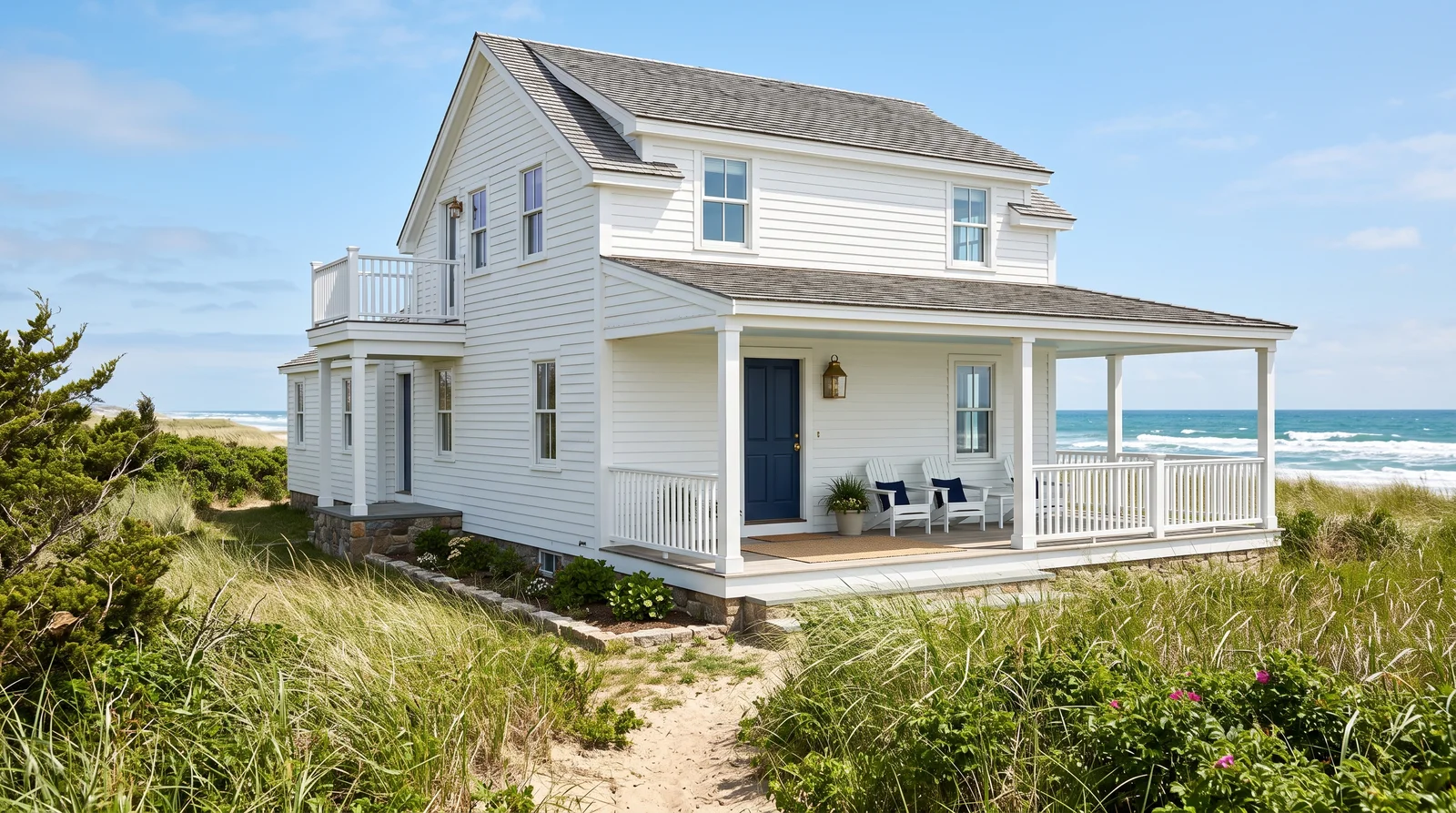
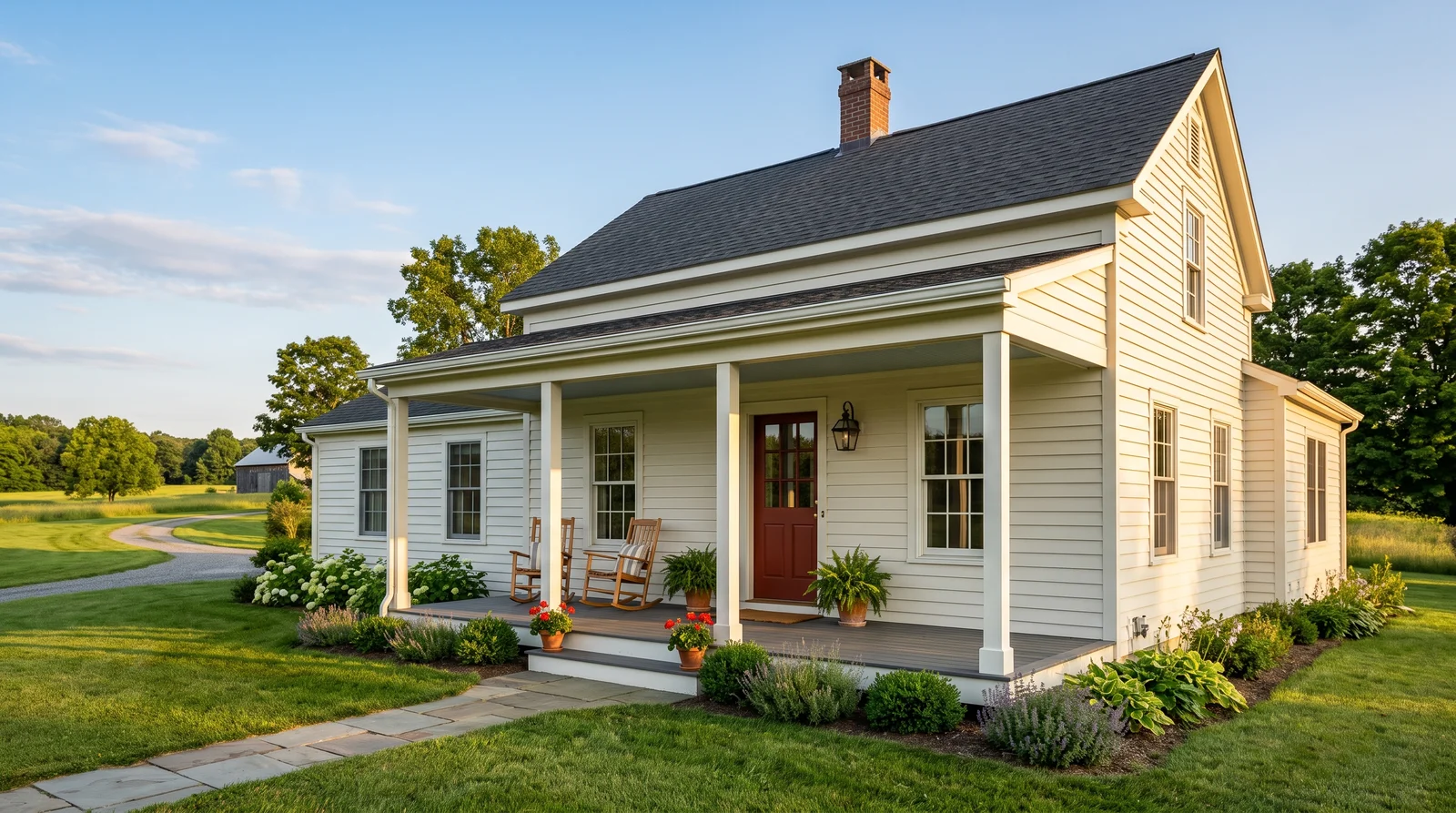
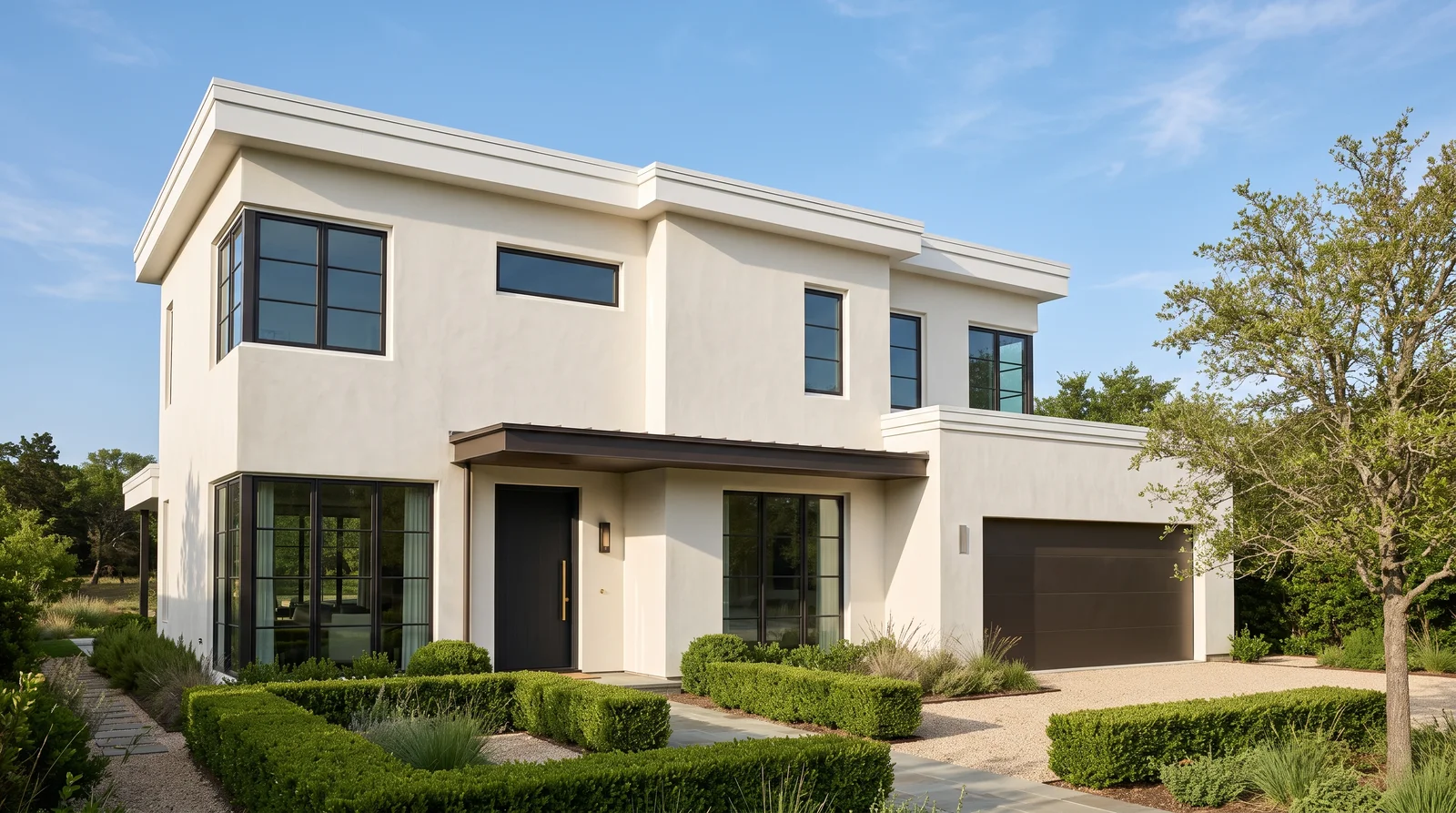
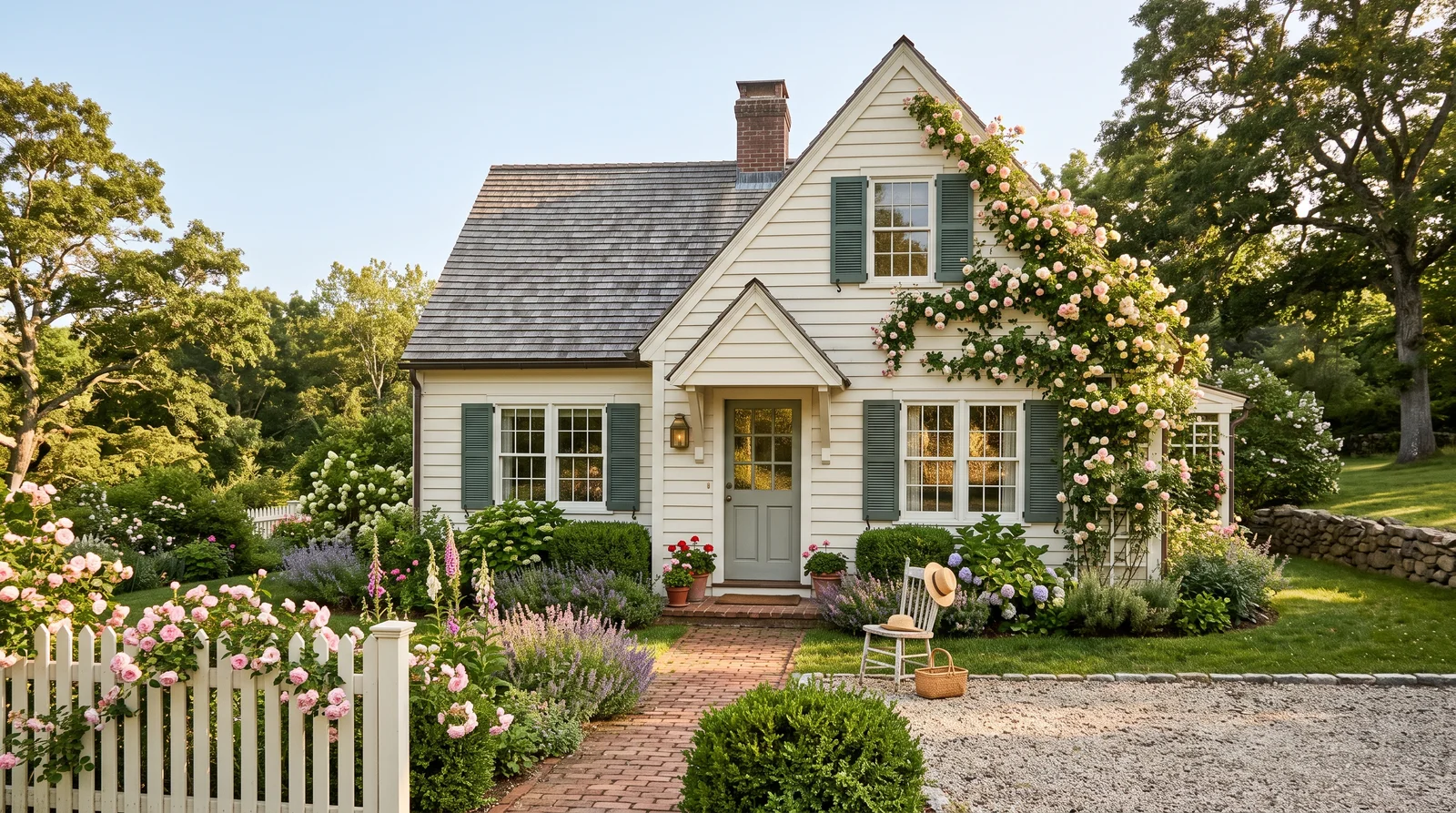
The pure-white cottage with a deep navy door, the safest and longest-lasting beach house scheme there is.
Chantilly Lace is about as clean as white gets, with no yellow and no pink, and under beach light it stays crisp instead of turning cream. Because it is that pure, the trim needs a shade with a little more body: Extra White gives corner boards, columns and railings enough weight that the house does not flatten out at a distance. Hale Navy on the door is the coastal default for good reason. It reads near-black from the street and true blue up close. Paint the porch ceiling Palladian Blue and the whole house looks like it has stood there fifty years.
SEE CHANTILLY LACE ON YOUR WALLS →
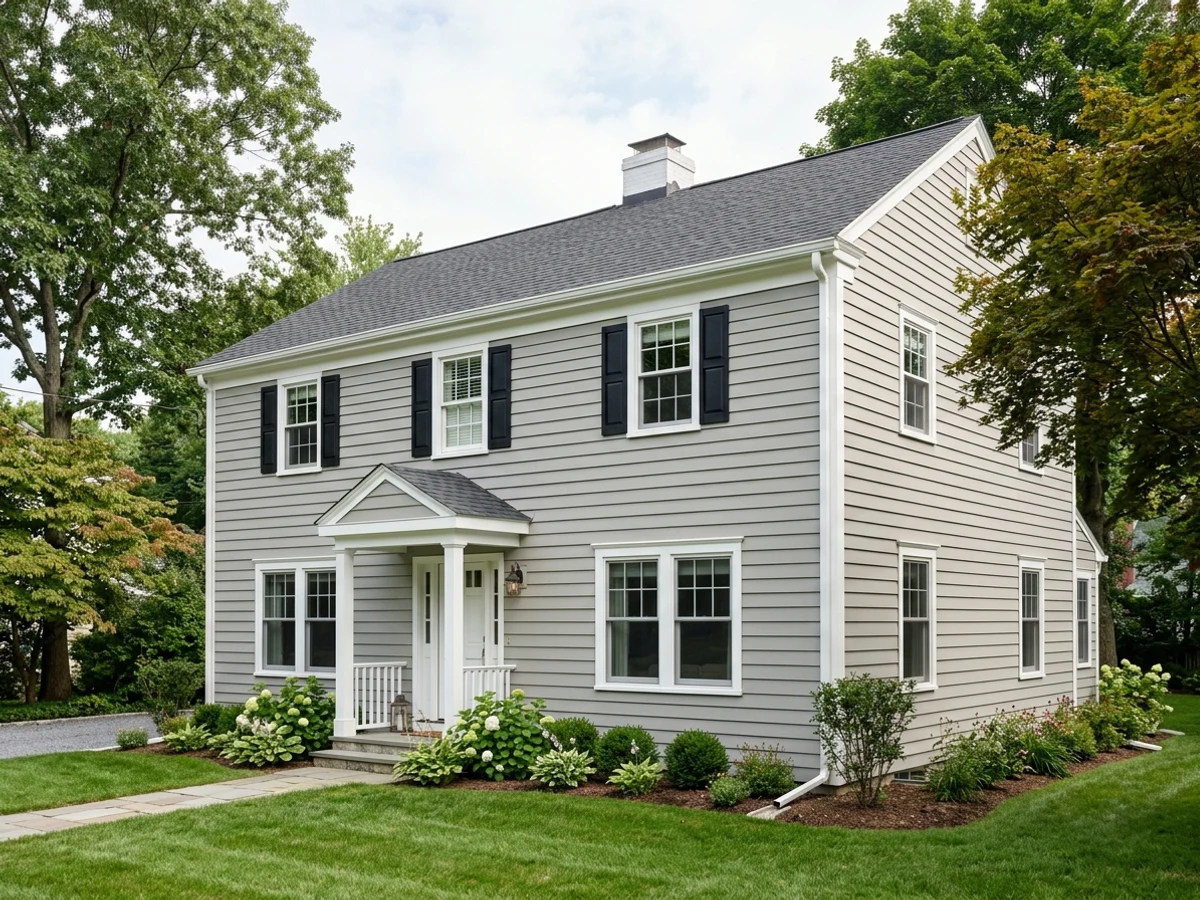
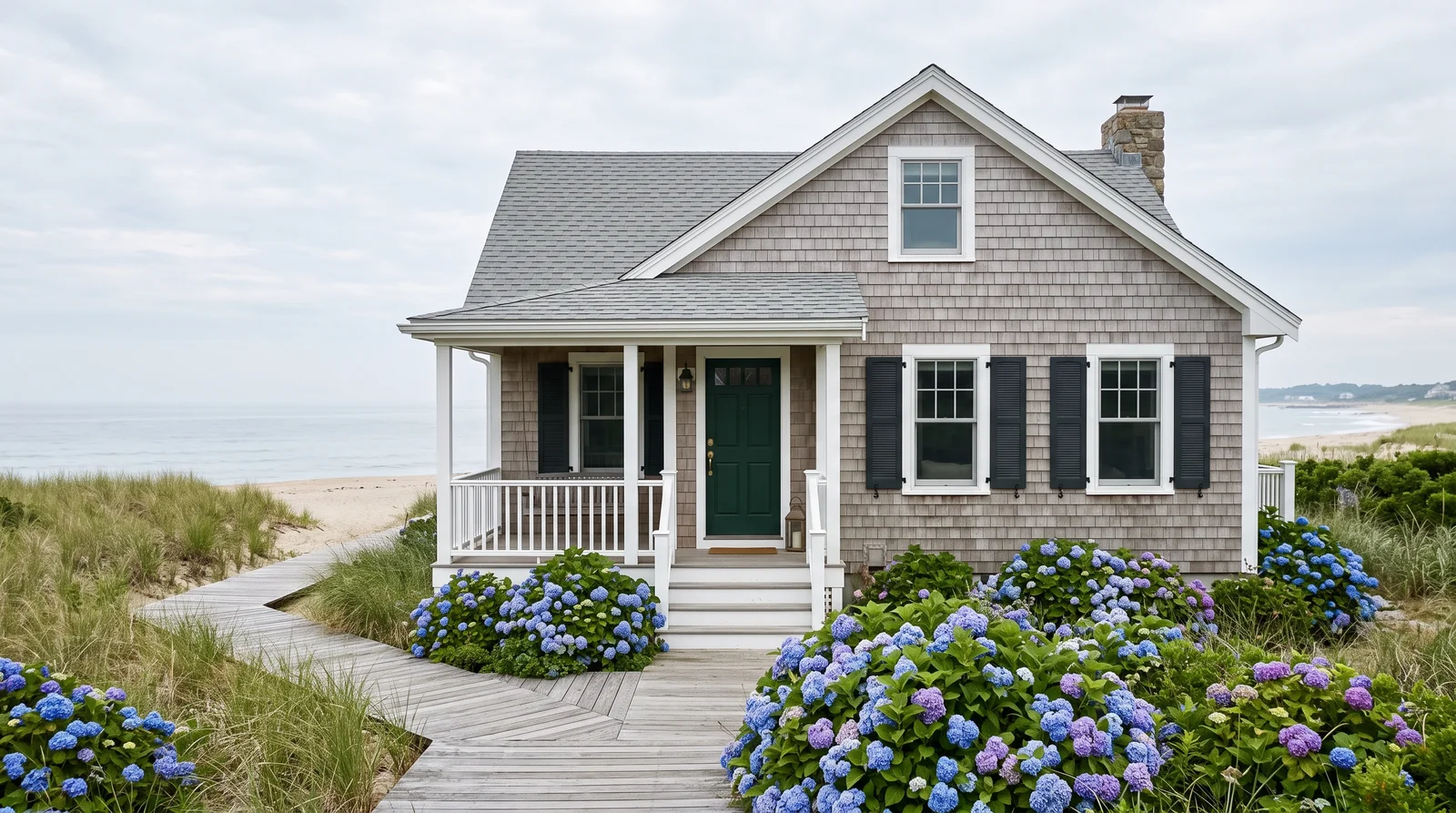
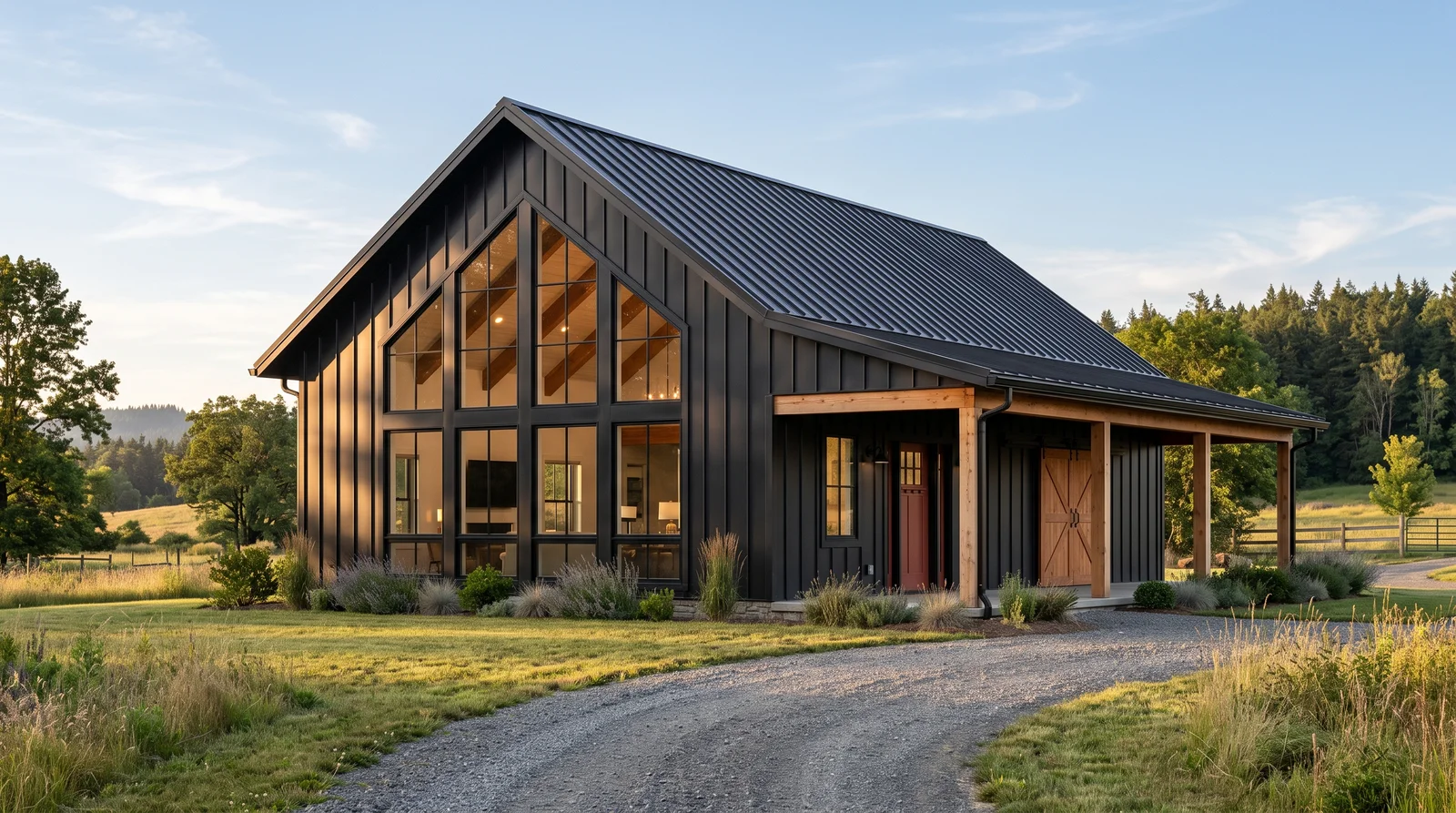
The Nantucket look in paint: a warm driftwood gray body with white trim and a deep green door.
Real weathered shingles are silvery, warm and uneven, so a flat cool gray never looks right. Sandy Hook Gray has enough tan in it to imitate cedar that has been through a few winters, and it hides the salt dust and pollen that settle on a coastal house between washes. Keep the trim a clean white so the body reads soft rather than dirty, then add weight at eye level: Night Watch on the door and Cracked Pepper shutters and lanterns. If your shingles are still new cedar, this is the color to copy in stain first and hold paint in reserve.
SEE IT ON YOUR WALLS →
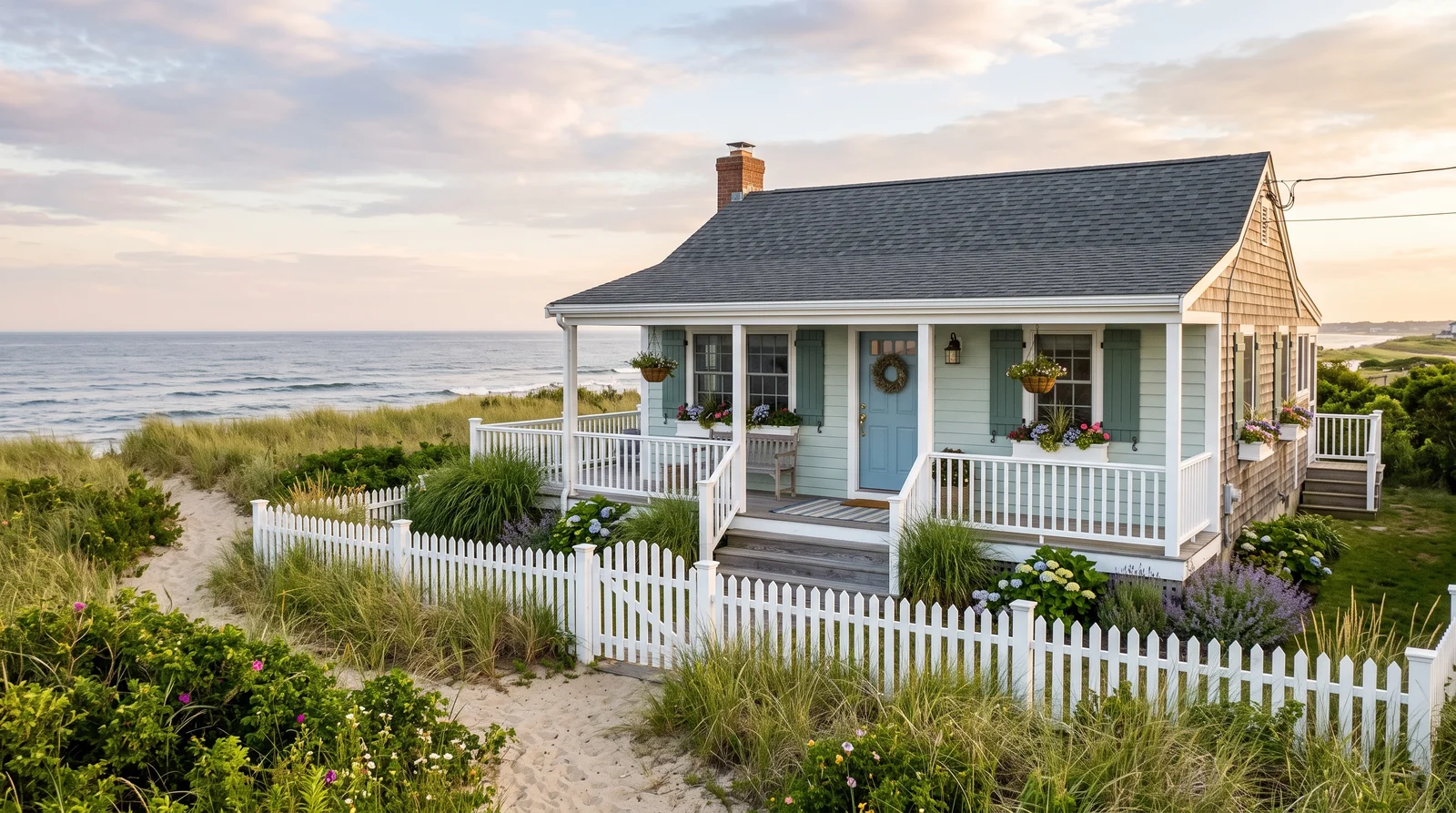
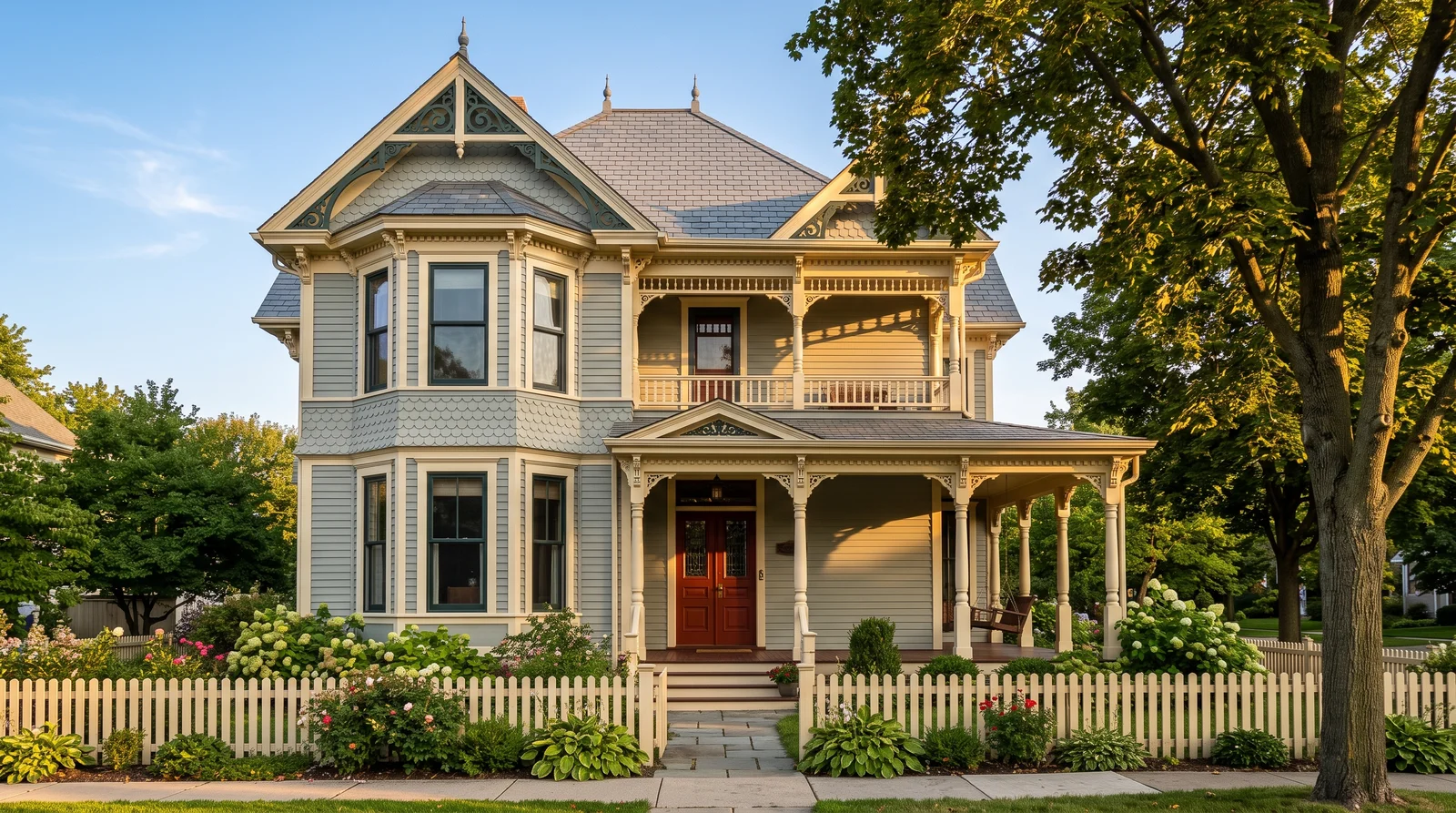
A pale green-blue body that looks like sea glass in the sun and stays quiet on a gray day.
Sea Salt is barely a color outdoors. In full beach sun it washes almost to a pale gray-white, and on a cloudy morning the green comes back. That shifting is exactly why it works on a small cottage: it never shouts, and it flatters the white railings and sandy ground around it. Pair it with a clean white trim like Delicate White rather than a creamy one, or the body picks up a yellow cast. Renew Blue on the door adds the one saturated note, and Rosemary shutters and window boxes tie the whole thing back to the dune grass.
SEE SEA SALT ON YOUR WALLS →
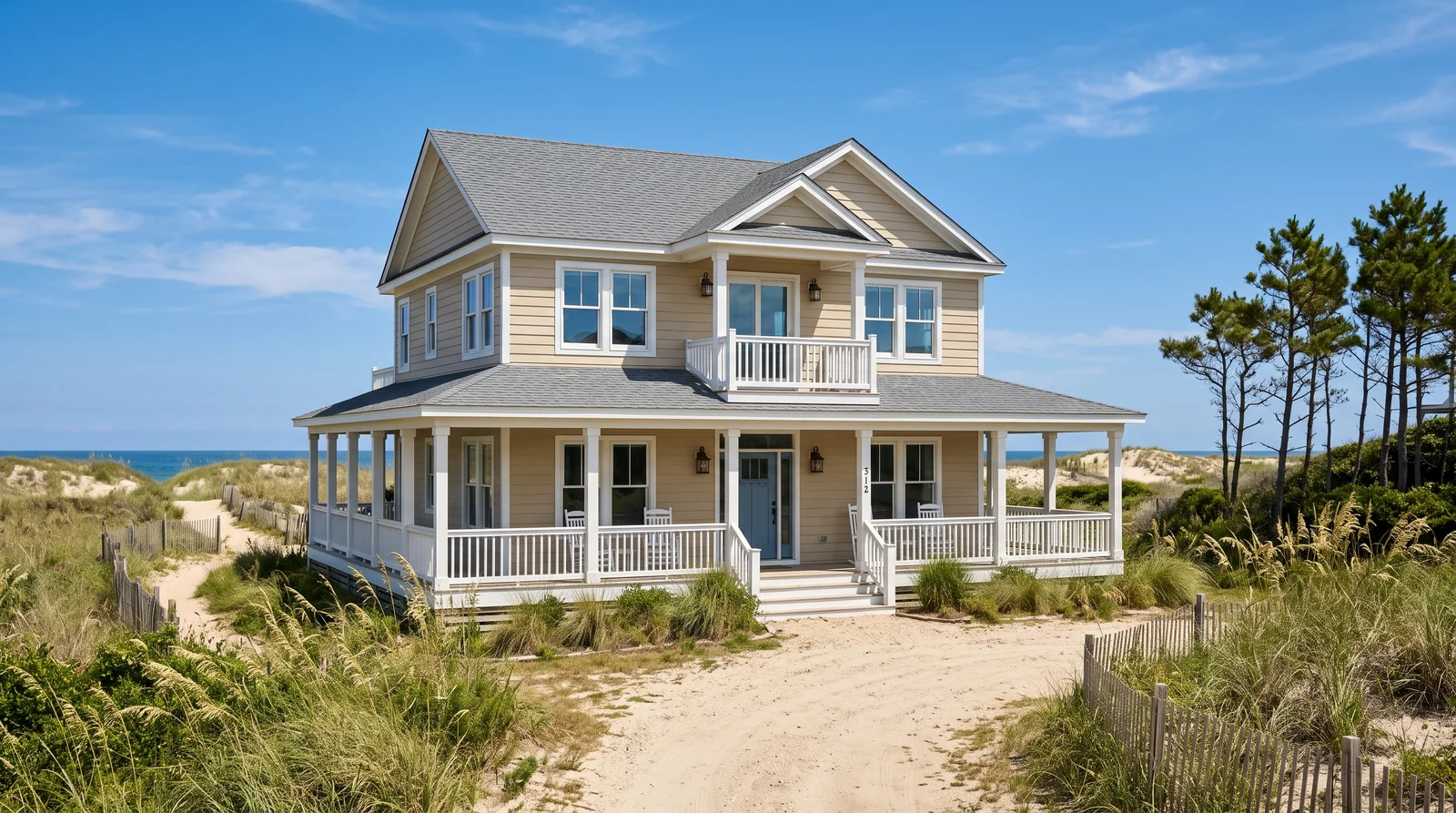
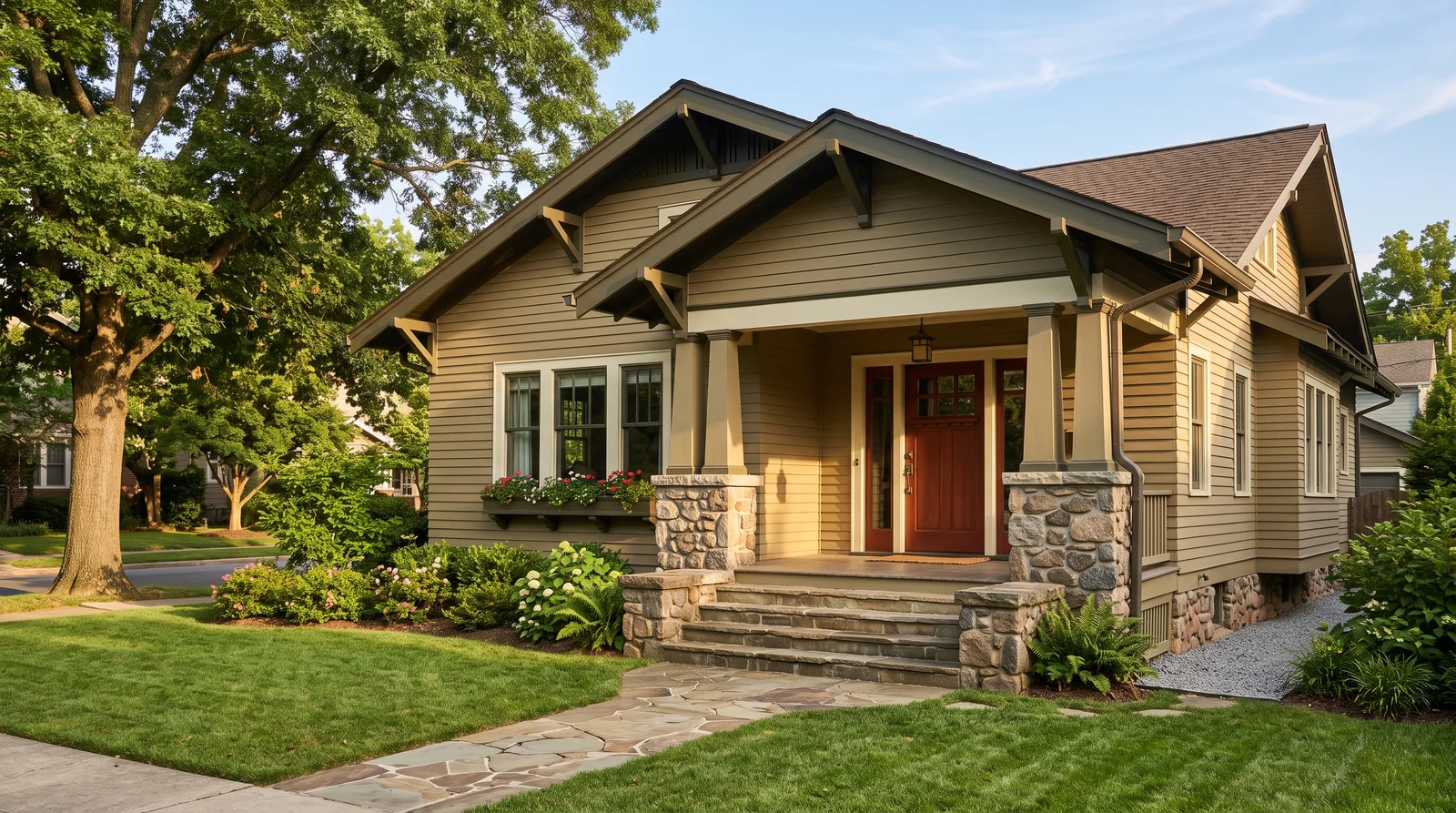
A warm sand body with bright white trim, the scheme that looks best when the yard is actually sand.
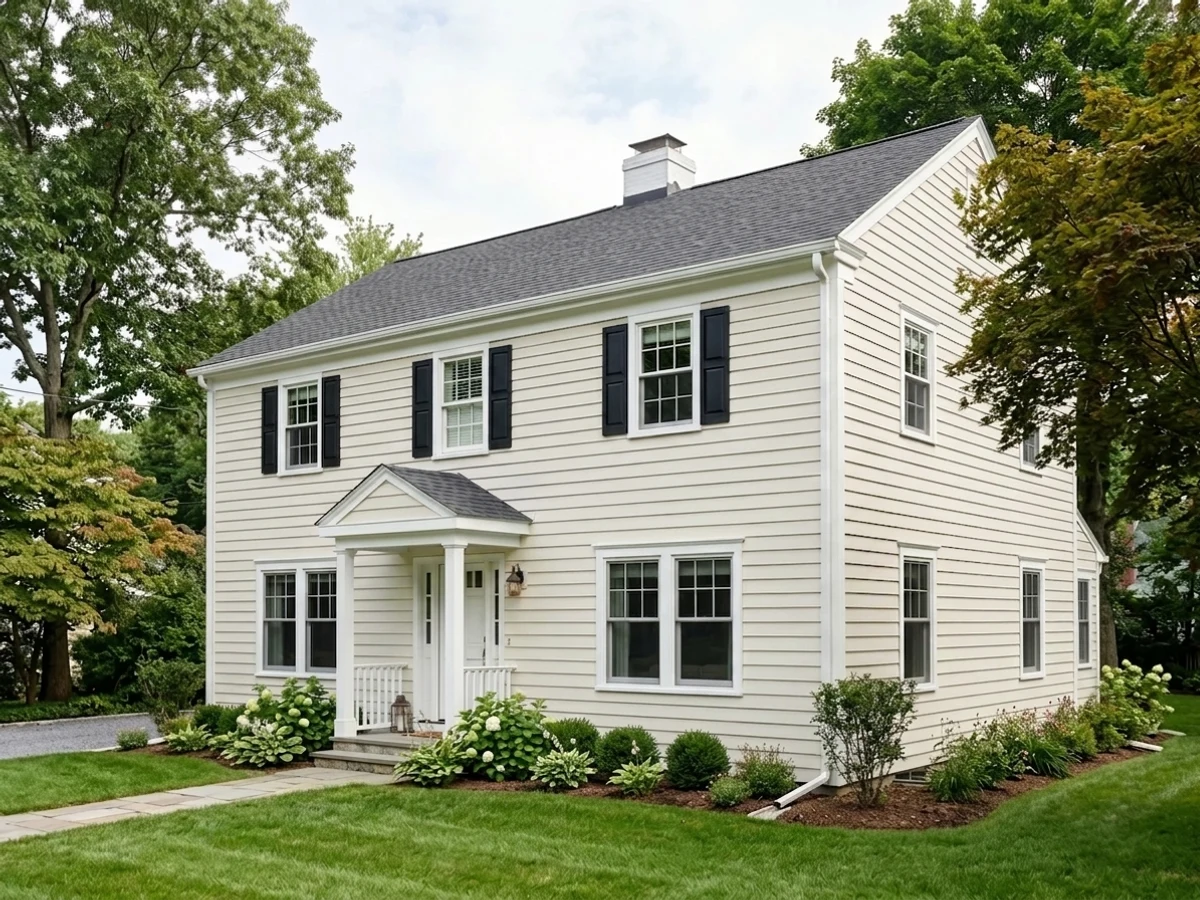
A sandy neutral is the quiet alternative to white, and it is the more forgiving one. Gilded Linen is a soft warm tan that sits close to the dune it is standing on, so windblown sand and salt haze on the siding never show the way they do on a stark white house. White Dove trim keeps it warm rather than icy, and the softer contrast is what stops a beige house from looking like a rental. Chinese Porcelain on the door brings the water back into the scheme, and Urbane Bronze on lanterns, the garage door and railings holds it down.
SEE GILDED LINEN ON YOUR WALLS →
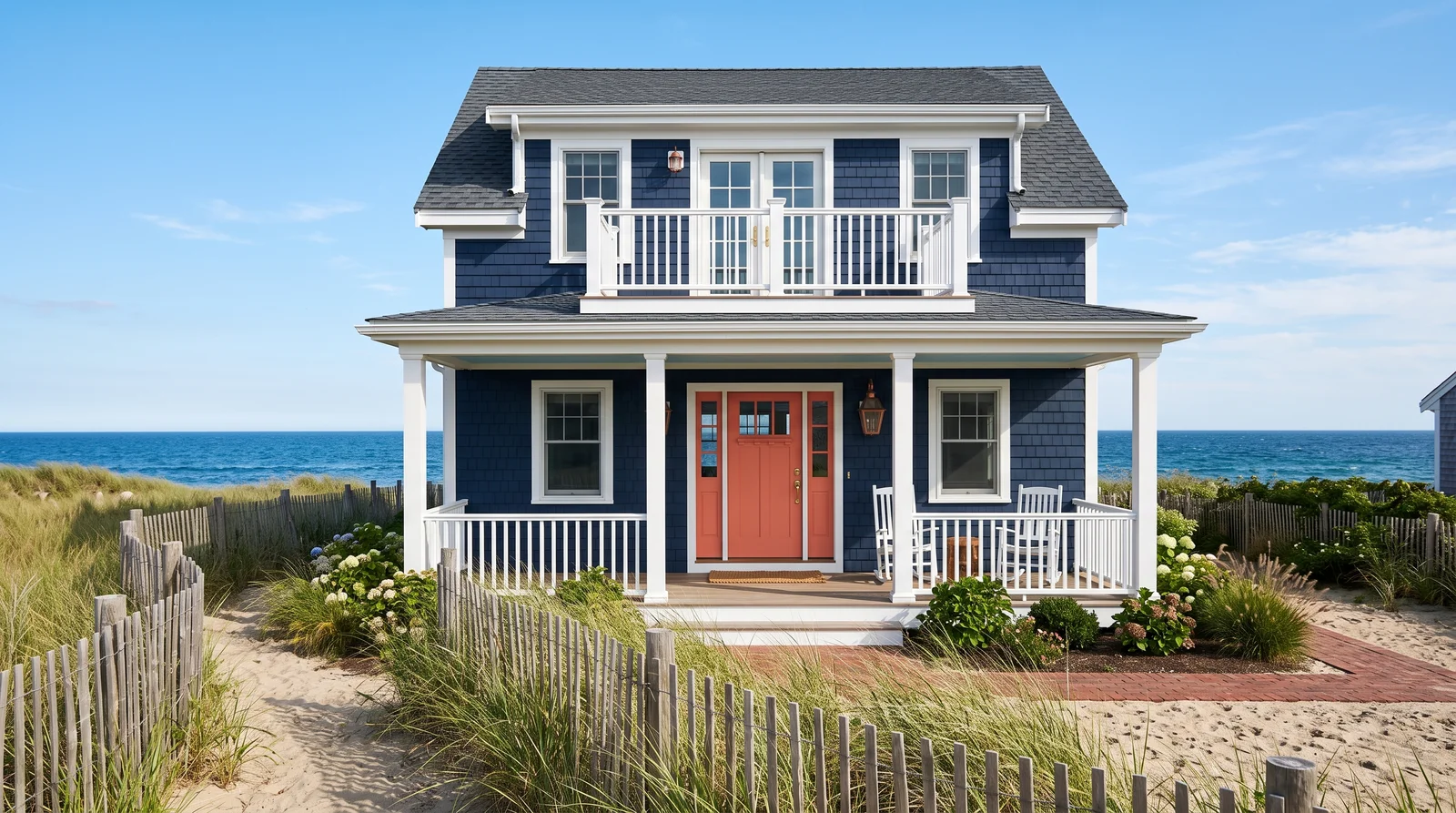
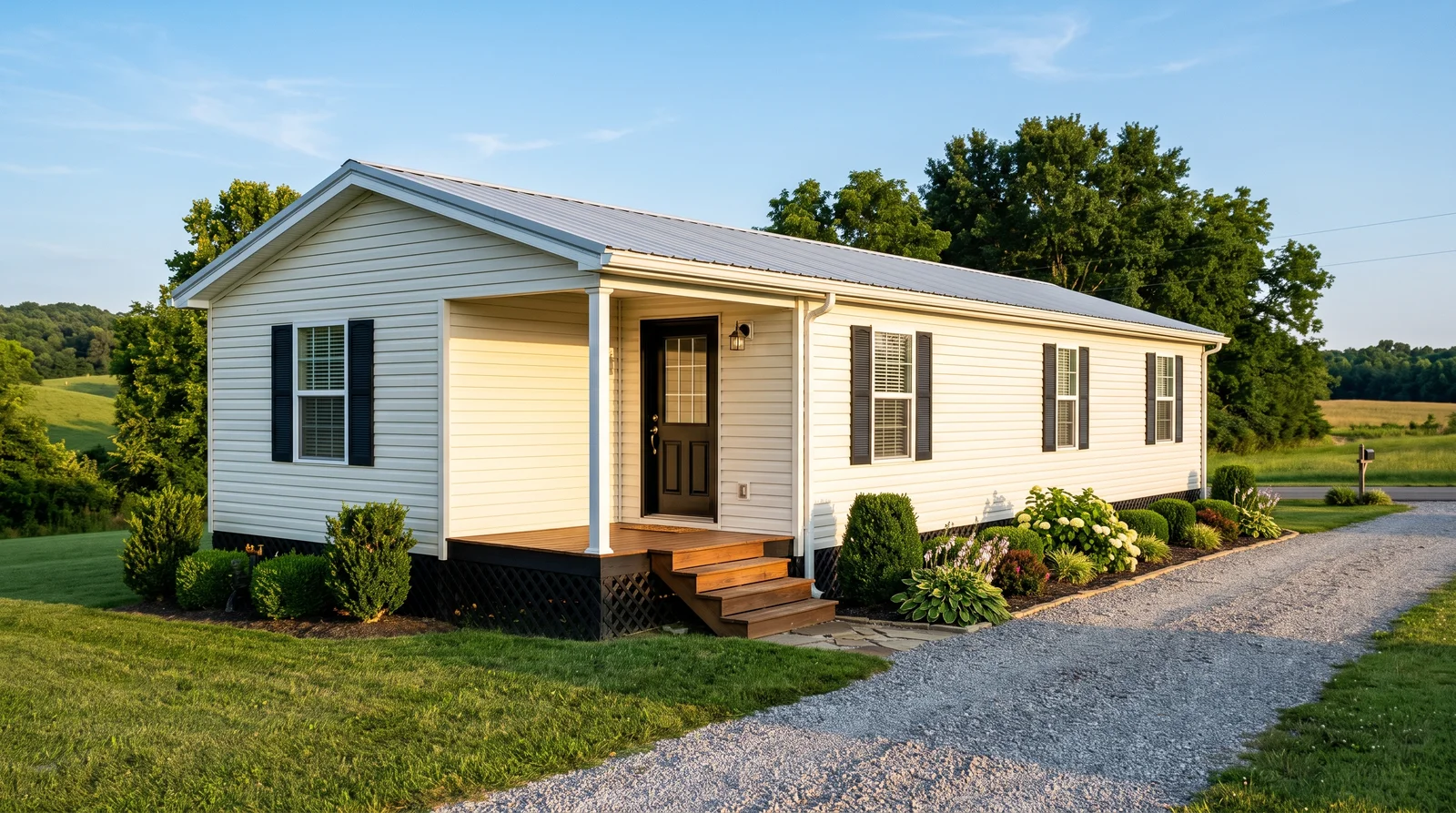
Deep navy siding with bright white trim and a coral door, the loud one on the street, with a shorter repaint clock.
Naval on the whole body is the most striking beach scheme here and the most demanding. Deep blues carry the heaviest colorant load, and full coastal UV pulls that color down faster than any pale shade, so plan on a repaint years earlier than a white neighbor. Do it anyway if you love it: bright Ultra Pure White trim, railings and window sash make the navy look sharp instead of heavy, and a Coral Reef door gives the front the one warm note it needs. A Woodlawn Blue porch ceiling keeps the shade under the porch from going flat.
SEE NAVAL ON YOUR WALLS →Beach House Exterior Wall Color Combinations
A wall color never works alone. These are the full schemes from the rooms above — the lead color first, then the supporting colors that make the photo work.
The pure-white cottage with a deep navy door, the safest and longest-lasting beach house scheme there is.
TRY THIS PALETTE →The Nantucket look in paint: a warm driftwood gray body with white trim and a deep green door.
TRY THIS PALETTE →A pale green-blue body that looks like sea glass in the sun and stays quiet on a gray day.
TRY THIS PALETTE →A warm sand body with bright white trim, the scheme that looks best when the yard is actually sand.
TRY THIS PALETTE →More Exterior Color Ideas
Set on a color family already? Each page has its own real rooms and picks.


Light or Dark Beach House Exterior Colors?
Go Light (LRV 60+) If…
The room is small, faces north, or has to work at every hour. Light warm colors make it feel bigger and stay calm in evening light — the light you actually live in.
Go Dark (LRV Under 20) If…
You want the cocoon effect and the room has real daylight. Dark works best on one feature wall — or fully color-drenched in a large room with good windows.
See It. Love It.
Paint It.
Upload one photo of your beach house exterior and try every color on this page on your own walls — in your own light, before you buy a drop of paint.

AlabasterBeforeAbout Beach House Exterior Paint Colors
Coastal light is the reason beach house colors look the way they do. Near the water the sun comes at the house twice, once from the sky and once bounced off sand and waves, so every color reads two or three steps lighter and cleaner than it does inland. That same light is what wears the paint out. Strong UV breaks down the binder and the color pigment, so dark walls fade and chalk years before pale ones do. Salt in the air lands on the siding, holds moisture against it, and pushes any weak spot in the prep straight to failure.
That is why the coastal look keeps circling the same three families: white, weathered gray, and blue. Whites and soft grays reflect heat, hide salt dust, and fade so slowly you never notice. Blue is the one strong color that still feels like the sea, so it shows up as a door, shutters, or a whole navy body for people who accept the repaint clock that comes with it. One honest tip: sample outdoors, on the real wall, in real beach sun. A chip you love in the store will look bleached and washed-out on the south side of the house at noon, and grayer than you expect on the ocean side at dusk.
The Questions Everyone Asks
What color should I paint my beach house exterior?
If you want one answer, start with the safe picks above — Sea Salt, Chantilly Lace, Naval, Sandy Hook Gray. They read well in any light and survive furniture changes. Then check the light: strong afternoon sun wants a step cooler, a north-facing room wants a step warmer.
What is the most popular beach house color?
White is still the number one beach house body color, and the two most used are Benjamin Moore Chantilly Lace OC-65 for a crisp modern look and Sherwin-Williams Alabaster SW 7008 for a softer warm one. Behind white, weathered gray is the runner-up, especially on shingle houses, where Benjamin Moore Sandy Hook Gray HC-108 and Sherwin-Williams Anew Gray SW 7030 both read like aged cedar. Blue almost always shows up as the door or shutters rather than the whole house. All three are popular partly for looks and partly because pale colors survive coastal sun far longer than dark ones.
What is the best exterior paint for salt air?
Honestly, prep matters more than which can you buy. Salt holds moisture against the siding and finds every bare spot, so washing off salt residue, spot-priming bare wood, and caulking joints will do more for the paint than upgrading the product. When you do pick, use a 100 percent acrylic exterior paint: Sherwin-Williams Emerald Exterior, Benjamin Moore Aura Exterior, Behr Marquee, and PPG Timeless are all in that class and all perform well near water. Expect to rinse the house down once or twice a year on an oceanfront lot, no matter what is on it.
Does navy fade on a beach house?
Yes, and faster than most people expect. Deep blues like Sherwin-Williams Naval SW 6244 and Benjamin Moore Hale Navy HC-154 carry a lot of colorant, and coastal UV breaks those pigments down while the pale whites next door barely move. On a sunny exposed wall you can see the color flatten in five to seven years, versus ten or more for white. If you want navy, put it on shutters, a door, or the shaded side, ask for the fade-resistant colorants some brands offer in their top exterior lines, and budget for the earlier repaint.
Should cedar shingles be stained or painted?
Stain first if the shingles are new. A semi-transparent or bleaching stain lets the cedar weather to a silver-gray, breathes with the wood, and fades instead of peeling, so recoating is a wash-and-roll job. Sherwin-Williams WoodScapes and Benjamin Moore Arborcoat are the two standards for that. Once you paint shingles, you are painting them forever, because film-forming paint traps moisture behind the shingle and eventually flakes. If you do want a painted shingle look, Benjamin Moore Sandy Hook Gray HC-108 gets you the weathered tone without waiting for the sun to do it.
What color front door goes with a white beach house?
Navy is the classic and the safest: Benjamin Moore Hale Navy HC-154 or Sherwin-Williams Naval SW 6244 both read almost black from the street and blue up close. For something softer, PPG Chinese Porcelain PPG1160-6 is a muted sea blue that suits a sandy or seafoam house too. If you want the door to be the fun part, Sherwin-Williams Coral Reef SW 6606 is the warm coral people actually use at the beach, and a deep green like PPG Night Watch PPG1145-7 looks right on a shingle cottage. Doors take direct sun all day, so use an exterior enamel and expect to refresh them sooner than the siding.
What two-color combination works best in a beach house exterior?
The reliable pattern is a quiet main color plus one deep accent on a single wall. Keep trim and ceiling in one warm white so the two colors are the only event in the room — the combination cards above show complete schemes from real rooms.
What colors make a beach house exterior look bigger?
High-LRV, slightly warm colors — LRV 60–75 is the sweet spot. Paint the walls and trim close to the same light color so the corners blur, and keep the ceiling white. Stark cool white actually works against you; it creates hard shadows that show the room's edges.

Ask a Question