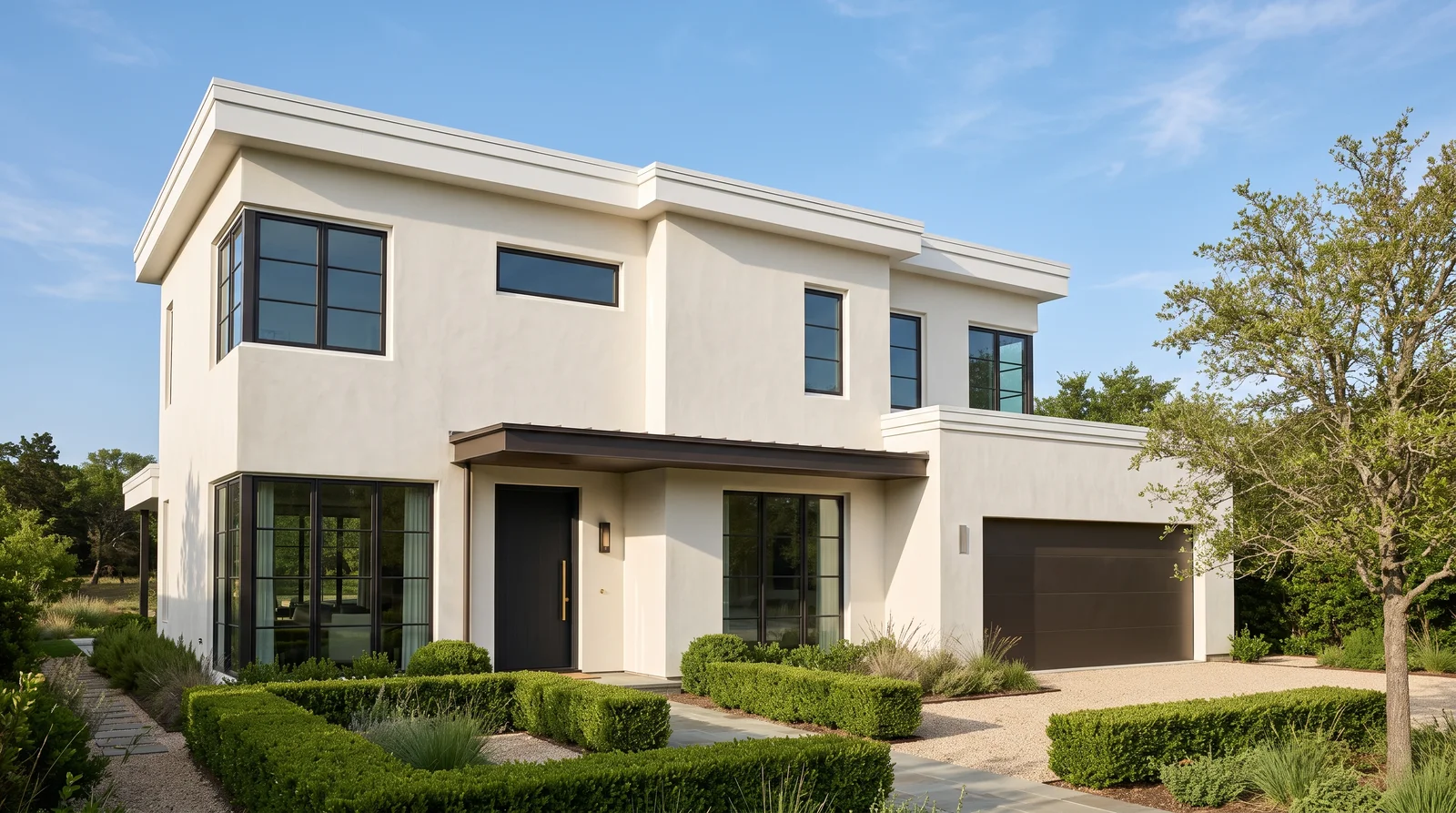
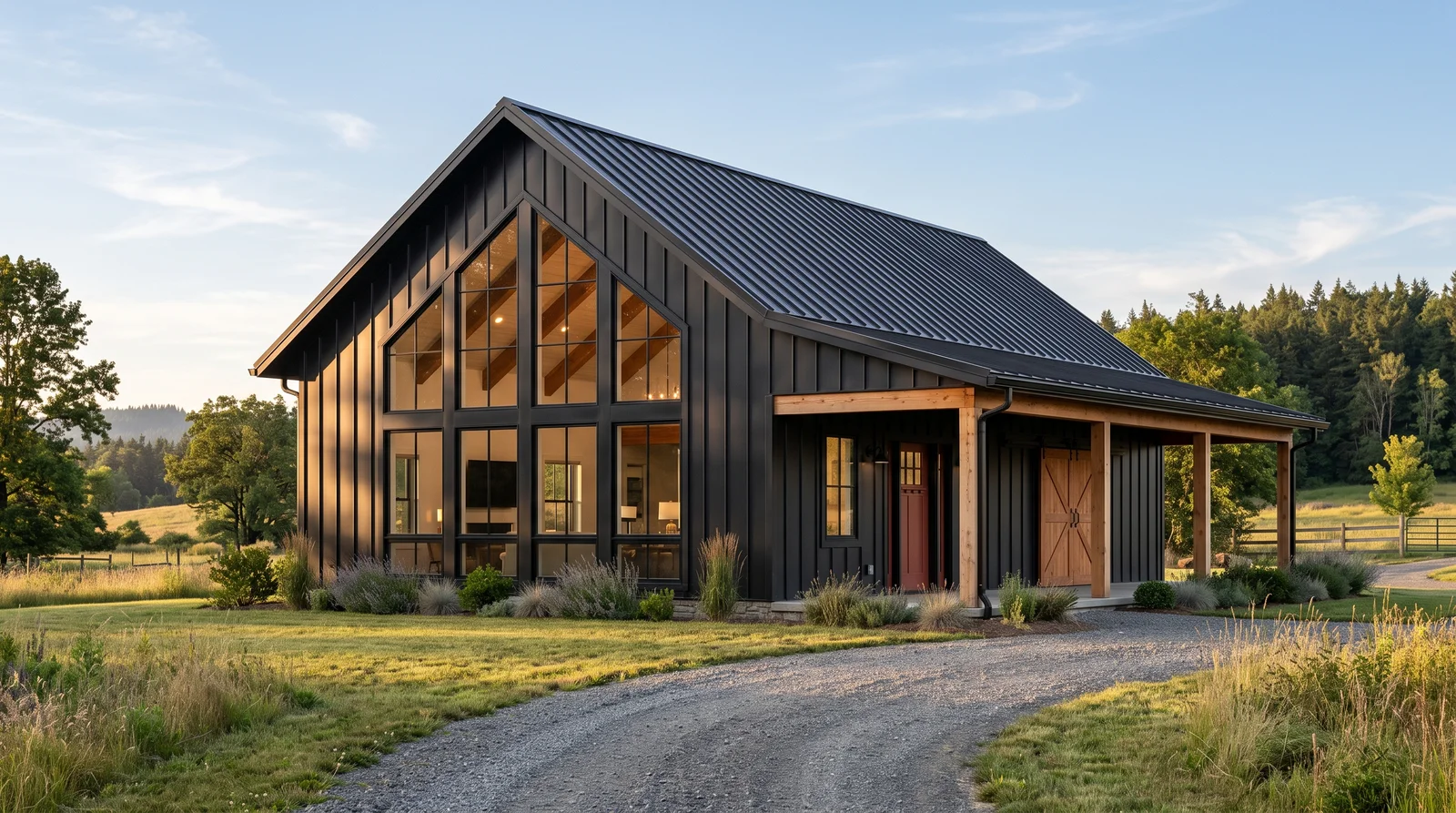
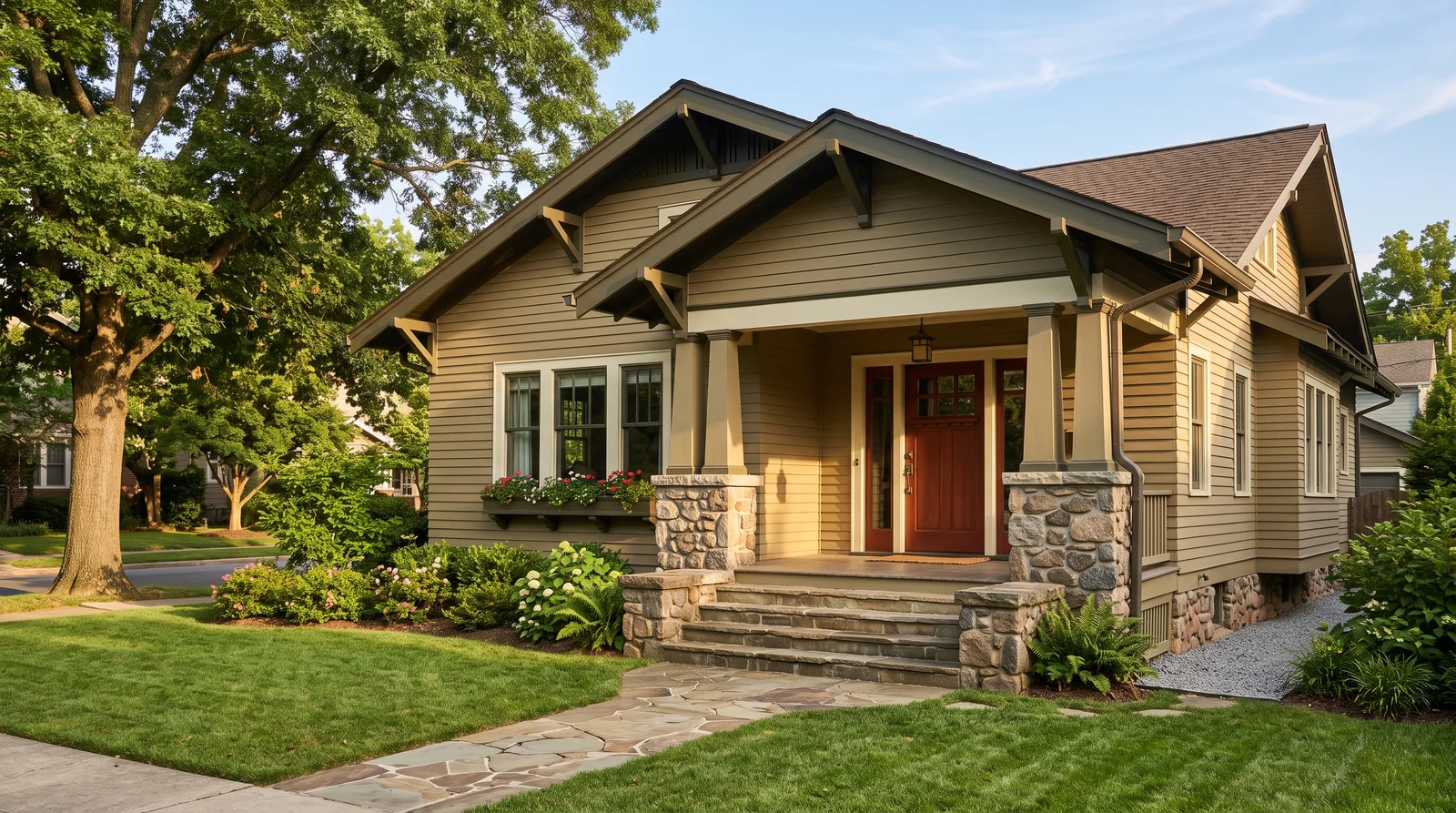
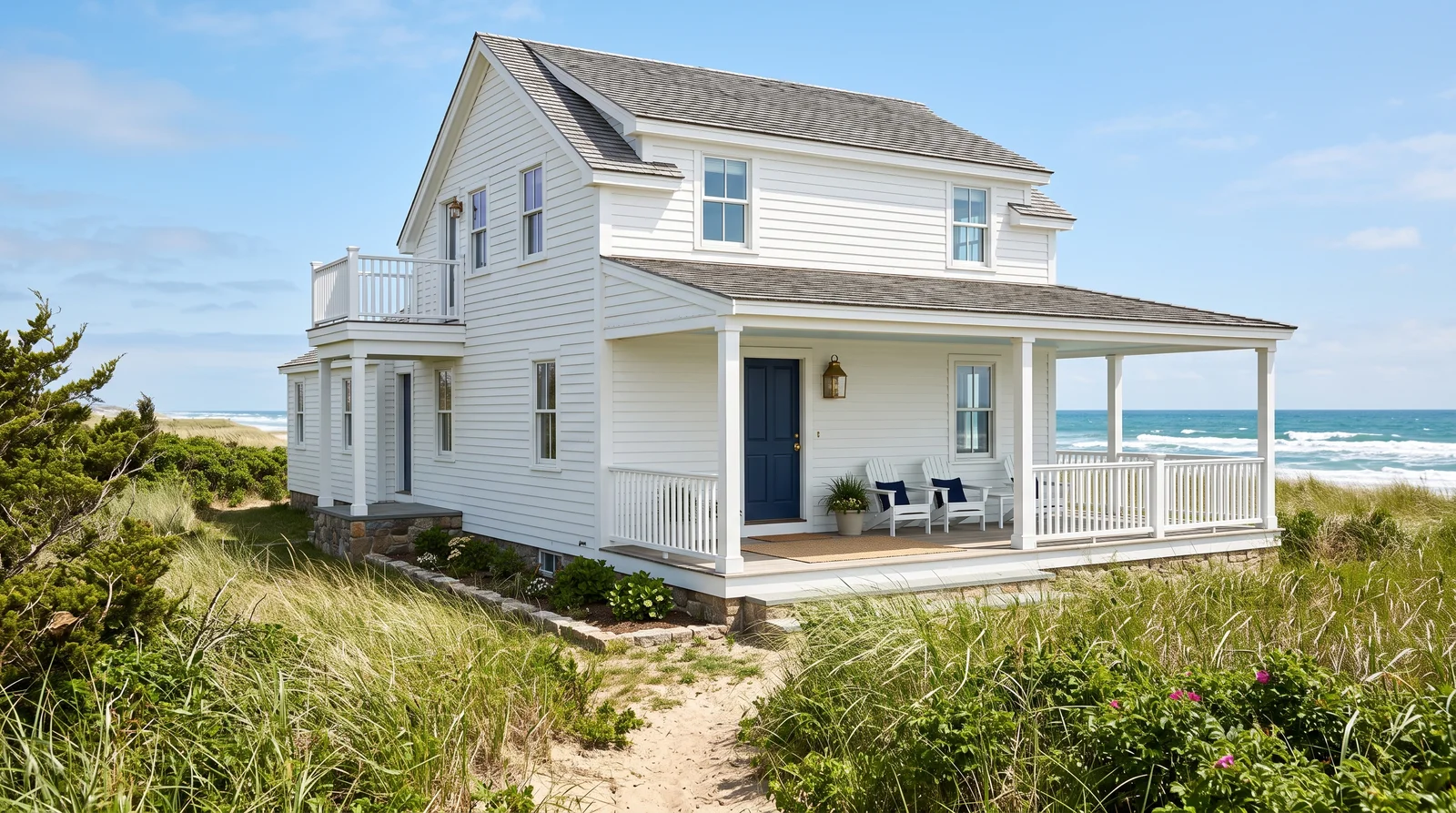
Room Colors · Victorian Exterior
5 Best Victorian Exterior Paint Colors for 2026
ideas, combinations, and real rooms
5 curated picks from real victorian exteriors — with the exact colors, honest reasons why, and the combinations that hold the room together.

Former interior stylist who can spot a green undertone from across a room. Jessica writes the color and mood pieces — what to choose, what pairs, and why your "white" looks pink.
The Fast Answer
Don't want to read 5 picks? These four are the safe answers.

Top Picks for the Victorian Exterior
Pick a color family, tap a shade to see the victorian exterior in it, then try it on your own room.
The 5 Best Victorian Exterior Paint Colors
Every pick below is a real rendered victorian exterior, not a chip. The lead color first; the swatches are the full scheme in the photo — walls, furniture, textiles, accent.

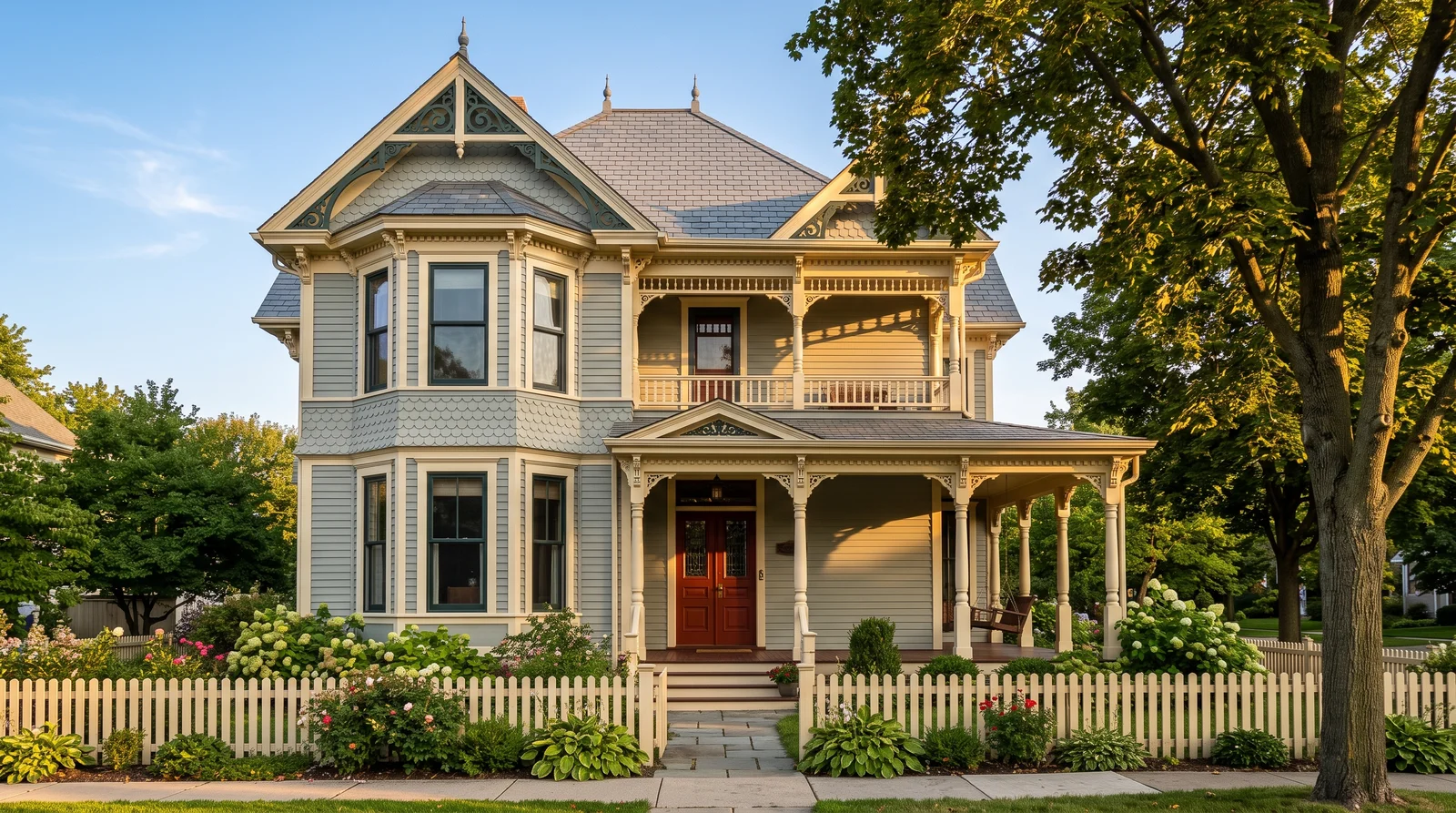
The full five-color treatment, where a calm sage-gray body lets the red door and dark green sash do all the shouting.
This is what people picture when they say painted lady. The move that keeps it from turning into a carnival is making the biggest surface the quietest: Roycroft Mist Gray covers all the siding and shingle courses, so your eye rests before it hits the detail. Roycroft Vellum outlines every window, corner board and porch post in warm cream. Rookwood Red takes the door, and Rookwood Dark Green goes on sash, bracket edges and the porch floor. Choose it if your house still has its original gingerbread. The risk is drift: every extra color you add is another decision that can date the job, so keep your two loudest tones on small parts only.
SEE IT ON YOUR WALLS →
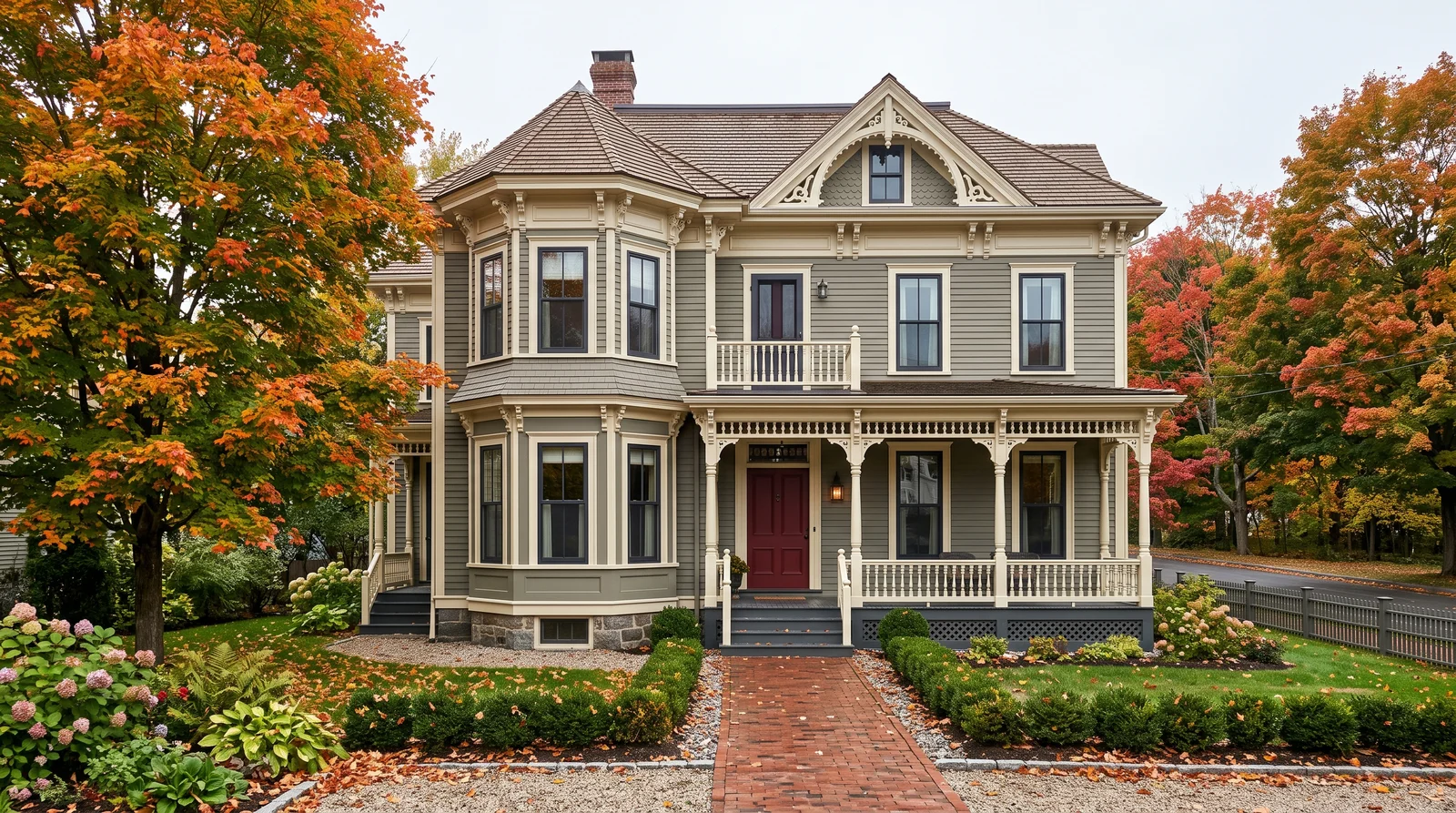
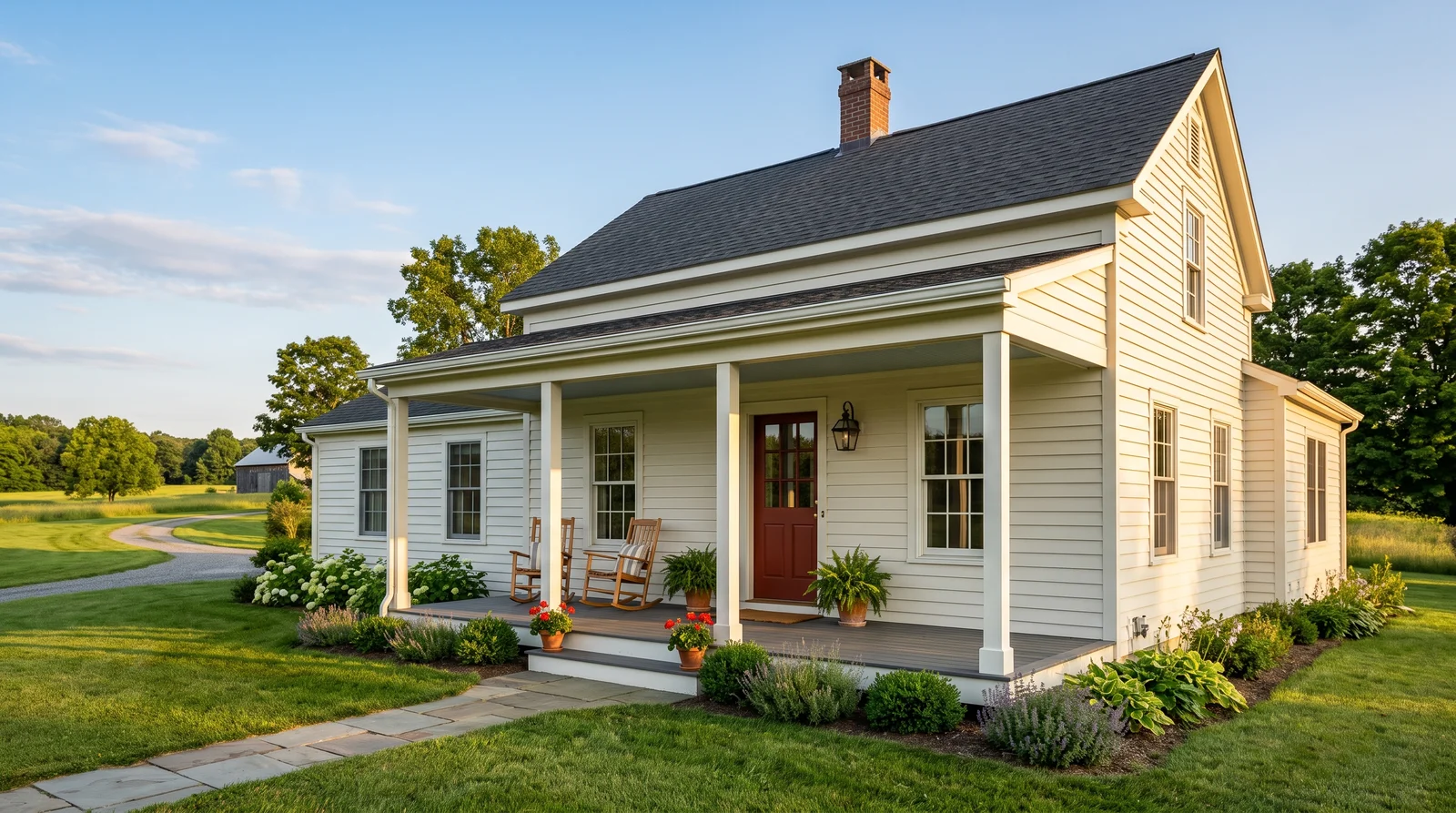
The scheme an 1885 painter would actually have mixed: drab olive-gray body, cream trim, oxblood door.
Real Victorian paint was earthy, not candy. Pigments came from ochre, umber and iron oxide, so bodies landed in olive, drab, buff and stone. Sag Harbor Gray is that exact murky gray-green, and it looks expensive against Monterey White trim because neither one is bright. Cottage Red on the door is the oxblood every hardware catalog of the period sold. Kendall Charcoal covers sash, porch ceiling beams and the shingle skirt. Pick this for a landmark district or a house with original clapboard. The risk is flatness on a north-facing street, where the whole thing can read gray-brown, so keep the trim clearly lighter.
SEE IT ON YOUR WALLS →
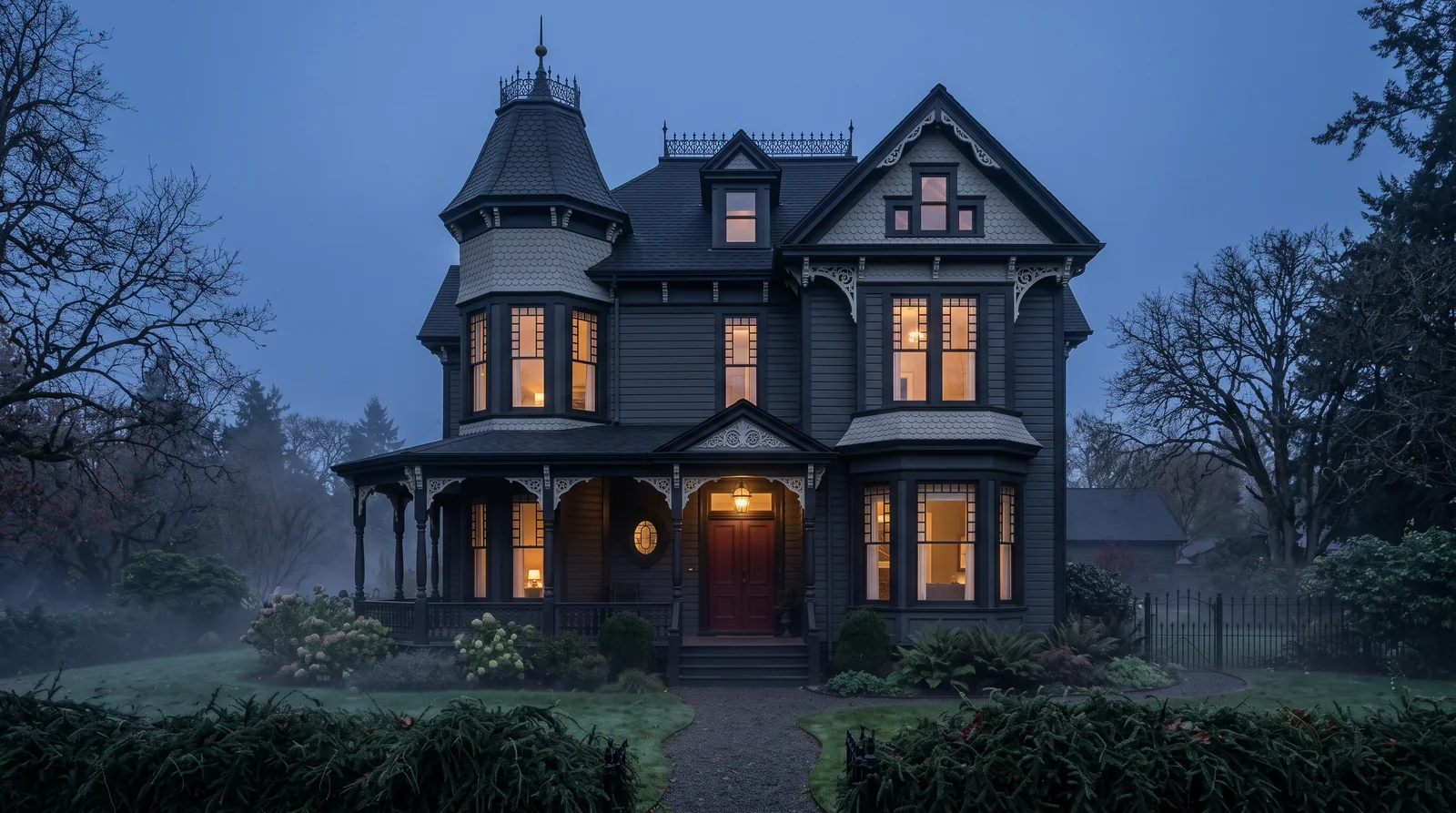
Near-black on everything except the door and the picked-out gingerbread, so the carving reads like lace.
Painting a Victorian dark is the newest thing happening to the oldest houses, and it works because shadow is already the point. Down Pipe on the siding is a deep gray that stays gray instead of going blue. Railings, a shade darker still, takes the trim, sash and porch posts, so the outline is a whisper rather than a stripe. Then Shadow White picks out only the gingerbread brackets and the fish-scale course, which is what makes the whole thing look intentional. Rectory Red on the door keeps it warm. The risk is real: dark exteriors fade faster in full southern sun and show chalking sooner, so budget for a repaint cycle a few years shorter.
SEE DOWN PIPE ON YOUR WALLS →
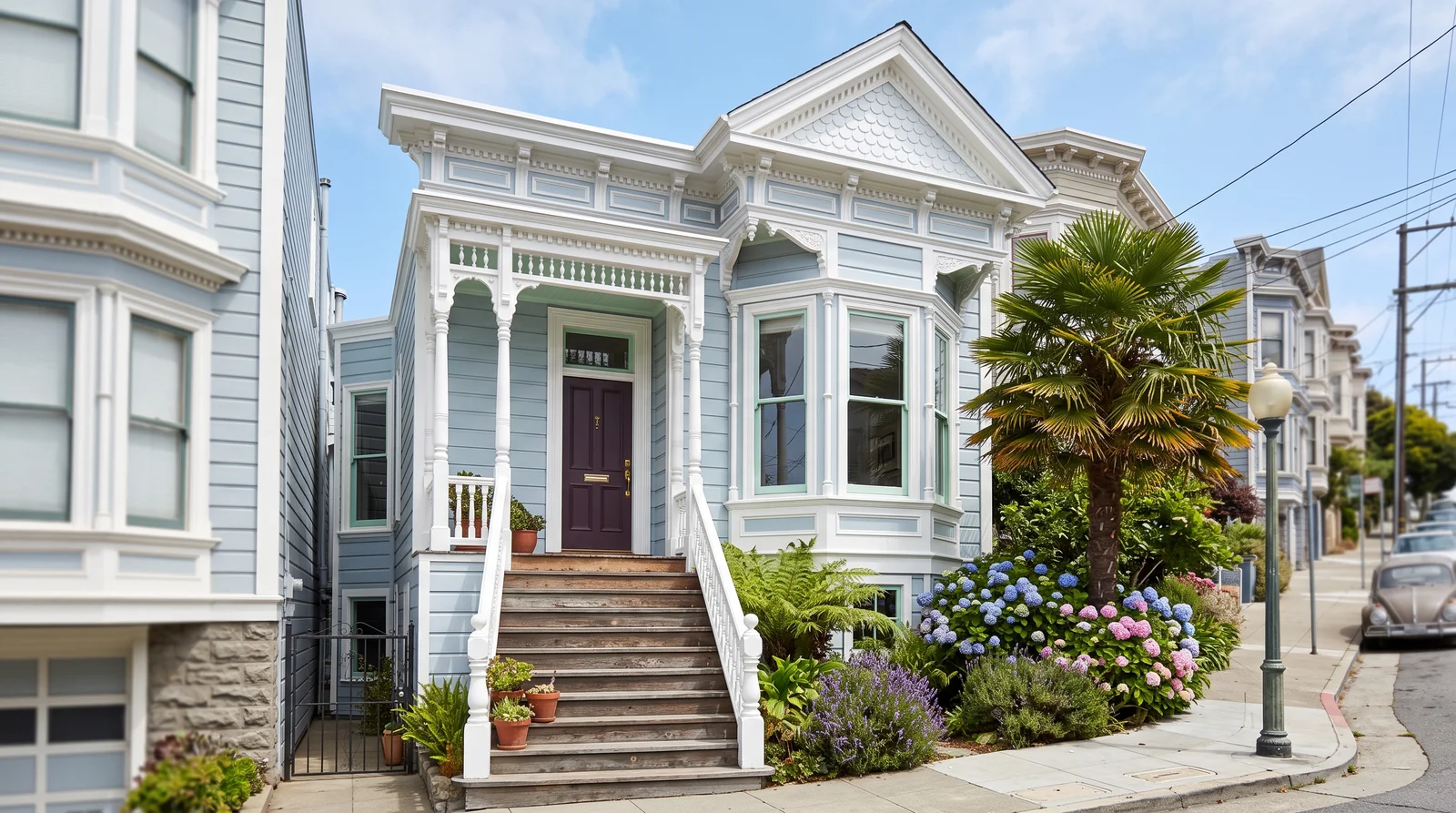
Pale blue body, bright white trim, plum door — the postcard look from Alamo Square, softened for a normal street.
The pastel Victorian is a 1960s invention, not a Victorian one, and it is charming exactly because it is light-hearted. Woodlawn Sterling Blue is a chalky pale blue that holds up in coastal gray light without going baby-nursery. Polar Bear trim is the crisp white that makes the ornament pop at a distance. Ancient Root on the door adds the one deep note the scheme needs. Whipped Mint goes on sash and the underside of the porch. Best on a smaller cottage-scale Victorian on a tight lot. The risk is chalking: pale, low-pigment colors show dirt streaks under gutters fast, so wash the house yearly.
SEE WOODLAWN BLUE ON YOUR WALLS →
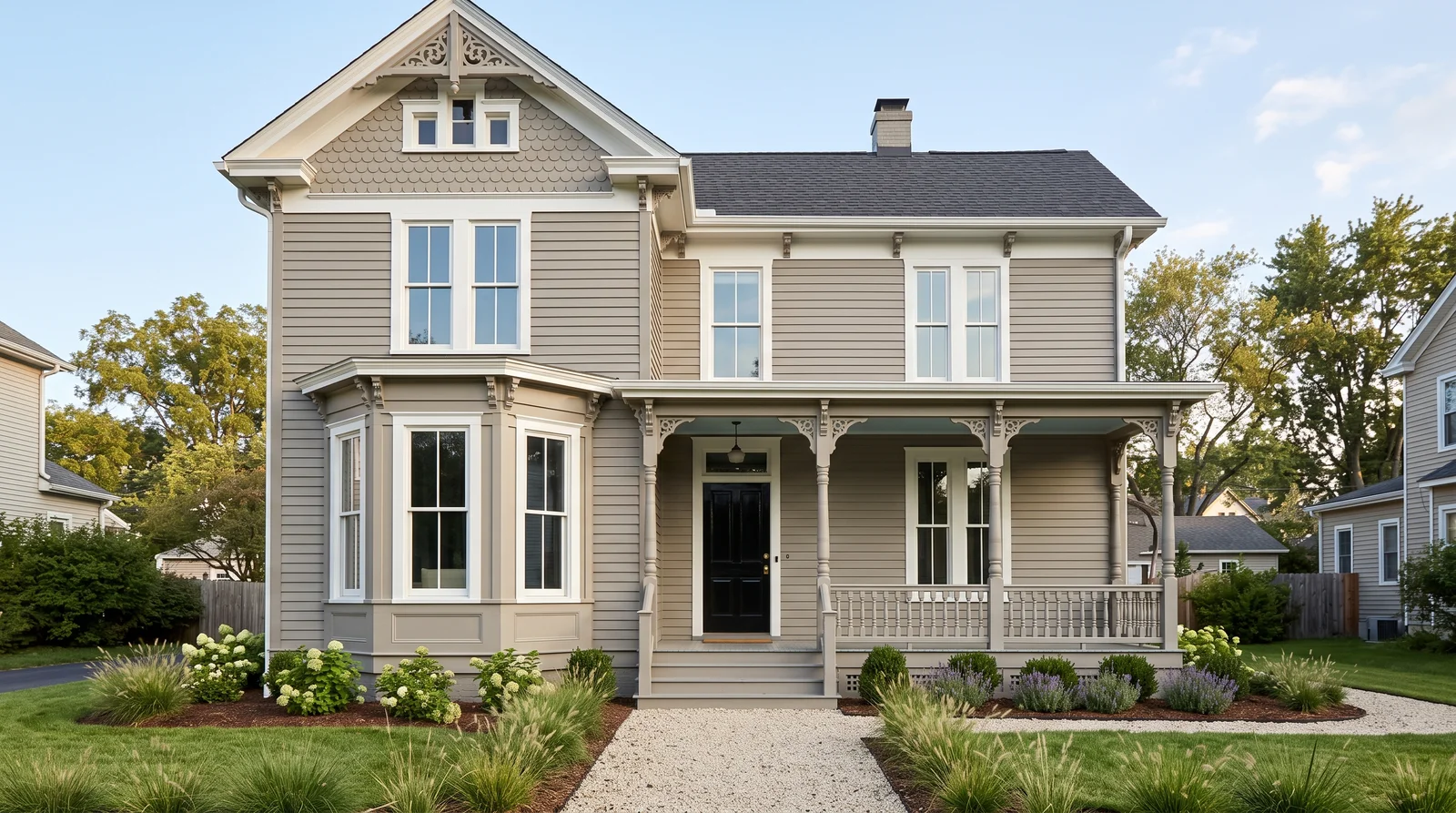
Everything in one warm greige, white only on the window casings, so the carving reads as texture instead of pattern.
If the painted lady approach feels like too much, do the opposite. Gray Stone covers siding, shingles, brackets, porch posts and spindles as one continuous field, which turns all that carpentry into shadow and texture rather than a color puzzle. Delicate White is reserved for window casings and the cornice, so the house still has an outline. Black Magic on the door and Chinese Porcelain on the porch ceiling give it two small moments. This is the cheapest Victorian scheme to paint and the easiest to sell later. The risk is losing the gingerbread entirely on a north face, where flat light erases the shadow you were counting on.
SEE GRAY STONE ON YOUR WALLS →Victorian Exterior Wall Color Combinations
A wall color never works alone. These are the full schemes from the rooms above — the lead color first, then the supporting colors that make the photo work.
The full five-color treatment, where a calm sage-gray body lets the red door and dark green sash do all the shouting.
TRY THIS PALETTE →The scheme an 1885 painter would actually have mixed: drab olive-gray body, cream trim, oxblood door.
TRY THIS PALETTE →Near-black on everything except the door and the picked-out gingerbread, so the carving reads like lace.
TRY THIS PALETTE →Pale blue body, bright white trim, plum door — the postcard look from Alamo Square, softened for a normal street.
TRY THIS PALETTE →More Exterior Color Ideas
Set on a color family already? Each page has its own real rooms and picks.


Light or Dark Victorian Exterior Colors?
Go Light (LRV 60+) If…
The room is small, faces north, or has to work at every hour. Light warm colors make it feel bigger and stay calm in evening light — the light you actually live in.
Go Dark (LRV Under 20) If…
You want the cocoon effect and the room has real daylight. Dark works best on one feature wall — or fully color-drenched in a large room with good windows.
See It. Love It.
Paint It.
Upload one photo of your victorian exterior and try every color on this page on your own walls — in your own light, before you buy a drop of paint.

AlabasterBeforeAbout Victorian Exterior Paint Colors
A modern house carries two colors: body and trim. A Victorian carries three to five, and it is not decoration for its own sake. The style was built with parts that stick out and cast shadows, so fish-scale shingles, turned porch posts, gingerbread brackets, window sash and door panels all read as separate pieces. Paint them all one color and the carpentry disappears into a lump. Give each part its own tone and the house looks the way it was drawn. That is the whole trick behind every Victorian scheme you have ever admired.
The logic is simple once you name the jobs. The body color covers the most square feet, so it should be the quietest of the group. Trim frames every opening and runs the corner boards, usually a lighter or creamier tone so the outline of the house is legible from the street. Sash is the thin wood inside the window, and it goes darkest, because dark sash makes glass look deep instead of blank. The door and the smallest gingerbread details carry the strong color. One honest tip: never judge a Victorian sample on a flat wall. Brush your candidate onto a scrap of the actual bracket or shingle course and hang it up. Carved and layered trim throws shadow into itself, so any color reads one or two steps darker there than it does on siding.
The Questions Everyone Asks
What color should I paint my victorian exterior?
If you want one answer, start with the safe picks above — Woodlawn Blue, Down Pipe, Roycroft Mist Gray, Sag Harbor Gray. They read well in any light and survive furniture changes. Then check the light: strong afternoon sun wants a step cooler, a north-facing room wants a step warmer.
How many colors does a Victorian house need?
Three is the working minimum: body, trim, and one accent that covers the door and sash. Four is the sweet spot for most houses, adding a second trim tone so the sash can go dark while the casings stay light. A full painted lady runs five or six, which only pays off if you have real gingerbread, a shingle course, or a turret to pick out. A simple four-color version might be Benjamin Moore Sag Harbor Gray HC-95 on the body, Monterey White HC-27 on trim, Kendall Charcoal HC-166 on sash, and Sherwin-Williams Rookwood Red SW 2802 on the door.
What colors were Victorian houses actually painted?
Not pastels. Nineteenth-century exteriors leaned on earth pigments, so bodies were olive, drab green, buff, stone gray, and iron-oxide red, with cream or straw trim. Sherwin-Williams keeps its Historic and Preservation ranges alive for this reason, and Benjamin Moore's Historical Collection HC numbers cover the same ground. If you want documented accuracy, look at Sherwin-Williams Roycroft Mist Gray SW 2844 or Downing Earth SW 2820 alongside Benjamin Moore Monterey White HC-27. The pale blue and pink Victorians people love in San Francisco date to a 1960s repaint movement, not to the 1880s.
Is a painted lady scheme expensive to paint?
Yes, and it is worth knowing why before you commit. The paint itself is a small share of the bill; the cost is labor, because every added color means masking, cutting in by brush, and coming back to the same bracket three times. On a large two-story Victorian, a straightforward three-color repaint often lands in the five figures, while a full five-color job with detailed gingerbread can run two to three times that once scaffolding and prep on old wood are included. If the budget is tight, spend it on prep and on two good colors like Benjamin Moore Kendall Charcoal HC-166 with Sherwin-Williams Alabaster SW 7008 rather than on a fifth accent.
Can you paint a Victorian house dark?
You can, and it has become one of the most popular directions for these houses because deep color makes carved ornament read as shadow. Farrow & Ball Railings No. 31 and Down Pipe No. 26 are the reference points, with Sherwin-Williams Iron Ore SW 7069 and Behr Cracked Pepper PPU18-01 as widely available stand-ins. Two honest cautions: dark exteriors absorb more heat, which is harder on old wood siding and glazing putty, and deep tints fade sooner in strong sun. Use a premium 100 percent acrylic and expect a shorter repaint cycle than a light body color would give you.
What color should Victorian window sash be?
The old rule is that sash goes darker than everything around it, and it still works. Dark sash makes the glass look deep and makes the window casing read as a clean frame, while light sash flattens the whole opening. Traditional choices are near-black, deep bottle green, or oxblood, so Sherwin-Williams Tricorn Black SW 6258, Rookwood Dark Green SW 2816, or Farrow & Ball Studio Green No. 93 all fit. Benjamin Moore Kendall Charcoal HC-166 is the softer option if full black feels too hard against a light body.
What two-color combination works best in a victorian exterior?
The reliable pattern is a quiet main color plus one deep accent on a single wall. Keep trim and ceiling in one warm white so the two colors are the only event in the room — the combination cards above show complete schemes from real rooms.
What colors make a victorian exterior look bigger?
High-LRV, slightly warm colors — LRV 60–75 is the sweet spot. Paint the walls and trim close to the same light color so the corners blur, and keep the ceiling white. Stark cool white actually works against you; it creates hard shadows that show the room's edges.

Ask a Question