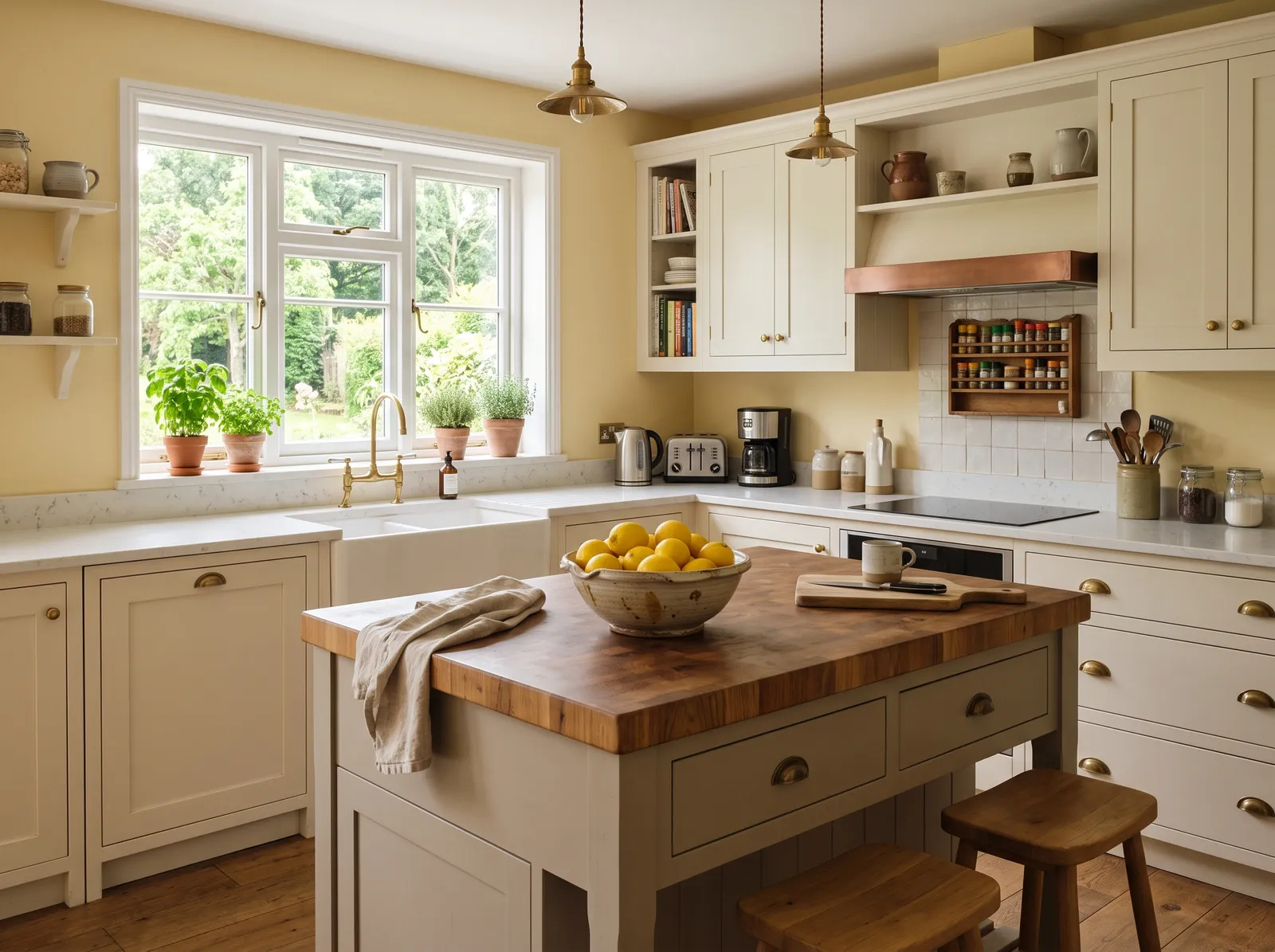
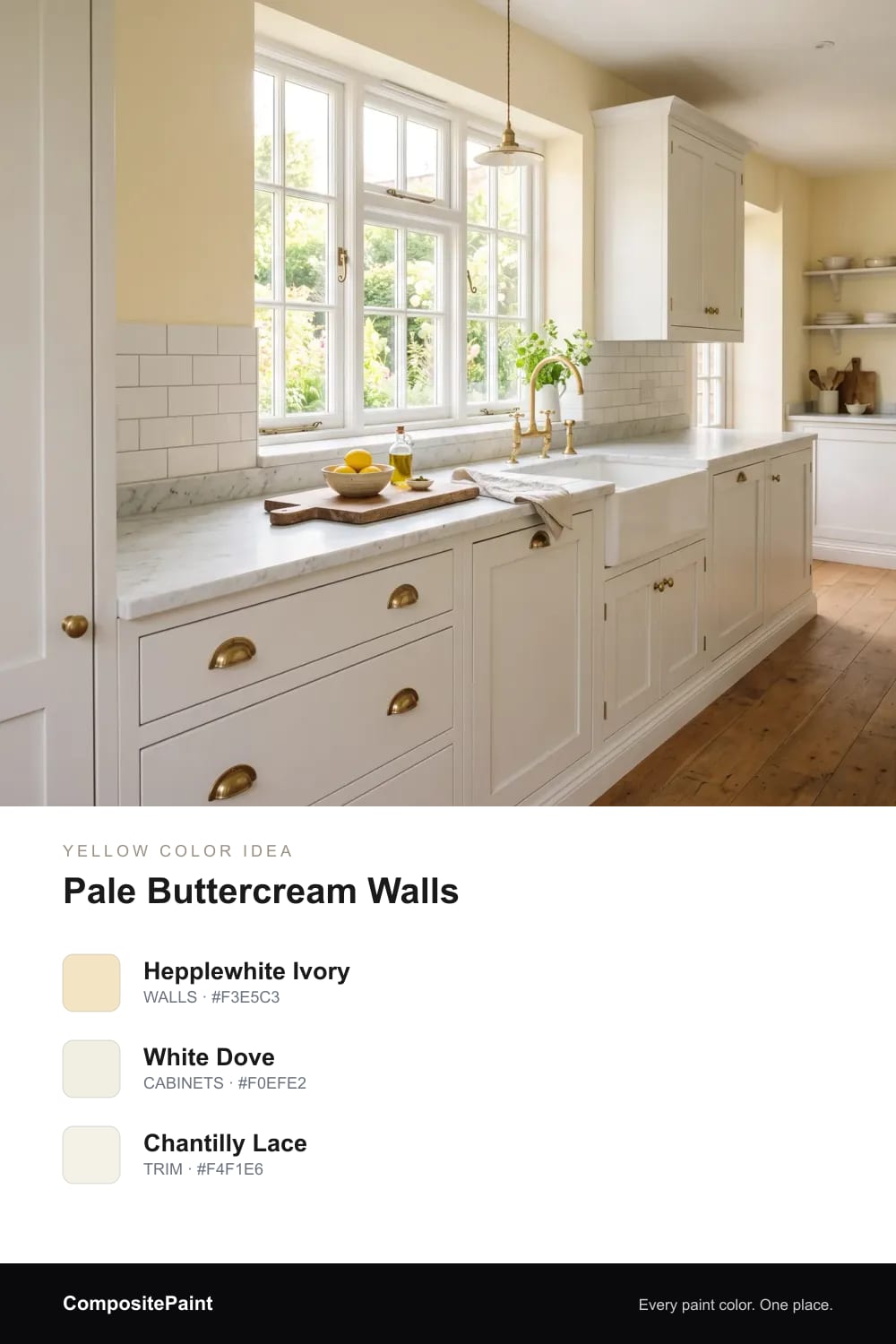
1. Pale Buttercream Walls
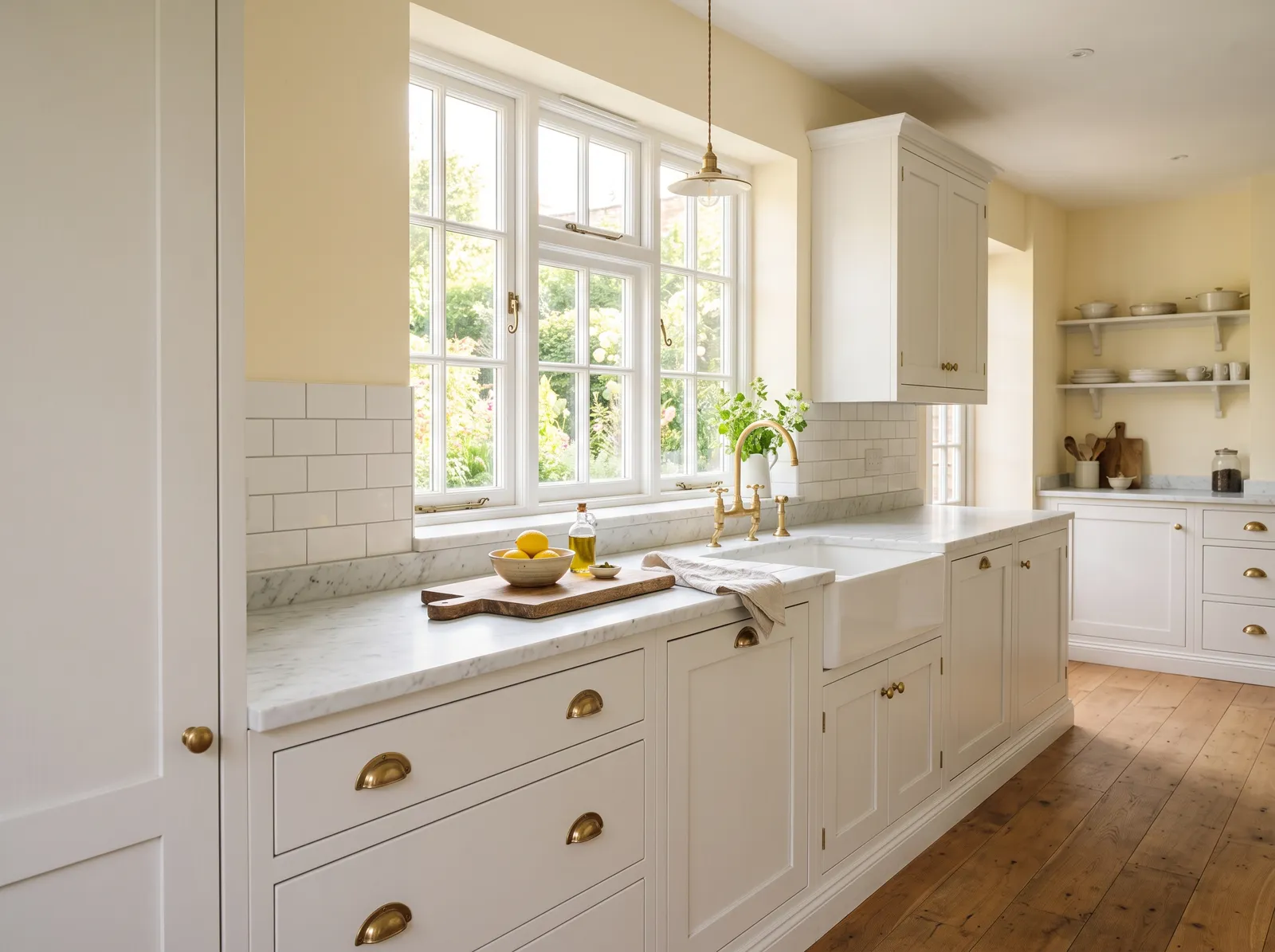
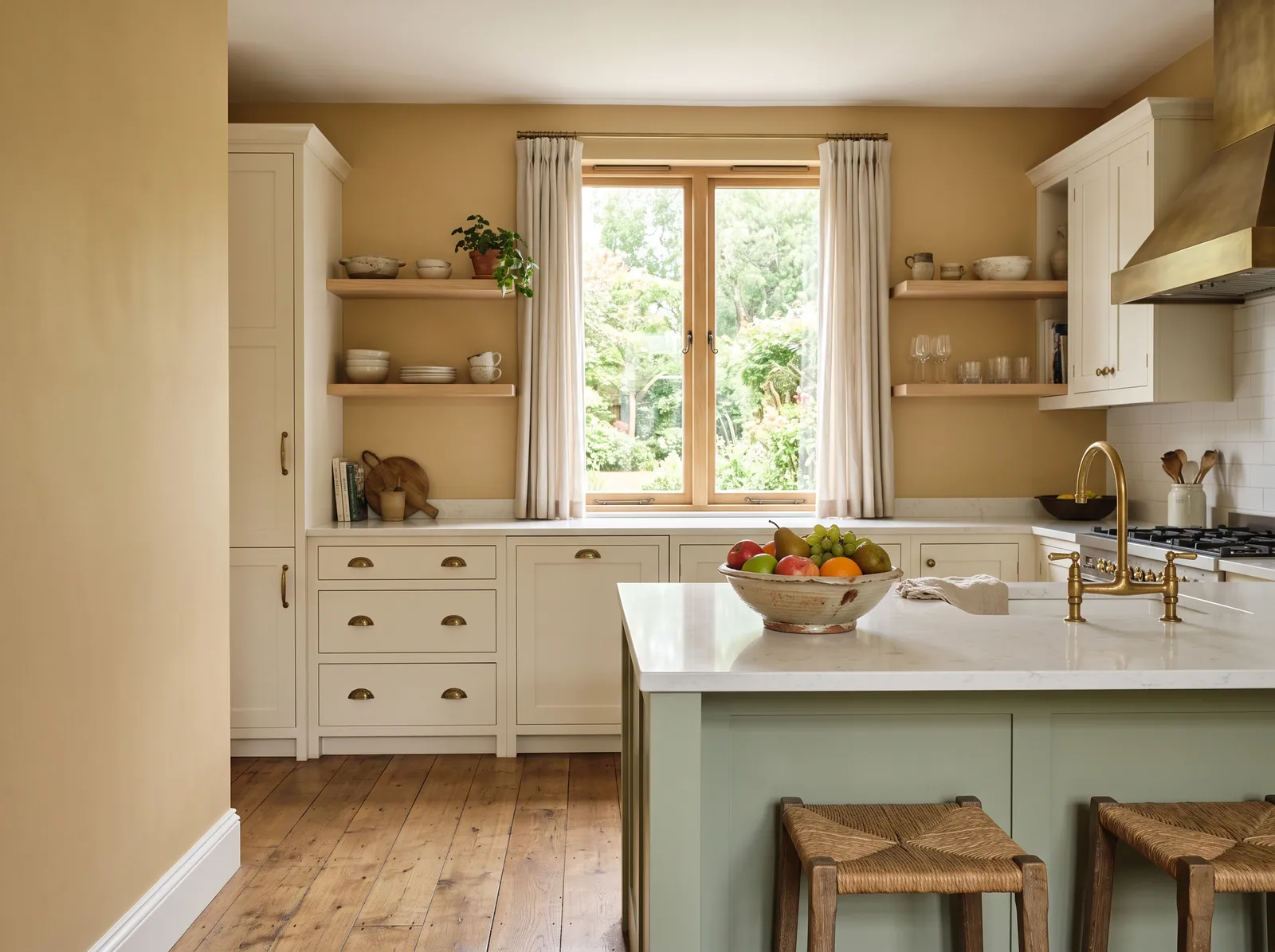
The gentlest yellow there is, like soft morning light on the walls, warm but never bright.
Yellow is the friendliest color a kitchen can wear. It catches the morning light, lifts a dull corner, and makes the whole room feel like a good place to start the day. Here are 12 sunny kitchens, from the softest buttercream to a warm golden ochre, to help you find your shade.
By Jessica Williams · Color Stylist
The gentlest yellow there is, like soft morning light on the walls, warm but never bright.
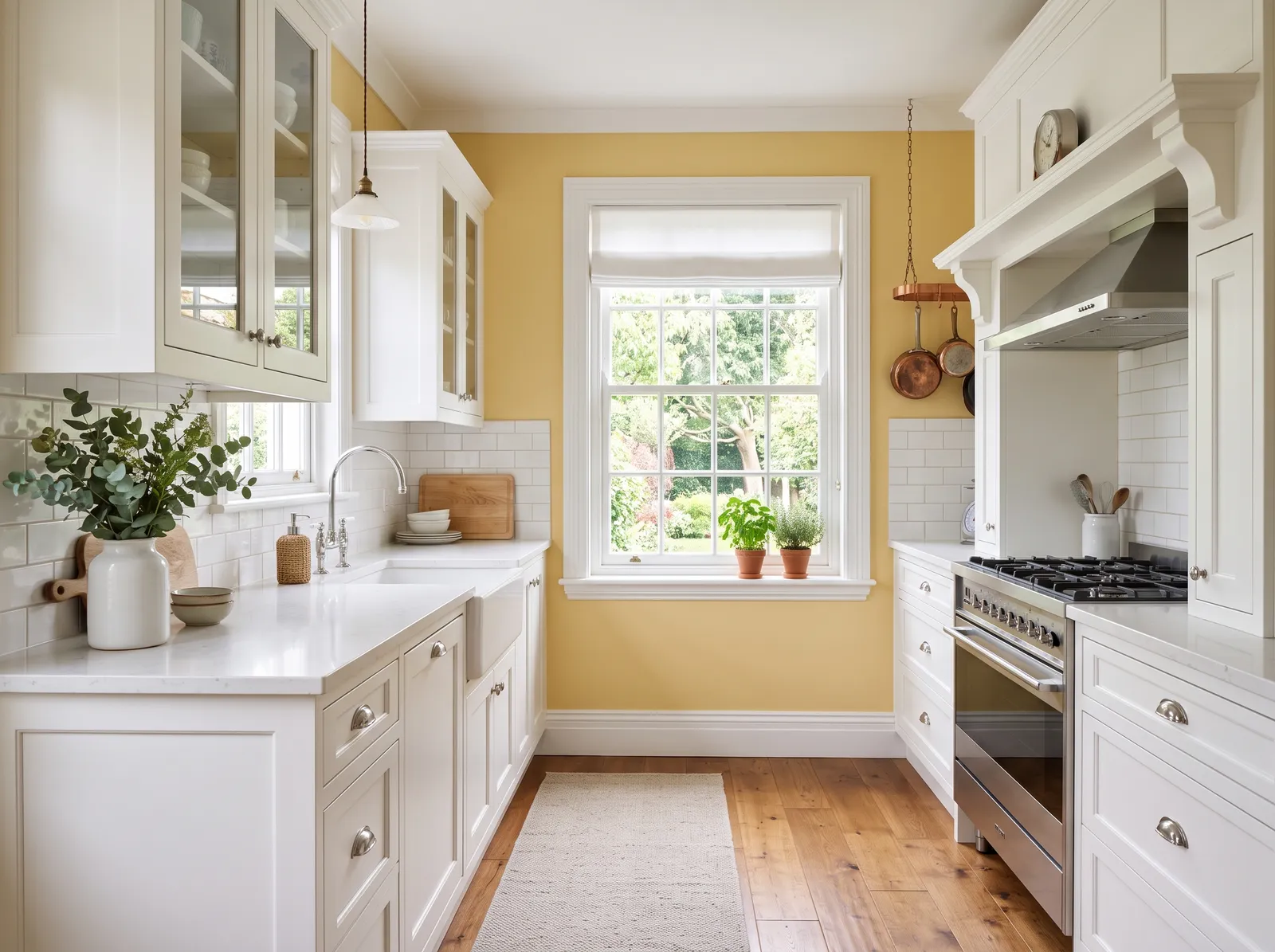
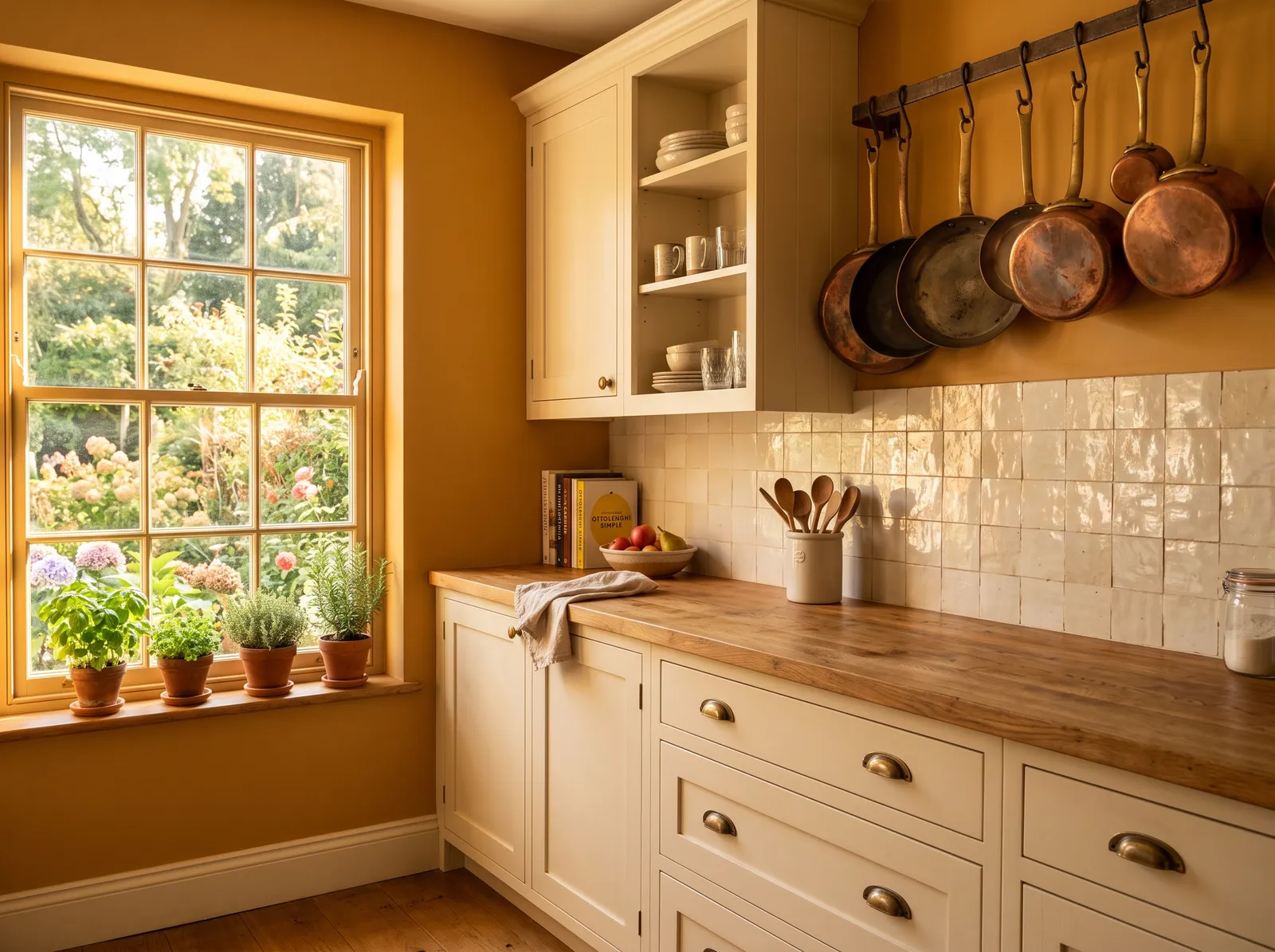
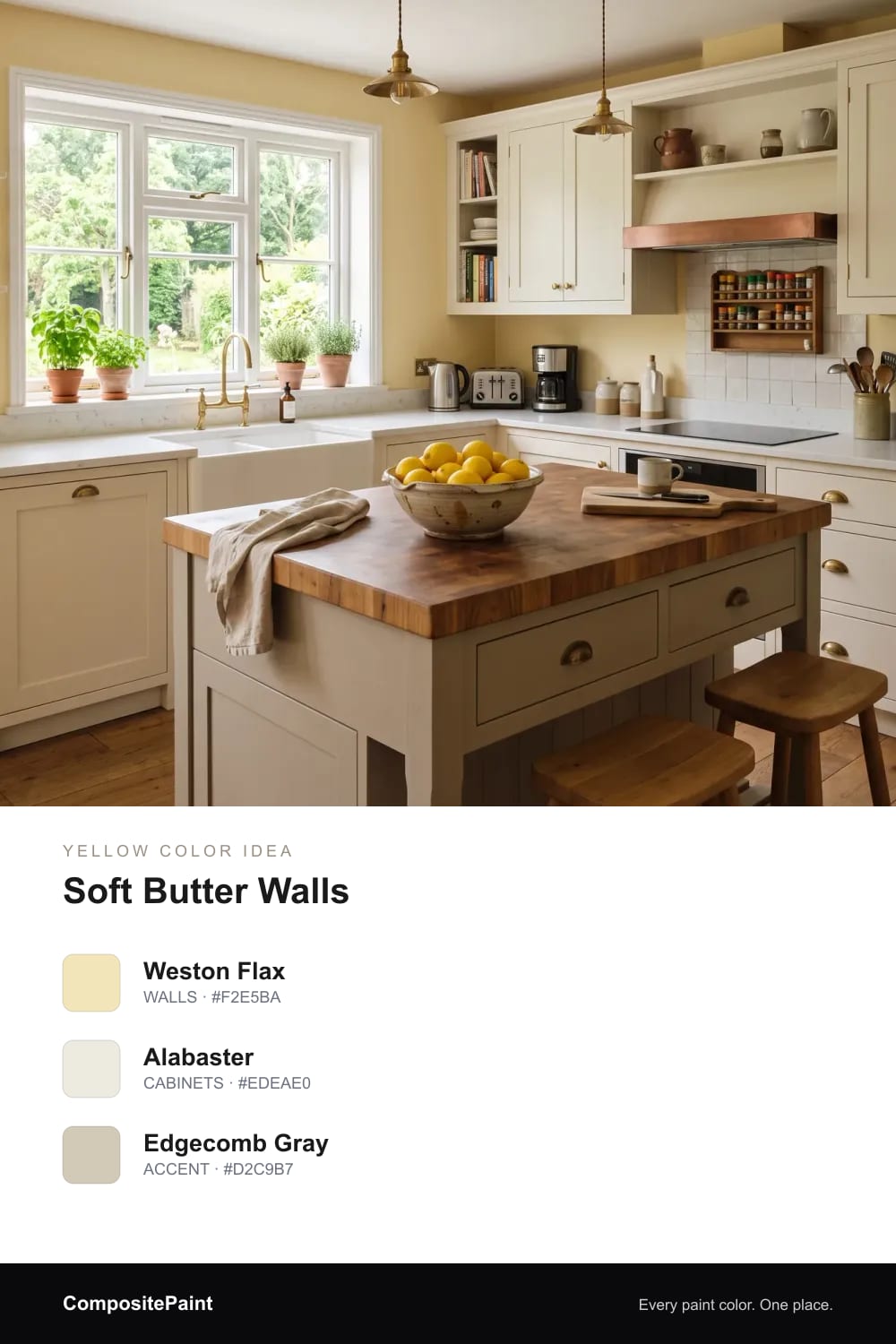
A warm, creamy butter yellow that feels cozy and a little old-fashioned in the best way.
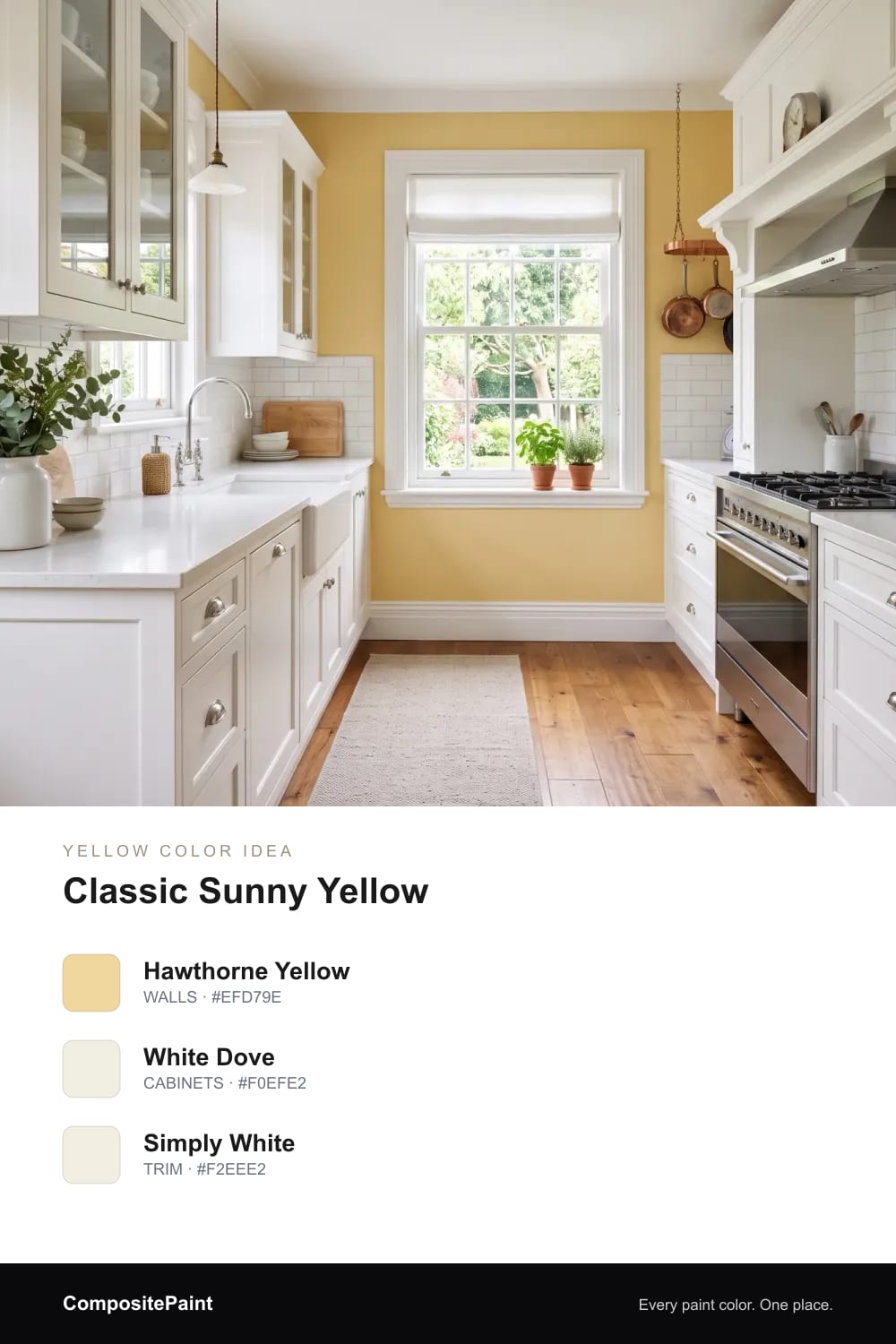
The cheerful, true yellow people picture for a kitchen, fresh against crisp white cabinets.
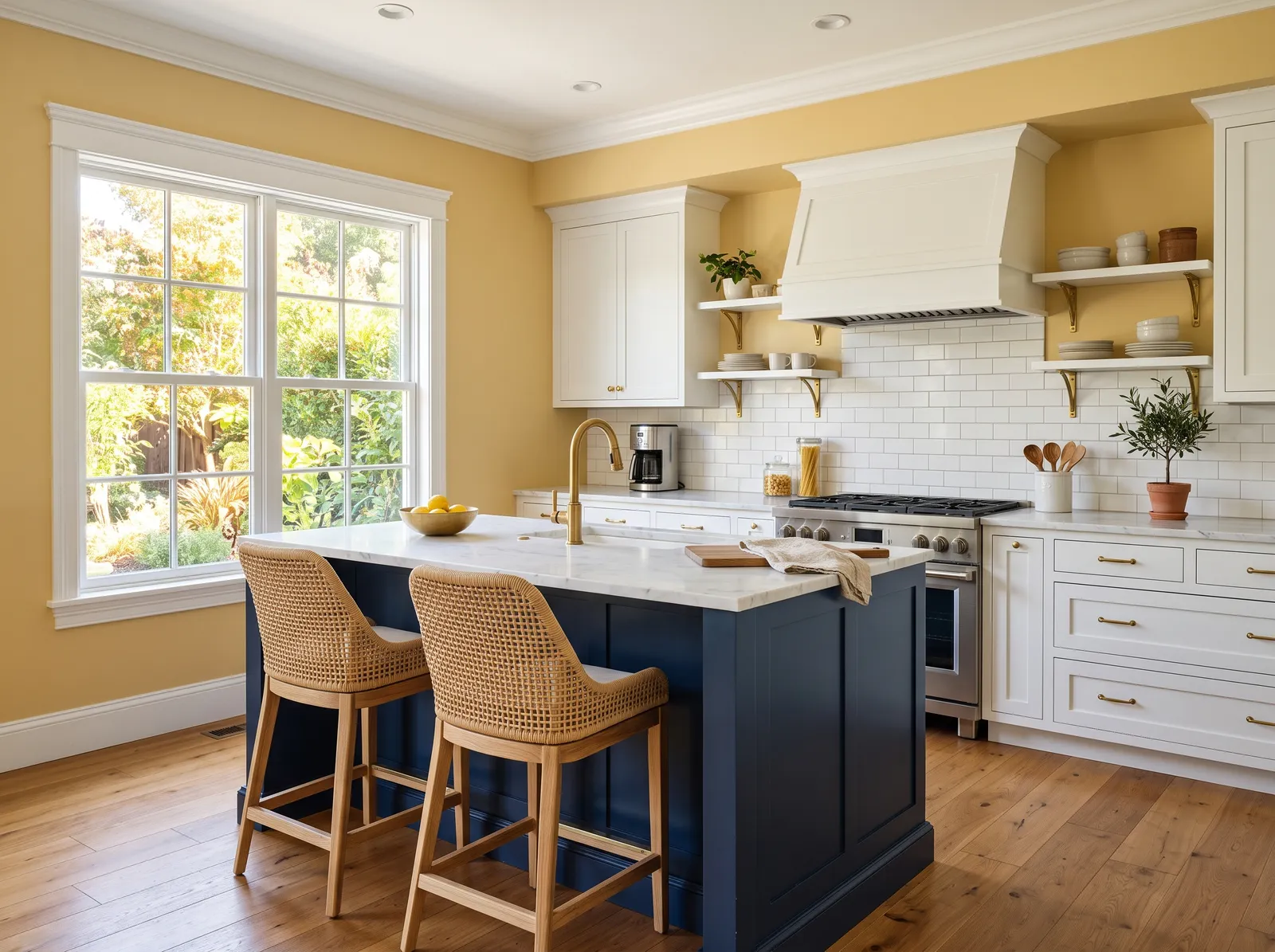
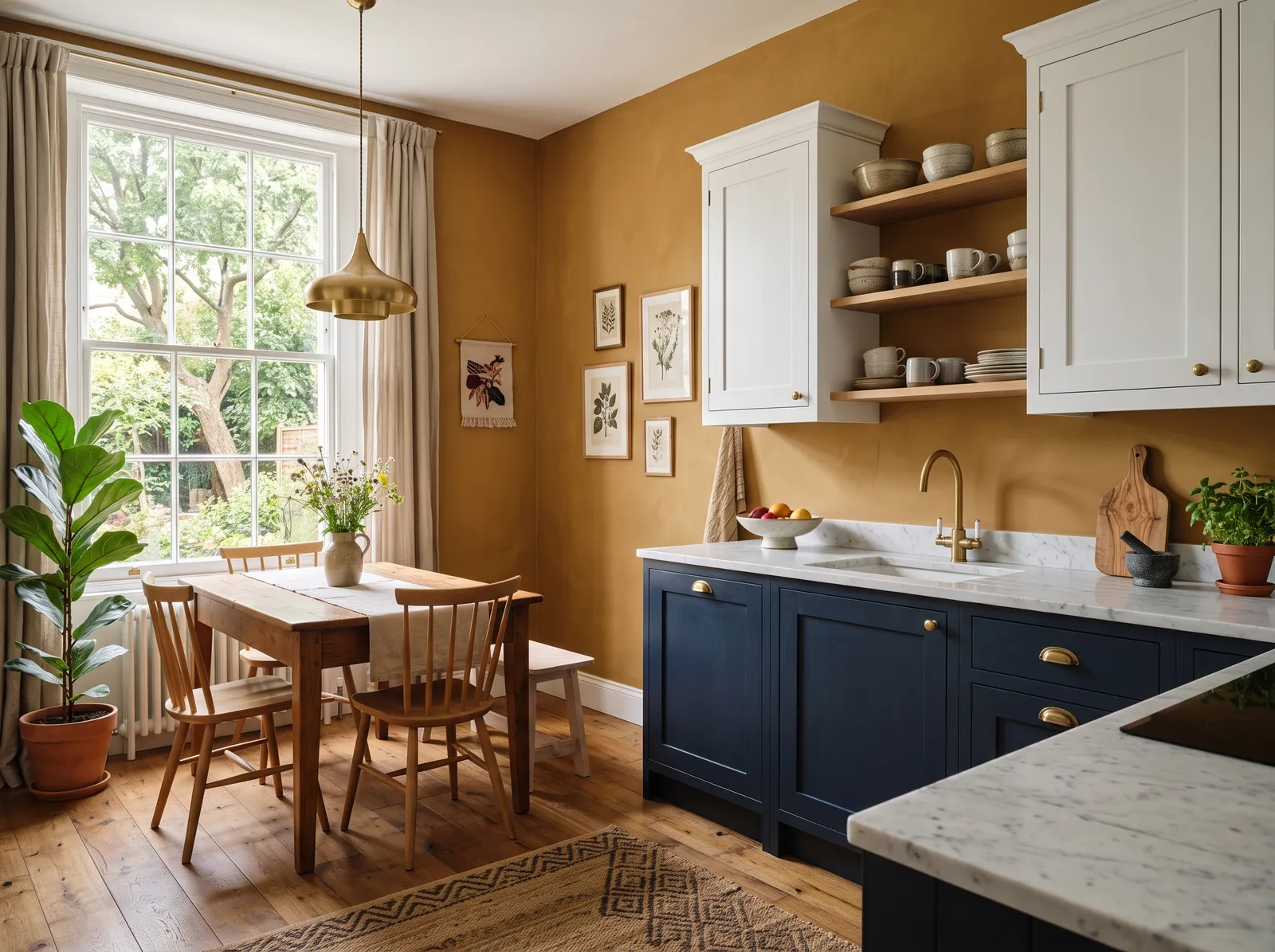
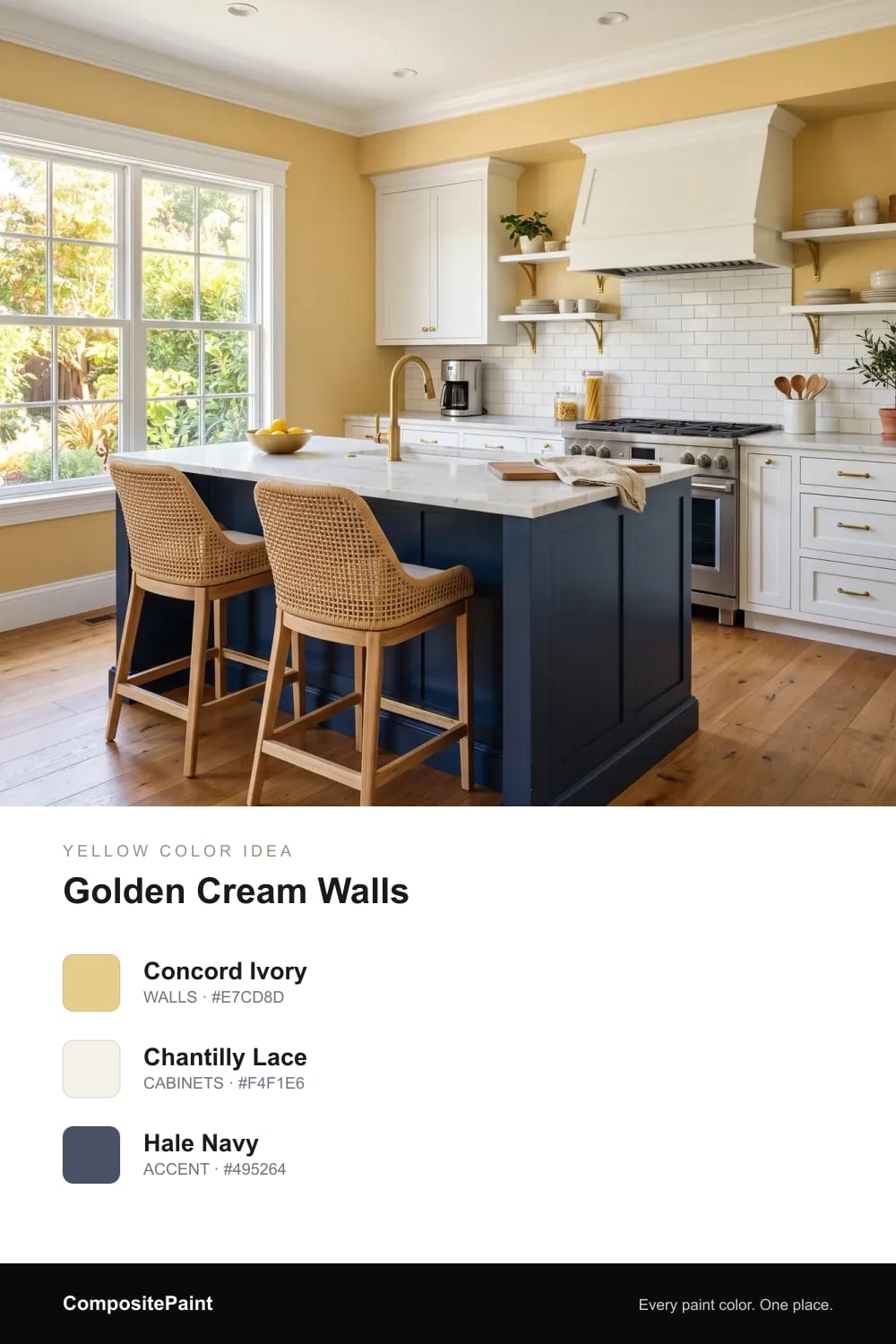
A richer, golden cream that warms the whole room and looks beautiful next to deep navy.
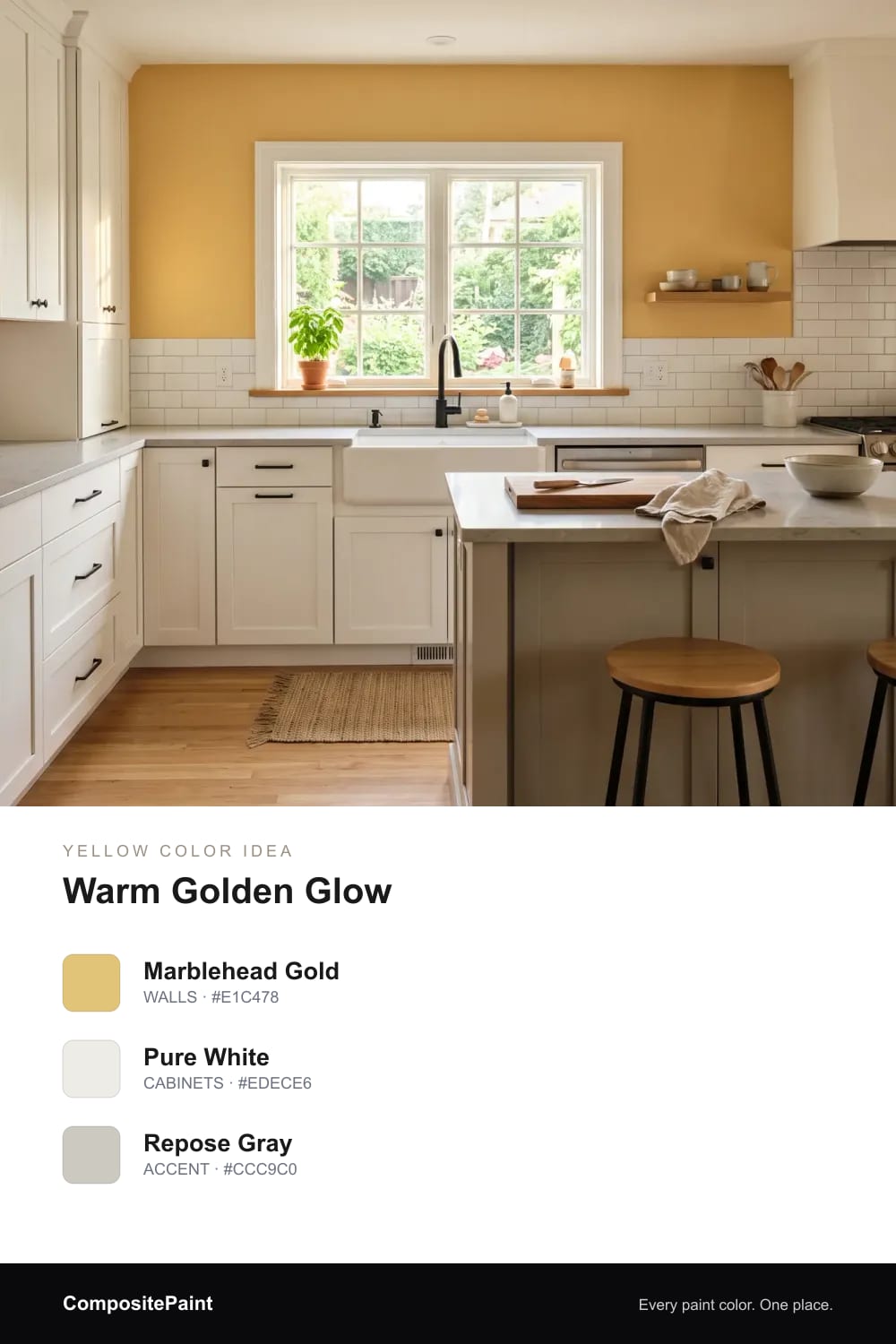
A full, glowing golden yellow that makes even a small kitchen feel sun-filled.
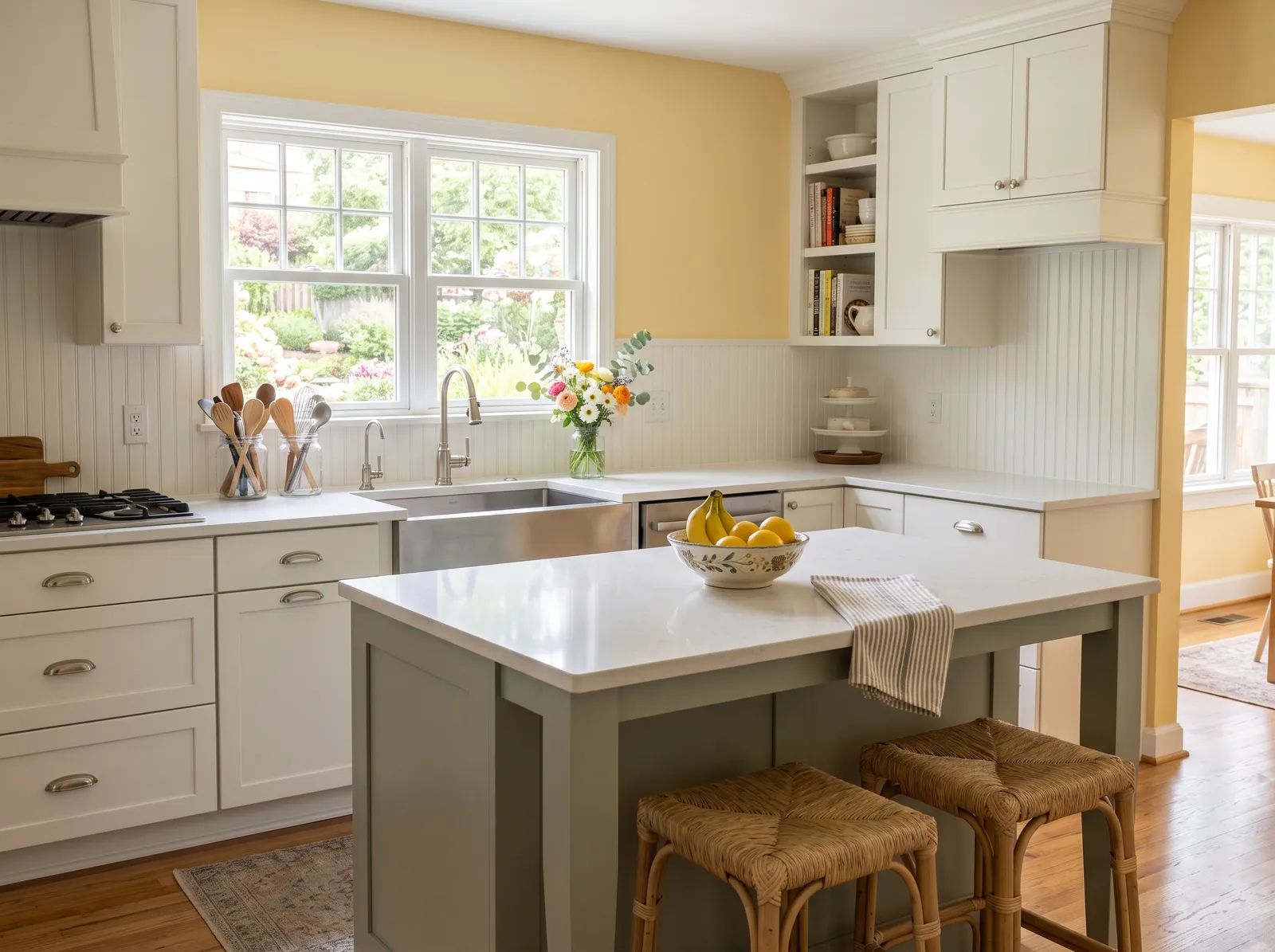
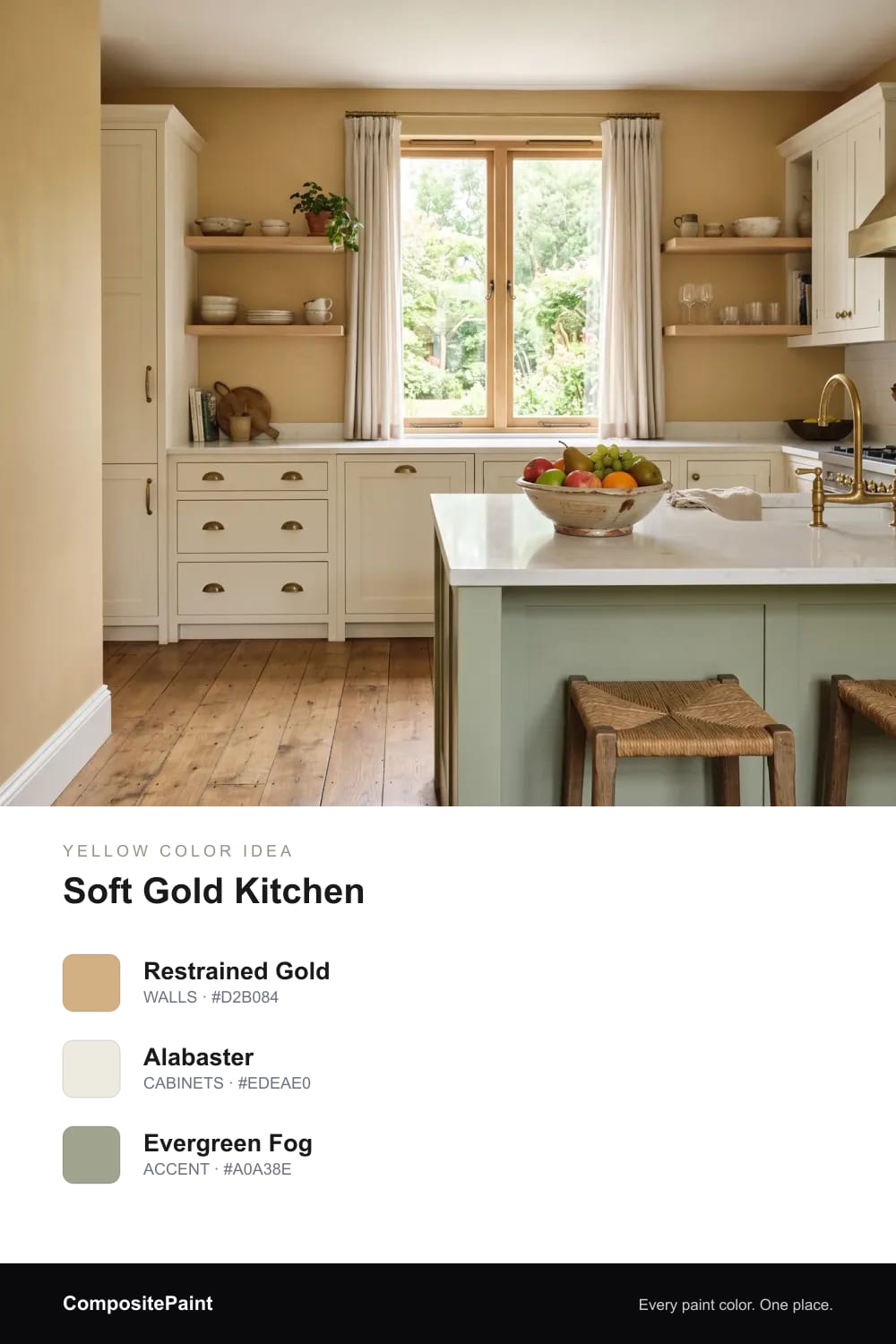
A grown-up, slightly muted gold that pairs softly with sage green for a calm, sunny mood.
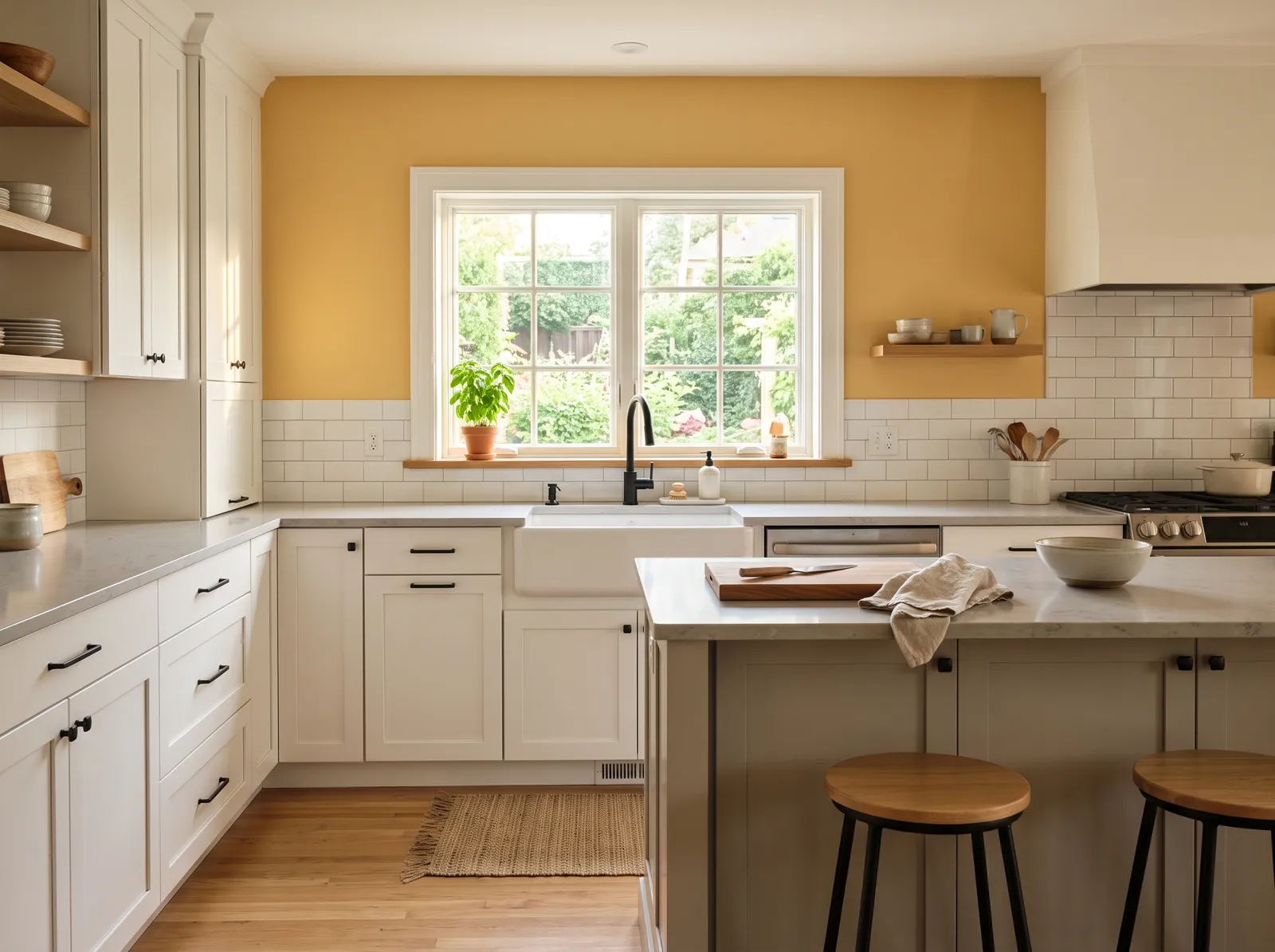
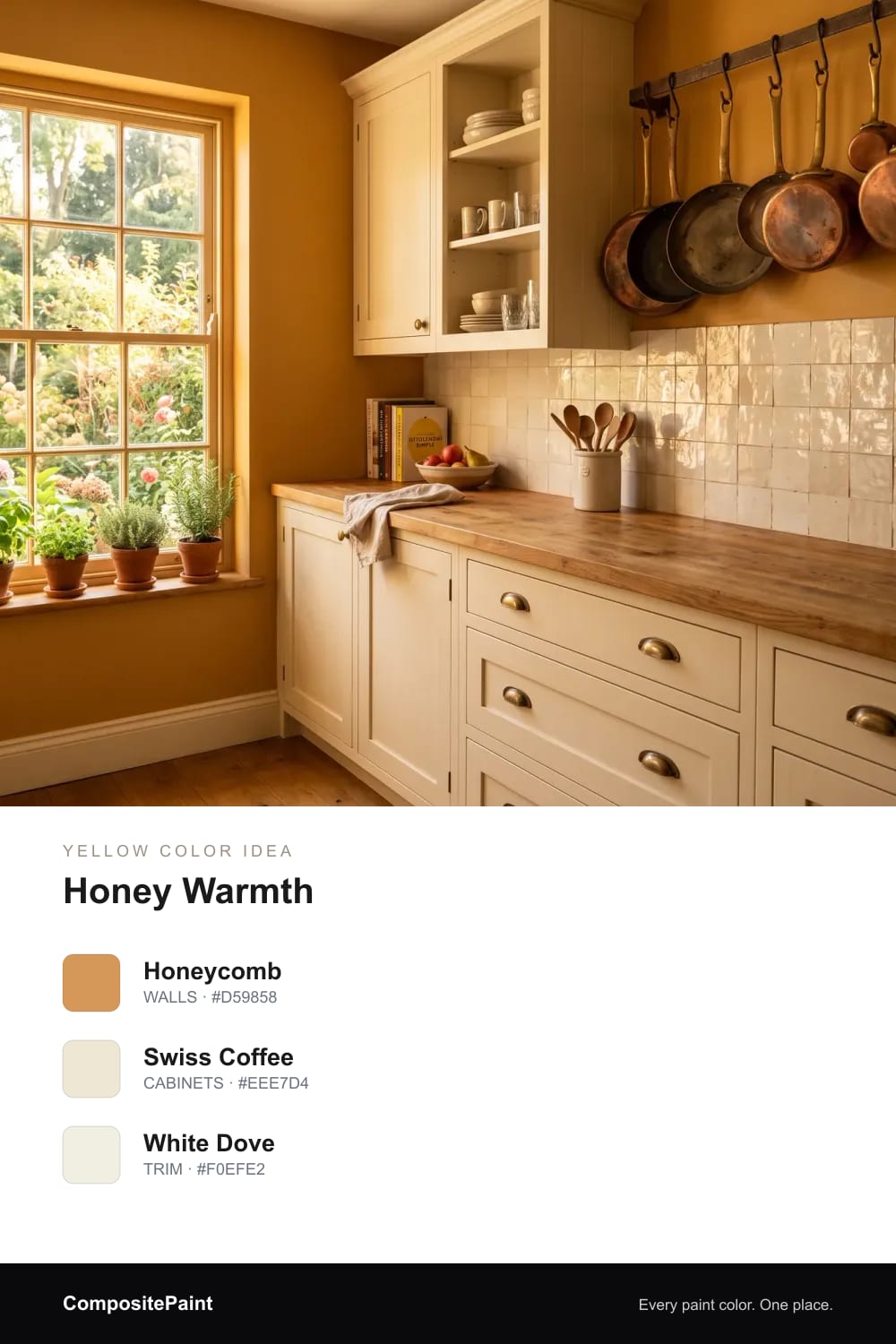
A deep, golden honey on the walls that wraps the kitchen in cozy, amber warmth.
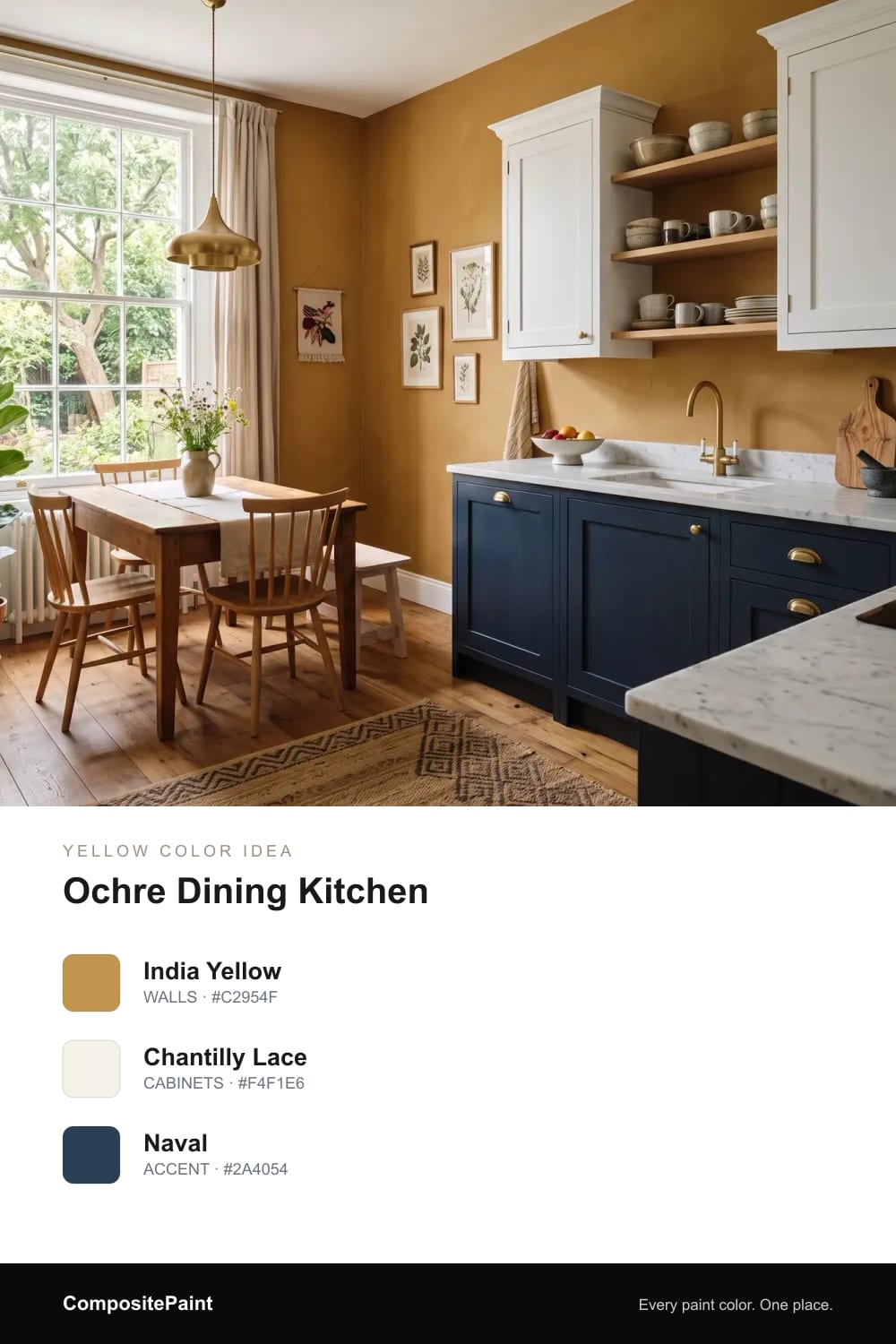
A rich, earthy ochre with real depth, perfect for an eat-in kitchen that feels grounded and warm.
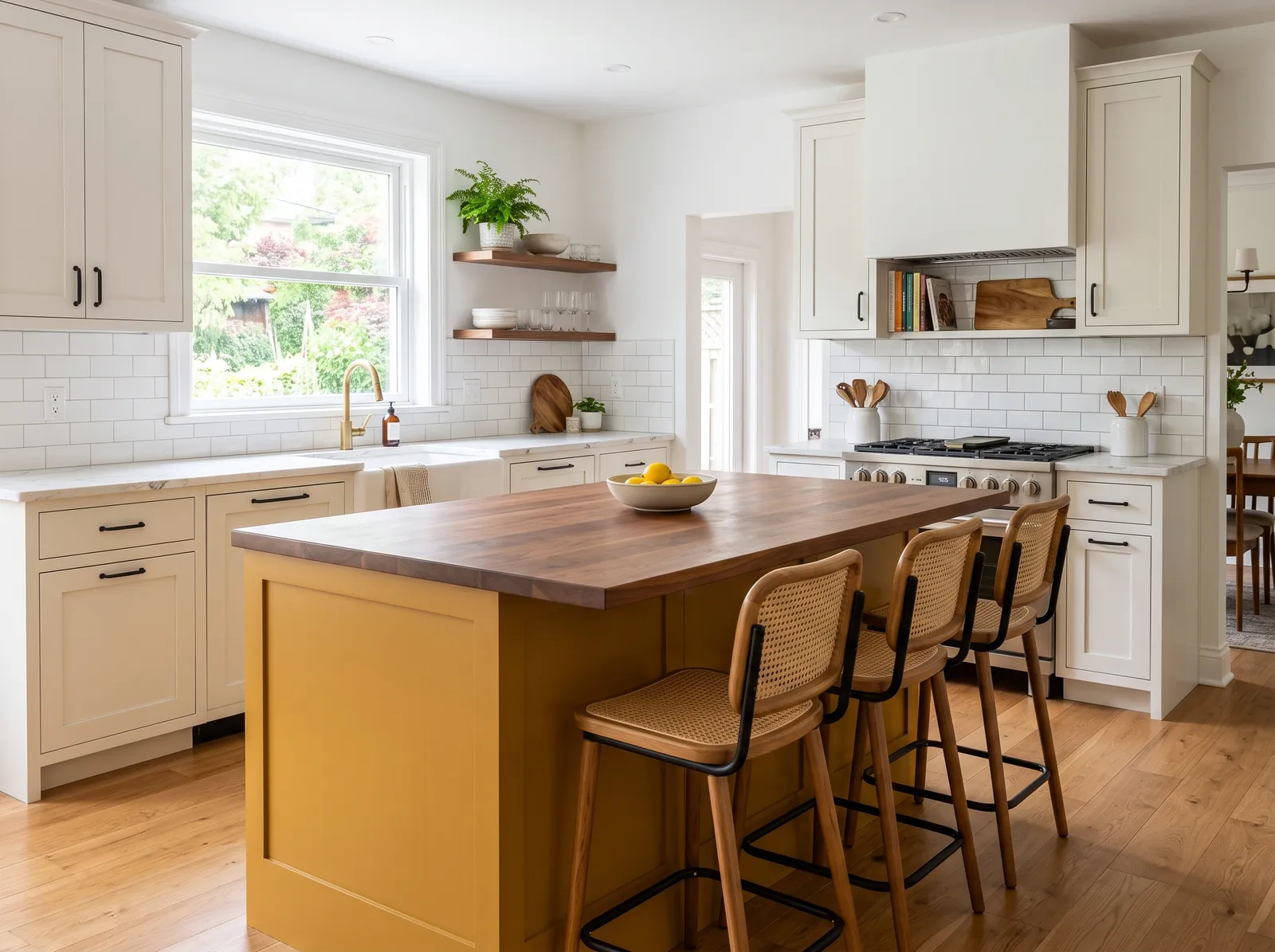
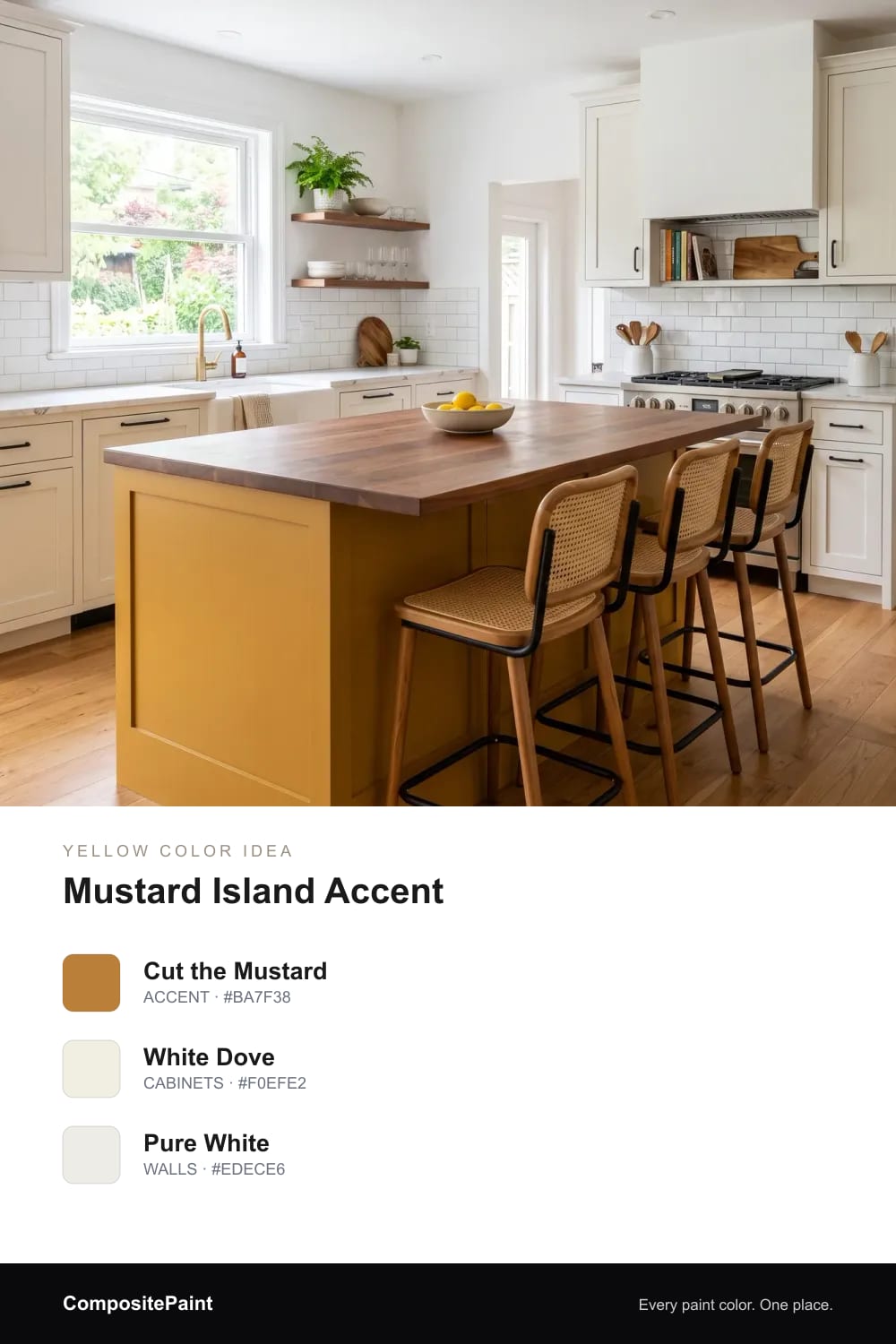
A bold mustard island anchors a soft white kitchen with one cheerful punch of color.
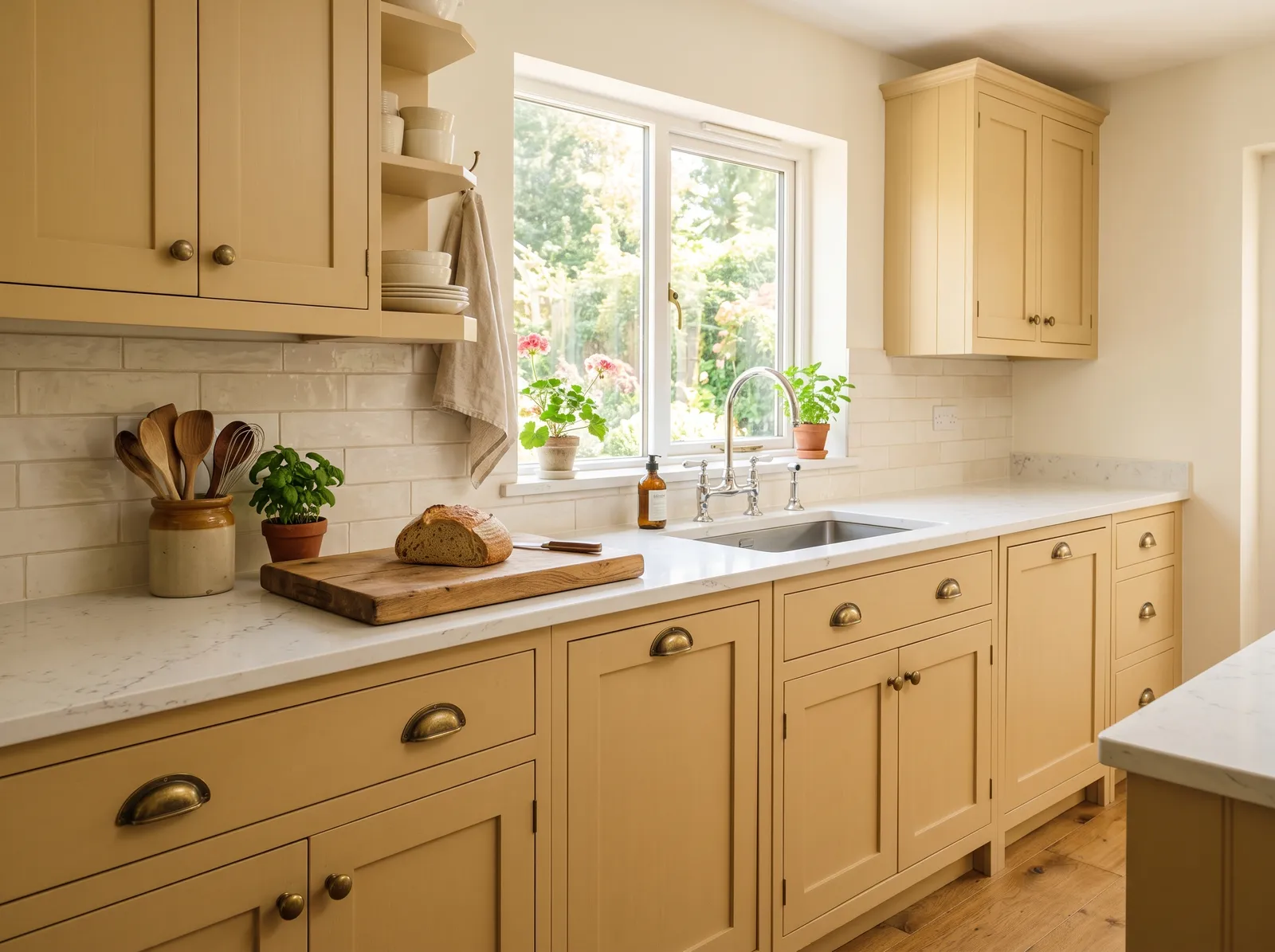
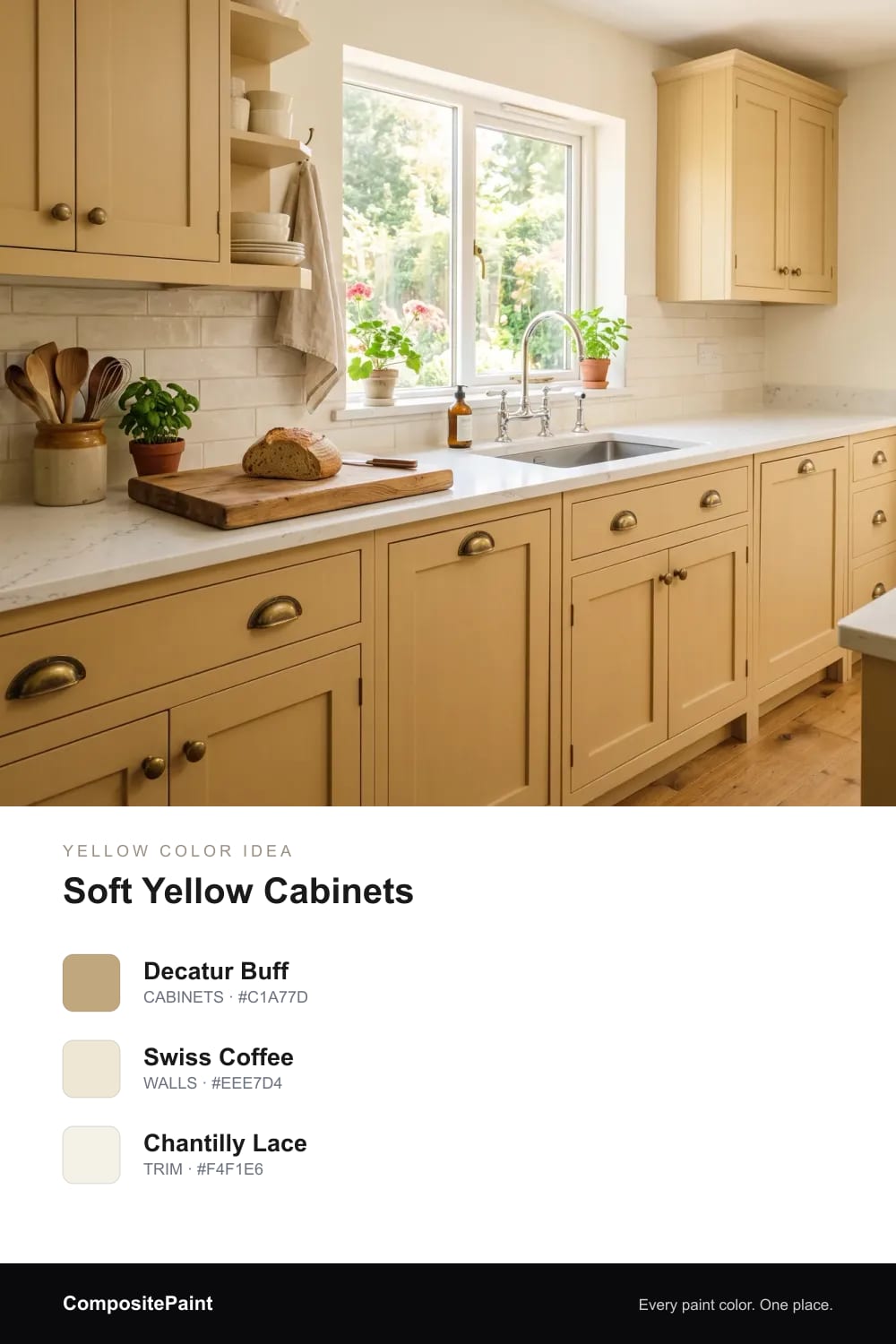
Warm, buff-yellow cabinets give a gentle golden glow without painting a single wall.
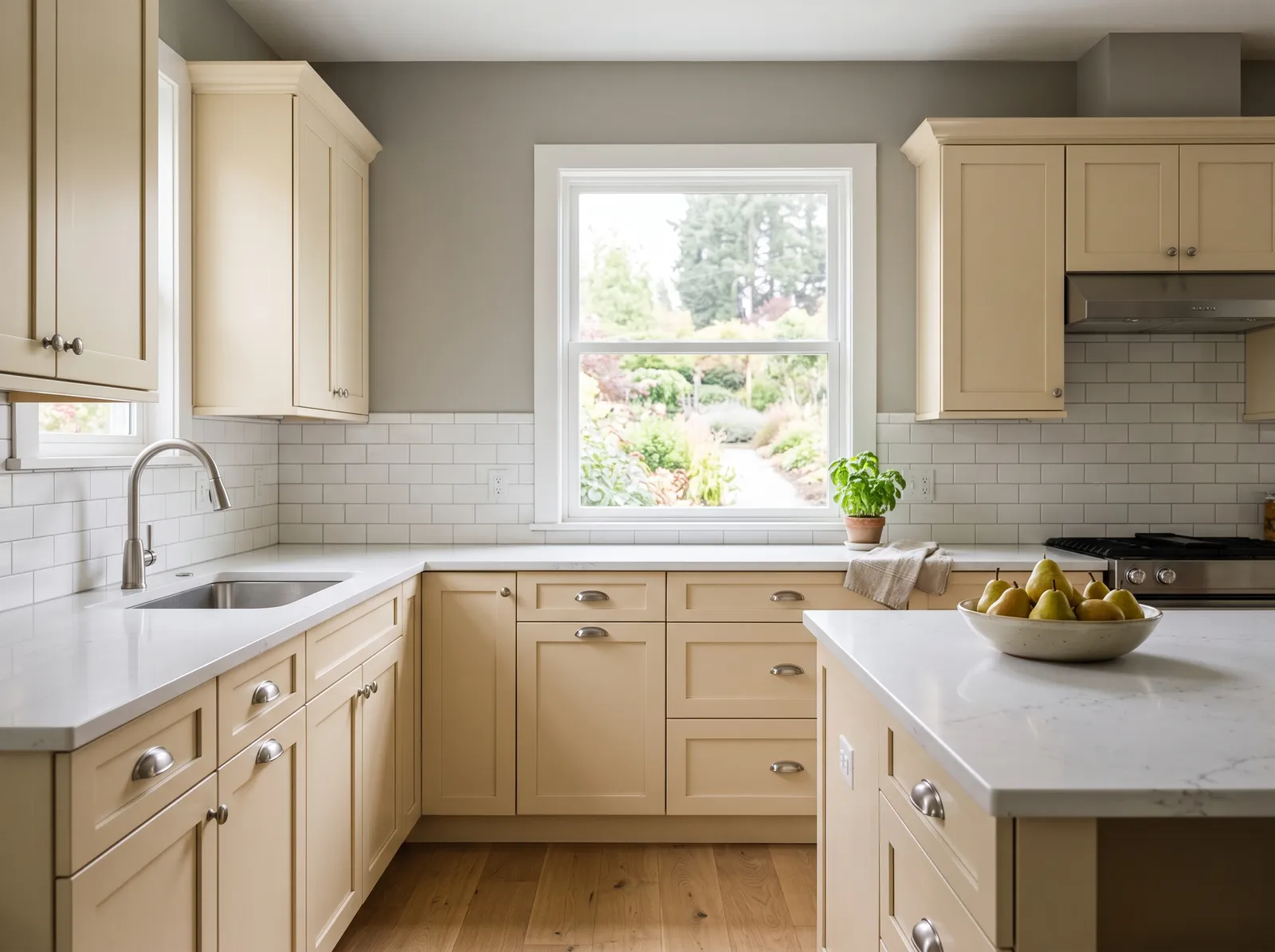
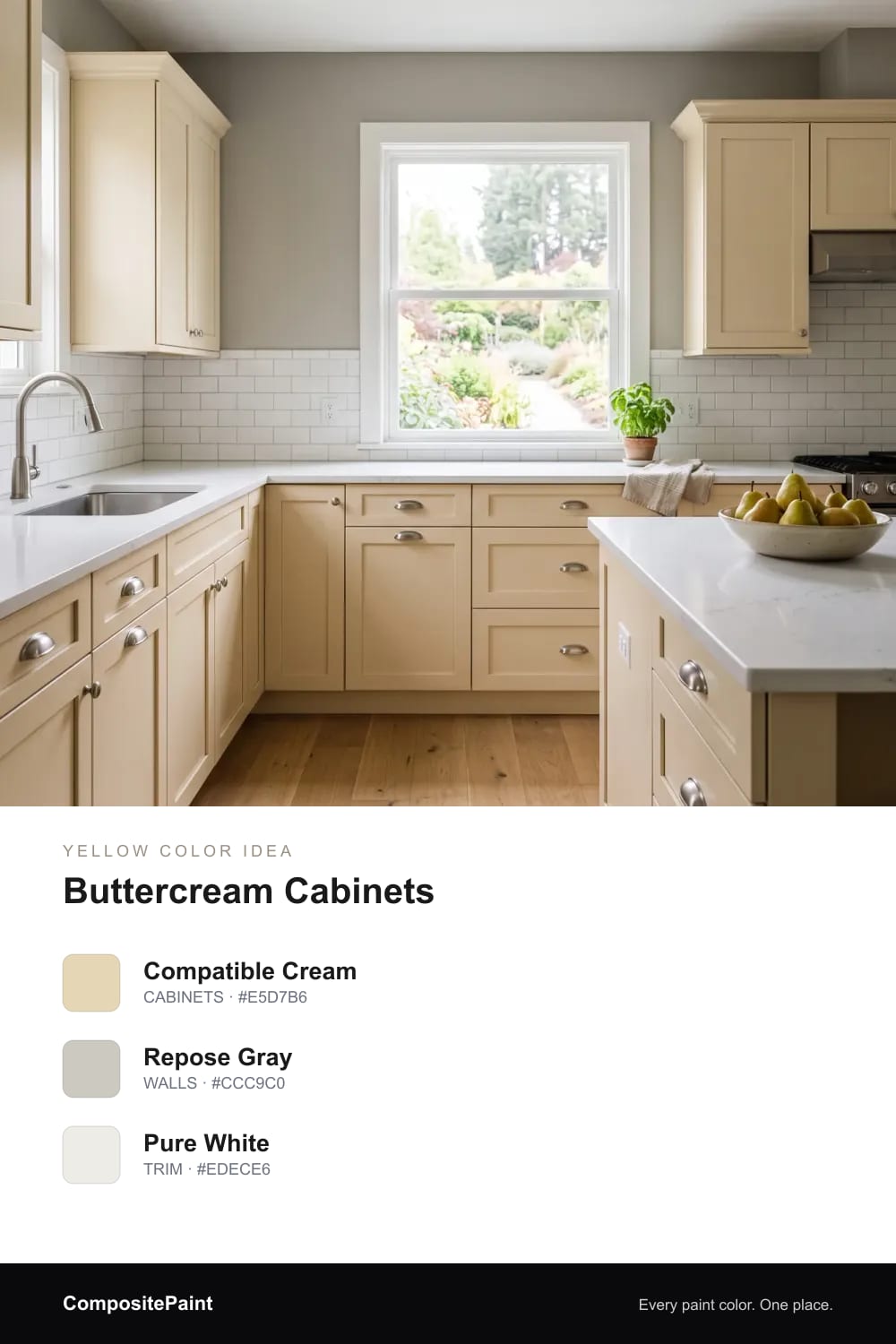
Creamy butter cabinets feel soft and sunny against quiet gray walls, warm but easy to live with.
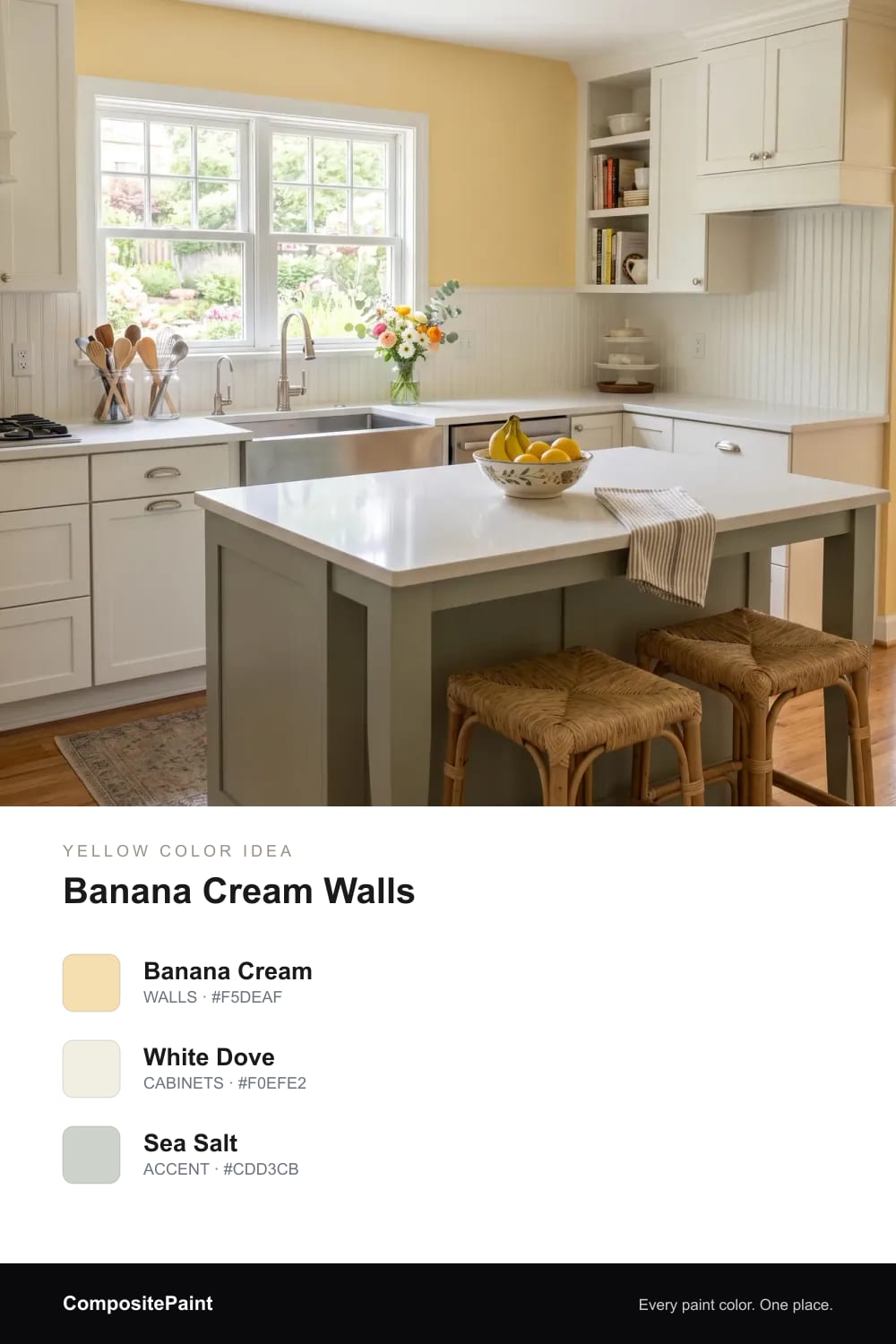
A light, happy banana-cream yellow that keeps a kitchen feeling fresh and full of sun.
Upload a photo of your yellow and the visualizer paints your walls in any of these colors — in seconds.
UPLOAD YOUR PHOTO →Yellow is the color of light, so it does something no other shade can do in a kitchen. It makes the room feel warm and awake, even on gray mornings. People naturally gather where it feels bright, and yellow gives you that feeling all year round.
It also works hard for you. A soft yellow bounces daylight around the room, hides the dull look that white can get in low light, and pairs easily with the wood, white, and stone you already have. That mix of cheerful and easy is why yellow has stayed a kitchen favorite for so long.
Yellow covers a big range, and where you land changes the whole mood. At the soft end you have buttercreams and pale butters like Hepplewhite Ivory and Weston Flax. They read almost like a warm white and bring just a hint of sunshine, which makes them the easiest to live with.
In the middle sit the true, cheerful yellows like Hawthorne Yellow and golden creams like Concord Ivory. Go deeper and you reach honey, gold, and ochre tones like Honeycomb and India Yellow, which feel rich and cozy. Start soft if you are unsure, and go bolder once you know you love the color.
The classic yellow kitchen is yellow walls with white cabinets, and there is a good reason it never goes out of style. The white keeps everything fresh and clean, while the yellow brings the warmth. It is a balanced look that feels happy without feeling like too much.
Pick a soft white like White Dove or Chantilly Lace so the cabinets stay crisp against the color. Then let the yellow do the talking. A gentle buttercream gives a calm, light-filled room, while a deeper gold or honey makes the space feel cozy and full of character.
If you love yellow but want it lower and quieter, put it on the cabinets instead of the walls. A soft buff or buttercream like Decatur Buff or Compatible Cream gives the room a gentle golden glow without shouting. It feels warm and a little timeless, almost like aged cream.
Keep the walls soft and neutral so the cabinets stay the star. A creamy white or a quiet warm gray works beautifully. This is a great choice for a kitchen that gets plenty of light, since the cabinet color will soften and warm up the brightness.
Light changes yellow more than almost any other color, so always test it on your own wall. A north-facing kitchen gets cool, gray light, which can make a strong yellow look greenish. There, lean toward warm, soft yellows with a creamy base and skip anything too acid or lemony.
A south or west-facing kitchen gets warm, golden light that makes yellow even richer. In those rooms a pale buttercream is often enough, since a deep gold can turn almost orange in the afternoon sun. Tape up a big sample, look at it morning and evening, and trust what you see at the times you actually use the room.
Yellow is easy to pair because so many natural materials already lean warm. Crisp whites keep it fresh, soft grays and greiges calm it down, and warm wood tones make it feel cozy and grounded. For counters, white marble or quartz looks clean, while a butcher block adds even more warmth.
When you want contrast, deep navy and soft sage green are the two safest partners for yellow. A navy island under sunny walls feels classic and crisp, while sage brings a relaxed, garden-fresh feel. Add brass or aged-bronze hardware to tie the warm tones together.
Kitchens get splashes, steam, and greasy fingerprints, so the finish matters as much as the color. For yellow walls, a satin or eggshell finish is the sweet spot. It has a soft glow, wipes clean easily, and keeps the color looking even instead of patchy.
For yellow cabinets, step up to a satin or semi-gloss. The harder finish stands up to daily wiping and shows off the smooth surface. Save flat or matte for the ceiling only, since it marks and stains too easily for busy kitchen walls.
Yes, yellow is one of the most loved kitchen colors because it feels warm, cheerful, and full of light. It makes the room a welcoming place to start the day and pairs easily with white, wood, and stone. Soft yellows are the easiest to live with long term.
For most kitchens a soft, creamy yellow like Hepplewhite Ivory or Hawthorne Yellow is the safest and most timeless choice. It brings warmth without feeling bright or dated. Go deeper to a honey or gold only if you want a cozy, richer mood.
White and warm gray keep yellow fresh and balanced, while wood tones make it cozy. For contrast, navy blue and soft sage green are the best partners. Brass or bronze hardware ties all the warm tones together.
Yellow walls with white cabinets is the classic, cheerful look and the easiest to change later. Soft yellow cabinets give a gentler, more timeless glow and keep the walls neutral. Choose walls for a sunnier room and cabinets for a quieter, warmer one.
North-facing kitchens get cool light that can make yellow look greenish, so pick a warm, creamy yellow rather than a bright or lemony one. Soft butters like Weston Flax or golden creams like Concord Ivory hold their warmth in cool light. Always test a large sample on your own wall first.
Use satin or eggshell on yellow walls so they wipe clean and look even. For yellow cabinets, choose satin or semi-gloss to stand up to daily use. Keep flat paint for the ceiling only, since it stains too easily for a kitchen.