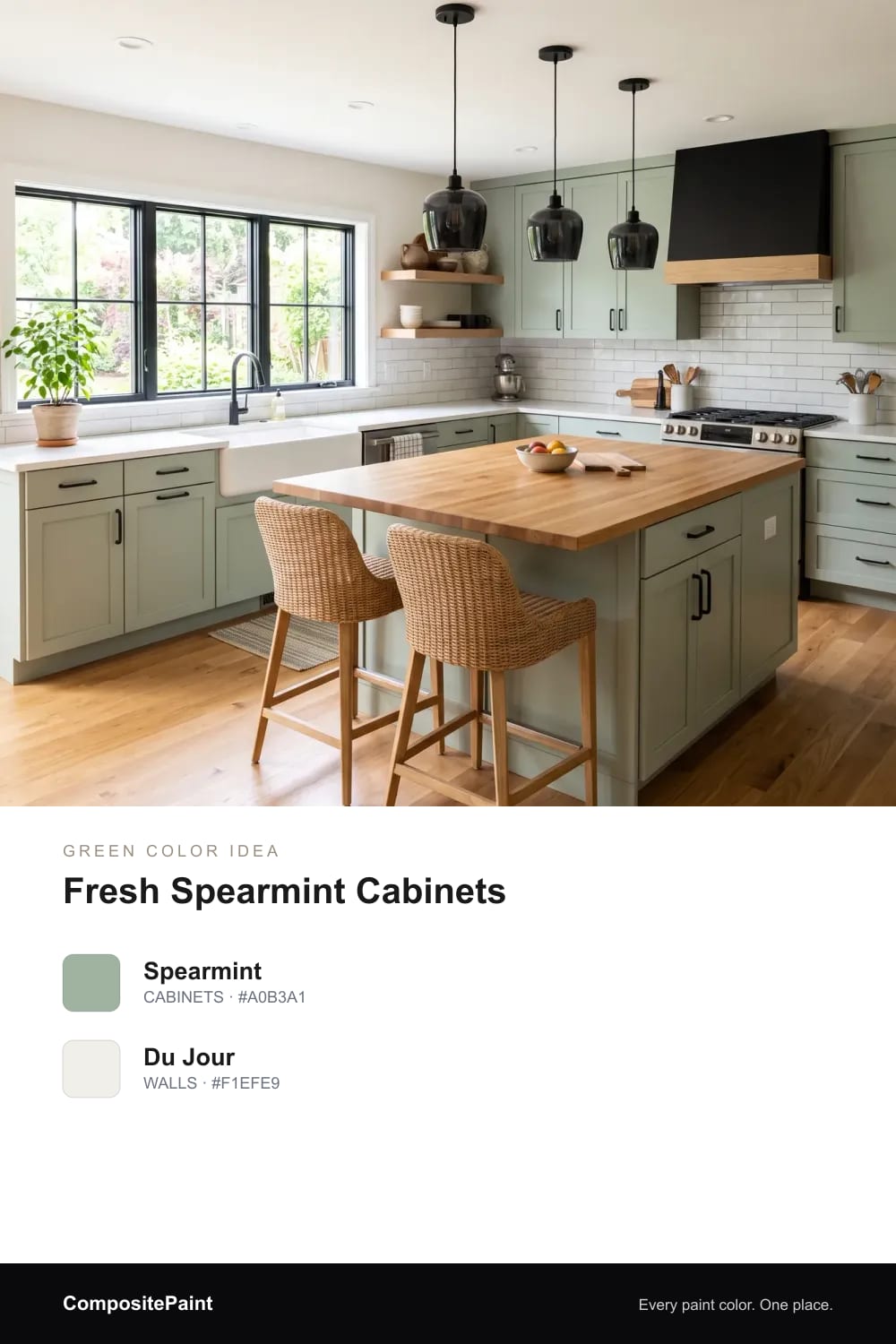
1. Fresh Spearmint Cabinets
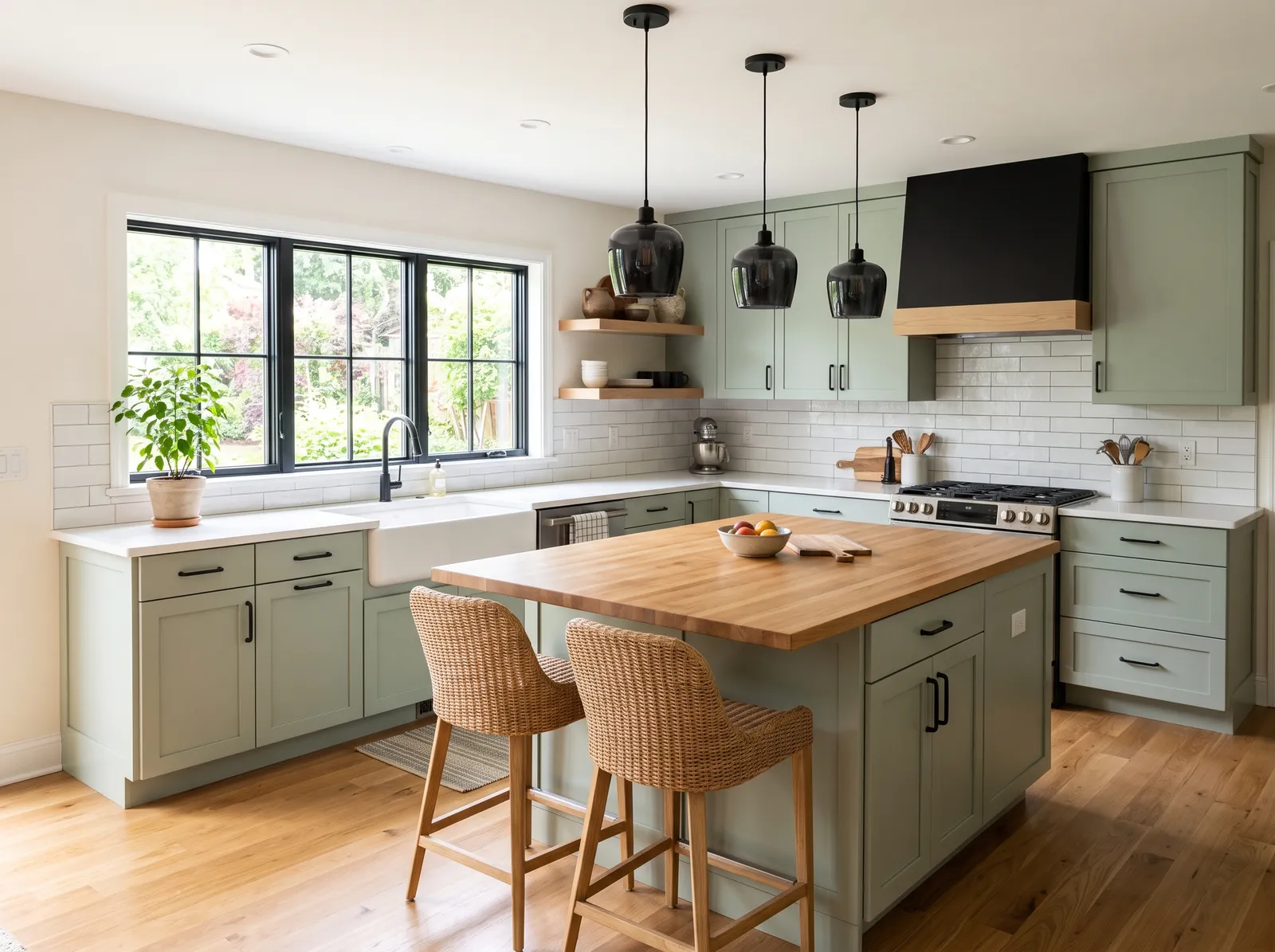
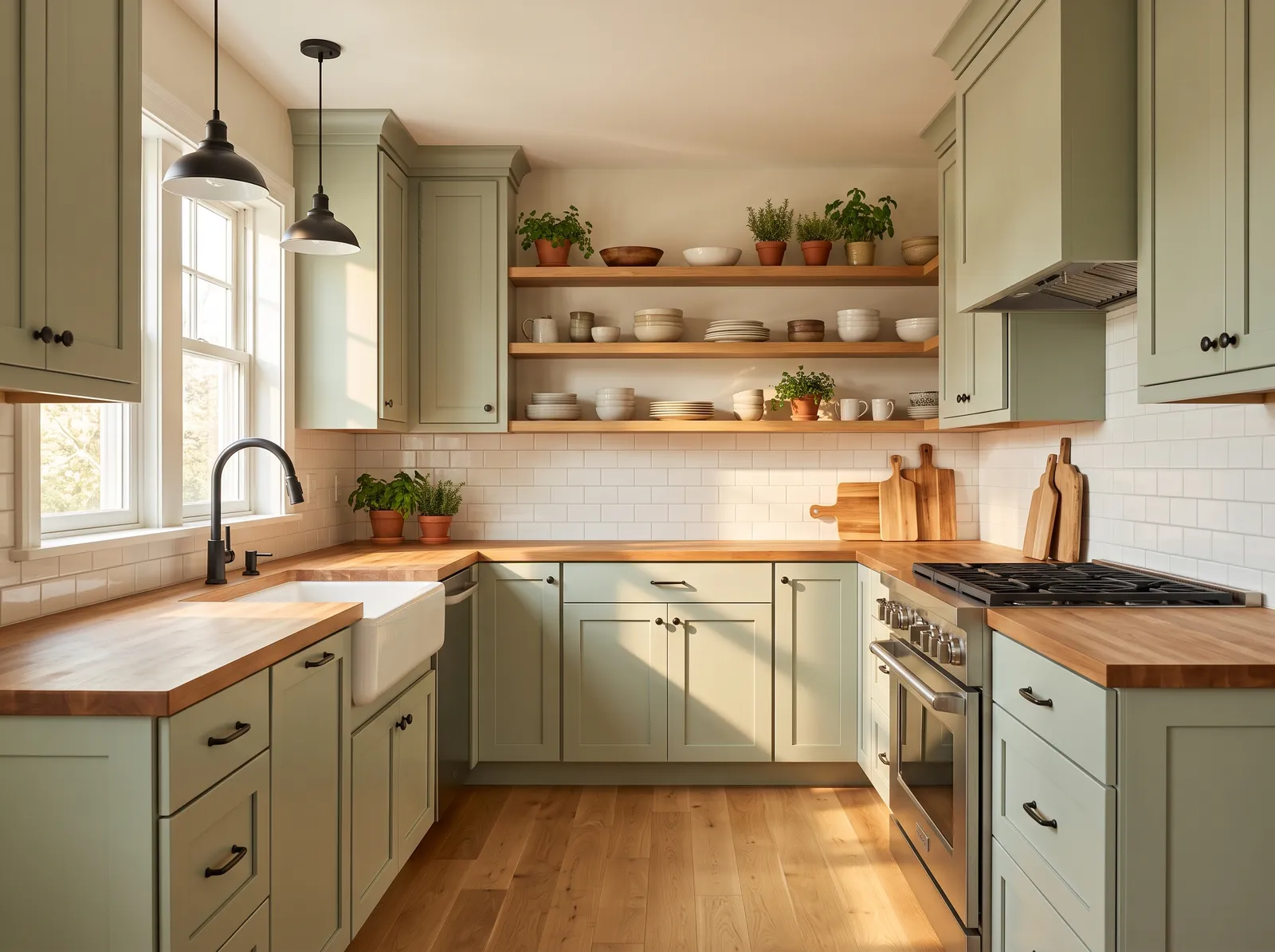
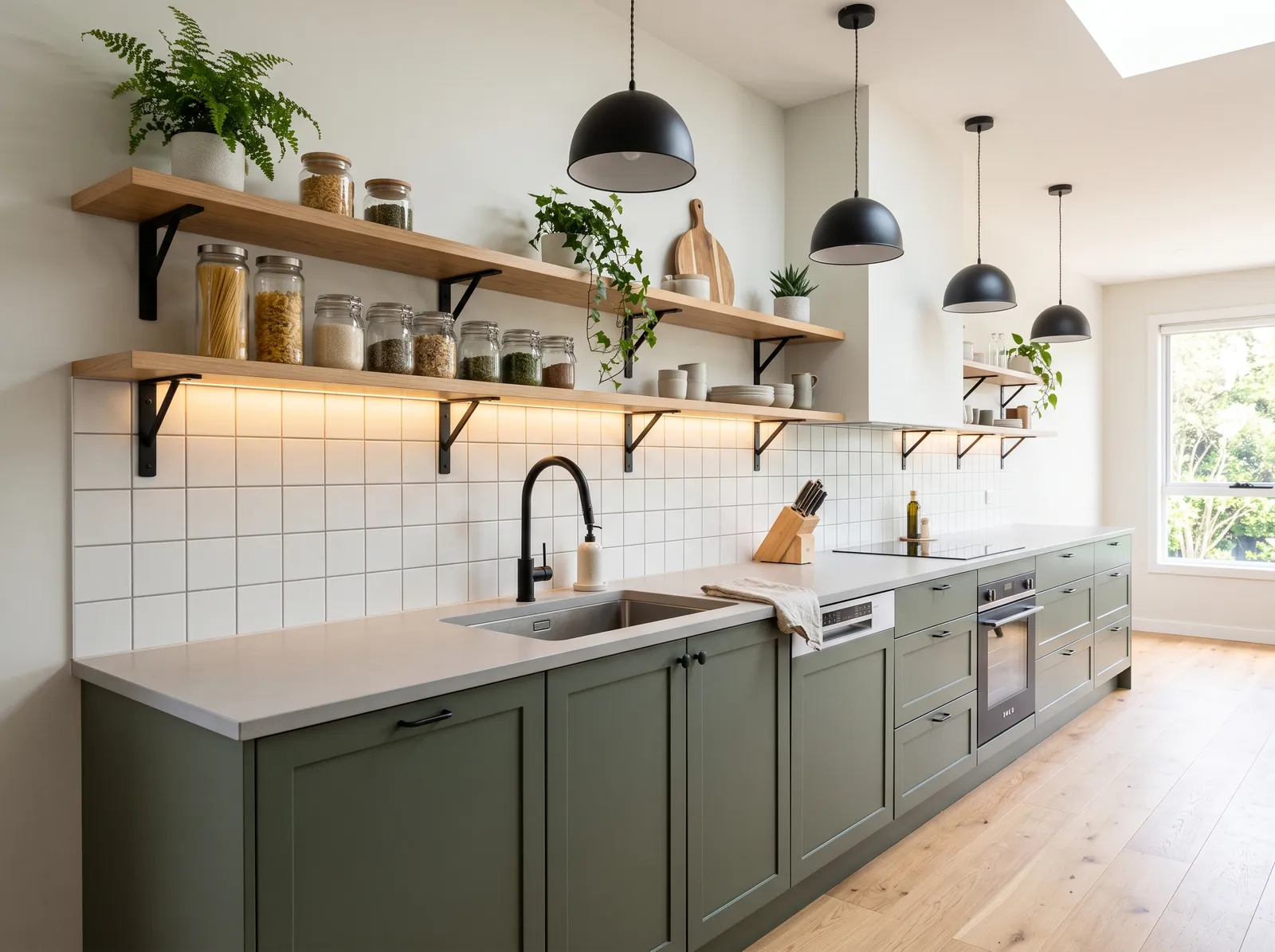
Spearmint is a soft, minty sage that keeps cabinets feeling light and calm, like a quiet morning with the window open.
Green is the color people fall for in a kitchen, and it almost always lands on the cabinets. From the palest sea-salt sage to a deep forest, there is a green for every room and every kind of light. Browse the looks below and find the one that feels like your kitchen.
By Jessica Williams · Color Stylist
Spearmint is a soft, minty sage that keeps cabinets feeling light and calm, like a quiet morning with the window open.
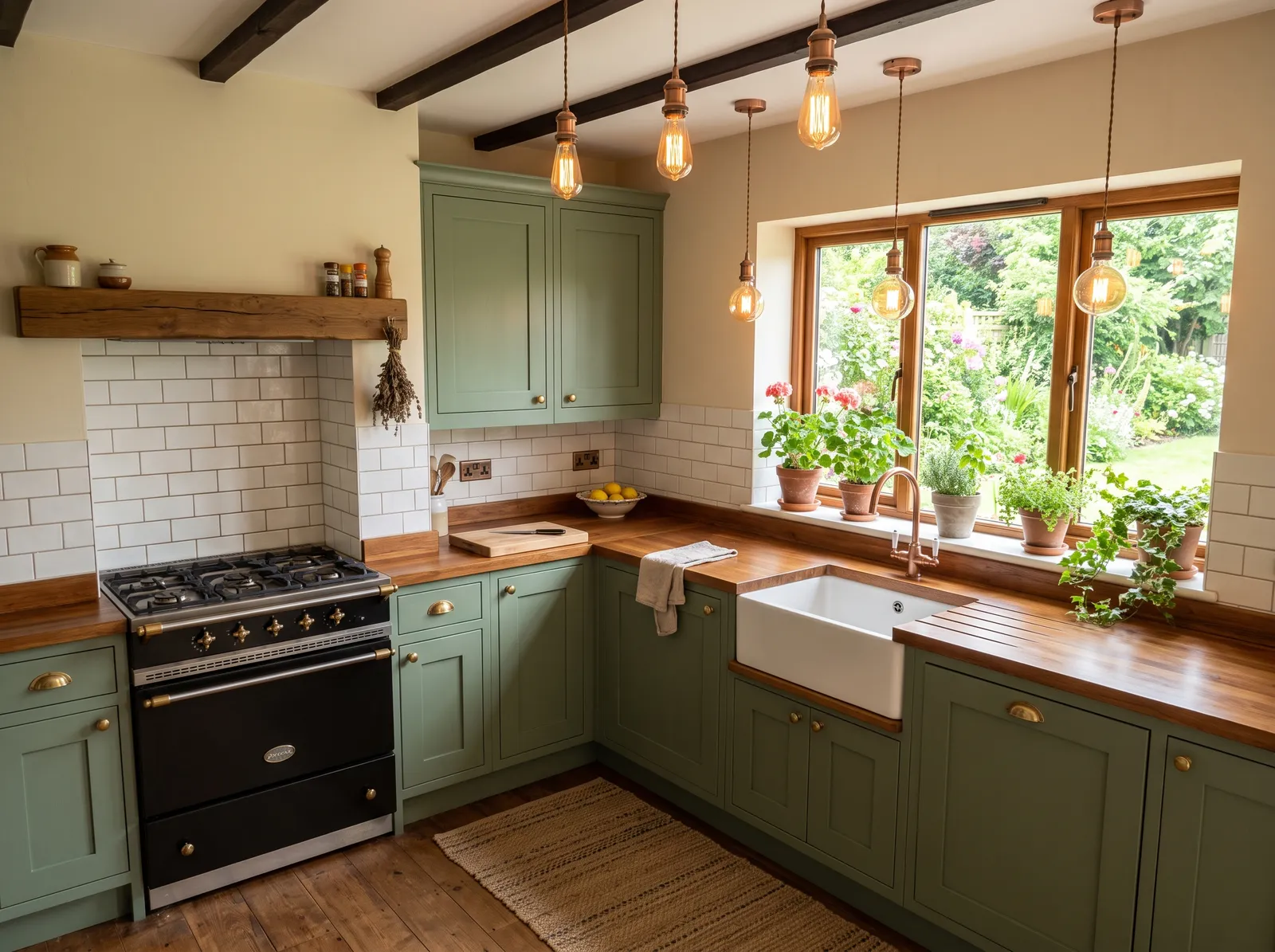
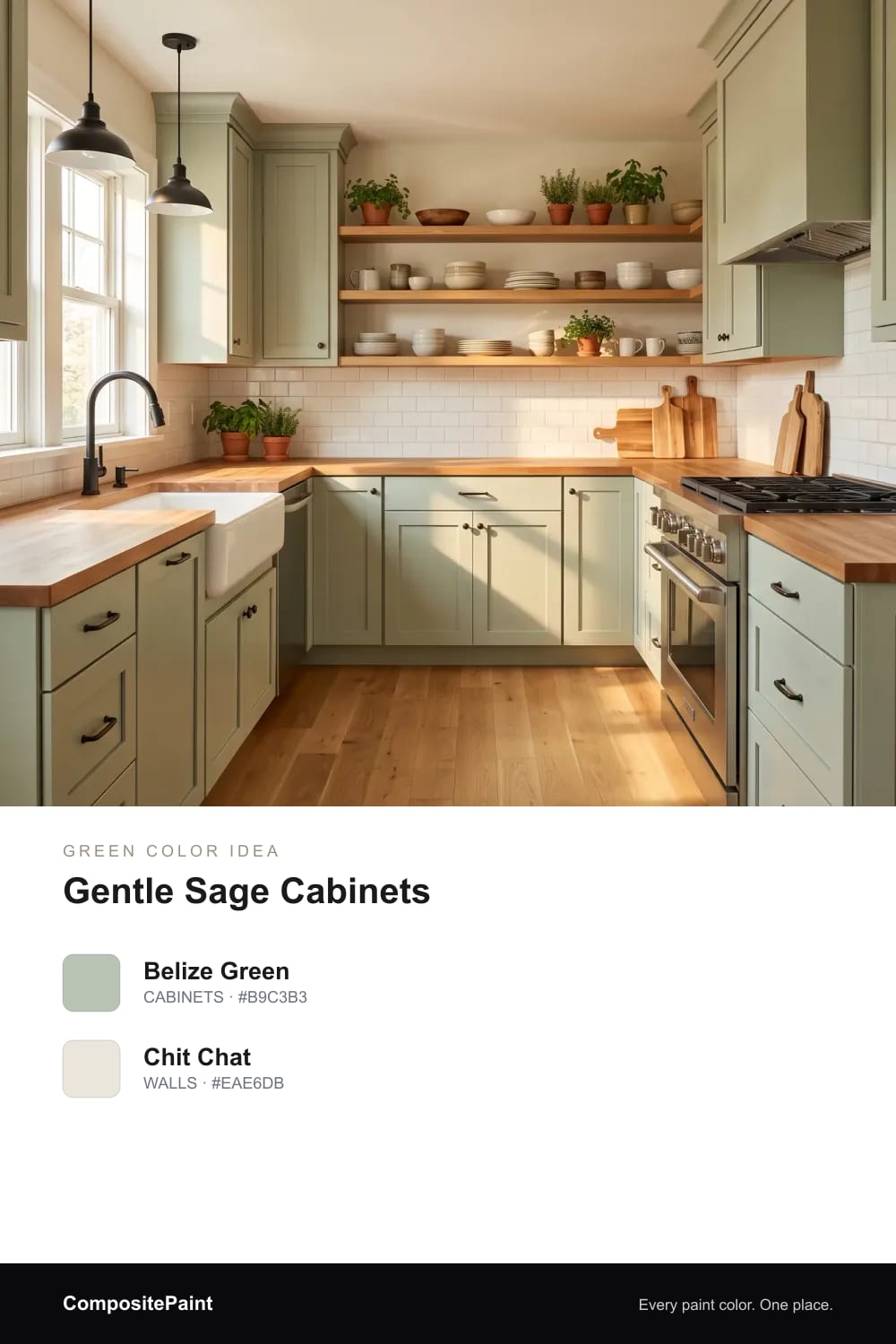
Belize Green is a hushed sage with a touch of gray, an easy green that warms up cabinets without ever feeling loud.
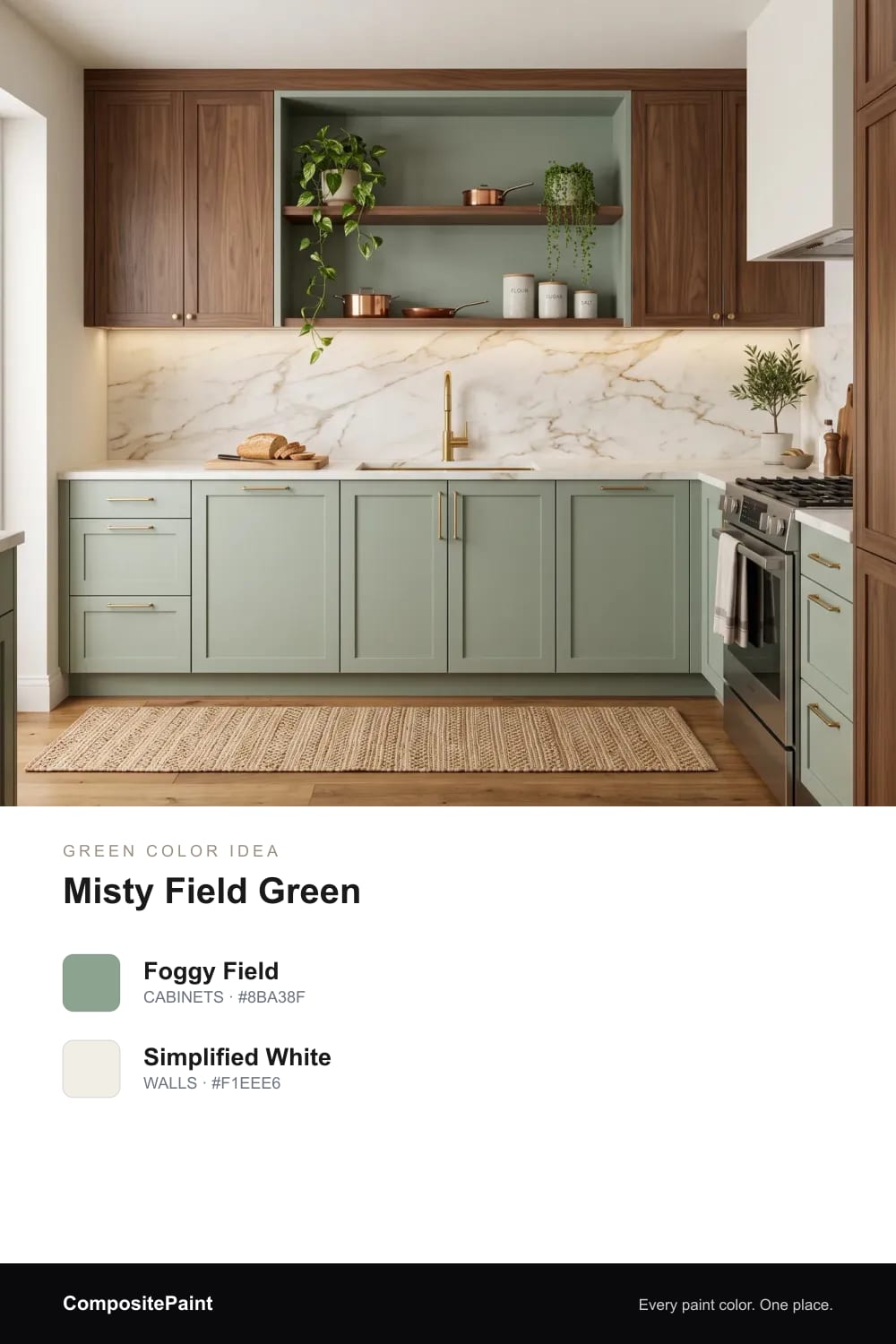
Foggy Field is a soft, dusty sage that settles cabinets into something restful, grounded, and easy to live with every day.
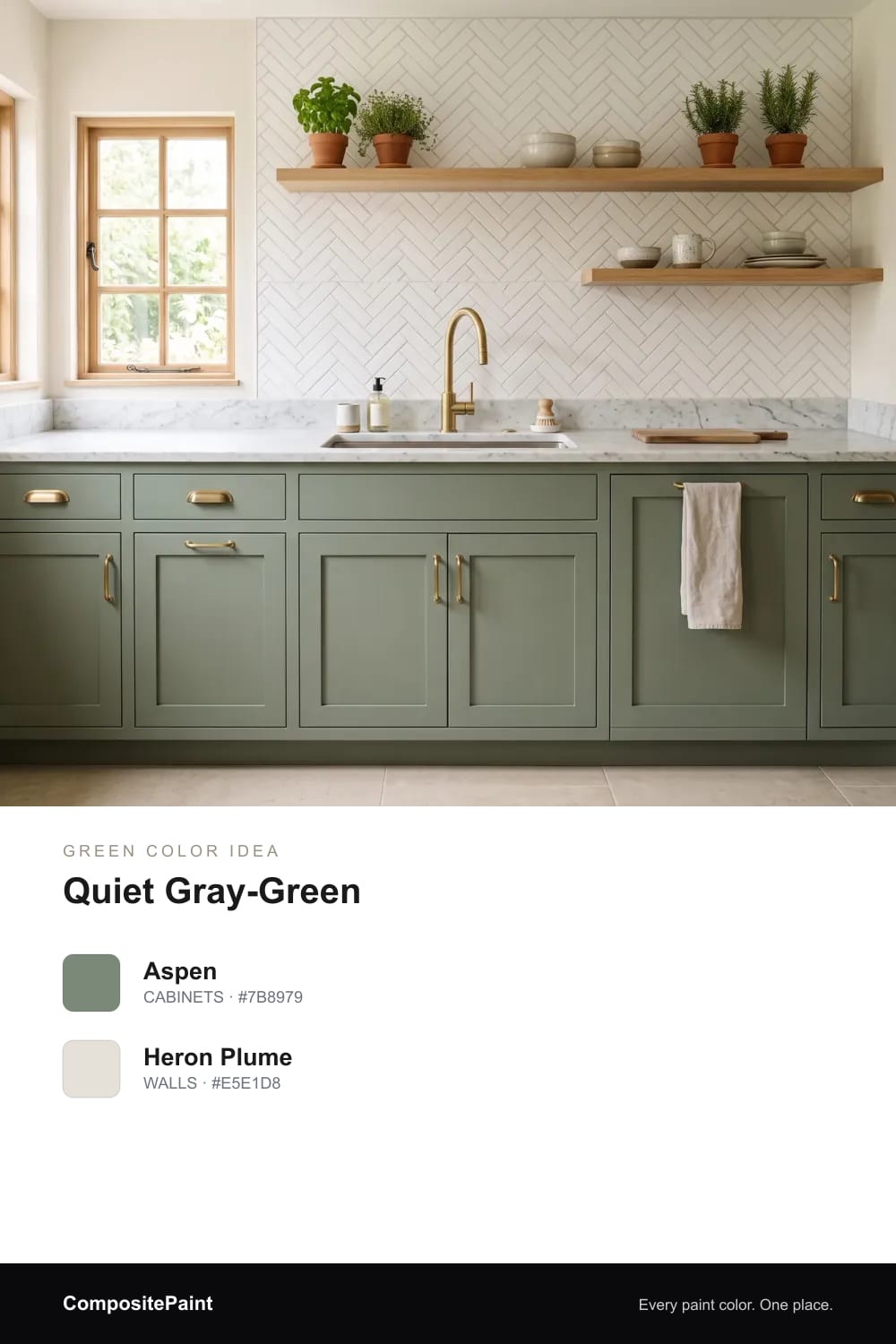
Aspen is a deeper, smoky sage that gives cabinets a calm, earthy weight while still feeling soft and welcoming in the kitchen.
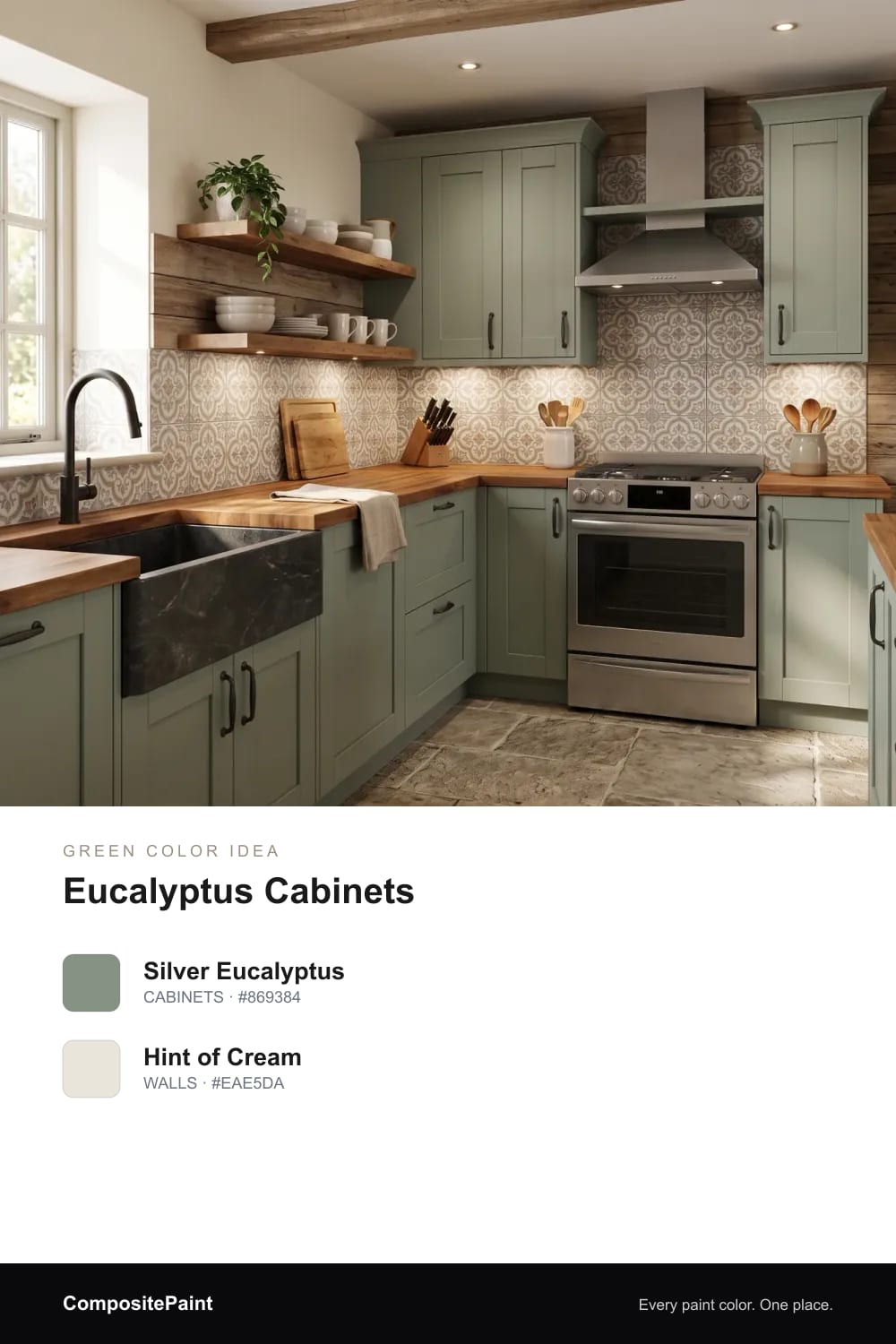
Silver Eucalyptus is a muted, leafy sage that feels cozy and lived-in, a warm green for a cabinet you will love for years.
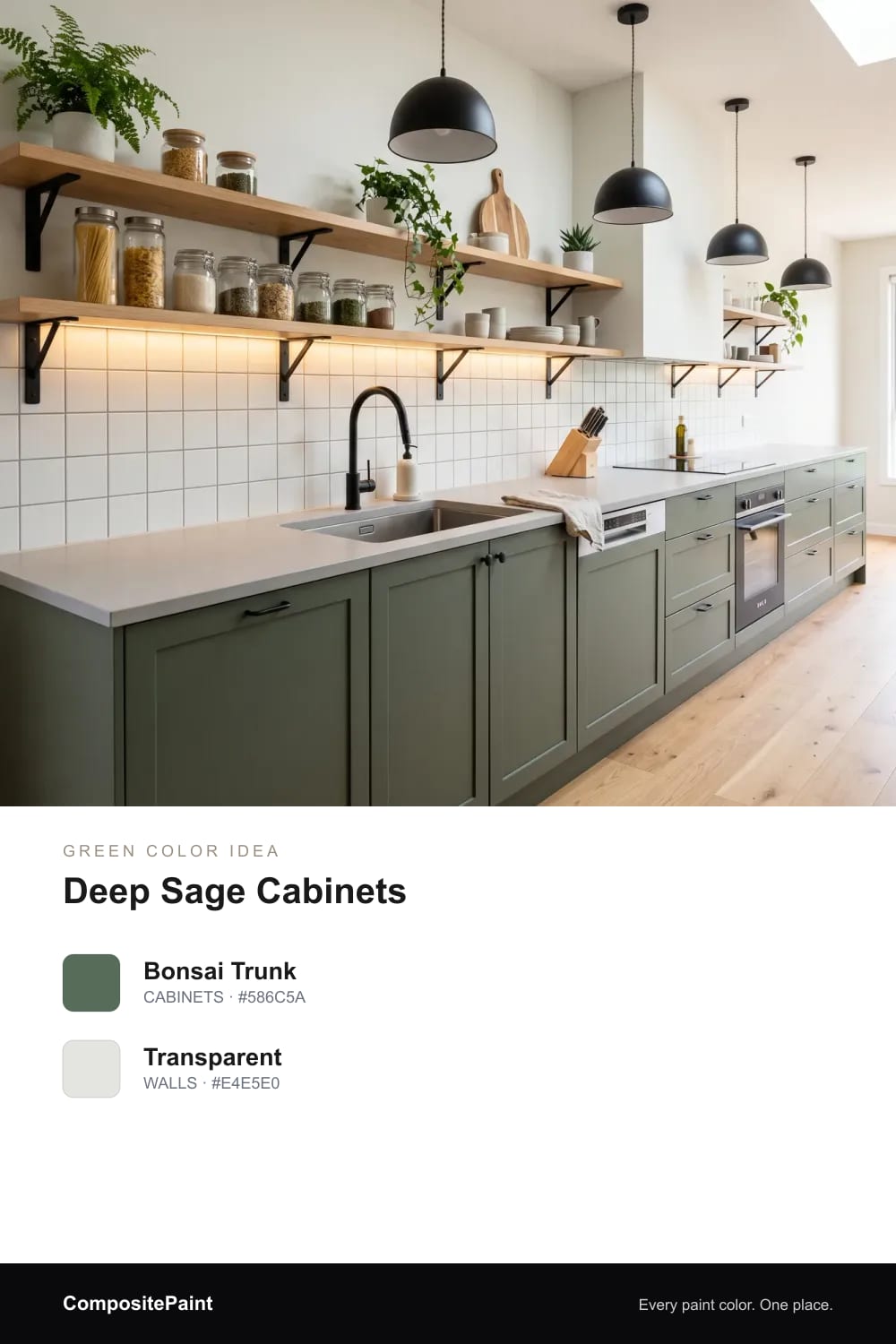
Bonsai Trunk is a rich, mossy green that adds quiet depth to cabinets, perfect when you want sage with a little more presence.
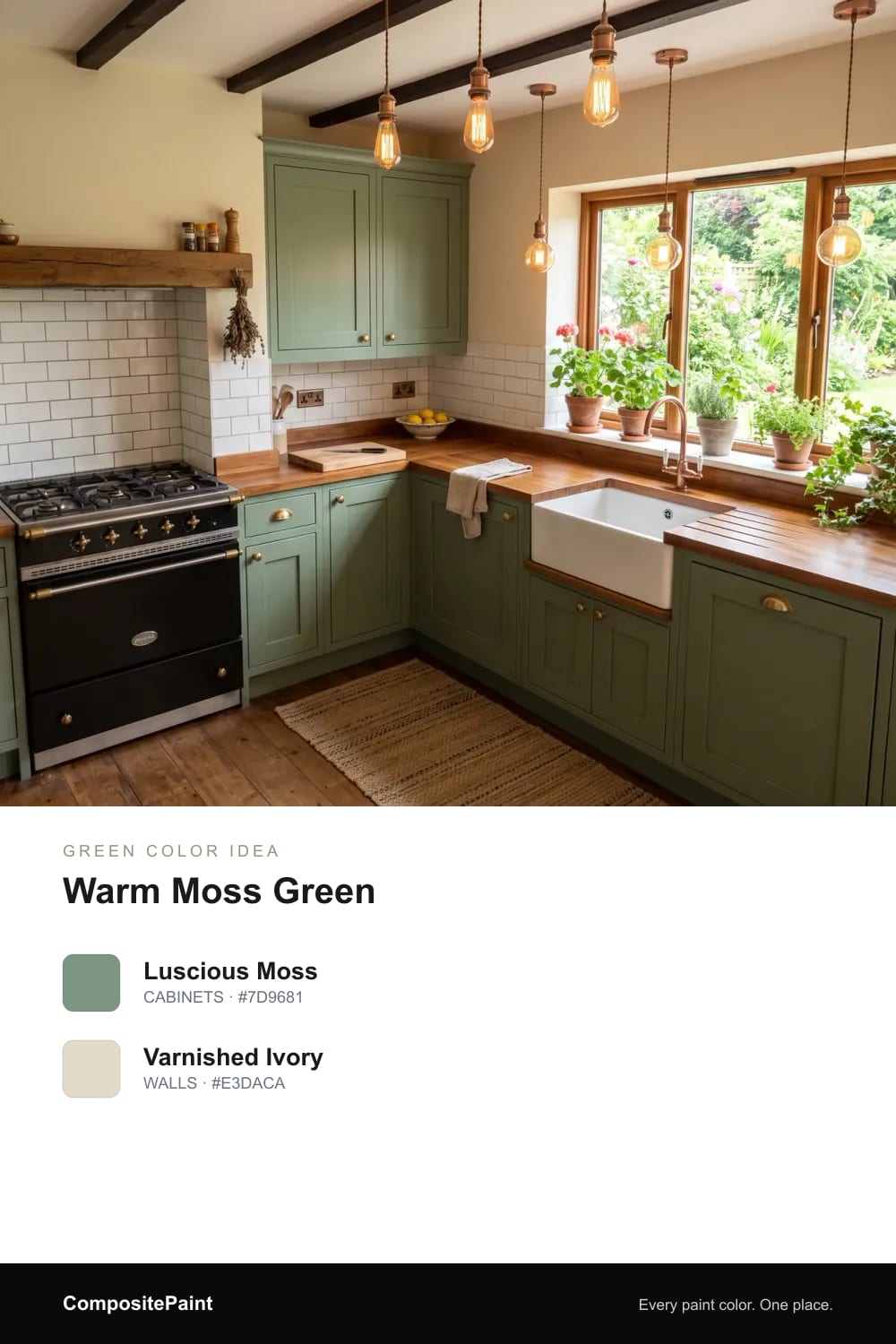
Luscious Moss is a soft, leafy green that brings the outdoors in, giving cabinets a cozy, sunlit-cottage kind of warmth.
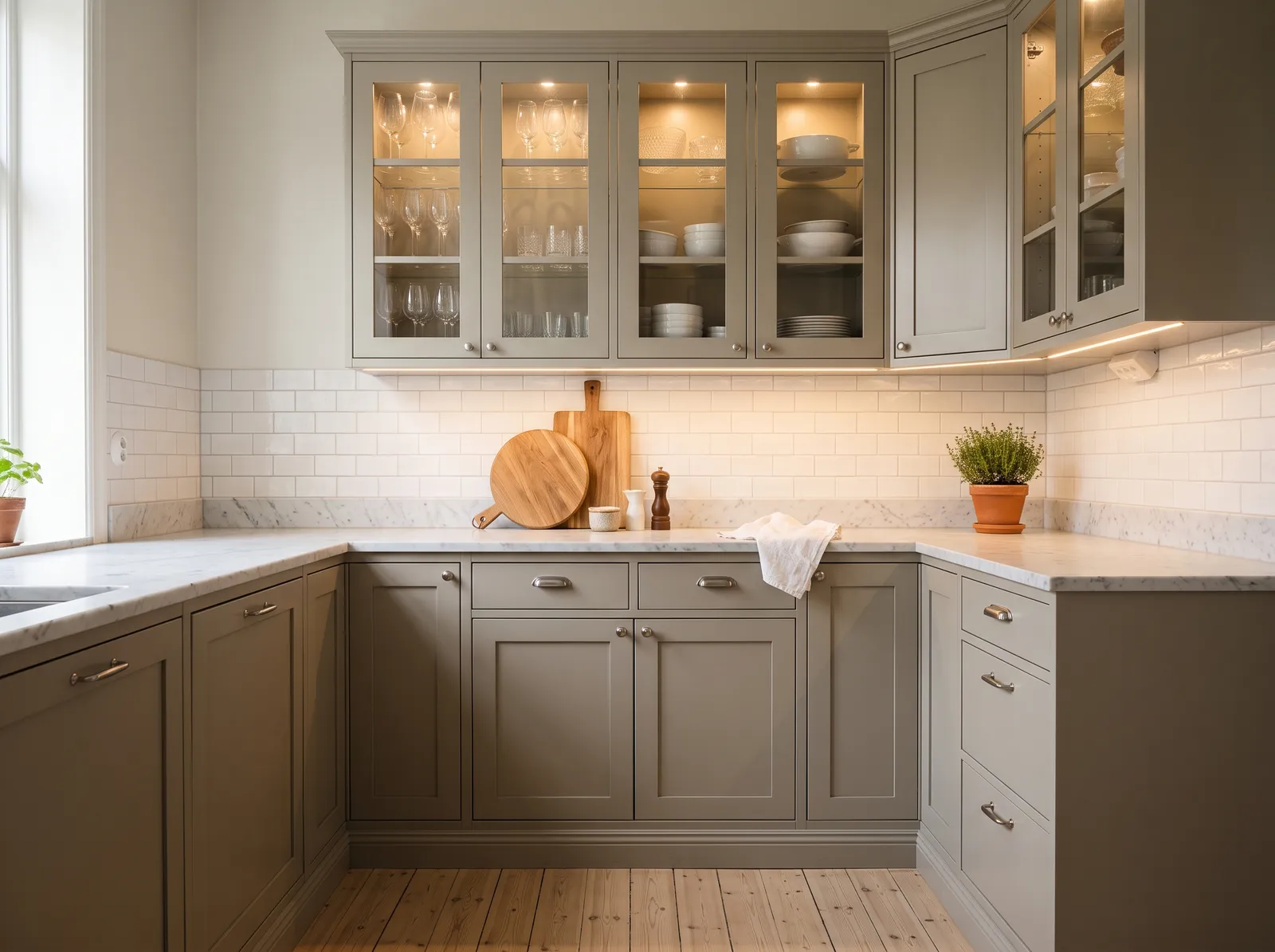
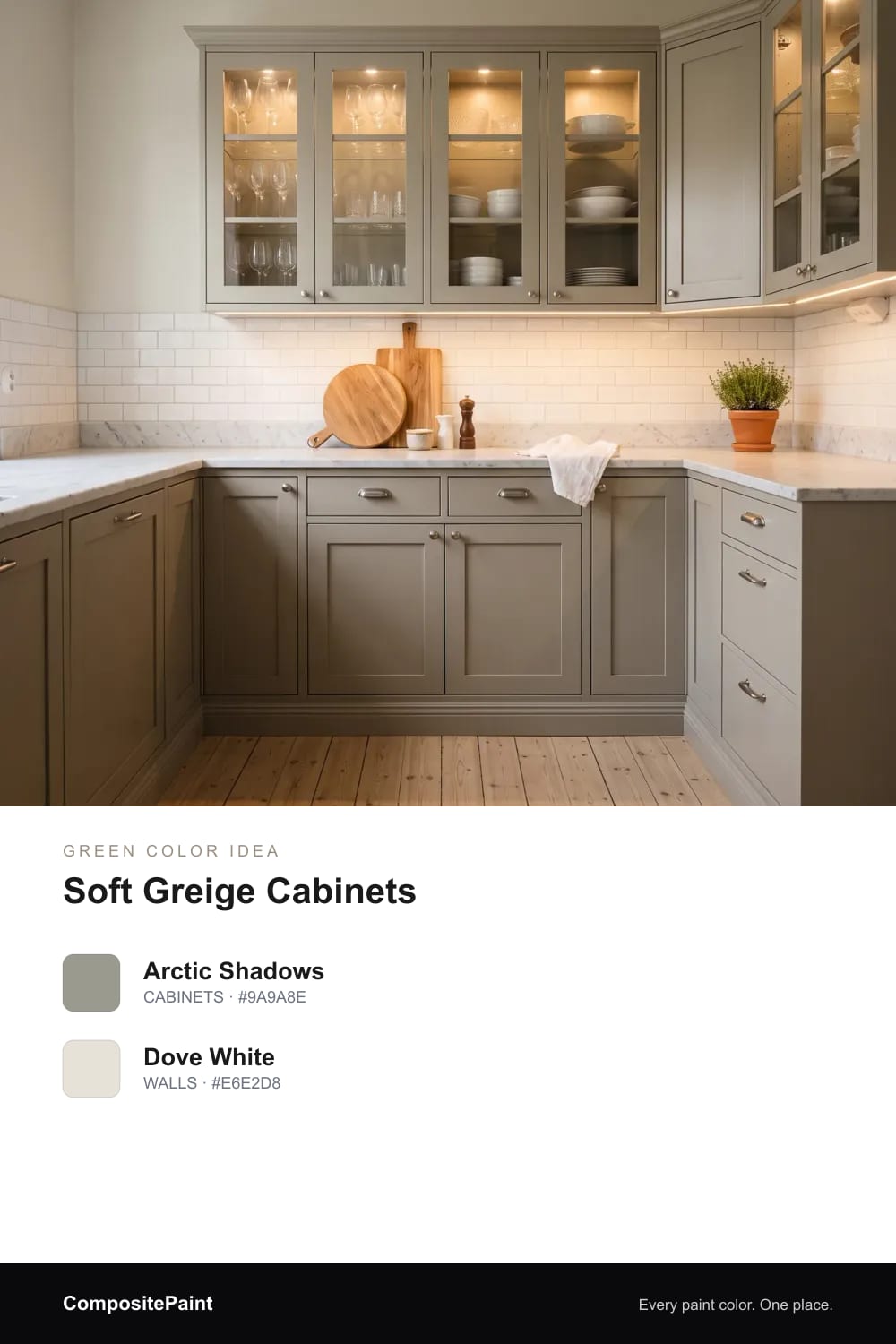
Arctic Shadows is a gentle green-gray greige, the quietest of the greens, a calm, grown-up choice for cabinets that feel serene.
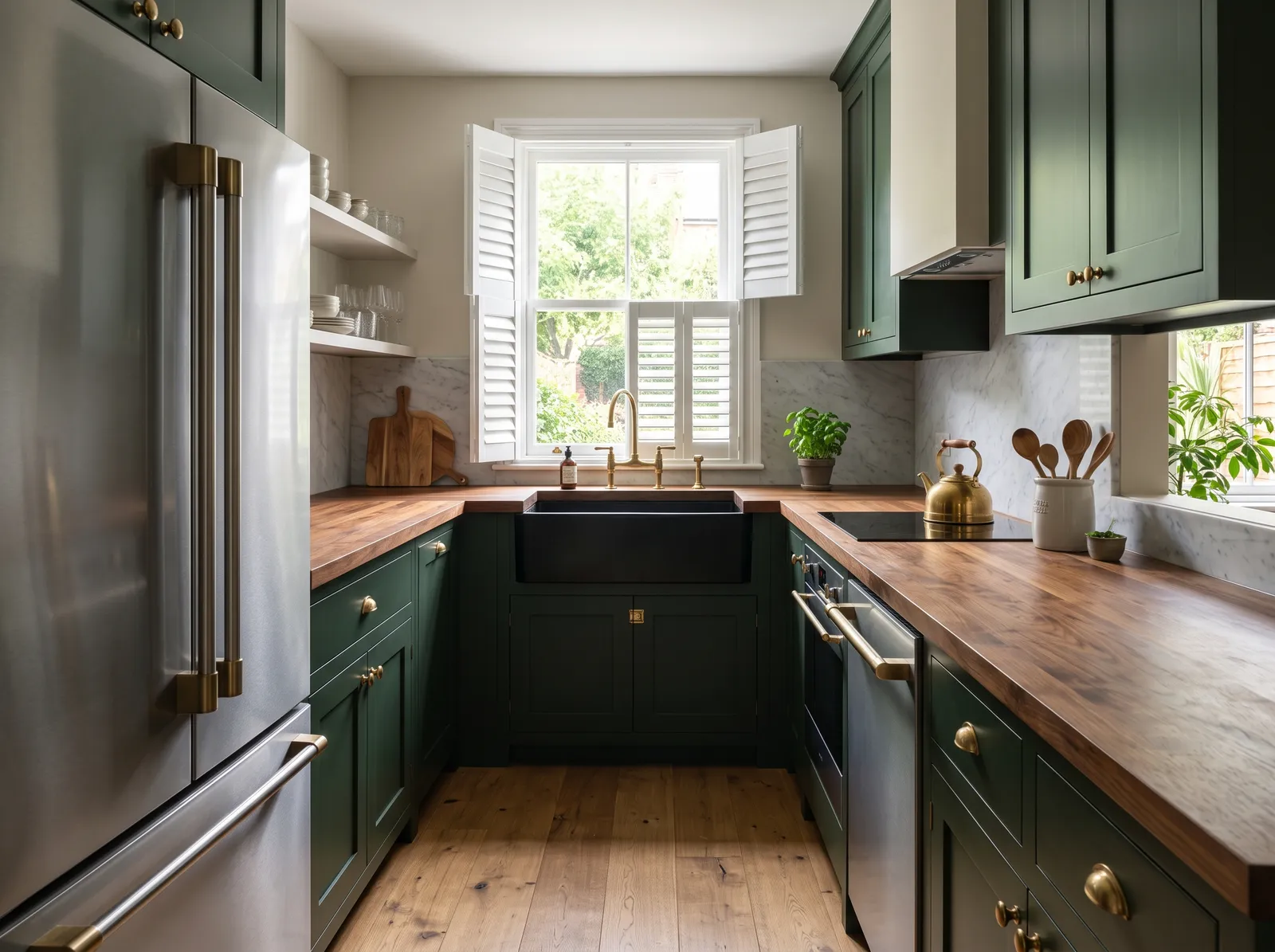
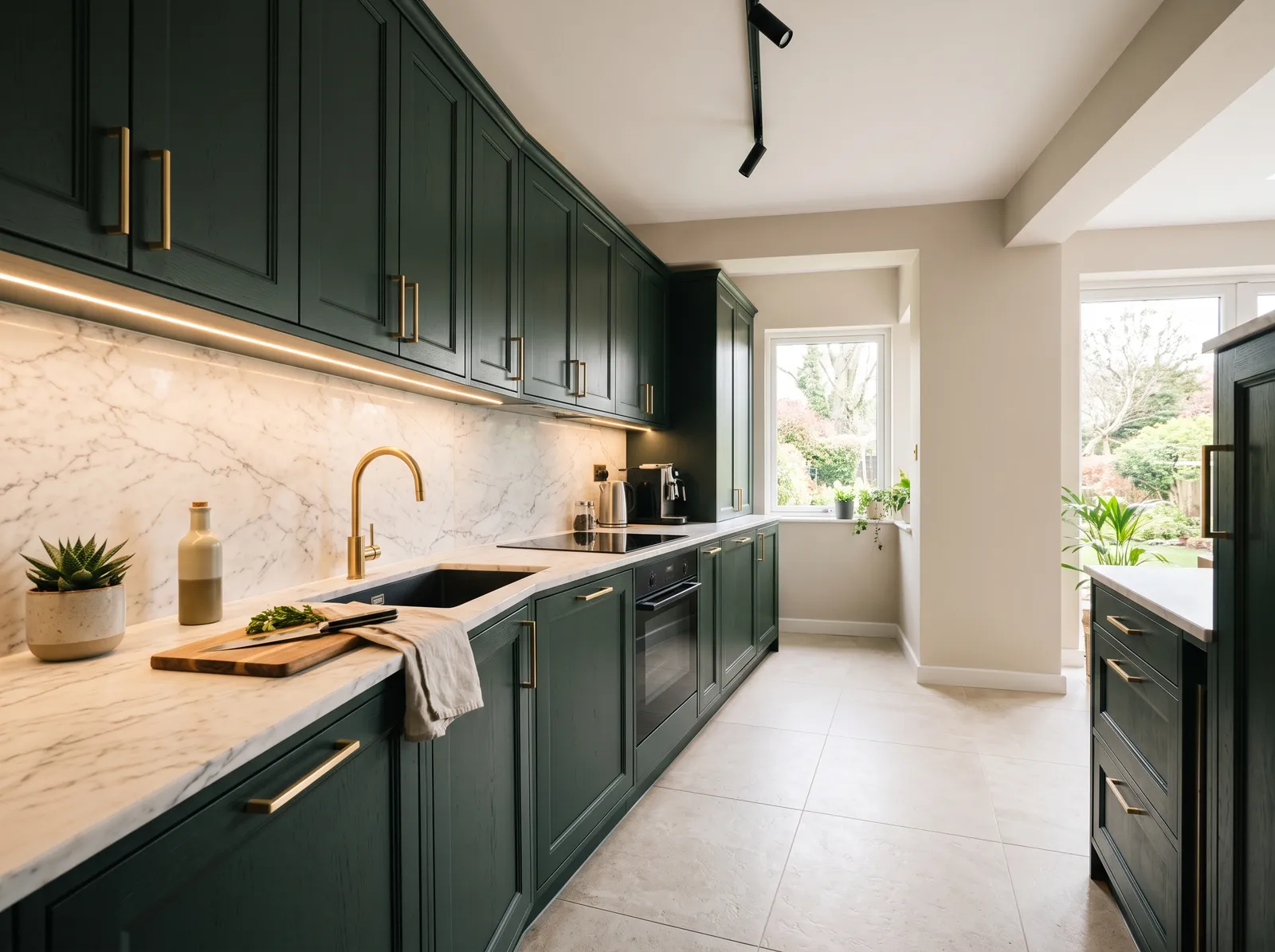
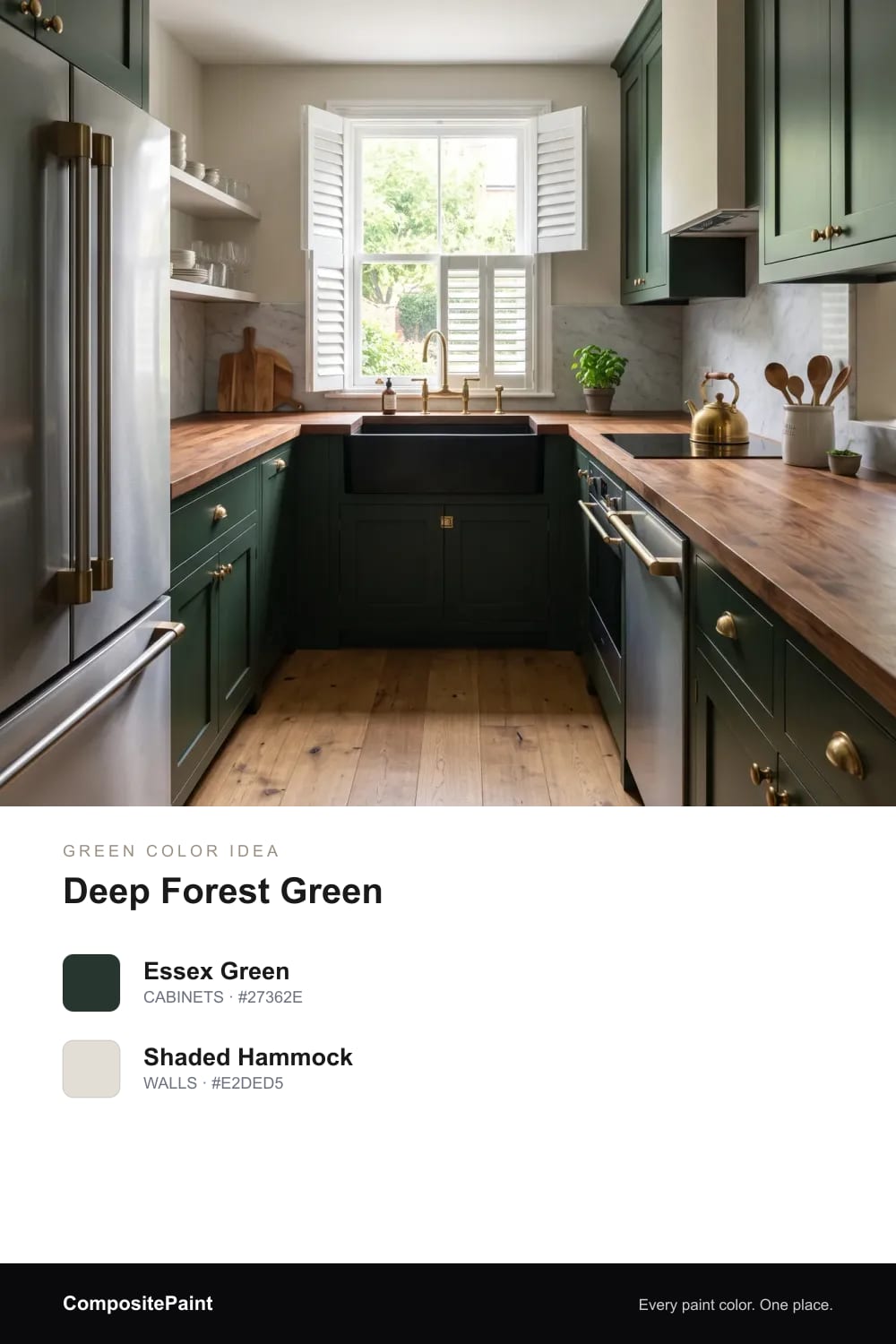
Essex Green is a dark, classic forest green that makes cabinets feel rich and grounded, cozy and a little bit dramatic at once.
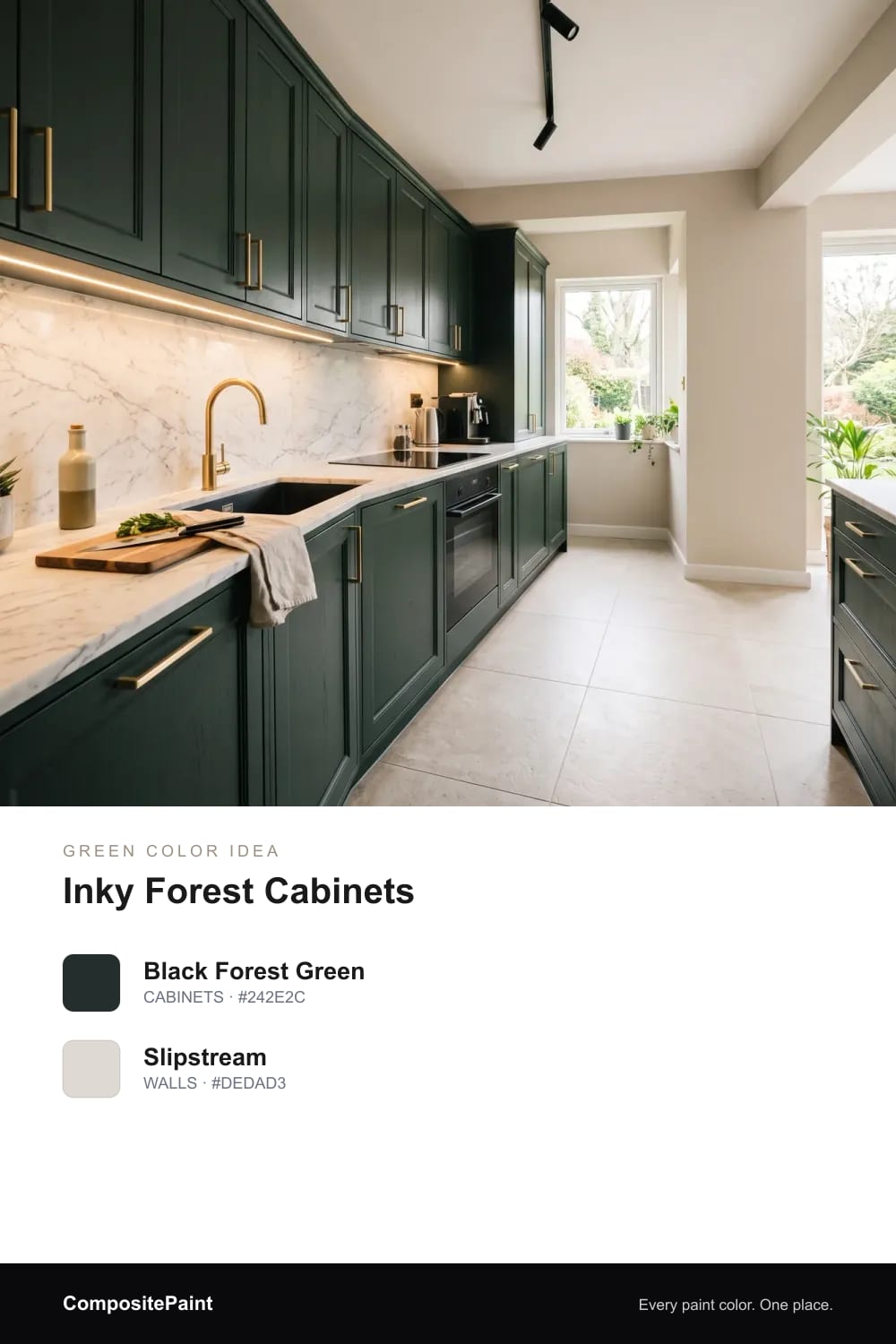
Black Forest Green is a near-black forest tone that gives cabinets real drama and depth, moody and elegant in equal measure.
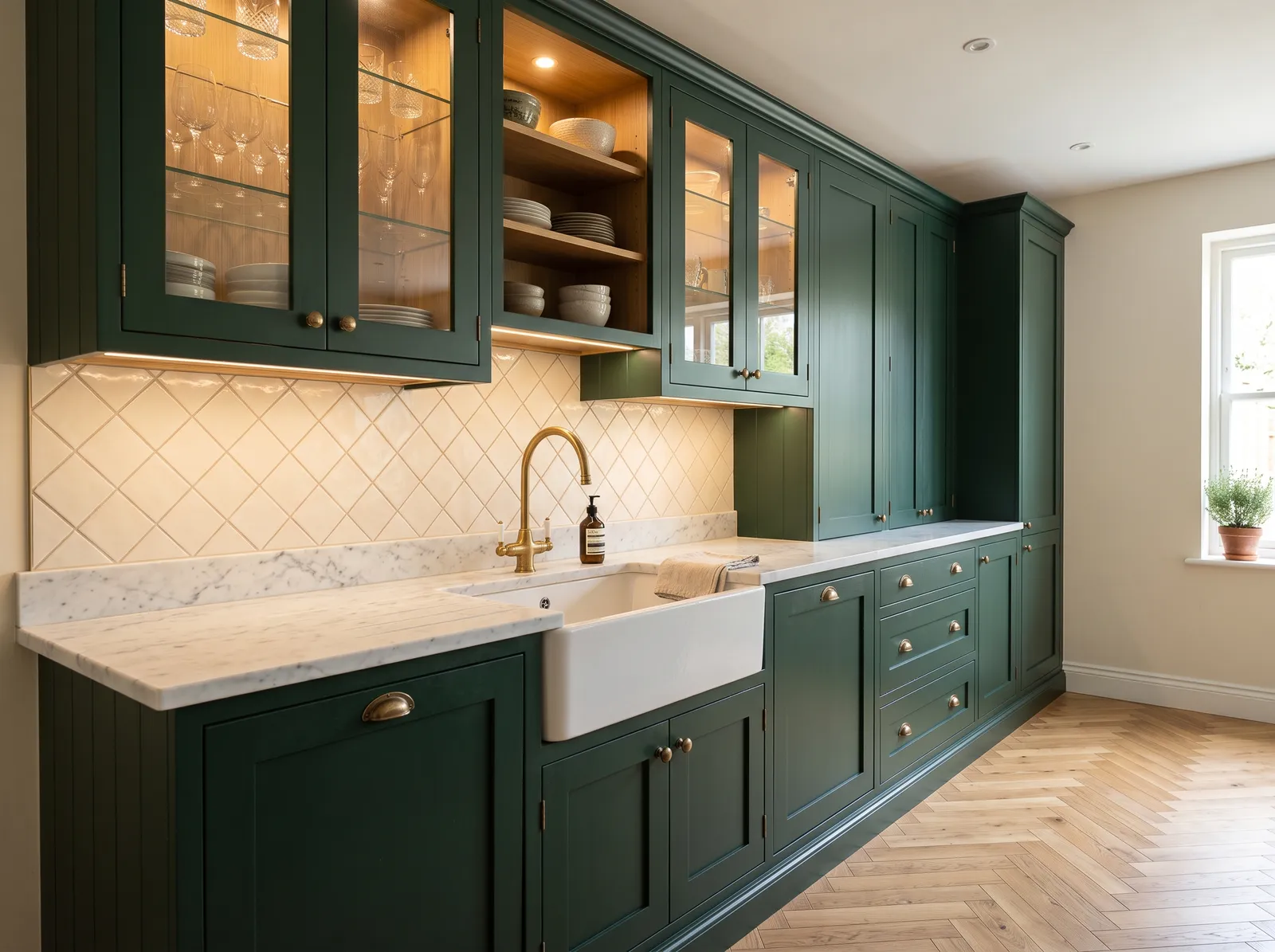
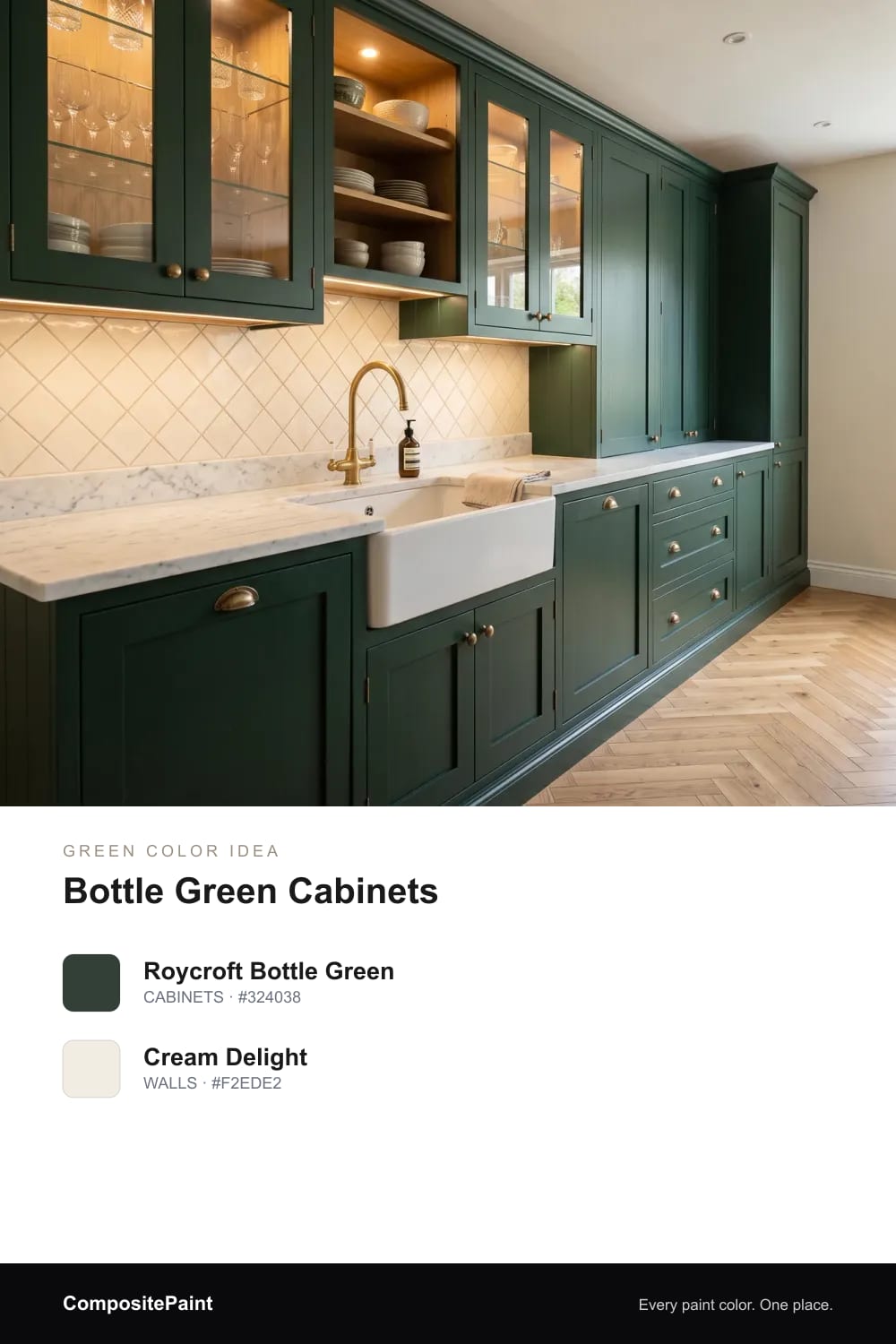
Roycroft Bottle Green is a deep, stately forest green that makes cabinets feel timeless, warm, and quietly sophisticated.
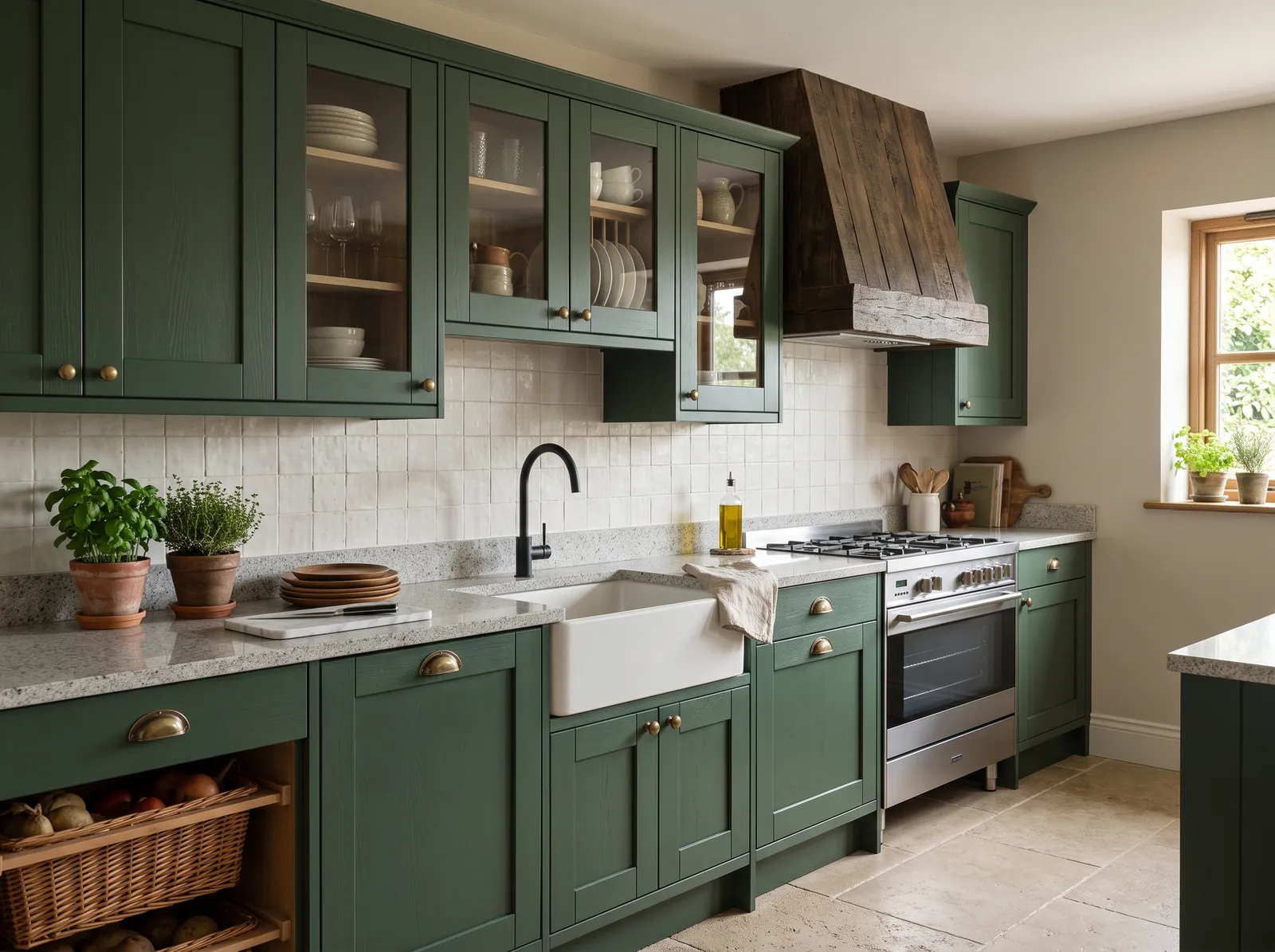
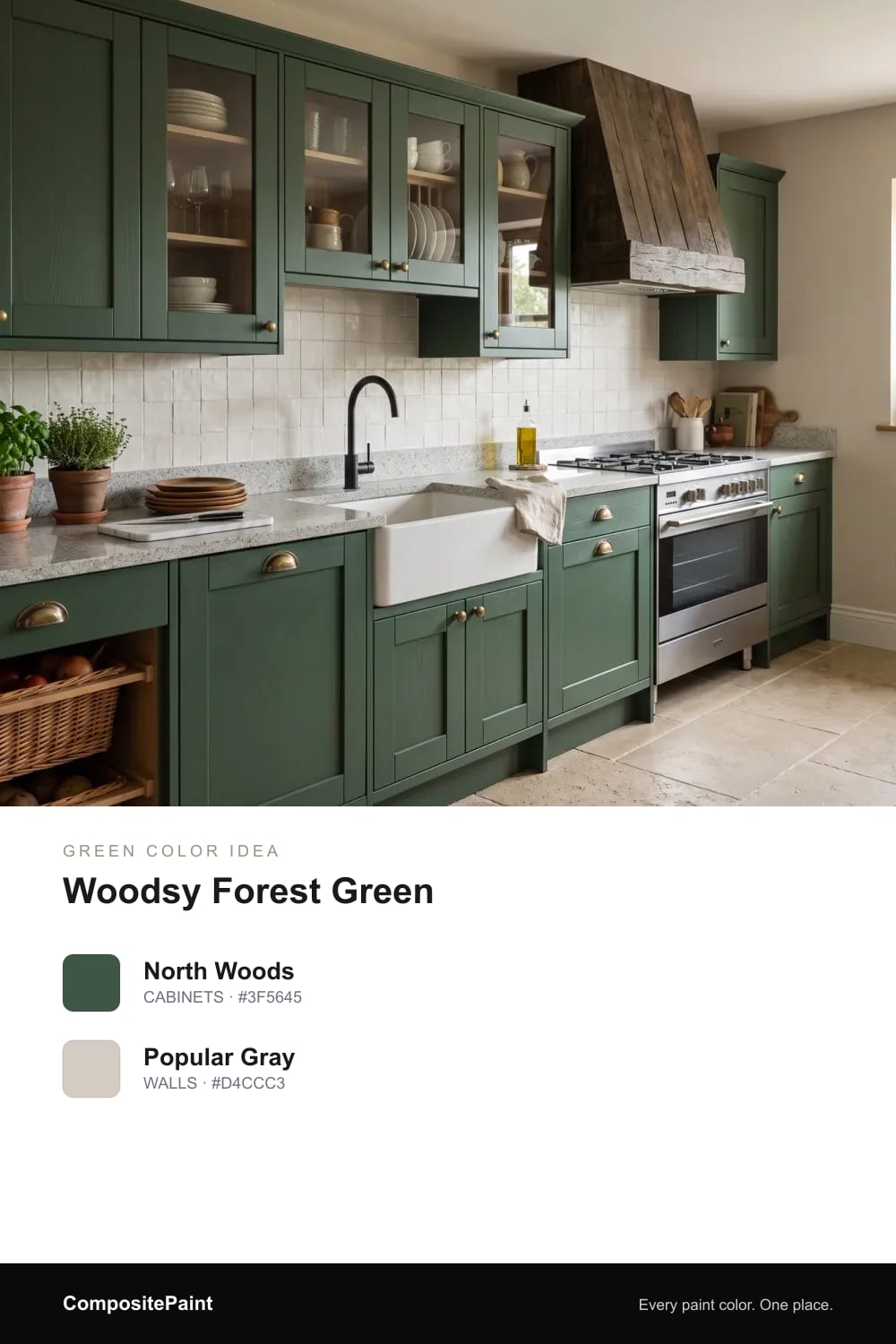
North Woods is a deep, mossy forest green that brings earthy, cabin-in-the-trees warmth to cabinets you want to feel cozy.
Upload a photo of your green cabinets and the visualizer paints your walls in any of these colors — in seconds.
UPLOAD YOUR PHOTO →Green just feels right in a kitchen. It comes from nature, so it sits next to wood, plants, and food and looks like it belongs. It is calm but not cold, warm but not loud, which makes it easy to live with every day.
It also covers a huge range. The same color family that gives you a barely-there sea-salt sage also gives you a deep, dramatic forest. That means you can go soft and quiet or bold and rich and still be choosing green.
In most kitchens, green lands on the cabinets, and that is where it shines. A pale sage on the lowers feels fresh and easy. A mid green like a leafy sage or a vintage gray-green gives the room real character without taking over.
Go deeper and the mood changes. A smoky pewter green or a near-black forest turns the cabinets into the star of the room. If a whole kitchen of dark green feels like a lot, put the deep shade on just the island or the lower cabinets and keep the rest light.
Green works on the walls too, especially when your cabinets are white. A soft sea-salt or misty sage on the walls wraps the room in color while the white cabinets keep everything bright and open. It is a gentle way to add green if you are not ready to paint the cabinets.
For more drama, a smoky blue-green on the walls makes a white kitchen feel quietly elegant. Just remember walls catch more light than cabinets, so a wall color often reads a shade lighter and softer than it looks on the chip.
Light changes green more than almost any other color. A north-facing kitchen with cool light can make a gray-green look flat or even gray, so lean toward a green with a little warmth or yellow in it. A sunny, south-facing kitchen can handle cooler, deeper greens beautifully.
The best move is to live with it before you commit. Paint a big patch on the cabinet door or wall and look at it in the morning, at noon, and at night with the lights on. The green that still feels good in all three is your green.
Green is a friend to small kitchens. A soft sage or sea-salt green on the cabinets keeps the room feeling light and airy, almost like a soft neutral, so the space never feels closed in. Pair it with white walls and counters to stretch the light.
If you love a deeper green but the room is tight, use it in small doses. Try it on the lower cabinets or a single run of cabinets and keep the uppers white or open. You still get the color you love without the room feeling heavy.
Green loves warm partners. Natural wood, whether it is oak flooring or a butcher-block counter, makes green feel cozy and grounded. Brass and gold hardware add a soft glow that flatters every shade from sage to forest, while black hardware gives a crisper, more modern look.
For counters and backsplash, white marble and creamy quartz are classic with green, and a warm cream or zellige tile keeps things soft. If you want more punch, a soapstone or honed black counter looks stunning against a deep green. Cream and warm white walls almost always beat a stark, cold white next to green.
Cabinets take a beating, so finish matters. A satin or semi-gloss on green cabinets wipes clean, handles splashes and fingerprints, and gives a subtle sheen that makes the color look rich. Most people are happiest with satin on cabinets in a busy kitchen.
For green walls, an eggshell or satin is the sweet spot. It is washable enough for a kitchen but soft enough that it does not show every bump. Save flat for ceilings, and save high gloss for a statement door if you want a little shine.
Soft sages lead the pack, especially gray-greens like Evergreen Fog and Sea Salt, because they feel fresh but easy to live with. They work on cabinets or walls and play well with almost any wood and counter. For something deeper, Pewter Green is a very popular cabinet choice.
Green cabinets are very much in style right now, and the softer and deeper natural greens have real staying power. Because green comes from nature, it tends to feel timeless rather than trendy. Stick with a muted sage, gray-green, or forest and it will still look good for years.
Warm whites and creams, natural wood, and brass or gold hardware are the easiest partners for green. White marble, creamy quartz, and soft cream tile keep things classic. For contrast, black hardware or a black counter looks sharp against a deep green.
In most kitchens green works best on the cabinets, since the cabinets are the biggest surface and the main color decision. Put green on the walls instead when your cabinets are white and you want a softer, more wrap-around feel. You can also do both with a paler green wall and deeper green island.
White or creamy marble and quartz are the safest, prettiest match for green cabinets. Warm cream subway tile or handmade zellige keeps the look soft and natural. For a bolder kitchen, soapstone or a honed black counter looks striking against deep green.
Use satin or semi-gloss on green cabinets so they wipe clean and show off the color's richness. For green walls, an eggshell or satin is washable but still soft. Keep flat for the ceiling only.