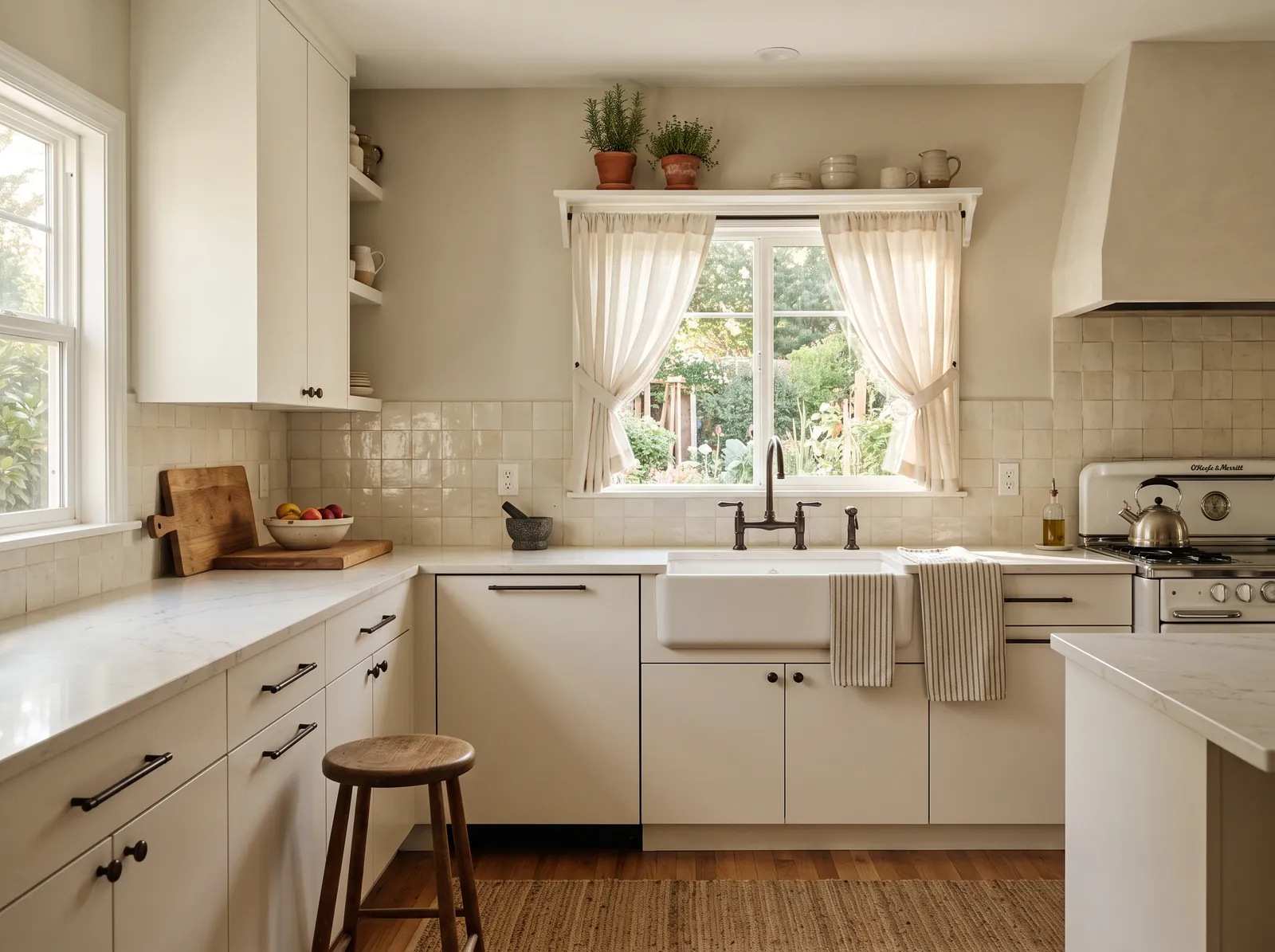
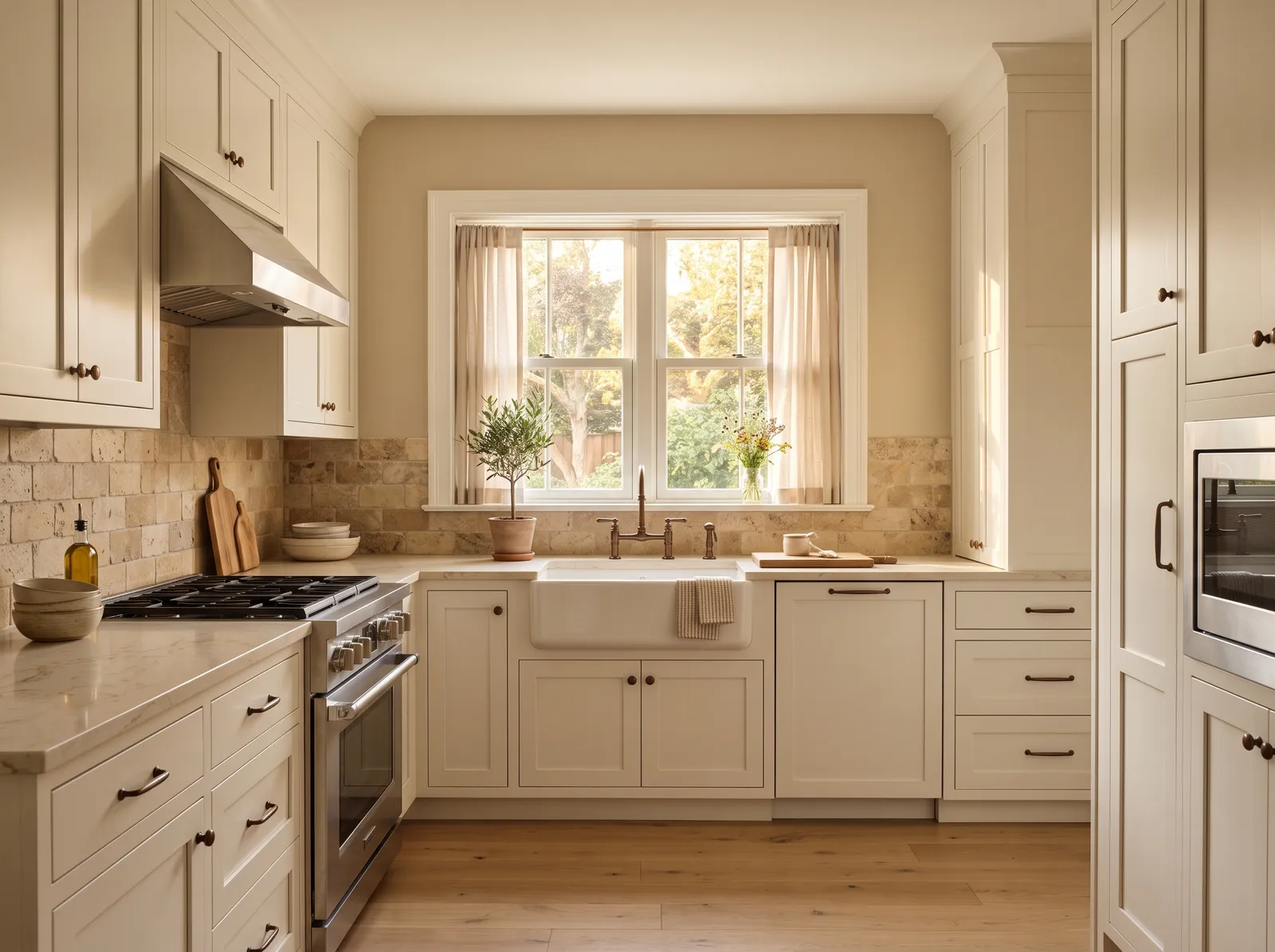
1. Warm White Walls
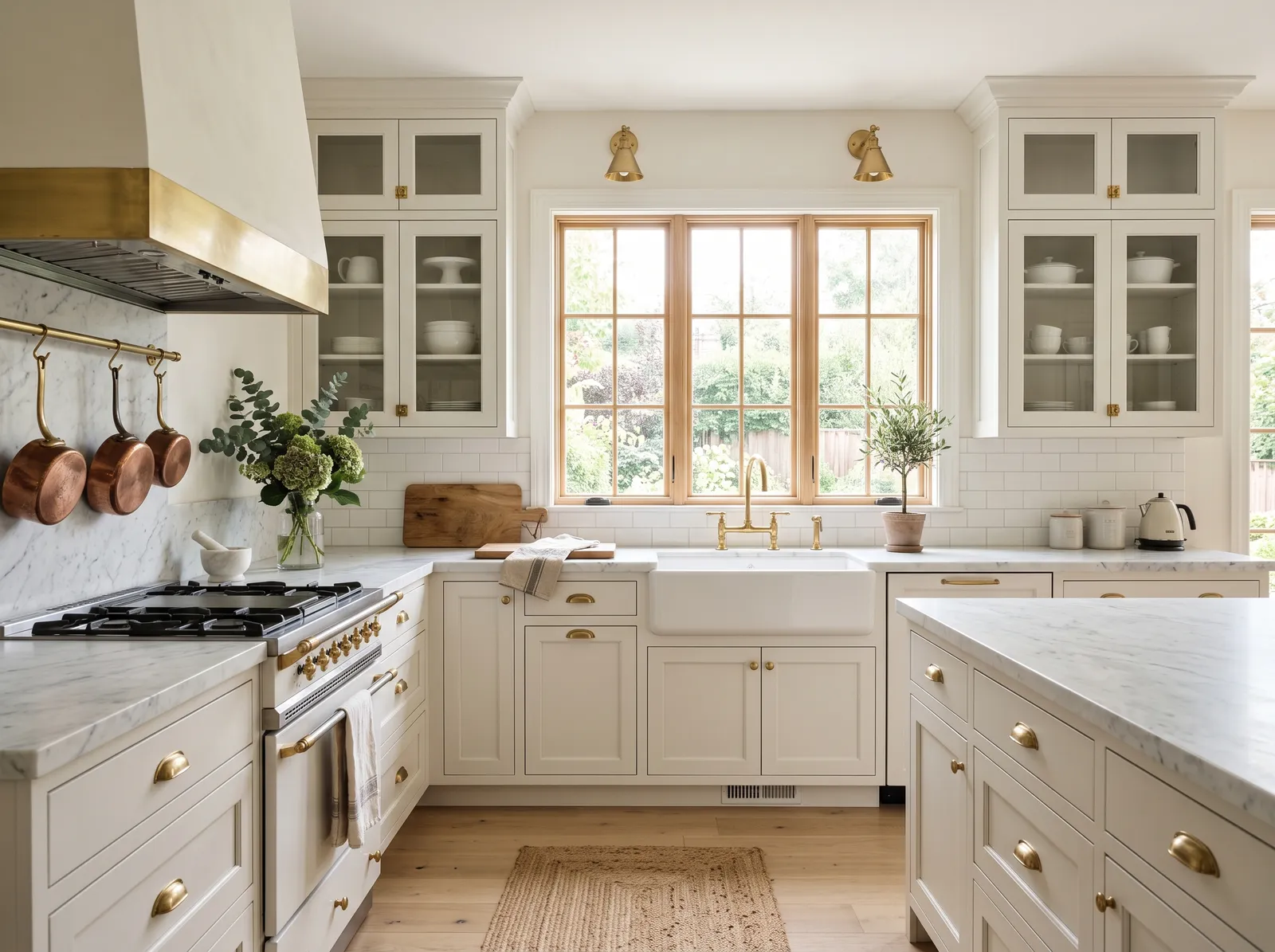
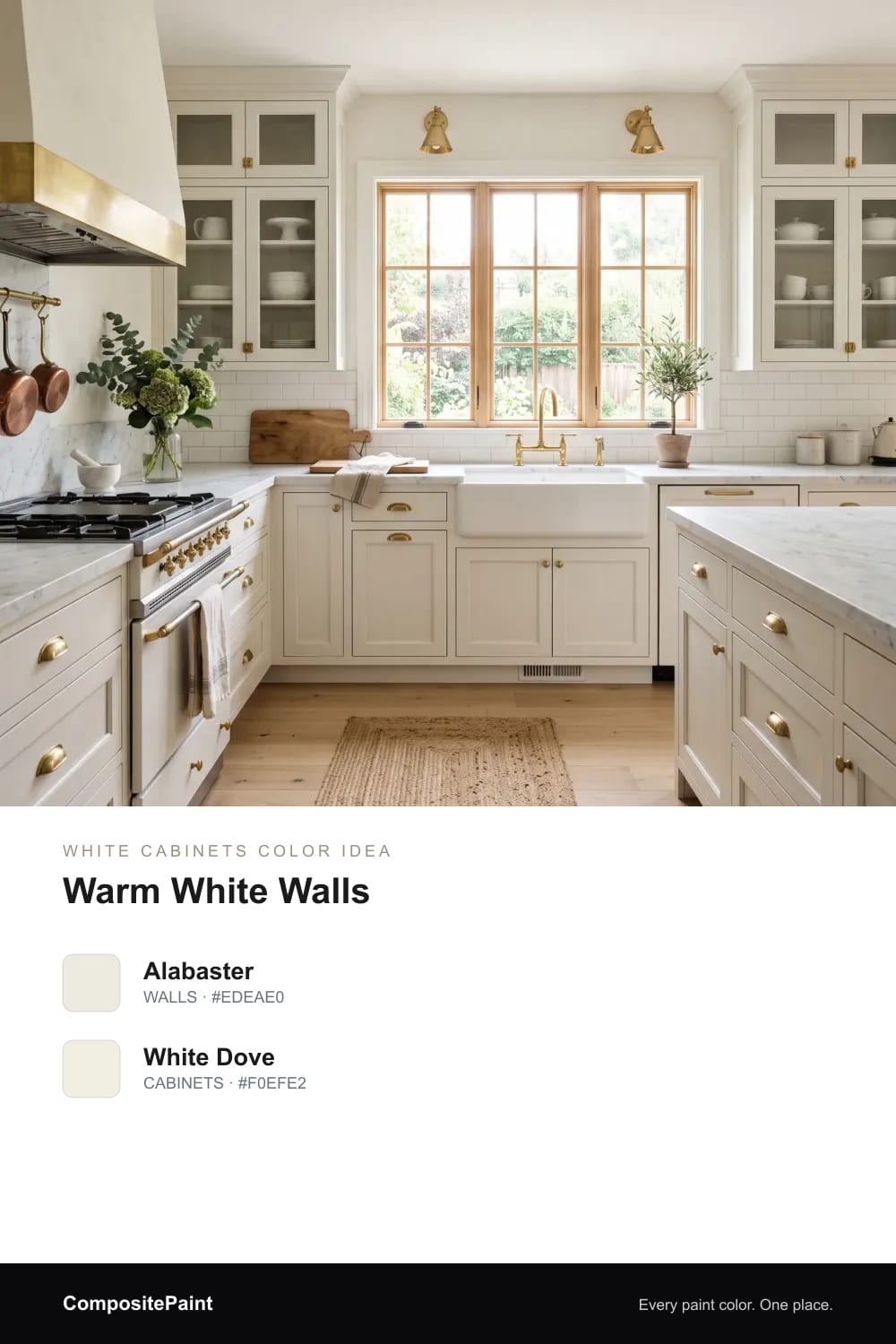
A soft creamy white on the walls keeps everything calm and bright, so the whole kitchen glows in one gentle, restful tone.
White cabinets are the easy part. The real question is what goes on the walls behind them, and that one choice decides whether your kitchen feels warm and cozy or cool and crisp. Here are twelve wall colors that look beautiful with white cabinets, from soft warm whites to gentle greens and a few bold islands. Scroll, picture each one in your room, and pick the mood you want to wake up to.
By Jessica Williams · Color Stylist
A soft creamy white on the walls keeps everything calm and bright, so the whole kitchen glows in one gentle, restful tone.
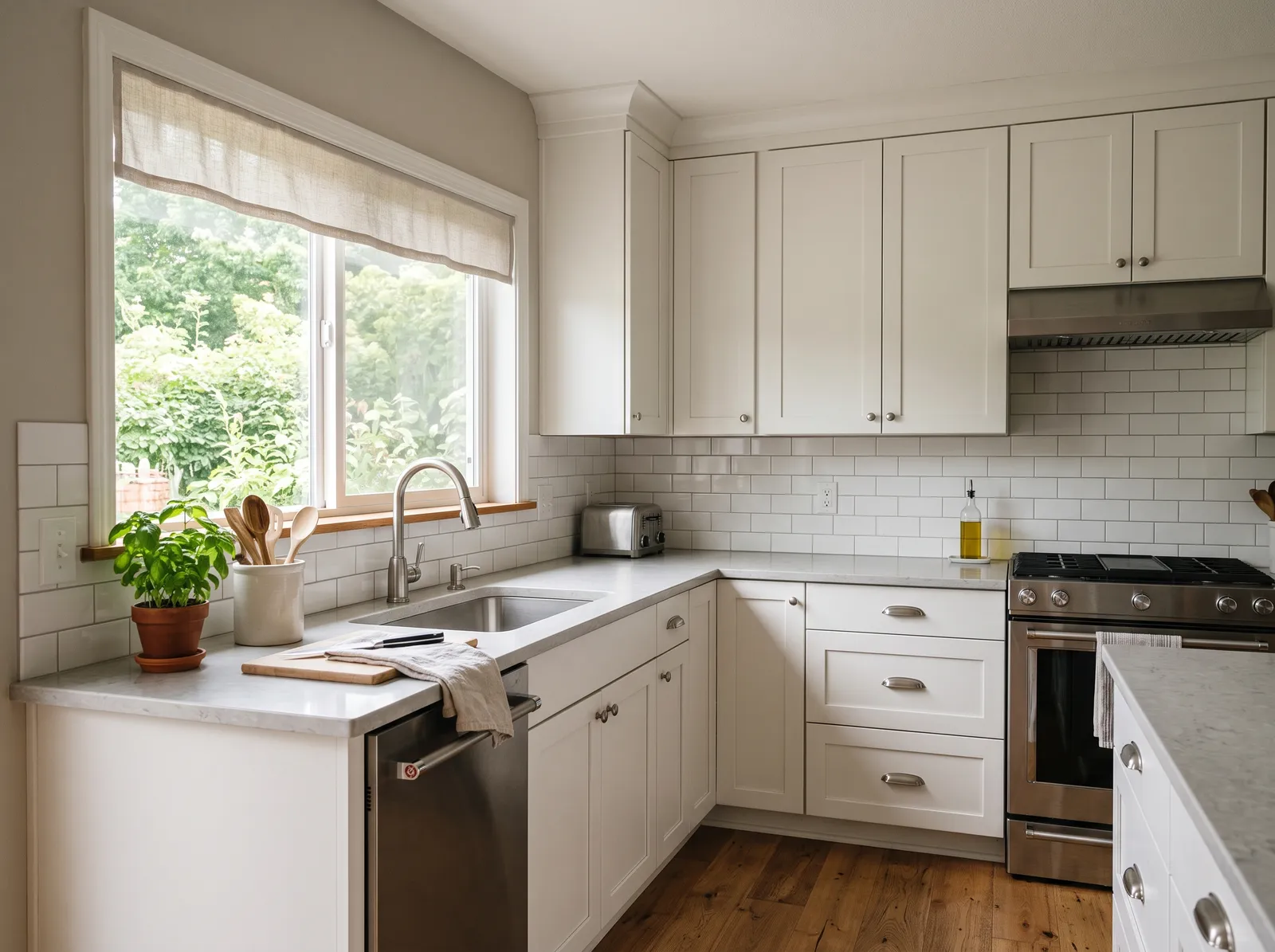
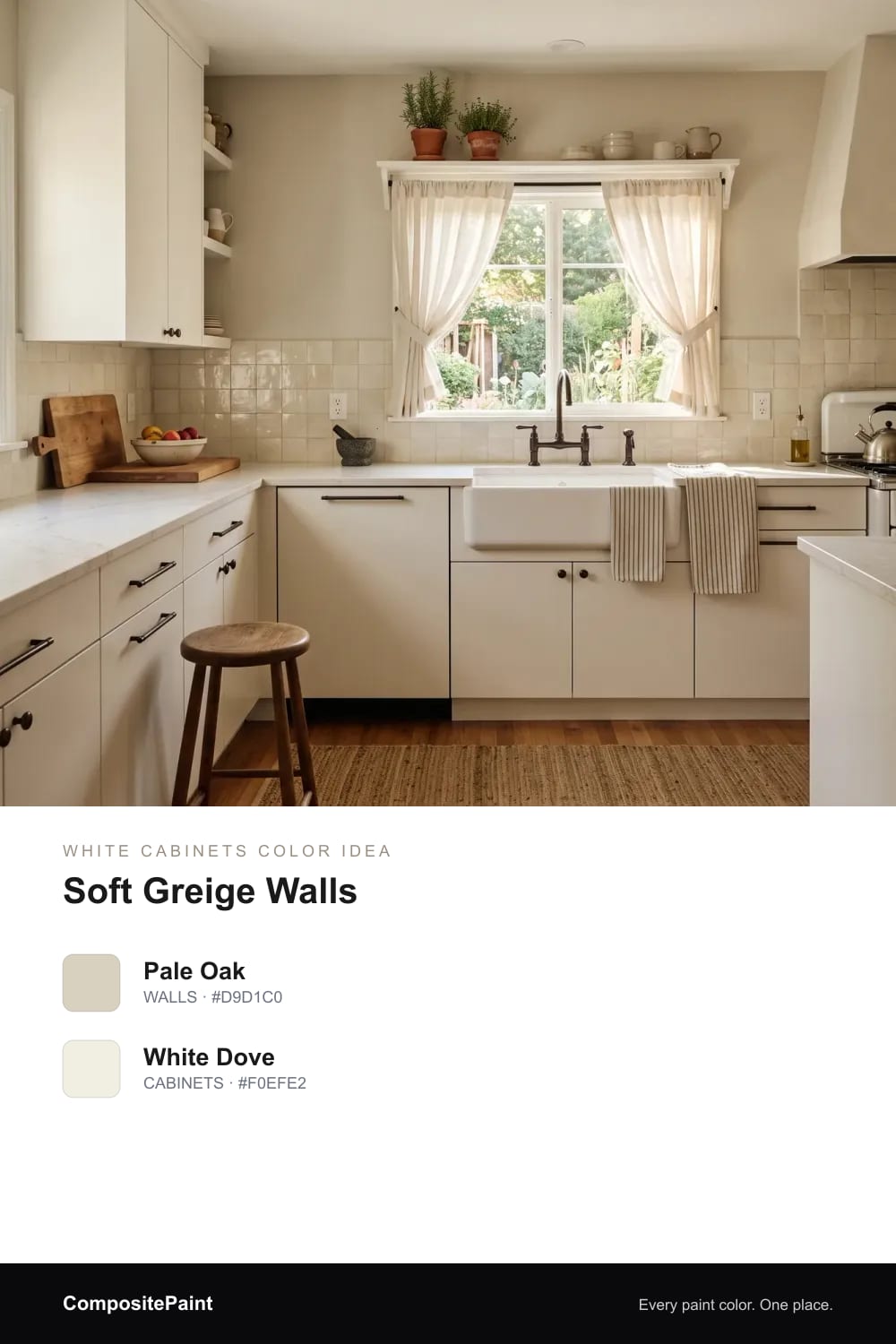
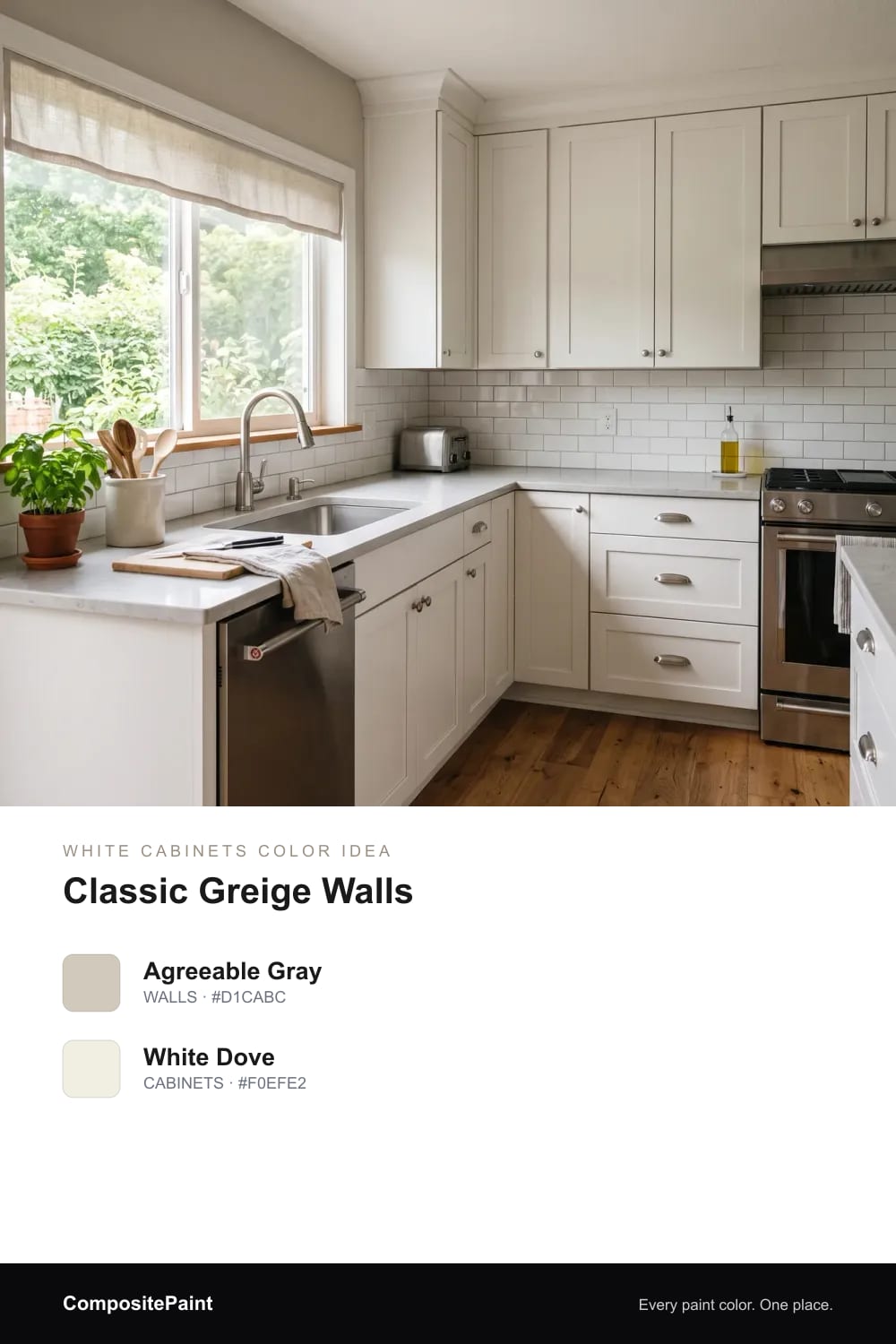
Greige walls add a quiet hint of warmth around white cabinets without ever looking like a real color, so the room feels grounded and easy.
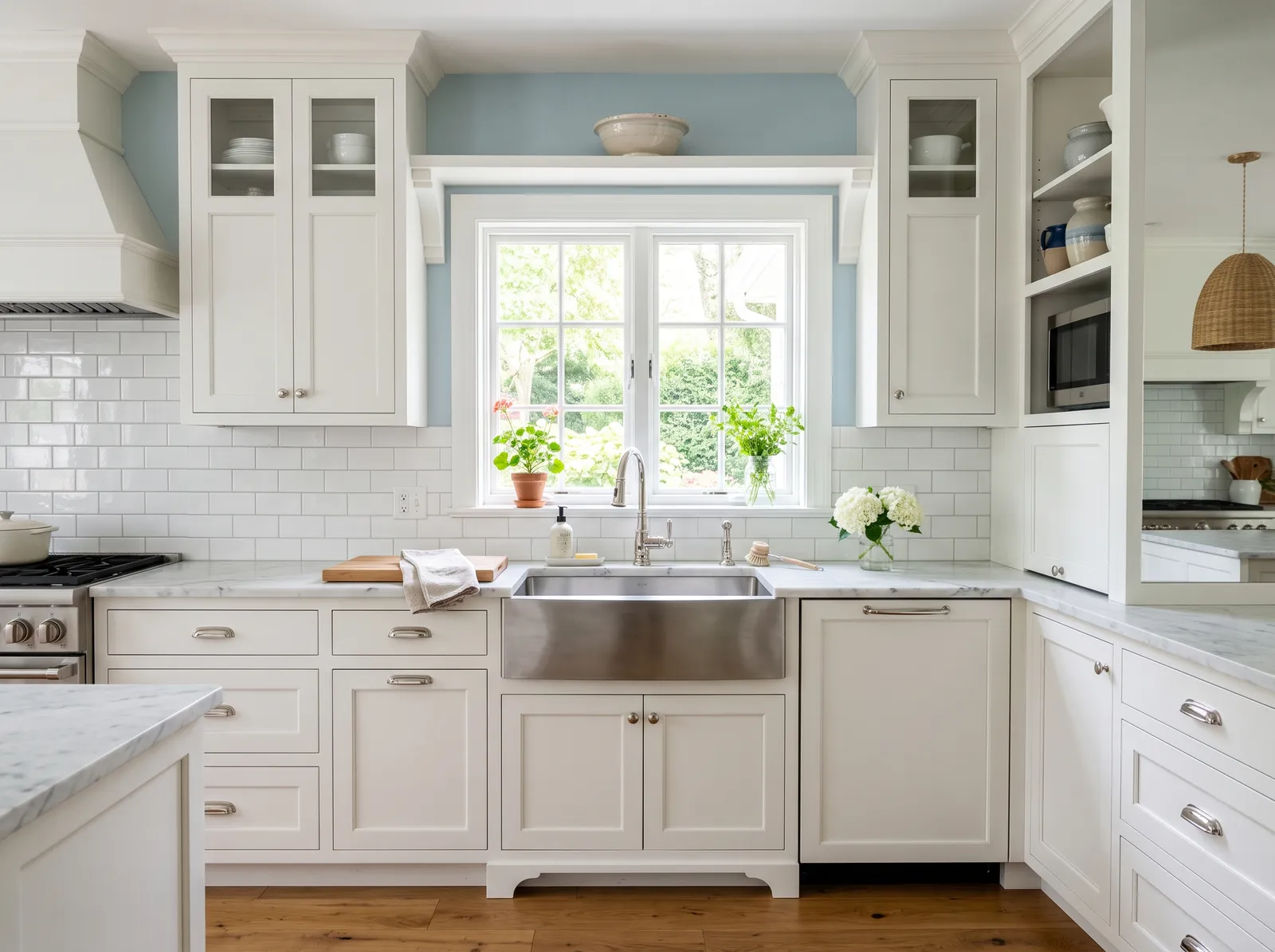
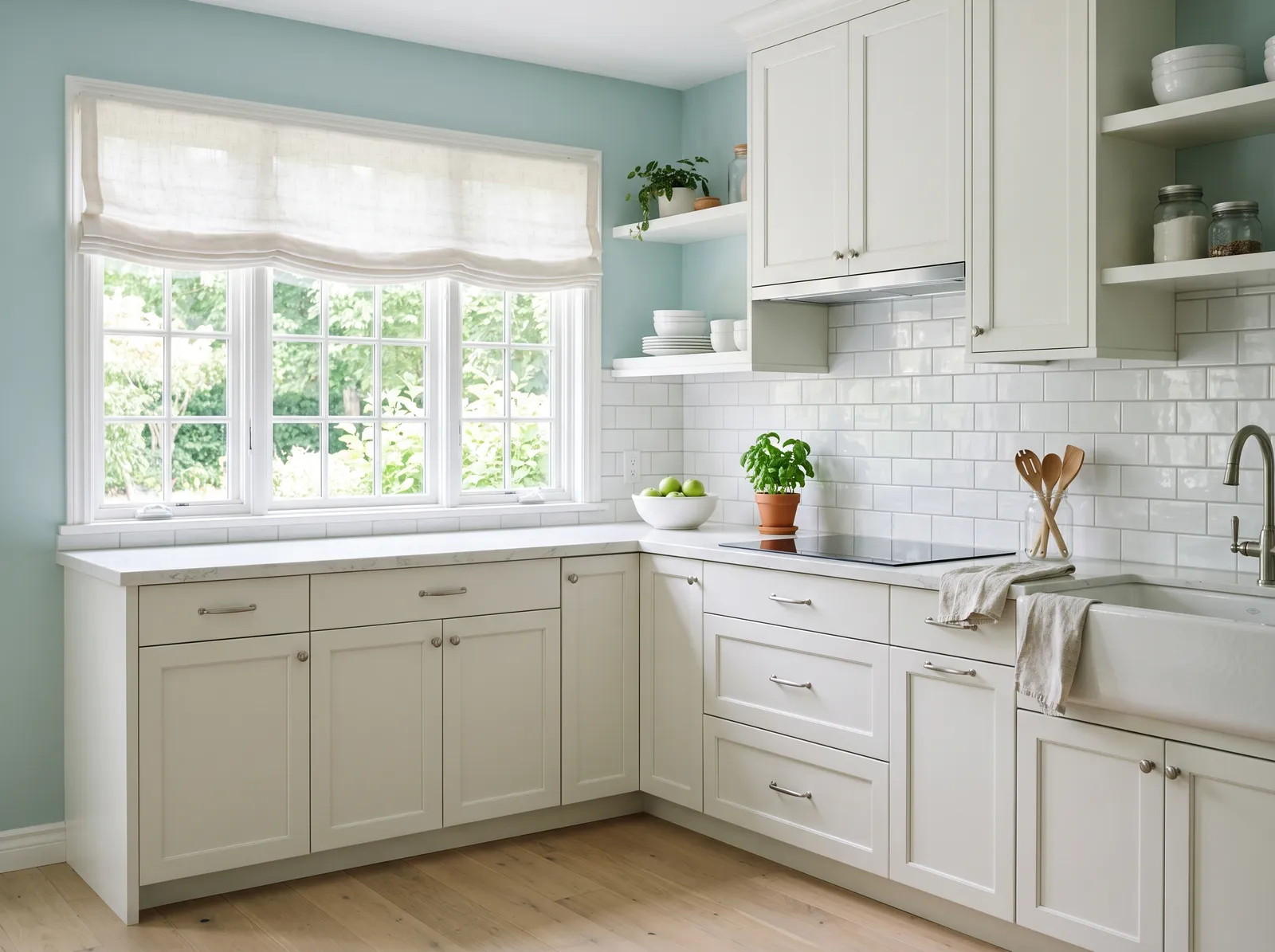
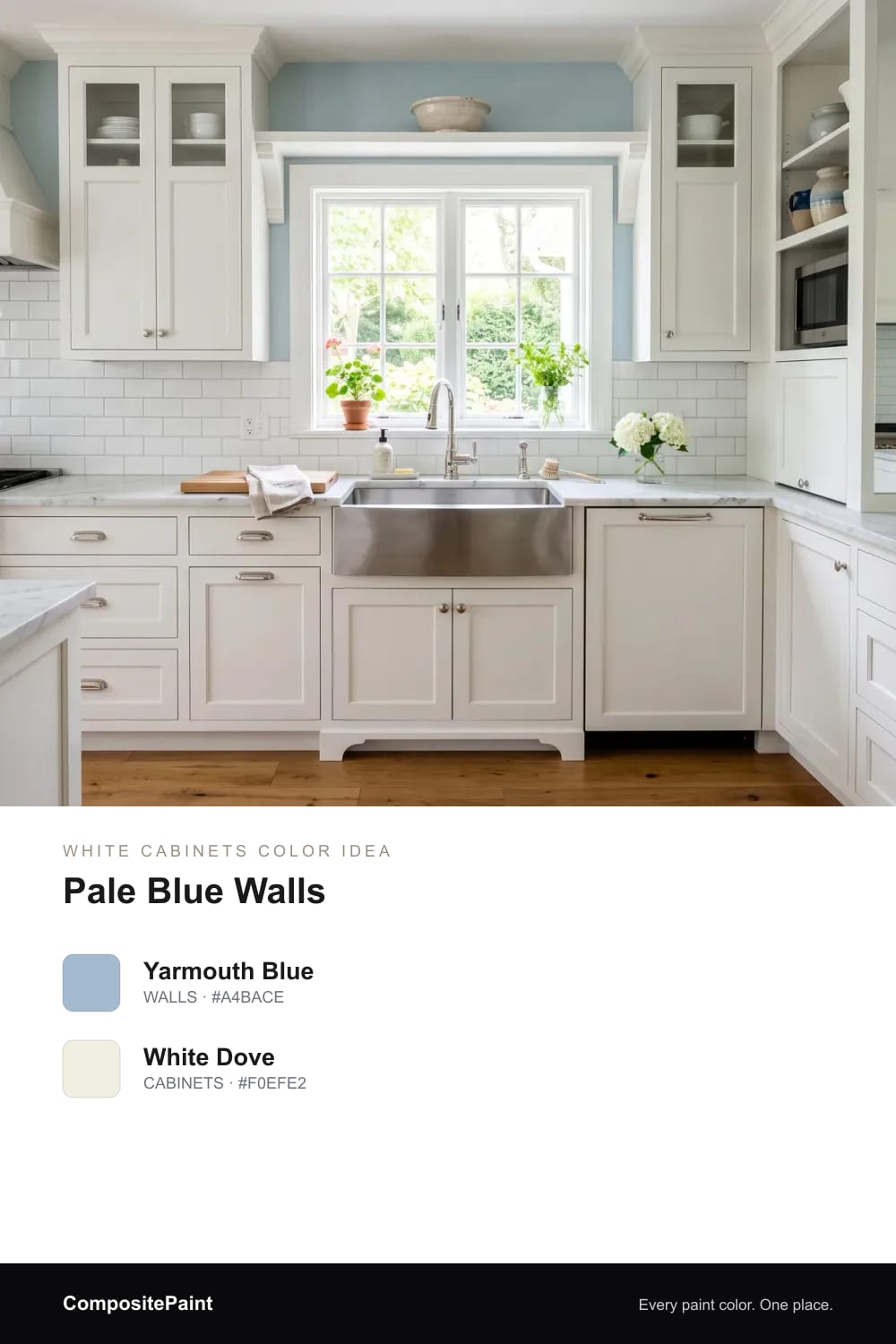
A gentle blue on the walls cools the room down and makes white cabinets look fresh and clean, like a kitchen near the water.
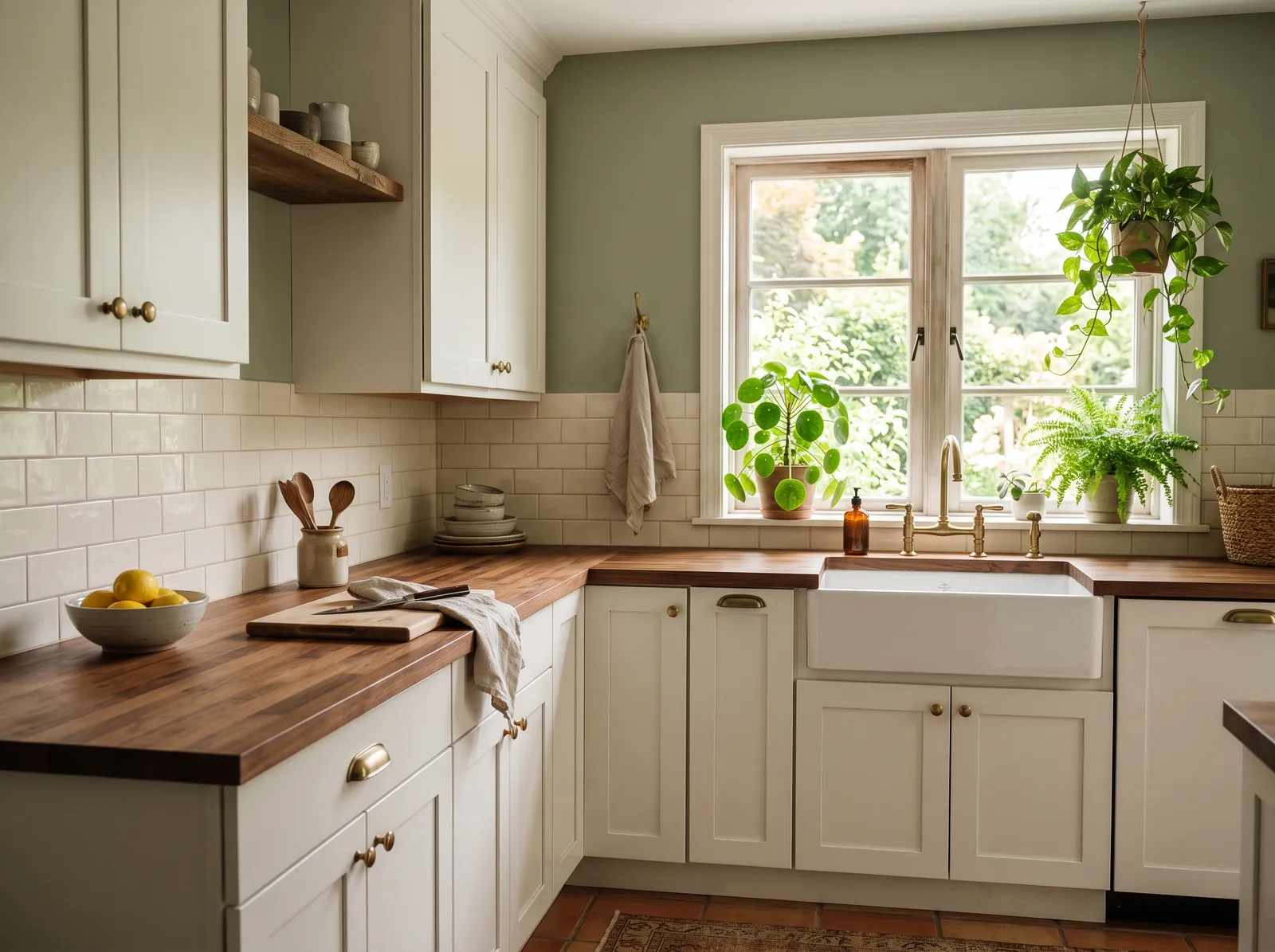
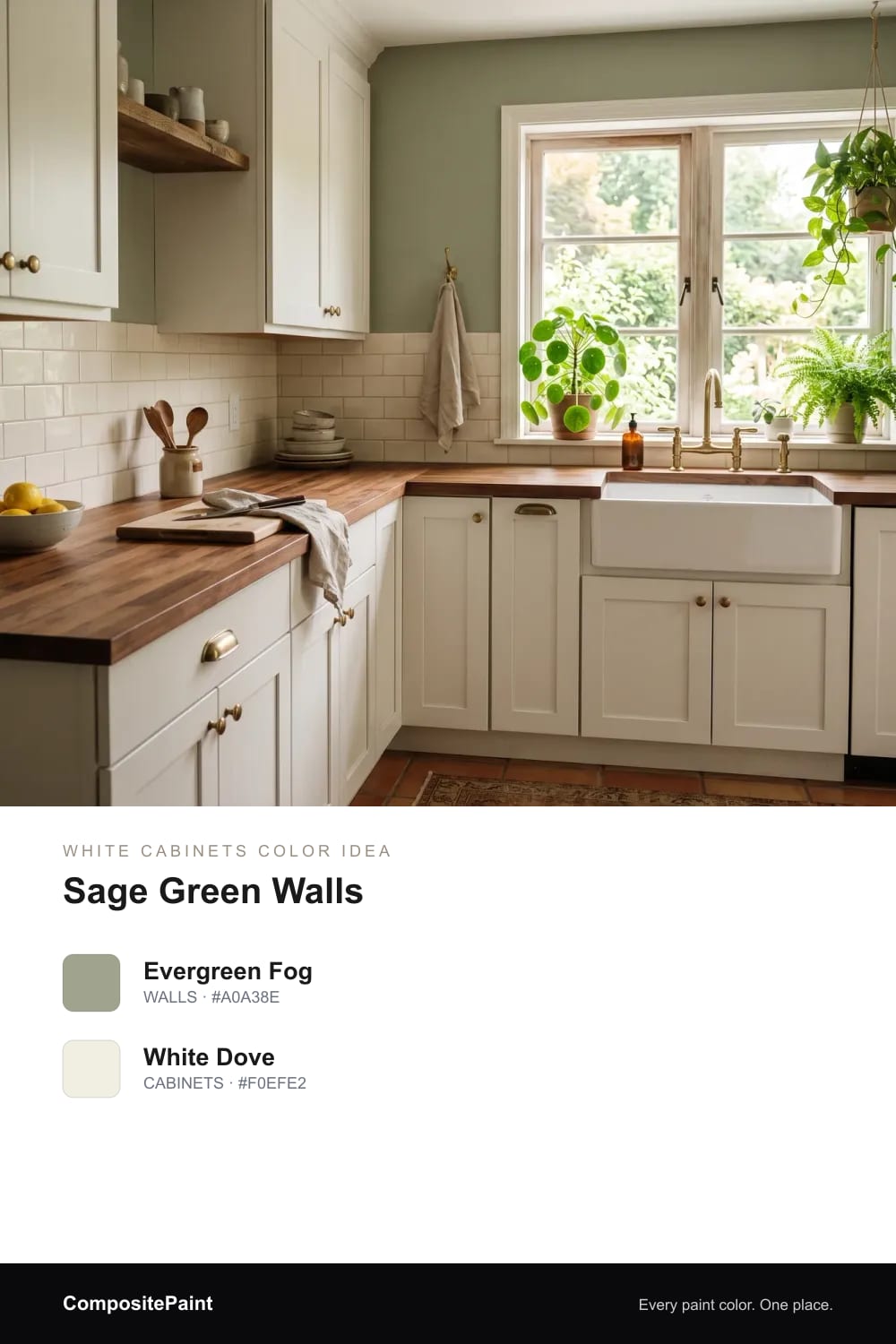
Muted sage on the walls brings a little of the garden indoors and gives white cabinets a soft, earthy backdrop that never feels loud.
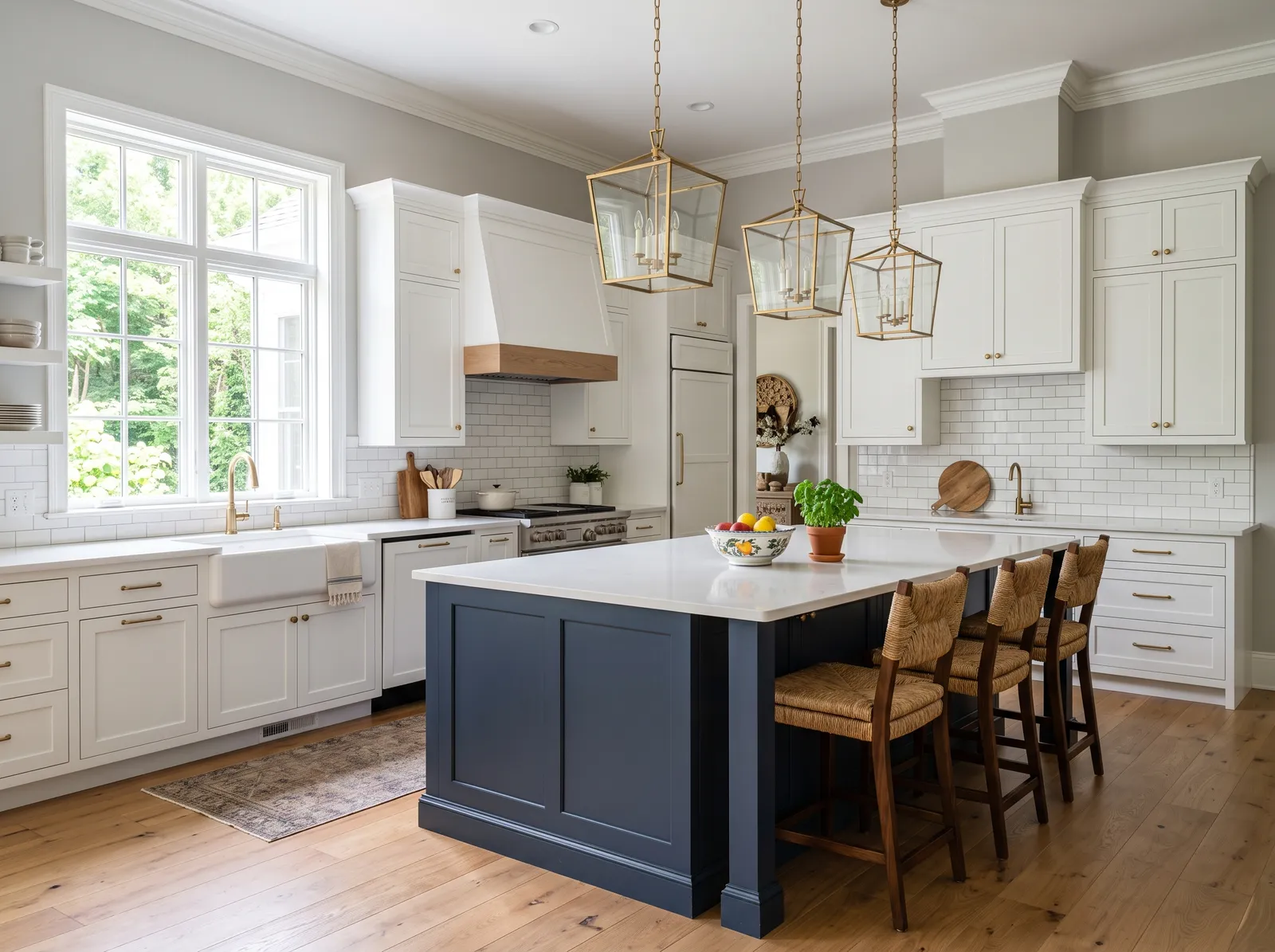
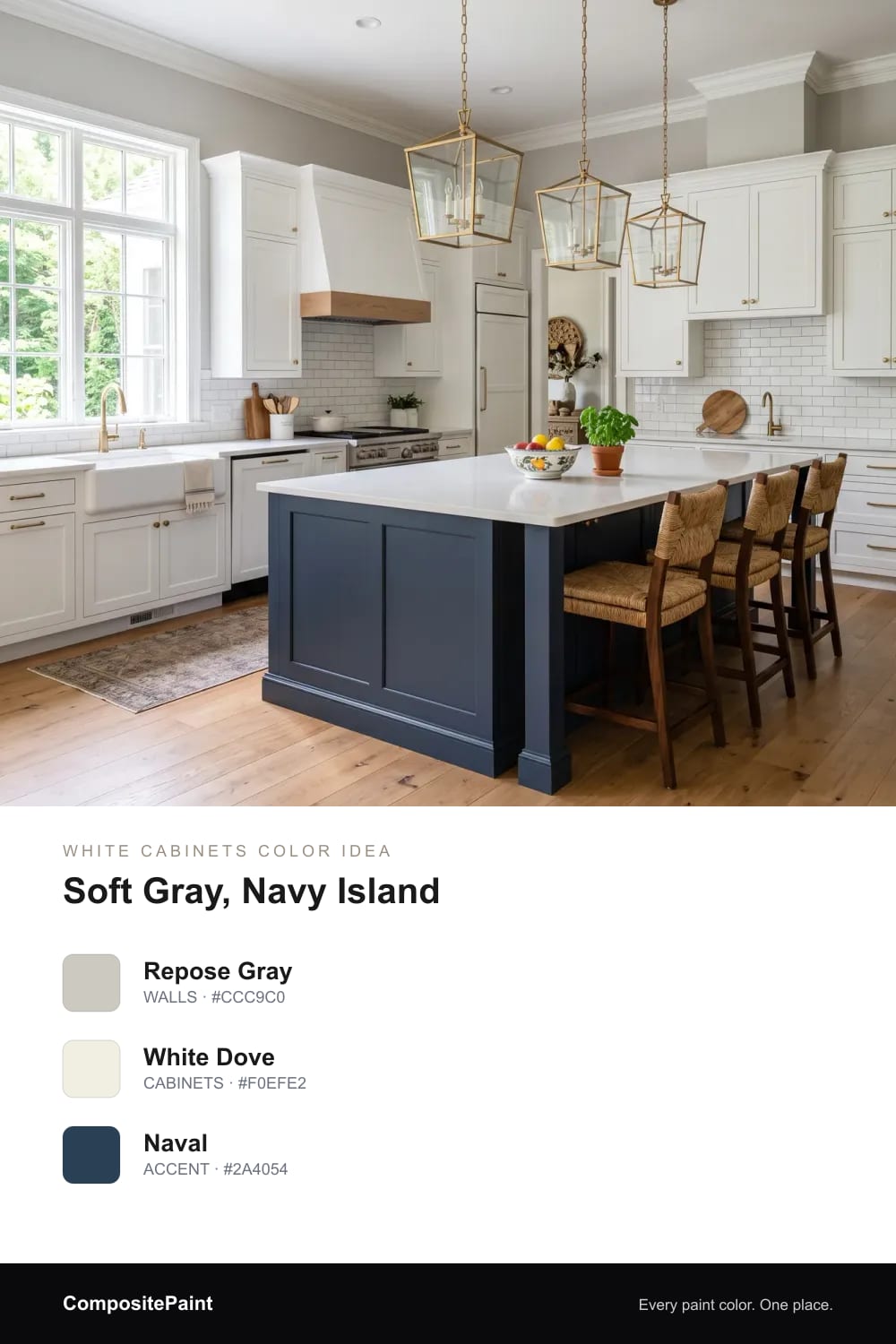
Calm gray walls and a deep navy island wrap white cabinets in a steady, classic mood that feels both fresh and timeless.
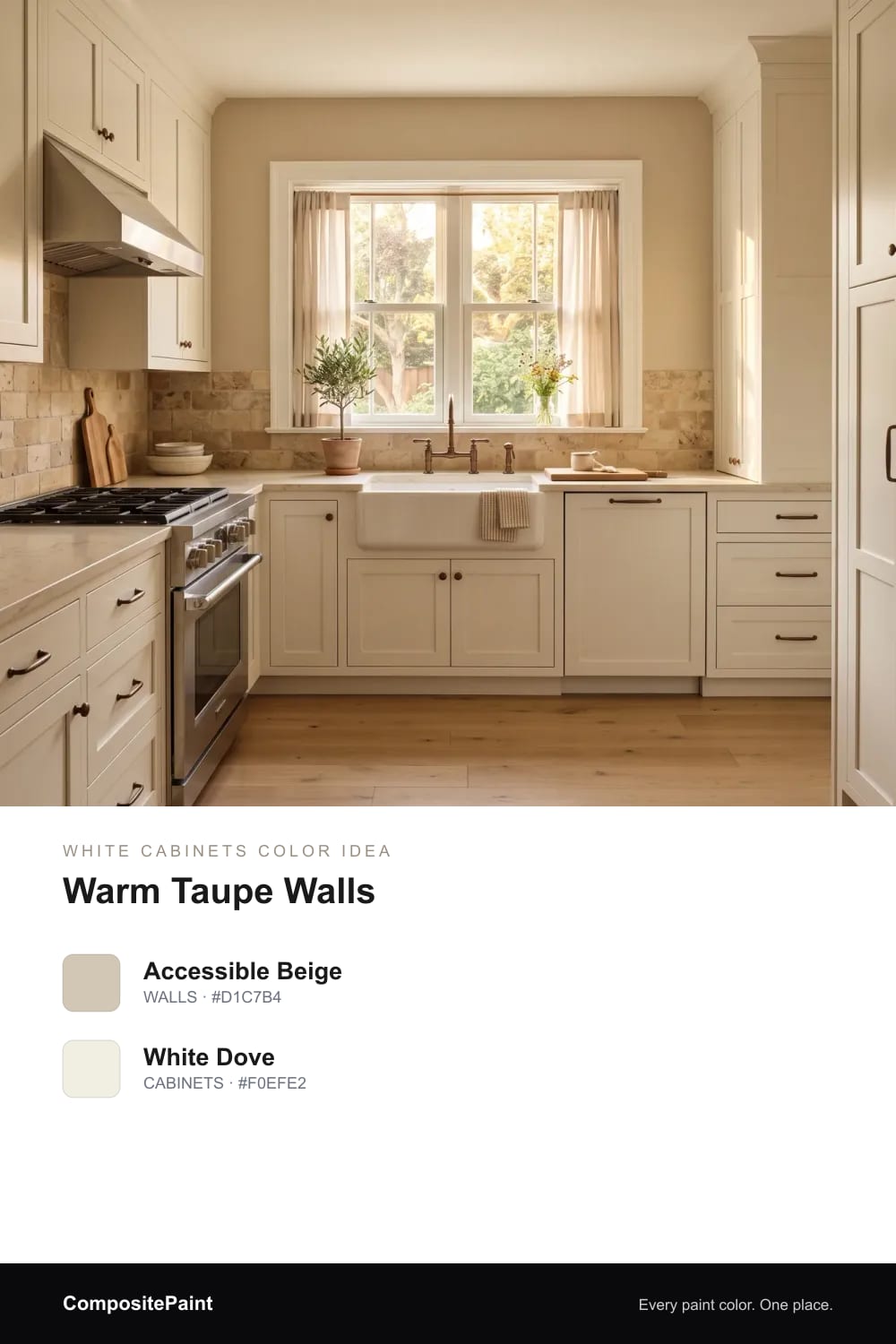
Warm taupe walls wrap the room in a soft, sandy glow that makes crisp white cabinets feel even brighter and more welcoming.
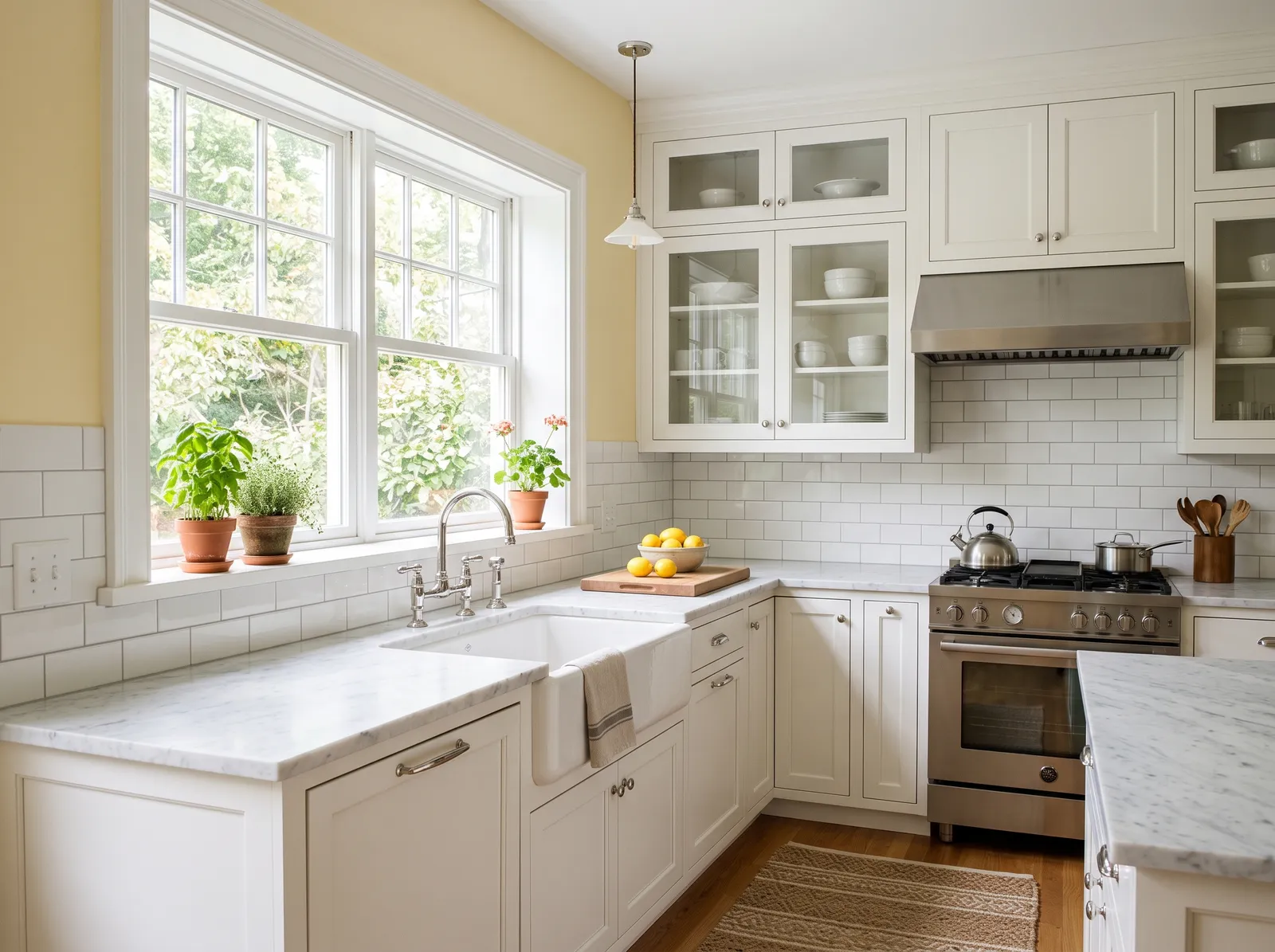
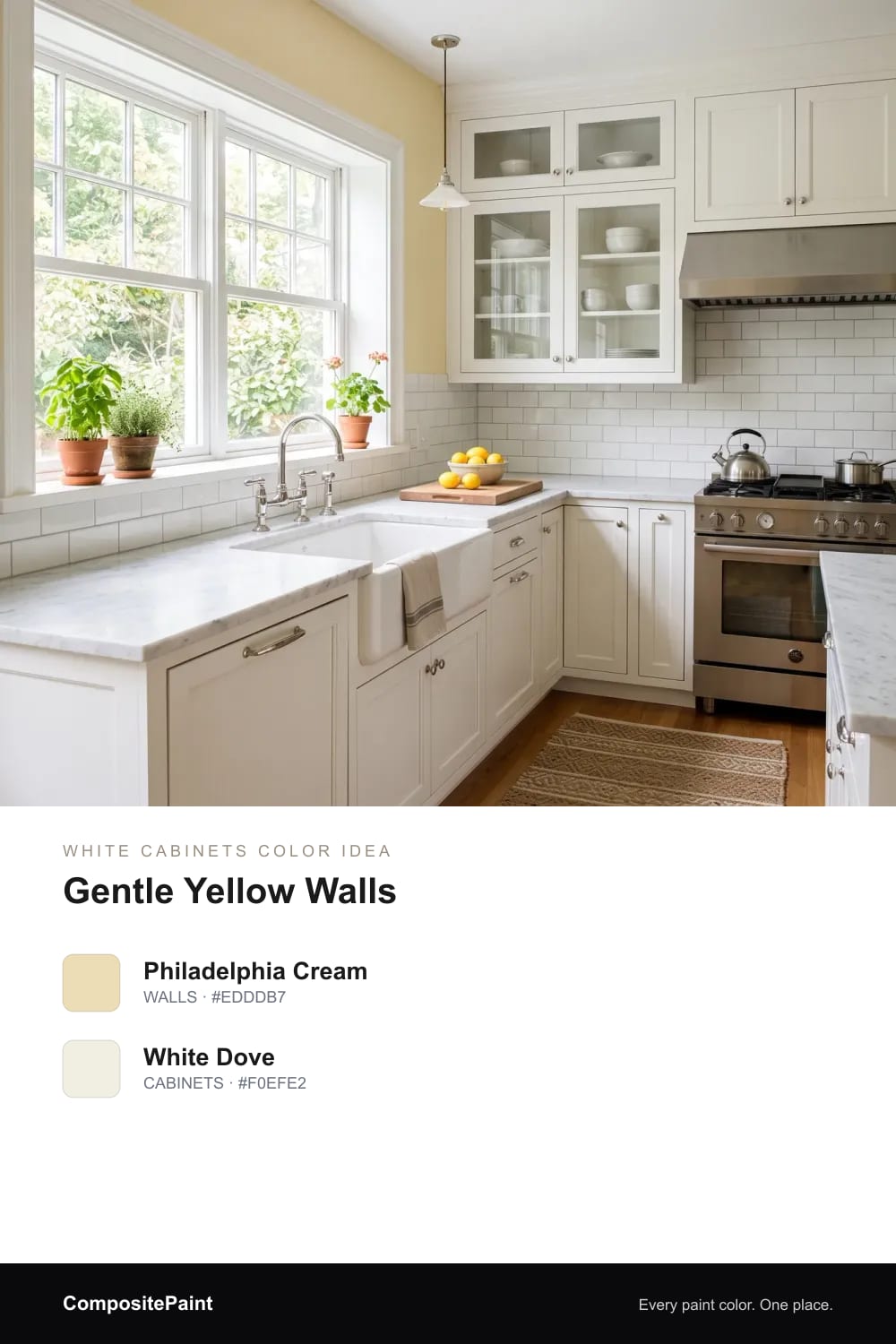
A soft buttery yellow fills the room with sunshine and gives white cabinets a cheerful, old-fashioned warmth you feel right away.
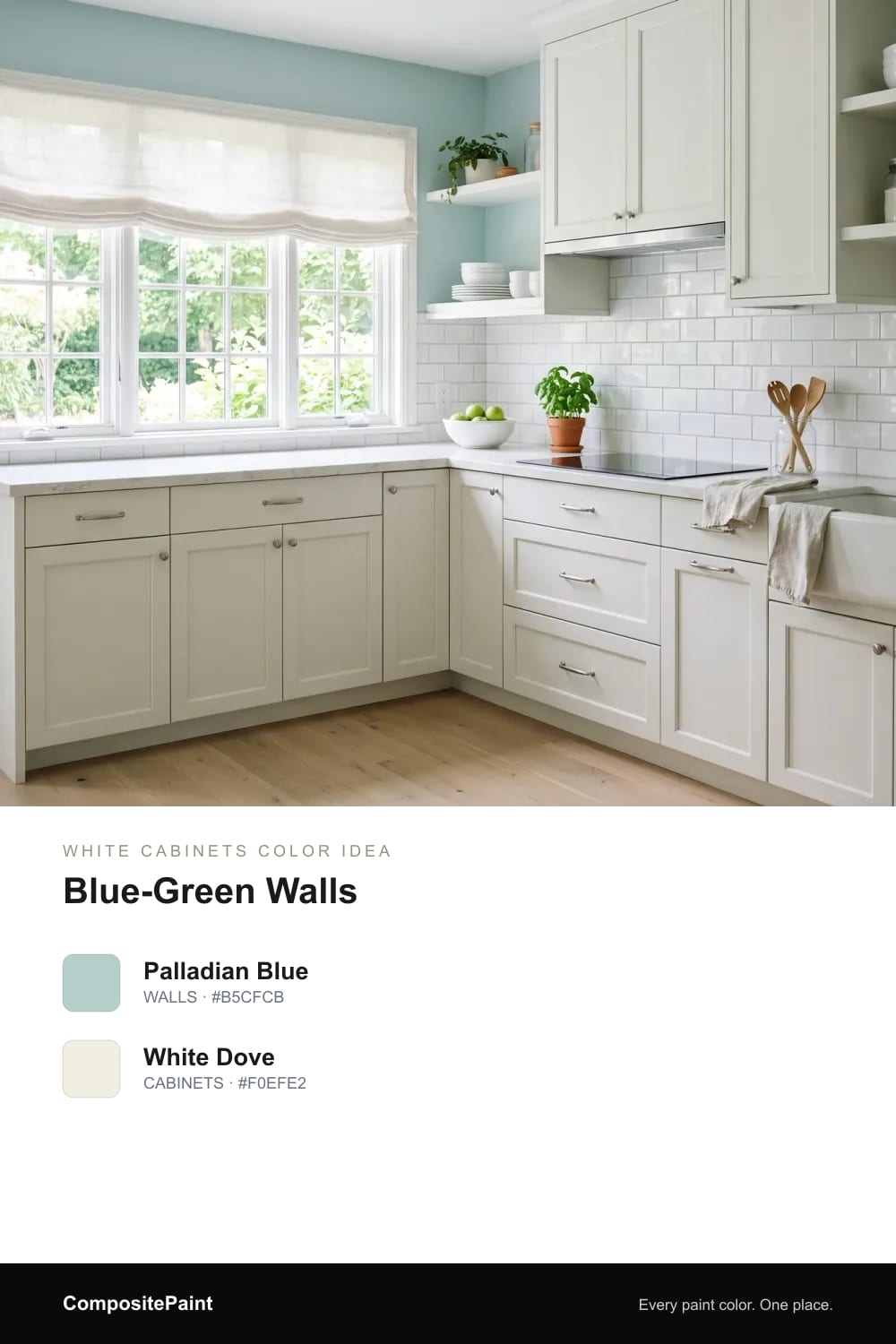
A soft blue-green sits right between calm and fresh, giving white cabinets a spa-like backdrop that feels clean and a little dreamy.
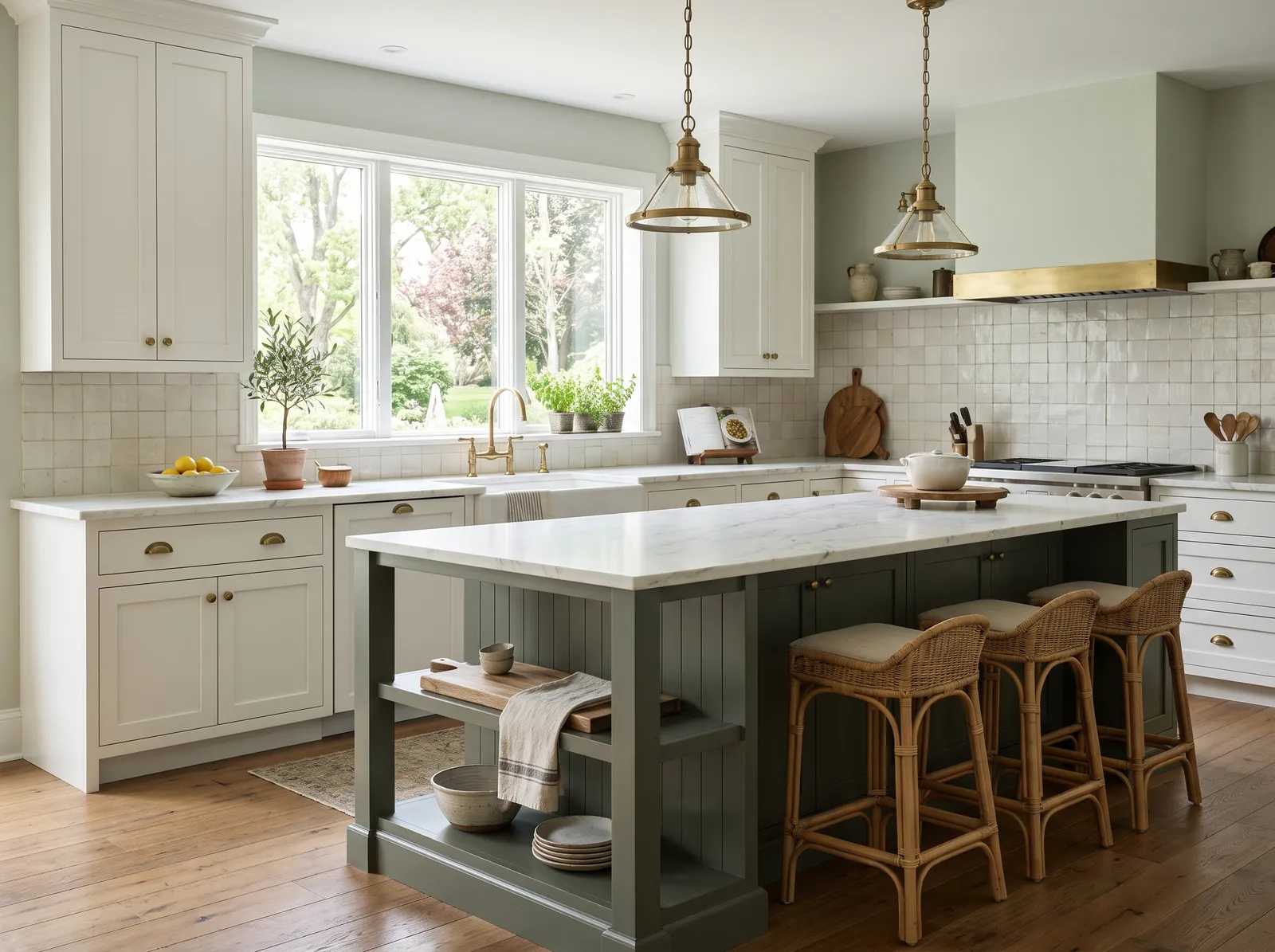
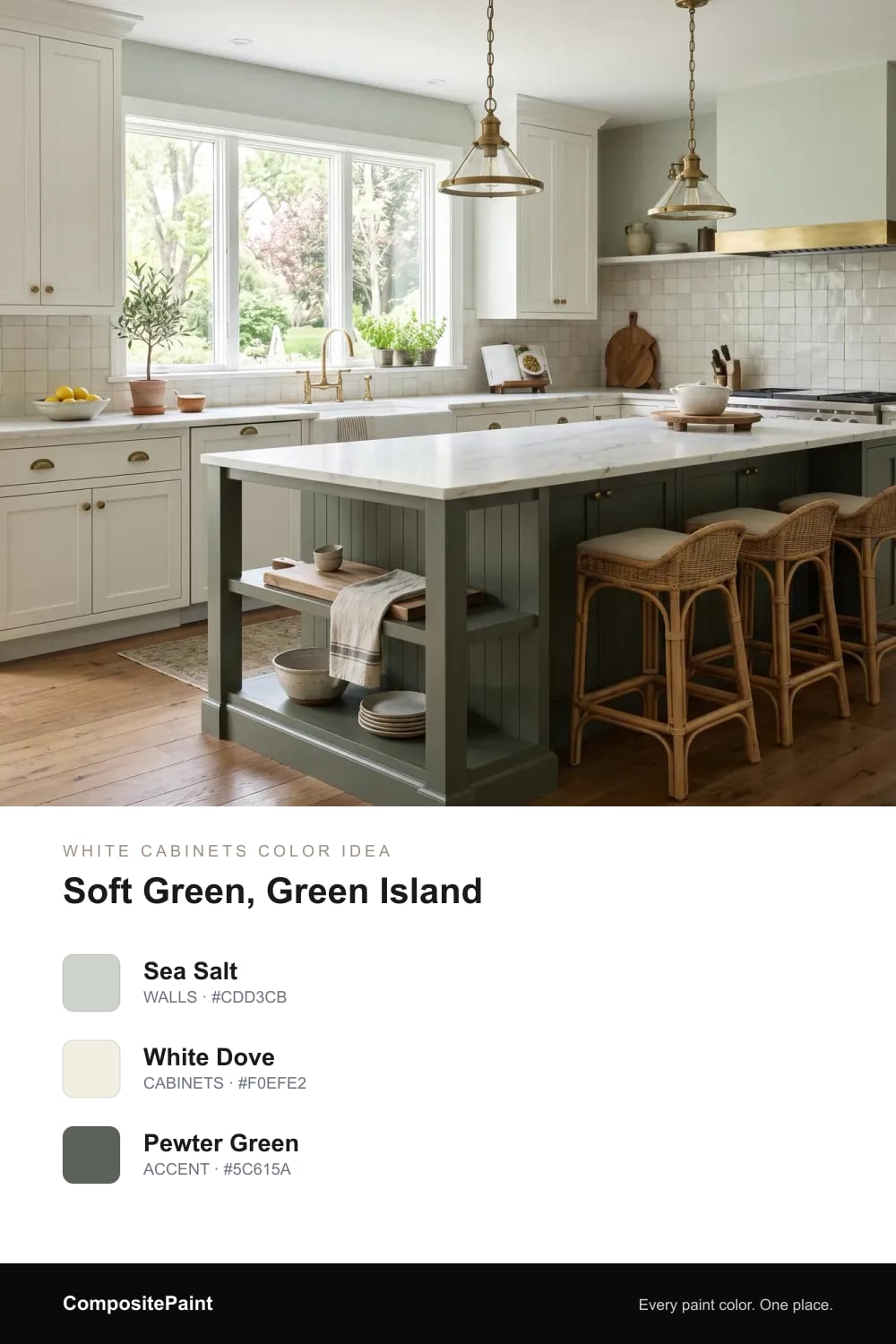
Whisper-soft green walls and a deeper green island layer one easy color in two shades, so white cabinets feel calm and gently nature-touched.
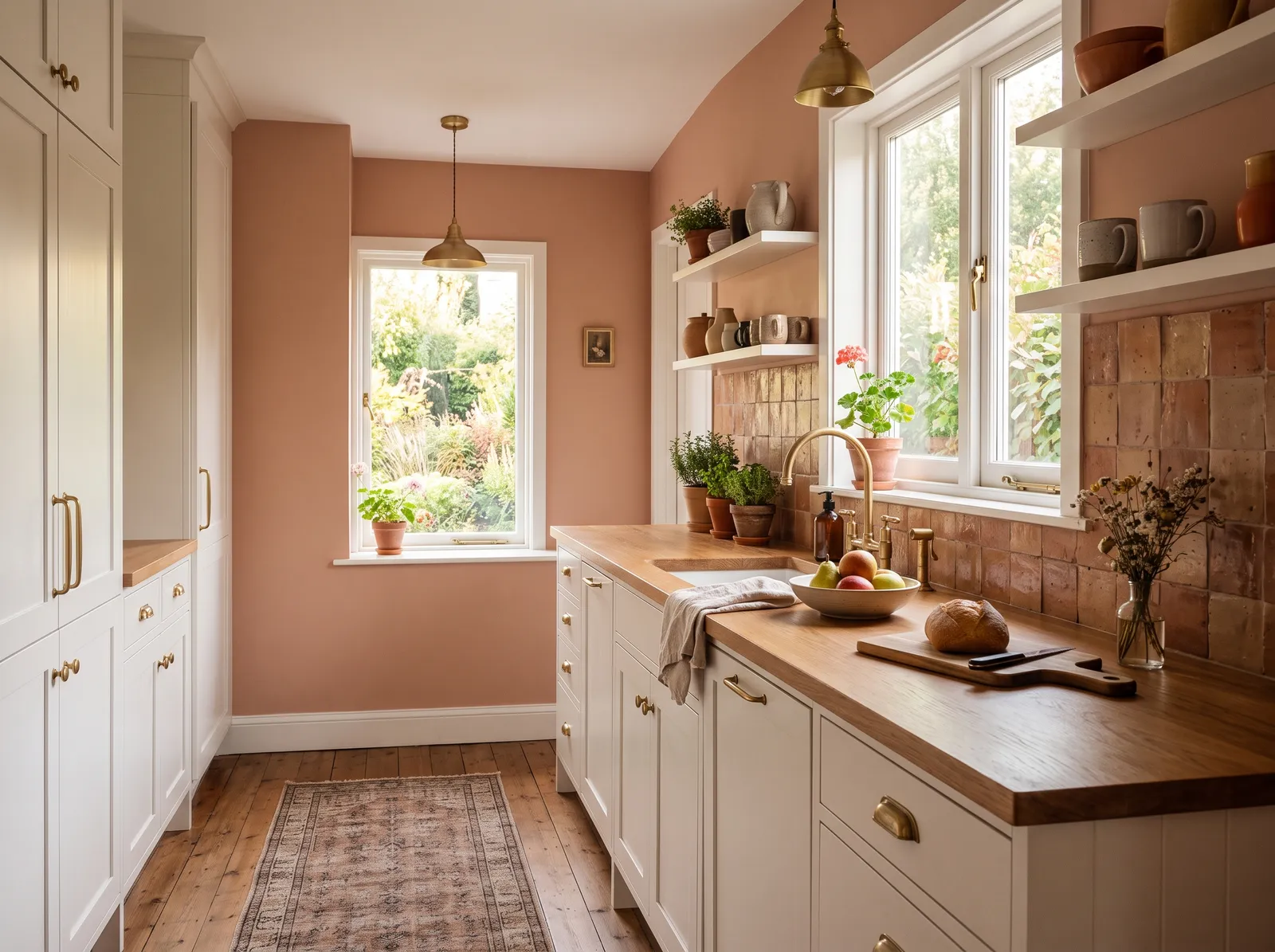
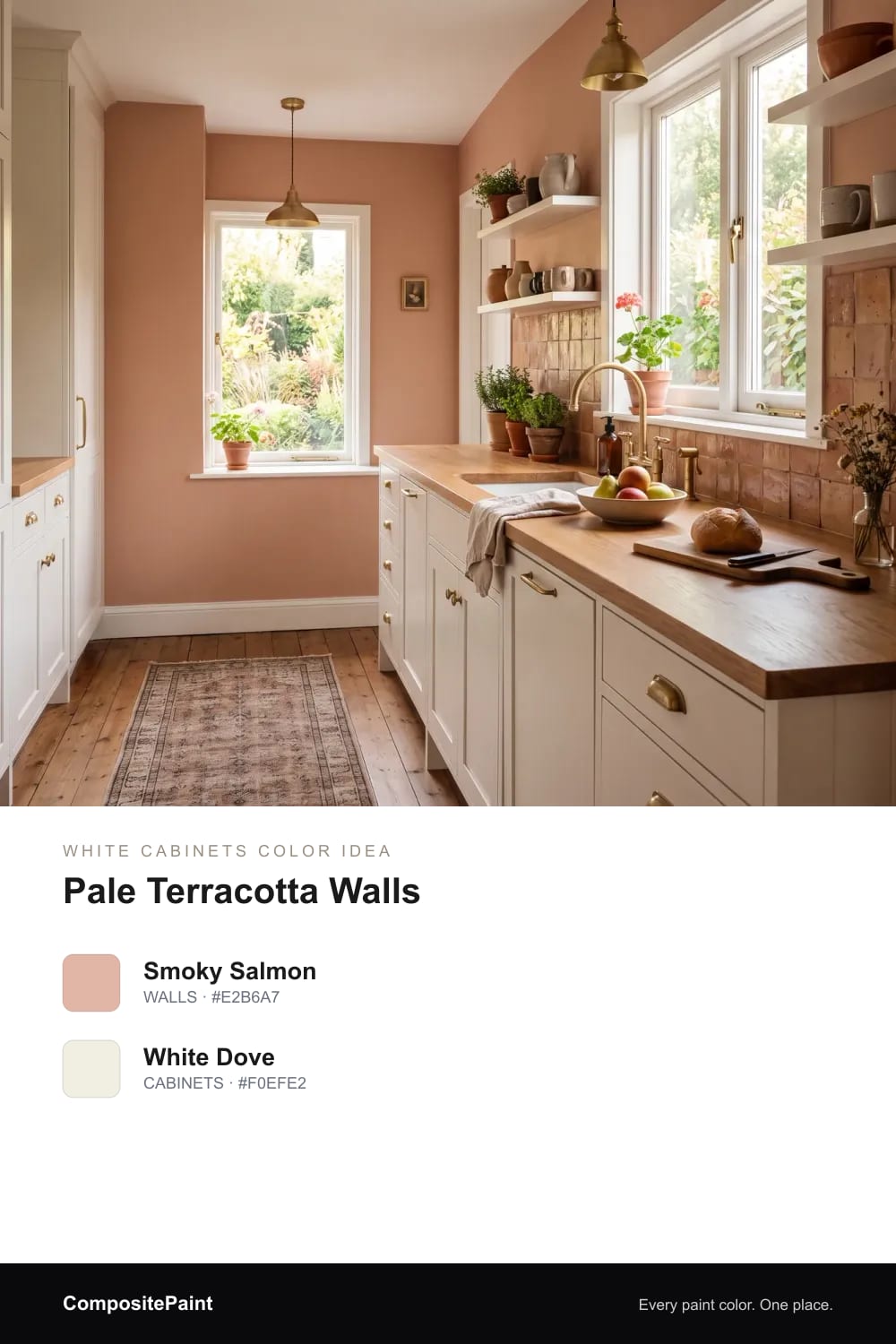
A soft, dusty terracotta warms the room like late sunlight and gives white cabinets a cozy, earthy glow that feels unexpected and lovely.
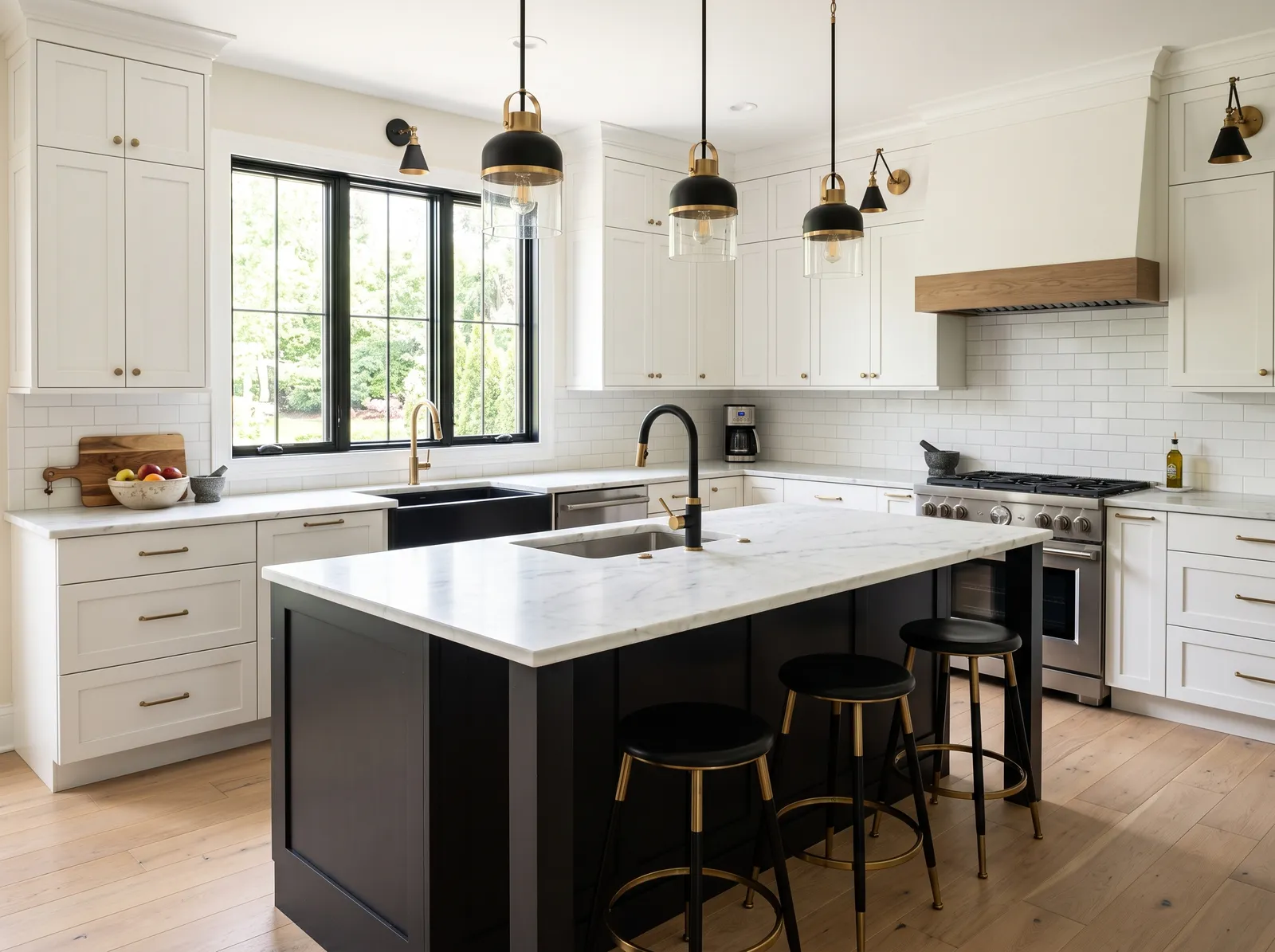
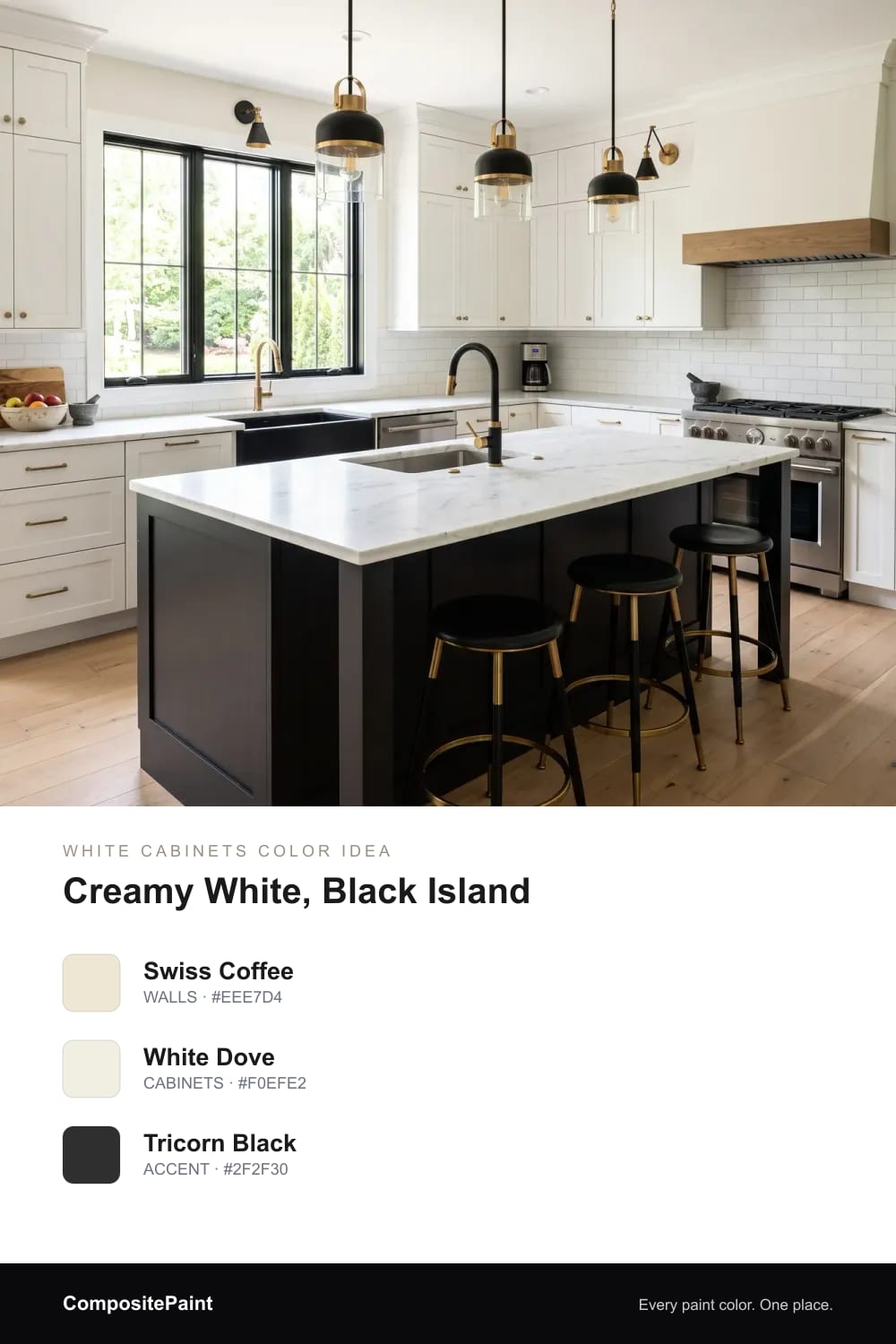
Soft creamy walls keep things warm while a bold black island adds a crisp, modern anchor that makes white cabinets feel sharp and current.
This easygoing greige is the safe favorite for a reason, giving white cabinets a warm, settled backdrop that works in almost any light.
Upload a photo of your white cabinets and the visualizer paints your walls in any of these colors — in seconds.
UPLOAD YOUR PHOTO →White is a blank canvas. Because the cabinets carry no strong color of their own, they happily sit next to soft blues, warm taupes, gentle greens, and even a bold black island without a fight. That is why so many people choose white in the first place. It gives you the freedom to change the mood of the whole kitchen just by changing the walls.
It also means you can take a small risk you might not take on cabinets. A dusty terracotta or a buttery yellow can feel scary on a big run of doors, but on the walls behind crisp white it reads as cozy and charming. Think of the cabinets as the steady base and the wall color as the personality you get to choose.
If you want a safe, beautiful starting point, reach for a soft warm neutral. A creamy white, a light greige like Pale Oak, or a classic greige like Agreeable Gray all wrap white cabinets in gentle warmth and look good morning to night. These are the colors that almost never go wrong, which is why they show up in so many kitchens.
When you are ready for a little more color, soft blues, muted greens, and gentle yellows are the next easy step. They stay quiet enough to feel calm but add just enough life so the room is not all white on white. Start with the lightest version you like, because color always looks stronger on a full wall than it does on a small chip.
Soft color is the sweet spot for most white kitchens. A pale blue like Yarmouth Blue feels fresh and coastal. A muted sage like Evergreen Fog brings a calm, garden feeling. A warm greige sits in the middle and just makes everything feel cozy. All three let the white cabinets stay the star while giving your eye something gentle to land on.
The trick is to keep these colors muted, not bright. A grayed-down green or a soft, dusty blue will always feel more grown-up next to white than a clear, candy version. If a color looks pretty but a touch boring on the chip, it is usually just right for the walls.
A colored island is the easiest way to add drama without committing to colored cabinets everywhere. Keep your perimeter cabinets white, then paint just the island a deeper shade. Navy, forest green, and black are the three classics, and they all look sharp against white. It is one of the most loved looks right now because it feels custom but is simple to pull off.
Pick your island color to match the temperature you want. Navy and black feel crisp and a little dressy, while a deep green feels warmer and more relaxed. Carry a touch of that color somewhere else in the room, like bar stools or a runner, so the island feels planned rather than dropped in.
Most white cabinets lean a little warm or a little cool, and matching your wall color to that lean is the secret to a kitchen that feels pulled together. A warm white like White Dove has a soft, creamy base, so it loves warm walls: greige, taupe, soft yellow, and earthy green. Pair a warm white with a cool gray wall and the cabinets can suddenly look a bit yellow.
To check your lean, hold a pure bright white paper next to a cabinet door. If the door looks creamy, it is warm. If it looks crisp and almost blue, it is cool, and cooler walls like a true gray or a clear blue will suit it better. When in doubt, warm-with-warm is the friendlier, cozier choice for a kitchen.
Your countertop and backsplash quietly steer the wall color too. White marble and light quartz keep things bright and let you go any direction. Warm wood counters pull the room toward earthy colors like sage, terracotta, and greige. A busy stone with lots of veining is happiest with a calm, simple wall so the two are not competing.
Look at the undertone running through your counter and backsplash before you commit to a wall. If you see warm cream and gold, lean warm on the walls. If you see cool gray and white, a soft gray or blue will feel more at home. Bring a sample of your counter to the paint chips, not the other way around.
Kitchens get splashed, steamed, and wiped down constantly, so the finish matters as much as the color. For the walls, an eggshell or satin finish is the sweet spot. It has a soft, low glow and wipes clean without showing every bump in the wall the way a flat finish would.
Save the shinier finishes for the hard-working spots. A semi-gloss on trim, doors, and especially on cabinets stands up to scrubbing and fingerprints far better. That little step up in shine on the cabinets also helps your crisp white read as fresh and clean rather than dull.
Almost any color works, but soft warm neutrals are the easiest win. A creamy white, a light greige, or a gentle gray all flatter white cabinets and look good in any light. From there, soft blue, muted sage, and buttery yellow are great next steps if you want a little more color.
Contrast is what makes white pop. A deeper wall or island color, like navy, forest green, or charcoal, frames the white and makes it look crisp and bright. Even a soft sage or dusty blue gives enough contrast to keep the cabinets from blending into the walls.
You can, but pick a wall white that is slightly different from the cabinets so the room has some depth. A warm creamy white on the walls next to white cabinets feels calm and bright without looking flat. If all-white feels too plain, a soft greige gives nearly the same airy look with a touch more warmth.
Navy, deep green, and black are the three favorites, and all three look great against white cabinets. Navy and black feel crisp and a little dressy, while a deep green feels warm and relaxed. Keep the rest of the cabinets white and paint only the island for the easiest version of this look.
White marble and light quartz are the classic match and keep things bright and flexible. Warm wood counters add coziness and pull the room toward earthy colors. If you want contrast, a darker stone or a black quartz makes white cabinets stand out beautifully.
Use eggshell or satin on the walls so they wipe clean without too much shine. Step up to semi-gloss on trim and especially on the cabinets, since it handles fingerprints and scrubbing best. That little bit of extra shine on white cabinets also keeps them looking fresh.