1. Crisp White & Soft Gray
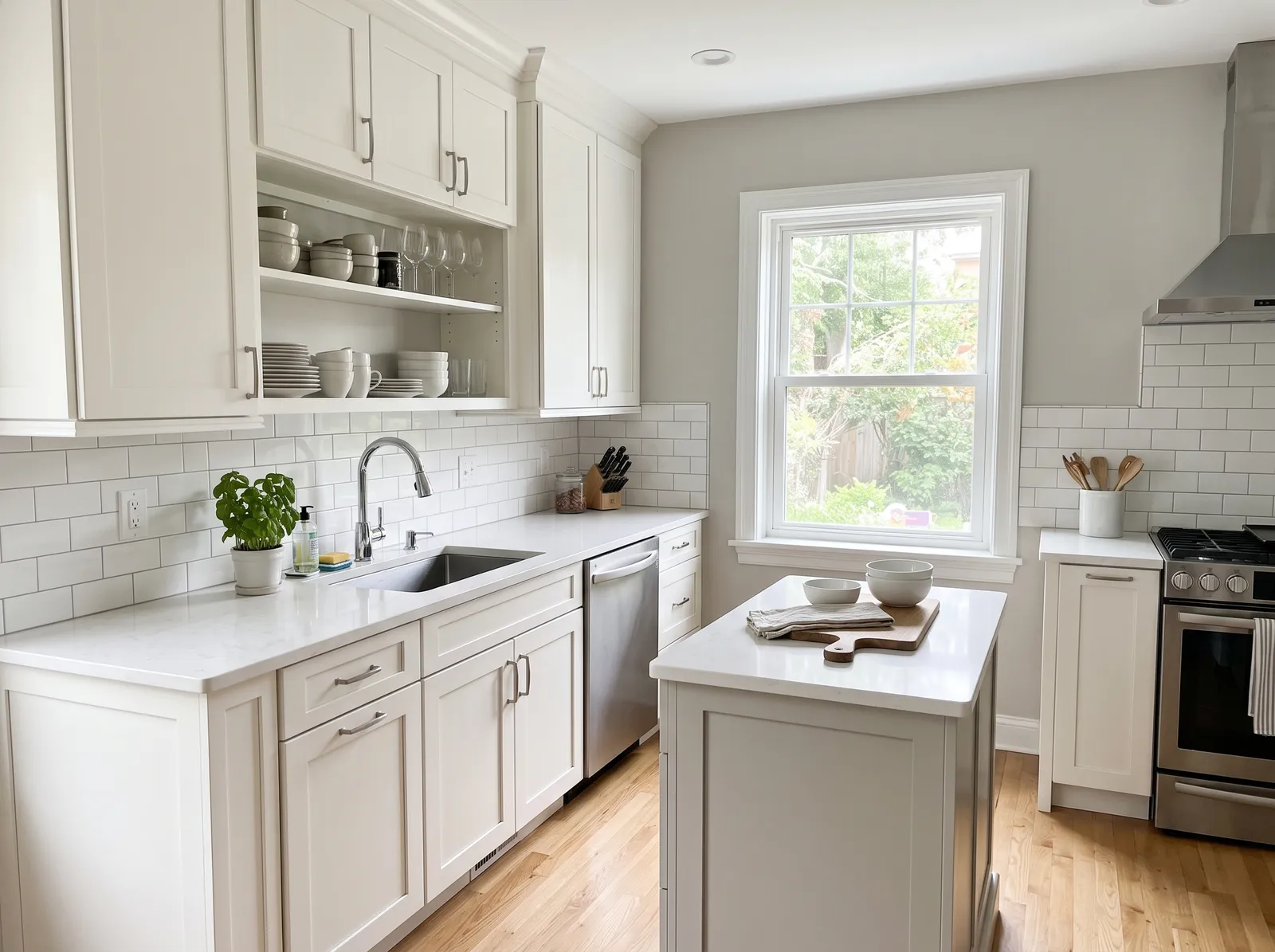
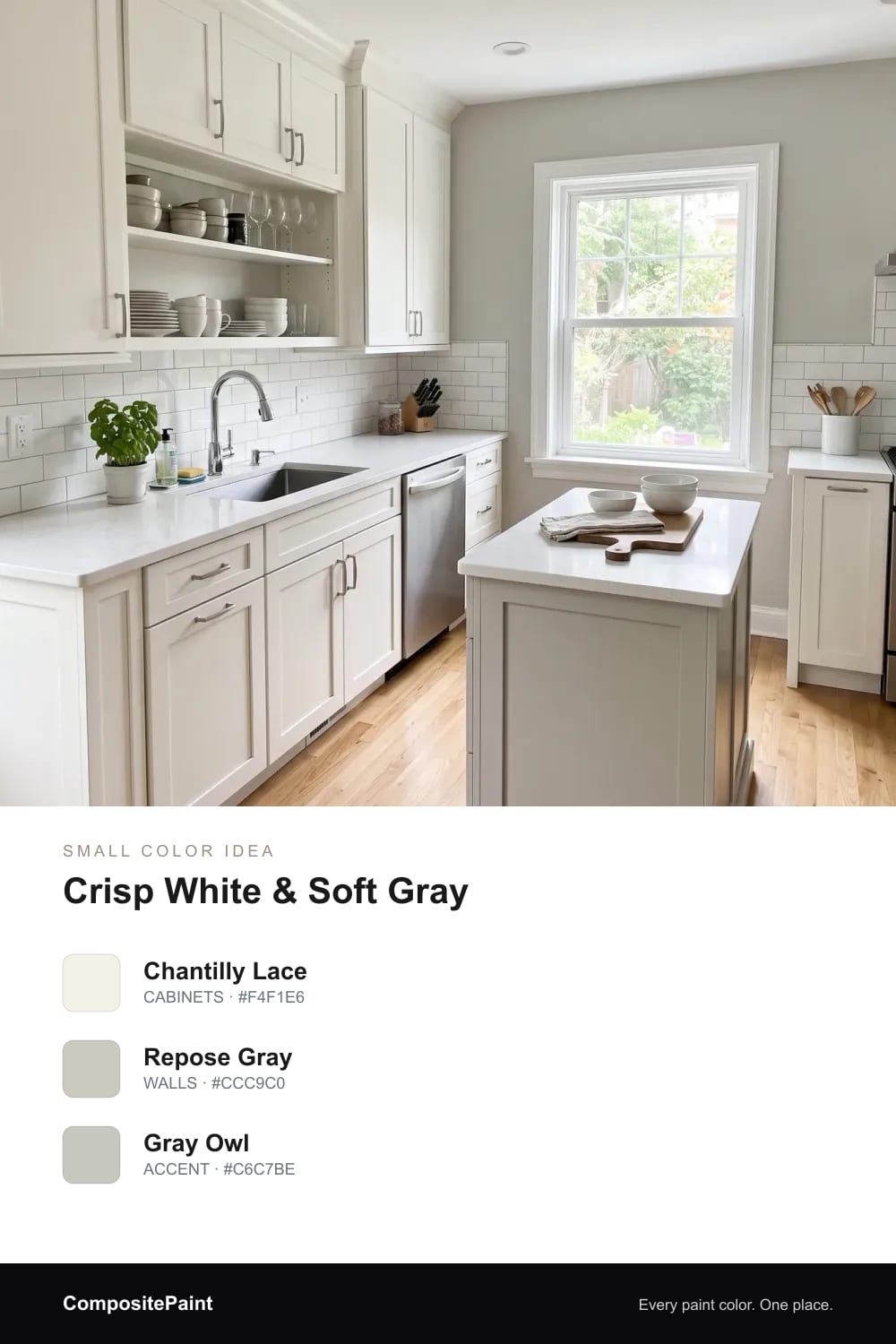
Bright white cabinets bounce every bit of daylight around, while soft gray walls keep the small space calm instead of stark.
A small kitchen can still feel bright, calm, and roomy with the right color on the cabinets. These twelve looks lean light and airy to open the space up, with a couple of bolder picks for anyone who wants a little drama. Browse, find the mood you love, and picture it in your own kitchen.
By Jessica Williams · Color Stylist
Bright white cabinets bounce every bit of daylight around, while soft gray walls keep the small space calm instead of stark.
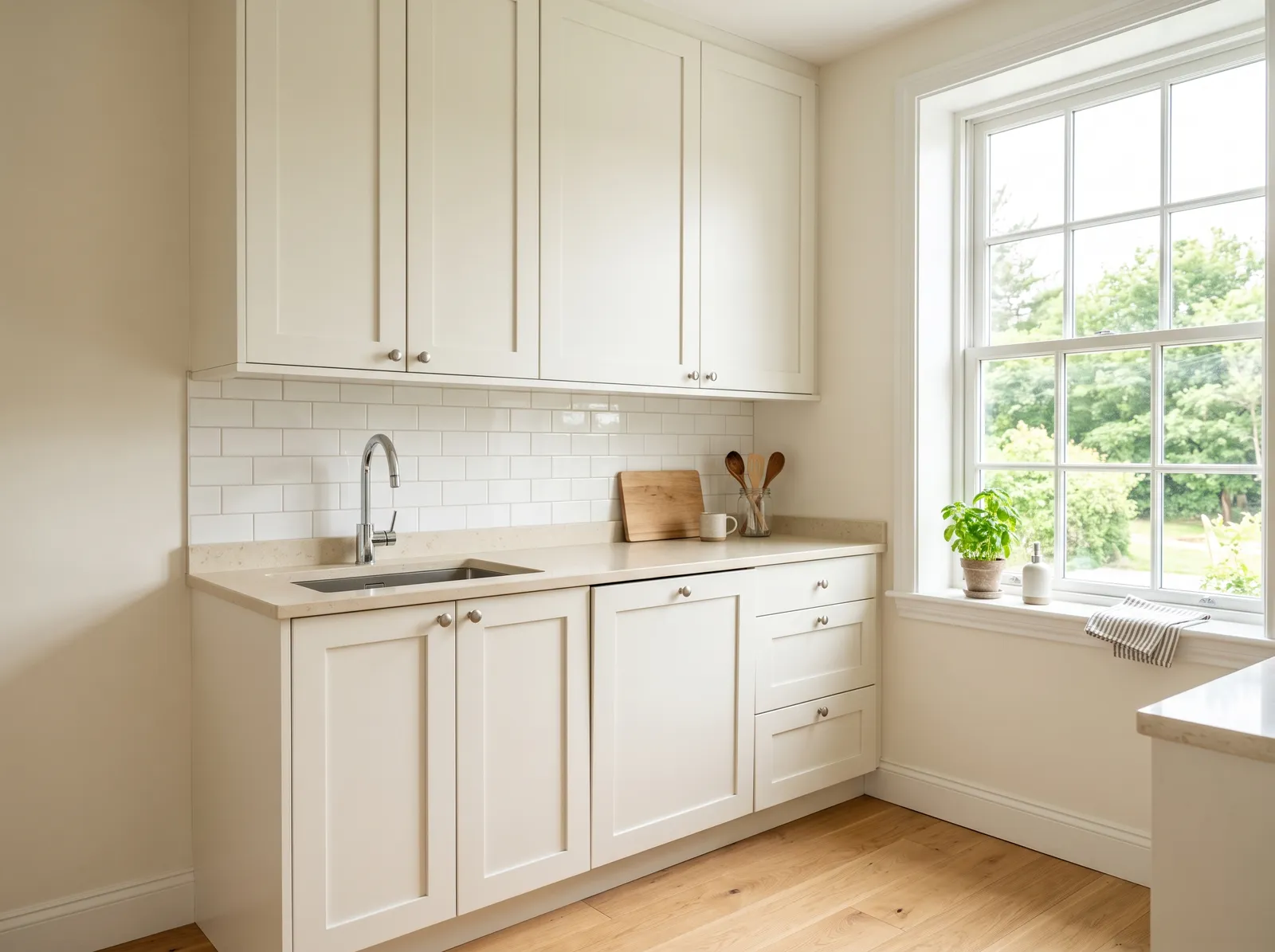
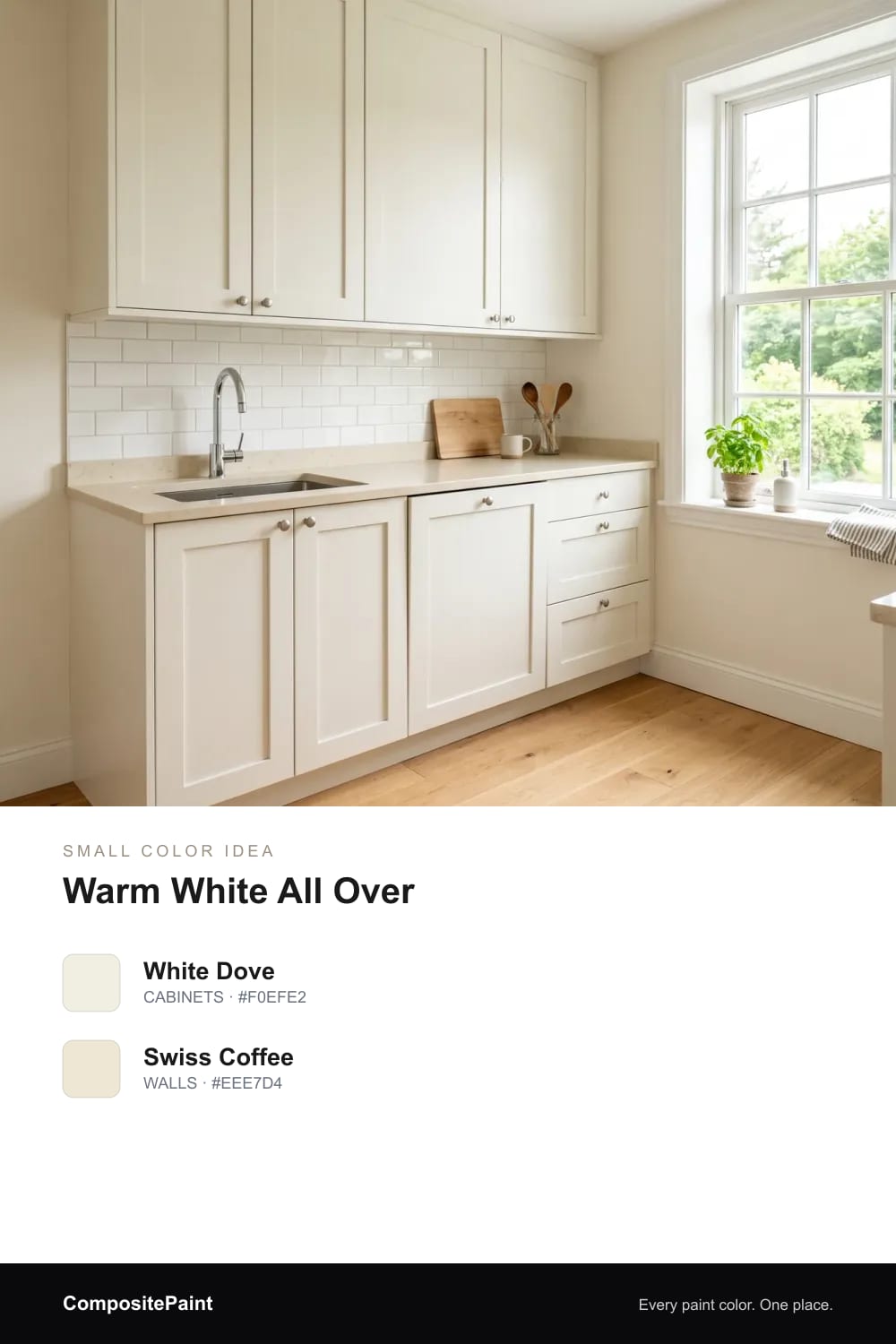
Cabinets and walls in two close warm whites blur the corners, so a tight kitchen reads as one soft, open room.
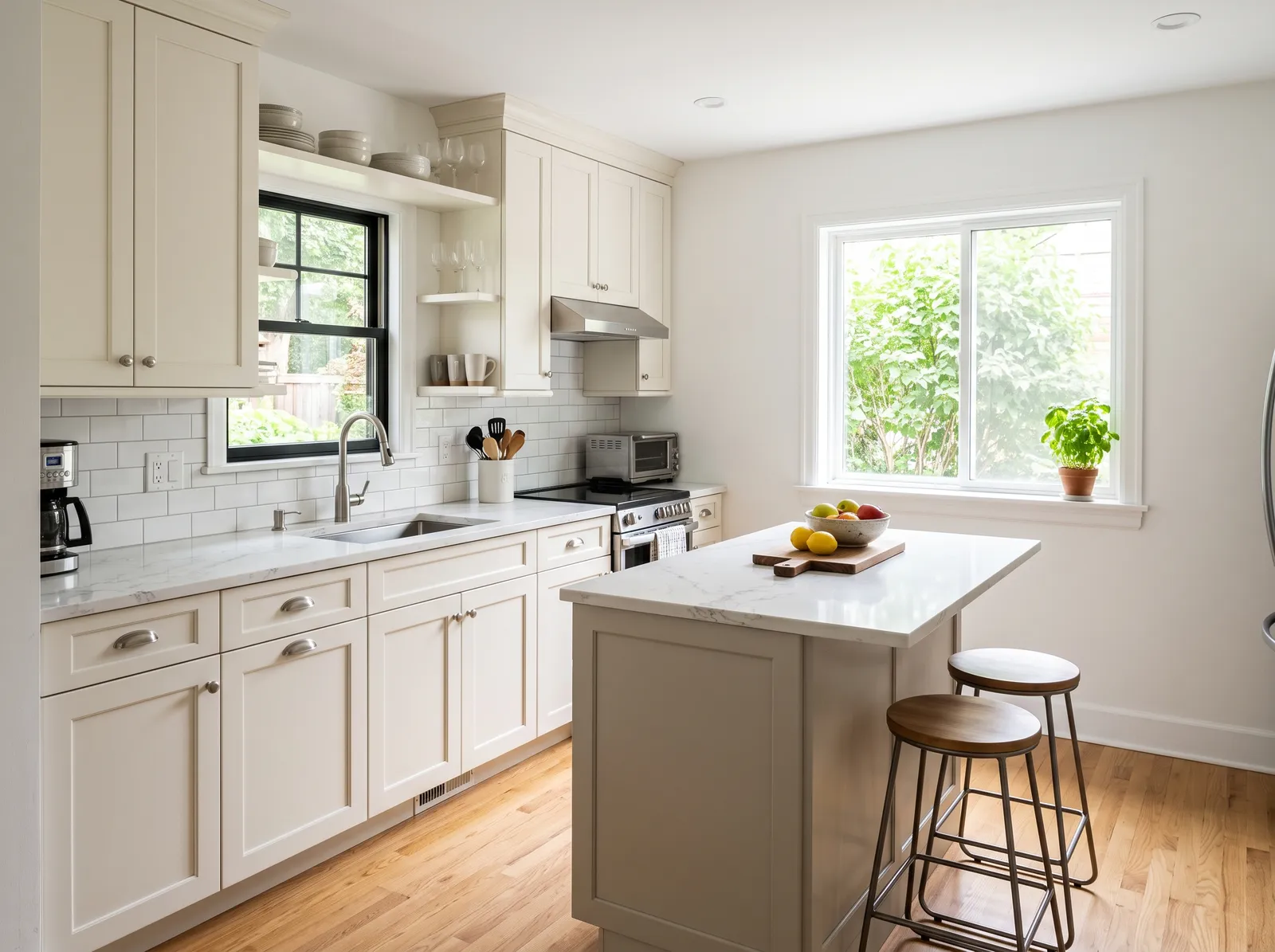
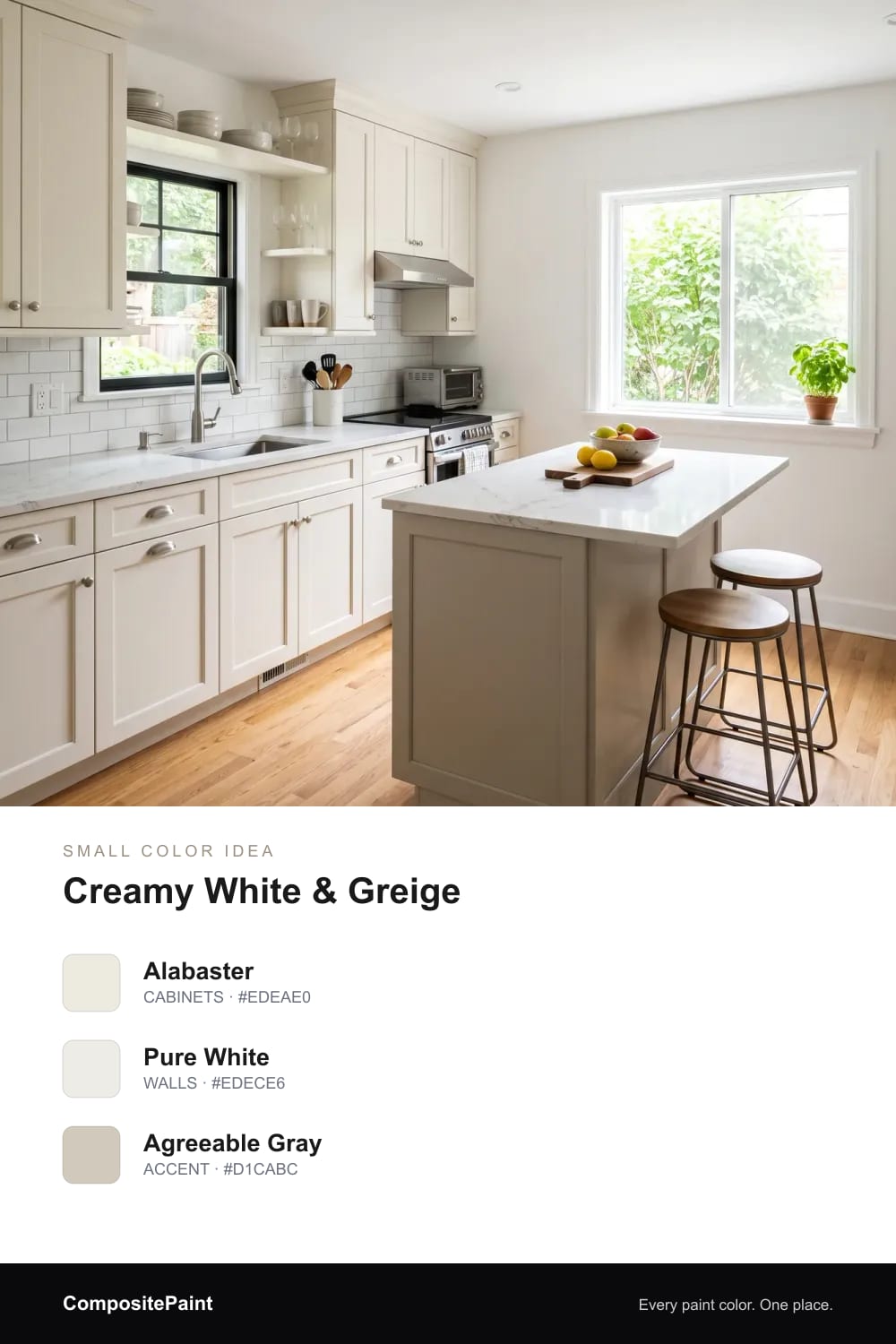
Creamy cabinets feel cozy, crisp white walls keep things light, and a soft greige island grounds the middle of the room.
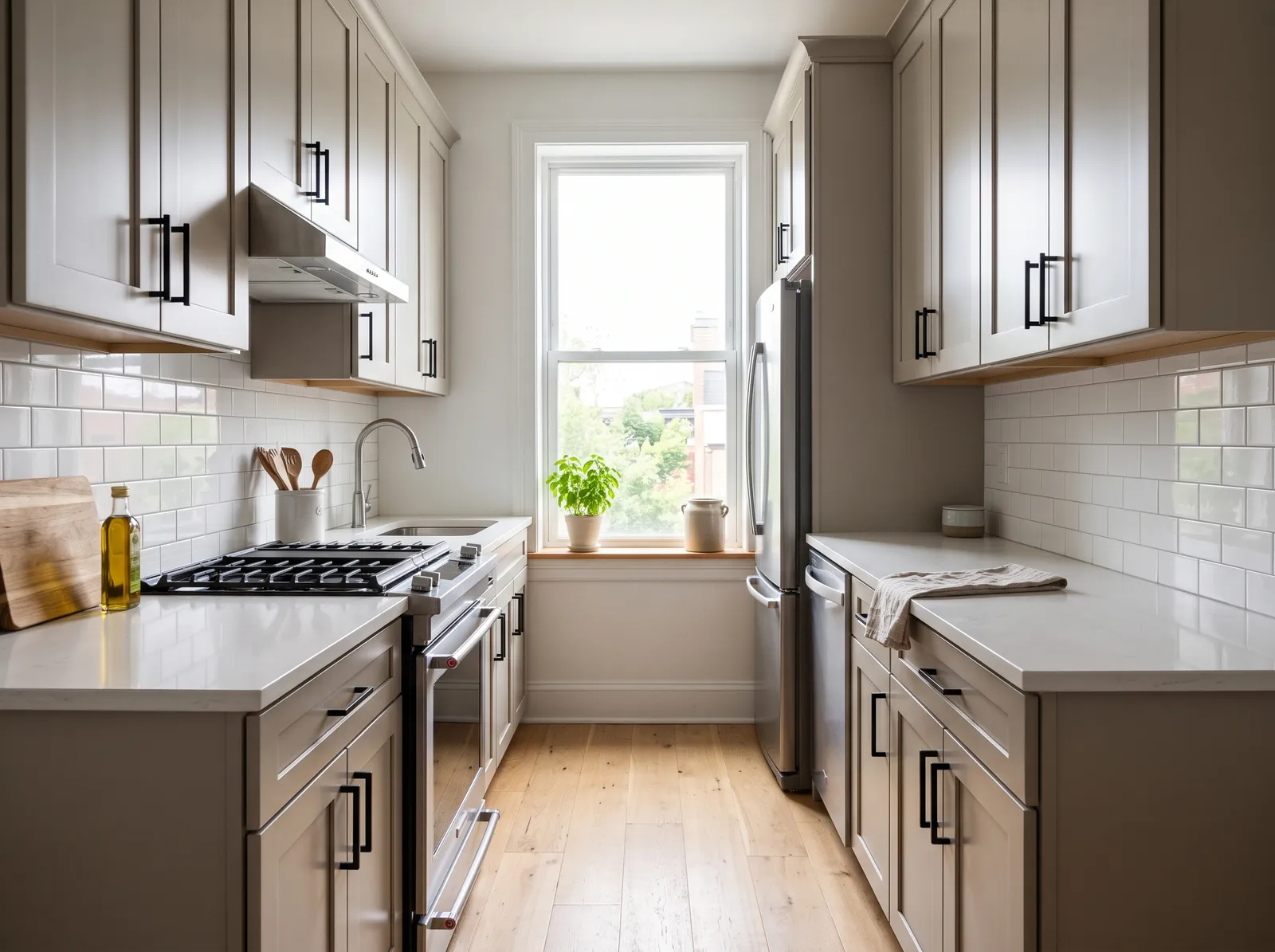
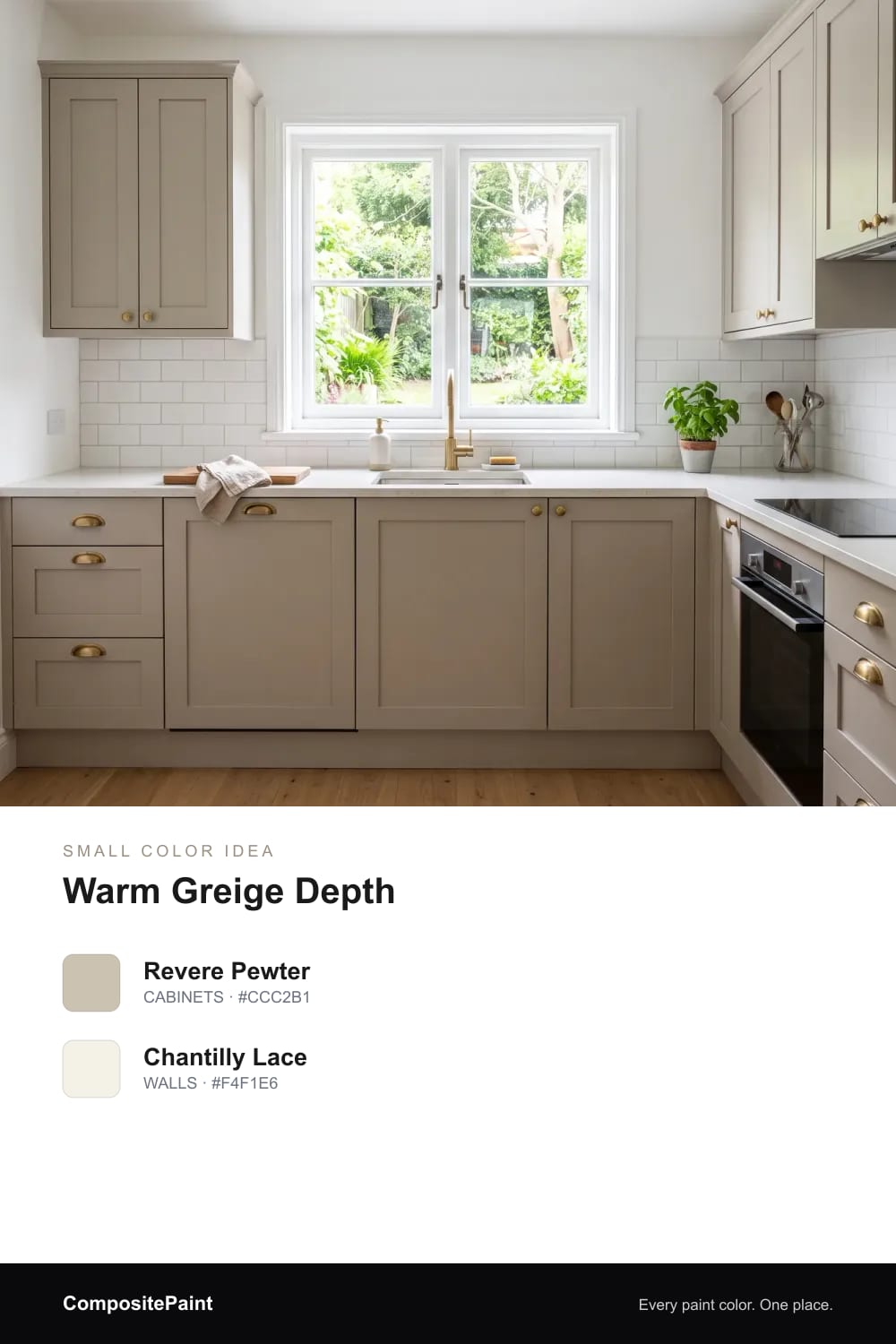
Warm greige cabinets hide everyday smudges while crisp white walls above them keep a small kitchen feeling fresh and open.
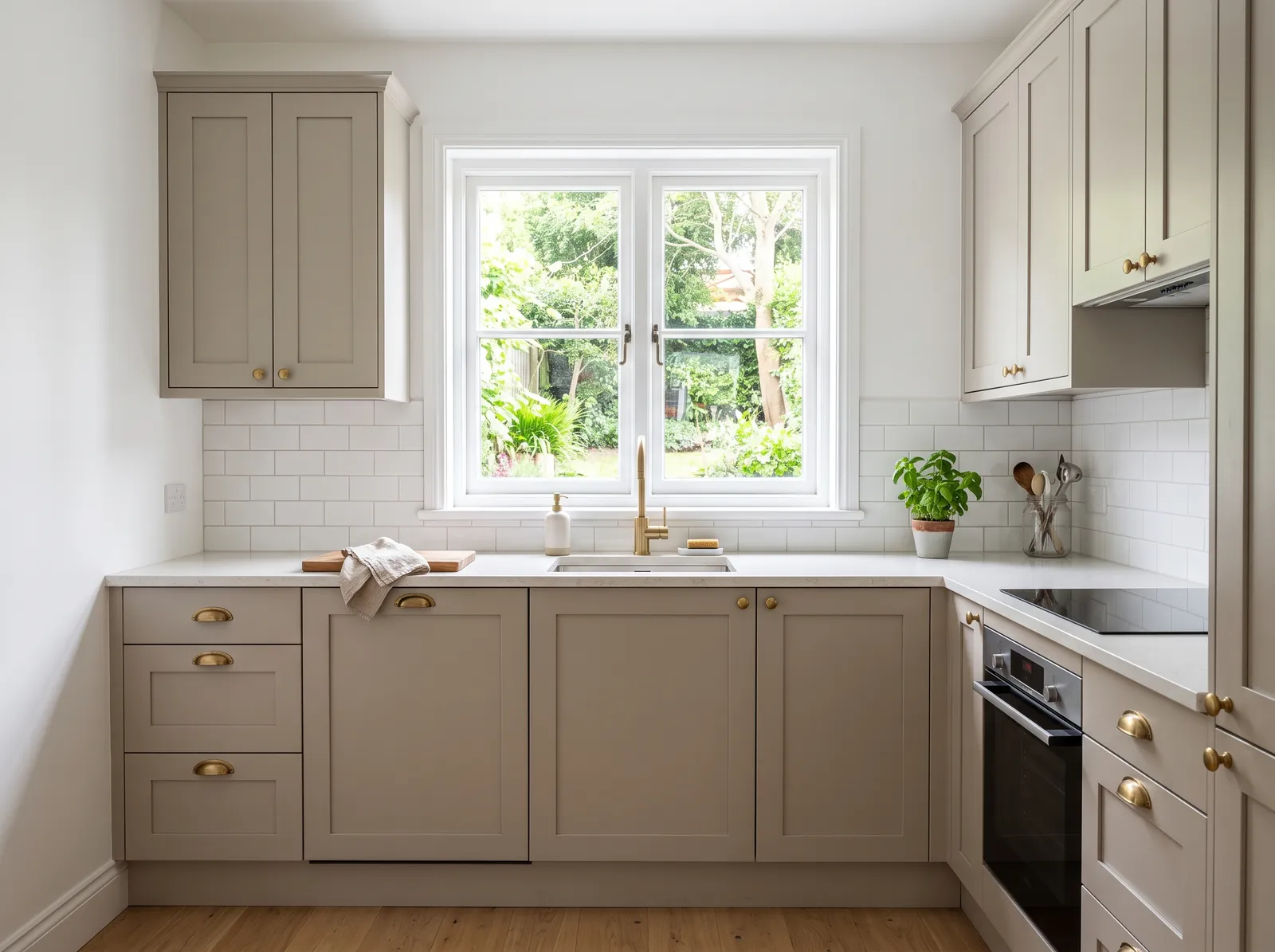
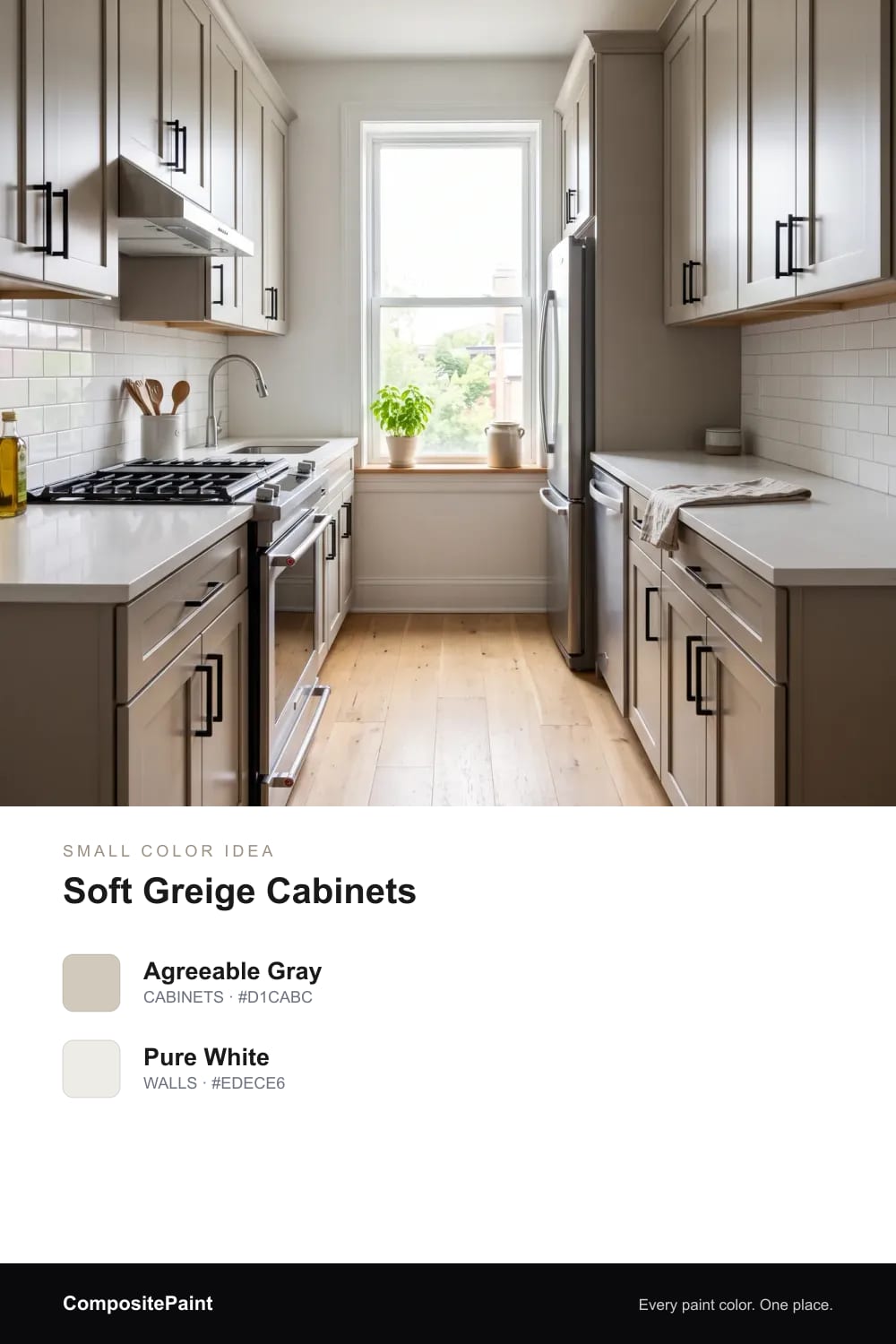
A gentle greige on the cabinets adds quiet warmth, and bright white walls stop it from ever feeling heavy in a small space.
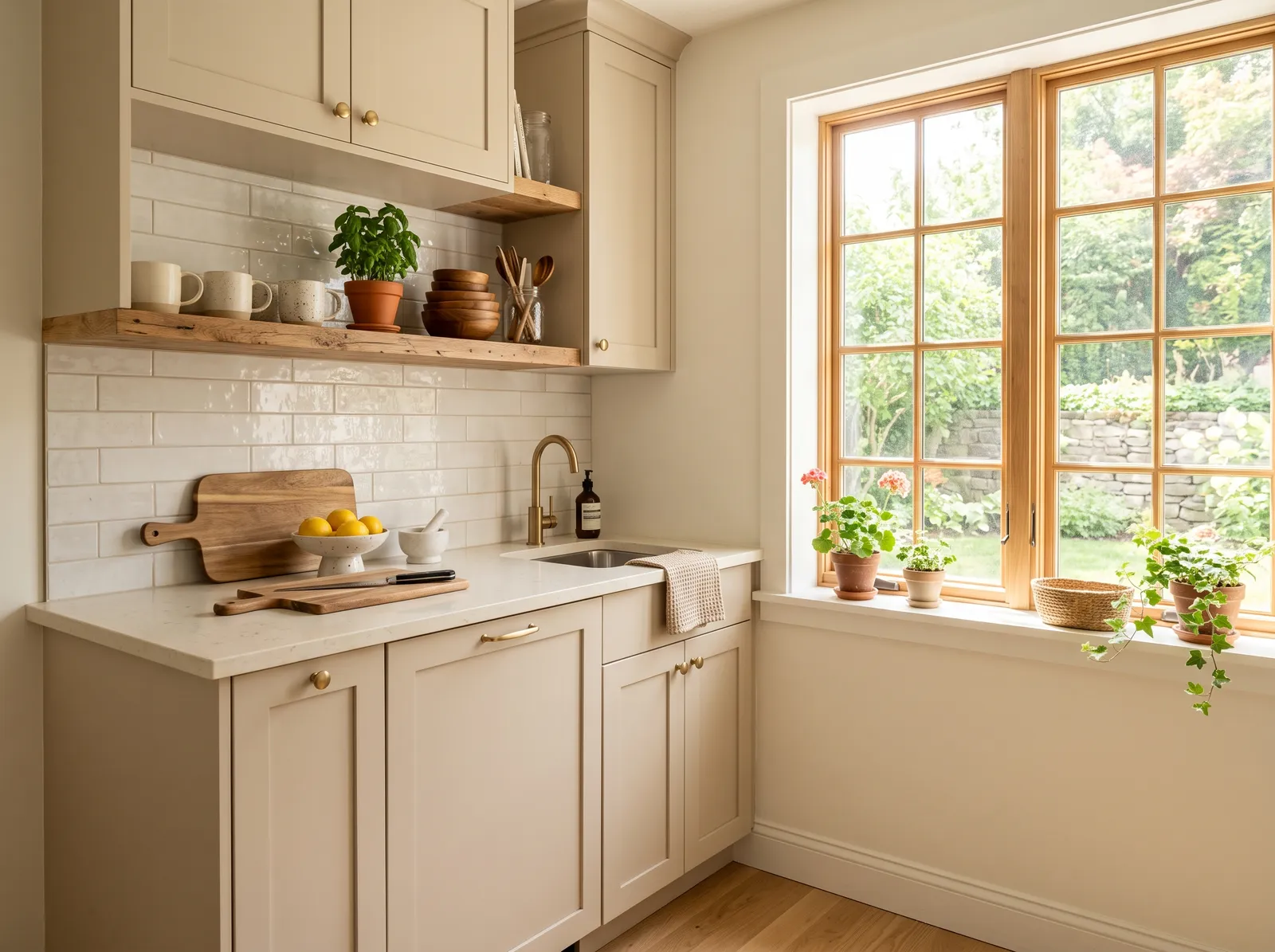
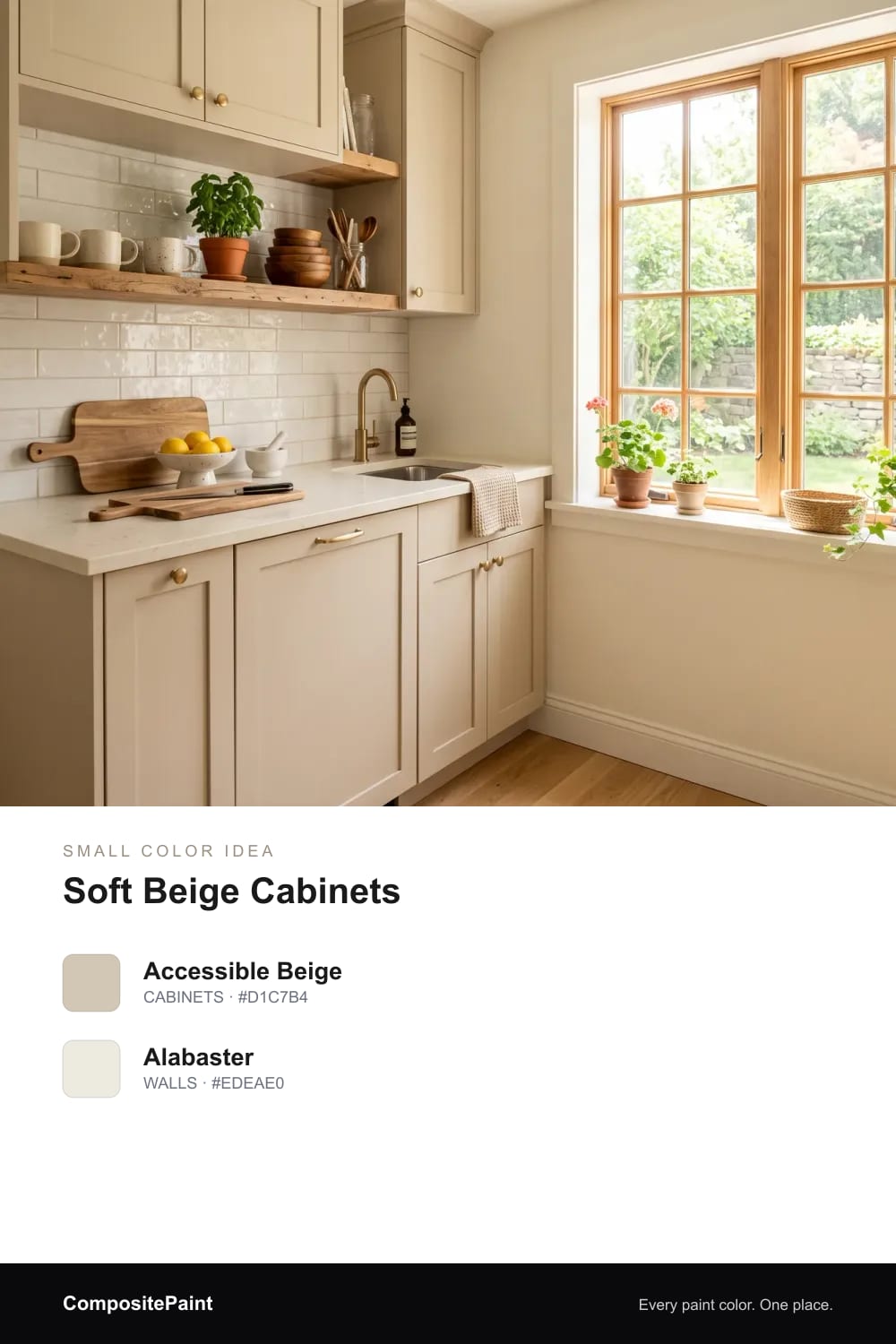
Soft beige cabinets wrap the kitchen in warmth, and a warm white wall keeps the whole thing easy, light, and welcoming.
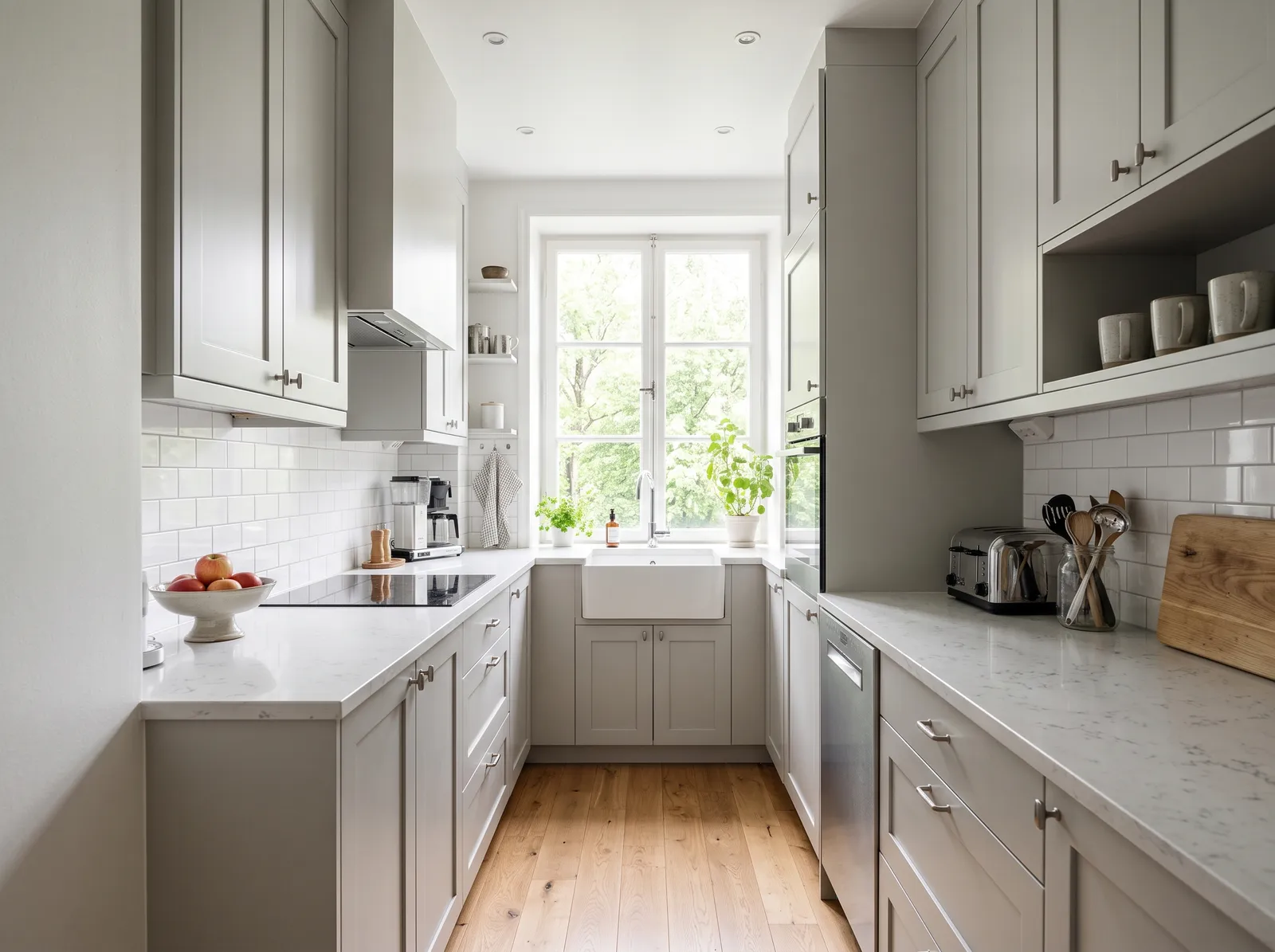
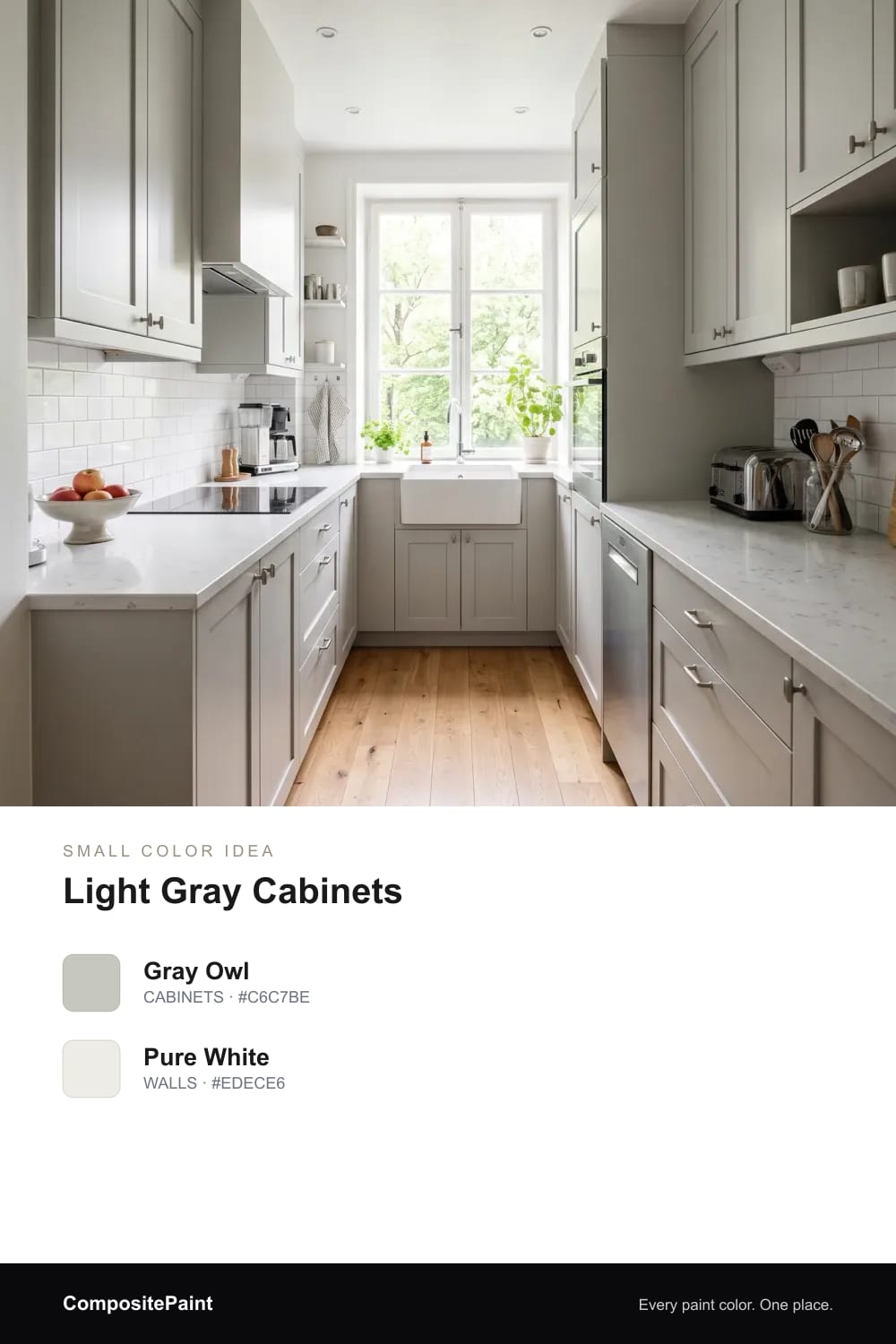
Light gray cabinets read clean and modern, and white walls behind them keep a compact kitchen feeling crisp and roomy.
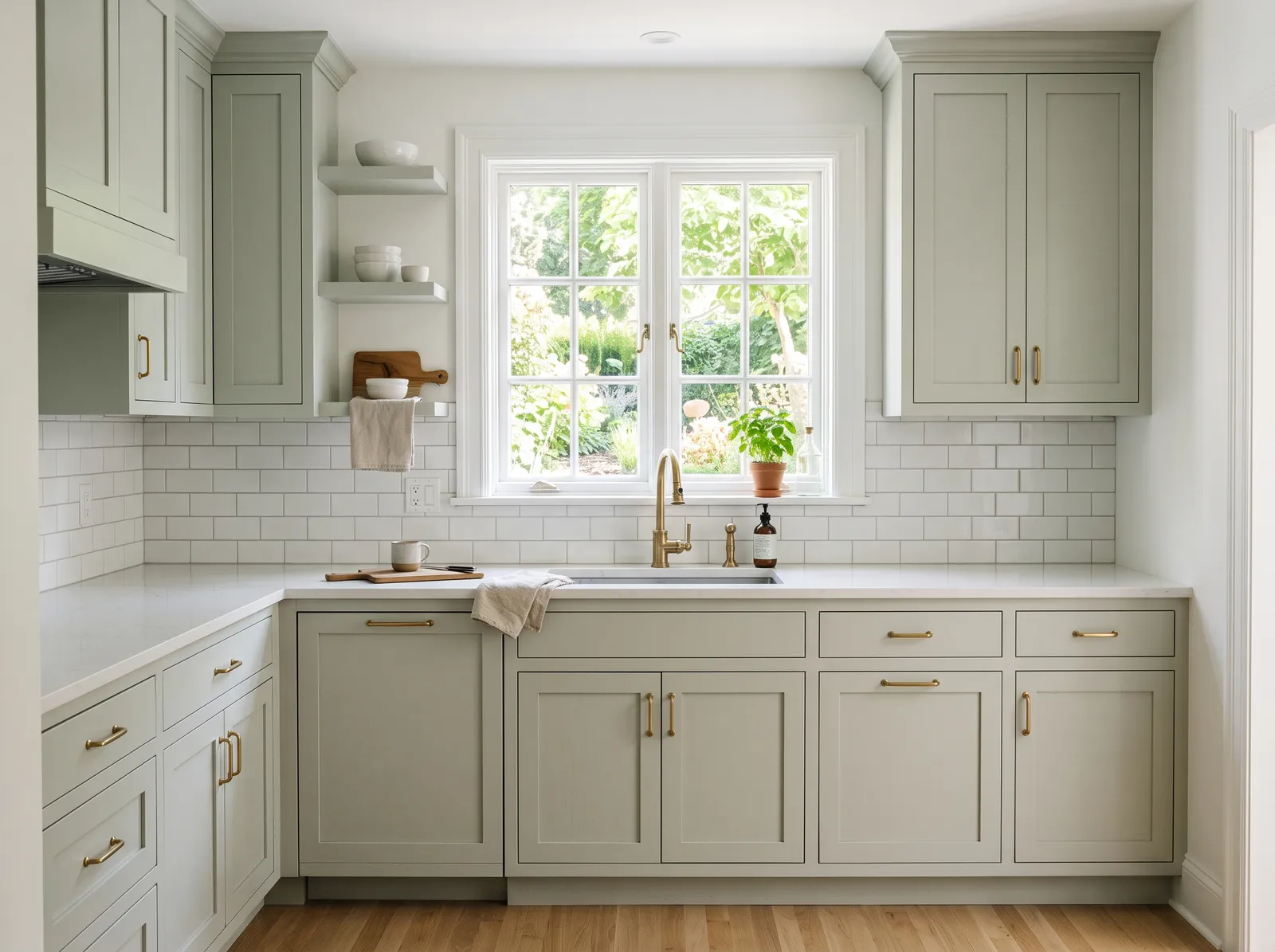
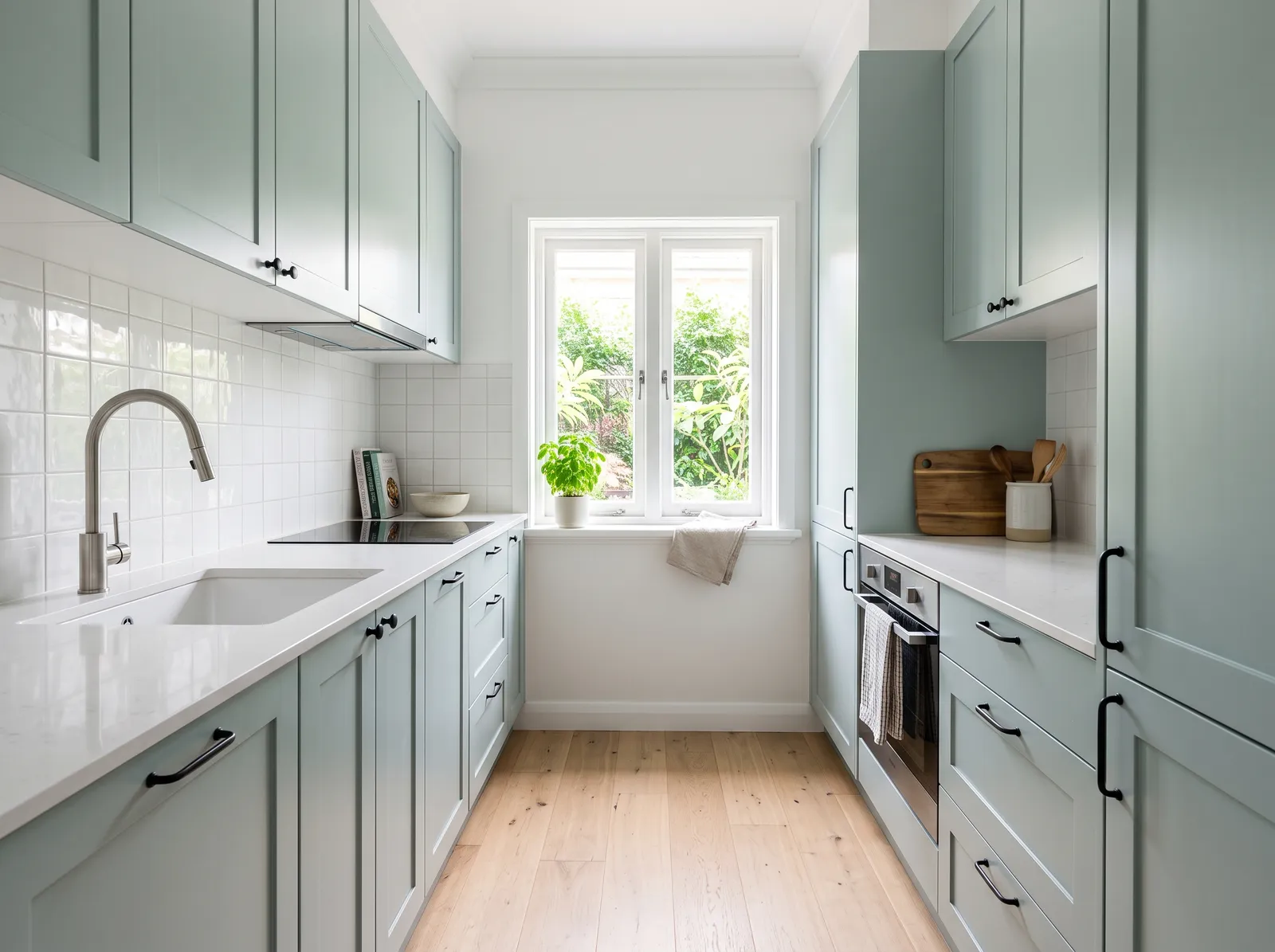
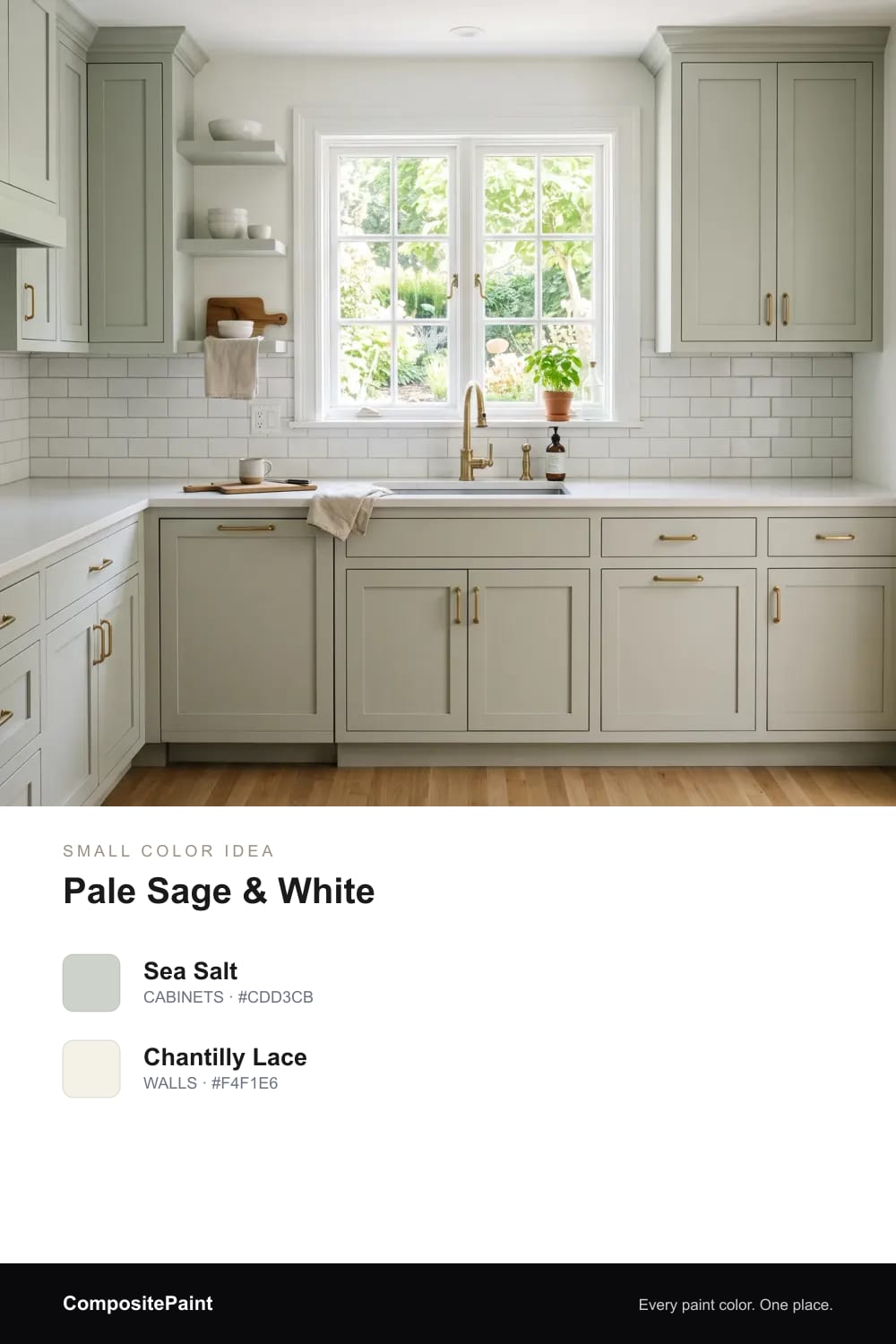
A whisper of green-gray on the cabinets feels calm and spa-like, with bright white walls keeping the small room airy.
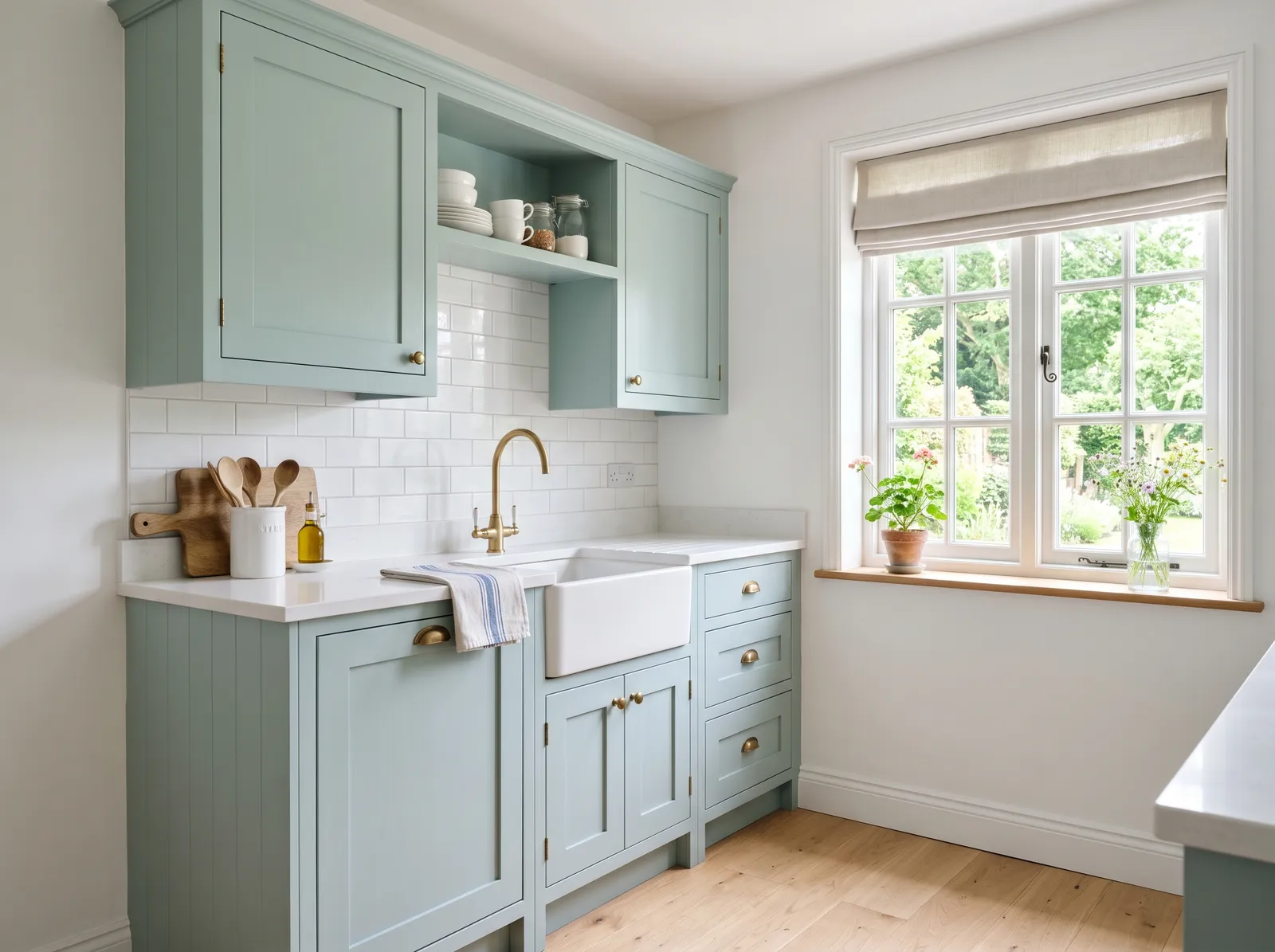
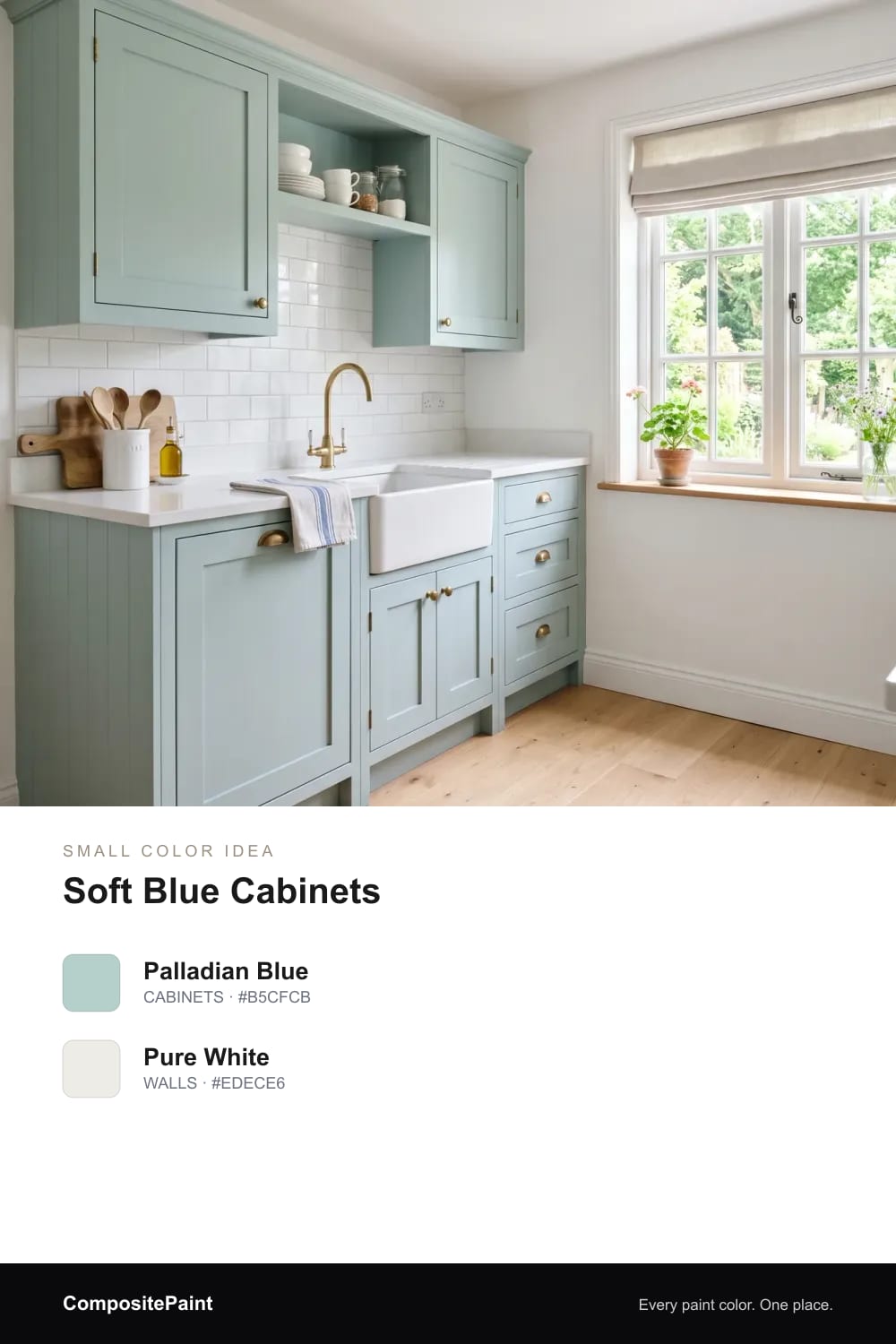
Soft sea-glass blue cabinets add a little color without weight, and white walls let the small kitchen breathe around them.
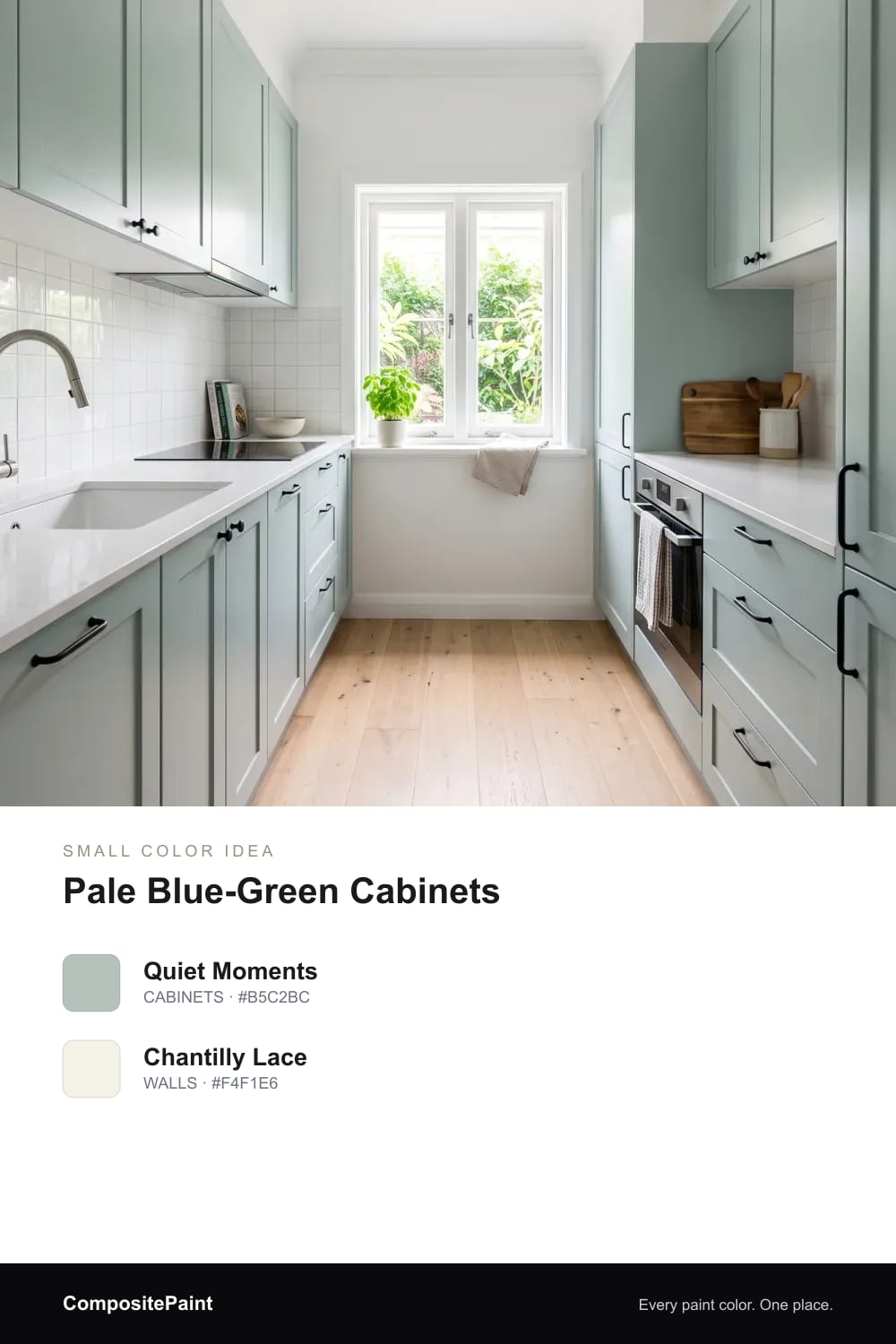
Pale blue-green cabinets feel like a quiet morning, and crisp white walls keep that gentle color from closing the room in.
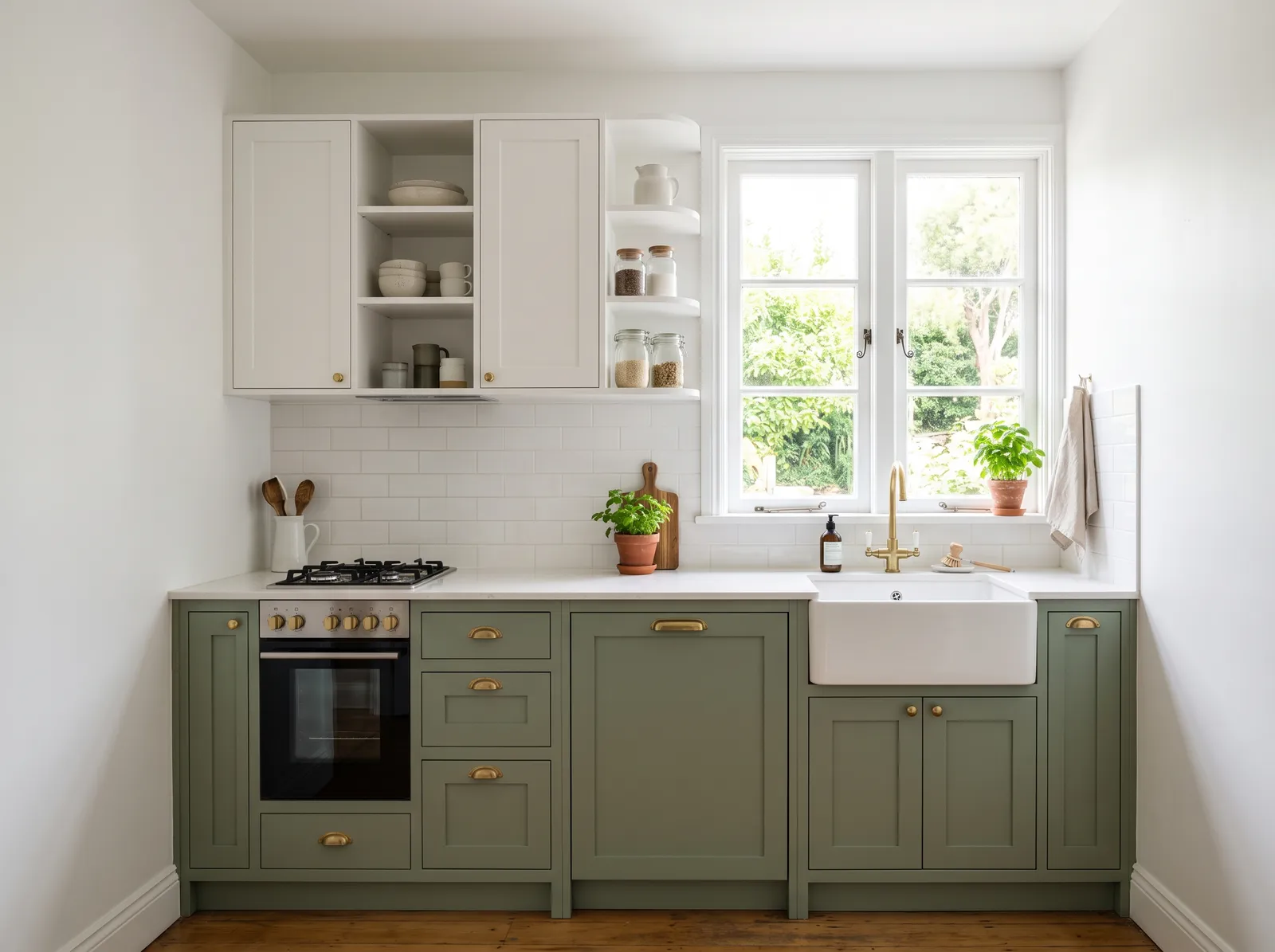
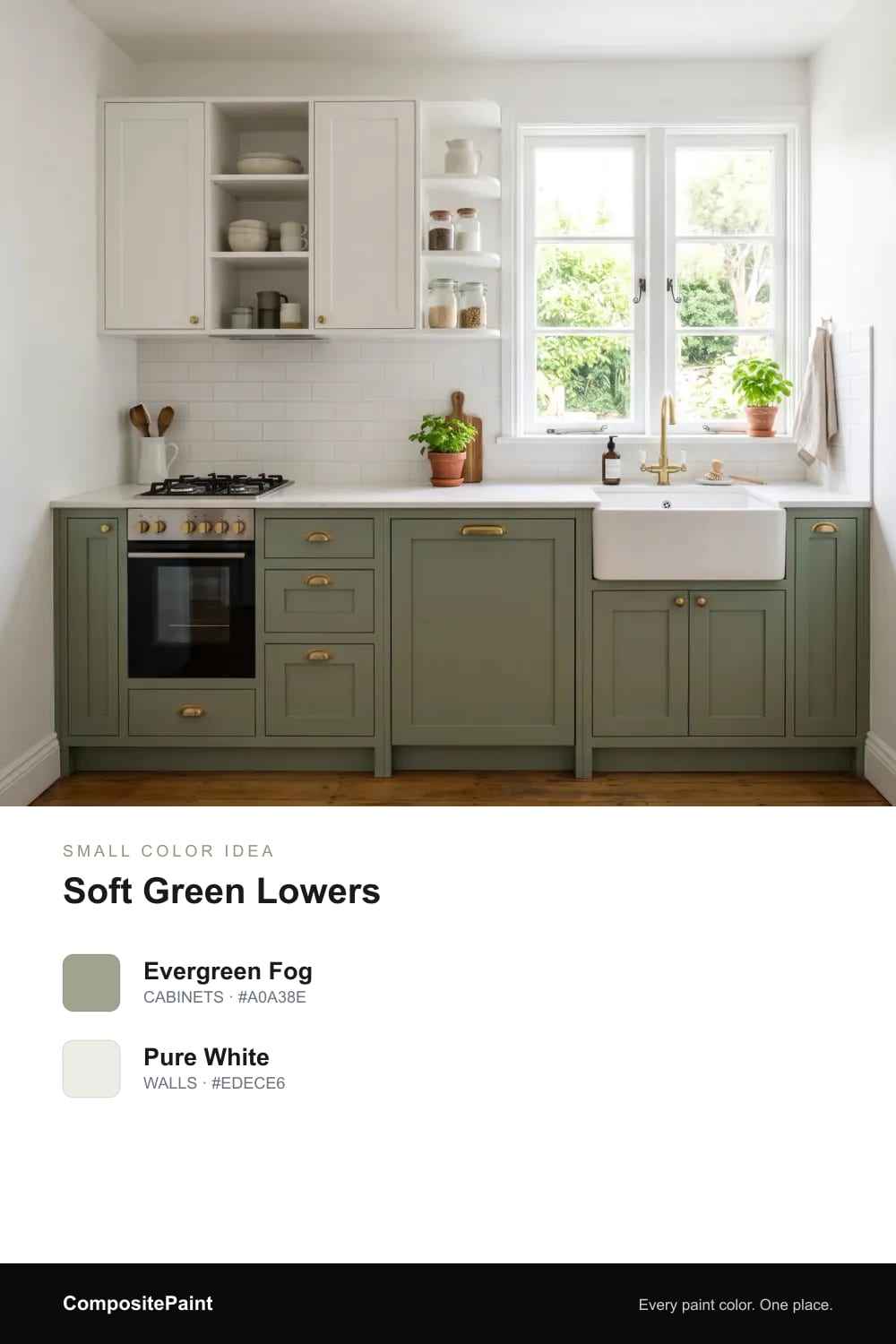
Lower cabinets in soft forest green make a small kitchen feel grown-up, while white uppers and walls keep it light overhead.
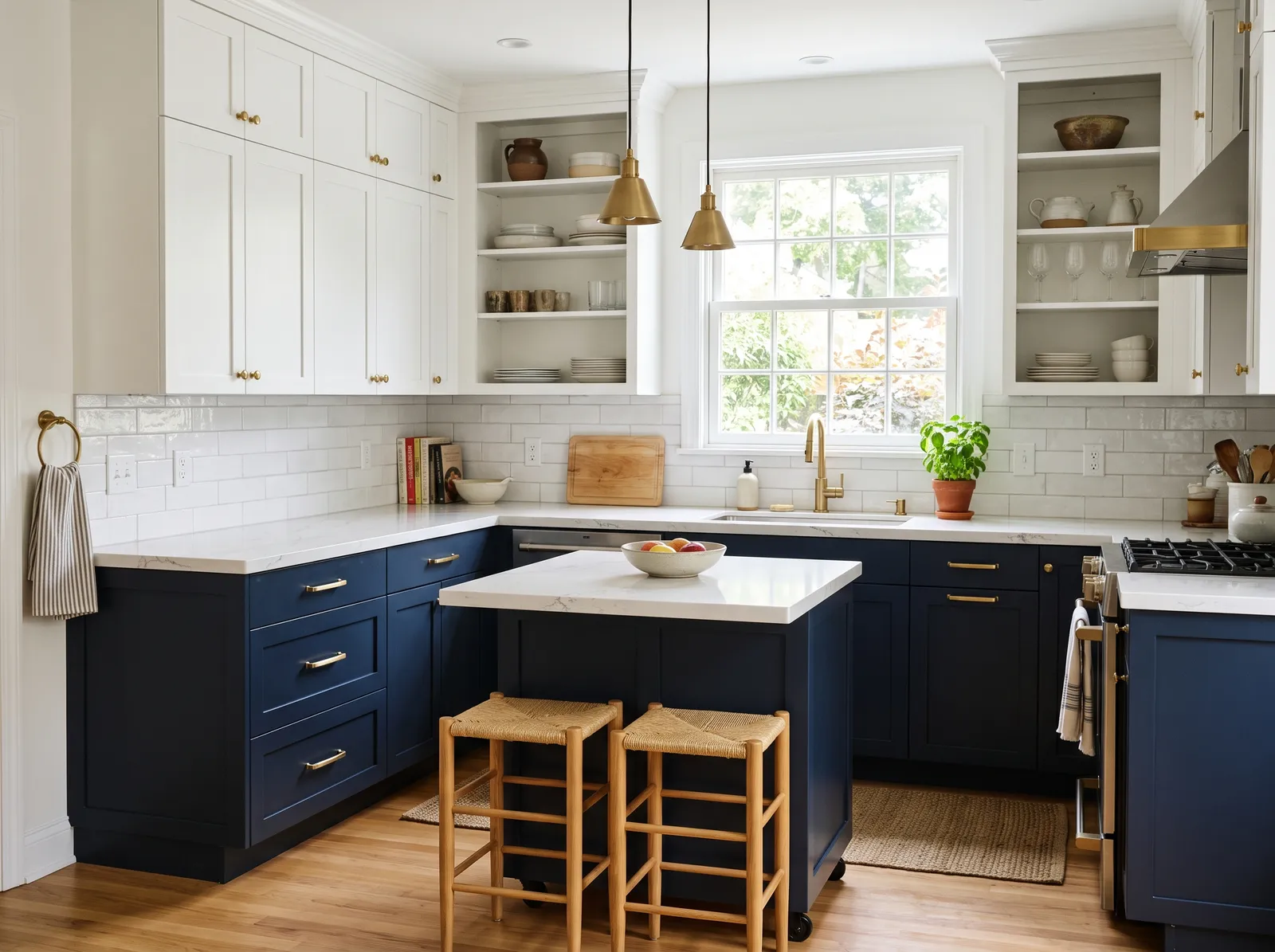
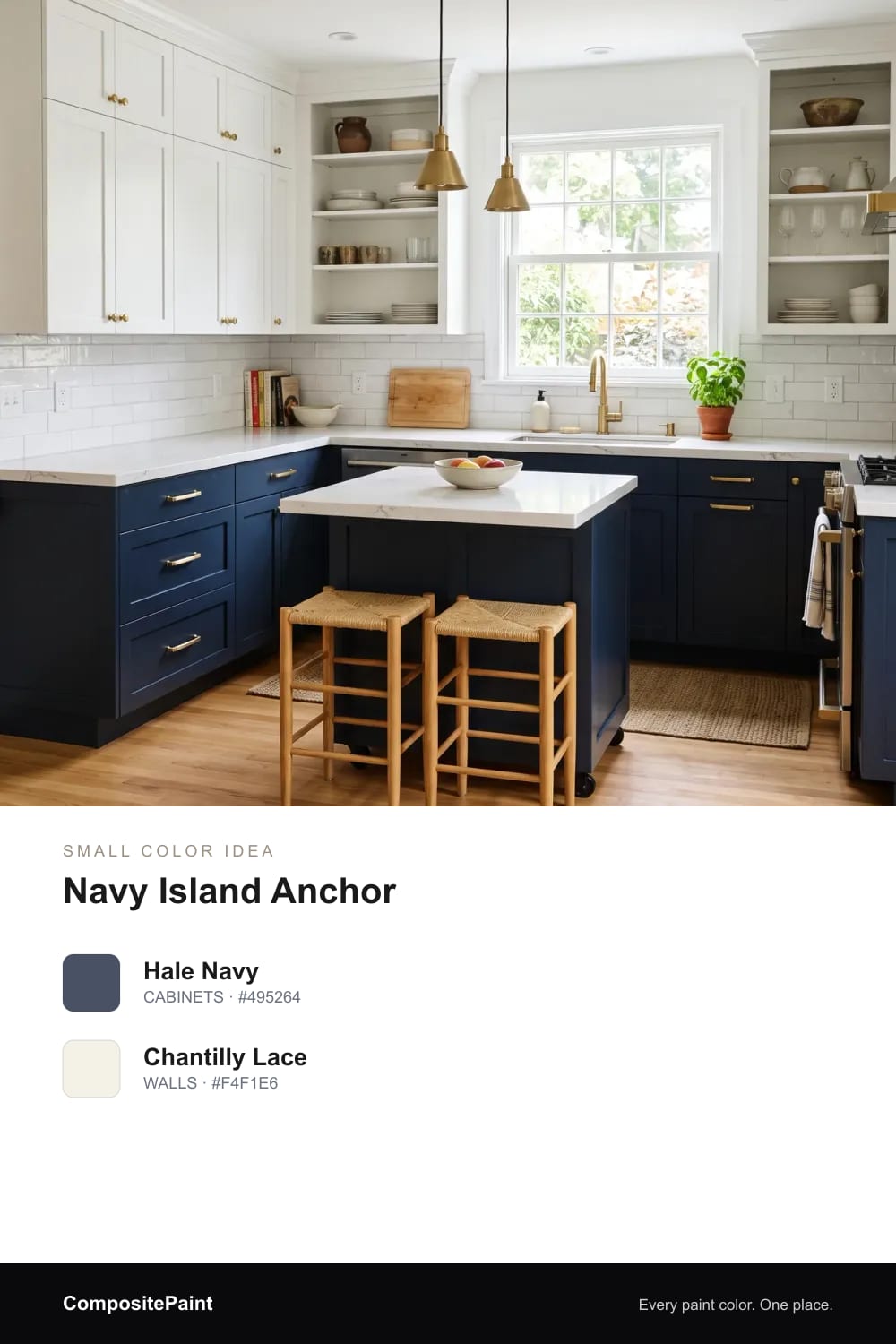
A deep navy island anchors the room like a piece of furniture, while bright white walls keep the small space open above.
Upload a photo of your small and the visualizer paints your walls in any of these colors — in seconds.
UPLOAD YOUR PHOTO →Light colors bounce daylight around the room, and dark ones soak it up. So in a small kitchen, soft whites and pale neutrals on the cabinets reflect more light and instantly make the space feel more open. They also soften the line where cabinets meet the wall, so your eye doesn't stop at every edge.
The trick is to keep it simple. Fewer colors and gentle contrast let your eye travel smoothly across the room, which reads as more space. Lots of strong, busy color does the opposite and makes the walls feel like they're closing in.
Crisp whites feel clean and modern, warm whites feel soft and cozy, and creamy whites land somewhere in between. From there, soft greige, light gray, pale sage, and soft blue all stay light enough to keep a small kitchen open while adding a little personality. Any of these will make a compact space feel fresh.
Let your light pick the winner. A kitchen with not much sun, or one that faces north, looks best in warm whites and greige that add a little glow. A bright, sunny kitchen can handle cooler whites and grays without feeling cold.
In most small kitchens the walls should stay light, usually a clean white or a soft neutral. White walls behind colored or greige cabinets keep the room bright and let the cabinets be the star. There often isn't much wall showing anyway, so light keeps it from feeling chopped up.
In a really tiny or galley kitchen, it can help to match the walls and cabinets to the same soft white, top to bottom. With no break between them, the eye doesn't catch on edges and the whole room feels a little bigger and calmer.
One color, with the cabinets and walls close in tone, is the calmest and most open look. Everything blends together, corners disappear, and a small kitchen feels like one easy room. It's the safest choice if you're not sure.
Two colors can still work in a small space, as long as you keep the contrast gentle and the upper half light. If you want something bolder, put the deeper color only on the lower cabinets or the island and leave everything above it light.
A small kitchen can absolutely handle some color, you just give it one home. A soft green or a deep navy on the lower cabinets or a little island adds real character without weighing the whole room down. Keep the uppers and walls white so the top of the room stays open and light.
Keeping the bold color low also grounds the space, a bit like a good piece of furniture. Your eye lands on it, then lifts up into all that light above, which keeps a tight kitchen from ever feeling boxed in.
A light, simple backsplash makes a small kitchen feel taller and wider, especially if it runs from counter to upper cabinets without a busy pattern to stop the eye. White subway tile or a light slab are easy, timeless choices that almost always work.
Light countertops blend in and keep things airy, and they pair with just about any cabinet color here. If you love a darker counter, keep the cabinets light so the room still feels open and the dark surface reads as one calm, grounded layer.
Cabinets take a beating, so use a satin or semi-gloss finish. It wipes clean easily and, just as helpful in a small space, it reflects a little light to make the room feel brighter. Flat finishes look lovely but show every fingerprint near the sink and stove.
For the walls, an eggshell or satin holds up well to steam and splatter and is easy to wipe down. Keep the ceiling a flat white so it quietly recedes and the room feels taller. A touch of sheen on the busy surfaces does a lot of quiet work in a tight kitchen.
A light warm white or a soft greige is the safest, most flattering choice for most small kitchens. They reflect daylight and make the room feel open and welcoming. From there, pick the version that matches your light, warmer if the room is dim, cooler if it's bright.
Soft whites and pale neutrals make a small kitchen look biggest because they bounce light and blur the corners. Keeping the cabinets and walls close in tone, with gentle contrast, helps the eye glide across the room. Strong, dark, or busy colors tend to make the walls feel closer.
Light cabinets are usually the better call in a small kitchen because they keep the room open and bright. You can still bring in a darker shade, but it works best as one grounded touch on the lower cabinets or an island, not on everything.
Yes, a small kitchen can handle dark or two-tone cabinets if you keep the upper half light. Put the deeper color, like a soft green or navy, on the lower cabinets or the island, and leave the uppers and walls white. That adds character while the room stays open overhead.
Matching the walls and cabinets to the same soft white can make a very small or galley kitchen feel bigger, because there's no line for the eye to stop on. If you'd rather have some separation, keep the walls a clean white and let the cabinets carry the color.
Use satin or semi-gloss on the cabinets so they wipe clean and reflect a little light. Eggshell or satin works well on the walls near cooking and cleanup, and a flat white ceiling keeps the room feeling taller. The light sheen helps a tight kitchen feel brighter.