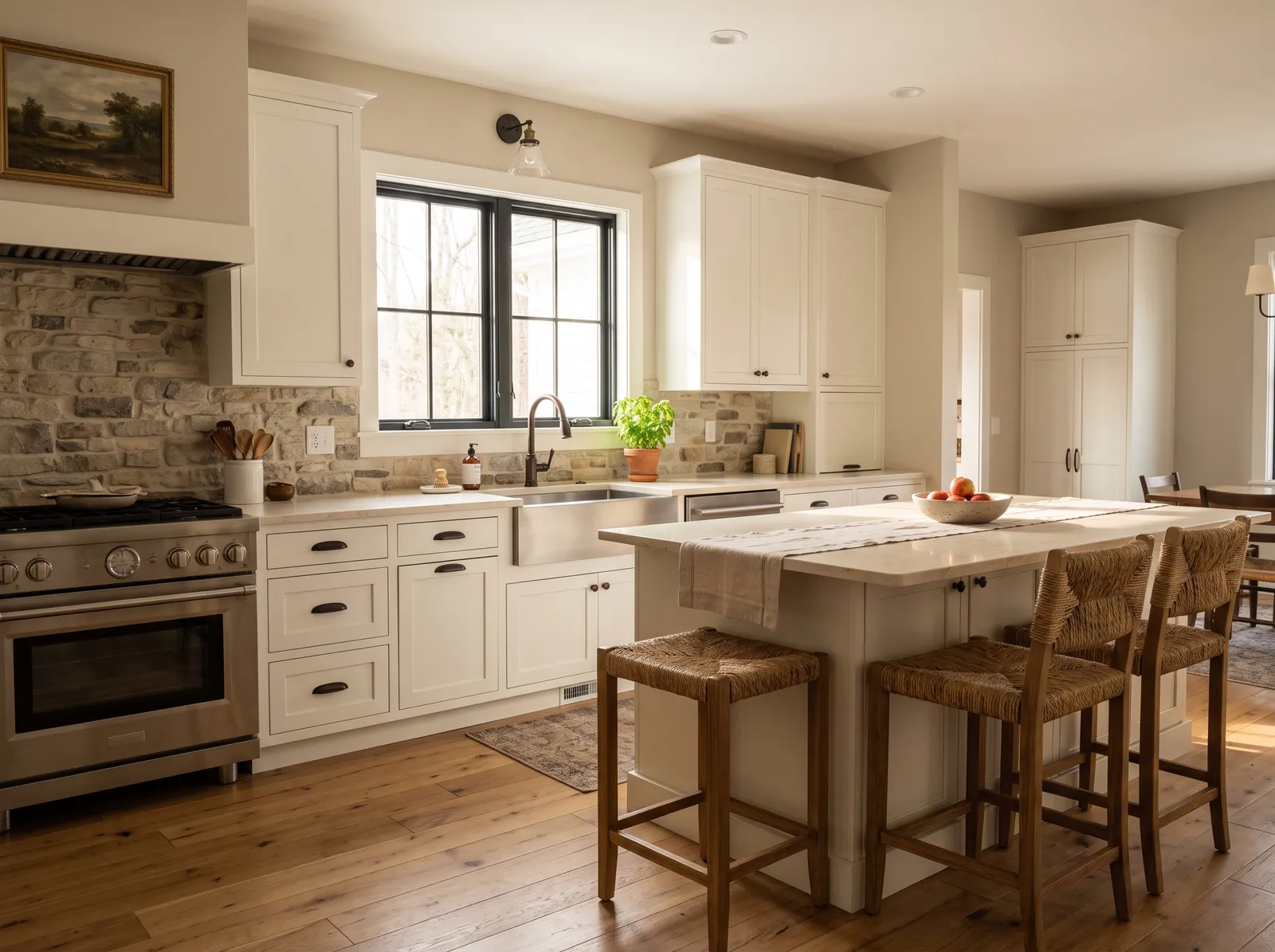
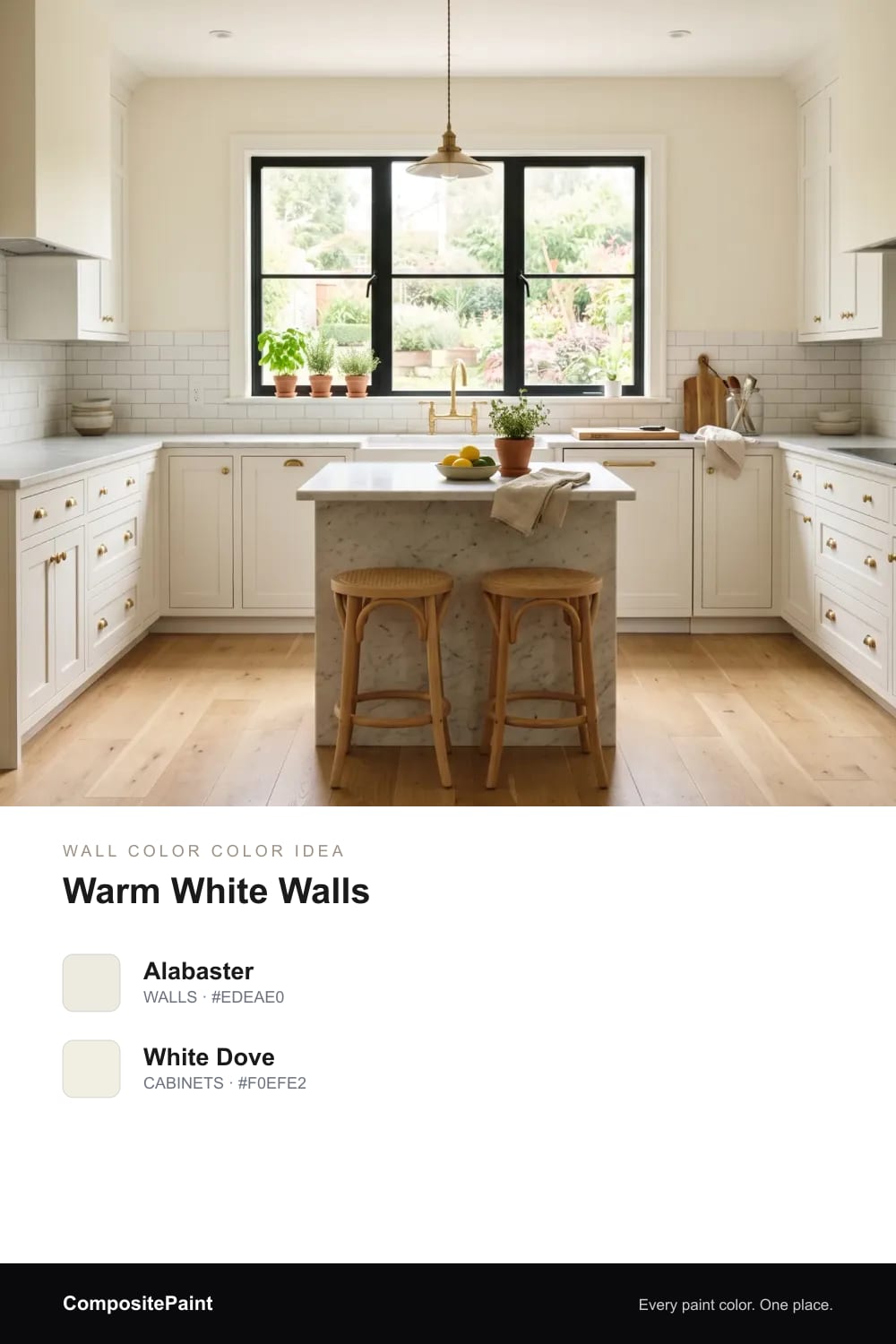
1. Warm White Walls
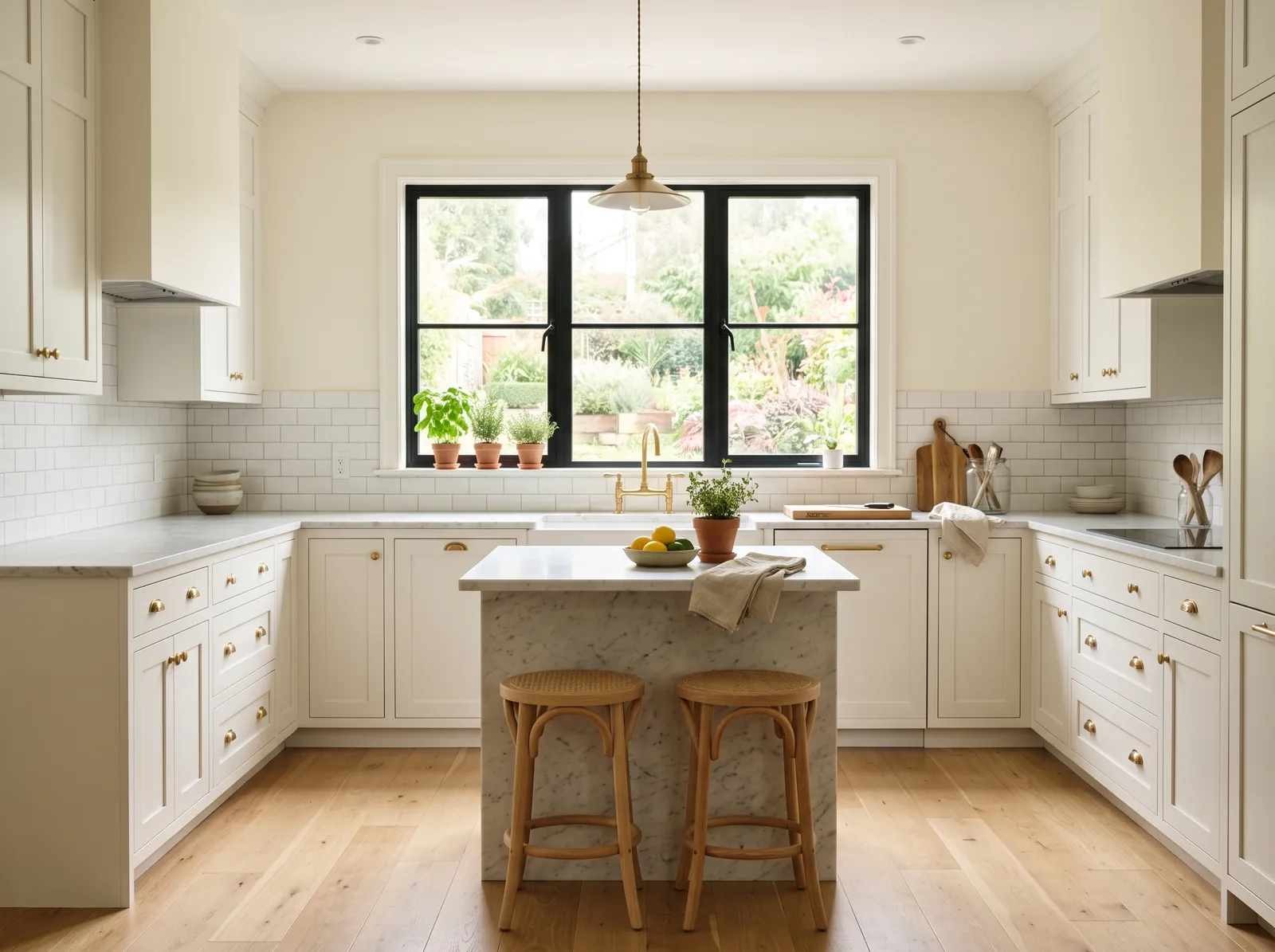
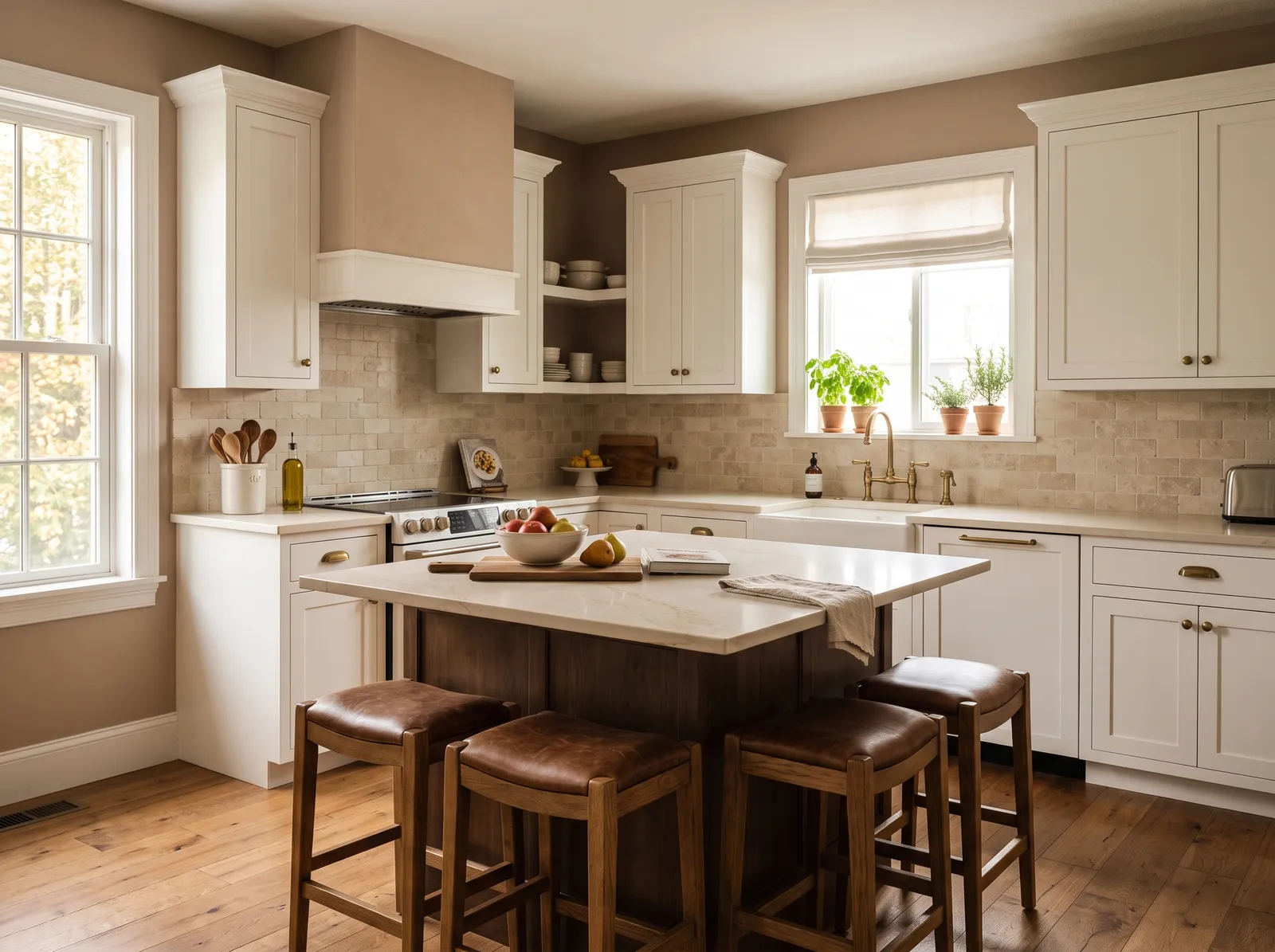
A soft, creamy white that wraps the room in quiet light and lets your white cabinets feel layered instead of flat.
Your cabinets can stay crisp and white while the walls do the mood-setting. The right wall color makes a kitchen feel calm, sunny, or fresh without touching a single door. Browse these twelve easy wall colors and picture each one wrapped around your room.
By Jessica Williams · Color Stylist
A soft, creamy white that wraps the room in quiet light and lets your white cabinets feel layered instead of flat.
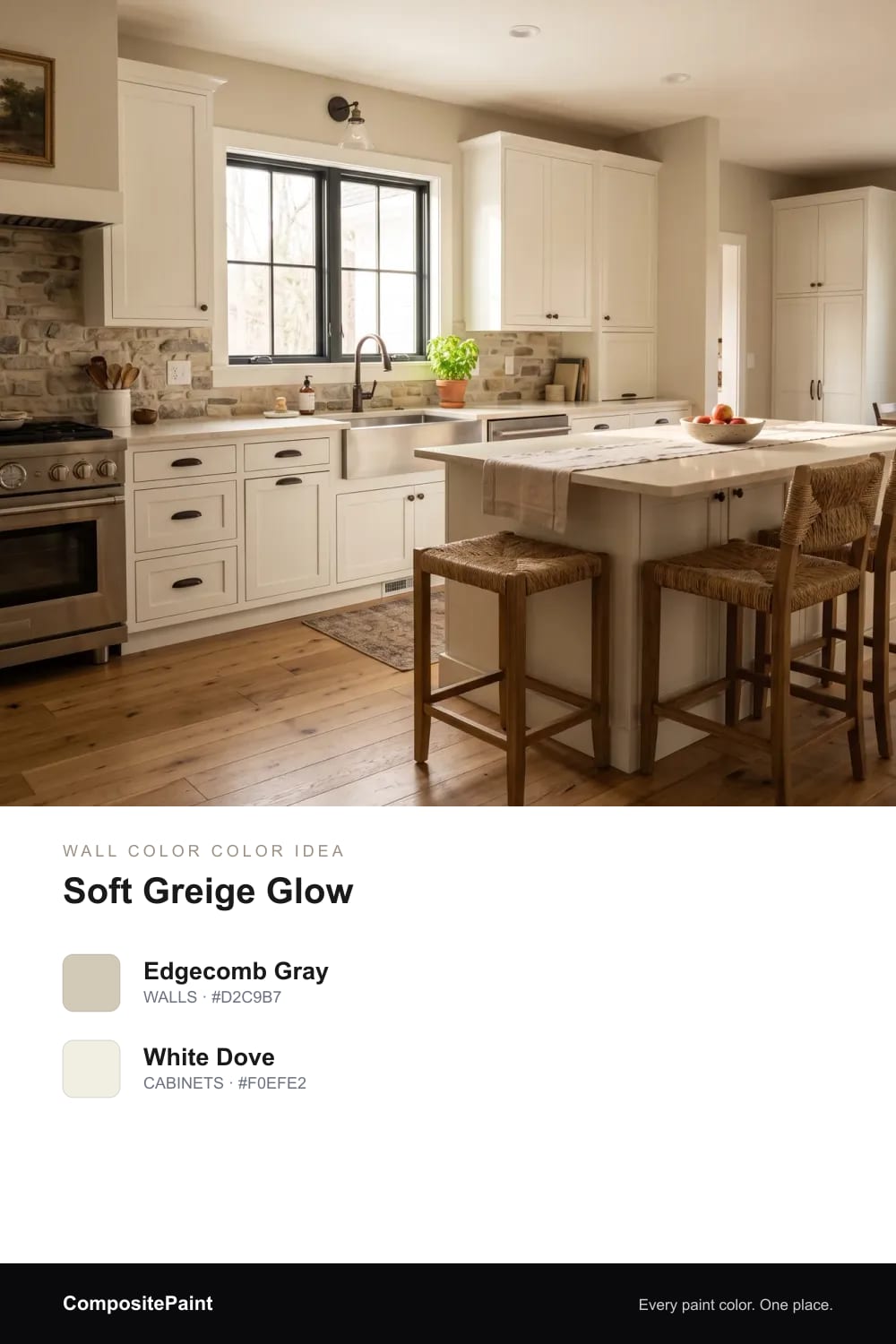
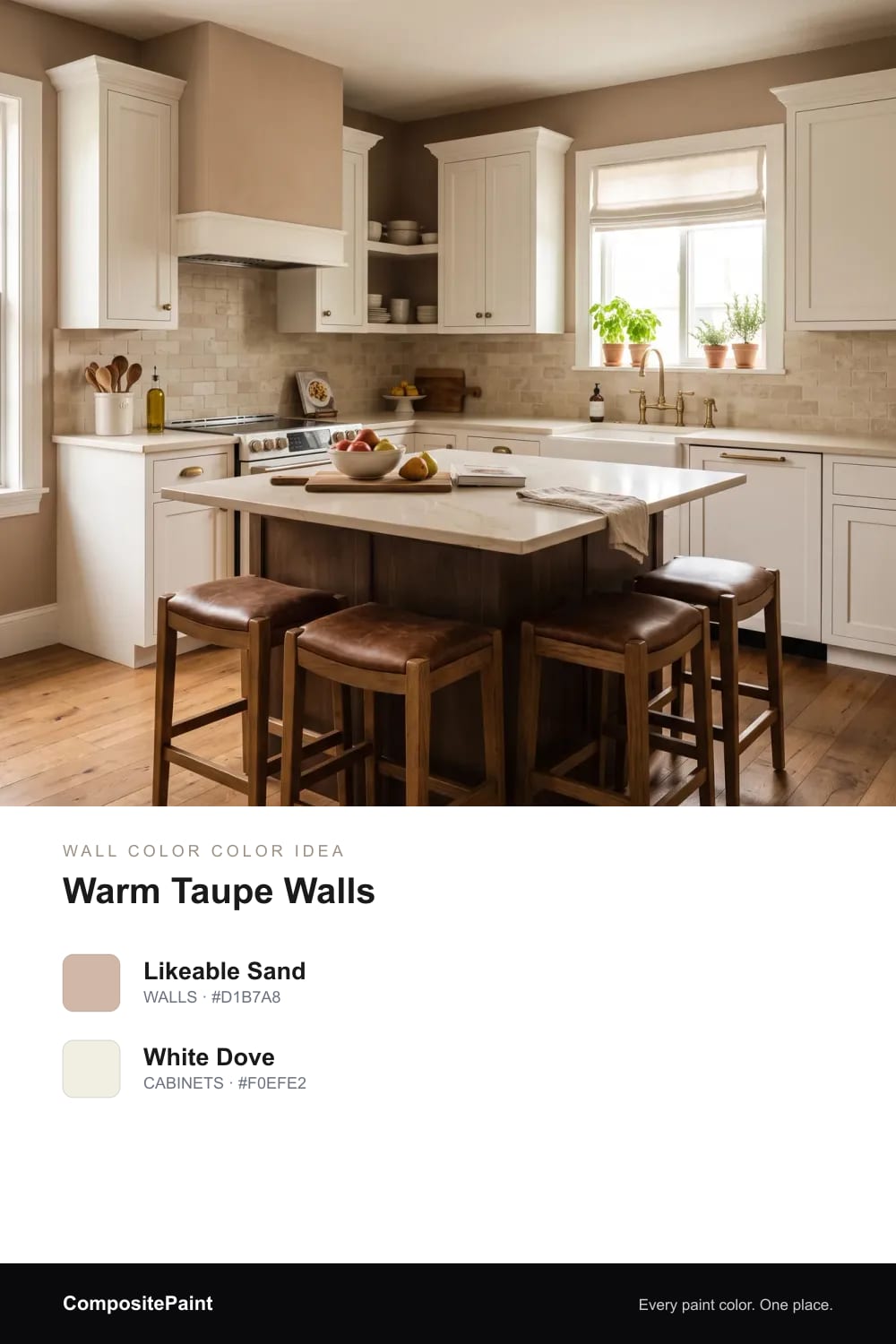
A warm gray-beige that feels grounded and cozy, settling the room down while your white cabinets stay bright.
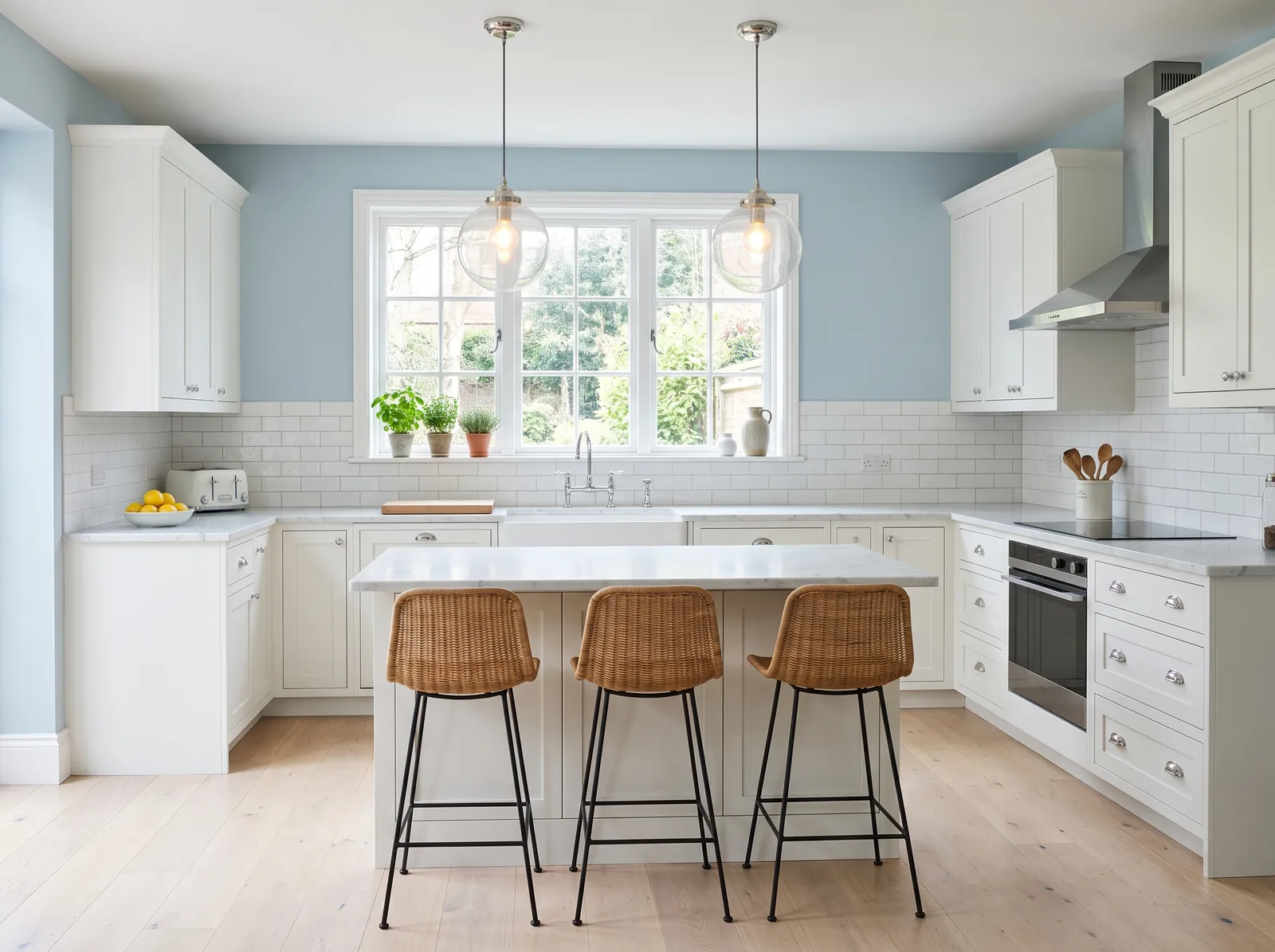
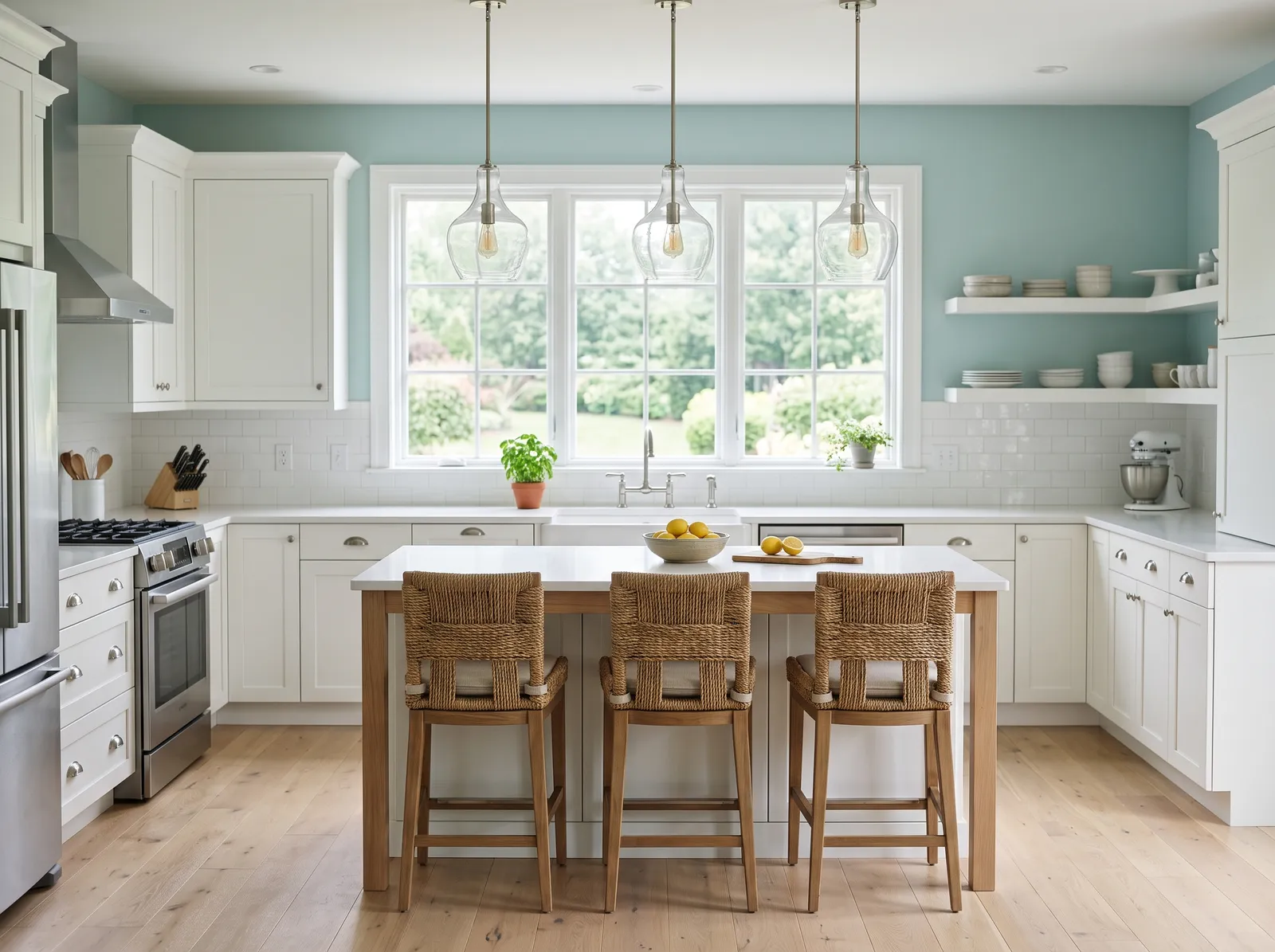
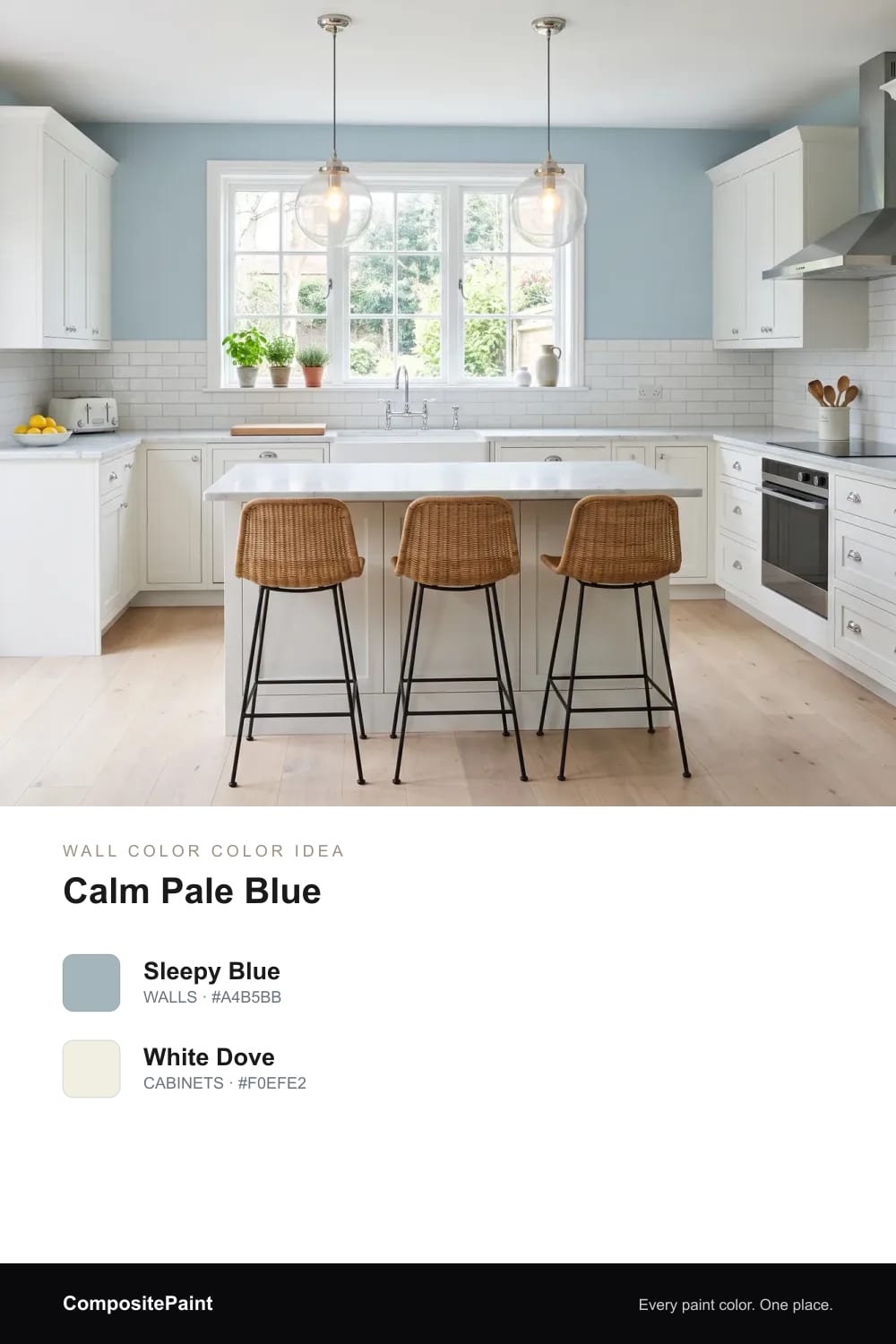
A soft, hazy blue that feels like a clear sky and makes a busy kitchen breathe a little easier.
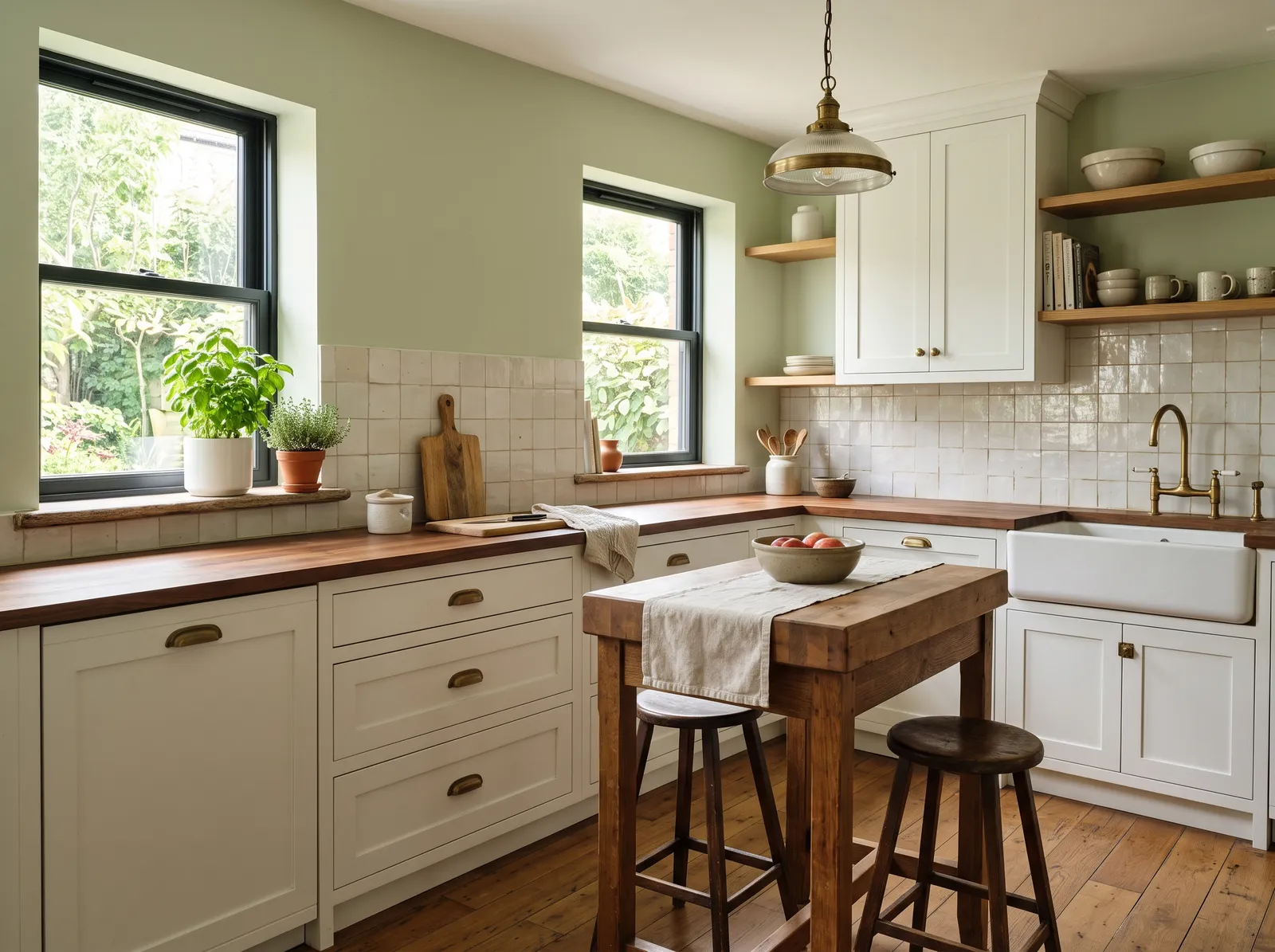
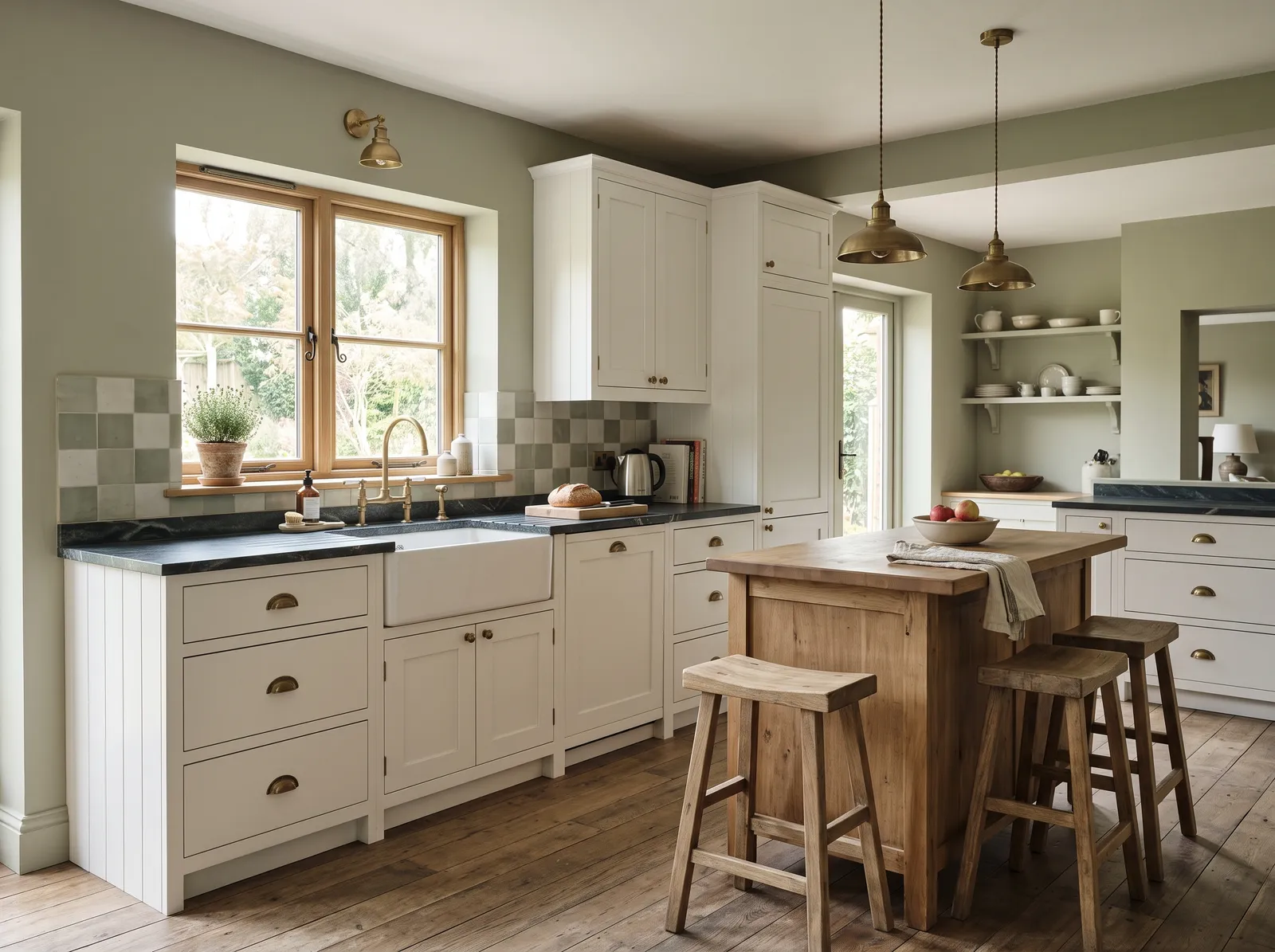
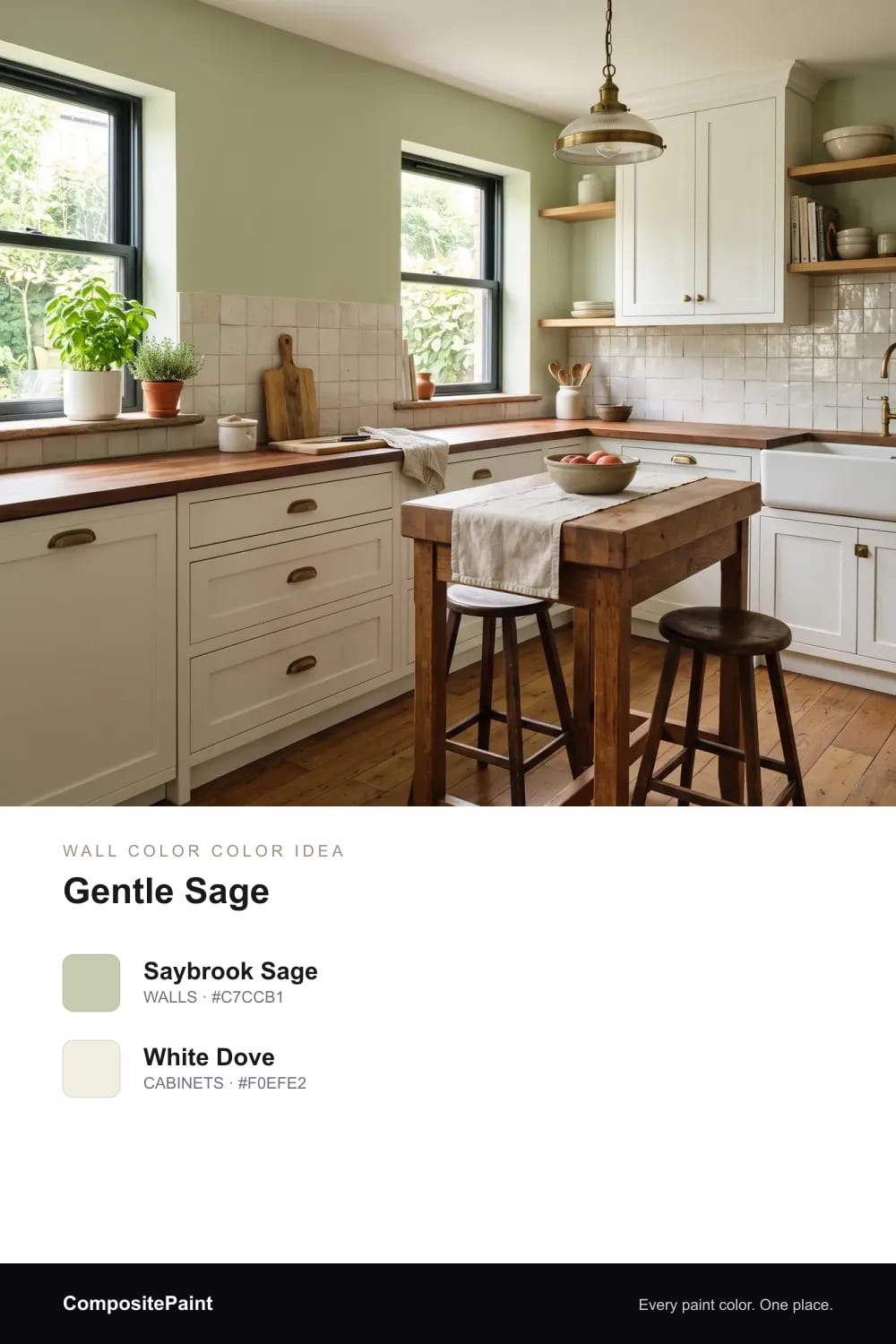
A soft, leafy green that brings a touch of the garden indoors and feels fresh against crisp white doors.
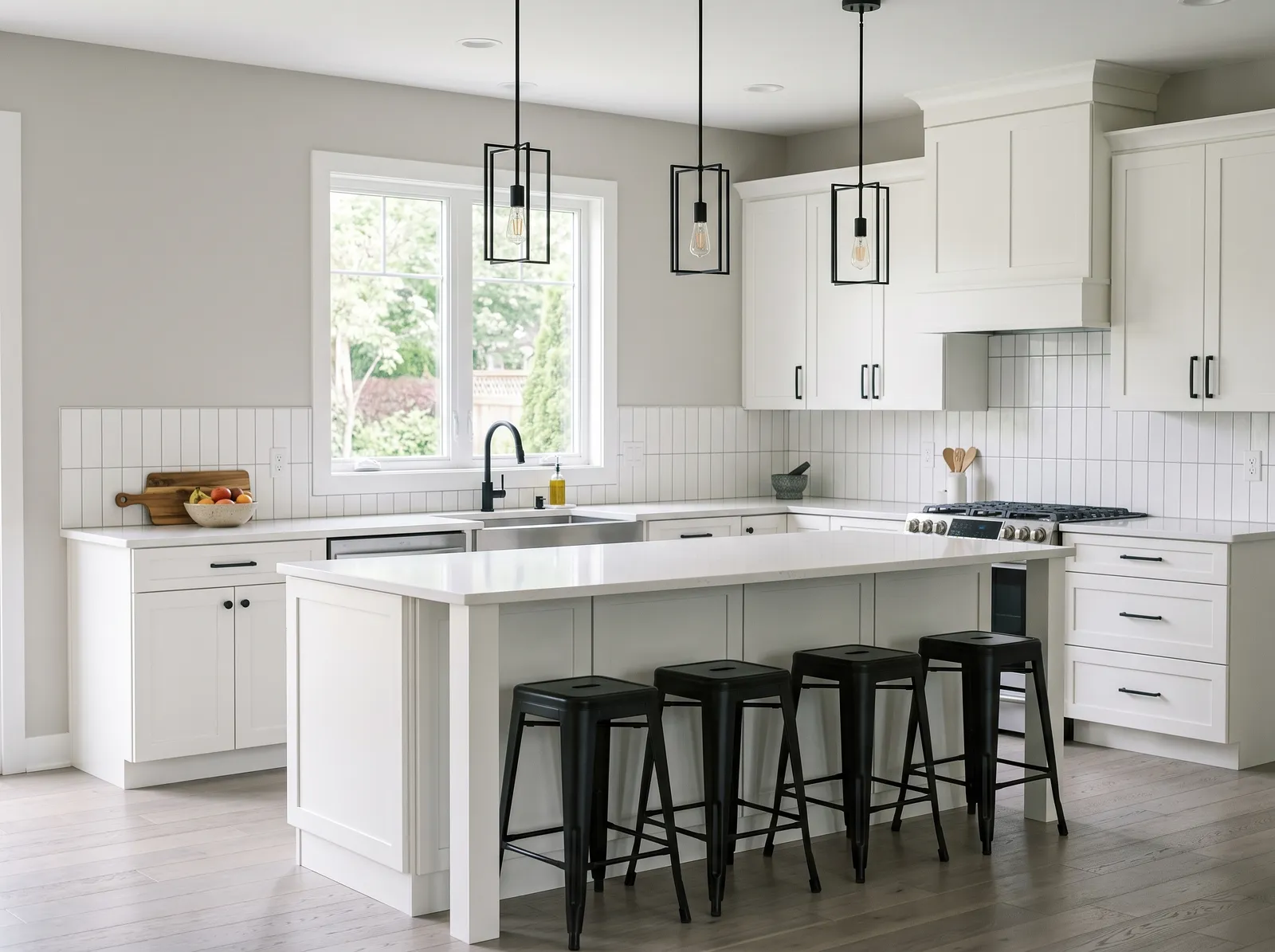
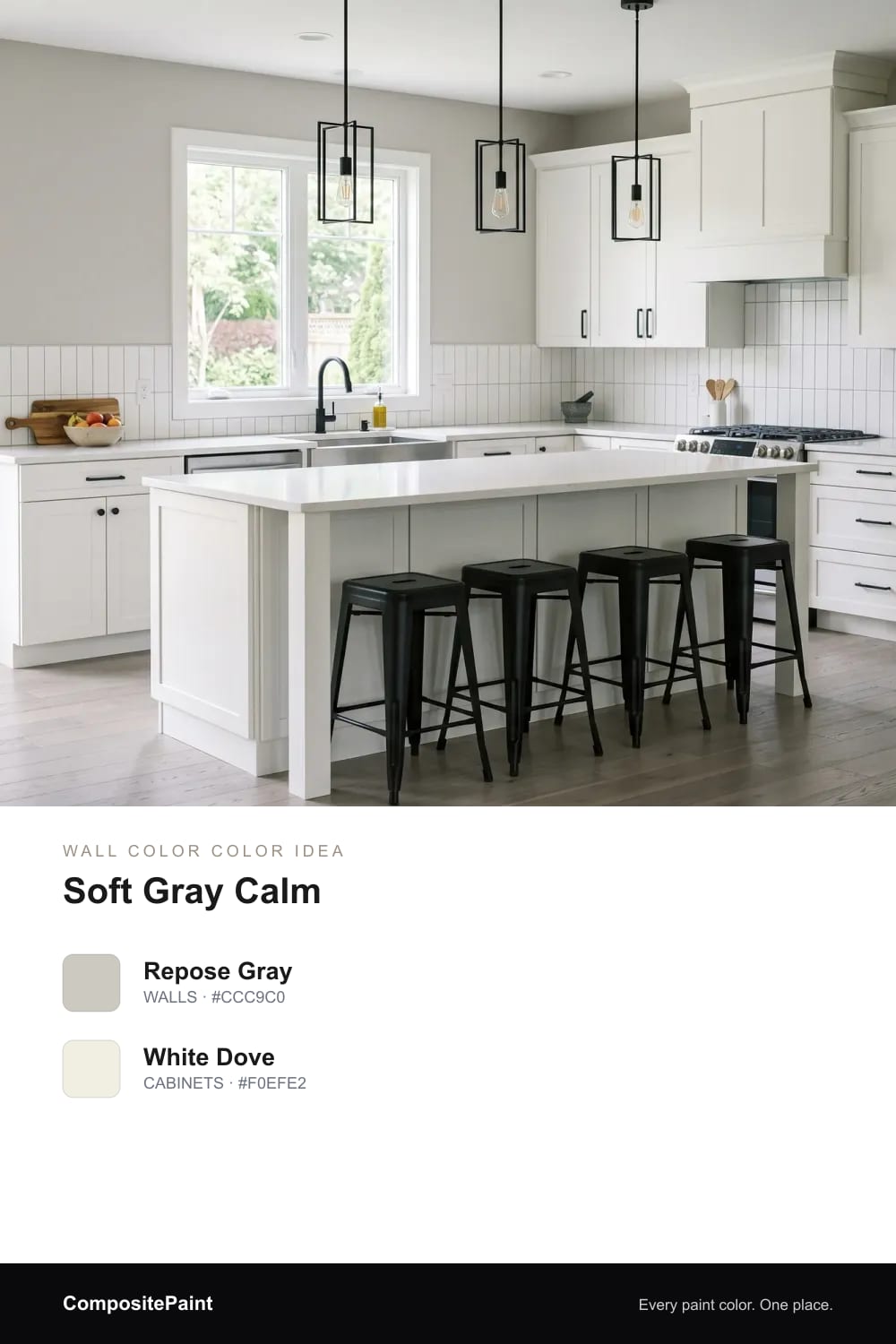
A quiet, even gray that keeps the kitchen feeling clean and steady without ever turning cold.
A soft taupe with a whisper of warmth that hugs the room and makes white cabinets look extra crisp.
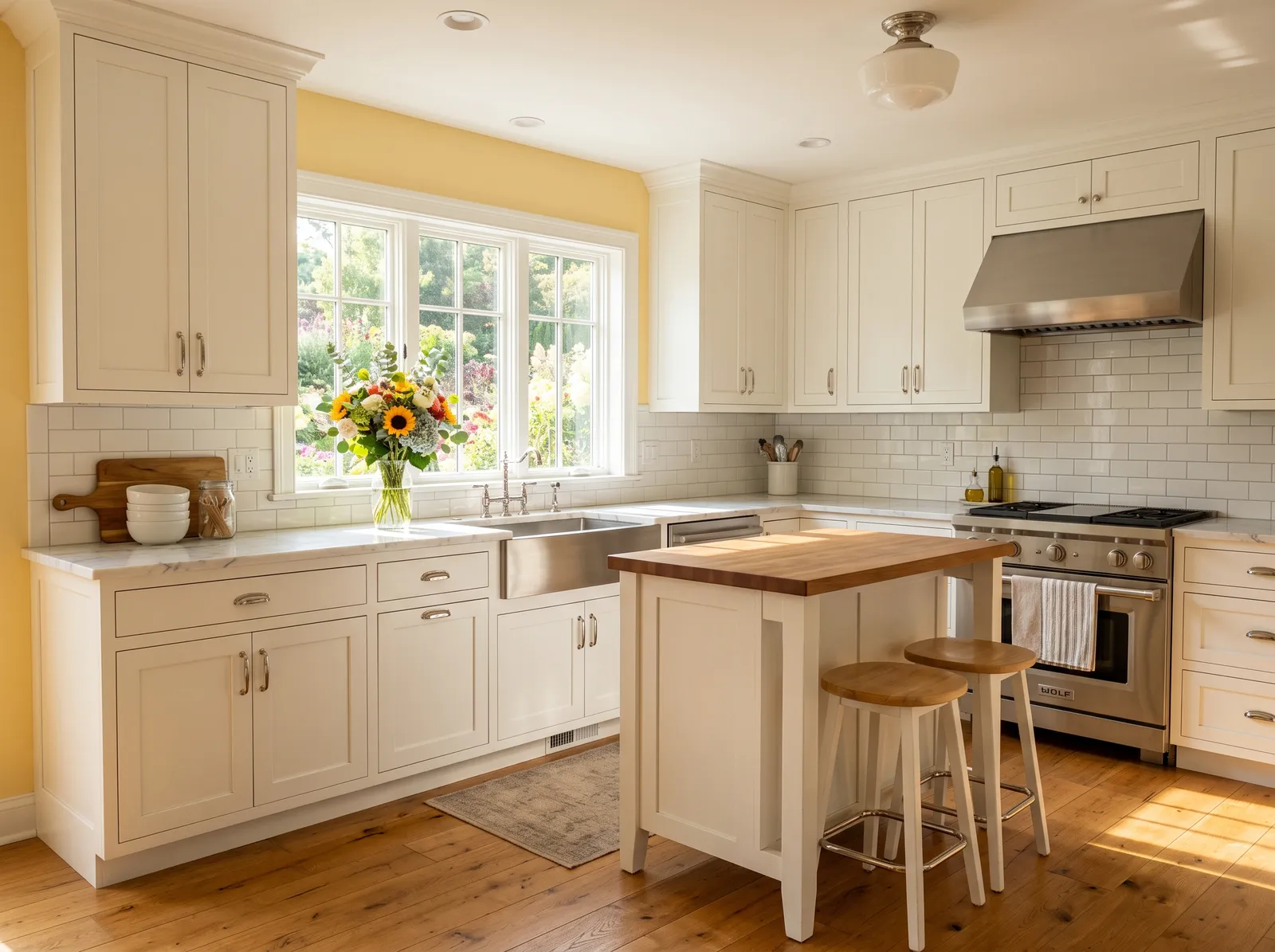
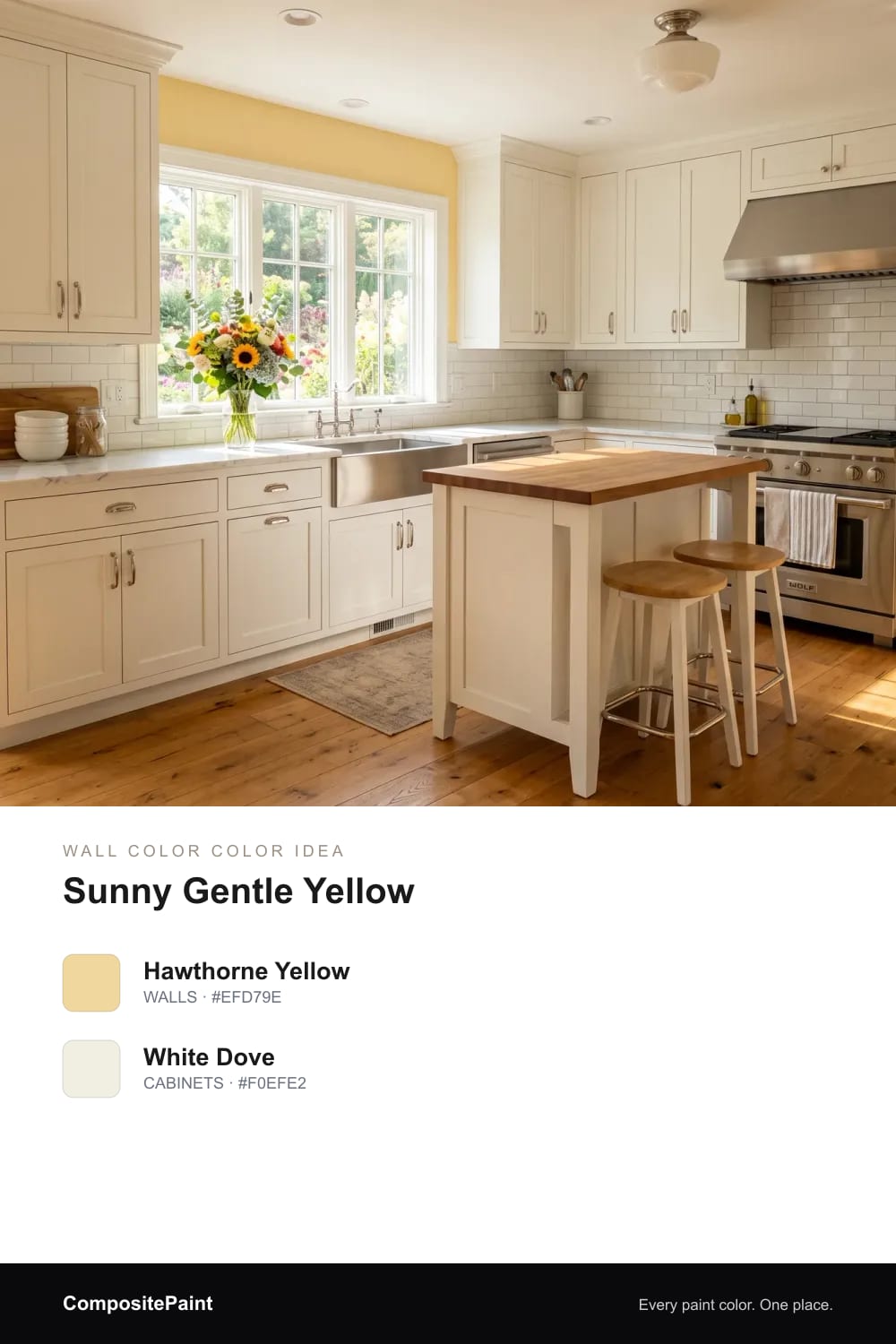
A soft buttery yellow that makes the kitchen feel like a sunny morning, even on a gray day.
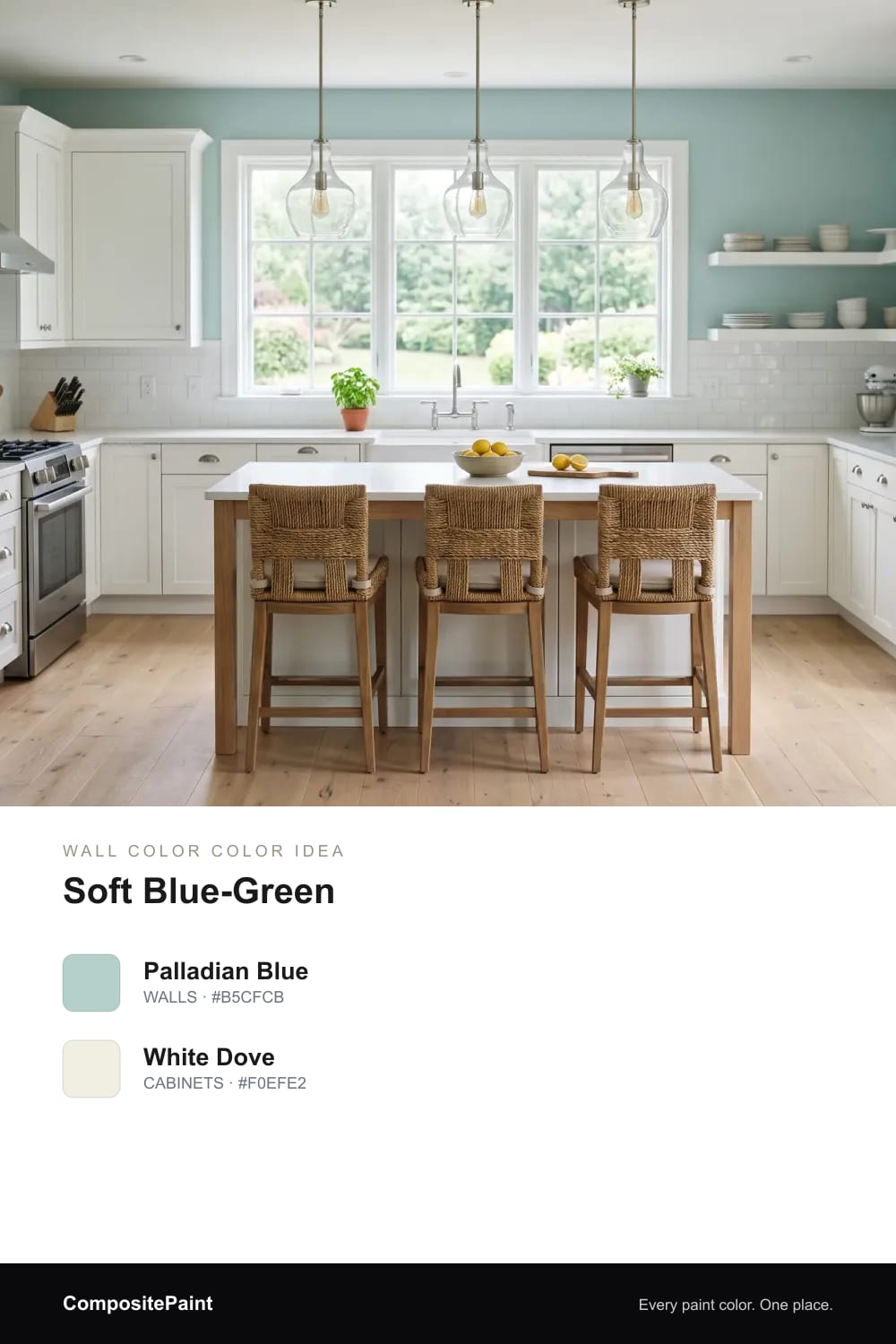
A gentle blue-green that drifts between sky and sea and gives the room a calm, spa-like feel.
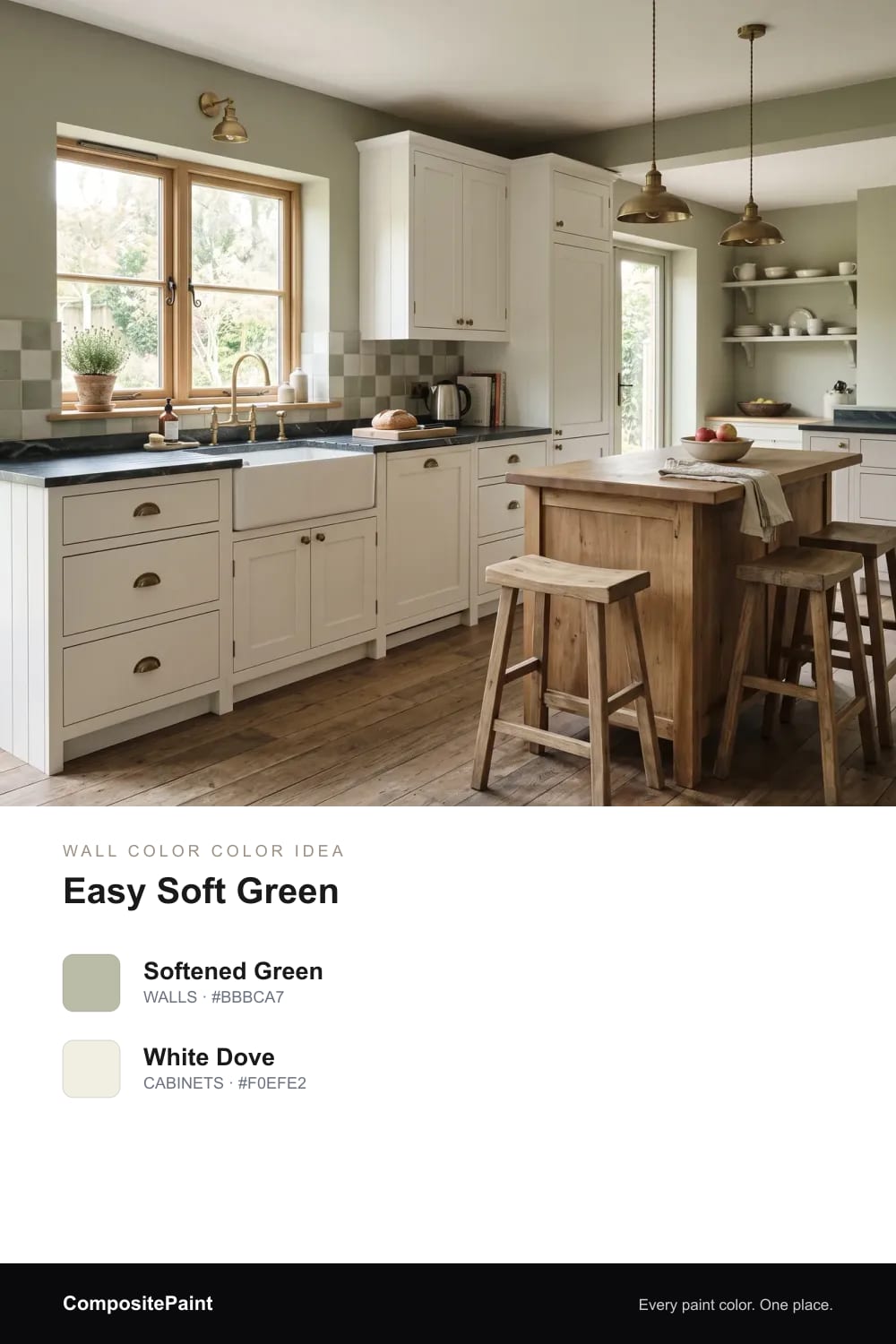
A muted, dusty green that feels relaxed and earthy, like a calm middle ground between gray and sage.
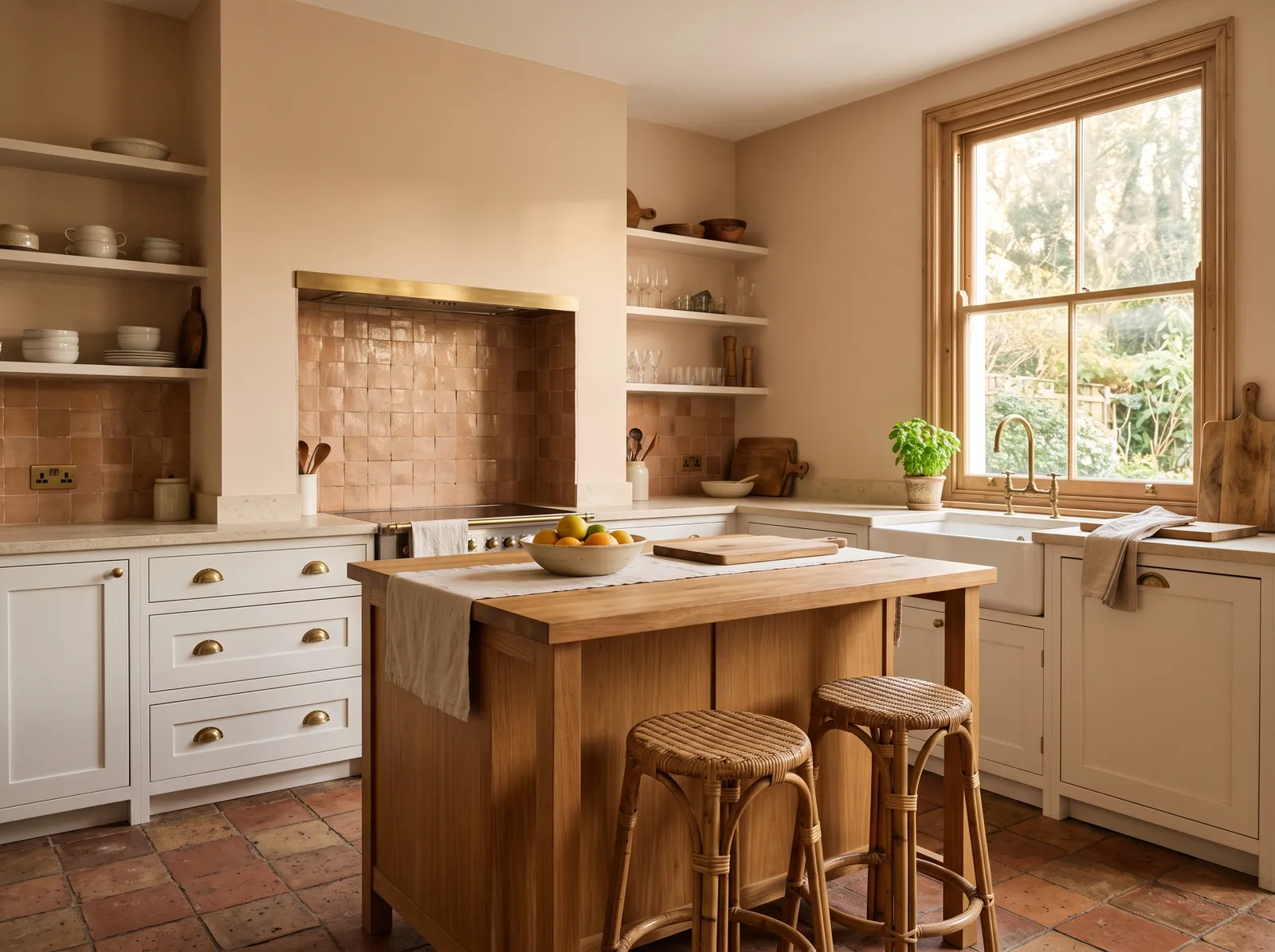
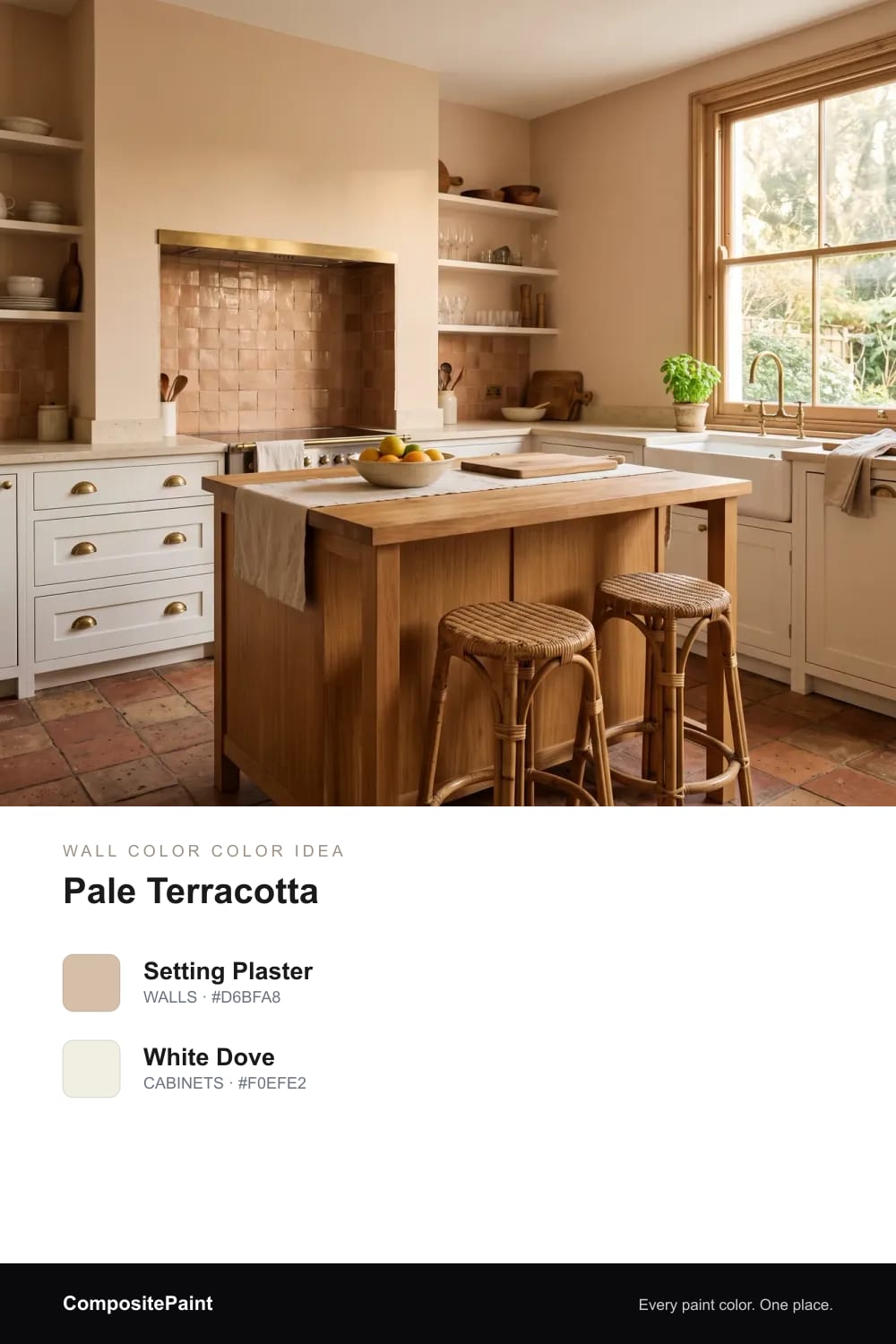
A soft clay tone with a warm, plaster-like glow that makes the kitchen feel inviting and a little sun-baked.
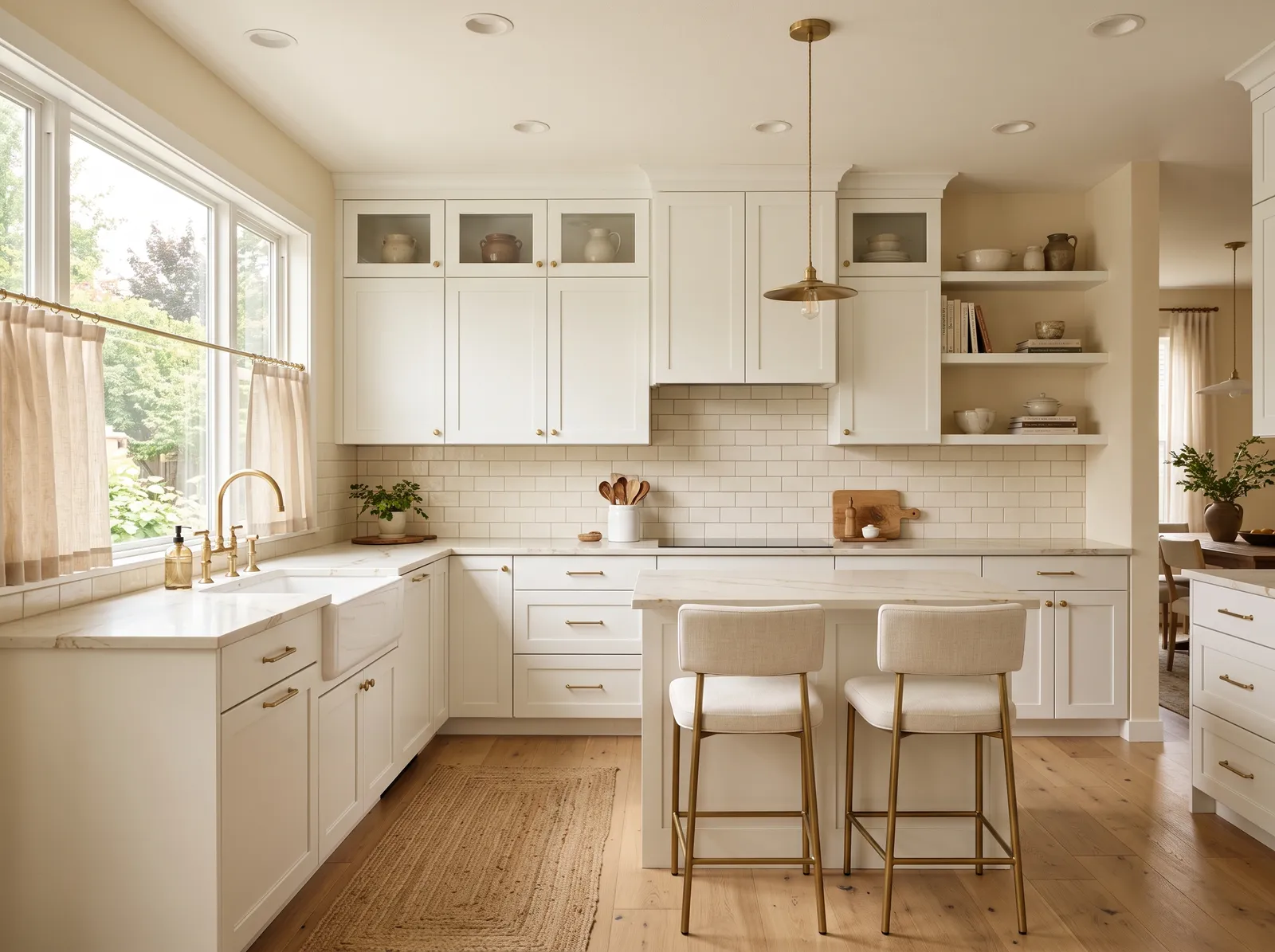
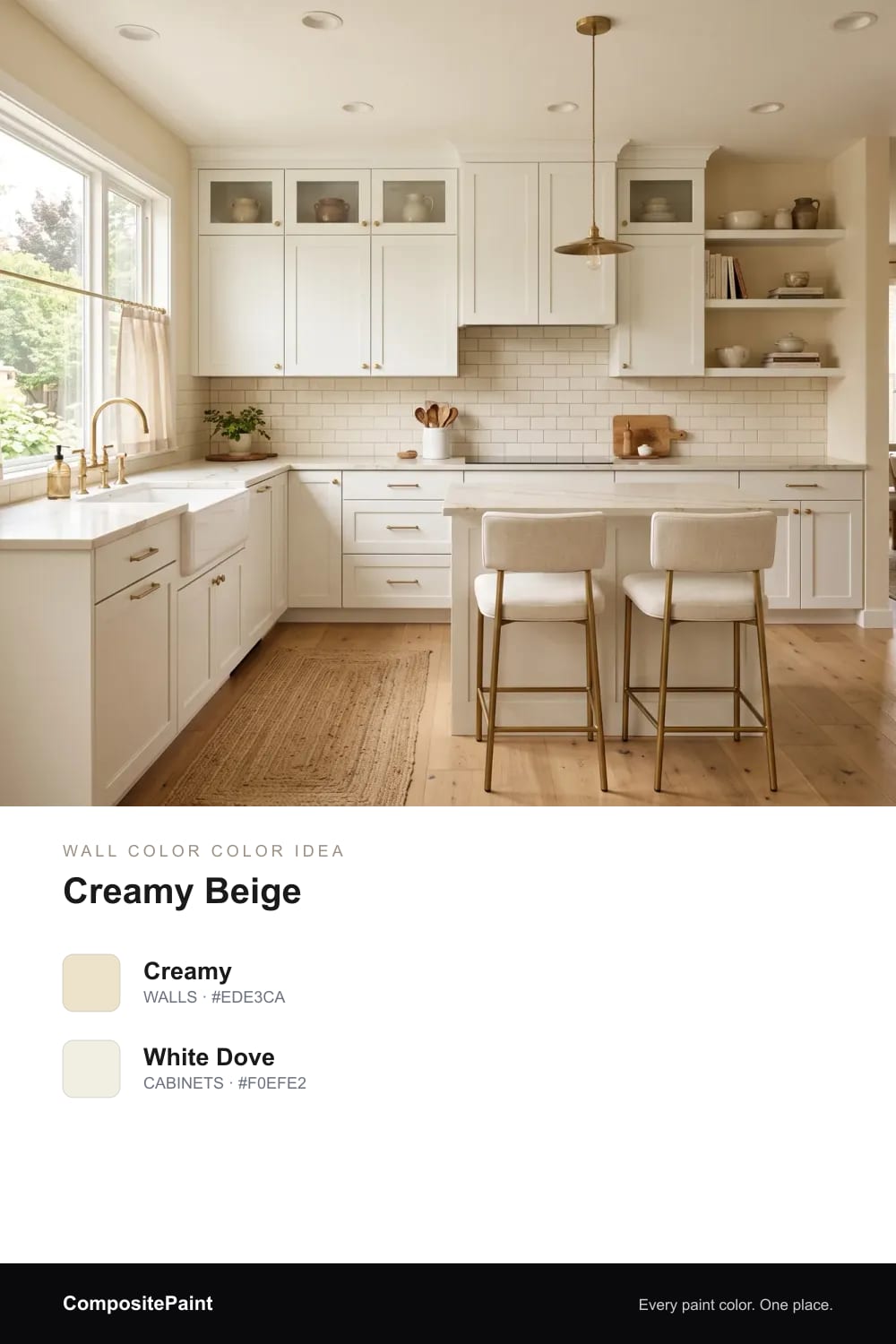
A soft, milky beige that warms the whole room and makes white cabinets feel even fresher by comparison.
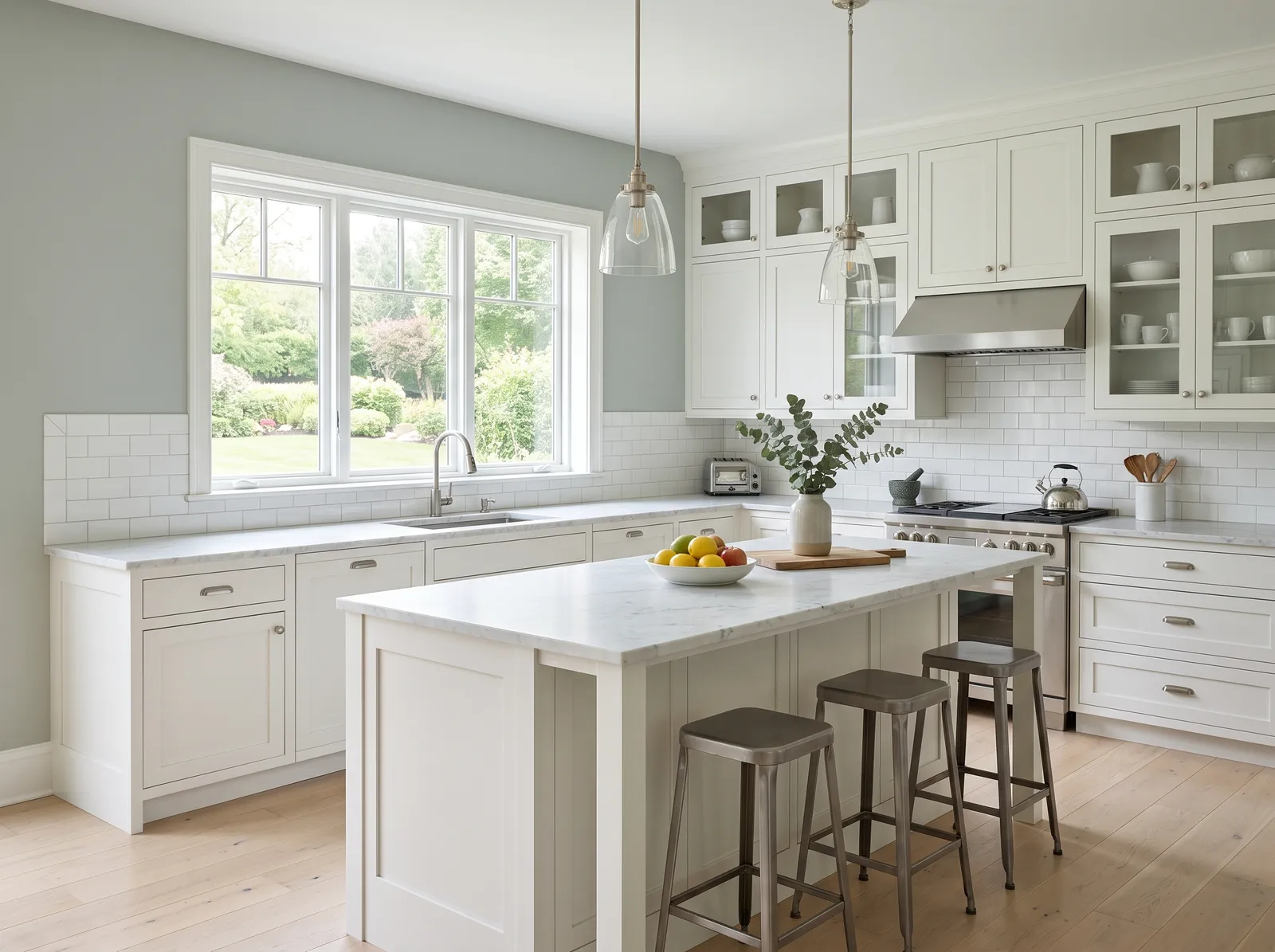
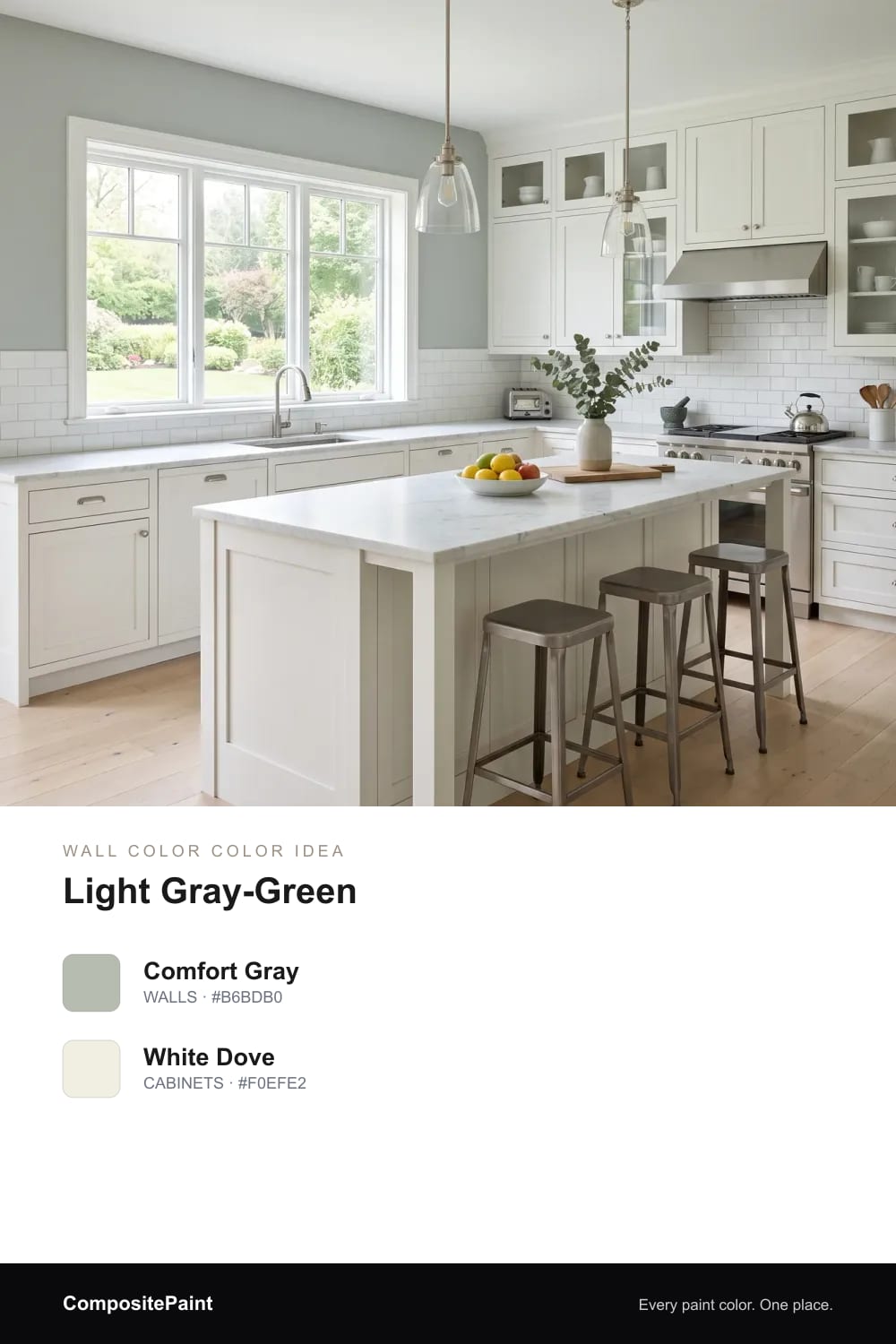
A soft green leaning gray that feels calm and a touch sophisticated, easy to live with all day long.
Upload a photo of your wall color and the visualizer paints your walls in any of these colors — in seconds.
UPLOAD YOUR PHOTO →In a kitchen with white cabinets, the walls are your easiest way to set the mood. The cabinets give you a clean, bright base, so almost any soft color will sit happily next to them. That freedom is nice, but it can also make the choice feel wide open.
Start by deciding how you want the room to feel. Warm and cozy points you toward creamy beige, taupe, or a gentle yellow. Fresh and calm points you toward soft blue, sage, or gray-green. Pick the feeling first, then the exact color gets a lot easier.
The colors people reach for again and again are the soft, easy ones: warm whites, gentle greige, and quiet grays. They are popular for a reason. They never fight with your counters or backsplash, and they look good in both morning and evening light.
If you want a little more personality, soft sage and pale blue are the next most-loved choices. They add a hint of color without taking over, and they pair beautifully with white cabinets. You really can't go wrong starting from this short list.
Warm white and greige are the quiet workhorses of kitchen walls. A warm white keeps everything light and open, while adding just enough softness so the room never feels stark. It is the safest way to make white cabinets look layered instead of plain.
Greige goes one step warmer. It is a gray and beige blend that grounds the room and makes it feel calm and lived-in. If a true white feels too cool for you, greige is the gentle upgrade that still goes with almost everything.
If you want your kitchen to feel like yours, soft color is the friendly way to do it. Pale blue brings a clean, airy calm. Sage and soft green feel fresh and a little garden-like. A gentle blue-green sits right in between and reads almost spa-like.
The trick is to keep these colors soft and muted, not bright. Against white cabinets, a quiet green or blue looks intentional and restful. A loud version of the same color can feel busy in a room that already has a lot going on.
Light changes paint more than anything else. A kitchen that faces north or gets little sun will make cool colors like gray and blue look even cooler, sometimes a bit flat. In those rooms, warm whites, creamy beige, and gentle yellow help the space feel sunny.
A kitchen with lots of sun can handle cooler, calmer colors like pale blue and gray-green without feeling cold. Whatever you like, tape a sample to the wall and look at it morning, noon, and night before you commit. The same color can shift a lot across one day.
Kitchens are full of cabinets, windows, and backsplash, so you often see less open wall than you think. Walk in and look around. If your wall color only shows in small patches above the counters, you can be a little braver with it, because a strong shade in small doses still feels gentle.
If you have a big open wall, a tall ceiling, or an eat-in area, that color will carry the room. In that case, lean toward softer, easier shades you know you'll still love after a few months. The more wall you see, the calmer your color should usually be.
Kitchen walls get splashes, steam, and the odd greasy fingerprint, so the finish matters as much as the color. An eggshell or satin finish is the sweet spot. It has a soft, low glow, and it wipes clean without showing every bump in the wall.
Skip a flat finish on the main walls, since it holds onto stains and is hard to clean. Save high-gloss for trim and doors if you like a little shine. For the walls themselves, eggshell or satin gives you an easy-to-clean surface that still looks soft.
There is no single best, but soft warm whites, gentle greige, and quiet grays are the most loved because they go with everything and look good all day. If you want a little color, soft sage or pale blue are easy favorites. Start by choosing whether you want the room to feel warm or fresh, then pick from there.
Almost any soft color works with white cabinets, which is part of what makes them so popular. Warm whites and greige keep things calm and classic, while sage, pale blue, and soft taupe add a gentle touch of color. Just keep the wall color soft so it complements the cabinets instead of competing with them.
Most kitchens look best with light or medium walls, since they keep the room feeling open and bright. Dark walls can look beautiful but usually need lots of light and plenty of open wall space to work. If your kitchen is small or short on sun, a lighter color is the safer and friendlier choice.
When you only see small patches of wall between cabinets and windows, you have room to be a little bolder. A soft sage, pale blue, or warm taupe shows up as a nice accent without overwhelming the room. You can also keep it simple with a warm white that quietly ties everything together.
It depends on your light and the feeling you want. Warm colors like creamy beige, taupe, and gentle yellow make a kitchen feel cozy and are great for rooms with little sun. Cool colors like pale blue and gray-green feel fresh and calm and shine in sunnier kitchens.
Eggshell or satin is the best finish for kitchen walls. It has a soft, gentle sheen and wipes clean easily, which matters in a room with splashes and steam. Avoid flat paint on the main walls since it stains and is harder to clean.