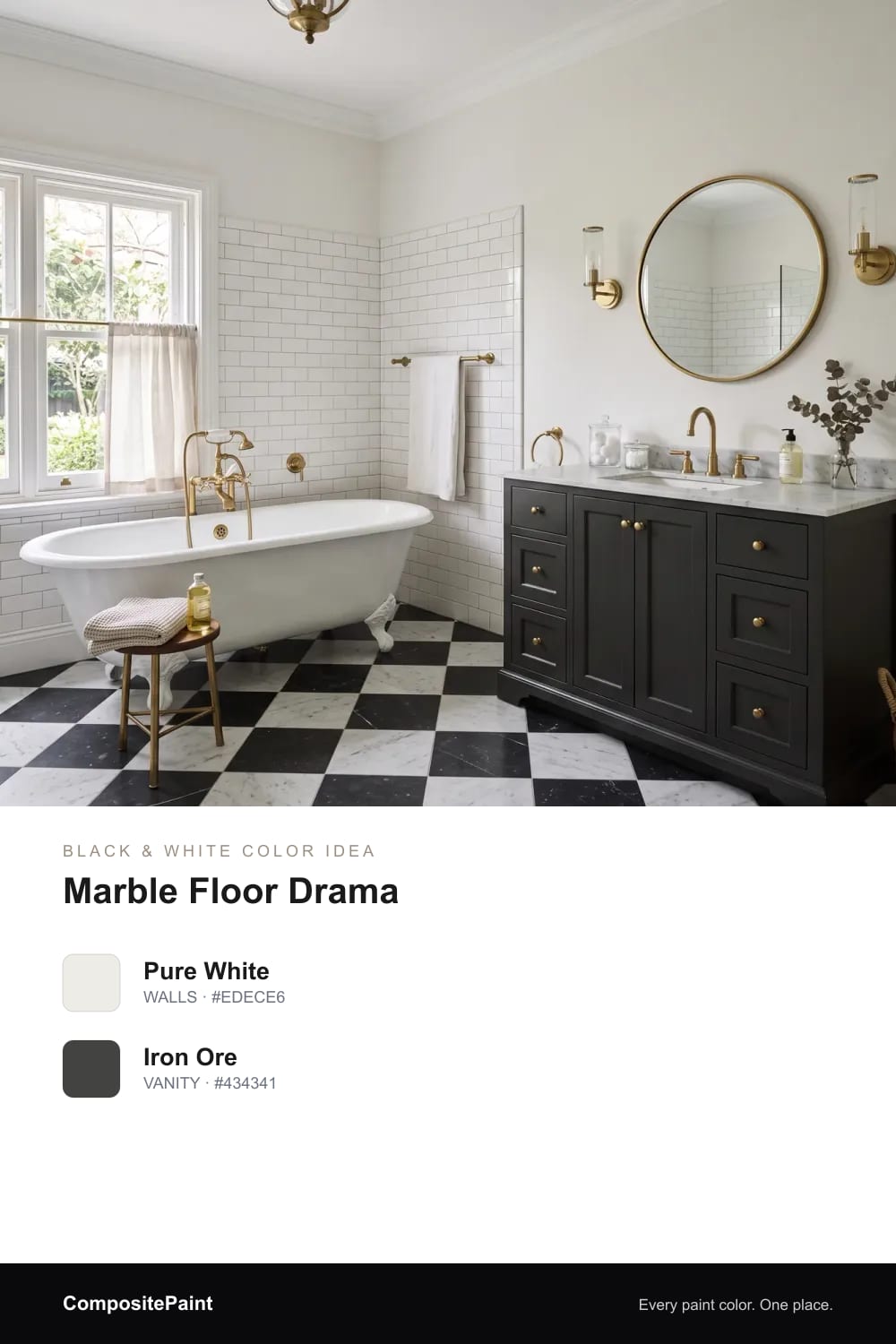
1. Marble Floor Drama
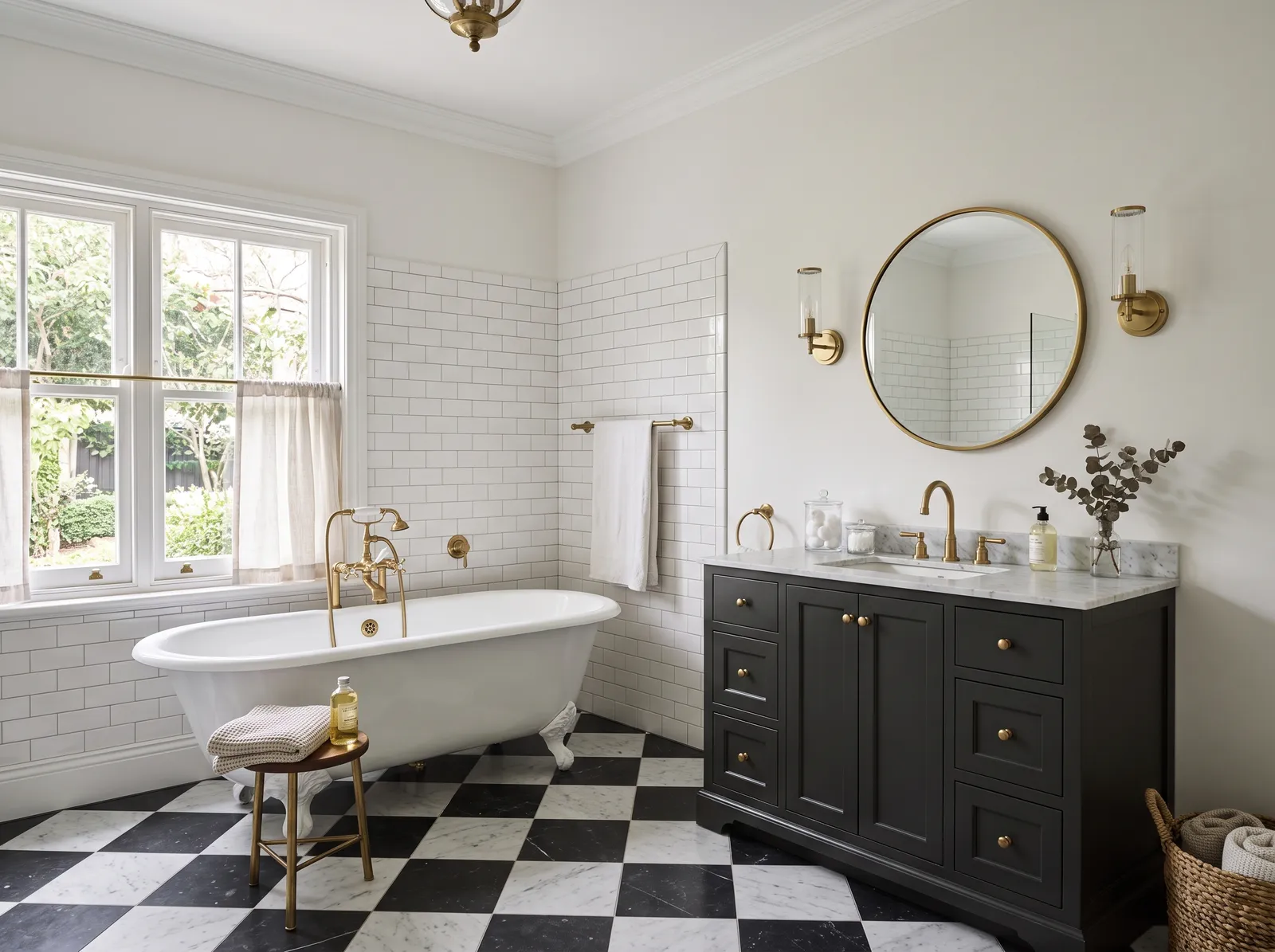
A checkerboard marble floor grounds soft white walls while a near-black vanity sits like an anchor in the middle of all that light.
Black and white never really leaves the bathroom. It feels crisp in the morning, calm at night, and it lets you change everything else around it without starting over. The trick in 2026 is softening the contrast just enough, so the room reads inviting instead of cold.
By Jessica Williams · Color Stylist
A checkerboard marble floor grounds soft white walls while a near-black vanity sits like an anchor in the middle of all that light.
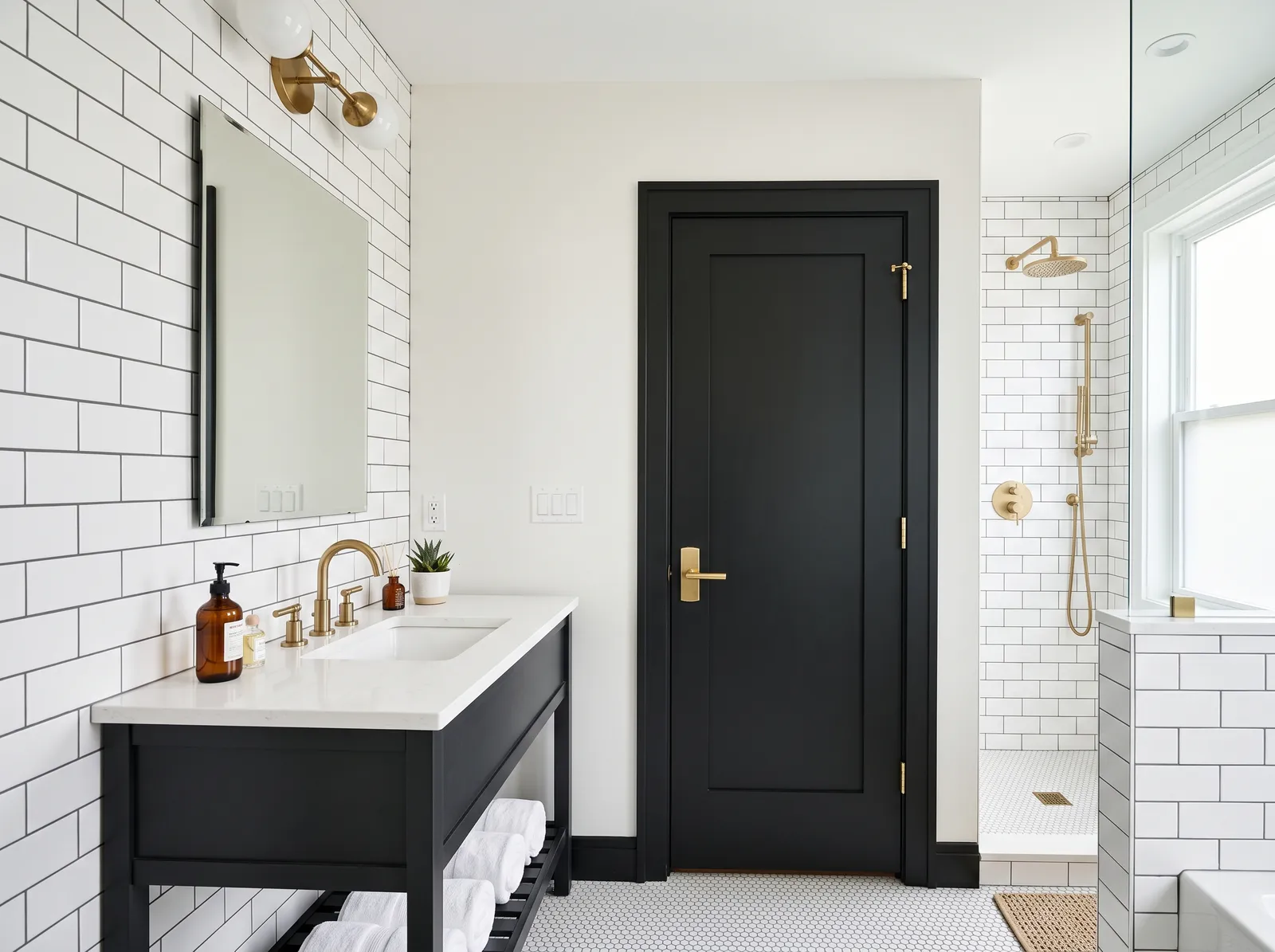
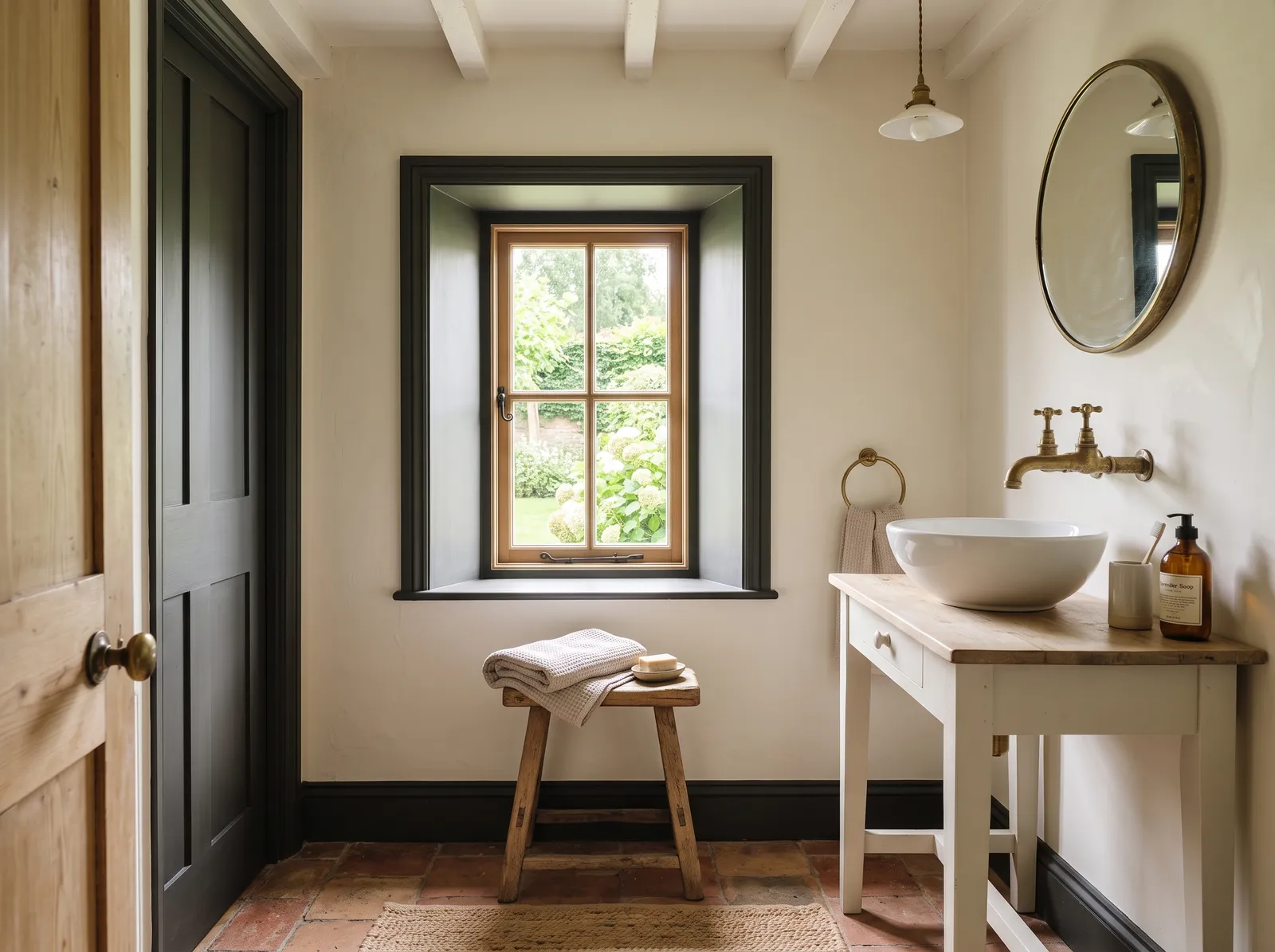
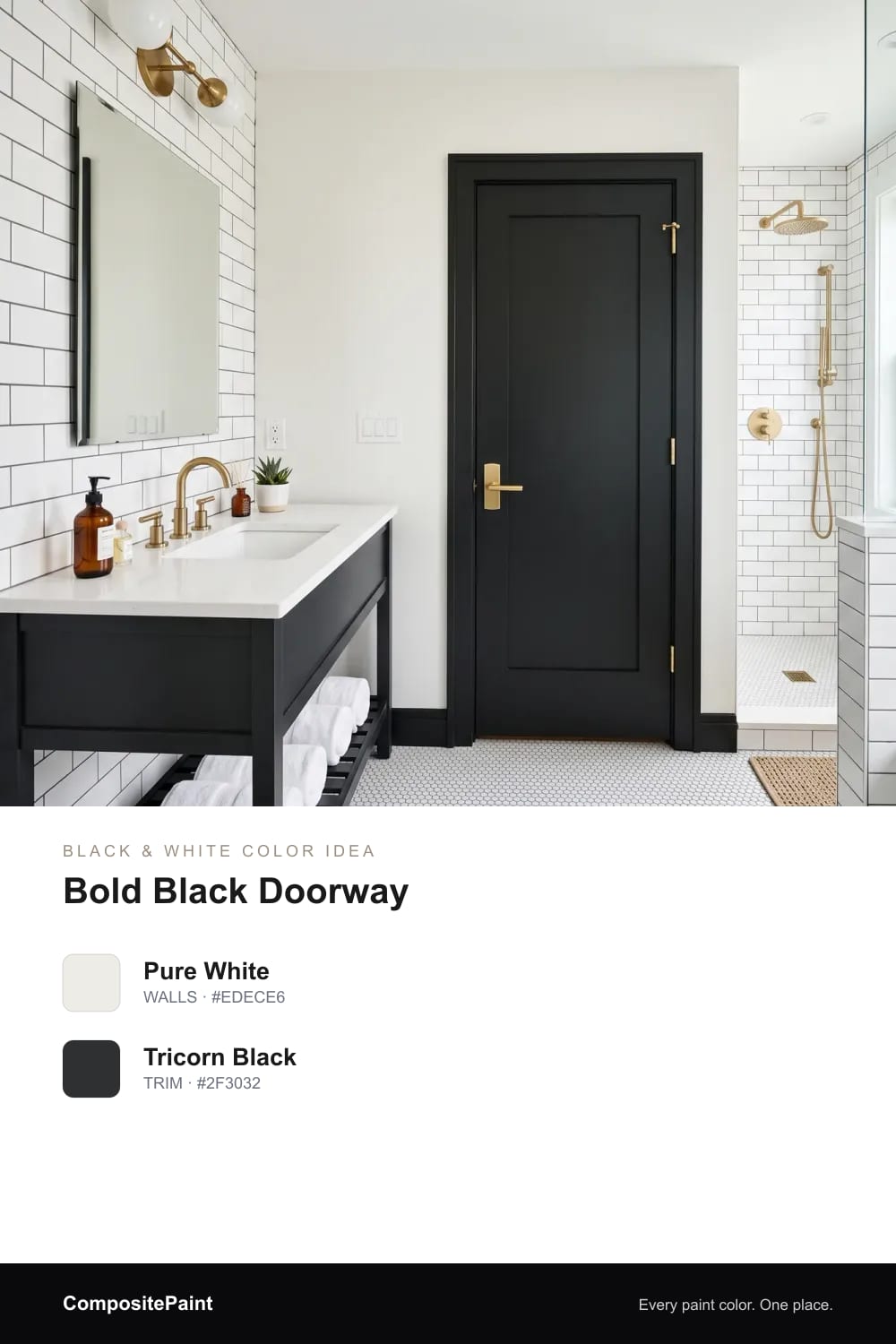
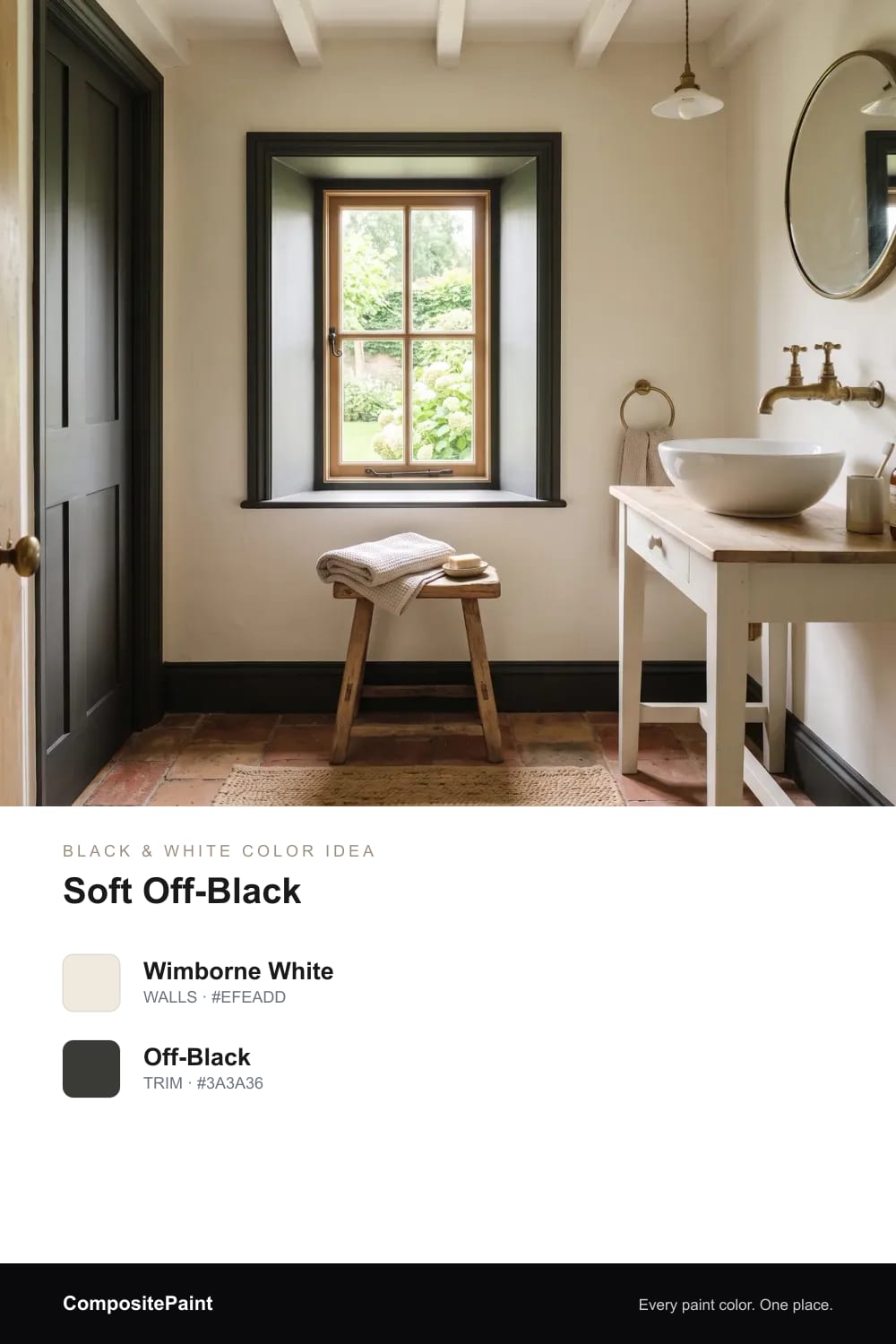
True-black trim and a black door frame the white walls like a picture, sharp and graphic the second you walk in.
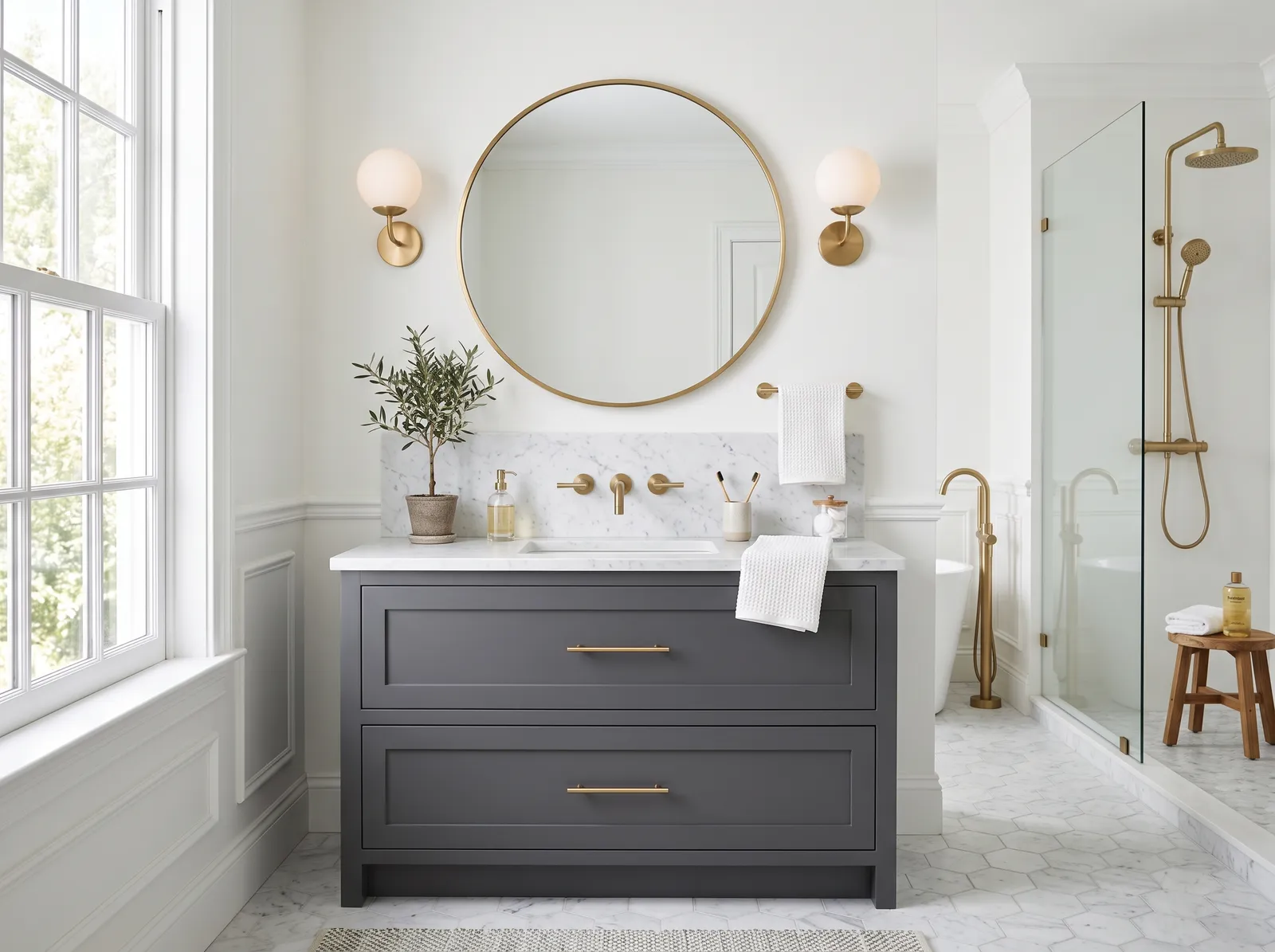
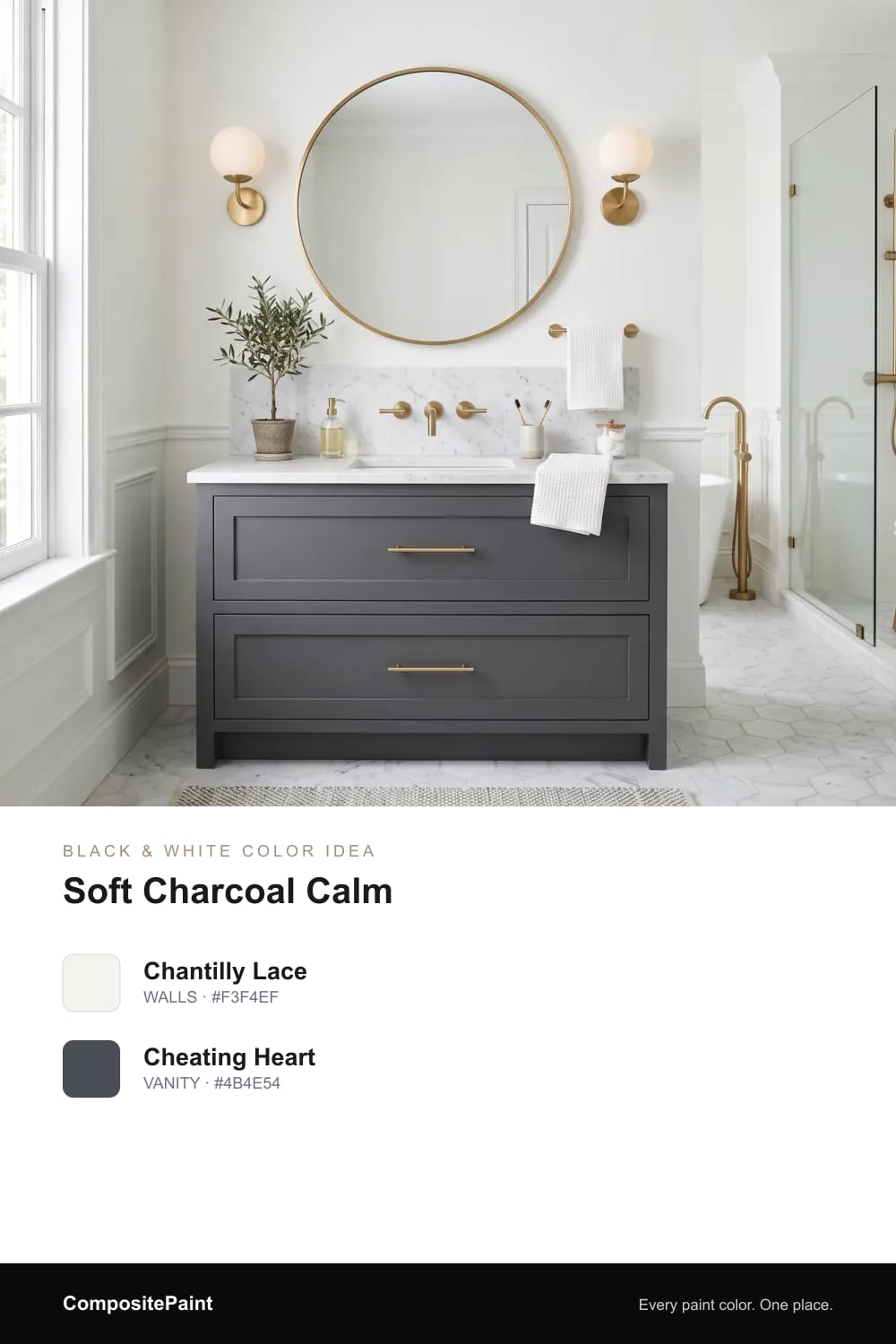
A gentle charcoal vanity glows blue-grey against bright white walls, quieter and easier on the eyes than full black.
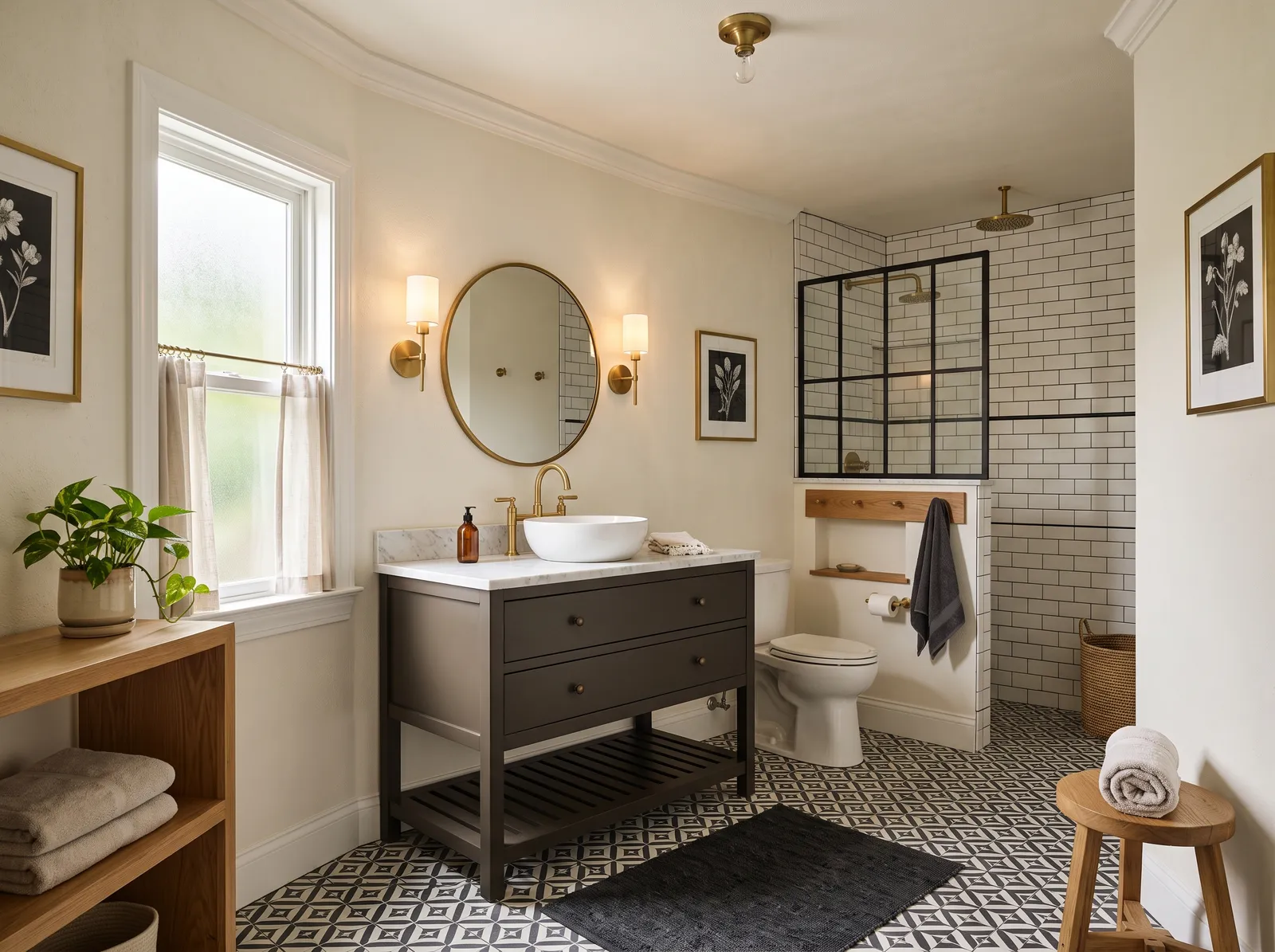
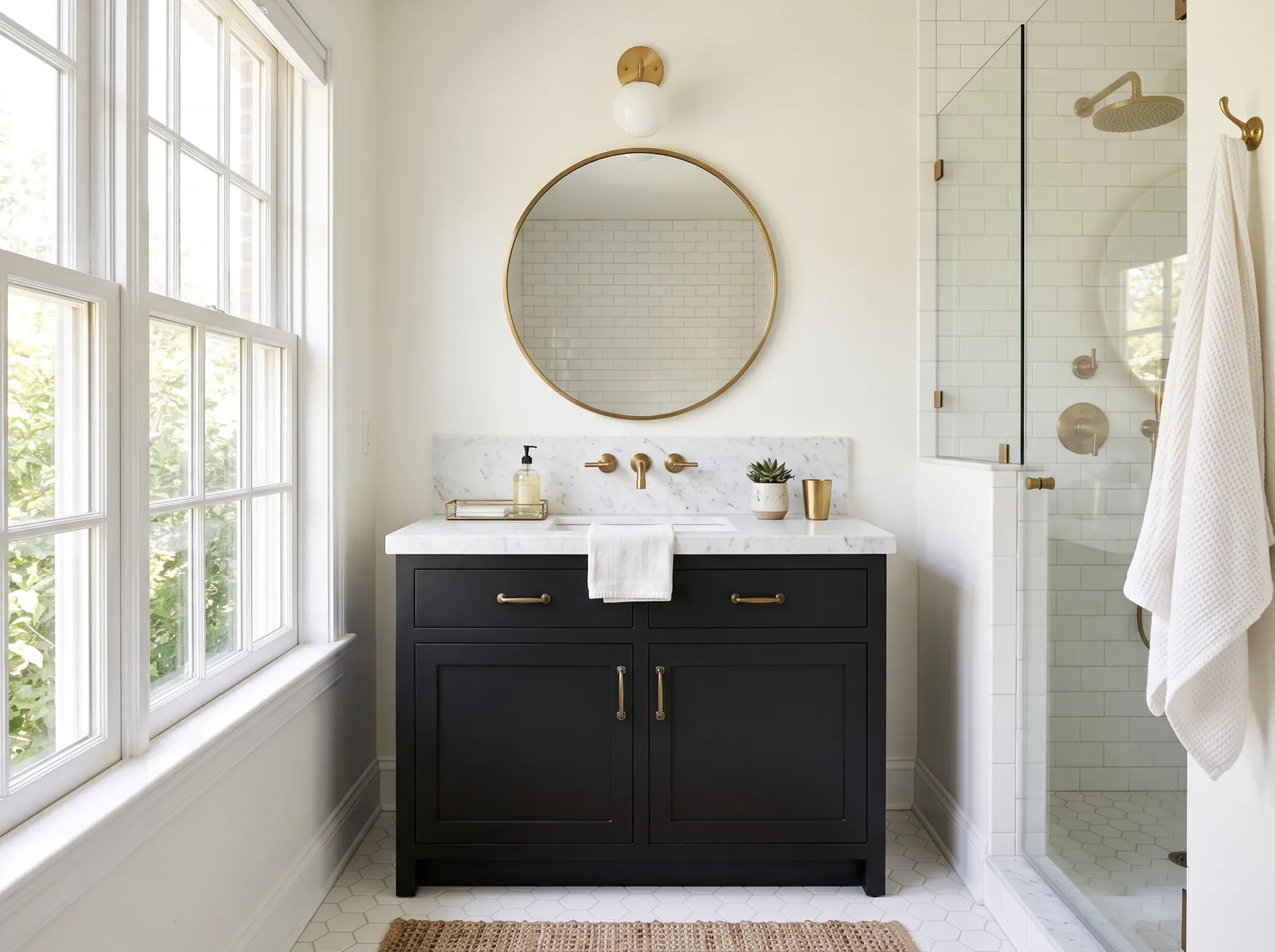
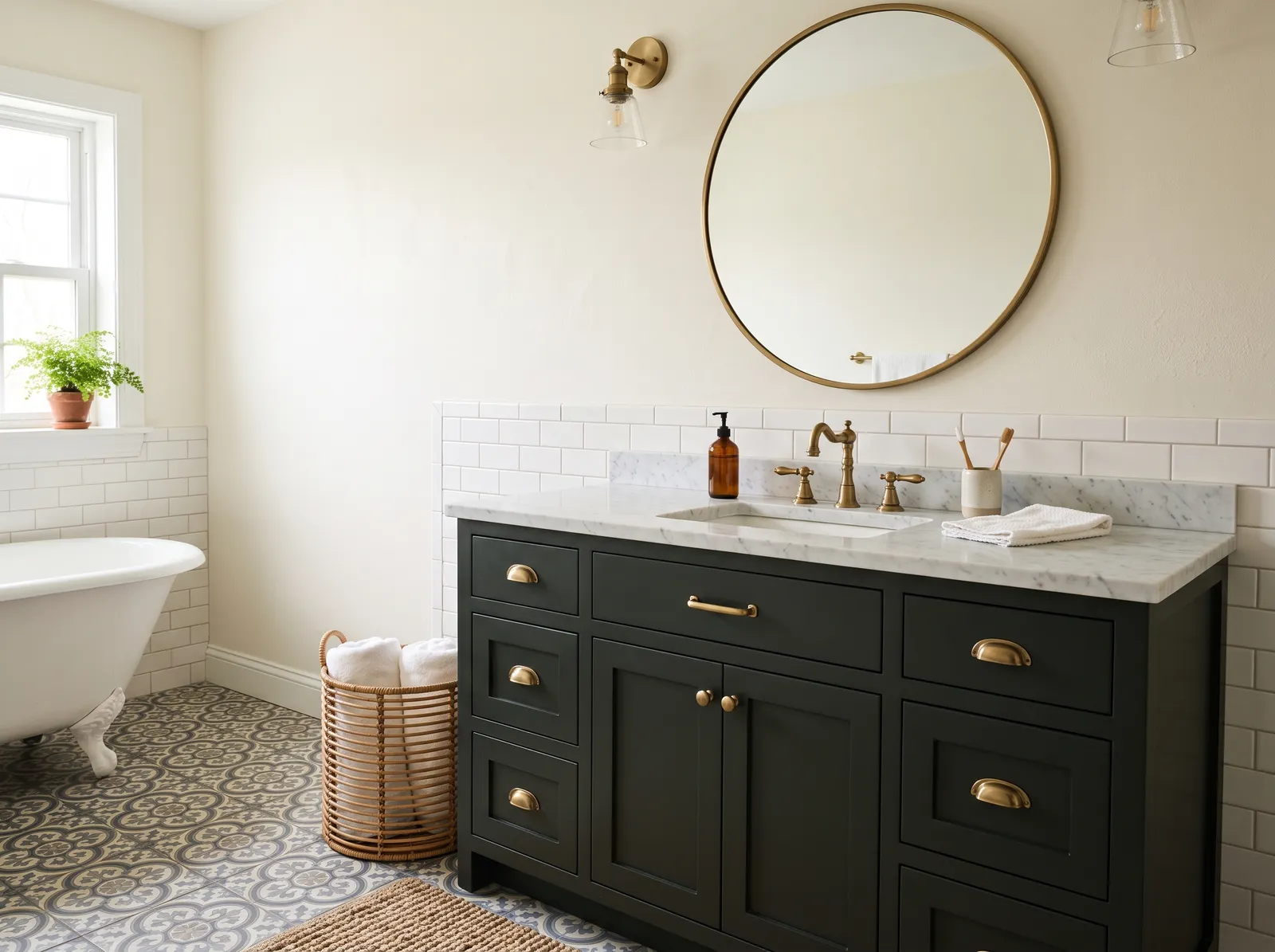
A bronze-leaning black vanity meets a creamy white wall, and the whole room feels lit by candle rather than cooled by chrome.
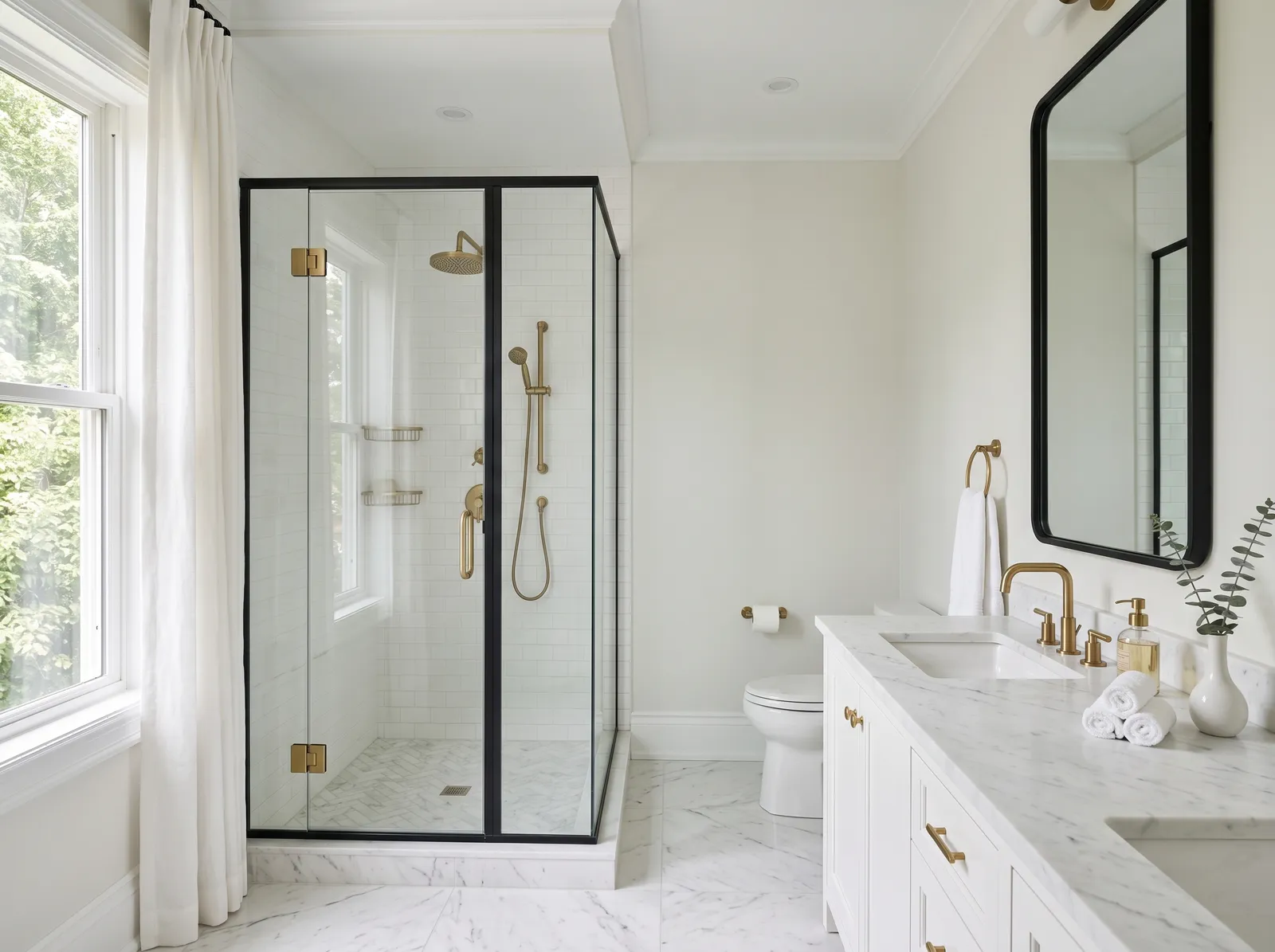
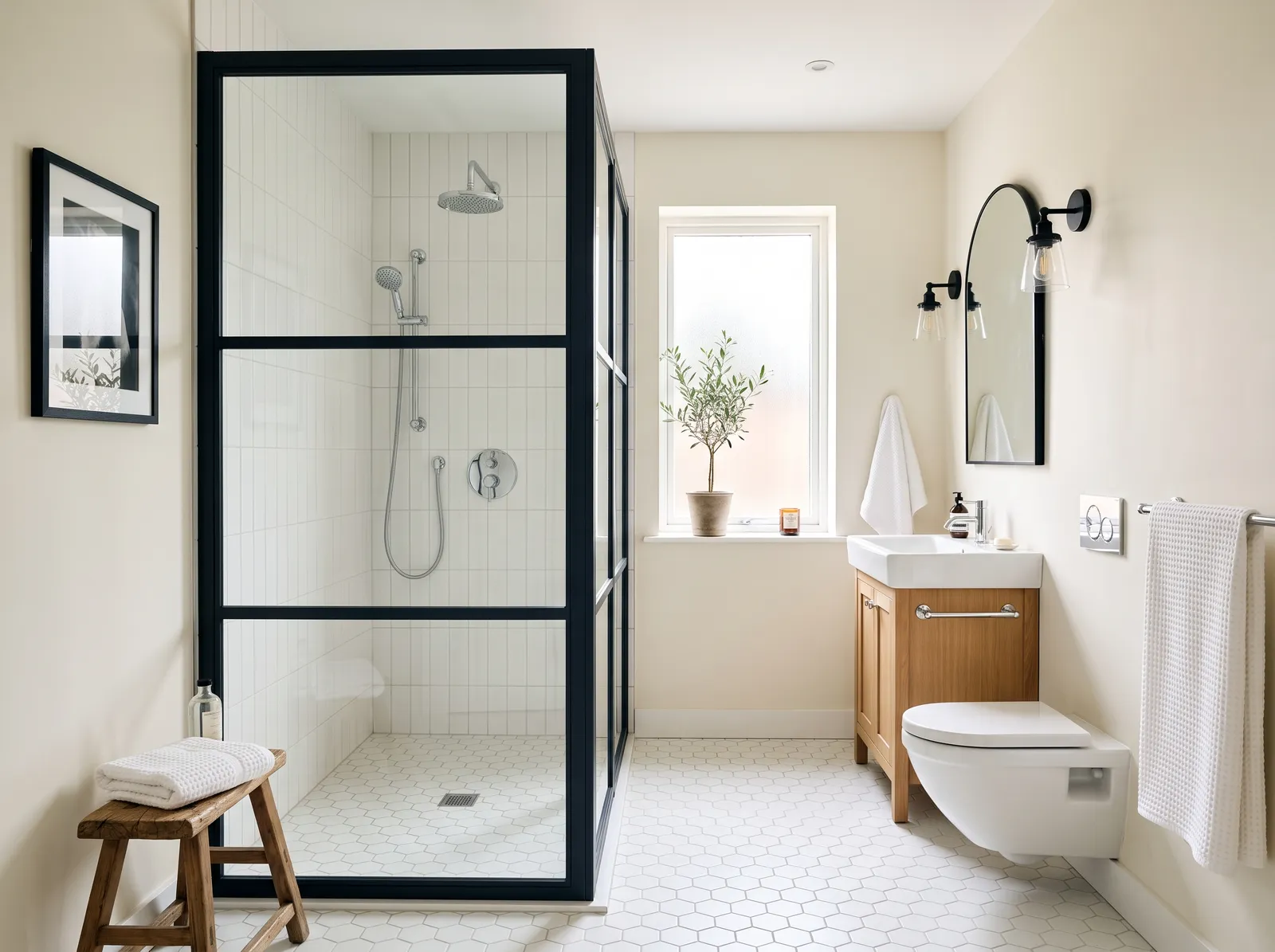
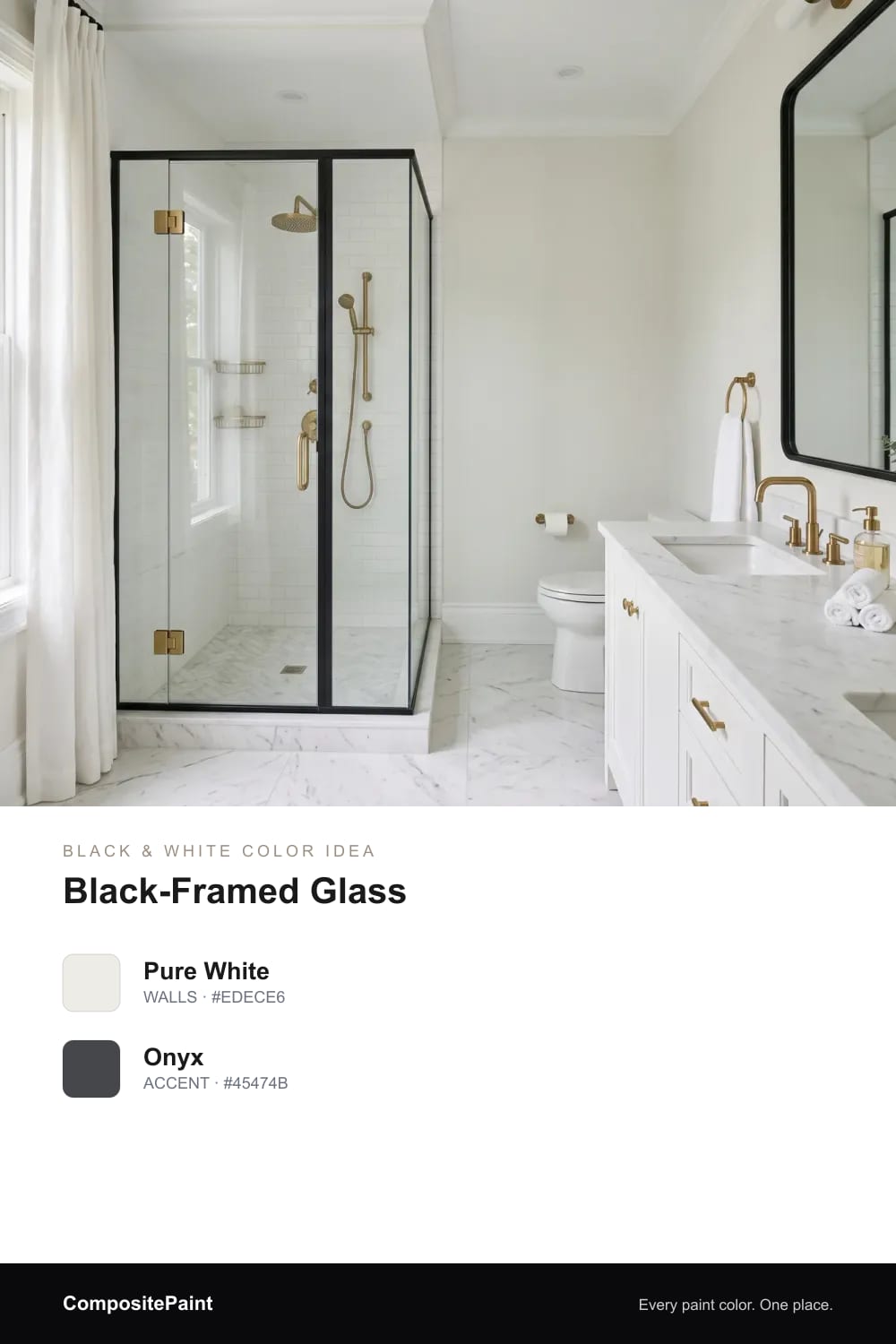
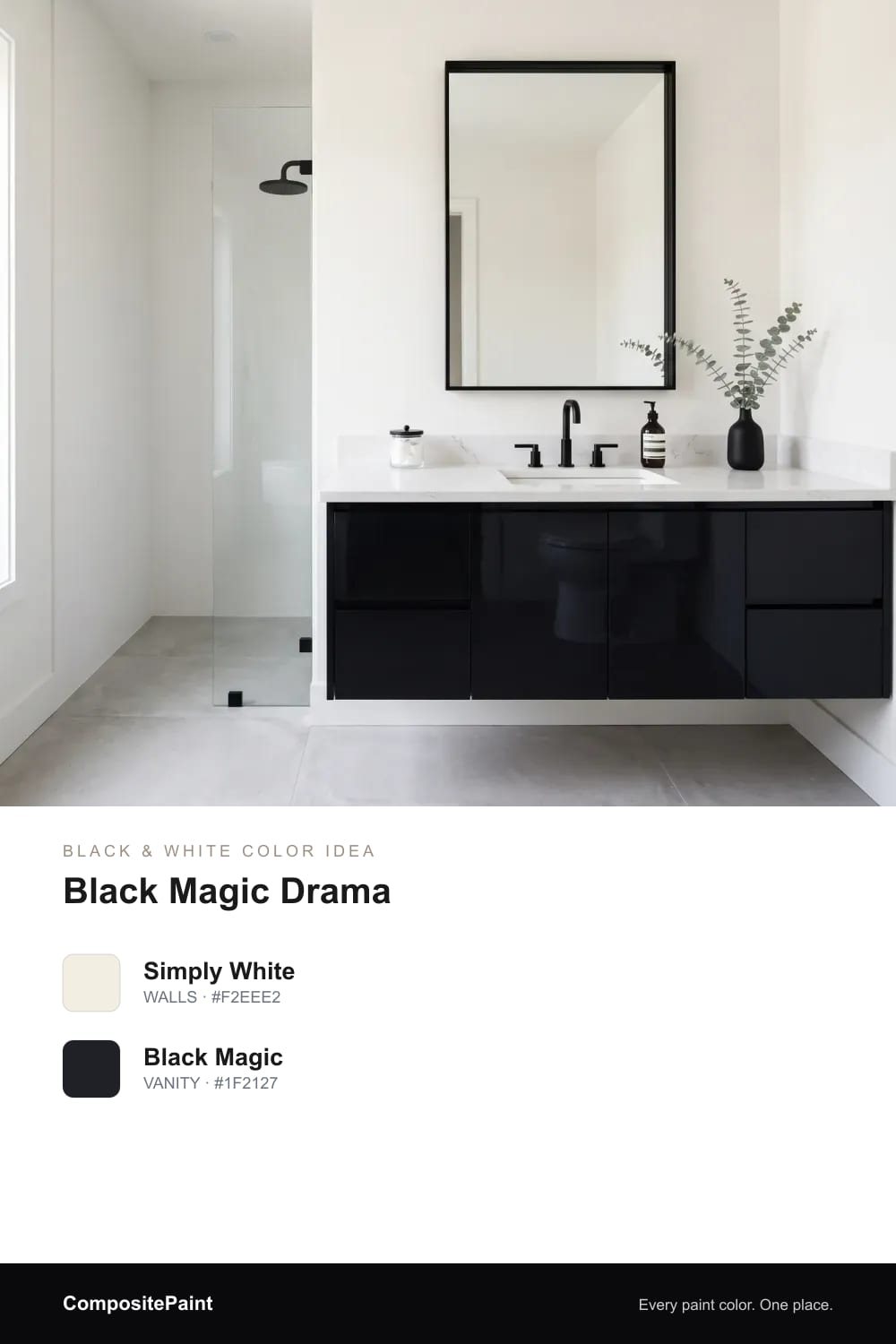
Thin black frames around the shower glass and mirror draw clean lines through an all-white room without weighing it down.
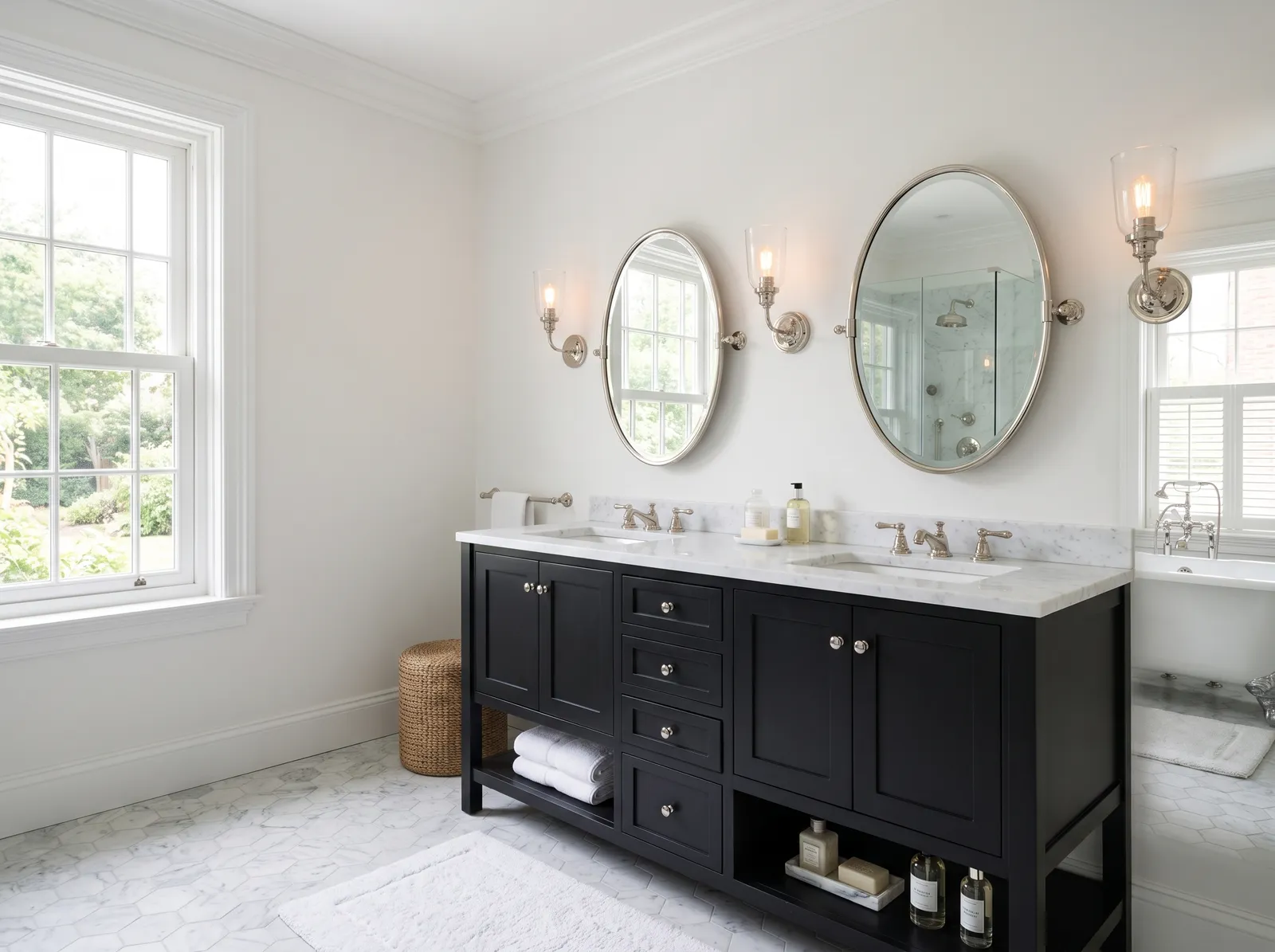
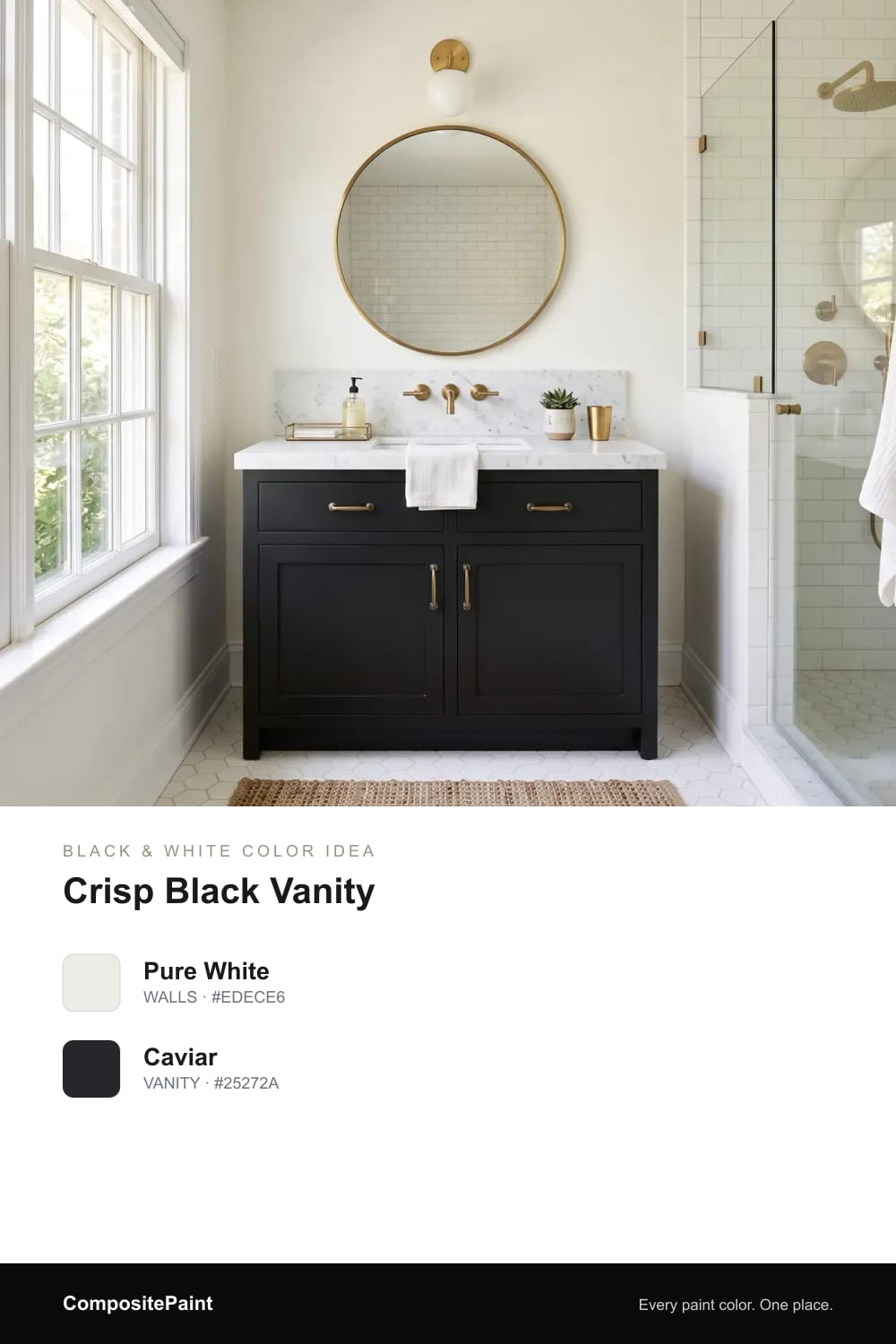
A true-black vanity stands confident under bright white walls, the classic high-contrast look done simply and well.
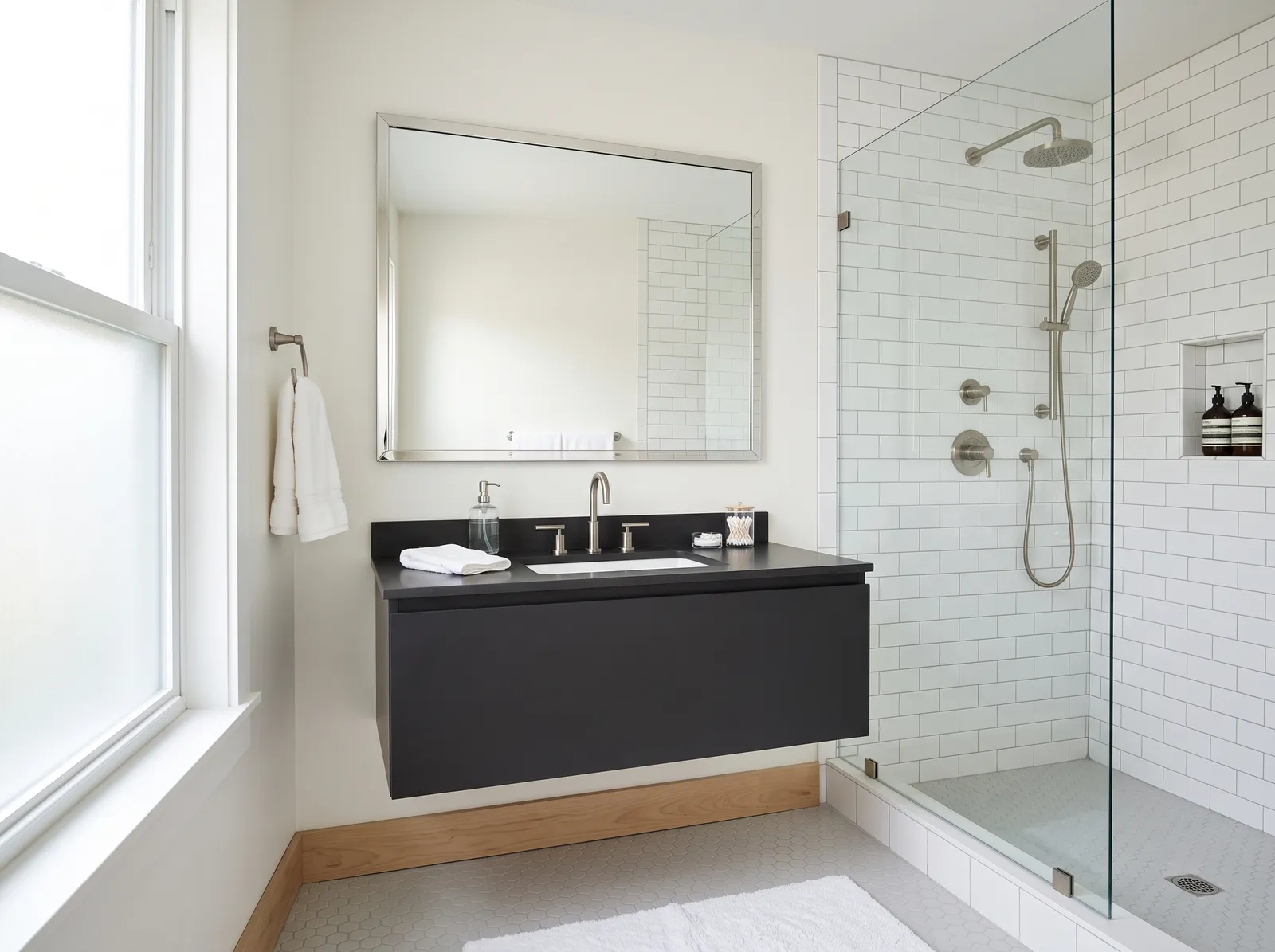
Bright walls keep the room feeling open while a deep charcoal vanity grounds it with a clean, modern edge.
Warm white walls and gently inked trim give this room an easy English calm instead of a hard black-and-white snap.
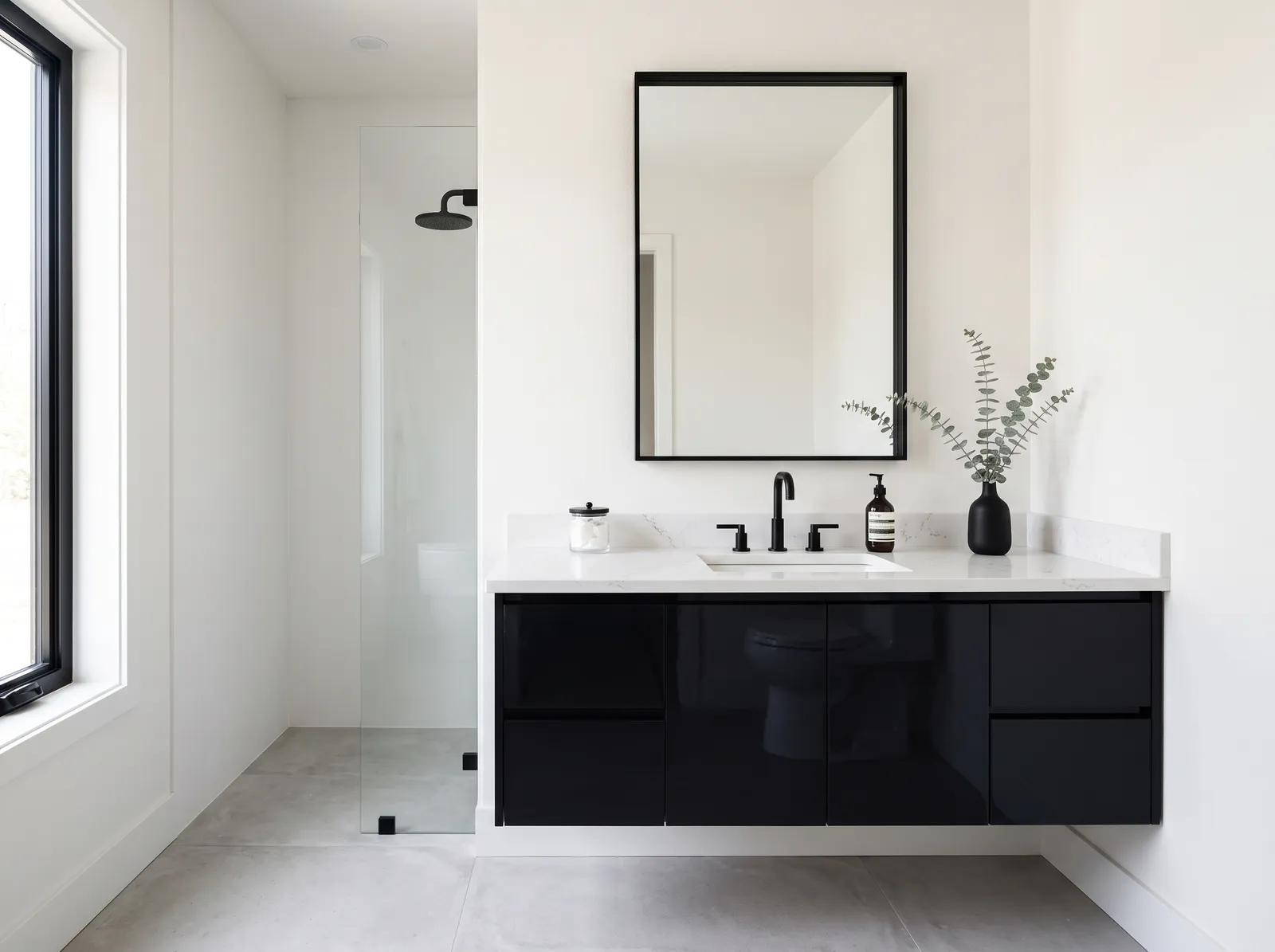
A near-pure white surround makes the inky vanity look almost lacquered, for a bold high-contrast statement.
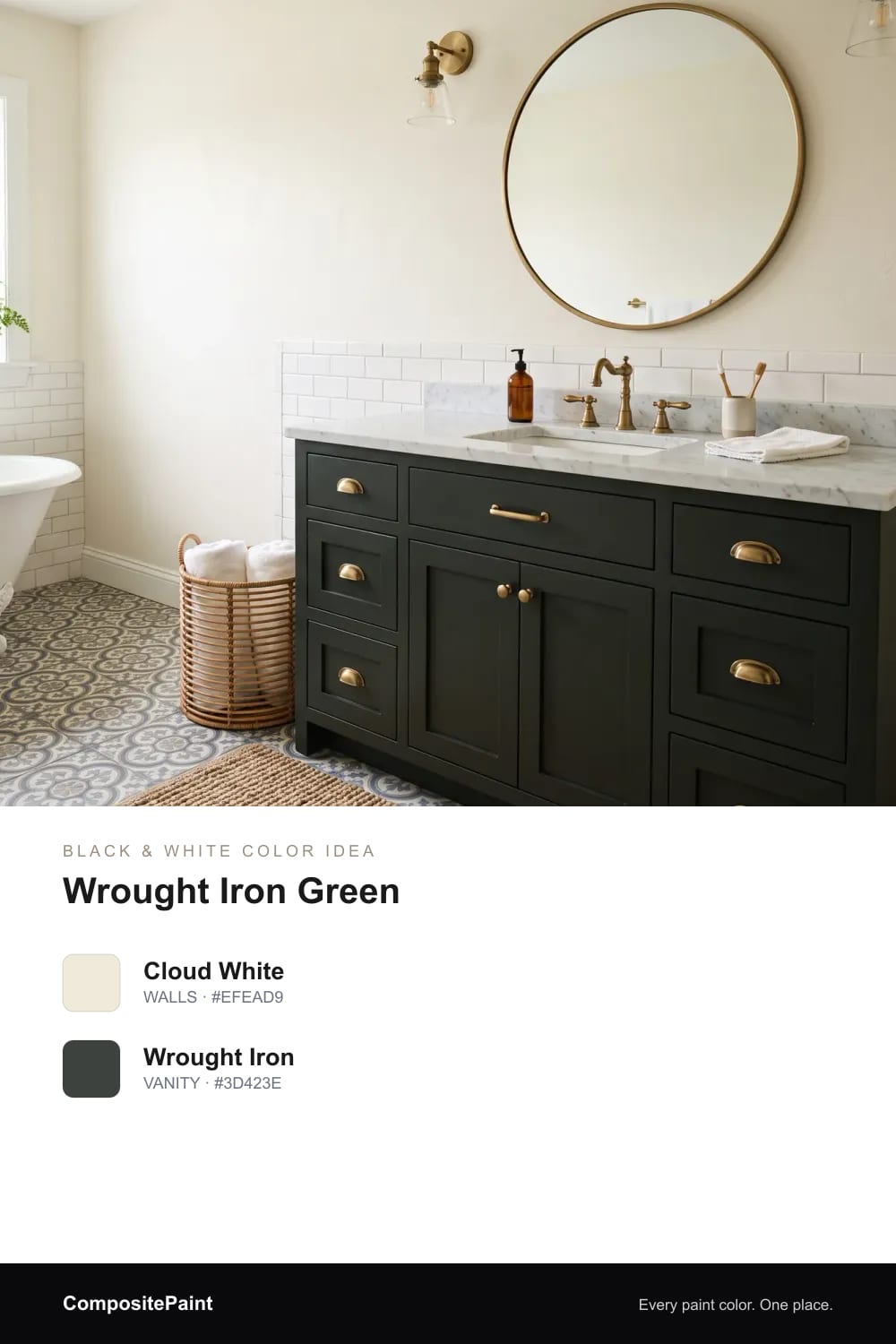
A faint green hides inside this soft black vanity, warming the whole room against the creamy white walls.
Mellow white walls let a blue-leaning black shower frame draw the eye without feeling stark or cold.
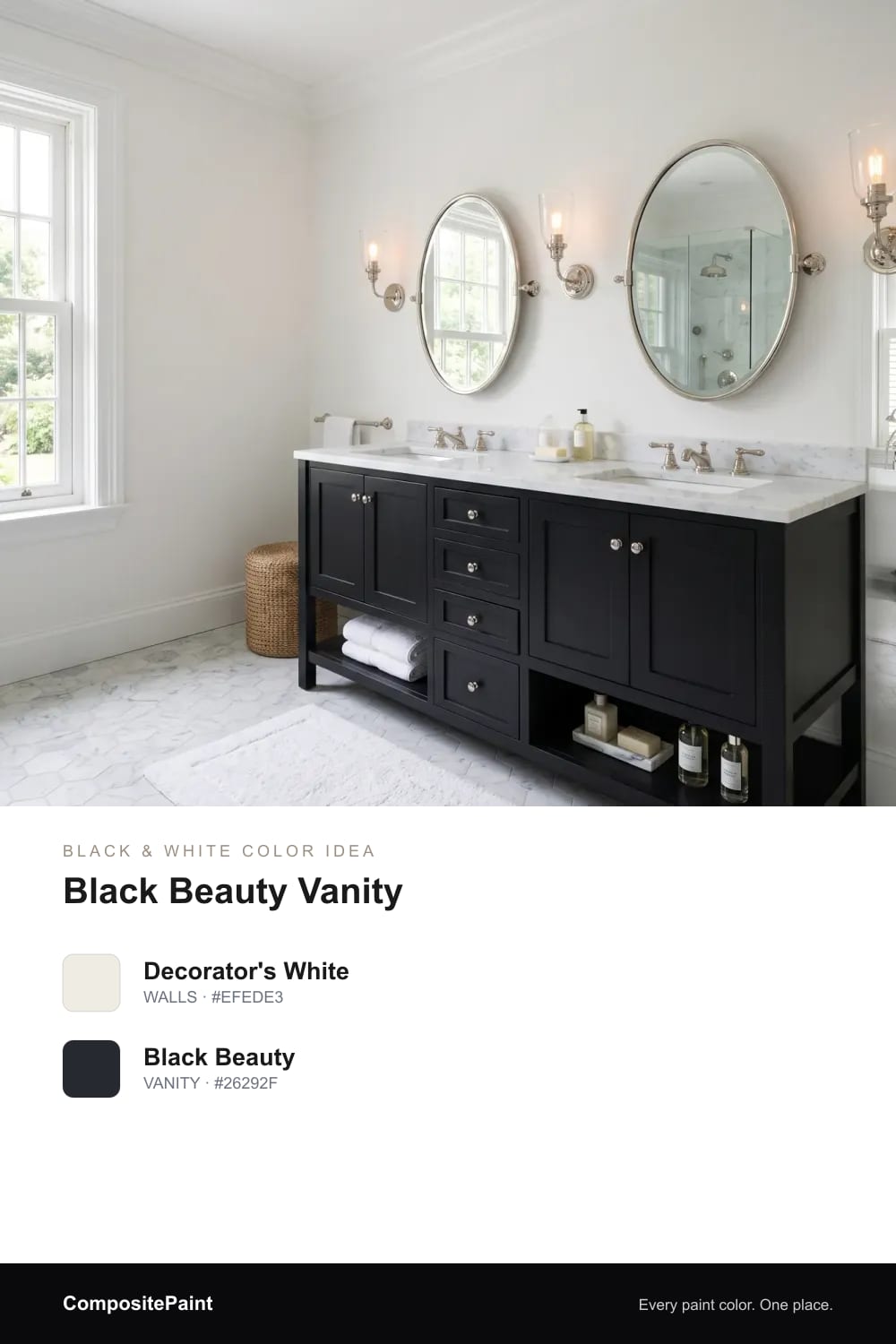
A neutral white backdrop and a deep velvety vanity make a timeless pairing that feels both fresh and elegant.
Upload a photo of your black & white and the visualizer paints your walls in any of these colors — in seconds.
UPLOAD YOUR PHOTO →Black and white works because it is built on contrast, and contrast is what the eye loves first thing in the morning. White opens the room up and bounces the light around, while black gives it weight and a place to rest.
It also ages slowly. Tile, hardware, and towels come and go, but the bones of a black-and-white bath still look right years later.
The newest version of this look pulls back from the stark. Instead of a blue-white wall and a jet-black vanity, we are reaching for creamy whites and near-blacks that carry a little brown or warmth underneath.
The result still reads black and white from across the room, but up close it feels gentler. The edges blur just enough to make the space somewhere you want to linger.
Black is heavy, so a little goes a long way. The safest rule is to let white lead and give black one clear job, like the vanity, the door, or the floor pattern.
When black starts showing up on the walls, the cabinet, and the tile all at once, the room can close in and feel like a cave. If you want more of it, add black in thin lines, framed glass, hardware, or a single painted piece, rather than in big solid blocks.
A small bath can absolutely handle black; it just needs the contrast placed with care. Keep the walls and ceiling a light white so the box feels open, then let black land low or in slim accents.
A black vanity, a black-framed mirror, or a checkerboard floor adds depth without shrinking the space. The trouble only starts if black climbs the walls and swallows the daylight.
Your white sets the mood before anything else does. A bright, clean white like Pure White or Chantilly Lace feels fresh and modern, and it makes a true black look even sharper beside it.
If the room gets cool north light or you want a softer feel, a warm white like White Dove leans creamy and forgiving. Stark whites suit bold, graphic baths; warm whites suit cozy, lived-in ones.
A true black like Tricorn Black or Caviar is crisp and confident, the right call when you want clean lines and real drama. It reads as pure black in almost any light.
Near-blacks like Iron Ore and Urbane Bronze hold a whisper of brown or grey, so they feel softer and a touch warmer. In a bath with lots of daylight, those undertones come alive and keep the dark from feeling flat.
Black and white can tip cold, and the easy fix is the metal you choose. Brass and bronze faucets, knobs, and light fixtures throw a golden warmth across the room that chrome simply cannot.
A wood vanity top, a woven basket, or a teak stool adds the same comfort underfoot and at eye level. These small warm touches are what turn a sharp scheme into a soft, welcoming one.
Yes, it is one of the most lasting looks there is. The current version just softens the contrast with creamy whites, near-blacks, and warm metals.
Not if you keep the walls and ceiling light and use black in lower or slim accents. A black vanity or framed mirror adds depth without closing the room in.
Brass and bronze are the easy winners because they add warmth and stop the room feeling cold. Matte black or chrome both work too if you prefer a cooler, more modern edge.
Bright whites like Pure White suit bold, high-contrast baths, while warm whites like White Dove feel softer and cozier. Let your light decide: cool rooms love a warm white, sunny rooms can carry a crisp one.
True blacks like Caviar give the sharpest, most graphic look, while near-blacks like Iron Ore feel a little softer and warmer. Both are classic; it comes down to how crisp you want the contrast.
Bring in warmth through brass fixtures, a wood vanity top, and soft textured towels. A creamy white on the walls also takes the chill off the whole scheme.