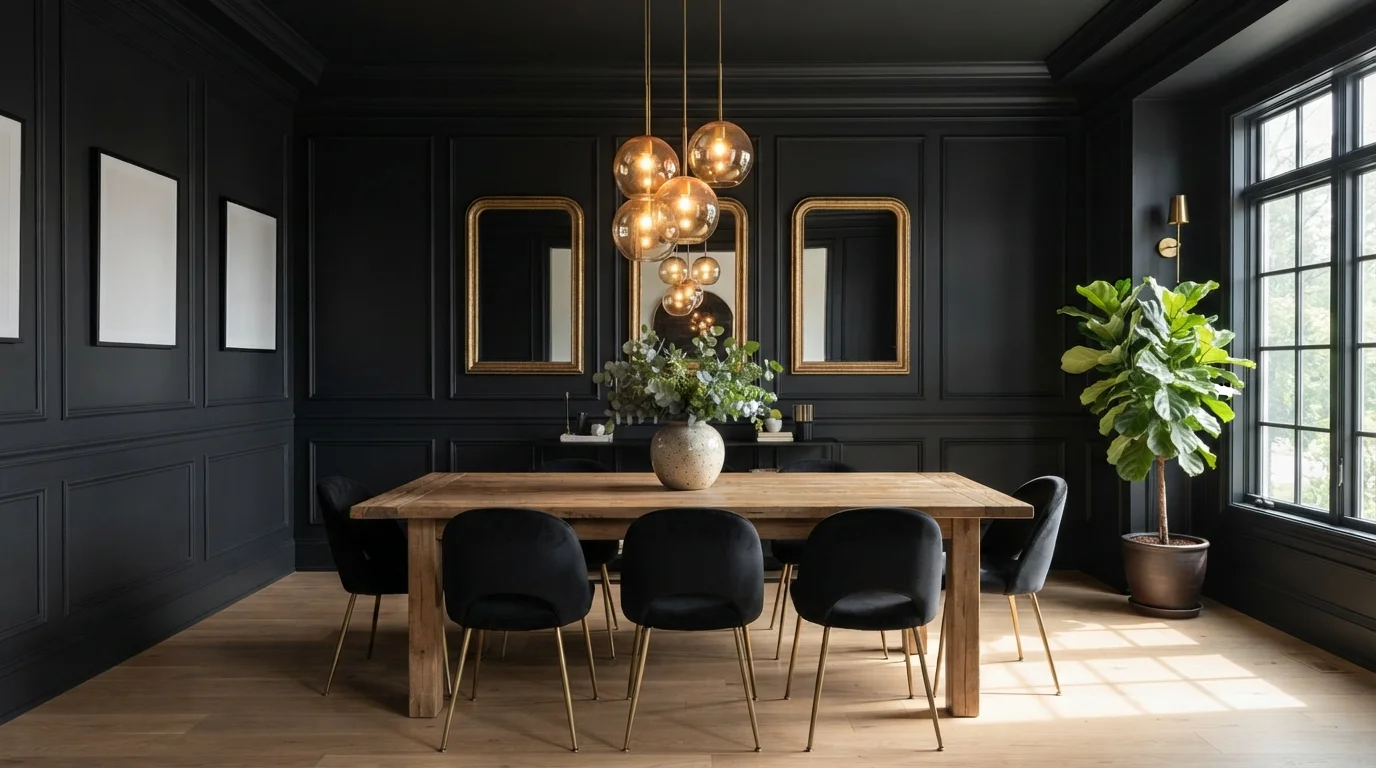
Dining Room Paint Colors
Top Picks for the Dining Room
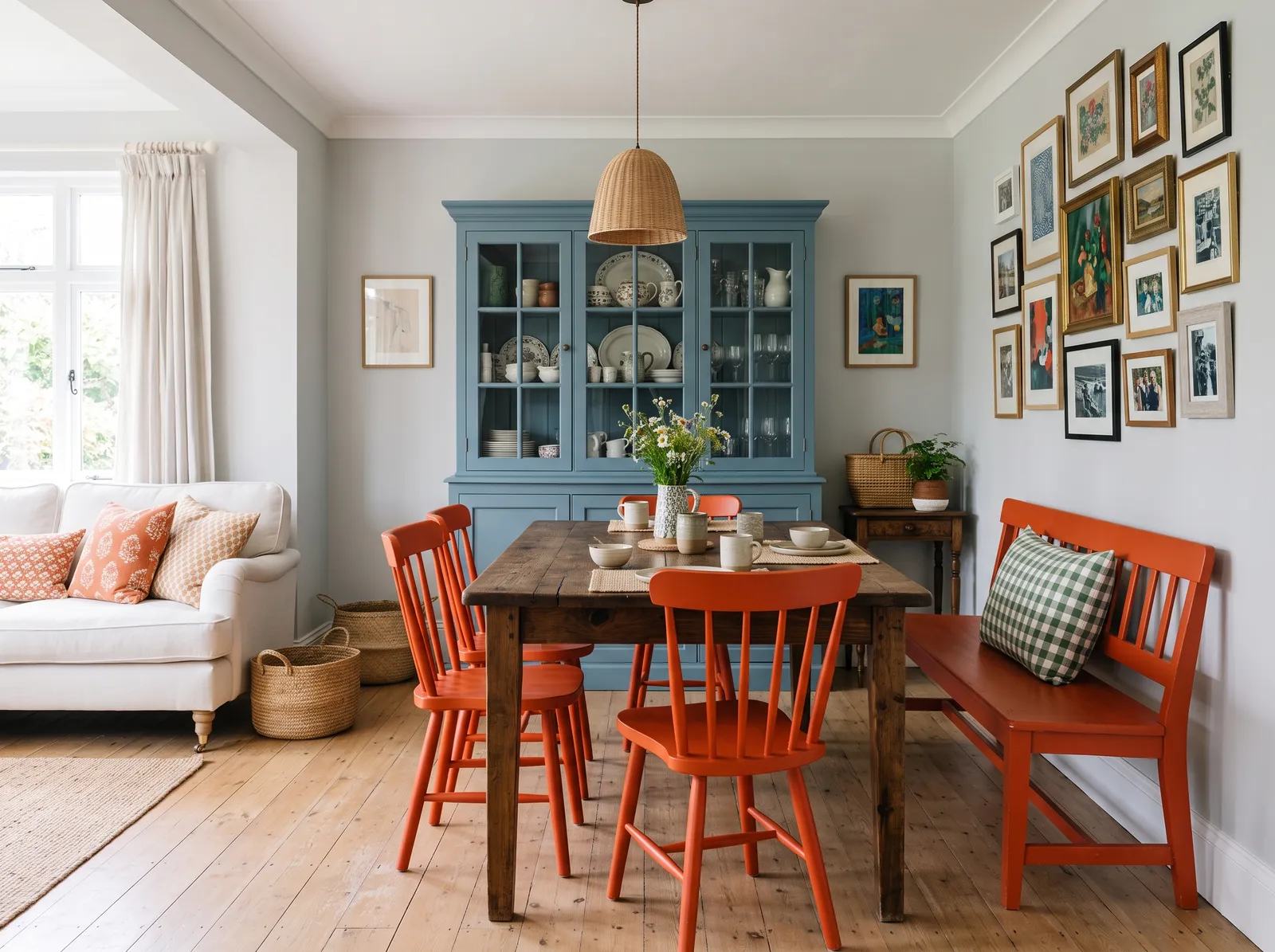
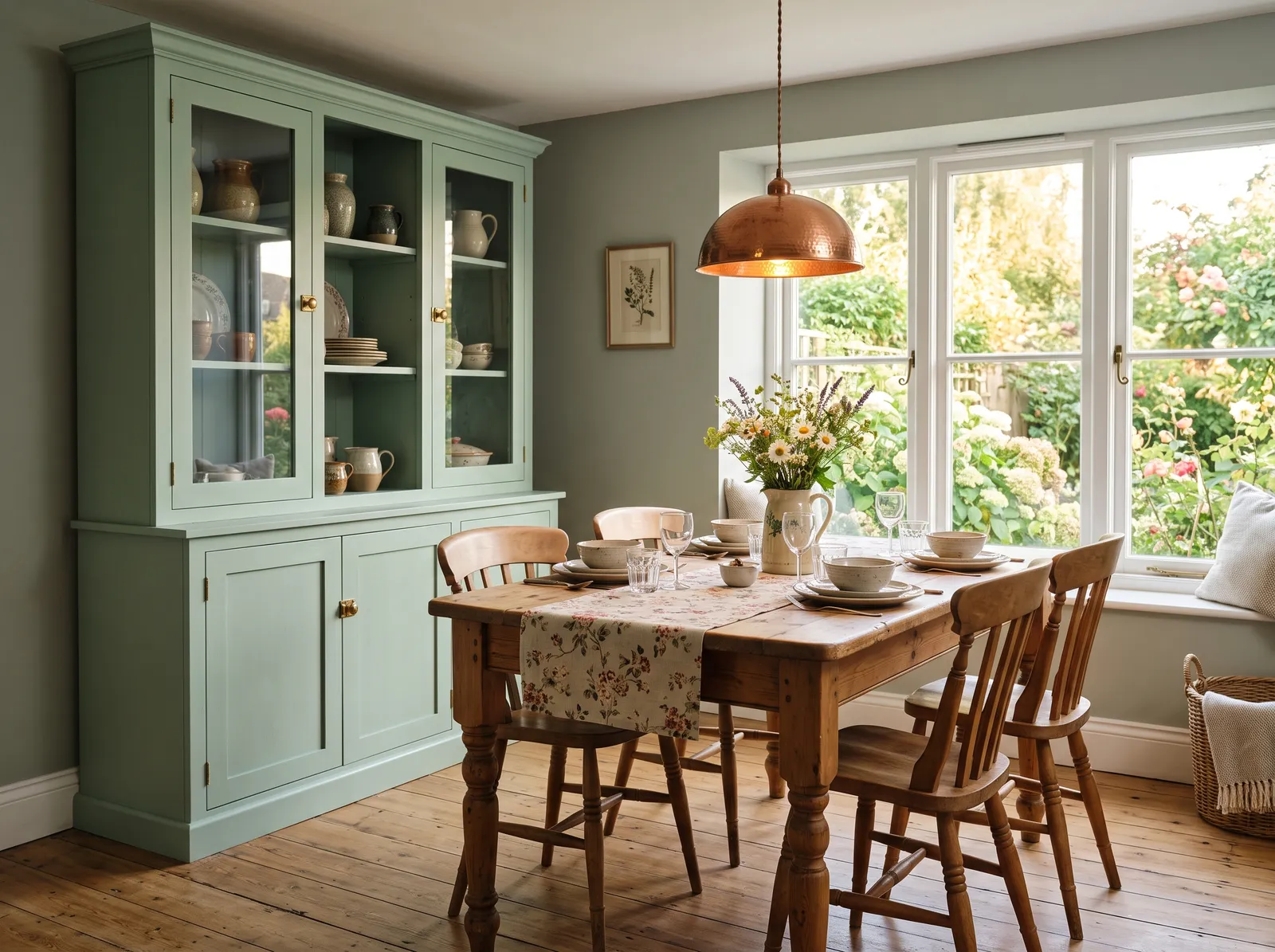
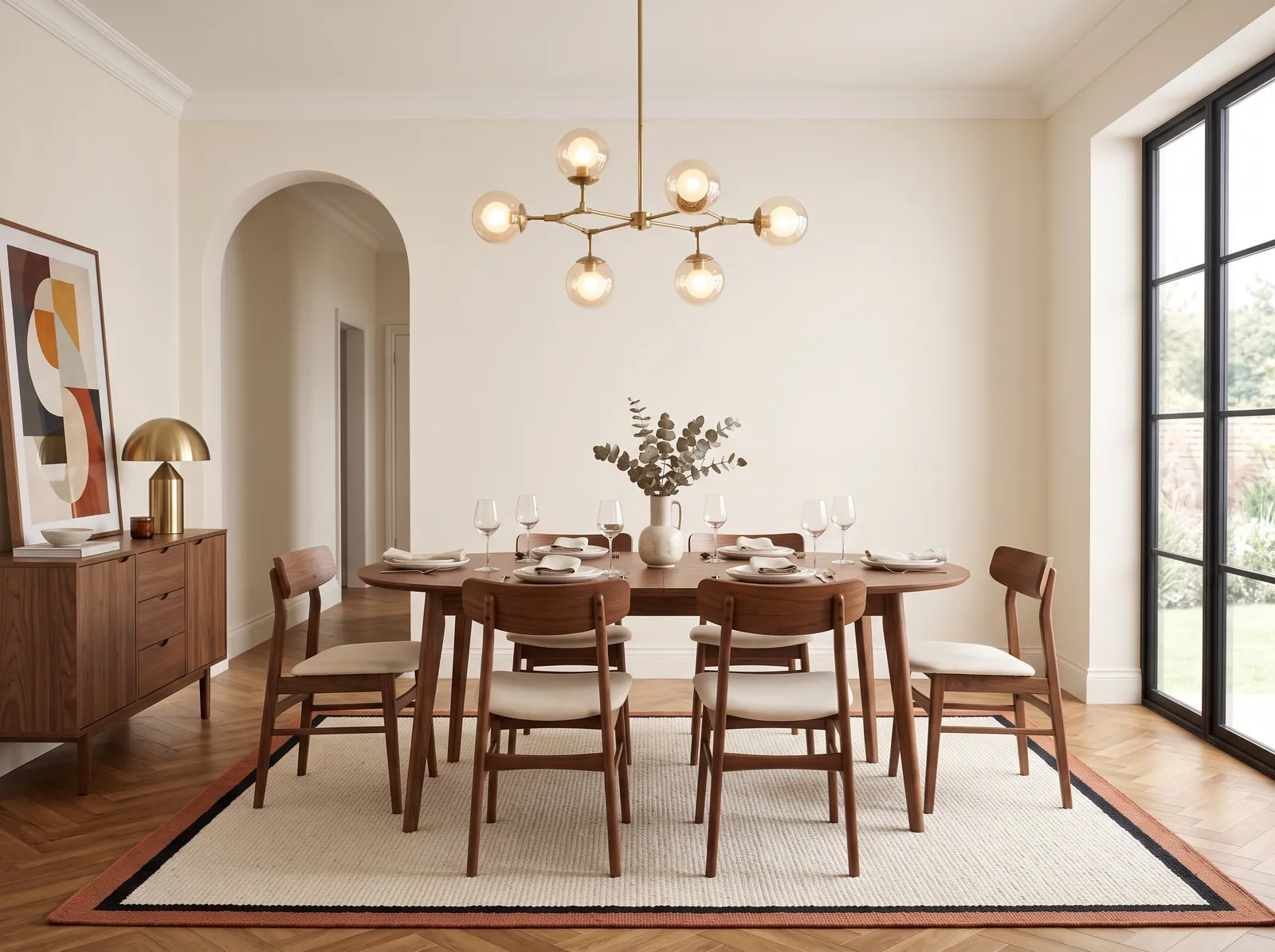
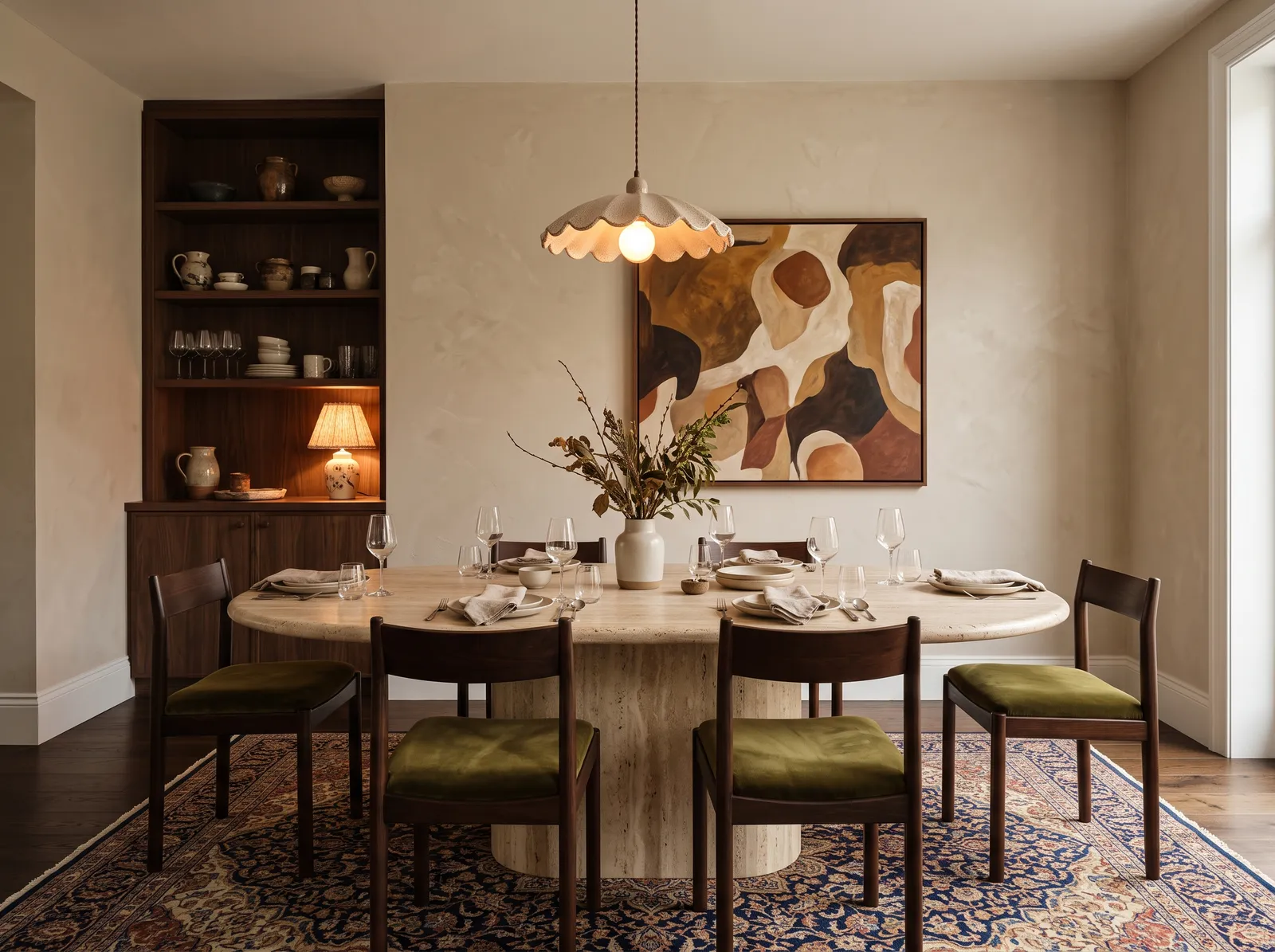
4 editor's picksPalettes for the Dining Room
Ready-made schemesFull, buyable color schemes built for the dining room — walls, trim, and accents matched to real paint.
All Dining Room Colors at Every Brand
126 colors · 5 familiesA representative color from every brand that makes this family — most-recognized brands first, with a second pick from the biggest names. Tap any swatch with a curated guide for full spec and cross-brand matches.
Browse by Family Hub
About Dining Room Paint Colors
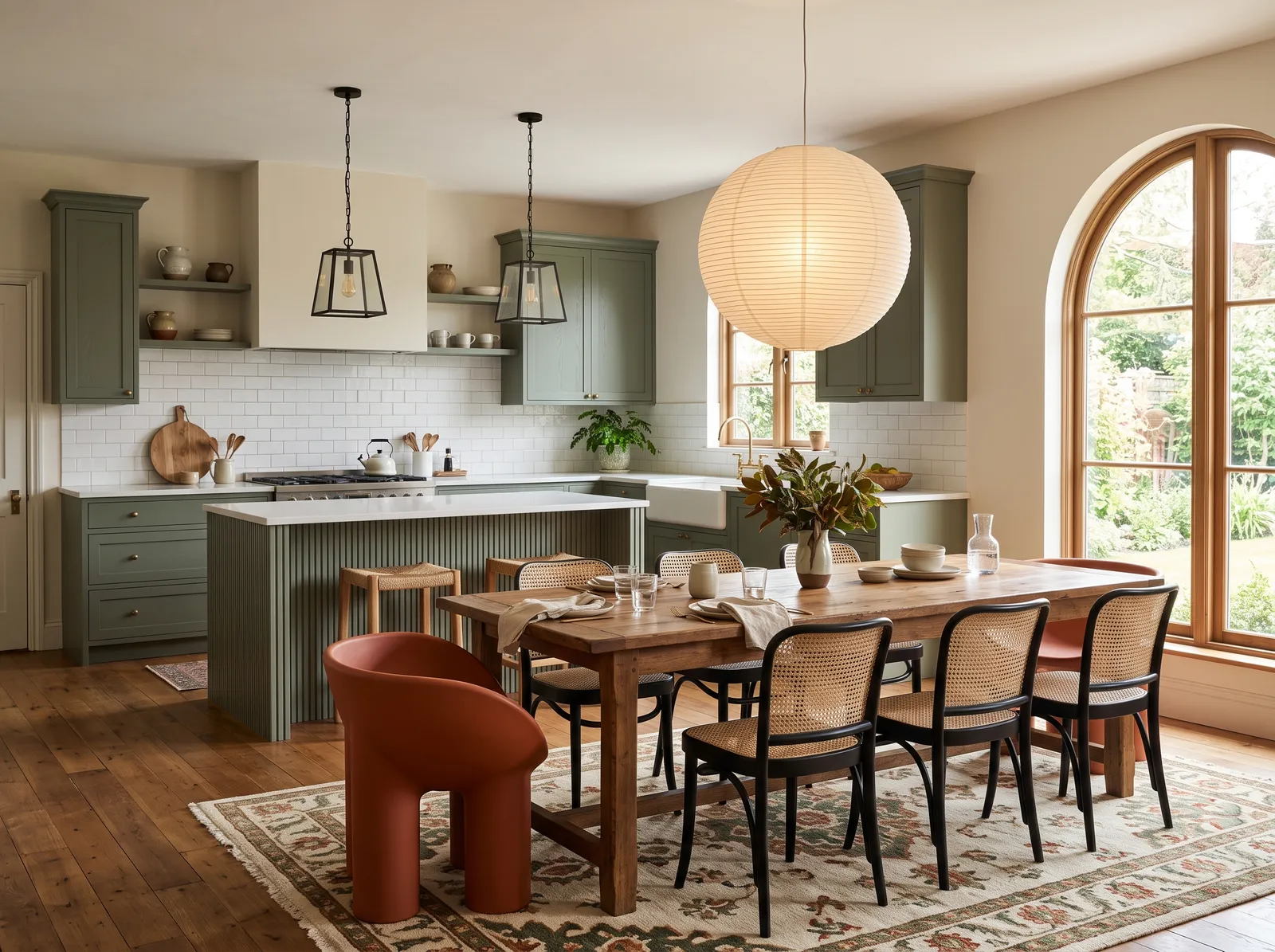
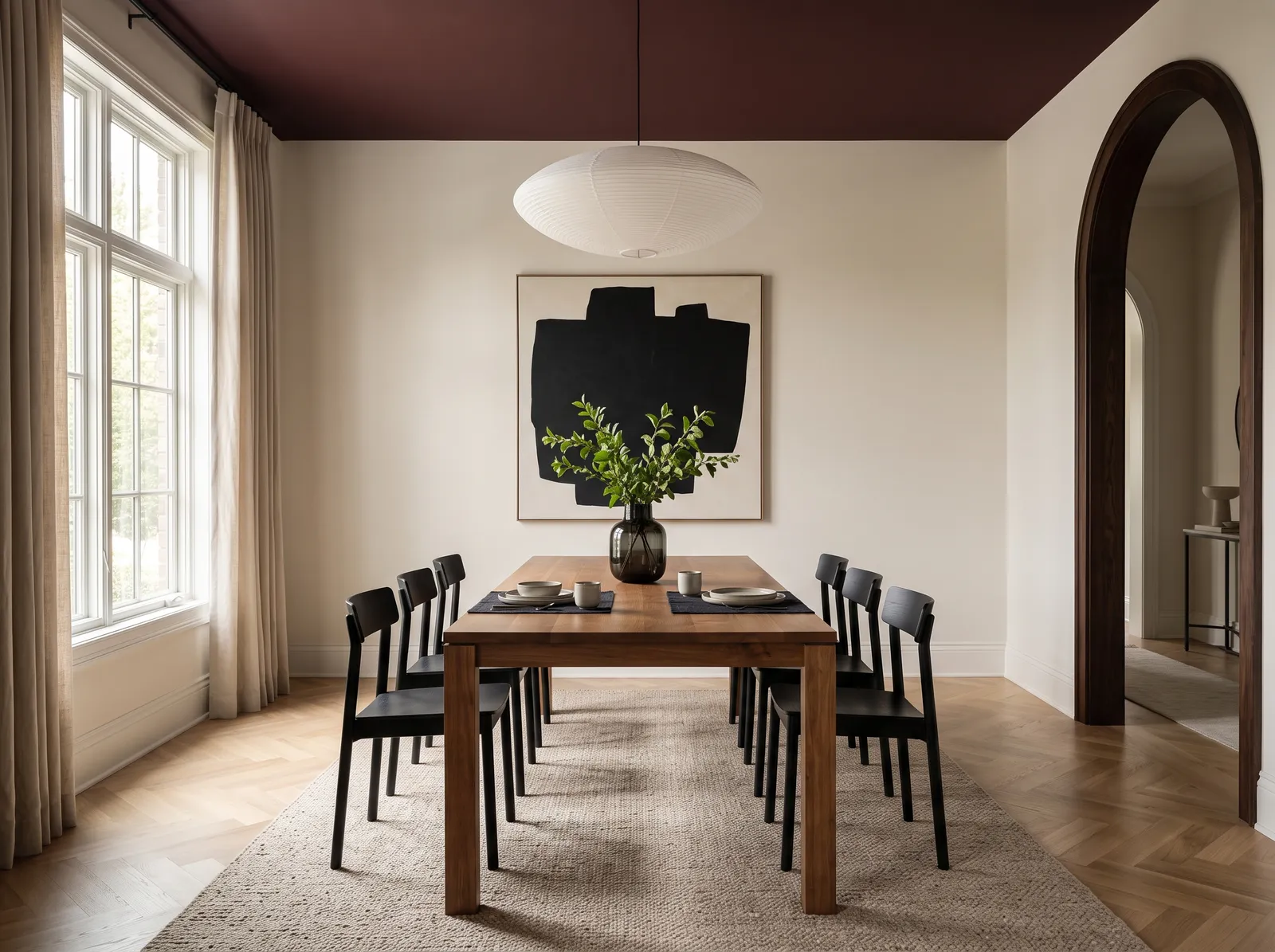
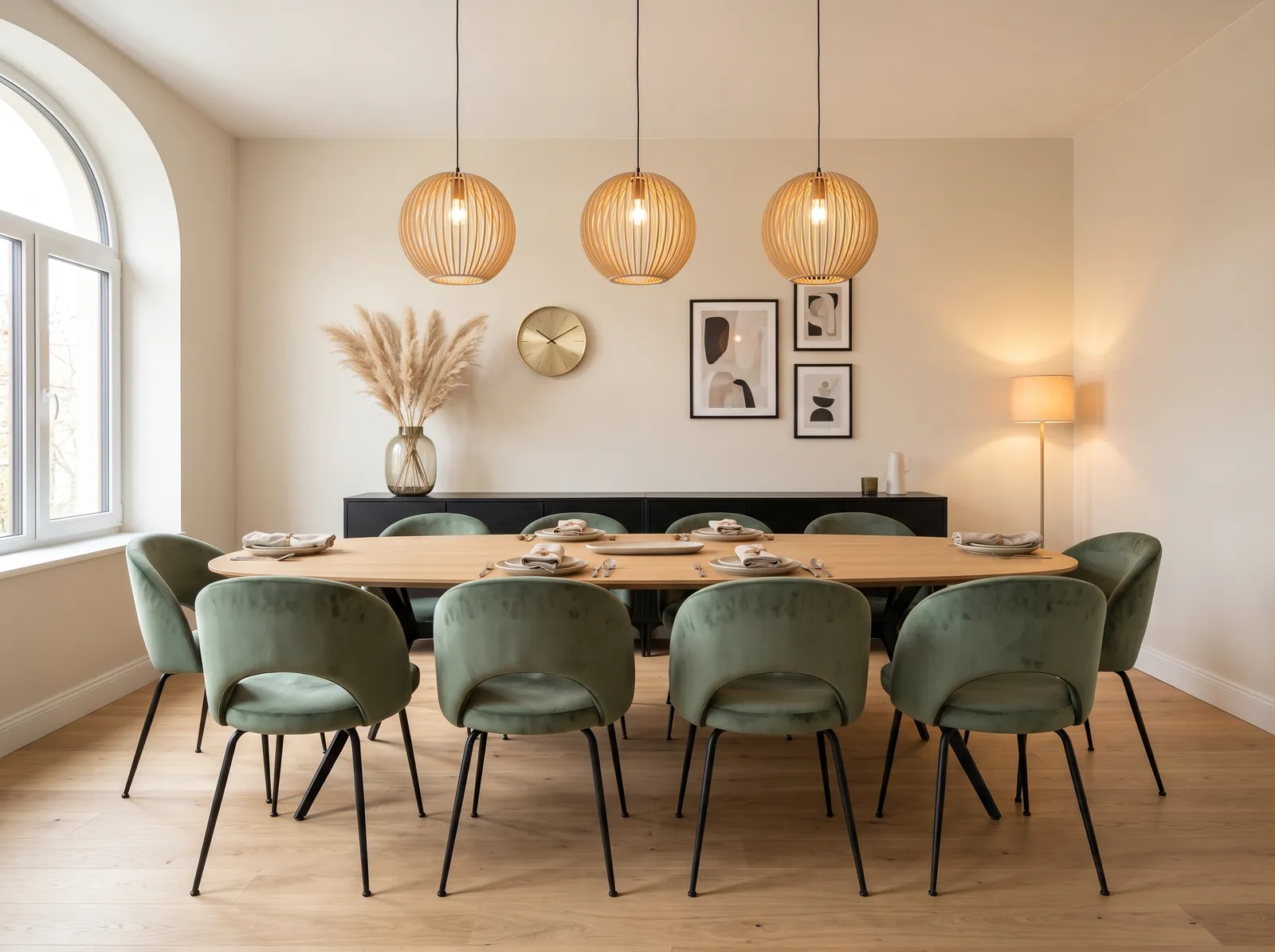
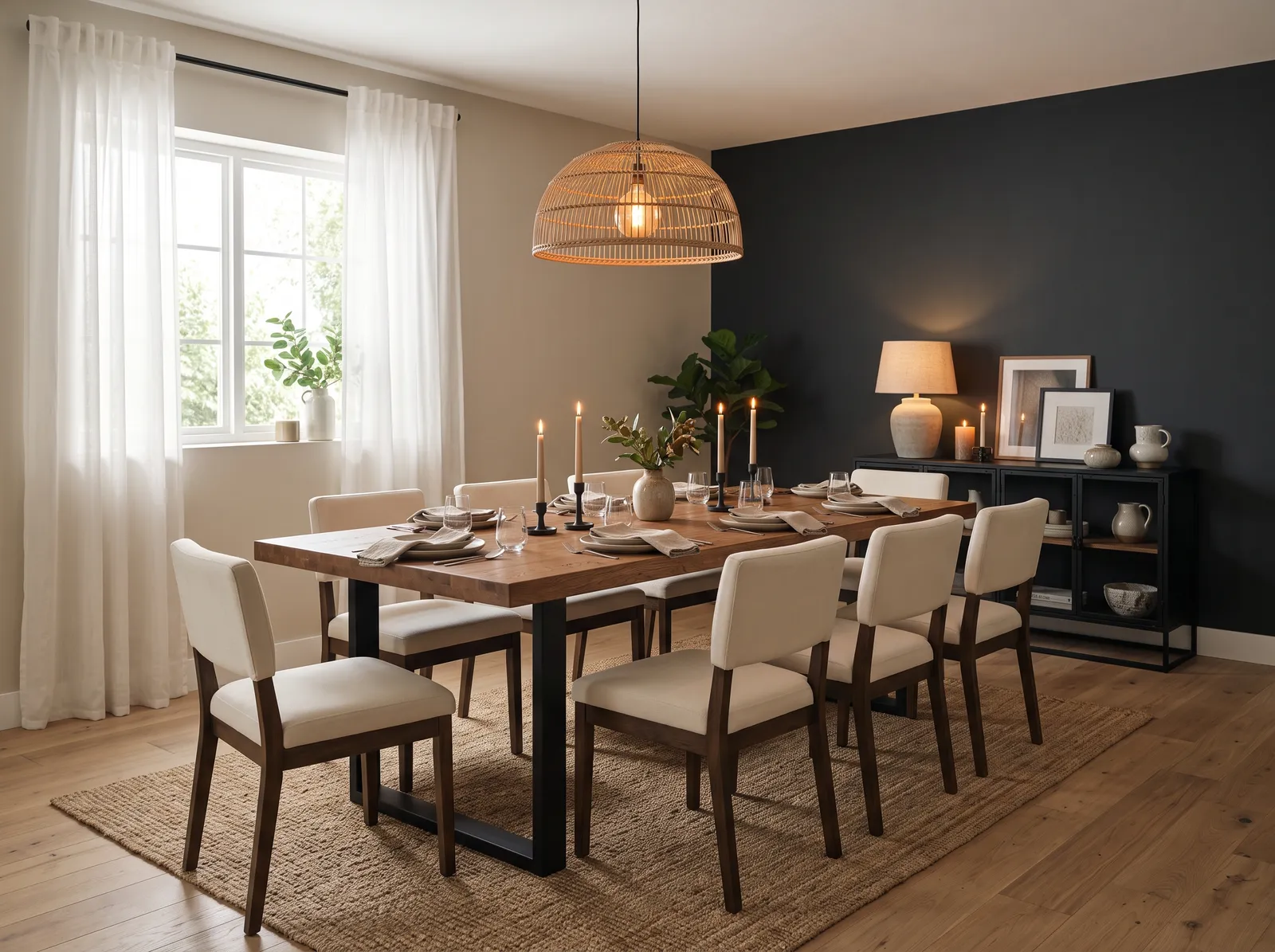
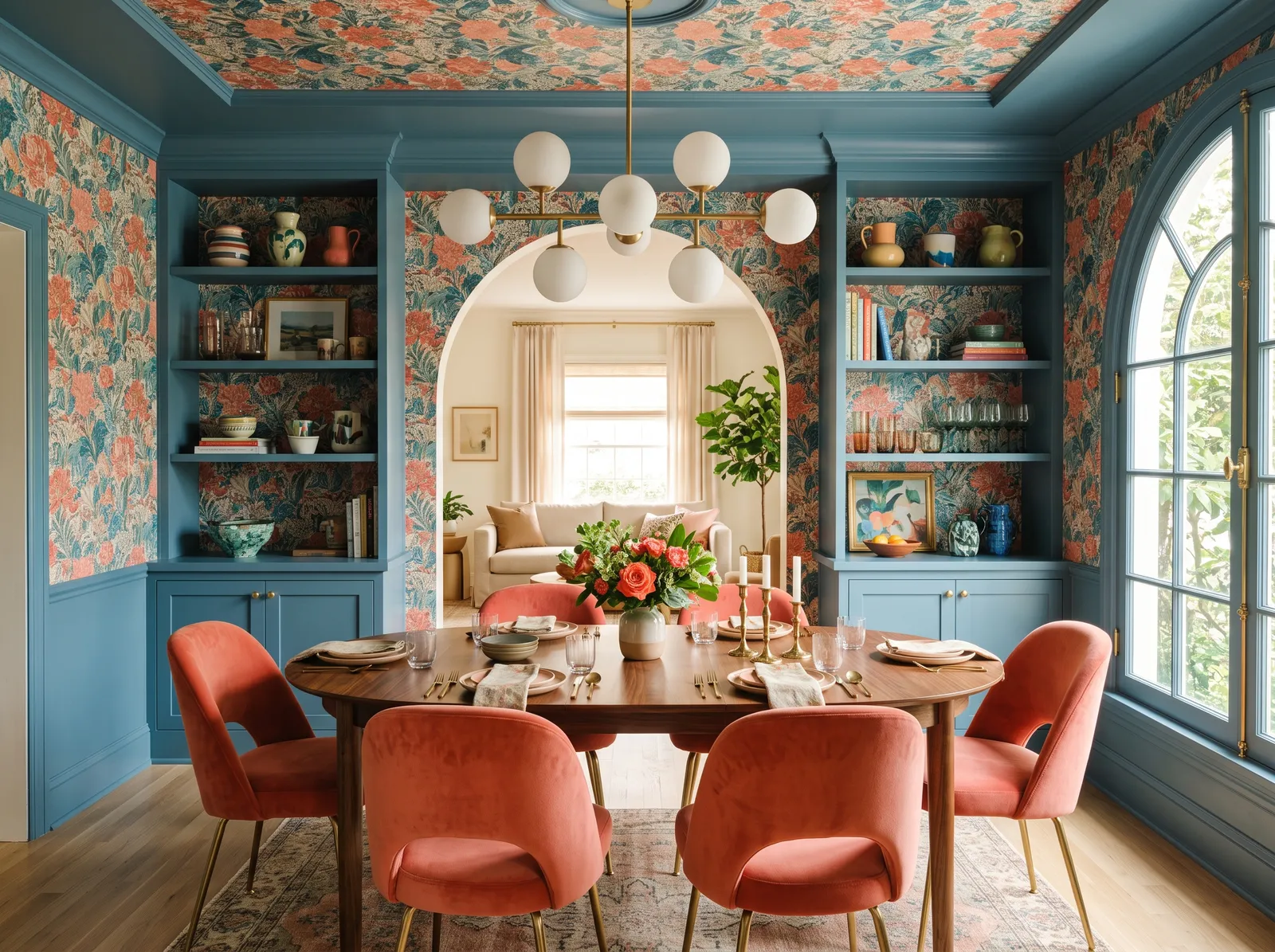
A dining room is one of the few spaces where you can paint bold and not regret it. You don't live in it all day, so a deep, saturated color reads as dramatic instead of overwhelming. It is also a room built for evening light, candles, lamps, and a meal around a table, which means rich colors get to do their best work after dark.
That is why the dining room is where blues, greens, reds, purples, and even black come into play. Colors like Hale Navy, Hunter Green, Burgundy, Oxblood, Hague Blue, and Eggplant all suit this room because they wrap the table in something warm and intentional. Lighter neutrals work too, but the dining room is your best chance to commit to a color with real depth.
Every color shown here is mixed to order at the paint counter, so you are never locked into one brand. If you fall for a shade from one company but prefer another brand's paint, a store can cross-match it closely. Pick the color you love first, then choose where to buy it.
The Best Color Directions For A Dining Room
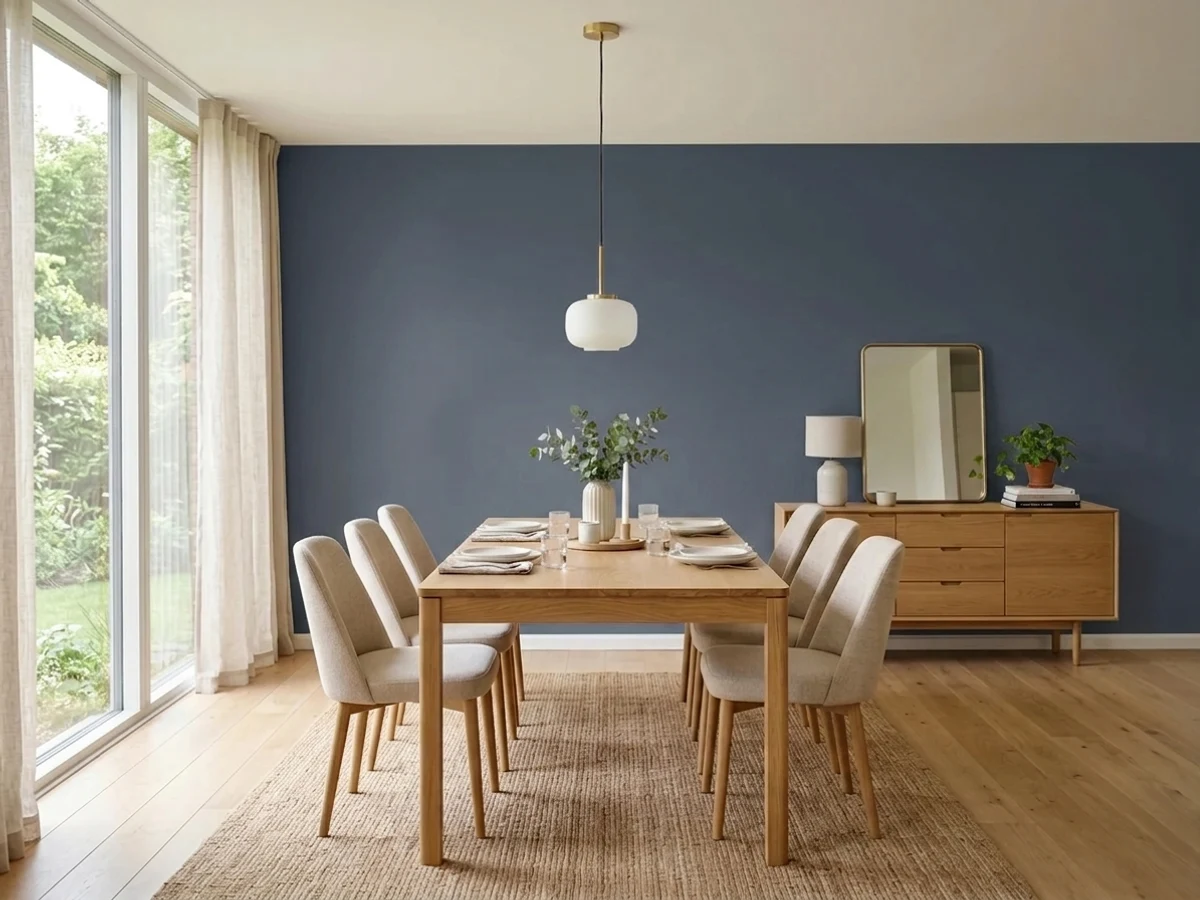
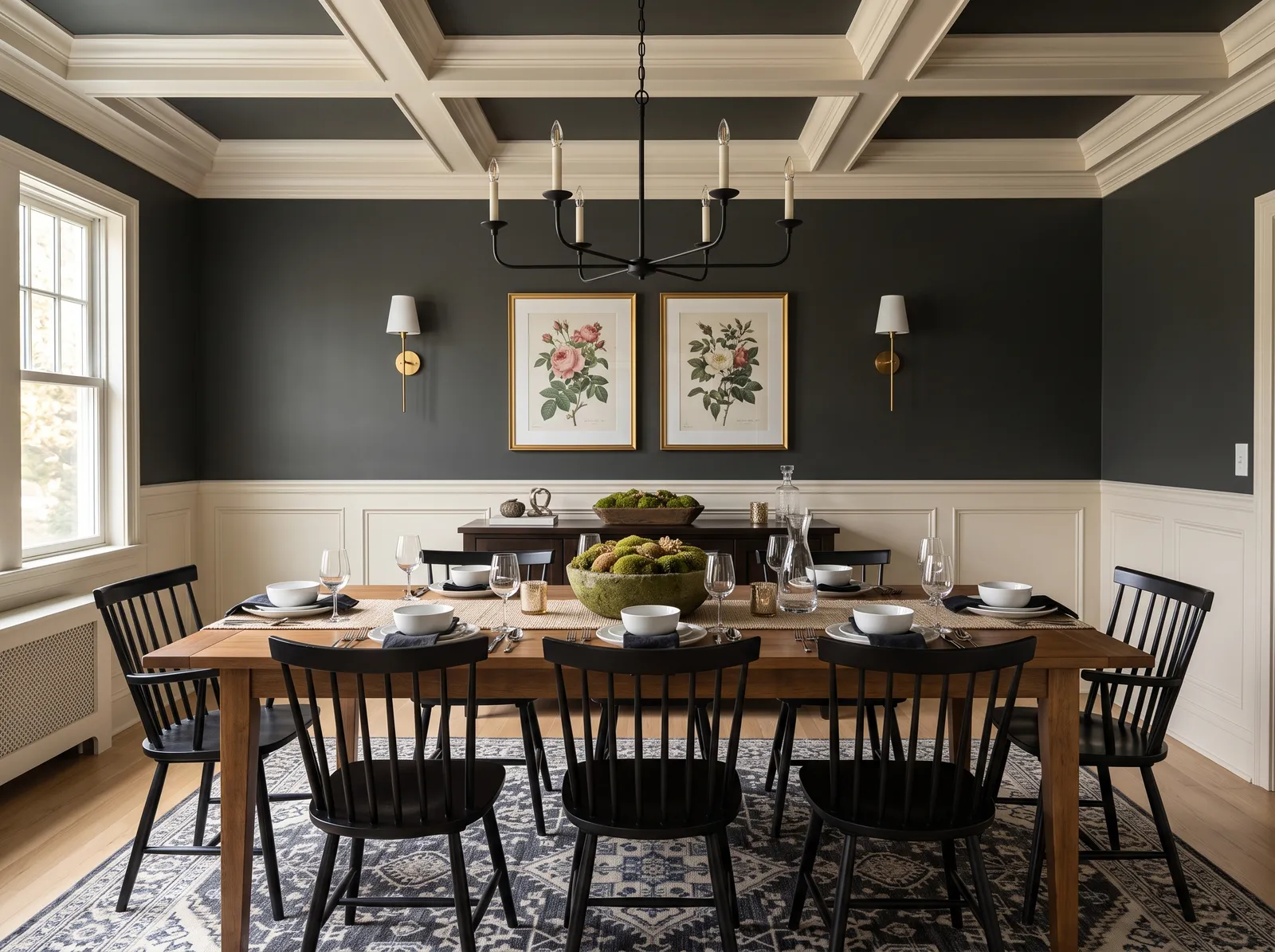
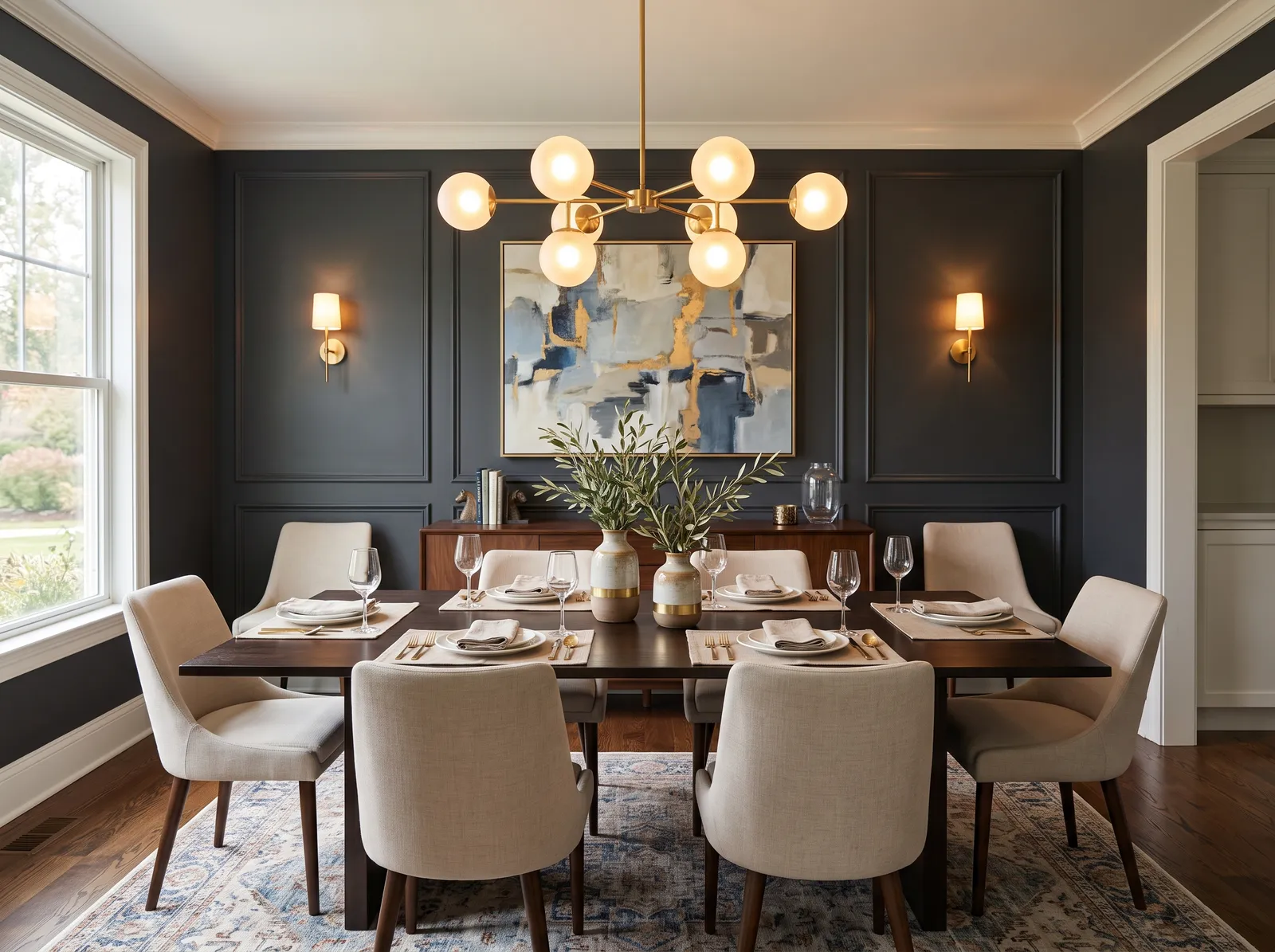
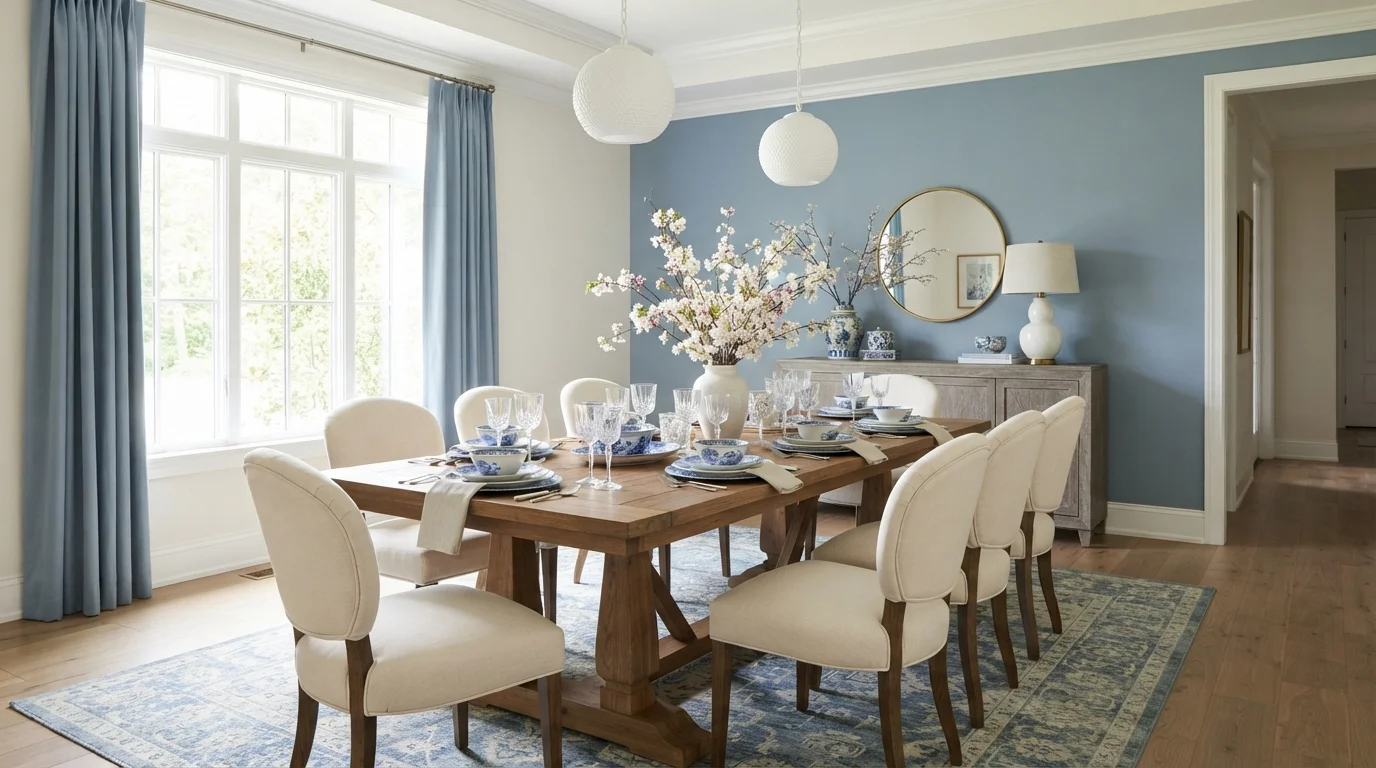
Deep blues like Hale Navy and Hague Blue are the easy win here. They feel calm and refined, they flatter wood furniture, and they look expensive without trying. At night, under warm light, a navy dining room glows.
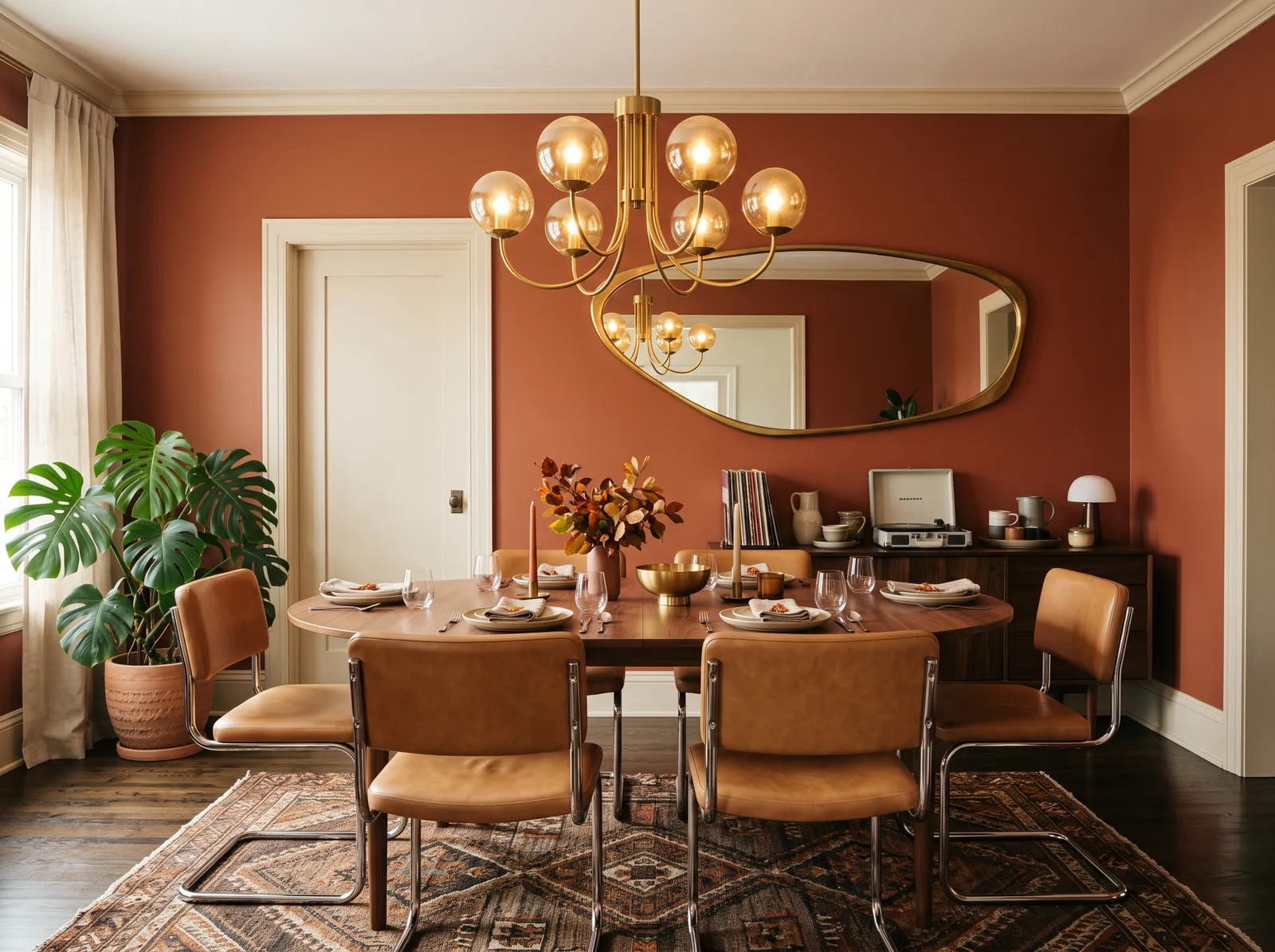
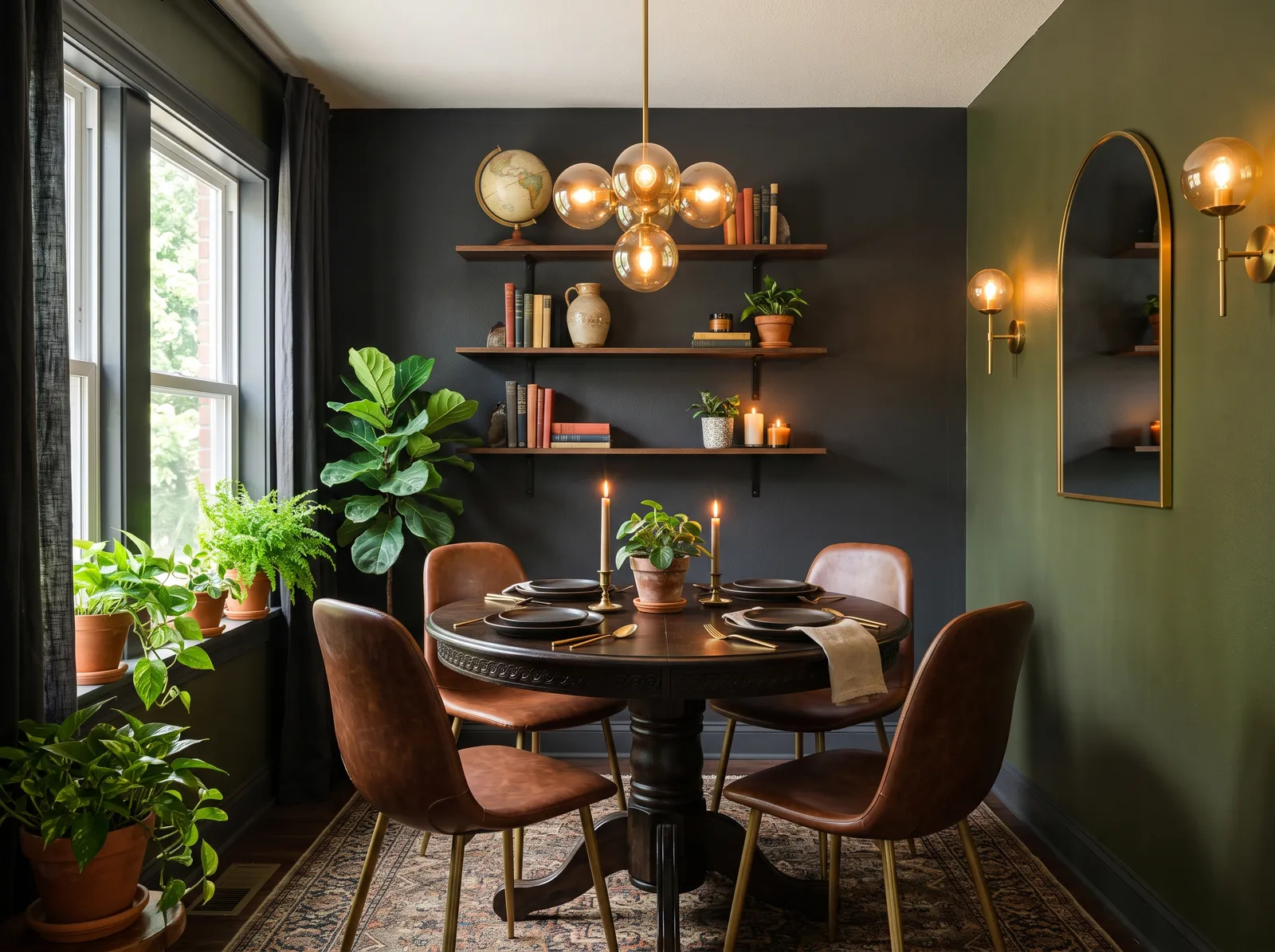
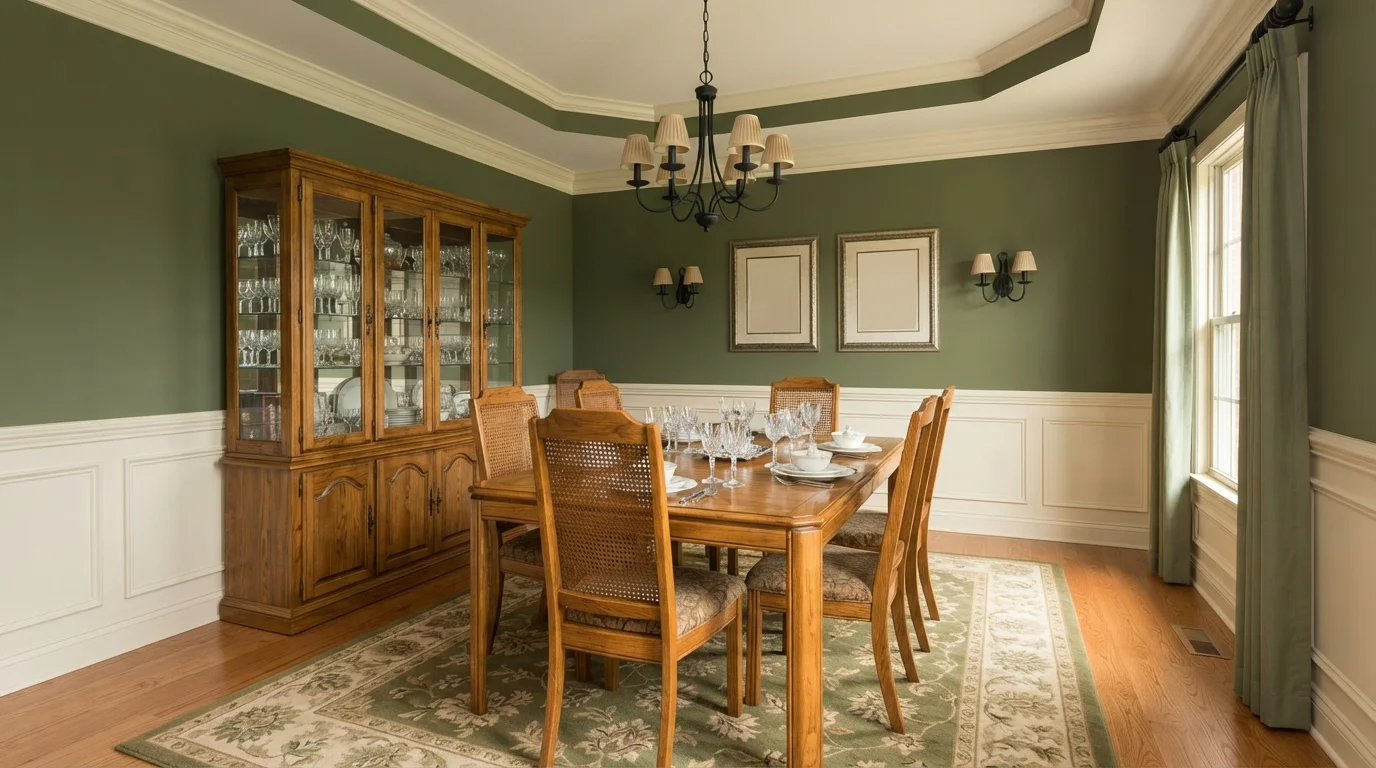
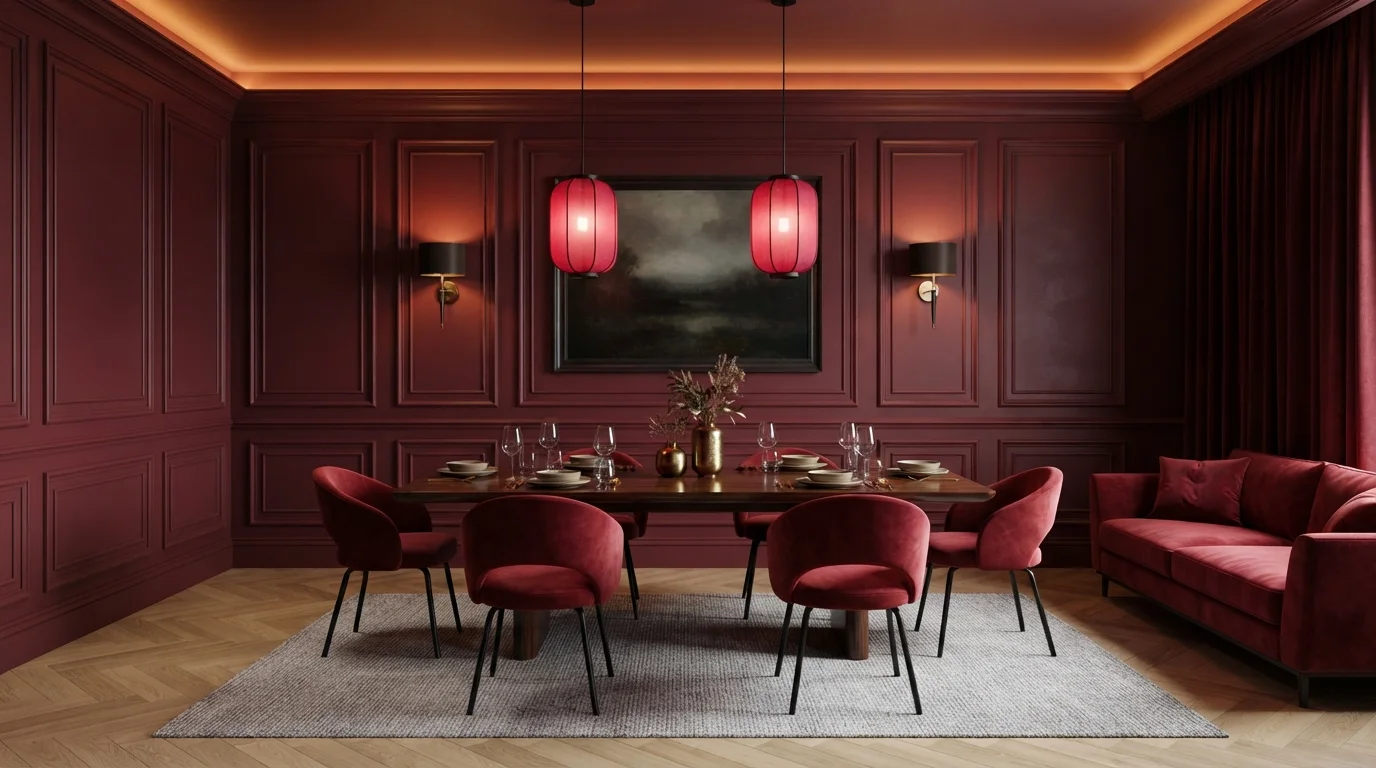
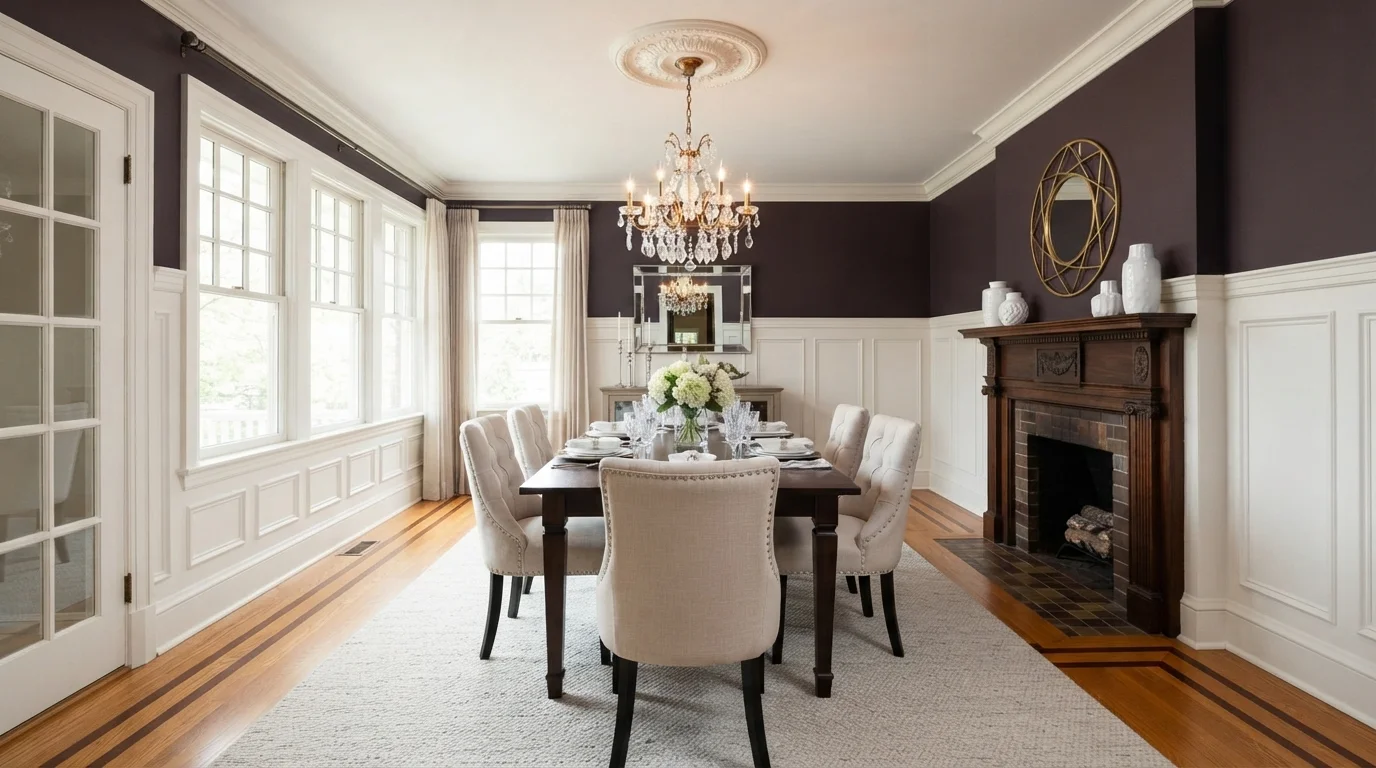
Greens and reds carry more energy. Hunter Green feels grounded and a little classic, almost like a library. Burgundy and Oxblood are appetite colors, warm and inviting, which is exactly why old dining rooms leaned red for generations. Eggplant and other purples split the difference, moody but soft.
Let The Room's Light Steer The Color
Dining rooms are often used most in the evening, so judge any color under the light you will actually eat by. A color that looks heavy at noon can look perfect at 7 p.m. with the lamps on. Always tape a sample to the wall and check it at night, not just in daylight.
North-facing rooms get cool, flat light, so warm reds like Burgundy or a green like Hunter Green keep things from feeling cold. South and west rooms get warm light that makes deep blues like Hale Navy and Hague Blue look their richest. If the room is dim, lean into it with a saturated color rather than fighting it with a pale shade that just looks gray.
Finish And Sheen That Make Sense Here
For dining room walls, eggshell or satin is the sweet spot. It wipes clean when a glass tips or fingers touch the wall, but it does not throw harsh glare across a long wall the way a glossier finish would. Matte looks beautiful on deep colors but is harder to clean, so save it for rooms that see less traffic.
Use a higher sheen on the trim, baseboards, and any wainscoting, usually semi-gloss. That contrast in finish gives the room a crisp, finished edge and protects the surfaces most likely to get bumped by chairs.
Using LRV To Set The Mood
LRV, or light reflectance value, tells you how light or dark a color reads, from near 0 for black to near 100 for white. Dining rooms are one place where a low LRV is a feature, not a problem. A deep color in the 5 to 20 range, like Hale Navy, Oxblood, or Eggplant, makes the room feel intimate and dressed up.
If your dining room is small or short on windows and you still want warmth without going fully dark, look at mid-range colors instead. A lighter green or blue keeps the cozy feel while bouncing more light around the table.
Pairing With Trim, Ceiling, And Furniture
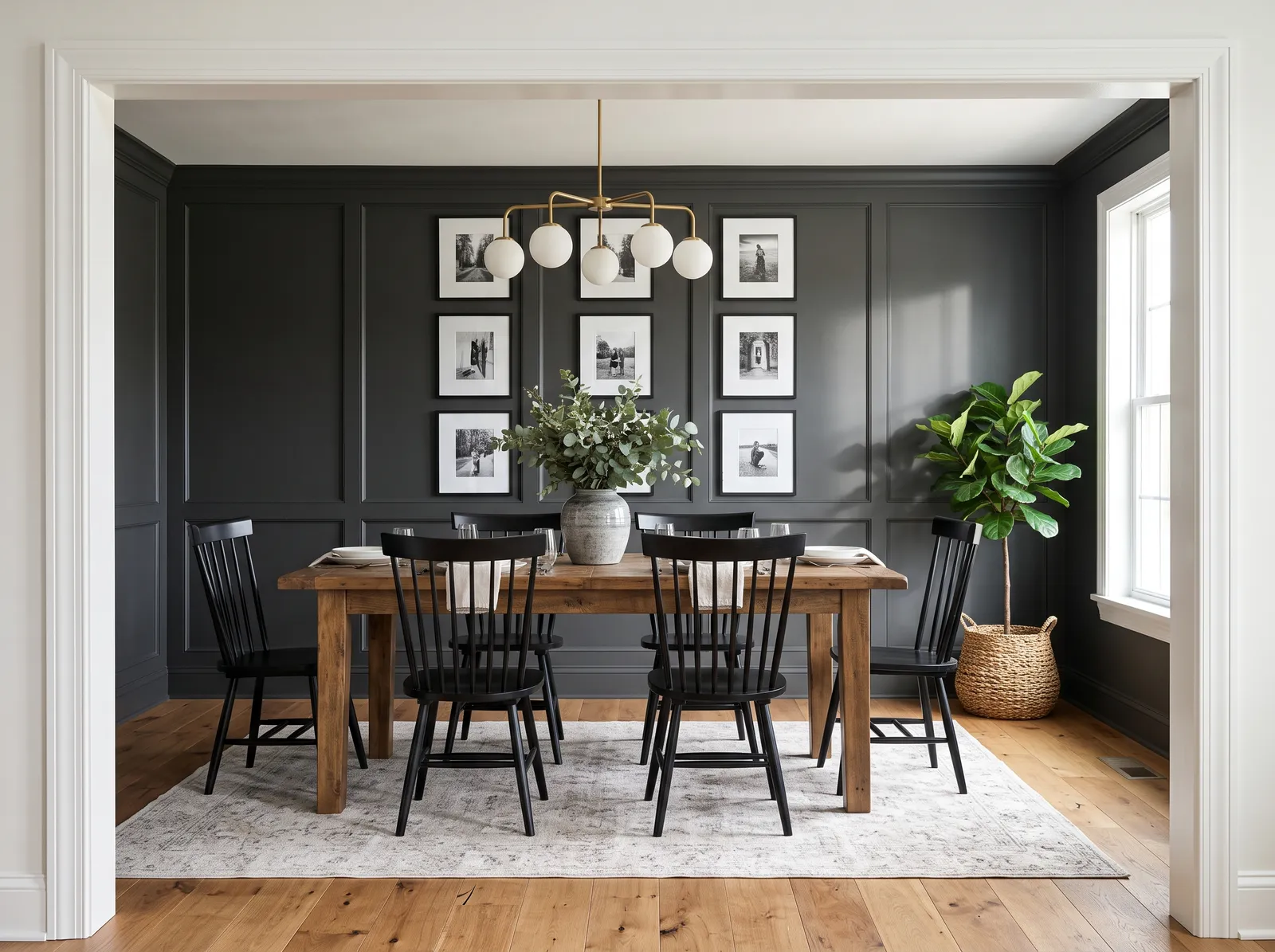
A crisp white trim is the safest partner for any deep dining room color, and it keeps Hale Navy or Hunter Green from feeling too sealed-in. For a softer, more enveloping look, paint the trim the same color as the walls so the room reads as one quiet shell. A warm white ceiling usually beats stark white over a rich wall color.
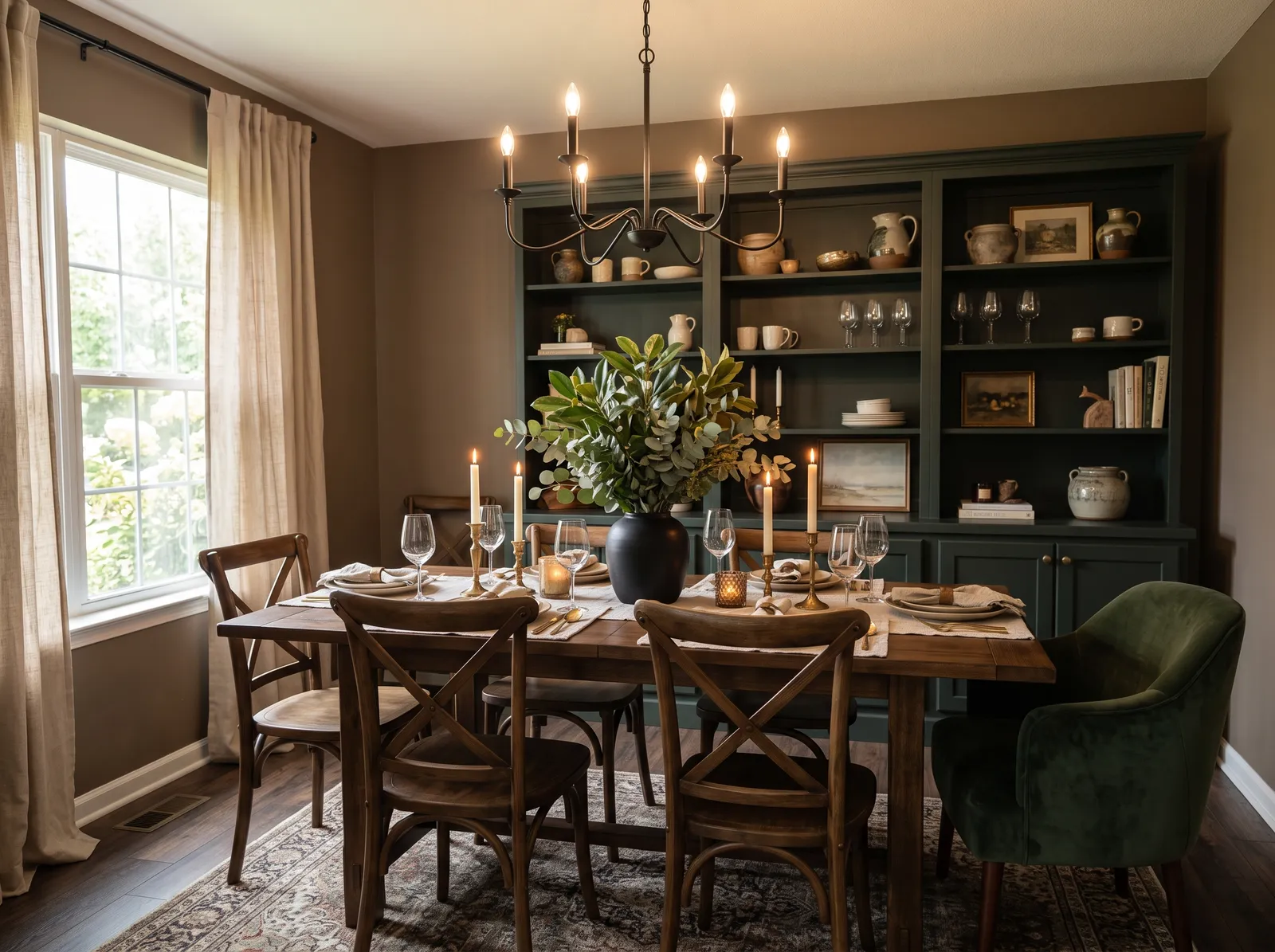
Deep colors love wood. Burgundy and Oxblood flatter walnut and warm-toned floors, while Hague Blue and Eggplant pair well with brass or gold fixtures and lighting. If your floor is cool gray, a blue keeps the room harmonious; a warm wood floor opens the door to greens and reds.
Common Dining Room Color Mistakes
The biggest mistake is being too timid. People pick a pale neutral out of caution, then end up with a forgettable room that the bold dining table deserved better than. The dining room is the room to commit.
The second mistake is skipping the nighttime test. A deep color judged only in daylight can surprise you under warm bulbs. Also watch your finish: too glossy and a long wall turns into a mirror of glare, too flat and you cannot wipe off a splash from dinner.
Dining Room Paint Colors — Frequently Asked Questions
What is the best paint color for a dining room?+
There is no single best, but deep, rich colors suit this room better than almost any other. Navy blues like Hale Navy and Hague Blue, greens like Hunter Green, and warm reds like Burgundy and Oxblood all create the cozy, dressed-up feel a dining room is made for. Since the room is mostly used in the evening, a saturated color usually beats a pale one.
Are dark colors a good idea in a dining room?+
Yes, the dining room is one of the best places for a dark color. You do not spend all day in it, so a deep shade reads as dramatic and intimate rather than gloomy. Colors like Oxblood, Eggplant, or Hale Navy turn an ordinary room into something that feels special for dinner.
What sheen should I use on dining room walls?+
Eggshell or satin is ideal. It cleans up after spills and fingerprints but does not throw harsh glare across the walls. Use semi-gloss on trim and baseboards for durability and a crisp edge.
How do I keep a dark dining room from feeling too closed in?+
Use crisp white trim and a warm white ceiling to give the eye some relief, and make sure your lighting is warm and layered with lamps or a dimmer. If you still want it lighter, choose a mid-range color instead of a very low LRV one. Often, though, the cozy enclosed feel is exactly what works in a dining room.
Should I match my dining room color to my kitchen?+
They should relate, not necessarily match. If the rooms are open to each other, pick colors that share an undertone so they flow. If the dining room is its own space, you are free to go bolder and darker than the kitchen.
Can I get the same color in a different paint brand?+
Yes. Every color here is mixed to order at the paint counter, and stores can cross-match a shade closely from one brand to another. Choose the color you love first, then pick the brand or store you prefer to buy it from.
What flooring works with a deep dining room color?+
Warm wood floors pair beautifully with reds and greens like Burgundy and Hunter Green. Cool gray floors sit more naturally with blues like Hague Blue and Hale Navy. Brass and gold fixtures flatter blues and purples like Eggplant.