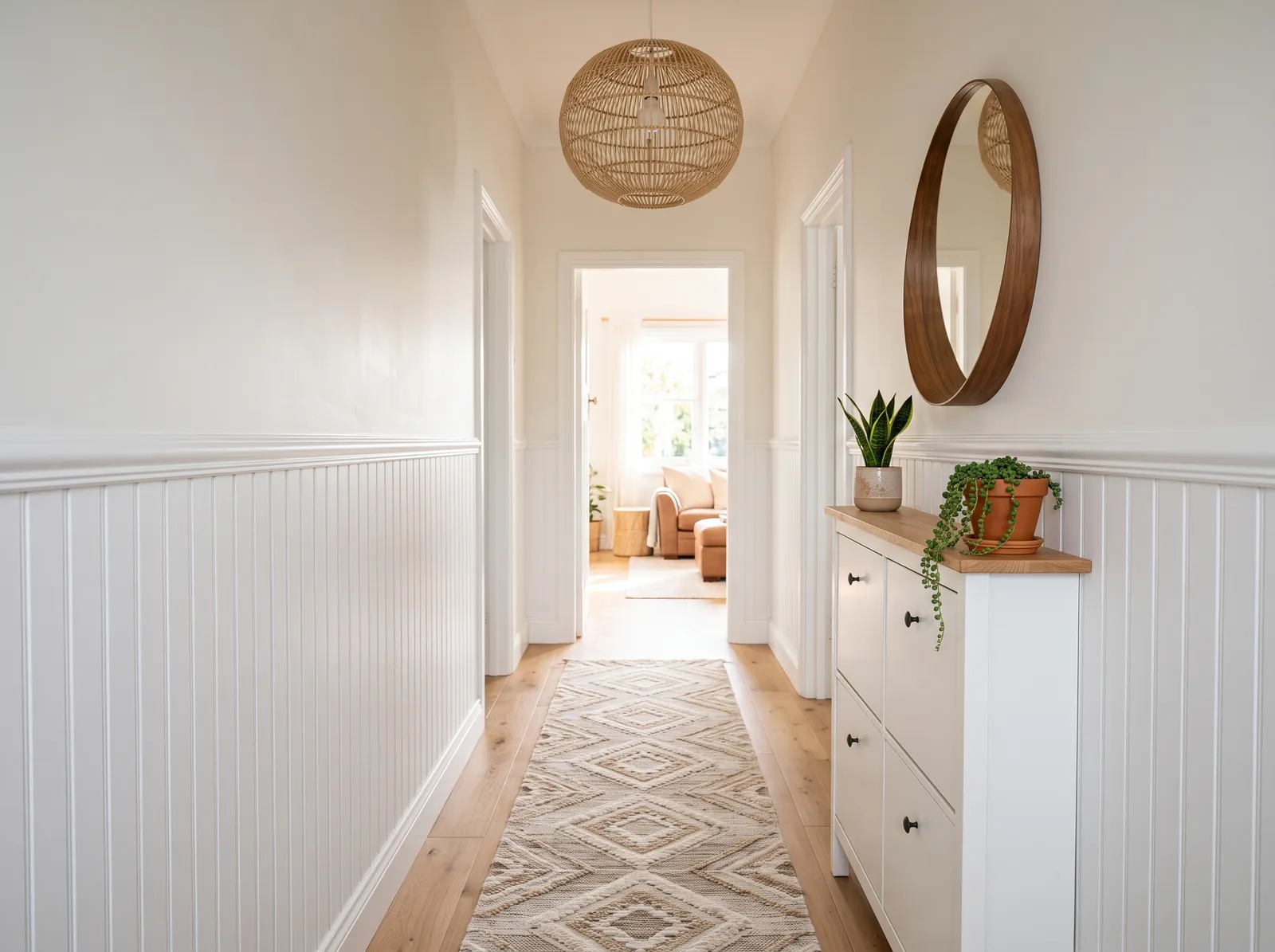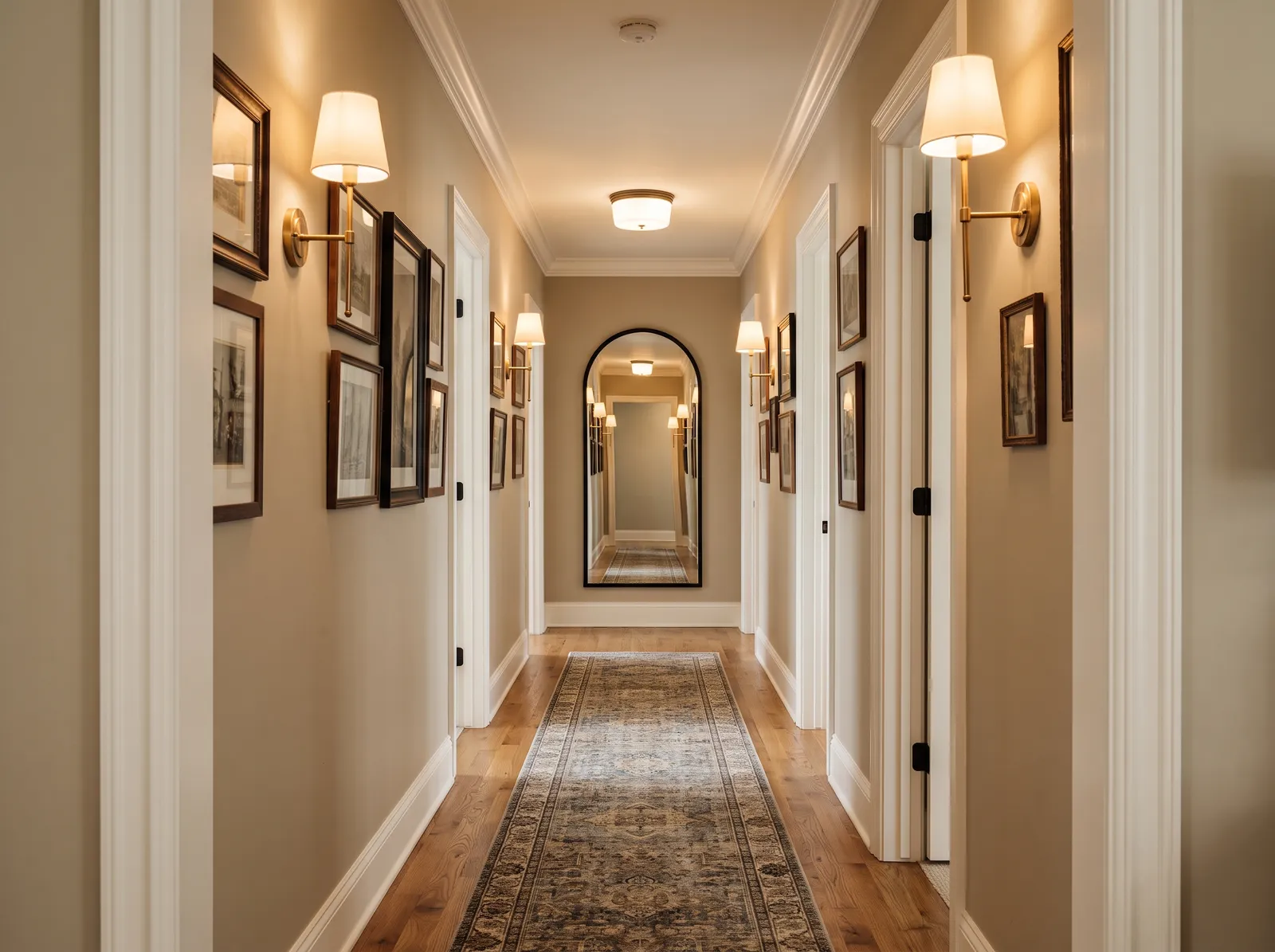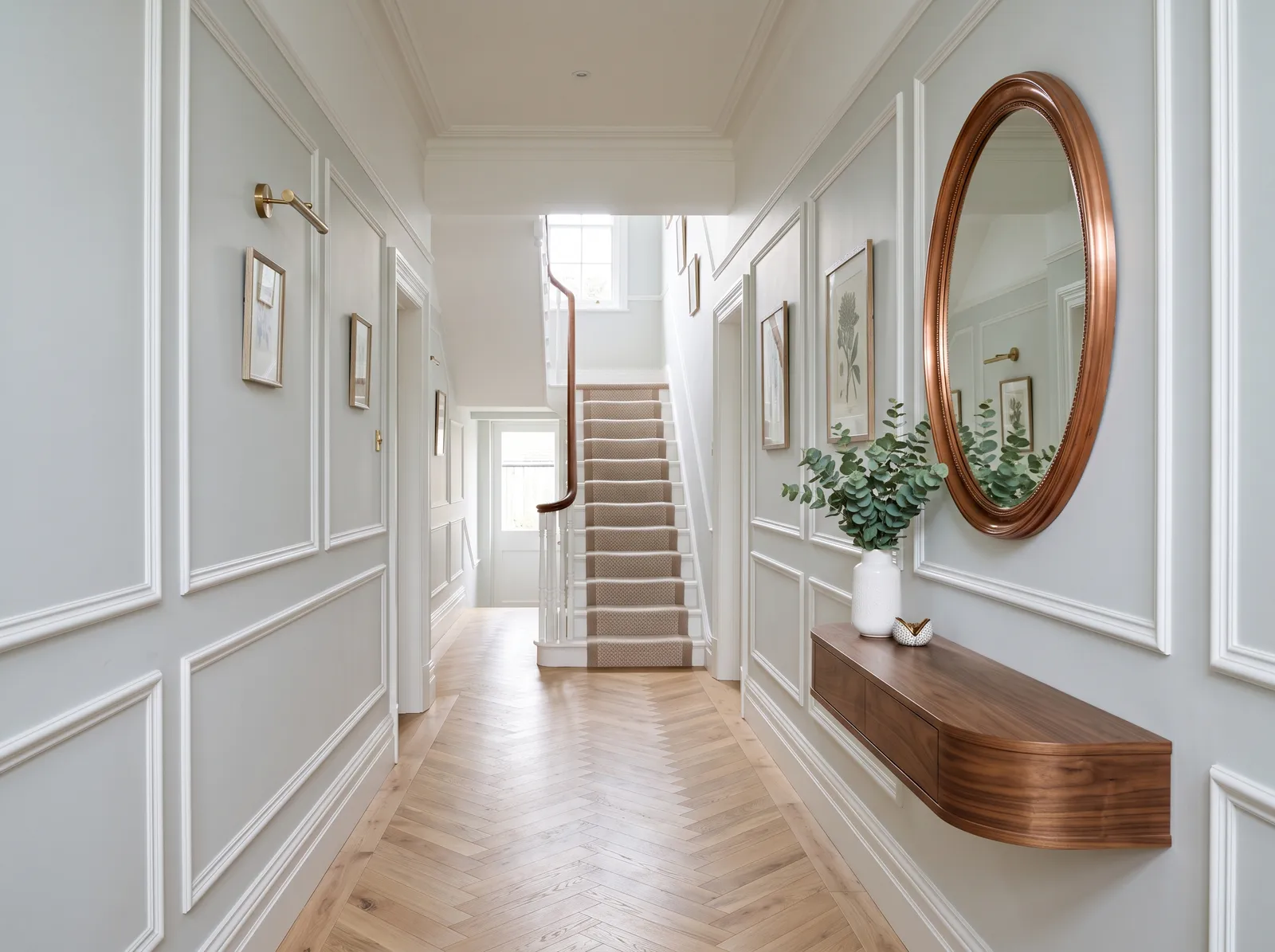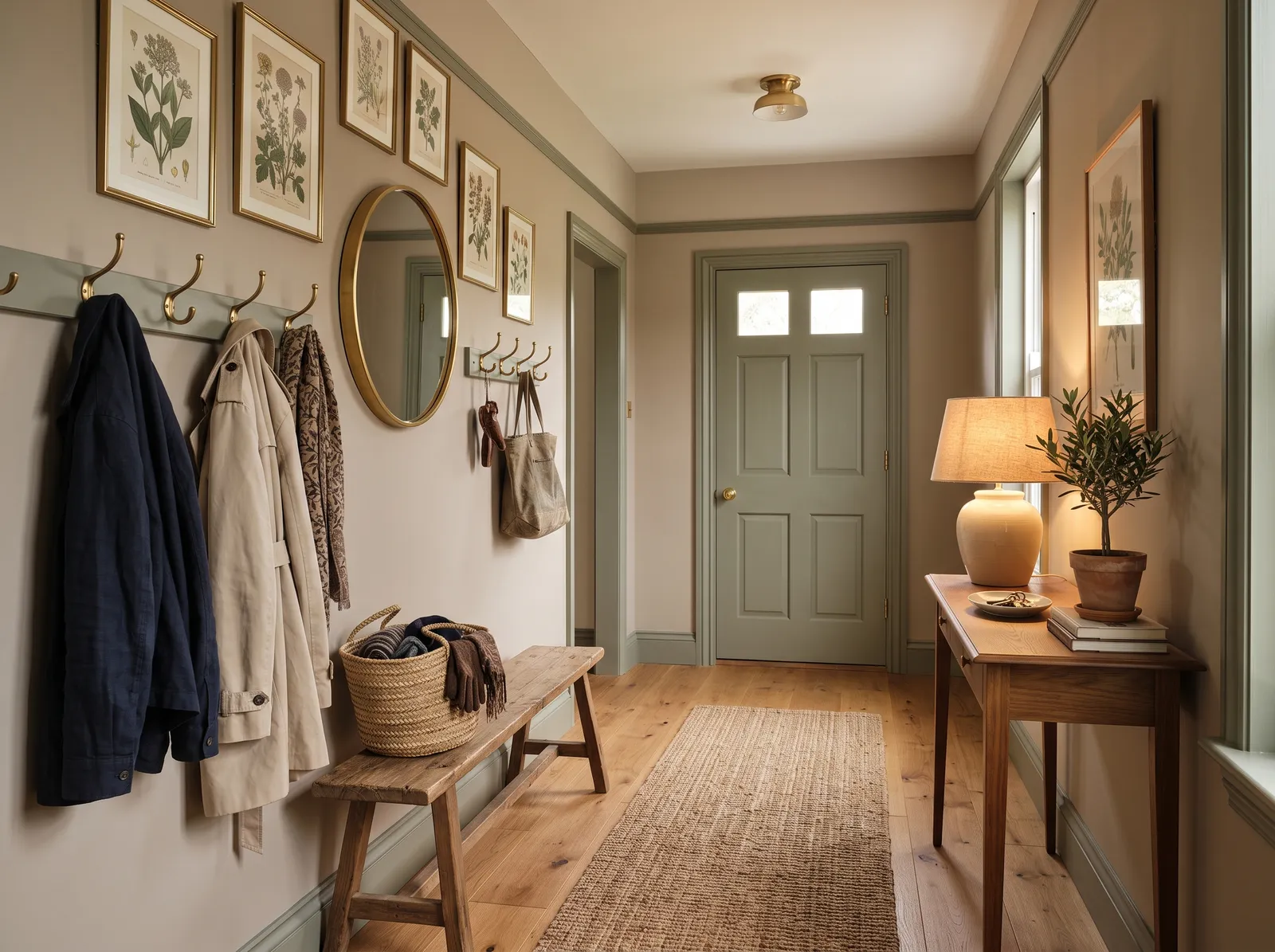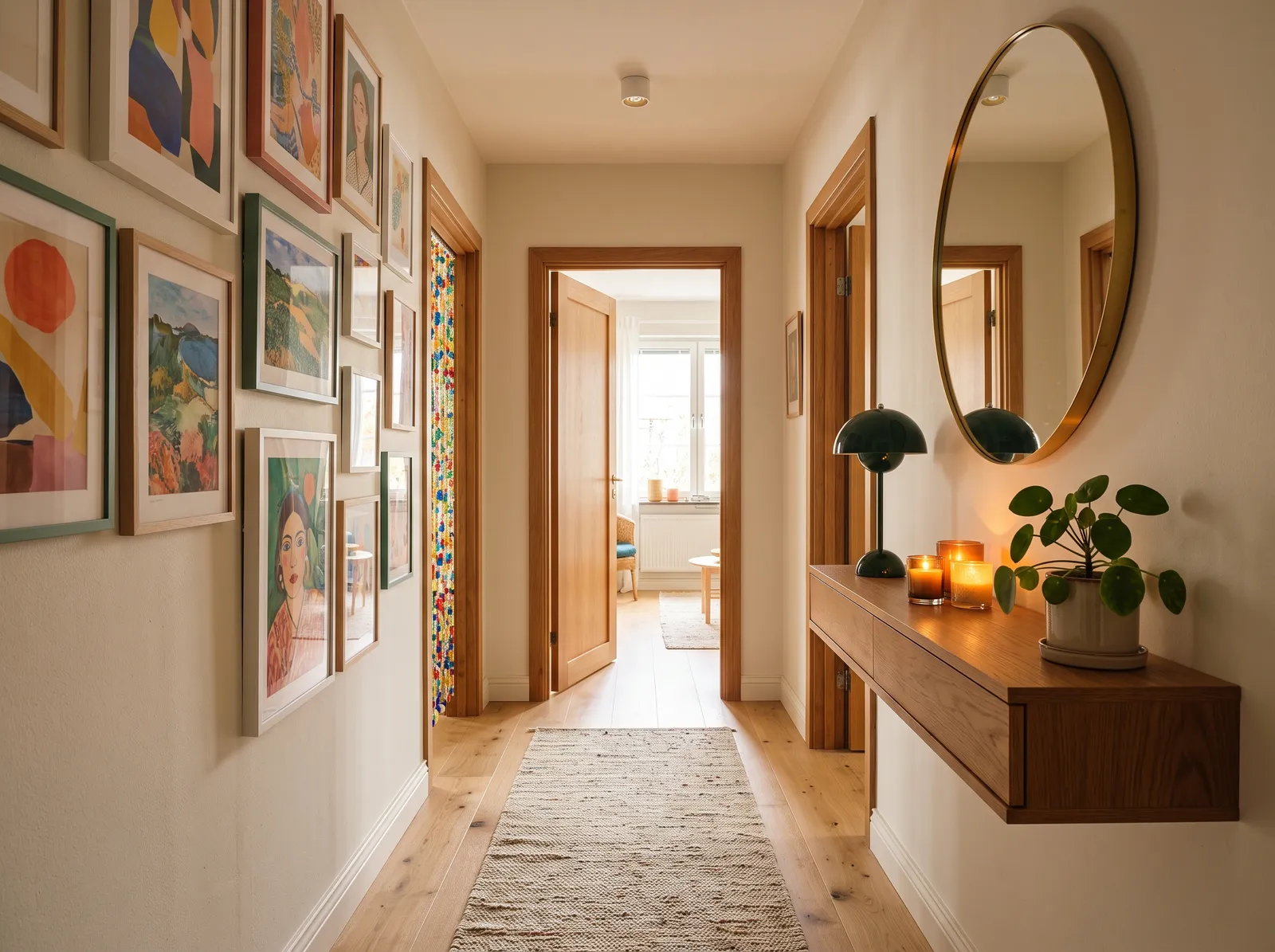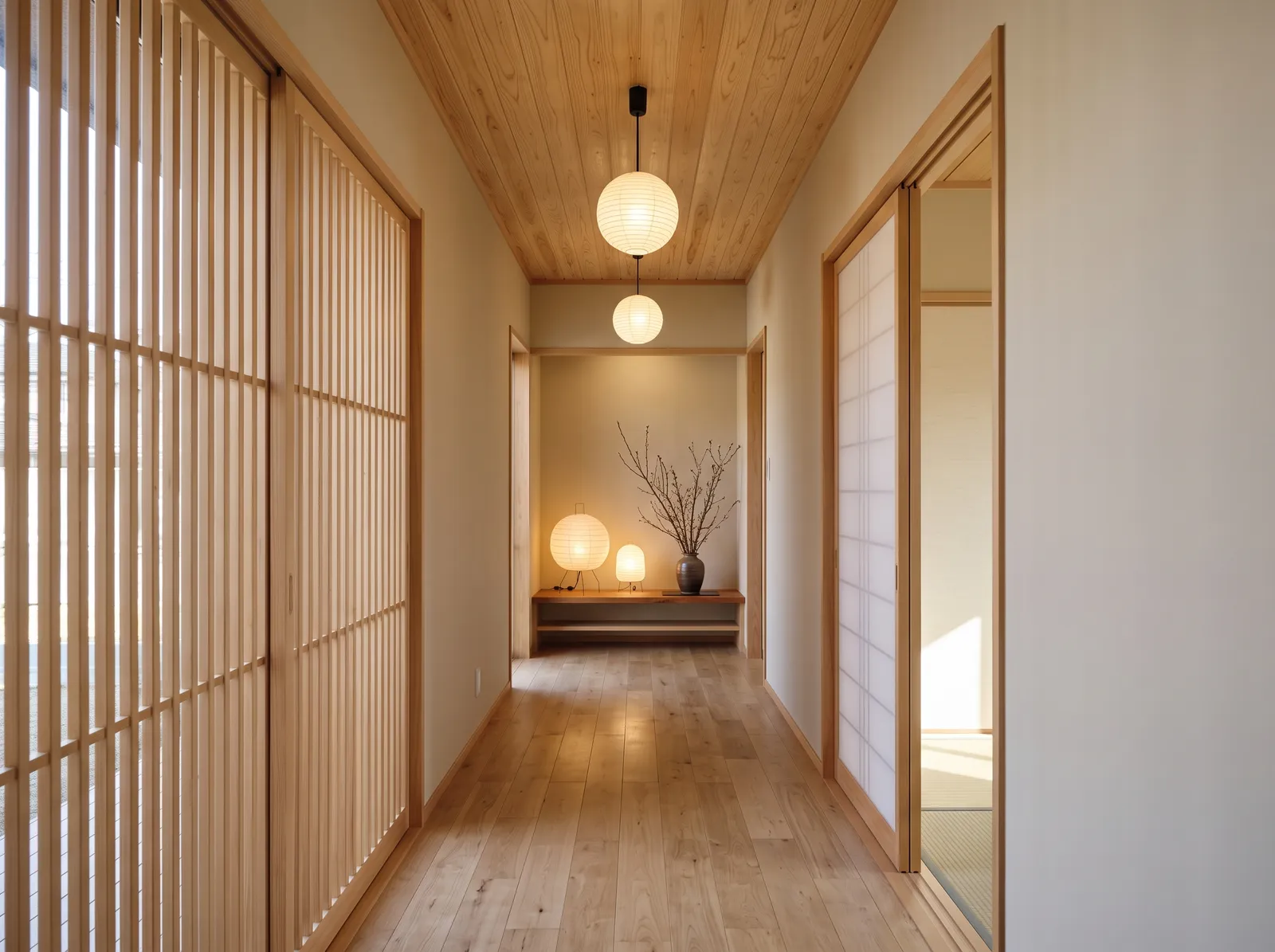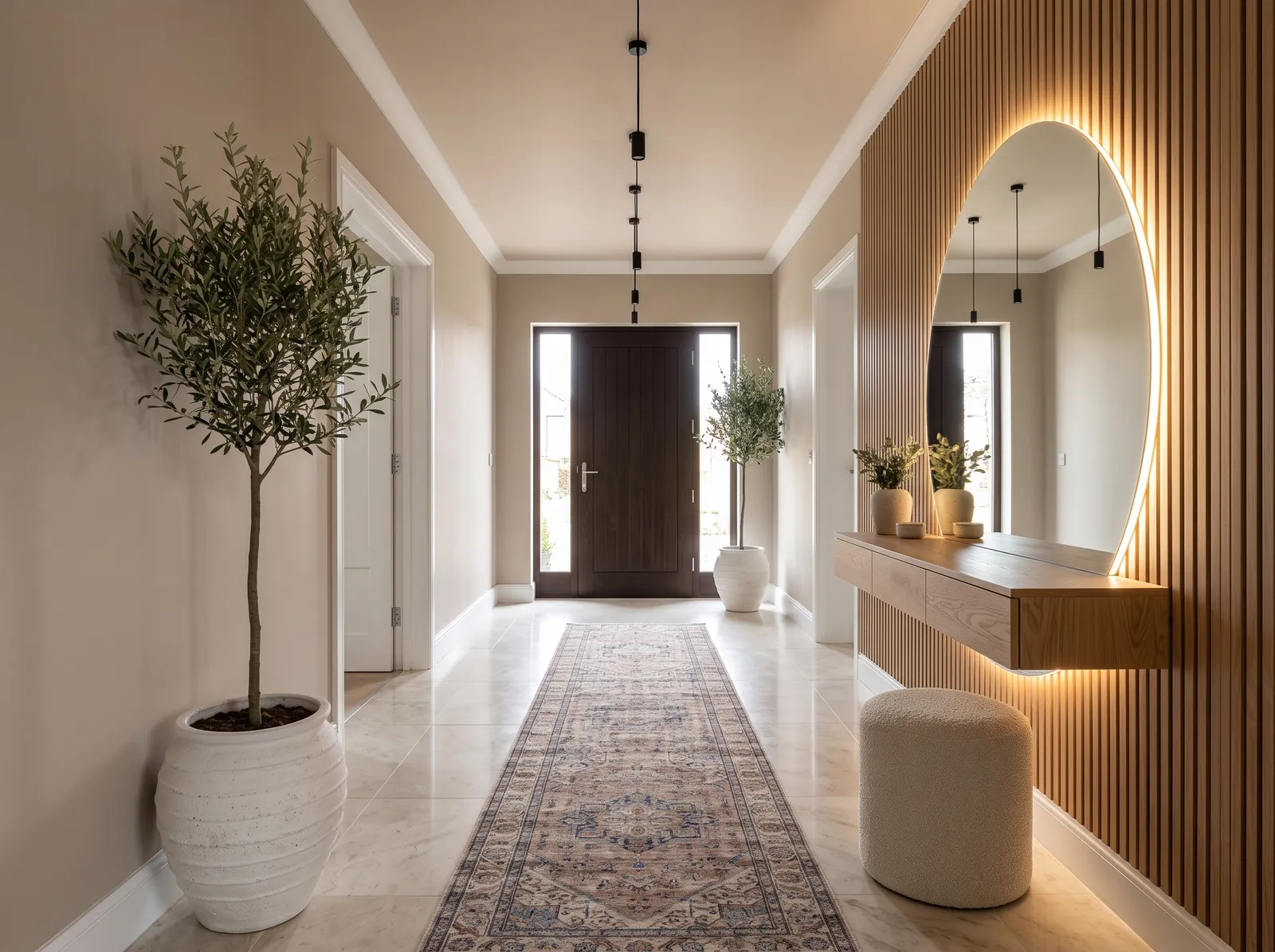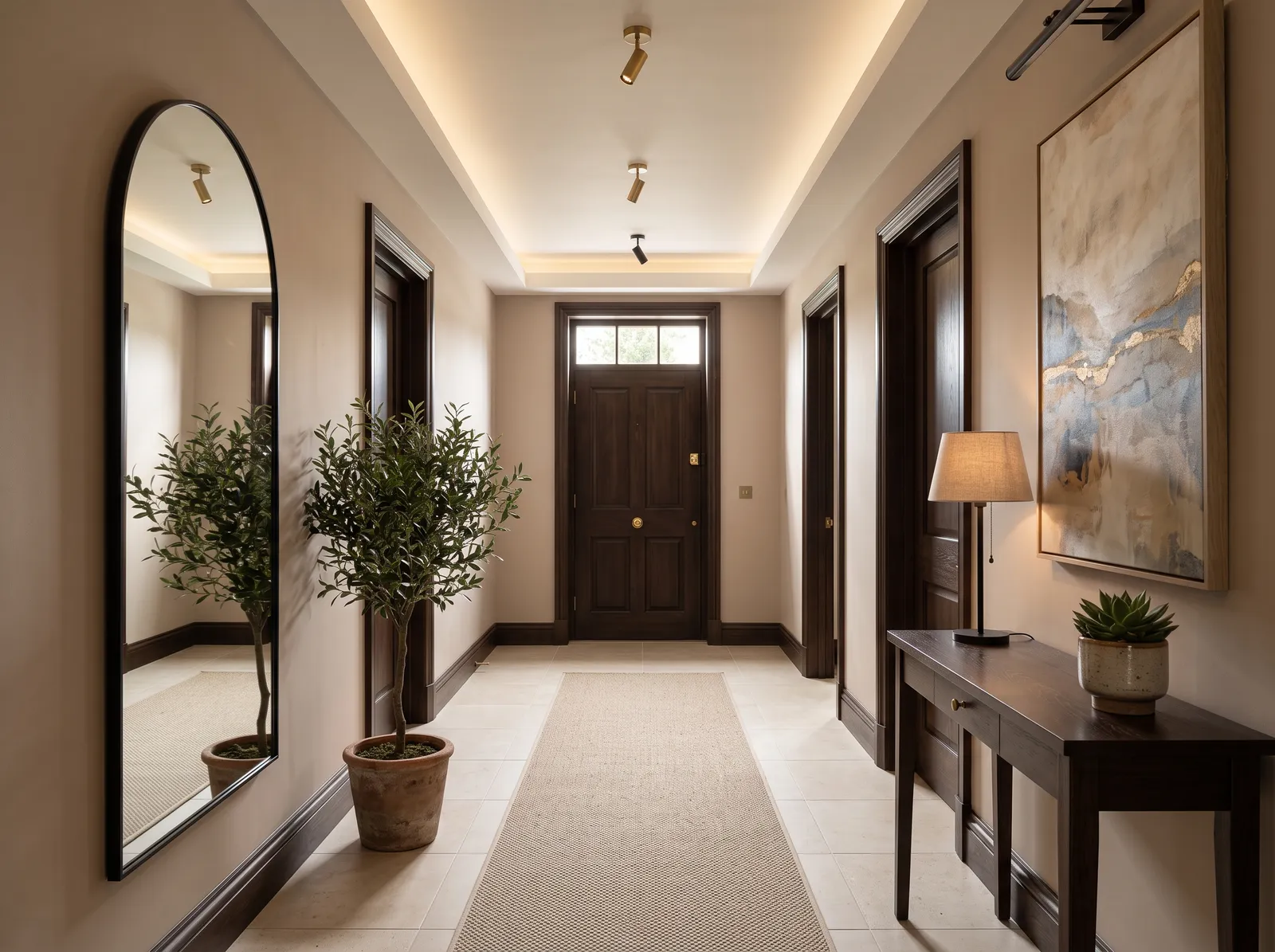
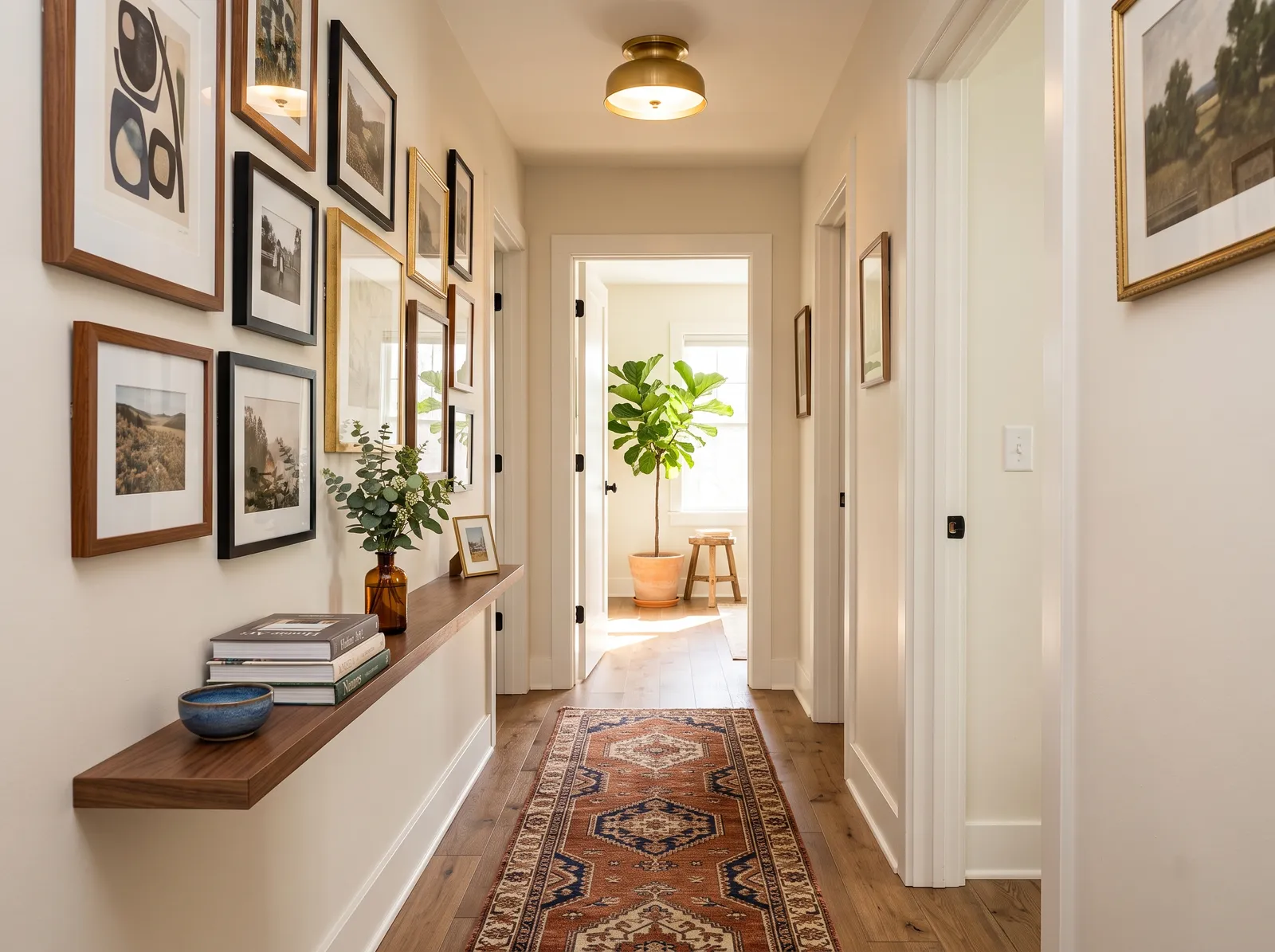
Hallway Paint Colors
Top Picks for the Hallway
4 editor's picksAll Hallway Colors at Every Brand
106 colors · 4 familiesA representative color from every brand that makes this family — most-recognized brands first, with a second pick from the biggest names. Tap any swatch with a curated guide for full spec and cross-brand matches.
Browse by Family Hub
About Hallway Paint Colors
A hallway is the connective tissue of a house. It rarely has its own windows, it gets touched and bumped more than almost any other room, and it sets the tone for every space it leads into. That combination makes color choice here a little different from picking a shade for a bedroom or living room.
The good news is that hallways forgive a wide range of directions, from bright clean whites to soft grays to a quiet wash of blue. What matters most is borrowed light, how the color flows into adjoining rooms, and a finish that can take a beating. Below we walk through the color families that work, how light should steer you, the right sheen, and the pairings and mistakes worth knowing.
Every color shown here, whether it is Alabaster, White Dove, Repose Gray, Ice Blue, Dove Gray, or Porcelain, is mixed to order at the paint counter. That also means you are not locked to one brand. A shade you like can usually be cross-matched to another maker's formula, so pick the color first and sort out the brand second.
The Best Color Directions For A Hallway
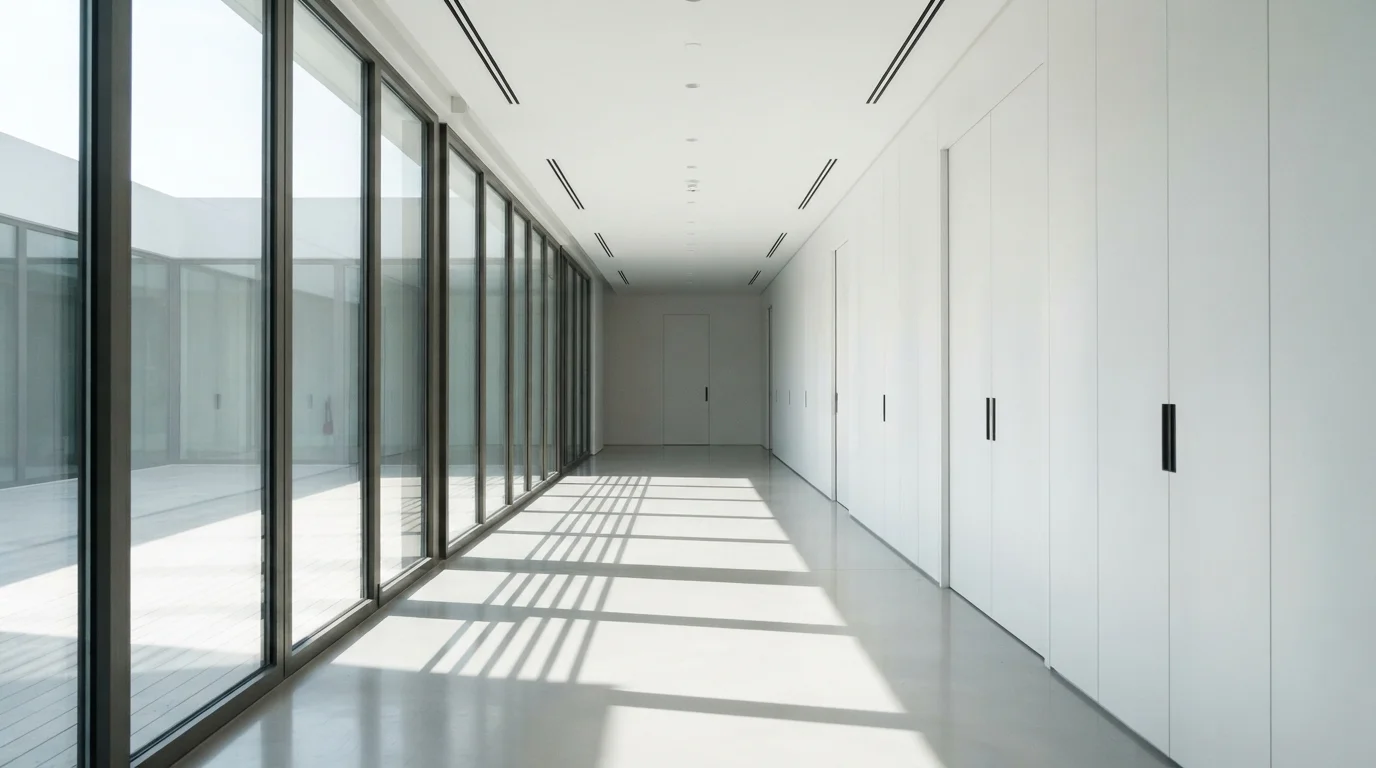
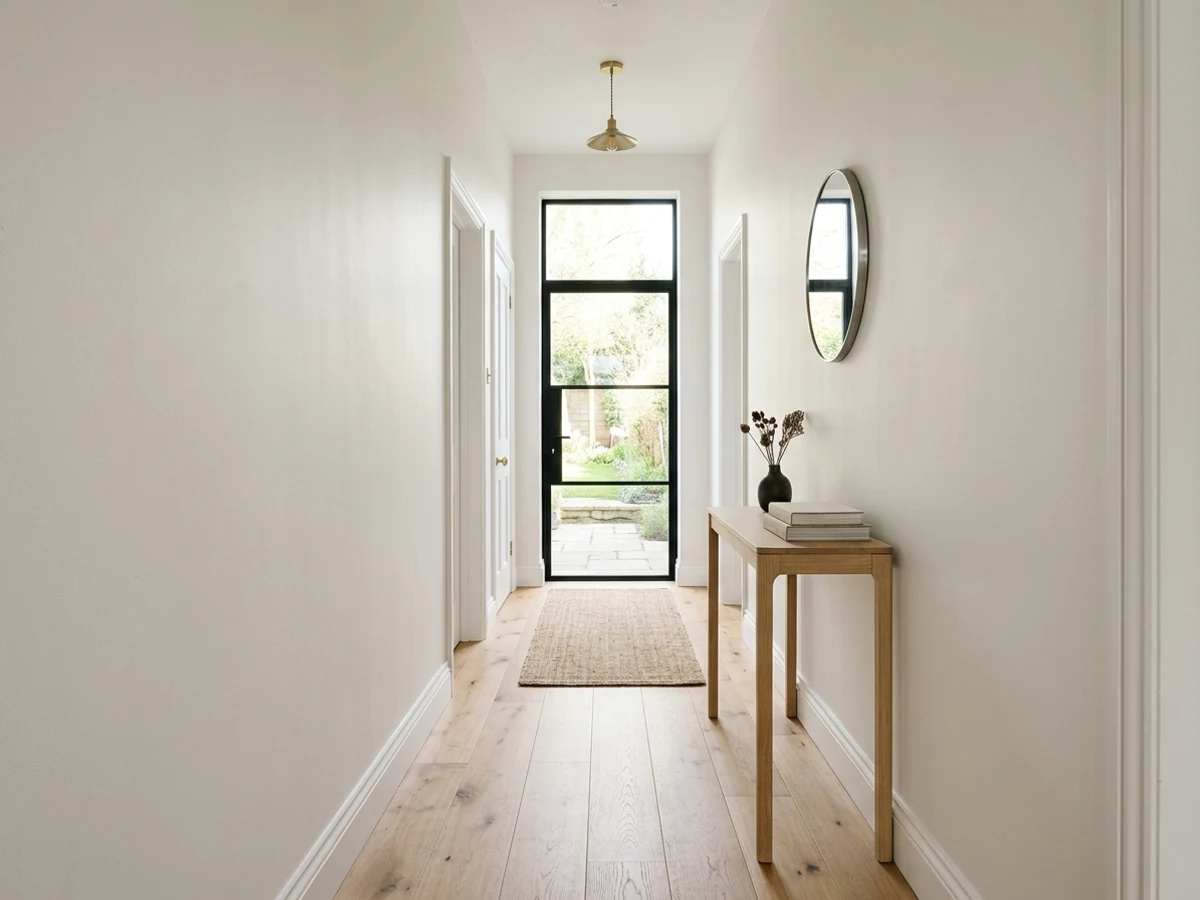
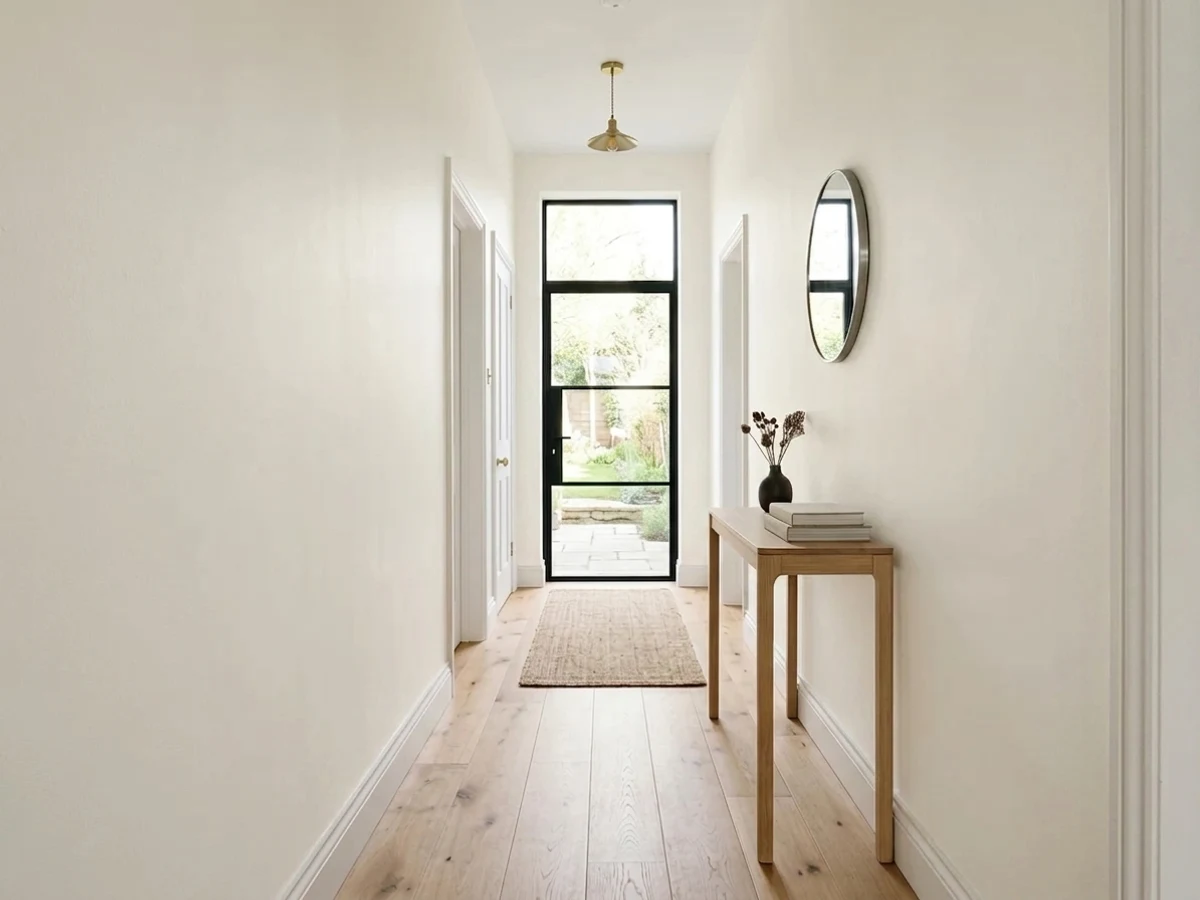
Hallways reward colors that feel clean and open rather than heavy. Soft whites like Alabaster, White Dove, and Porcelain make a narrow space read wider and brighter, and they let the rooms branching off the hall do the talking. They are the safest, most flexible starting point.
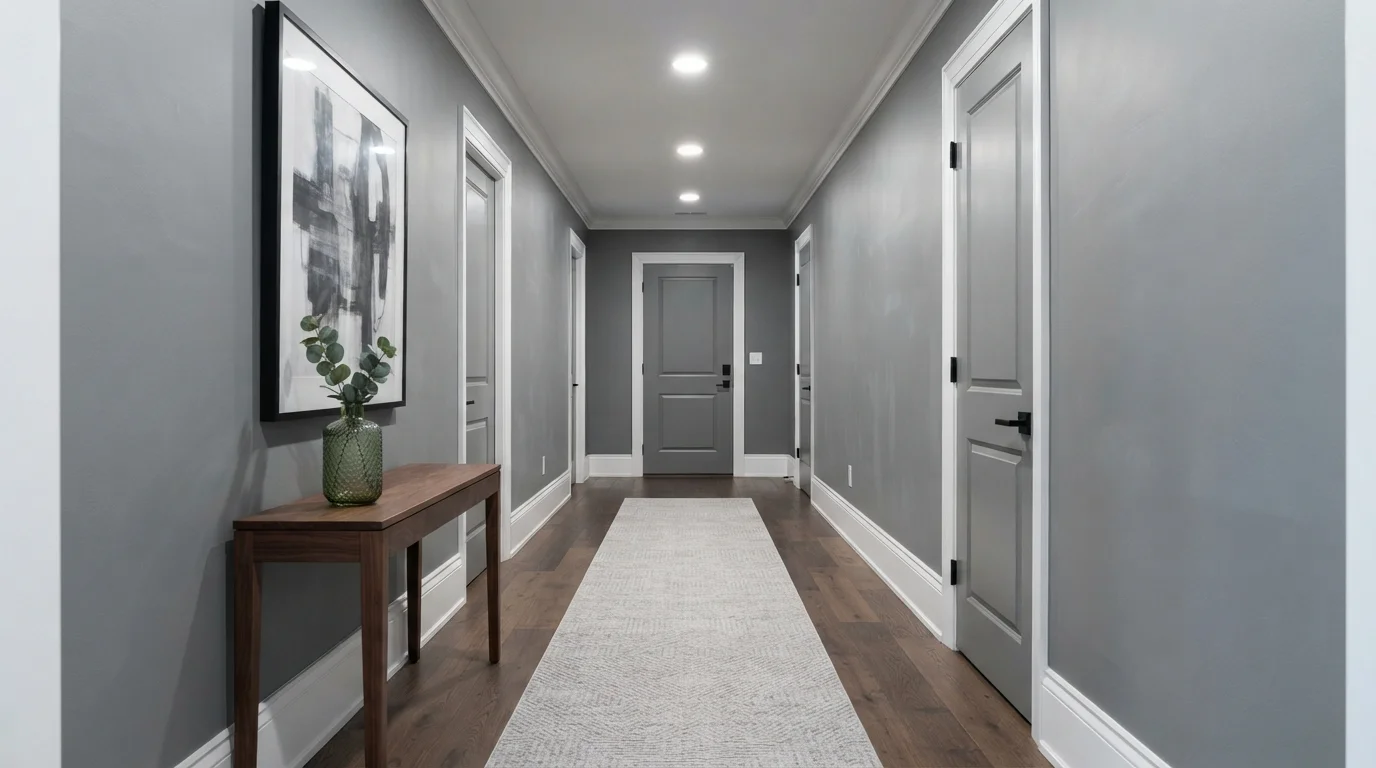
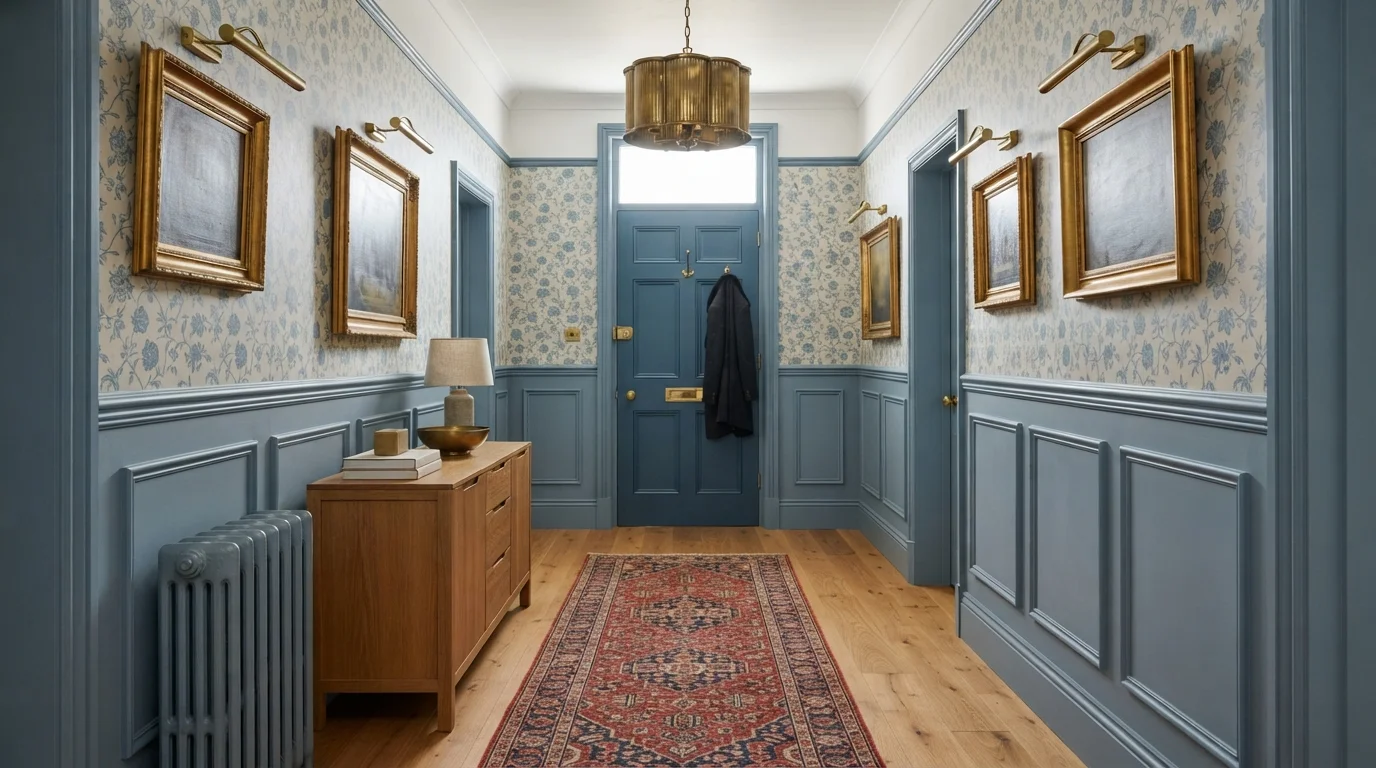
If plain white feels flat, a gentle gray adds quiet structure. Repose Gray and Dove Gray give a hallway a grounded, put-together look without going dark. A whisper of blue like Ice Blue brings a calm, airy mood that works especially well in halls that connect bedrooms and bathrooms.
Let The Light Lead The Way
Most hallways have little or no natural light of their own. They borrow it from the rooms and doorways around them, and they lean hard on overhead and wall fixtures, especially at night. That makes a hallway one of the trickiest spaces to judge from a chip.
Warm bulbs pull color toward yellow and can turn a cool gray slightly murky. Cool or daylight bulbs keep whites and grays crisp. Tape a large sample to the wall and look at it under your actual fixtures after dark, not just in the daytime, because nighttime is when you will see the hall most. Soft whites and warm-leaning neutrals tend to stay friendly under artificial light, while very cool grays can drift gray-blue once the sun is gone.
Choosing The Right Finish
A hallway takes more contact than people expect. Hands on the walls, bags and furniture squeezing past, kids and pets brushing the lower third. You want a finish you can wipe clean, so reach for eggshell or satin rather than flat. They hold up to scrubbing and the occasional scuff far better.
Save high gloss for trim and doors, where you actually want that crisp, hard-wearing shine. On the broad wall stretches of a narrow hall, a glossier sheen catches every light fixture and shows wall imperfections, so eggshell or satin gives you washability without turning the walls into a mirror.
Using LRV To Keep A Hallway Bright Or Cozy
LRV, or light reflectance value, runs from 0 (black) to 100 (pure white) and tells you how much light a color bounces back. In a hallway with little daylight, a higher LRV is usually your friend because it stretches what little light there is. Bright soft whites like Alabaster, White Dove, and Porcelain sit high on that scale and keep a tight space from feeling like a tunnel.
Mid-range neutrals like Repose Gray and Dove Gray reflect less, which adds a cozier, more enclosed feel. That can be lovely in a wider hall or one with a window, but in a dark, narrow run it can close the space in. Ice Blue lands soft and light enough to stay airy while adding a touch of color.
Pairing With Trim, Ceiling, And Floors
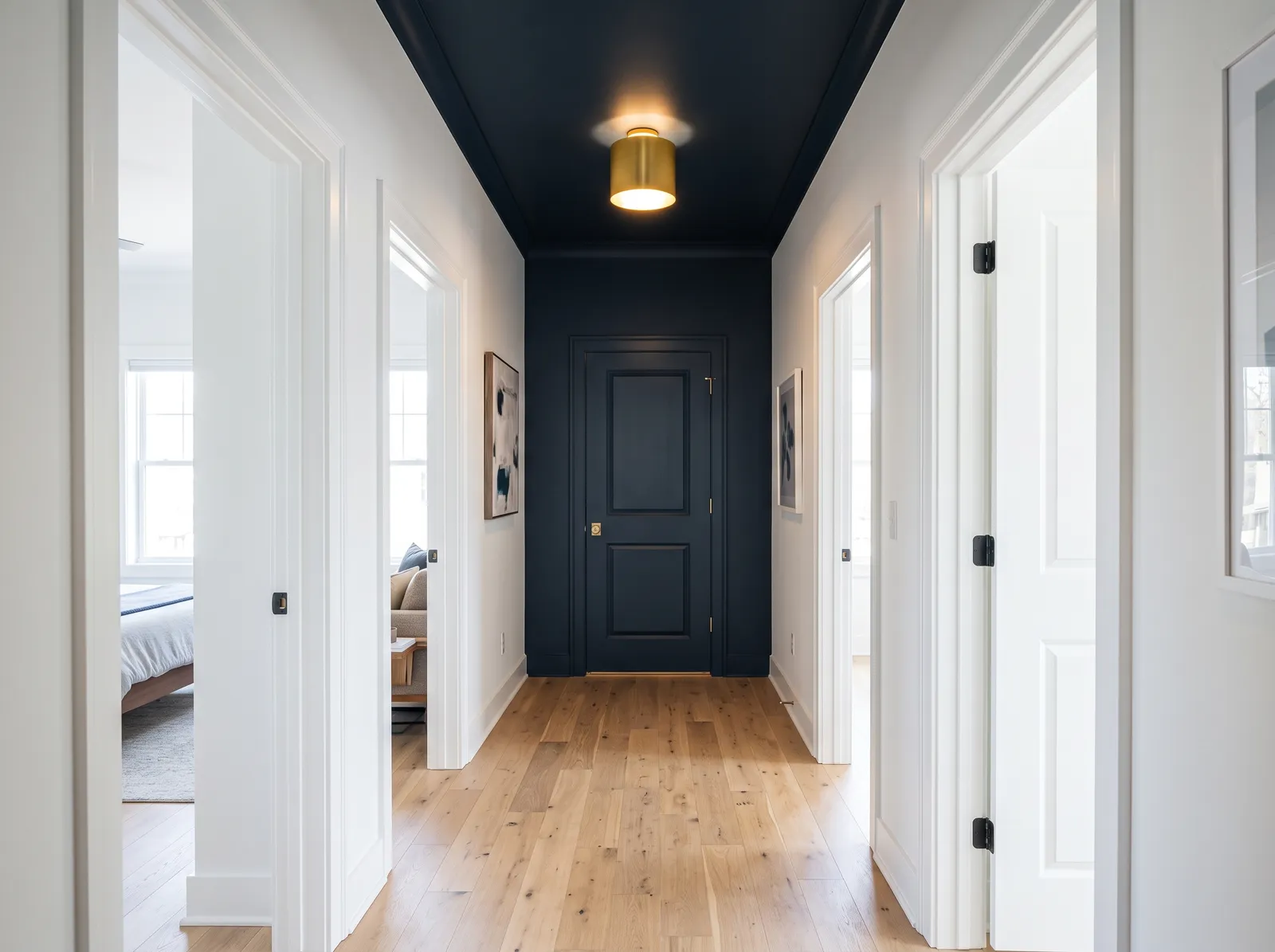
The simplest trim move is a clean white that is a step crisper than the walls. A soft white wall like White Dove with a brighter white trim and a white ceiling keeps the whole hall feeling fresh and seamless. With a gray such as Repose Gray or Dove Gray, the same white trim adds a clean edge that frames doorways and baseboards.
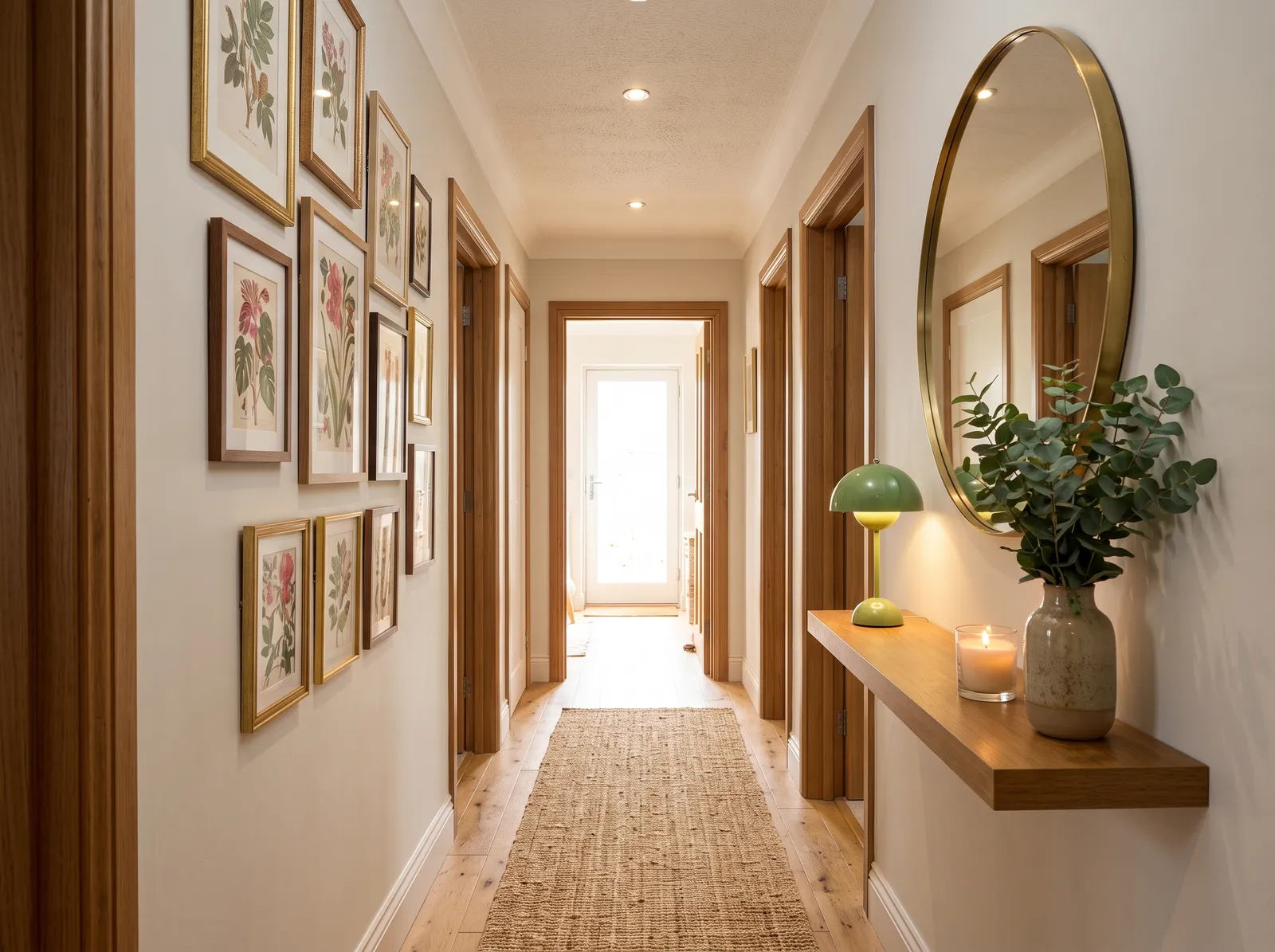
Floors set the temperature. Warm wood floors pair beautifully with warm whites and greige-leaning grays, while cooler tile or gray-toned flooring sits comfortably under Ice Blue or a cooler gray. Carry the wall color or a close match onto closet and passage doors for a calm, unbroken look, or paint the doors crisp white to make them pop against a gray wall.
Common Hallway Painting Mistakes
The biggest one is judging color only in daylight. Hallways live at night under artificial light, so a shade that looked perfect at noon can go dingy by evening. Always check your sample after dark under the fixtures you actually use.
The second is going too dark in a narrow, windowless hall, which can make it feel like a closed corridor. The third is using flat paint on a high-traffic surface, then watching scuffs and handprints refuse to wipe away. And finally, picking a wall color that fights the rooms it opens into, instead of choosing something that flows. Test the color against your trim, your floor, and the adjoining rooms before you commit.
Hallway Paint Colors — Frequently Asked Questions
What is the best paint color for a dark hallway with no windows?+
Go bright and reflective. A soft white like Alabaster, White Dove, or Porcelain has a high light reflectance value, so it bounces the borrowed light from nearby rooms and keeps a windowless hall from feeling like a tunnel. Pair it with crisp white trim and good lighting for the best result.
Should a hallway be lighter or darker than the rooms around it?+
There is no rule, but lighter usually wins in a narrow or dim hall because it keeps the space open and lets it flow into the rooms it connects. A wider hall or one with a window can carry a cozier mid-tone like Repose Gray or Dove Gray. The key is that the hall should feel connected to the adjoining rooms, not jarring against them.
What sheen should I use on hallway walls?+
Eggshell or satin. Hallways get a lot of hands, bags, and scuffs, and these finishes wipe clean far better than flat paint. Save flat for low-traffic ceilings and high gloss for trim and doors, where the extra durability and shine make sense.
Is gray or blue better for a hallway?+
Both work; it comes down to mood. A gray like Repose Gray or Dove Gray feels grounded and neutral and pairs with almost anything. A soft blue like Ice Blue feels calm and airy and is especially nice in halls leading to bedrooms or bathrooms. Test both as large samples under your own lighting before deciding.
How do I keep a narrow hallway from feeling cramped?+
Lean on light, high-reflectance colors like Alabaster, White Dove, or Porcelain, keep the ceiling and trim bright and clean, and avoid going dark. Strong overhead and wall lighting also helps a lot, since the color can only do so much in a space with little natural light.
Can I match a hallway color across different paint brands?+
Yes. Every color here is mixed to order at the paint counter, and a shade you like can usually be cross-matched to another brand's formula. Pick the color you love first, then choose whichever brand or finish you prefer.