Don't Eat the Yellow Snow
Backdrop's punniest color name sits on a genuinely pretty warm cream — reviewed honestly, including whether it's still easy to find.

Jessica has spec'd whites and neutrals for more than 300 rooms and keeps a sample wall of painted drawdowns in her studio. Every color review is checked against real reader rooms in the comments and re-tested when a formula changes. About the testing process →
- 1First Star69
- 2Classic Gray74
- 3Don't Eat the Yellow Snow84
- 4Chantilly Lace91
- 5Ultra Pure White97
The Fast Verdict
Don't Eat the Yellow Snow is Backdrop being Backdrop: a Frank Zappa punchline slapped on a color that is, in fact, a soft and genuinely likable warm ivory. At LRV 84 it sits between a barely-there cream like White Dove and a fuller gold like Benjamin Moore's own Cream — warm enough to feel finished, light enough to still read as a white in most rooms. The name is the whole marketing plan; the paint underneath doesn't need the joke to earn its spot.
Whole-house warm neutral in real daylight · kitchens and dining rooms with wood and brass · nurseries and kids' rooms that want a soft, non-clinical white · Backdrop's own tonal color palettes
You want an actually neutral, not-warm white · your room stays dim and north-facing most of the day · your counters or floors are cool grey · you need to confirm it's still an active listing before you commit
- A genuinely likable warm ivory hiding behind a joke of a name
- LRV 84 keeps rooms bright without reading stark or clinical
- Warmth reads calm next to real daylight and wood, not sickly or dated
- Sits in a useful gap between a barely-warm white and a fully golden cream
- Coordinates easily with Backdrop's own curated palette of moody, tonal colors
- Almost no independent reviews or real-room photos exist to check it against
- Goes flat and slightly beige in a dim, north-facing room
- Too warm if the goal was an actually neutral white
- Backdrop's small, rotating catalog and online-only model mean no in-store swatch to check first — confirm it's still listed before you order
What Color Is Don't Eat the Yellow Snow, Really?
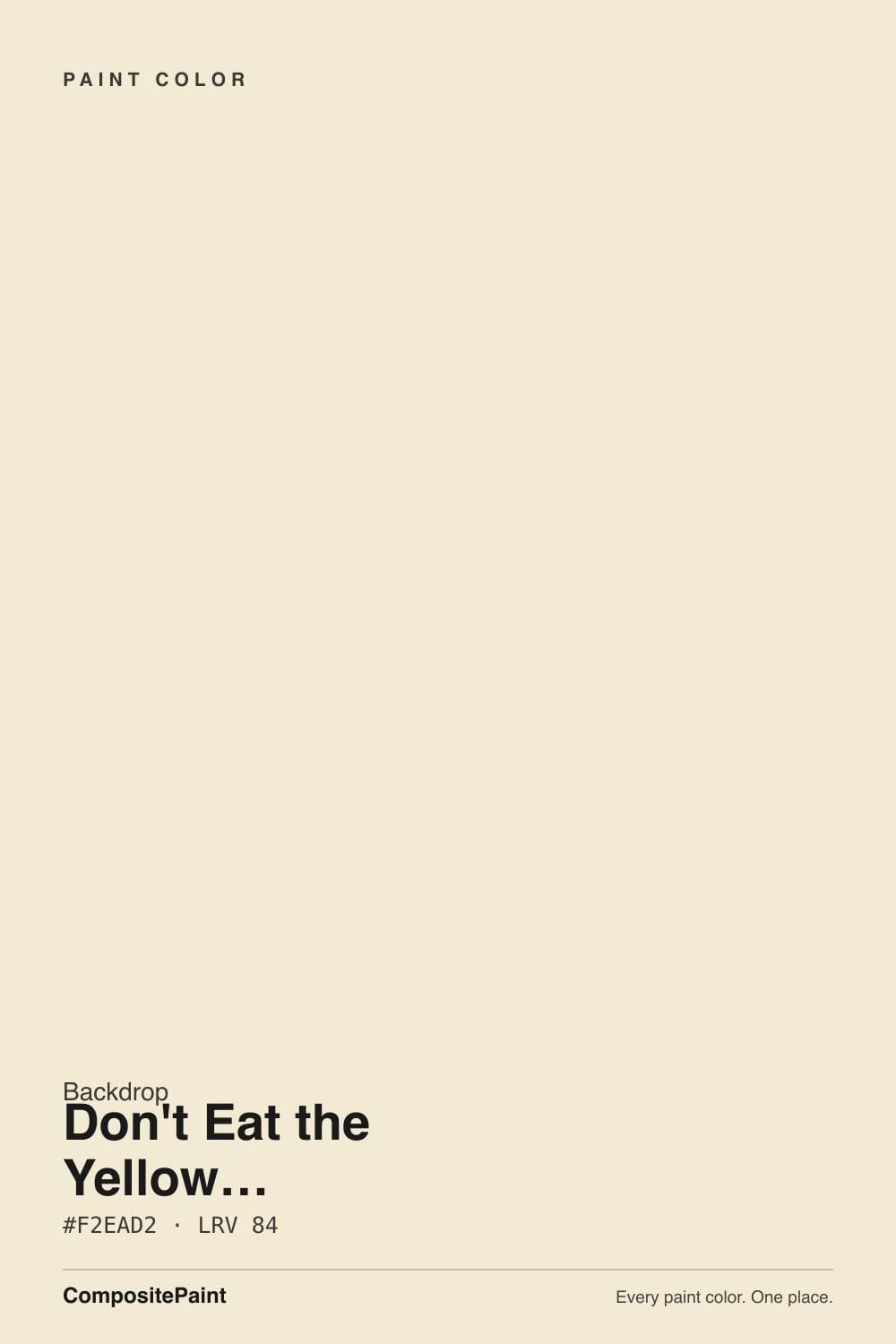
Ignore the name for a second and look at the numbers: hex F2EAD2, LRV 84. That's a warm ivory-cream sitting comfortably in white territory — not a stain, not a dare, nothing close to the joke Frank Zappa's 1974 novelty song makes it sound like. Backdrop names its whole deck this way — cultural punchlines and inside jokes instead of the moody, poetic language most paint brands lean on — and Don't Eat the Yellow Snow reads like the brand poking fun at the exact fear every cream-white shopper already has: will this actually go yellow on my wall? The paint's answer, worked out in the numbers, is a controlled yes — visibly warm, never sickly.
Put it next to the deck's more famous whites and the position is clear. Benjamin Moore White Dove keeps more grey in its warmth (LRV 85, a small gap between its red and blue channels); this color's red and blue channels sit 32 points apart, a real and visible yellow lean, closer to the fuller gold of Benjamin Moore's own Cream (LRV 81) than to anything marketed as neutral. It reads meaningfully warmer than White Dove and meaningfully lighter and less committed than Cream — its own middle lane.
Undertone in one line: warm ivory-yellow, no pink, no green. At LRV 84 it reflects the great majority of the light hitting it, so rooms stay bright; the warmth shows up as tone, not as a dimmer switch. If a sample looks flat or beige-grey rather than creamy, that's the room's light working against it, covered below — not the paint being inconsistent.
Where It Shines
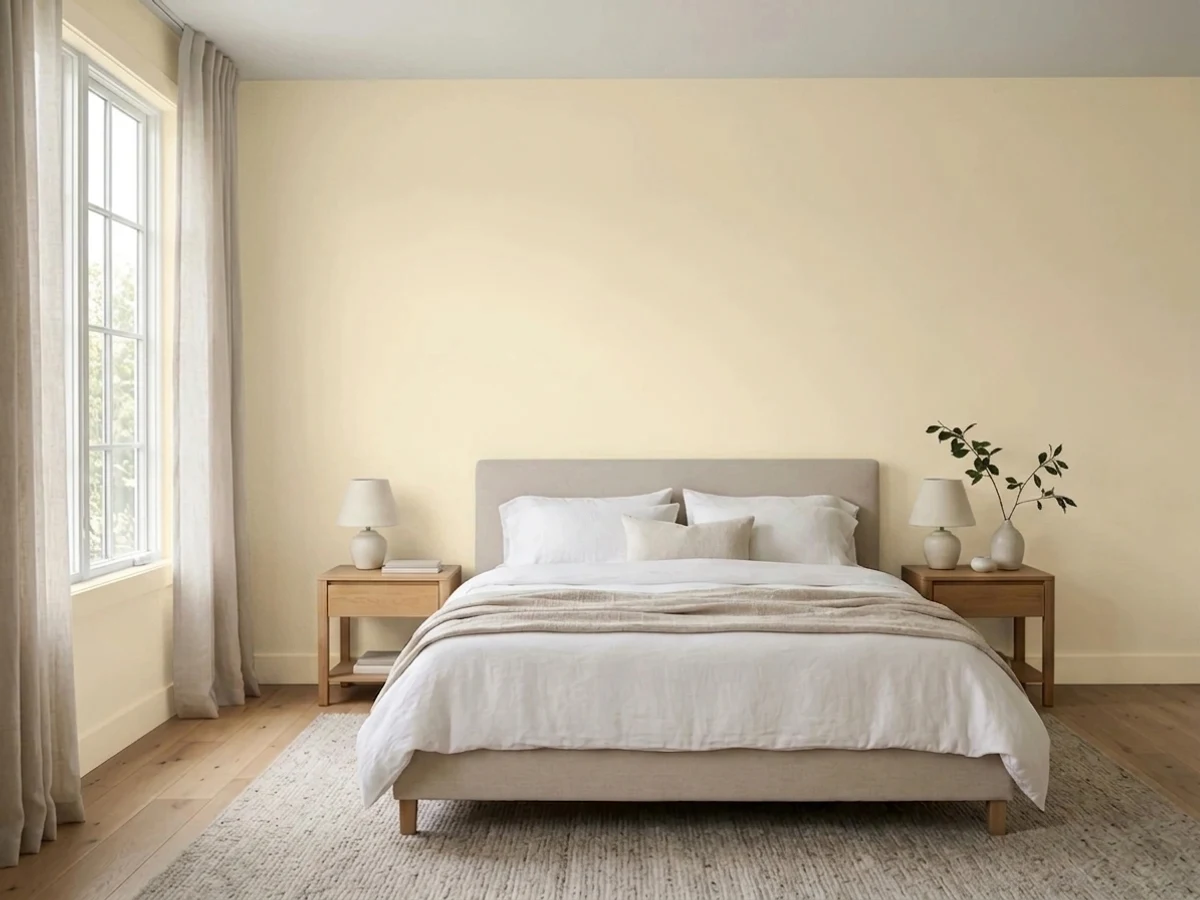
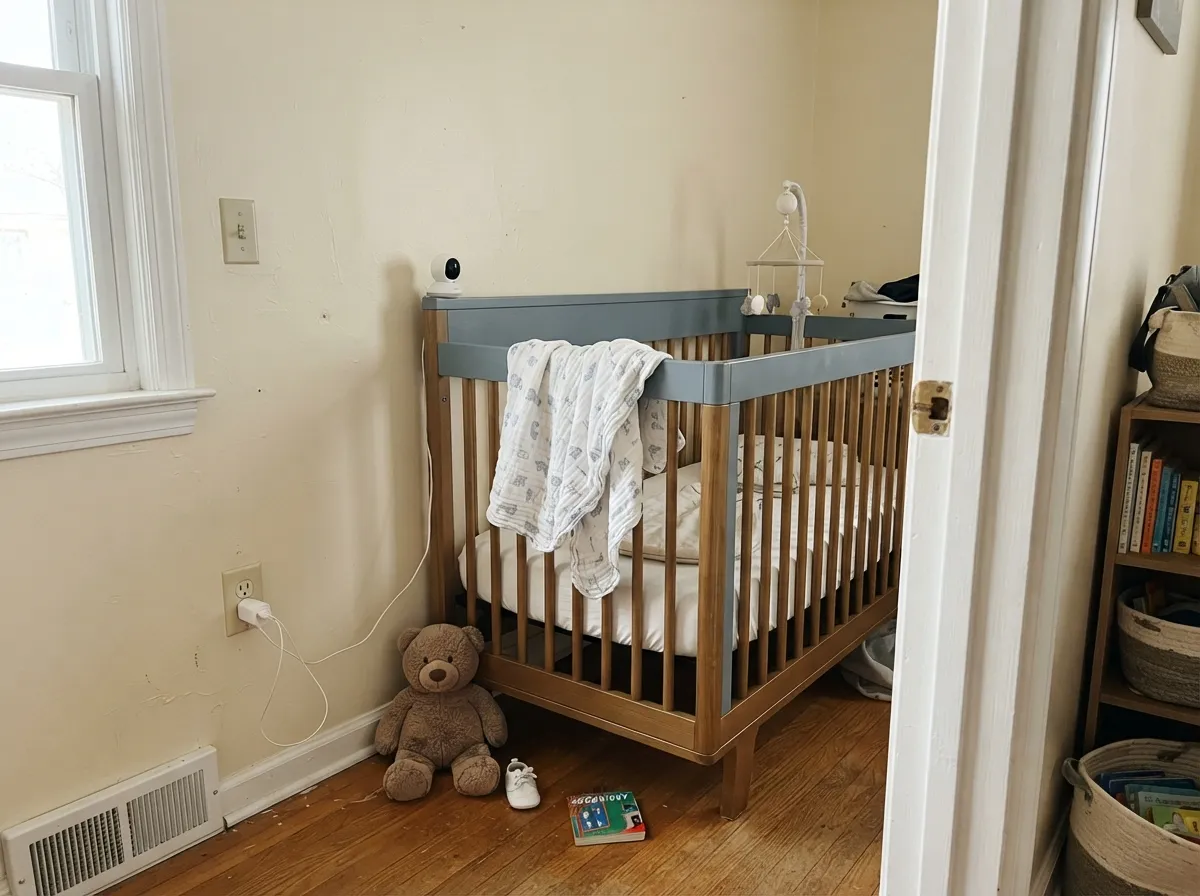
Give it real daylight, warm wood, and a little brass, and the cream does exactly what a good warm white should: it makes a room feel finished instead of sterile, without ever slipping into anything you'd call yellow on the wall. It's a comfortable whole-house neutral for anyone who finds the famous cooler whites a little flat, and a genuinely good option for a nursery or kids' room that wants a soft, lived-in white rather than a stark one.
Where It Fails
The complaints this color would get are predictable from the numbers alone, even without a deep well of owner reviews to draw from — and that thin public record is itself worth knowing before you order a sample.
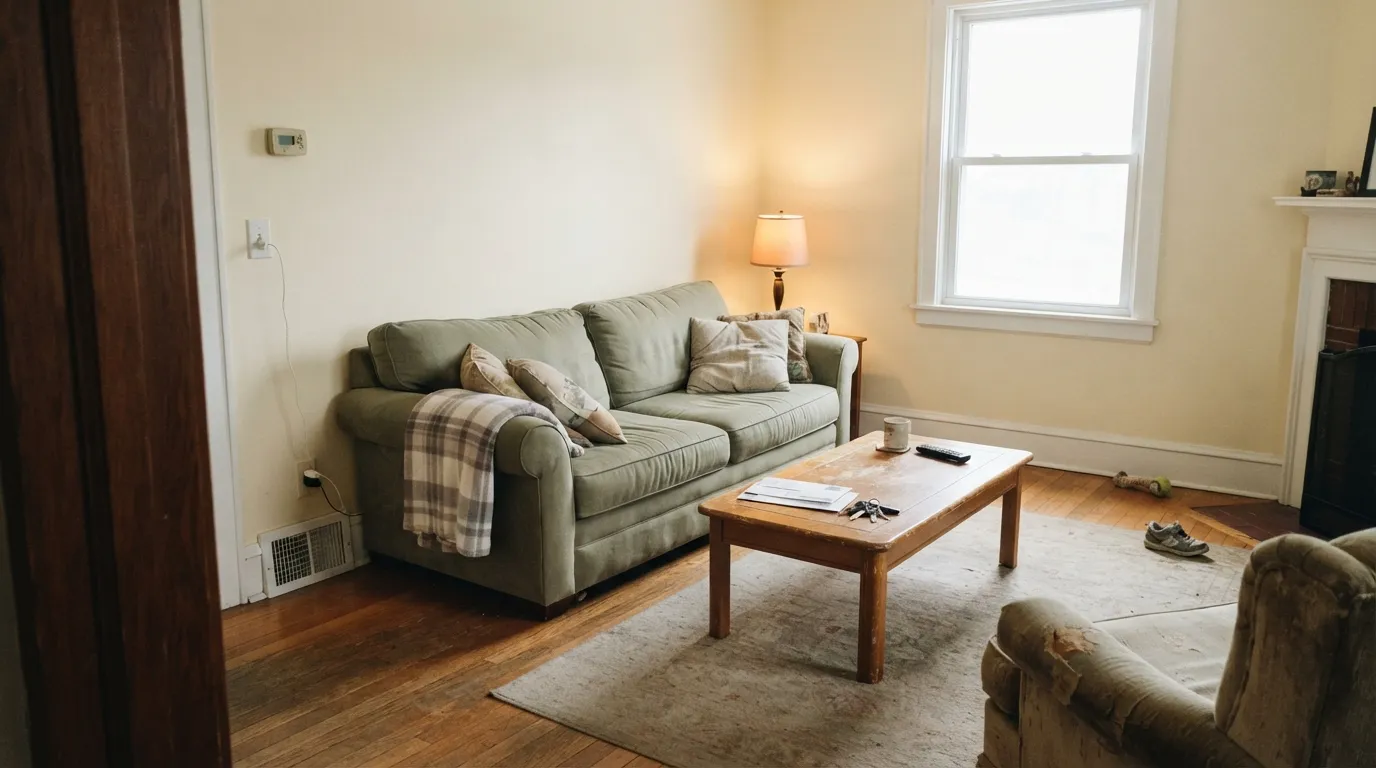
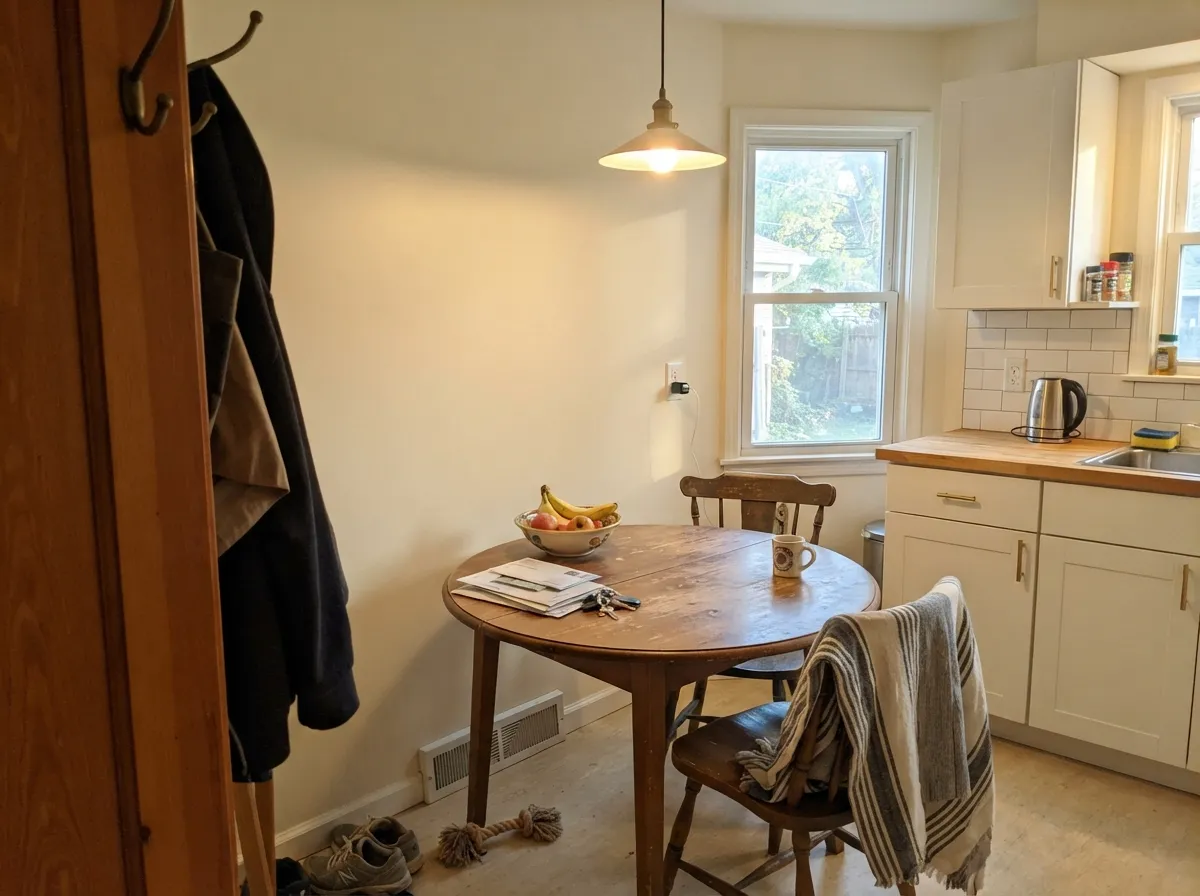
Every warm cream in this LRV range behaves the same way in cool north light: the warmth thins out and what's left can read flat or faintly beige rather than creamy. This color has no special immunity — test a real sample on your actual wall before committing a whole room.
This is a warm cream, not a true neutral — the gap between its red and blue channels is real and visible on a full wall. If "nothing yellow, nothing cream, just white" is the brief, this is the wrong pick; Benjamin Moore White Dove or Sherwin-Williams Pure White sit closer to what you're picturing.
Cool grey quartz or marble sits at the opposite temperature and will make this cream look slightly dingy by contrast — the same clash that trips up every warm white next to cool stone. With warm wood or brass instead, the pairing goes the other way and flatters both.
Room by Room
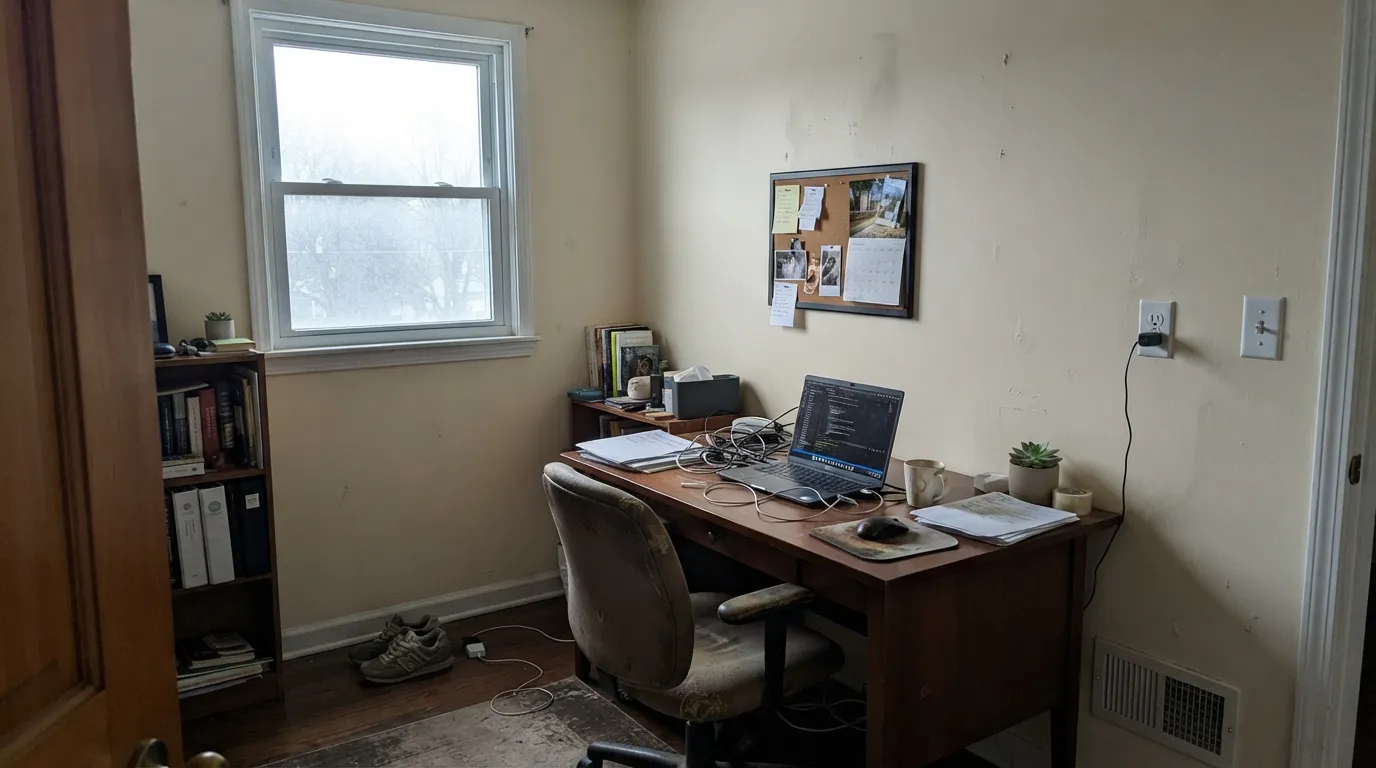
In a bright room it reads as a calm, finished warm white that lets furniture and art do the talking. Eggshell on the walls, semi-gloss on the trim.
Warm wood, brass hardware, butcher block: this cream sits easily among all of it. Satin on any cabinet application.
A soft, non-clinical white without committing to a full pastel is exactly what a lot of nursery searches are actually looking for. It stays gentle under a night-light and doesn't read babyish.
2700K lamps deepen the cream at night into something cozier; cool LED bulbs will fight it, so swap bulbs before you swap paint if the room feels off.
With warm-toned tile or wood vanities it's a natural extension of the rest of the house. Cool grey marble or blue-grey tile will make it look slightly off — sample against your actual stone first.
There is no reliable public record of this color used outdoors, and Backdrop markets it as an interior shade. Until there's real daylight-and-weather evidence, treat it as an indoor color.
Your Light Is the Risk
South or well-lit rooms show the cream at its calmest — warm but controlled, never yellow-loud.
The warmth thins out fast in cool, low light; what's left can read flat or faintly beige. Test before committing a whole room.
Low sun pushes the cream more visibly warm for an hour or two; it settles back to its calmer daytime read the rest of the day.
2700K bulbs deepen it into something cozier; cool white LEDs flatten the warmth out — an easy fix that doesn't involve repainting.
Most complaints about Don't Eat the Yellow Snow are a light mismatch. Upload a photo of your actual room and see it on your walls — then ask for the same wall in north light or evening lamps before you buy a single sample.
Need It From Another Brand?
Any paint counter can custom-tint Backdrop BD-DS directly. If you would rather stay in one brand's own deck, these are the closest stock matches, measured as ΔE2000. Under 2 is a difference you will not see on the wall.
| Brand | Closest color | ΔE | LRV | |
|---|---|---|---|---|
| Sherwin-Williams | Fresh ZestSW 9662 · Sherwin-Williams | 1.7 | 82 | Color page → |
| Behr | Yucca WhiteYL-W08 · Behr | 1.1 | 83 | Color page → |
| Benjamin Moore | Soft Biscuit919 · Benjamin Moore | 0.7 | 82 | Color page → |
| Valspar | Lemon MeringueM321 · Valspar | 2.1 | 81.7 | Color page → |
| PPG / Glidden | CandlewickPPG1091-1 · PPG / Glidden | 0.5 | 82 | Color page → |
| Glidden | Vanilla WaferPPG1204-2 · Glidden | 0.5 | 83 | Color page → |
Similar Backdrop Colors
The nearest shades to Don't Eat the Yellow Snow within Backdrop's own range, ranked by perceptual color distance — useful when you want the same look a touch lighter, darker, or warmer.
WCAG 2.1: AA is 4.5 : 1 for normal text, 3 : 1 for large text, AAA is 7 : 1.
Don't Eat the Yellow Snow vs the Colors You're Also Considering
Every Don't Eat the Yellow Snow sample board has the same rivals on it. The numbers show the real lightness gap — then it comes down to which risk you would rather live with.
Pick this if White Dove has ever felt a shade too grey for you — this pushes further into visible cream.
Benjamin Moore OC-17 · LRV 85White DovePick this if you want the famous, slightly cooler safe choice — White Dove keeps more grey in its warmth and reads more neutral.
Pick this for the same warm-ivory idea with the yellow turned down a notch, easier to live with on four walls.
Benjamin Moore 2159-60 · LRV 81CreamPick this for a fuller, more overtly golden cream — Cream commits harder to the yellow this color only hints at.
Within Backdrop, the closest calls are Jane (BD-JA, LRV 86), Tabula Rasa (BD-TR, LRV 92), and Cookies & Cream (BD-CC, LRV 73).
Jane is barely lighter but much quieter. Its yellow is toned down, so it reads as a softened white where Don't Eat the Yellow Snow reads as a true cream. Pick Jane if you want warmth you sense rather than see; pick Yellow Snow if you want the room to actually look creamy.
Tabula Rasa is a full step brighter and paler. Side by side, Yellow Snow looks distinctly buttery next to it, which is why the two work so well as a wall-and-trim pair rather than as substitutes for each other.
Cookies & Cream is the deeper sibling, eleven LRV points darker. It behaves like a light neutral instead of a near-white: better for rooms flooded with sun that would wash Yellow Snow out, or for cabinets where you want the color to hold its own. In a dim room, though, Cookies & Cream can turn khaki while Yellow Snow stays bright.
Don't Eat the Yellow Snow Coordinating Colors
The pairing logic is the same one that works for every warm cream: stay on the warm side, and let one confident dark note carry the contrast. Inside Backdrop's own deck, the brand's moody, saturated colors are built to sit next to a light neutral like this one — these are the pairings that make the most sense:
The Joke in the Name
Don't Eat the Yellow Snow borrows its title straight from Frank Zappa's 1974 novelty song — a warning about, specifically, not doing the thing the title says. On a paint chip, that same warning does double duty: it's Backdrop naming the exact fear every shopper already has when they reach for a cream instead of a true white. Nobody wants their "warm white" to actually go yellow on the wall, the way a stain would. The joke works because the paint underneath doesn't deliver the punchline — it stays a controlled, likable cream, not the thing the name jokes about.
This is consistent with how Backdrop names its whole deck: cultural references and dry humor — the brand's own catalog includes names like Mom Jeans, Punk Rock, and Cookies & Cream — instead of the moody, aspirational language most paint brands default to. It's a smaller, curated color list built around personality-first names rather than showroom drama; this color is one data point in that larger strategy, not an outlier.
Don't Eat the Yellow Snow With Wood Tones and Floors
Warm wood is the safe, flattering pairing: honey oak, walnut, butcher block and cedar all sit comfortably against this cream because both are working the same warm side of the wheel. It's one of the better light neutrals for a room with orange-leaning builder oak floors, since the cream doesn't fight the wood's warmth the way a stark white or a cool grey would.
Cool grey LVP or grey-washed floors are the pairing to sample first. Grey flooring will make the cream's warmth more obvious by contrast, and in a dim room that contrast can tip toward looking dated rather than deliberate. A warm rug and warm-toned brass hardware usually settle the argument in the wall's favor.
Three Ready Palettes Built on Don't Eat the Yellow Snow
A color is never alone on the wall. These are complete combinations in the 60-30-10 pattern, with the reason each one holds together. Every one opens in the visualizer.
White Dove trim stays just cool enough to keep the cream walls from tipping golden, and Hocus Pocus on the door supplies the one confident dark note the scheme needs.
Try this palette in your roomOld Soul's khaki-olive and the cream walls share the same warm base, so the cabinet-to-wall handoff feels deliberate instead of decorated; White Dove trim keeps the edges from disappearing.
Try this palette in your roomA dusty blue accent against the cream keeps a nursery gender-neutral and calm; both colors share enough warmth that the pairing never feels cold.
Try this palette in your roomDon't Eat the Yellow Snow FAQ
Is Don't Eat the Yellow Snow actually yellow?
No — it's a warm ivory-cream at LRV 84, well inside white territory. The name is a joke borrowed from a Frank Zappa song, poking fun at the exact fear cream-white shoppers already have. On the wall it reads warm, not yellow-loud.
What's the undertone?
Warm yellow-cream, with no pink and no green in it. It sits between Benjamin Moore White Dove (cooler, greyer warmth) and Benjamin Moore Cream (fuller, more golden) — a genuine middle lane.
Can I use it as my main house white?
Yes, if you want visible warmth. If you want something closer to a true neutral white, White Dove or Sherwin-Williams Pure White will feel calmer and less committed.
Does it work in a north-facing room?
With caution. Cool north light drains warmth from every cream in this LRV range, and this color can read flat or faintly beige as a result. Sample it on the actual wall before committing.
What trim goes with it?
A slightly cooler warm white like Benjamin Moore White Dove keeps the edges crisp without fighting the cream. A stark, bright white will make the walls look dingy by comparison.
Is this color still available from Backdrop?
We could not confirm it's a current, live listing on Backdrop's site at the time of writing — their catalog is small and does rotate. Check backdrophome.com directly before ordering a sample; if it's gone, Benjamin Moore Cream or Behr Butter Yellow get you a very similar warm-cream result.
Have you painted with Don't Eat the Yellow Snow?
Rate it — one tap helps the next reader decide.
Ask a Question