Backdrop
Backdrop is paint you order online, from 74 colors instead of 3,000 chips. Here is the whole lineup with real 2026 prices, what the shipping and return rules actually cost you, and the one weakness every reviewer keeps landing on.

Emily painted her first room at 24, hated every minute of it, and got better. She writes the guides she wishes she'd had, which means defining every term and never assuming you know what cutting in is. About the testing process →
The Fast Verdict
Okay, so: Backdrop is good paint with one honest weakness. It goes on smoothly, the low-sheen finish is genuinely pretty, and picking from 74 colors is so much easier than standing in a chip aisle. But it hides light, so plan on two coats, and at $89 a gallon it now costs the same as Benjamin Moore Aura. Buy it for a bedroom or living room where the color matters most. Skip it if you want the most coverage per dollar.
- Seventy-four colors instead of three thousand chips, which is the whole reason people who hate deciding end up here
- Peel and Stick swatches at $5 each stick to the wall, peel off clean, and move around the room to compare in different light
- The 6 percent sheen (how shiny the dry paint is) is low enough to hide roller stipple and small drywall flaws
- Touch-ups blend in well, because a low-sheen finish does not flash a shiny patch the way eggshell does
- The can has a resealable cap and a pour spout, so a half-used gallon actually seals shut again
- Ultra-low VOC, Green Wise Certified and Climate Neutral Certified, no added formaldehyde, and it barely smells
- FedEx or UPS Ground in 1 to 3 business days, and the roller, tape, and prep kit can arrive in the same box
- Hide is thin. Backdrop's own instructions say two coats, which quietly doubles your paint budget per room
- At $89 a gallon it has caught Benjamin Moore Aura, which covers better and has thousands more colors
- There is no satin and no usable flat for walls, so it is soft Standard or full Semi-Gloss with nothing in between
- No quart size. The smallest can you can roll is a $59 half-gallon, so a powder room means overbuying
- Returns cost $10 per gallon in restocking, and anything you opened is yours forever
- No shipping to Alaska, Hawaii, or PO boxes, and no counter to drive to when you run short on a Saturday
Which Backdrop Paint to Buy
Backdrop keeps the list short, which makes this easy. There is one wall paint, one trim paint, one cabinet paint, two primers, a ceiling white, and the exterior pair. Prices are 2026 direct-from-Backdrop, per gallon, before shipping.
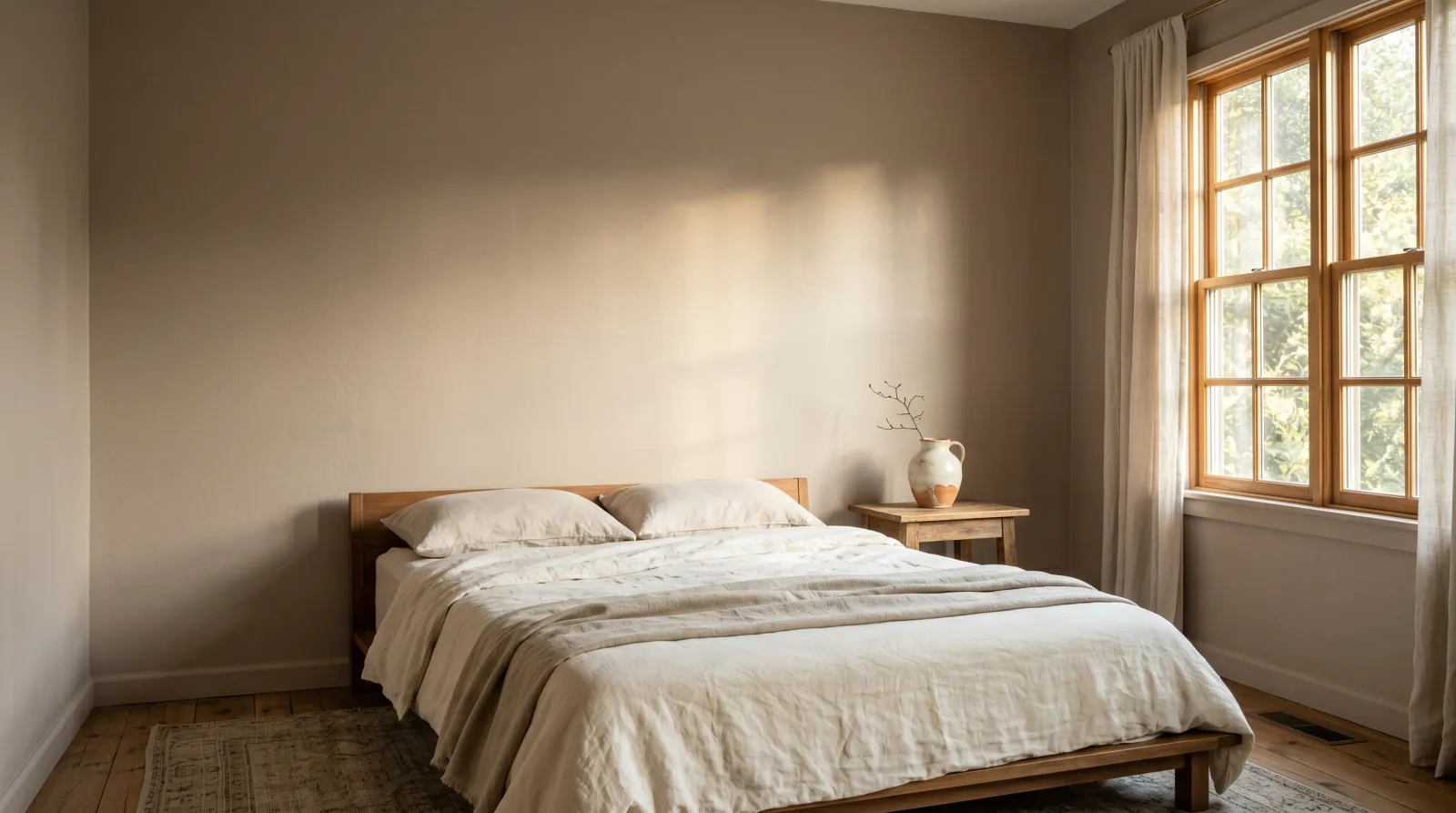 The wall paint
Best for Bedrooms, living rooms, offices
The soft 6 percent sheen is the look people buy Backdrop for. Just budget two coats and a second gallon, because the hide runs light.
Full review →Best for Ceilings, one color only
A true flat, sold in exactly one white. Do not think of it as a way to get a flat wall in your color, because it is not.
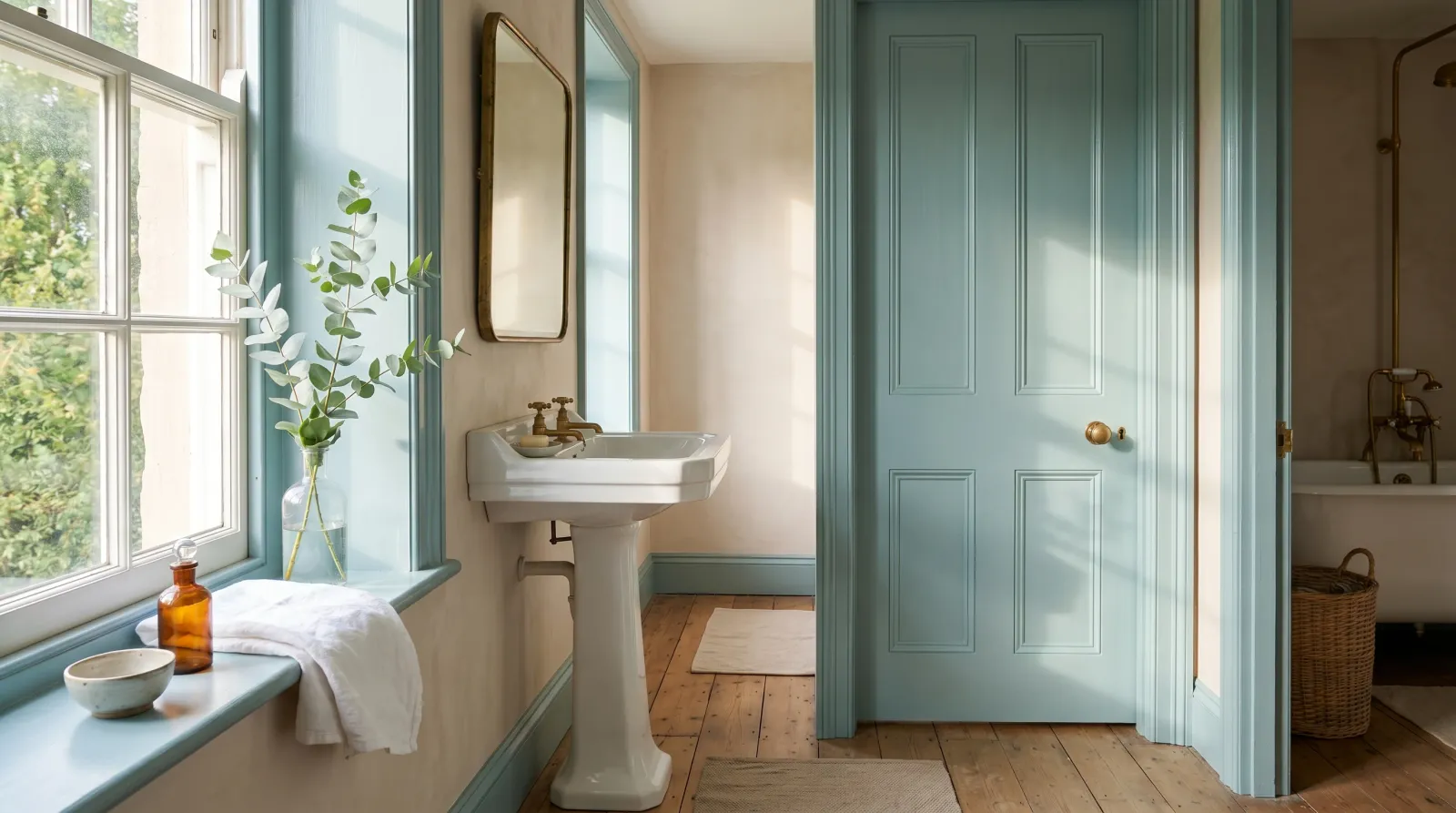 Trim and doors
Best for Trim, doors, bathroom walls
A true 30 percent sheen that wipes clean and shows every flaw you did not sand. Fine on trim, wrong on cabinets that get handled daily.
Full review →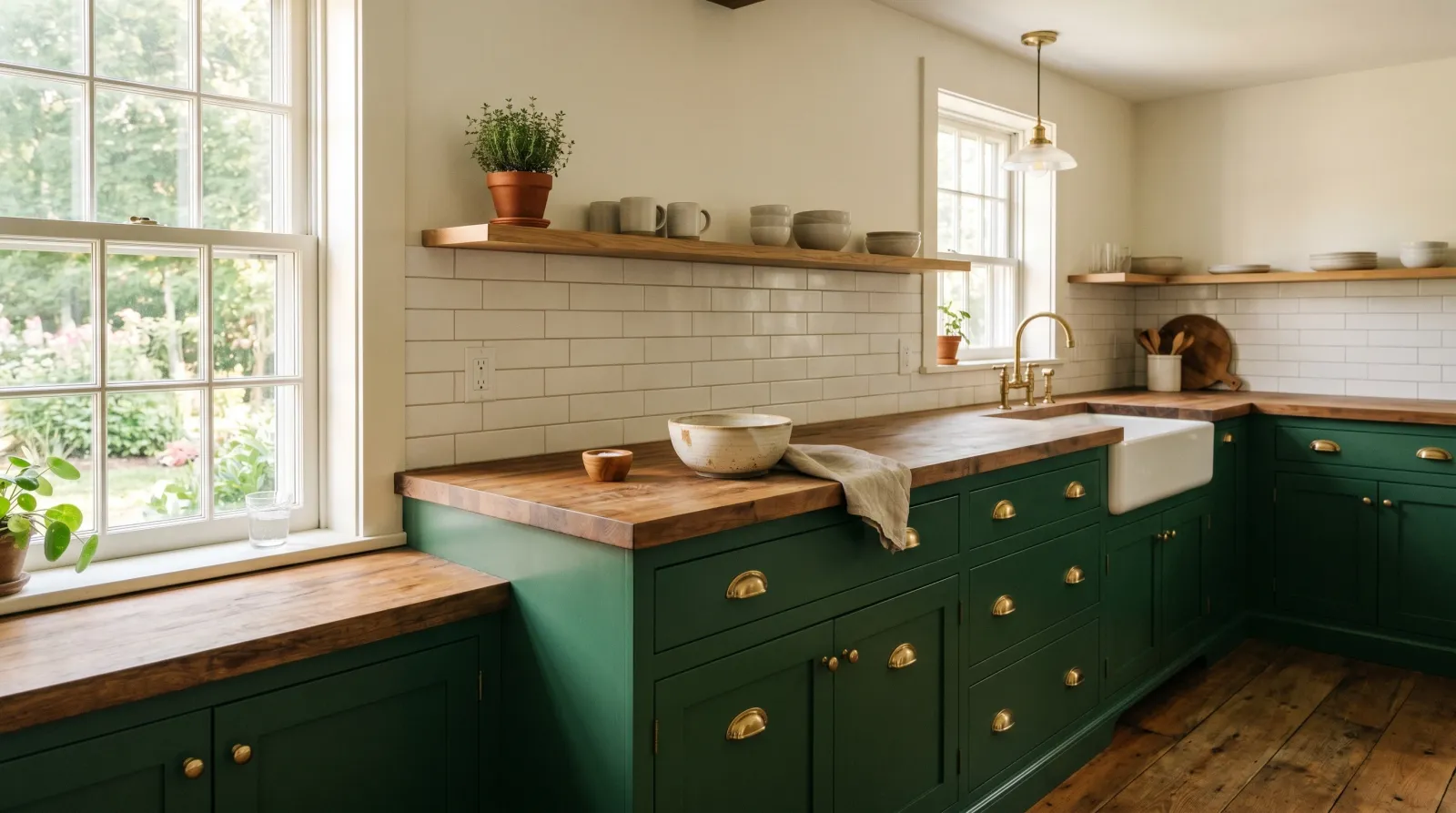 Cabinet enamel
Best for Kitchen cabinets, vanities, doors
The best-rated thing Backdrop makes and the right pick over plain Semi-Gloss if cabinets are the job. Prime raw wood, laminate, or anything glossy first.
Full review →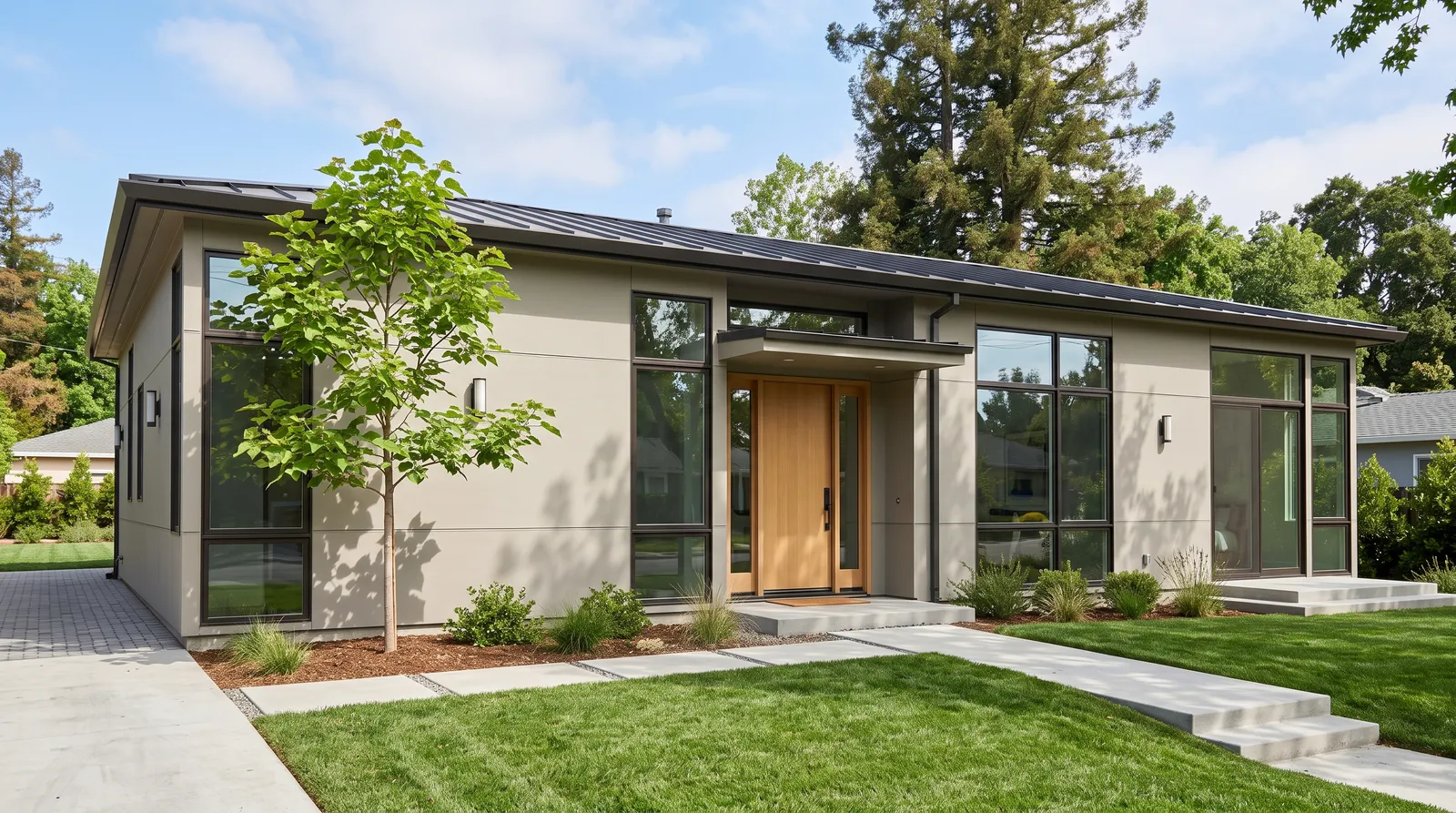 Exterior, low sheen
Best for Siding in a mild climate
A clean acrylic with no long weather record behind it. On a hard south wall or near salt air, buy a line that has printed years of field data.
Full review →Exterior, 25 percent sheenBest for Exterior trim, doors, fences
The shinier half of the exterior pair, for trim and doors. Same paint, same unproven track record, so use it where a repaint is easy.
Full review → Wall undercoat
Best for New drywall, patches, color changes
A light gray sealing undercoat that helps Standard cover in fewer coats. It is not a stain blocker, so spot-prime water rings with shellac first.
Full review →Best for Bare or chalky siding
Buy it if you are already committed to the exterior line. Bare wood and chalky old siding need it, sound painted siding usually does not.
Best for Choosing before you spend $89
The smartest thing Backdrop sells. Order four or five, move them around the room for a few days, then buy the gallons.
There Are No Sales, and Here Is What to Do Instead
Here's the thing about buying direct from a brand: nobody is competing with anybody on price. Backdrop sells only through backdrophome.com and its own Amazon brand store, so there is no Home Depot weekend event, no Sherwin-Williams 40 percent sale, no second store down the road with a better sticker. The price is $89 a gallon, and $89 a gallon is what you pay. Don't wait for a discount that isn't coming.
There are two real ways to pay less. Backdrop runs a trade program for professional painters and designers, and if you paint for a living the pricing there is genuinely better, so ask before you place a job order. On the consumer side, reviewers have reported a $20-off break when you buy four gallons at once. Check whether it is live at checkout before you plan a budget around it, because promotional terms move around.
The bigger savings is not a discount at all, it is not over-ordering. Returns are 90 days, unopened cans only with the seal intact, and Backdrop takes $10 per gallon back as a restocking fee. So a spare gallon you never open costs you $10 to hand back, and a gallon you opened costs you all $89. Measure the room, assume two coats at up to 400 square feet per gallon, and buy exactly that. If you come up short, a re-order lands in 1 to 3 business days, which is a smaller hit than eating a return.
The Backdrop Color Deck
The deck is the actual product here: 74 core colors, plus limited-edition collaboration shades and a Color of the Year. Names lean editorial rather than descriptive, so After Hours is the near-black and Mom Jeans is the denim blue. These eight are the ones we have hand-checked data for and see chosen most.
The Whole Backdrop Fan Deck, One Shelf
Every Backdrop color sorted into the families painters actually use. Pick a chip to browse light to dark.
Upload a photo of the room. We paint it in the Backdrop color you pick, with your light and your floor, before you buy a sample.
The Cons Only Forums Talk About
The Thin Hide Is the Complaint That Never Goes Away
This is the one thing every source agrees on. Pro painters on Reddit hammer Backdrop on pigment density, House Digest called the coverage consistent but noted experienced painters question the pigment load, and Backdrop's own application guidance tells you to use two coats. For $89 a gallon most people expect to bury the old color in one pass, and you usually will not. On a same-tone refresh, one heavy coat can be enough. On any real color change, plan two, and understand that this doubles what the room costs in paint.
Cans Arrive Dented More Often Than They Should
Shipping a gallon of liquid across the country is hard on a can, and dented lids come up over and over in customer reviews. Dented paint is still fine paint. The annoying part is that the resealable cap and pour spout are part of what you paid the premium for, and a bashed rim can stop the lid sealing properly, which means the leftovers you were saving for touch-ups skin over. Open the box the day it lands, check the rim before you start, and message Backdrop right away if it is crushed rather than after you have used half of it.
The Return Rules Are Stricter Than a Paint Store's
You get 90 days for a refund to your card, and after that it turns into store credit. But the can has to be unopened with the security seal intact, Backdrop deducts $10 per gallon as a restocking fee, Peel and Stick swatches are final sale, and made-to-order five-gallon exterior buckets cannot be returned at all. At a hardware store you can carry an unopened gallon back to the counter and get your money. Here, over-ordering four gallons costs you $40 just to undo. Measure first.
There Is No Satin, and Kitchen Buyers Keep Getting Caught
Backdrop makes one wall sheen: Standard, at 6 percent gloss. The next step up is a full 30 percent Semi-Gloss. There is nothing between them. So if you want the wipe-it-hard satin or eggshell that most people put in a kitchen, a mudroom, or a kid's hallway, Backdrop simply does not make it. The flat Ceiling Paint is not a workaround either, because it only comes in one white. Standard is lovely in a bedroom and under-built behind a stove.
The Green Story and the Box It Ships In Do Not Match
Backdrop is Climate Neutral Certified and Green Wise Certified, and the low-VOC part is real: it barely smells, which matters if you are painting a bedroom you have to sleep in. But reviewers, House Digest among them, keep flagging how much protective packaging arrives with an order. Some of that padding is the only reason the can is not dented. Still, it is an awkward look for a brand that leads with its climate certification, and Backdrop has not resolved the tension.
The Questions Between Two Cans
This used to be an easy call and now it is not. Aura runs roughly $85 to $95 a gallon and Backdrop Standard is $89, so you are choosing at the same money. Aura covers in fewer coats, comes in matte, eggshell, and satin, and has thousands of colors behind it. Pick Backdrop if the curated deck and the doorstep delivery are what you actually want. Pick Aura if you want the most paint for the dollar.
All comparisons →Marquee costs less per gallon, sits on a Home Depot shelf tinted in about fifteen minutes, hides better on a color change, and washes harder. On pure coverage-per-dollar it wins and it is not close. What you give up is the short color list and the sample workflow, so you do your own undertone homework in the chip aisle. If a hallway with kids needs to survive scrubbing, buy Marquee.
All comparisons →Same idea, same customer: a short curated deck, ordered online, with peel-and-stick samples instead of chips. Both are competent mid-premium acrylics rather than category-leading coatings. Choose on the color deck, honestly. Look at both palettes, order swatches from whichever one has the shade you keep coming back to, and do not expect a meaningful performance gap between them.
All comparisons →Both sell curation over chemistry, but F&B charges roughly $120 to $150 a gallon for a chalkier, more delicate finish, and Backdrop charges $89 for something you can actually wipe. If you want the deep, dead-flat English look and the room stays calm, F&B does something Backdrop does not. For everything else, Backdrop gets you most of the way for a lot less.
All comparisons →All three are $89 a gallon, so pick by surface, not price. Standard goes on walls, full stop. Semi-Gloss goes on trim, doors, and bathroom walls. Cabinet & Door is the one for kitchen cabinets and vanities, because it is built to cure harder against fingernails and pan edges. Using plain Semi-Gloss on cabinets is the mistake people regret about a month in.
All comparisons →Backdrop Questions, Answered
Is Backdrop paint any good?
Yes, with one caveat. It rolls and brushes smoothly, levels well, barely smells, and the low sheen makes a wall look soft and even. Touch-ups blend in nicely too. The caveat is hide: the pigment reads light, so you will need two coats on any real color change. Good paint, not category-leading paint, sold at a category-leading price.
How much does Backdrop paint cost?
Most paint lines are $89 a gallon in 2026, or $59 for a half-gallon. The five-gallon Standard is $425 and the Cabinet & Door five-gallon is $395. Primers and the Ceiling Paint are $59 a gallon. Peel and Stick swatches are $5 each. Shipping is on top, and there is no quart size at all.
Does Backdrop paint cover in one coat?
Usually not, and Backdrop's own instructions say to use two. On a same-tone repaint over a clean painted wall you can sometimes get away with one heavy coat. Going lighter, going darker, or covering patches all want two. Budget for it up front: at up to 400 square feet per gallon, two coats means a lot of average rooms need two gallons, not one.
Where can I buy Backdrop paint?
Only online. Backdrophome.com carries the full deck, every finish, the swatches, and the supply kits. There is also an official Backdrop brand store on Amazon with a smaller slice of colors and sizes. No hardware store stocks it, so there is nowhere to drive on a Saturday if you run short mid-project.
Does Backdrop ever go on sale?
Not on a schedule, no. Selling direct means there is no competing retailer and no promotional calendar to time. There is a trade program for professional painters and designers, and reviewers have reported a $20-off break on four-gallon orders, so check at checkout. Otherwise the sticker is the price, and waiting will not lower it.
Can I return Backdrop paint?
Only if the can is unopened with the security seal intact, within 90 days, and Backdrop takes $10 per gallon as a restocking fee. After 90 days you get store credit rather than a refund. Peel and Stick swatches are final sale, and made-to-order five-gallon exterior buckets cannot be returned at all. Once you crack a lid, that gallon is yours.
What are Backdrop's Peel and Stick swatches?
They are large peel-and-stick paint samples, $5 each, that go straight on the wall and come off without residue. That means you can move one around the room and see the color next to your sofa, in morning light and at night, without painting a test patch you then have to cover. For a $89-a-gallon decision, ordering four or five of these first is the cheapest insurance there is.
How many colors does Backdrop have?
Seventy-four core colors, plus limited-edition collaboration shades and a Color of the Year. That is deliberately tiny next to the 3,000-plus decks at Sherwin-Williams or Benjamin Moore. If you find deciding paralyzing, that is the whole point. If you want a very specific saturated shade, the odds it lives in 74 colors are not great.
Does Backdrop make a satin or eggshell paint?
No. Standard at a 6 percent sheen is the only wall finish, and the next step is a full 30 percent Semi-Gloss meant for trim and doors. There is nothing between them. The Ceiling Paint is a true flat but comes in only one white, so it is not a way to get a flat wall in your color.
How long does Backdrop paint take to dry?
Touch dry in about 60 minutes and ready to recoat in 3 to 4 hours, which makes two coats in one day realistic. Full cure, meaning the film reaches its final hardness, takes roughly 14 to 30 days. That matters most on cabinets and doors: rehang them after a day, but keep fingernails and pan edges off for a couple of weeks or you will print the surface.
Who owns Backdrop?
Natalie and Caleb Ebel started it in Los Angeles in 2018, and F. Schumacher & Co., the old-line wallcoverings company, bought it in May 2021. That is why the site now sells wallpaper and rugs beside the paint, and why the brand keeps landing licensing collaborations. It also means Backdrop is not a startup that might disappear on you next year.
Ask a Question