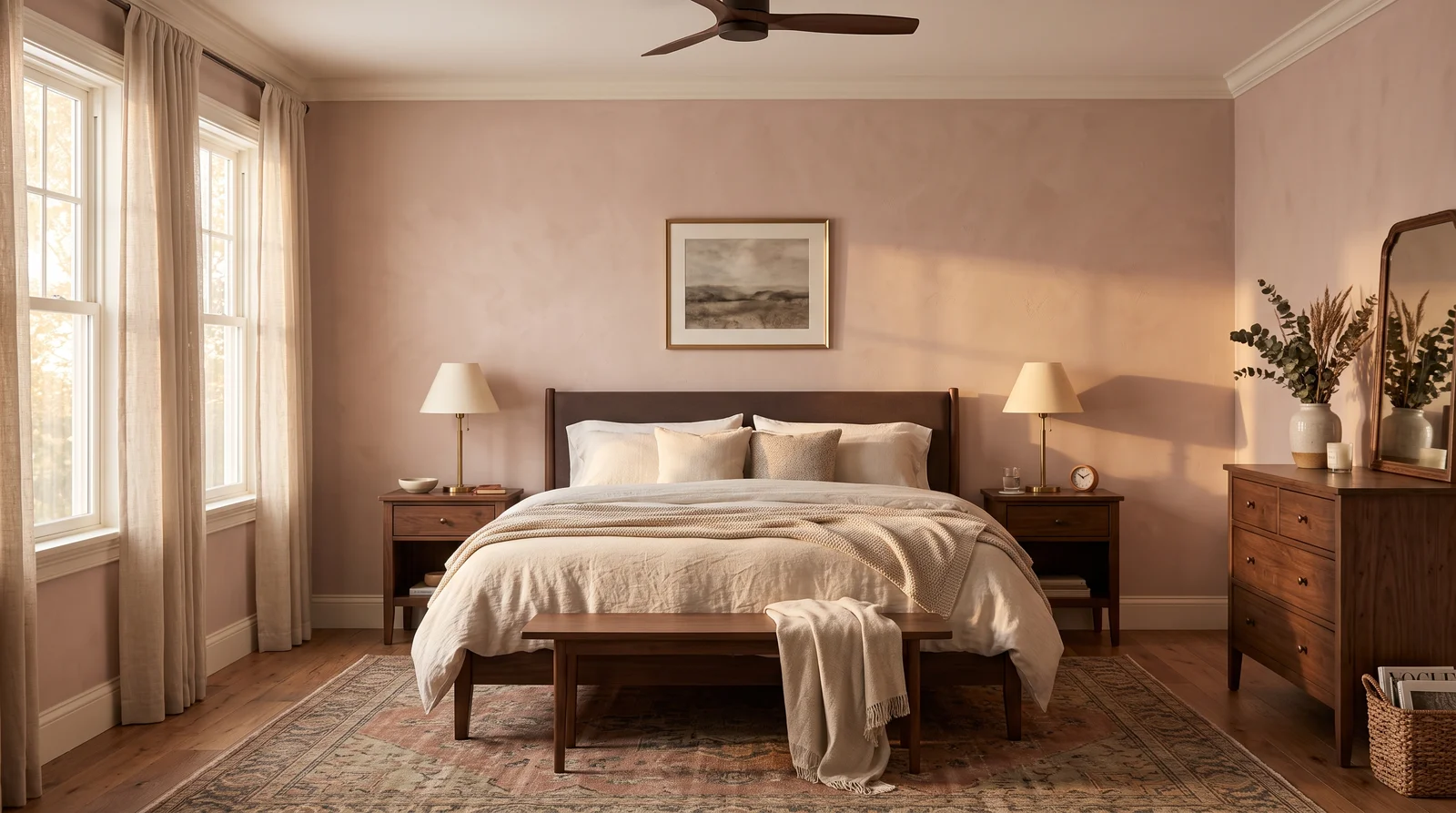
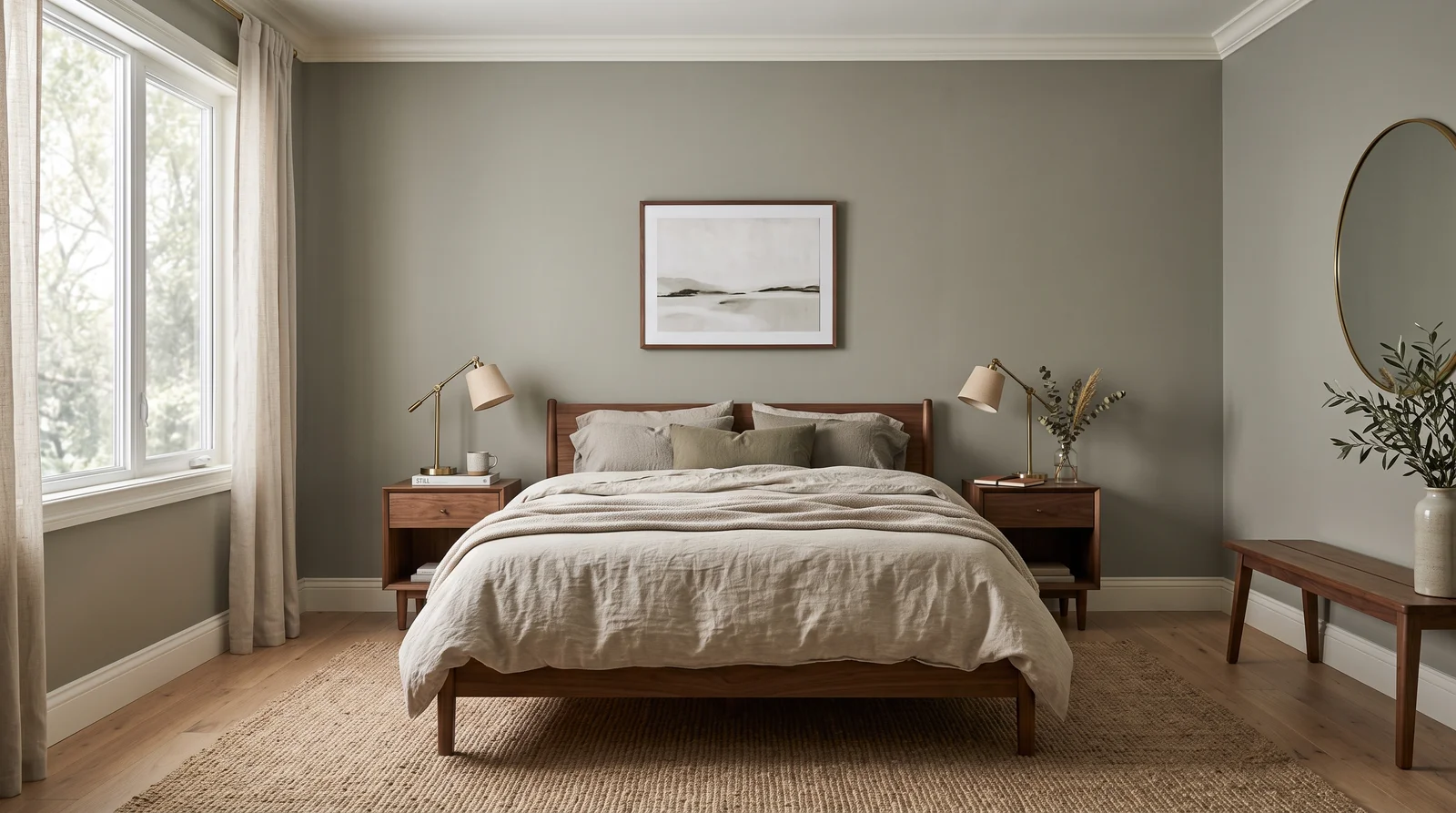
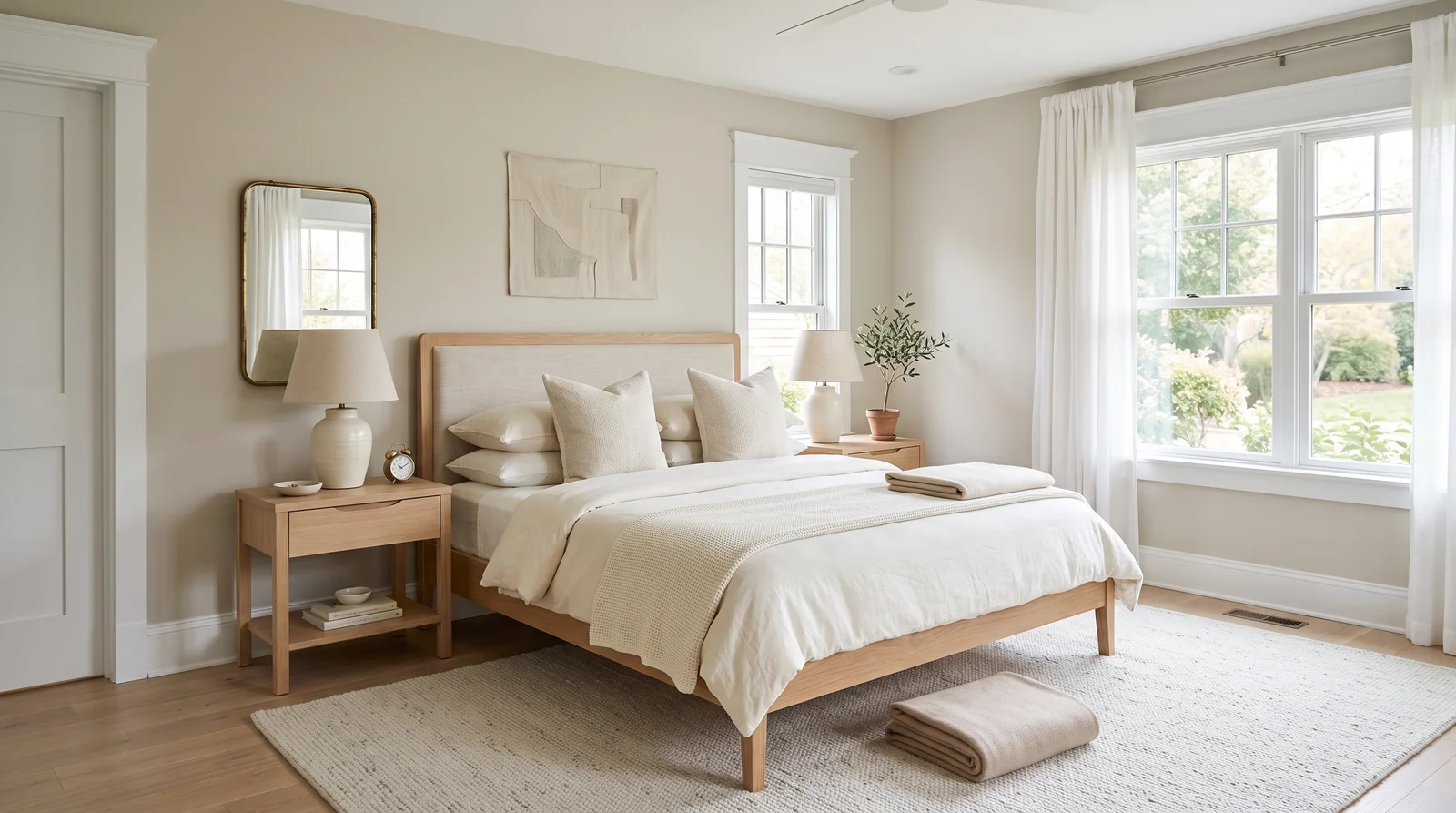
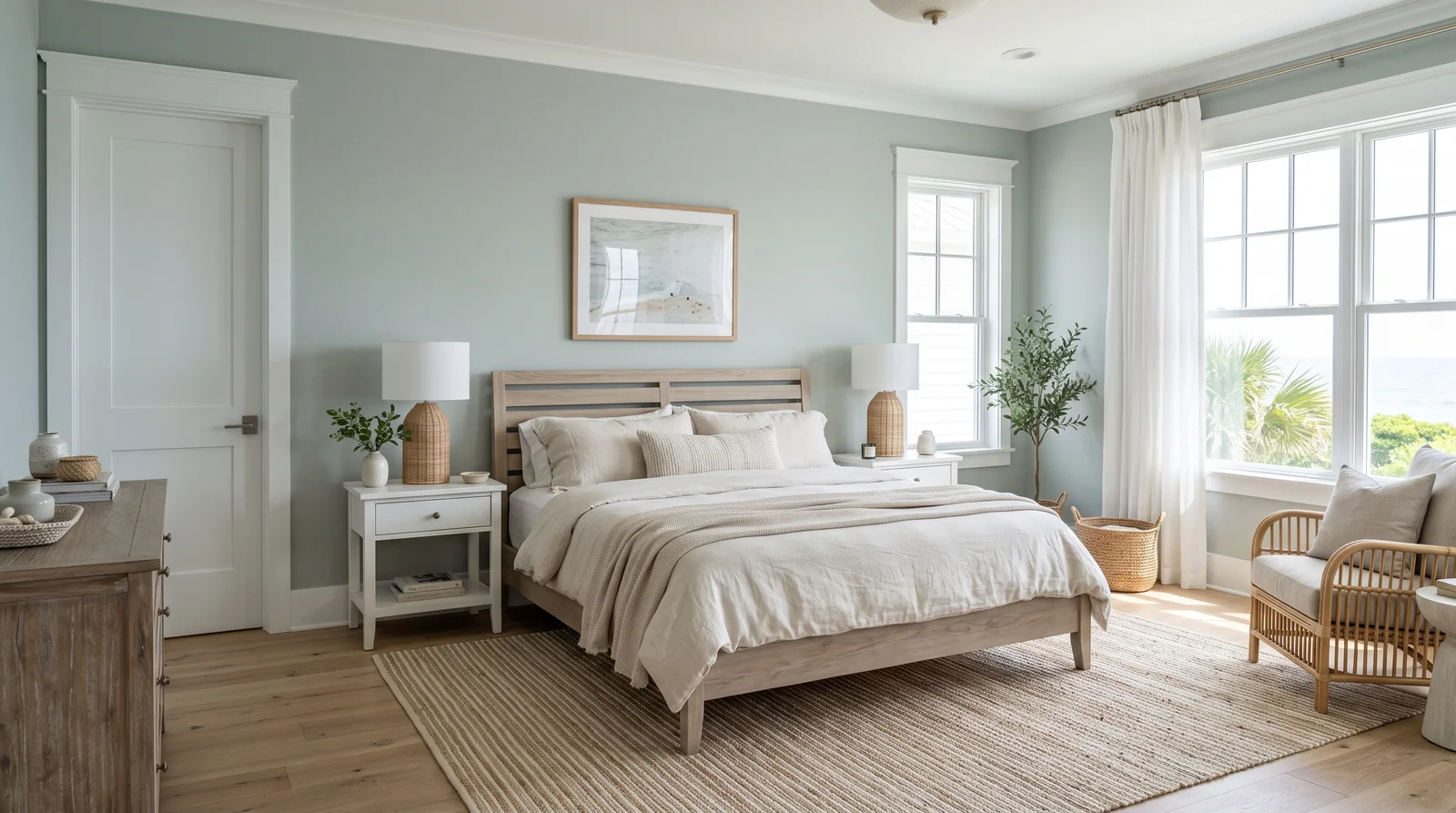
Master Bedroom Paint Colors
Top Picks for the Master Bedroom
4 editor's picksPalettes for the Master Bedroom
Ready-made schemesFull, buyable color schemes built for the master bedroom — walls, trim, and accents matched to real paint.
All Master Bedroom Colors at Every Brand
128 colors · 5 familiesA representative color from every brand that makes this family — most-recognized brands first, with a second pick from the biggest names. Tap any swatch with a curated guide for full spec and cross-brand matches.
Browse by Family Hub
Color is half the decision. The product roundup covers which paint chemistry actually holds up in this room.
About Master Bedroom Paint Colors
A master bedroom is the one room in the house that exists to help you relax. So the color you put on the walls matters more here than almost anywhere else. The right shade can make the room feel calm at the end of a long day and easy to wake up in the next morning.
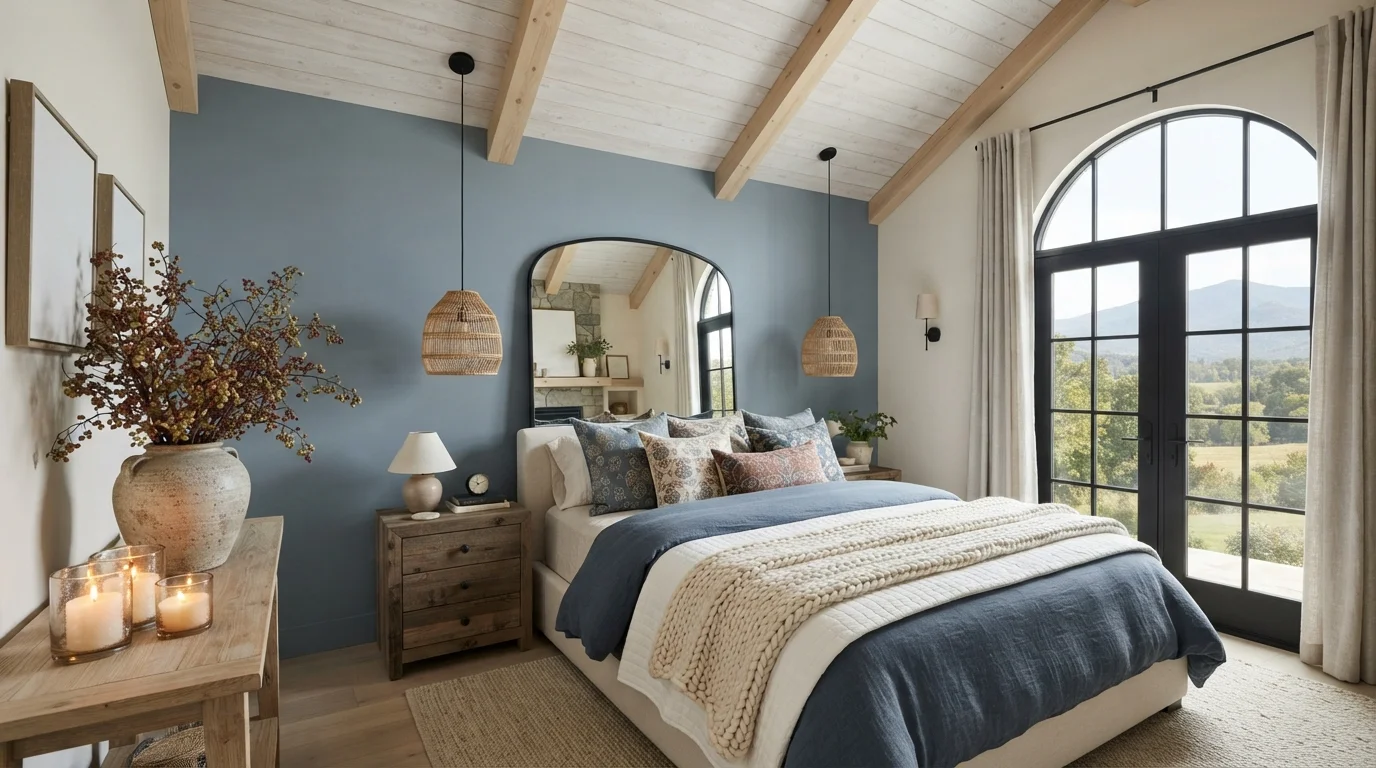
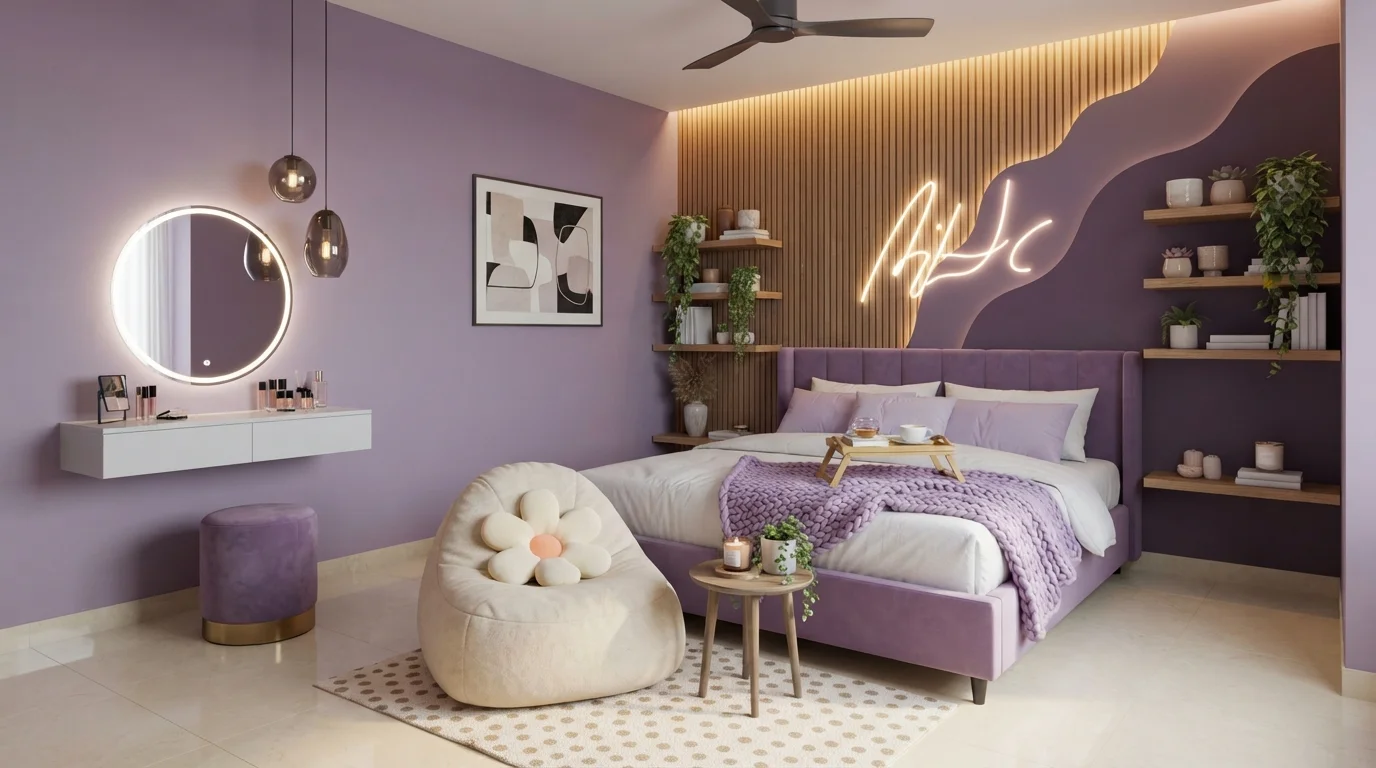
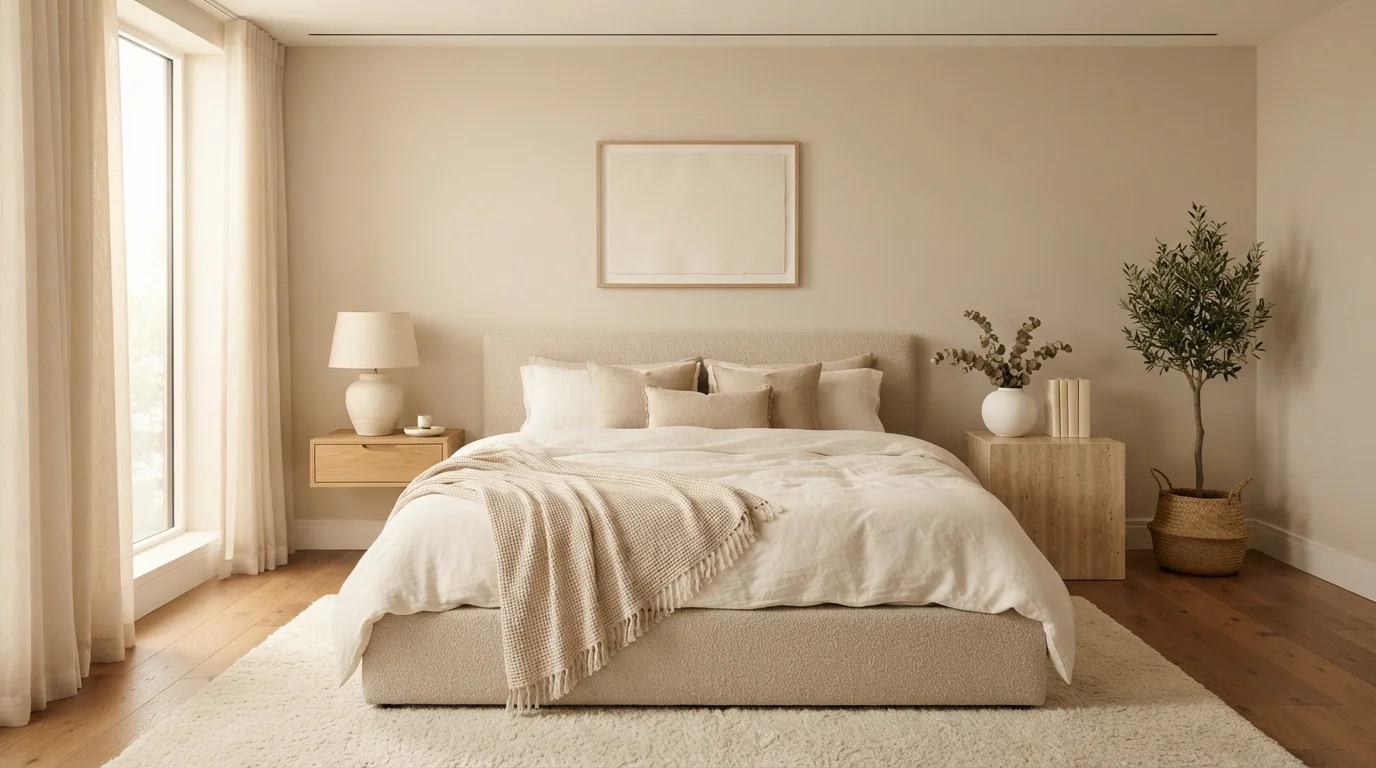
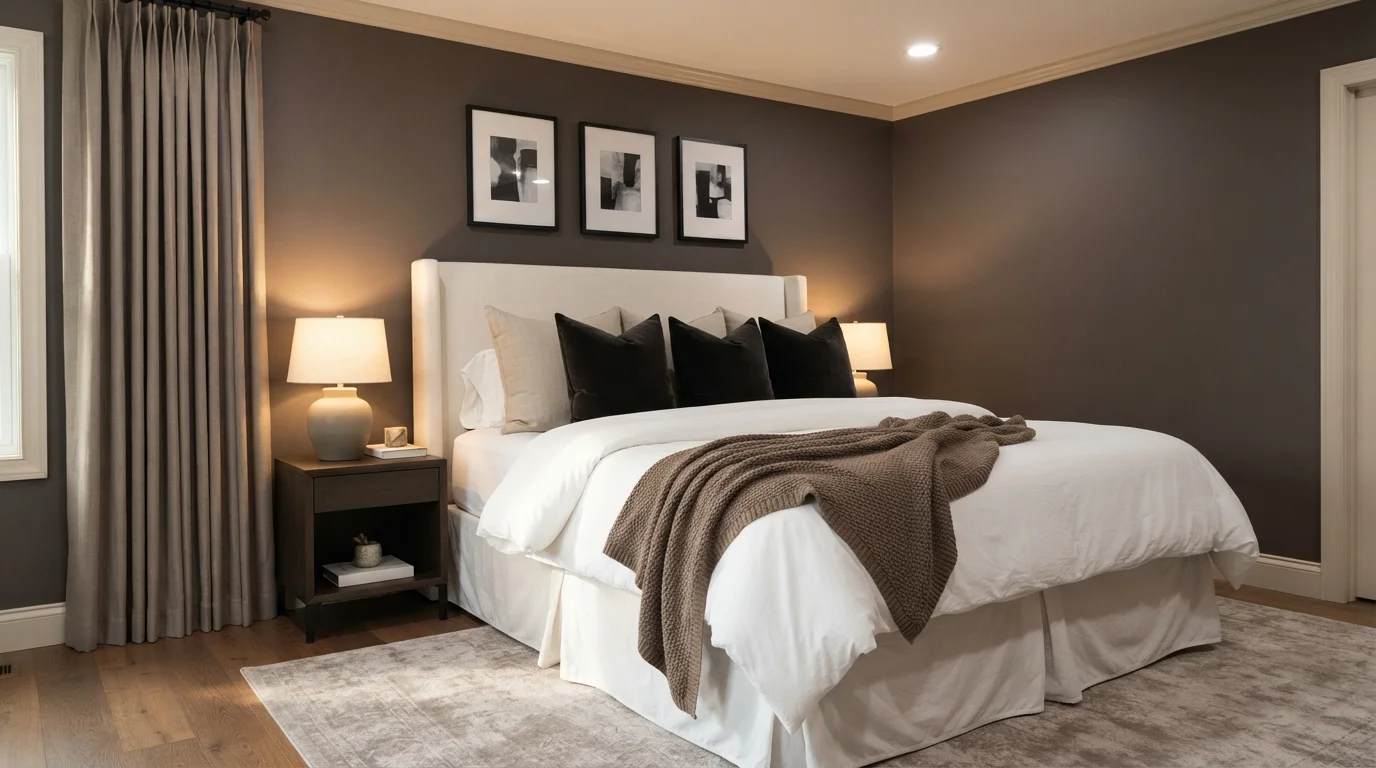
The colors that work best in a master bedroom tend to fall into a few families: soft blues and teals, deep purples and navies, warm neutrals, and grounded browns. Each one sets a different mood, from quiet and airy to cozy and enveloping. Colors like Hale Navy, Aegean Teal, Hague Blue, Revere Pewter, Eggplant, and Old World are good examples of how different a bedroom can feel depending on which direction you go.
Every color shown on this page is mixed to order at the paint counter, so you are not locked into one brand. If you fall for a shade from one brand, a paint store can cross-match it into another brand's paint. That means you can pick the color you love first and sort out the brand later.
The Best Color Directions For A Master Bedroom
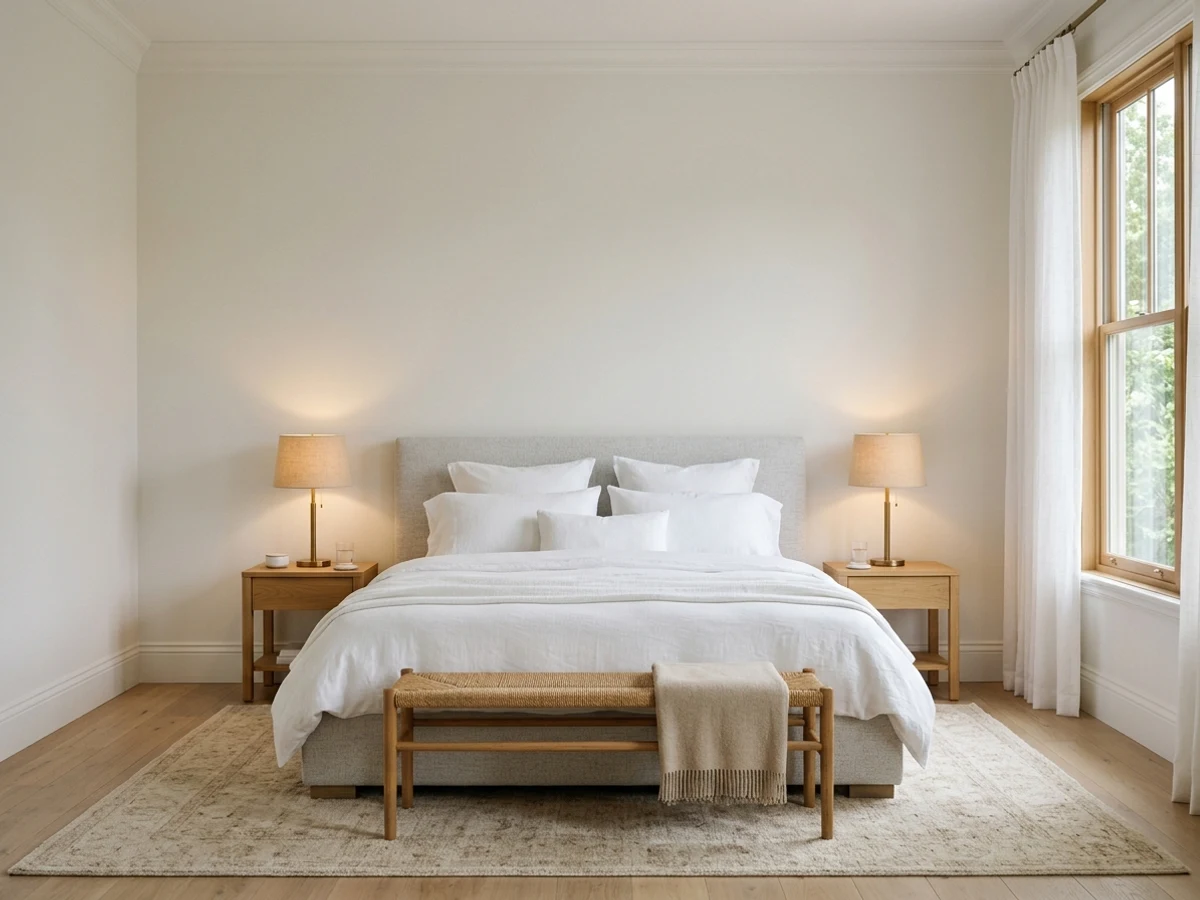
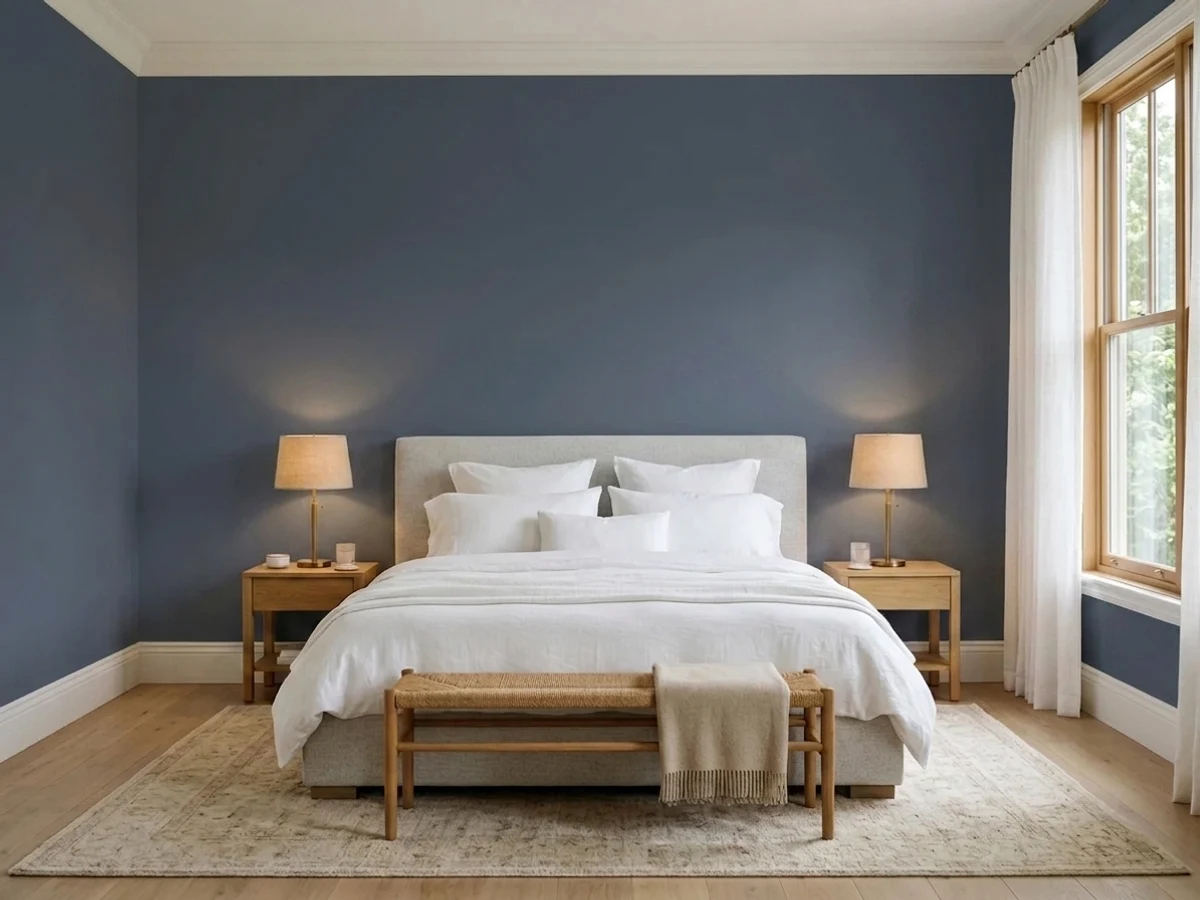
There is no single right color for a master bedroom, but there are a few directions that almost always feel good in this room. Soft blues and teals like Aegean Teal read calm and restful, which is exactly what you want in a space built for sleep. They feel fresh in the morning and quiet at night.
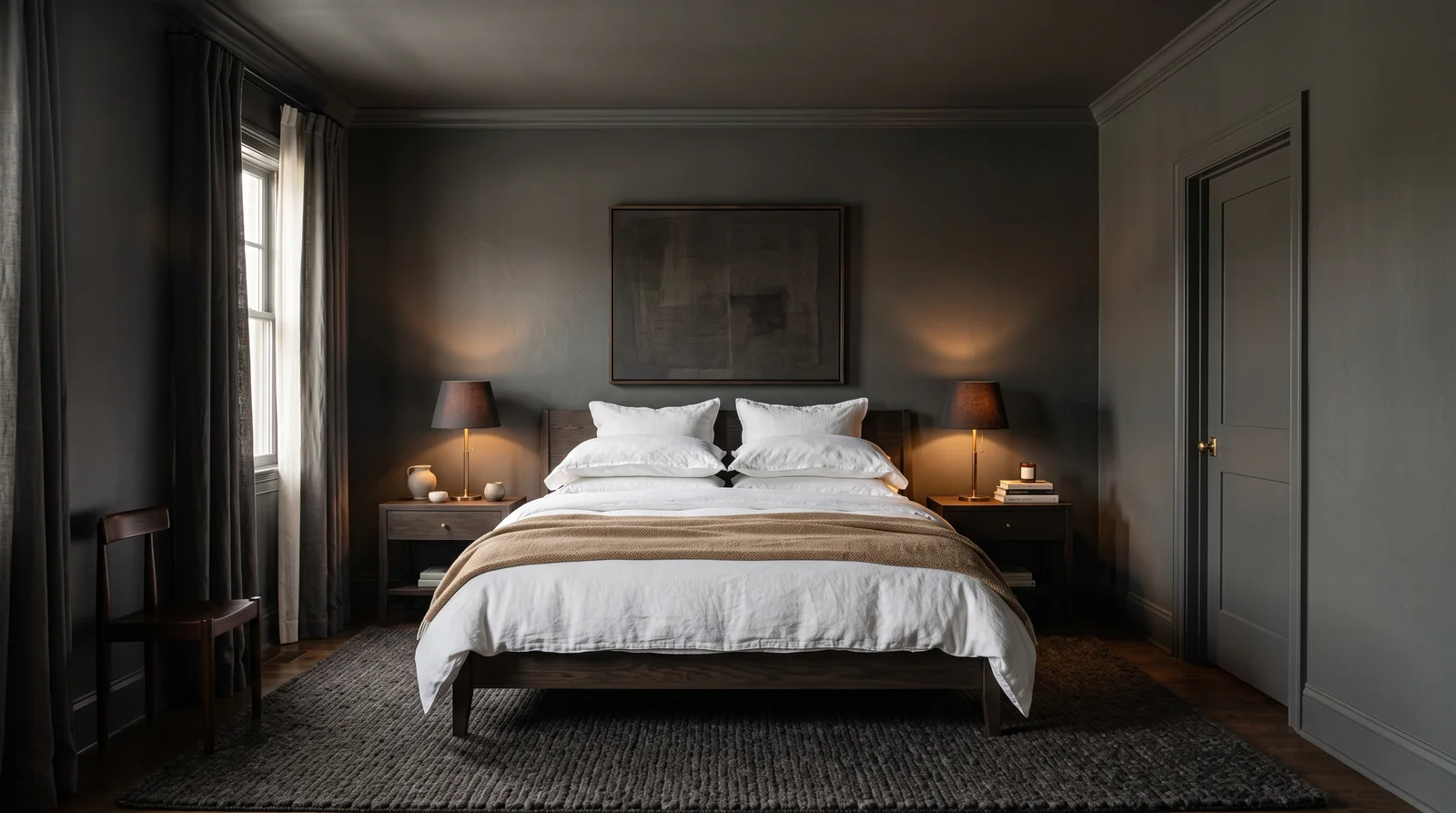
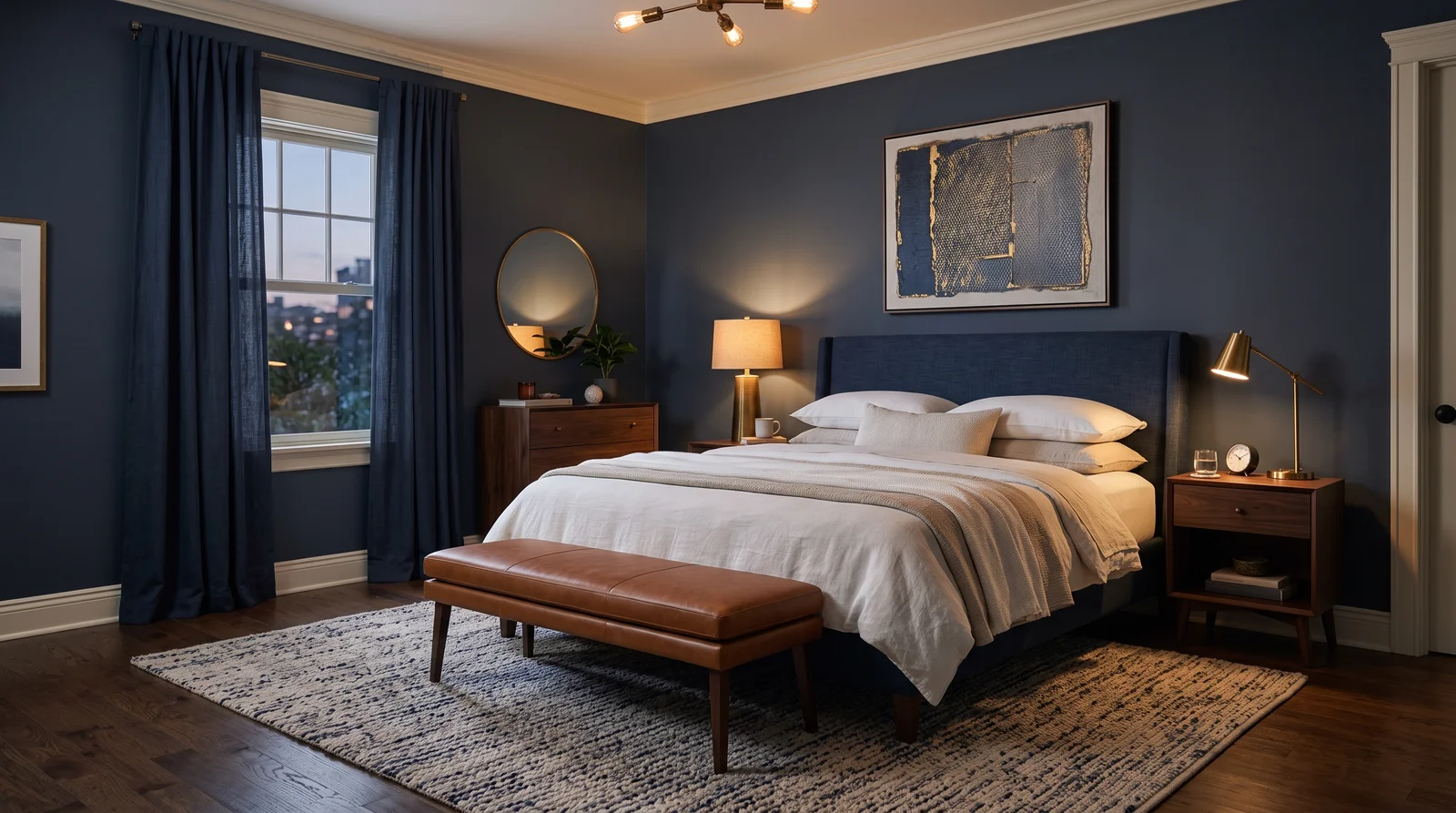
If you want the room to feel like a retreat, go deeper. Navies like Hale Navy, dark blues like Hague Blue, and rich purples like Eggplant wrap the room in a cozy, hotel-suite mood. Warm neutrals like Revere Pewter and grounded browns like Old World are the easy middle path: they feel calm and timeless, and they make it simple to change your bedding and decor over the years without repainting.
Let The Room's Light Choose The Color
Before you commit, look at how light moves through the room. North-facing bedrooms get cool, soft light, so cool colors like deep blues can feel a little flat or chilly there; warm neutrals and browns push back against that. South-facing rooms get strong, warm light most of the day and can handle cooler blues and teals beautifully.
Also think about when you actually use the room. A bedroom is mostly seen in the early morning and at night under lamps, not in bright midday sun. A color that looks great at noon can turn muddy or too dark under warm bulbs, so always test your top pick on the wall and look at it in the evening with your real lamps on before you buy gallons.
The Right Finish For Bedroom Walls
A bedroom is a low-traffic, low-moisture room, so you do not need a tough scrubbable finish here. Most people are happiest with a matte or eggshell sheen on bedroom walls. These flat, soft finishes hide small wall flaws and have very little glare, which keeps the room feeling calm and easy on the eyes.
Save the shinier finishes for the parts that take wear. Trim, doors, and baseboards do well in satin or semi-gloss because those surfaces get bumped and benefit from being easy to wipe. If your bedroom has an attached bathroom or you run a humidifier, lean toward eggshell over dead-flat matte so the walls handle the occasional wipe-down.
Using LRV To Keep The Room Bright Or Cozy
LRV, or light reflectance value, is a 0-to-100 number that tells you how much light a color bounces back. High numbers are light and airy; low numbers are deep and cozy. It is the simplest way to predict whether a color will brighten a room or make it feel snug.
For a small or dark bedroom you want to keep feeling open, lean toward lighter, higher-LRV neutrals like Revere Pewter. If your bedroom gets plenty of light and you want that enveloping retreat feel, lower-LRV colors like Hale Navy, Hague Blue, or Eggplant are exactly the move. Just remember a deep color will make a dim room dimmer, so be honest about how much light you actually have.
Pairing Trim, Ceiling, Flooring, And Fixtures
How a wall color feels depends a lot on what surrounds it. A soft white or off-white ceiling and trim keeps things crisp and lets a color like Aegean Teal or Hague Blue stand out. With warm browns and neutrals like Old World or Revere Pewter, a creamy white trim feels more natural than a stark bright white.
Think about flooring and metals too. Deep blues and navies look sharp with cool flooring and brushed nickel or black fixtures, while browns and purples warm up beside wood floors and brass or bronze. If you have wood furniture or a wood headboard, pick a wall color that flatters its undertone rather than fighting it.
Common Master Bedroom Paint Mistakes
The most common mistake is choosing a color from a tiny chip or a phone screen and skipping a real test. Bedroom colors shift a lot under warm evening light, and a sample painted on the actual wall will save you from an expensive repaint. Always test before you commit.
The other big one is going too bold on all four walls in a room that does not have the light to support it. A deep navy or eggplant can be stunning, but in a dim room it can feel heavy and small. If you love a dark color but worry about the light, try it on one accent wall, or pick a softer, higher-LRV version of the same family.
Master Bedroom Paint Colors — Frequently Asked Questions
What is the best paint color for a master bedroom?+
There is no single best color, but calming families work best here: soft blues and teals, deep navies and purples, warm neutrals, and browns. Aegean Teal and Revere Pewter are easy, restful choices, while Hale Navy, Hague Blue, and Eggplant create a cozier retreat feel. Pick based on the mood you want and how much light the room gets.
What paint finish should I use in a bedroom?+
Matte or eggshell is best for bedroom walls. Both have low glare and hide minor wall flaws, which keeps the room feeling calm. Use satin or semi-gloss on trim and doors since those surfaces get touched more and need to wipe clean. If the room has an attached bath or humidifier, choose eggshell over dead-flat matte.
Should a small or dark bedroom use light or dark paint?+
If the room is small or short on natural light and you want it to feel open, choose a lighter, higher-LRV neutral like Revere Pewter. Dark colors make a dim room dimmer. If you still love a deep shade like Hale Navy or Eggplant, try it on a single accent wall instead of all four.
How does my window direction affect the color?+
North-facing rooms get cool, soft light, so warm neutrals and browns like Old World or Revere Pewter feel more inviting there, and very cool blues can look flat. South-facing rooms get warm light all day and handle cool blues and teals well. Always test your top color on the actual wall and check it under your evening lamps.
What color trim and ceiling go with a dark bedroom wall?+
A soft white or off-white ceiling and trim works with almost any deep wall color and keeps the look crisp. With cool colors like Hague Blue or Hale Navy, a clean white pops nicely. With warm browns and purples like Old World or Eggplant, a creamy white feels more natural than a stark bright white.
Can I get these colors in any paint brand?+
Yes. Every color shown here is mixed to order at the paint counter, and a paint store can cross-match a shade from one brand into another brand's paint. So you can choose the color you love first, then decide which brand and finish you want it mixed in.
How many samples should I test before painting?+
Narrow it to two or three favorites, then paint a large sample patch of each on the actual bedroom wall. Look at them at different times of day, especially at night with your real lamps on, since bedroom light is mostly warm and dim. Living with the samples for a day or two prevents the most common and most expensive painting mistake.