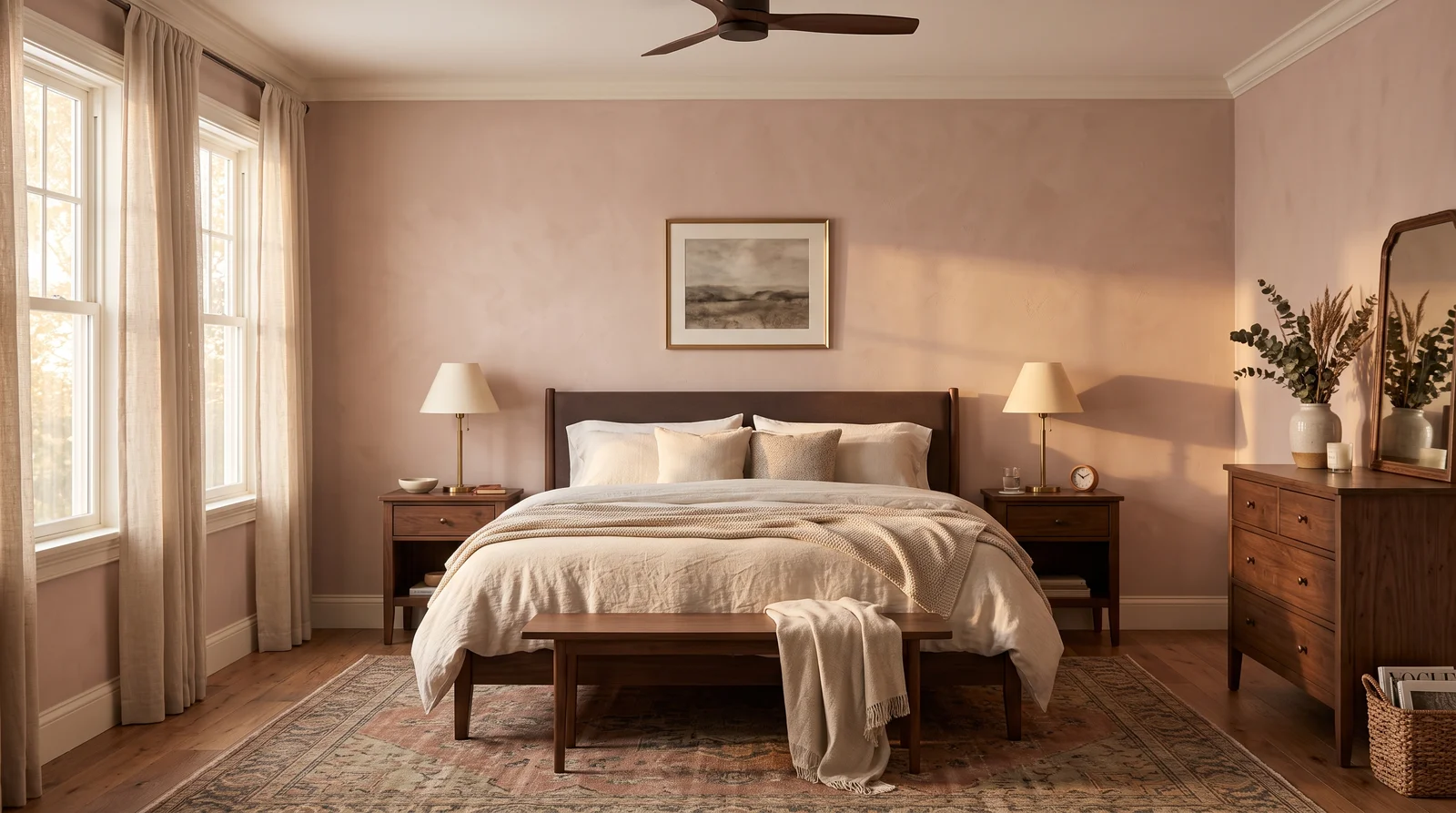
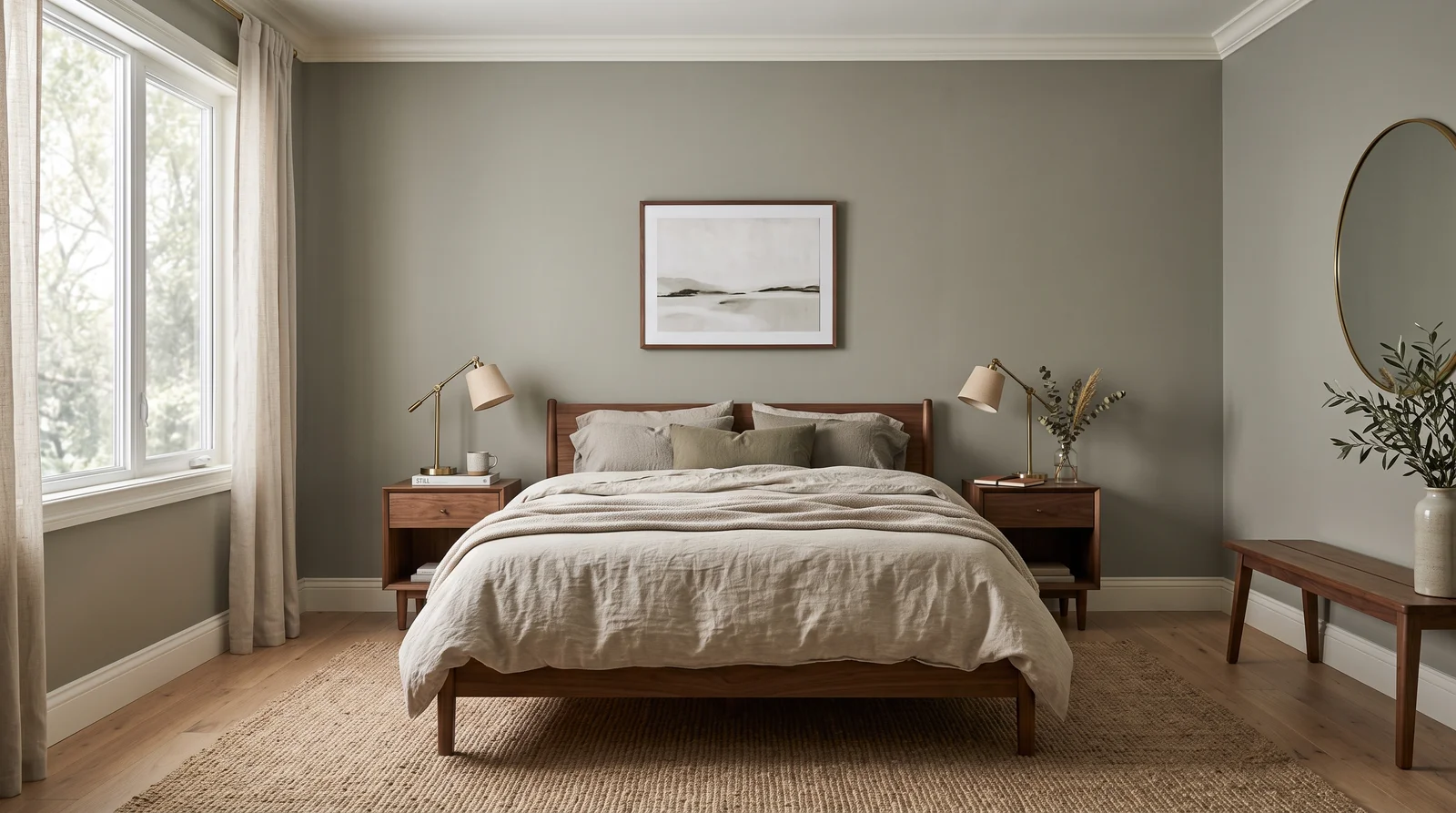
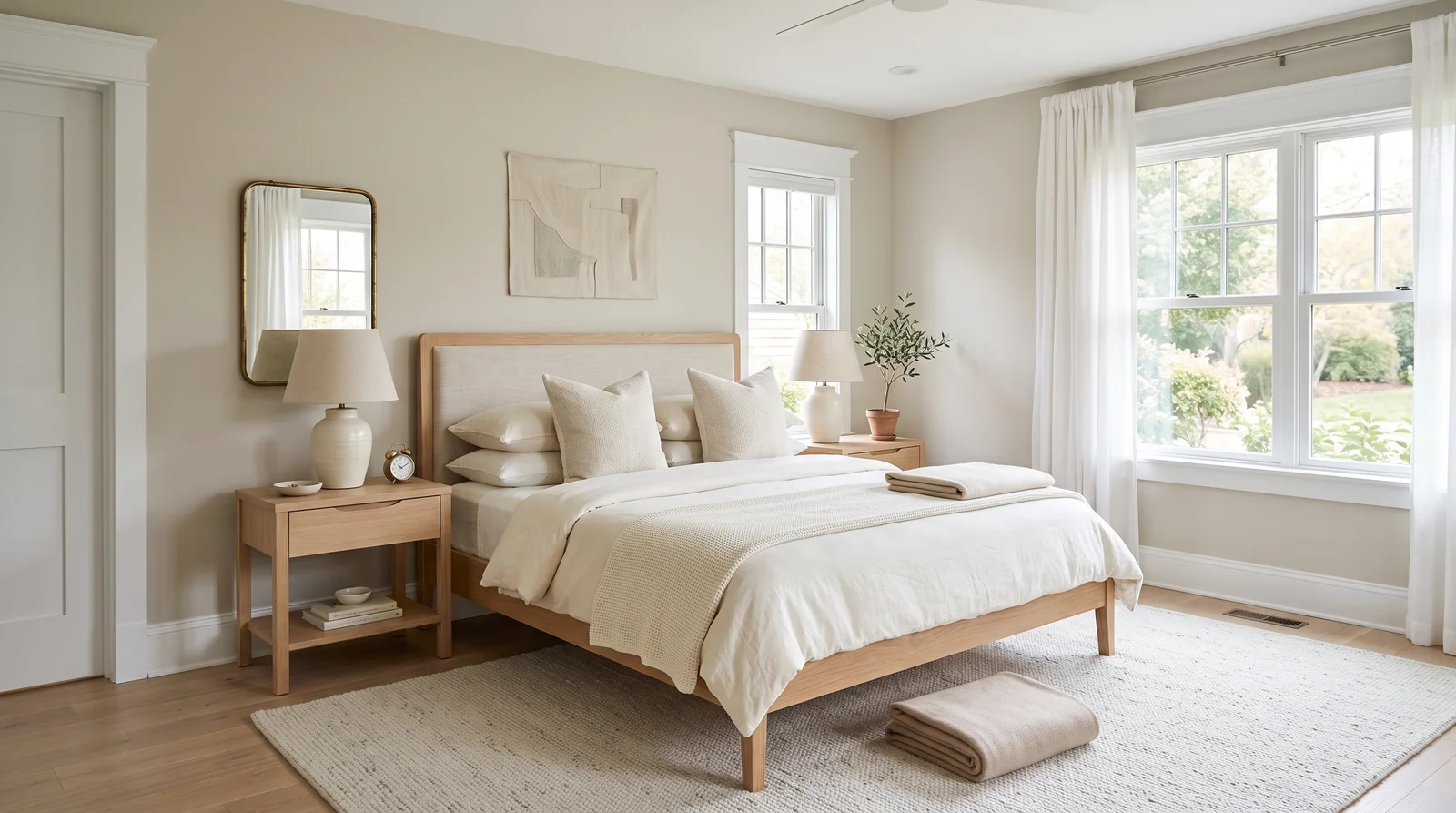
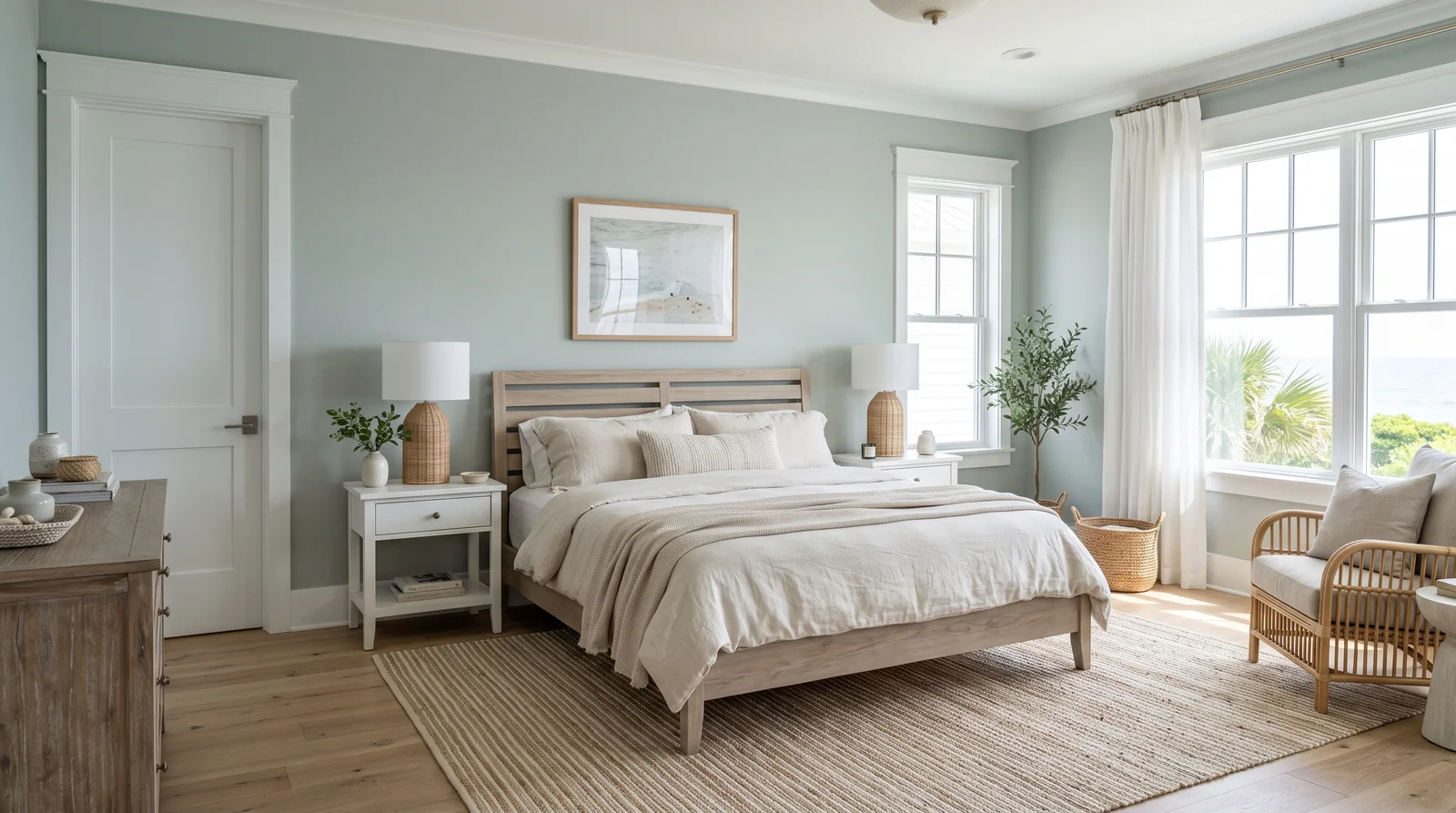
Teal Master Bedroom Paint Colors
1,675 teal colors that work in master bedrooms, drawn from the full ~30,000-color US paint deck. Below: editor's picks specific to master bedrooms, then 30 picks spread across the LRV range — narrow further on the brand page when you've shortlisted.
Teal is the in-between blue-green that reads moody, marine, or jewel-tone depending on which side of the family you pick. Benjamin Moore named Aegean Teal their 2021 Color of the Year and kicked off a wave of designer rooms in soft, slightly desaturated teals — a quieter alternative to navy that pairs especially well with brass, oak, and warm whites.
Editor's Picks: Teal for Master Bedrooms
4 picks30 Teal Picks Across the LRV Range
30 of 1,675 · sorted dark → lightLooking for more? All teal → covers every brand; brand × family pages show full decks.
Teal Master Bedroom Colors at Every US Brand
20 brands · up to 10 picks eachUp to 10 picks per brand spread across the teal LRV range, drawn from each brand's full deck. Tap any swatch with a curated guide for full spec; tap the brand title for the brand's complete teal deck.
Behr
Benjamin Moore
Valspar
Glidden
Sherwin-Williams
Dunn-Edwards
PPG / Glidden
Dutch Boy
Hirshfield's
Kompozit
Diamond Vogel
C2 Paint
Magnolia Home
Clare
Farrow & Ball
Rodda
Annie Sloan
Rust-Oleum
Portola Paints
Other Master Bedroom Color Families
Teal Colors in Other Rooms
Teal Paint Colors for a Master Bedroom
Teal is one of the most rewarding colors for a master bedroom. It reads calm and grown-up without being as predictable as gray or as flat as plain blue. The green underneath teal keeps it feeling restful, while the blue gives it depth, so the room can feel both cozy at night and fresh in the morning. For the one room in the house meant to help you wind down, that mix is hard to beat.
The trick is matching the depth of teal to how much light your bedroom gets and how you actually use the space. A bedroom you only see early and late wants a different teal than a bright corner room. The good news is that every teal on this page can be mixed to order at the paint counter, so once you find a shade you like you are not locked into one brand. You can carry the same color across whatever line your store stocks.
Why Teal Works in a Master Bedroom
A master bedroom is a place to slow down, and teal supports that better than a cool gray or a sharp navy. The green tone in teal feels natural and easy on the eyes, which helps the room read as a retreat instead of an office. It pairs with both warm wood and crisp white, so it fits most existing furniture without a fight.
The one thing to watch is that teal is a real color, not a near-neutral. A deep teal on every wall will feel enveloping and dim, which many people love in a bedroom but some find too dark. If you are unsure, an accent wall behind the headboard gives you the color where it matters most while keeping the rest of the room light.
Choosing the Right Depth for Your Light
Light is what decides whether a teal looks like a soft spa color or a moody jewel tone. The simplest guide is LRV, or light reflectance value, a number from 0 to 100 that tells you how much light a color bounces back. A teal in the 40s to low 50s stays airy and works well in a bedroom with limited or north-facing windows, while a teal in the teens to 30s turns rich and cocooning and suits a bright, sunny room that can carry the weight.
North light is cool and will pull teal toward its blue side, sometimes making it feel chillier than the swatch. South and west light is warmer and softens teal toward green, which is usually flattering. Always tape a sample to the wall and look at it at the times you are actually in the room, which for a bedroom means early morning and after dark under your lamps.
The Right Finish for Bedroom Walls
A master bedroom is a low-traffic, low-moisture room, so you do not need a heavy-duty washable sheen here. A matte or eggshell finish is the sweet spot. Both hide small wall flaws well, and a flat or matte sheen in particular keeps a deep teal looking soft and velvety instead of plasticky, which matters more on a saturated color than on a pale one.
Gloss is the enemy of a restful teal wall because any sheen will throw glare from a bedside lamp or a window and flatten the color. Save the slightly tougher satin or semi-gloss for trim, doors, and any built-ins, where you actually want a little wipeable durability. Keeping the walls low-sheen and the trim a touch glossier also gives the room a clean, finished edge.
Pairing Teal With Trim, Ceiling, and Furnishings
The easiest and most timeless pairing is teal walls with soft white trim and a ceiling that is either the same white or a hair lighter. A warm white keeps the room cozy, while a cooler white makes the teal look crisper and more modern. If you want the room to feel taller and calmer, painting the ceiling the same white as the trim quiets the whole space.
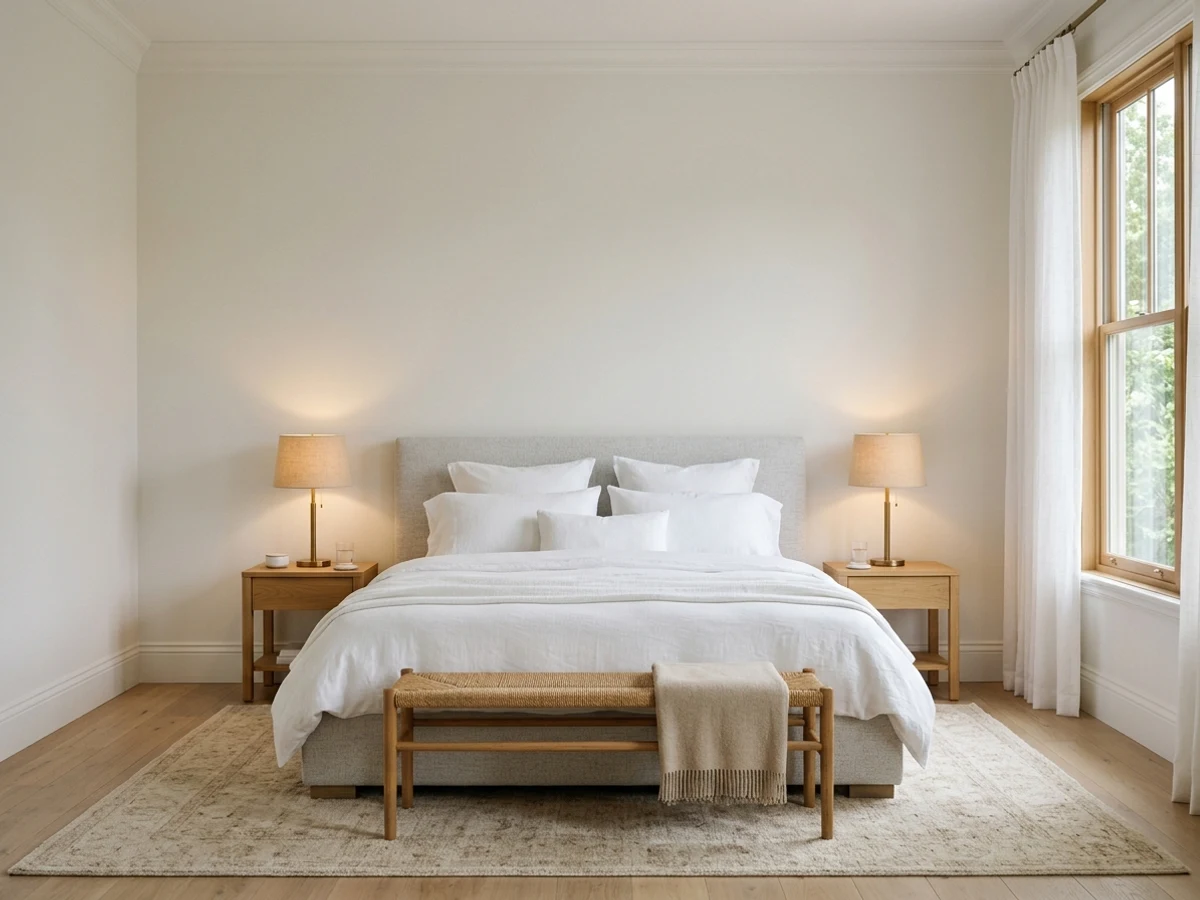
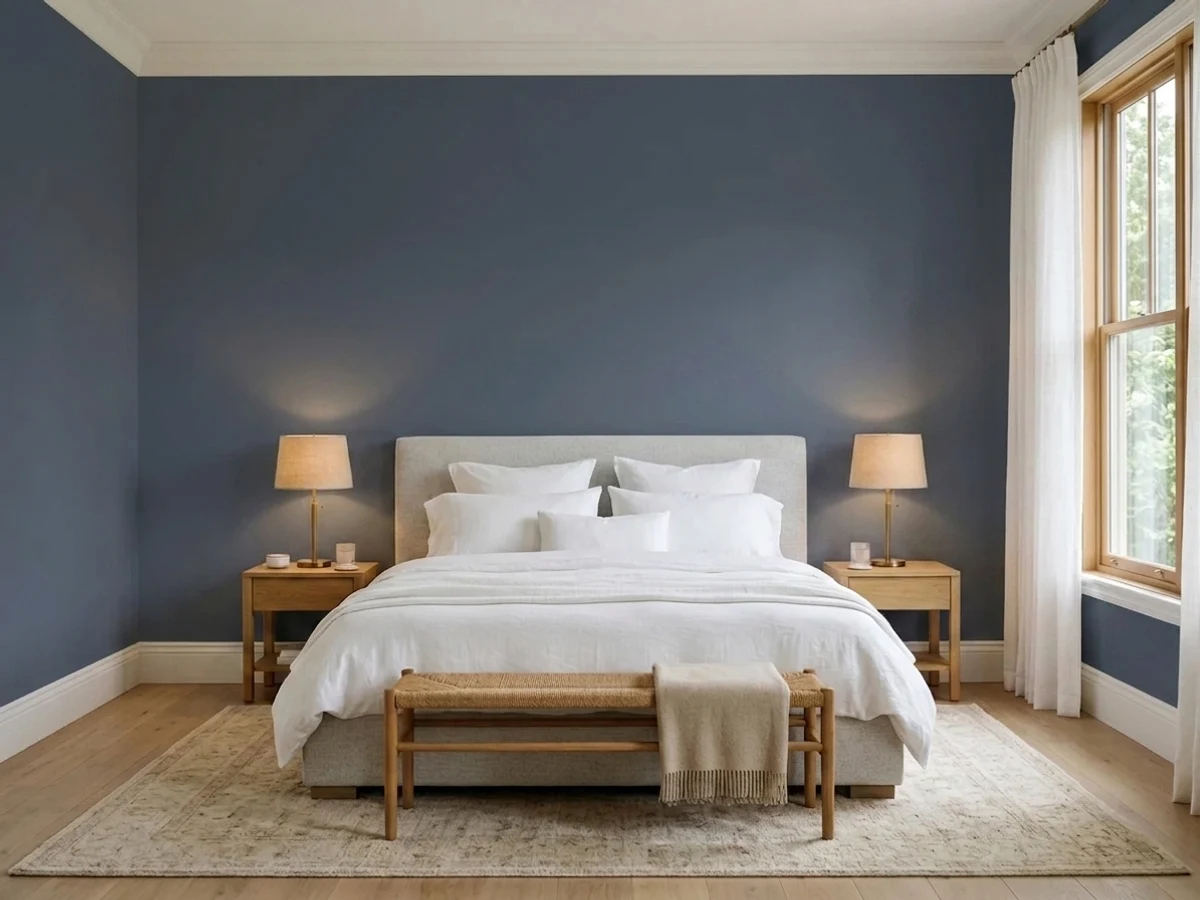
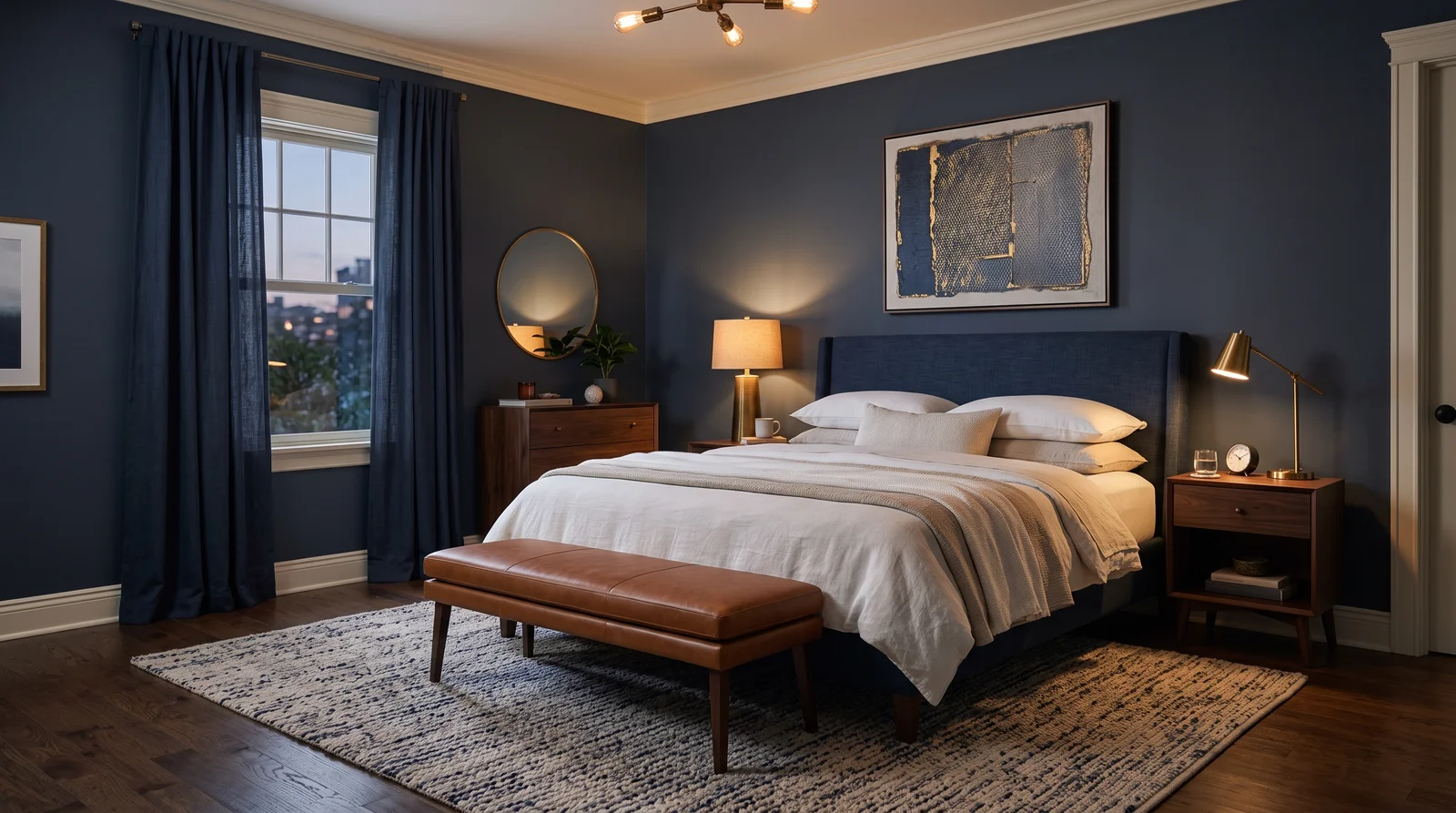
Teal is also generous with metals and wood. Brass and warm gold fixtures, lamps, and drawer pulls pop beautifully against it and add a little warmth, while matte black reads more tailored and current. For furniture, natural oak and walnut both look great, and a cream or oatmeal headboard, rug, or bedding keeps a deep teal from feeling too closed in. Remember that any teal here can be cross-matched to another brand, so you can match an existing built-in or door without re-doing the whole room.
Common Mistakes to Avoid
The biggest mistake is picking the teal under store lighting and skipping the sample on your own wall. Teal shifts hard between blue and green depending on your light, and a chip that looked perfect in the aisle can turn cold and clinical in a north-facing bedroom. Buy a sample, paint a big patch, and live with it for a day or two.
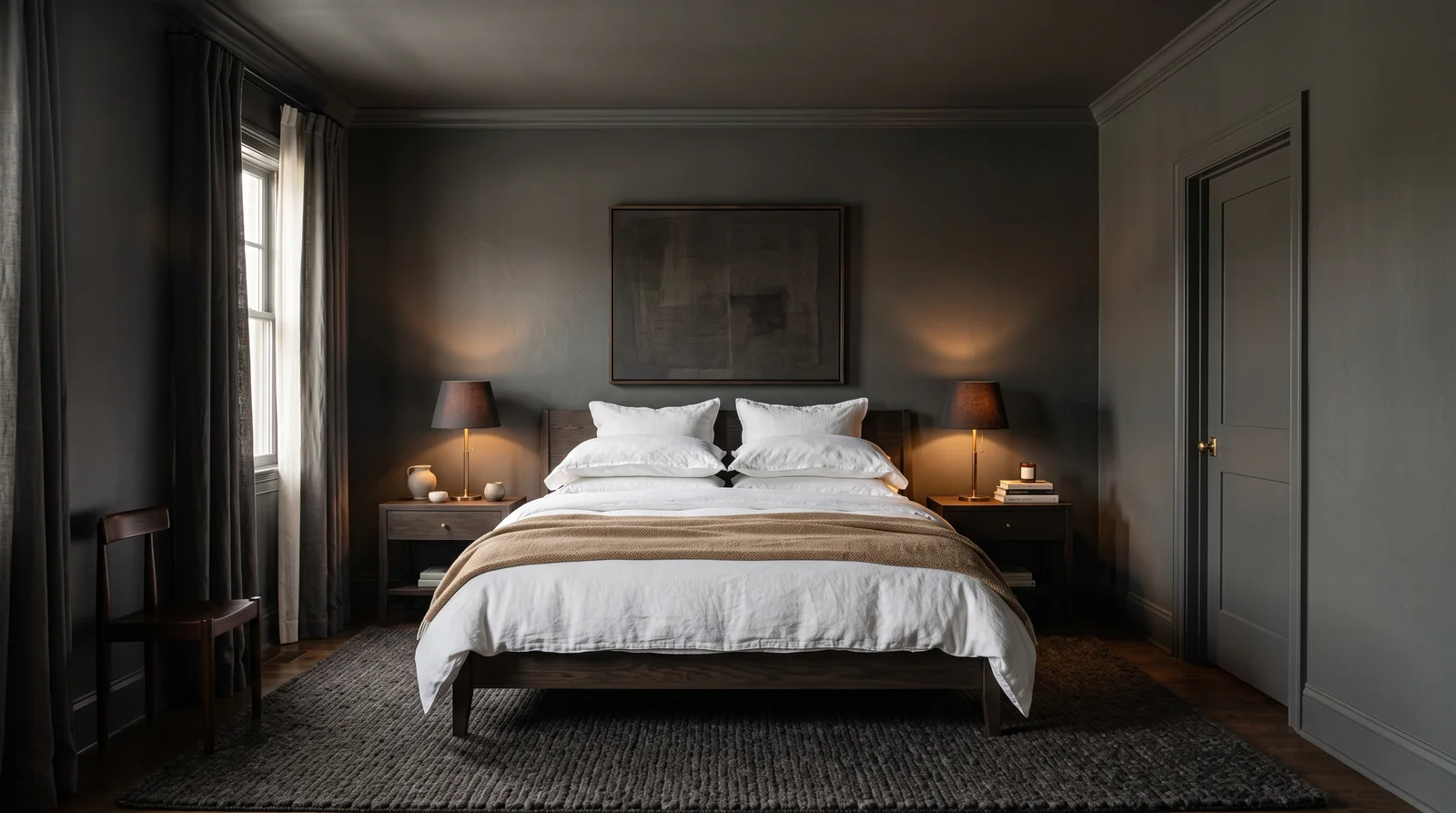
The second mistake is going too dark across all four walls in a room that does not get much light, which can leave the bedroom feeling like a cave at the wrong times of day. If you love a deep teal but the room is dim, use it on one wall or below a chair rail and keep the rest light. Finally, do not over-accessorize with more blues and greens, a saturated teal already does the work, so let neutrals, wood, and a single metal do the supporting.
Teal Master Bedroom Paint — Frequently Asked Questions
Is teal too bold for a master bedroom?+
Not at all, as long as you match the depth to the room. A soft, lighter teal feels calm and spa-like and suits almost any bedroom, while a deep teal creates a cozy, enveloping retreat. If you are nervous, start with one accent wall behind the bed and keep the other walls light.
What sheen should I use for teal bedroom walls?+
Stick with a matte or eggshell finish on the walls. Bedrooms are low-traffic and low-moisture, so you do not need a washable high-sheen paint, and a low-sheen finish keeps a saturated teal looking soft instead of shiny. Use satin or semi-gloss only on trim, doors, and built-ins.
What LRV teal is best for a dark or north-facing bedroom?+
Aim for a teal with an LRV in the 40s to low 50s so it reflects more light and stays airy. North light is cool and will already push teal toward blue, so a lighter, slightly greener teal keeps the room from feeling cold. Always test a sample in that exact room before committing.
What trim and ceiling colors go with teal?+
Soft white trim is the classic choice and works with any teal. For the ceiling, use the same white or a shade lighter to keep the room feeling open. A warm white makes the room cozier, while a cooler white makes the teal look crisper and more modern.
What metal finishes look best with teal?+
Brass and warm gold are the standout pairing and add a little glow against teal, while matte black reads more tailored and contemporary. Both work for lamps, pulls, and fixtures, so choose based on the mood you want. Avoid mixing too many metals in one room.
Can I match this teal across different paint brands?+
Yes. Every color shown here is mixed to order at the paint counter, and the same shade can be cross-matched into whatever brand or product line your store carries. That lets you match an existing door, built-in, or trim color without redoing the whole room.