Hunter Green
The dark green people actually mean when they say 'hunter green,' reviewed honestly: where it reads rich and traditional, the light that turns it black, and what to pick instead.

Jessica has spec'd whites and neutrals for more than 300 rooms and keeps a sample wall of painted drawdowns in her studio. Every color review is checked against real reader rooms in the comments and re-tested when a formula changes. About the testing process →
- 1Hunter Green5
- 2Sage Green22
- 3Evergreen Fog30
The Fast Verdict
Hunter Green is the deep, true green people picture when they say the name out loud — closer to a billiard table or an old racing car than to anything called sage. Benjamin Moore has kept it in the Color Preview collection for decades, and it still shows up on more front doors and kitchen islands than almost any other dark green in the deck. At LRV 5 it is genuinely dark, and it will go near-black the moment the light drops — but give it real daylight or a gloss sheen and it holds its color better than most colors this deep.
Front doors and shutters · kitchen islands and cabinets · home offices and libraries · dining rooms with real daylight · anyone who wants a serious, traditional green, not a trendy sage
You want the room to feel bright · your only light source is a small north window · you pictured sage, olive, or a muted green, not a true dark green · you want a whole-house exterior color, not an accent
- A genuine, confident dark green — reads green, not olive or brown, in real light
- A timeless front-door and shutter color that never reads trendy
- Bold, designer-grade choice for a kitchen island or a run of cabinets
- Sold in both satin and high-gloss in Benjamin Moore's Advance enamel — built for doors and trim specifically
- Deep enough to hide scuffs and fingerprints on high-touch surfaces like doors and cabinet fronts
- At LRV 5 it reads near-black without real daylight
- Too dark and saturated for a whole-house exterior color
- Cool blue-gray undertone fights honey oak and golden-toned wood
- Deep, saturated colors like this need a tinted primer and full coverage — expect more prep than a pale color
What Color Is Hunter Green, Really?
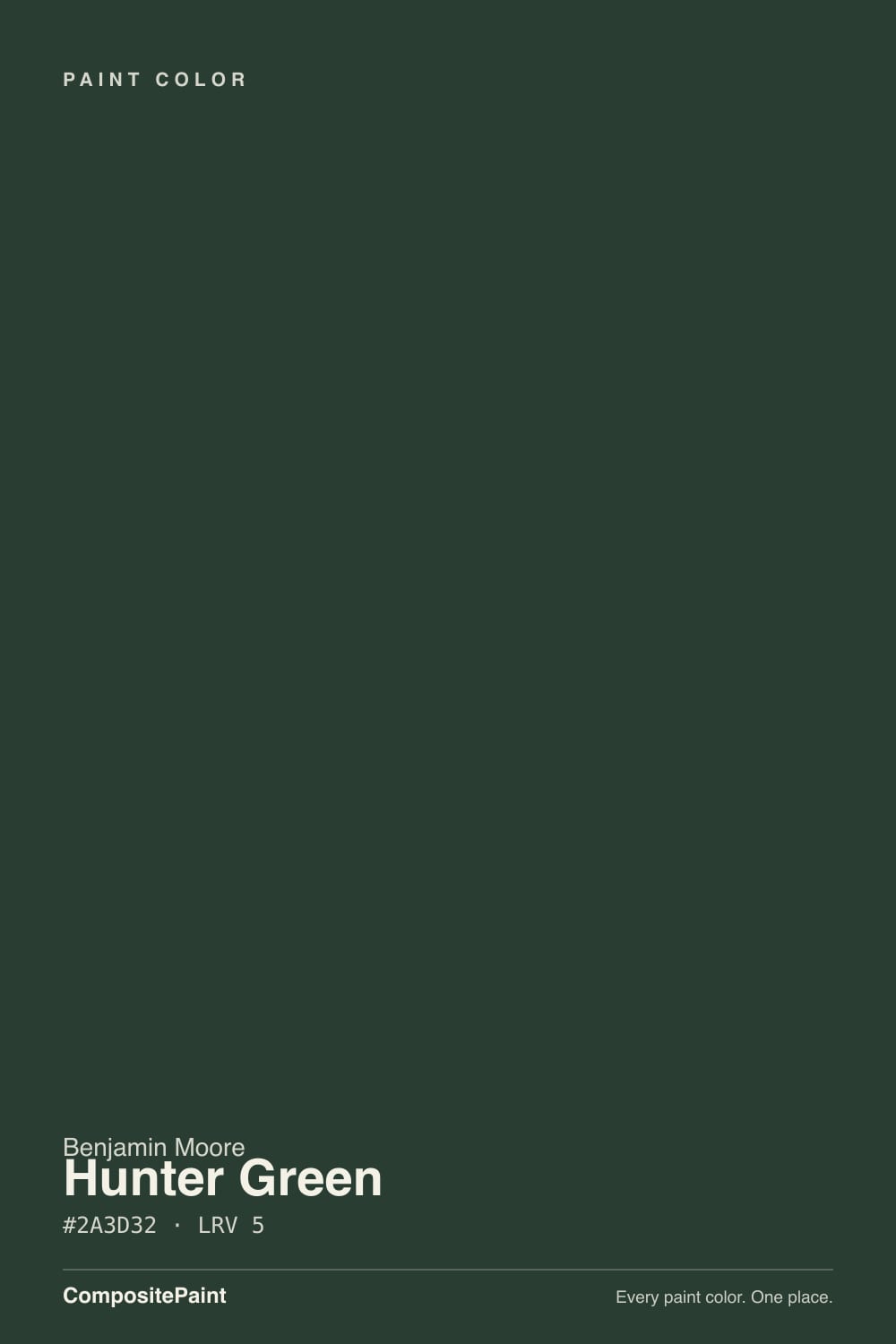
A true, saturated dark green — no yellow, no gray wash pretending to be neutral. Benjamin Moore has carried it for decades in the Color Preview collection, the deck's home for confident, fully-saturated colors rather than the softer Classics and Historical lines. It reads formal and a little old-money: a hand-painted front door on a brick townhouse, a hunting-lodge study, a billiards room. It is not trying to be a modern sage or a muted olive — it is a proper dark green, and it behaves like one.
The undertone leans cool: a whisper of blue-gray keeps it from tipping toward olive or brown, which is the more common failure mode for dark greens this deep. Compared to Essex Green, the other classic BM dark green, Hunter Green sits noticeably brighter and stays more clearly green at a glance, where Essex Green reads almost black even in decent light. It is still a low-LRV color — around 5 in our deck, 6.4 on Benjamin Moore's own listing, both firmly in near-black territory — so "brighter than Essex Green" is a relative claim, not a promise of a light-filled wall.
Its real home is trim, not walls: Benjamin Moore sells its Advance enamel specifically in this color in both satin and high-gloss, which tells you how the brand itself expects it to be used — doors, shutters, cabinets, built-ins. It can absolutely carry a wall in the right room, but the product line signals door-and-trim color first, wall color second.
Where It Shines
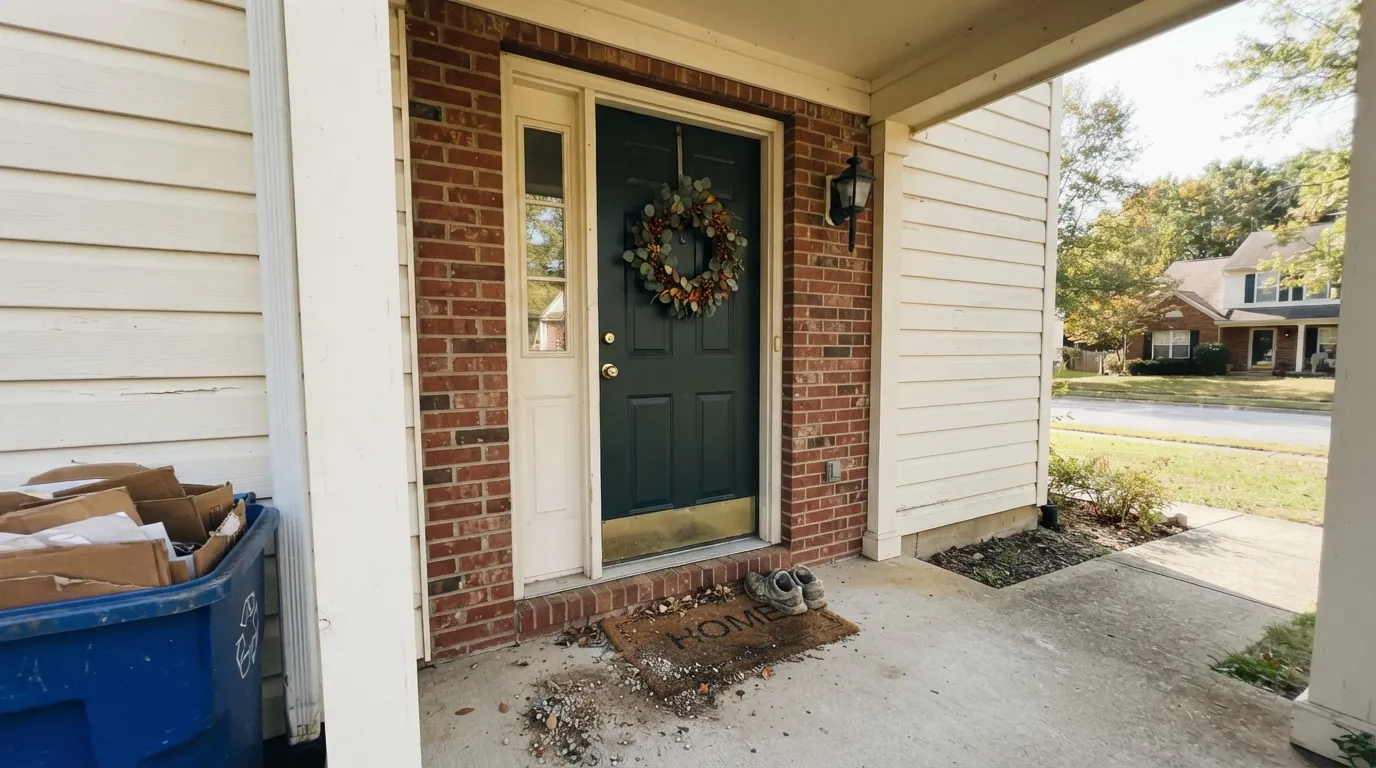
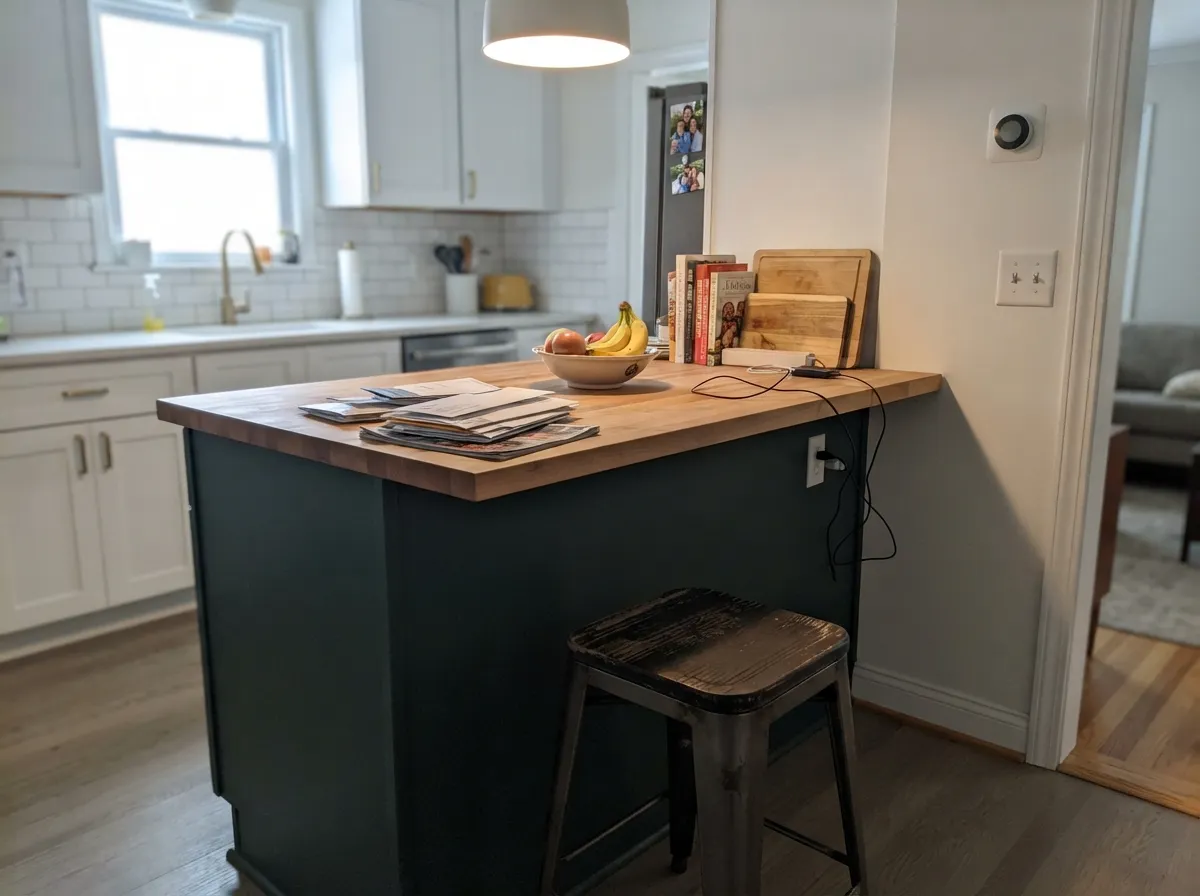
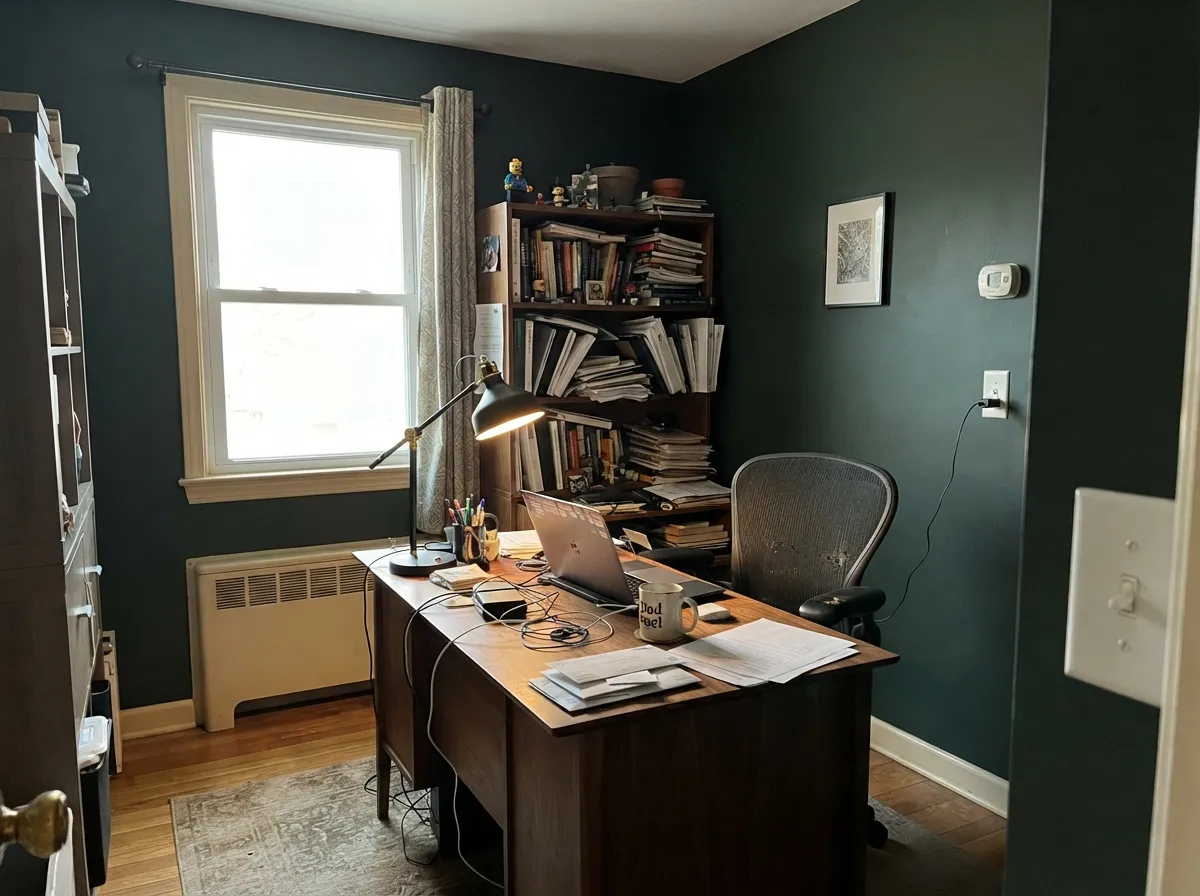
Put it where gloss and daylight can do their work and it is one of the most dependable dark greens in the deck. On a front door in semi-gloss or high-gloss it catches real exterior light and reads rich, traditional, and unmistakably green rather than black — the look people are shopping for when they search this name. On a kitchen island with white perimeter cabinets and brass hardware it is a modern-classic move that photographs well and never looks dated. In a lamplit home office or library with leather, walnut, and brass, it goes moody in exactly the good way.
Where It Fails
Almost every disappointed review of Hunter Green comes from one of three predictable mismatches, and all three are visible before the first coat if you know to look for them.
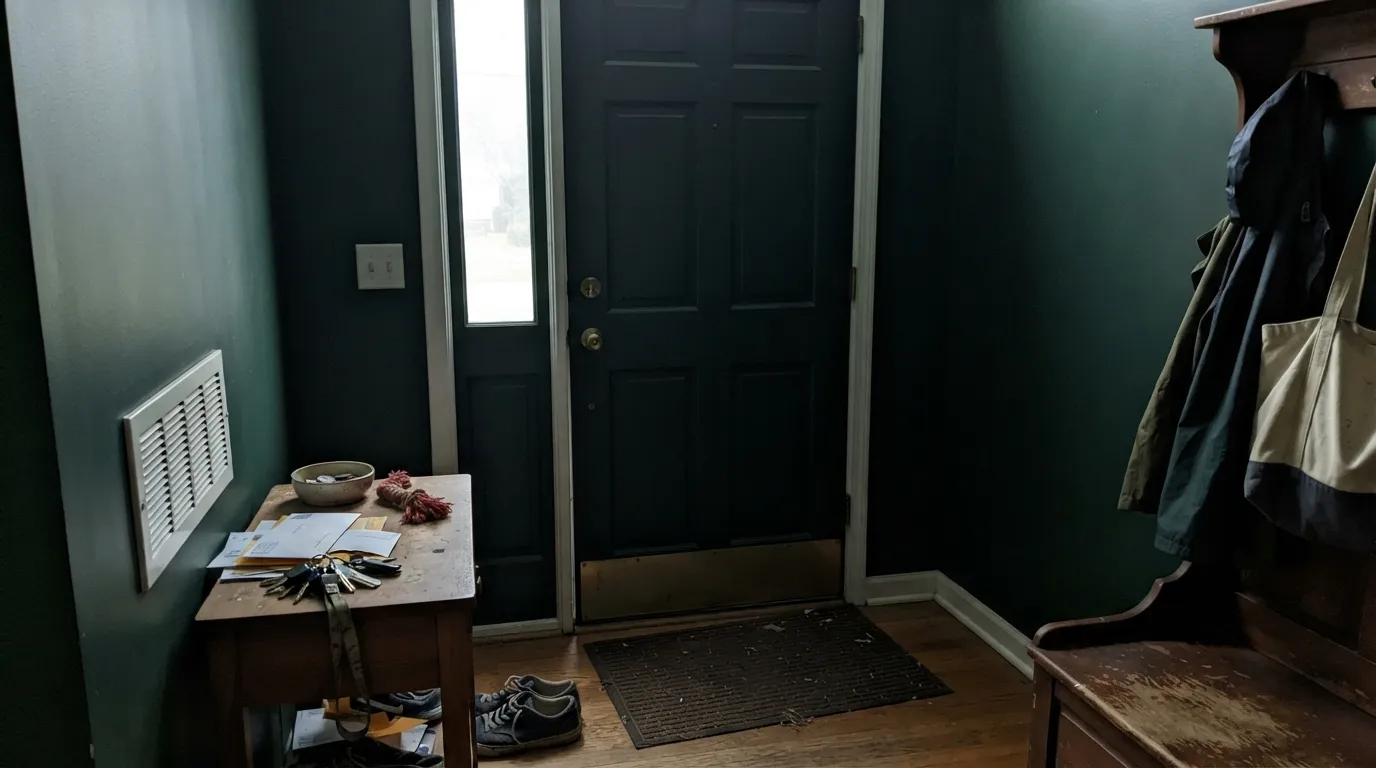
At LRV 5 this is a near-black color by the numbers, and without real daylight it behaves like one. Walk past it at night or in a shaded hallway and you will see a dark silhouette, not a green door. This is not a defect — every color this deep does the same thing — but if the room only gets indirect light, budget for it to read black most of the day.
As a front door, shutters, or trim accent it is a classic. Painted across an entire house facade, the same saturation that looks rich on a door reads flat and almost black from the street, and the "hunter green" identity people bought it for disappears into the siding. Keep it to the accents; let a lighter body color carry the house.
The cool blue-gray undertone sits at odds with orange-leaning honey oak, golden pine, and most builder-grade stained trim — both sides look worse next to each other. It pairs far better with white oak, black walnut, ebonized wood, or simple painted white trim than with anything warm and yellow.
Room by Room
The single most reliable use of this color. Semi-gloss or high-gloss catches porch light and passing headlights, and the depth reads as intentional and traditional rather than dark for its own sake. Pair with a lighter body color and brass or black hardware.
Excellent on a single island or a run of lower cabinets under white perimeter cabinets and a light countertop. Satin urethane-fortified enamel wipes clean and hides handprints better than a lighter color would. A whole kitchen in Hunter Green is a much bigger bet than an island.
With warm lamps, leather, and wood shelving it goes rich and cave-like on purpose. It works best as a considered choice for a room used mostly in the evening, not the brightest room in the house.
A dining room that gets real daylight and runs on a dimmer at night handles this depth well; it makes the room feel more formal after dark. A windowless or north-facing dining room will read closer to black most of the time.
Wonderful as a door and shutter color against a lighter body; overused as full siding, where it flattens toward black at any distance and loses its identity as green.
Can work as a cocooning, formal bedroom color with real daylight and warm bulbs at night. In a dim or north-facing bedroom it will feel more like a cave than a retreat — test a large sample before committing four walls.
Your Light Is the Risk
South or east sun keeps it reading as a confident, true dark green rather than black. This is the light to sample it in before committing.
Without real daylight it drops toward near-black. Fine on a shaded front door where depth is the point; disappointing on four indoor walls with no other light source.
Cooler and more blue-gray in flat morning light, a touch richer as the sun warms up through the day. It never turns bright — the shift is subtle, not dramatic.
Warm 2700K bulbs and a gloss sheen bounce enough light to keep the green readable after dark. Cool white LEDs flatten it toward black — swap the bulbs before you blame the paint.
Most complaints about Hunter Green are a light mismatch. Upload a photo of your actual room and see it on your walls — then ask for the same wall in north light or evening lamps before you buy a single sample.
Need It From Another Brand?
Any paint counter can custom-tint Benjamin Moore 2041-10 directly. If you would rather stay in one brand's own deck, these are the closest stock matches, measured as ΔE2000. Under 2 is a difference you will not see on the wall.
| Brand | Closest color | ΔE | LRV | |
|---|---|---|---|---|
| Sherwin-Williams | WesthavenSW 9675 · Sherwin-Williams | 3.3 | 5 | Color page → |
| Behr | Black Swan710F-7 · Behr | 4.6 | 5 | Color page → |
| Valspar | Peacock House5010-4 · Valspar | 1.1 | 5.5 | Color page → |
| Dutch Boy | Mallard Feather329-7DB · Dutch Boy | 4.6 | 5 | Color page → |
| Dunn-Edwards | Deep PineDEA180 · Dunn-Edwards | 3.6 | 5 | Color page → |
| Hirshfield's | Atlantic Waves0473 · Hirshfield's | 5.0 | 7 | Color page → |
Similar Benjamin Moore Colors
The nearest shades to Hunter Green within Benjamin Moore's own range, ranked by perceptual color distance — useful when you want the same look a touch lighter, darker, or warmer.
WCAG 2.1: AA is 4.5 : 1 for normal text, 3 : 1 for large text, AAA is 7 : 1.
Hunter Green vs the Colors You're Also Considering
Every Hunter Green sample board has the same rivals on it. The numbers show the real lightness gap — then it comes down to which risk you would rather live with.
Pick this if you want the door or island to still read visibly green in ordinary indoor light.
Benjamin Moore PM-22 · LRV 4Essex GreenPick this if you want the deepest, blackest classic green — it reads near-black indoors and saves its color for full exterior sun.
Pick this for the more traditional, less playful version of a saturated dark green.
Benjamin Moore 2044-10 · LRV 9GreenPick this for a brighter, more teal-leaning statement green with real punch on cabinets.
Essex Green (HC-188) at LRV 6 is Benjamin Moore's other famous dark green and the closest rival. It is a touch lighter and reads a little warmer and more classically forest-green, while Hunter Green stays cooler with its faint blue-green lean. Choose Essex Green for a warmer traditional exterior; choose Hunter Green when you want a slightly cooler, moodier interior.
Salamander (2050-10) at LRV 6 is famously dark and almost black-green; it shows even less green than Hunter Green and leans very slightly warm-gray. Pick Salamander when you truly want near-black with only a whisper of color, and Hunter Green when you want the green to actually show.
Pacific Sea Teal (2049-10) at LRV 5 pushes past green into a clear blue-green teal. If you want the color to read as deep teal rather than forest green, go with Pacific Sea Teal; if you want it to stay on the green side, stay with Hunter Green.
Hunter Green Coordinating Colors
The pairing rule is simple: keep everything else either bright and warm-white, or near-black. It fights honey-toned wood and yellow-beige, but it sits comfortably next to brass, black metal, and a warm off-white body color. These are the partners that keep showing up in rooms and doors that work:
Hunter Green On Doors and Exteriors
This is where the color has always earned its reputation. On a front door or shutters in semi-gloss or high-gloss, it catches whatever light hits the facade and reads as a deliberate, traditional choice — the classic hand-painted-door look. Benjamin Moore sells its Advance enamel in this exact color in both satin and high-gloss, which is the clearest signal in the whole lineup that this is meant to be a door-and-trim color first.
The mistake is scaling it up. What reads rich on a single door goes flat and nearly black across an entire facade, especially viewed from the street at any distance — the saturation that makes it work in small doses is the same saturation that erases detail at house scale. Keep it to the accents: door, shutters, maybe a garage door, and let a lighter body color do the heavy lifting. And if you are painting outside for durability rather than just color-matching, Benjamin Moore itself points toward its Aura exterior formula rather than the interior-rated Advance can.
Hunter Green With Wood Tones
The cool, blue-gray-leaning undertone makes this a color that is picky about wood. Honey oak, golden pine, and most orange-leaning stained trim sit at the opposite temperature and the two fight — the wood looks more orange, the green looks flatter and colder, and neither side wins.
It pairs far better with white oak, black walnut, ebonized or dark-stained wood, and simple painted white or off-white trim. Brass and black metal hardware both work well against it; the metals are the easy part of the decision. If the honey oak floor or trim is not going anywhere, this is a color to use sparingly — a door or an island, not the walls in the same room.
Three Ready Palettes Built on Hunter Green
A color is never alone on the wall. These are complete combinations in the 60-30-10 pattern, with the reason each one holds together. Every one opens in the visualizer.
This is Benjamin Moore's own pairing logic: a warm white body lets the door do all the talking, and Wrought Iron on the shutters adds one near-black note so the green door reads deliberate instead of like an odd color choice.
Try this palette in your roomBright walls and a warm greige perimeter let the island carry every drop of color in the room, so the green stays a deliberate statement instead of competing with itself. Brass hardware and a light countertop finish the look.
Try this palette in your roomGrant Beige is one of Benjamin Moore's own coordinating picks for this color — a warm, honest beige trim keeps the green from feeling cold or gimmicky. Wrought Iron on shelving or built-ins adds one more near-black note for a library-with-a-fireplace feel.
Try this palette in your roomHunter Green FAQ
Is Hunter Green warm or cool?
Cool-leaning. There is a whisper of blue-gray in the undertone that keeps it from drifting toward olive or brown, which is the more common trap for dark greens. It never reads yellow.
Is it too dark for a whole room?
Depends entirely on the light. At LRV 5 it needs real daylight to avoid reading near-black. As a front door, an island, or an office with warm lamps, the depth is the point. As the only color in a dim, north-facing room, it will feel more like a cave than a retreat.
What white goes with Hunter Green?
Benjamin Moore's own coordinating suggestions are Cloud White and Simply White — both warm enough to keep the pairing friendly rather than stark. Grant Beige is the pick if you want a warmer trim instead of white.
Can I use it outside?
Yes, and it is a classic door and shutter color. One practical note: the Advance enamel line this color is best known in is an interior/exterior-rated product, but Benjamin Moore itself recommends its Aura exterior formula for true outdoor durability rather than the interior Advance can.
Hunter Green vs. Essex Green — what's the real difference?
Hunter Green reads more clearly green even in ordinary indoor light. Essex Green is deeper and blacker — it saves almost all of its color for full exterior sun and reads near-black indoors. If you want a door that still looks green from the porch on a cloudy day, Hunter Green is the safer pick.
What sheen should I use on a front door?
Semi-gloss or high-gloss — Benjamin Moore sells this exact color in both finishes in its Advance line, and the extra sheen is what keeps a color this dark from looking flat and dead in daylight.
Have you painted with Hunter Green?
Rate it — one tap helps the next reader decide.
Ask a Question