Regent Green
The near-black exterior green everyone assumes is just black, reviewed honestly: the light that reveals the pine, the light that hides it, and what to pick instead.

Jessica has spec'd whites and neutrals for more than 300 rooms and keeps a sample wall of painted drawdowns in her studio. Every color review is checked against real reader rooms in the comments and re-tested when a formula changes. About the testing process →
- 1Cordovan Brown0
- 2Regent Green6
The Fast Verdict
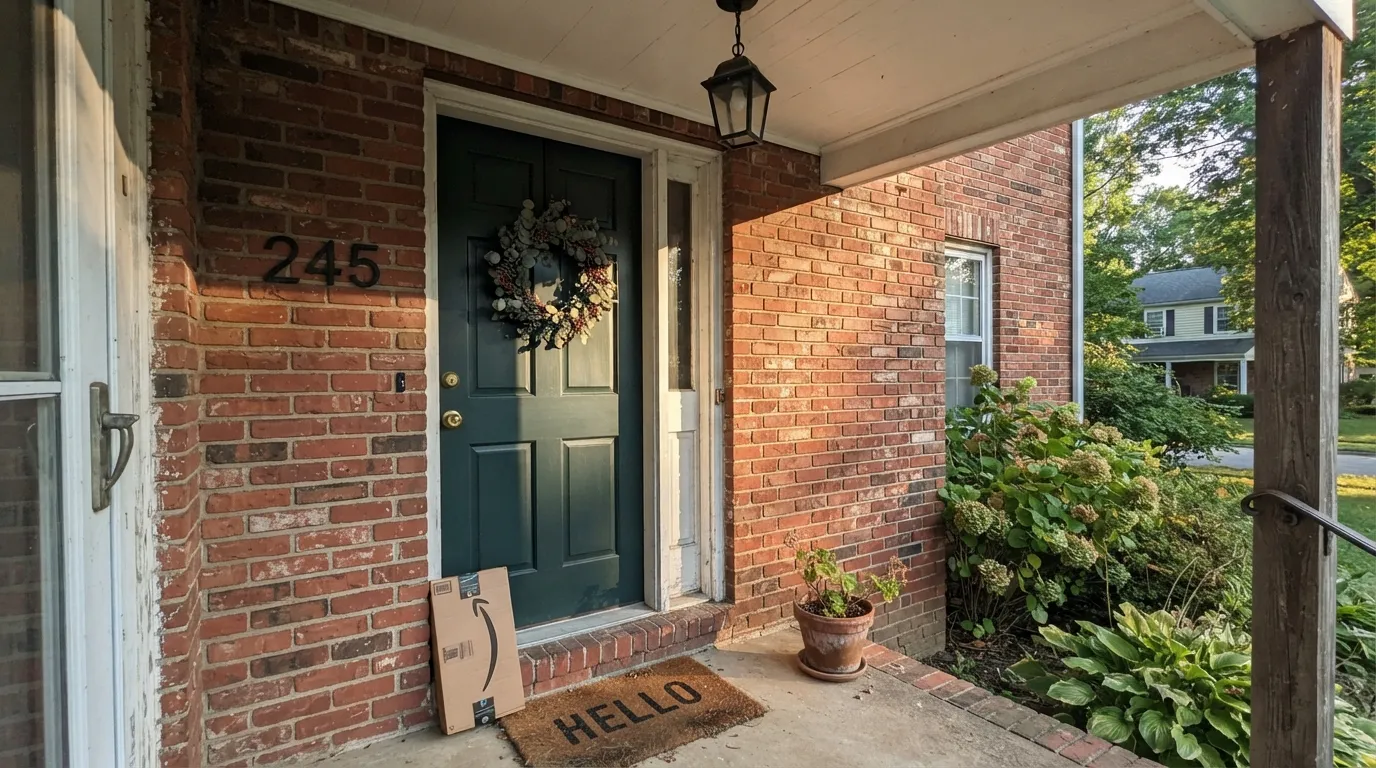
Regent Green is what a black front door looks like after someone with taste got involved. At LRV 6 it reads as a plain near-black from across the street, then direct sun catches the pine underneath and the door suddenly has depth a flat black can't fake. It's a reliable, low-drama exterior classic — as long as you understand it needs real sun to prove the point.
Front doors and shutters on brick, stone, or white-sided exteriors · garage doors that want depth instead of flat black · interior doors and built-ins in rooms with strong daylight · anyone who wants a black door with a story to tell up close
You want a true, no-undertone black in every light · your door or porch sits in permanent shade · you're painting full interior walls in an average-lit room · you need the green to read as green from the street, not just up close
- A near-black with real depth in direct sun — never flat
- One of BM's steadier exterior classics, low trend risk for a resale-minded buyer
- Excellent coverage; most painters get there in two coats
- Flatters brass, matte black, and aged-bronze hardware equally well
- Reads sophisticated on brick, stone, and white siding without looking heavy-handed
- In shade or overcast light it just reads black — the green rarely shows up
- LRV 6 rules it out for full interior walls without strong daylight
- Full sun reveals more visible green than most chip photos suggest
- Its undertone description varies source to source — expect it to look slightly different app to app
What Color Is Regent Green, Really?
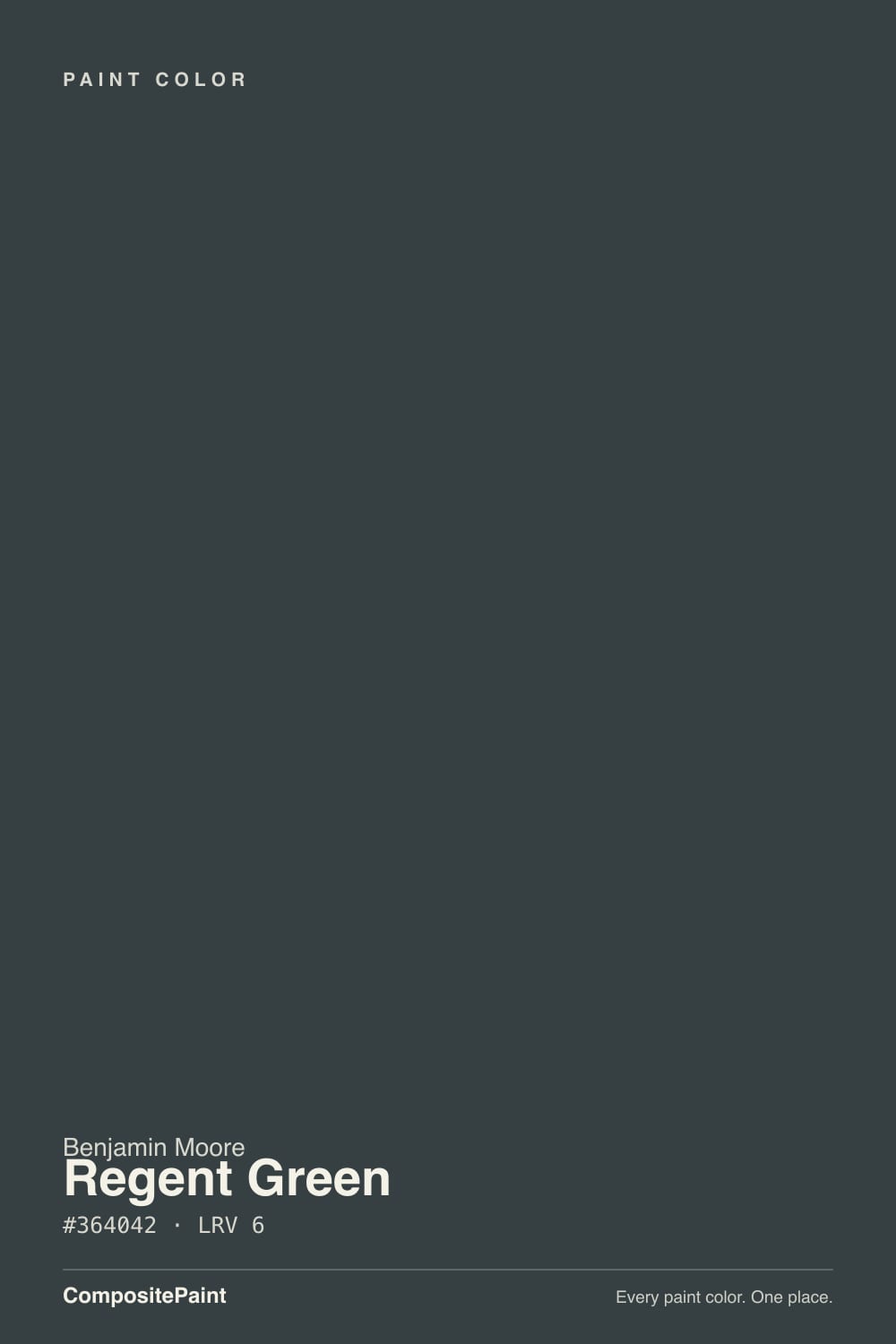
Regent Green is Benjamin Moore's deep pine green pushed almost all the way to black — a blue-black base with just enough green surviving to give it a personality flat blacks don't have. At LRV 6 (Benjamin Moore's own listing puts it closer to 6.2), it absorbs nearly all the light that hits it, which is exactly why it reads as "basically black" at a glance and only gives up the green when you look twice, or when the sun does the looking for you.
The undertone is the whole conversation with this color, and it is genuinely two-faced: in shade, on an overcast day, or photographed under a porch light, it settles into a soft blue-black that could pass for any other near-black in the deck. Put it in direct, unfiltered sun and the pine comes forward — not bright, not obviously "a green door," but enough depth that people notice something is different about it. That range is the appeal, and also the thing buyers most often don't expect from a paint chip.
It sits in the same near-black lane as Essex Green, but the two aren't twins: Essex Green (LRV 4) is a hair darker and reads more purely as a forest green whenever it does show color; Regent Green is the slightly lighter, slightly bluer version, which is why it flatters brick and stone exteriors a touch more gently. Neither one is a wall color for an average room — this is a trim, door, and built-in color first.
Where It Shines
Full sun and a real facade to bounce off of — brick, stone, white or warm-neutral siding — is where Regent Green earns its reputation. On a south- or west-facing front door it holds its near-black read from the street and rewards anyone standing on the porch with the green underneath. It is also an excellent covering paint: dark colors are usually the ones that need three coats over anything lighter, but Regent Green is widely reported to cover in two, even over a mid-tone existing door color.
Where It Fails
The regret stories about Regent Green follow one of three patterns, and every one of them is a mismatch between what the color needs and what the room gives it — not a flaw in the paint.
This is the single most common surprise: without direct sun to work with, Regent Green settles into a plain, characterless blue-black. It still looks good — it just doesn't look like the color people picked it for. If your porch never gets real sun, you're really buying a black door; make peace with that, or choose a truer black like SW Tricorn Black and stop chasing green that won't show up.
At LRV 6 this behaves like every other near-black indoors: gorgeous on a single wall or a set of built-ins with real daylight and lamps to work with, a light-eating box on four walls in a room that only gets ordinary light. This is a trim-and-accent color first, not a wall color.
The flip side of the shade problem: strong afternoon sun on a west-facing door photographs noticeably green, and buyers who wanted a subtle near-black for listing photos or curb-appeal shots have been surprised by how much color shows up in bright exterior light. Test the actual door's orientation, not just a chip in your hand, before committing.
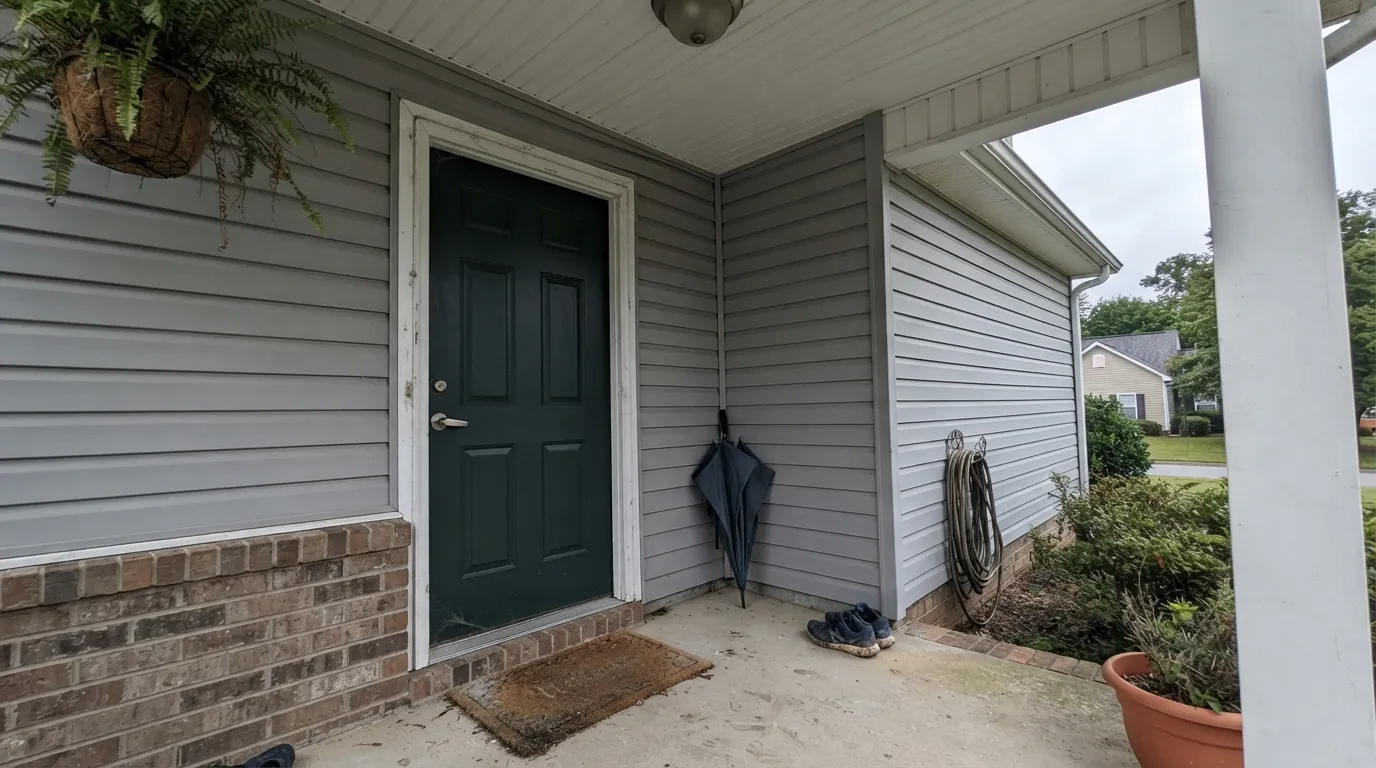
Room by Room
The classic use, and the one it was built for. Semi-gloss holds up to weather and shows the green best when the sun hits it; brass, matte black, or aged-bronze hardware all read well against it.
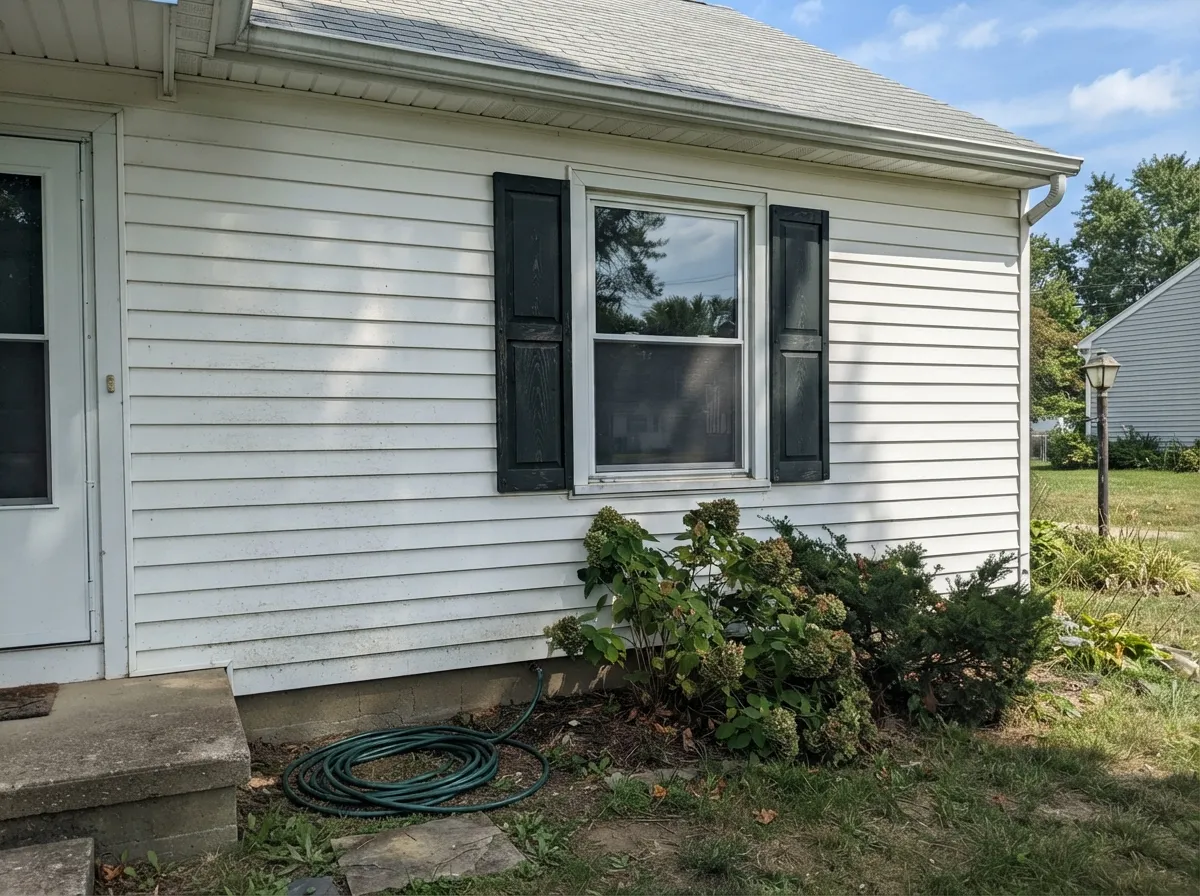
Shutters over white, cream, or warm-gray siding is a dependable, low-risk pairing that reads as expensive without shouting. Satin exterior finish.
A near-black garage door gives a plain facade real depth; pair it with the same trim color as the front door so the two don't compete for attention.
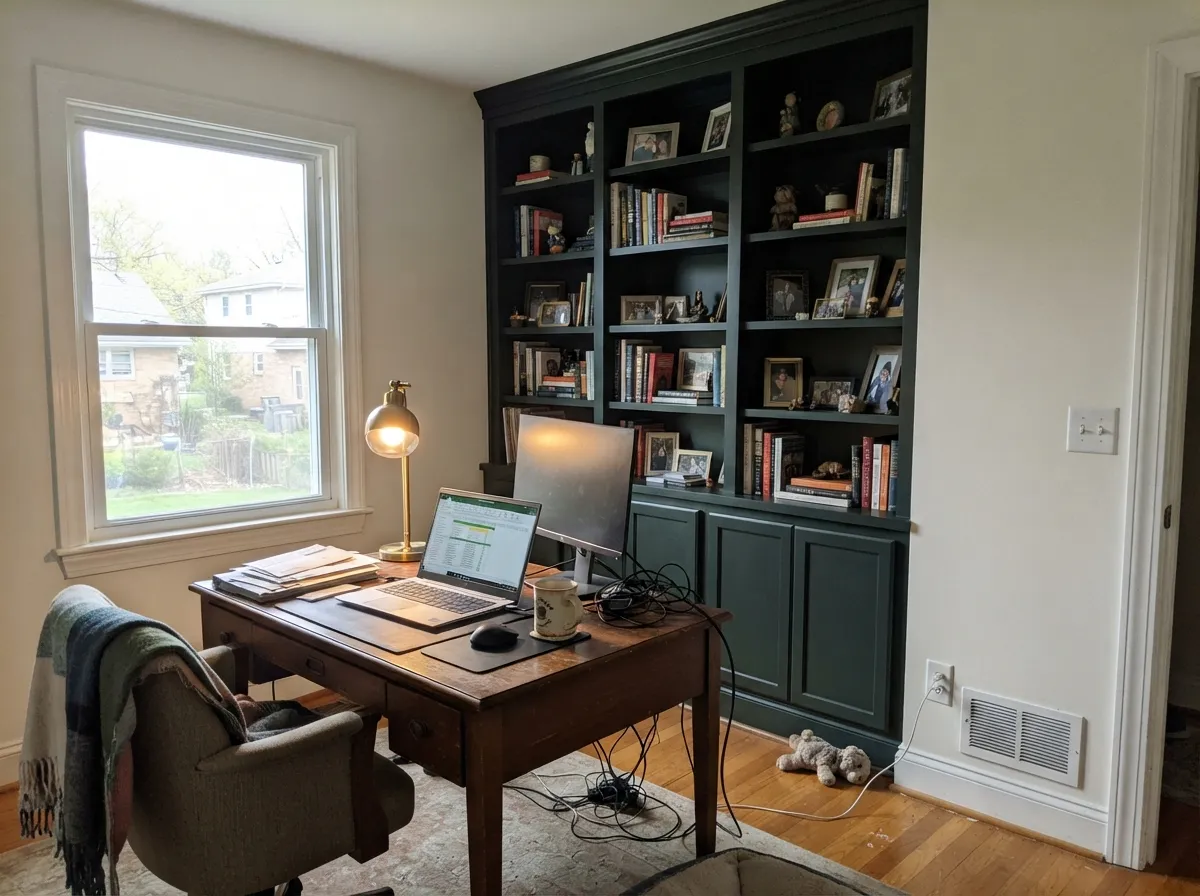
A single interior door or a bookcase in Regent Green reads custom and intentional, but only where daylight or good lamps reach it — in a dim hallway it just looks like a plain black door.
One wall, not four, and only with a window doing real work. Pair with warm wood shelving and brass task lighting to keep it from going flat.
An island or a single run of lower cabinets in Regent Green under lighter perimeter cabinets is a popular way to get the color without living inside a dark kitchen.
Your Light Is the Risk
South or west exposure pulls the pine-green base forward. This is the light Regent Green was bought for.
Covered porches, north-facing doors, and cloudy days flatten it into a plain blue-black. Pretty, but not the color you picked it for.
Near-black at sunrise, visibly green by early afternoon in direct light, blue-black again at dusk.
Under a warm porch bulb or photographed after dark, it reads pure black regardless of the day's sun — normal, expected exterior behavior.
Most complaints about Regent Green are a light mismatch. Upload a photo of your actual room and see it on your walls — then ask for the same wall in north light or evening lamps before you buy a single sample.
Need It From Another Brand?
Any paint counter can custom-tint Benjamin Moore 2136-20 directly. If you would rather stay in one brand's own deck, these are the closest stock matches, measured as ΔE2000. Under 2 is a difference you will not see on the wall.
| Brand | Closest color | ΔE | LRV | |
|---|---|---|---|---|
| Behr | Obsidian StoneECC-25-3 · Behr | 3.5 | 5 | Color page → |
| Valspar | Black Evergreen5009-1 · Valspar | 2.4 | 4.9 | Color page → |
| PPG / Glidden | Starless SkyPPG0995-7 · PPG / Glidden | 4.7 | 5 | Color page → |
| Glidden | Starless SkyPPG0995-7 · Glidden | 4.7 | 5 | Color page → |
| Dunn-Edwards | Dark EngineDE6350 · Dunn-Edwards | 4.9 | 5 | Color page → |
| Magnolia Home | ArchesJG-97 · Magnolia Home | 4.0 | 6 | Color page → |
Similar Benjamin Moore Colors
The nearest shades to Regent Green within Benjamin Moore's own range, ranked by perceptual color distance — useful when you want the same look a touch lighter, darker, or warmer.
WCAG 2.1: AA is 4.5 : 1 for normal text, 3 : 1 for large text, AAA is 7 : 1.
Regent Green vs the Colors You're Also Considering
Every Regent Green sample board has the same rivals on it. The numbers show the real lightness gap — then it comes down to which risk you would rather live with.
Pick this for the slightly lighter, bluer near-black that's a touch more forgiving on white or light-colored siding.
Benjamin Moore PM-22 · LRV 4Essex GreenPick this if you want the color to skew more purely forest-green whenever it does show, and don't mind LRV 4 instead of 6.
Pick this when you want that same soft near-black depth but with a color story hiding inside it.
Benjamin Moore 2124-10 · LRV 6Wrought IronPick this if you want a true, dependable near-black with zero green surprise — the softest black in the BM deck.
Pick this for the deeper, more dramatic near-black — Kendall Charcoal won't get you there.
Benjamin Moore HC-166 · LRV 13Kendall CharcoalPick this for a lighter, warmer dark gray that still reads as color, not near-black, even in shade.
Pick this for green instead of blue, and a paint that holds its near-black read in less light than Hale Navy needs.
Benjamin Moore HC-154 · LRV 6Hale NavyPick this if you'd rather the "secret color" be blue instead of green — Hale Navy needs a bit more light to read as navy, not black.
Regent Green Coordinating Colors
The rule for coordinating with Regent Green is simple: warm whites keep it from reading cold, and other dark neutrals let it be the one true near-black on a facade or in a room without a turf war. These are the partners that keep it looking deliberate:
Regent Green on Exteriors
This is fundamentally an exterior color, and the exterior is where it makes the most sense: brick, stone, and traditional siding all give it the neutral backdrop it needs to look intentional rather than just dark. Front doors, shutters, and garage doors are its natural jobs, and it's a common pick for older or historic-style homes where a flat, modern black would feel out of place next to warm masonry.
The trade-off to plan for is orientation, not style. A Regent Green door facing east or south will show noticeably more green over the course of a normal day than one tucked under a deep porch roof or facing north. Neither is wrong, but they are genuinely different-looking doors — bring a large sample outside and check it at the door's actual compass direction before ordering paint.
Regent Green Indoors: Built-Ins and Doors
Indoors, Regent Green works the same way it does outside: it needs real light to earn its keep. On a bookcase, a single interior door, or a run of lower cabinets near a window, it reads as a deliberate, expensive-feeling near-black with color hiding inside it — walnut, brass, and leather all sit comfortably against it.
What it does not do well is carry a whole room on its own. Away from a window, at LRV 6, it stops behaving like a color with personality and starts behaving like a void — the same limitation every near-black paint has indoors. Treat it as a trim-and-accent color inside the house, the same role it plays outside.
Three Ready Palettes Built on Regent Green
A color is never alone on the wall. These are complete combinations in the 60-30-10 pattern, with the reason each one holds together. Every one opens in the visualizer.
Warm brick doesn't need a stark white to look finished — Swiss Coffee's cream keeps the trim soft, Kendall Charcoal grounds the shutters at a lighter depth than the door, and Regent Green gets to be the one truly dark note on the whole facade.
Try this palette in your roomTwo different near-blacks — one green-leaning, one blue-leaning — on the same house sounds risky and isn't: from the street both simply read as "dark," and White Dove's warmth keeps the whole facade from feeling cold.
Try this palette in your roomWhite Dove walls give the room the daylight bounce Regent Green needs to show its green side indoors, and Chelsea Gray on the window trim is close enough in family to feel intentional without competing with the built-ins.
Try this palette in your roomRegent Green FAQ
Is Regent Green actually green, or is it basically black?
Both, depending on the light. At a glance, especially in shade or from across the street, it reads as a plain near-black. Get it into direct sun and the pine-green base comes forward. It is not a color that reads "green" the way a true forest green does — it's a black with a green secret, not a green pretending to be dark.
What's the LRV of Regent Green, and why does it matter?
LRV 6, which puts it in the same reflectance range as Wrought Iron and Hale Navy. Anything under LRV 10 behaves like near-black indoors: fine on a door, a set of built-ins, or a single accent wall with real light, but a light-swallowing box on four walls in an average room.
What trim or siding color goes best with a Regent Green front door?
A warm off-white like Swiss Coffee or White Dove is the safest, most forgiving pairing and keeps the whole facade from reading cold. If the siding is already a cooler white or gray, the door will still work — just expect slightly less of the "warm and grounded" effect the warm whites give it.
Can Regent Green be used on interior walls?
Sparingly. A full room of walls at LRV 6 needs real daylight and layered lamp light to avoid feeling like a cave — most interiors don't have enough of either. It does much better as a single accent wall, an interior door, or built-ins in a room that already gets good light.
How is Regent Green different from Essex Green or Wrought Iron?
Essex Green (LRV 4) is darker and reads more purely as forest green whenever color shows through. Wrought Iron (LRV 6) is a true near-black with no green story at all — softer and more neutral. Regent Green sits between the two: black in low light, distinctly green-tinted in strong sun.
How many coats of Regent Green do I need, and should I prime?
Most painters get full coverage in two coats over an existing light or mid-tone door color. Going from a much darker existing color or bare wood, a grey- or black-tinted primer will save a coat and give the sheen a more even finish.
Have you painted with Regent Green?
Rate it — one tap helps the next reader decide.
Ask a Question