Teal Porch Ceiling Paint Colors
1,675 teal colors that work in porch ceilings, drawn from the full ~30,000-color US paint deck. Below: editor's picks specific to porch ceilings, then 30 picks spread across the LRV range — narrow further on the brand page when you've shortlisted.
Teal is the in-between blue-green that reads moody, marine, or jewel-tone depending on which side of the family you pick. Benjamin Moore named Aegean Teal their 2021 Color of the Year and kicked off a wave of designer rooms in soft, slightly desaturated teals — a quieter alternative to navy that pairs especially well with brass, oak, and warm whites.
Editor's Picks: Teal for Porch Ceilings
4 picks30 Teal Picks Across the LRV Range
30 of 1,675 · sorted dark → lightLooking for more? All teal → covers every brand; brand × family pages show full decks.
Teal Porch Ceiling Colors at Every US Brand
20 brands · up to 10 picks eachUp to 10 picks per brand spread across the teal LRV range, drawn from each brand's full deck. Tap any swatch with a curated guide for full spec; tap the brand title for the brand's complete teal deck.
Behr
Benjamin Moore
Valspar
Glidden
Sherwin-Williams
Dunn-Edwards
PPG / Glidden
Dutch Boy
Hirshfield's
Kompozit
Diamond Vogel
C2 Paint
Magnolia Home
Clare
Farrow & Ball
Rodda
Annie Sloan
Rust-Oleum
Portola Paints
Other Porch Ceiling Color Families
Teal Colors in Other Rooms
Teal Paint Colors for a Porch Ceiling
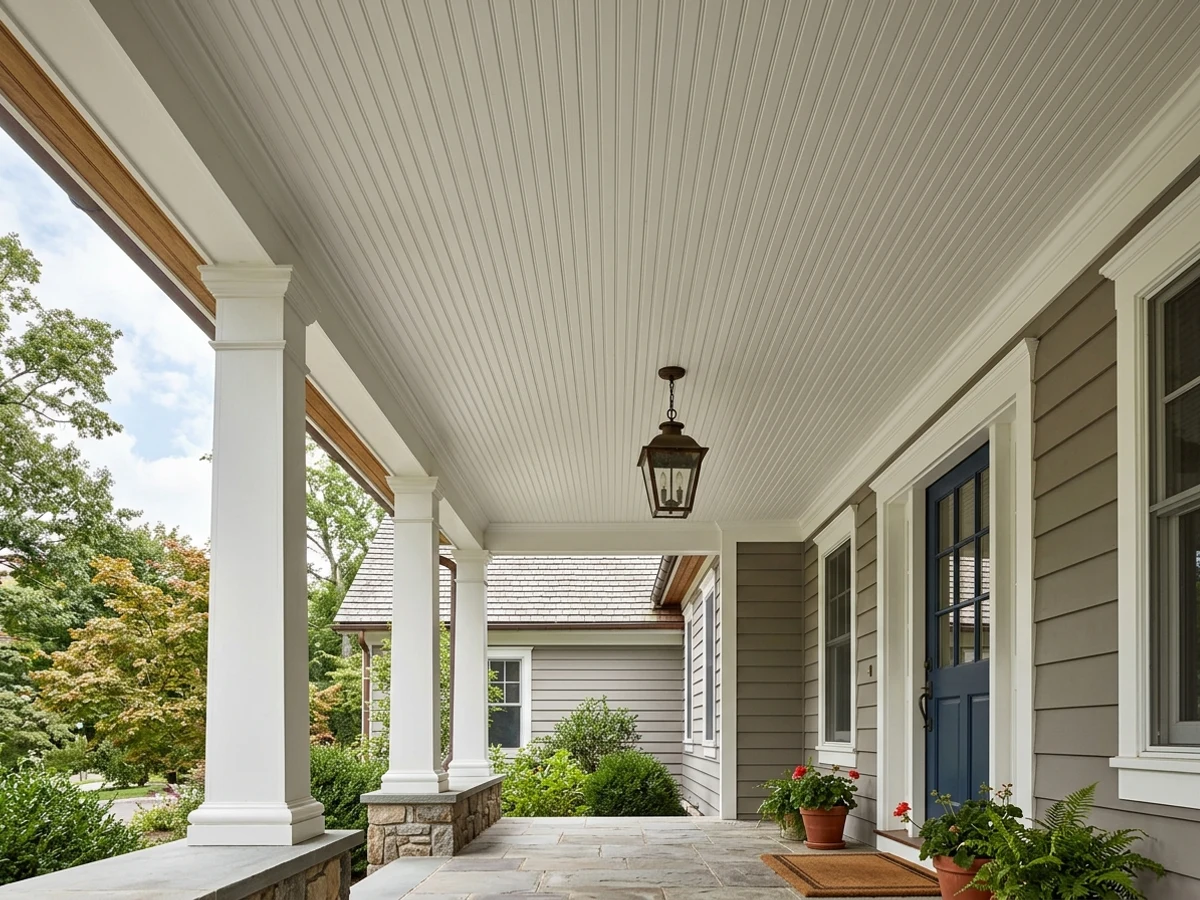
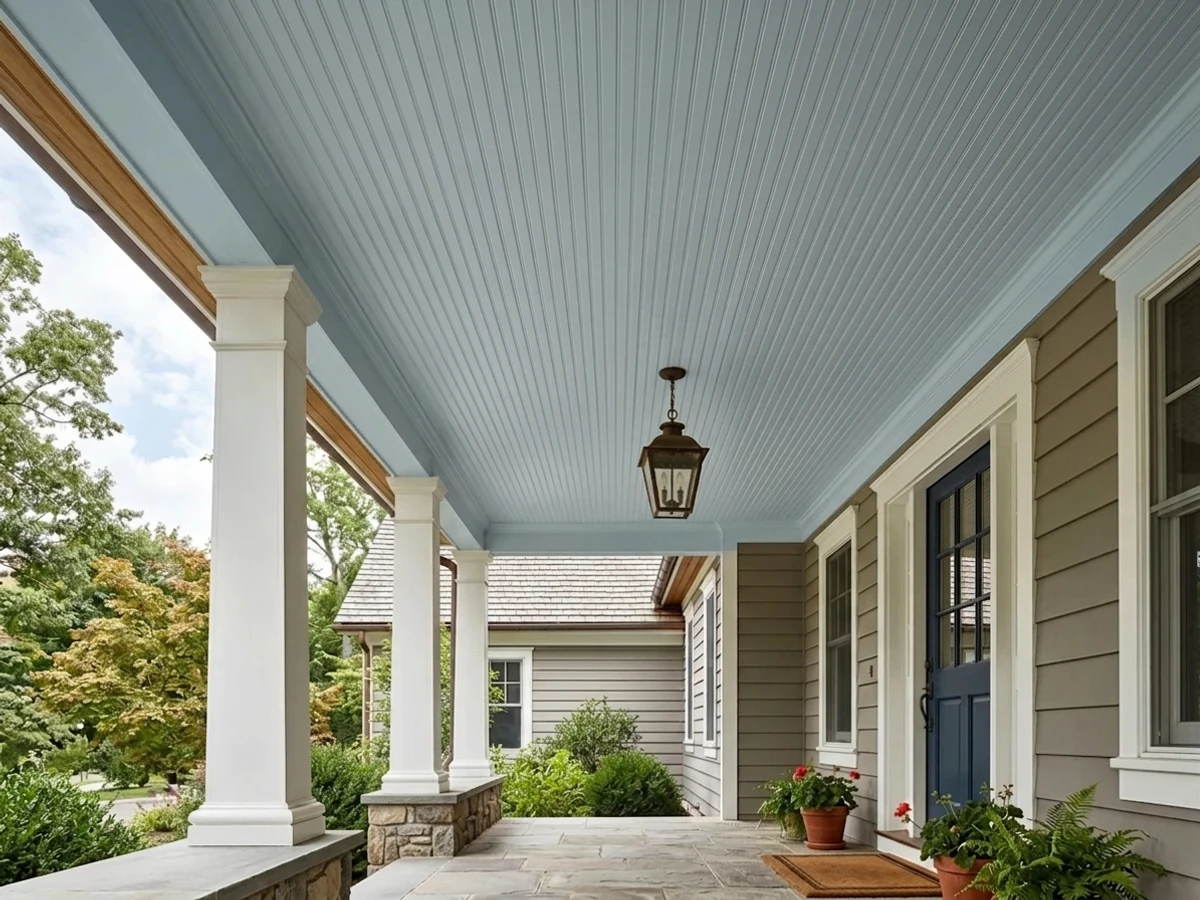
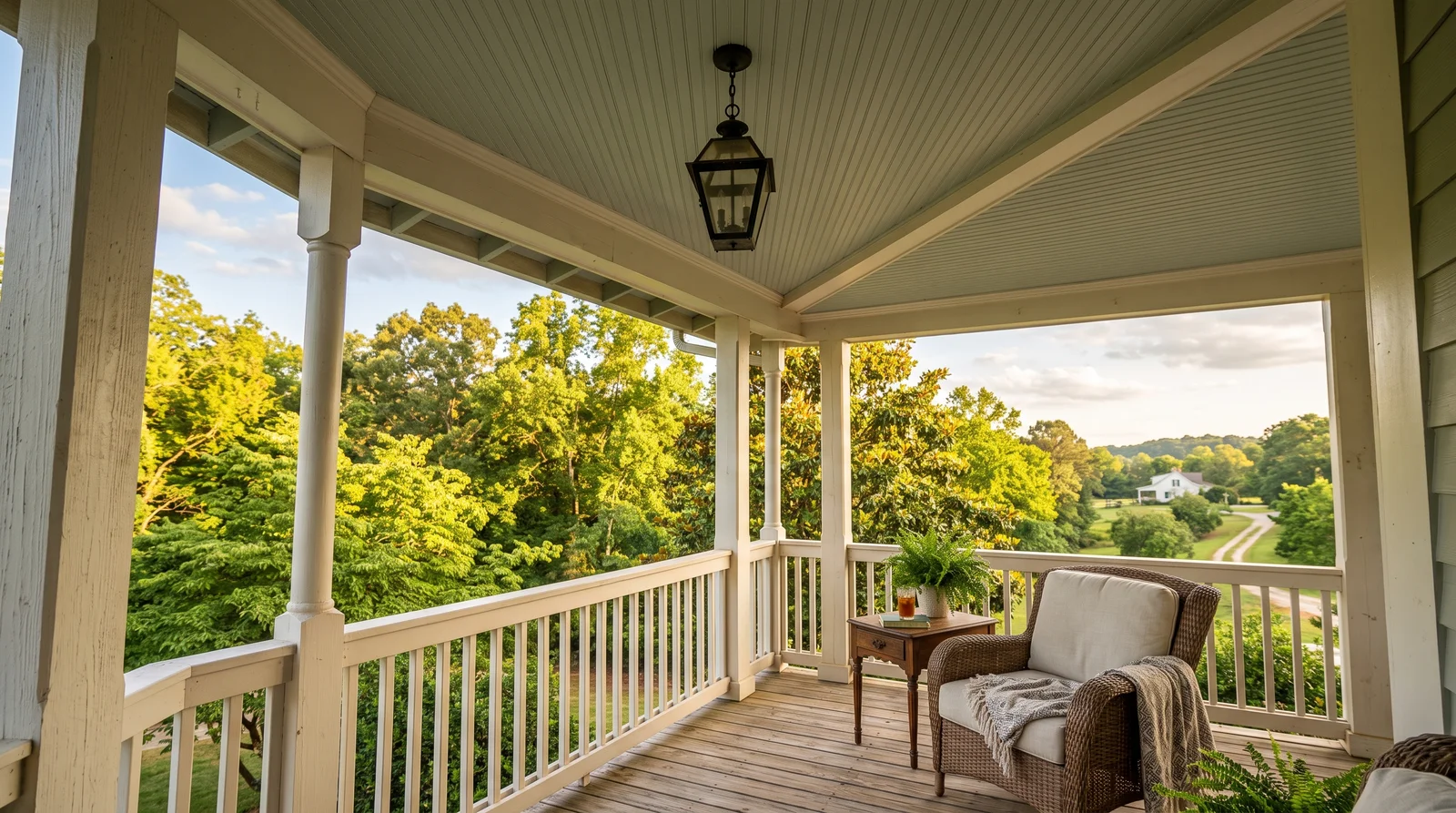
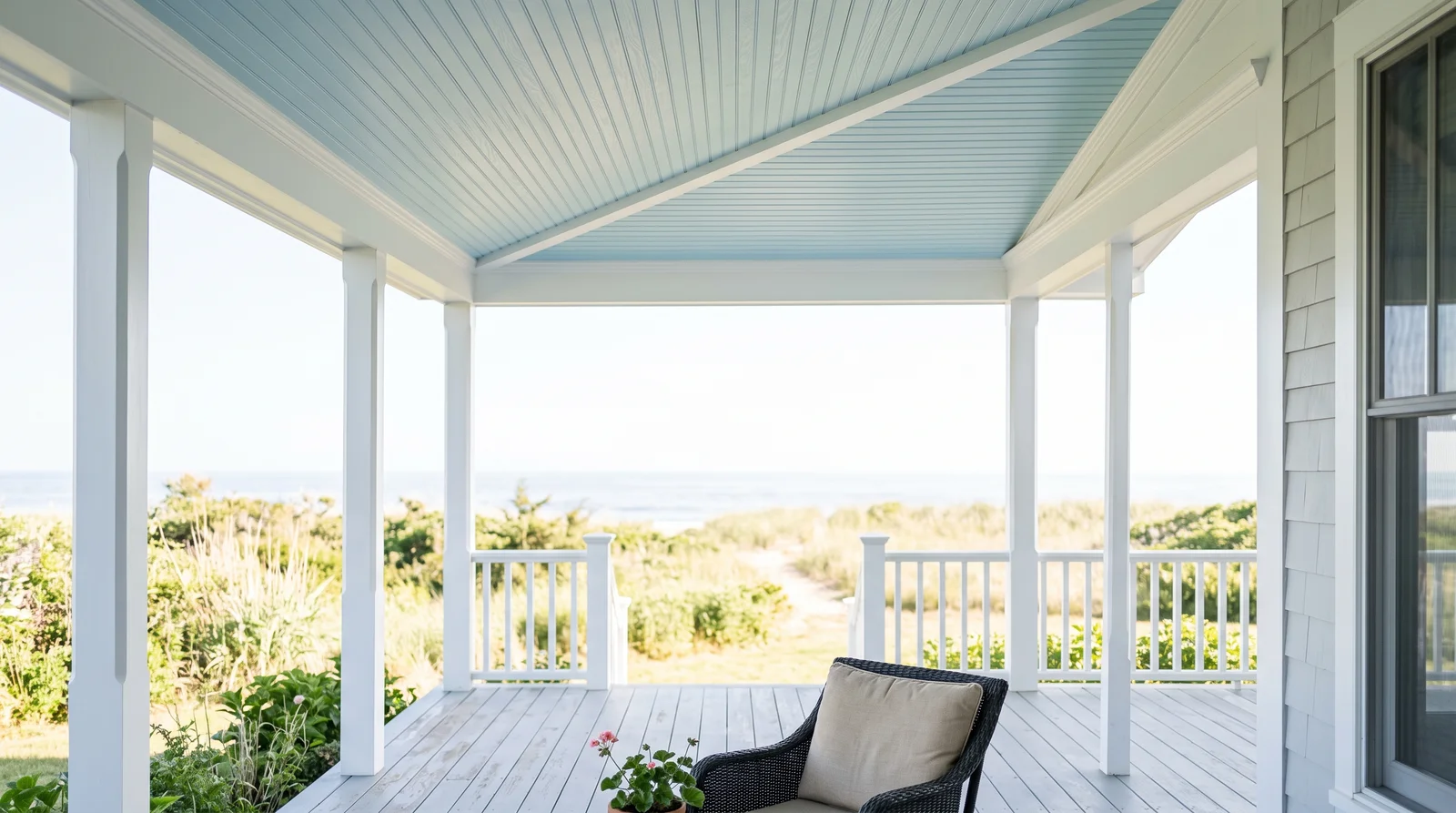
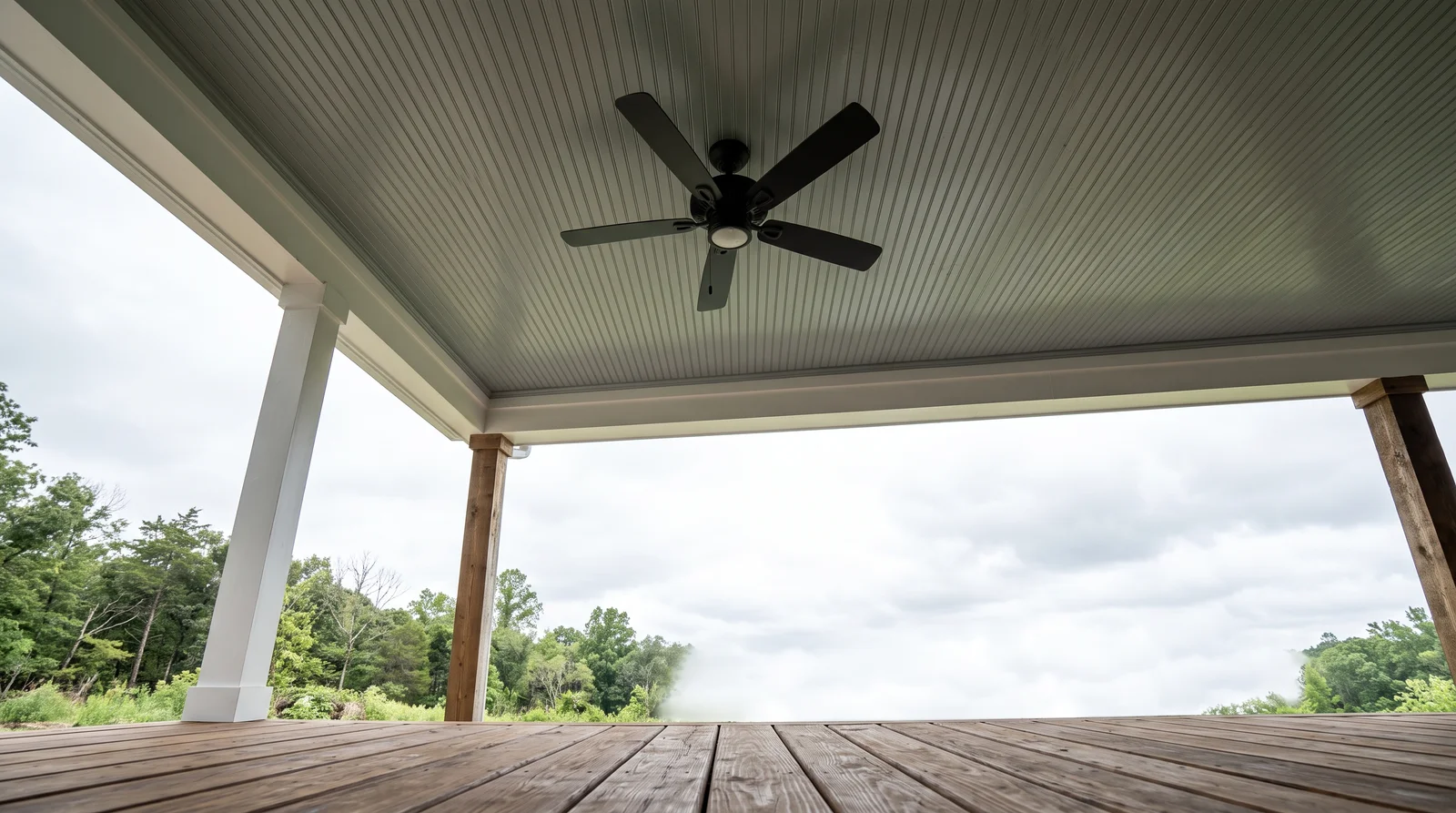
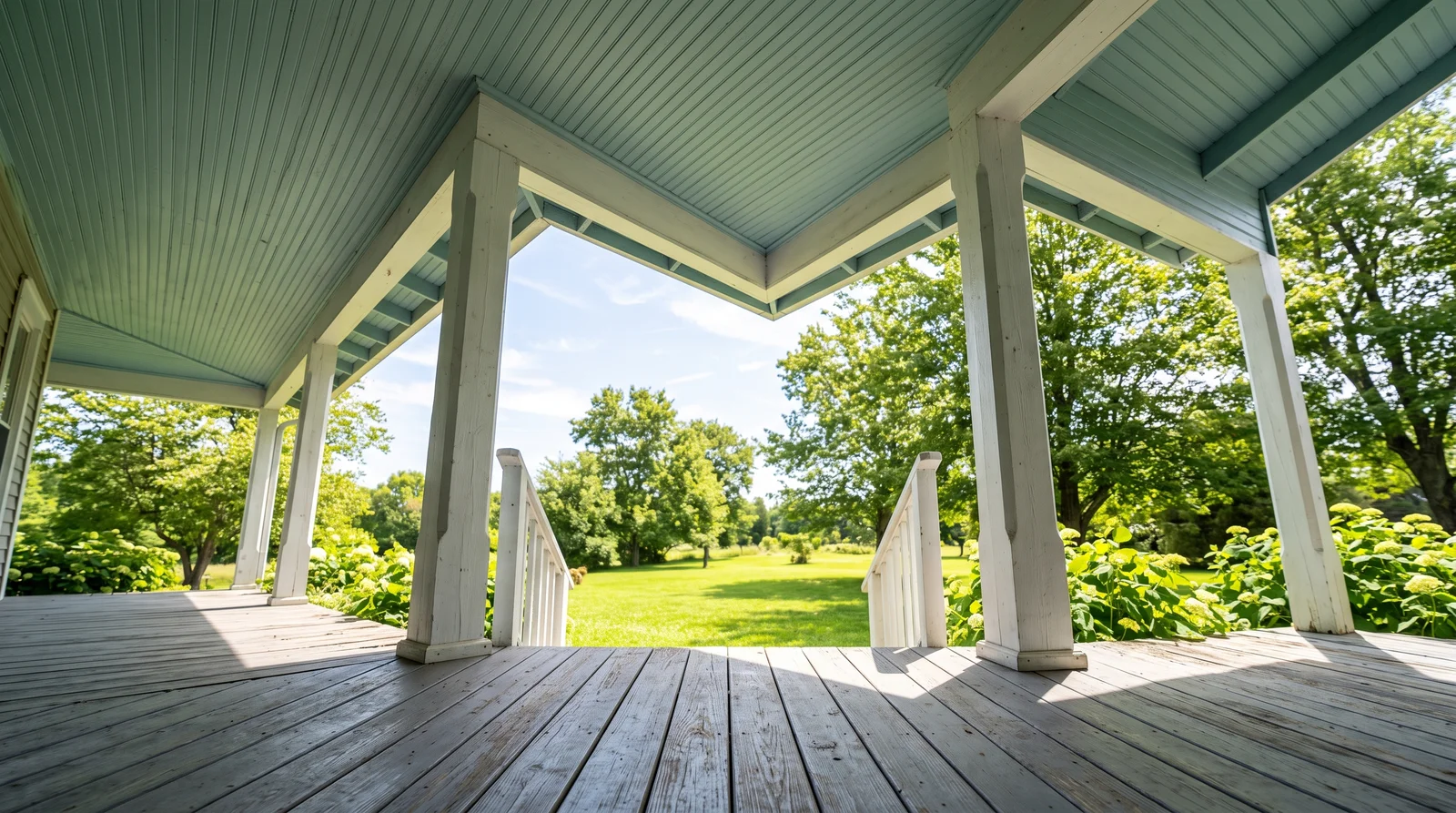
Painting a porch ceiling teal is one of the oldest tricks in American house style, and it still works. Teal sits right between blue and green, so it reads like a soft slice of sky from below while leaning a little richer and warmer than a plain pale blue. On a covered porch the color catches bounced daylight all day, which keeps it lively without ever feeling loud.
The room itself is the catch. A porch ceiling lives outdoors in everything but name, so it deals with damp air, big swings in light, and a low viewing angle where every brush mark shows. The right teal here is not just a color you like on a chip; it is a shade picked for how porch light treats it and a paint built to hold up overhead. Any teal you see on this page is mixed to order at the store, so you can match the exact tone across brands and choose the one with the best exterior formula.
Why Teal Belongs on a Porch Ceiling
A porch ceiling is the one surface people look up at while they relax, so a soft sky color makes the space feel taller and calmer. Teal does that job better than flat blue because the touch of green keeps it from going cold, which matters under a roof where shade dulls things down. It pairs naturally with wood, brick, and white trim, so it fits almost any house without a fight.
There is also a practical pull. A teal ceiling reflects a gentle wash of color onto faces and furniture, and the effect is warmer and friendlier than a stark white lid. It feels finished and intentional, the kind of detail that reads as care rather than an afterthought.
Picking the Right Depth of Teal for the Light
Porch light is mostly indirect, so a teal that looks perfect in a bright store can turn gray and heavy once it is up under the roof. For most porches a light-to-medium teal works best, roughly in the LRV 45 to 60 range, so it stays airy and still throws a little light back down. LRV is just a 0-to-100 scale of how much light a color bounces, and higher numbers keep an overhead surface from feeling like a low cloud.
Let the porch tell you which way to lean. A north-facing or deeply shaded porch wants a teal on the lighter, slightly greener side to fight the gloom, while a bright south- or west-facing porch can carry a deeper, more saturated teal without going dark. Tape a big sample up on the actual ceiling and check it morning, midday, and evening before you commit.
The Finish That Survives Overhead and Damp
A porch ceiling takes humidity, the odd splash of wind-blown rain, cobwebs, and dust, so you want a paint that wipes clean and resists mildew. An exterior or porch-rated product in a satin or low-sheen finish is the sweet spot: enough sheen to shed moisture and clean up, not so much that it flashes glare back at everyone sitting below. Flat hides flaws but holds grime and is harder to scrub, while high gloss overhead can look cheap and spotlight every roller mark.
Because the angle is low and the light is even, sheen is unforgiving here. Stick with one finish across the whole ceiling and feather your roller passes, since a glossier paint will telegraph laps and touch-ups far more than a satin will.
Pairing Teal With Trim, Beams, and Fixtures
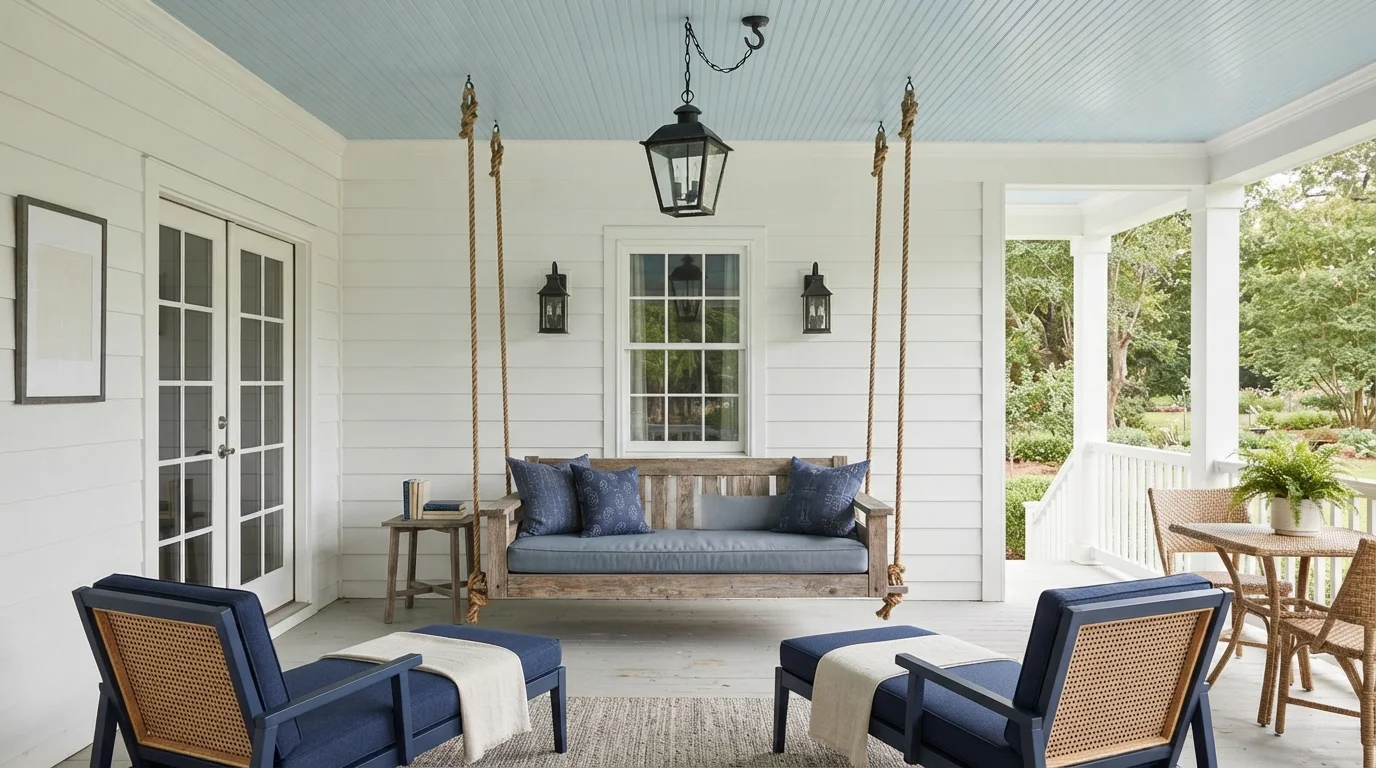
Crisp white trim and bead-board edges are the classic frame for a teal ceiling because the contrast makes the color pop and keeps it from feeling murky. If your porch has stained wood beams or a wood ceiling fan, a teal with a green lean sits beautifully against natural tones, while a bluer teal plays better with cool grays and black metal railings. Match the teal to the house, not just the ceiling.
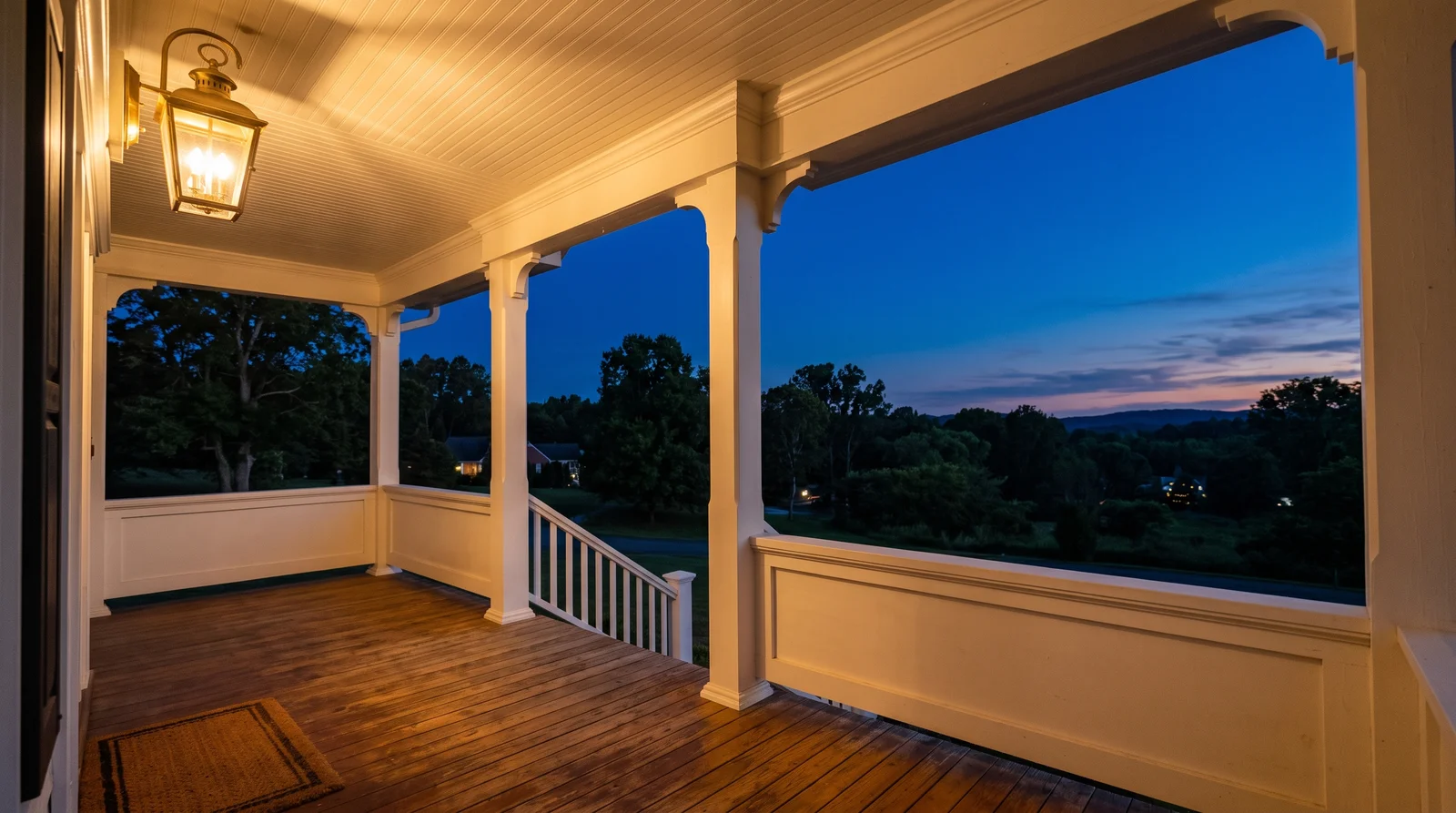
Fixtures matter more than people expect. Warm brass or bronze lights and aged-copper lanterns glow against teal, oil-rubbed black reads crisp and modern, and a warm bulb keeps the ceiling from going flat blue at night. Pull one accent color from your cushions or front door to tie the whole porch together.
Common Mistakes to Avoid
The biggest miss is grabbing an interior teal off a shelf and rolling it overhead; it may look right at eye level but go gray and lifeless under porch shade, and it will not stand up to the damp. The second is going too dark, which turns a relaxing ceiling into a heavy lid that shrinks the space. And skipping primer or a proper exterior base coat on bare or weathered wood is what leads to peeling within a season.
Don't judge the color from the chip in your hand either. Hold a sample up flat against the ceiling so you see it the way gravity and shade will, and remember the exact tone can be mixed to order and cross-matched between brands, so you are never locked into one company's version of the teal you actually want.
Teal Porch Ceiling Paint — Frequently Asked Questions
Why are porch ceilings traditionally painted a teal or blue-green?+
It comes from an old Southern habit of painting porch ceilings a soft sky blue, and teal is the warmer, richer cousin of that look. People liked how it mimics open sky and makes the porch feel calm and a little brighter. Many also believed the color helped keep the space feeling fresh, and it simply pairs well with white trim and natural wood.
What shade of teal looks best on a porch ceiling?+
A light-to-medium teal, roughly LRV 45 to 60, suits most porches because it stays airy overhead and bounces a little light back down. Lean lighter and slightly greener for a shaded or north-facing porch, and you can go a touch deeper on a bright, sunny one. Always test a large sample on the actual ceiling before deciding.
What sheen should I use on a porch ceiling?+
A satin or low-sheen exterior or porch-rated paint is the best balance. It sheds moisture, wipes clean, and resists mildew, but it does not throw harsh glare at people sitting below. Avoid high gloss overhead, since it spotlights roller marks, and avoid dead flat because it is harder to clean.
Do I need exterior paint even though the porch is covered?+
Yes. A covered porch still sees humidity, temperature swings, and wind-blown moisture, so an exterior or porch-grade product holds up far better than an interior one. Prime bare or weathered wood first, and the finish will stay put for years instead of peeling within a season.
What colors pair well with a teal porch ceiling?+
Crisp white trim is the safest, sharpest frame and makes the teal read clean. Warm metals like brass and bronze in your light fixtures glow against it, while black metal and cool grays suit a bluer teal. Pull one accent from your cushions or front door to tie it all together.
Can I get the same teal in a different paint brand?+
Yes. Any teal shown here is mixed to order at the store, so the exact tone can be cross-matched between brands. That lets you keep the color you love while choosing the brand with the best exterior or porch formula and finish for an overhead surface.