Blue Porch Ceiling Paint Colors
1,741 blue colors that work in porch ceilings, drawn from the full ~30,000-color US paint deck. Below: editor's picks specific to porch ceilings, then 30 picks spread across the LRV range — narrow further on the brand page when you've shortlisted.
Blue is the most popular color for accent walls, kitchen islands, and front doors — and also the family with the widest spread, from pale dove-blues that read almost grey, to inky near-black navies, to saturated cobalts that read almost royal. Teal-leaning blues (the green-blue overlap) live next door in the Teal family.
Editor's Picks: Blue for Porch Ceilings
4 picks30 Blue Picks Across the LRV Range
30 of 1,741 · sorted dark → lightLooking for more? All blue → covers every brand; brand × family pages show full decks.
Blue Porch Ceiling Colors at Every US Brand
21 brands · up to 10 picks eachUp to 10 picks per brand spread across the blue LRV range, drawn from each brand's full deck. Tap any swatch with a curated guide for full spec; tap the brand title for the brand's complete blue deck.
Behr
Valspar
Glidden
Benjamin Moore
PPG / Glidden
Dunn-Edwards
Sherwin-Williams
Dutch Boy
Hirshfield's
Diamond Vogel
Kompozit
C2 Paint
Portola Paints
Magnolia Home
Rodda
Farrow & Ball
Backdrop
Annie Sloan
Clare
Rust-Oleum
Other Porch Ceiling Color Families
Blue Colors in Other Rooms
Blue Paint Colors for a Porch Ceiling
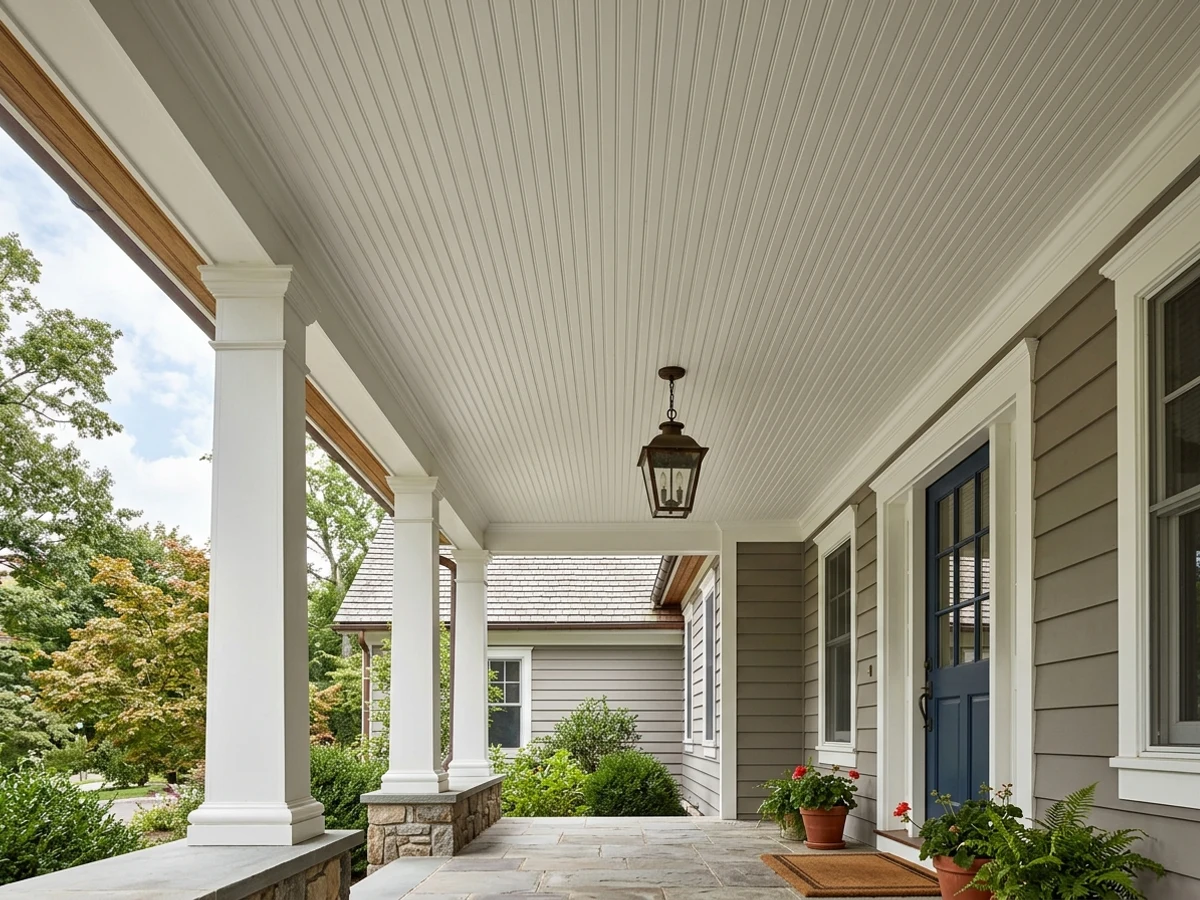
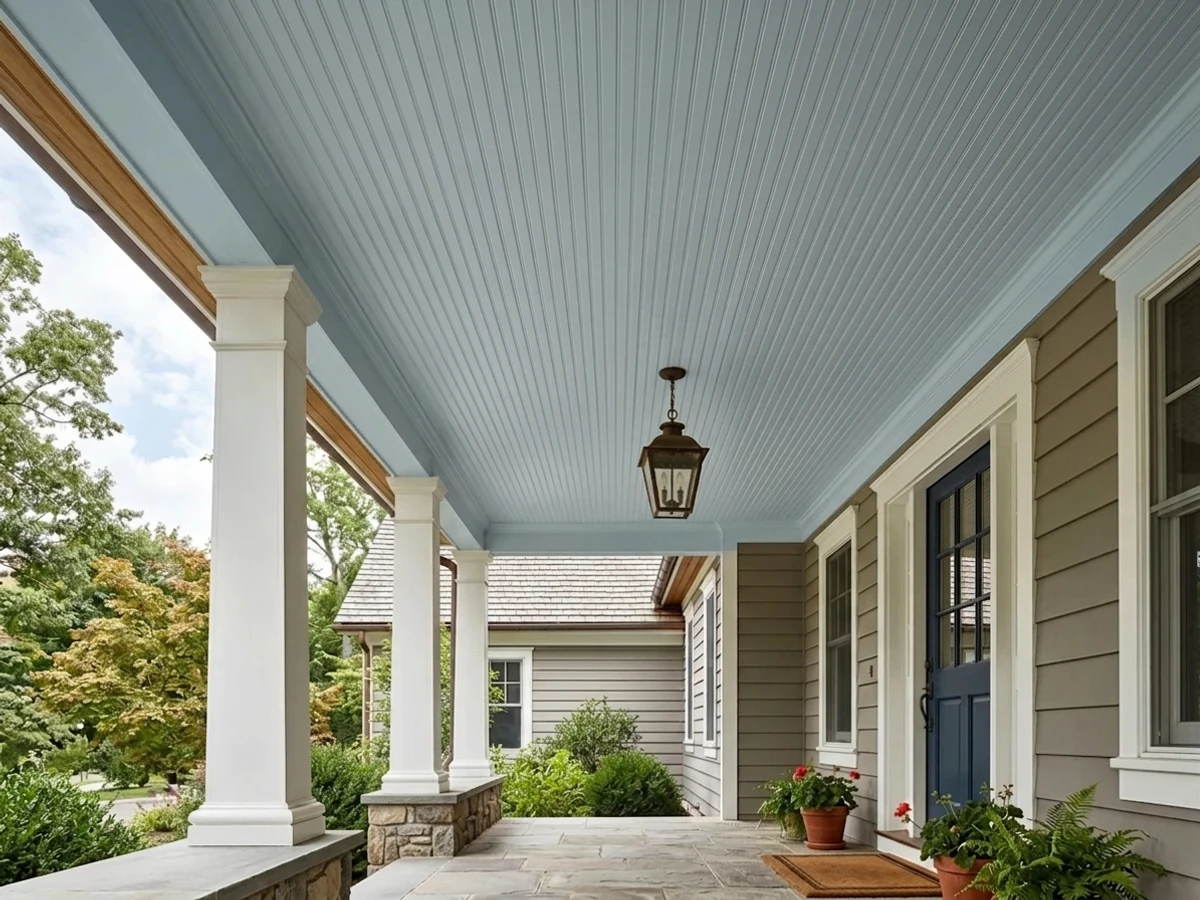
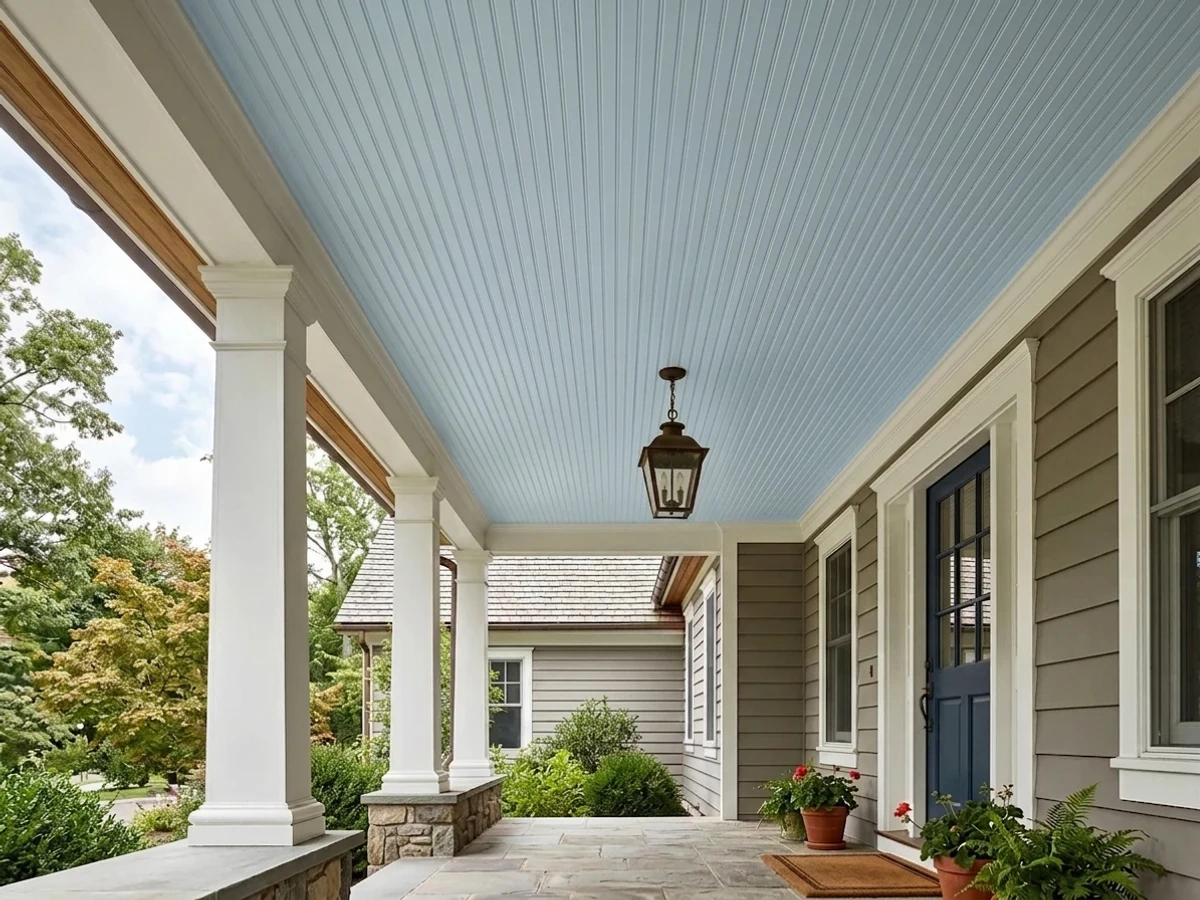
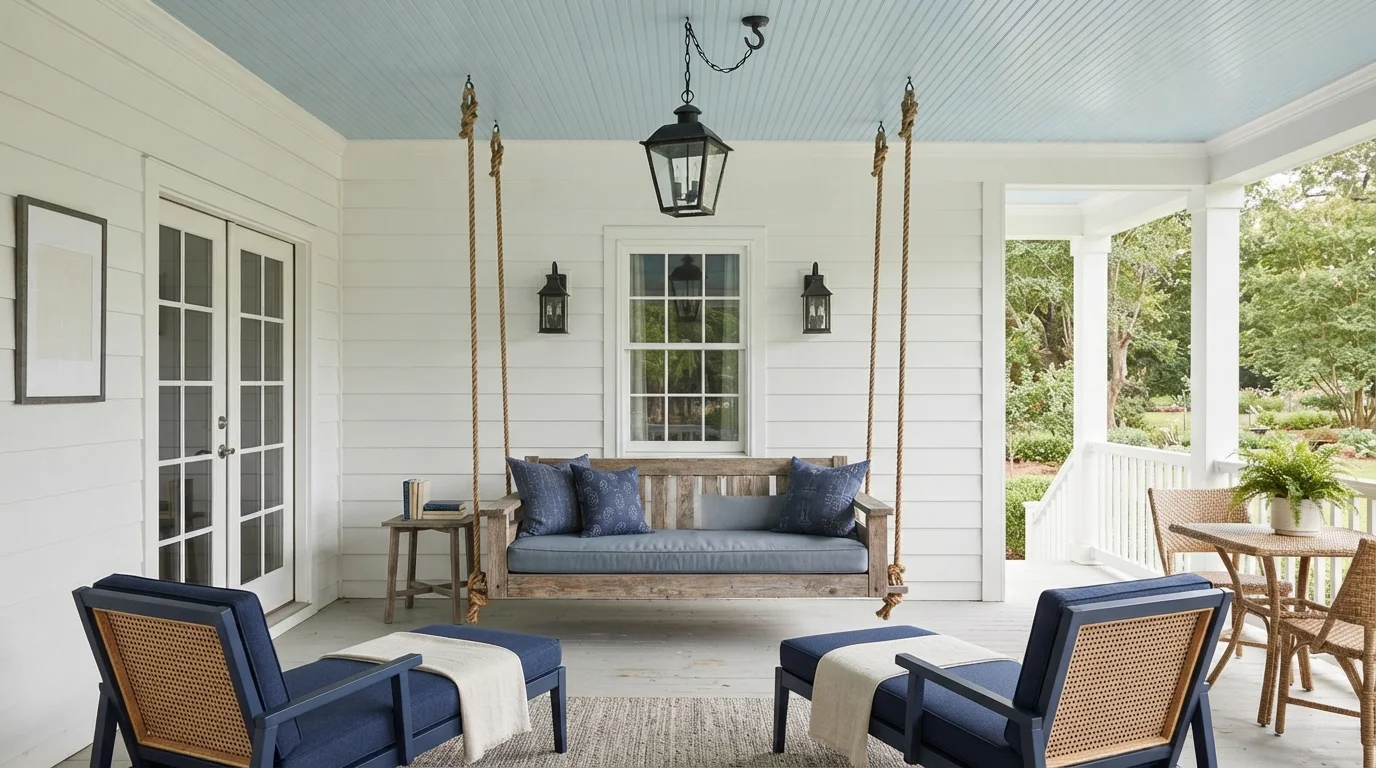
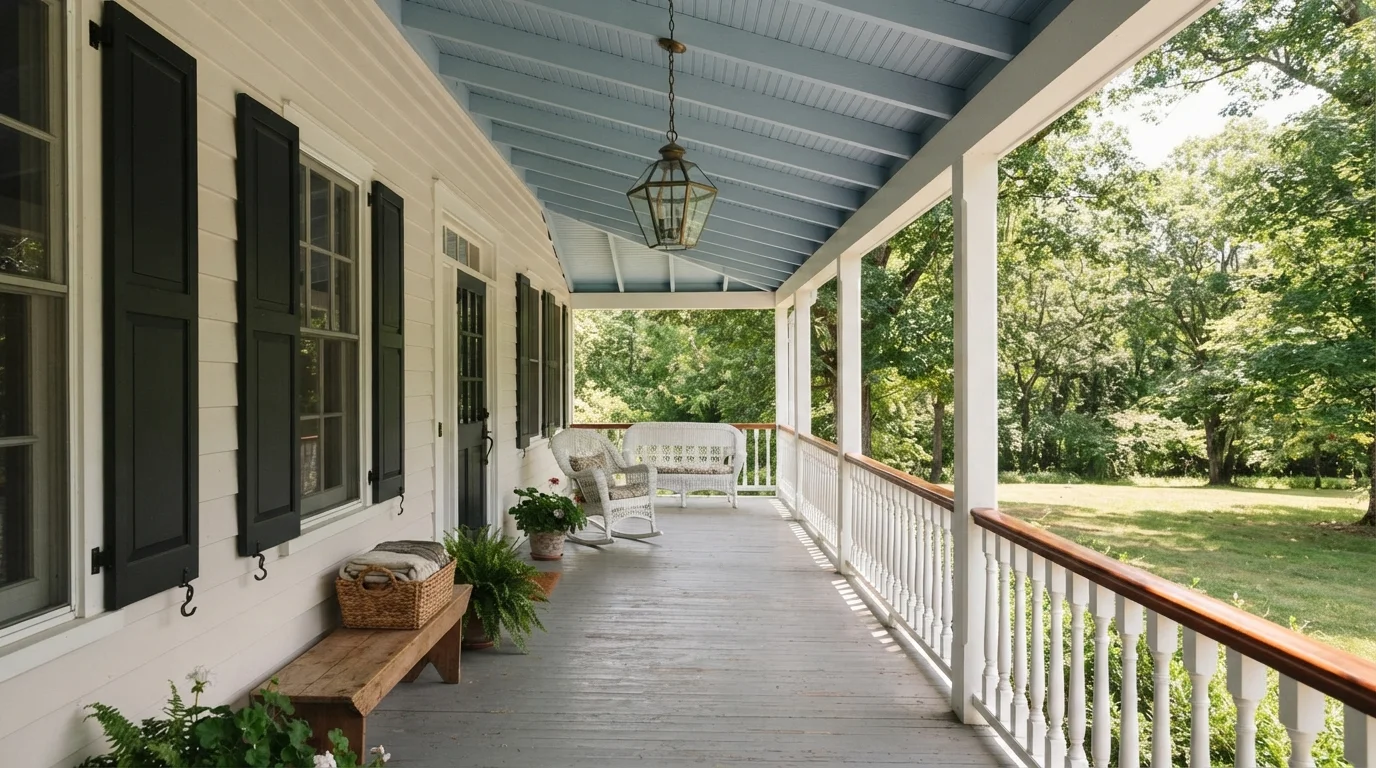
A blue porch ceiling is one of the most loved looks in American homes, and for good reason. It echoes the old Southern tradition of painting the underside of a porch a soft sky blue, and it does something no other color quite manages overhead. The blue catches the light, opens up the space, and makes a covered porch feel like it is sitting under an open sky even when the rest of the house is in shadow.
This page is about choosing blue for that exact spot — the ceiling of a porch, not the walls or the floor. The right blue here depends on how much daylight your porch gets, what your trim and siding are doing, and how the paint will hold up to damp air and bright reflected sun. Every blue shown on this page is mixed to order at a paint counter, so once you find a shade you like you can have it matched across brands and into the exterior finish your porch actually needs.
Why Blue Works Overhead On A Porch
A porch ceiling is one of the few ceilings people actually look at, because you sit under it and look up. Blue is the natural choice because it reads as sky, which makes a low or shaded porch feel taller and lighter than it is. The color also keeps the space feeling cool and calm on hot afternoons, which is exactly what a porch is for.
There is also a practical side to the tradition. A soft blue overhead bounces a gentle, even light down onto the porch instead of the slightly gloomy gray you get from a plain white or beige ceiling. It is a small change that completely shifts the mood of the whole space.
Picking The Right Shade Of Blue
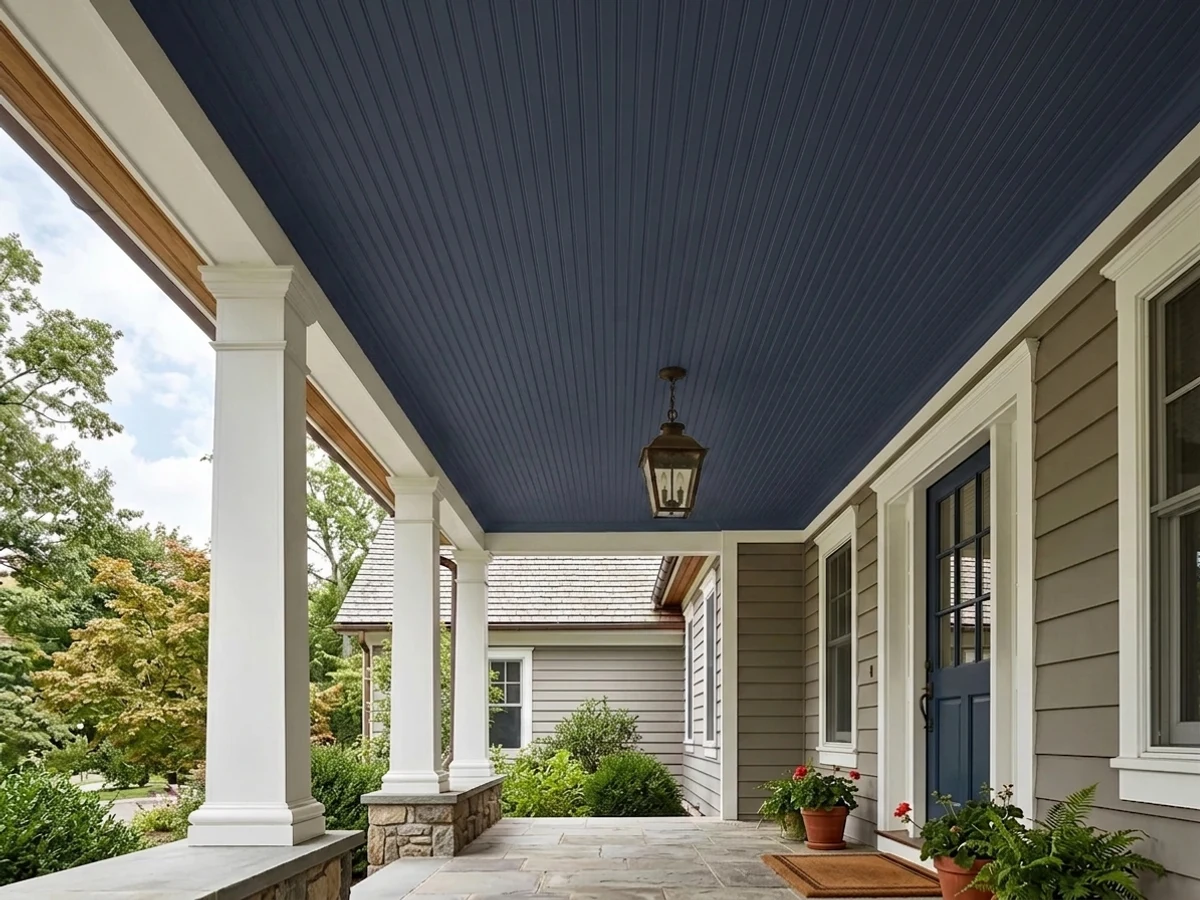
For a porch ceiling, lighter and softer almost always wins. Pale sky blues, blue-grays, and soft blue-greens in the higher LRV range (roughly 55 to 75) keep the ceiling feeling open and airy and read most like real sky. Deep navy or saturated blue overhead tends to close the porch in and can feel heavy, so save those for trim or a front door instead.
Let the porch's light steer you. A shaded, north-facing porch pulls colors cooler and grayer, so lean toward a blue with a little warmth or green in it so it does not turn cold and dull. A bright porch that gets afternoon sun can carry a slightly stronger, clearer blue without washing out, since all that reflected light will lift a pale shade even further.
The Right Finish For A Porch Ceiling
A porch ceiling lives outdoors in everything but name, so use an exterior-grade paint built for moisture, not an interior ceiling paint. Damp air, humidity, and the occasional blown-in rain all work against the finish, and a true exterior product resists mildew and peeling far better.
For sheen, a satin or low-luster finish is the sweet spot here. Flat hides surface flaws on old beadboard but holds dirt and is hard to wipe down, while anything glossier throws harsh glare back at you when the light hits it. Satin cleans easily, sheds moisture, and keeps that soft sky look without shining.
Pairing Blue With Trim, Posts, And Fixtures
The classic pairing is a soft blue ceiling over crisp white beadboard, white columns, and white trim — it is clean, timeless, and lets the blue feel like sky framed by the house. If your trim is a warmer cream or off-white, choose a blue with a touch of green or gray so the two do not fight.
Think about the metal and wood up there too. A pale blue ceiling flatters both black lantern fixtures and warm bronze or brass, and it sits beautifully over natural wood porch floors or gray-stained decking. For a more grounded look, pair the blue overhead with deeper, earthier colors on the porch floor and front door so the ceiling stays the lightest thing in the space.
Common Mistakes To Avoid
The biggest mistake is going too dark or too saturated. A bold blue that looks great on a chip turns the ceiling into a heavy lid once it is overhead and shaded, so always test a sample on the actual ceiling and look at it from a chair, not just standing close.
The other common slip is using interior paint or a high-gloss finish. Interior ceiling paint will not survive the humidity and will streak or mildew within a season or two, and a glossy sheen creates glare and shows every imperfection in old wood. Test your shade in the porch's real light at different times of day before you commit, since a blue that looks perfect at noon can go cold and flat by evening.
Blue Porch Ceiling Paint — Frequently Asked Questions
Why do people paint porch ceilings blue?+
The tradition comes from the old Southern habit of painting porch ceilings a soft sky blue, often called haint blue. People kept doing it because it looks like an open sky overhead, bounces a soft light onto the porch, and makes a covered space feel taller and calmer. It is mostly loved today for how good it looks and feels, not for any one rule.
What shade of blue is best for a porch ceiling?+
A light, soft blue, blue-gray, or pale blue-green usually works best, in the higher LRV range of about 55 to 75. These read most like sky and keep the ceiling feeling open. Skip deep navy overhead — it tends to close the porch in and feel heavy.
What sheen should I use on a porch ceiling?+
Satin or a low-luster finish is the sweet spot. It cleans easily, sheds the moisture a porch is exposed to, and avoids the harsh glare that a glossy ceiling throws back at you. Flat hides flaws but is harder to wipe down and holds onto dirt and mildew.
Can I use regular interior paint on a porch ceiling?+
No, use an exterior-grade paint even though the ceiling is technically covered. A porch is exposed to damp air, humidity, and blown-in rain, and interior paint will streak, peel, or mildew within a season or two. Exterior products are built to resist all of that.
How does my porch's light change which blue to pick?+
A shaded or north-facing porch pulls blues cooler and grayer, so choose a blue with a little warmth or green so it does not go cold and dull. A bright, sunny porch can carry a slightly stronger, clearer blue because the reflected light will lift it. Always test a sample on the actual ceiling at different times of day.
Can I match a blue I like across different paint brands?+
Yes. Every blue shown here is mixed to order at a paint counter, so a shade you like from one brand can be cross-matched into another brand's exterior product. That lets you pick the exact blue you want and still get the durable, moisture-ready finish a porch ceiling needs.