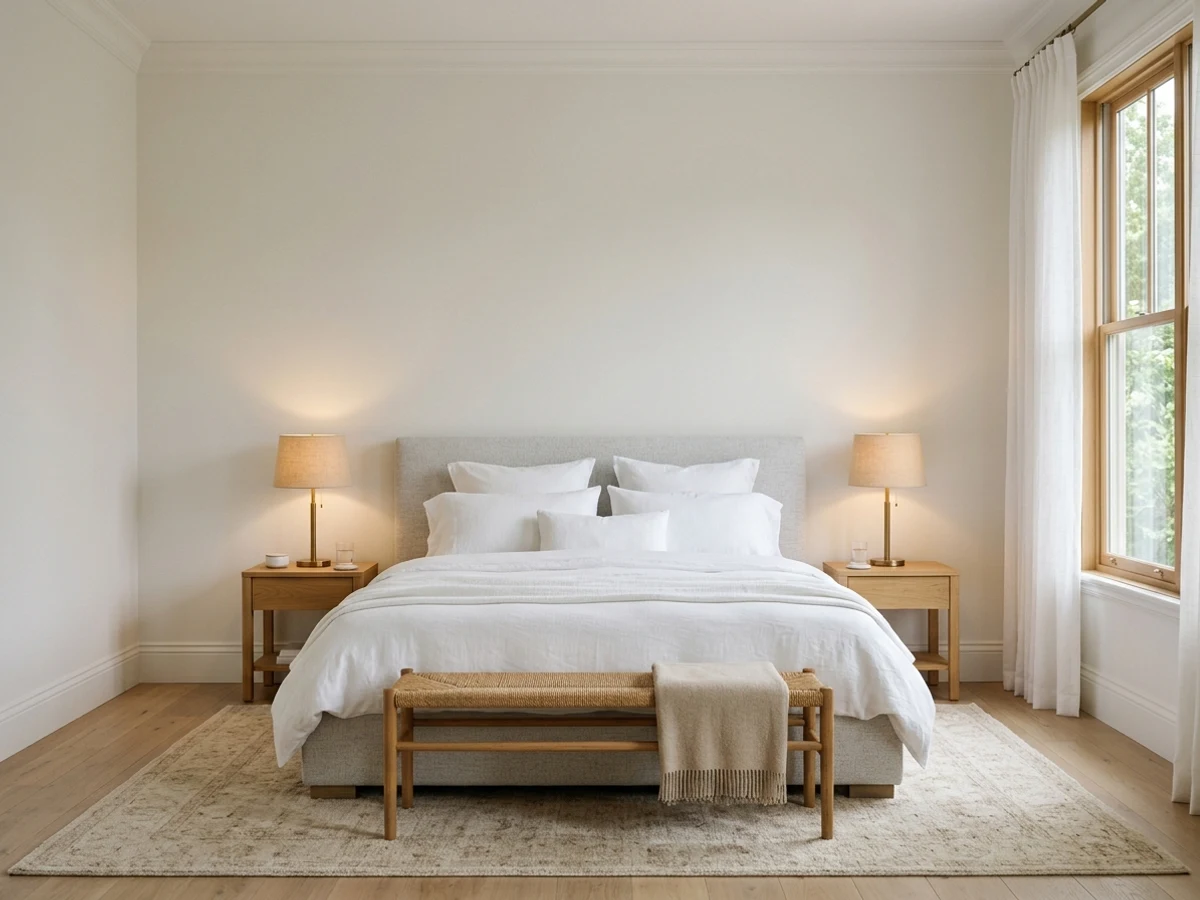
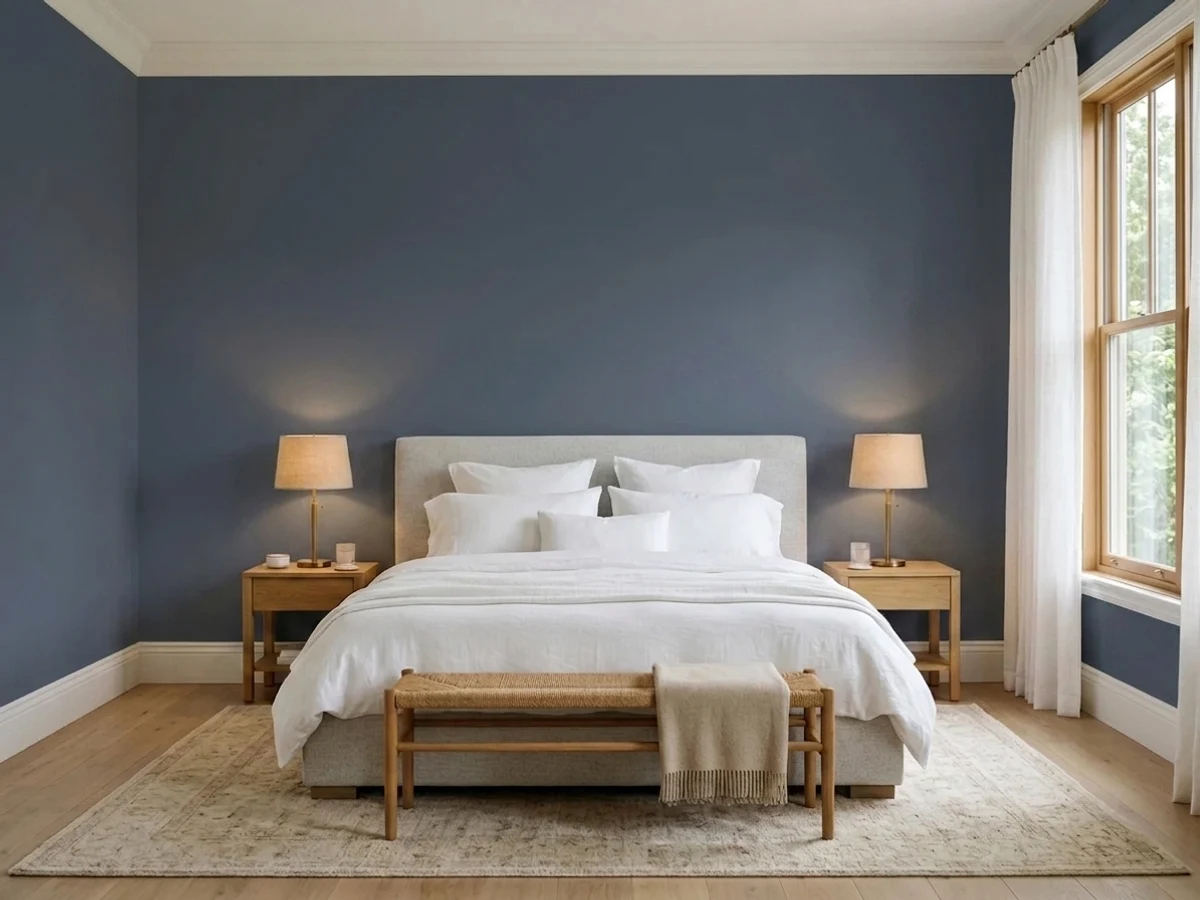
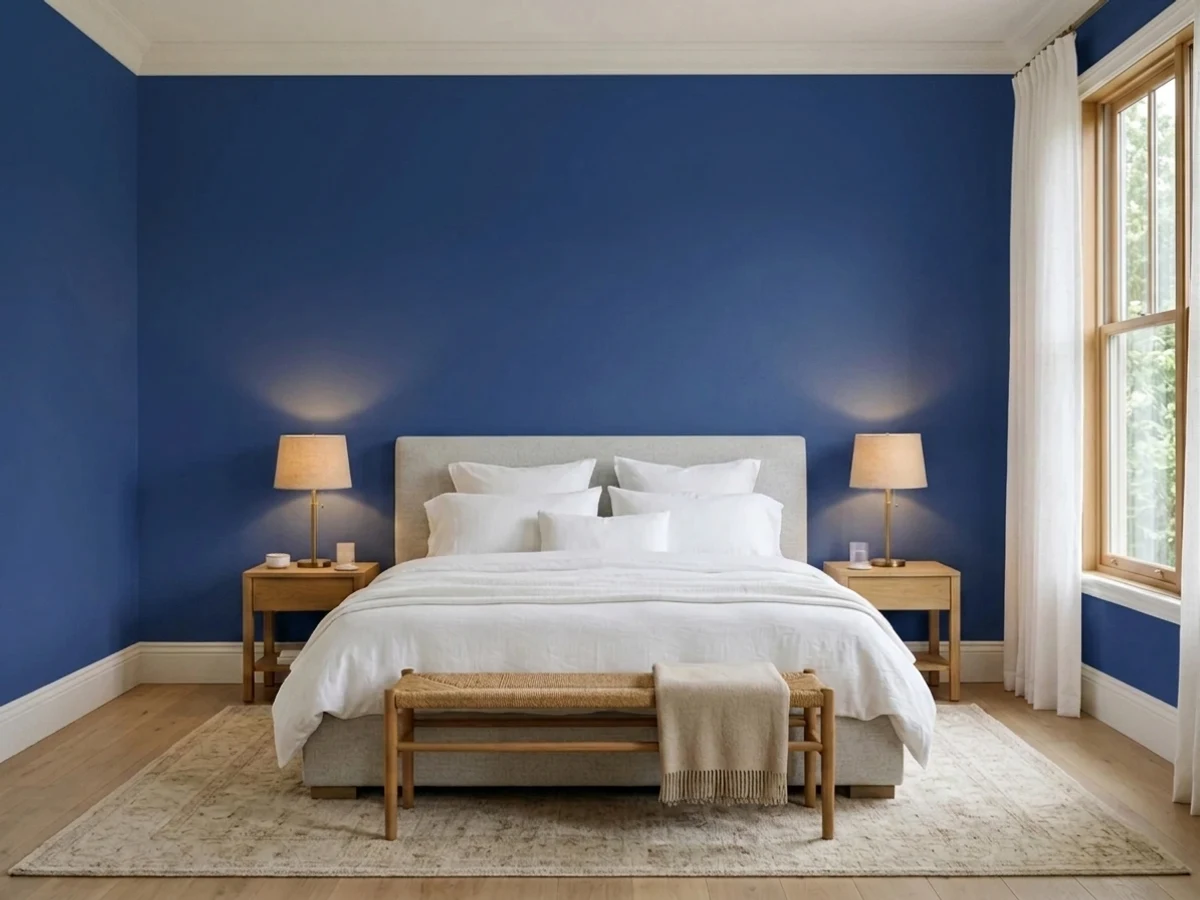
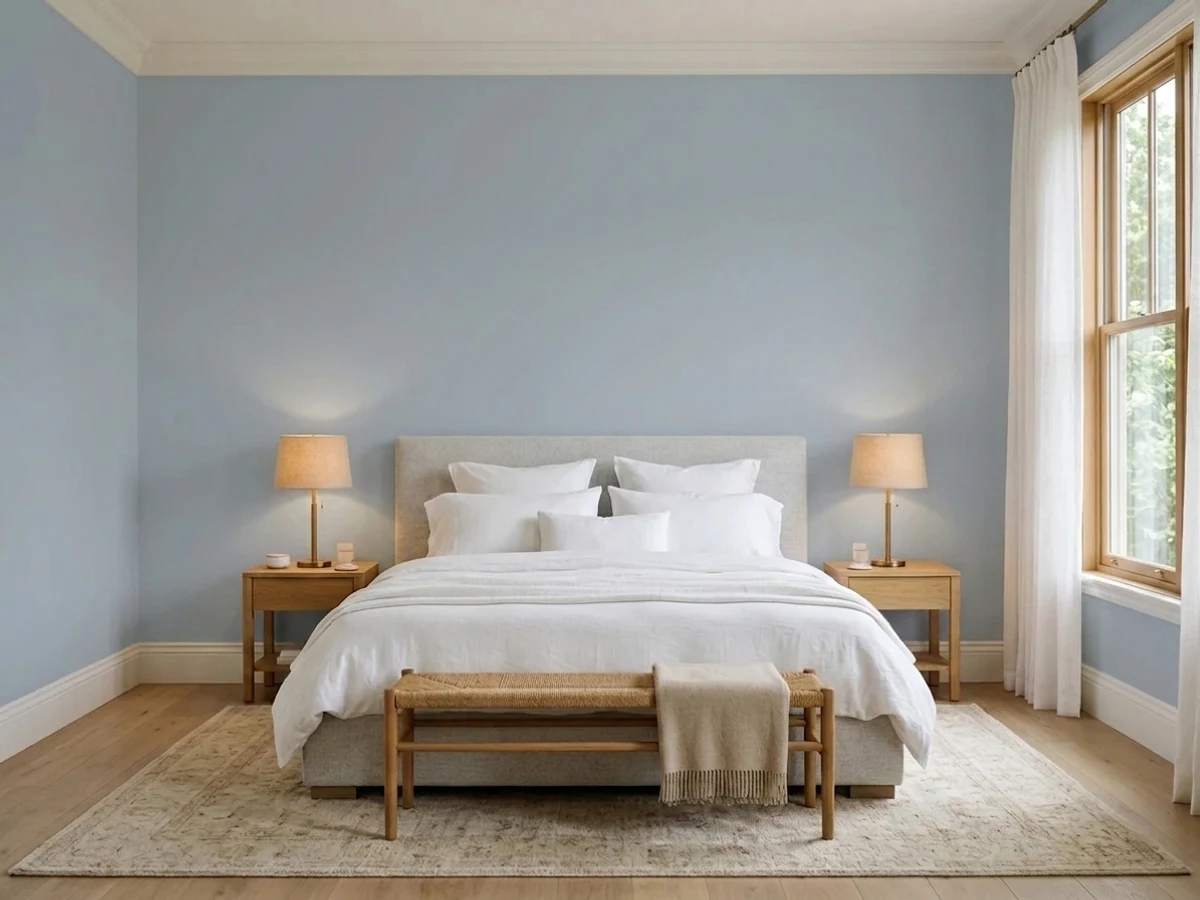
Blue Master Bedroom Paint Colors
1,741 blue colors that work in master bedrooms, drawn from the full ~30,000-color US paint deck. Below: editor's picks specific to master bedrooms, then 30 picks spread across the LRV range — narrow further on the brand page when you've shortlisted.
Blue is the most popular color for accent walls, kitchen islands, and front doors — and also the family with the widest spread, from pale dove-blues that read almost grey, to inky near-black navies, to saturated cobalts that read almost royal. Teal-leaning blues (the green-blue overlap) live next door in the Teal family.
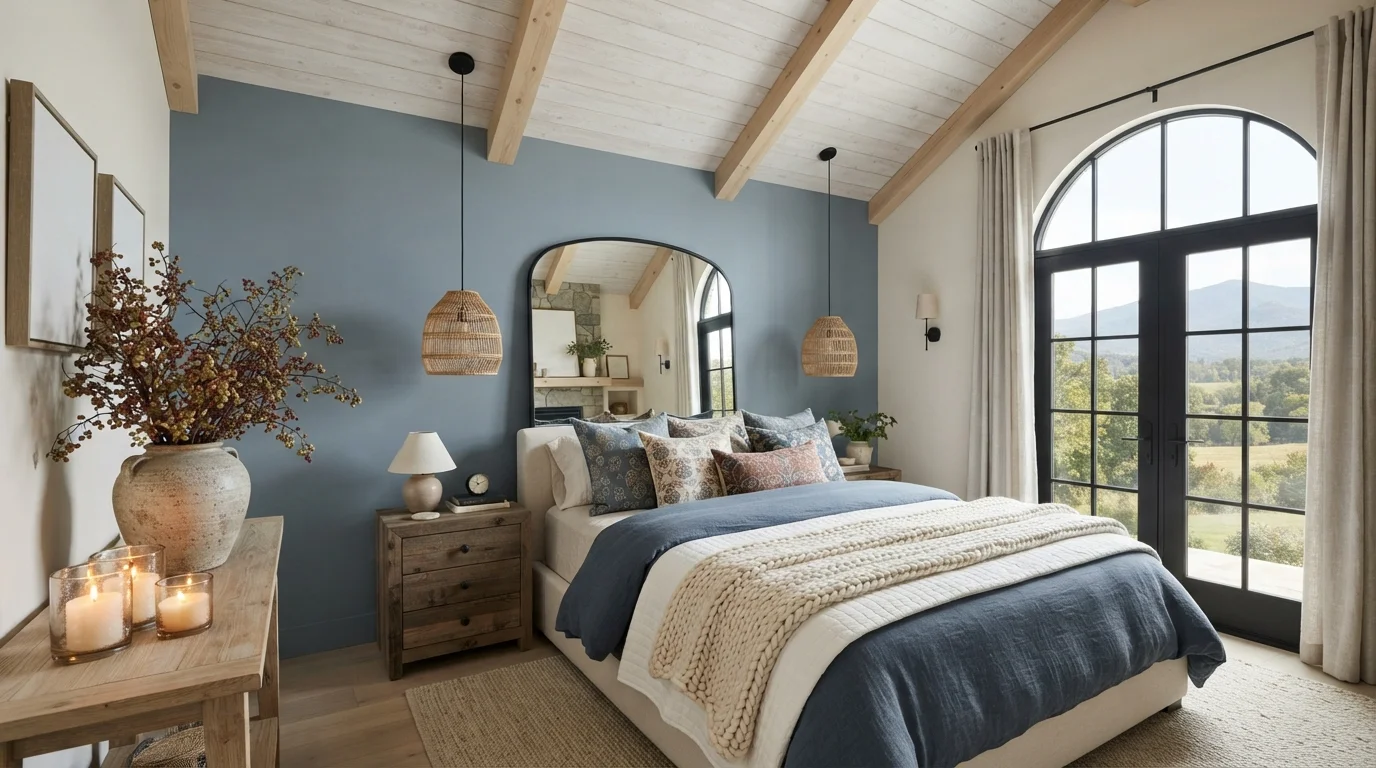
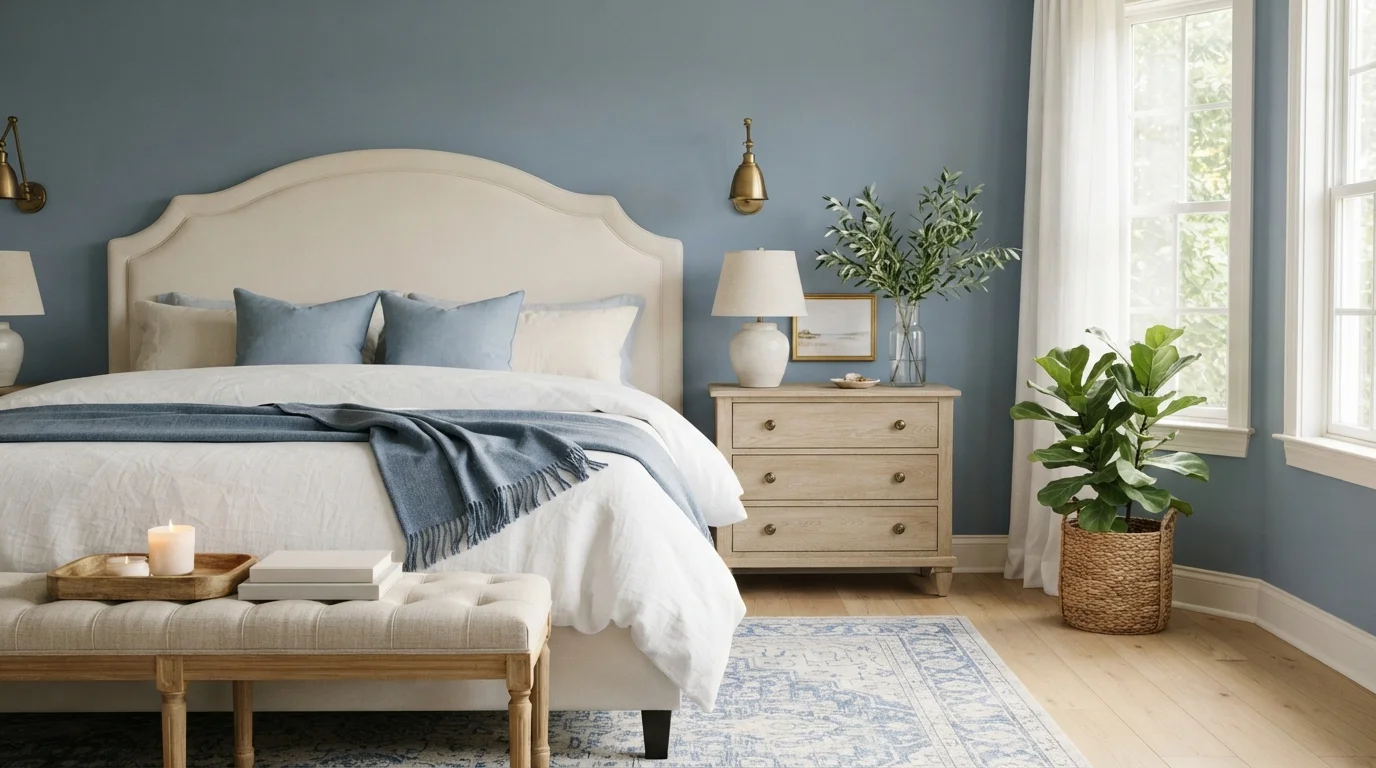
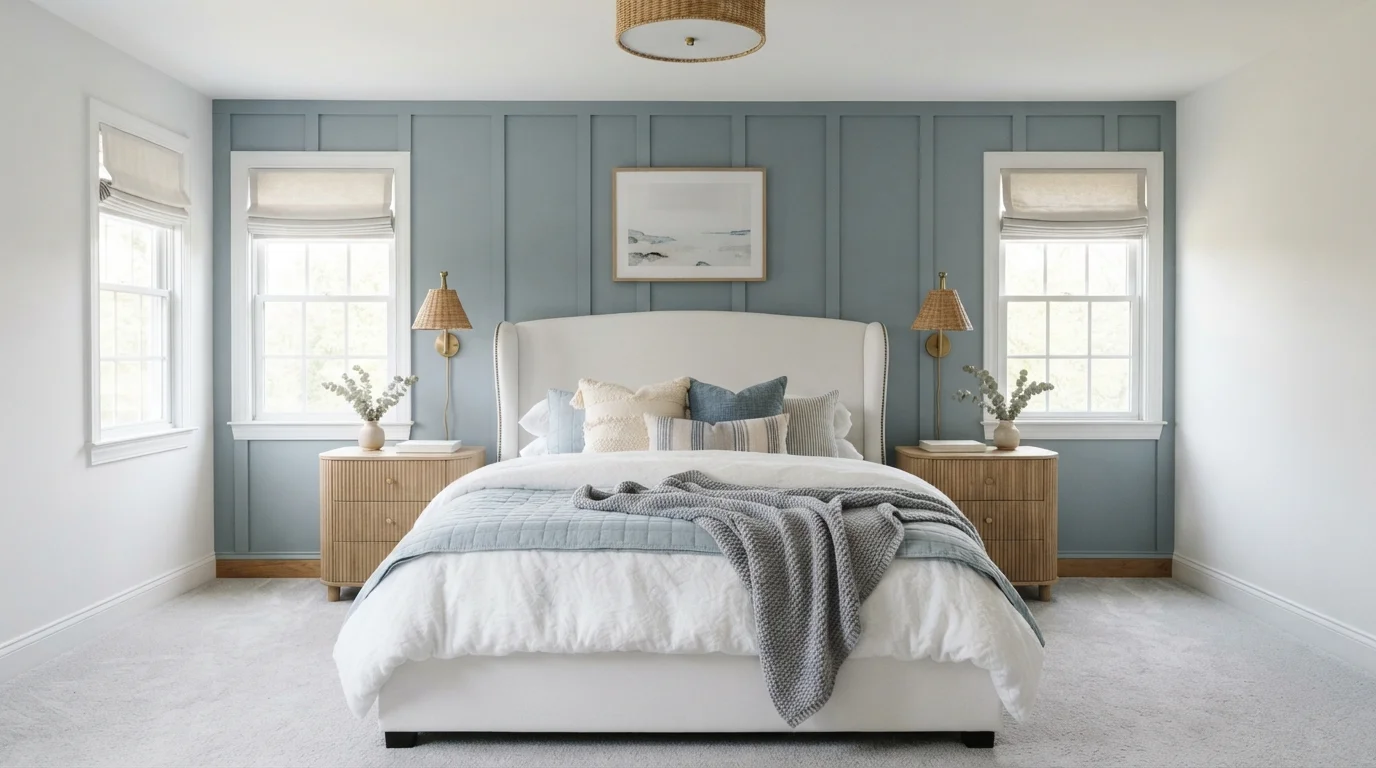
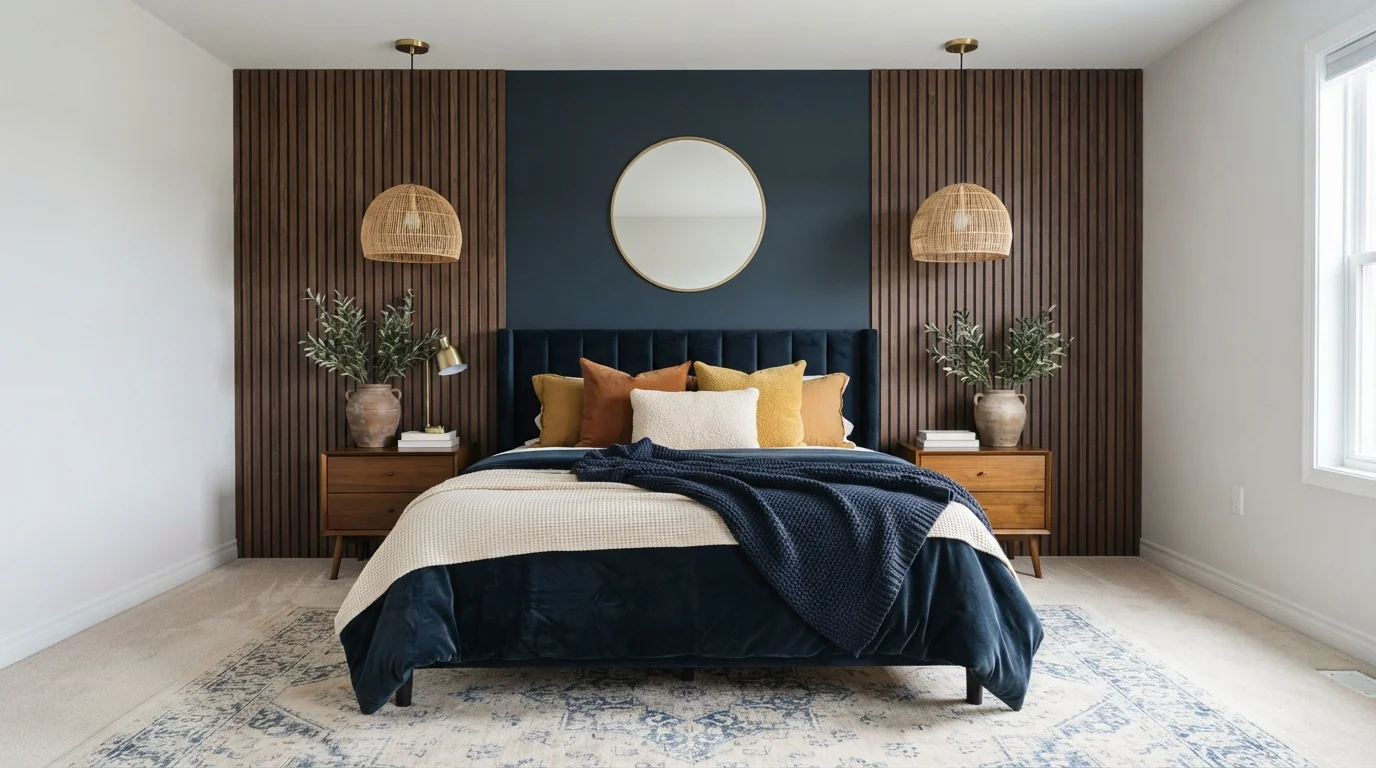
Editor's Picks: Blue for Master Bedrooms
4 picks30 Blue Picks Across the LRV Range
30 of 1,741 · sorted dark → lightLooking for more? All blue → covers every brand; brand × family pages show full decks.
Blue Master Bedroom Colors at Every US Brand
21 brands · up to 10 picks eachUp to 10 picks per brand spread across the blue LRV range, drawn from each brand's full deck. Tap any swatch with a curated guide for full spec; tap the brand title for the brand's complete blue deck.
Behr
Valspar
Glidden
Benjamin Moore
PPG / Glidden
Dunn-Edwards
Sherwin-Williams
Dutch Boy
Hirshfield's
Diamond Vogel
Kompozit
C2 Paint
Portola Paints
Magnolia Home
Rodda
Farrow & Ball
Backdrop
Annie Sloan
Clare
Rust-Oleum
Other Master Bedroom Color Families
Blue Colors in Other Rooms
Blue Paint Colors for a Master Bedroom
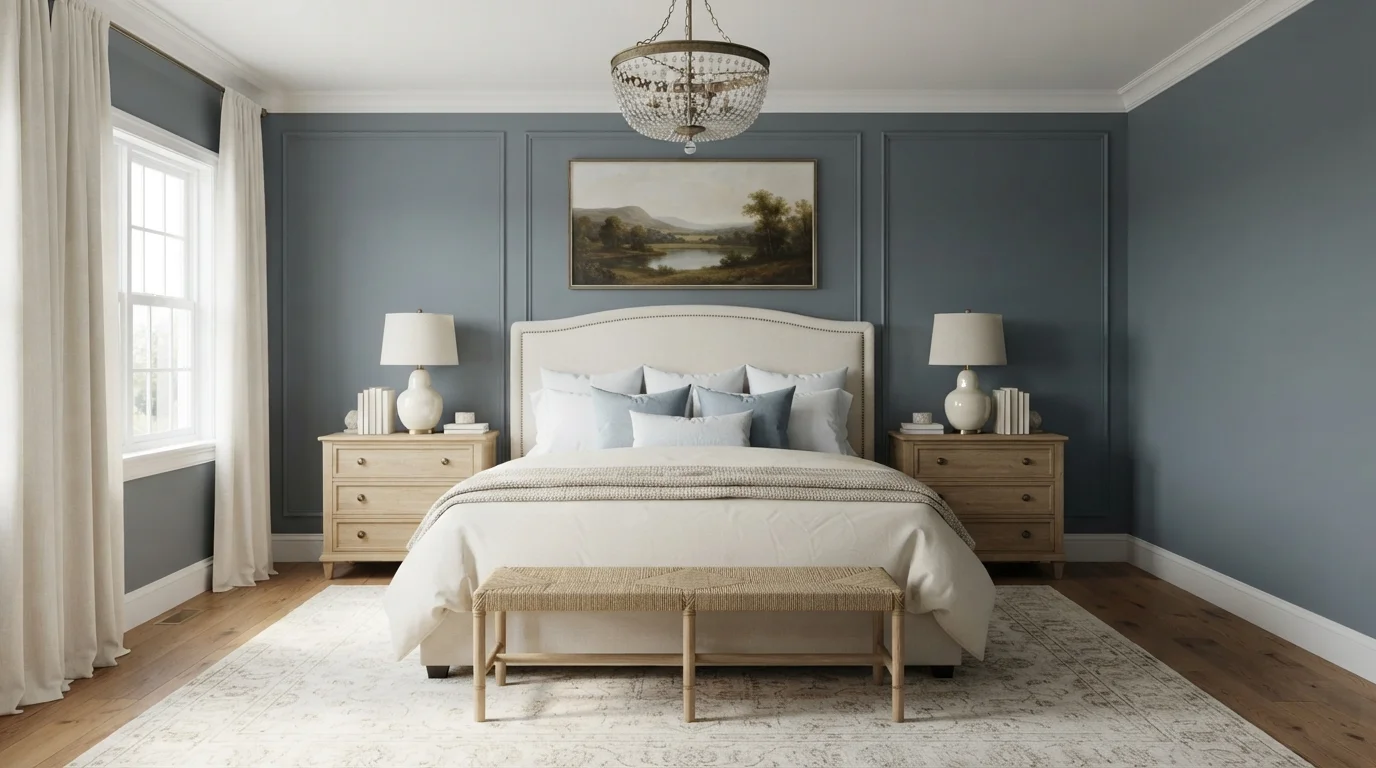
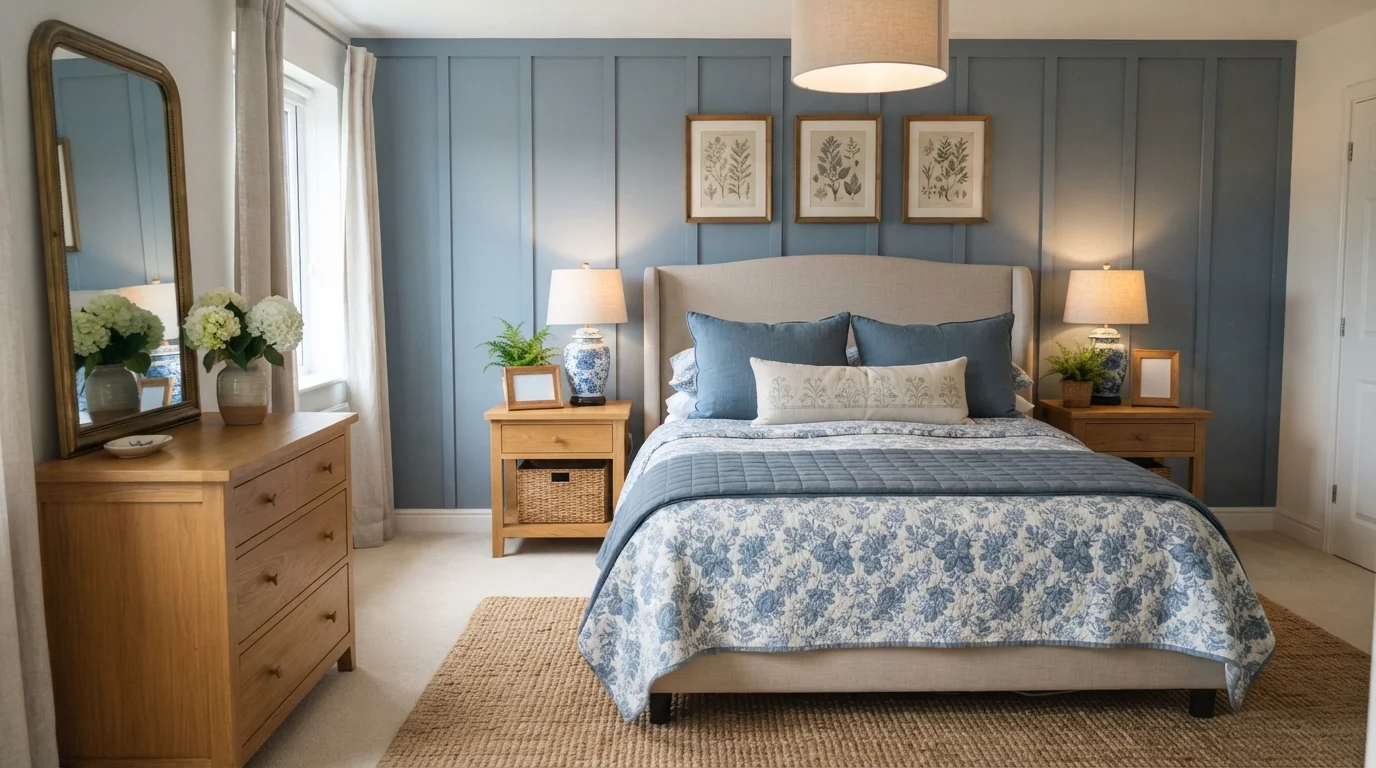
Blue is one of the few colors that genuinely earns its reputation in a bedroom. It reads as calm and quiet, it pairs with almost any wood or metal you already own, and it photographs well at the end of a long day when the lights are low. In a master bedroom — the one room built for winding down — that calming quality is the whole point, which is why blue keeps showing up here more than in any other room of the house.
The trick is that "blue" covers a huge range, from a soft gray-blue that barely reads as color to a deep navy that swallows the room. The right one for your master bedroom depends almost entirely on how much light the room gets and how you want to feel when you walk in. This page walks through how to pick the depth, the finish, and the pairings that make blue work in this specific room — and every color you see here is mixed to order, so you can take a shade you like and have it matched across brands.
Why Blue Works So Well In A Master Bedroom
A master bedroom is the one room where you actually want the walls to settle you down, and blue does that better than warmer colors. It lowers the visual energy of the room without making it feel cold the way a stark gray can, and it gives the eye a place to rest at the end of the day. That is a real, practical reason blue shows up in bedrooms so often, not just a design trend.
The thing to watch is going too cool or too dark in a room that already feels chilly or dim. A north-facing master with little direct sun can turn a crisp blue gray and flat. If that is your room, lean toward blues with a little green or gray warmth in them rather than icy, pure blues.
Picking The Right Depth Of Blue For Your Light
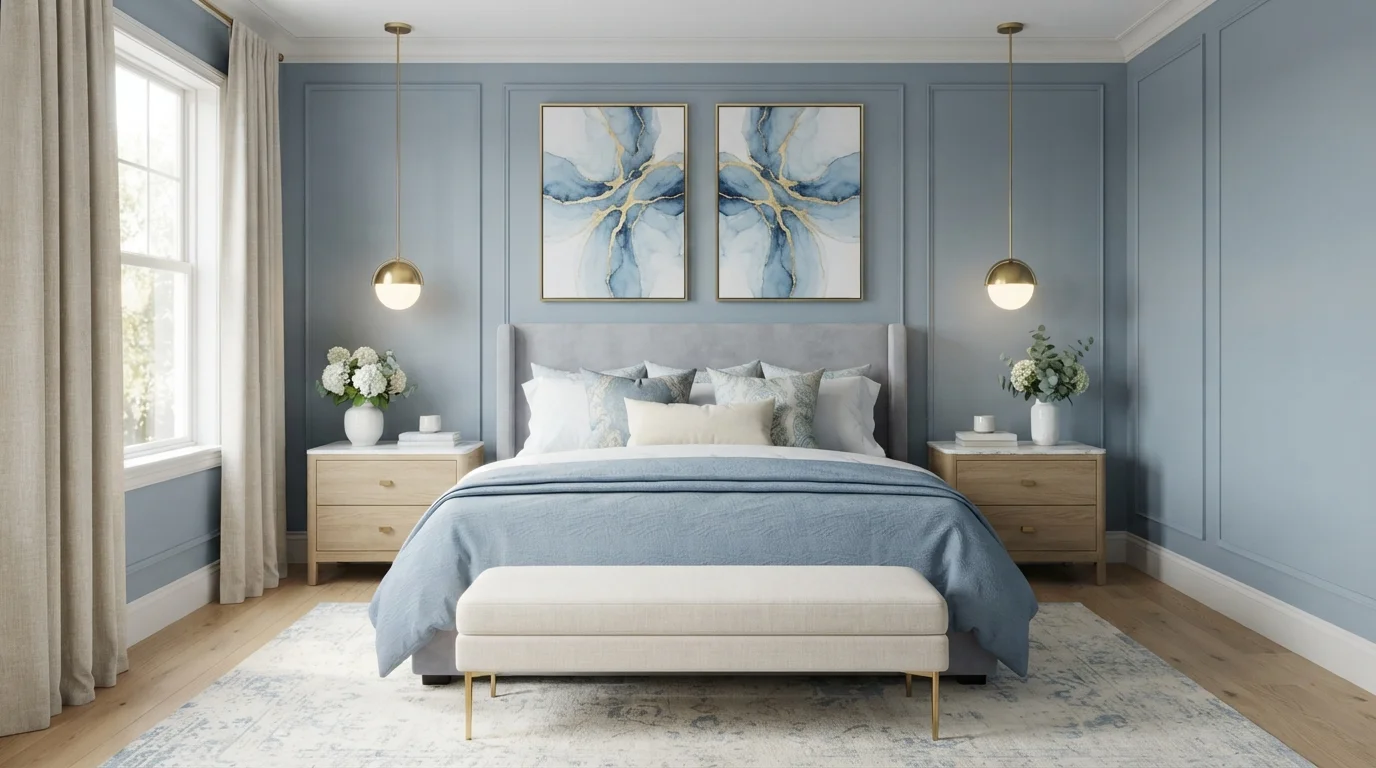
The single most useful number here is LRV — light reflectance value, a 0 to 100 scale of how much light a color bounces back. A soft, airy blue in the 55 to 70 LRV range keeps a master bedroom feeling open and is forgiving in almost any light. A mid-tone blue around 25 to 45 LRV gives you real color and a cocooning feel while still reading as relaxed. A deep navy under 15 LRV is dramatic and wonderful on the wall behind the bed, but it needs good light or it will close the room in.
Let the room's light do the steering. A bright south- or west-facing master can carry a deeper, moodier blue because sunlight keeps it from going flat. A dim or north-facing room is usually happier with a lighter, slightly warmer blue that holds its color when the sun isn't helping. Always test a sample on the actual wall and look at it in the morning, at midday, and at night under your bedside lamps.
The Right Finish For Bedroom Walls
A master bedroom is a low-traffic, low-moisture room, which means you don't need the scrubbable, light-catching finishes a kitchen or bath calls for. For the walls, a matte or flat finish is usually the best choice. It hides minor wall imperfections, kills glare so the color stays soft and even, and gives blue that deep, velvety look that makes the room feel calm.
If you have kids or pets coming in and out, step up to an eggshell for a touch more wipeability without much shine. Save satin and semi-gloss for the trim, doors, and any built-ins — that small contrast in sheen frames the blue walls and stands up to handling where it actually gets touched.
Pairing Blue With Trim, Ceiling, And Wood
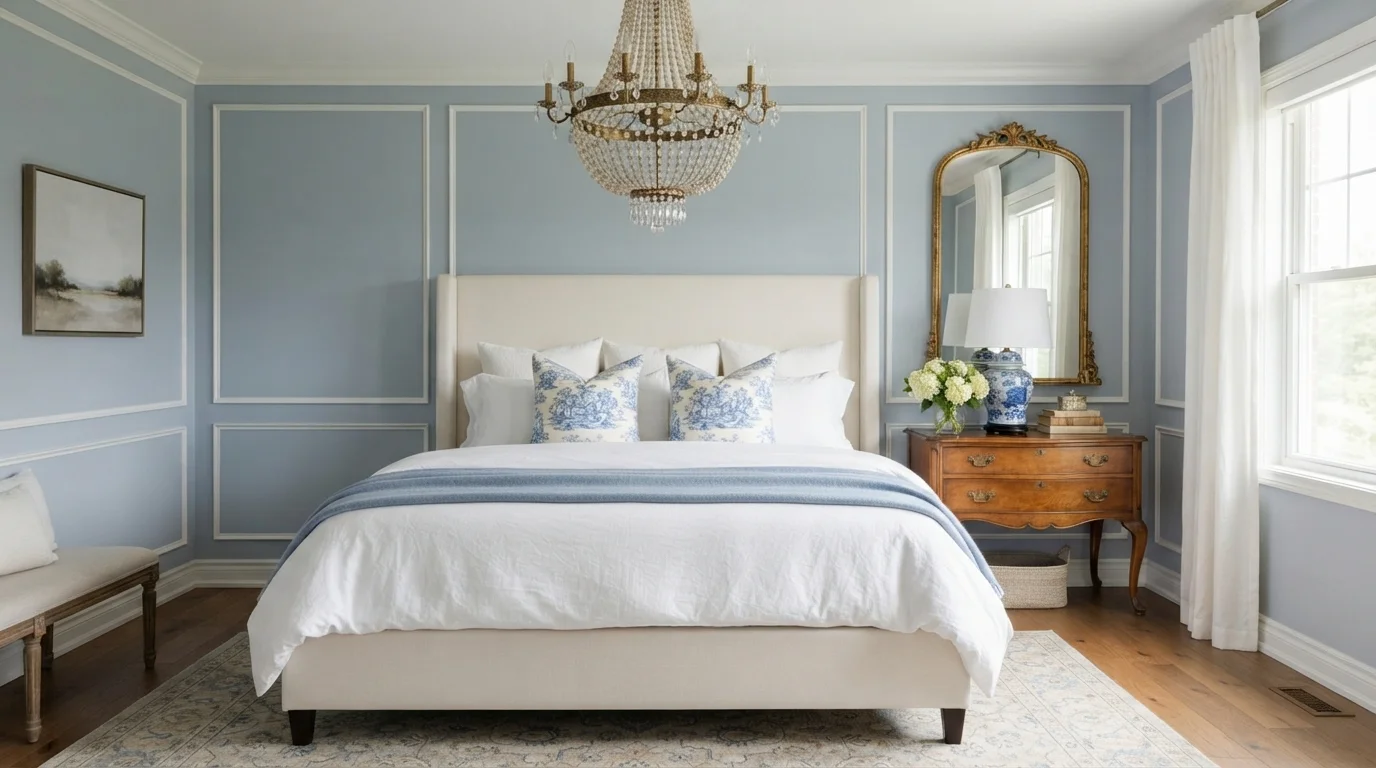
Blue is easy to pair, which is part of why it works in a primary suite. Crisp white trim and a white ceiling keep a mid-to-deep blue feeling fresh and architectural. If you want the room softer and more enveloping, paint the trim a warm off-white or even carry a lighter version of the wall blue up onto the ceiling so nothing snaps your eye to a hard line.
Wood tones are blue's best friend. Warm woods — oak, walnut, a natural headboard — glow against blue and keep the room from feeling cold. For metals and fixtures, brass and aged gold warm a blue room up, while brushed nickel or matte black keep it cool and modern. Pick one metal and repeat it so the room reads pulled-together rather than busy.
Common Mistakes With Blue In A Bedroom
The most common mistake is choosing a blue off a tiny chip or a screen and skipping a real sample. Blue shifts hard with light — a swatch that looked like a soft denim in the store can read purple, gray, or baby-blue on your wall. Paint a poster-sized sample, or a peel-and-stick swatch, and live with it for a few days before you commit.
The second mistake is going too saturated or too cold for the room's light, which leaves the space feeling chilly instead of restful — exactly the opposite of what you want in a bedroom. And don't forget the ceiling and trim in the plan: a beautiful blue can be undone by a builder-beige ceiling or yellowed old trim fighting against it. Decide the whole package — walls, trim, ceiling — before you buy.
Blue Master Bedroom Paint — Frequently Asked Questions
Is blue a good color for a master bedroom?+
Yes. Blue is one of the best bedroom colors because it reads as calm and quiet, which is exactly what you want in a room built for rest. It also pairs easily with wood furniture and most metals you already own. The main thing to watch is going too cold or too dark in a room that already lacks light.
What shade of blue is best for a bedroom?+
It depends on your light and the mood you want. A soft, airy blue keeps a smaller or dimmer room open, a mid-tone blue gives you real color while still feeling relaxed, and a deep navy creates a cozy, dramatic feel that works best in a well-lit room. Bright, sunny rooms can carry deeper blues; dim or north-facing rooms usually do better with a lighter, slightly warmer blue.
What sheen should I use for bedroom walls?+
A matte or flat finish is usually best for a master bedroom. It hides small wall flaws, cuts glare so the color stays soft, and gives blue a rich, velvety look. If you want a little more wipeability, eggshell is a fine step up, and you can use satin or semi-gloss on trim and doors.
What trim and ceiling color goes with a blue bedroom?+
Crisp white trim and a white ceiling keep blue feeling fresh and clean. For a softer, more enveloping room, use a warm off-white trim or carry a lighter blue up onto the ceiling. Warm wood tones and your choice of brass or matte-black fixtures round out the look.
Will a dark blue make my bedroom feel small?+
It can if the room is dim, but in a well-lit room a deep blue often makes the space feel cozy and intimate rather than cramped. To keep it from closing in, pair it with lighter trim, a white or pale ceiling, and a couple of good lamps. Always test a large sample first, since dark blues shift a lot with the light.
Can I match a blue I like across different paint brands?+
Yes. Every color shown here is mixed to order at the store, so you are not locked into one brand. If you find a blue you love, you can have it cross-matched and tinted in another brand's paint line, which lets you keep the exact shade while choosing the product or finish you prefer.