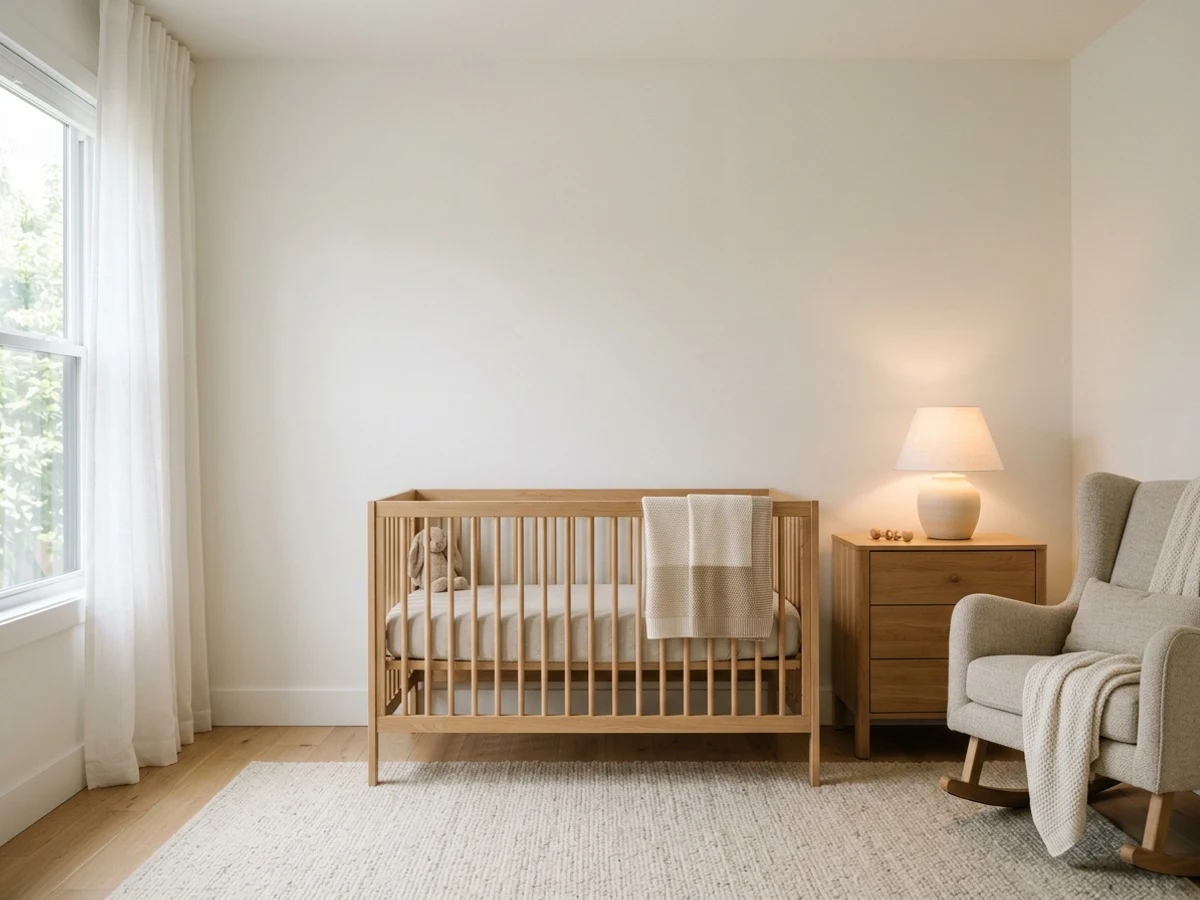
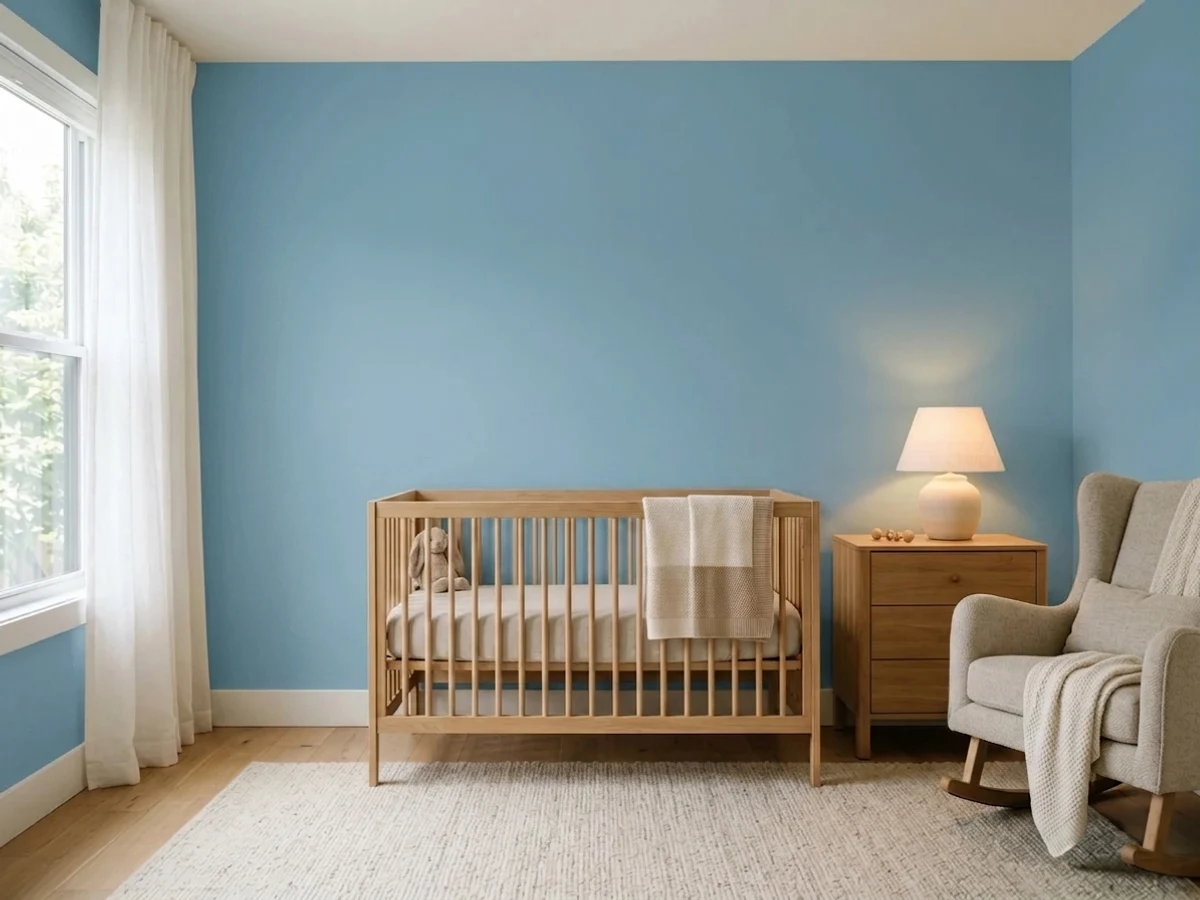
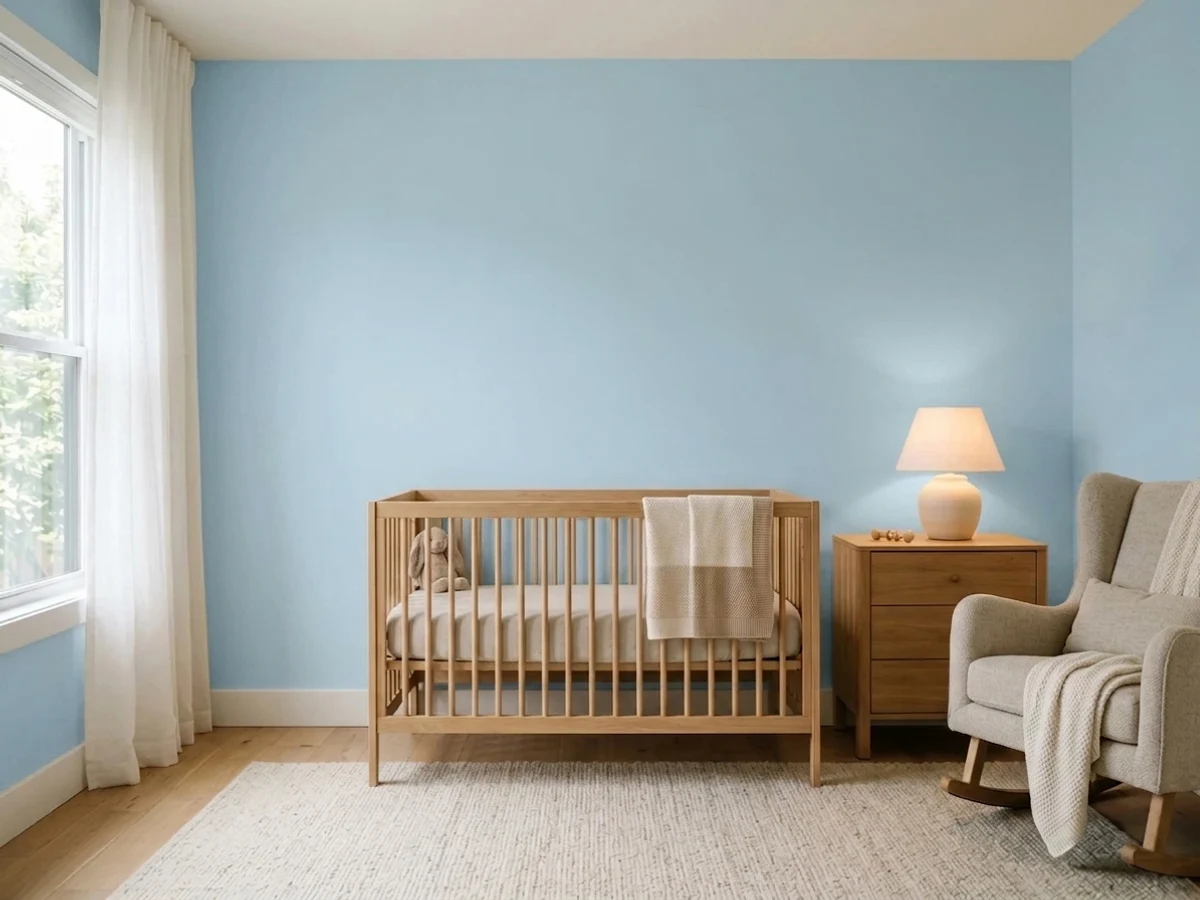
Blue Nursery Paint Colors
1,741 blue colors that work in nurserys, drawn from the full ~30,000-color US paint deck. Below: editor's picks specific to nurserys, then 30 picks spread across the LRV range — narrow further on the brand page when you've shortlisted.
Blue is the most popular color for accent walls, kitchen islands, and front doors — and also the family with the widest spread, from pale dove-blues that read almost grey, to inky near-black navies, to saturated cobalts that read almost royal. Teal-leaning blues (the green-blue overlap) live next door in the Teal family.
Editor's Picks: Blue for Nurserys
4 picks30 Blue Picks Across the LRV Range
30 of 1,741 · sorted dark → lightLooking for more? All blue → covers every brand; brand × family pages show full decks.
Blue Nursery Colors at Every US Brand
21 brands · up to 10 picks eachUp to 10 picks per brand spread across the blue LRV range, drawn from each brand's full deck. Tap any swatch with a curated guide for full spec; tap the brand title for the brand's complete blue deck.
Behr
Valspar
Glidden
Benjamin Moore
PPG / Glidden
Dunn-Edwards
Sherwin-Williams
Dutch Boy
Hirshfield's
Diamond Vogel
Kompozit
C2 Paint
Portola Paints
Magnolia Home
Rodda
Farrow & Ball
Backdrop
Annie Sloan
Clare
Rust-Oleum
Other Nursery Color Families
Blue Colors in Other Rooms
Blue Paint Colors for a Nursery
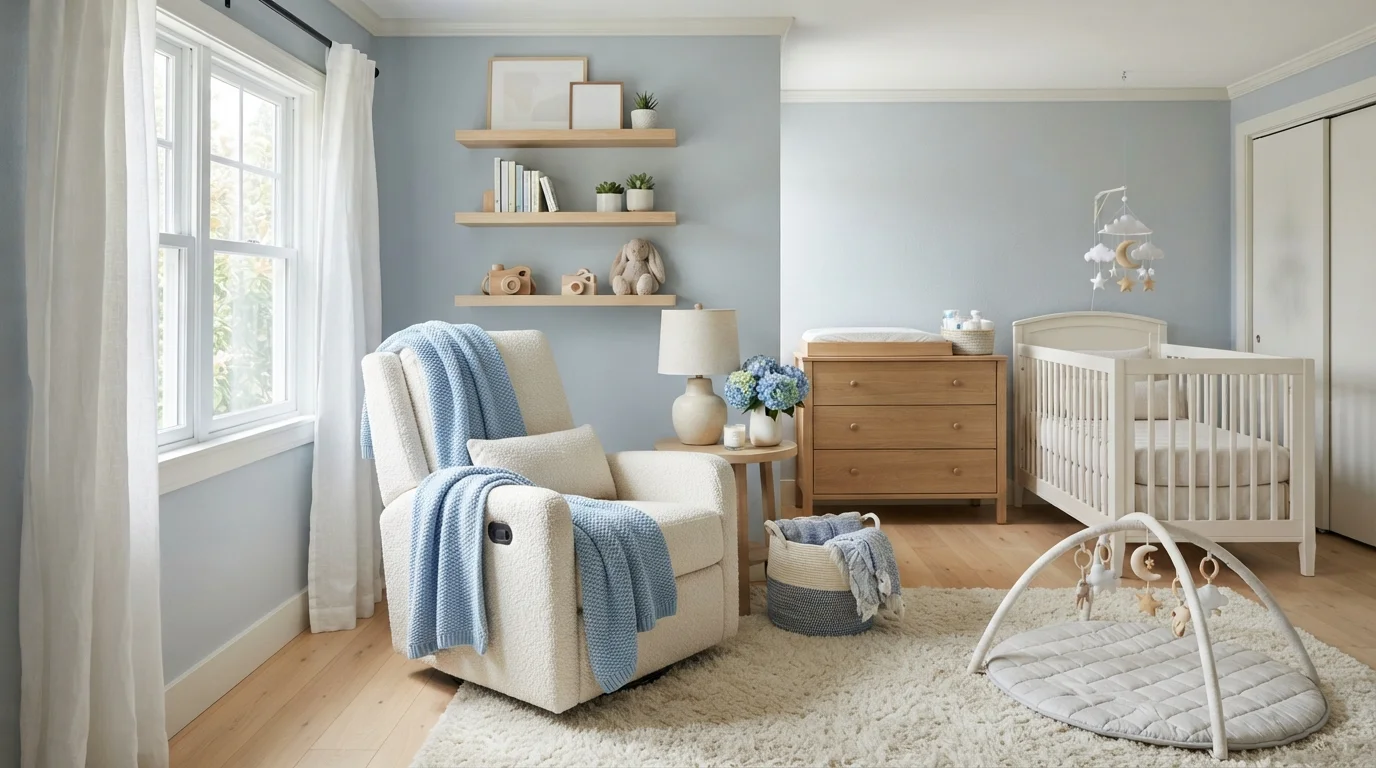
Blue is the most popular color for a nursery, and for good reason. It reads calm and quiet, which is exactly what you want in a room built around sleep and soothing a baby. The trick is that "blue" covers a huge range, from a soft sky tint that barely registers to a deep navy that wraps the whole room. For a nursery you usually want the softer end, because a baby spends a lot of time on their back looking at the walls and ceiling, and gentle is easier to live with at 3 a.m.
This page is specifically about putting blue in a nursery, not blue in general and not nurseries in general. We will walk through which depth of blue works best, how the room's light and your window direction steer the shade, the finish that holds up to wipe-downs and humidity, and how to pair blue with trim, the crib, and the small fixtures a nursery tends to have. Every color shown here is mixed to order at the store, so once you find a blue you love you can match it across brands no matter where you end up buying.
Why Blue Works In A Nursery
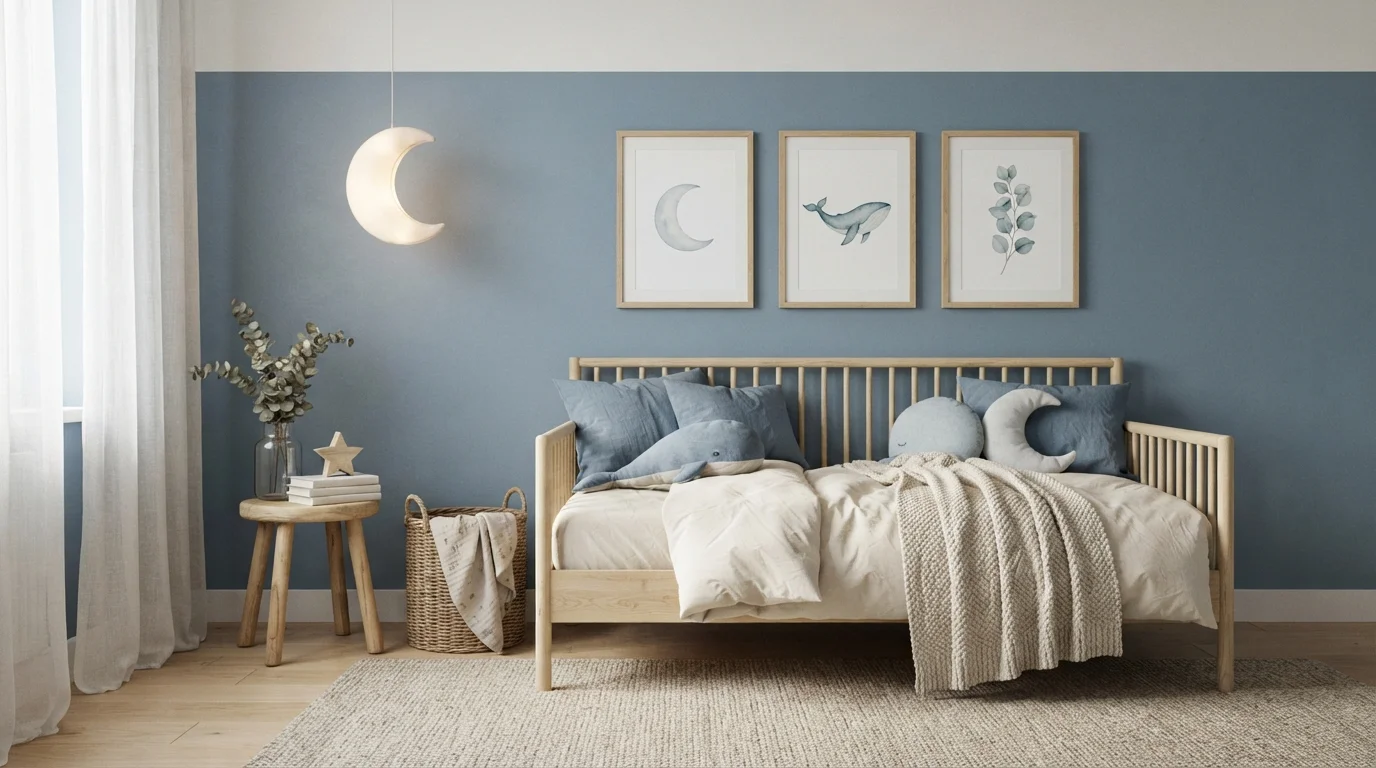
Blue calms a space down, which is the whole job of a nursery. Soft, cool blues lower the energy in a room and pair naturally with the white and wood tones most baby furniture comes in. It also ages well: a gentle blue does not read as a baby color, so the room still makes sense when your child is four or seven and no longer in a crib.
The thing to watch is that cool colors can go cold. A blue that looks crisp on the chip can feel chilly and even a little sad on all four walls, especially in a room that does not get much sun. The fix is to lean toward blues with a touch of warmth in them, like a soft blue-gray or a blue with a green or putty undertone, rather than a clean, icy sky blue.
The Right Depth Of Blue, And Letting Light Decide
For most nurseries the sweet spot is a light to mid blue, roughly an LRV in the 55 to 75 range. That keeps the room bright enough for diaper changes and reading, and soft enough to feel restful. LRV is just how much light a color bounces back: higher numbers are lighter and airier, lower numbers are deeper and moodier. A baby's room usually wants to stay on the brighter side.
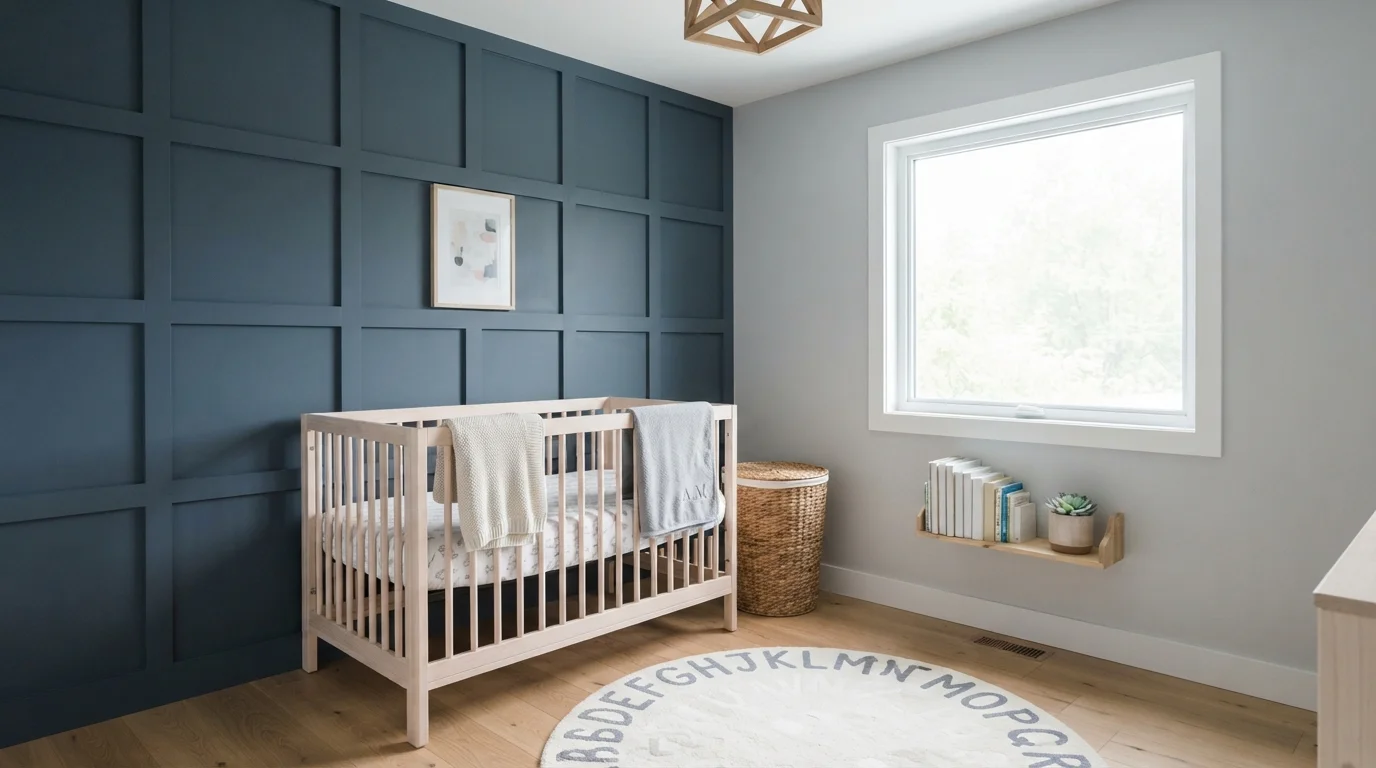
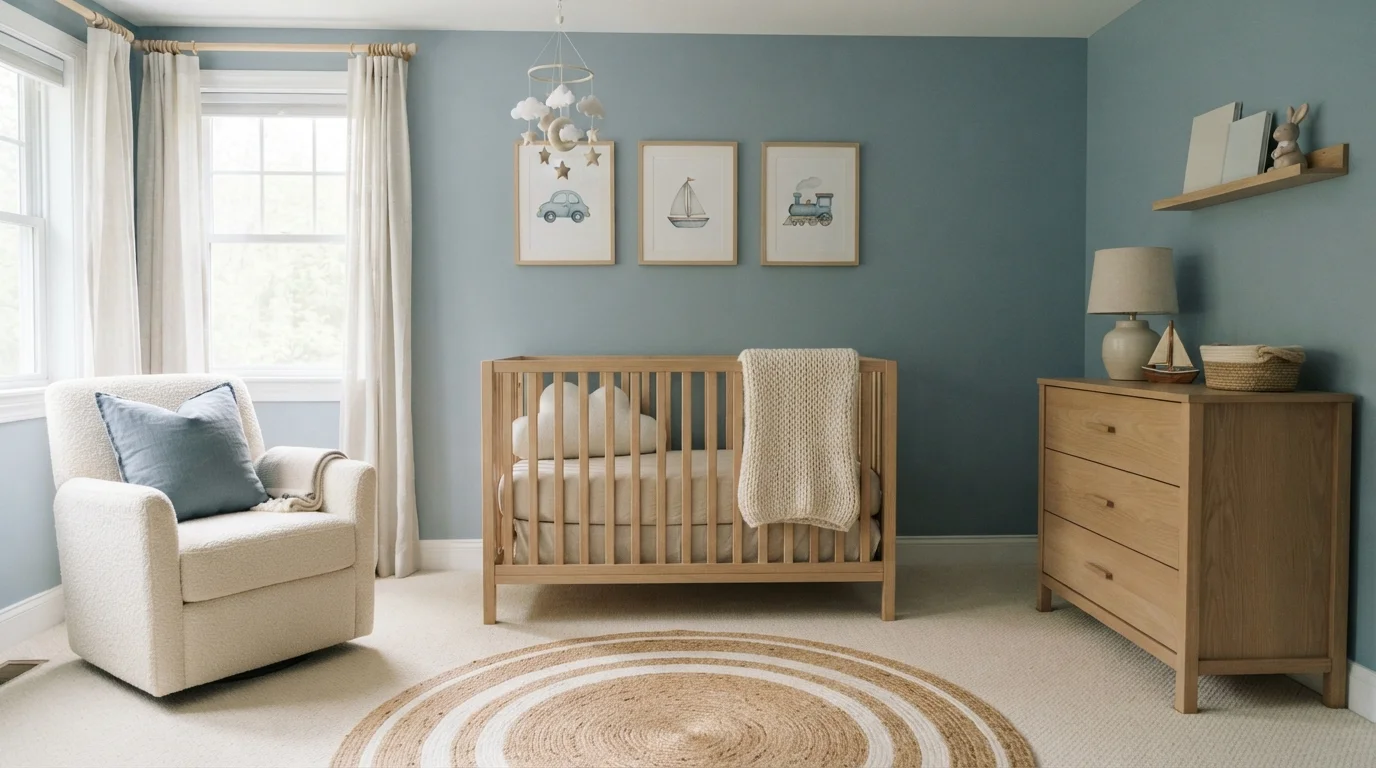
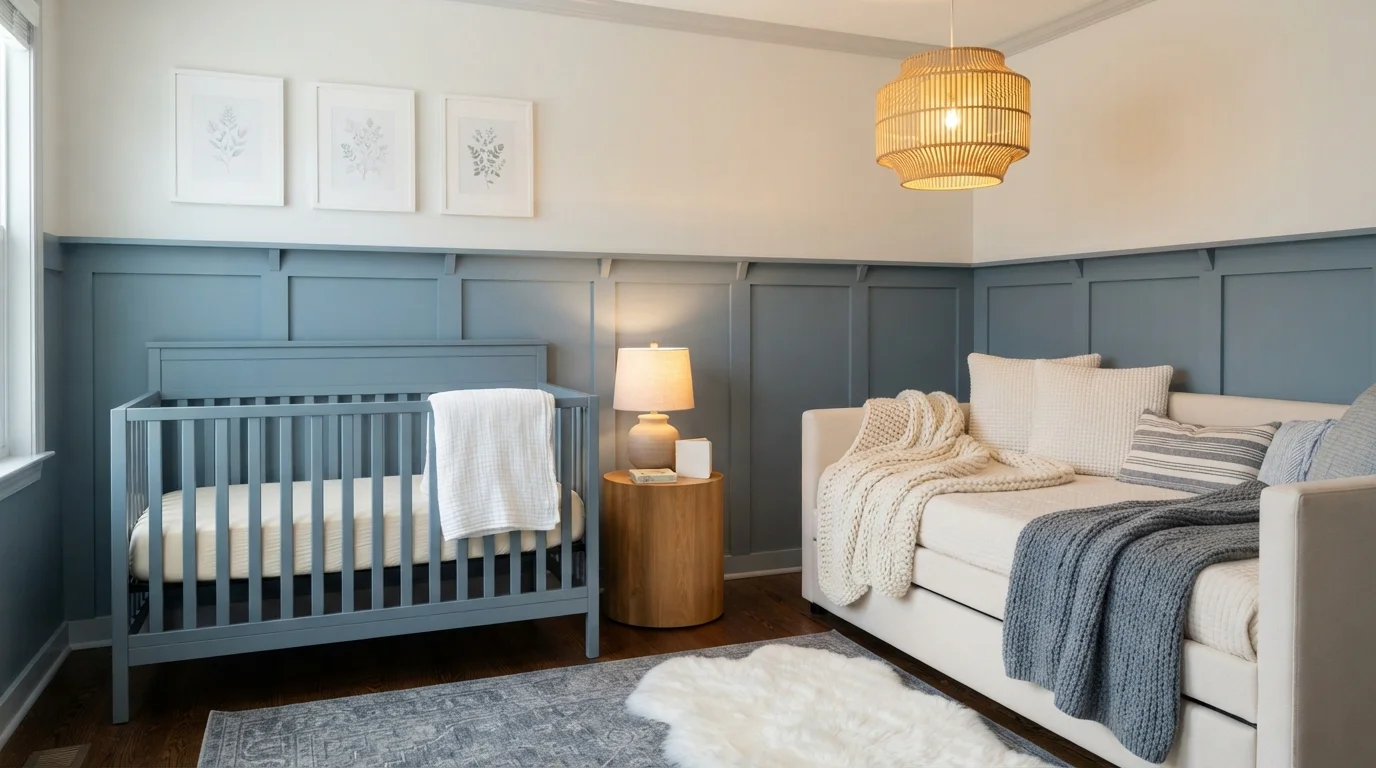
Your window direction should make the final call. North-facing nurseries get cool, flat light all day, so a clean blue can look gray and lifeless there; pick a blue with a warm or green undertone to keep it alive. South and west rooms get strong warm light and can carry a cooler, clearer blue without feeling icy. A deep navy can be lovely on a single wall behind the crib, but going dark on all four walls in a low-light nursery usually feels heavy. Always tape a real sample to the wall and check it in morning light, midday, and at night under the lamp you will actually use.
The Best Finish For A Nursery
Eggshell or satin is the right call for nursery walls. A nursery gets touched constantly, by sticky hands, spit-up, and the occasional marker, so you want a finish you can wipe clean without leaving a shiny scrubbed patch. Flat and matte look beautiful but they are hard to clean and tend to mark, which makes them a poor fit for this room.
Keep the sheen low enough to avoid glare, since a baby spends real time staring at the walls and a glossy finish throws back hard reflections. Save the higher-gloss paint for the trim and door, where it wipes down easily and frames the blue. If your nursery runs humid, eggshell or satin also handles moisture far better than flat, which can streak or grow patchy over time.
Pairing Blue With Trim, Crib, And Fixtures
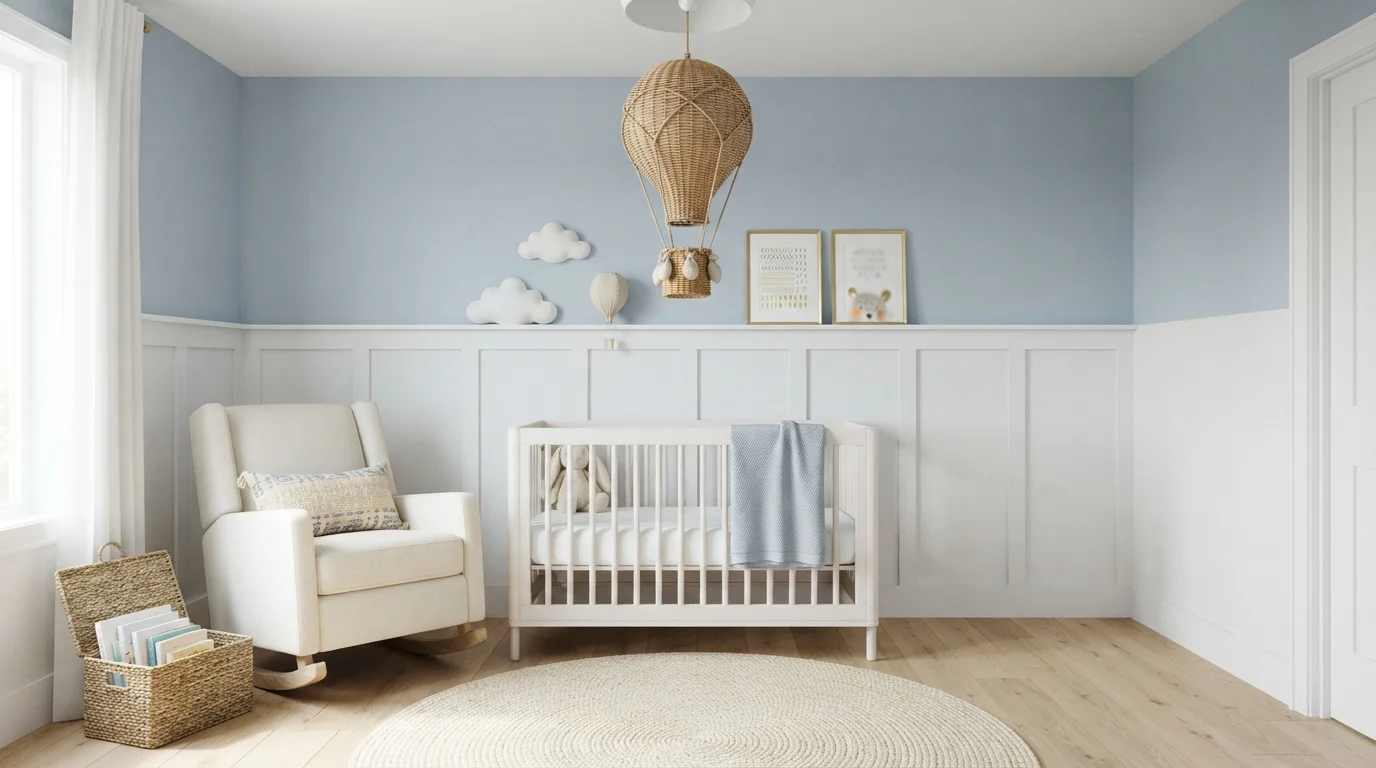
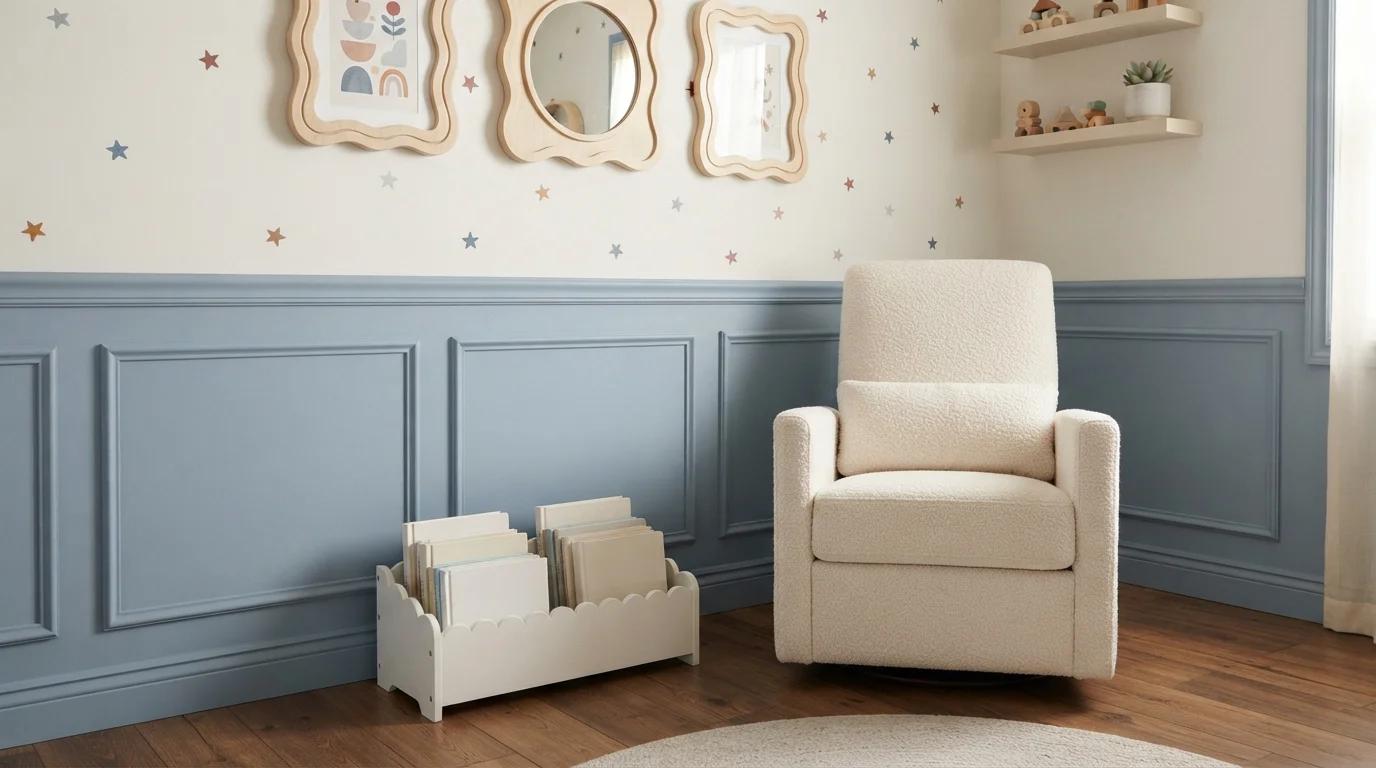
A soft white trim is the safest and best partner for nursery blue. It keeps the room feeling fresh and clean and lets the blue stay the star. If your blue is cool, a crisp white trim keeps it sharp; if your blue leans warm or grayed, a slightly softer, creamier white keeps the whole room from feeling cold. Painting the ceiling a touch lighter than the walls, or plain white, keeps the space open and bright overhead, which matters in a room where the baby looks up a lot.
For furniture, blue is forgiving. White cribs and dressers read clean and classic against it, and natural wood tones warm it up and keep it from feeling too cool. Brass or gold fixtures and hardware add a little warmth and a grown-up touch, while black or matte metal gives a cleaner, more modern look. You do not have to match anything exactly; a couple of repeated tones across the room ties it together.
Common Mistakes With Blue In A Nursery
The most common mistake is going too cold. A blue that looked calm in the store can feel chilly across a whole nursery, especially in a north-facing room or under warm bulbs that fight the color. People also pick the blue straight off a tiny chip without sampling it big on the wall, then the room turns out grayer, brighter, or more purple than they expected.
The other slip is going too dark in a room with little natural light, which makes the nursery feel like a cave instead of a calm retreat. And do not over-theme it; pairing a strong blue with lots of matching blue accents and busy patterns can make the room feel loud, which is the opposite of what a nursery should be. Keep the walls soft, let one or two accents do the talking, and the blue will carry the room.
Blue Nursery Paint — Frequently Asked Questions
What shade of blue is best for a baby's nursery?+
A soft, light to mid blue is the safest and most popular choice, usually one with a bit of warmth or a gray-green undertone so it does not feel cold. Aim for an LRV around 55 to 75 to keep the room bright and restful. Save deep navy for a single accent wall rather than the whole room.
Is dark blue or navy a good idea for a nursery?+
Navy can look beautiful, but on all four walls of a low-light nursery it tends to feel heavy and dim. The better move is to put navy on just the wall behind the crib, or on the lower half of the walls, and keep the rest of the room light. In a bright, sunny nursery you have more room to go a little deeper.
What paint finish should I use in a nursery?+
Use eggshell or satin on the walls. It wipes clean when the inevitable mess happens and stands up to humidity better than flat, while still staying low enough in sheen to avoid harsh glare. Use a higher-gloss finish on the trim and door so they are easy to clean too.
What trim and ceiling color go with a blue nursery?+
A soft white is the best partner. A crisp white keeps a cool blue sharp, while a slightly creamier white warms up a cooler blue so the room does not feel cold. A white or very light ceiling keeps the space feeling open and bright, which matters in a room where the baby looks up a lot.
Will a blue nursery feel cold?+
It can if you pick a clean, icy blue in a room without much sun, or under warm light bulbs that fight the color. To keep it cozy, choose a blue with a warm, gray, or green undertone, pair it with white trim and natural wood, and always test a large sample on the wall in your own light before committing.
Can I match a blue I like across different paint brands?+
Yes. Every color shown here is mixed to order at the paint counter, and a blue you love from one brand can be cross-matched to an equivalent at another. That means you can pick the exact shade for your nursery and buy it wherever is easiest for you.