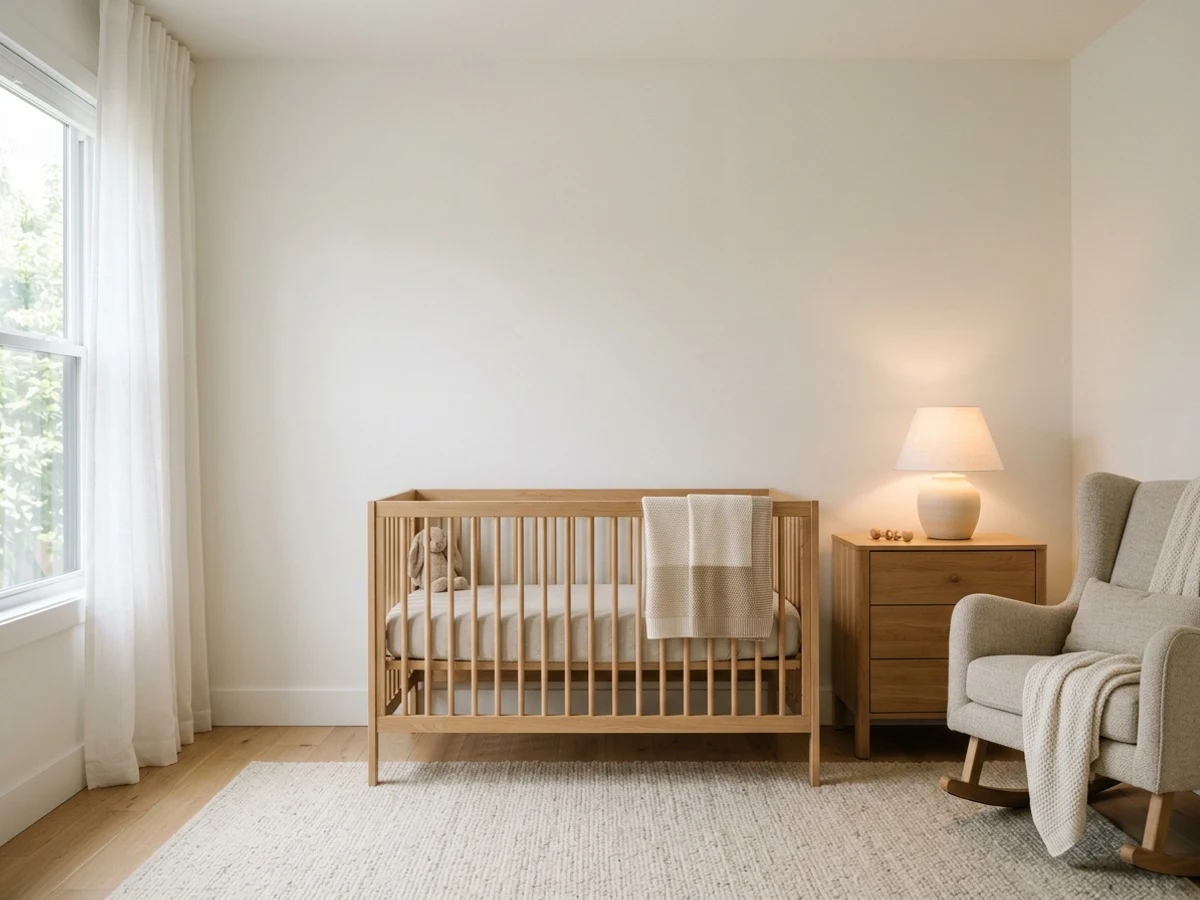
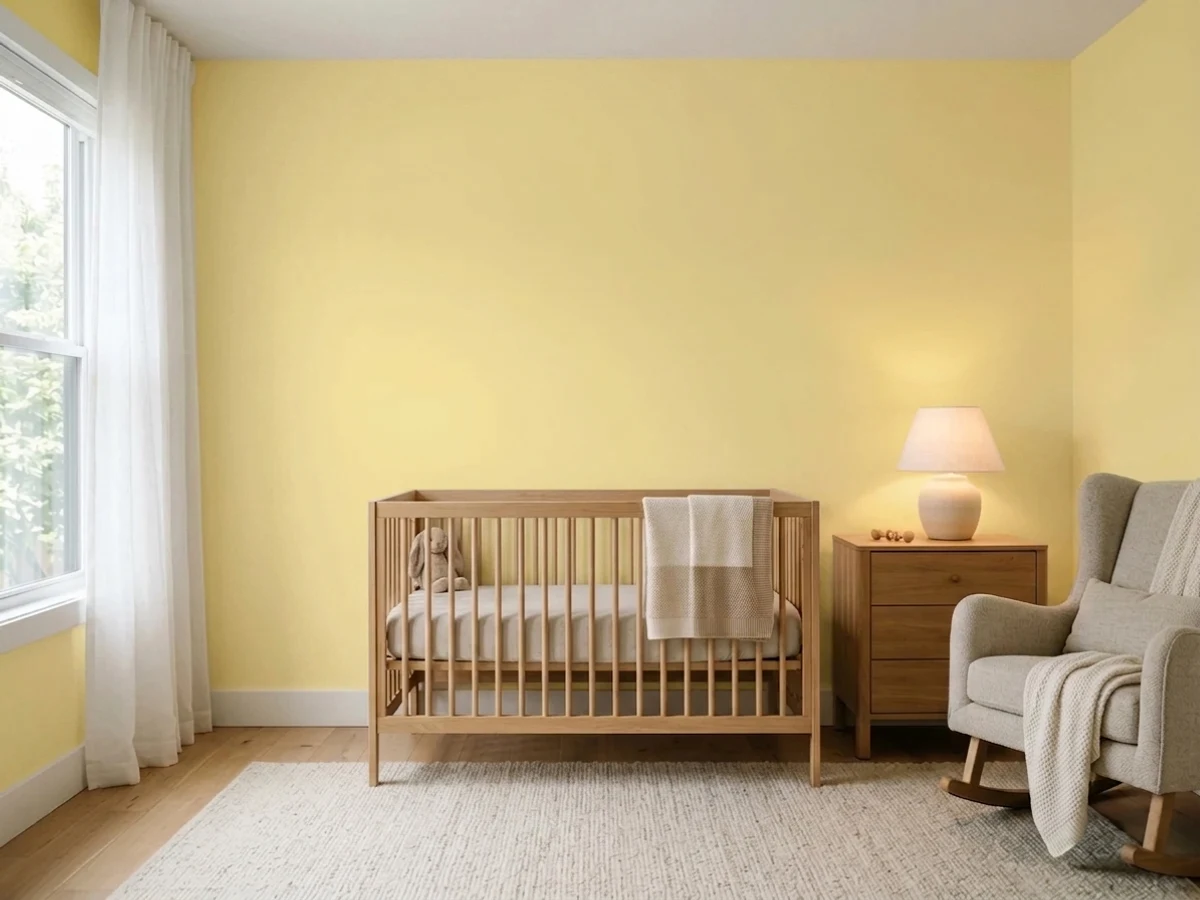
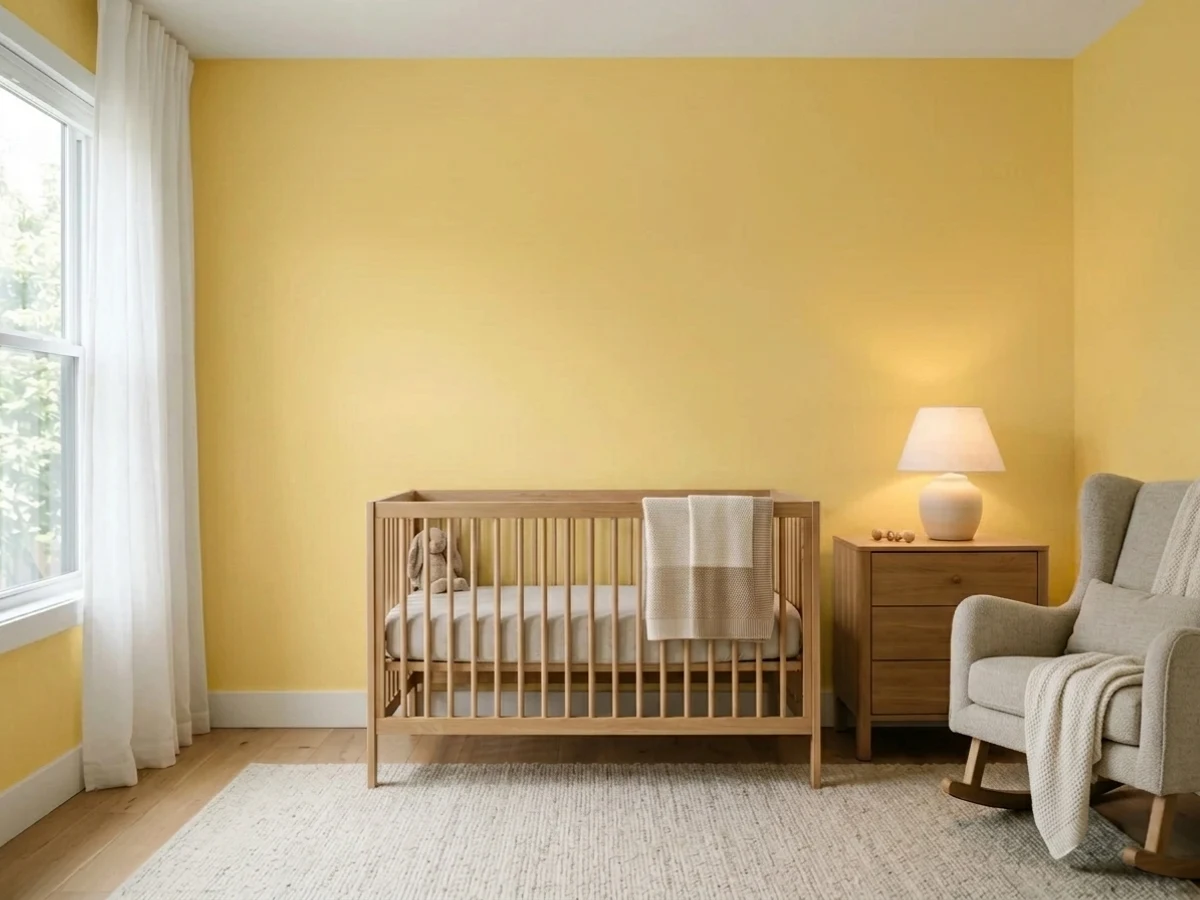
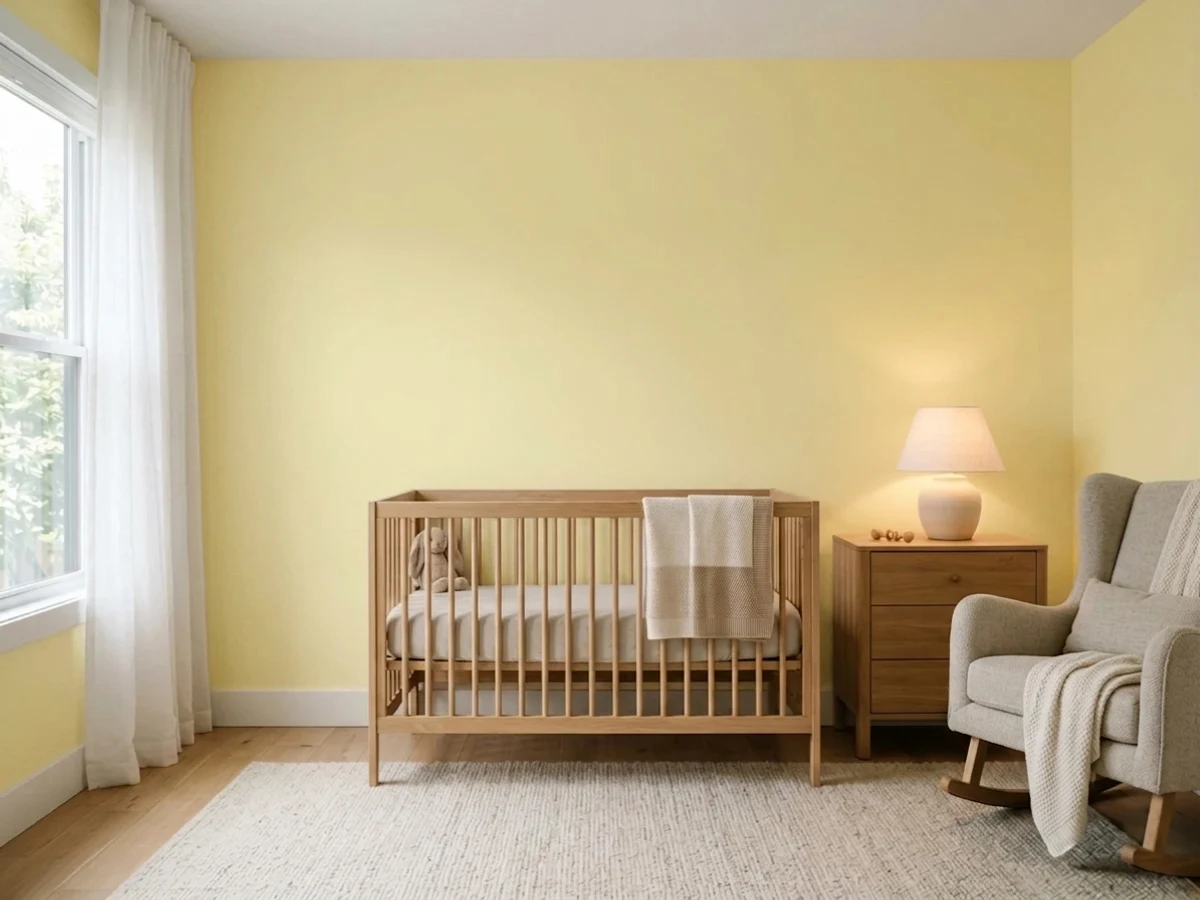
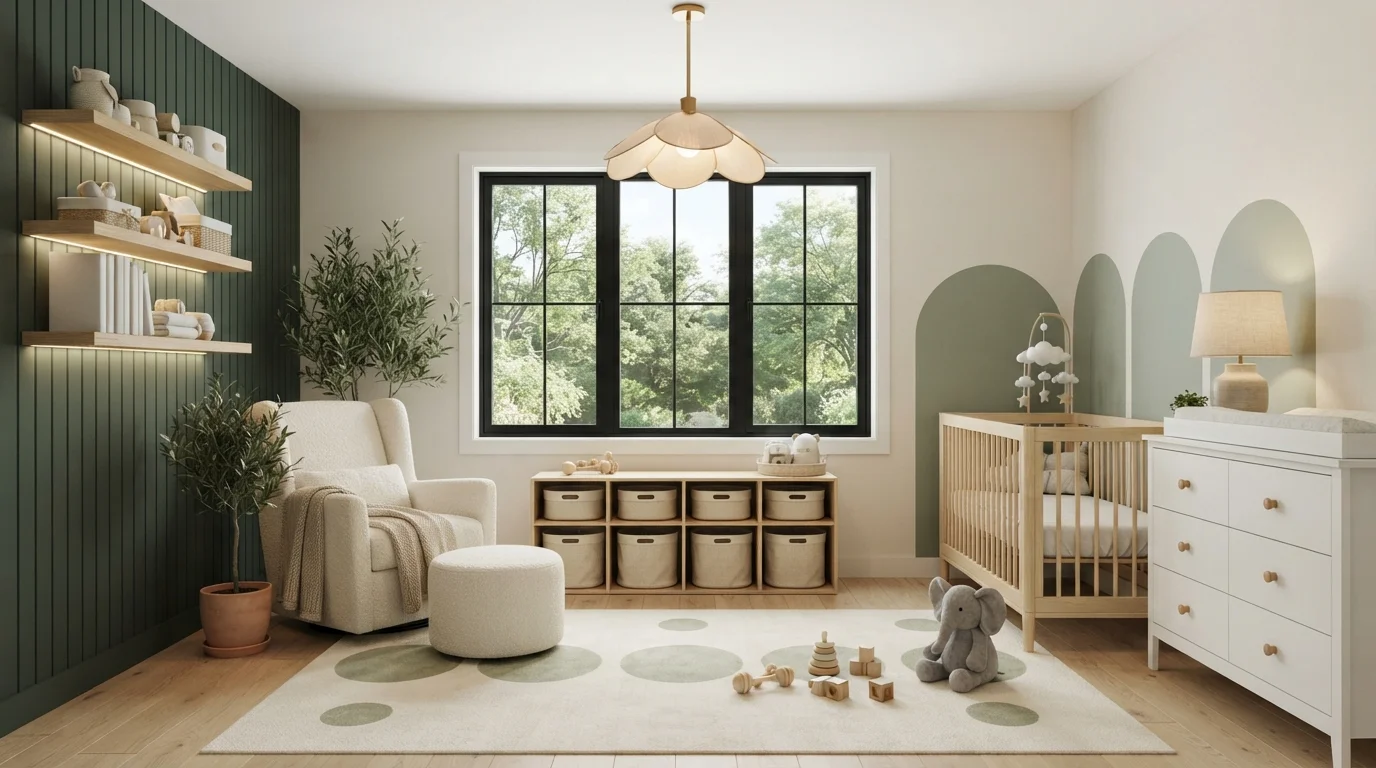
Yellow Nursery Paint Colors
2,051 yellow colors that work in nurserys, drawn from the full ~30,000-color US paint deck. Below: editor's picks specific to nurserys, then 30 picks spread across the LRV range — narrow further on the brand page when you've shortlisted.
Yellow is the highest-risk wall color in residential interiors — it can read cheerful and sun-warmed in the right room, or oppressive and dated under the wrong light. The trick is matching the warmth: pale butter yellows work in north-facing rooms that need warming up; saturated golds work as accent walls or in rooms with strong natural light; mustard and ochre work as front-door or cabinet colors more than as full-room walls.
Editor's Picks: Yellow for Nurserys
4 picks30 Yellow Picks Across the LRV Range
30 of 2,051 · sorted dark → lightLooking for more? All yellow → covers every brand; brand × family pages show full decks.
Yellow Nursery Colors at Every US Brand
21 brands · up to 10 picks eachUp to 10 picks per brand spread across the yellow LRV range, drawn from each brand's full deck. Tap any swatch with a curated guide for full spec; tap the brand title for the brand's complete yellow deck.
Behr
Benjamin Moore
Glidden
Dunn-Edwards
Valspar
PPG / Glidden
Hirshfield's
Kompozit
Diamond Vogel
Dutch Boy
HGTV Home by Sherwin-Williams
Sherwin-Williams
C2 Paint
Farrow & Ball
Magnolia Home
Clare
Rodda
Backdrop
Portola Paints
Annie Sloan
Rust-Oleum
Other Nursery Color Families
Yellow Colors in Other Rooms
Yellow Paint Colors for a Nursery
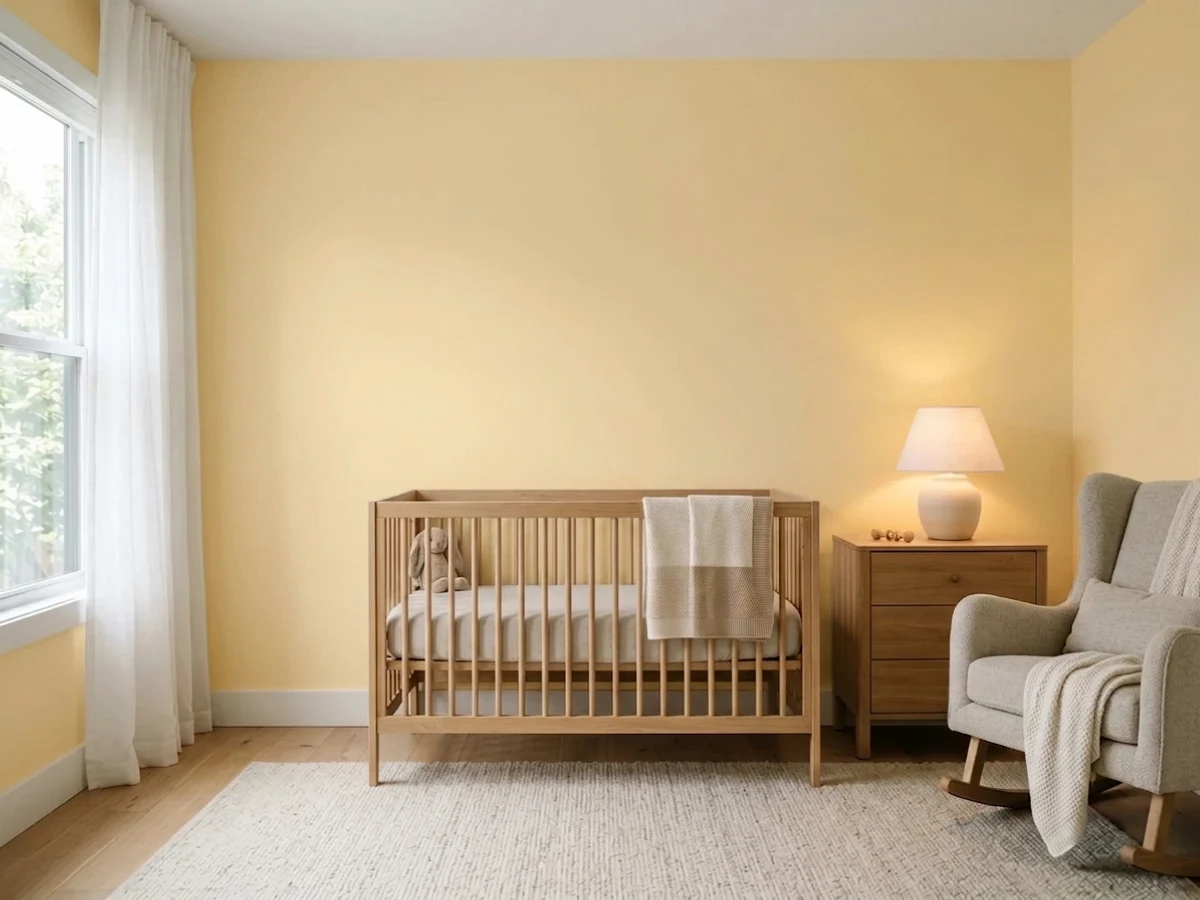
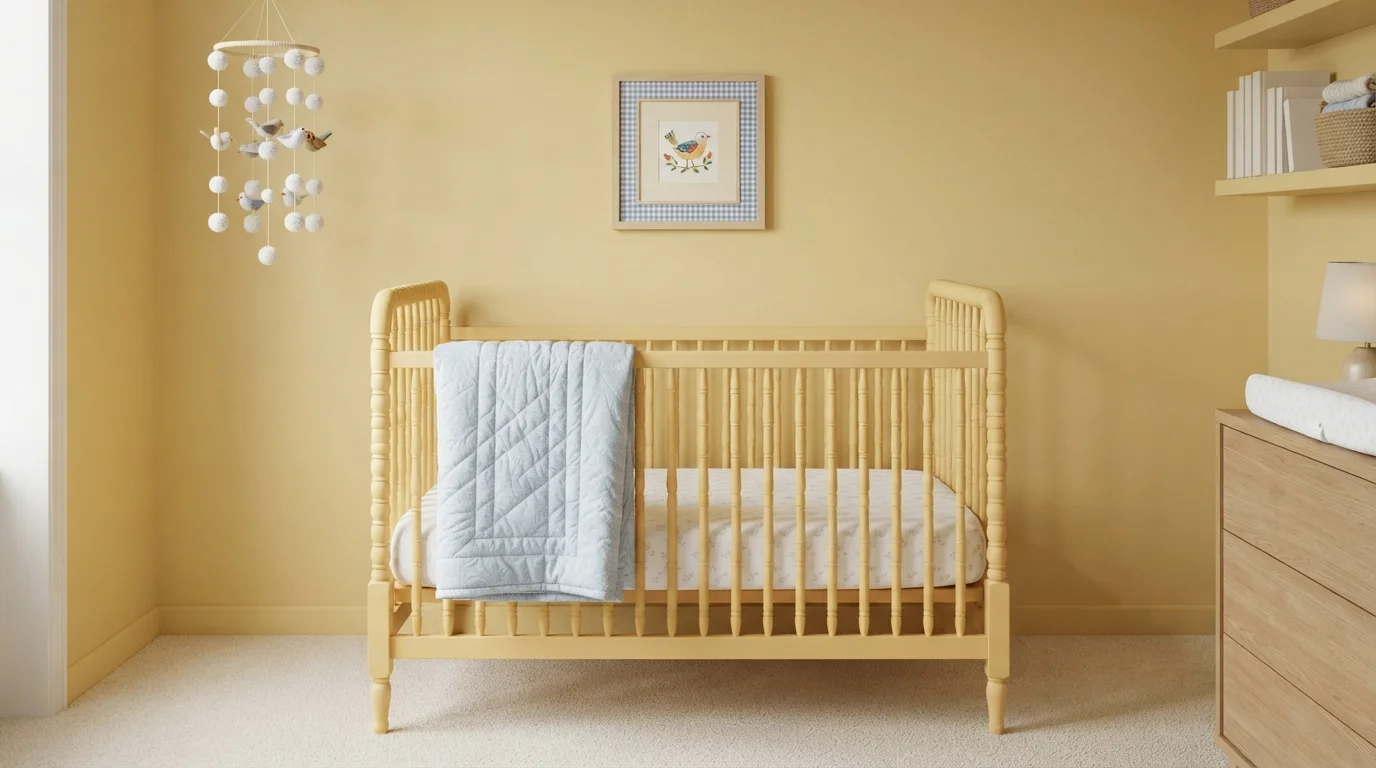
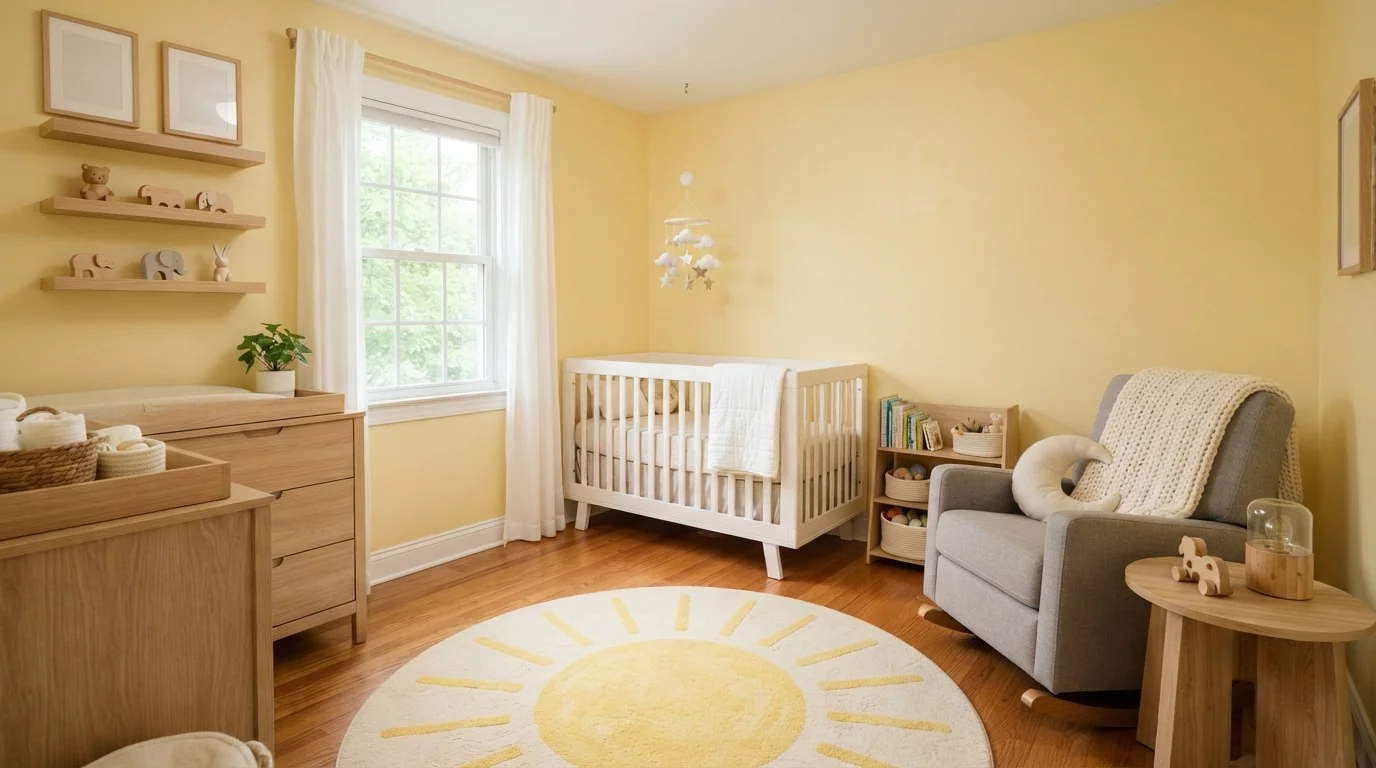
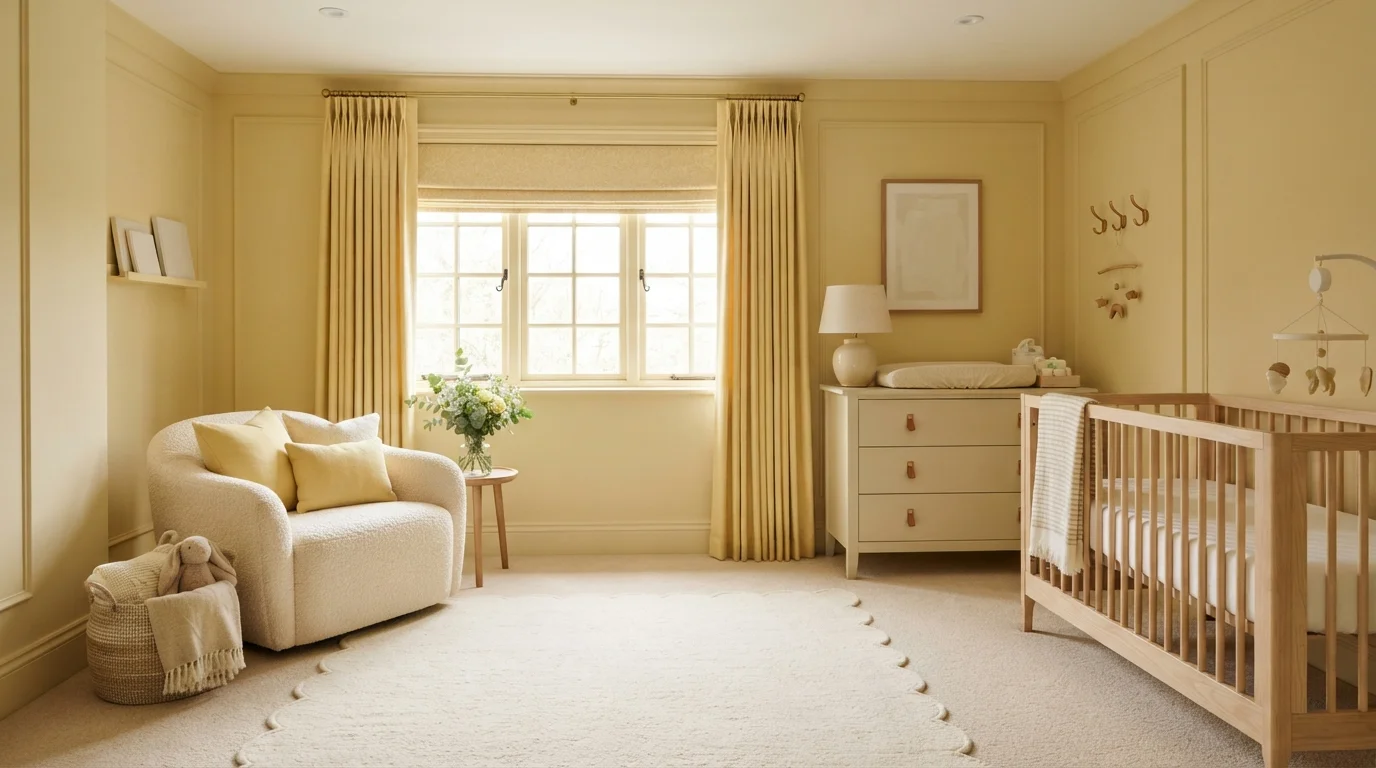
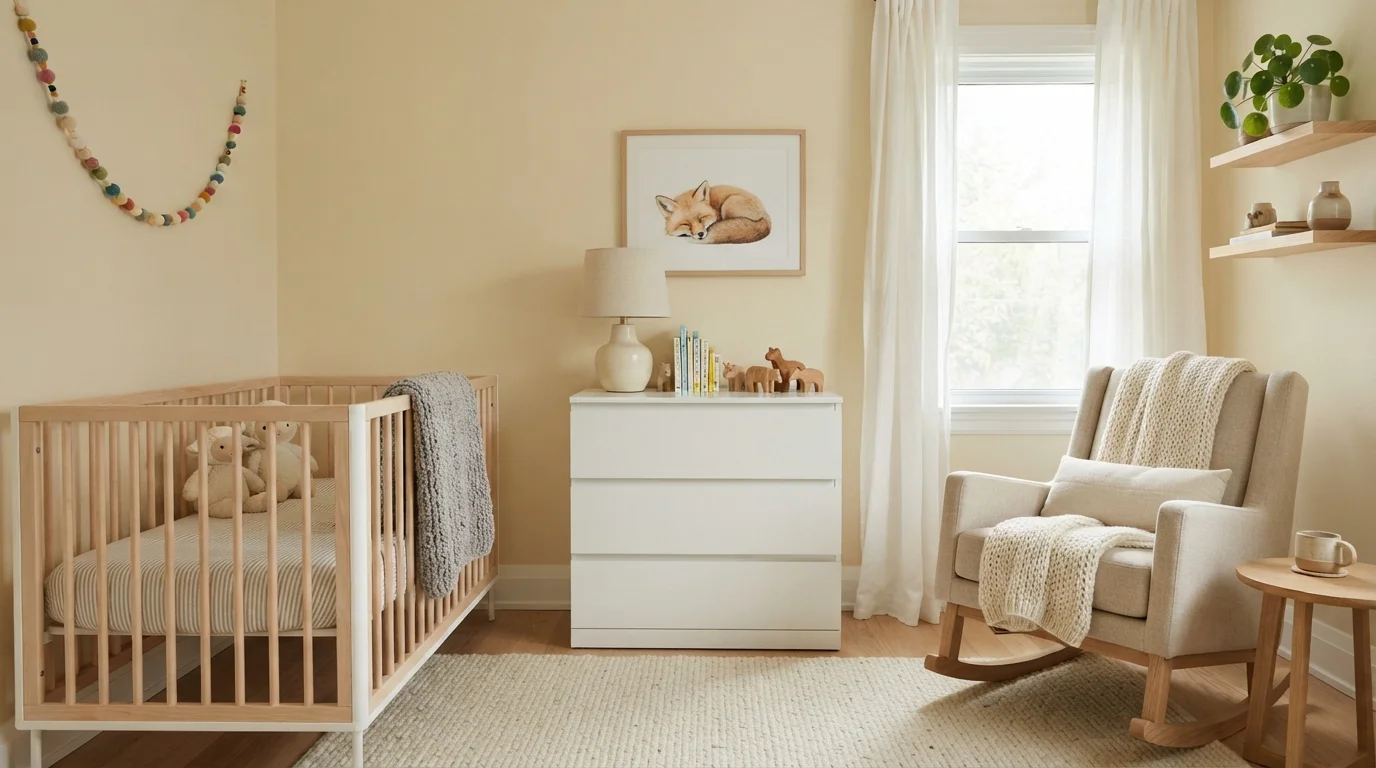
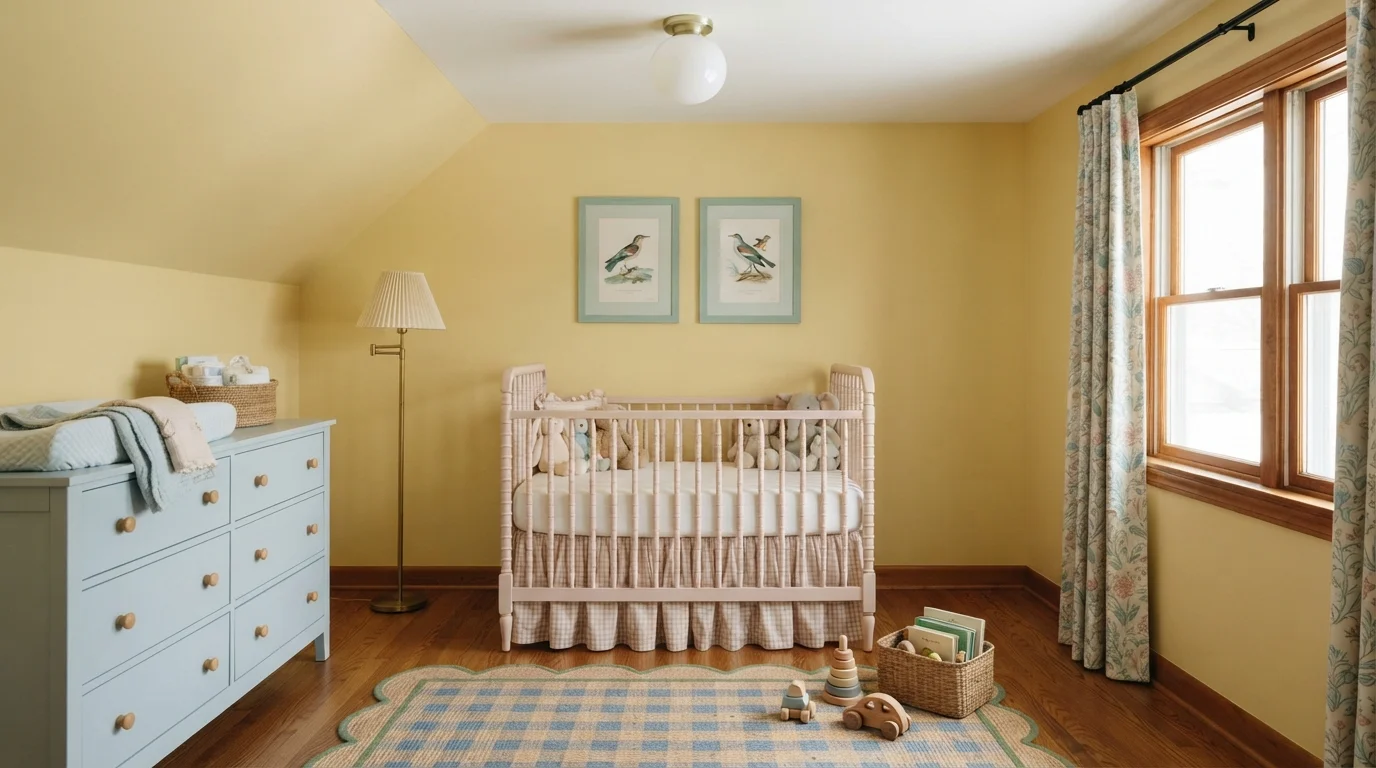
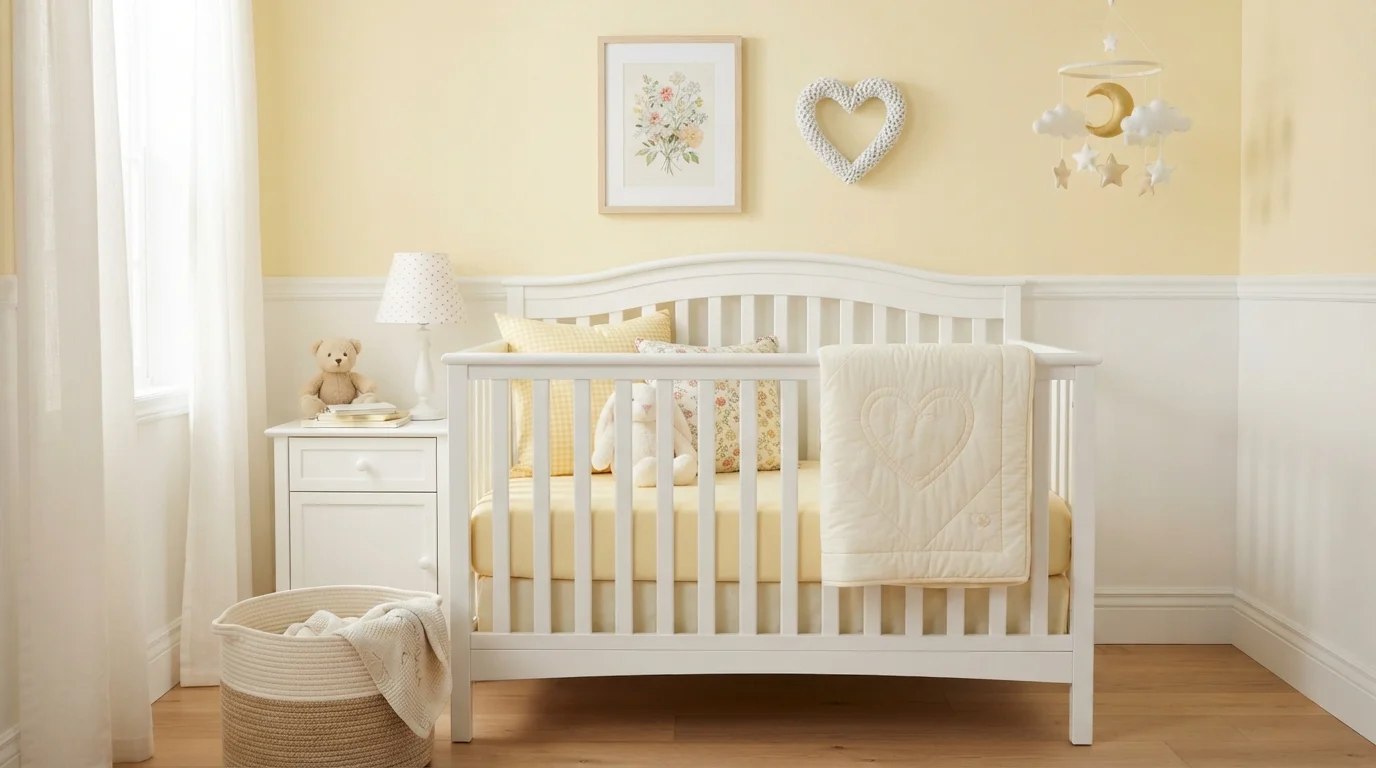
Yellow is one of the few colors that feels like sunshine on a wall, which is exactly why it shows up in so many nurseries. It reads warm and happy without locking the room into a "boy" or "girl" box, and it gives a small space a sense of light even when the windows are tired. The trick is choosing a yellow that stays gentle in a room where a baby sleeps, plays, and spends a lot of slow daytime hours.
That comes down to depth, light, and finish more than the exact name on the can. The right soft yellow soothes; the wrong bright one buzzes. Below is how to pick a shade that works, what sheen to use around bottles and wipes, and how to pair it with the white trim, soft fixtures, and natural wood that fill most nurseries. Every color you see here is mixed to order at a paint counter, so once you find a shade you love you can match it across brands.
Why Yellow Works in a Nursery
Yellow is cheerful and gender-neutral, which makes it an easy yes for a room you may use for more than one child. It bounces light around a small space and keeps a north-facing or shaded nursery from feeling gloomy on gray afternoons. For naps and night feedings, a soft buttery yellow feels calm rather than stimulating.
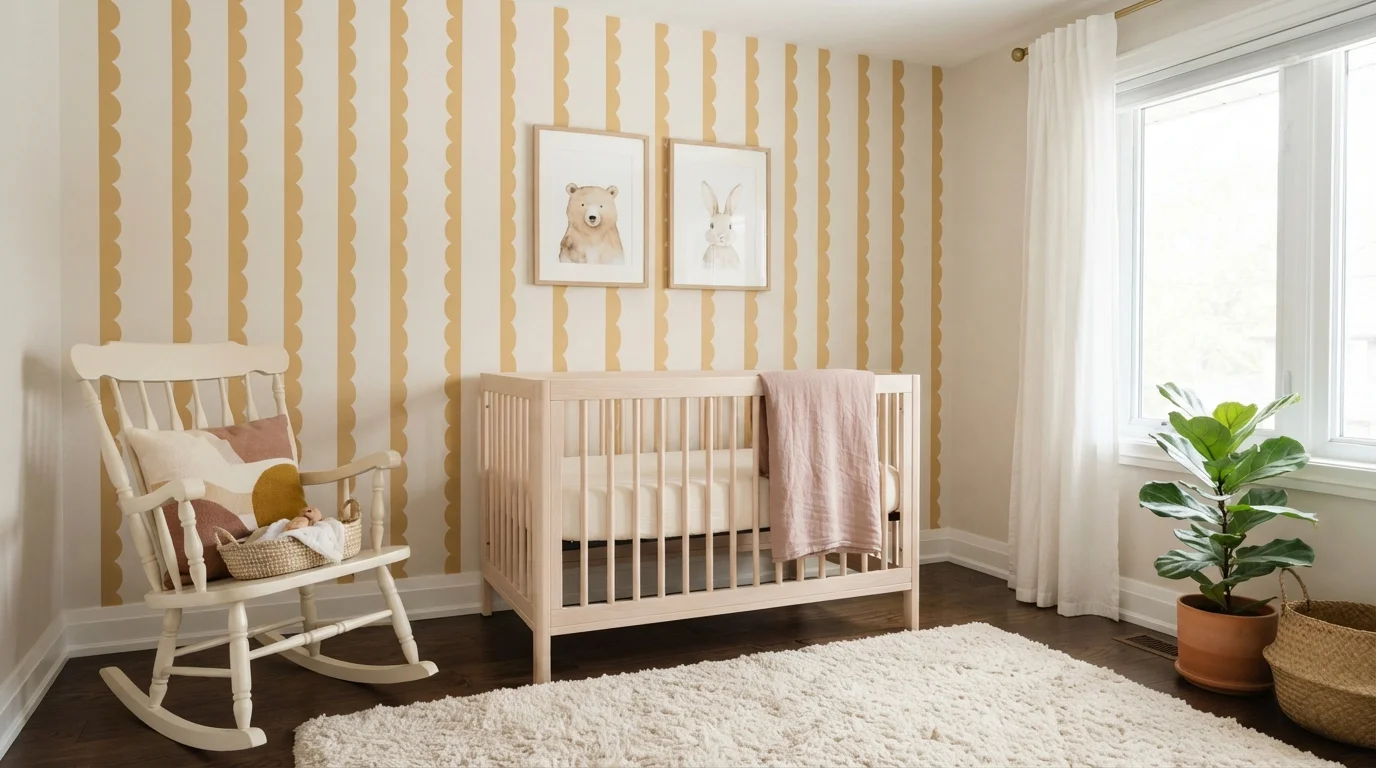
The thing to watch is intensity. A bright, saturated yellow can feel loud in a room meant for rest, and strong yellows are known to feel busy up close. Lean toward soft, milky, slightly muted yellows for a nursery and save the punchy shades for an accent or a single piece of art.
Picking the Right Depth and Letting Light Decide
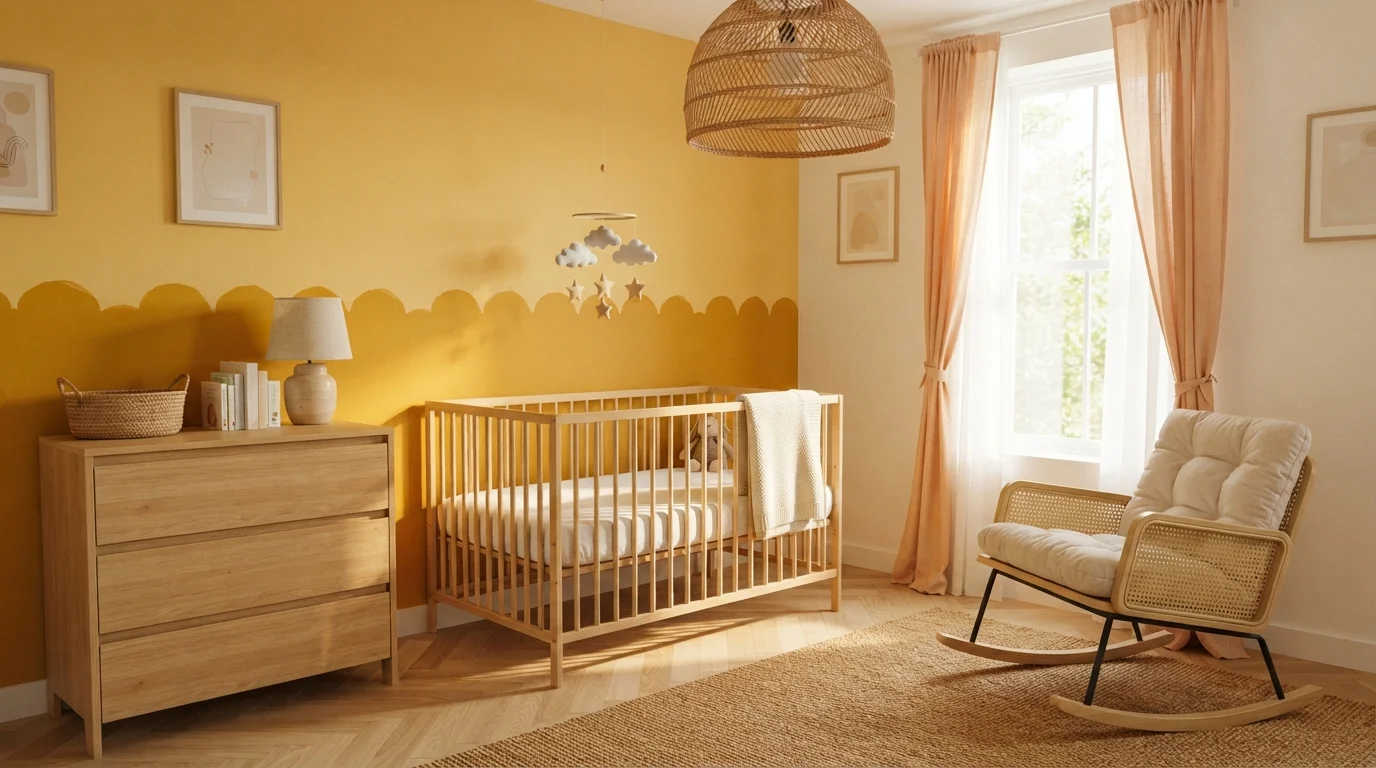
For a nursery, the sweet spot is a pale, soft yellow with an LRV (light reflectance value) somewhere in the high 60s to low 80s. That keeps the room bright and airy without bouncing harsh glare onto a baby's eyes during the day. Deep gold or mustard tones drop the LRV and the cozy factor, which can work as an accent wall but feels heavy on all four.
Let the room's light steer the exact yellow. South- and west-facing nurseries get warm sun that pushes yellow toward gold, so a cooler, paler lemon-leaning shade keeps things balanced. North- and east-facing rooms get cooler, weaker light, so a warmer, creamier yellow stops it from looking sallow or green. Always tape a sample to the wall and watch it across a full day, since nursery light changes a lot between morning play and evening wind-down.
The Right Sheen for a Room With a Baby
A nursery takes more abuse than people expect: smudged hands, spit-up, leaks from the changing table, and the occasional crayon test once your baby becomes a toddler. A washable eggshell or satin finish wipes clean without you scrubbing the color off, which makes it the safer pick for the main walls. Flat hides wall flaws best but it's harder to clean, so save it for ceilings or only use a modern scrubbable flat.
Keep glare in mind too. Higher-gloss sheens reflect light and can throw a shiny hot spot from the window or a lamp, which is the last thing you want over a crib. Eggshell and satin give you durability and easy cleaning while staying soft enough to keep the room restful. Use low-VOC or zero-VOC paint and let it cure with good ventilation before the baby moves in.
Pairing Yellow With Trim, Ceiling, and Fixtures
Yellow loves clean, soft whites. A warm or creamy white on the trim, doors, and crib keeps everything cohesive, while a stark blue-white can make a warm yellow look slightly off. A bright white or very pale yellow ceiling keeps the top of the room feeling open and high, which matters in a small nursery.
Natural wood is yellow's best friend here. A walnut or oak crib, a cane changing table, and woven baskets all warm up nicely against a buttery wall. For soft goods, pale gray, soft sage green, dusty blue, and plenty of white read beautifully with yellow and keep the room from tipping into too-sweet. If you want one richer note, a single deeper gold or terracotta accent grounds all that lightness.
Common Mistakes With Yellow in a Nursery
The biggest mistake is going too bright. Yellows that look gentle on a tiny chip get much stronger across four full walls, so a shade that seemed soft can end up buzzy in the room. Color almost always intensifies once it's up, so pick a step softer than you think you want.
The second mistake is skipping the sample on the wall. Yellow is one of the trickiest colors to judge from a swatch because it shifts hard with light and can suddenly look green or dingy. Test a real painted sample in the actual nursery, check it morning and night, and remember that every shade you see here is mixed to order, so you can match the exact yellow across brands once you've found the one that holds up in your light.
Yellow Nursery Paint — Frequently Asked Questions
Is yellow a good color for a nursery?+
Yes, a soft yellow is a great nursery color because it feels warm, cheerful, and works for any baby. The key is keeping it pale and gentle so the room stays calm for naps and sleep. Save bright, saturated yellows for small accents rather than full walls.
What shade of yellow is best for a baby's room?+
A pale, buttery or creamy yellow with a high LRV (roughly the high 60s to low 80s) is the safest pick. It keeps the room bright and soft without feeling loud. Skip deep golds and mustards on all four walls, since they make a small nursery feel heavier and darker.
What sheen should I use for a nursery?+
Use a washable eggshell or satin on the walls so you can wipe off spit-up, leaks, and sticky hands without scrubbing the color away. These finishes also stay soft enough to avoid harsh glare over the crib. A flat or scrubbable flat is fine for the ceiling.
What colors go with yellow in a nursery?+
Warm or creamy whites on the trim and crib pair best, along with natural wood like oak, walnut, or cane. For soft goods, soft gray, sage green, dusty blue, and white all look lovely with yellow. One deeper gold or terracotta accent can add depth without overwhelming the room.
Will a yellow nursery look too bright?+
It can if you choose a saturated shade, because yellow gets noticeably stronger across full walls than it looks on a small chip. Pick a step softer than you think you want and always test a painted sample on the wall. Check it in both morning and evening light before committing.
Can I match a yellow I like across different paint brands?+
Yes. Every color shown here is mixed to order at the paint counter, so you're not locked into one brand. Once you find a yellow that works in your nursery's light, you can have it cross-matched and tinted in another brand's paint.