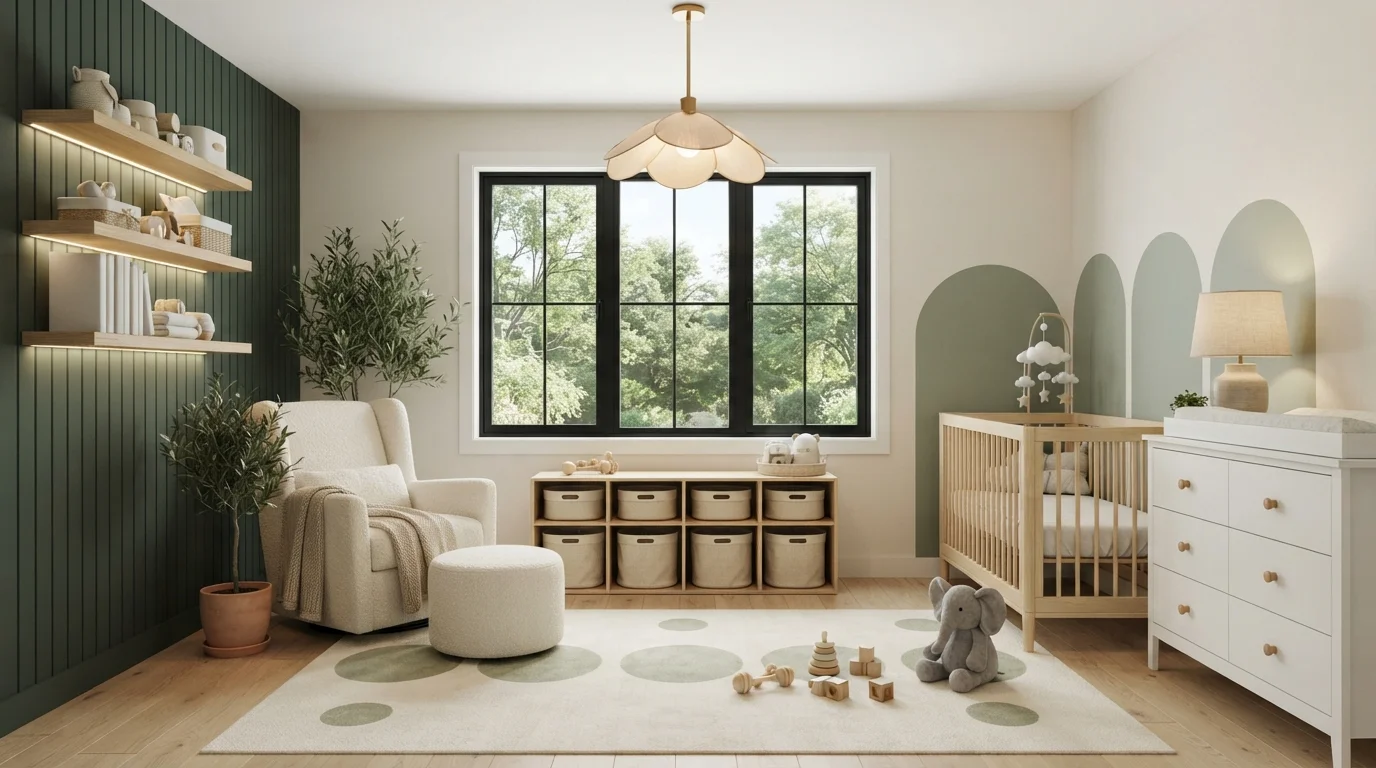
Green Nursery Paint Colors
2,263 green colors that work in nurserys, drawn from the full ~30,000-color US paint deck. Below: editor's picks specific to nurserys, then 30 picks spread across the LRV range — narrow further on the brand page when you've shortlisted.
Green has quietly replaced grey as the safe-but-interesting wall color of the late 2020s. Sage Green, the soft grey-green that became the de facto fallback, anchors the family — but the broader green palette runs from olive (warm, earthy, faintly yellow) to forest (deep blue-green) to emerald (saturated jewel tone).
Editor's Picks: Green for Nurserys
4 picks30 Green Picks Across the LRV Range
30 of 2,263 · sorted dark → lightLooking for more? All green → covers every brand; brand × family pages show full decks.
Green Nursery Colors at Every US Brand
19 brands · up to 10 picks eachUp to 10 picks per brand spread across the green LRV range, drawn from each brand's full deck. Tap any swatch with a curated guide for full spec; tap the brand title for the brand's complete green deck.
Behr
Benjamin Moore
Glidden
Valspar
Dunn-Edwards
PPG / Glidden
Sherwin-Williams
Dutch Boy
Hirshfield's
Diamond Vogel
Kompozit
C2 Paint
Farrow & Ball
Magnolia Home
Clare
Rodda
Annie Sloan
Backdrop
Other Nursery Color Families
Green Colors in Other Rooms
Green Paint Colors for a Nursery
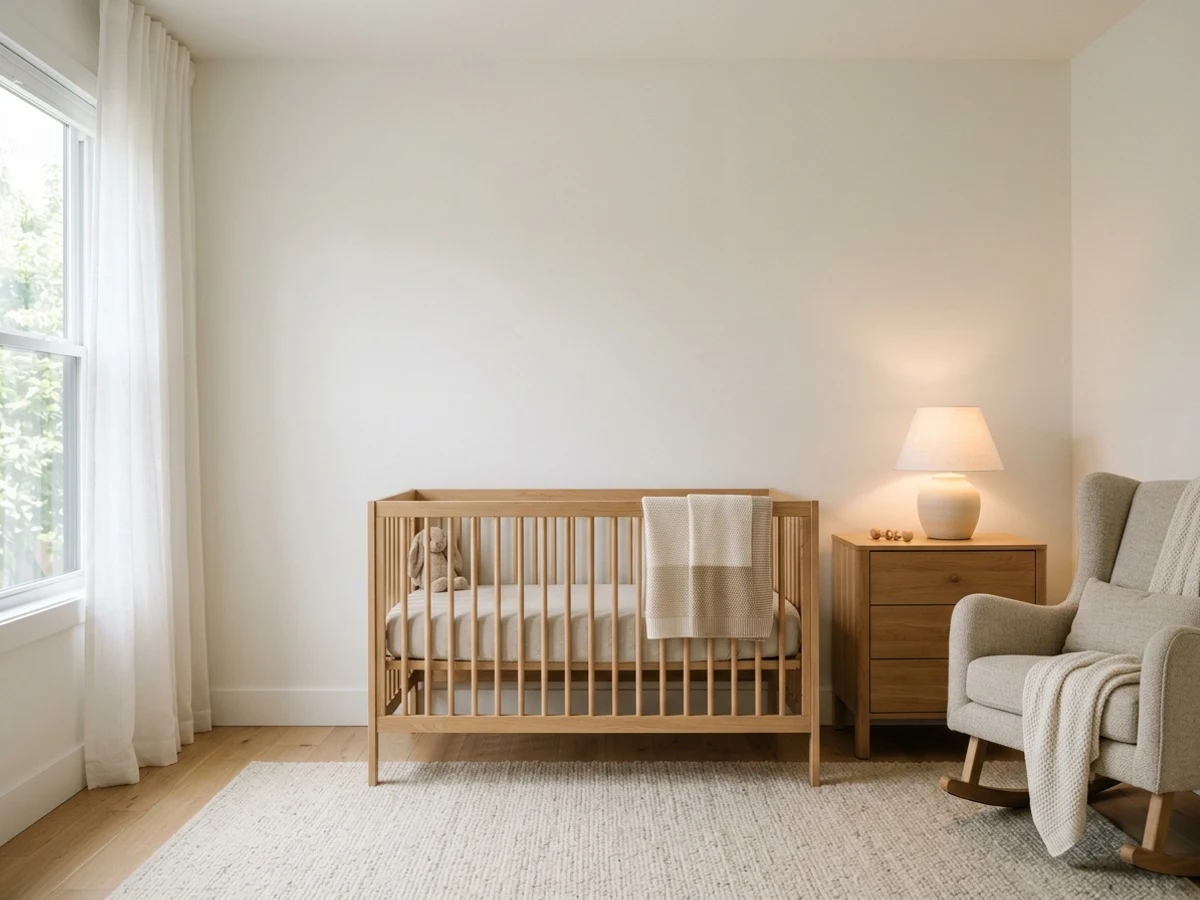
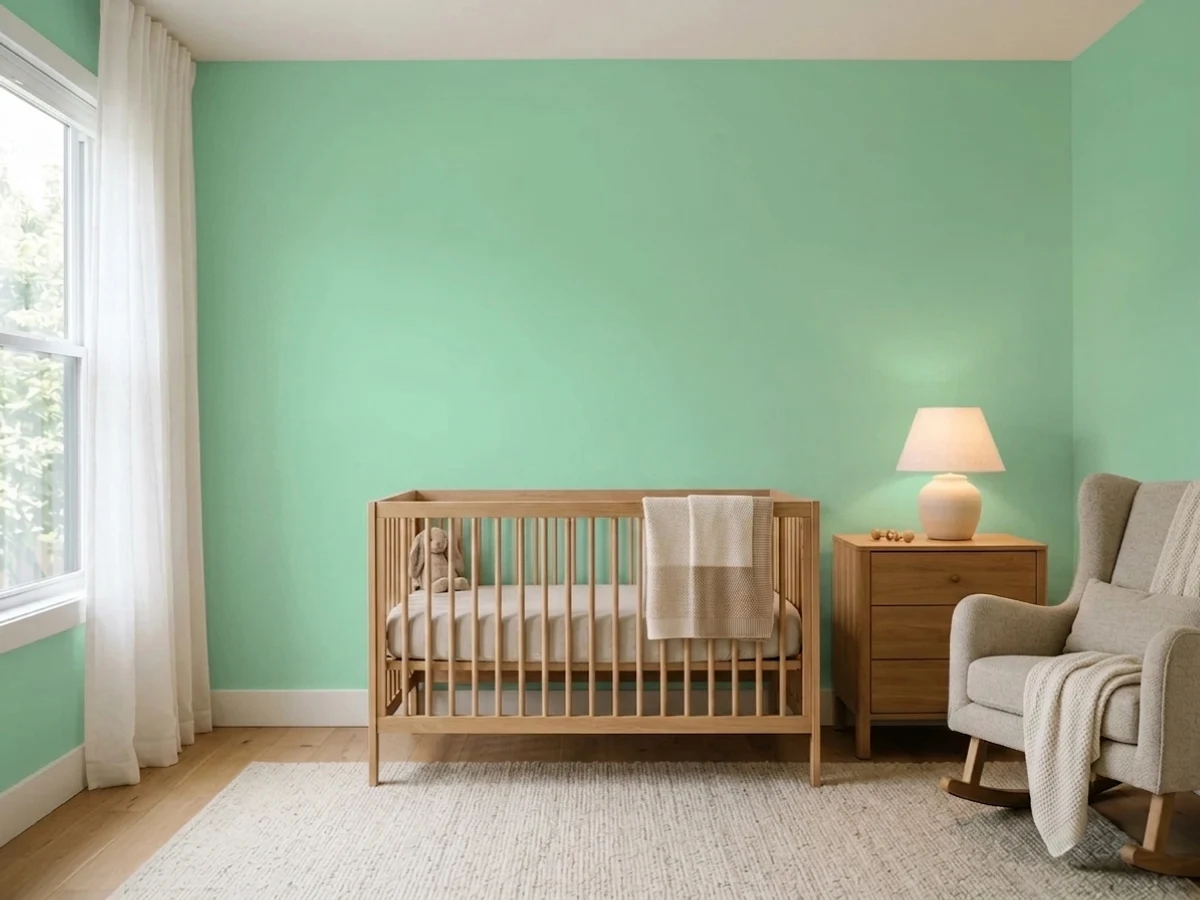
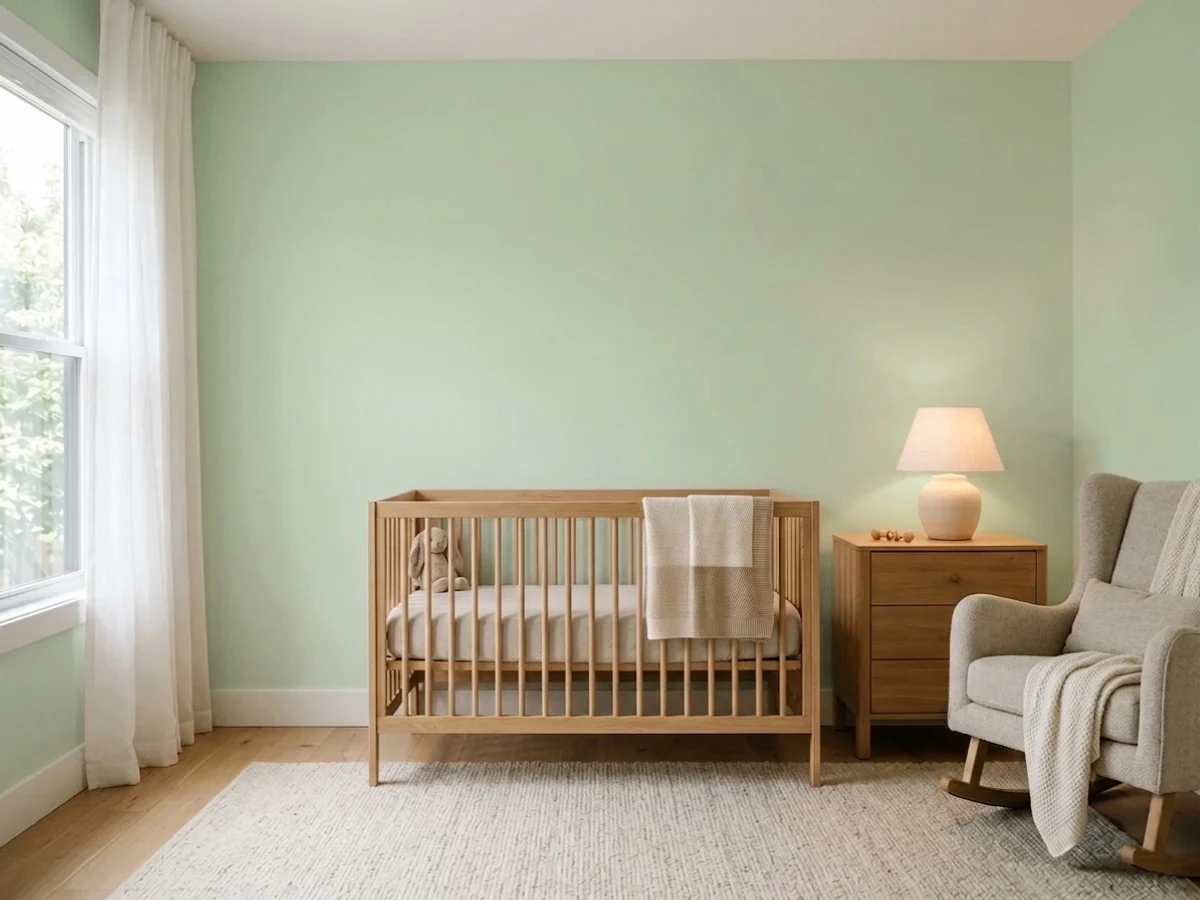
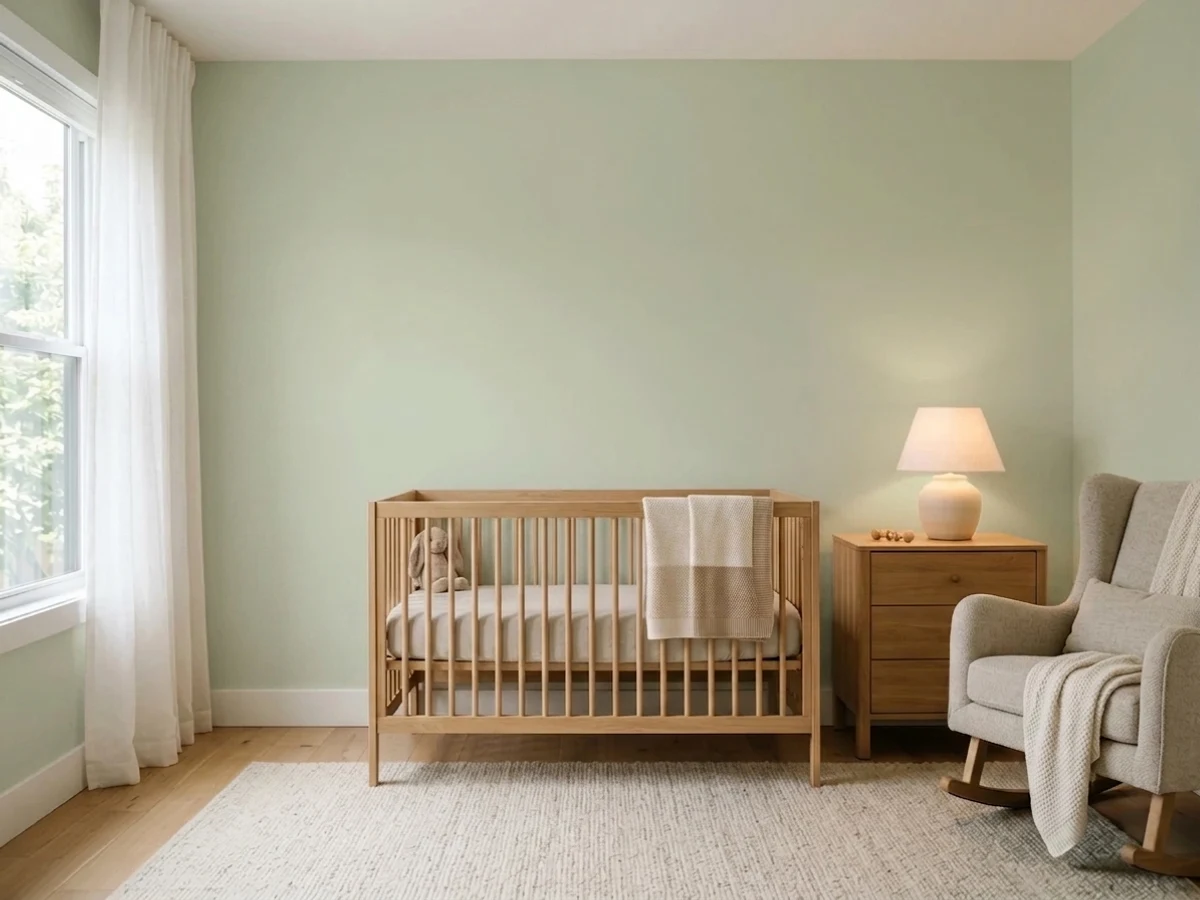
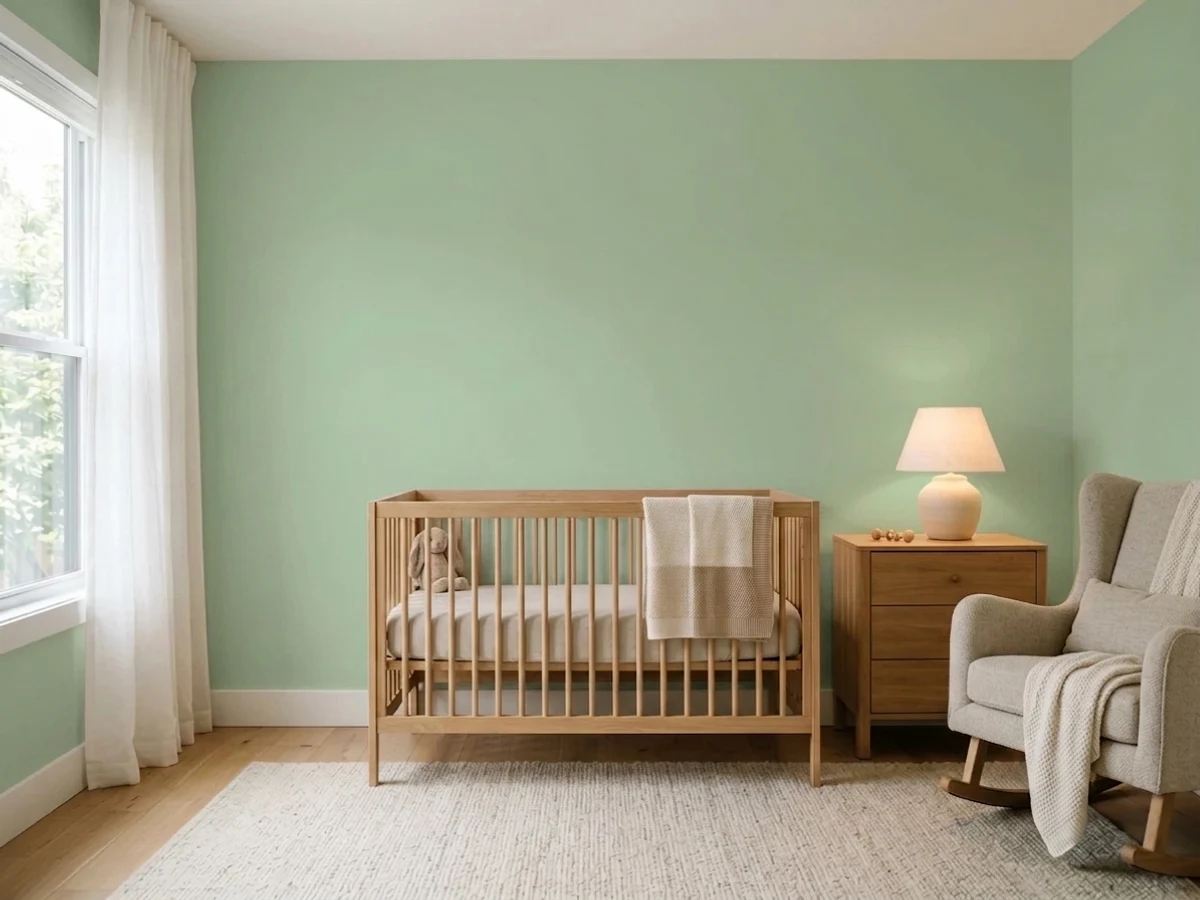
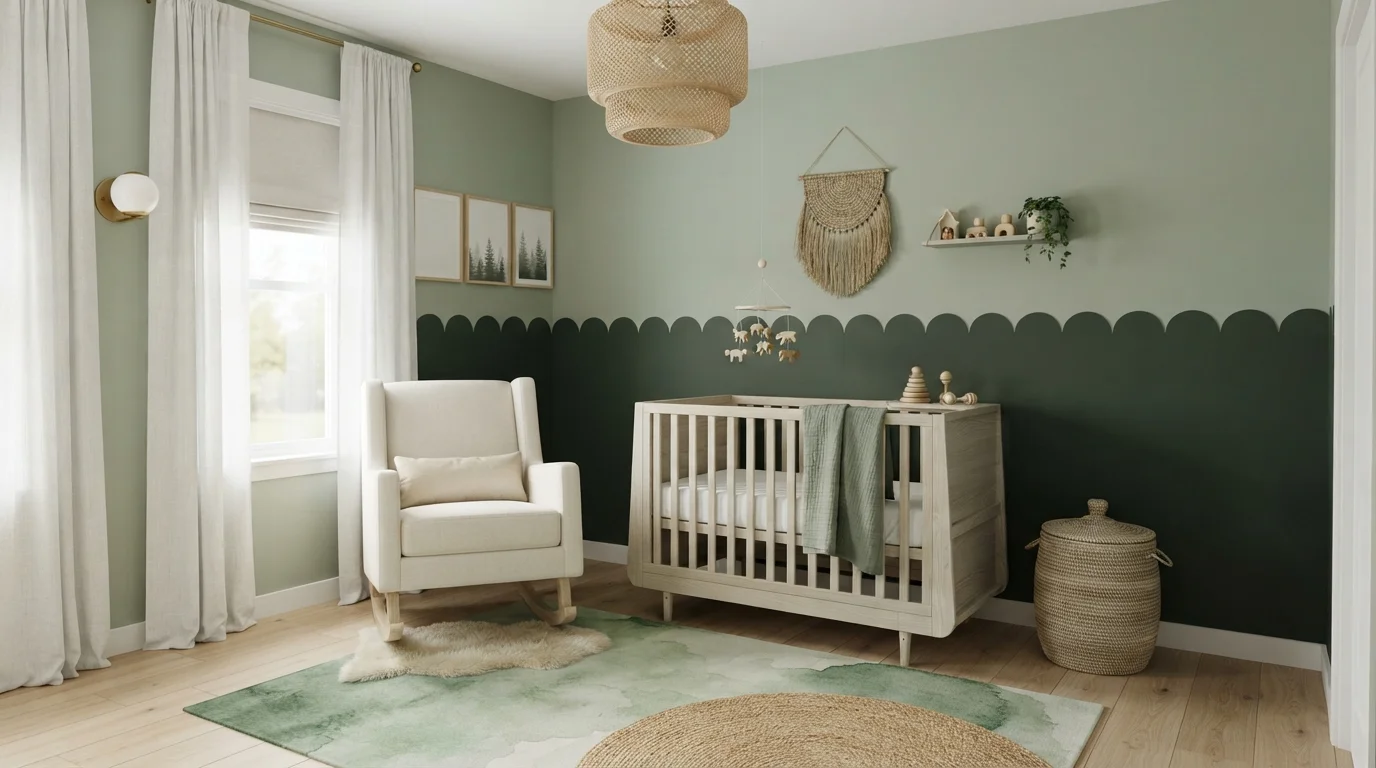
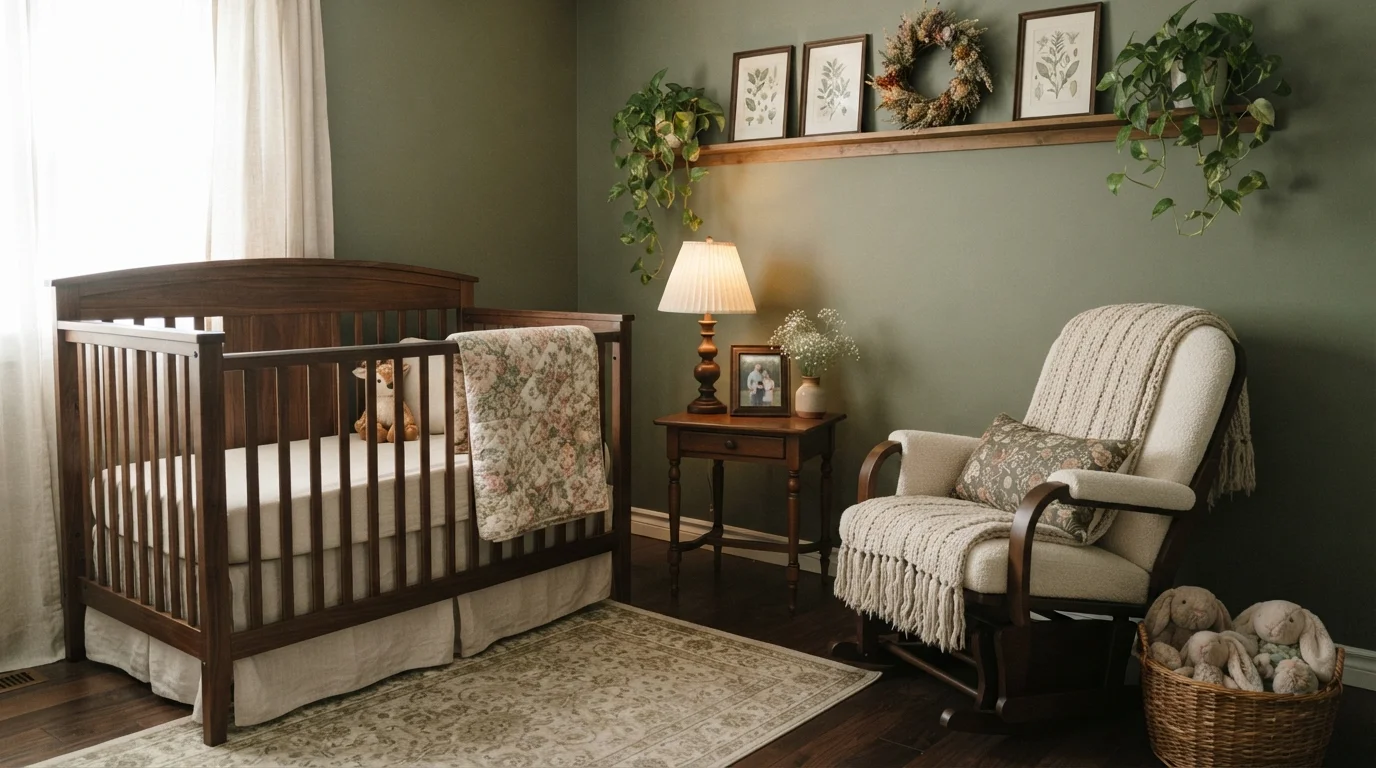
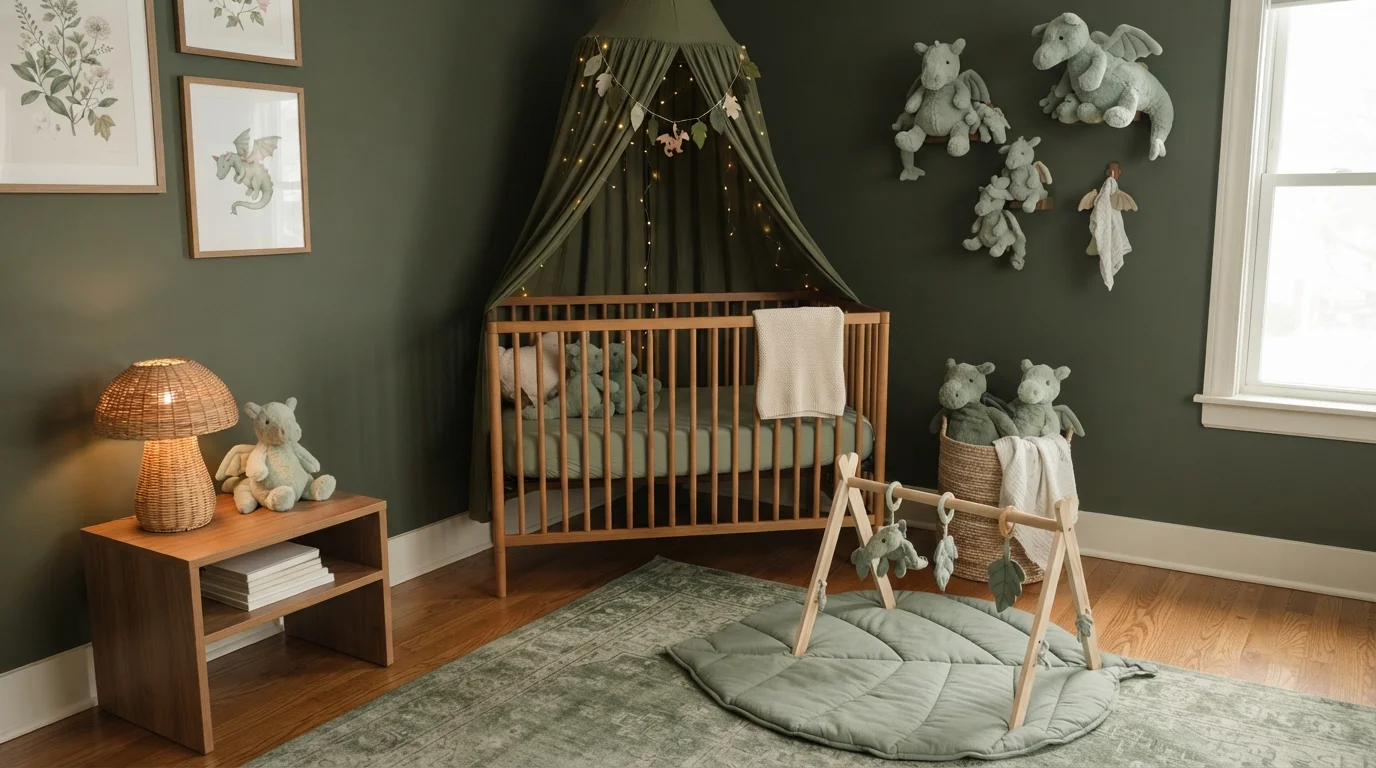
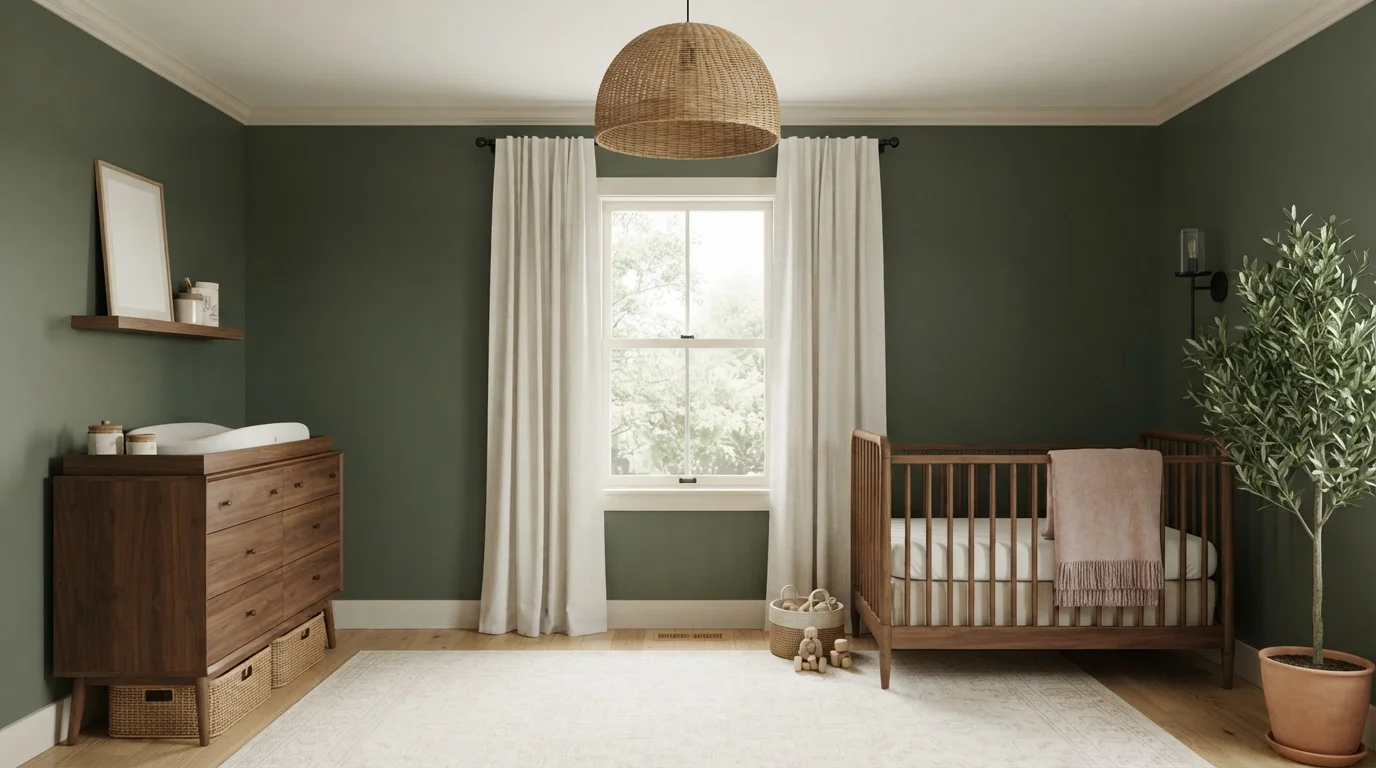
Green is one of the easiest colors to live with in a nursery, and that matters more here than in almost any other room. A baby spends huge stretches of the day on their back, looking up at the walls and ceiling, and green reads as calm and restful without being cold. It borrows the feeling of being outside — leaves, moss, fresh grass — and that quiet, natural mood is exactly what you want in a room built for sleep and slow afternoons.
The trick is that "green" covers everything from a barely-there whisper of sage to a deep forest, and a nursery has its own rules. The light changes through the day, the room is small, and the color has to still feel right when the baby becomes a toddler. This page walks through which greens actually work in a nursery, how the room's light should steer your choice, the finish to use, and the mistakes that send parents back to the store for a do-over.
Why Green Just Works in a Nursery
Green sits in the middle of the color wheel, so it doesn't push warm like a peachy room or cool like a gray one. That neutrality is a gift in a nursery, where you want a backdrop that feels soothing at 2 p.m. and at 2 a.m. without fighting the lamp light. It also reads as gender-neutral to most people, which is why it holds up whether you know who's arriving or not.
The other quiet advantage is longevity. A soft green grows with the child far better than a sweet pastel pink or a baby blue that can feel babyish by age three. Pick the green well and you may never need to repaint before the big-kid room.
The Right Shade, and How the Room's Light Decides It
For most nurseries, a soft-to-medium green is the sweet spot — light enough to keep the room airy, with enough color to feel intentional. In paint terms, look at the LRV (Light Reflectance Value, a 0–100 scale of how much light a color bounces back). Greens in the roughly 55–75 LRV range stay gentle and restful; drop below about 40 and the room starts to feel closed-in, which is rarely what you want for a small space a baby sleeps in.
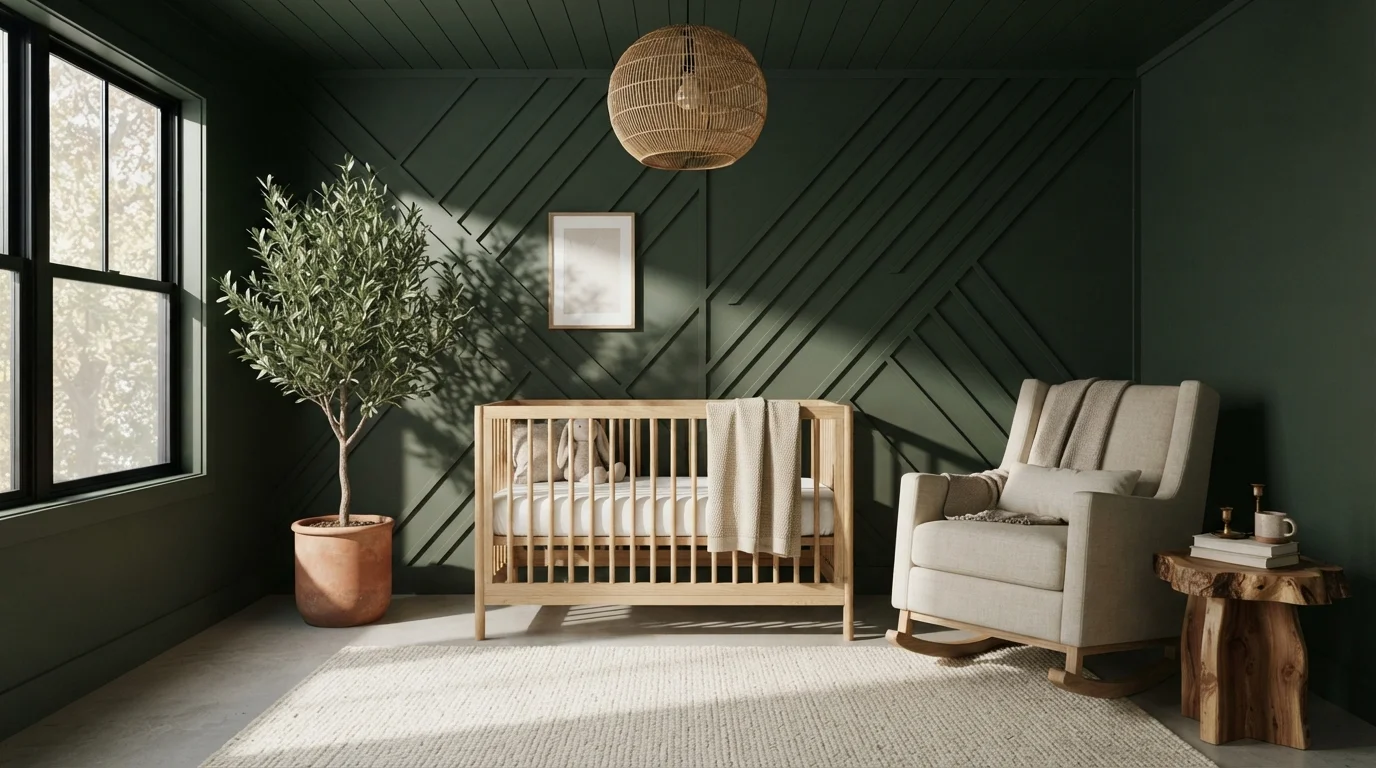
Light steers the rest. A nursery with big south- or west-facing windows can carry a slightly deeper or grayer green, because all that warm light keeps it from going dark. A north-facing or dim room does better with a warmer, sage-leaning green at the higher end of that LRV range, since cool light can make a blue-green look chilly and flat. Always tape a real sample to the wall and watch it through a full day before you commit.
The Finish to Use and Why
Skip the flat finish here, even though it looks beautiful in photos. Nurseries take a beating — spit-up on the wall by the changing table, sticky hands once they're mobile, the wipe-downs that come with all of it. A flat sheen marks and burnishes and won't survive scrubbing.
A matte or eggshell finish is the right call for nursery walls: it cleans up without much fuss but stays low-glare, so there's no harsh shine bouncing into a baby's eyes during a daytime nap. Save satin or semi-gloss for the trim, door, and window casings, where you want the extra toughness and an easy wipe. If your green has a fresh modern feel, that slight contrast in sheen between wall and trim is what makes it look finished.
Pairing Green With Trim, Ceiling, and the Rest of the Room
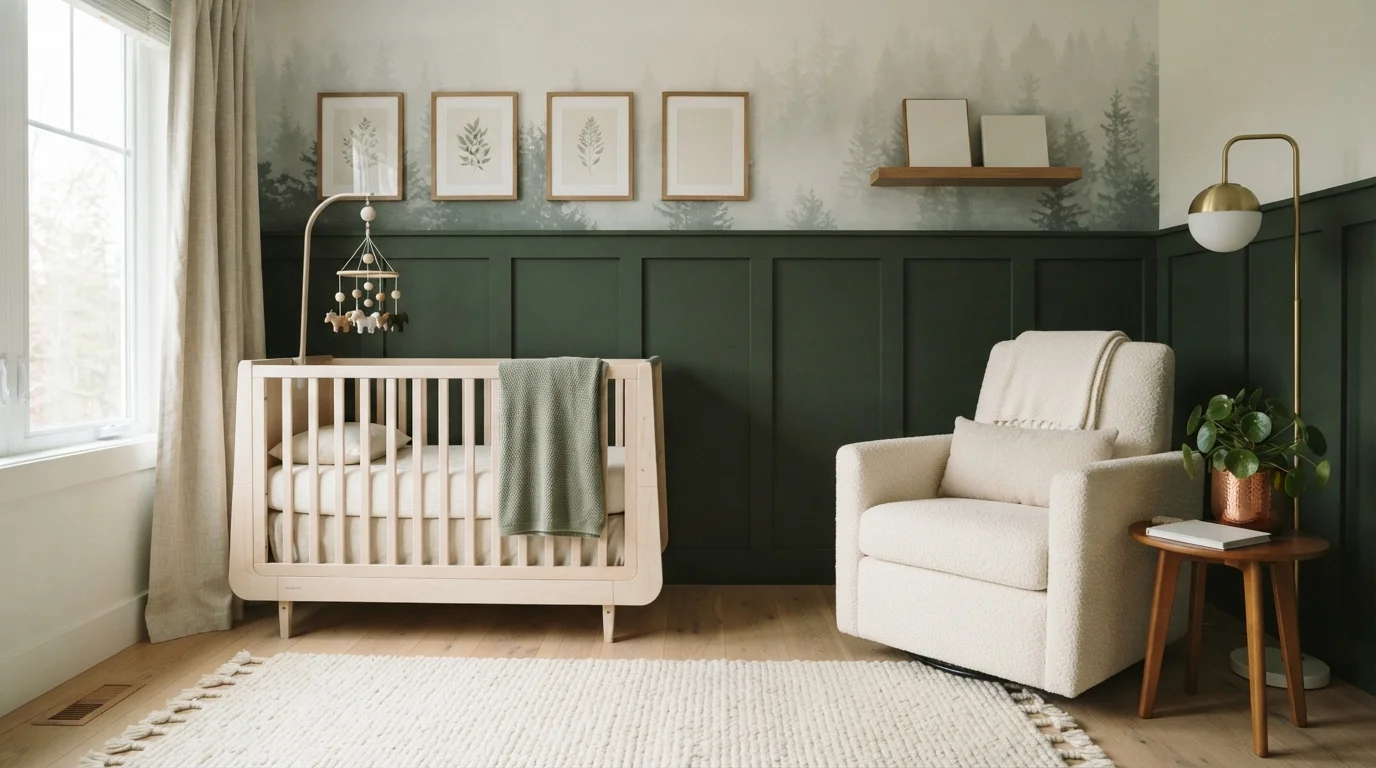
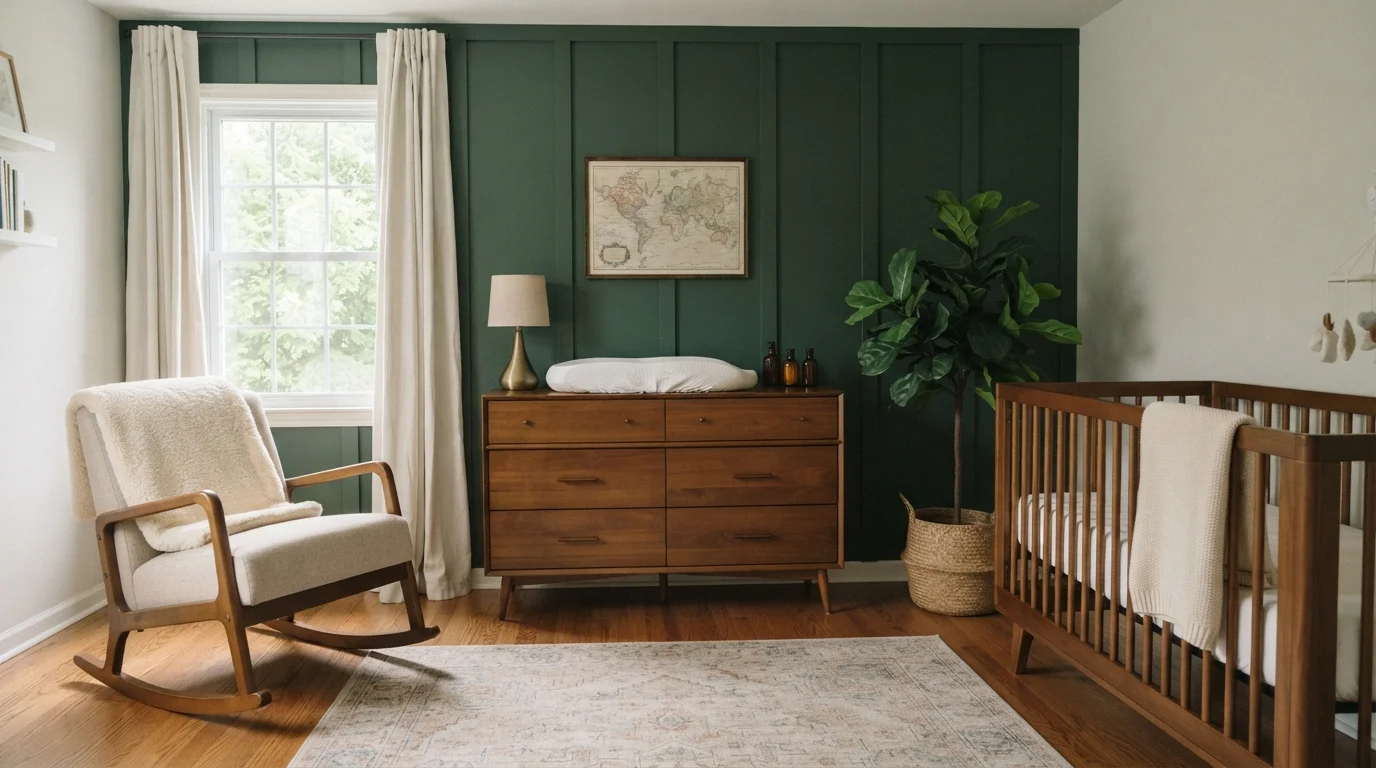
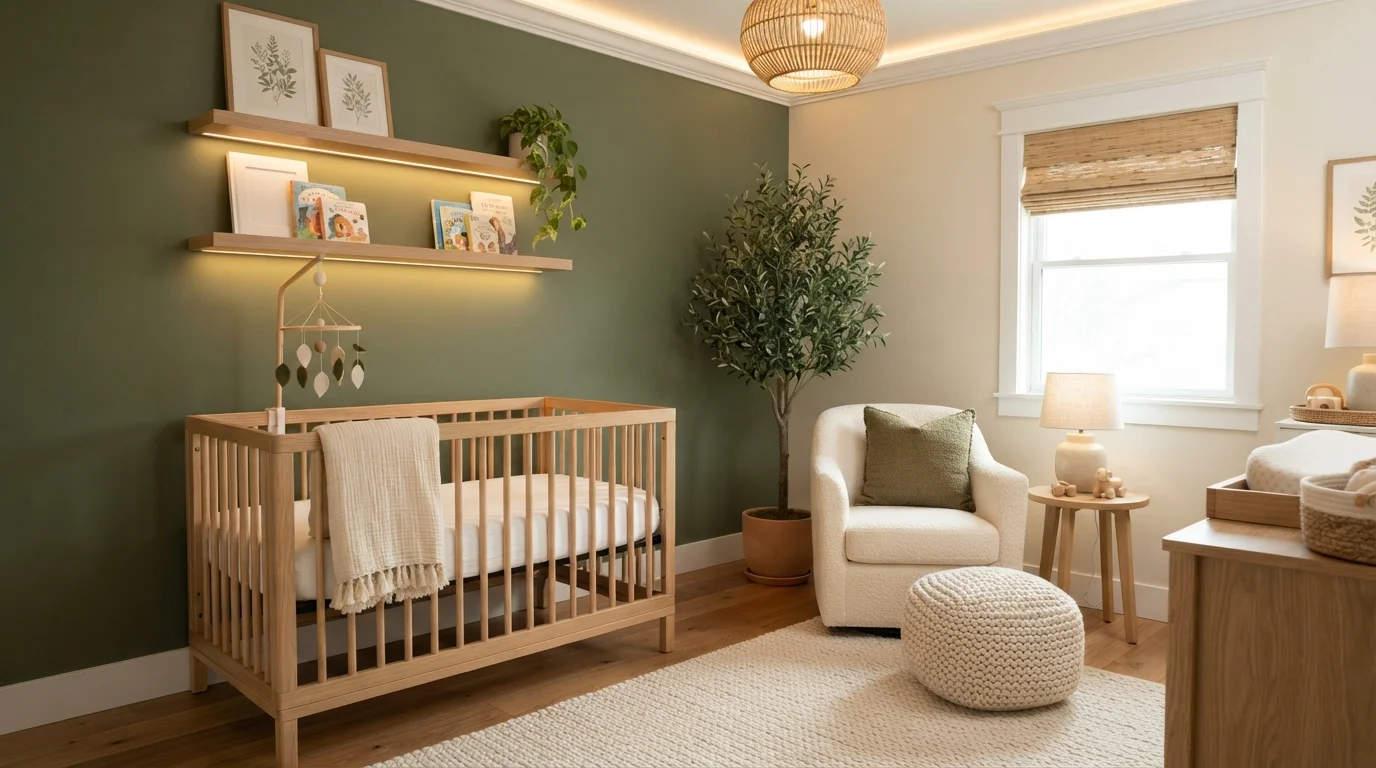
A soft white trim and ceiling is the safest, most flexible partner for nursery green — it keeps the room bright and lets the color be the star. Lean toward a warm or creamy white rather than a stark bright white, especially with a sage or olive green, so the two don't clash. A painted ceiling in a paler tint of the same green can make a cozy, enveloping nook, but only in a room with enough light to spare.
For everything else, natural wood is green's best friend — a wood crib, woven baskets, or rattan reads warm and organic against any green. Brass or aged-gold hardware and fixtures add a soft glow without feeling fussy, while black accents give a deeper forest green a grounded, grown-up edge. Keep the big pieces simple and let textiles carry the playful pattern.
The Mistakes Parents Make With Green
The most common one is going too saturated. A green that looks lively on a tiny chip can feel intense and even agitating across four walls of a small room — the opposite of restful. When in doubt, pick the softer, grayer version; you can always layer in punchier green through bedding and art.
The other trap is the wrong undertone for the light. A yellow-leaning green can tip toward pea-soup or hospital green under certain bulbs, while a blue-green can feel cold in a dim room. Test it with the actual light fixtures and lamps you'll use at night, not just daylight. One more: every green you see swatched here is mixed to order at the store, so the same shade can be matched across brands — match the color to your room and light, then buy whichever brand and finish suits the project.
Green Nursery Paint — Frequently Asked Questions
Is green a good color for a baby's room?+
Yes. Green is calm, restful, and reads as natural and gender-neutral, which makes it one of the most low-stress choices for a nursery. A soft green also ages well, so it still suits the room when your baby becomes a toddler.
What shade of green is best for a nursery?+
For most nurseries a soft-to-medium green with an LRV of about 55 to 75 works best — light enough to keep a small room airy but with enough color to feel intentional. Sage and other warmer greens are very forgiving; save deep forest greens for rooms with plenty of natural light.
What paint finish should I use in a nursery?+
Use a matte or eggshell finish on the walls. It cleans up after spit-up and sticky hands but stays low-glare, so there's no harsh shine during daytime naps. Use a tougher satin or semi-gloss on the trim and door for easy wiping.
What colors go with green in a nursery?+
A warm or creamy white trim and ceiling is the most flexible partner and keeps the room bright. Natural wood, woven baskets, and brass or aged-gold fixtures all pair beautifully with green; black accents help ground a deeper forest shade.
Will green make a small nursery feel smaller?+
Only if you go too dark or too saturated. Stick to a lighter green with a higher LRV and a soft white ceiling and trim, and the room will still feel open. Tape a large sample to the wall and watch it across a full day before deciding.
Can I match the same green across different paint brands?+
Yes. Every color shown here is mixed to order at the store, so a green you like can be cross-matched between brands. Choose the shade that suits your room and light first, then pick whichever brand and finish fits your project and budget.