Green Dining Room Paint Colors
2,263 green colors that work in dining rooms, drawn from the full ~30,000-color US paint deck. Below: editor's picks specific to dining rooms, then 30 picks spread across the LRV range — narrow further on the brand page when you've shortlisted.
Green has quietly replaced grey as the safe-but-interesting wall color of the late 2020s. Sage Green, the soft grey-green that became the de facto fallback, anchors the family — but the broader green palette runs from olive (warm, earthy, faintly yellow) to forest (deep blue-green) to emerald (saturated jewel tone).
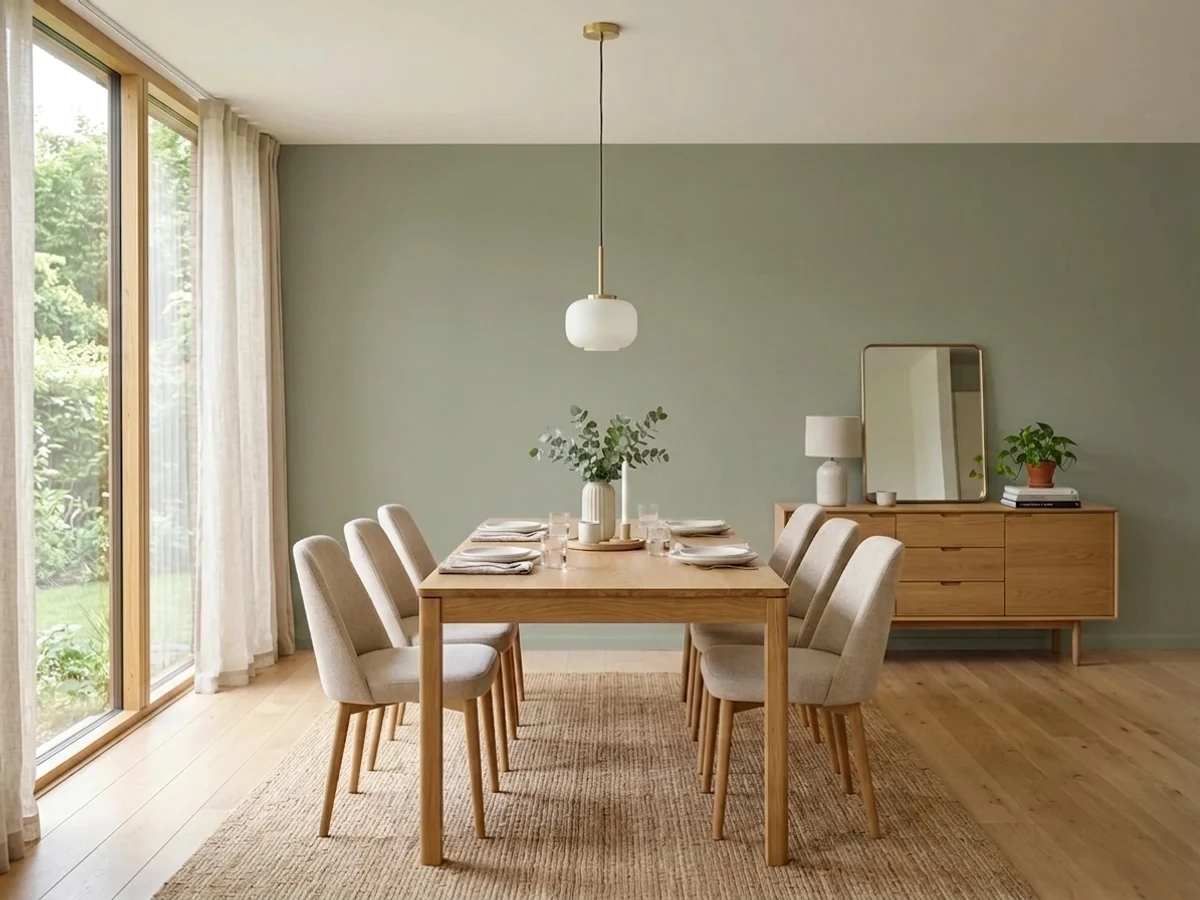
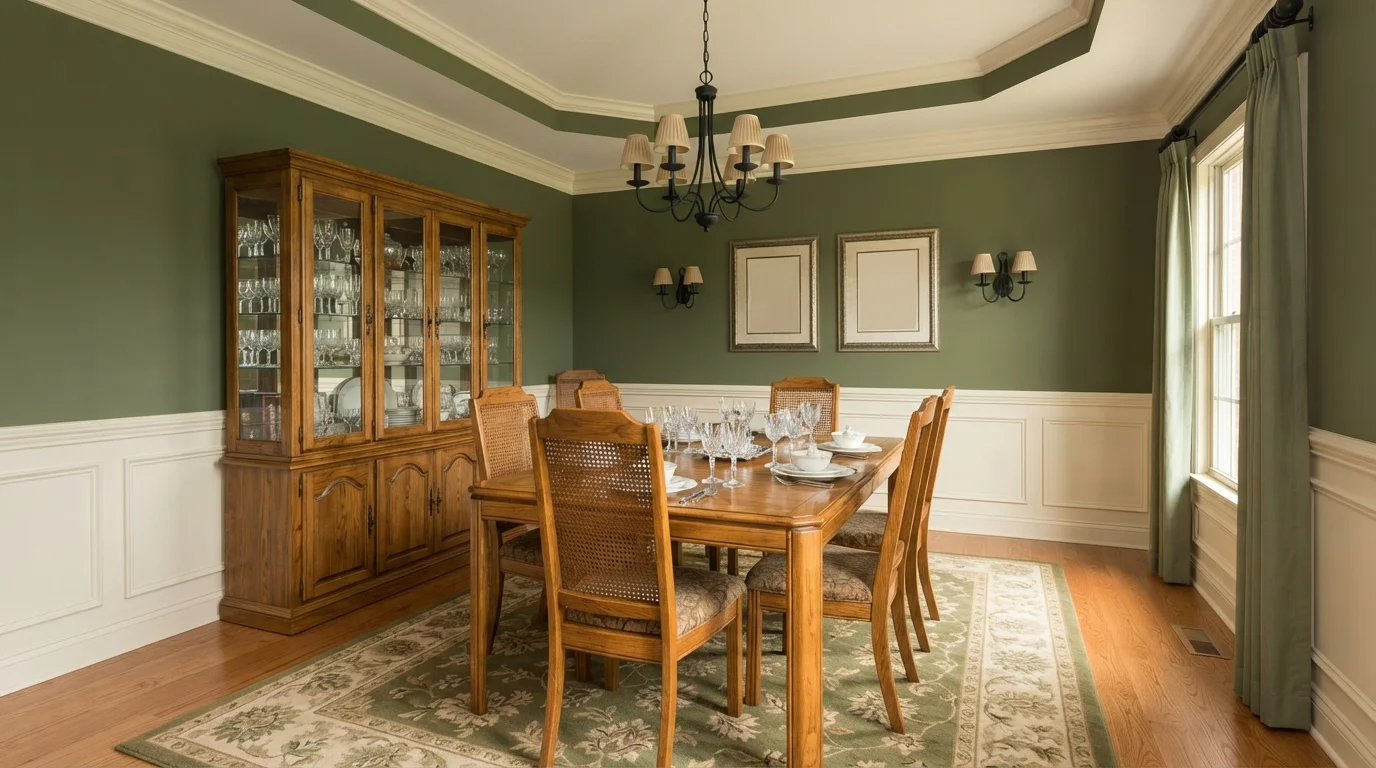
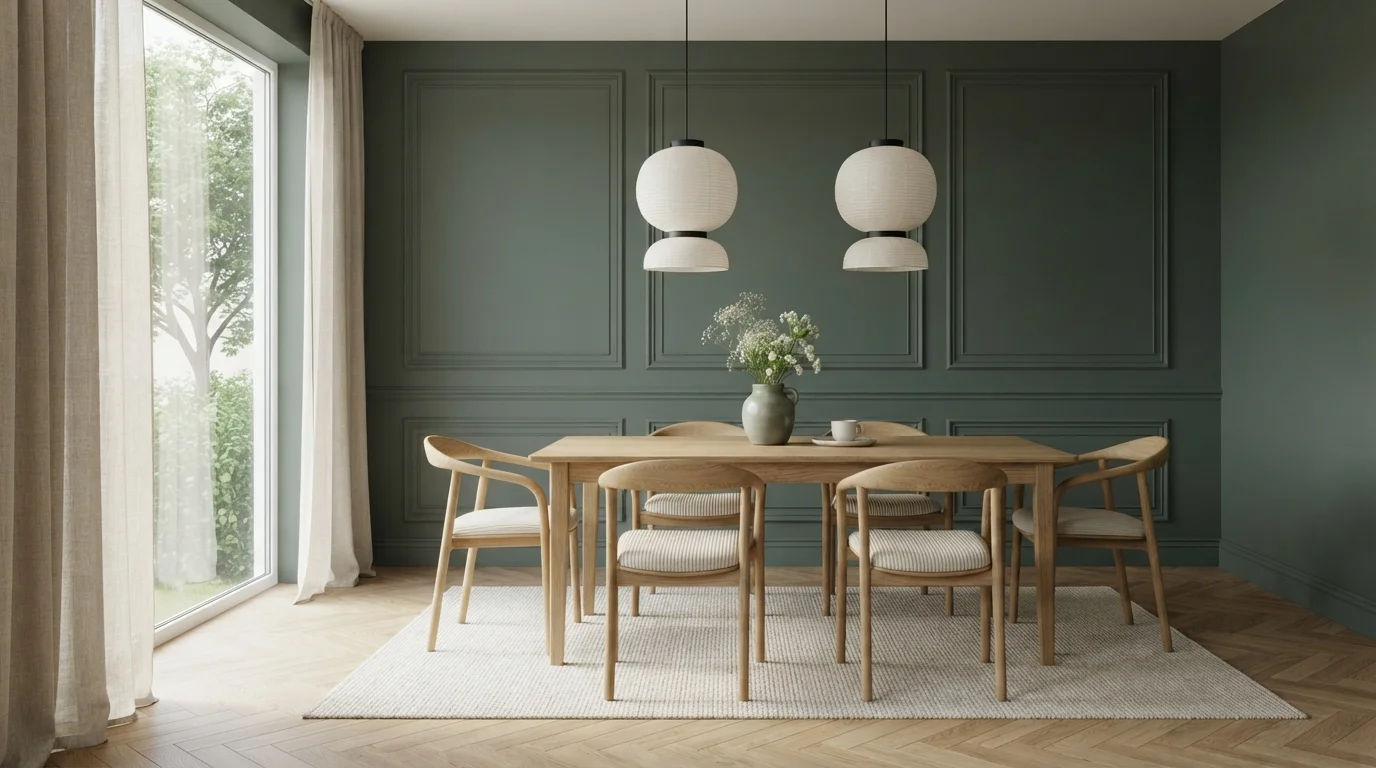
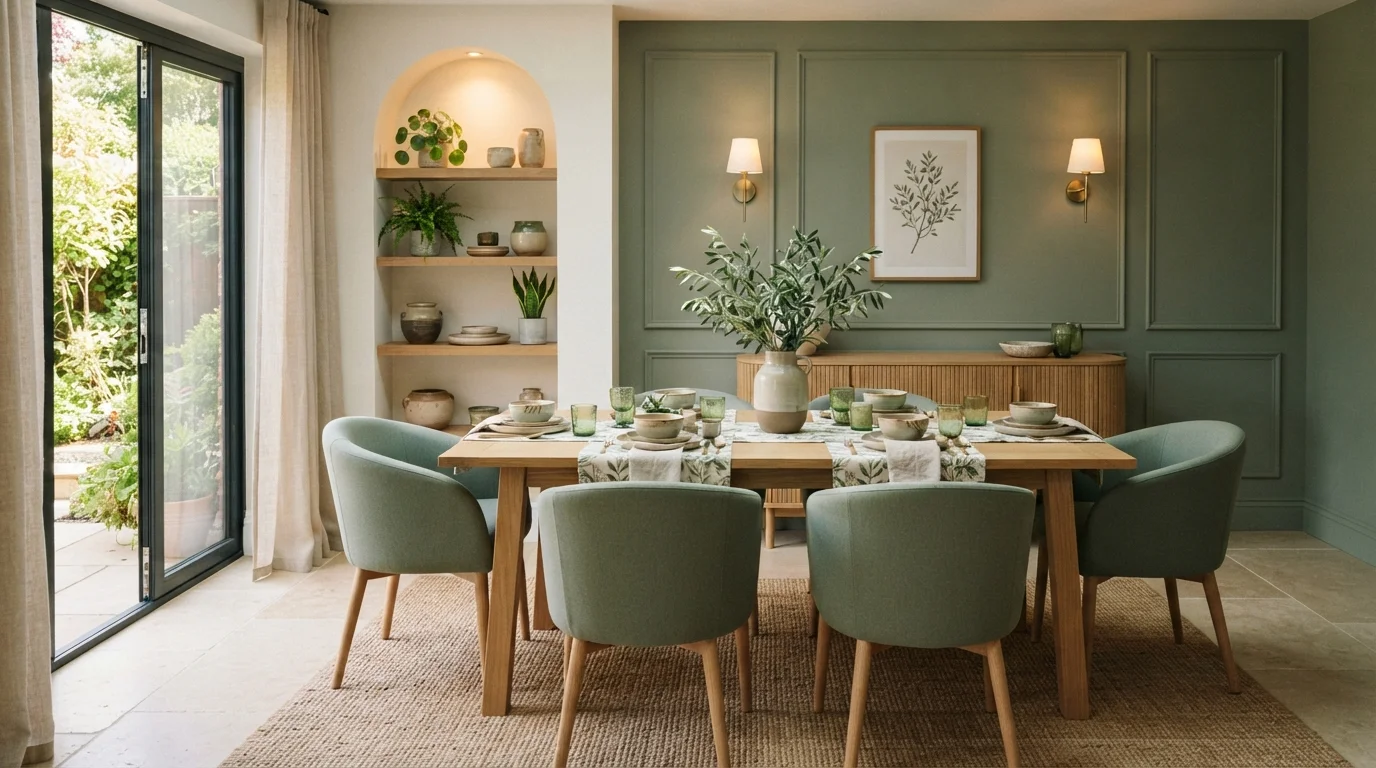
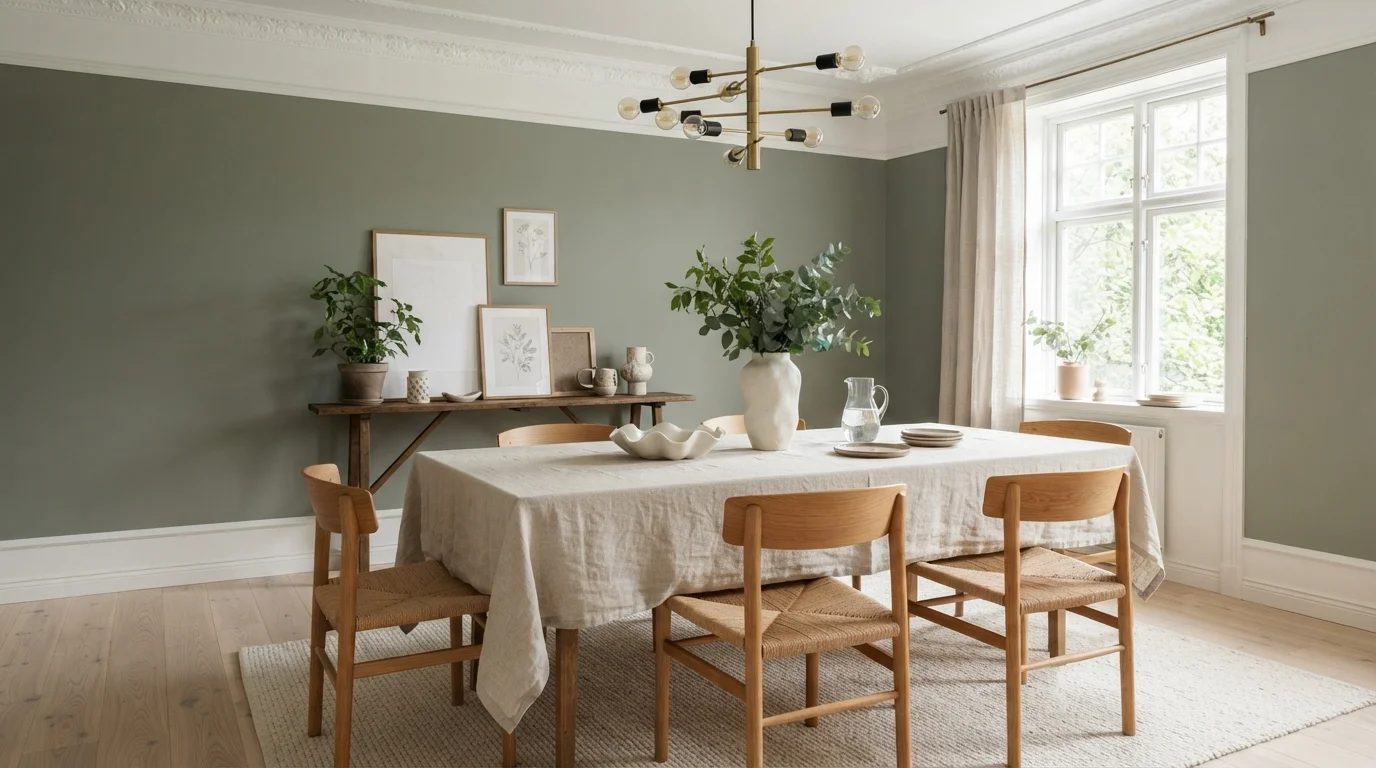
Editor's Picks: Green for Dining Rooms
4 picks30 Green Picks Across the LRV Range
30 of 2,263 · sorted dark → lightLooking for more? All green → covers every brand; brand × family pages show full decks.
Green Dining Room Colors at Every US Brand
19 brands · up to 10 picks eachUp to 10 picks per brand spread across the green LRV range, drawn from each brand's full deck. Tap any swatch with a curated guide for full spec; tap the brand title for the brand's complete green deck.
Behr
Benjamin Moore
Glidden
Valspar
Dunn-Edwards
PPG / Glidden
Sherwin-Williams
Dutch Boy
Hirshfield's
Diamond Vogel
Kompozit
C2 Paint
Farrow & Ball
Magnolia Home
Clare
Rodda
Annie Sloan
Backdrop
Other Dining Room Color Families
Green Colors in Other Rooms
Green Paint Colors for a Dining Room
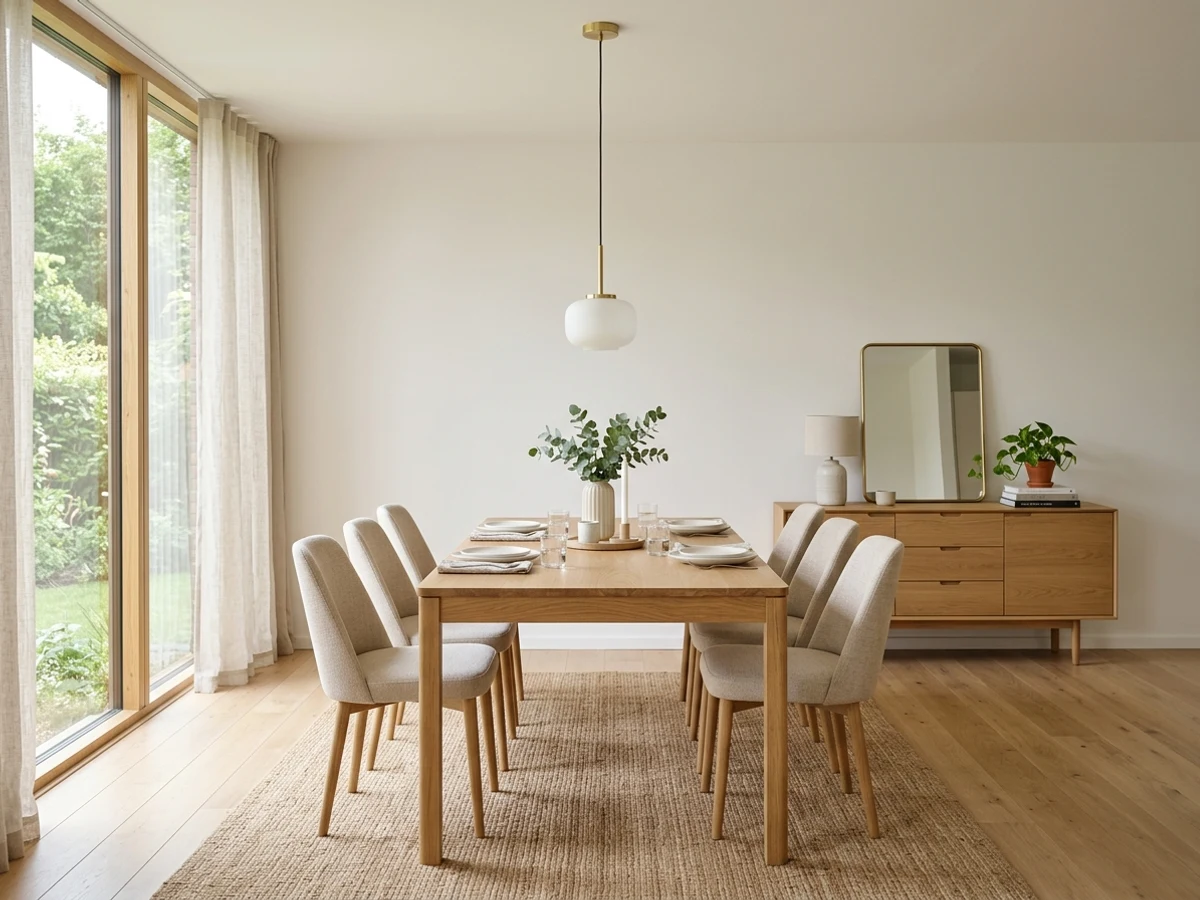
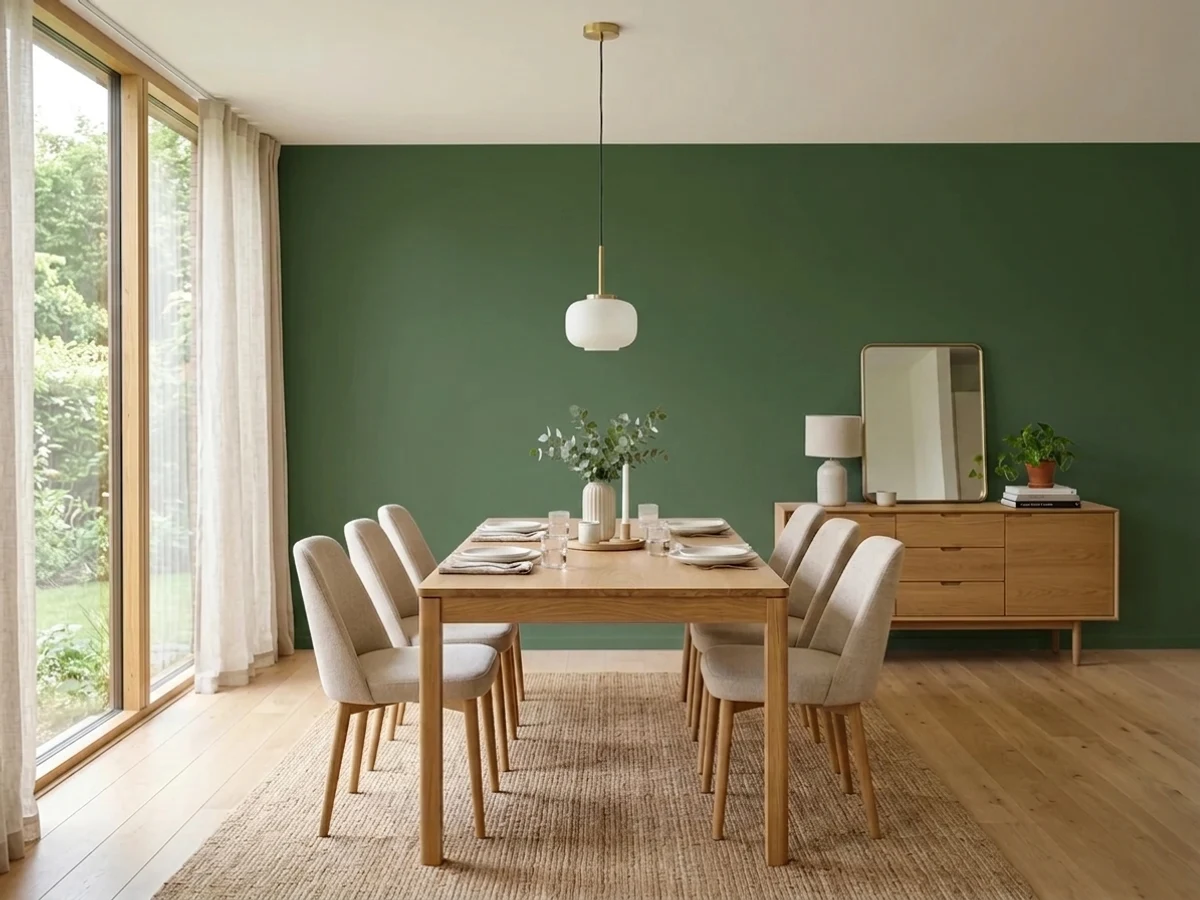
Green is one of the easiest colors to live with in a dining room because it borrows from nature, and nature is what we put on the plate. It flatters food, it flatters skin tones under warm light, and it sits in that calm middle of the color wheel where it never feels too cold or too loud. A dining room is also a room you usually pass through or sit in for a fixed stretch of time, so it can carry more color than a space you stare at all day. That makes it a forgiving place to be braver with green than you might be in a bedroom or a hallway.
The catch is that "green" covers a huge range, from a barely-there sage to a deep forest, and the right one depends almost entirely on your light and how you use the room. Below is how to choose the depth and shade, the finish that holds up to a dining room, and how to pair green with the trim, ceiling, and furniture you already have. Every color you see on this page is mixed to order at a paint counter, so you can take any shade you like here and have it matched across brands.
Why Green Just Works in a Dining Room
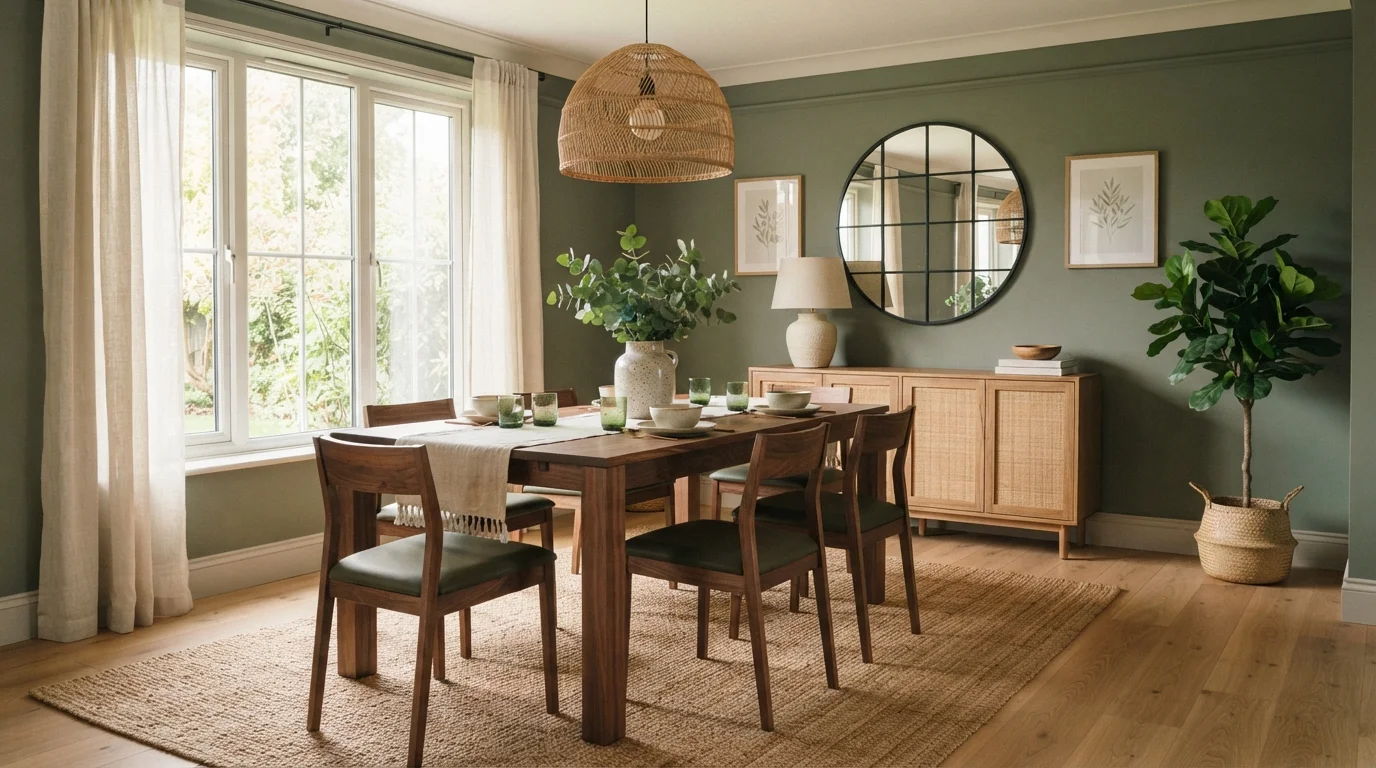
Green is the color we associate with fresh, healthy food, so it sets a relaxed tone the moment people sit down. It pairs naturally with wood tables, woven seats, brass, and stone, which are the materials most dining rooms already lean on. You rarely have to fight the room to make green fit.
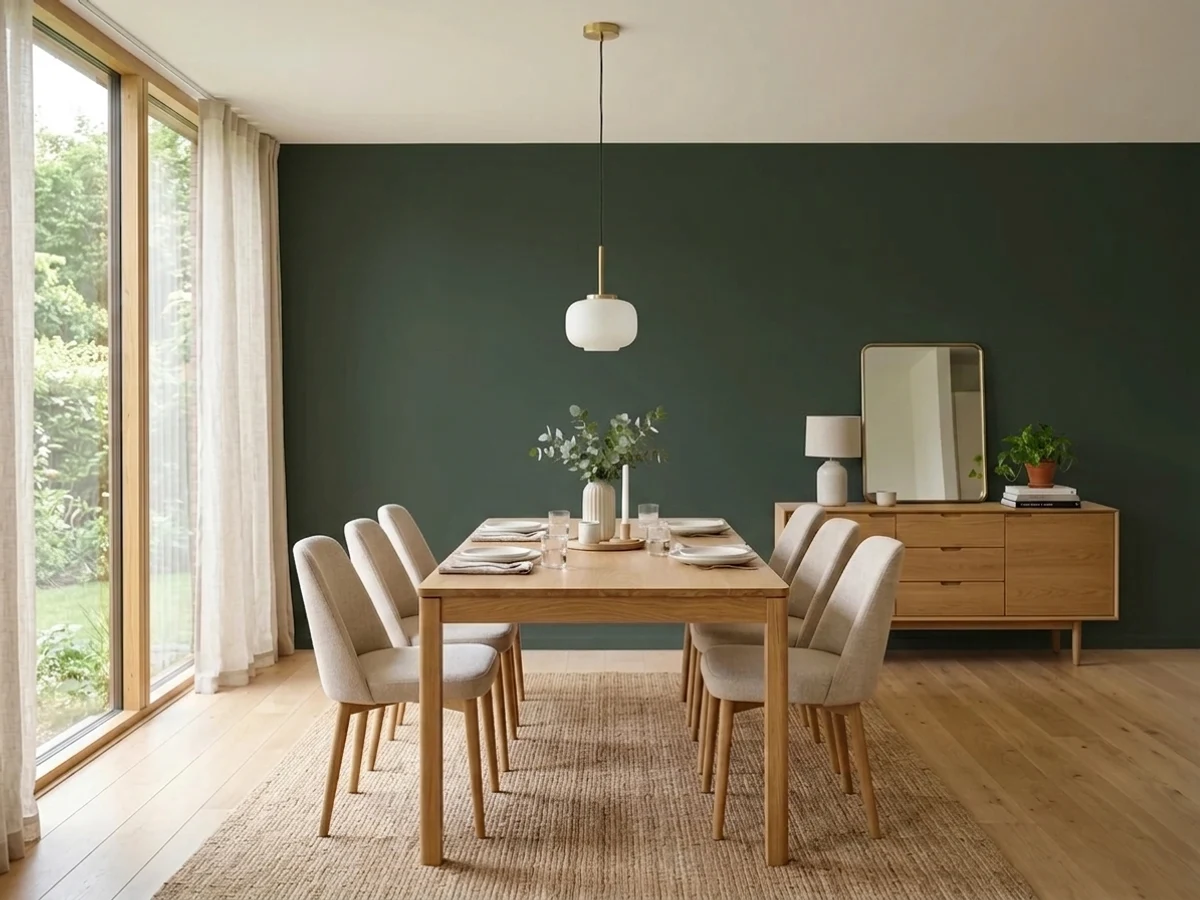
A dining room also gives you room to commit. Because you are not living in it from morning to night, a saturated green that might feel heavy in a home office reads as intimate and special over dinner. It is one of the few rooms where going darker often improves the experience instead of shrinking it.
Picking the Right Depth of Green for Your Light
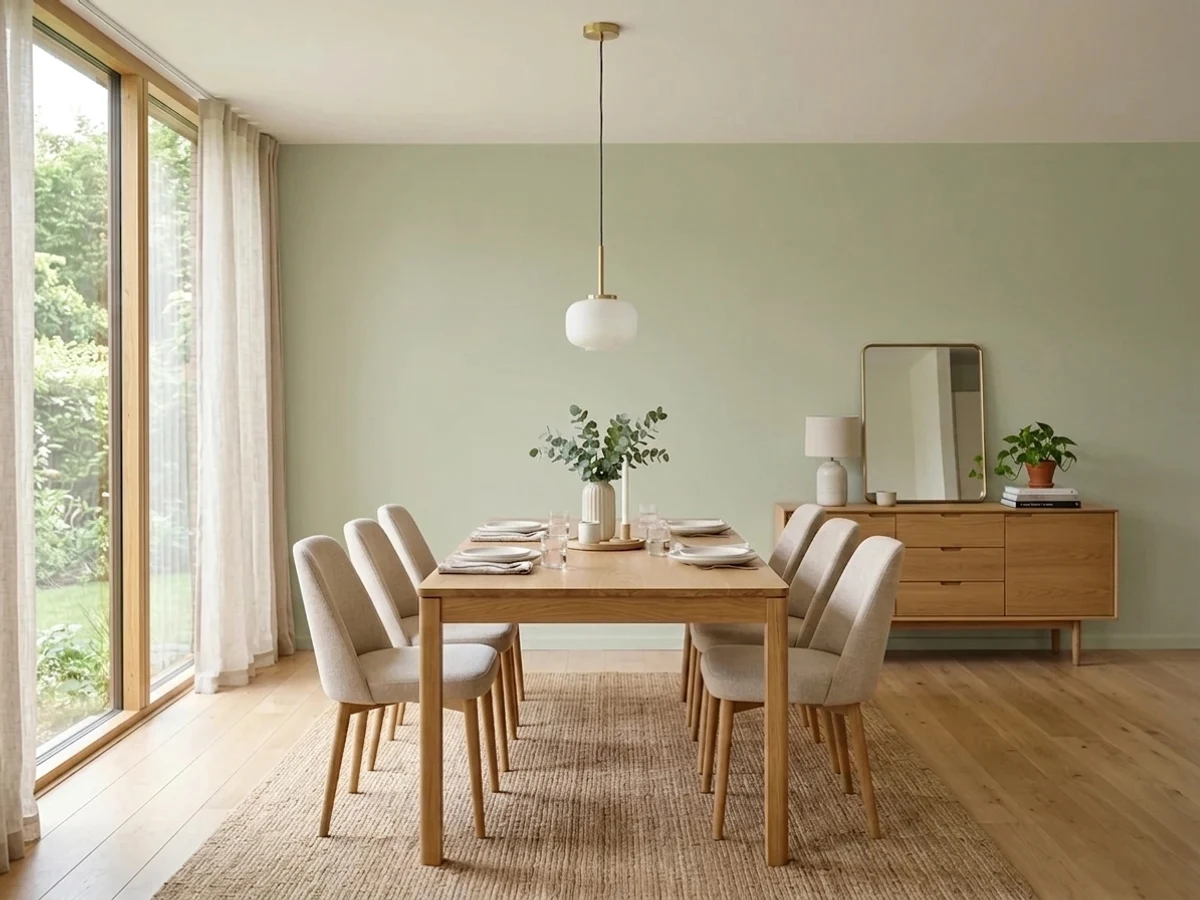
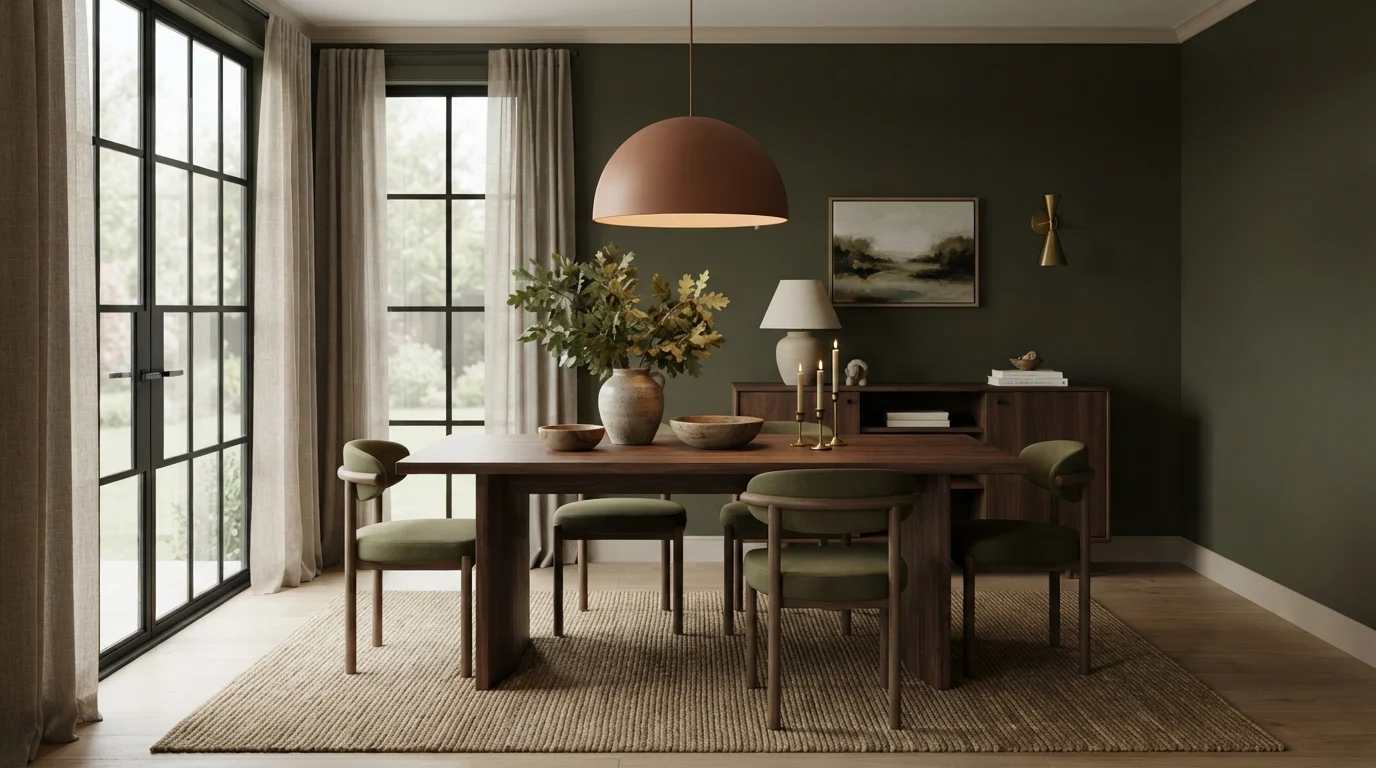
Light decides everything here, and LRV (light reflectance value, a 0–100 scale where higher means lighter) is the fastest way to predict how a green will land. A bright dining room with big windows can carry a deep green in the 10–25 LRV range and still feel grounded rather than gloomy. A room with little natural light usually does better with a softer sage or muted green in the 45–60 LRV range, which holds onto what light there is.
Direction of light matters too. North-facing rooms pull green toward gray and cool, so a green with a little warmth or yellow in it keeps it from going flat. South and west rooms warm a green up, which can push a yellow-green toward acid, so a more blue-leaning or muted green stays calm there. Always test a large sample on the actual wall and look at it under your evening dining light, not just at noon.
The Right Finish for a Room Where People Eat
Dining room walls get splashes, chair-back scuffs, and the occasional reaching arm, so you want a finish you can wipe. An eggshell or satin on the walls gives you that washability while staying soft enough to hide minor wall flaws. Flat and matte look beautiful with deep greens but are harder to clean, so save them for rooms with less traffic around the table.
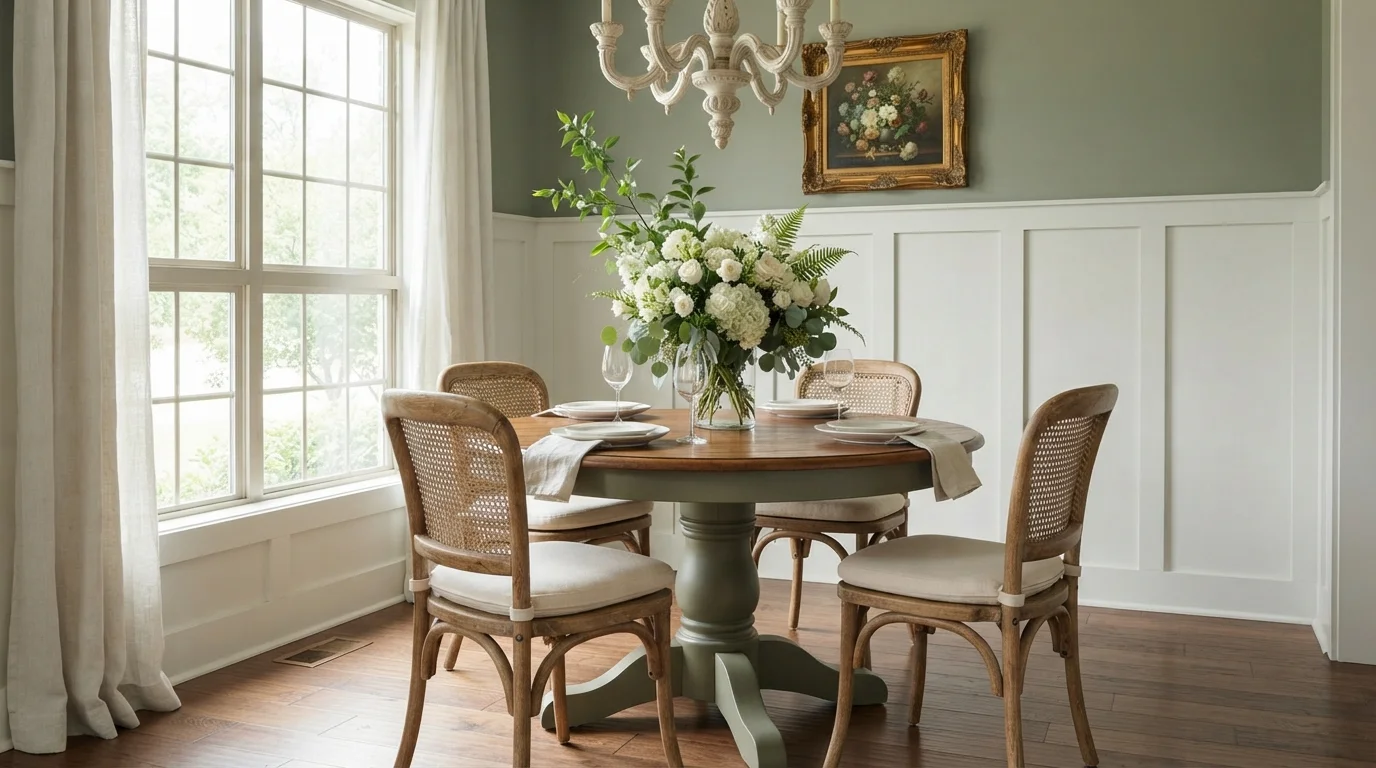
Trim and any wainscoting take more contact than the walls, so step up to satin or semi-gloss there for durability. One thing to watch with green specifically: a higher sheen reflects more light and can shift the color and add glare under a chandelier or pendant. If you are using a rich green, a lower sheen on the walls keeps the color reading true at night.
Pairing Green With Trim, Ceiling, and Furniture
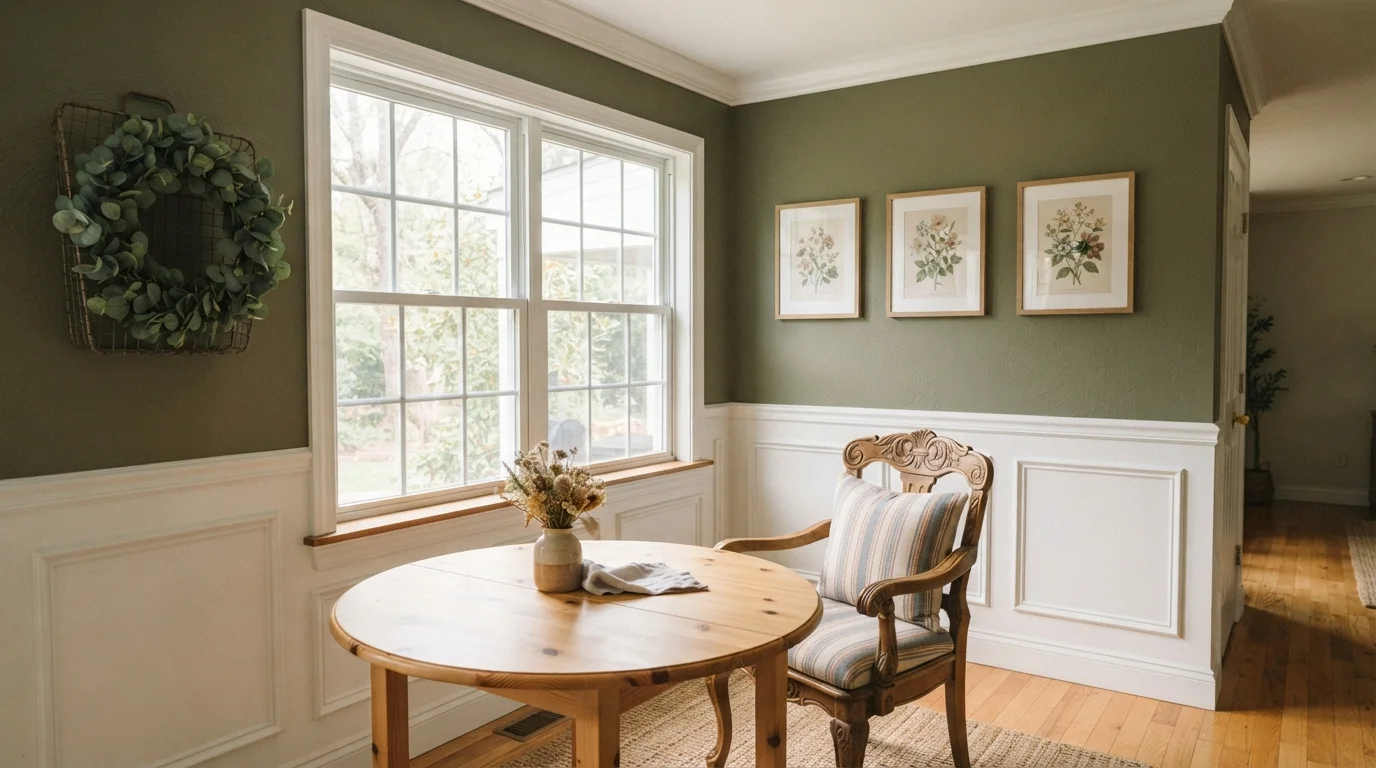
Crisp white trim is the safe, classic move and makes a mid-to-deep green look tailored. For a softer, more enveloping look, paint the trim the same green as the walls in a higher sheen so the room feels seamless and a little dramatic. A warm off-white ceiling keeps the whole thing from feeling cold, while a deeper green on the walls can take a tinted ceiling for a cocooning effect over the table.
Green has natural partners that suit dining rooms. Wood tones, especially walnut and oak, sit beautifully against it, and warm metals like brass or aged gold on fixtures and hardware feel rich next to green. If you have built-ins or a sideboard, painting them a shade or two off the wall green ties the room together without going flat.
Common Mistakes With Green in a Dining Room
The biggest one is judging the green from a small chip or a phone screen. Greens shift more than almost any color between daylight and warm bulbs, and a sage that looked perfect at the store can turn gray or even slightly blue under a dimmed chandelier. Test big, on the wall, at dinnertime.
The other common misses are choosing a yellow-green that turns acidic under warm dining light, going too pale so the room reads washed-out and uncommitted, and pairing a cool green with cool-toned bulbs that drain the warmth out of both the walls and the food. When in doubt for a dining room, lean slightly warm and slightly deeper than you think you want.
Green Dining Room Paint — Frequently Asked Questions
What shade of green is best for a dining room?+
There is no single best shade, but dining rooms handle deeper greens better than most rooms because you use the space in focused stretches rather than all day. If your room has good natural light, a rich green in the 10–25 LRV range feels intimate at dinner. If light is limited, a softer sage in the 45–60 range keeps things bright. Lean slightly warm so the green flatters food and skin under evening light.
What paint finish should I use in a dining room?+
Use eggshell or satin on the walls so you can wipe off splashes and chair scuffs while still hiding small flaws. Step up to satin or semi-gloss on trim and wainscoting, which take more contact. With a deep green, keep the walls on the lower-sheen side so a chandelier or pendant does not add glare or shift the color at night.
Does green make a dining room look smaller?+
A deep green can make a dining room feel cozier and more enveloping, which is usually a good thing in a room built for gathering. It does not shrink the space the way it might in a room you live in all day. If you want to keep things open, choose a lighter sage and pair it with white trim and a warm off-white ceiling to bounce light around.
What trim and ceiling colors go with a green dining room?+
Crisp white trim is the classic choice and makes green look tailored, while painting the trim the same green in a higher sheen gives a softer, more dramatic effect. A warm off-white ceiling keeps the room from feeling cold. With a deep green, a tinted ceiling can create a cozy, cocooning feel over the table.
Why does my green dining room look different at night?+
Green shifts more than almost any color between daylight and warm bulbs, so a sage that looks fresh at noon can read gray or slightly blue under a dimmed chandelier. Warm-white bulbs push green toward yellow, and cool bulbs drain its warmth. Always test a large sample on the wall and check it under your actual dining light before committing.
Can I match a green I like across different paint brands?+
Yes. Every color shown here is mixed to order at the paint counter, so you are not locked into one brand. If you find a green you love, you can have it cross-matched and tinted in another brand's base, which is helpful if you prefer a specific brand's finish or already have it on hand.