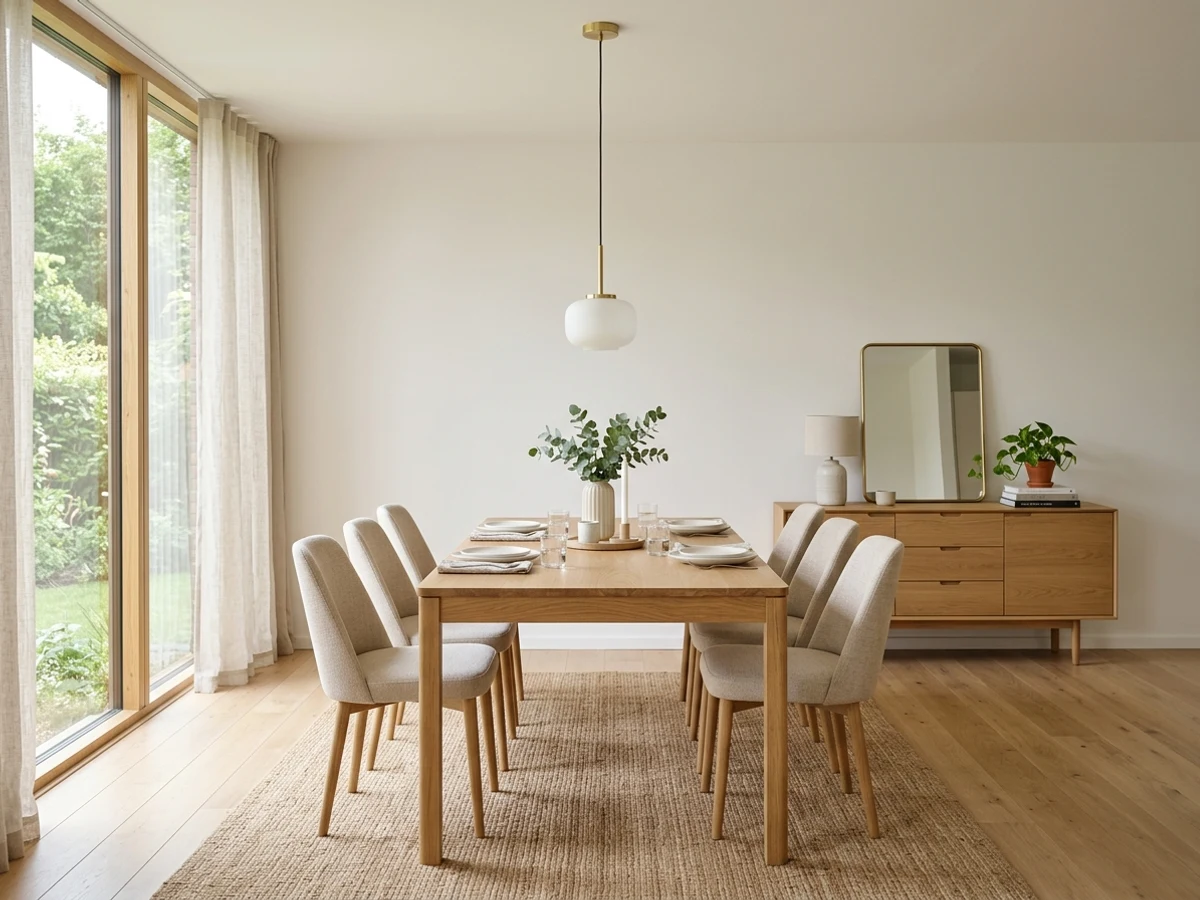
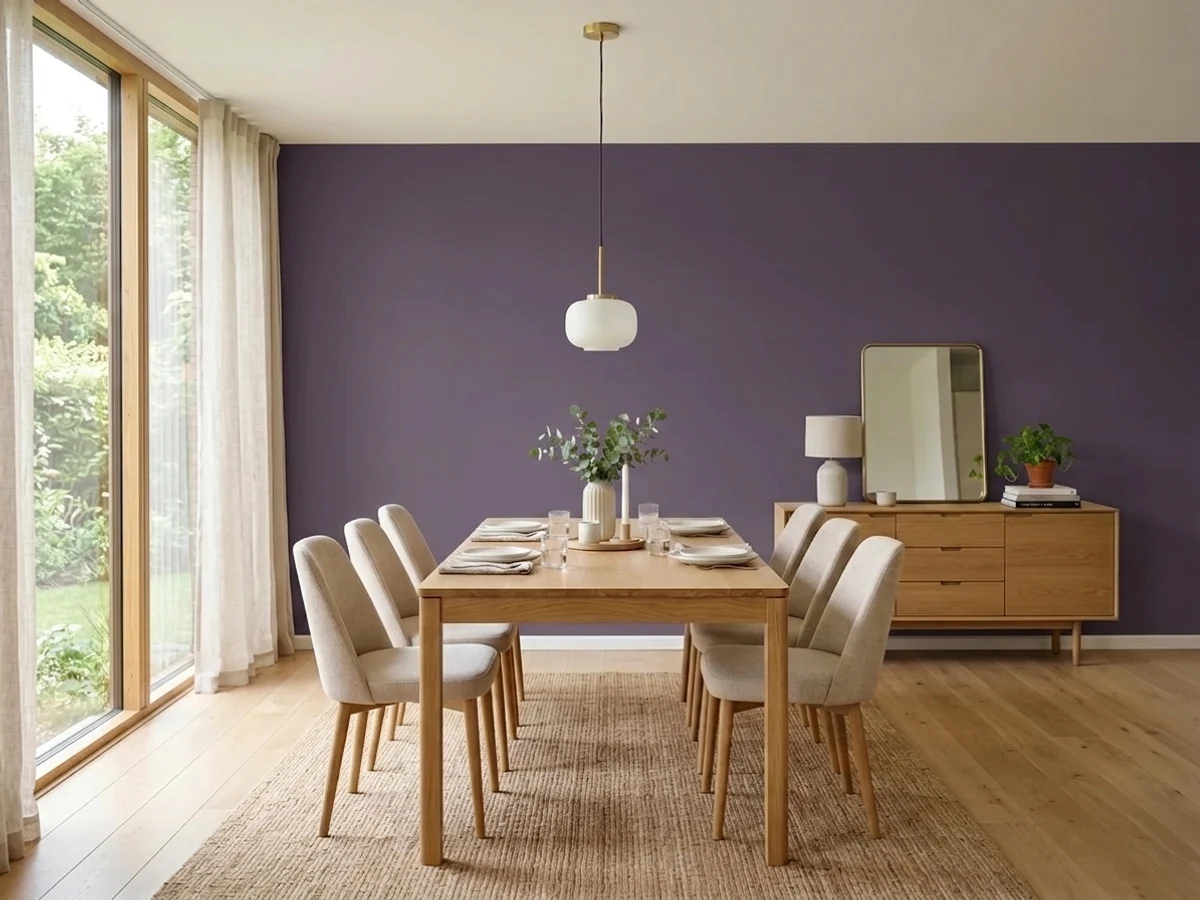
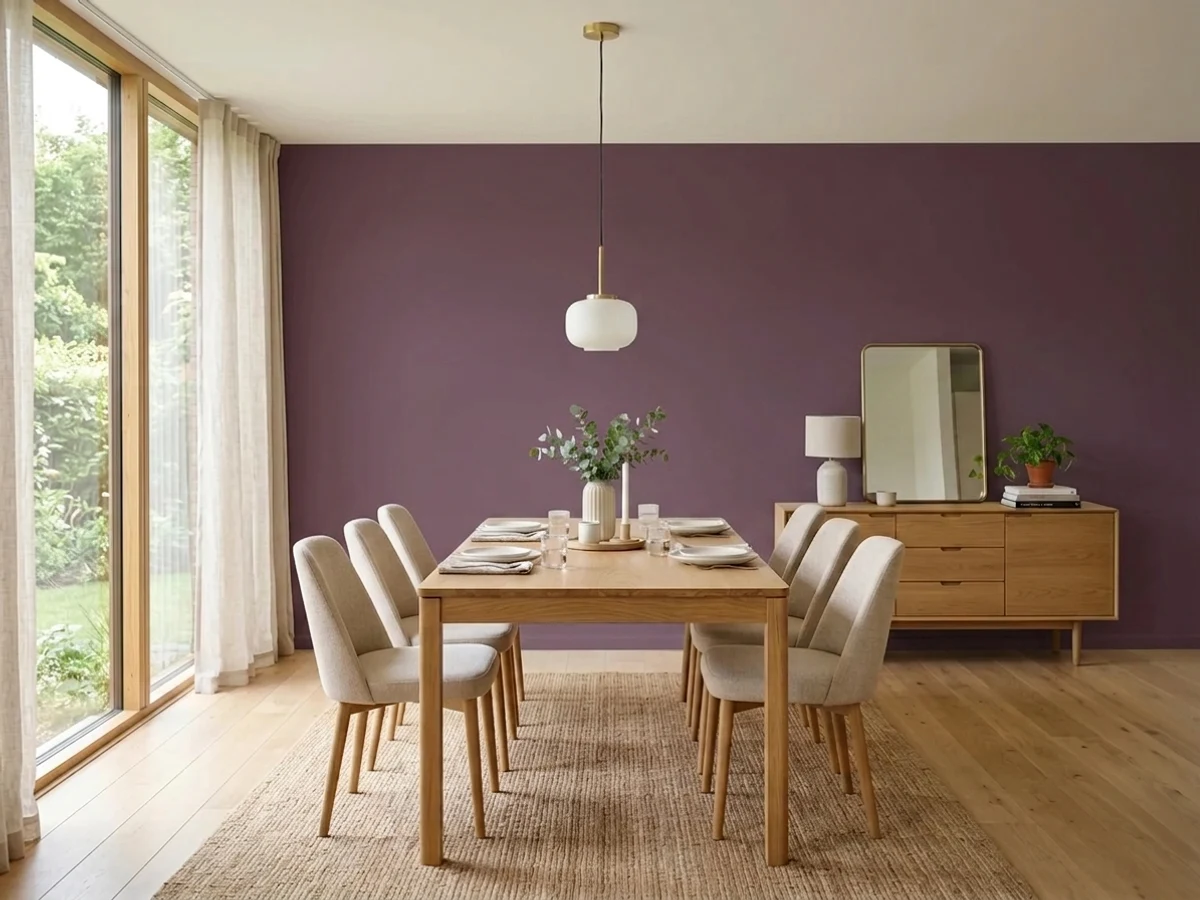
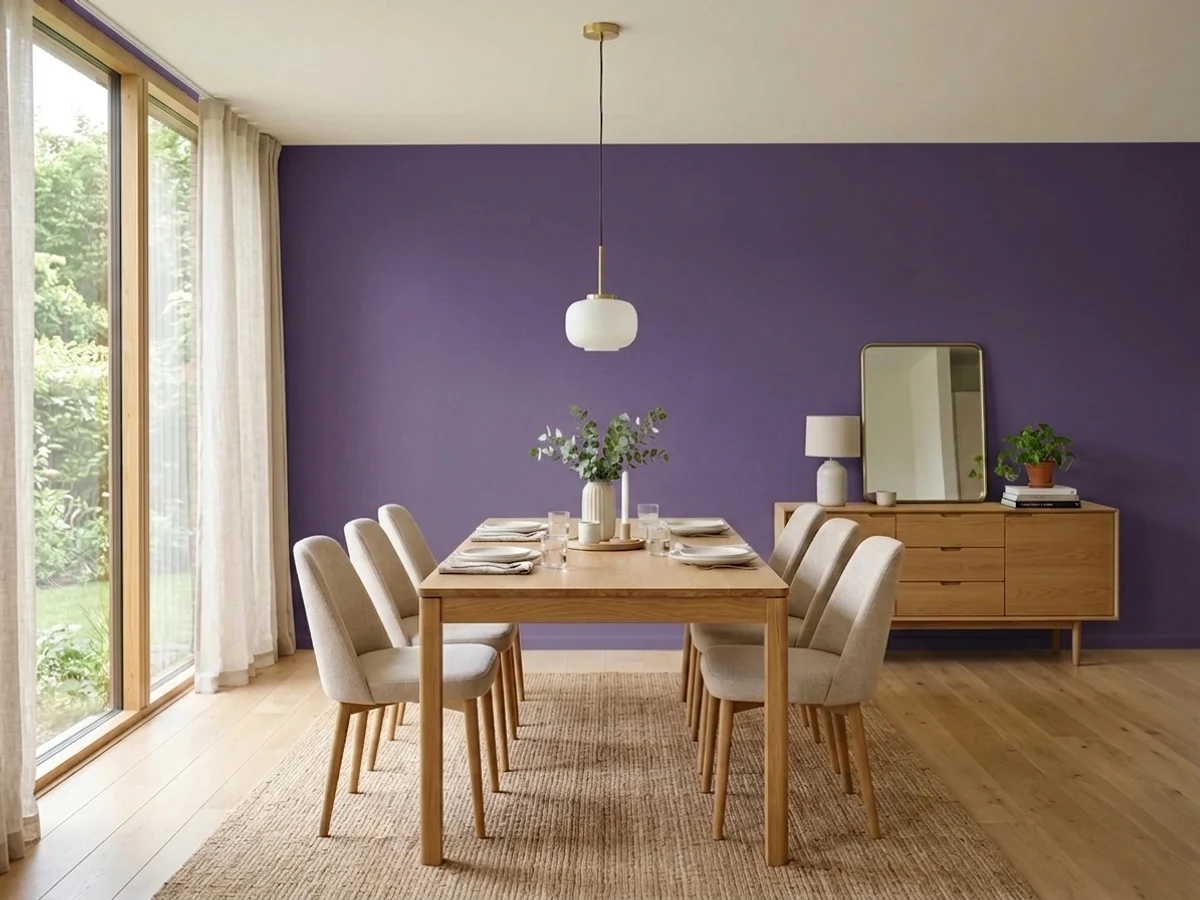
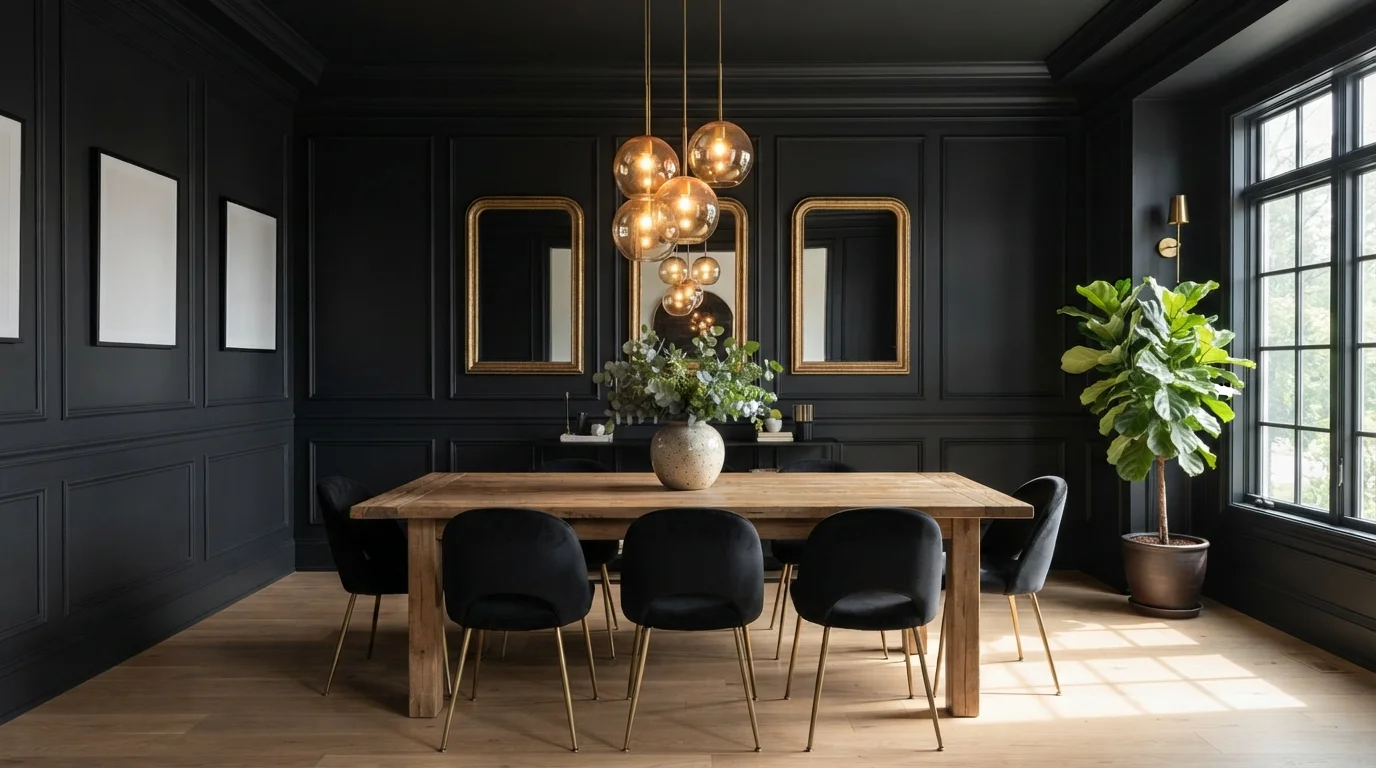
Purple Dining Room Paint Colors
1,435 purple colors that work in dining rooms, drawn from the full ~30,000-color US paint deck. Below: editor's picks specific to dining rooms, then 30 picks spread across the LRV range — narrow further on the brand page when you've shortlisted.
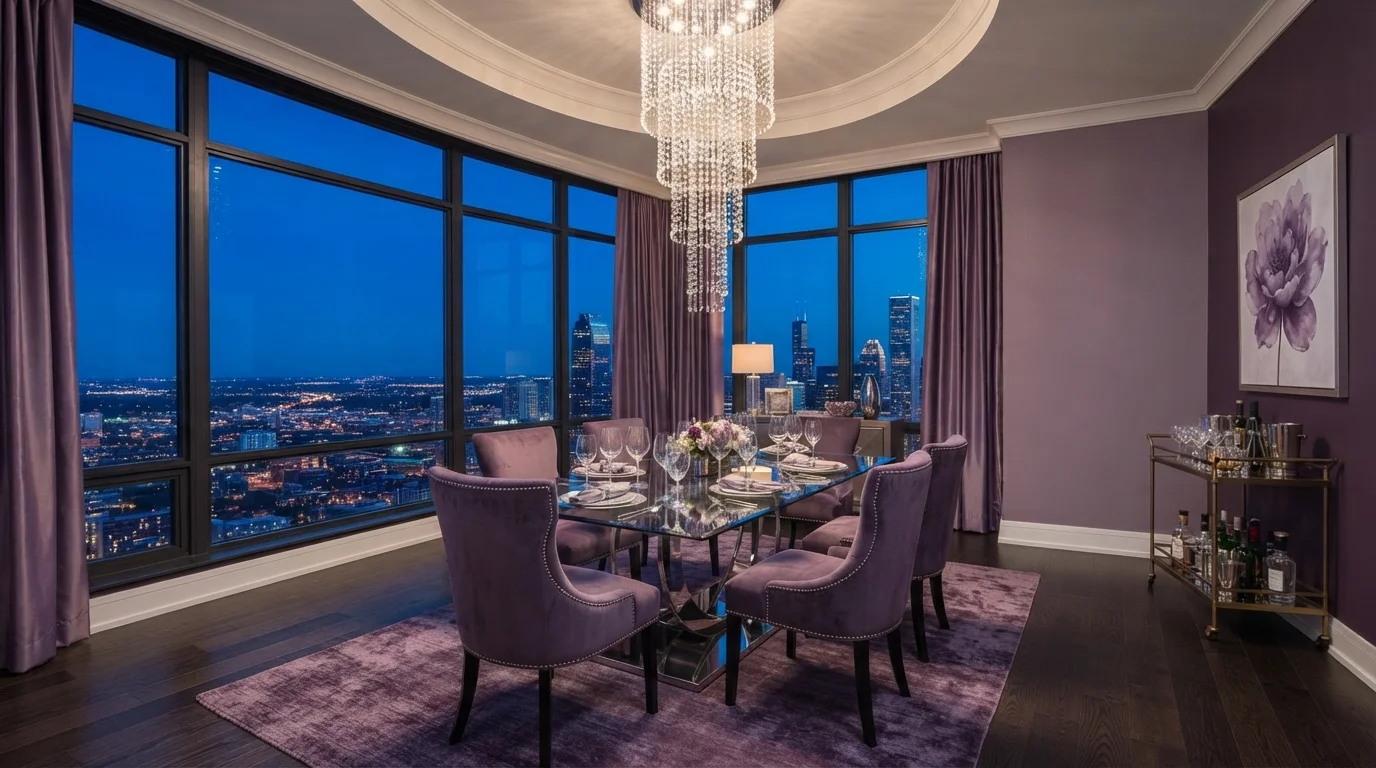
Purple is the most under-used wall color in American interiors — and that's exactly why it lands when it does. The family splits cleanly: pale lavenders (LRV 70+) read like a soft cool gray with the lights on, and become unmistakably purple at golden hour; mid-tone lilacs work on accent walls in bedrooms; deep plums and aubergines (LRV under 15) anchor moody dining rooms and libraries.
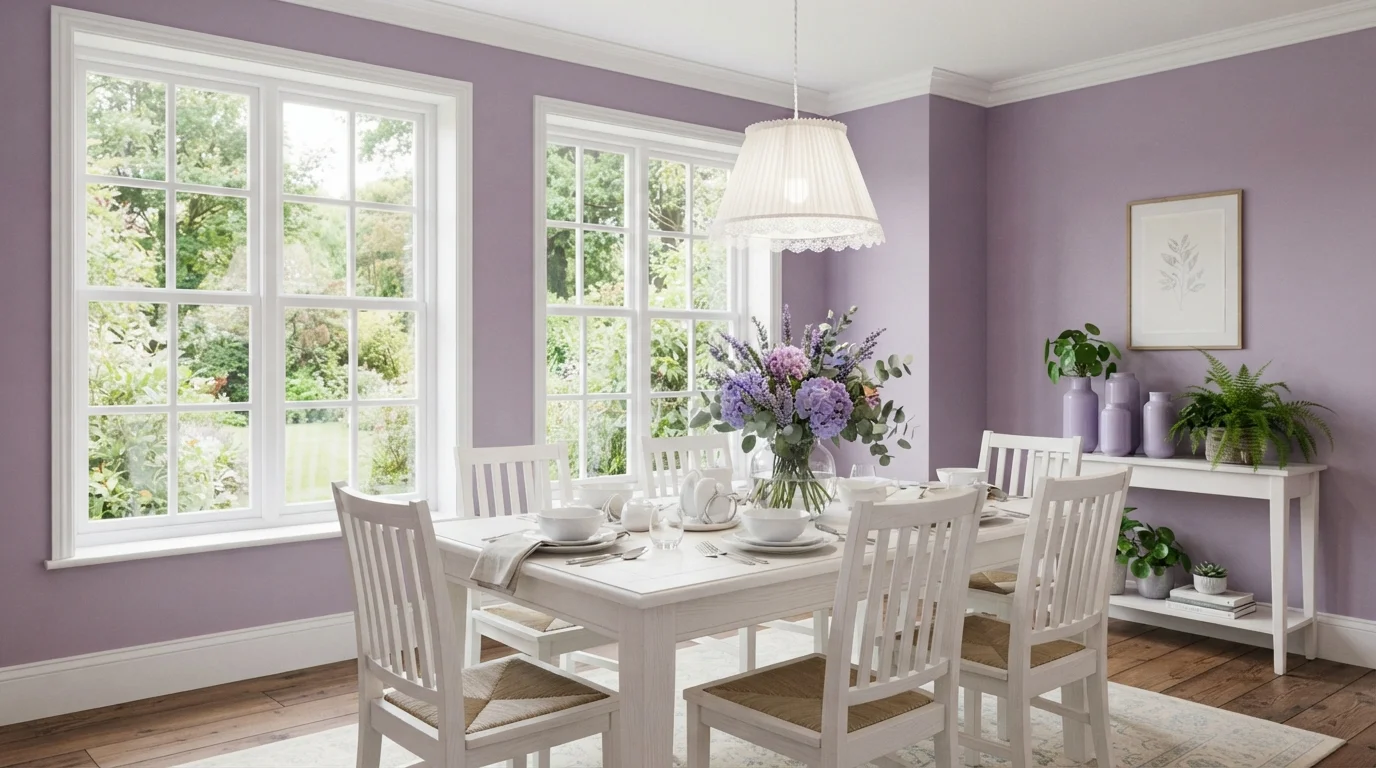
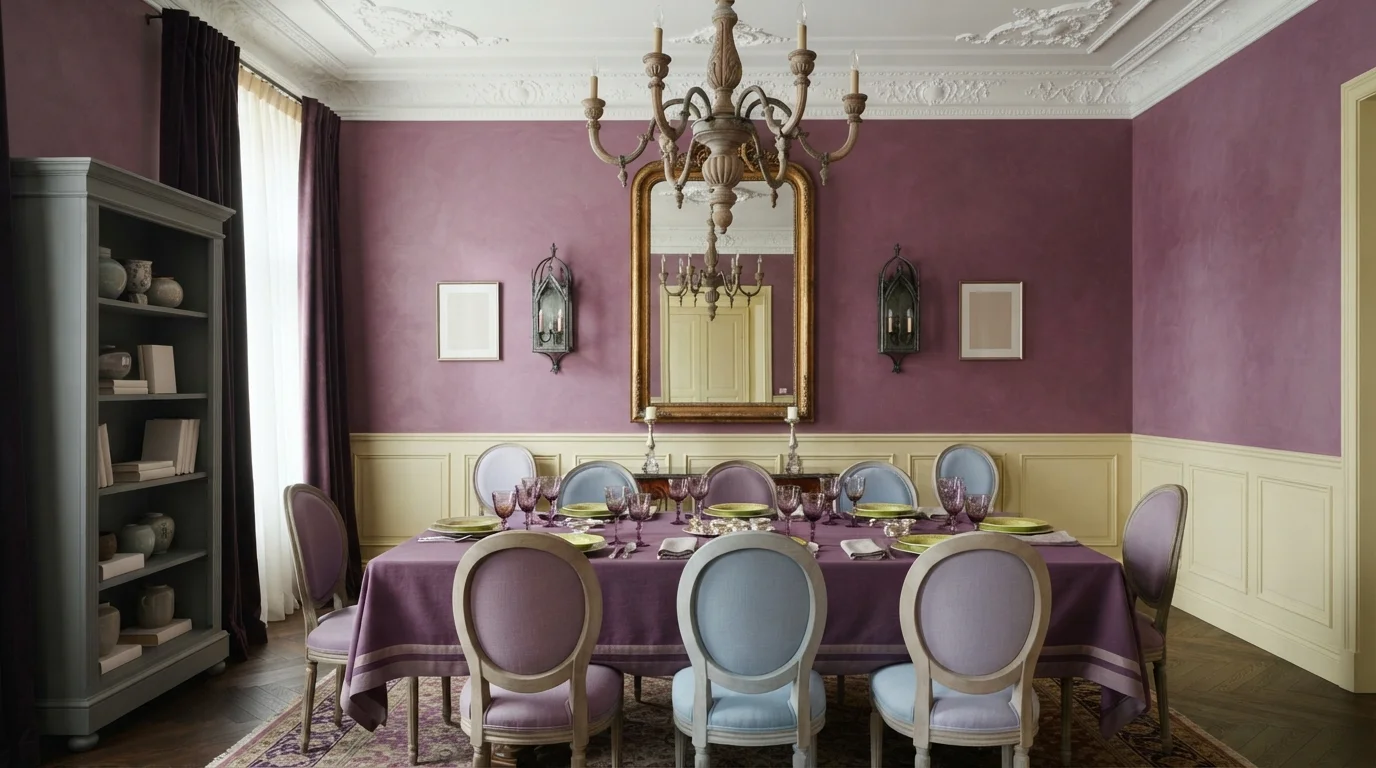
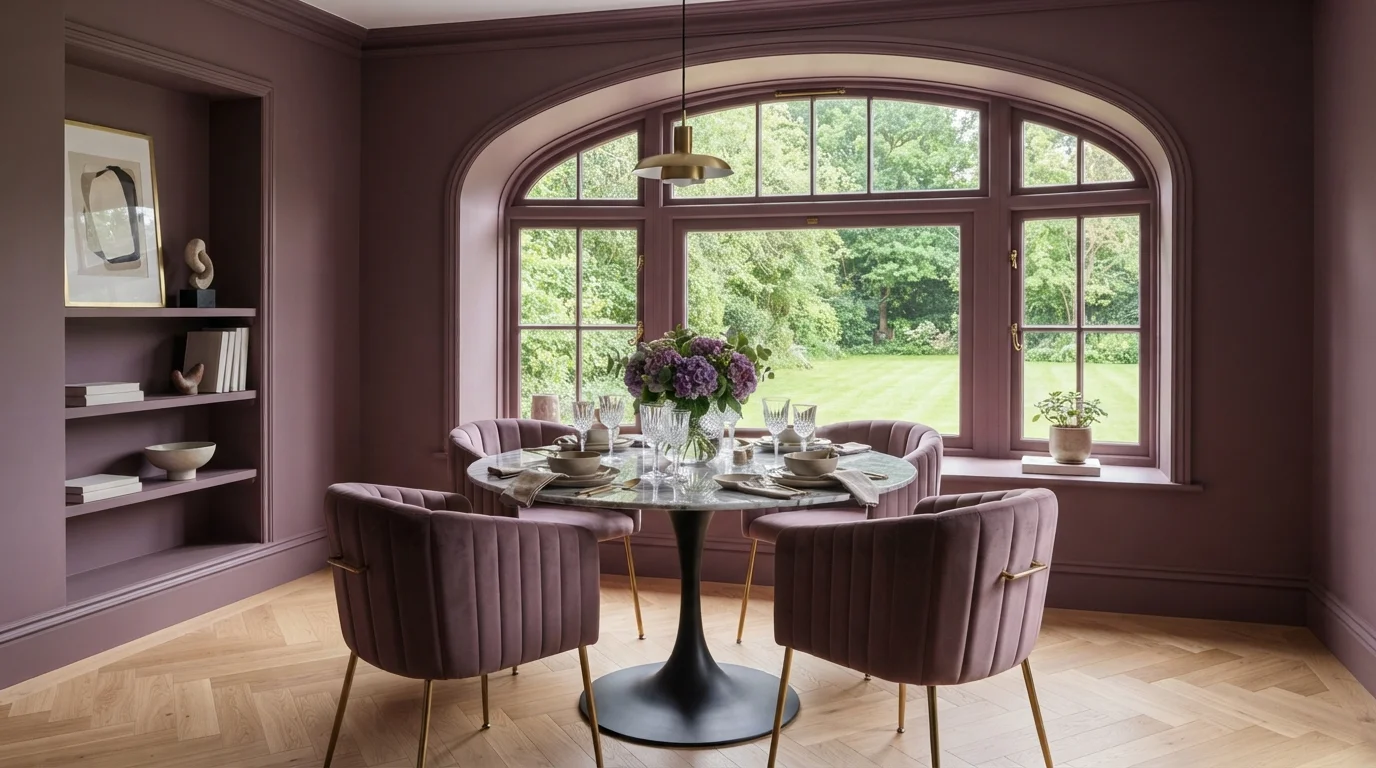
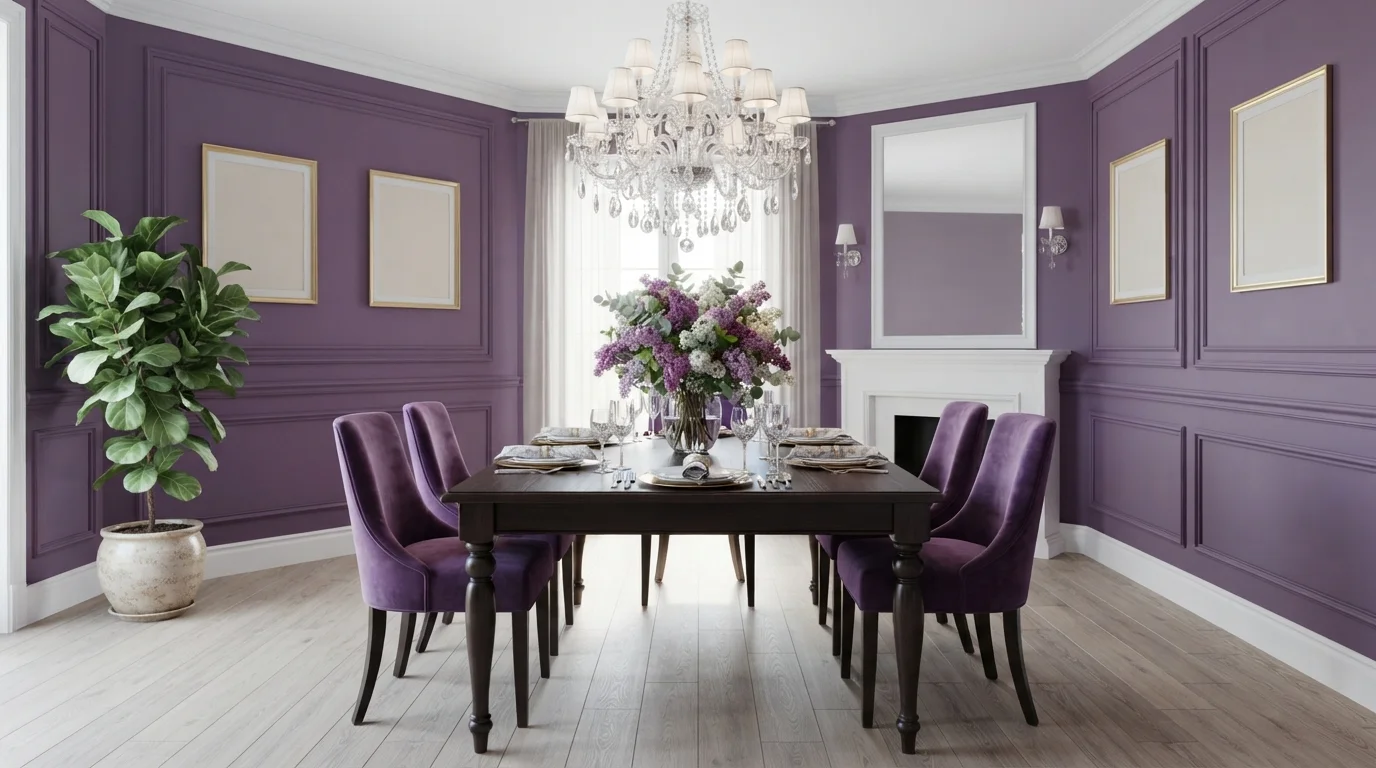
Editor's Picks: Purple for Dining Rooms
4 picks30 Purple Picks Across the LRV Range
30 of 1,435 · sorted dark → lightLooking for more? All purple → covers every brand; brand × family pages show full decks.
Purple Dining Room Colors at Every US Brand
17 brands · up to 10 picks eachUp to 10 picks per brand spread across the purple LRV range, drawn from each brand's full deck. Tap any swatch with a curated guide for full spec; tap the brand title for the brand's complete purple deck.
Behr
Glidden
Valspar
Hirshfield's
Kompozit
Diamond Vogel
PPG / Glidden
Dunn-Edwards
Benjamin Moore
Dutch Boy
Sherwin-Williams
C2 Paint
Farrow & Ball
Magnolia Home
Portola Paints
Clare
Other Dining Room Color Families
Purple Colors in Other Rooms
Purple Paint Colors for a Dining Room
Purple is one of the few colors that feels right at home in a dining room. This is a room you usually light at night, fill with people, and use for slower meals, so it can carry more color than a kitchen or a hallway. A soft lavender keeps things calm and pretty, while a deep plum or eggplant turns dinner into something that feels a little more formal and special.
The trick is matching the shade of purple to how the room is actually lit and how big it is. A bright dining room with lots of windows can hold a richer purple than a small windowless one. Below we walk through which purples work, the right sheen, and how to pair purple with your trim, ceiling, and fixtures so the room looks pulled together instead of busy. Every color you see on this page is mixed to order at the store, so you can match the same look across any major brand.
Why Purple Works in a Dining Room
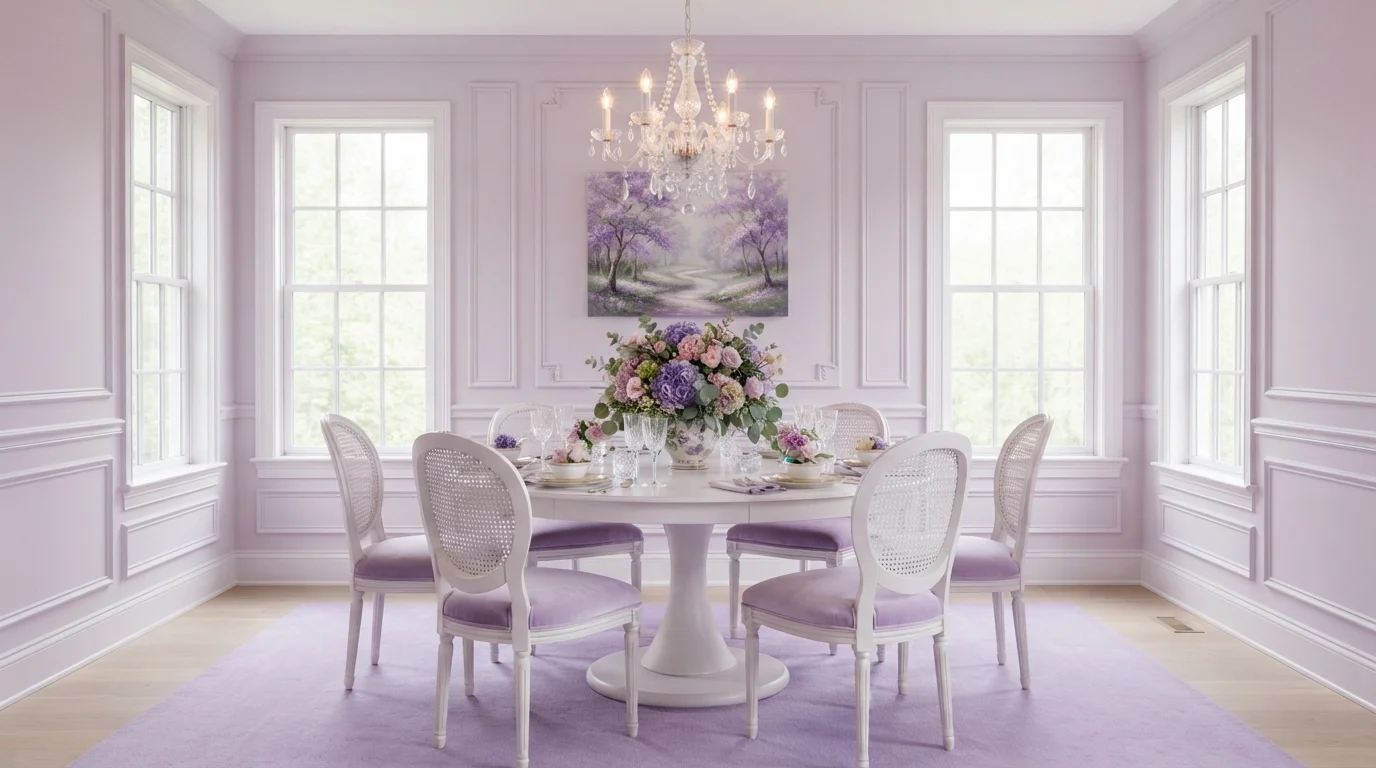
A dining room is a great place to take a color risk. You're not in it all day, the light is usually low and warm in the evening, and the room is built for atmosphere. Purple gives you that. A grayed-down lavender reads soft and welcoming, and a deep plum reads rich and grown-up, the kind of color that makes a set table look like an event.
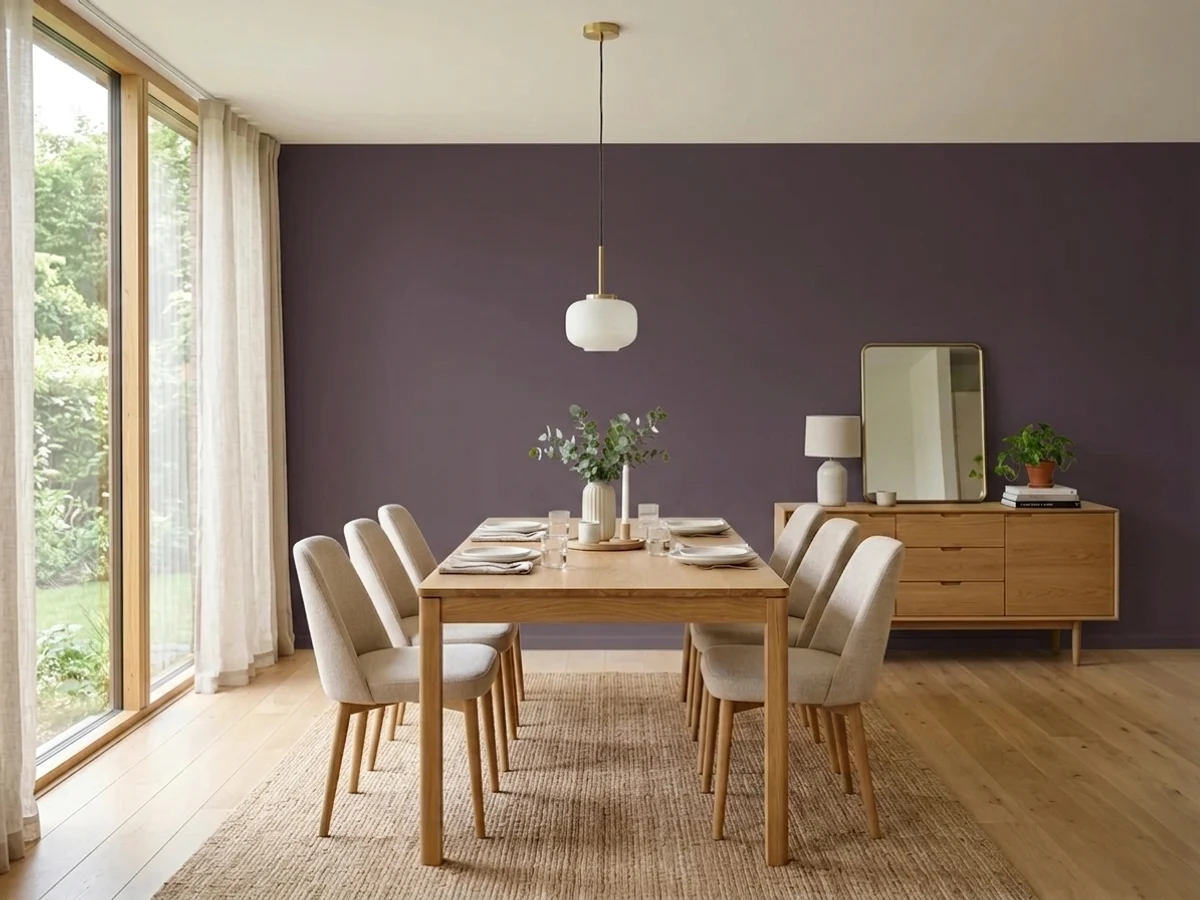
It also plays well with wood, which most dining rooms already have in a table, chairs, or a buffet. Purple has warm and cool sides, so it bridges cool gray trim and warm wood tones without fighting either one. That flexibility is why it lands in a dining room better than it does in a busy kitchen.
Picking the Right Shade for Your Light
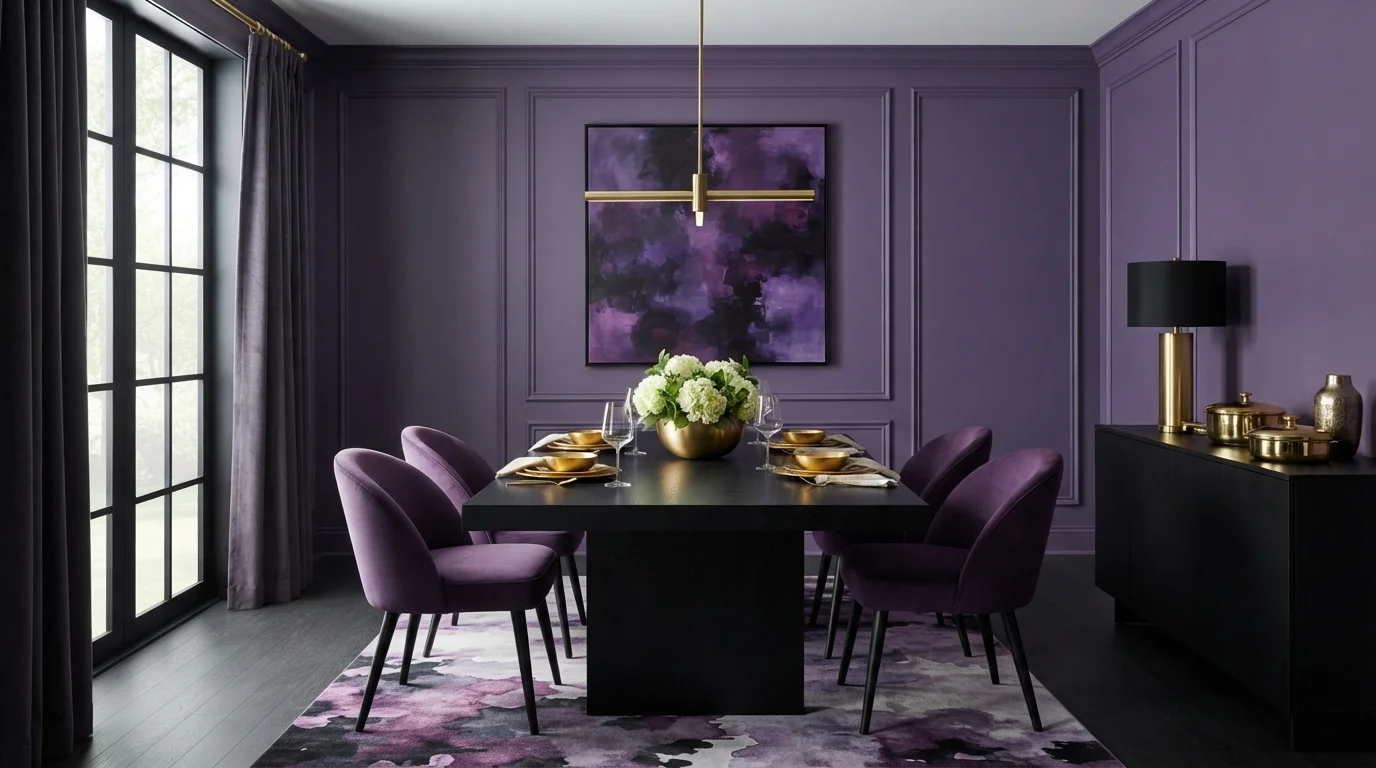
Light decides everything here, and LRV is the number that tells you how light or dark a color is on a scale from 0 (black) to 100 (white). A pale lavender in the 60s or 70s keeps a small or north-facing dining room from feeling closed in. A deep eggplant or plum in the teens and 20s wraps a larger or well-lit room in drama, but it needs enough light to keep from going flat.
Watch the undertone against your light. Warm evening bulbs and candlelight pull purple toward its red, berry side, which feels cozy. Cool daylight pushes it toward blue or gray. If your dining room only really lives at night, lean a touch warmer in the purple so it doesn't turn cold and dim once the sun goes down.
The Right Finish for a Dining Room
A dining room doesn't take the scrubbing a kitchen does, so you have room to go lower in sheen for a richer look. Eggshell is the safe all-around choice: it has a soft, low glow, hides minor wall flaws, and still wipes clean if a glass tips over. A matte finish makes a deep purple look even deeper and more velvety, which is worth it if the walls aren't bumpy and you don't have small kids leaning on them.
Save the shinier satin and semi-gloss for the trim and any built-in cabinetry. The contrast between low-sheen walls and slightly glossier trim is what makes a dark dining room read as intentional rather than gloomy. Skip high-gloss on the walls entirely; in a low-light room it just throws glare and shows every roller mark.
Pairing Purple with Trim, Ceiling, and Fixtures
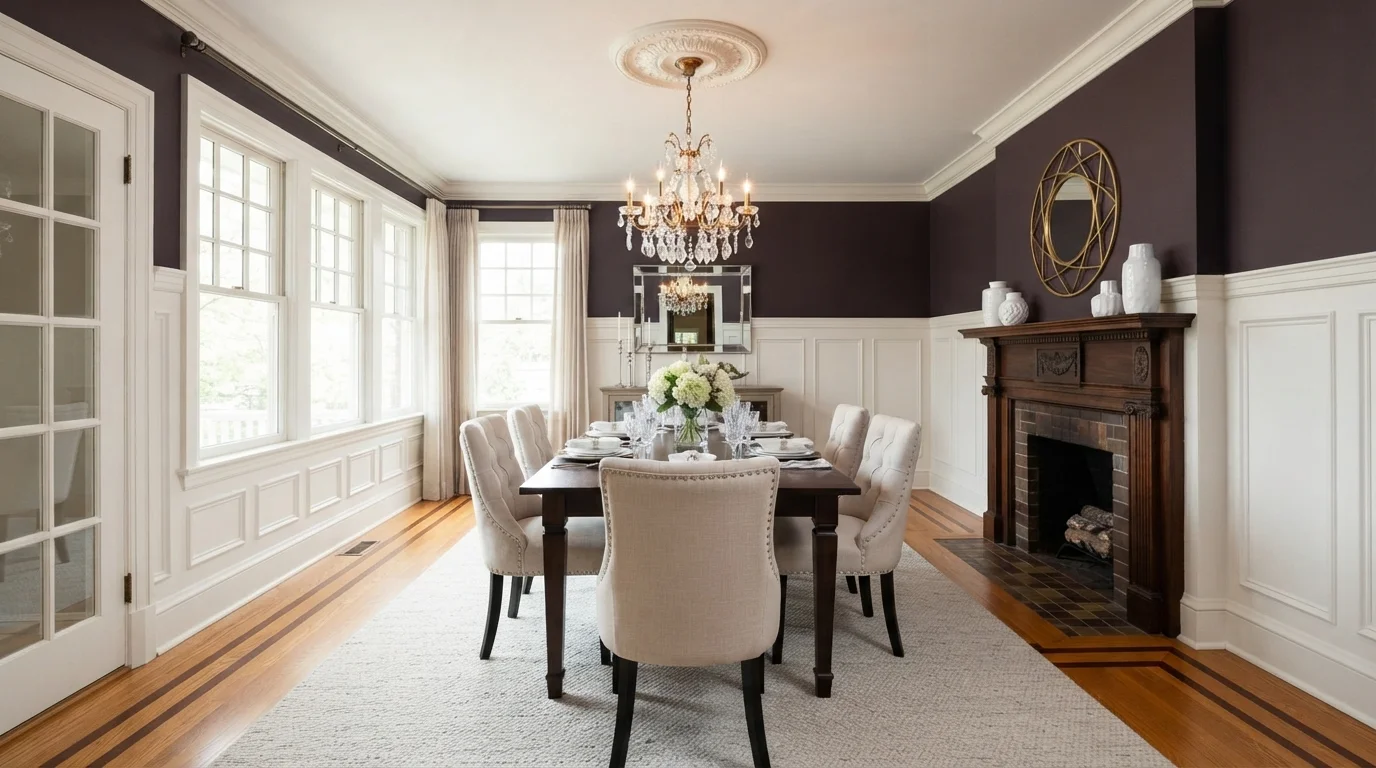
Crisp white trim is the easy, classic move and it makes a lavender feel fresh. But in a deep plum or eggplant room, a soft warm white or even trim painted the same color as the walls looks far more expensive and seamless. A bright stark white next to a dark purple can feel like a hard outline, so warm it up a little.
For the ceiling, white keeps a pale purple airy. With a dark purple, try a very soft tint of the wall color overhead, or carry the dark color up for a cocoon effect in a room you mostly use at night. Metals matter too: brass and gold fixtures warm purple up and feel dressy, while black or pewter keeps it modern. Wood furniture and natural linen or velvet textures round it out without adding more color.
Common Mistakes to Avoid
The biggest one is choosing a purple that's too saturated or too sweet. A loud grape or lilac that looked fun on a tiny chip can feel cartoonish across a whole dining room wall. Grayed-down, slightly muddy purples almost always read more sophisticated, so lean dustier than you think you want.
The other mistakes are about light and scale. People put a dark plum in a dim room with no windows and end up with a cave; if the room is dark, either add real light or go lighter on the walls. Always paint a big sample square and look at it at night under your actual bulbs, since that's when the room gets used. And remember any shade here is mixed to order, so if you find the perfect purple in one brand you can have it cross-matched and tinted at the store you actually buy from.
Purple Dining Room Paint — Frequently Asked Questions
Is purple too bold for a dining room?+
Not for most dining rooms. Because you use the room mainly in the evening and for shorter stretches, it can handle a stronger color than rooms you live in all day. If you're nervous, start with a soft grayed lavender, which feels calm rather than loud.
Should I choose a light or dark purple?+
It depends on your light and room size. A small or dim dining room does better with a lighter lavender (an LRV in the 60s or higher) so it doesn't feel closed in. A larger or well-lit room can carry a deep plum or eggplant for a richer, more formal mood.
What sheen is best for dining room walls?+
Eggshell is the best all-around pick because it has a soft low glow, hides small wall flaws, and still wipes clean. A flat or matte finish makes a deep purple look even deeper, which is great if your walls are smooth and the room sees light traffic. Keep the shinier satin or semi-gloss for trim and cabinetry.
What trim color goes with a purple dining room?+
Crisp white works well with pale lavender and keeps it fresh. With a deep plum or eggplant, a soft warm white or trim painted the same color as the walls looks more expensive and avoids a harsh outline. Match your trim sheen up a notch from the walls for a clean contrast.
How do I keep a dark purple dining room from feeling gloomy?+
Make sure the room has enough light first, since dark purple in a windowless space can feel like a cave. Add warm bulbs, candles, or a good fixture, and pair the walls with lighter trim, mirrors, and metallic accents like brass to bounce light around. If you can't add light, choose a lighter purple instead.
Can I match a purple I like across different paint brands?+
Yes. Every color shown here is mixed to order at the store, so you're not locked into one brand. If you fall in love with a purple from one brand, you can have it cross-matched and tinted at whichever store you prefer to buy from.