Farrow & Ball Purple All 5, sorted honestly.
Every purple in the Farrow & Ball deck: 5 colors, LRV 55 down to 5, grouped by undertone and depth.
All 5 Farrow & Ball Purple Paint Colors
Every purple in the Farrow & Ball deck, LRV 55 down to 5. Grouped by undertone, warm to cool. Filter by depth or change the order.
Hex values are display approximations from Farrow & Ball's published swatch tools, not a physical sample under controlled lighting. Order a brand-direct sample before specifying.
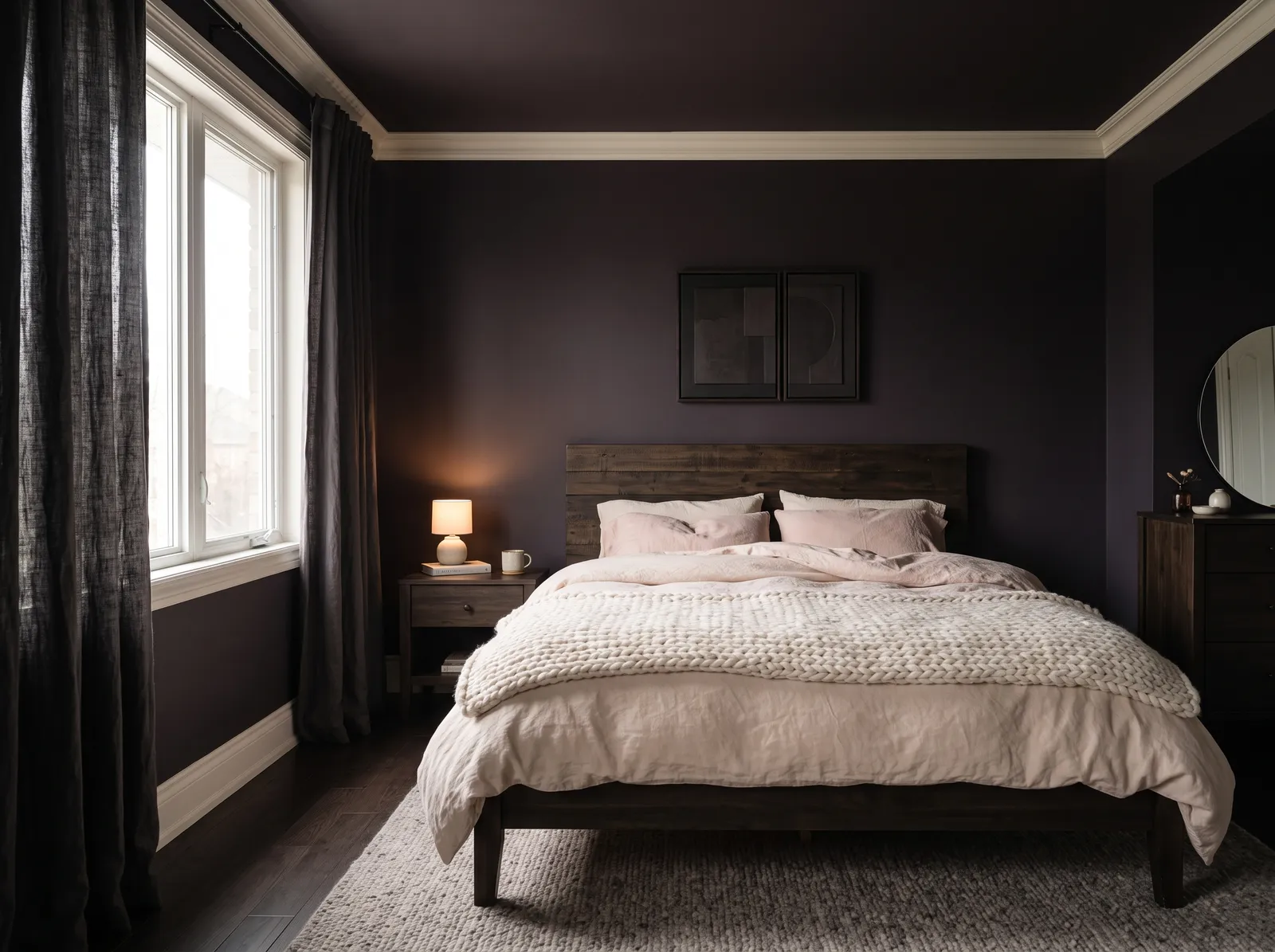
Upload a photo of the room. We paint it in the purple you chose with your light and your floor, and you can swap colors until one holds.
Farrow & Ball is a British premium import sold through its own showrooms and authorized stockists, and the paint is mixed to order rather than sitting pre-made on a shelf. Expect to pay roughly $100 or more per gallon, which is two to three times the price of mainstream paint. There is no Color of the Year here; the brand releases new colors and trend predictions each year but openly rejects the single-color idea.
If the price or access is a hurdle, any of these purples can be cross-matched. A paint store can scan or match the color into another line, and our Kompozit deck along with other US brands can get you close on tone. Keep in mind that an exact LRV and the way Farrow & Ball pigments shift in changing light are hard to reproduce perfectly, so always test a sample on your own wall before committing.
Light to Dark
The whole Farrow & Ball purple range by depth. LRV is the number to trust: the same purple looks two steps darker on a wall than on a chip.
LRV is a simple number from 0 to 100 that tells you how much light a color bounces back. Low LRV means dark and light-absorbing; high LRV means light and bright. In this purple slice the range runs from 6 at the darkest to 74 at the lightest, which is a wide spread for only three colors.
Great White (No. 2006) sits at the top with an LRV of 74, so it acts as a soft, near-neutral light tone with a faint purple cast. At the other end, Pelt (No. 254) at LRV 6 is almost as dark as paint gets, and Pitch Blue (No. 220) at LRV 16 is deep but a touch lighter. Match the number to your goal: high LRV for open and airy, low LRV for cocooning and dramatic.
Farrow & Ball Purple, Room by Room
Each room page shows purple picks from every US brand side by side, so you can compare in context.
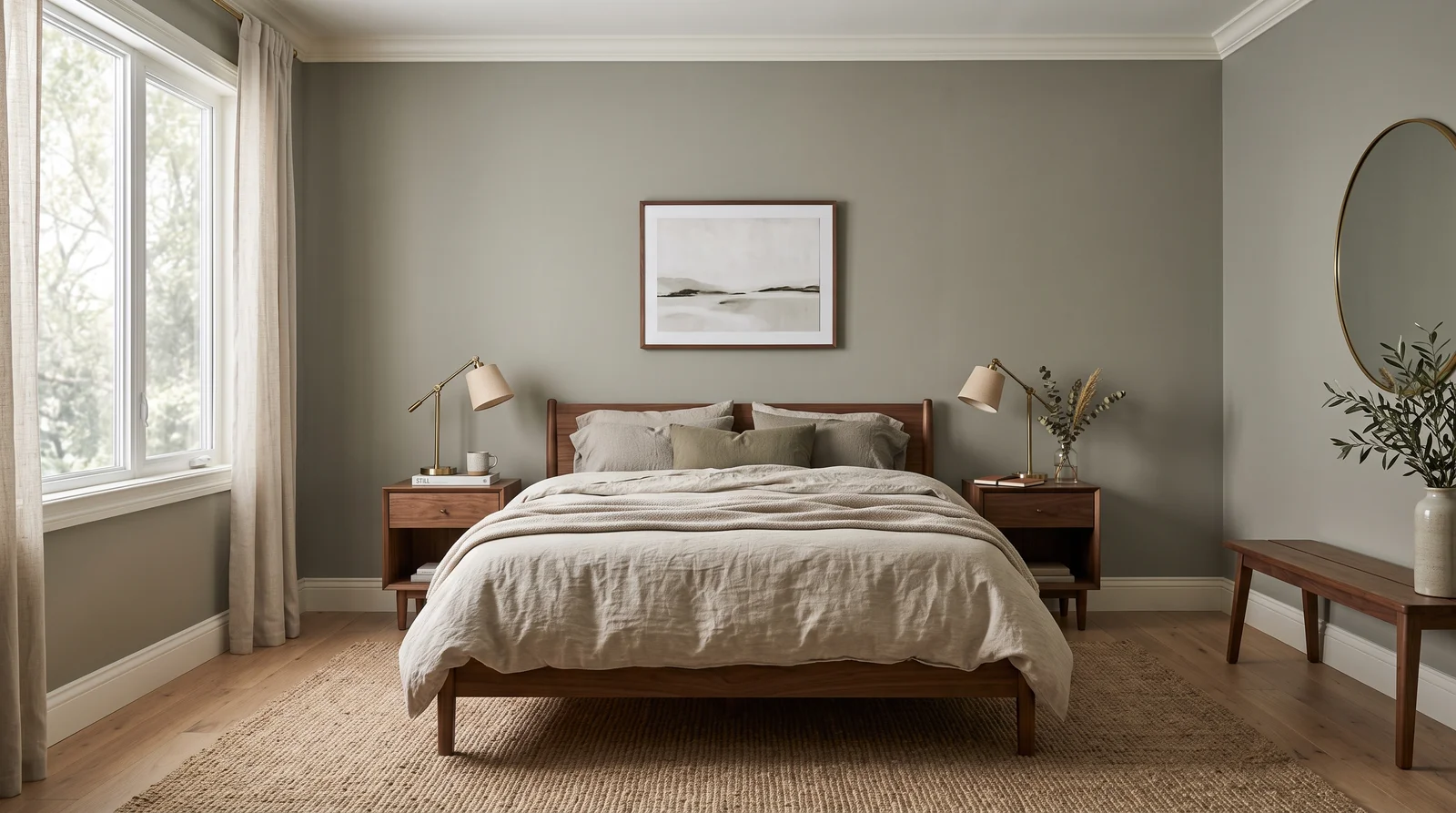
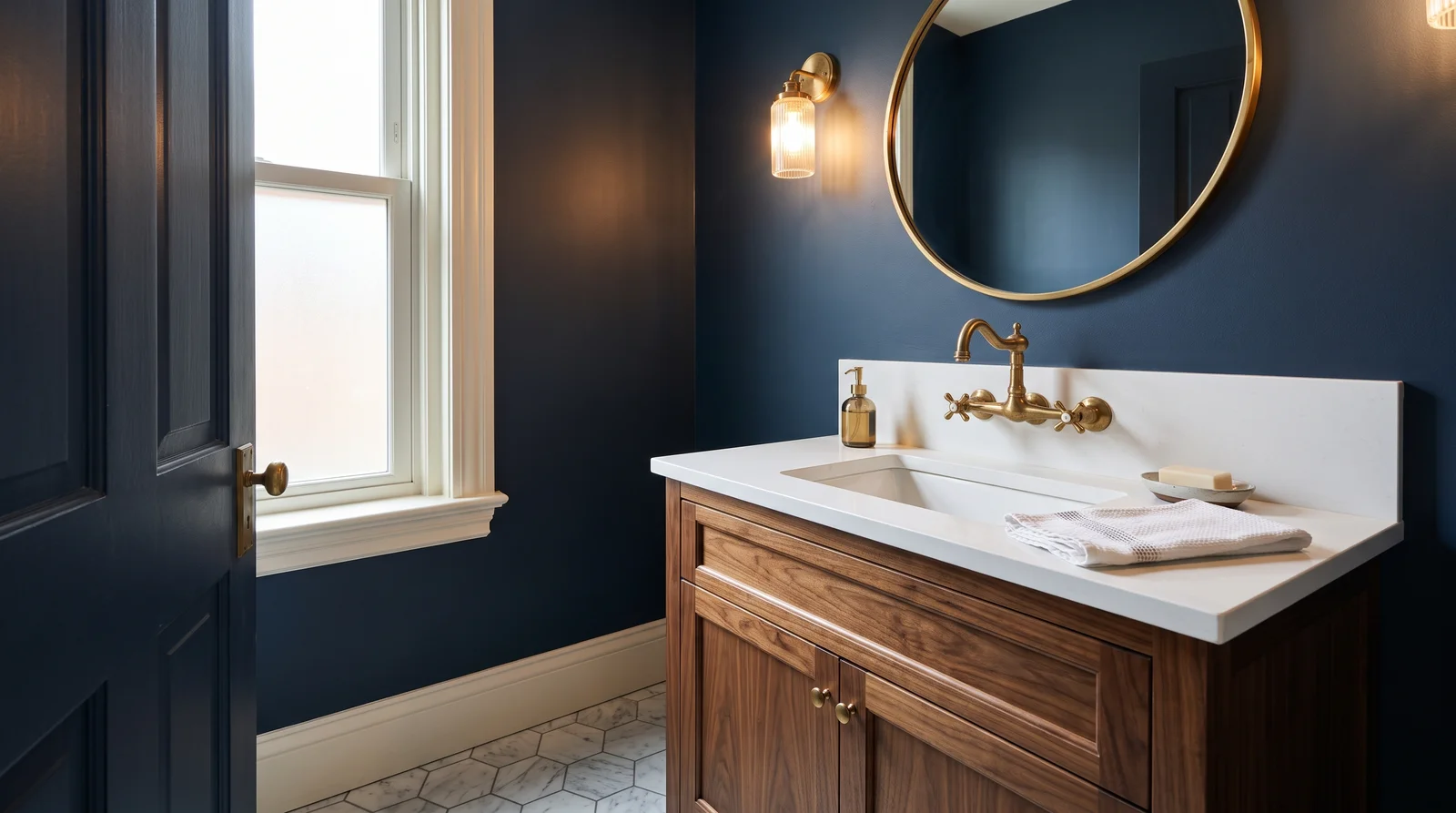
The two dark colors here, Pelt and Pitch Blue, are made for drama. They turn a dining room, study, or powder room into something rich and enveloping, and they hide scuffs and shadows better than pale walls. Because they read differently in daylight versus lamplight, they reward rooms you use in the evening.
Great White is the flexible one. At LRV 74 it works as a whole-house light tone, a ceiling color, or trim against the darker purples. If you want the purple character without a dark room, lean on Great White for the large surfaces and save Pelt or Pitch Blue for an accent wall, a fireplace, or joinery.
How Deep Each Purple Deck Goes
How many purple colors each brand carries, drawn with that deck's own purples from light to dark. Pick your store first, then the color. Every brand equal, no favorites.
More on Farrow & Ball purple paint colors
What Farrow & Ball's Purple Colors Are Like
Farrow & Ball keeps a tight deck of around 132 colors, and only three of them sit in the purple family. So this is a small, curated slice rather than a big range to scroll through. Each color carries a number alongside its name, like Pelt (No. 254) or Pitch Blue (No. 220), which is how the brand has always cataloged its paint.
These are deep, pigment-rich purples that lean moody and grown-up rather than bright or playful. Farrow & Ball is known for colors that shift with the light through the day, so a wall can read more blue, more brown, or more violet depending on the time and the room. Expect quiet, complex tones that change as the sun moves.
Pairing With Trim, Ceilings, and Other Colors
A reliable move is to pair a dark purple wall with a soft off-white trim and ceiling, and Great White can do that job from inside this same slice. The shared family keeps the undertones friendly so the white never looks cold or out of place next to the purple. Many people also paint trim the same color as the wall for a seamless, modern look that lets the pigment depth carry the room.
Farrow & Ball's well-known colors give you ready partners outside the purple family too. Hague Blue (No. 30), Inchyra Blue, and Studio Green sit comfortably beside these deep purples, while Pointing or Elephant's Breath work as lighter companions. Pick finishes by surface: Estate Emulsion for chalky matt walls, Modern Emulsion where you need washability, and Estate or Modern Eggshell for wood and metal.
Farrow & Ball Purple Paint FAQ
What is the most popular Farrow & Ball purple paint color?
Pelt (No. 254) — Pelt is purple for people who are done with purple being obvious. round out the short list most people choose from.
How many purple colors does Farrow & Ball have?
Just three sit in the purple family: Great White (No. 2006) at LRV 74, Pitch Blue (No. 220) at LRV 16, and Pelt (No. 254) at LRV 6. Farrow & Ball keeps a tight deck of around 132 colors overall, so this is a small, curated slice.
Which Farrow & Ball purple is best for a dark, dramatic room?
Pelt (No. 254) at LRV 6 is the darkest and most enveloping choice, with Pitch Blue (No. 220) at LRV 16 a touch lighter. Both work well in studies, dining rooms, and powder rooms that you mostly use in the evening, where their pigment depth shows best under lamplight.
What does LRV mean when picking one of these colors?
LRV is a 0-to-100 measure of how much light a color reflects. In this slice it runs from 6 at the darkest to 74 at the lightest, so a higher number gives you an airier room and a lower number gives you a moody, light-absorbing one.
Why is Farrow & Ball paint so expensive?
It is a British premium import sold through its own showrooms and authorized stockists, and it runs roughly $100 or more per gallon, about two to three times mainstream paint. You are paying for high pigment depth and colors built to shift with the light.
Can I match a Farrow & Ball purple in another brand?
Yes. A paint store can scan and match the color into another line, and the Kompozit deck or other US brands can get close on tone. The exact way Farrow & Ball pigments change in different light is hard to copy perfectly, so test a sample on your wall first.
Does Farrow & Ball have a purple Color of the Year?
No. Farrow & Ball does not run a Color of the Year and openly rejects the concept. Instead the brand releases new colors and trend predictions each year, so there is no single purple to point to as a yearly pick.
Ask a Question