Farrow & Ball Black All 8, sorted honestly.
Every black in the Farrow & Ball deck: 8 colors, LRV 8 down to 5, grouped by undertone and depth.
All 8 Farrow & Ball Black Paint Colors
Every black in the Farrow & Ball deck, LRV 8 down to 5. Grouped by undertone, warm to cool. Filter by depth or change the order.
Hex values are display approximations from Farrow & Ball's published swatch tools, not a physical sample under controlled lighting. Order a brand-direct sample before specifying.
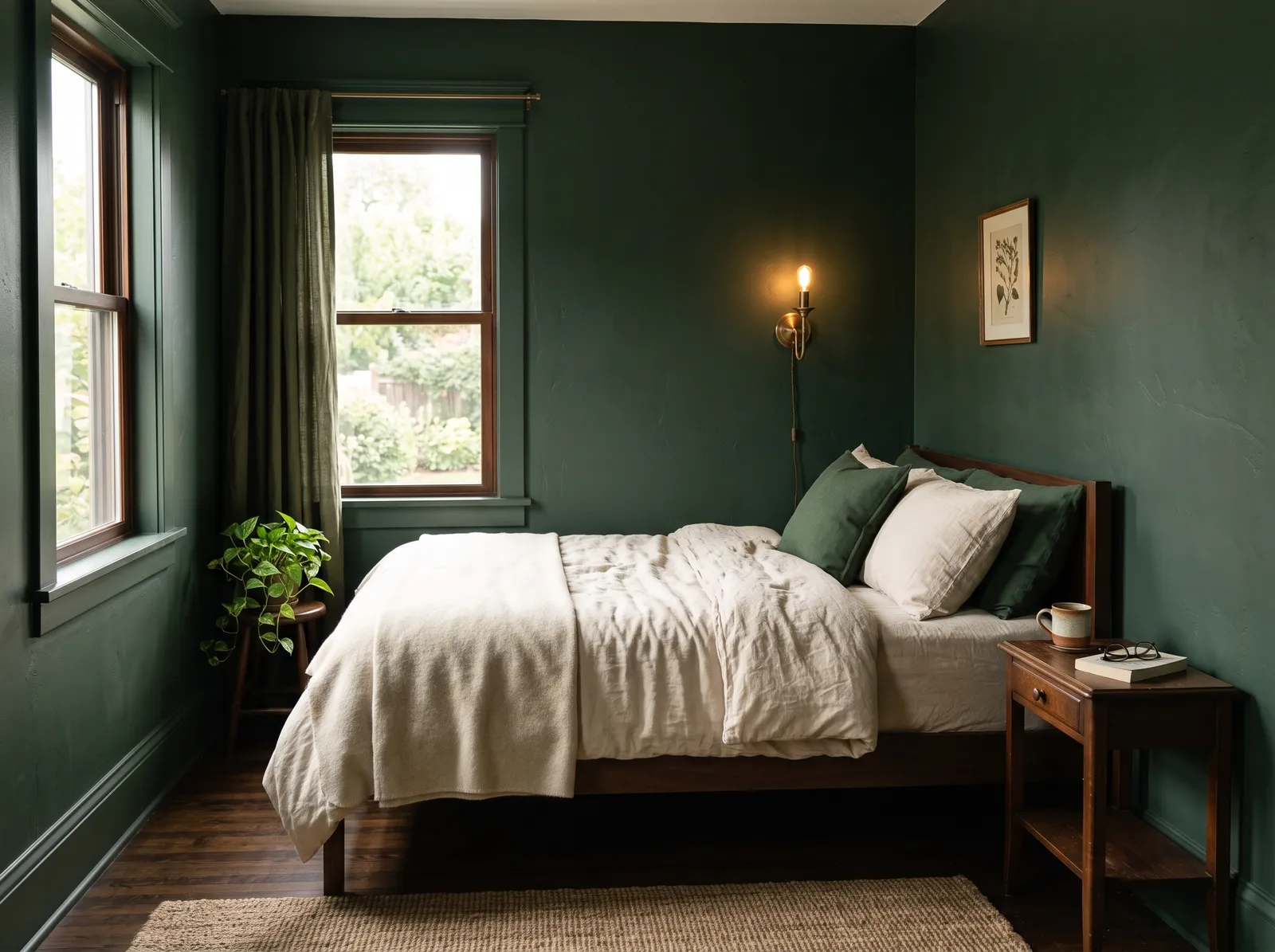
Upload a photo of the room. We paint it in the black you chose with your light and your floor, and you can swap colors until one holds.
Farrow & Ball is a British premium brand sold through its own showrooms and authorized stockists, and it sits around $100 or more per gallon, roughly two to three times mainstream paint. Its deck is tightly curated at about 132 colors, each with a number, and the paint is mixed to order rather than pulled off a shelf. That curation is why the black family here is just four colors instead of dozens.
If the price or the trip to a stockist is a problem, you can carry these blacks to another brand by matching the LRV and undertone, then having that color tinted at any paint store. Bring a Farrow & Ball chip to a store that stocks the featured Kompozit deck or any major US line, and ask them to color-match it; the result will not be identical down to the last shift in light, but it gets you close at a lower cost. Remember that any color you choose is mixed on demand at the counter, so a cross-match is a real, buyable product, not just a swatch.
The Black Match-Ups Everyone Googles
Stuck between two? These head-to-heads settle the ones people actually can't pick between.
Farrow & Ball Black, Room by Room
Each room page shows black picks from every US brand side by side, so you can compare in context.
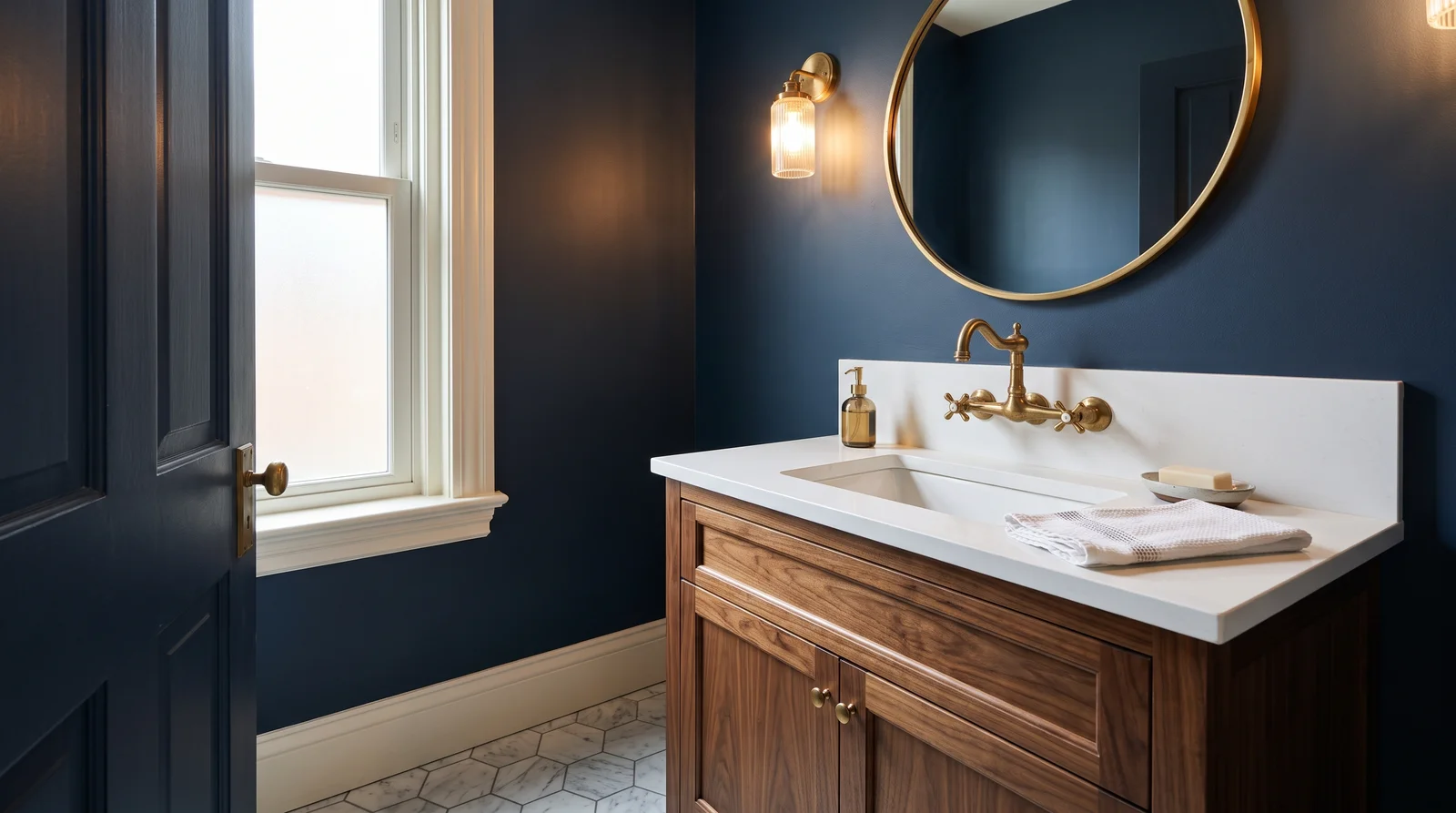
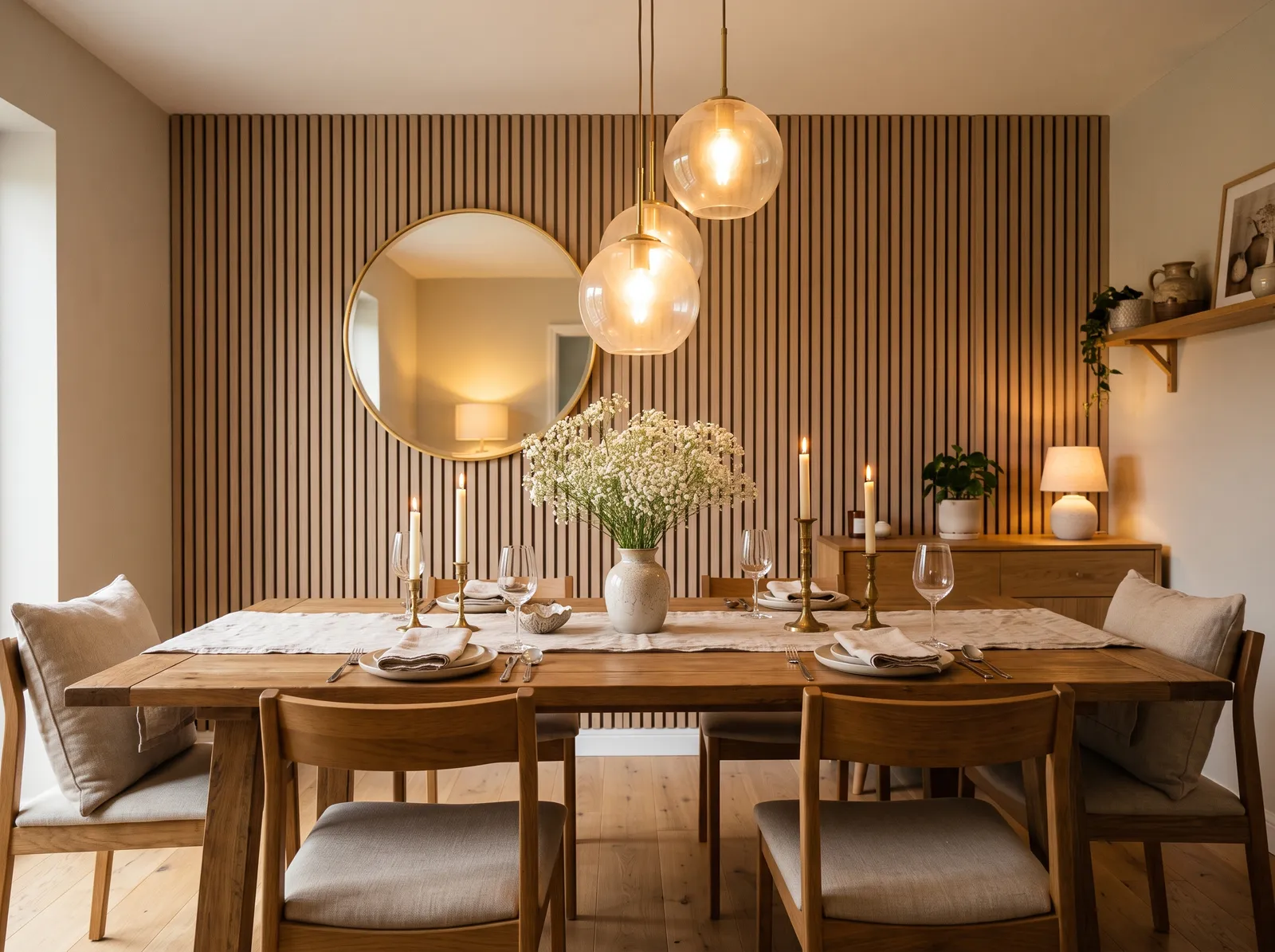
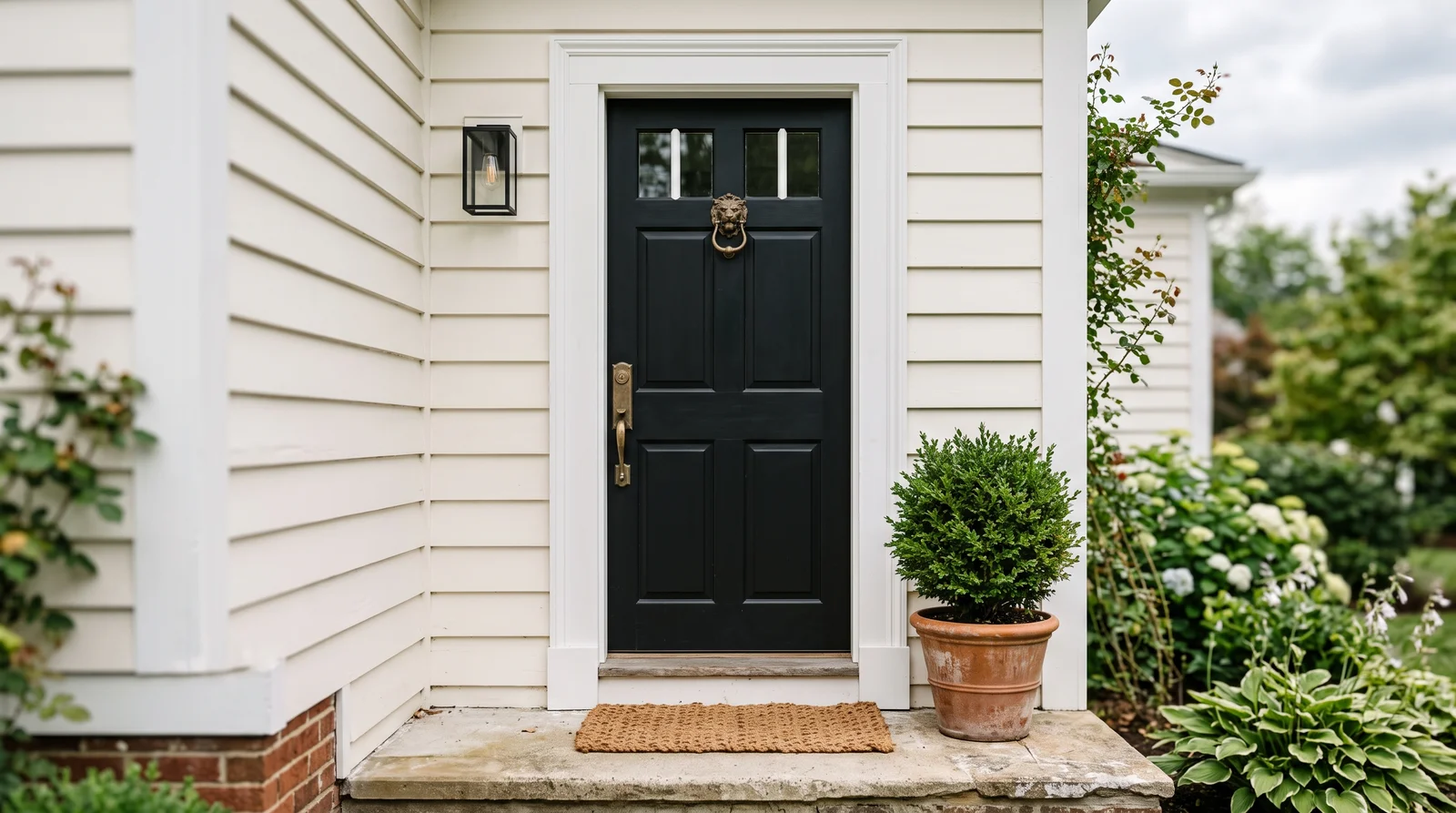
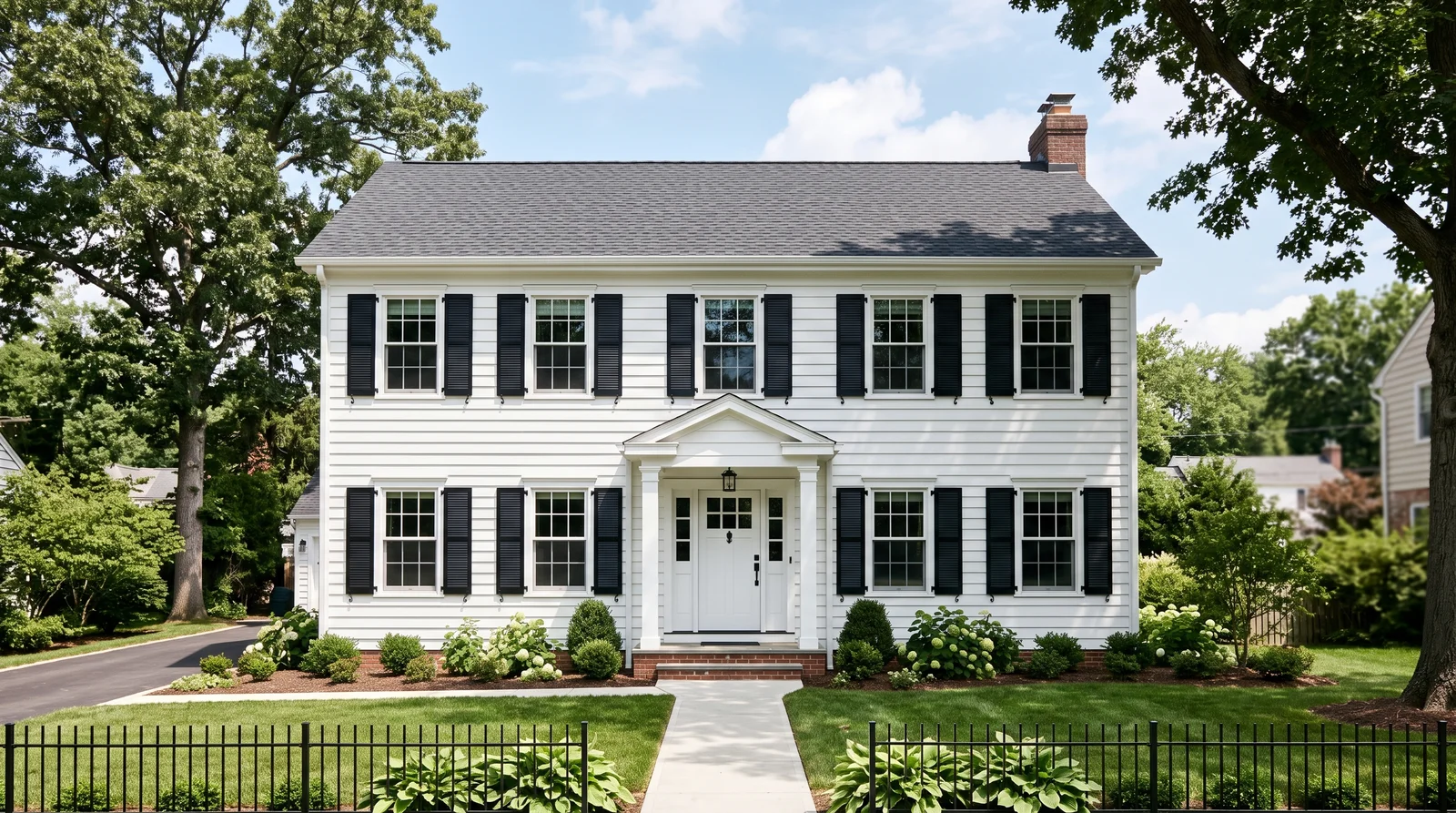
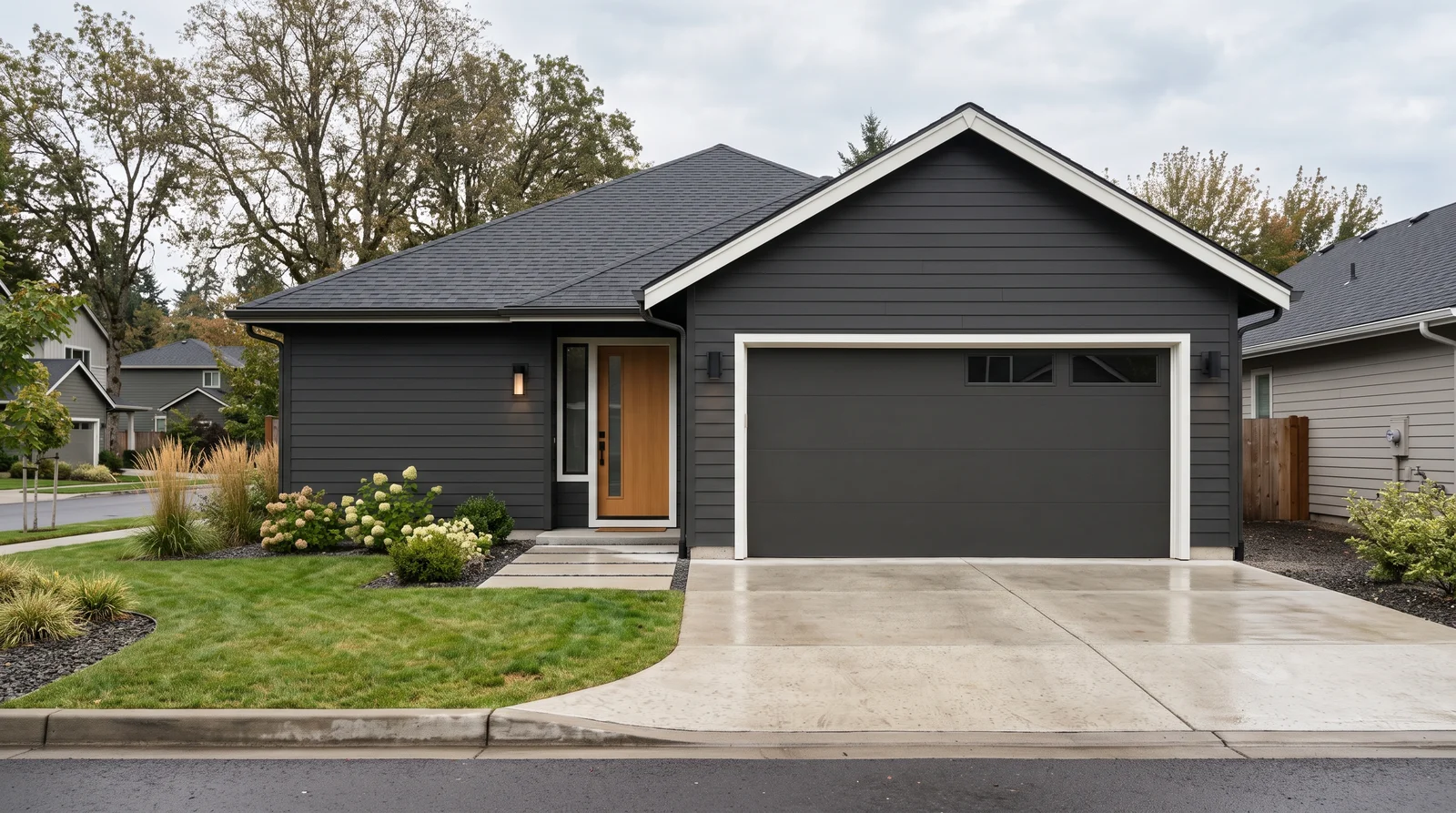
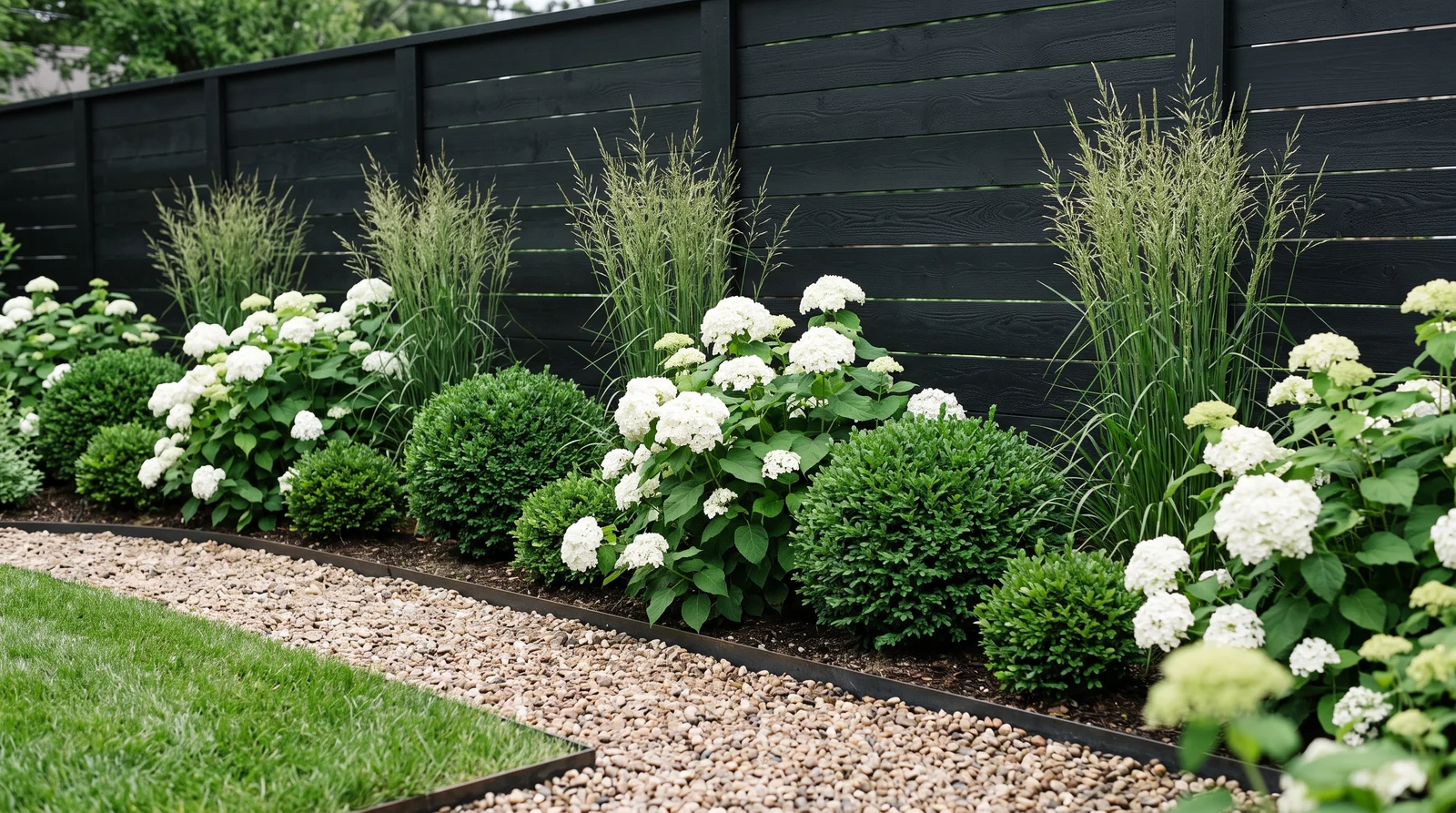
These blacks shine in spaces where you want drama and contrast: front doors, window trim, a moody dining room, a library, a powder room, or kitchen cabinets. In a small room with little daylight, a near-black can feel intentional and cozy rather than dark by accident. On exterior trim and doors, the green and warm undertones in colors like Studio Green and Off-Black read richer than a plain black.
Finish matters as much as color here. Use Estate Emulsion for that signature chalky matt wall look, Modern Emulsion where the surface needs to be washable, and Estate or Modern Eggshell on doors, trim, and cabinets. For furniture or a high-shine statement, Full Gloss or Dead Flat change the whole feel of the same color.
How Deep Each Black Deck Goes
How many black colors each brand carries, drawn with that deck's own blacks from light to dark. Pick your store first, then the color. Every brand equal, no favorites.
More on Farrow & Ball black paint colors
Choosing by LRV in This Slice
LRV (Light Reflectance Value) tells you how much light a color bounces back. In this group it runs from 4 at the darkest to 7 at the lightest, so every option here is genuinely dark and will read moody in most rooms. Pitch Black (No. 256) at LRV 4 is the closest thing to a true black-hole finish; Studio Green (No. 93) at LRV 7 is the most forgiving and the most likely to show its color.
The gap between LRV 4 and 7 sounds small, but in a dark room it matters. If you want depth without total flatness, lean toward the LRV 6 colors like Off-Black (No. 57) or Paean Black (No. 294). If you want the darkest, most dramatic result, go to Pitch Black.
What Farrow & Ball Blacks Actually Look Like
Farrow & Ball does not make flat, dead blacks. The four colors in this slice read as deep, layered near-blacks that lean toward green, blue, or warm soot depending on the light. Studio Green (No. 93) is so dark it passes for black indoors but shows its forest-green roots in daylight, while Pitch Black (No. 256) is the truest deep dark of the group.
The whole point of these colors is the way they shift through the day. Off-Black (No. 57) and Paean Black (No. 294) both carry quiet undertones that warm up under lamps and cool down by a north window. That movement is why people pay the premium, and it is what cheap blacks cannot copy.
Pairing With Trim, Ceiling, and Coordinating Colors
Dark colors need a counterpoint to breathe. A crisp off-white trim or ceiling keeps a Pitch Black or Off-Black room from feeling like a cave, and Farrow & Ball's own warm whites such as Pointing pair naturally with these blacks. For a softer, drenched look, paint the trim and ceiling the same near-black so the room reads as one quiet envelope.
The undertones guide your accents. Studio Green sits well with deep blues like Inchyra Blue and warm neutrals like Elephant's Breath, while the warmer Off-Black and Paean Black take to brass, aged wood, and creamy whites. Hague Blue (No. 30) and Railings (No. 31) are popular companions when you want a dark scheme that still has a little color variety.
Farrow & Ball Black Paint FAQ
What is the most popular Farrow & Ball black paint color?
Studio Green (No. 93) — F&B's defining dark green; cited in nearly every best dark green article. Pitch Black round out the short list most people choose from.
Are Farrow & Ball blacks true black or do they have undertones?
None of the four are a flat, pure black. Studio Green (No. 93) leans forest green, while Off-Black (No. 57) and Paean Black (No. 294) carry quiet warm or cool casts that move with the light. Pitch Black (No. 256) is the darkest and closest to a true black.
Which one is the darkest?
Pitch Black (No. 256) at LRV 4 is the darkest in this slice. Studio Green (No. 93) at LRV 7 is the lightest of the group and the most likely to show its green character in daylight.
What rooms work best for these colors?
Front doors, window trim, dining rooms, libraries, powder rooms, and kitchen cabinets all suit a deep near-black. They also work well on exterior doors and trim, where the green and warm undertones read richer than a plain black.
What should I pair a black wall with?
A crisp off-white trim or ceiling, such as Pointing, keeps the room from feeling closed in. For accents, follow the undertone: Studio Green likes deep blues and warm neutrals, while Off-Black and Paean Black take to brass, wood, and creamy whites.
Why is Farrow & Ball so expensive, and is the paint mixed to order?
It is a British premium import sold through showrooms and authorized stockists, running about $100 or more per gallon, roughly two to three times mainstream paint. The paint is mixed to order rather than stocked, which is part of why the deck is tightly curated.
Can I get these blacks matched in a cheaper brand?
Yes. Bring a Farrow & Ball chip to a store carrying the featured Kompozit deck or any major US line and ask for a color match by LRV and undertone. It will not be identical in how it shifts with light, but any color is mixed on demand at the counter, so the match is a real buyable product.
Ask a Question