Black Dining Room Paint Colors
268 black colors that work in dining rooms, drawn from the full ~30,000-color US paint deck. Below: editor's picks specific to dining rooms, then 30 picks spread across the LRV range — narrow further on the brand page when you've shortlisted.
True black on a wall almost always looks heavier than you expected. The picks below — the "designer blacks" — sit just shy of pure black, with subtle blue, brown, or green undertones that keep them from reading like a void.
Editor's Picks: Black for Dining Rooms
4 picks30 Black Picks Across the LRV Range
30 of 268 · sorted dark → lightLooking for more? All black → covers every brand; brand × family pages show full decks.
Black Dining Room Colors at Every US Brand
21 brands · up to 10 picks eachUp to 10 picks per brand spread across the black LRV range, drawn from each brand's full deck. Tap any swatch with a curated guide for full spec; tap the brand title for the brand's complete black deck.
Behr
Benjamin Moore
Sherwin-Williams
Valspar
Dunn-Edwards
Hirshfield's
Kompozit
Dutch Boy
Glidden
C2 Paint
Rodda
PPG / Glidden
Magnolia Home
Diamond Vogel
Portola Paints
Farrow & Ball
Backdrop
Annie Sloan
Rust-Oleum
Clare
Other Dining Room Color Families
Black Colors in Other Rooms
Black Paint Colors for a Dining Room
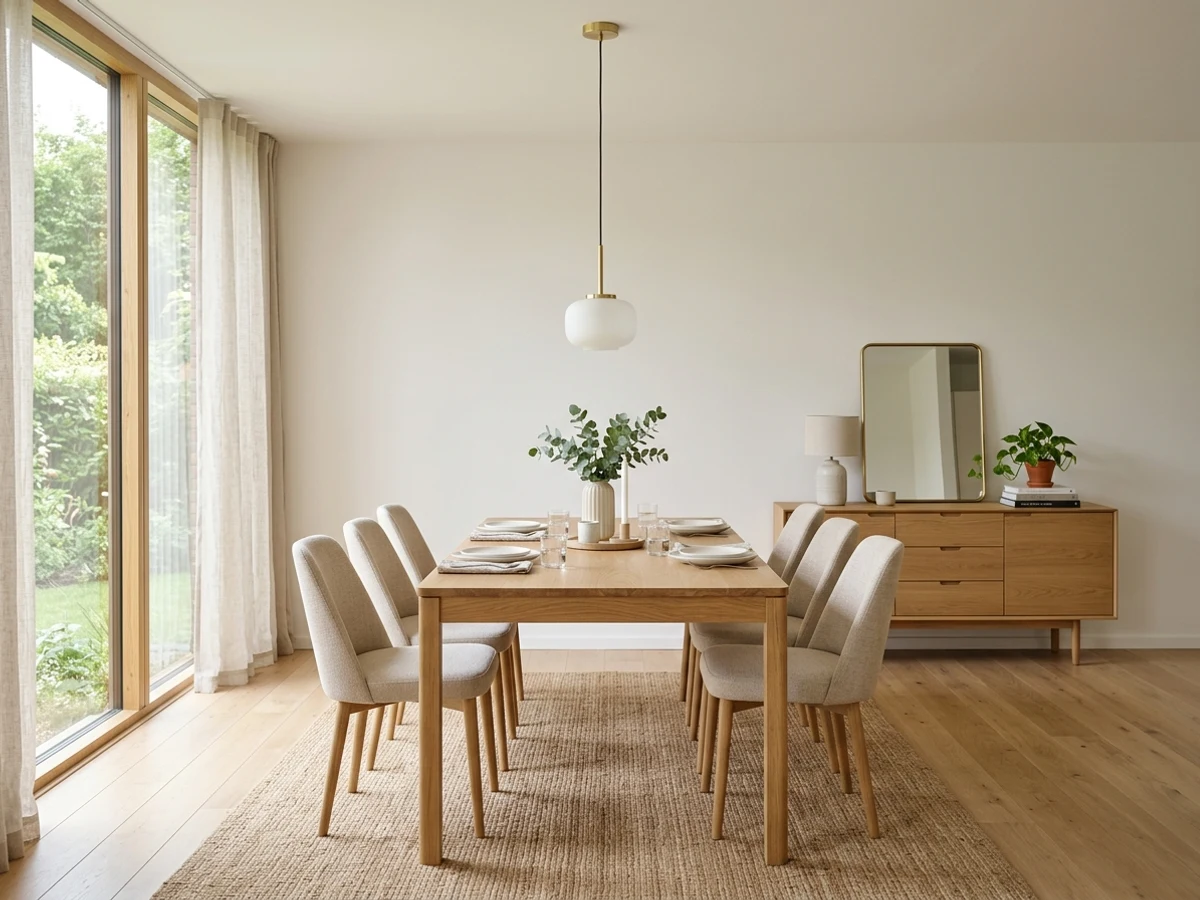
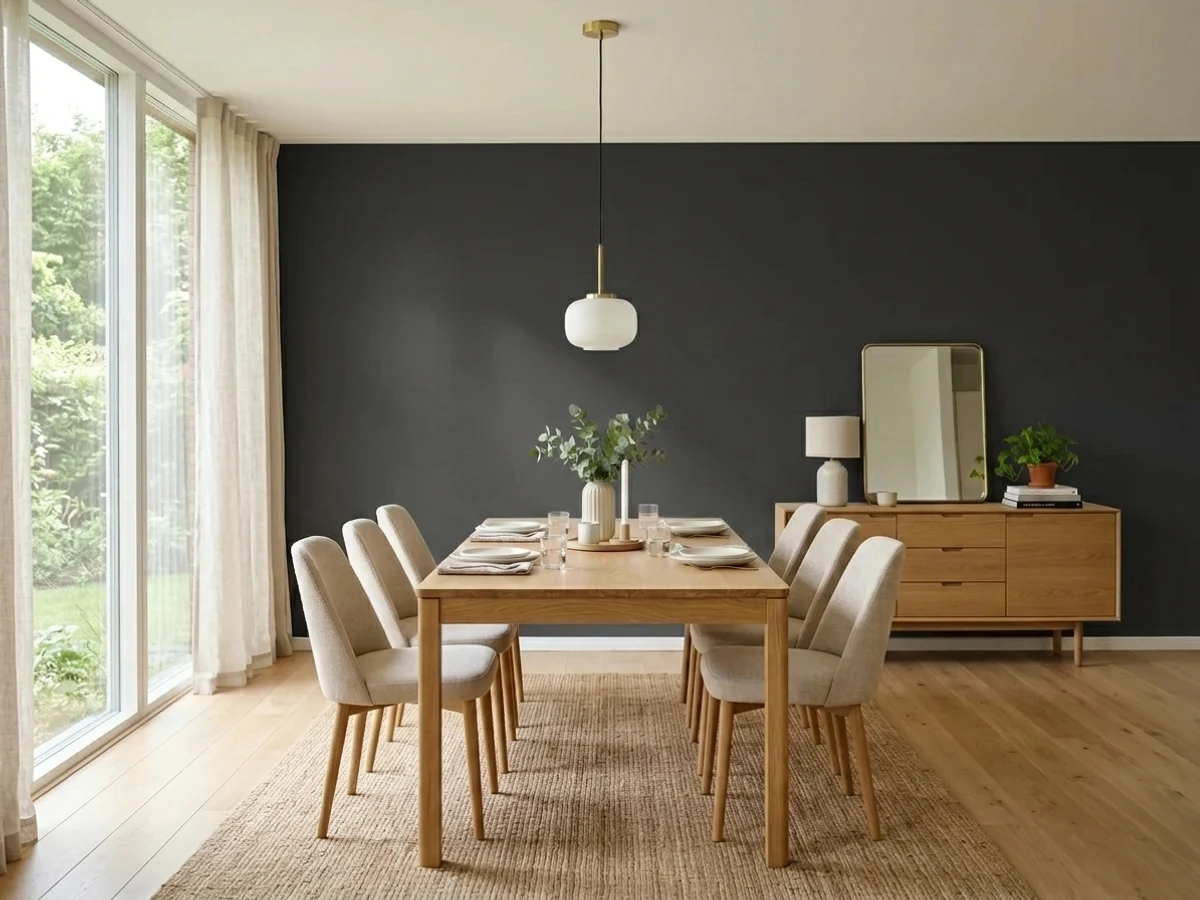
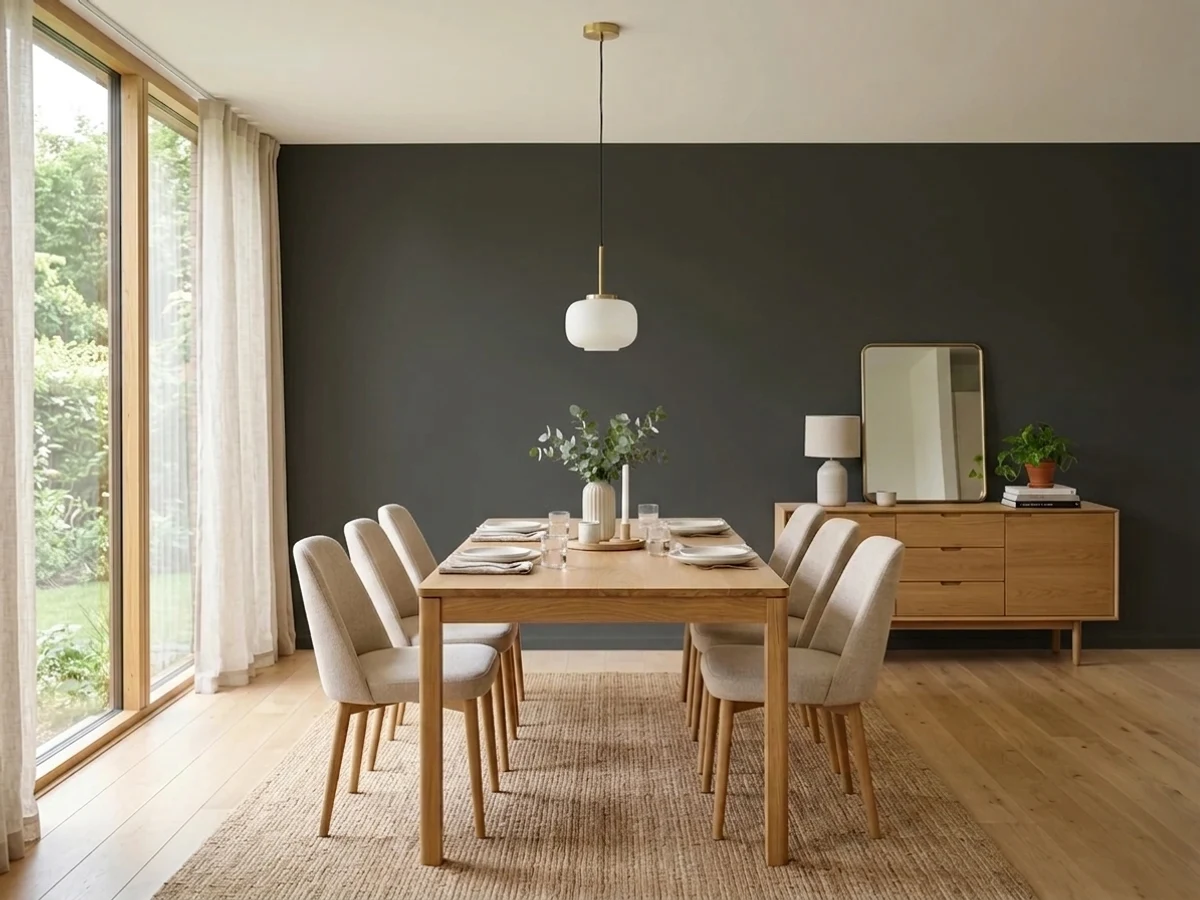
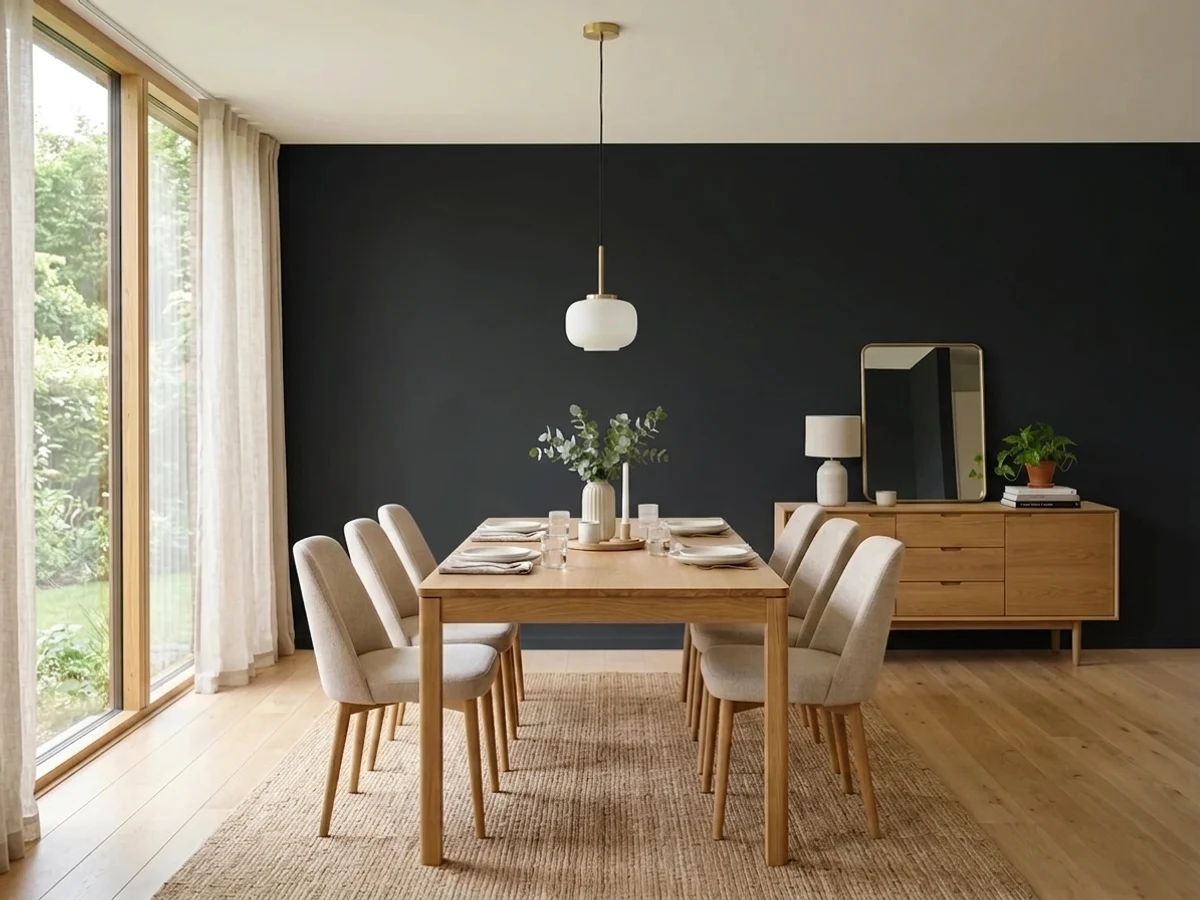
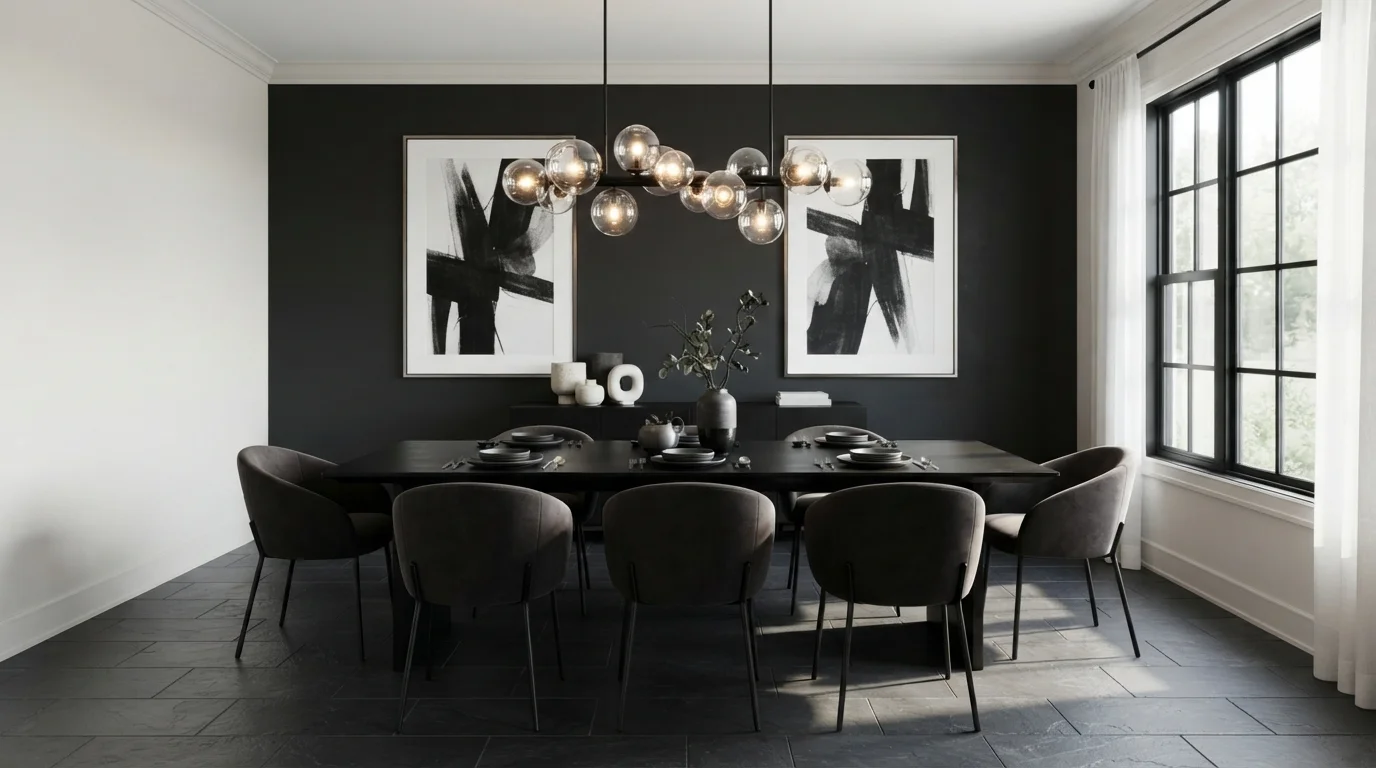
A dining room is one of the few rooms where black paint really earns its keep. You usually sit here at night, under warm bulbs and candlelight, for a meal that's meant to feel a little special. Black walls swallow the daytime busyness of a room you barely use until dark, then turn moody and rich once the lights go low. It frames the table the way a gallery frames a painting, so the food, the dishes, and the people become the bright thing in the room.
The trick is that black behaves differently in a dining room than it would in a busy kitchen or a sun-filled living room. Light, finish, and the things you pair it with matter more here because you experience the space mostly after dark and up close around a table. Below is how to choose the right black, the right sheen, and the right partners so the room reads cozy and intentional instead of cave-like. Every swatch on this page is mixed to order at a paint counter, so you can pick the look first and match it across brands later.
Why Black Works in a Dining Room
Most rooms have to perform all day, but a dining room mostly performs at night. That's exactly when black is at its best. Dark walls hide fingerprints, soak up the glare of a fixture, and make a chandelier or a set of candles feel twice as warm.
Black also solves a common dining-room problem, which is that the space feels like an awkward leftover between the kitchen and the living room. A deep, enveloping color gives it a clear identity and a sense of occasion. It tells everyone, the moment they walk in, that this is a place to slow down and eat.
Picking the Right Black for Your Light and LRV
True black is rare on a wall. Most paints sold as black sit a notch lighter and lean slightly warm or cool, which you can read from the LRV (light reflectance value). A near-black around an LRV of 5 to 10 keeps a little depth and forgiveness, while something at 3 or below reads as a flat, dramatic void.
Let your dining room's light steer the undertone. A north-facing or dim room flatters a warm, soft black with brown or charcoal in it, so the space feels cozy rather than cold. A room with strong window light or lots of evening lamplight can carry a cooler, truer black without turning gray and dull. When in doubt, sample a warmer black, since dining rooms live under warm bulbs at night and warmth reads as inviting.
The Right Finish for a Dining Room
A dining room sees splashes, greasy fingers, and the occasional knocked-over glass, but it isn't a kitchen or a bathroom. That means you don't need a high-gloss, scrubbable wall, and you really don't want one. Gloss on a dark wall throws back every bit of light from the fixture and shows every roller mark and wall flaw.
A matte or eggshell finish is the sweet spot here. Matte hides imperfections and gives black that deep, velvety look that reads as expensive. If you want a touch more wipe-ability near the table or a serving area, eggshell adds it without the mirror-like shine. Save satin or semi-gloss for the trim and doors, where a little contrast in sheen is a feature, not a flaw.
Pairing Black with Trim, Ceiling, and Fixtures
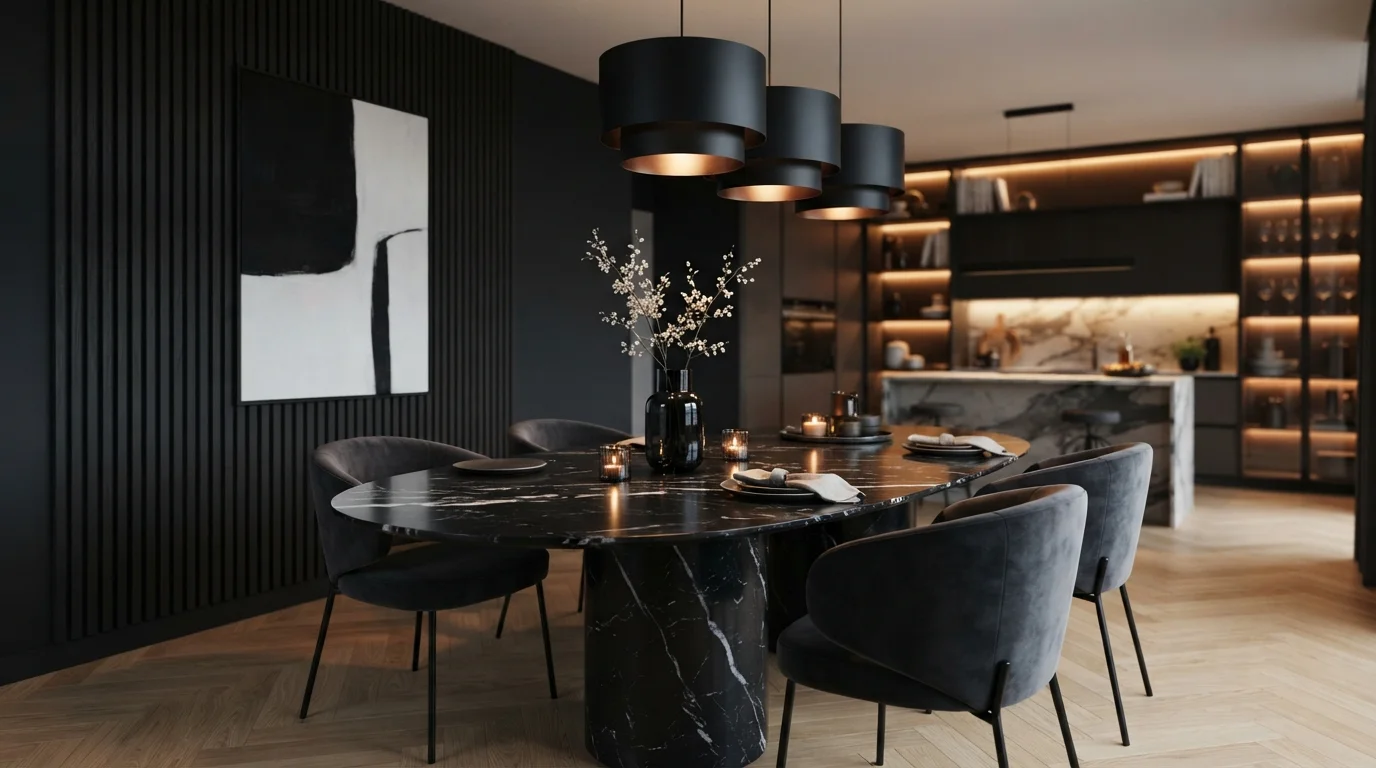
The easiest, most modern move is to paint the trim, the doors, and even the ceiling the same black as the walls. This wraps the room and erases the lines, which makes a small dining room feel like an intimate box and a large one feel grounded. A flat-to-eggshell wall with satin trim in the same color gives you subtle depth without any contrast fighting.
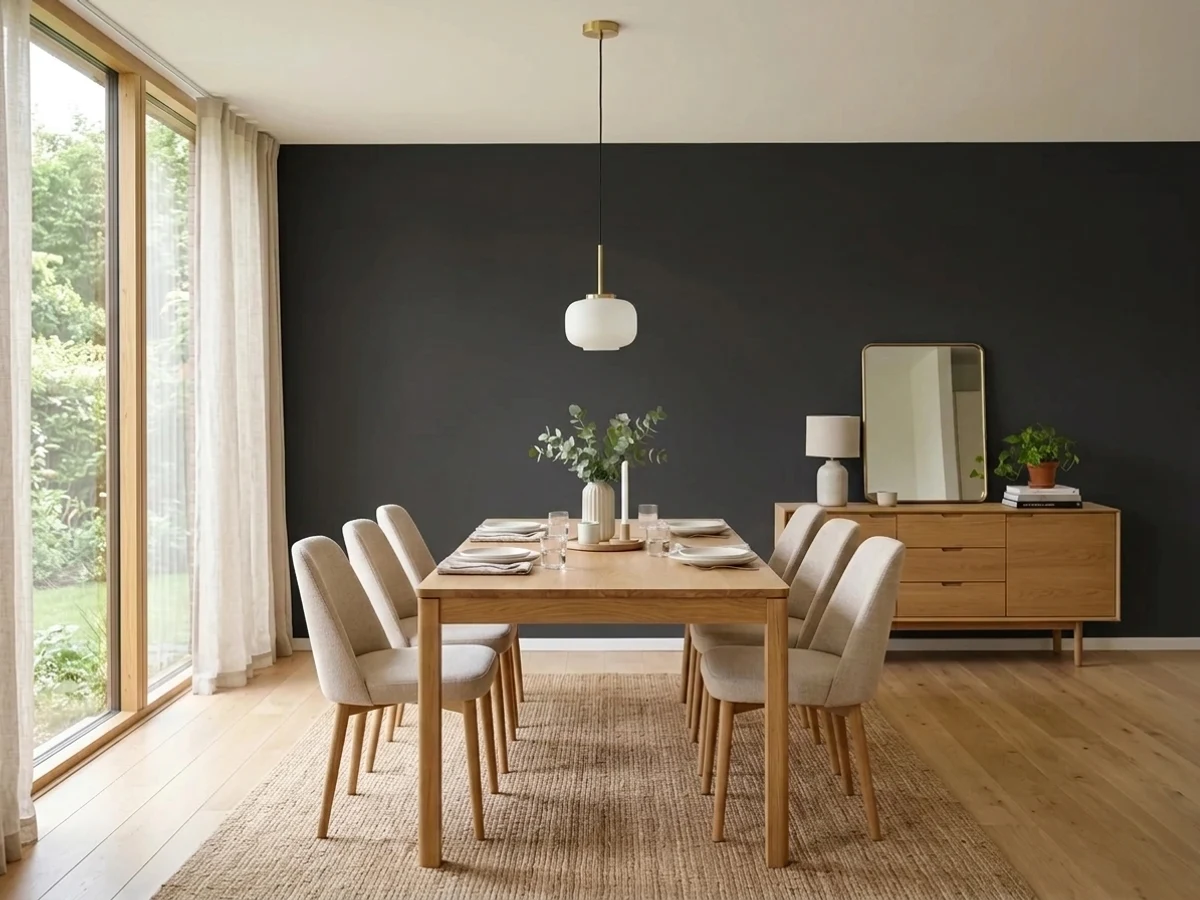
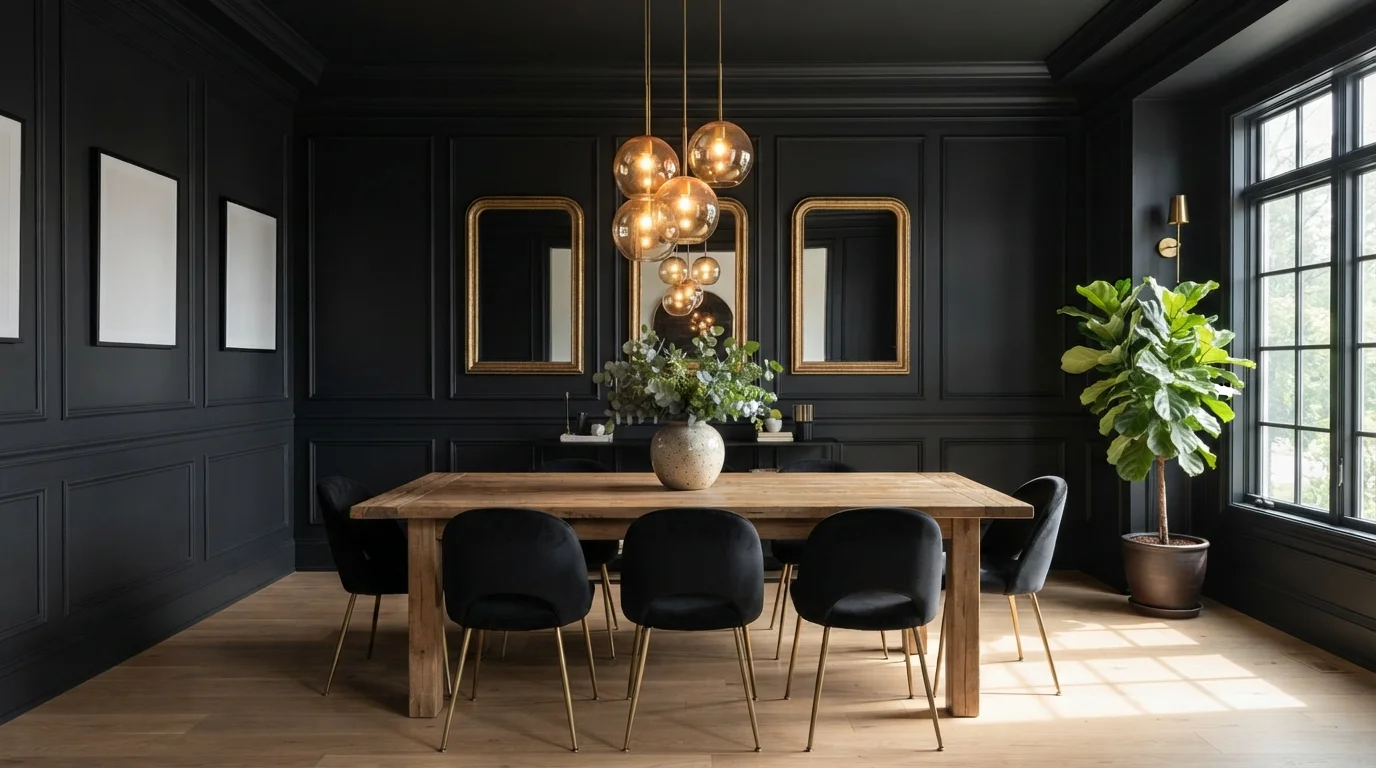
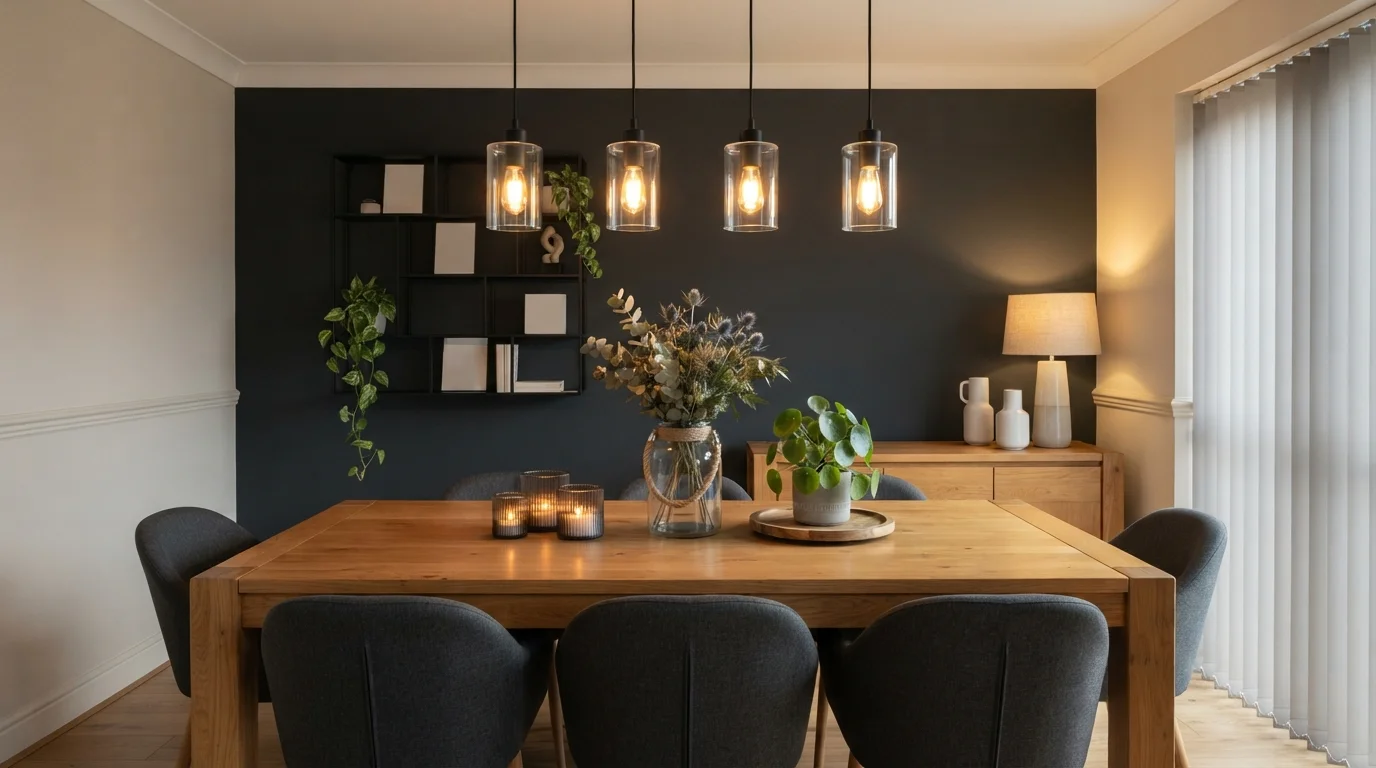
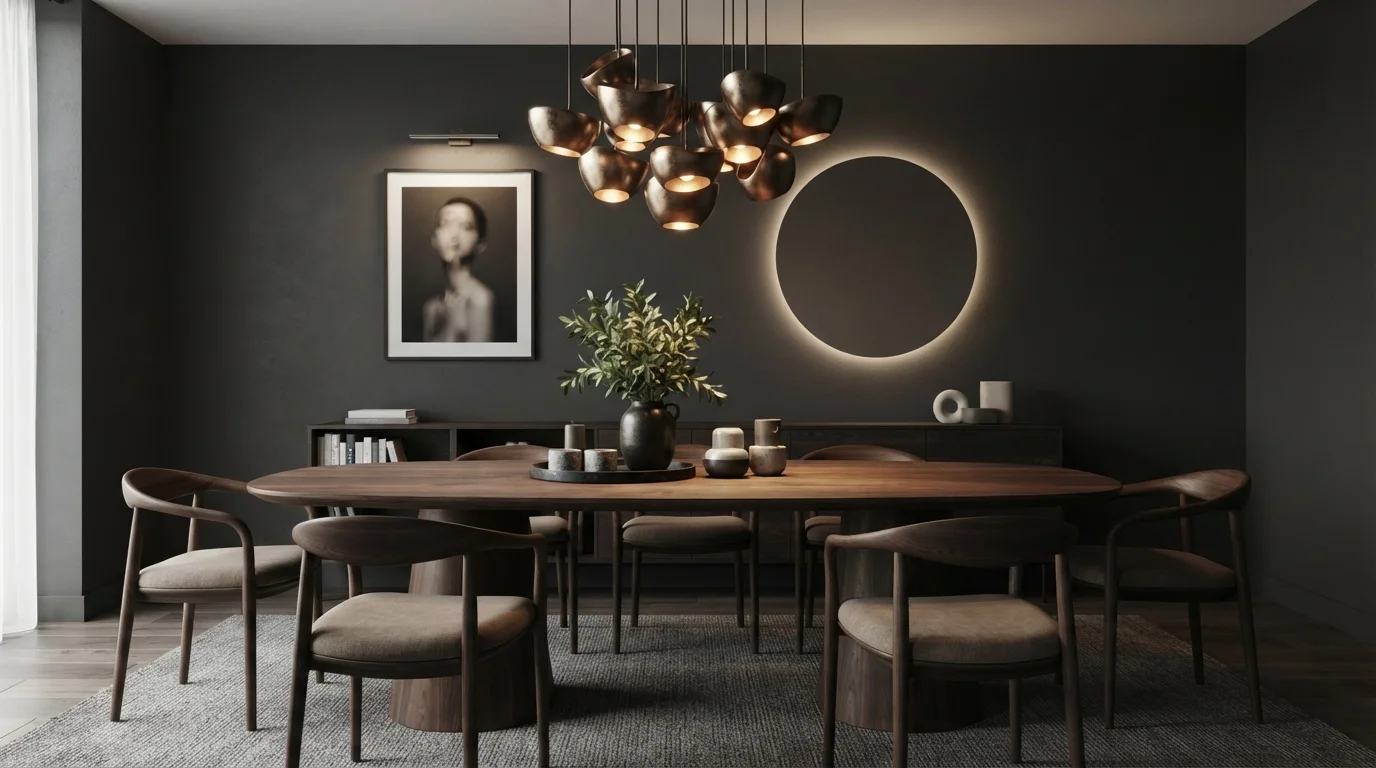
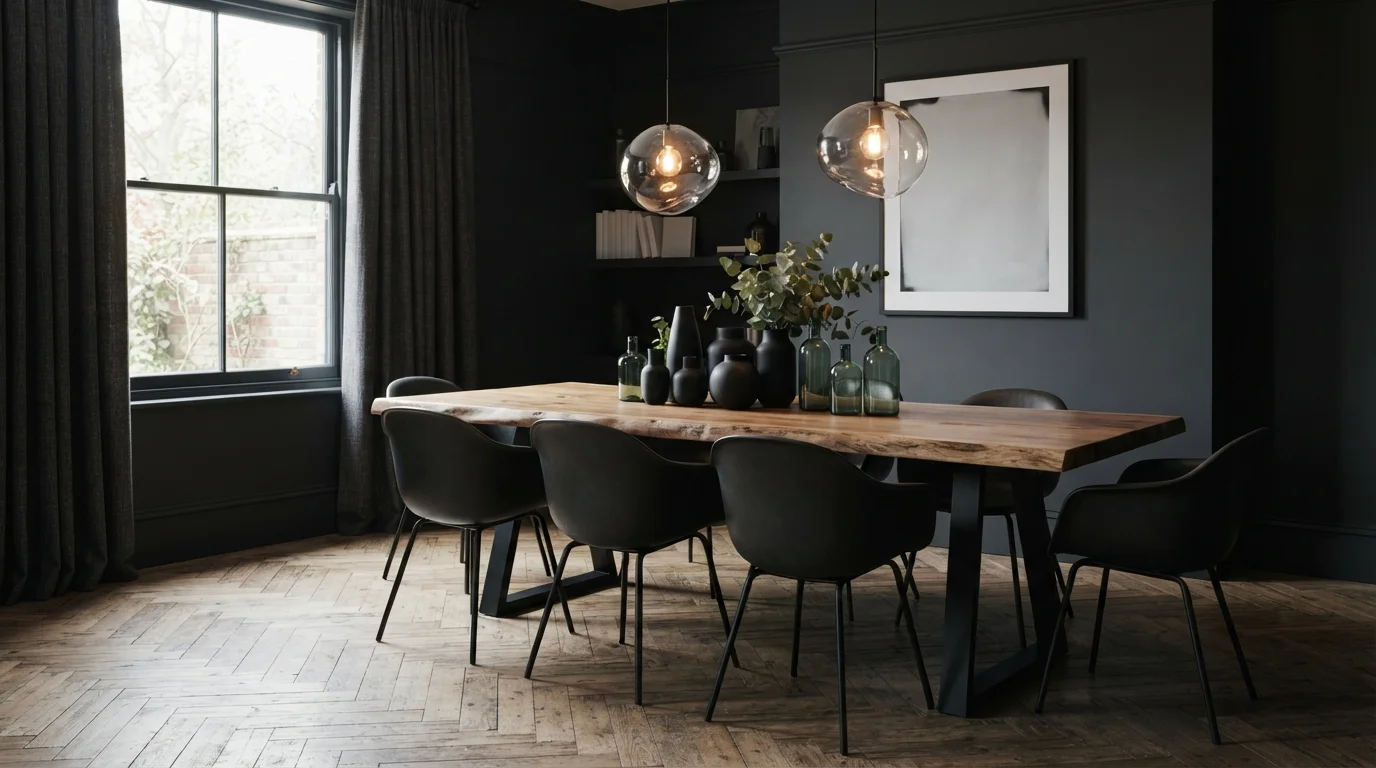
If all-black feels like too much, keep crisp white or warm cream trim for a sharper, more traditional look, and let the ceiling stay light to lift the room. Black loves warm metals, so brass, aged bronze, and gold in your chandelier, sconces, and hardware glow against it. Wood tones, whether a walnut table or rattan chairs, keep the room from feeling severe, and a single large mirror or piece of art bounces light back where you want it.
Common Mistakes with Black in a Dining Room
The biggest mistake is not testing the black after dark, under your actual bulbs. A swatch that looks elegant at noon can go flat and gray, or take on a strange undertone, once the chandelier is the only light. Always live with a large sample on the wall through a few evening meals before you commit.
The other traps are lighting and contrast. A dark dining room needs more light than people expect, so layer in a dimmable fixture, candles, or sconces instead of relying on one overhead. And avoid pairing black with stark, cool white everything, which can feel like an office; warm whites, wood, and soft metals keep the room feeling like a place you'd want to linger over dinner.
Black Dining Room Paint — Frequently Asked Questions
Will black make my dining room feel too small or dark?+
Not usually, and that's part of the appeal. A dining room is mostly used at night, so a dark, enveloping wall reads as cozy and intimate rather than cramped. Just add layered, dimmable light around the table so the room glows instead of going gloomy.
What sheen should I use for black dining room walls?+
Matte or eggshell is the best choice. Matte gives black a deep, velvety look and hides wall flaws, while eggshell adds a little wipe-ability if you want it near the table. Skip high gloss on the walls, since it throws glare from your fixture and shows every imperfection.
How dark a black should I pick for a dining room?+
Check the LRV. A near-black around 5 to 10 keeps a little depth and is more forgiving, while 3 or below gives you a flat, dramatic void. Dim rooms tend to flatter a warm, soft black, and brighter rooms can carry a cooler, truer black without looking dull.
What colors and finishes pair best with black in a dining room?+
Warm metals like brass and aged bronze glow against black, so they're great for your chandelier and hardware. Wood tones in the table and chairs keep the room from feeling severe, and warm white or cream trim adds contrast if you don't want an all-black look.
Should I paint the ceiling and trim black too?+
You can, and it's a striking look. Wrapping the walls, trim, and ceiling in the same black erases the edges and makes the room feel like one intimate space. If that feels like too much, keep a light ceiling and crisp trim for a more traditional, sharper result.
Can I match a black I like across different paint brands?+
Yes. Every black shown here is mixed to order at the paint counter, so you're not locked into one brand. You can pick the exact depth and undertone you want, then have it cross-matched and tinted in whatever brand's paint you prefer.