Blue Dining Room Paint Colors
1,741 blue colors that work in dining rooms, drawn from the full ~30,000-color US paint deck. Below: editor's picks specific to dining rooms, then 30 picks spread across the LRV range — narrow further on the brand page when you've shortlisted.
Blue is the most popular color for accent walls, kitchen islands, and front doors — and also the family with the widest spread, from pale dove-blues that read almost grey, to inky near-black navies, to saturated cobalts that read almost royal. Teal-leaning blues (the green-blue overlap) live next door in the Teal family.
Editor's Picks: Blue for Dining Rooms
4 picks30 Blue Picks Across the LRV Range
30 of 1,741 · sorted dark → lightLooking for more? All blue → covers every brand; brand × family pages show full decks.
Blue Dining Room Colors at Every US Brand
21 brands · up to 10 picks eachUp to 10 picks per brand spread across the blue LRV range, drawn from each brand's full deck. Tap any swatch with a curated guide for full spec; tap the brand title for the brand's complete blue deck.
Behr
Valspar
Glidden
Benjamin Moore
PPG / Glidden
Dunn-Edwards
Sherwin-Williams
Dutch Boy
Hirshfield's
Diamond Vogel
Kompozit
C2 Paint
Portola Paints
Magnolia Home
Rodda
Farrow & Ball
Backdrop
Annie Sloan
Clare
Rust-Oleum
Other Dining Room Color Families
Blue Colors in Other Rooms
Blue Paint Colors for a Dining Room
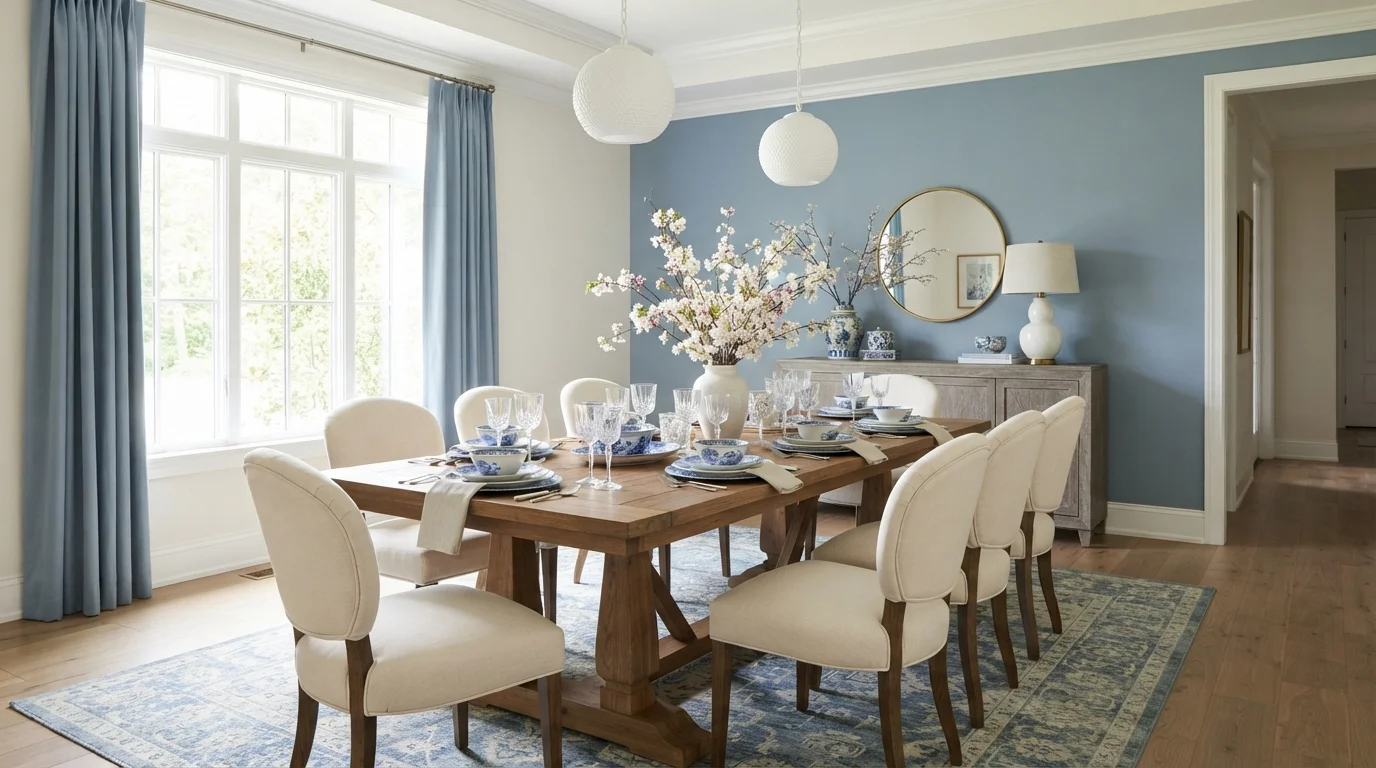
Blue is one of the few colors that feels right at home in a dining room. It calms the room, flatters wood furniture, and reads as quiet and grown-up — the kind of backdrop that makes a set table look intentional. Because most dining rooms get used after dark, blue also has a trick built in: it deepens and softens under warm lamplight, so a shade that looks crisp at noon turns rich and enveloping over dinner.
This page is about putting blue to work in a dining room, not blue in general. We'll walk through how much light your room gets and what depth of blue it can carry, the finish that holds up to chairs, fingers, and the odd splash of wine, and how to pair blue with your trim, ceiling, and wood tones. Every swatch on this page is a real, buyable color — mixed to order at a paint counter — and we show the closest matches across brands so you can chase the shade you like, not the label.
Why Blue Just Works In A Dining Room
A dining room has one job most rooms don't: it's built for sitting still and lingering. Blue suits that. It's a settling color that doesn't compete with food, candlelight, or conversation, and it makes white dishes and brass or wood tones look more deliberate.
Blue also handles the dining room's odd schedule well. These rooms often sit empty in daylight and come alive at night, and blue is forgiving in both states — bright and clean by day, deep and intimate once the lamps come on. That after-dark richness is exactly why a slightly bolder blue tends to feel better here than it would in a room you live in all day.
Picking The Right Depth Of Blue For Your Light
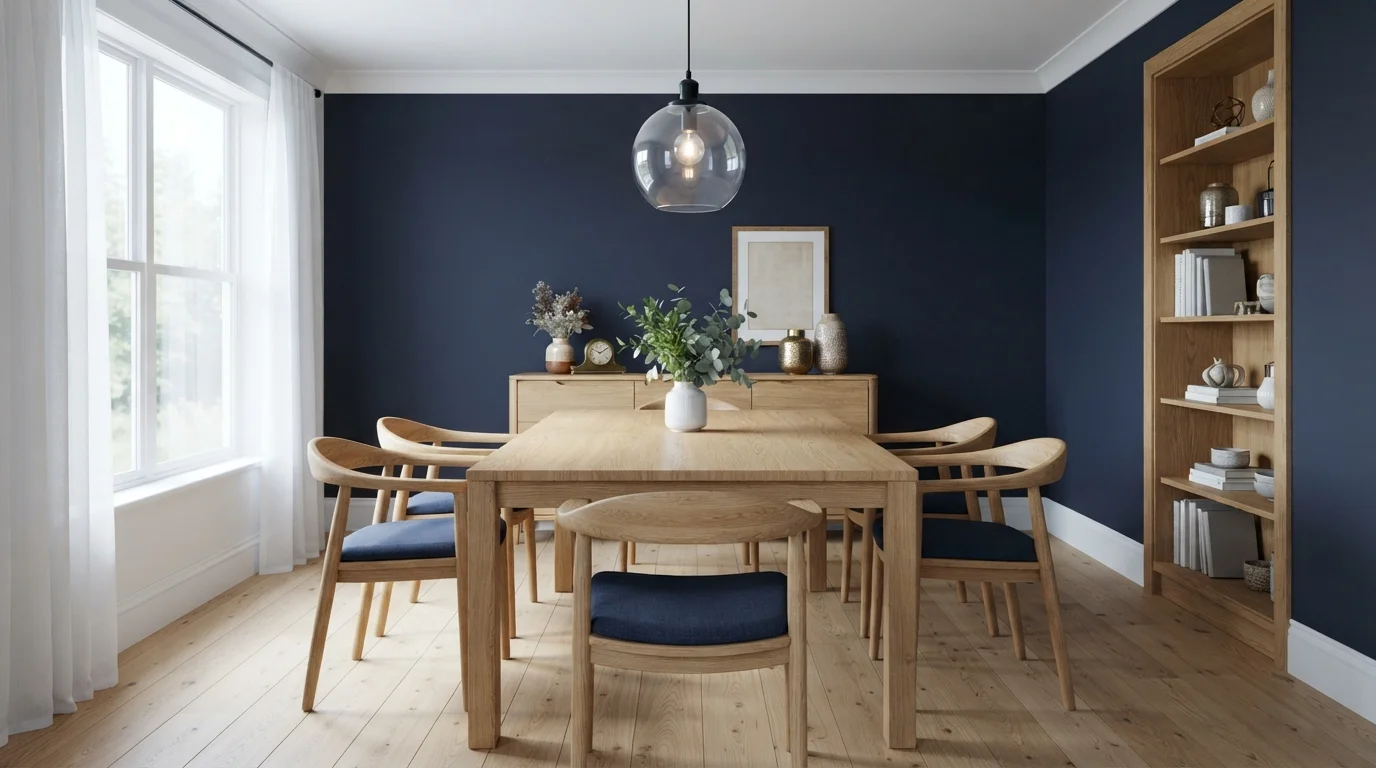
The single most useful number when shopping blue is LRV — light reflectance value, printed on most paint chips. It runs 0 (black) to 100 (white) and tells you how much light a color bounces back. A dining room that's mostly used at night can carry a low-LRV blue (under about 25) because deep navy and ink blues turn cozy and dramatic under warm light, which is hard to pull off in a bright daytime room.
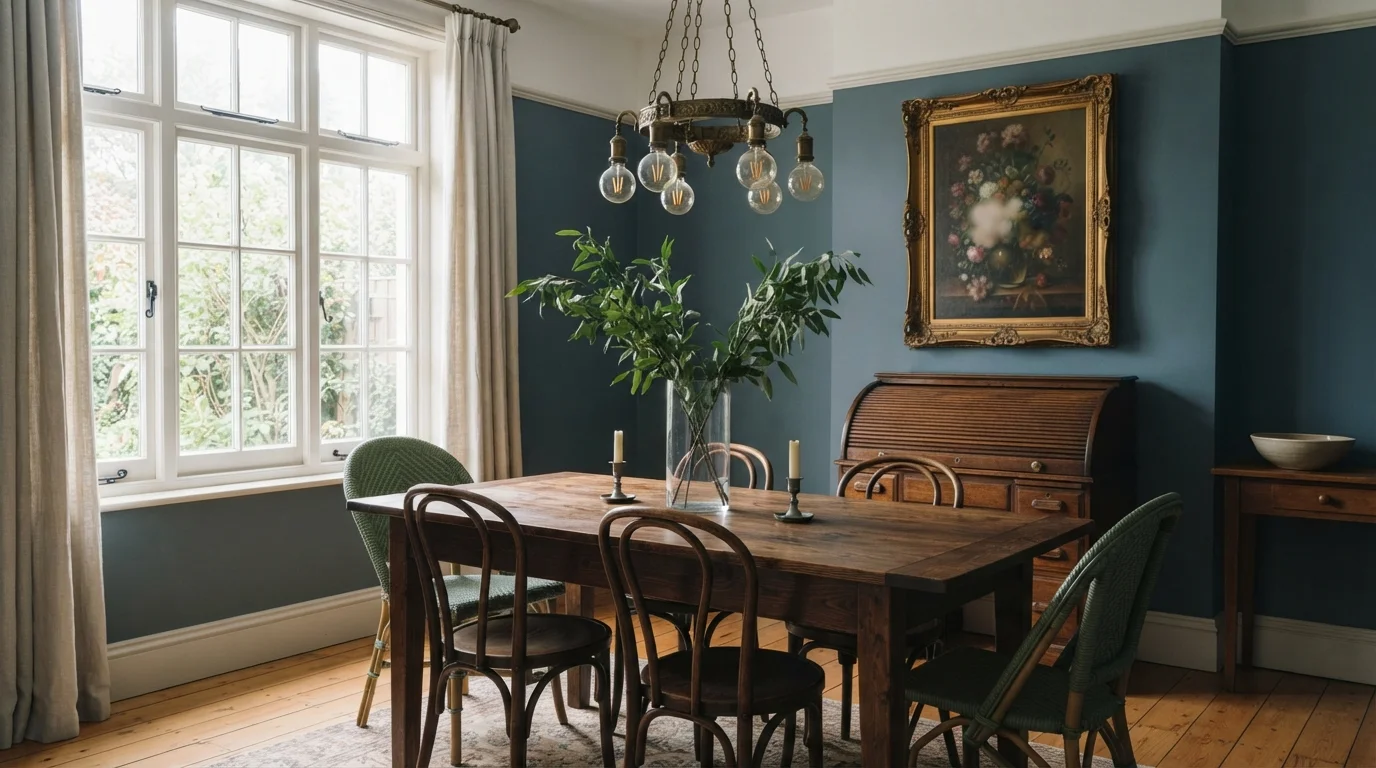
If your dining room gets strong daylight or faces north, watch the undertone. North light is cool and can push a blue toward cold and gray, so a mid-LRV blue (roughly 30 to 55) with a touch of green or warmth in it will feel more inviting. Always tape a large sample to the wall and look at it at dinnertime under the bulbs you actually use, not just in the store.
The Finish To Use And Why
For dining room walls, a matte or eggshell sheen is the sweet spot. Flat-to-low sheen hides the small wall imperfections that overhead and candle light tend to expose, and it keeps deep blues looking velvety rather than plasticky. A dead-flat finish photographs beautifully but is harder to wipe, so eggshell is the safer everyday pick if chairs back up against the wall or kids eat in there.
Give the trim, chair rail, and any wainscot a step up in sheen — satin or semi-gloss. Those surfaces take the real abuse in a dining room: scuffs from chairs, hands on the chair rail, splatter near the table. The higher sheen wipes clean and frames the blue with a crisp edge.
Pairing Blue With Trim, Ceiling, And Wood
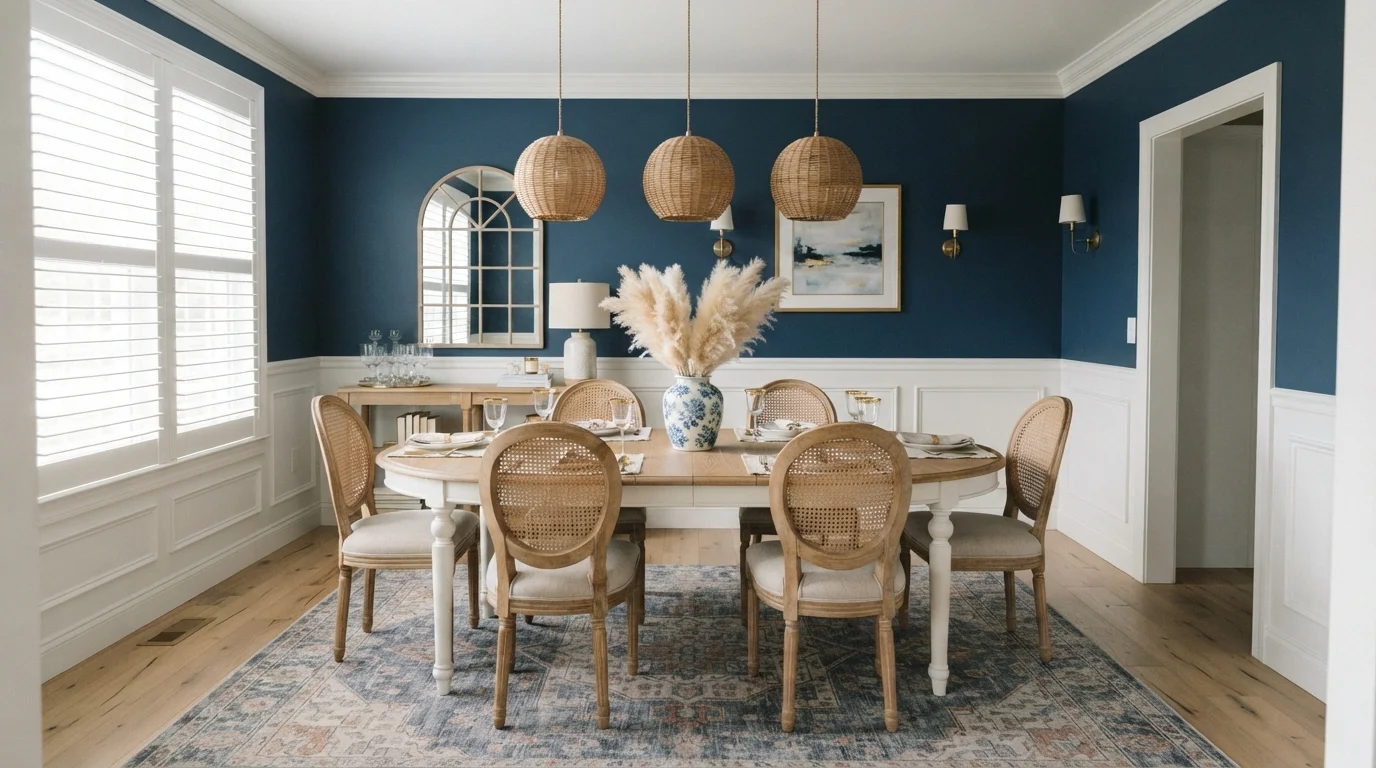
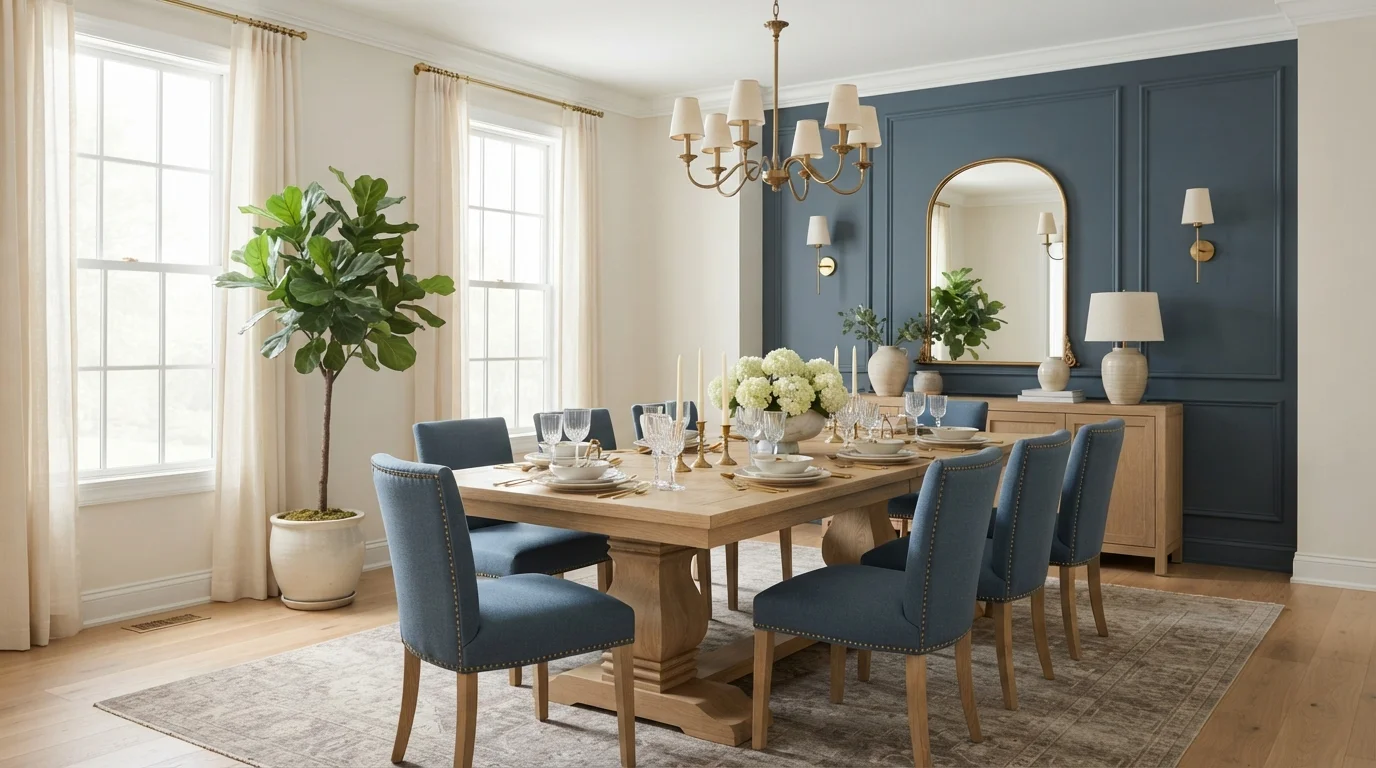
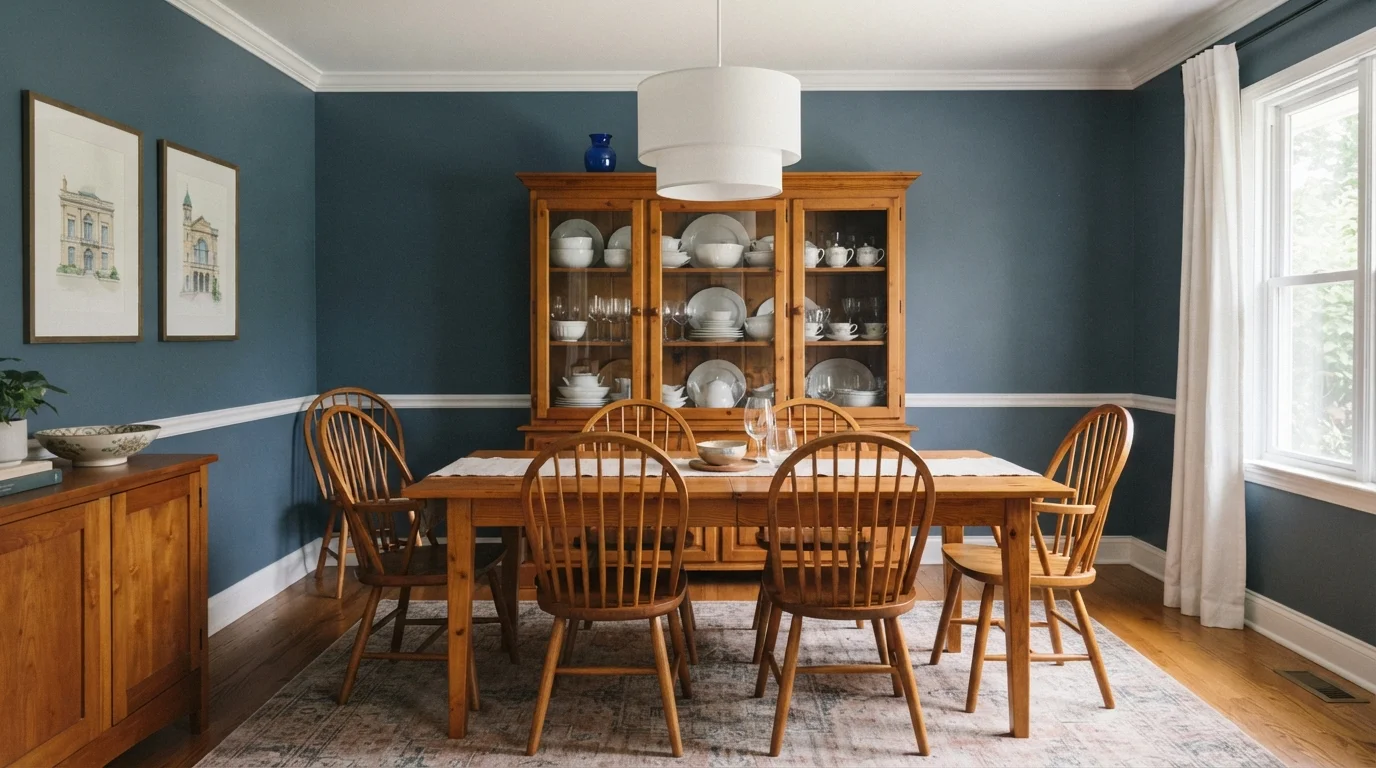
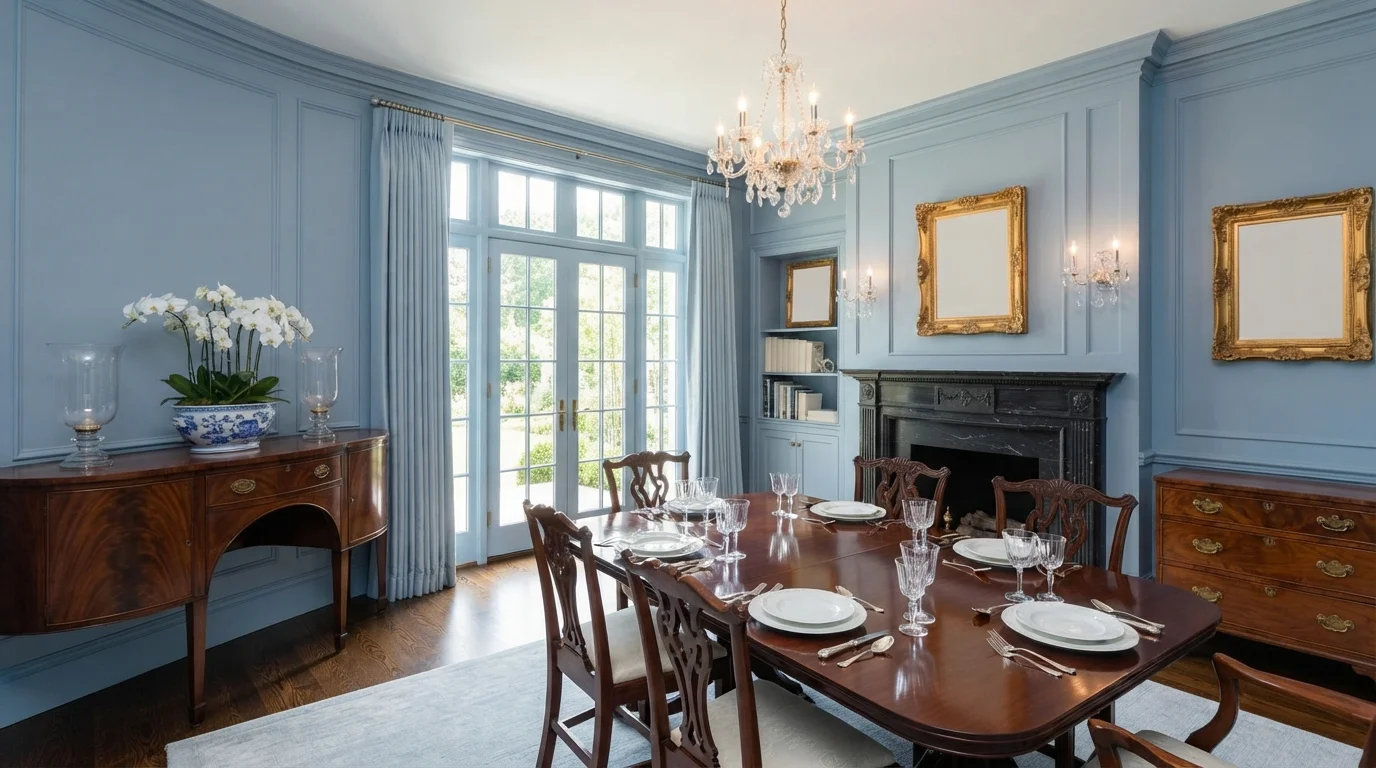
Crisp white trim is the classic move and it's classic for a reason — it makes blue read as tailored and keeps the room from feeling heavy. If your blue is deep, a soft warm white on the trim and ceiling reads friendlier than a stark bright white. For a more enveloping look, paint the trim the same blue as the walls so the molding disappears and the color does all the talking.
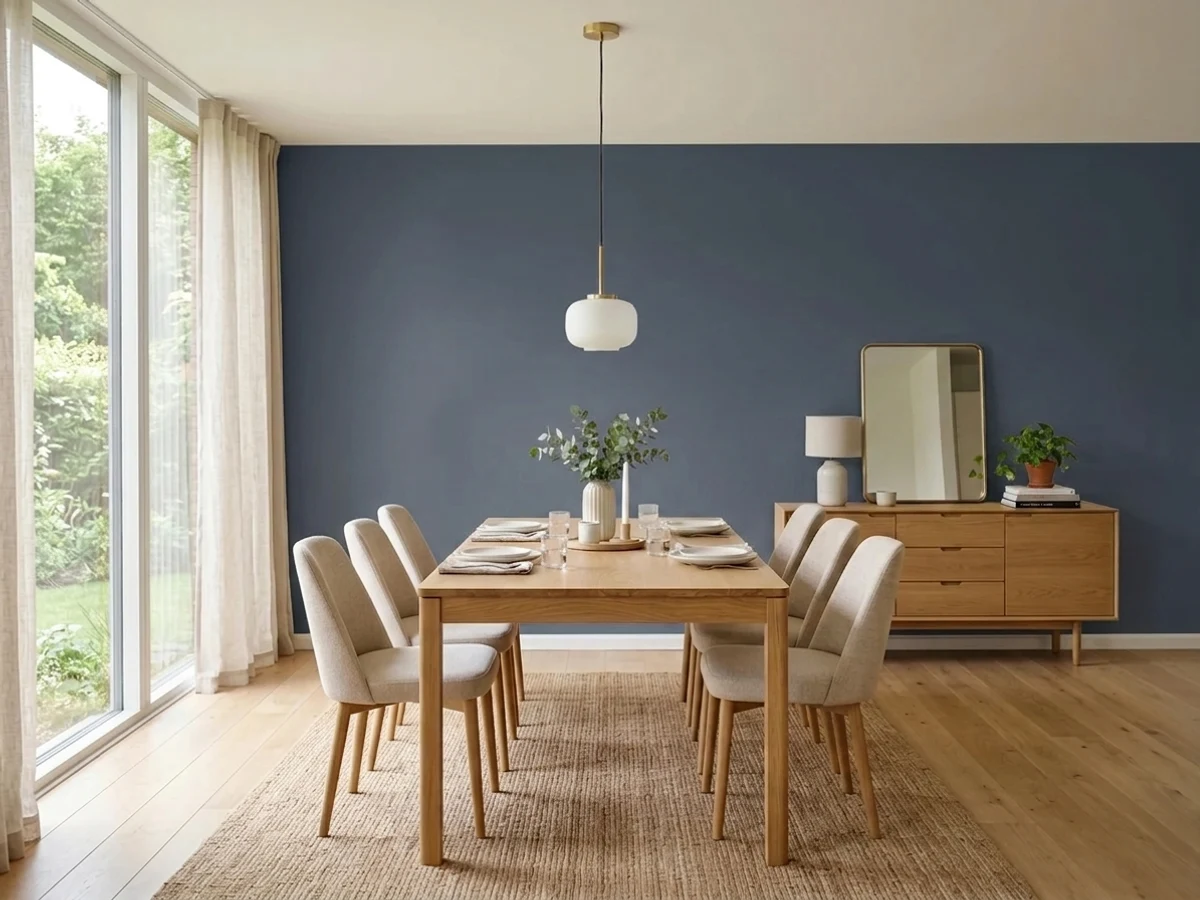
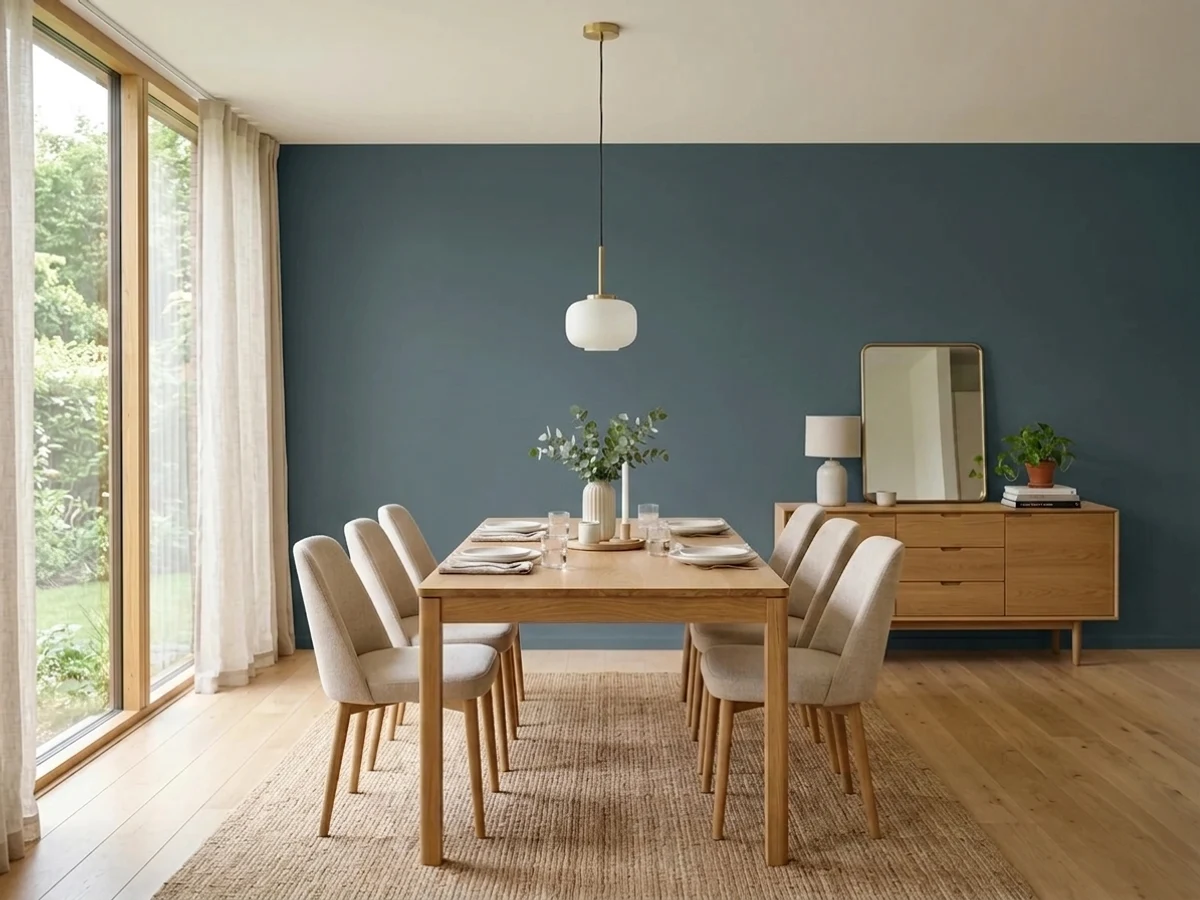
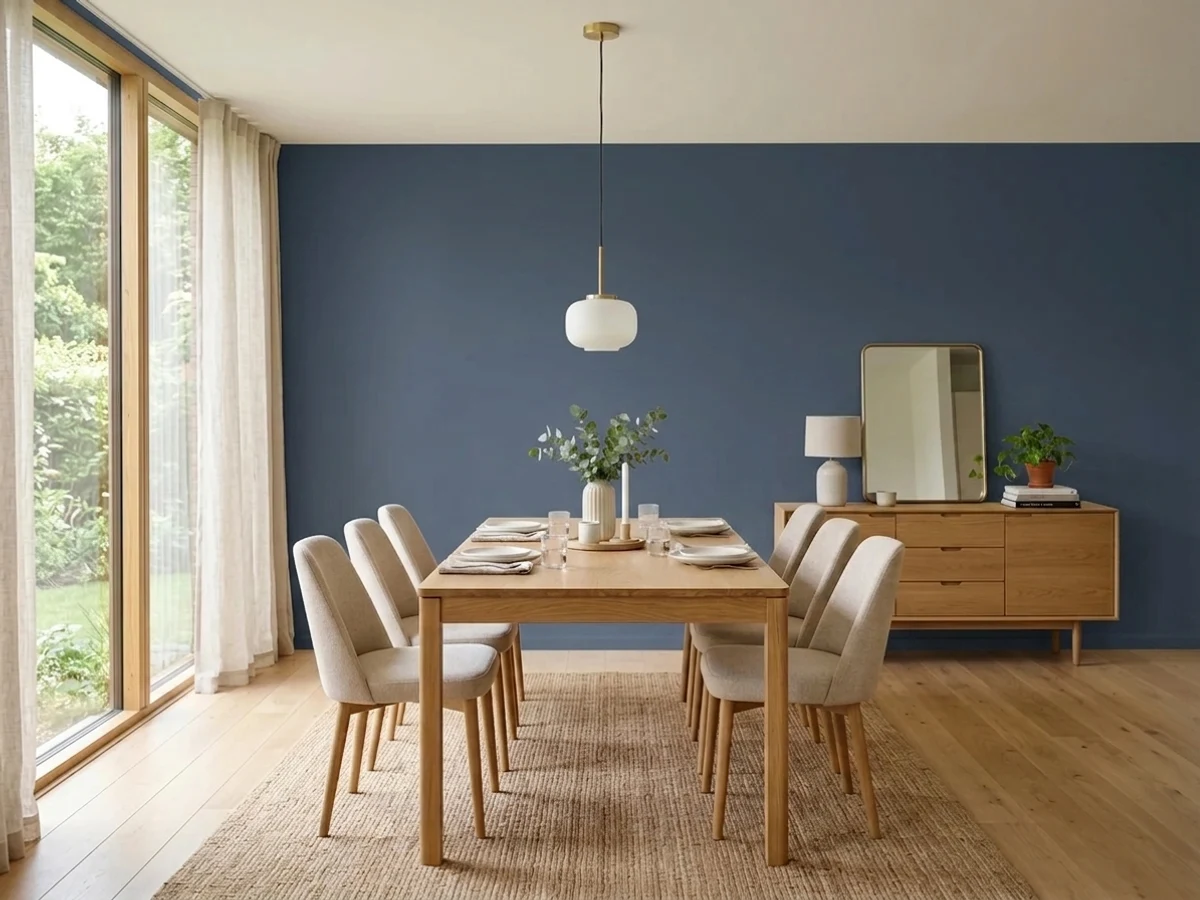
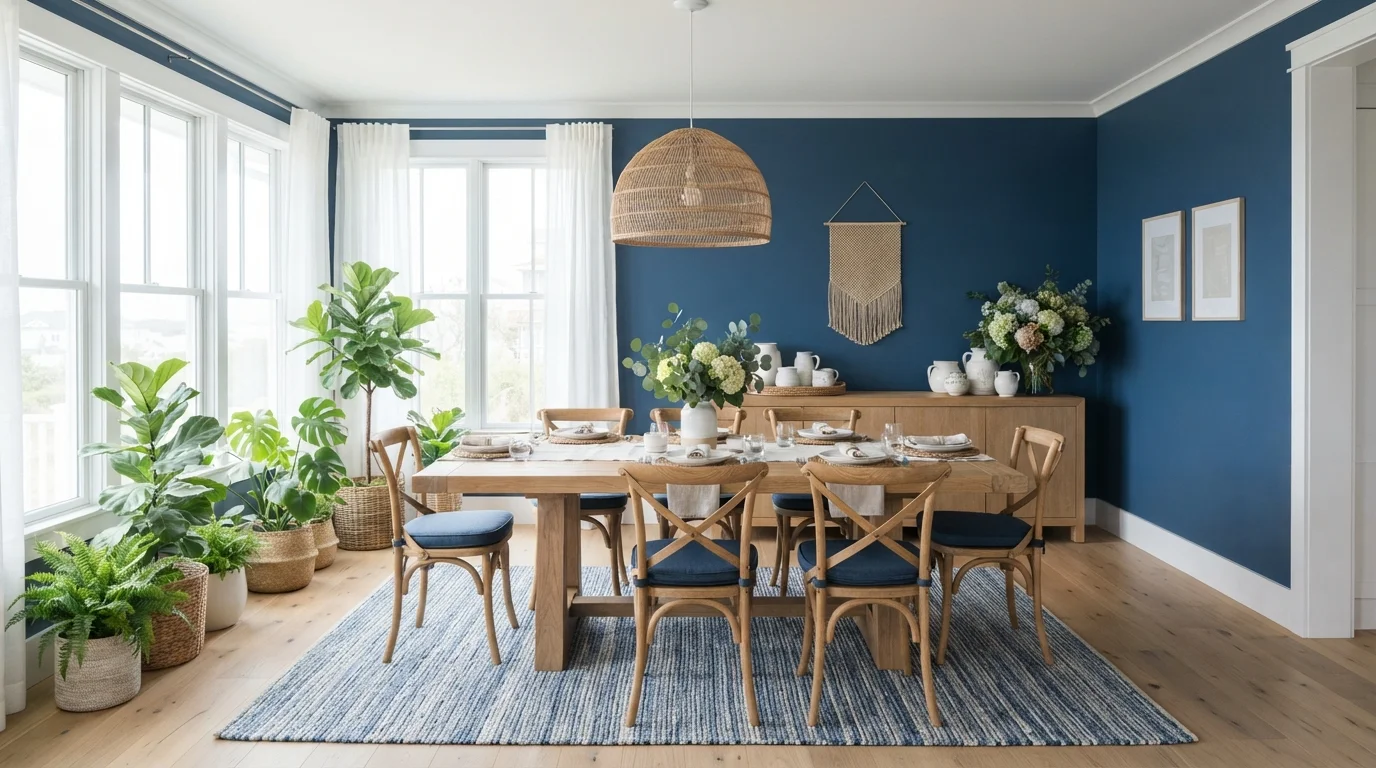
Blue is generous with wood and metal, which is most of what a dining room holds. Warm woods — oak, walnut, cherry — glow against blue, and brass or gold fixtures and a wood or rattan light over the table warm the whole scheme up. If your blue leans cool, lean into that with silver or black hardware; if it leans warm, brass is the natural partner.
The Mistakes That Trip People Up
The most common one is judging blue only in daylight. A blue that looks perfect at 2 p.m. can go flat, cold, or even purple under warm dinner bulbs — so test it at night, in the room, before you commit. The second is going too pale: a wispy powder blue that's lovely in a bedroom often looks washed-out and uncommitted across a dining room's larger walls.
The other trap is forgetting the ceiling and light bulbs. A bright white ceiling over a deep blue can feel like a lid; a warm white or a whisper of the wall blue softens it. And very cool LED bulbs will fight a warm-leaning blue all night — warmer bulbs around 2700K let the color do what you bought it for. Remember that any blue you fall for here is mixed to order, so if a shade you love lives under another brand's name, the counter can match it.
Blue Dining Room Paint — Frequently Asked Questions
Is blue too cold for a dining room?+
Not if you choose the undertone with care. Blues with a touch of green or warmth in them stay inviting, and almost any blue warms up under the soft lamplight most dining rooms use at night. Cool, gray-leaning blues are the ones to test hardest before committing.
What shade of blue is best for a dining room?+
It depends on your light. Rooms used mainly at night can carry a deep navy or ink blue (low LRV) that turns cozy and dramatic under warm bulbs. Brighter or north-facing rooms usually look best in a mid-tone blue with a little warmth, rather than something very pale or very cold.
What sheen should I use on dining room walls?+
Matte or eggshell. Low sheen hides wall flaws that overhead and candle light expose and keeps deep blue looking soft, not shiny. Step up to satin or semi-gloss on trim, chair rails, and wainscot so the high-traffic edges wipe clean.
Should the trim be white or the same blue?+
Both work. Crisp white trim makes blue look tailored and keeps the room light, while a soft warm white pairs nicely with deeper blues. Painting the trim the same blue as the walls makes the room feel more enveloping and modern by letting the molding melt away.
Why does my blue look different at dinner than in the store?+
Blue is very sensitive to light. Warm dinner bulbs deepen and soften it, cool LEDs can make it look gray or harsh, and store lighting is rarely like either. Always tape a large sample to the wall and judge it at night under the bulbs you actually use.
Can I get the same blue from any paint brand?+
Yes. Every color shown here is mixed to order at the paint counter, not tied to one brand's bucket. If you love a blue that appears under another brand's name, the closest cross-matches let you get essentially the same shade wherever you buy.