Blue Mudroom Paint Colors
1,741 blue colors that work in mudrooms, drawn from the full ~30,000-color US paint deck. Below: editor's picks specific to mudrooms, then 30 picks spread across the LRV range — narrow further on the brand page when you've shortlisted.
Blue is the most popular color for accent walls, kitchen islands, and front doors — and also the family with the widest spread, from pale dove-blues that read almost grey, to inky near-black navies, to saturated cobalts that read almost royal. Teal-leaning blues (the green-blue overlap) live next door in the Teal family.
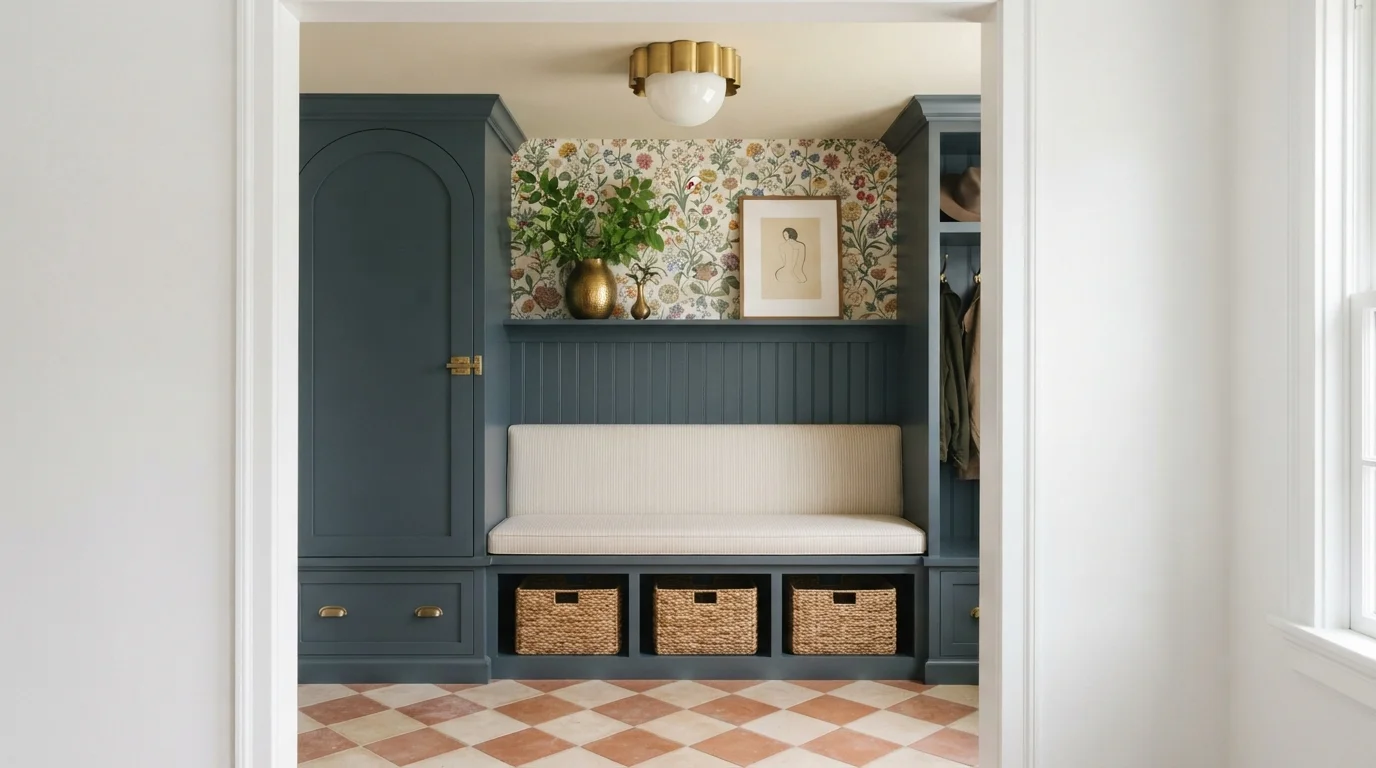
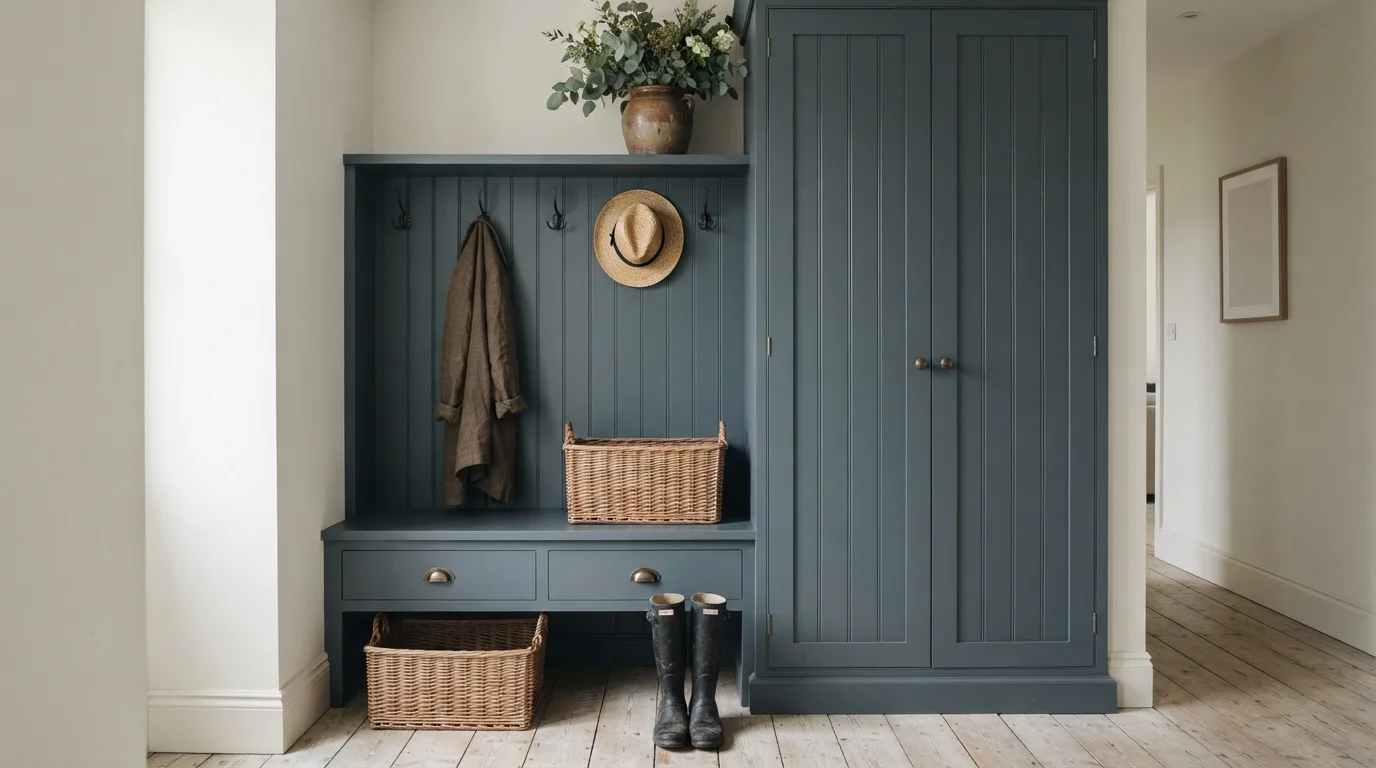
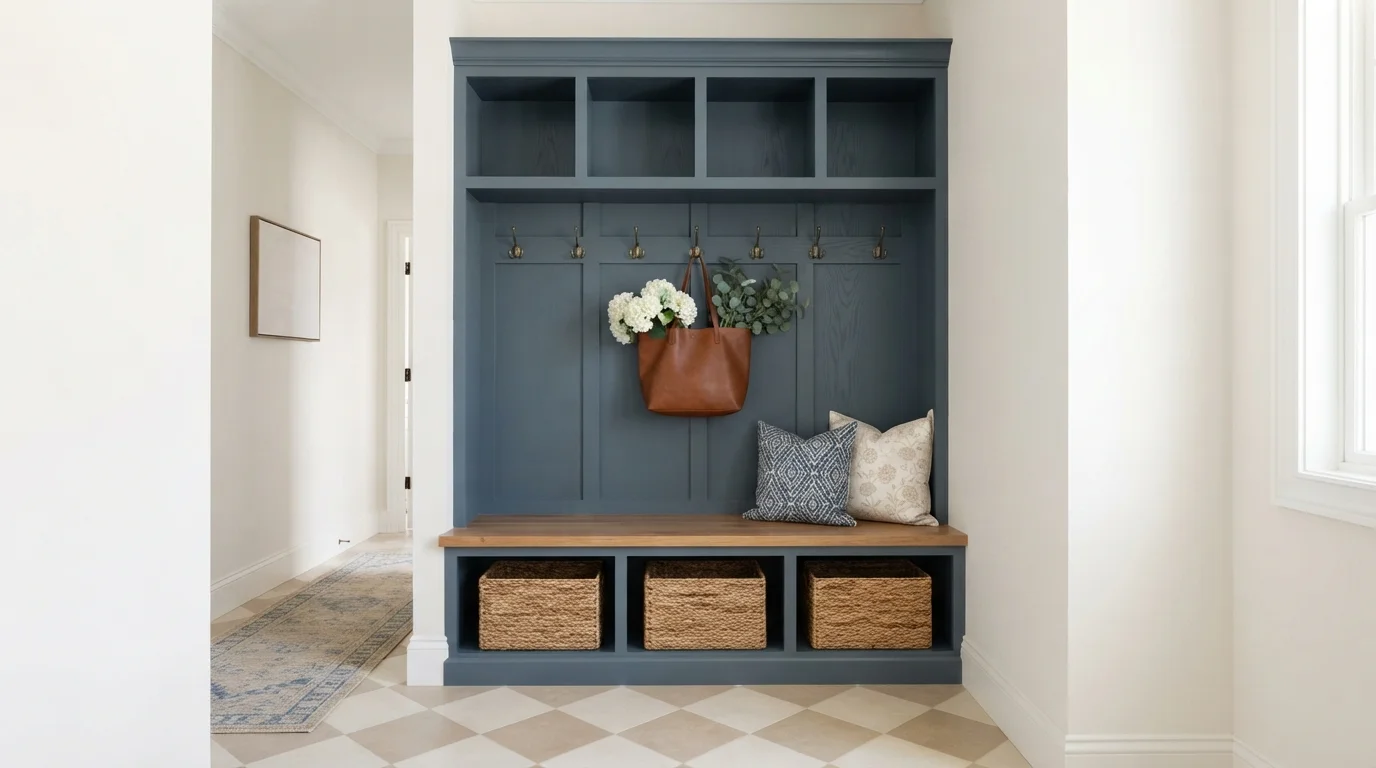
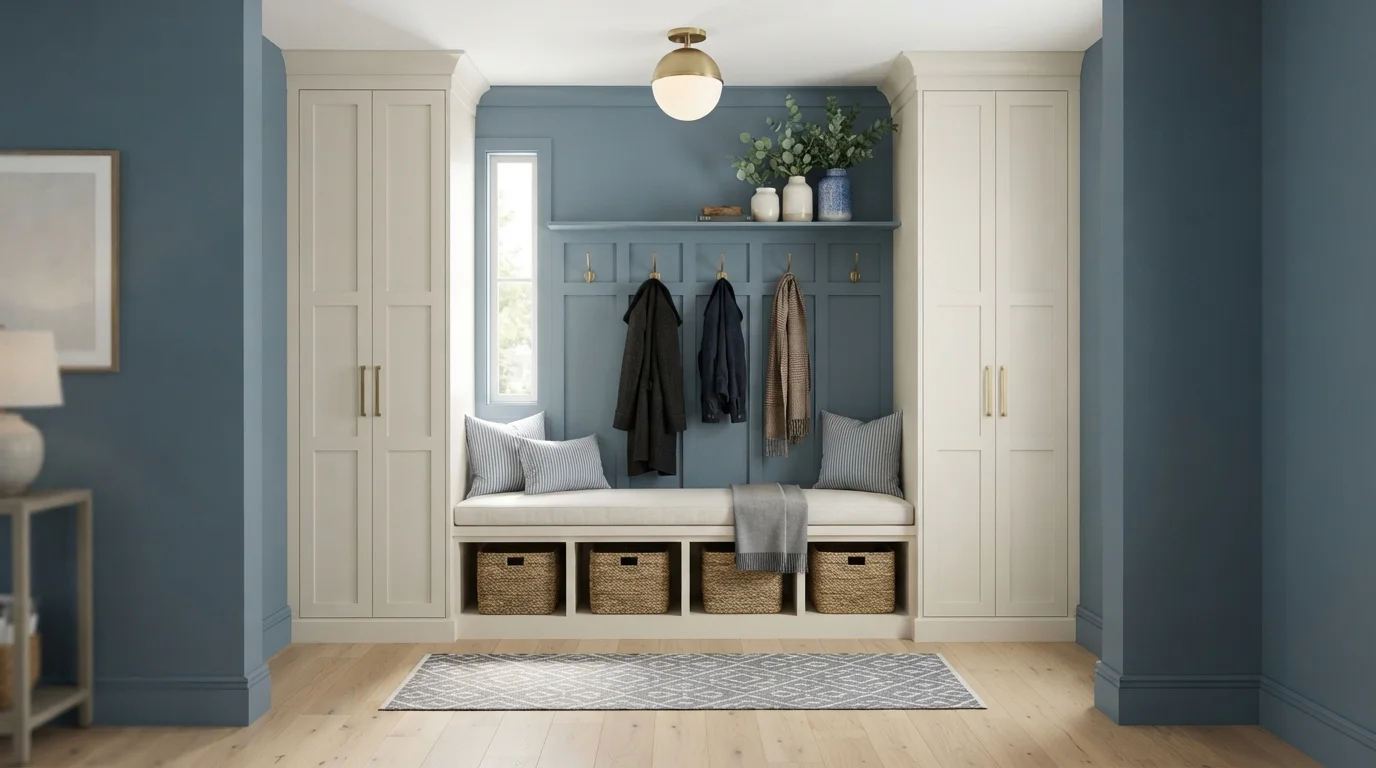
Editor's Picks: Blue for Mudrooms
4 picks30 Blue Picks Across the LRV Range
30 of 1,741 · sorted dark → lightLooking for more? All blue → covers every brand; brand × family pages show full decks.
Blue Mudroom Colors at Every US Brand
21 brands · up to 10 picks eachUp to 10 picks per brand spread across the blue LRV range, drawn from each brand's full deck. Tap any swatch with a curated guide for full spec; tap the brand title for the brand's complete blue deck.
Behr
Valspar
Glidden
Benjamin Moore
PPG / Glidden
Dunn-Edwards
Sherwin-Williams
Dutch Boy
Hirshfield's
Diamond Vogel
Kompozit
C2 Paint
Portola Paints
Magnolia Home
Rodda
Farrow & Ball
Backdrop
Annie Sloan
Clare
Rust-Oleum
Other Mudroom Color Families
Blue Colors in Other Rooms
Blue Paint Colors for a Mudroom
A mudroom is the room that takes the most abuse in the house. Wet boots, dripping coats, dirty paws, and dropped bags all land here first. Blue holds up to that better than most colors because it reads as calm and clean rather than busy, and a mid-tone or deeper blue hides scuffs and grime far better than a pale neutral would. That is the real reason blue fits a mudroom: it works as hard as the room does.
The catch is that blue swings cool, and most mudrooms are small, north-facing, or lit by a single fixture instead of big windows. In low or cool light a blue can tip gray, flat, or even a little cold and unwelcoming. Getting it right comes down to picking the right depth of blue for your light, choosing a finish that wipes clean, and pairing it with warm wood and crisp trim so the space feels like a landing pad, not a locker room. Every blue you see here is mixed to order at the paint counter, so you can match a shade across brands and get the same color in whatever line your store carries.
Why Blue Is a Smart Choice for a Mudroom
A mudroom does not need to be bright white to feel clean. Blue gives you a put-together look while quietly doing a job: it disguises the marks, smudges, and hand-prints that pale walls show within a week. That makes a mid to deep blue one of the few colors that actually gets more practical as the room gets messier.
Blue also sets the right tone for a transition space. It reads as calm and orderly, which is exactly what you want in the spot where the day starts and ends. On lower cabinets, a bench wall, or built-in cubbies, blue feels intentional rather than loud, and it pairs with almost any flooring you already have.
The Best Depth of Blue for Your Light
Mudrooms are usually short on natural light, so the depth of blue you pick matters more than the exact hue. LRV, or light reflectance value, tells you how much light a color bounces back on a 0 to 100 scale. In a windowless or north-facing mudroom, a soft blue in the LRV 55 to 70 range keeps the space feeling open and awake instead of dim.
If you have decent daylight or you want drama on a feature wall or cabinetry, a deeper blue in the LRV 10 to 30 range looks rich and grounds all the boots and bags below it. Just test it on the actual wall first. A blue with a green or gray lean tends to stay friendly in poor light, while a pure or violet-leaning blue can turn cold and flat once the sun drops.
The Right Finish for a Room That Gets Wet and Dirty
Skip flat and matte in a mudroom. This room sees splashes, mud, and constant hand contact near hooks and benches, so you need a finish you can scrub. An eggshell or satin holds up to repeated wiping and resists moisture far better than a flat sheen, which is the safe default for mudroom walls.
For anything that gets touched or bumped, step up the sheen. Semi-gloss on trim, doors, a bench, lockers, or lower cabinetry shrugs off scuffs and cleans with a damp cloth. The slight shine also reads as crisp against a matte wall, and in a small room that little bit of reflection helps bounce light around instead of swallowing it.
Pairing Blue with Trim, Wood, and Fixtures
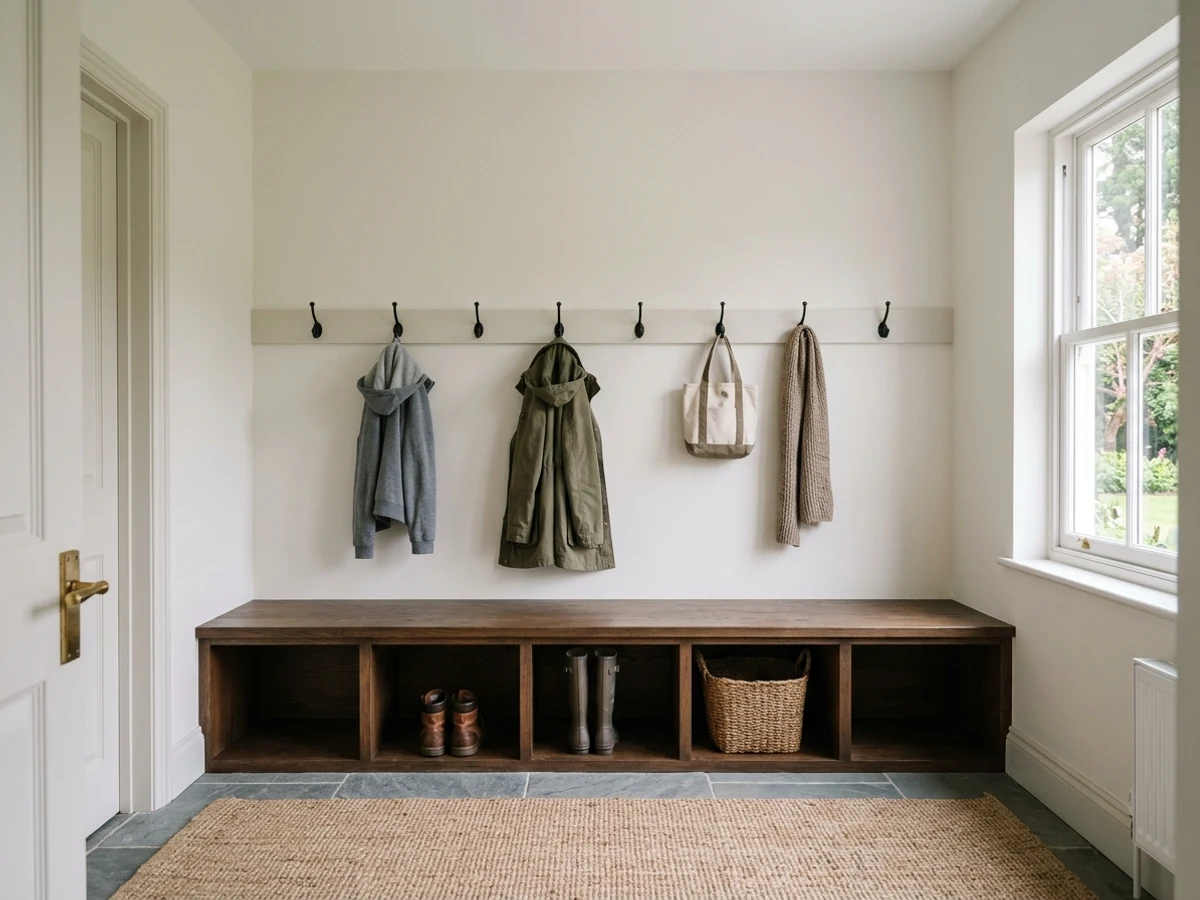
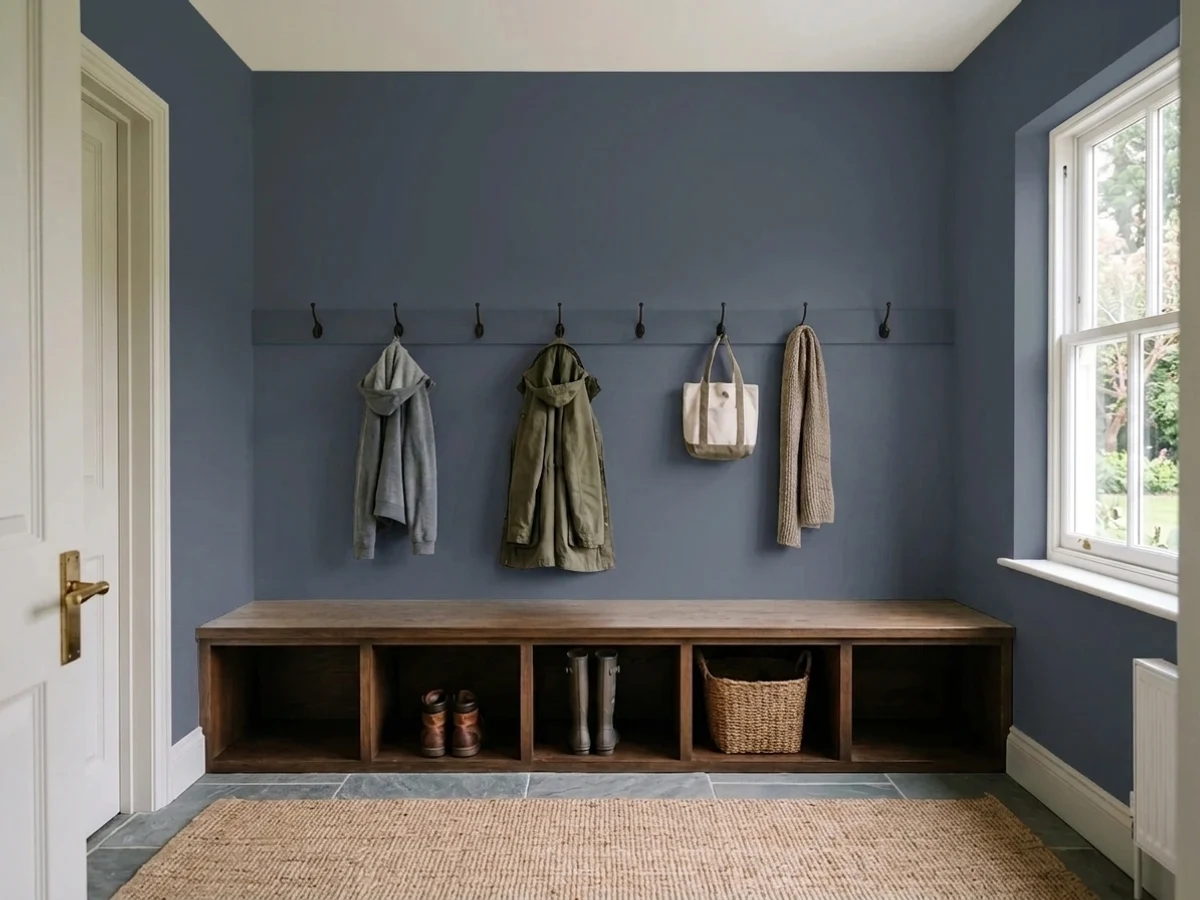
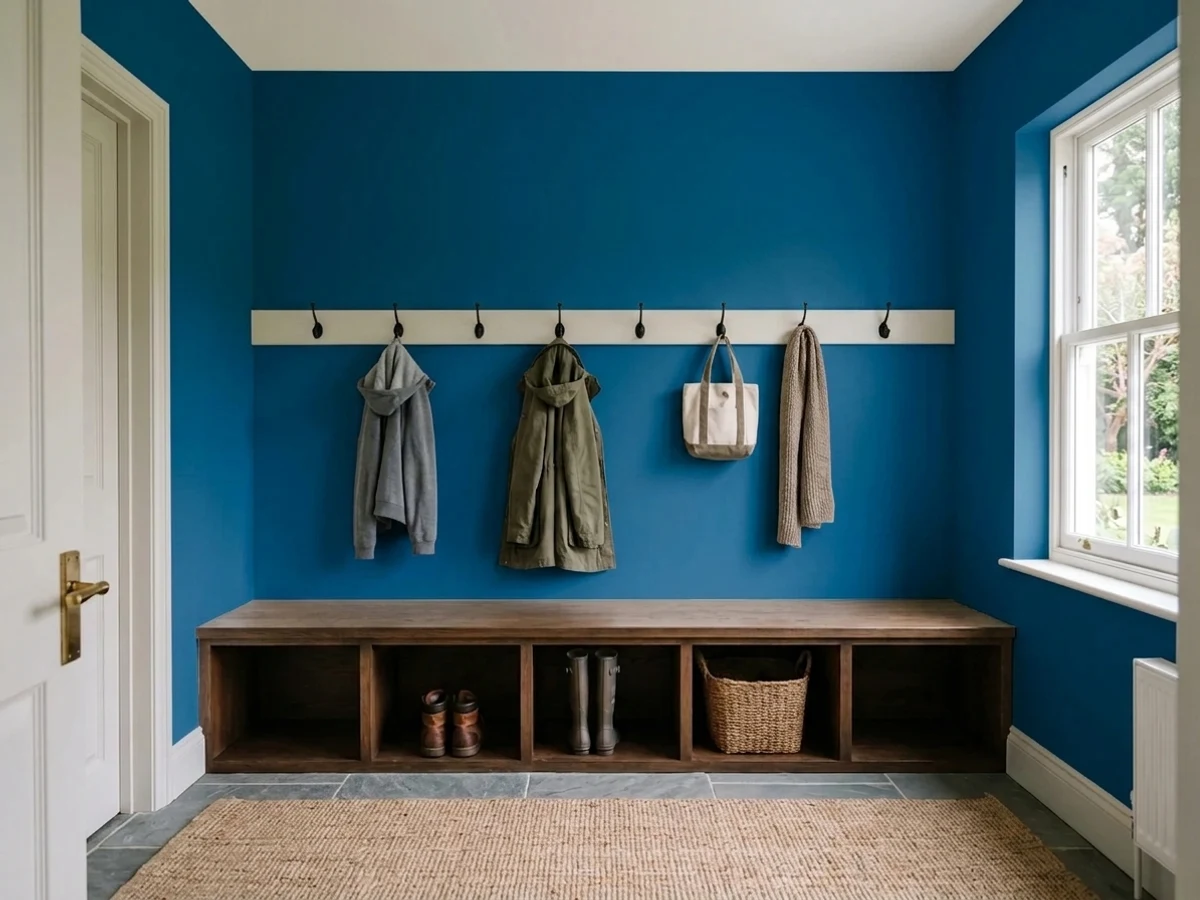
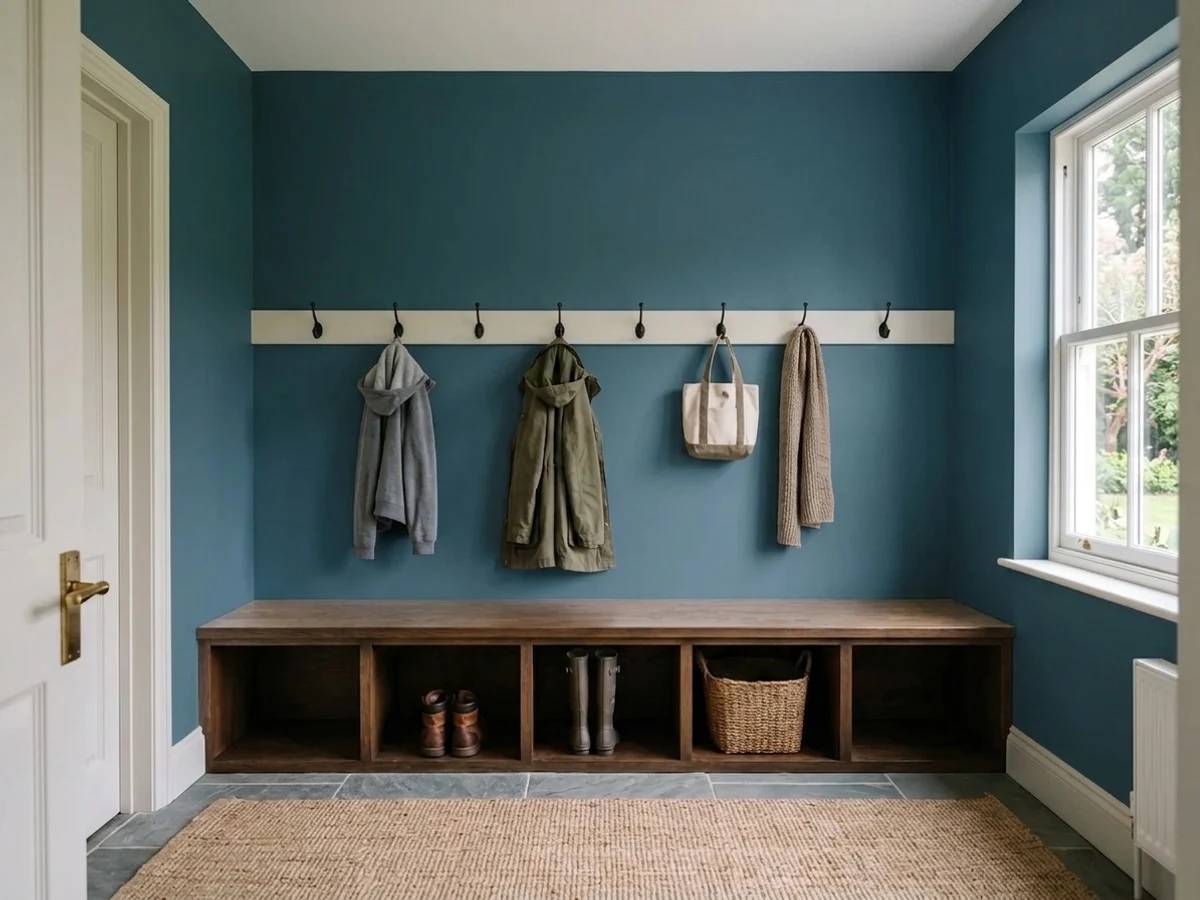
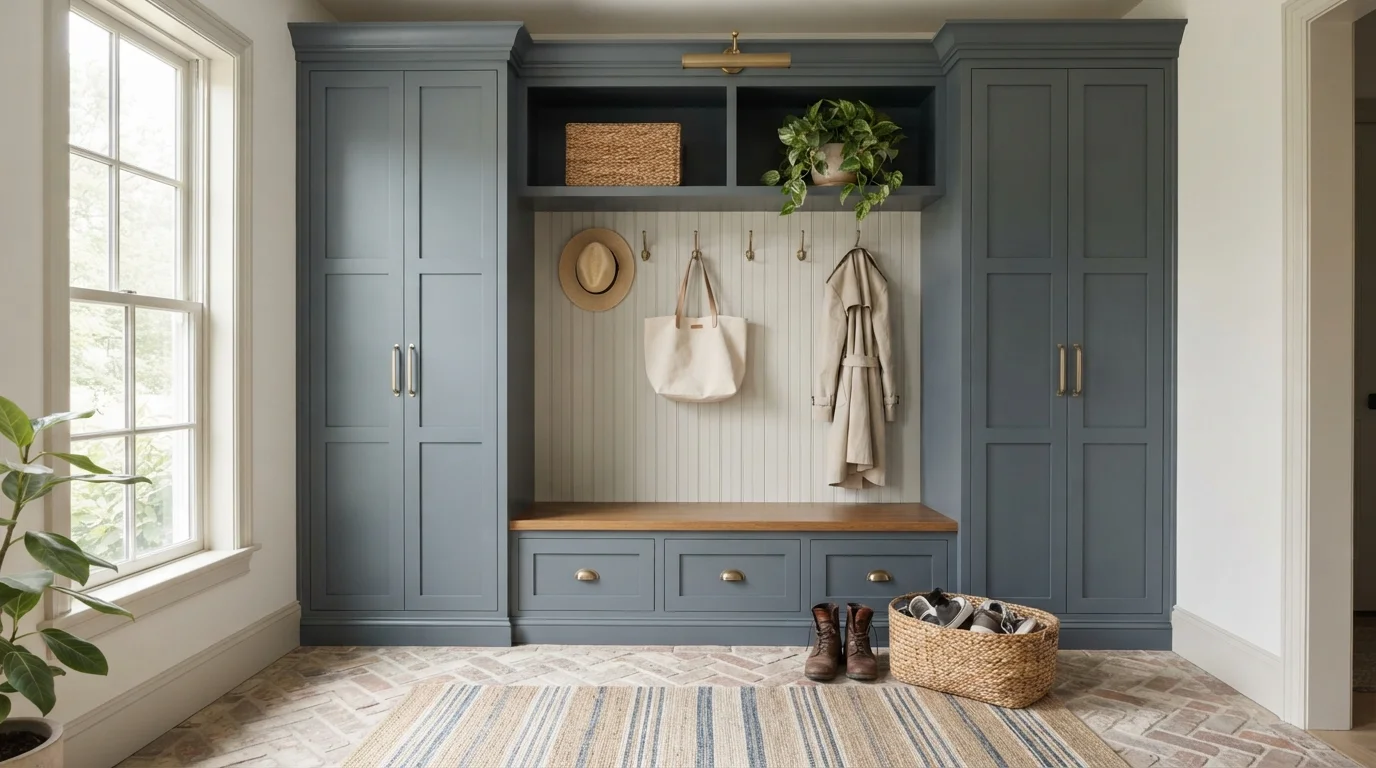
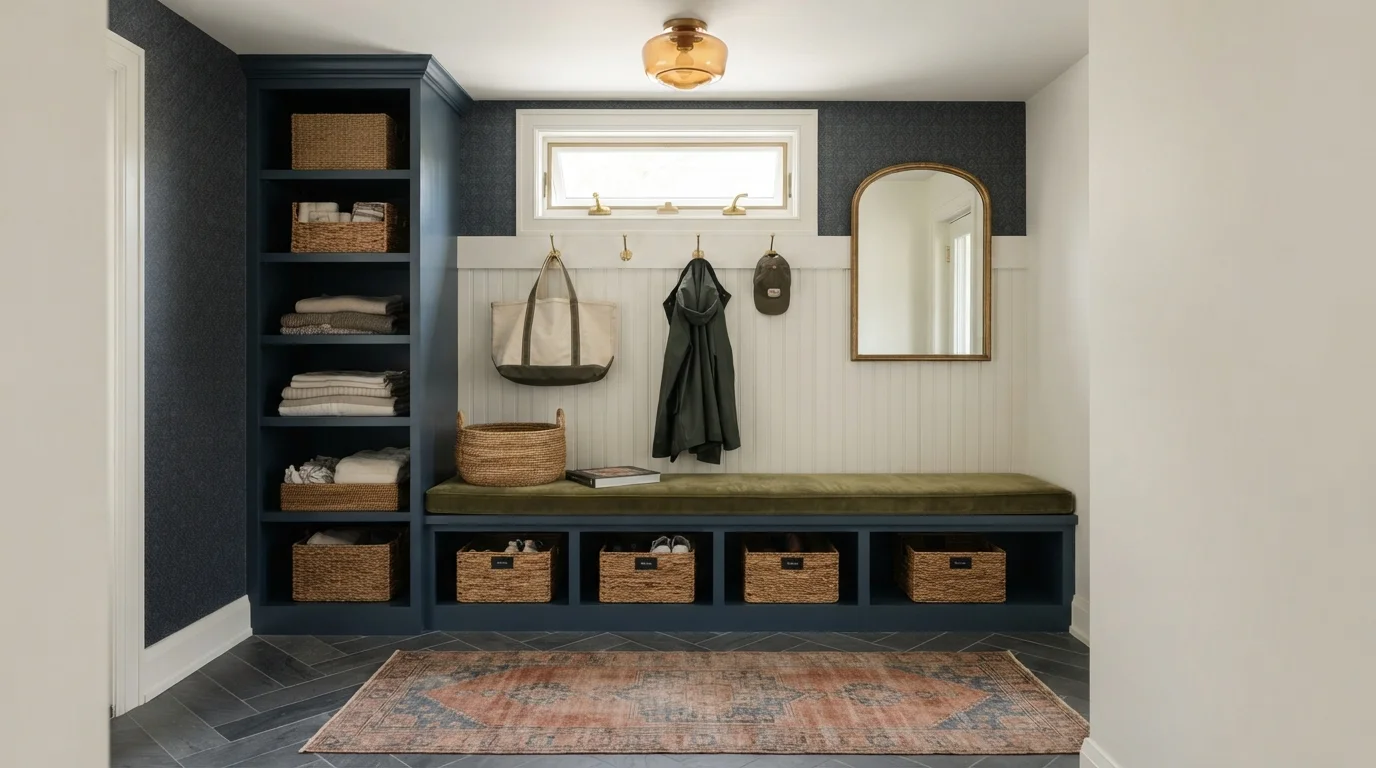
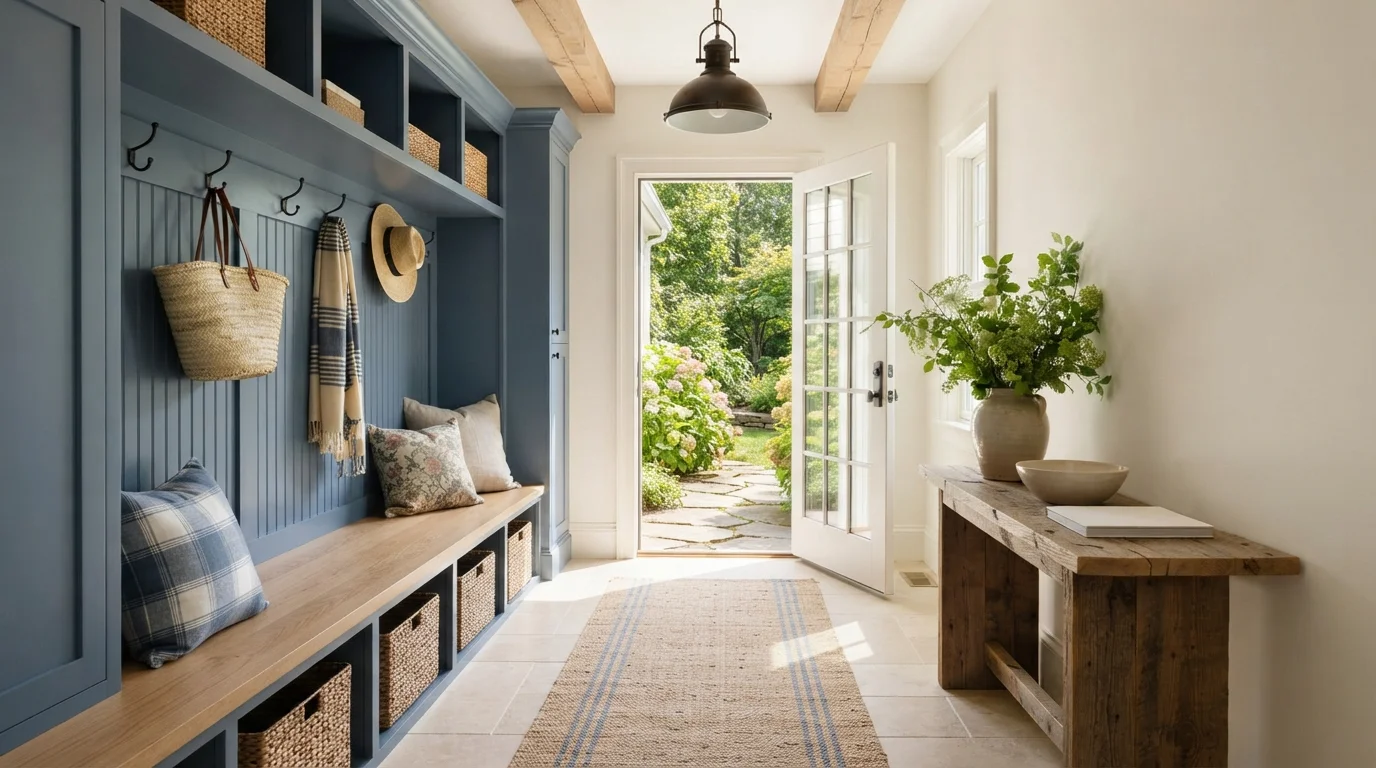
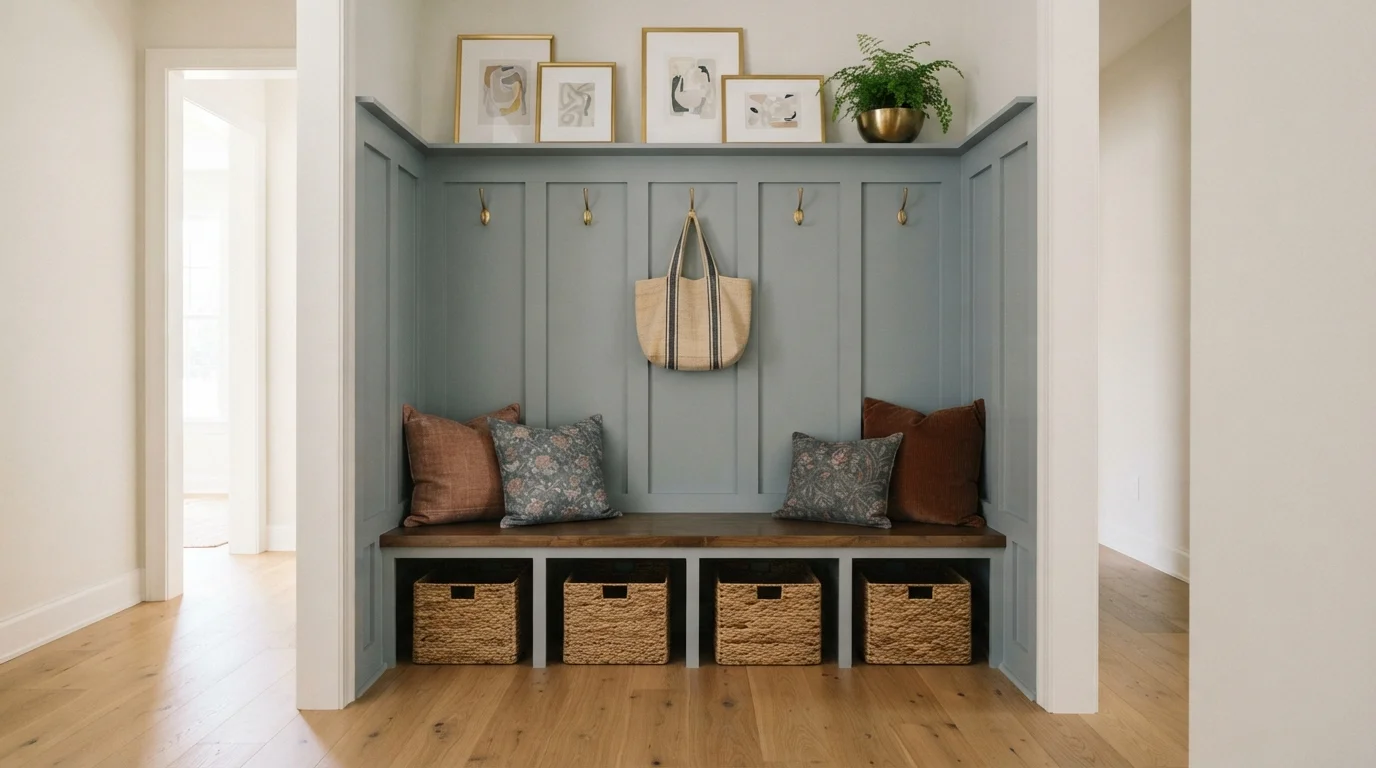
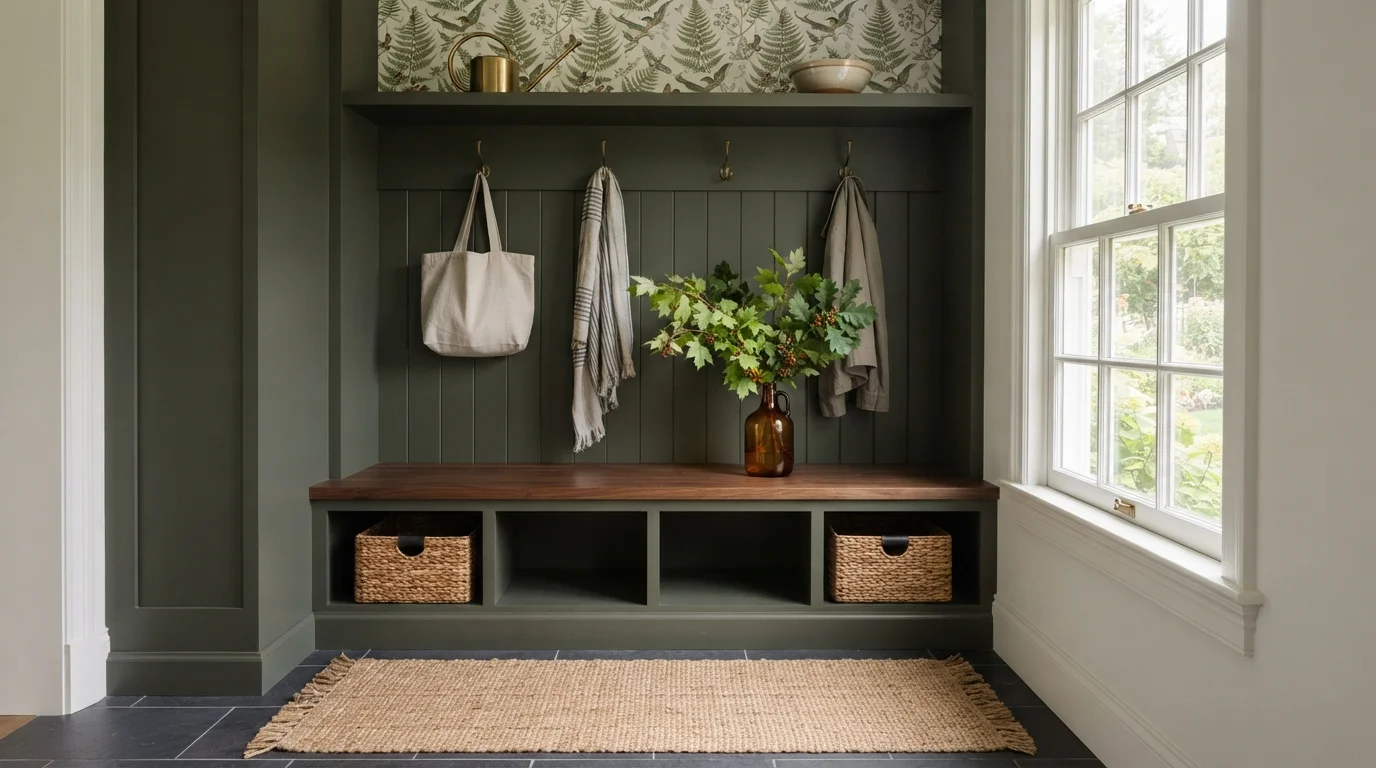
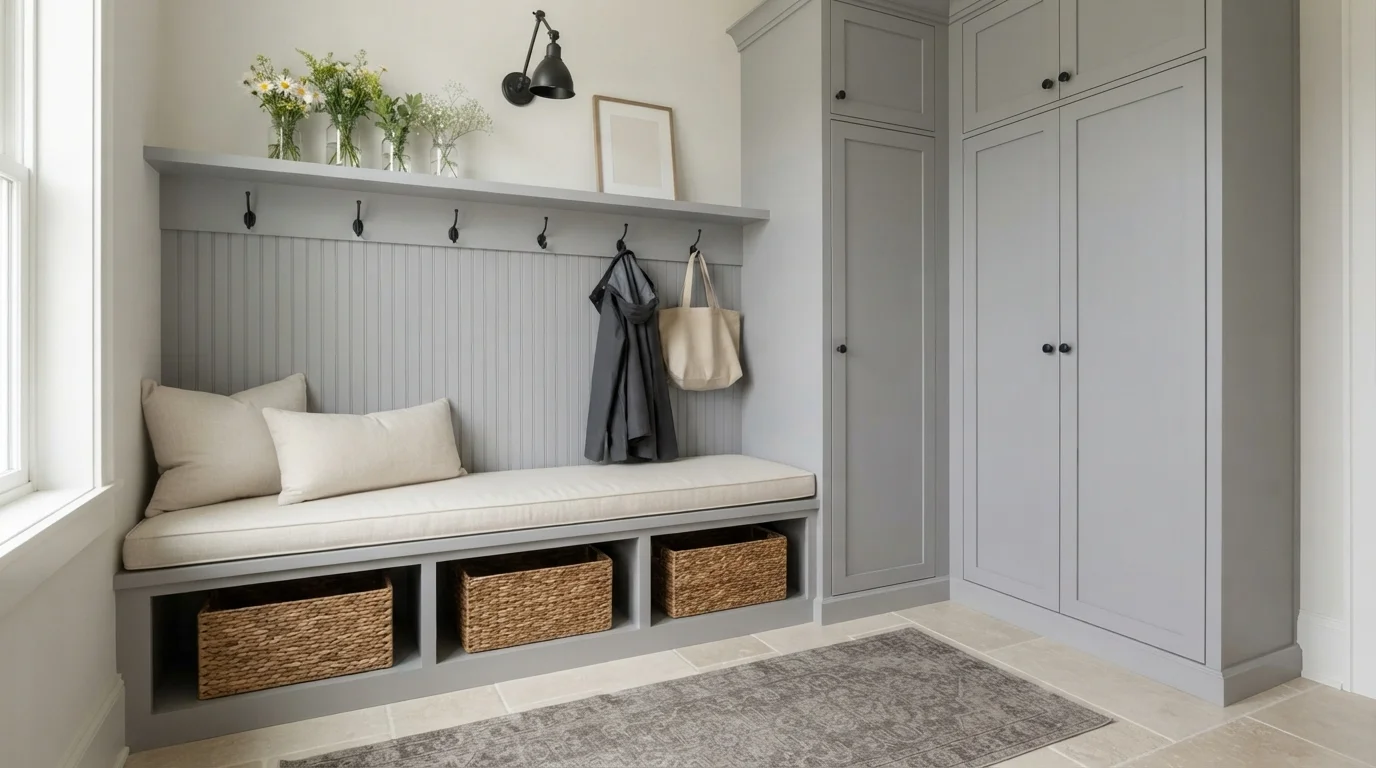
Blue plus warm wood is the combination that keeps a mudroom from feeling cold. A natural oak bench, a wood-tone floor, or rattan baskets warm up a cool blue and make the space welcoming. White or off-white trim and a soft white ceiling keep the blue feeling fresh and stop a deeper shade from closing the room in.
For hardware and fixtures, warm metals do the most work. Brass or bronze hooks, knobs, and a light fixture pop against blue and add the warmth a cool wall can lack. If your home leans more modern, matte black hardware also reads clean against blue, especially with a mid-tone or deeper shade.
The Most Common Mistakes to Avoid
The biggest mistake is choosing a blue off a tiny chip without testing it in the actual light. Mudroom light is usually weak and often artificial, and a blue that looked perfect in the store can go gray, cold, or flat on the wall. Paint a large sample and check it morning and night before you commit.
The other common miss is letting the room feel cold. A pure icy blue with all-white everything and cool-metal fixtures can feel like a hallway in a public building. Warm it up with wood tones, a softer or slightly green-leaning blue, and warm metal hardware. And do not use a flat sheen here. It looks nice for a month, then shows every scuff you cannot wash off.
Blue Mudroom Paint — Frequently Asked Questions
Is blue too dark for a small or windowless mudroom?+
Not if you match the depth to the light. In a small or windowless mudroom, a softer blue around LRV 55 to 70 keeps things open and bright. Save the deep, dramatic blues for a single feature wall or for lower cabinetry, where the darkness grounds the room instead of shrinking it.
What sheen should I use on mudroom walls?+
Eggshell or satin. Both wipe clean and stand up to moisture and hand-prints, which a flat finish cannot. For trim, doors, a bench, or lockers, go a step glossier with semi-gloss so scuffs clean off with a damp cloth.
Which blue undertone works best in poor mudroom light?+
A blue with a slight green or gray lean stays the friendliest in weak or artificial light. Pure or violet-leaning blues can turn cold and flat once daylight fades. Always test a large sample on the wall at night with your fixture on before deciding.
What colors go with blue in a mudroom?+
Warm wood is the key pairing. An oak bench, a wood floor, or woven baskets keep a cool blue welcoming. Add crisp white or off-white trim, a soft white ceiling, and warm metal hardware like brass or bronze to round it out.
Can I match a blue I like across different paint brands?+
Yes. Every blue shown here is mixed to order at the paint counter, so you are not locked into one brand. You can take a shade you like and have it cross-matched into whatever paint line your local store carries.
How do I keep a blue mudroom from feeling cold?+
Lean on warmth in everything around the blue. Choose a softer or slightly green-leaning shade rather than an icy pure blue, add wood tones underfoot or on a bench, and use warm metal hooks and fixtures. That balance keeps the space calm but inviting.