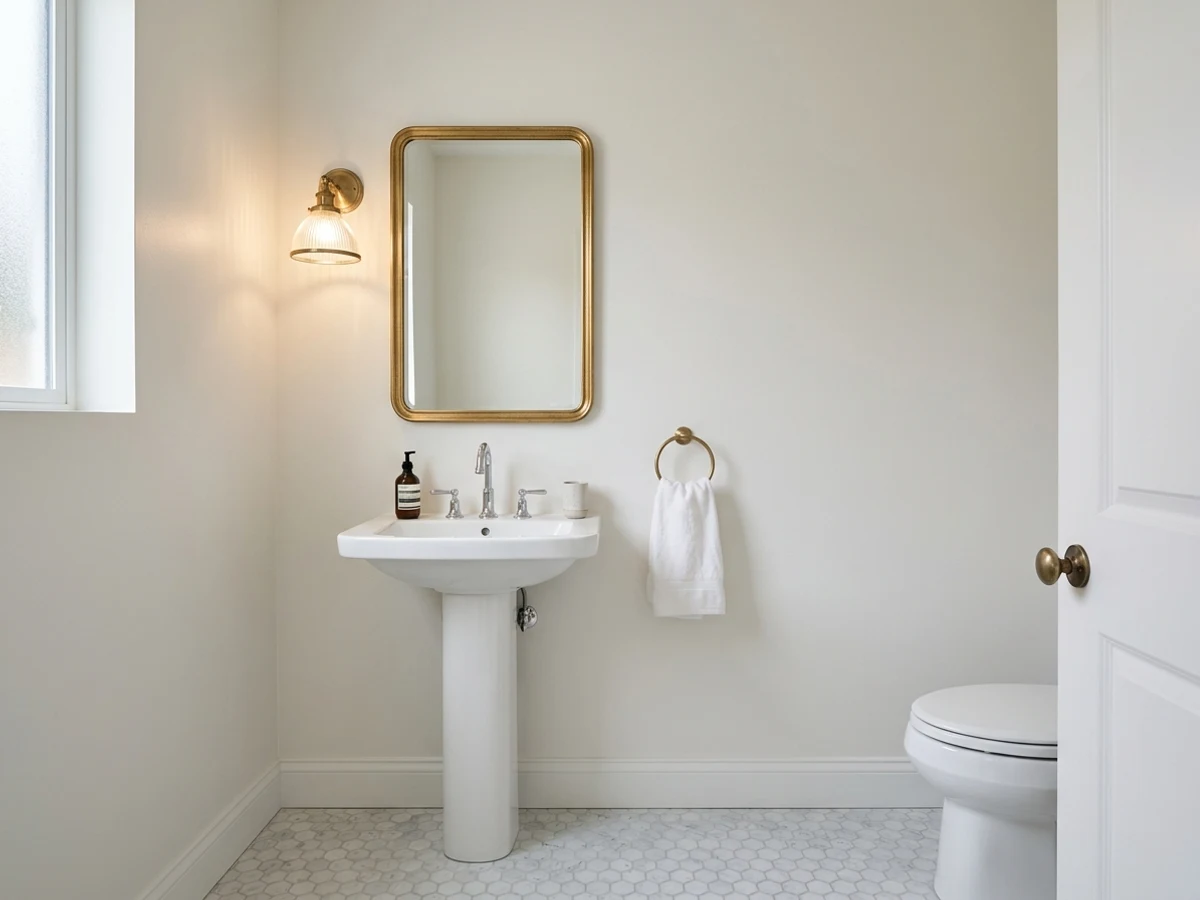
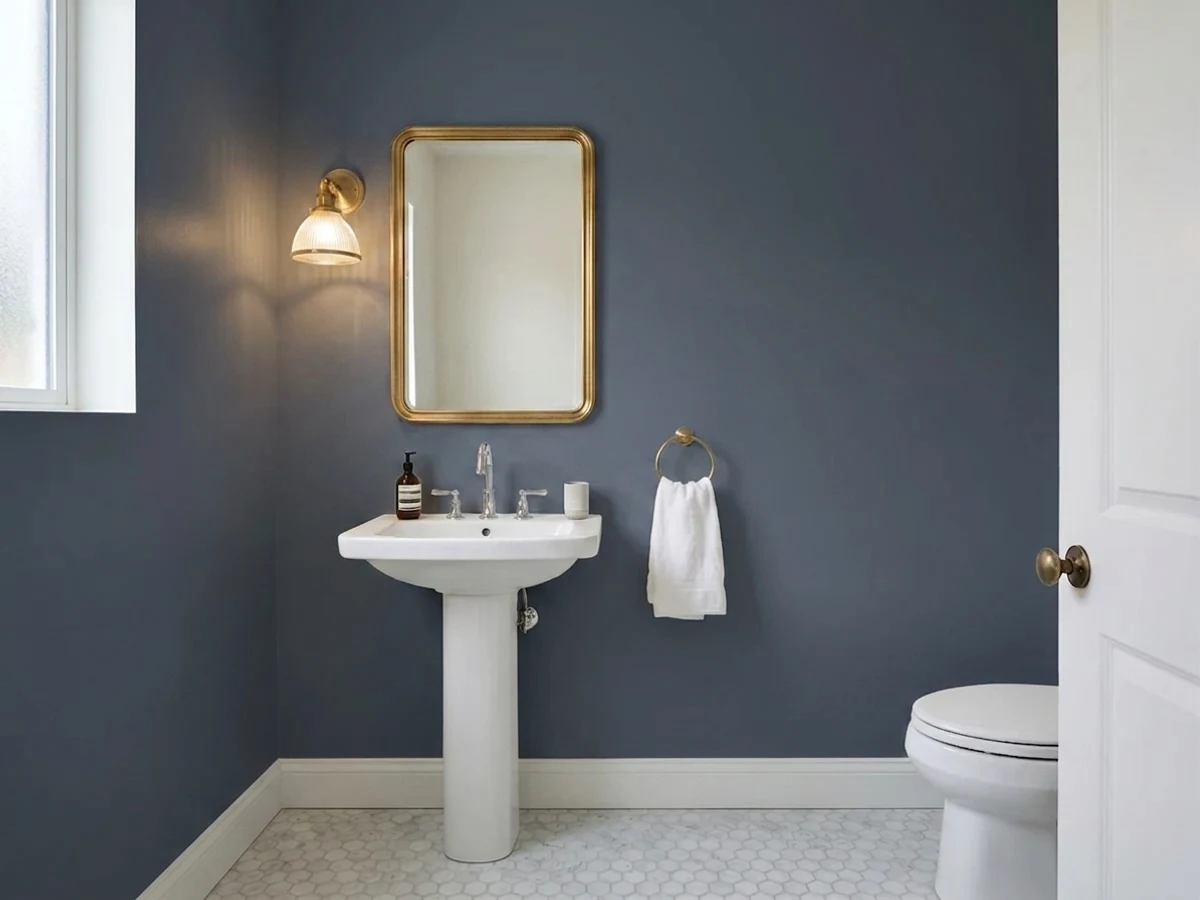
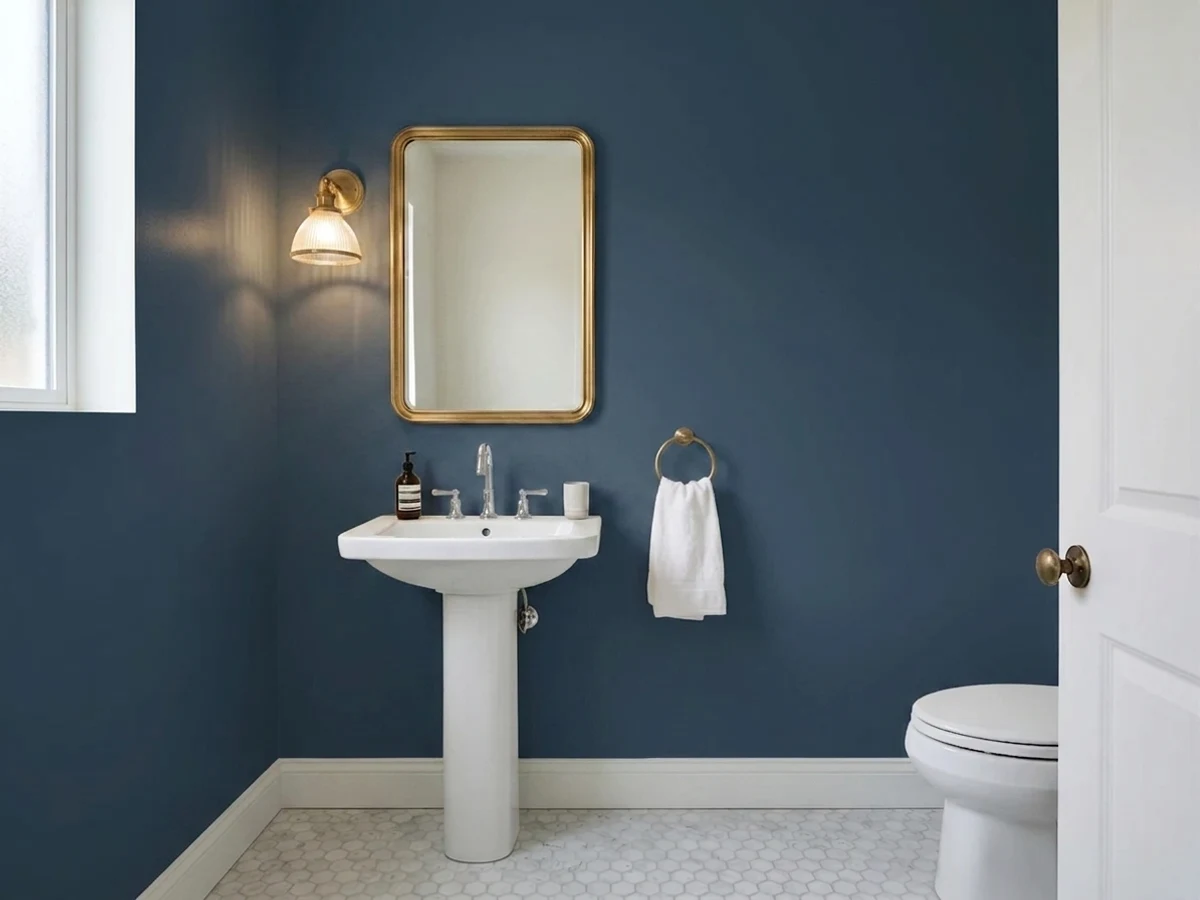
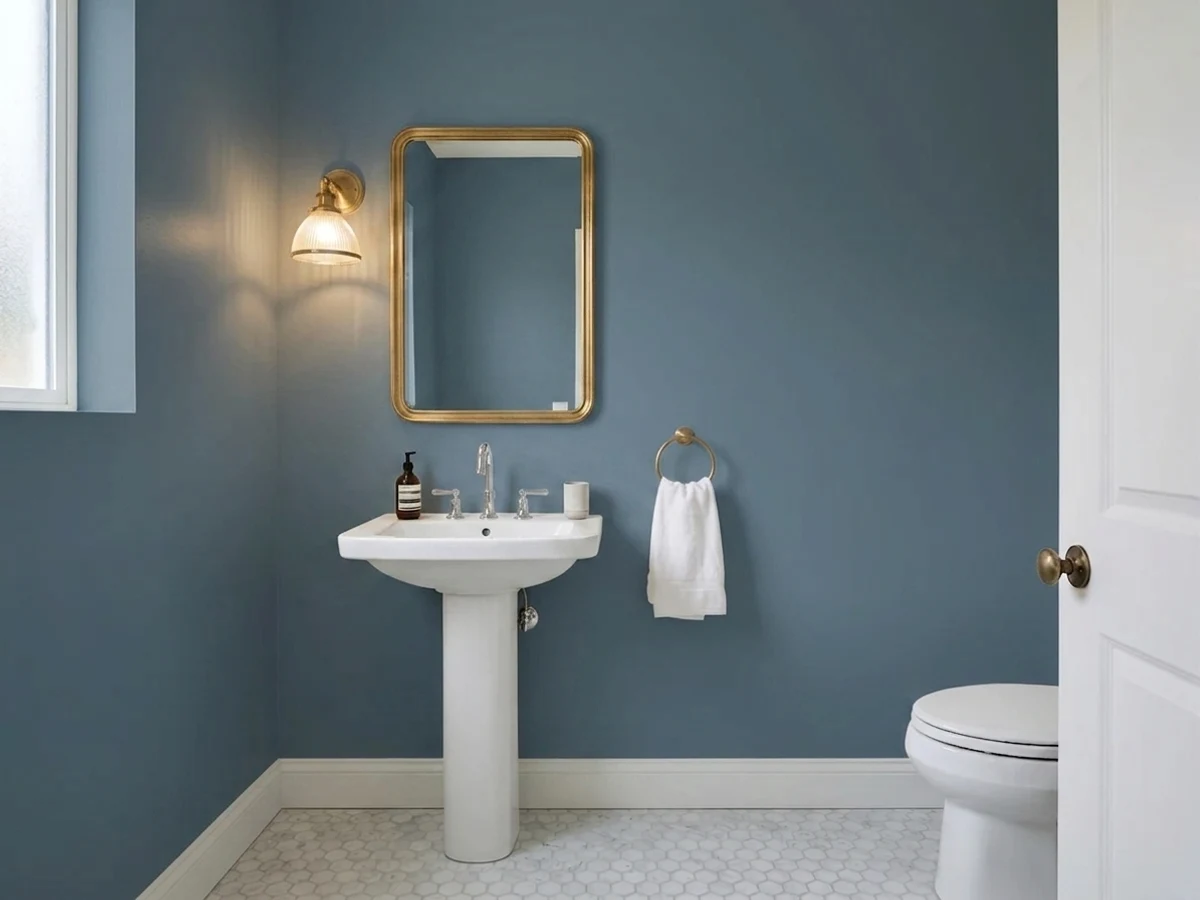
Blue Powder Room Paint Colors
1,741 blue colors that work in powder rooms, drawn from the full ~30,000-color US paint deck. Below: editor's picks specific to powder rooms, then 30 picks spread across the LRV range — narrow further on the brand page when you've shortlisted.
Blue is the most popular color for accent walls, kitchen islands, and front doors — and also the family with the widest spread, from pale dove-blues that read almost grey, to inky near-black navies, to saturated cobalts that read almost royal. Teal-leaning blues (the green-blue overlap) live next door in the Teal family.
Editor's Picks: Blue for Powder Rooms
4 picks30 Blue Picks Across the LRV Range
30 of 1,741 · sorted dark → lightLooking for more? All blue → covers every brand; brand × family pages show full decks.
Blue Powder Room Colors at Every US Brand
21 brands · up to 10 picks eachUp to 10 picks per brand spread across the blue LRV range, drawn from each brand's full deck. Tap any swatch with a curated guide for full spec; tap the brand title for the brand's complete blue deck.
Behr
Valspar
Glidden
Benjamin Moore
PPG / Glidden
Dunn-Edwards
Sherwin-Williams
Dutch Boy
Hirshfield's
Diamond Vogel
Kompozit
C2 Paint
Portola Paints
Magnolia Home
Rodda
Farrow & Ball
Backdrop
Annie Sloan
Clare
Rust-Oleum
Other Powder Room Color Families
Blue Colors in Other Rooms
Blue Paint Colors for a Powder Room
A powder room is the one bath in the house with no shower and no tub, so it stays dry and it gets seen by guests. That combination makes it the easiest room to paint a real color. You are not fighting steam or a window full of harsh light, and a small windowless box is exactly where a deeper, moodier blue earns its keep instead of feeling like a mistake.
Blue suits this room because it reads calm and clean without trying too hard, and a powder room is small enough that a bold choice costs you a single afternoon and one quart. Below is how to pick the right depth of blue for your light, the finish that holds up to splashes and frequent hand-washing, and the trim, ceiling, and fixture pairings that make it look finished. Every swatch shown here is mixed to order at the paint counter, so once you settle on a blue you can cross-match it to whatever brand you already trust.
Why Blue Just Works in a Powder Room
A powder room is a quick visit, so it can carry more drama than a room you live in all day. Blue is the safest way to be bold here because it still feels clean and bathroom-appropriate, the way white and gray read clean, but with actual personality. Guests notice it, and you do not get tired of it the way you might with a strong red or green in a space you stand in for an hour.
The dry, no-steam nature of a powder room also removes the usual blue-bathroom worry. You are not constantly battling moisture streaks or that cold, clinical pool-tile feeling, so a warmer slate or a soft denim stays cozy instead of going chilly. This is the rare bath where you can lean into a color without it fighting the function of the room.
Picking the Right Depth for Your Light
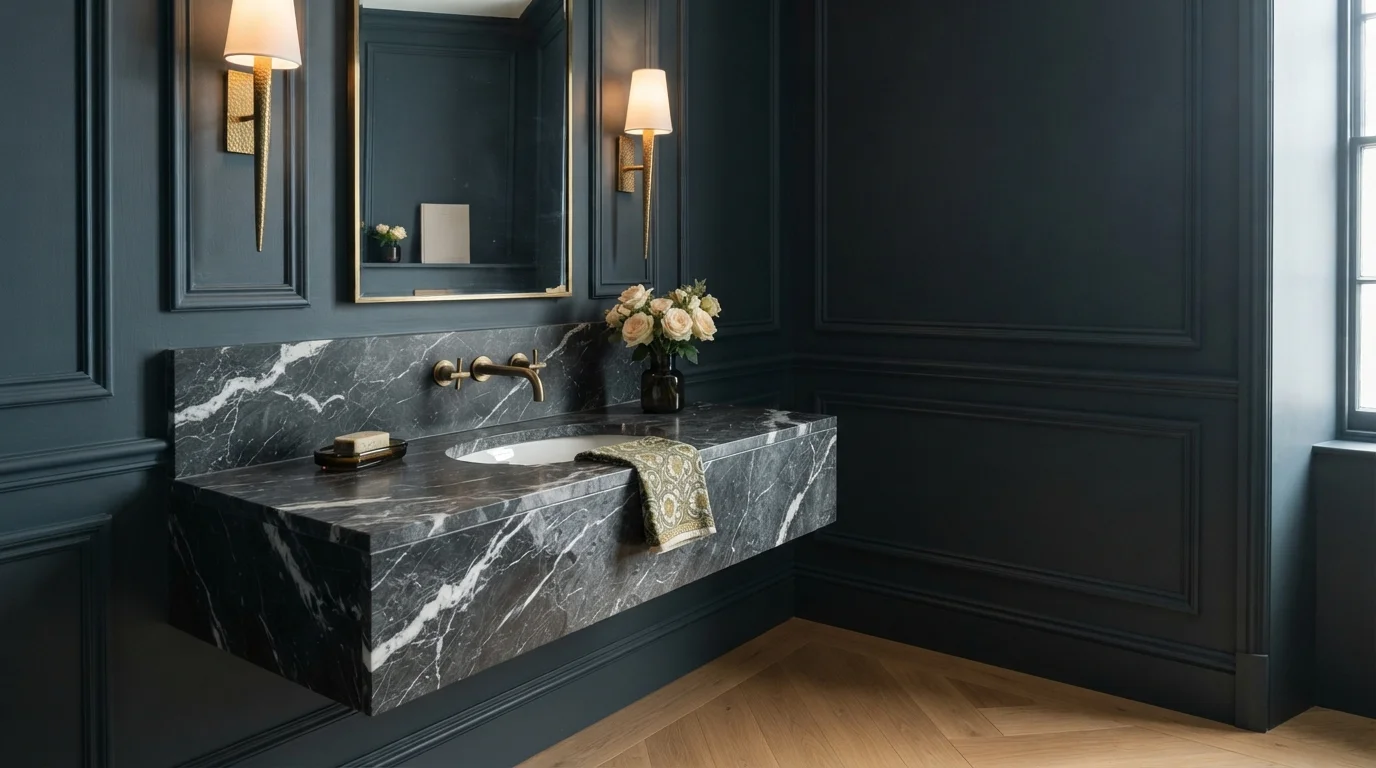
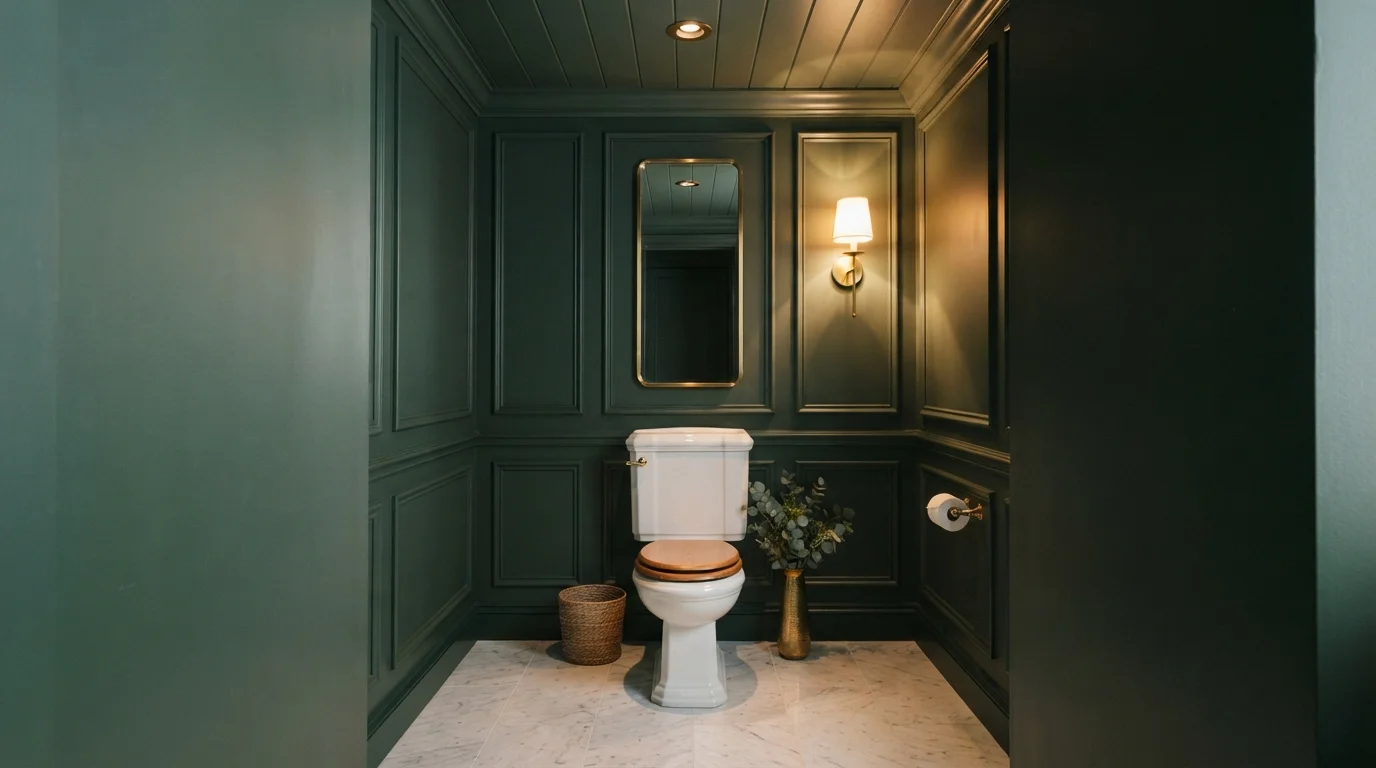
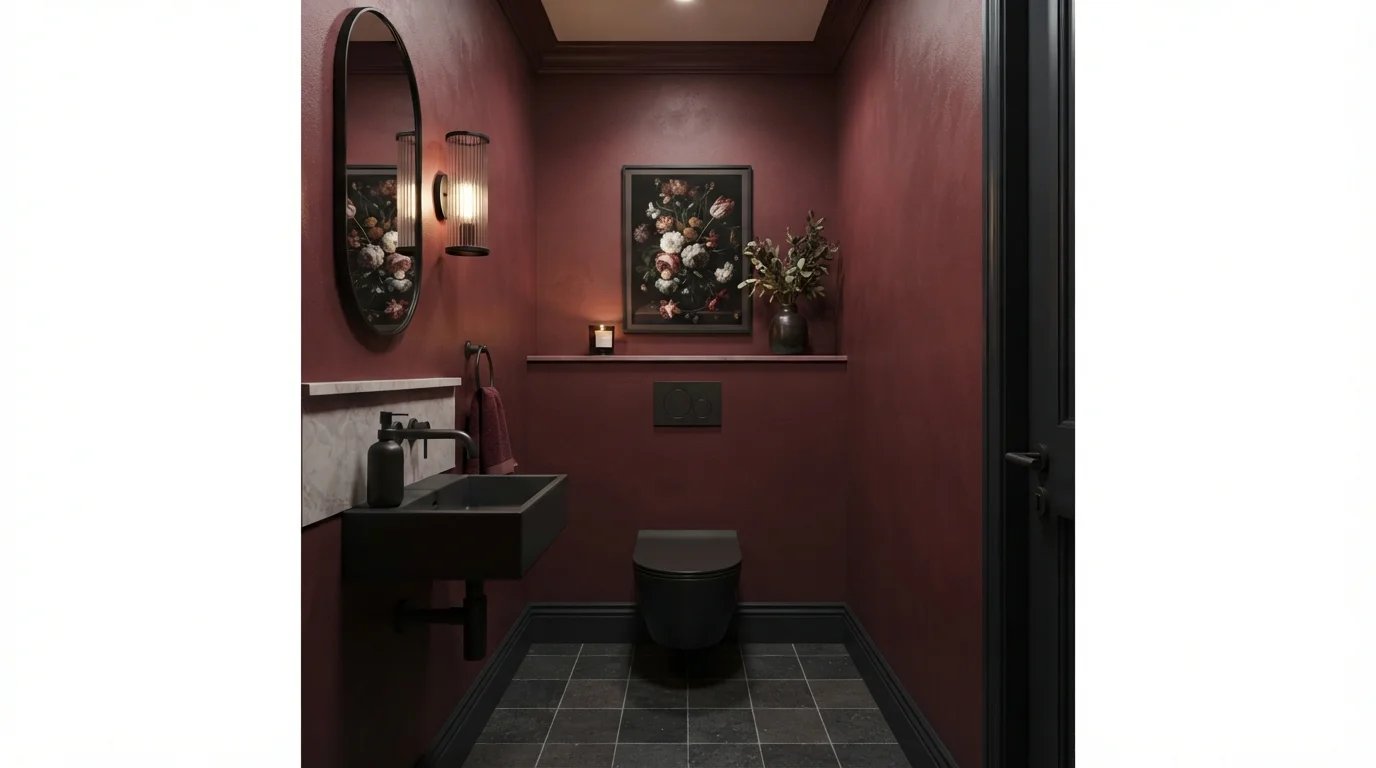
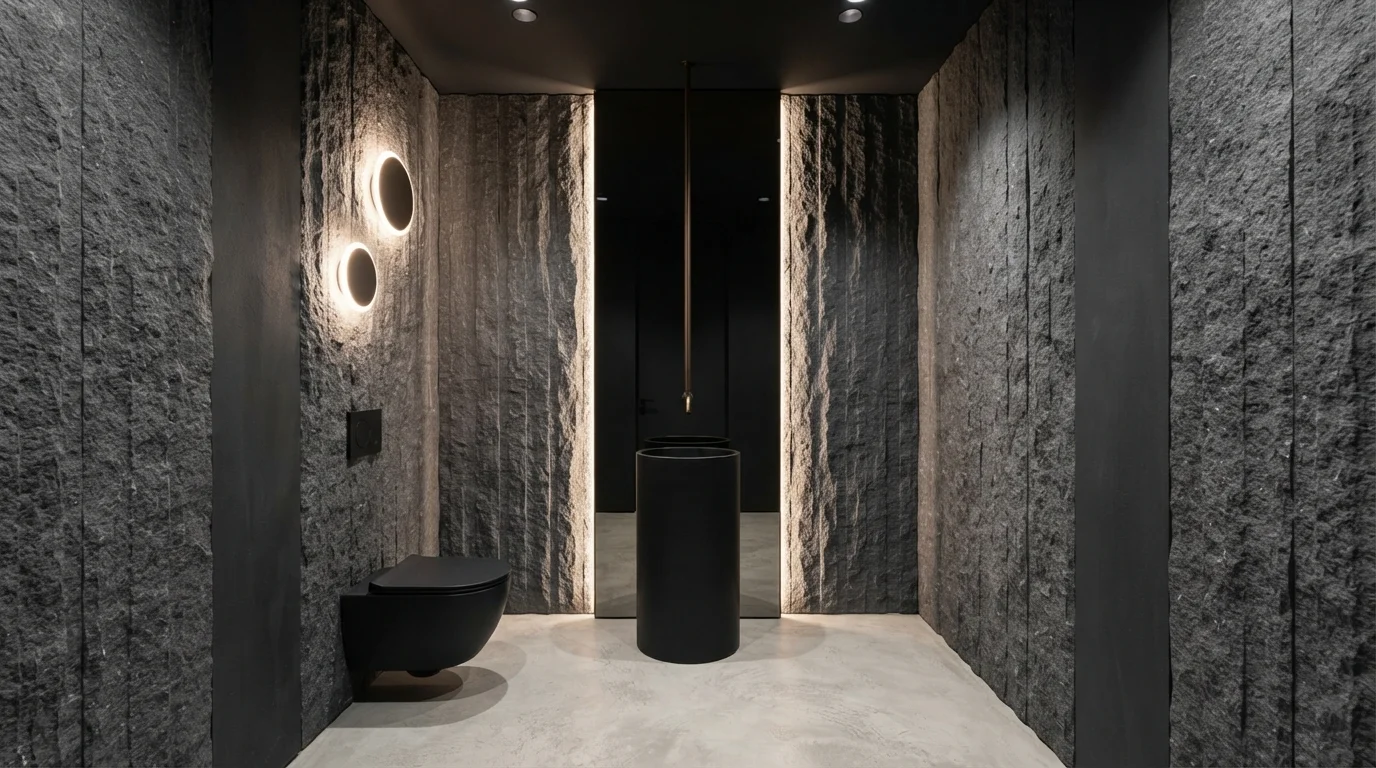
Most powder rooms are small, interior, and short on natural light, and that changes which blue to reach for. In a windowless room, a pale, low-saturation blue can go flat and gray under vanity bulbs, so a mid-tone or deep blue with an LRV in the rough 10 to 30 range usually looks richer and more intentional. The dark surrounds the small space and makes it feel like a jewel box rather than an unfinished closet.
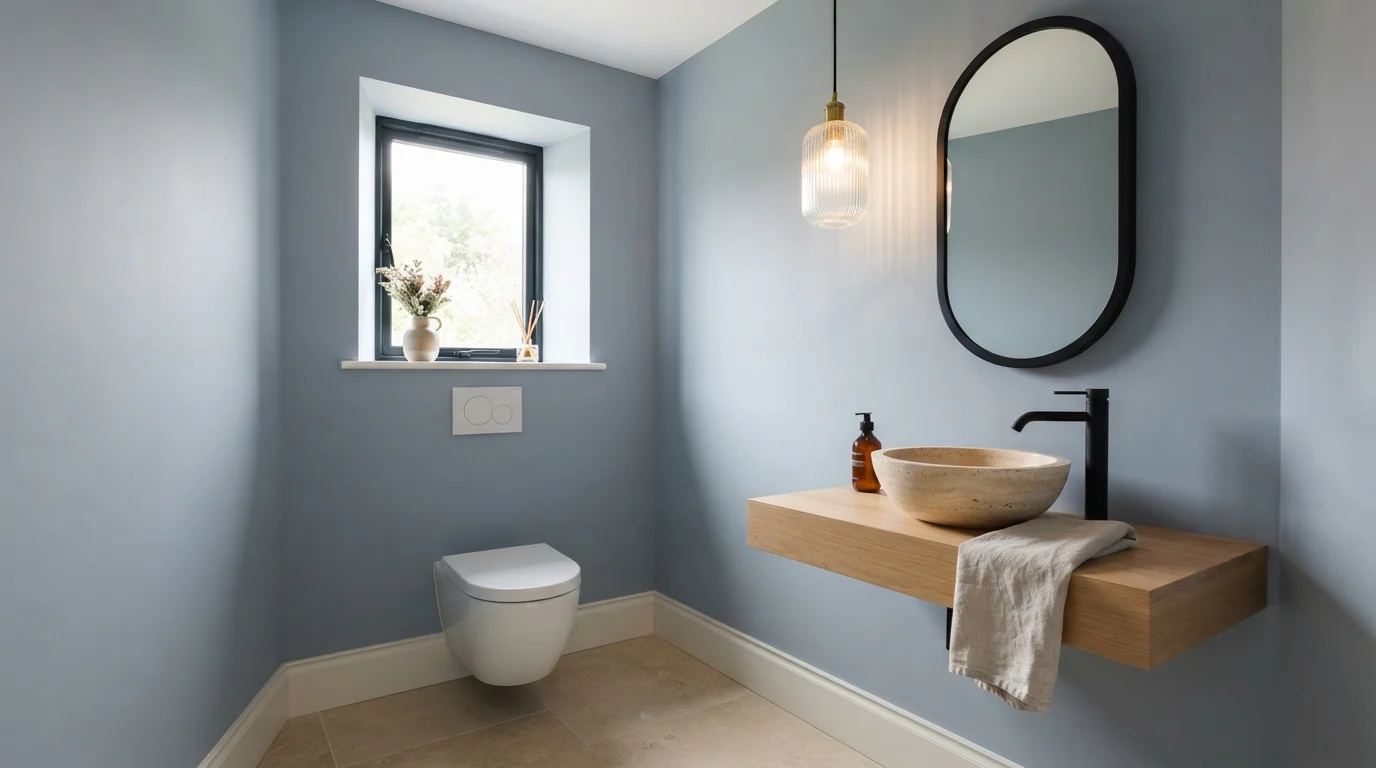
If your powder room does have a window or borrows good daylight, you have more room to run. A lighter airy blue with an LRV in the 45 to 60 range will hold its color and keep the space feeling open. LRV is just how much light a color bounces back, from 0 black to 100 white, and lower numbers go darker and moodier while higher numbers stay light and soft. In a tiny dim room, do not be afraid to go low.
The Finish That Holds Up at the Sink
A powder room sink gets splashed and the walls near it get touched, so flat paint is the wrong call even though the room stays dry. Go with eggshell or satin on the walls. Both wipe clean when toothpaste or soap hits them, and satin in particular shrugs off the regular hand-near-the-light-switch grime that builds up in a guest bath.
Keep the higher shine off the broad walls, though, especially with a deep blue. Glossy sheen on a dark color in a small room throws glare from the vanity light and shows every roller mark and wall flaw. Save semi-gloss for the trim and the door, where the extra durability and the slight contrast against eggshell walls actually look right.
Pairing Blue With Trim, Ceiling, and Fixtures
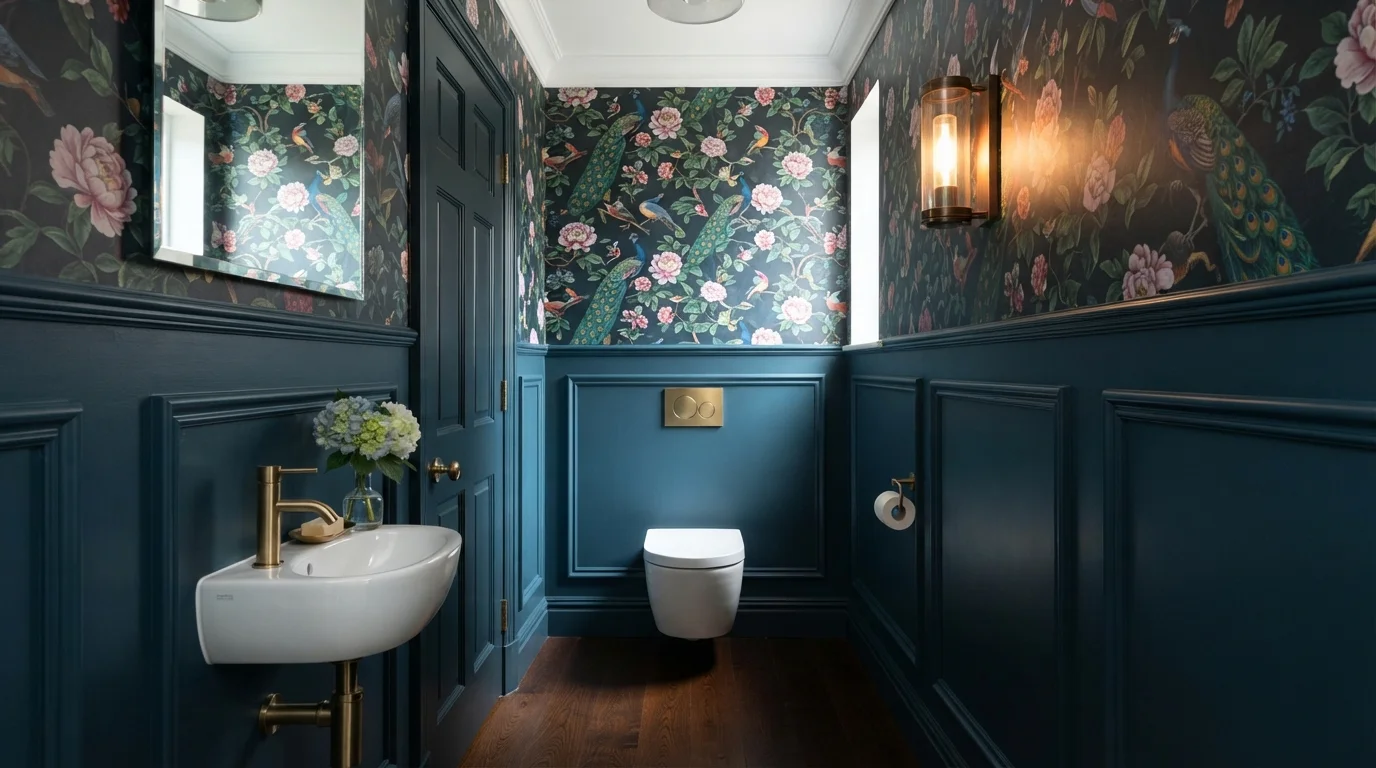
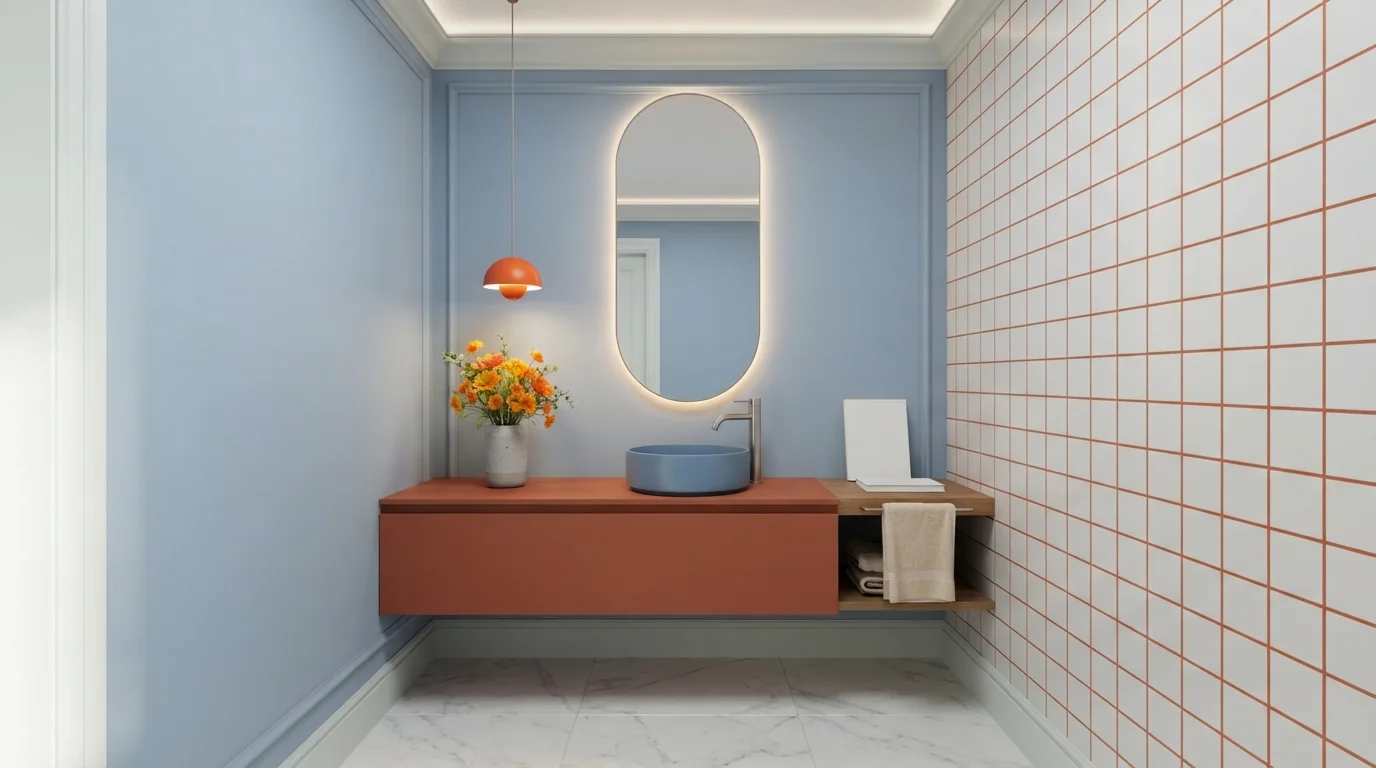
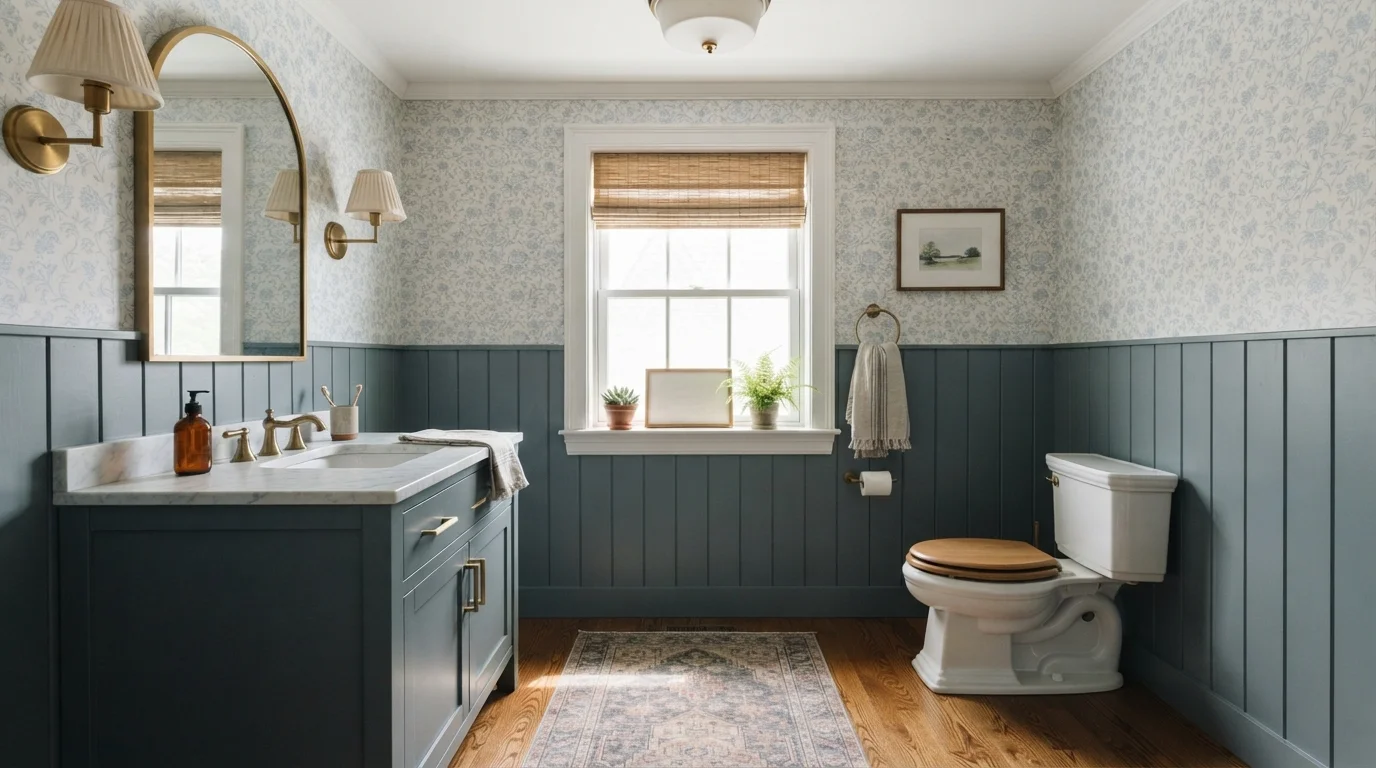
Crisp white trim is the default and it never fails, but it is not your only move in a small room. Painting the trim and even the ceiling the same blue as the walls erases the lines and makes a tiny powder room feel bigger and more deliberate, which works especially well with a deep mid-tone. If you want contrast instead, a soft warm white on the ceiling keeps things from feeling boxed in.
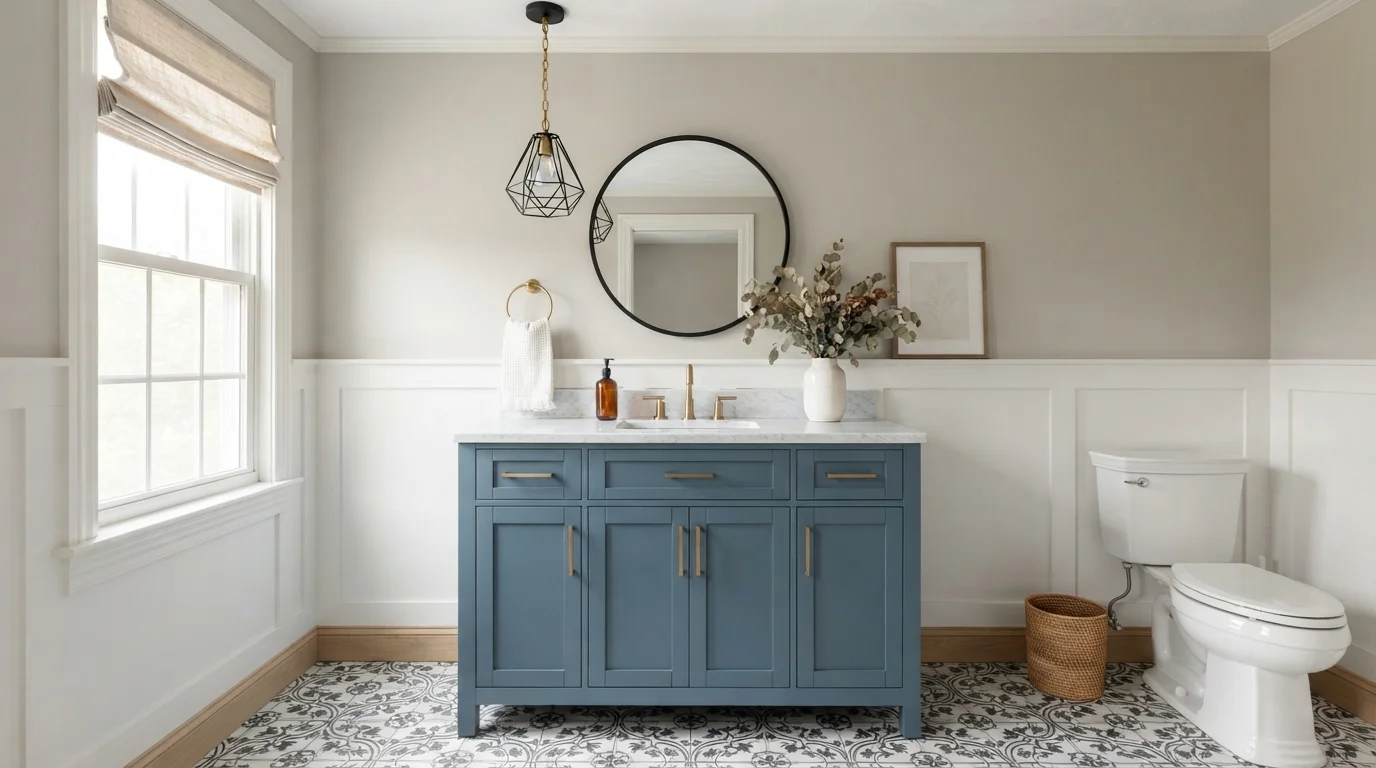
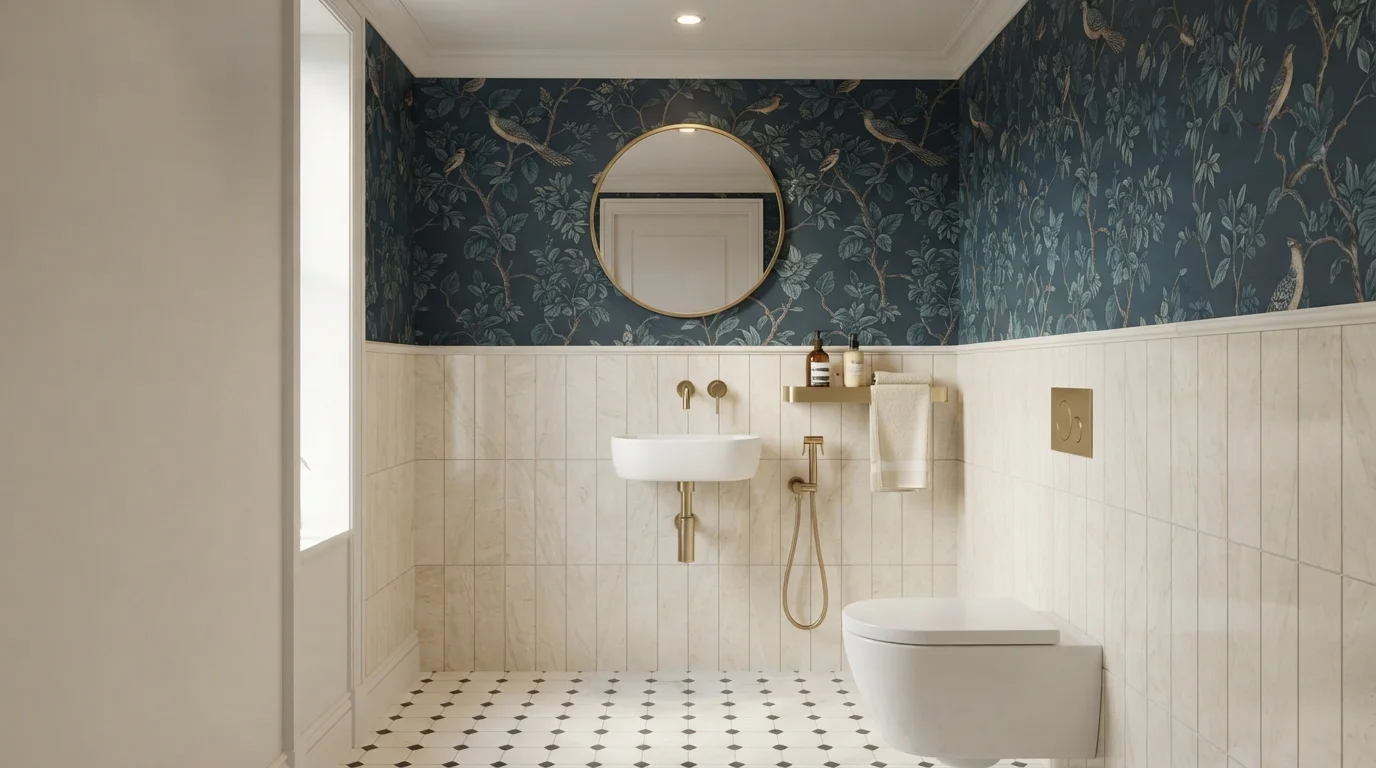
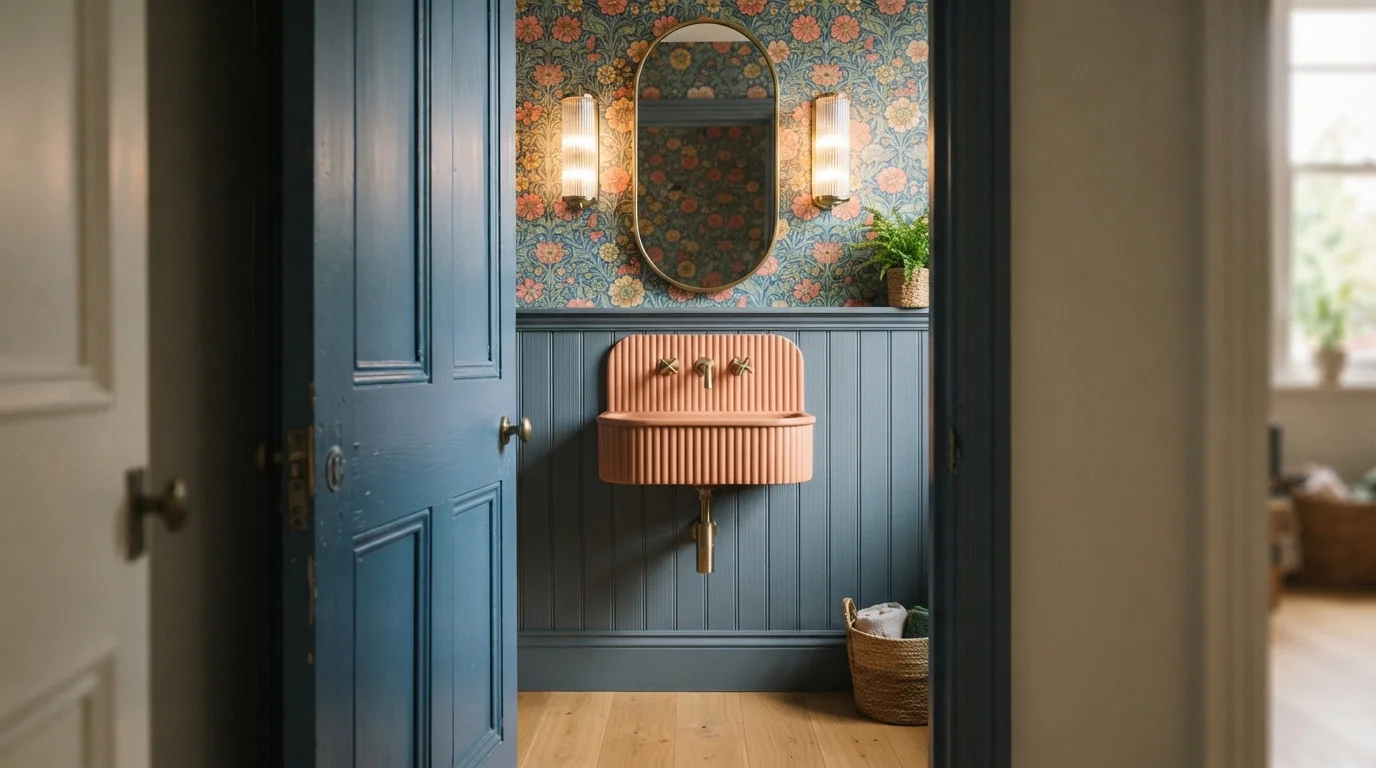
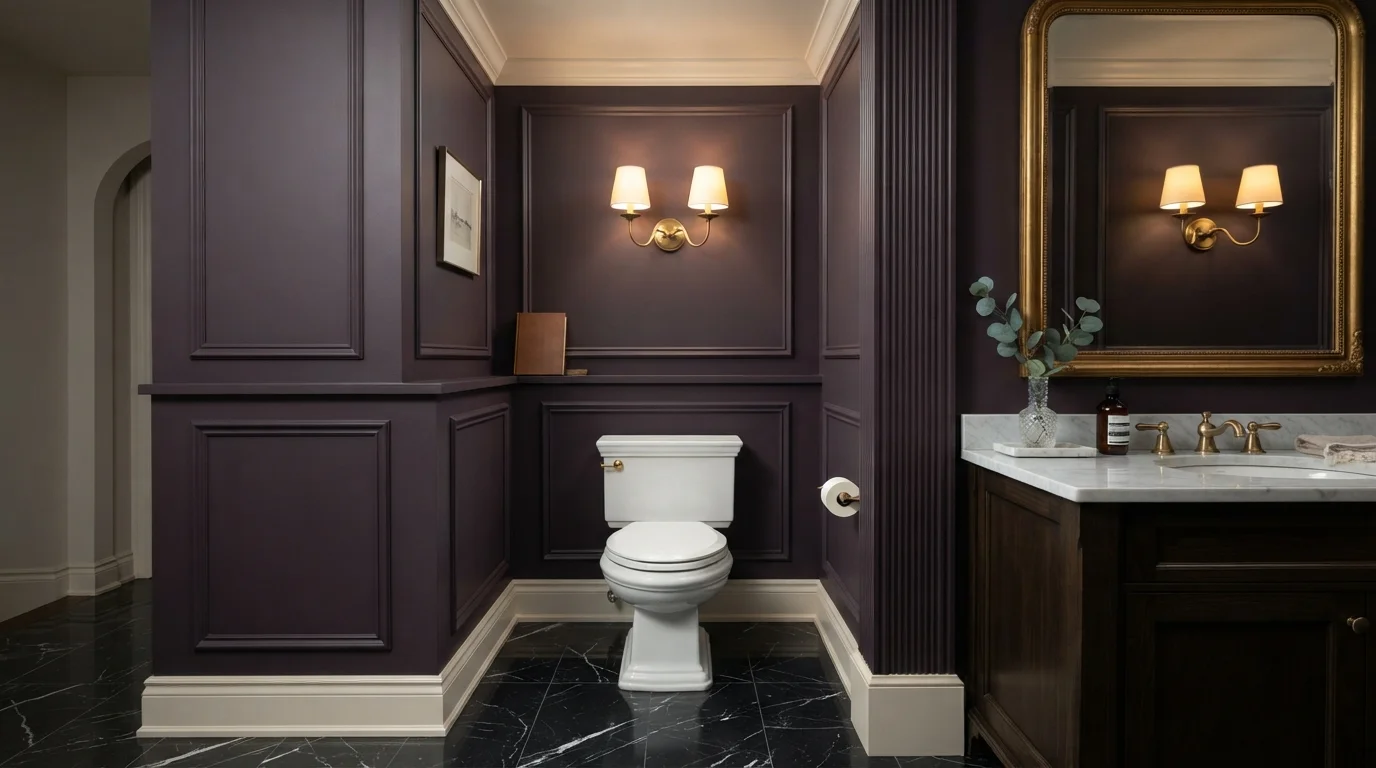
Blue is also forgiving with metals, which matters because the vanity faucet, light, and mirror frame are right at eye level here. Warm brass and gold pop beautifully against a deeper blue and keep it from going cold, while matte black reads sharp and modern. Chrome and nickel stay clean and quiet. For a vanity, a natural wood tone warms a cool blue, and a navy vanity under lighter blue walls is a classic powder-room combination.
The Mistakes That Sink a Blue Powder Room
The most common error is choosing too light a blue for a dark room and ending up with a sad, washed-out gray-blue that looks like a primer coat. The second is testing the color only in daylight or only on the brightest wall, then being surprised when the vanity bulbs shift it warmer or cooler. Always paint a big sample on more than one wall and look at it at night with the actual lights on.
The other trap is matching the blue too tightly to a single blue tile, towel, or fixture, which leaves you with a one-note room. Let the paint be a touch different in depth or warmth so the elements relate instead of clone each other. And skip true flat on the walls, since the first guest who splashes the sink will leave a mark you cannot wipe away.
Blue Powder Room Paint — Frequently Asked Questions
Is blue too cold for a powder room?+
Not if you pick the right blue. Choose a blue with a little warmth or gray in it, like a slate or denim, rather than a bright primary blue, and the room reads calm instead of chilly. Warm brass or gold fixtures and a wood vanity also pull a cool blue back to cozy.
What is the best shade of blue for a small windowless powder room?+
A mid-tone to deep blue usually looks best, roughly an LRV of 10 to 30. A small dark room turns a deep blue into a jewel box, while a pale blue tends to go flat and grayish under artificial light. If the room borrows daylight, a lighter blue around LRV 45 to 60 will stay open and airy.
What sheen should I use on powder room walls?+
Eggshell or satin. Both wipe clean when the sink splashes or hands brush the wall, which a flat finish cannot do. Keep semi-gloss for the trim and door, and avoid high gloss on dark blue walls because it throws glare and shows every flaw in a tight space.
What color trim and ceiling go with blue walls here?+
Crisp white trim is the safe classic. To make a tiny powder room feel larger, paint the trim and ceiling the same blue as the walls so there are no hard lines. A soft warm white ceiling is a good middle path if all-blue feels like too much.
Which fixtures and metals look best with blue?+
Brass and gold pop warmly against a deeper blue and are the most popular pairing. Matte black looks sharp and modern, while chrome and nickel stay quiet and clean. A natural wood vanity warms up a cool blue nicely.
Can I match this blue to a brand I already use?+
Yes. Every color shown is mixed to order at the paint counter, and any blue can be cross-matched from one brand to another. Pick the shade you like here, then have it tinted in whatever brand and base you prefer for your walls.