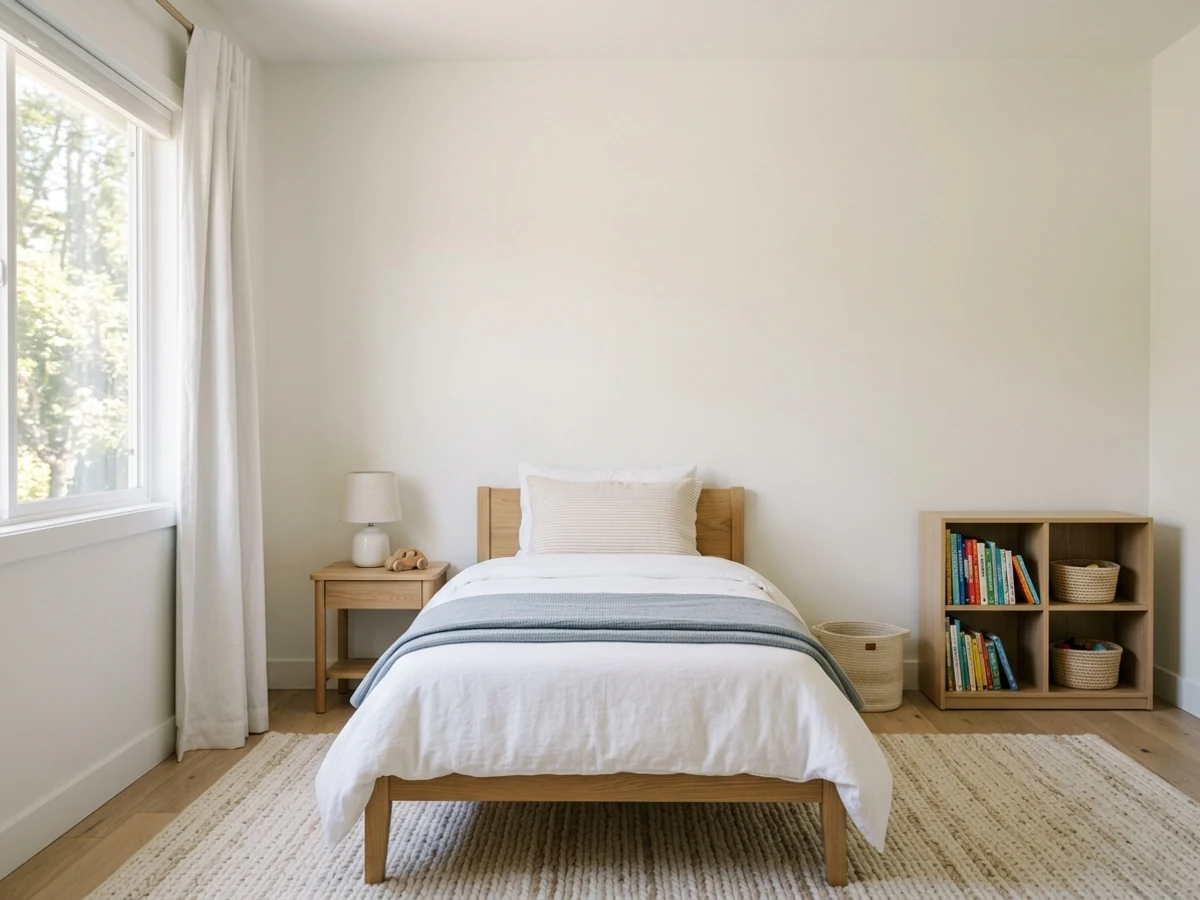
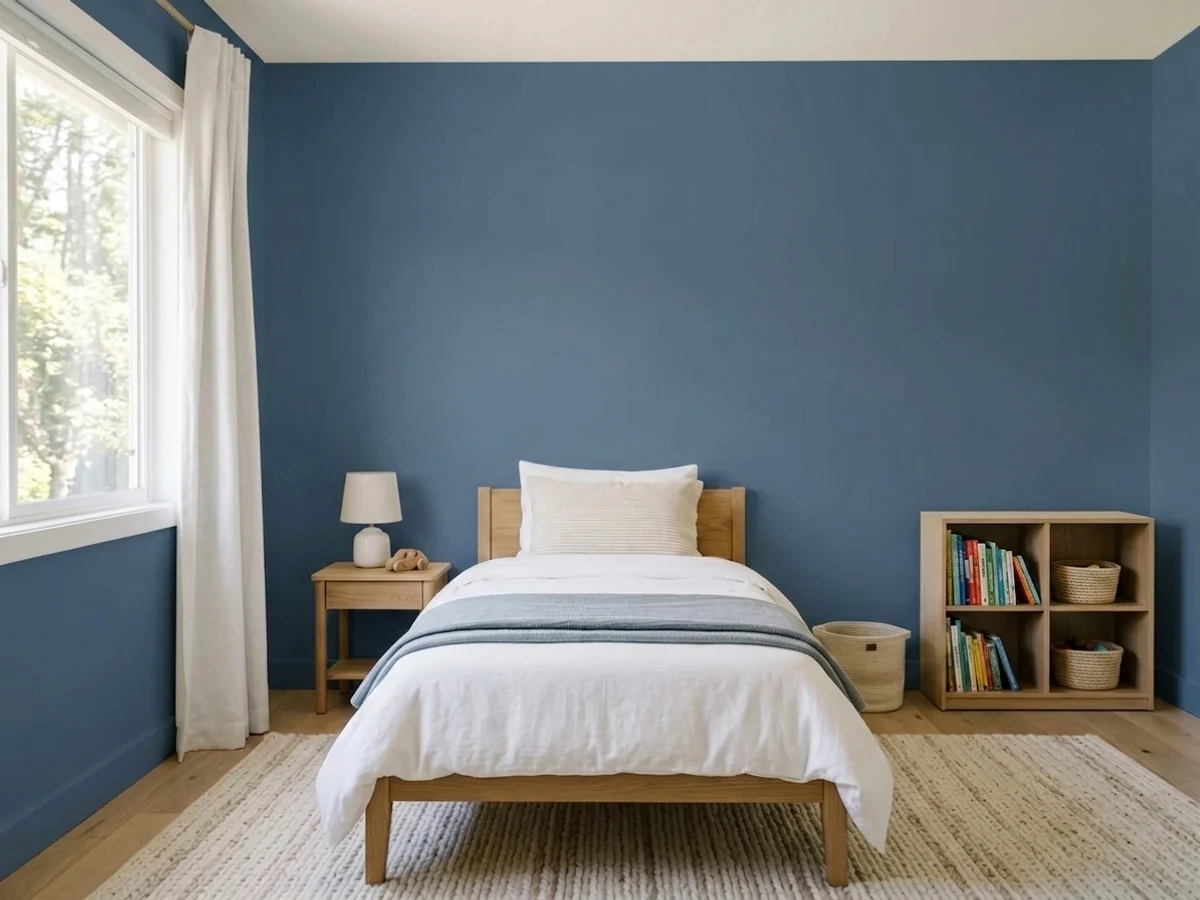
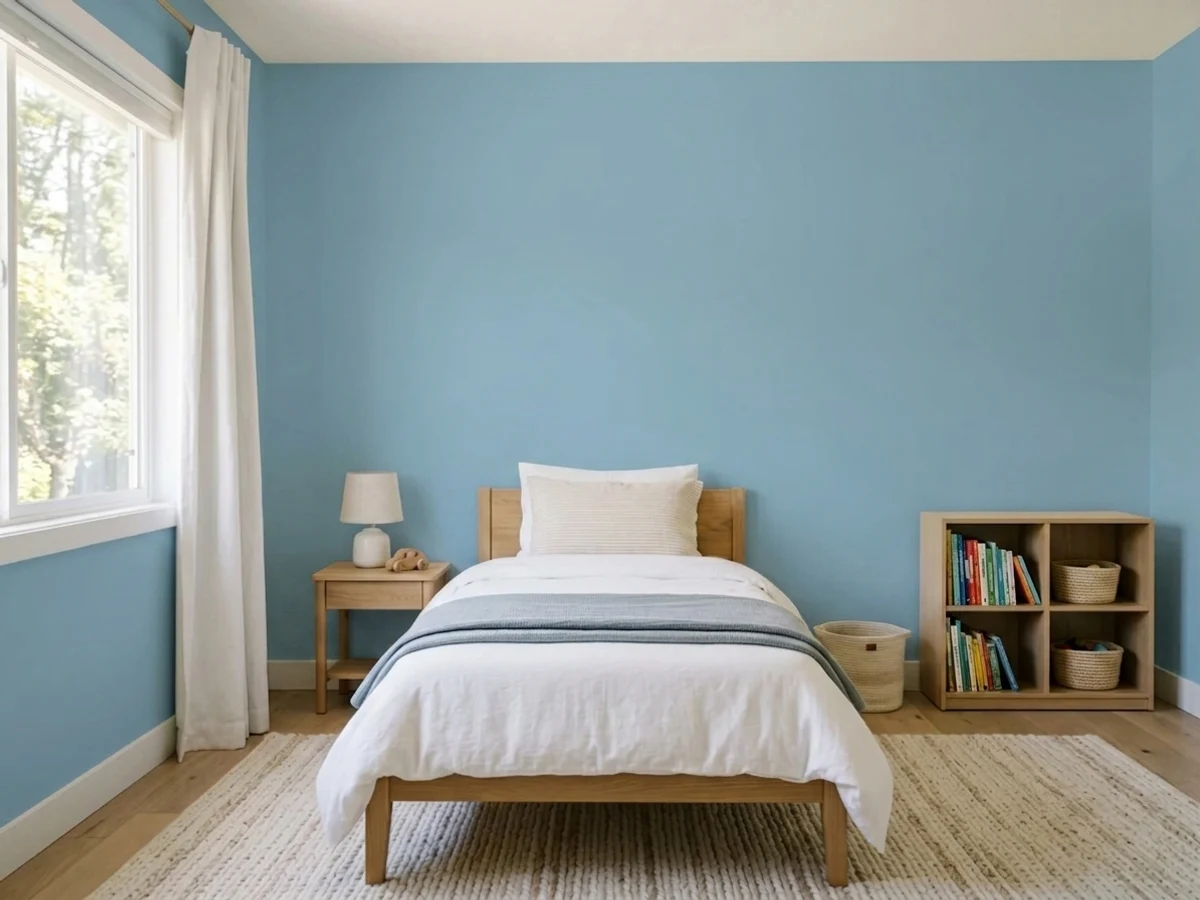
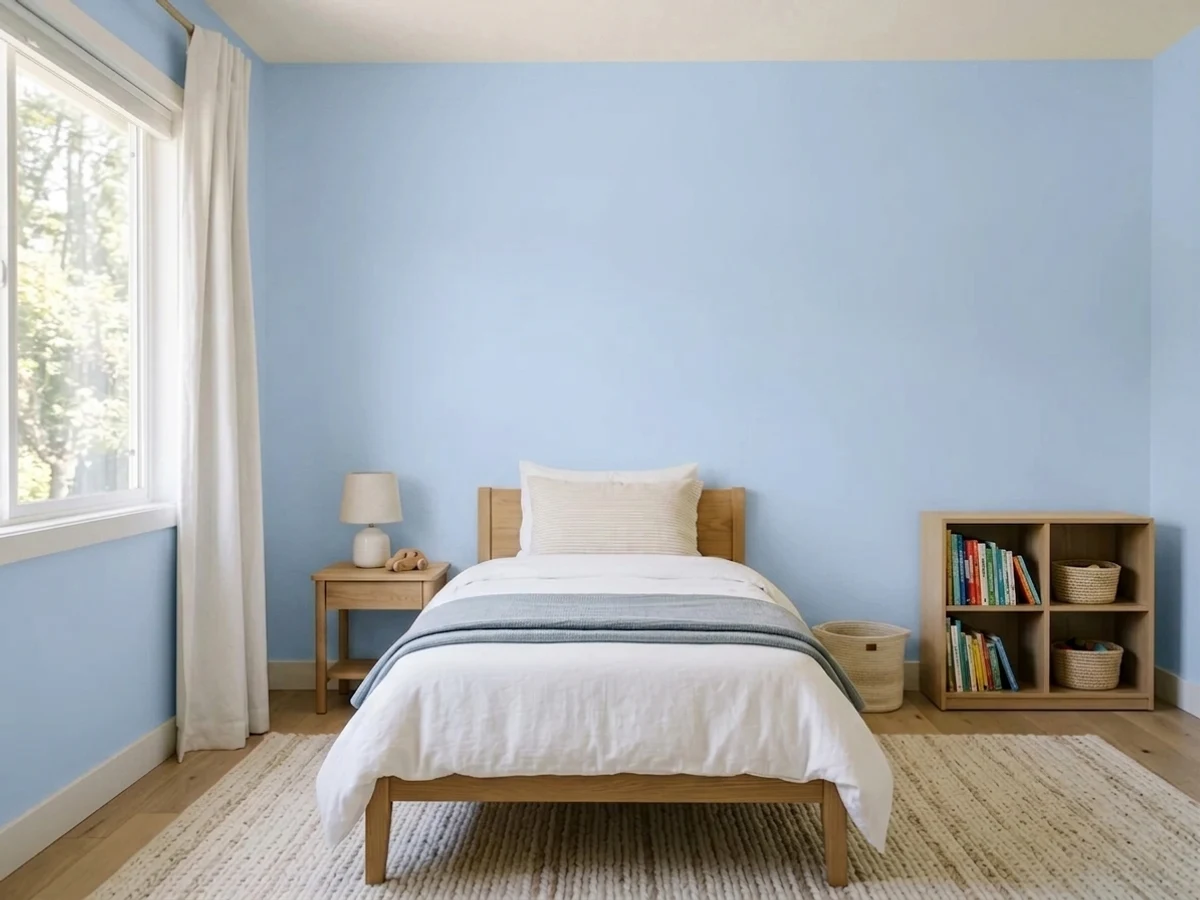
Blue Kids Room Paint Colors
1,741 blue colors that work in kids rooms, drawn from the full ~30,000-color US paint deck. Below: editor's picks specific to kids rooms, then 30 picks spread across the LRV range — narrow further on the brand page when you've shortlisted.
Blue is the most popular color for accent walls, kitchen islands, and front doors — and also the family with the widest spread, from pale dove-blues that read almost grey, to inky near-black navies, to saturated cobalts that read almost royal. Teal-leaning blues (the green-blue overlap) live next door in the Teal family.
Editor's Picks: Blue for Kids Rooms
4 picks30 Blue Picks Across the LRV Range
30 of 1,741 · sorted dark → lightLooking for more? All blue → covers every brand; brand × family pages show full decks.
Blue Kids Room Colors at Every US Brand
21 brands · up to 10 picks eachUp to 10 picks per brand spread across the blue LRV range, drawn from each brand's full deck. Tap any swatch with a curated guide for full spec; tap the brand title for the brand's complete blue deck.
Behr
Valspar
Glidden
Benjamin Moore
PPG / Glidden
Dunn-Edwards
Sherwin-Williams
Dutch Boy
Hirshfield's
Diamond Vogel
Kompozit
C2 Paint
Portola Paints
Magnolia Home
Rodda
Farrow & Ball
Backdrop
Annie Sloan
Clare
Rust-Oleum
Other Kids Room Color Families
Blue Colors in Other Rooms
Blue Paint Colors for a Kids Room
Blue is one of the easiest colors to live with in a kids room, which is exactly why so many parents reach for it. It reads calm and tidy, it works for a nursery and still looks right when that same kid is ten, and it does not lock you into a "little kid" theme you will repaint in three years. The trick is picking the right blue for the room you actually have, not the swatch that looks great in the store.
This page walks through how to choose a blue that fits a kids room: how light in the space changes the color, what depth of blue to aim for, and which sheen survives sticky hands and scrubbing. Every blue you see in the swatches is mixed to order at the paint counter, so you are not tied to one brand. If you fall for a shade from one company, it can almost always be cross-matched into another brand's paint line.
Why Blue Works So Well in a Kids Room
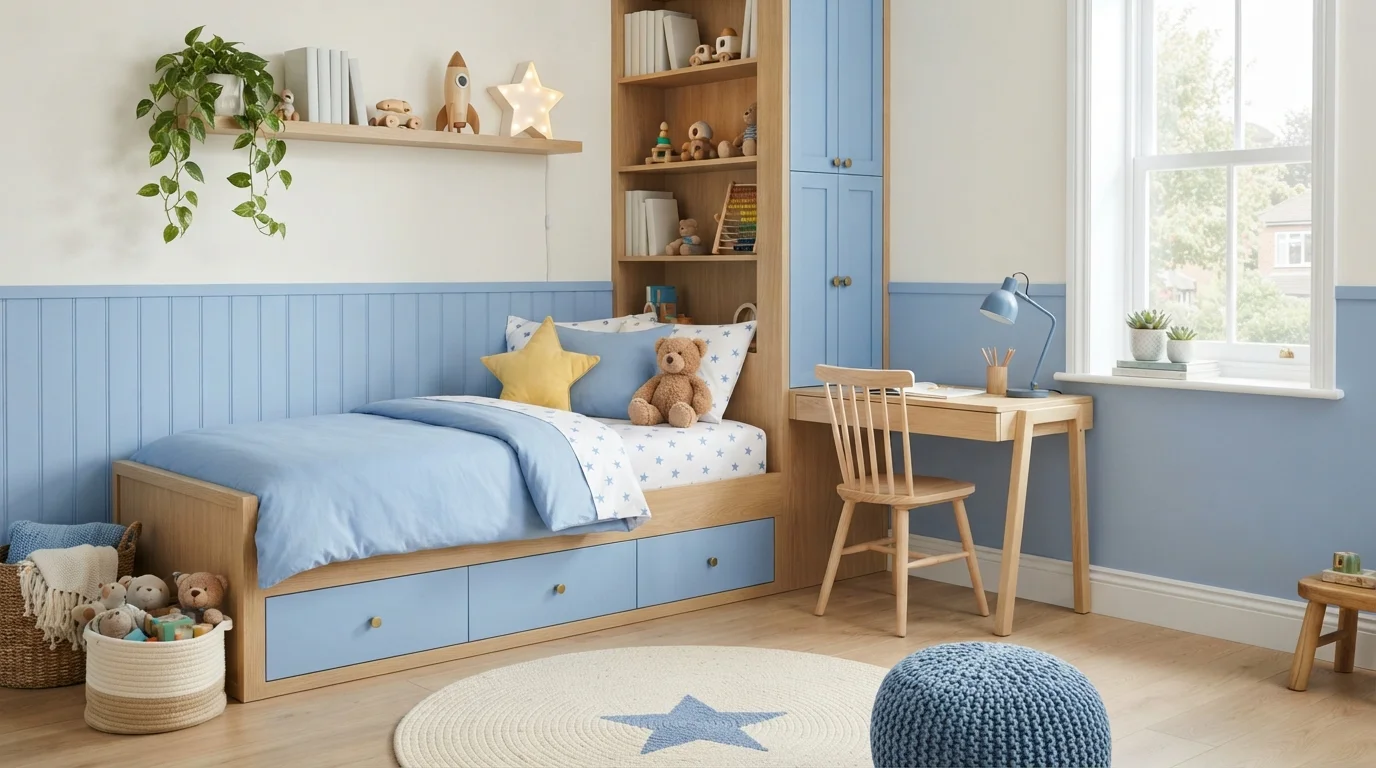
Blue is the rare color that feels both soothing and cheerful, which is why it suits a room that has to do two jobs: wind a child down at bedtime and feel happy and awake during play. A soft sky or powder blue keeps things calm without going sleepy, while a brighter mid-blue brings energy without the buzz you get from red or bright yellow. It also hides a lot of the everyday mess that walls collect, from scuffs to the faint shadow of small handprints.
The other reason it works is longevity. A child outgrows cartoon themes fast, but a good blue grows with them. Pick the shade for the kid you have now and the room still looks right years later, which matters more in a space you would rather not repaint every season.
Choosing the Right Depth of Blue for the Light
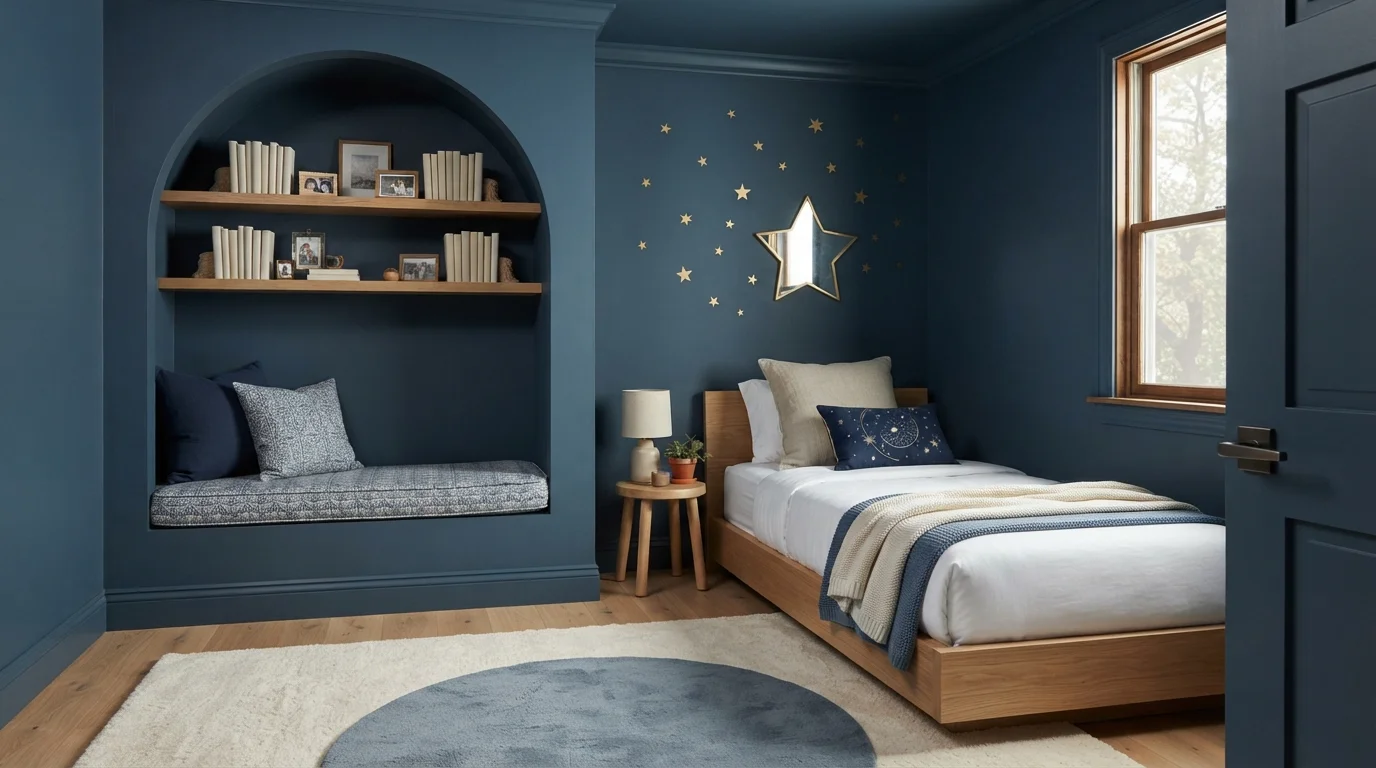
Start by watching the room across a full day, because light is what makes or breaks a blue. North-facing kids rooms get cool, flat light that pushes blue toward gray and can feel chilly, so lean warmer and lighter, or choose a blue with a soft green or gentle gray-green undertone to keep it from going icy. South- and west-facing rooms get warm, strong light that lets you use a deeper, truer blue without it feeling like a cave.
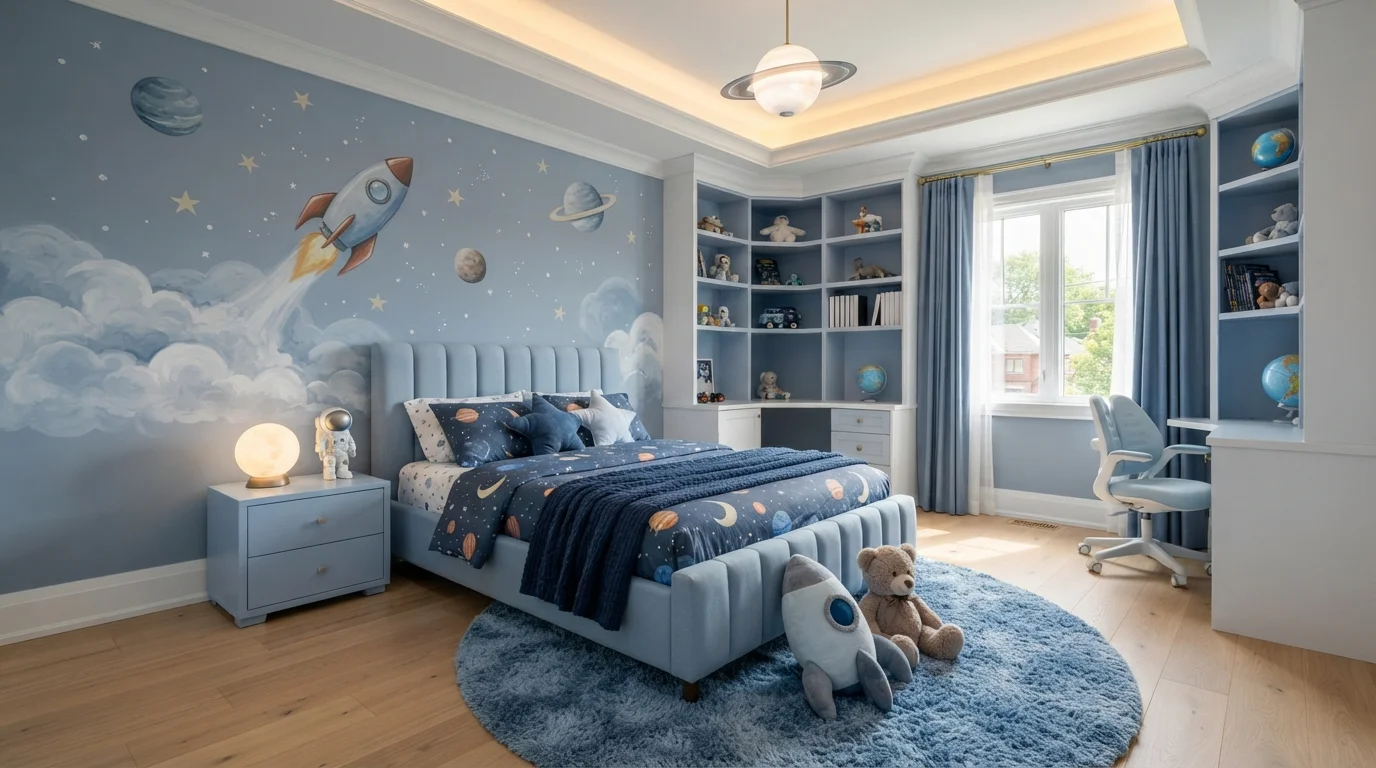
LRV, the light reflectance value printed on most swatches, is your shortcut here. A blue in the 60s to 70s LRV stays airy and bounces light around a smaller room, which suits most kids rooms. Drop into the 30s or 40s for a cozier, more grounded feel on one accent wall, but test it big before you commit, since deep blue can swallow light fast in a room with one small window.
The Right Sheen for Walls Kids Will Touch
A kids room takes more abuse than almost any room in the house, so sheen matters as much as color. Flat paint looks beautiful but marks easily and rarely wipes clean, which is a problem when crayon and fingerprints are part of daily life. For the main walls, an eggshell or satin is the sweet spot: it has just enough sheen to take a damp cloth and the occasional scrub without burnishing into a shiny spot.
Save higher gloss for the parts that get handled and bumped most. A semi-gloss on trim, doors, and the baseboards near the floor stands up to wiping, toy collisions, and the inevitable scuffs. Skip very high gloss on big wall areas, since the glare can feel harsh and it shows every roller mark and wall imperfection under a kid's overhead light.
Pairing Blue With Trim, Ceiling, and Furniture
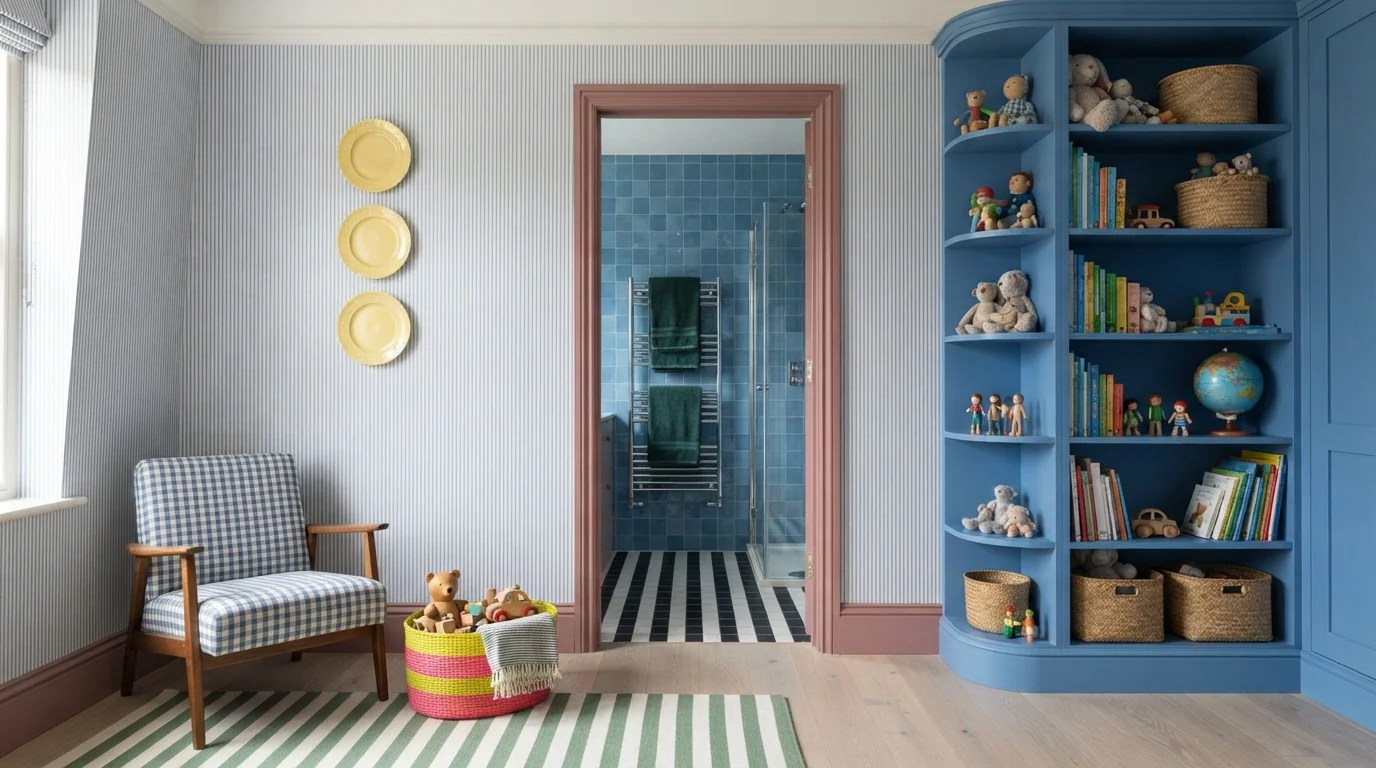
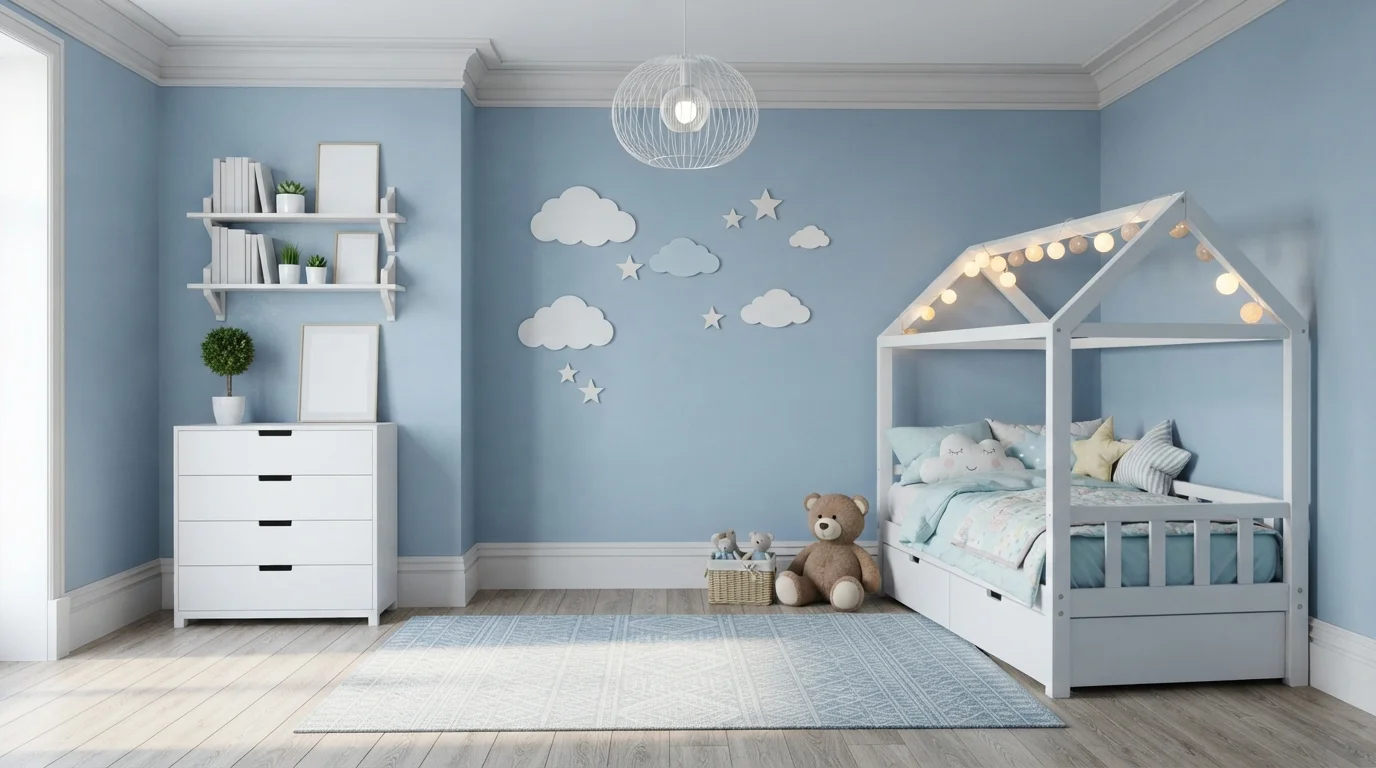
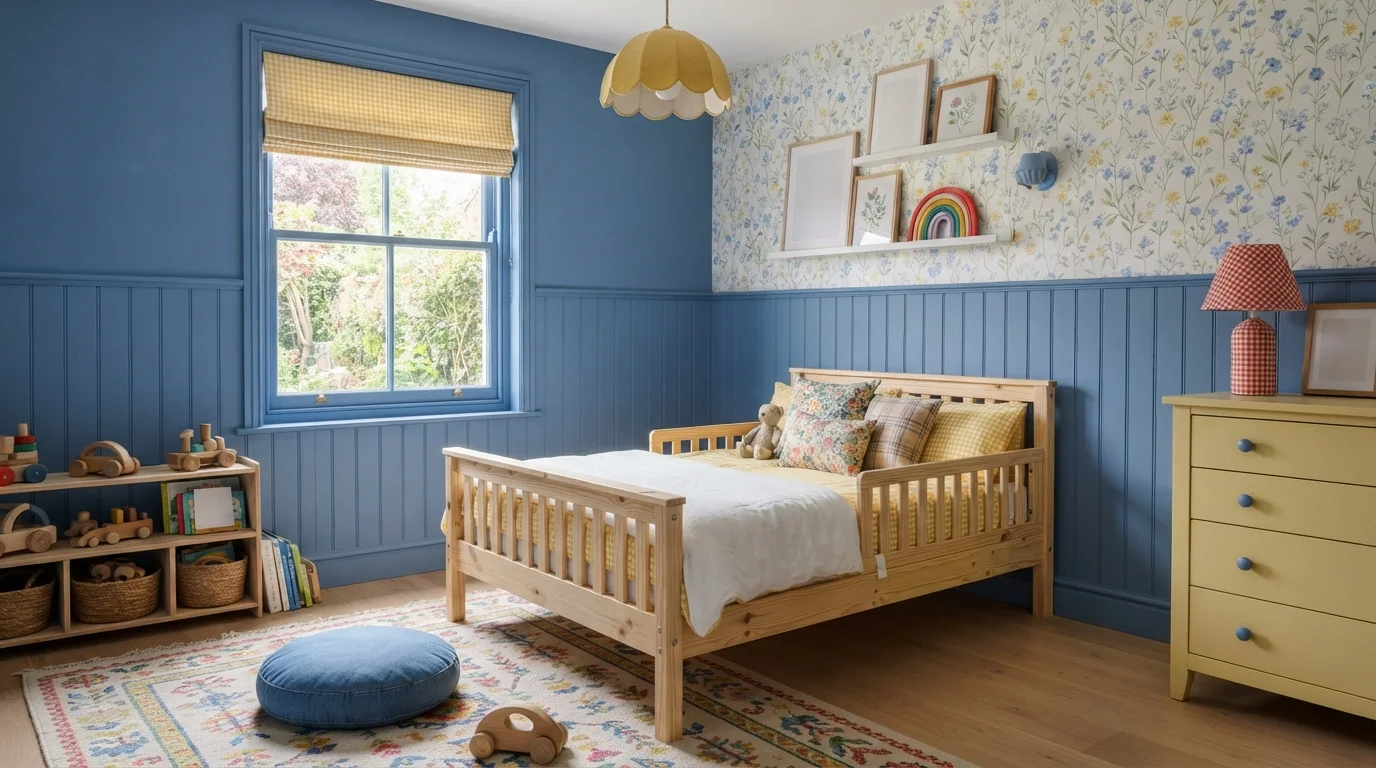
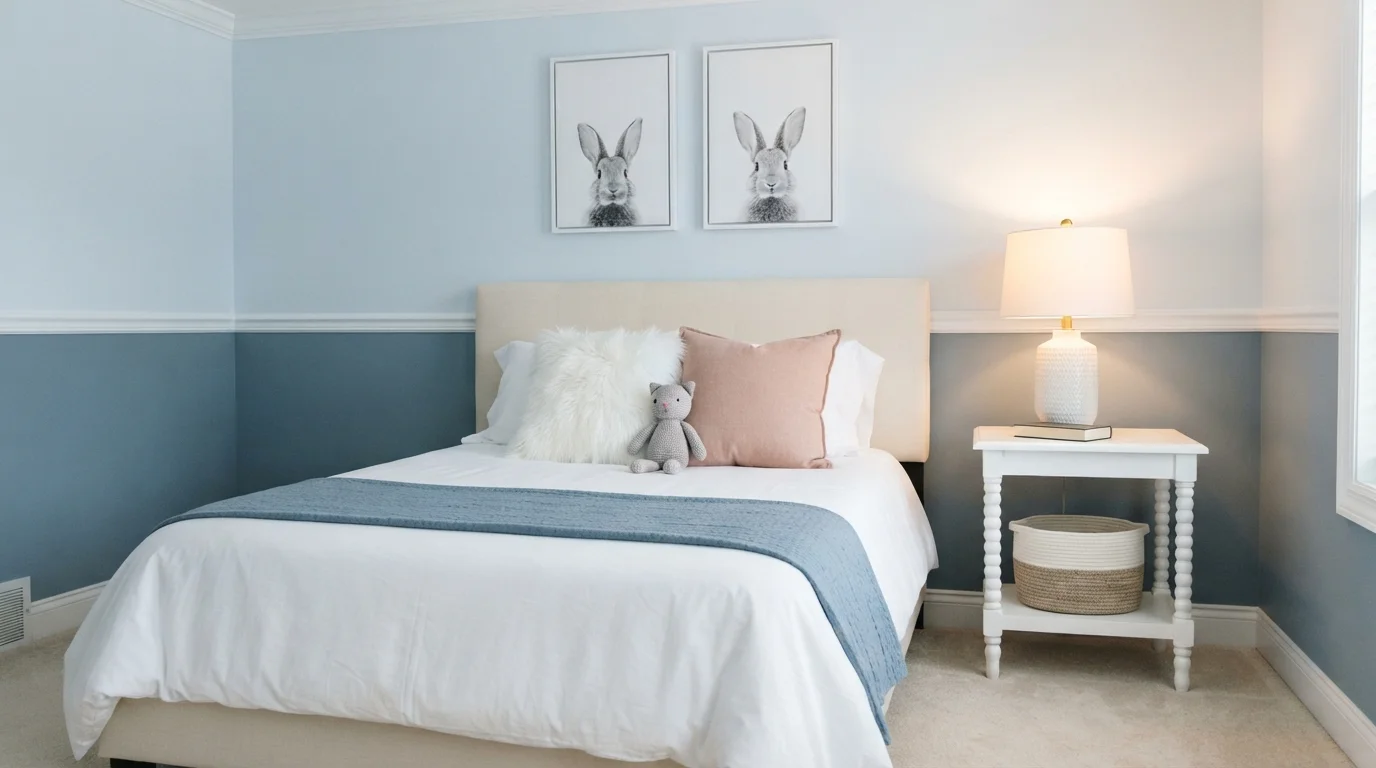
Blue is forgiving to pair, which is part of its appeal. Crisp white trim and a white ceiling keep a blue room feeling fresh and let the color stay the star, while a soft warm white softens a cooler blue so the whole room feels less clinical. If the blue is light, a slightly creamier ceiling adds a cozy lift; if it is deep, a clean white ceiling keeps the room from closing in.
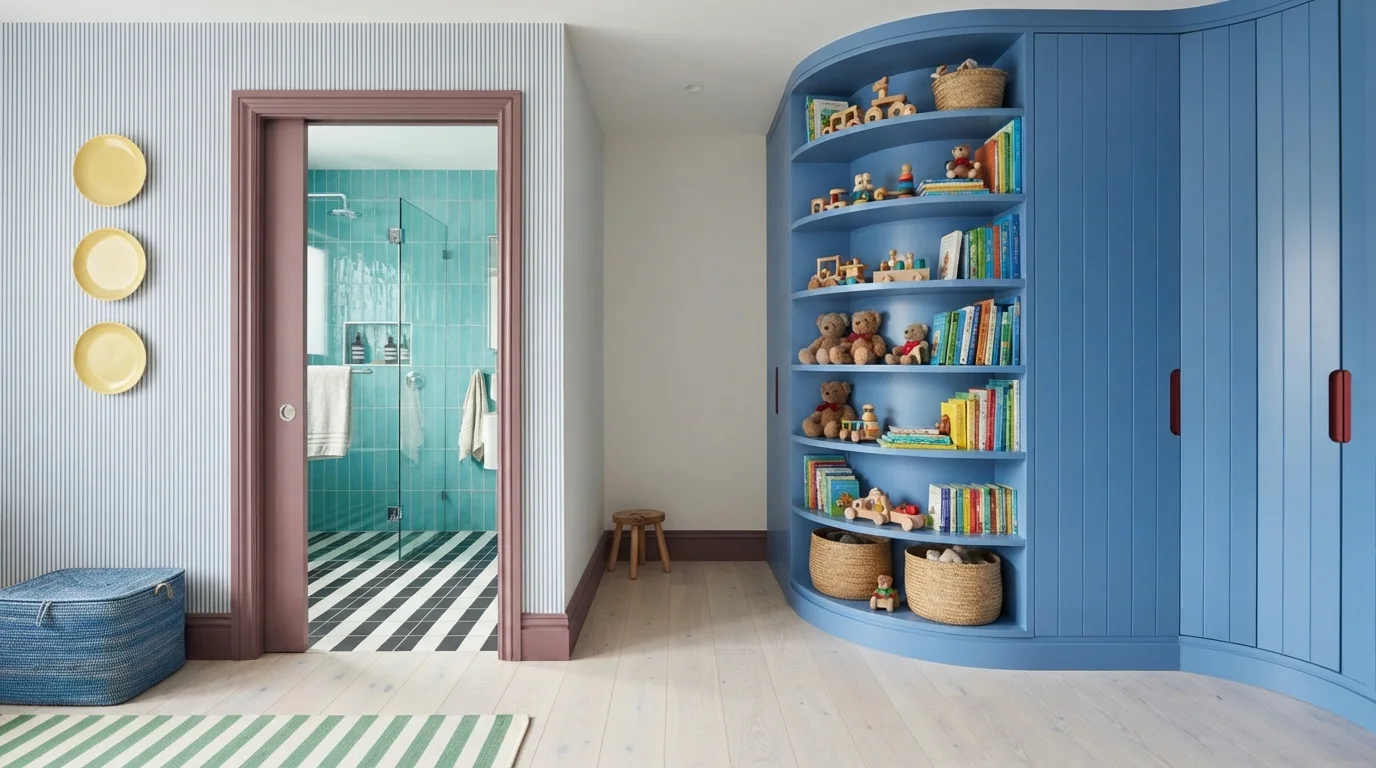
For furniture and built-ins, natural wood warms a blue beautifully and reads timeless, so cribs, dressers, and bookshelves in light oak or pine are safe bets. Brass or warm-metal fixtures and knobs add a small grown-up touch, while soft accents in coral, mustard, soft green, or warm gray keep a blue room from feeling cold. Because everything here is mixed to order, you can match a closet or a single accent wall to a furniture color you already own.
Common Mistakes With Blue in a Kids Room
The biggest mistake is choosing the blue from a tiny chip under store lighting. Blue shifts more than almost any color between the showroom and a real bedroom, so a sample that looked like a soft sky can turn gray, purple, or even greenish on your wall. Always paint a large sample patch, look at it morning and night, and never judge a blue dried for less than a full day.
The other common misses are picking a blue that is too cold for a north-facing room, going too dark in a space with little natural light, and pairing a cool blue with stark cool gray that drains all the life out of it. And do not over-commit to a single bold blue on every wall in a small room; one painted accent wall with the rest kept light usually gives you the color you want without making the space feel smaller.
Blue Kids Room Paint — Frequently Asked Questions
Is blue a good color for a kids room?+
Yes. Blue reads calm at bedtime and cheerful during the day, and it suits both a nursery and an older child without feeling babyish. It also hides scuffs and handprints better than most colors, which helps in a room that takes a lot of wear.
What shade of blue is best for a small kids room?+
Stick to a light, airy blue with a higher LRV, roughly the 60s to 70s, so it reflects light and keeps the room feeling open. If you want more depth, put a darker blue on just one accent wall and keep the rest light rather than painting the whole room dark.
What paint finish should I use in a kids room?+
Use eggshell or satin on the walls so you can wipe off crayon and fingerprints without burnishing the paint. Use semi-gloss on trim, doors, and baseboards, since those areas get bumped and handled the most. Avoid flat on walls because it marks easily and rarely wipes clean.
Will a blue room feel too cold for a child?+
It can if the light is cool and the blue has no warmth in it. North-facing rooms get flat, cool light, so choose a warmer or slightly green-leaning blue and pair it with warm white trim, wood furniture, and a few warm accent colors to balance it out.
How do I keep blue from looking gray or purple on the wall?+
Blue shifts a lot between the store and your room, so always test a large sample on the actual wall and view it in both daylight and lamp light for a full day before committing. The undertone you see on a tiny chip is rarely the one you get on a full wall.
Can I match a blue I like from one brand in a different brand's paint?+
Almost always. Every color shown here is mixed to order at the paint counter, and most shades can be cross-matched from one brand into another's paint line. So you can choose the blue you love and still buy the paint brand or finish you prefer.