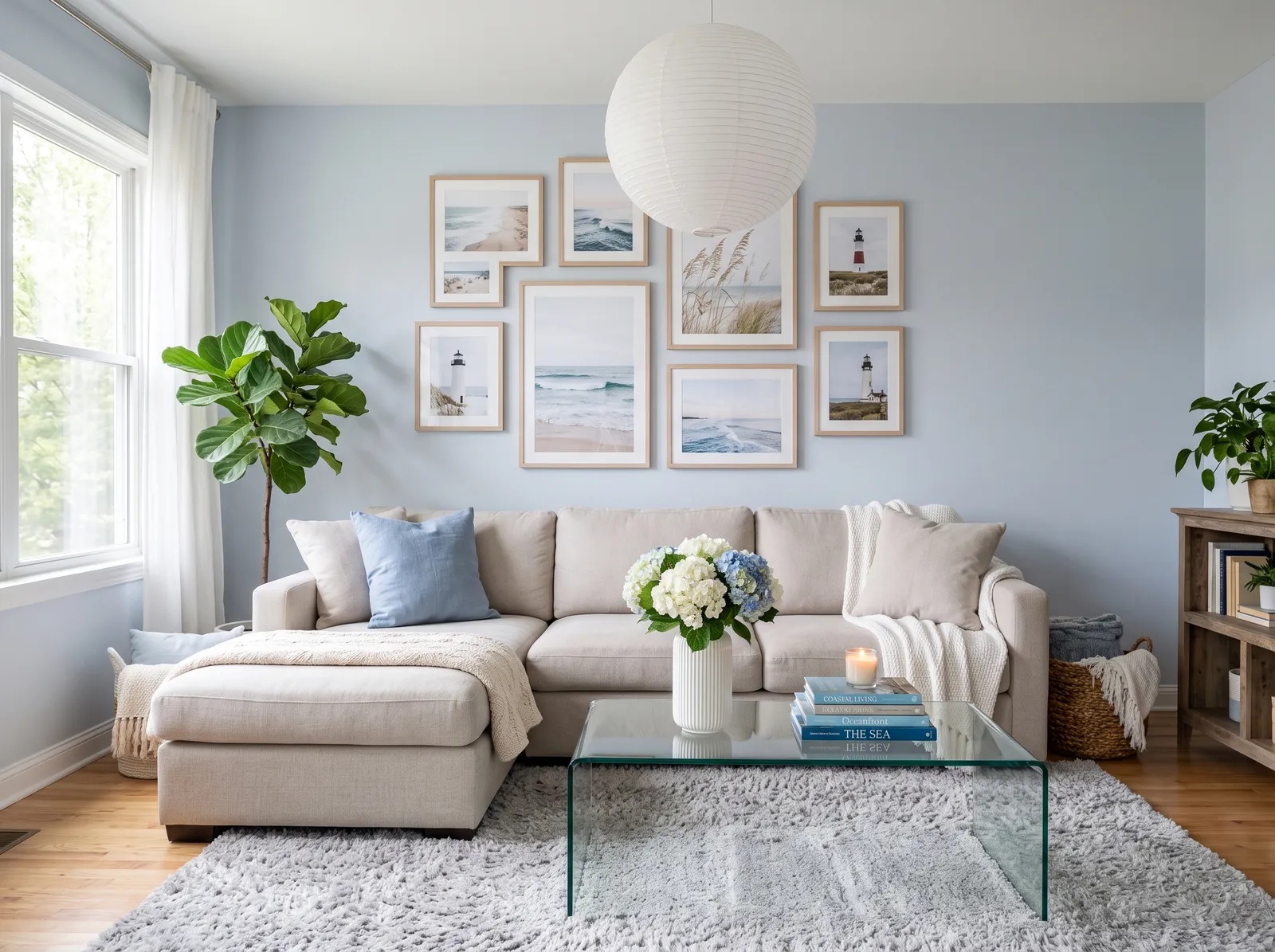
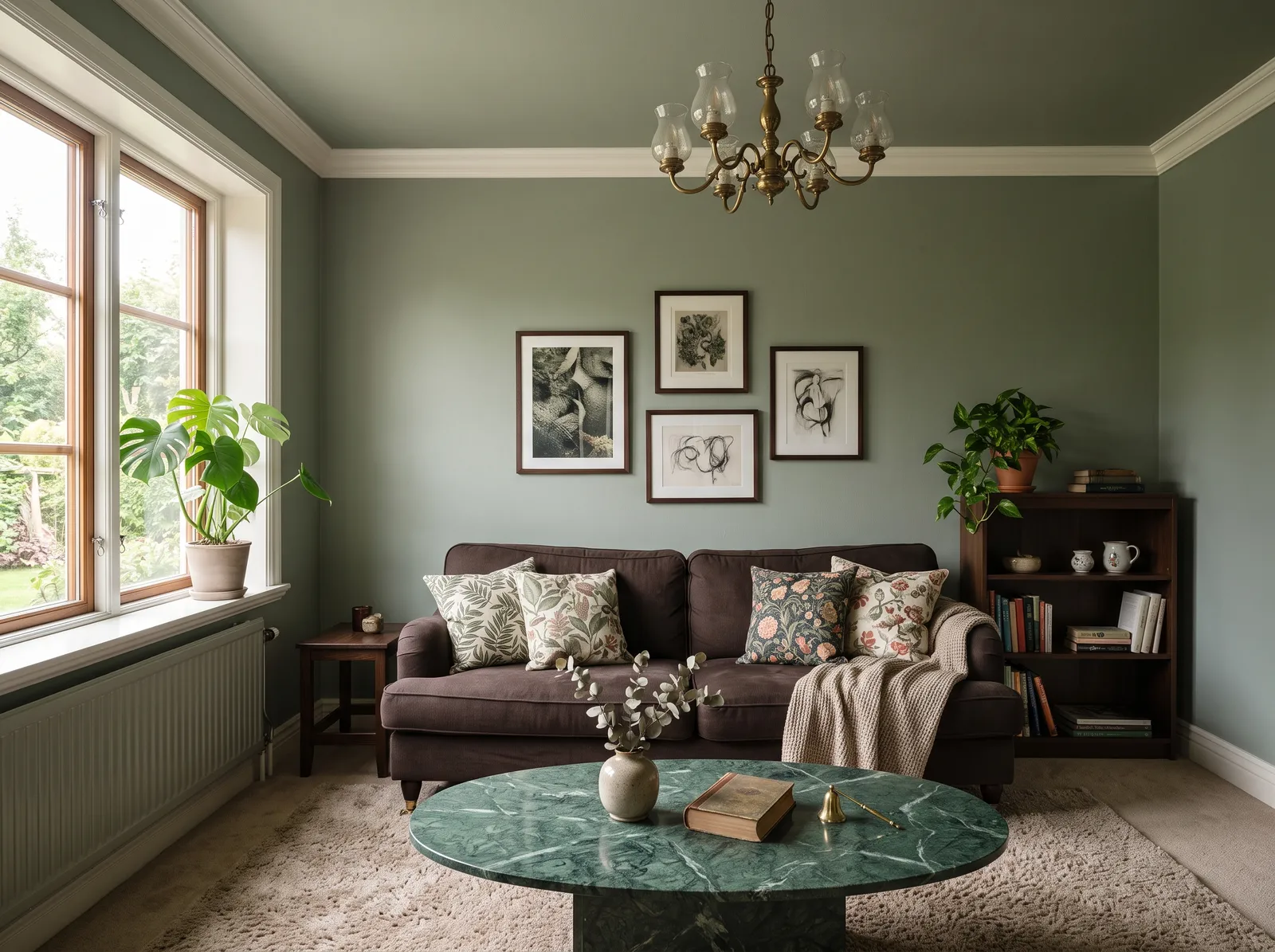
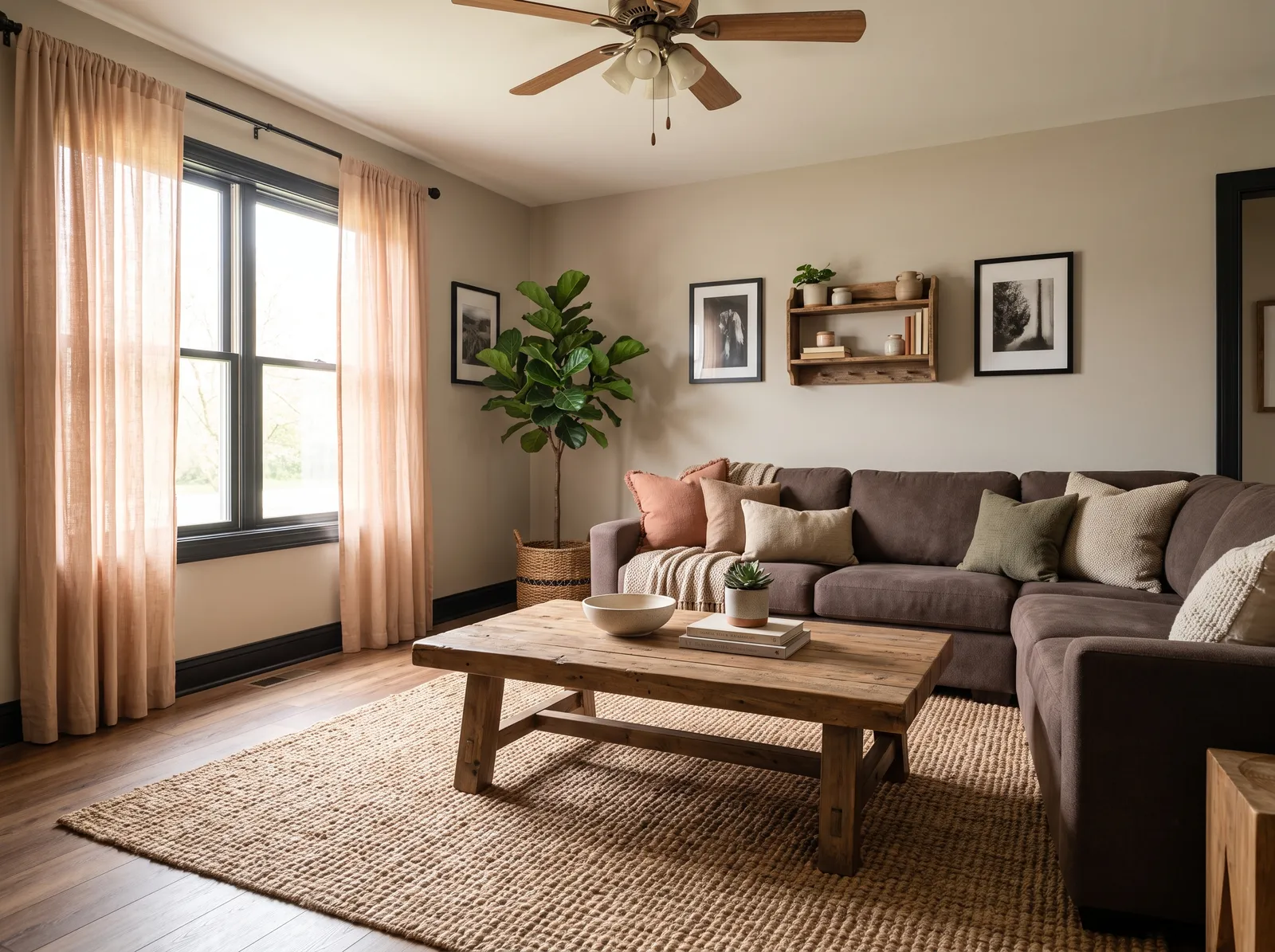
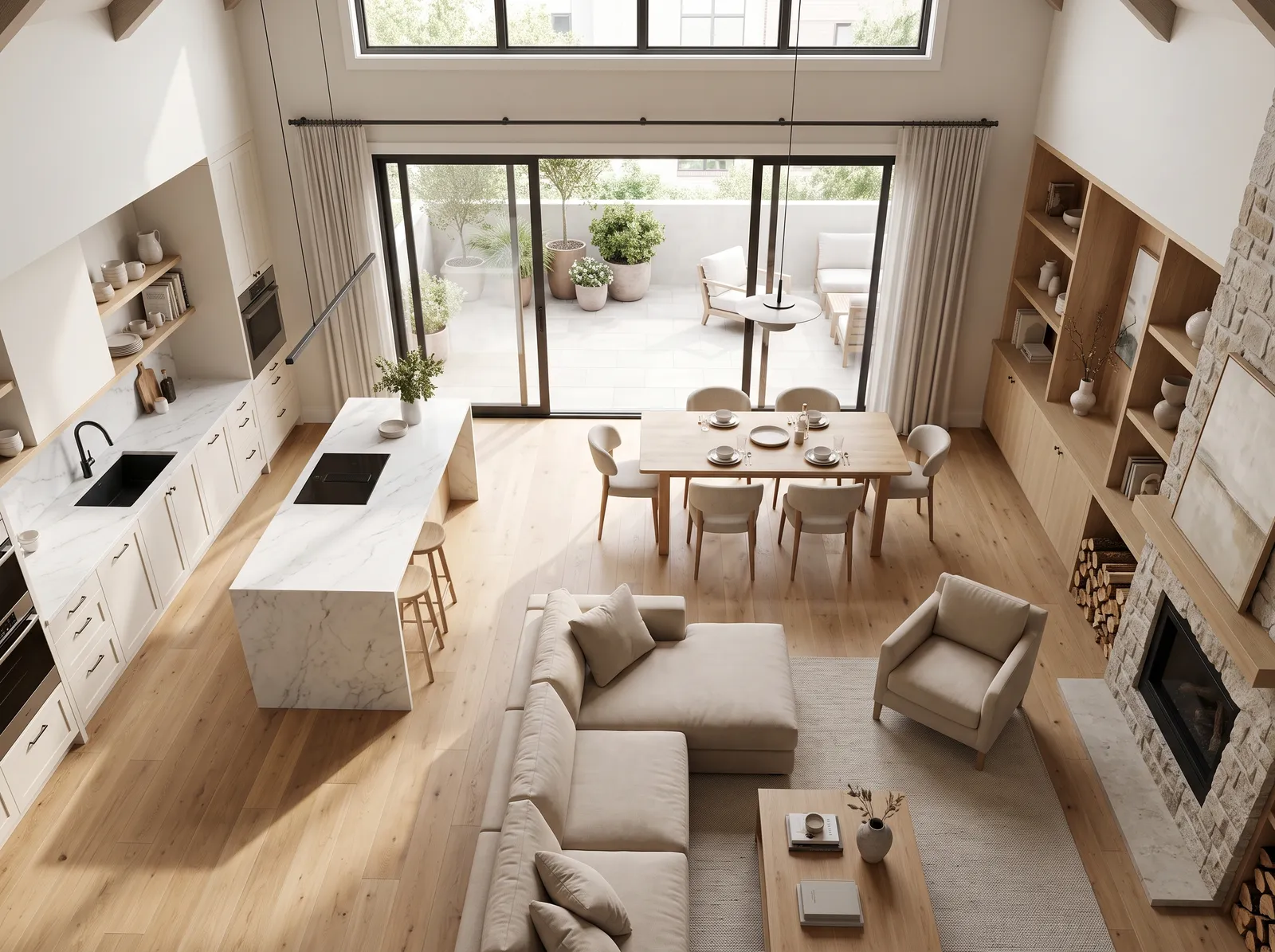
Blue Living Room Paint Colors
1,741 blue colors that work in living rooms, drawn from the full ~30,000-color US paint deck. Below: editor's picks specific to living rooms, then 30 picks spread across the LRV range — narrow further on the brand page when you've shortlisted.
Blue is the most popular color for accent walls, kitchen islands, and front doors — and also the family with the widest spread, from pale dove-blues that read almost grey, to inky near-black navies, to saturated cobalts that read almost royal. Teal-leaning blues (the green-blue overlap) live next door in the Teal family.
Editor's Picks: Blue for Living Rooms
4 picks30 Blue Picks Across the LRV Range
30 of 1,741 · sorted dark → lightLooking for more? All blue → covers every brand; brand × family pages show full decks.
Blue Living Room Colors at Every US Brand
21 brands · up to 10 picks eachUp to 10 picks per brand spread across the blue LRV range, drawn from each brand's full deck. Tap any swatch with a curated guide for full spec; tap the brand title for the brand's complete blue deck.
Behr
Valspar
Glidden
Benjamin Moore
PPG / Glidden
Dunn-Edwards
Sherwin-Williams
Dutch Boy
Hirshfield's
Diamond Vogel
Kompozit
C2 Paint
Portola Paints
Magnolia Home
Rodda
Farrow & Ball
Backdrop
Annie Sloan
Clare
Rust-Oleum
Other Living Room Color Families
Blue Colors in Other Rooms
Blue Paint Colors for a Living Room
Blue is one of the easiest colors to live with in a living room, and one of the easiest to get slightly wrong. It reads as calm and steady, which is exactly what you want in a room where people sit, talk, and relax for hours. But a living room is also where light shifts the most across the day, so the same blue can feel crisp at noon and gloomy by evening. The trick is matching the depth and undertone of the blue to how your room actually gets used and lit.
This page is about blue specifically in a living room, not blue in general. Below we walk through which shades hold up best in this room, how your windows steer the choice, what finish to use on living room walls, and how to pair blue with your trim, ceiling, and furniture. Every swatch shown here is mixed to order at a paint counter, so once you find a blue you like, you can carry that exact look across brands.
Why Blue Works in a Living Room
A living room is built for downtime, and blue supports that better than almost any other color. It lowers the visual temperature of a room, which makes seating areas feel restful instead of busy. That calm quality is why blue rarely feels like a risk on living room walls, even in a deeper shade.
The one thing to watch is that blue can tip cold in a room that already runs cool. If your living room faces north or gets mostly indirect light, a very clean, icy blue can start to feel chilly and a little flat. Leaning toward a blue with a touch of gray or green in it keeps the room feeling lived-in rather than clinical.
Picking the Right Depth of Blue for Your Light
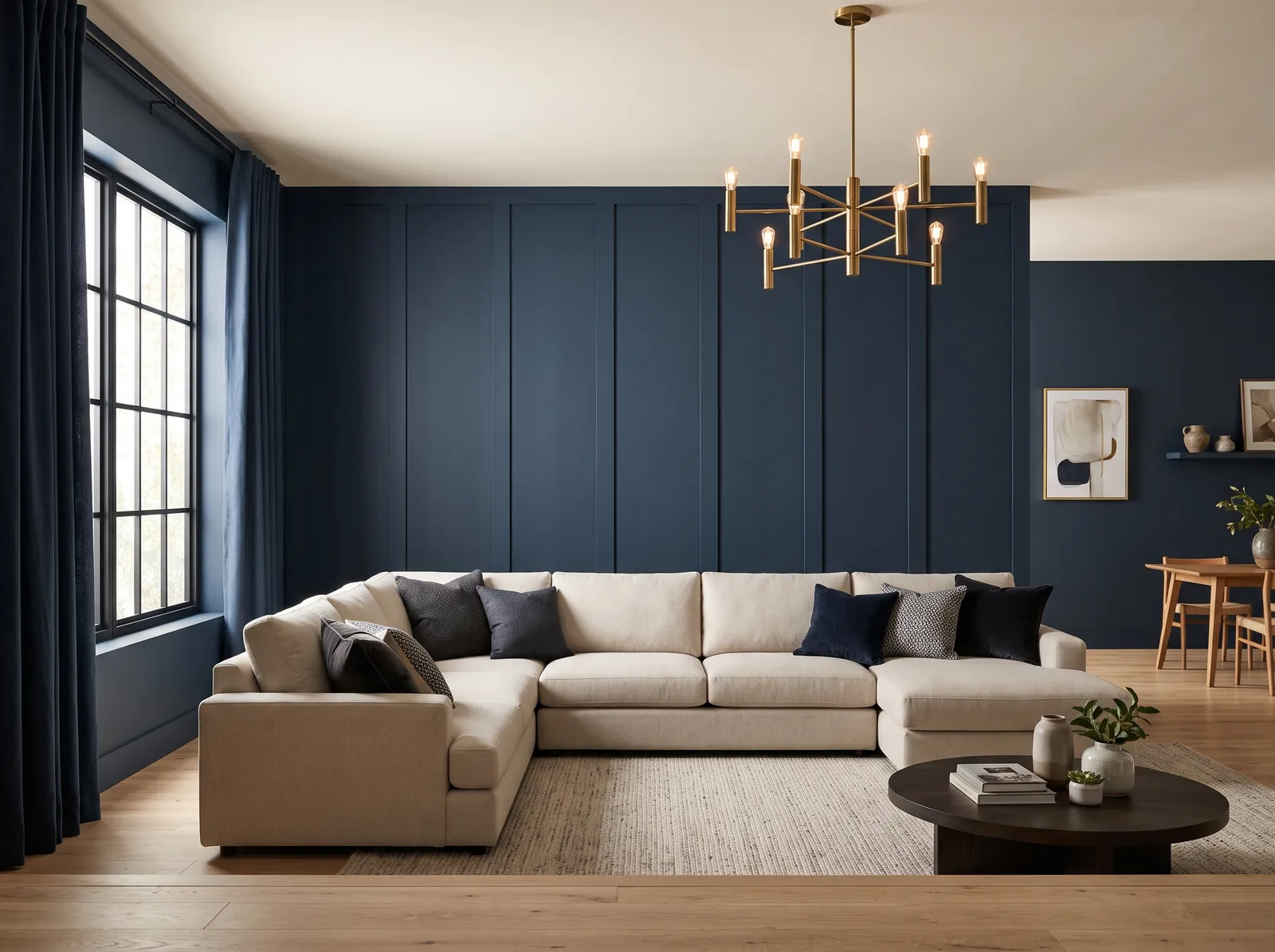
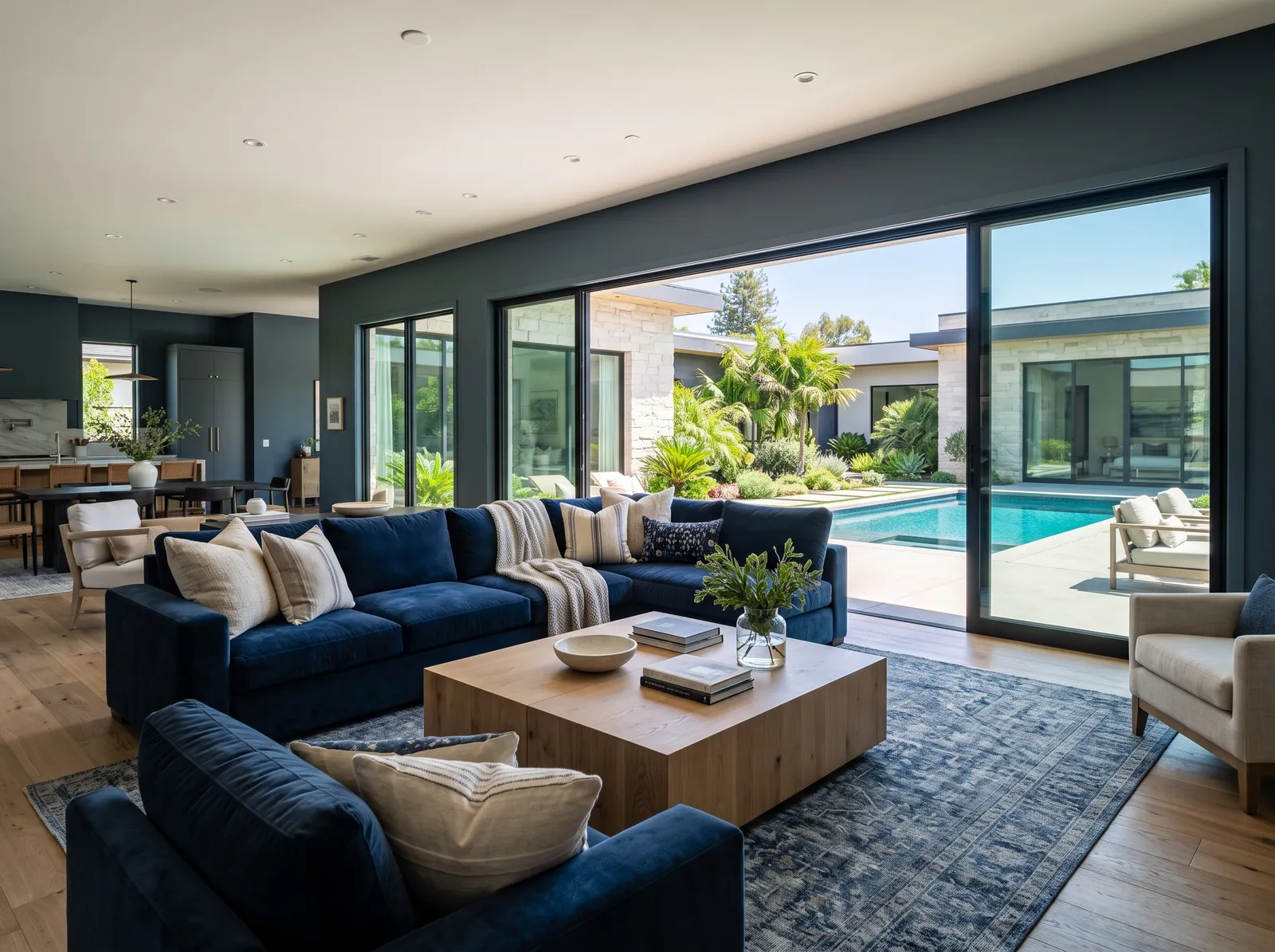
LRV (Light Reflectance Value) tells you how much light a color bounces back, on a scale from 0 (black) to 100 (white). For a bright living room with big south- or west-facing windows, you can go darker and still keep the room feeling full, so a blue in the 15 to 35 LRV range reads rich without going cave-like. That kind of depth gives a sunny living room real presence in the evening.
If your living room is short on natural light or faces north, stay higher up the scale, roughly 45 to 65 LRV, so the walls keep some glow. Soft, slightly grayed blues at that level feel airy in weak light instead of dull. As a quick gut check, walk the color around the room at morning, midday, and night before you commit, because living room light changes more than most rooms in the house.
The Right Finish for Living Room Walls
A living room is a low-moisture, high-traffic room, so the goal is a finish that hides wall imperfections but still wipes clean. Eggshell is the safe default for living room walls. It has just enough softness to mask roller marks and old patch lines, while resisting the scuffs that come from couches, kids, and pets along the baseline of the wall.
Matte works beautifully with deeper blues because it kills glare and makes the color look velvety, especially on a feature wall. The tradeoff is that flatter sheens are harder to scrub, so save matte for walls that do not get touched much. Keep trim and any built-ins a step up in sheen, usually satin or semi-gloss, so the woodwork stays washable and reads as a clean frame around the blue.
Pairing Blue with Trim, Ceiling, and Furniture
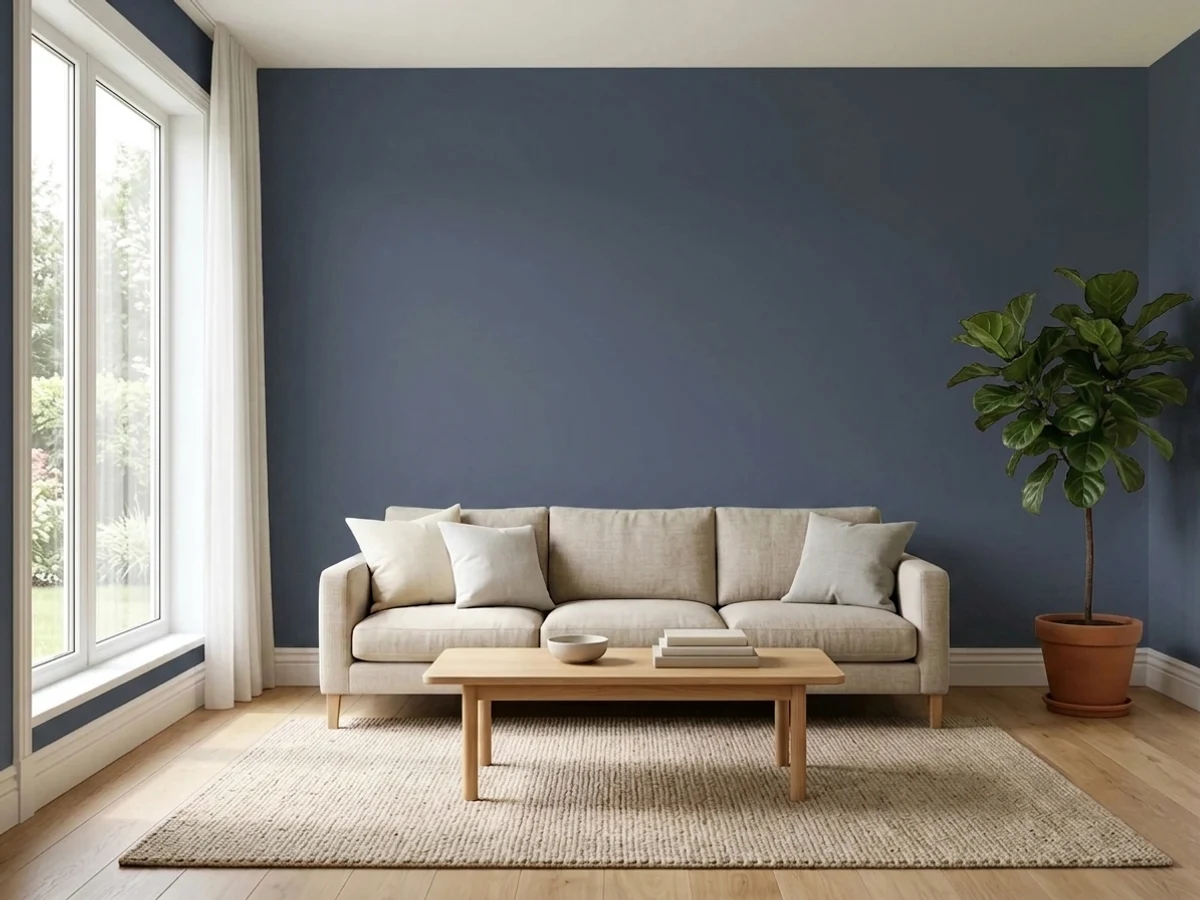
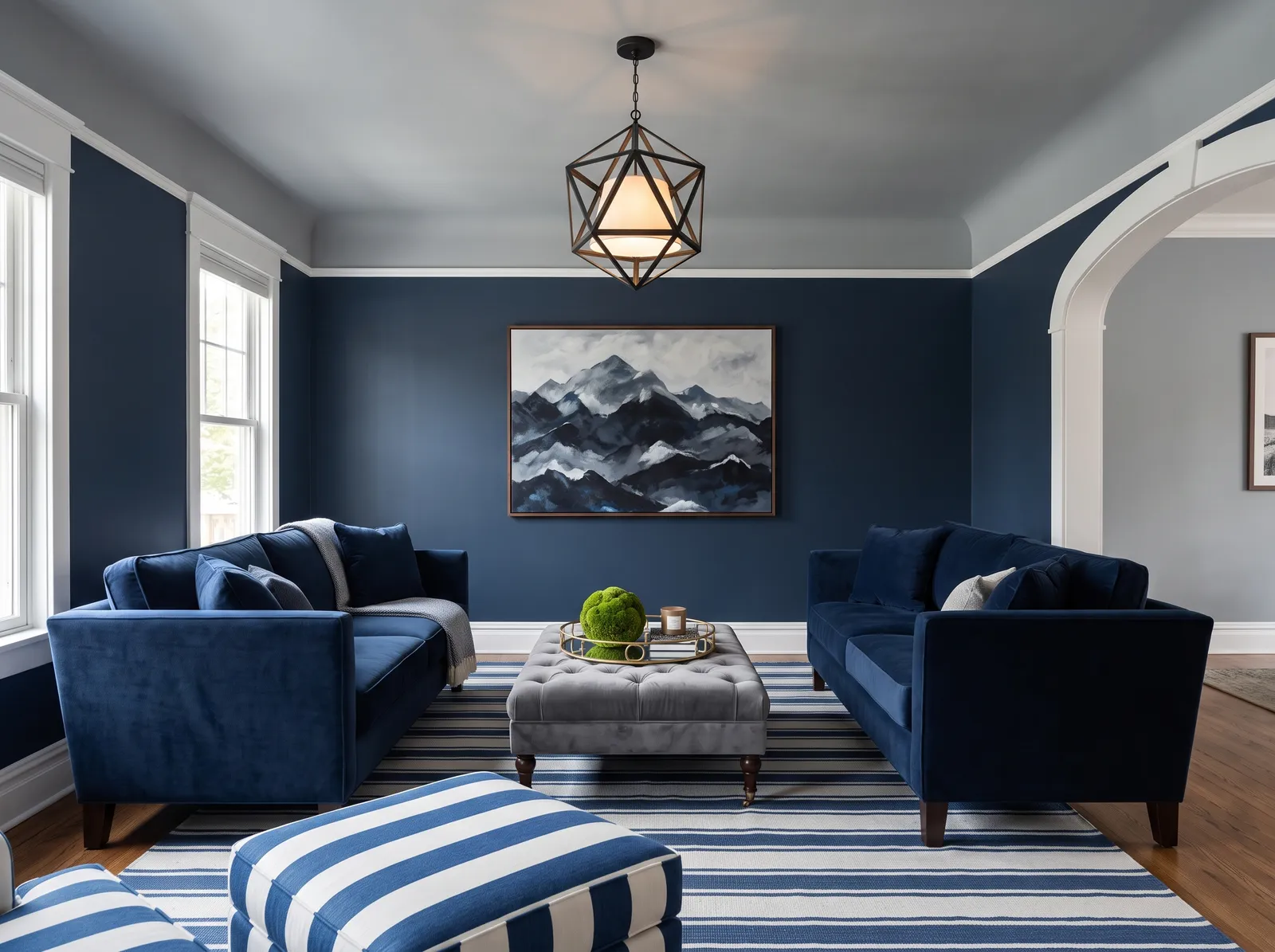
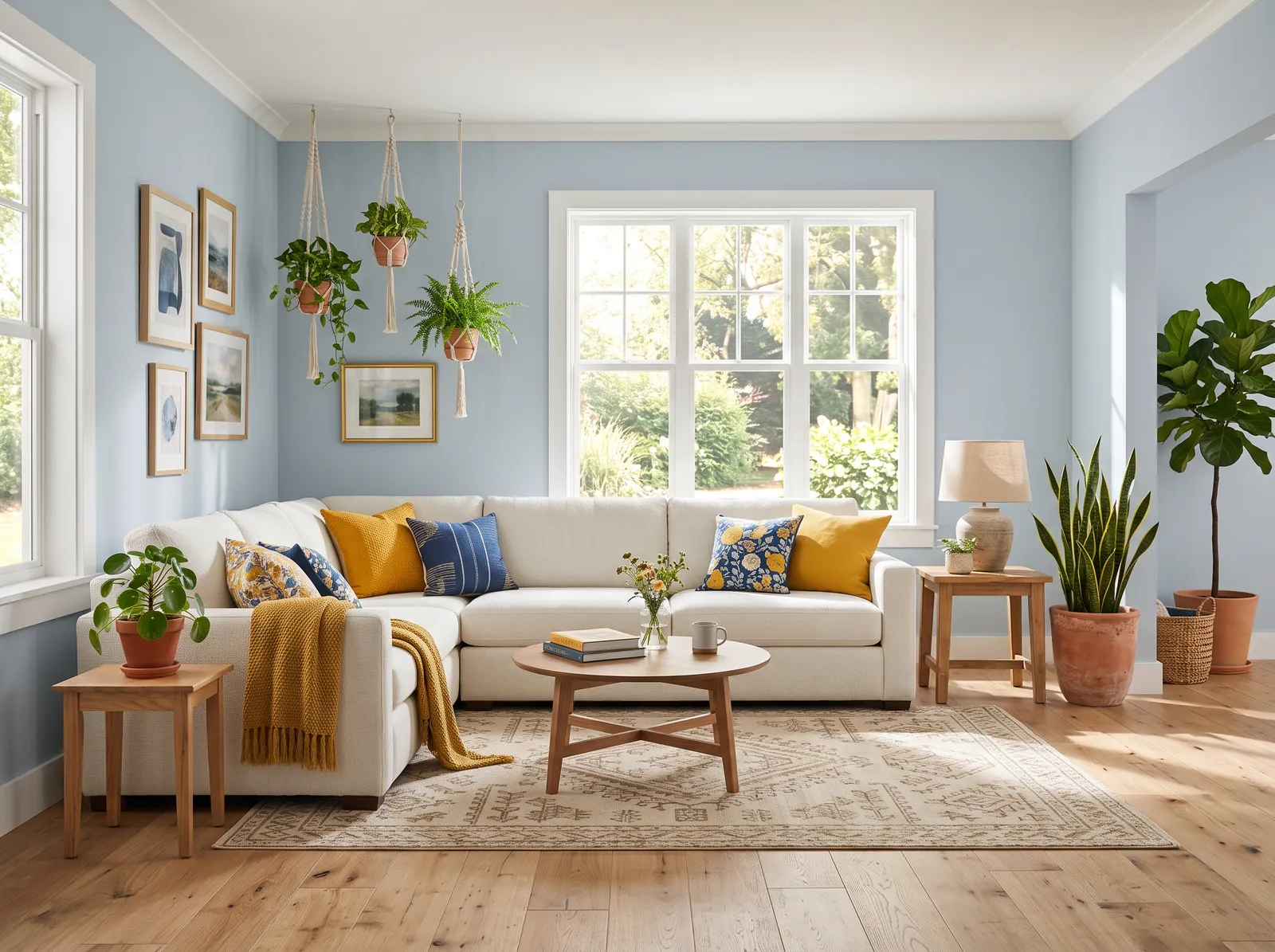
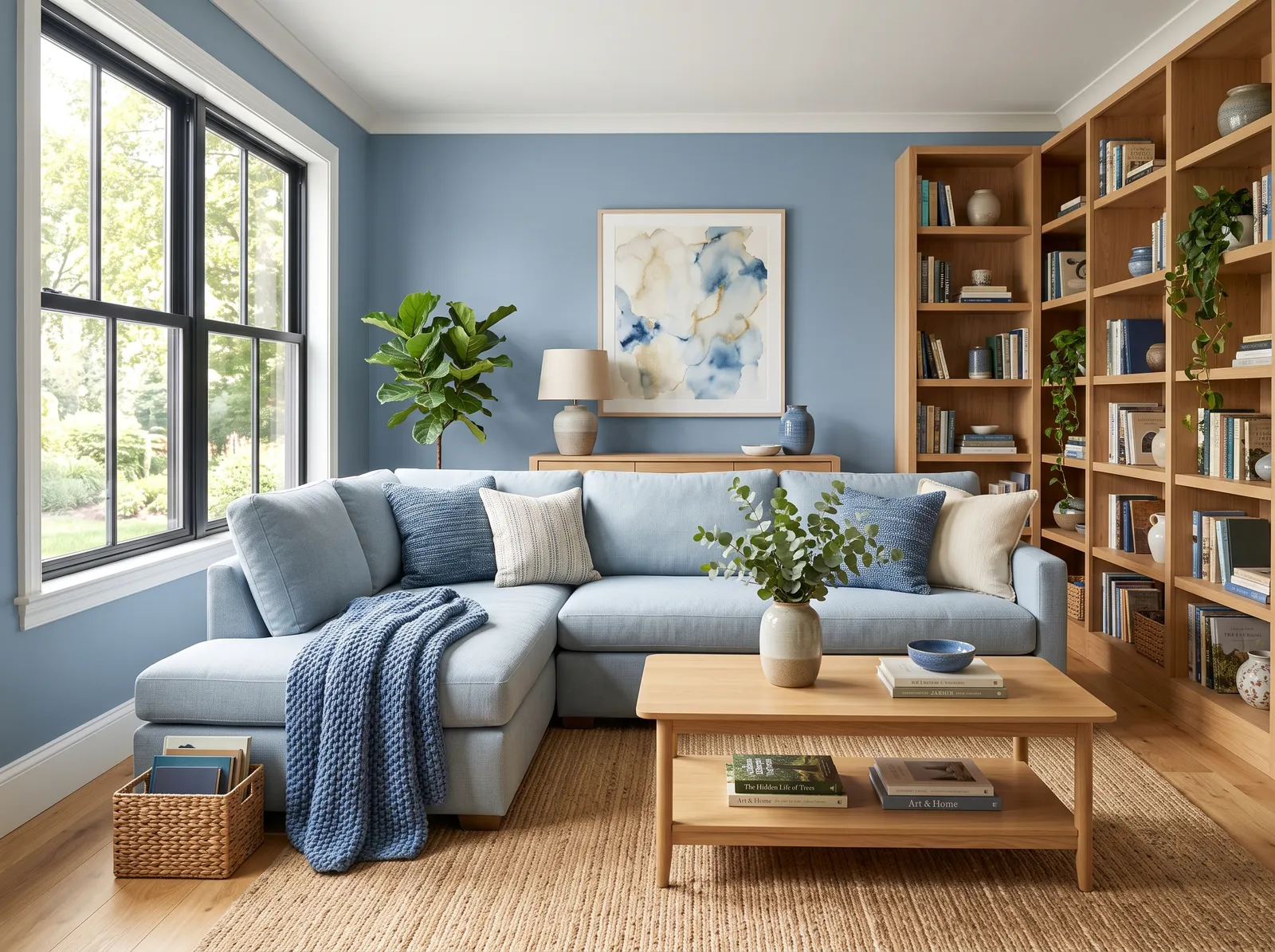
The most reliable living room combination is blue walls with crisp white trim and a white or near-white ceiling. White woodwork sharpens the blue and keeps the room from feeling heavy. If you want a softer, more enveloping look with a darker blue, paint the trim a warm off-white instead of a stark white so the contrast feels gentle rather than stark.
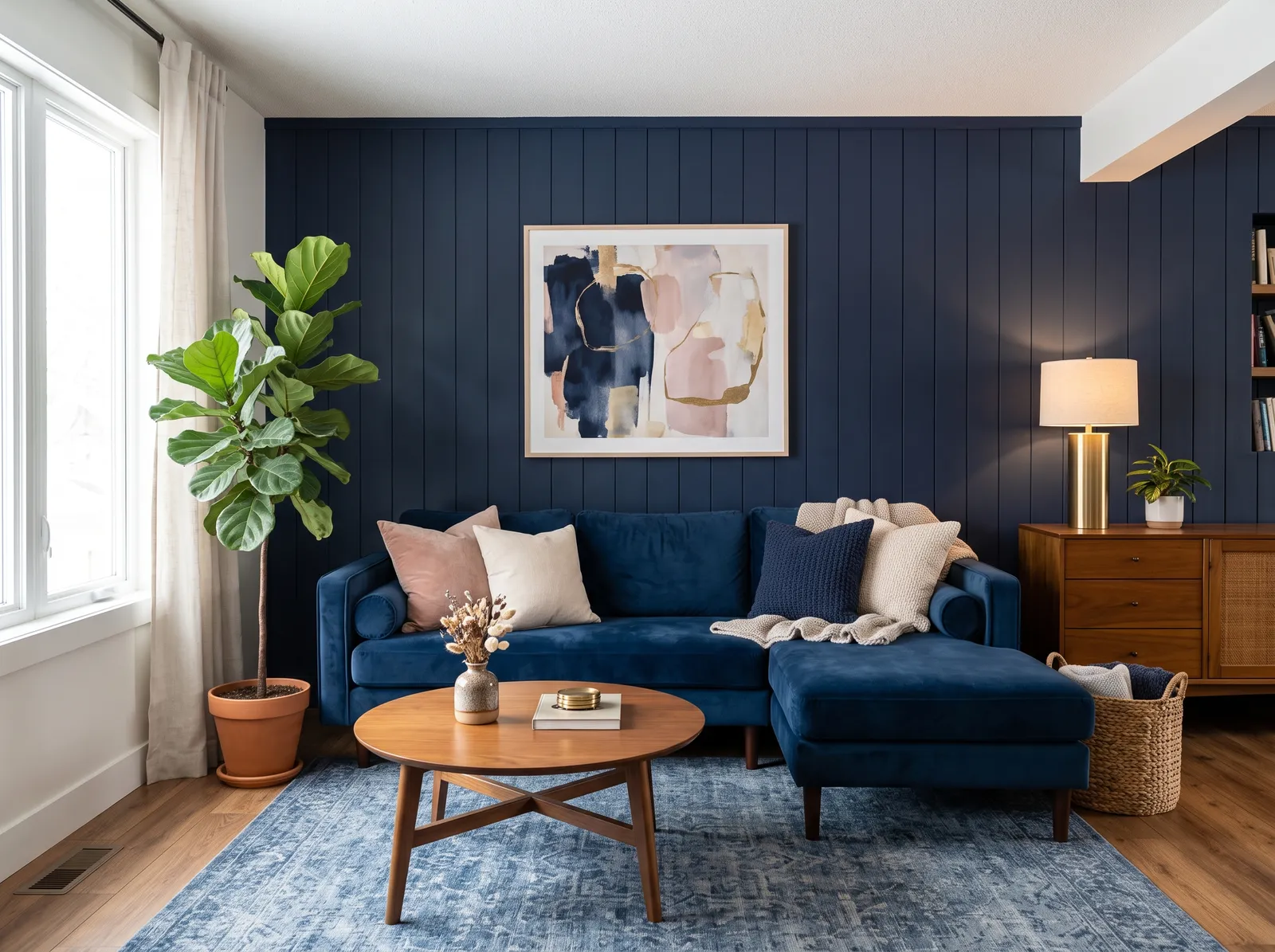
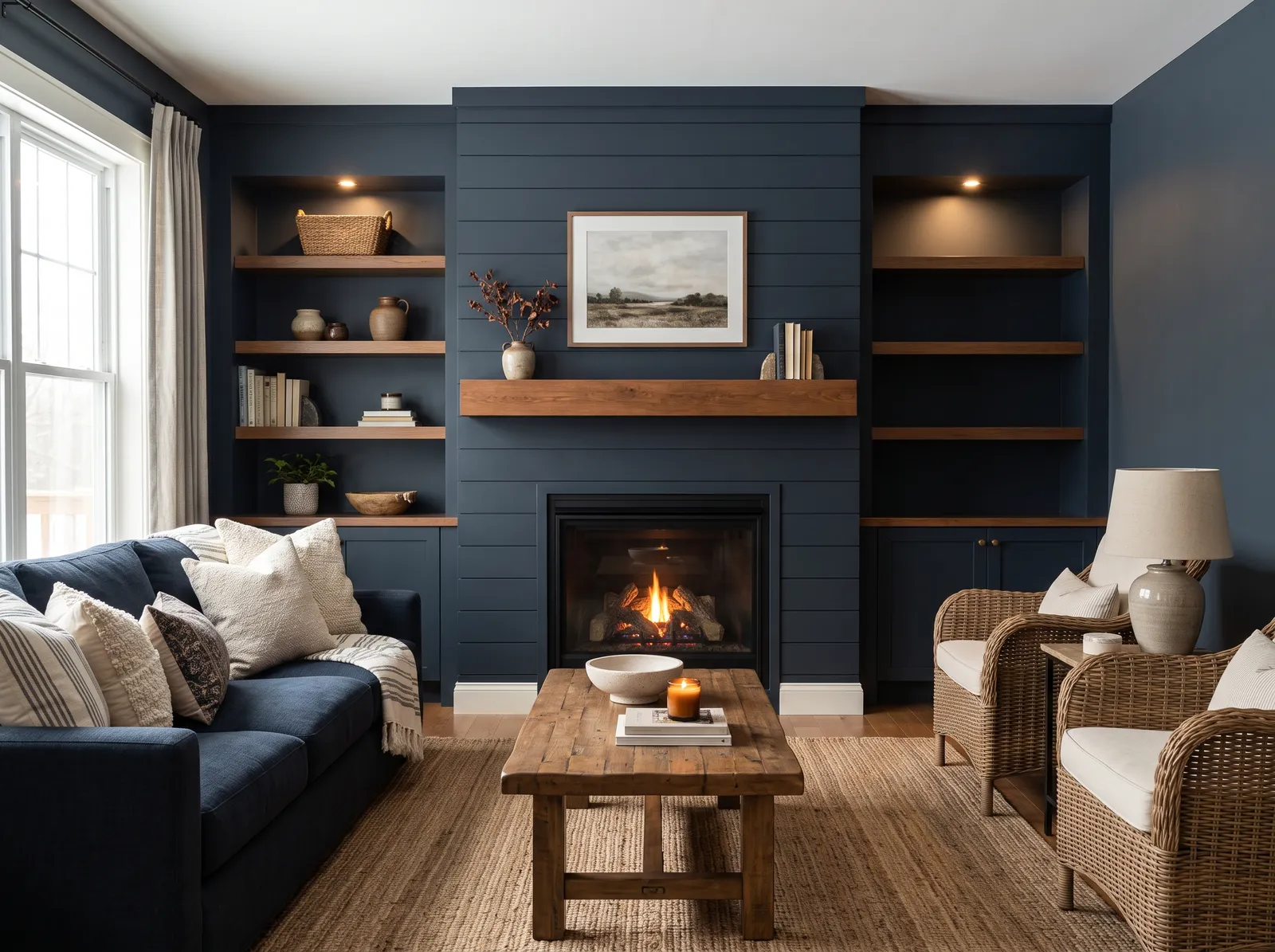
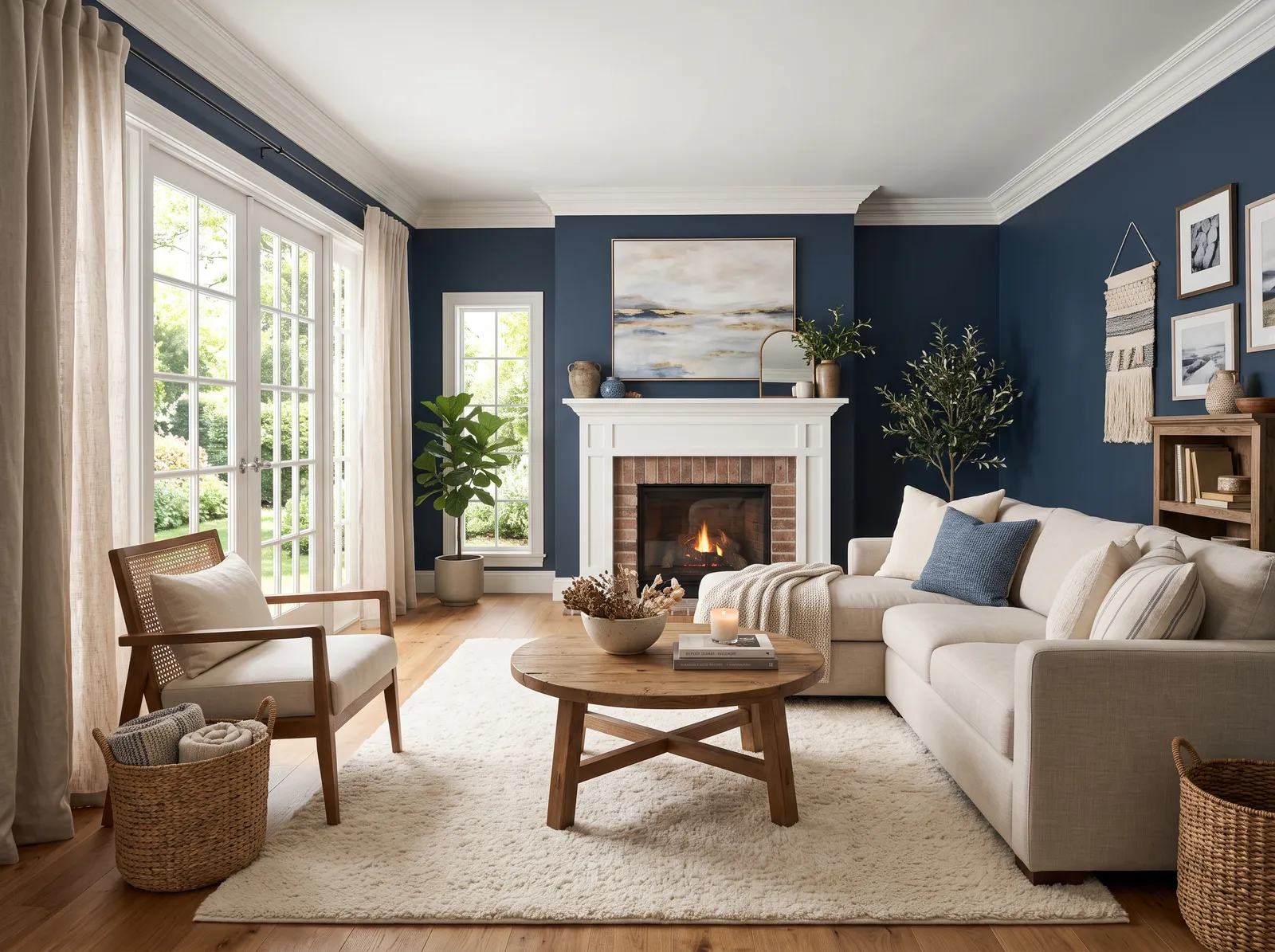
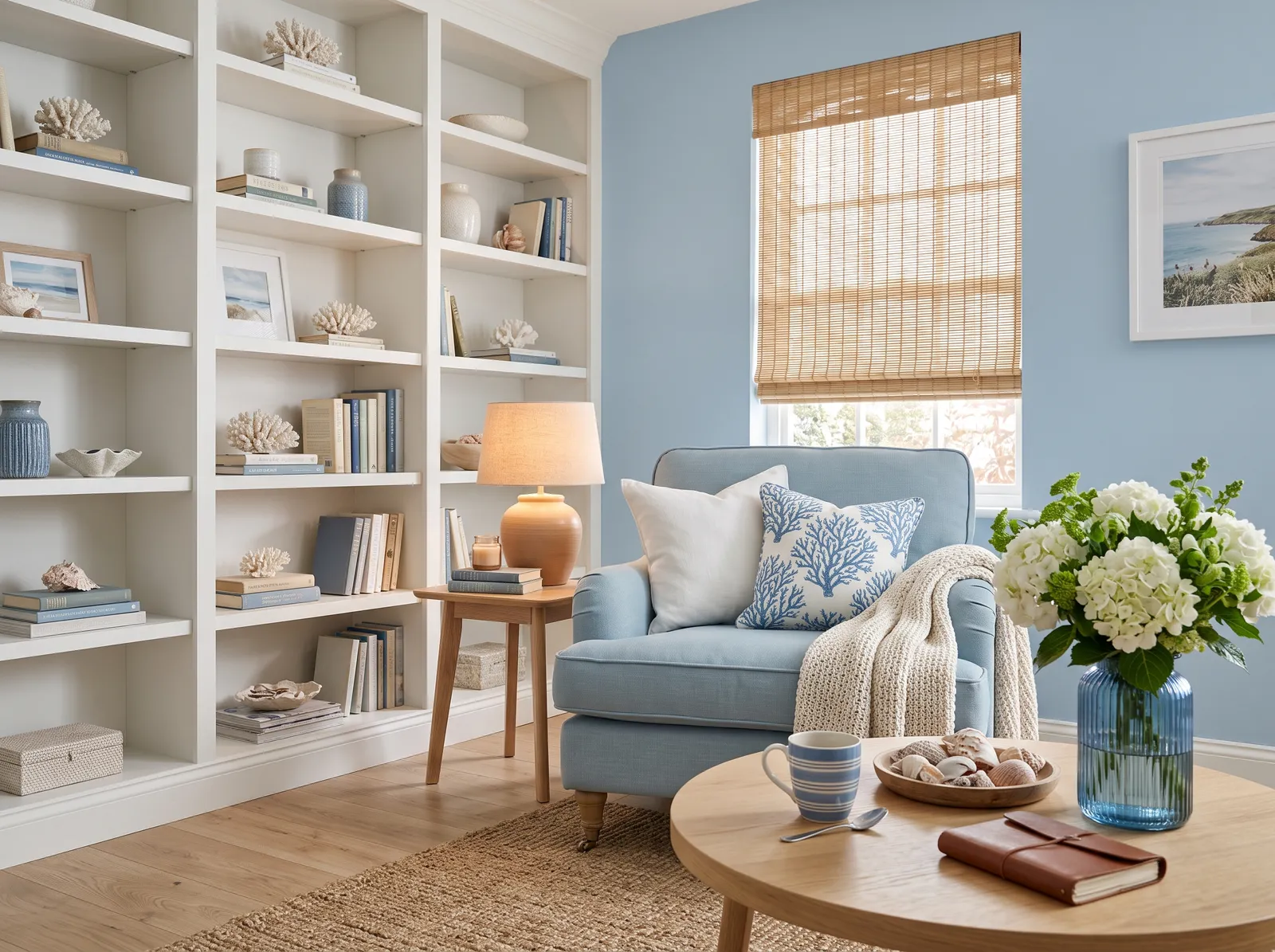
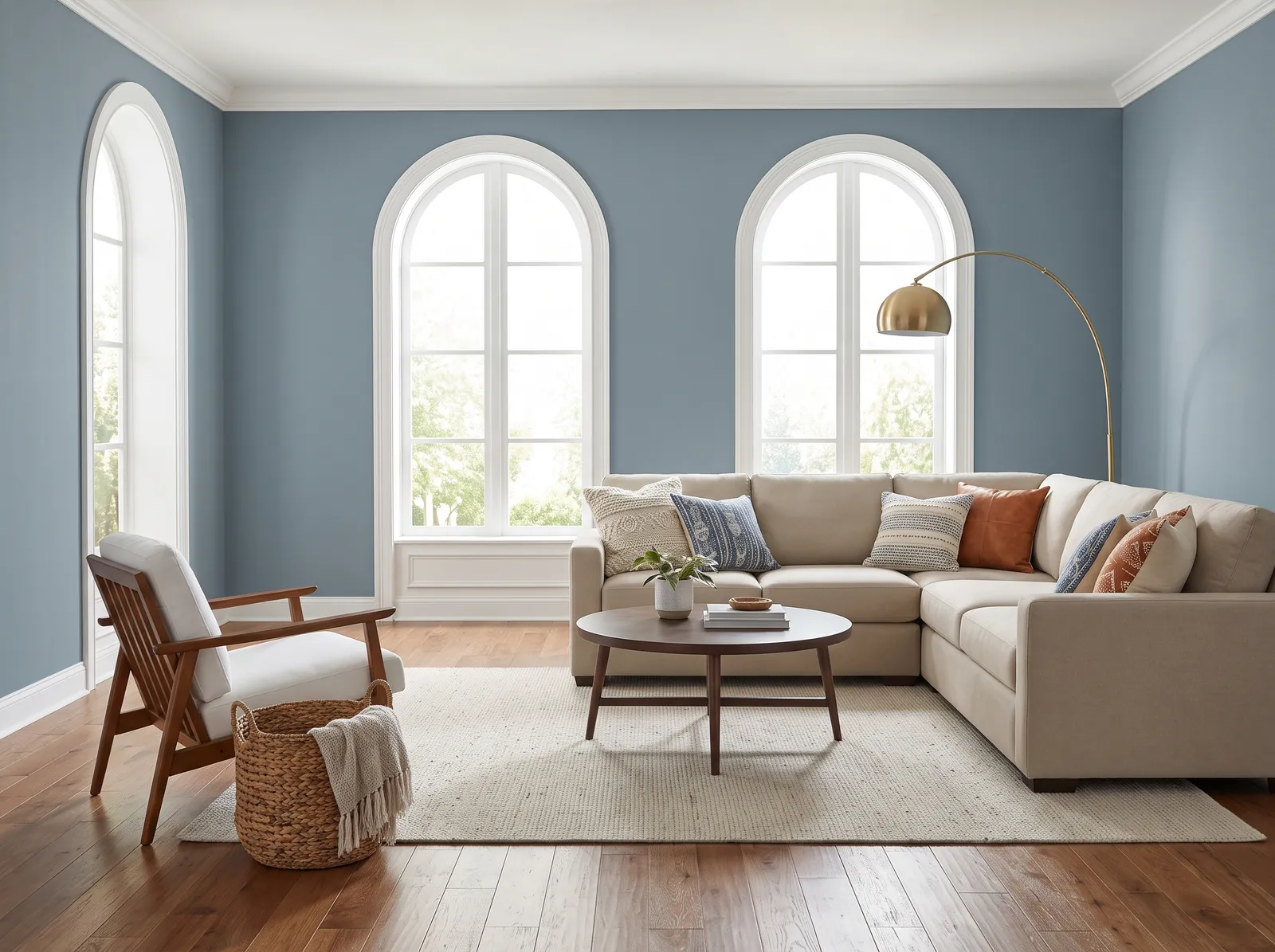
Blue plays well with the materials you already have in most living rooms. Warm woods, brass or gold fixtures, and natural fibers like jute or linen all push back against blue's coolness and keep the space from feeling cold. For built-ins or a fireplace surround, you can either match the wall blue for a quiet, tonal look or go a few shades deeper for contrast that still feels intentional.
Common Mistakes with Blue in a Living Room
The biggest mistake is judging a blue from a tiny chip or a phone screen. Blue shifts hard with light, and a sample that looks like a soft denim in the store can read purple or steel on your wall. Always brush a large sample on more than one wall and live with it for a couple of days.
The second common slip is going too cold and too clean. A pure, bright blue can feel like a kid's room or an office instead of a place to unwind. The third is over-matching everything to one blue, which flattens the room. Vary the depth between walls, trim, and accents so the eye has somewhere to rest, and let warm textures balance the cool wall color.
Blue Living Room Paint — Frequently Asked Questions
Is blue too cold for a living room?+
Not if you pick the undertone carefully. Blues with a hint of gray or green feel calm and warm enough for a room people relax in. Save the crisp, icy blues for rooms with plenty of warm light, and balance any blue wall with wood tones and soft textiles.
What shade of blue is best for a small or dark living room?+
Stay on the lighter, softer end, roughly 45 to 65 LRV, so the walls keep reflecting what little light you have. A gently grayed light blue feels airy and open in a dim room. Going very dark in a low-light living room can make it feel closed in, so reserve deep blues for spaces with good natural light or strong lamp coverage.
What sheen should I use for blue living room walls?+
Eggshell is the best all-around choice for living room walls because it hides minor flaws and still wipes clean. Use matte if you want a deeper blue to look soft and glare-free on a low-touch feature wall. Keep trim and built-ins in satin or semi-gloss so they stay durable and washable.
What trim and ceiling color go with blue walls?+
Clean white trim and a white or near-white ceiling are the most dependable pairing, since they sharpen the blue and keep the room feeling open. For a softer look with a darker blue, use a warm off-white on the trim instead of a stark white. Matching the ceiling to the trim white keeps the focus on the wall color.
Can I match a blue I like across different paint brands?+
Yes. Every color shown here is mixed to order at the paint counter, and the same shade can be cross-matched between brands. So if you find a blue you love from one brand, you can have it tinted to match in another brand's base. The swatches and brand matches on this page are there to help you carry the exact look wherever you buy.
How do I keep blue from making the living room feel like an office?+
Avoid the very clean, corporate blues and add warmth through your materials. Wood furniture, brass or gold accents, and natural-fiber rugs all soften a blue wall. Varying the depth of blue between the walls and accents, instead of matching everything, also keeps the room feeling like a home rather than a workspace.