Blue Home Office Paint Colors
1,741 blue colors that work in home offices, drawn from the full ~30,000-color US paint deck. Below: editor's picks specific to home offices, then 30 picks spread across the LRV range — narrow further on the brand page when you've shortlisted.
Blue is the most popular color for accent walls, kitchen islands, and front doors — and also the family with the widest spread, from pale dove-blues that read almost grey, to inky near-black navies, to saturated cobalts that read almost royal. Teal-leaning blues (the green-blue overlap) live next door in the Teal family.
Editor's Picks: Blue for Home Offices
4 picks30 Blue Picks Across the LRV Range
30 of 1,741 · sorted dark → lightLooking for more? All blue → covers every brand; brand × family pages show full decks.
Blue Home Office Colors at Every US Brand
21 brands · up to 10 picks eachUp to 10 picks per brand spread across the blue LRV range, drawn from each brand's full deck. Tap any swatch with a curated guide for full spec; tap the brand title for the brand's complete blue deck.
Behr
Valspar
Glidden
Benjamin Moore
PPG / Glidden
Dunn-Edwards
Sherwin-Williams
Dutch Boy
Hirshfield's
Diamond Vogel
Kompozit
C2 Paint
Portola Paints
Magnolia Home
Rodda
Farrow & Ball
Backdrop
Annie Sloan
Clare
Rust-Oleum
Other Home Office Color Families
Blue Colors in Other Rooms
Blue Paint Colors for a Home Office
Blue is one of the few colors that actually helps you work. It reads calm and steady, which keeps a home office from feeling tense during long stretches at the desk. It also photographs well on video calls and tends to flatter most skin tones, so you look good on camera without trying. That mix of focus and ease is why blue shows up in so many work-from-home spaces.
The catch is that "blue" covers a huge range, from soft gray-blues to deep inky navies, and the right one depends on how much light your office gets and what you do in the room. This page is about getting that choice right for an office specifically: the depth that helps you concentrate, the sheen that survives daily use, and the trim and furniture pairings that make it look finished instead of flat. Every color you see here is mixed to order at the paint counter, so you can match a shade you like across brands and still get the same look on your wall.
Why Blue Works In A Home Office
Blue lowers the visual noise in a room, and a home office needs that more than almost any other space. You sit in one spot for hours, so a color that stays quiet and doesn't fight for attention helps you settle into work faster. Soft and medium blues feel open and calm, while deeper blues feel focused and a little serious, which suits a room built around getting things done.
Blue is also kind to screens and cameras. It cuts the harsh glare you can get from stark white walls, and on video calls a blue backdrop tends to look professional without being distracting. If your office doubles as a guest room or reading nook, blue carries that double duty well because it reads restful, not just businesslike.
Picking The Right Depth For Your Light
Light decides everything here, and LRV is the simple number that tells you how light or dark a color is on a scale of 0 to 100. A higher LRV bounces more light back into the room; a lower one soaks it up. In a bright office with big windows, a deeper blue in the 20s or 30s adds focus and depth without making the room feel dim. In a small or north-facing office that already feels short on light, stay higher, roughly the 50s to 60s, so the walls keep the space open.
Watch the undertone, because blue can lean cool, gray, or green and the room's light pushes it one way. North light is cool and can make a blue look icy and cold, so a blue with a soft gray or warm base holds up better there. South and west light is warmer and richer, which lets a true or deep blue look its best. Always tape a sample to the wall and look at it morning and evening before you commit.
The Best Finish For Office Walls
For most home office walls, an eggshell or satin finish is the sweet spot. It has just enough sheen to wipe clean when you smudge a wall moving a chair or a bookshelf, but not so much that it throws glare across your screen. Flat and matte finishes look great and hide wall flaws, but they scuff easily and are harder to clean, which matters in a room you use every day.
Save the glossier finishes for trim, built-in shelves, and a desk wall you want to feel a little sharper. The bigger thing to avoid is high-gloss on a wall that faces a window or a lamp, because the reflection lands right where you're trying to read or take a call. Deep blues in particular can look streaky in higher sheens, so keep the walls in the eggshell-to-satin range.
Pairing Blue With Trim, Shelves, And Fixtures
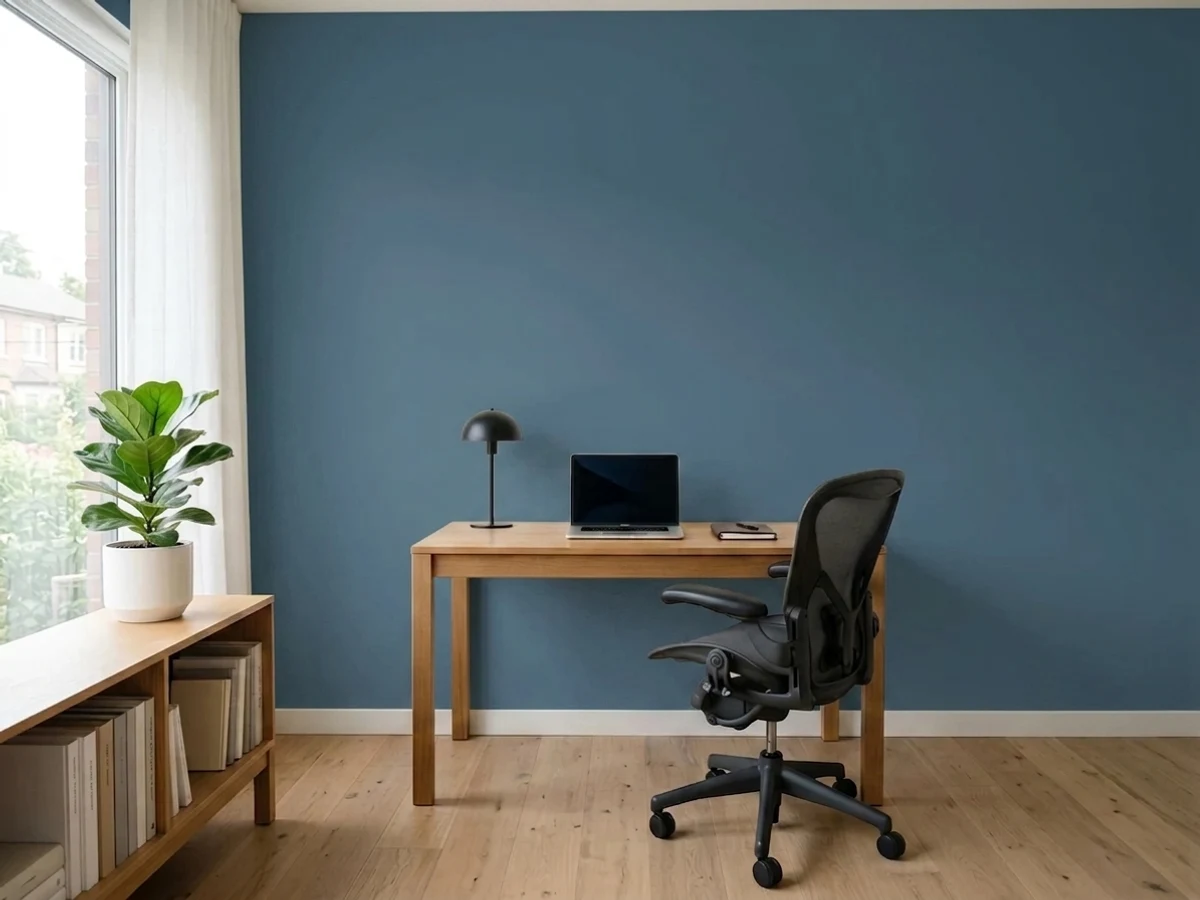
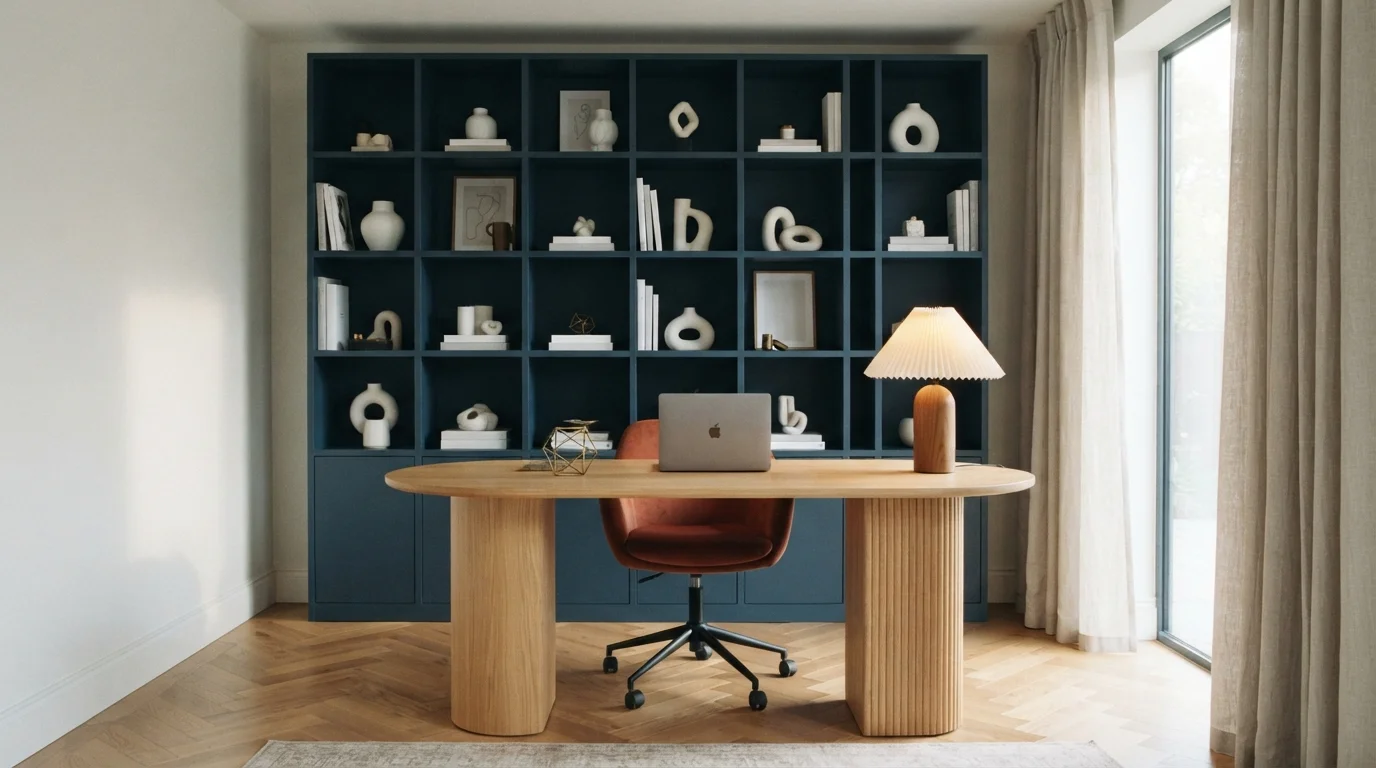
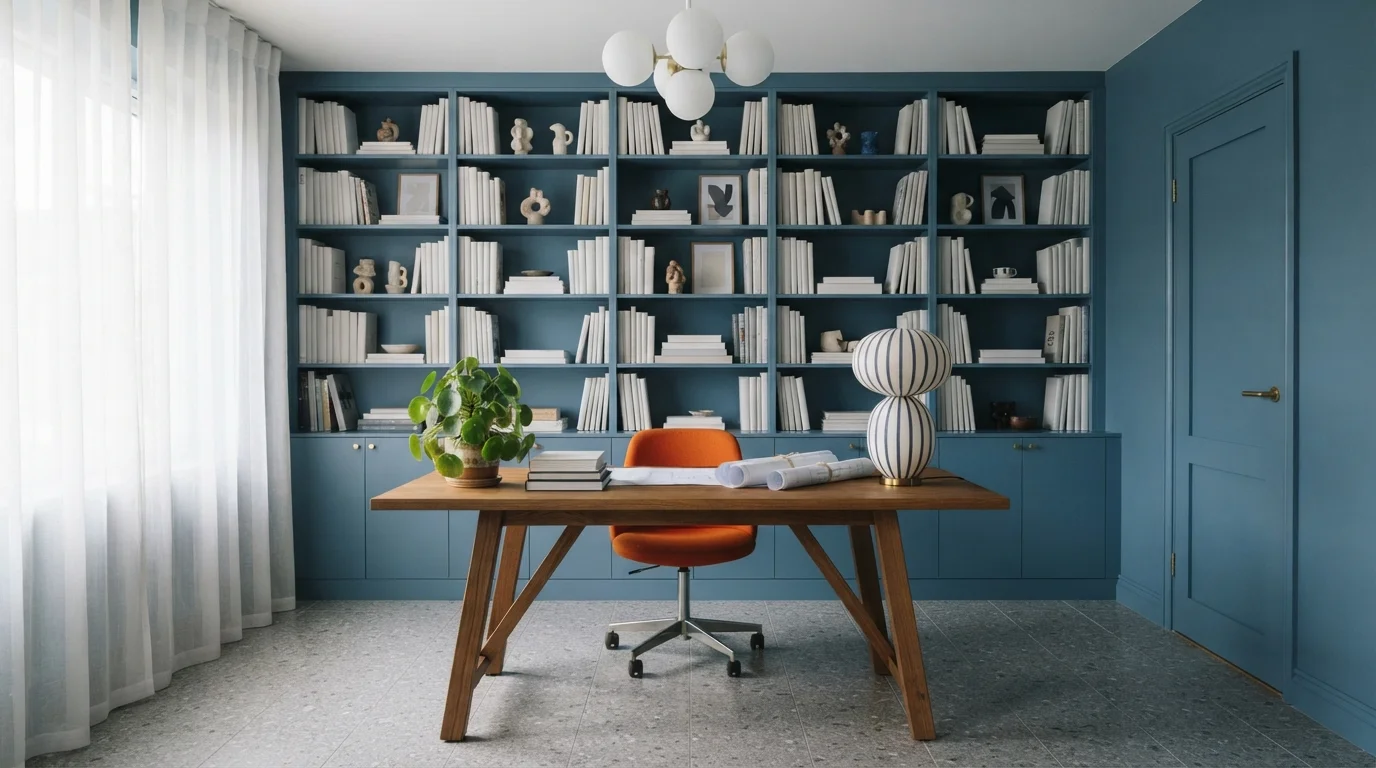
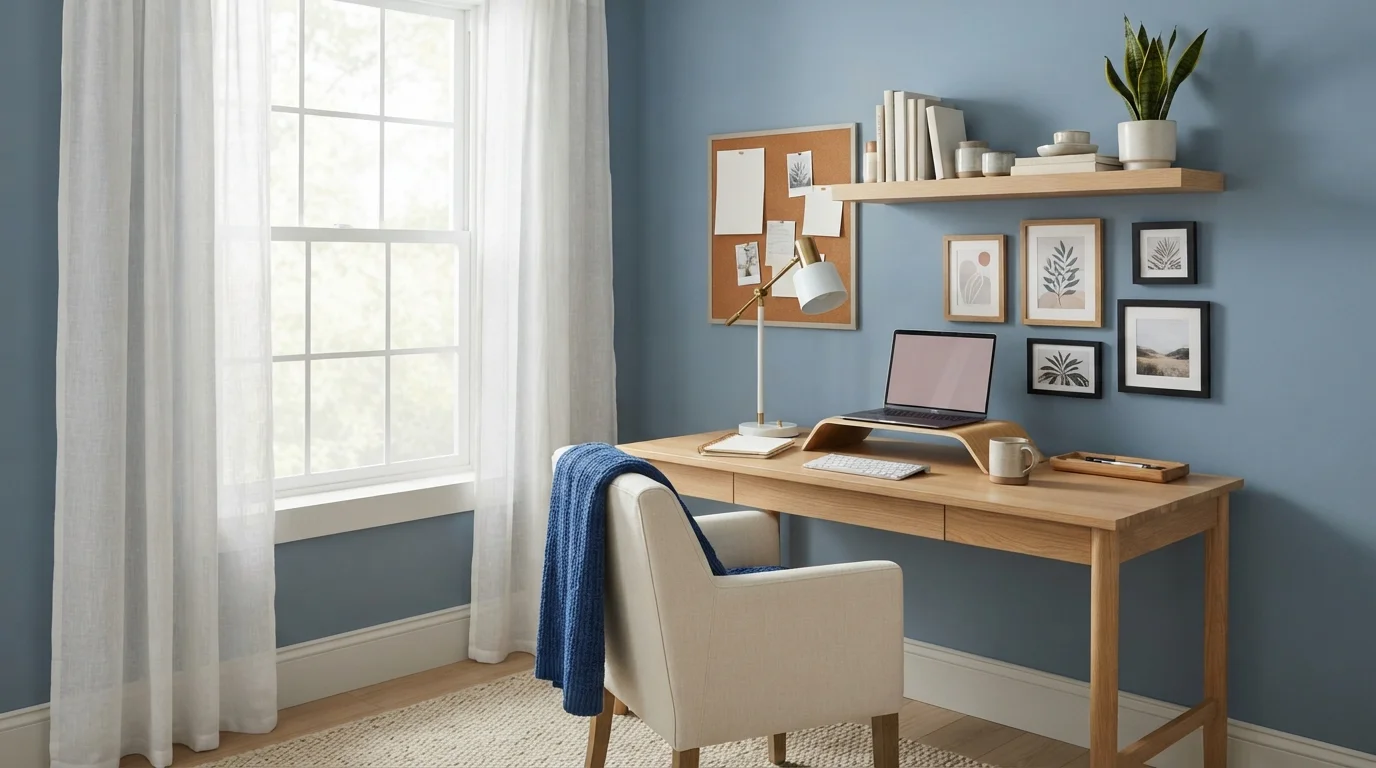
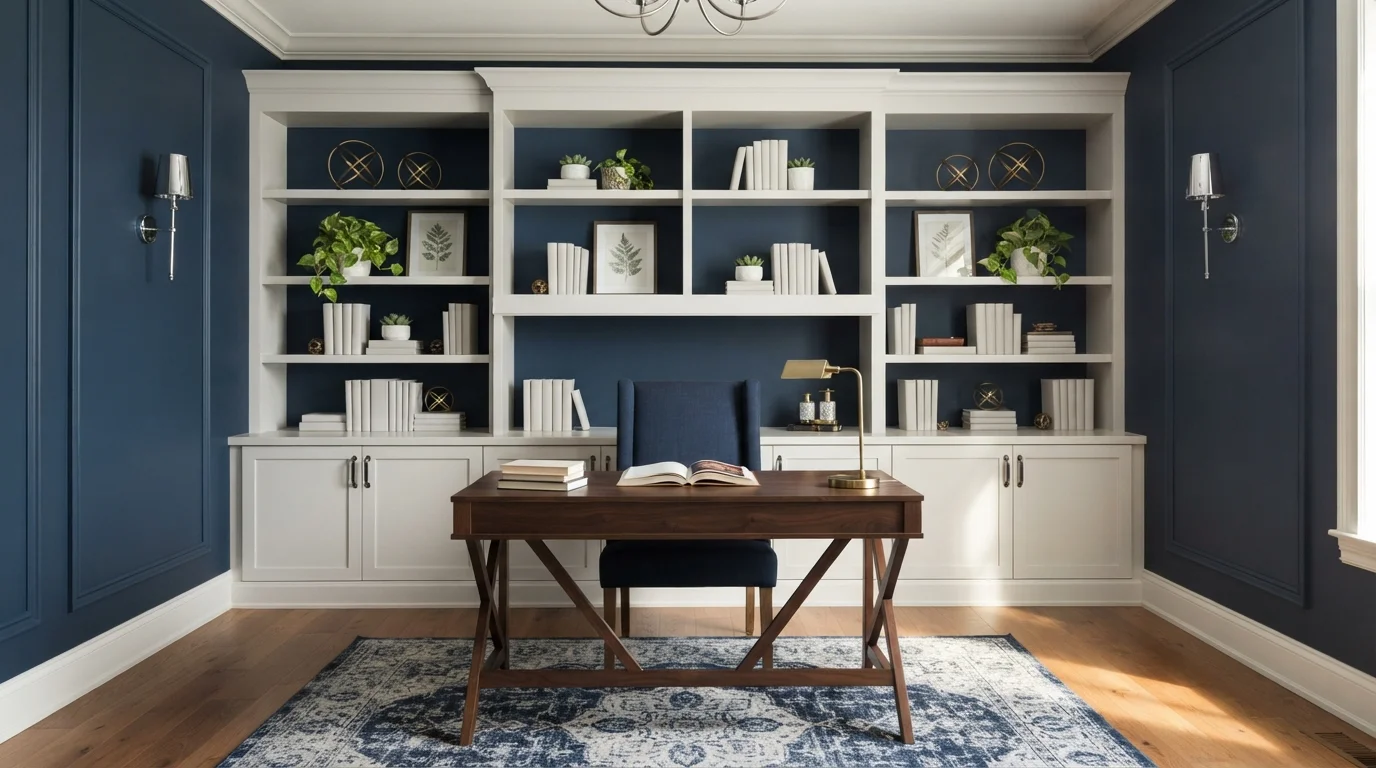
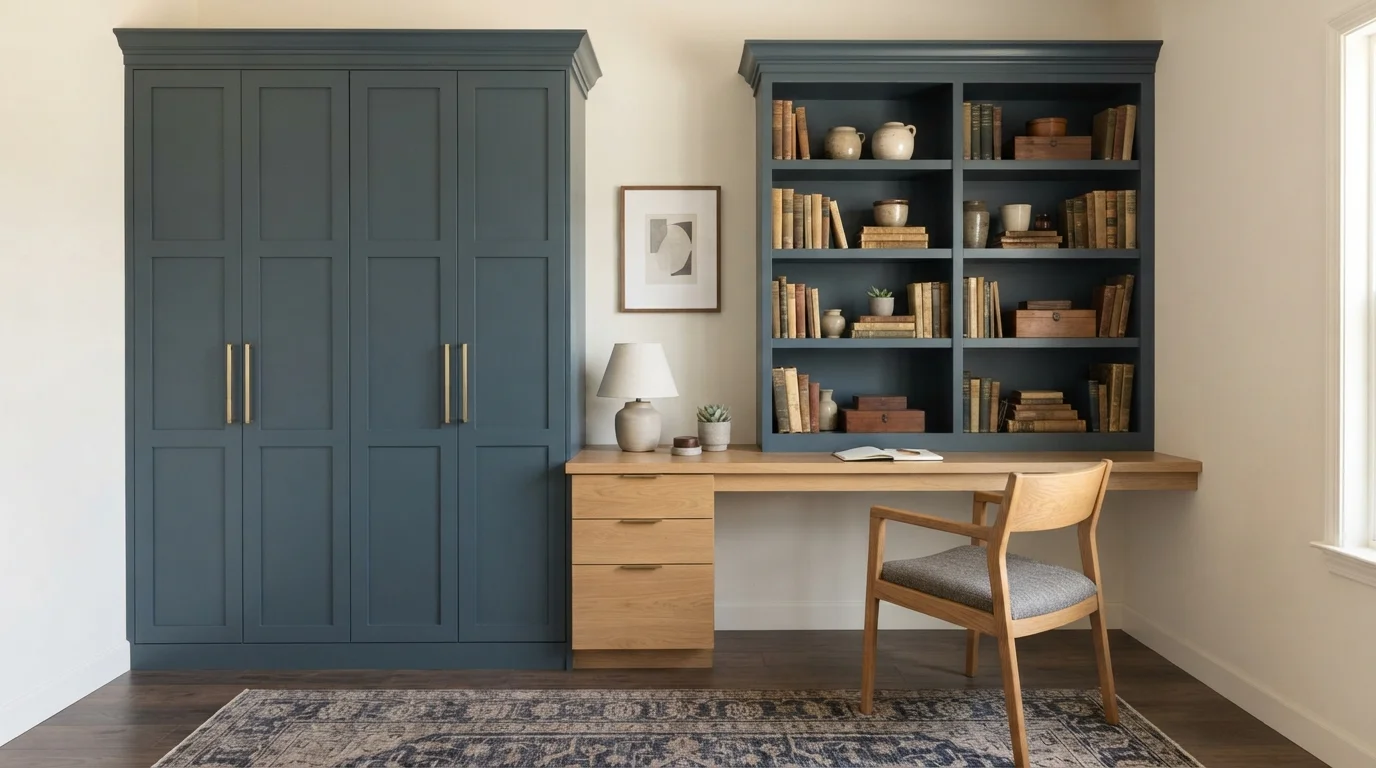
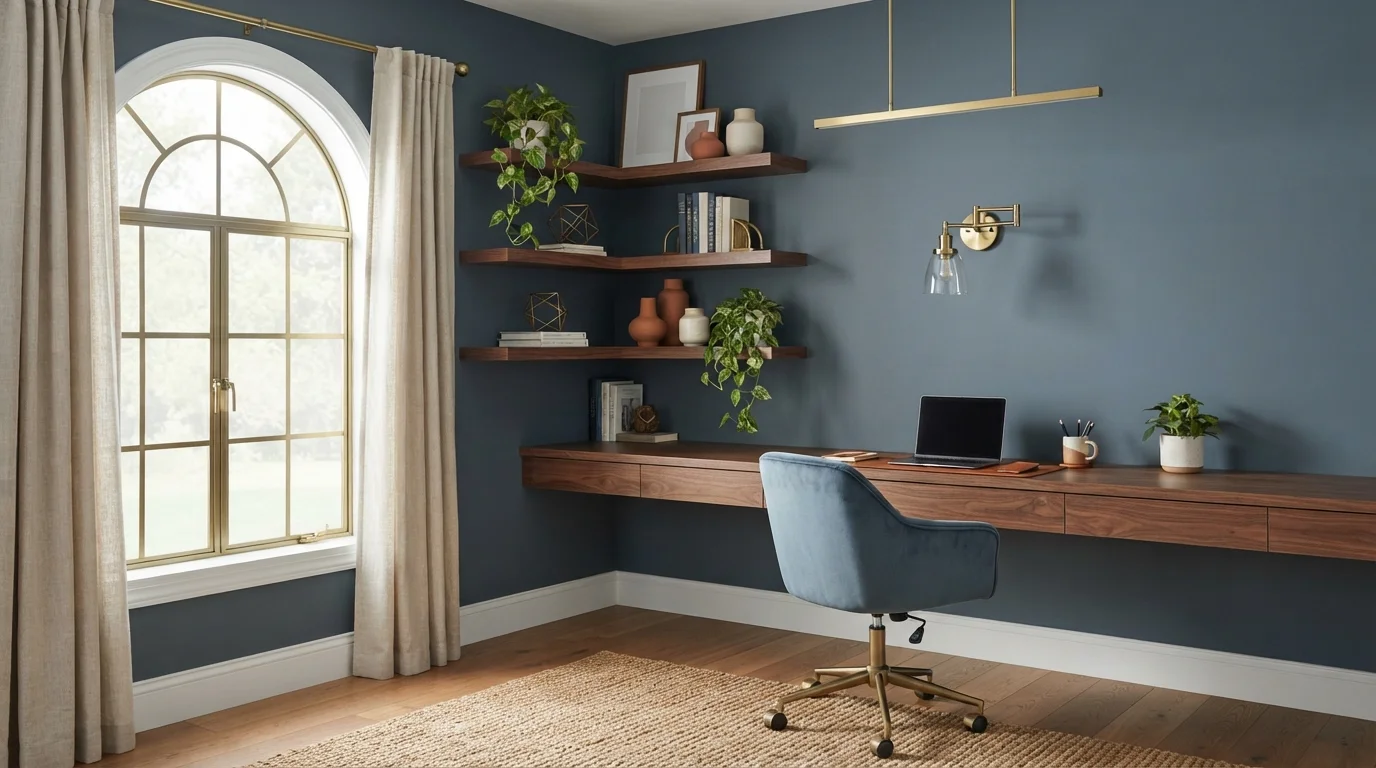
Crisp white trim is the safe, clean choice and it makes any blue look intentional, especially with built-in shelving or a window seat. For a warmer, more lived-in office, pair blue with creamy off-white trim or with natural wood on the desk and shelves; wood and blue are a classic, easy match. If you want a richer, library-like feel, paint the trim and built-ins the same deep blue as the walls so the room reads as one calm envelope.
Think about metals and the ceiling too. Brass or warm-gold lamp and hardware finishes warm up a cool blue and feel polished on camera, while black or chrome reads more modern and crisp. A plain white ceiling keeps things bright, but a soft tint of the wall color overhead can make a small office feel cozier without going dark.
Common Mistakes With Office Blue
The most common miss is going too cool and too bright at once, which leaves the room feeling cold and clinical instead of calm. A blue that's both very saturated and very light can also bounce a faint blue cast onto your face on video calls. If focus and a warm, comfortable feel matter to you, lean toward blues with a touch of gray or warmth in them.
The other mistake is skipping samples and trusting a swatch or a screen. Blue shifts more than almost any color between daylight, warm bulbs, and the glow of a monitor, so a chip that looks perfect at the store can turn gray or purple on your wall. Paint a big sample, live with it for a day or two, and remember any shade you like can be mixed to order and cross-matched between brands, so you're never locked into one company to get the exact blue you want.
Blue Home Office Paint — Frequently Asked Questions
Is blue a good color for a home office?+
Yes. Blue reads calm and focused, which helps during long work sessions, and it looks professional on video calls. Soft and medium blues feel open and easy, while deeper blues feel more serious and grounded. Just match the depth to how much light the room gets so it doesn't feel cold or dim.
What shade of blue is best for a home office?+
It depends on your light. A bright room with lots of windows can handle a deeper blue in the LRV 20s or 30s for focus and depth. A small or north-facing office does better with a lighter blue in the 50s or 60s so the walls keep the room open. Blues with a little gray or warmth in them are the most comfortable to work in.
What finish should I use for home office walls?+
Eggshell or satin is the best choice for most office walls. It wipes clean when walls get scuffed but doesn't throw glare onto your screen the way gloss does. Save glossier finishes for trim and built-in shelves, and avoid high-gloss on any wall facing a window or lamp.
Will a blue office look bad on video calls?+
A good blue actually looks great on camera and tends to flatter most people. The thing to avoid is a very bright, very cool blue, which can throw a faint blue cast onto your face. A blue with a touch of gray or warmth, plus a warm light source, keeps you looking natural on calls.
What trim and accents go with a blue office?+
Crisp white trim is the clean, safe pick and makes blue look sharp, while creamy off-white or natural wood feels warmer and more relaxed. Brass and gold fixtures warm up a cool blue; black and chrome read more modern. For a cozy library feel, paint the built-ins the same blue as the walls.
Can I match a blue I like across different paint brands?+
Yes. Every color shown here is mixed to order at the paint counter, so a blue from one brand can be cross-matched and tinted by another. Bring the color you want and you can get the same look without being tied to a single company.